Anna Friel Interview for The Saboteurs

Anna Friel interview for The SaboteursWhat can you tell us about the series?

It’s following in the footsteps of the great Scandinavian television – it’s very much revered. It’s about how the Norwegians stopped Hitler from building a nuclear weapon by the production of heavy water. They sabotaged the factory that produced something called heavy water that had the potential of creating a German atomic bomb. It should be a very, very well-known story but it’s not.

You play Julie Smith, how would you describe her? What attracted you to the role?

After getting the script I flew to Norway and met with the writer. The fact that it was a Danish German British and Norwegian production was just incredible. It’s an incredibly different process to ours – it’s amazing what they do.

I play a fictional character and the only girl who’s surrounded by men, so we knew she had to have a lot of guts and strength. I really admired that it’s an alternative take on a love story too, with Leif Tronstad (played by Espen Klouman-Høiner) the fact they never get together is really heart-breaking.

The director uses music very cleverly in his work and I think it’s really emotive to the character. It showed a very gentler side to a hard exterior.

What was it like being part of such an international co-production, and with lots of different languages spoken amongst the cast?

I’ve always wanted to go to Norway, to see the Northern lights – it’s one of my dreams – and I just thought the cast was incredible. In literally a green room full of men I was the only woman, I often find myself in that situation – I must be a boyish girl at heart! But they were great, I joined in with all their banter and they were so welcoming.

Were you familiar with the story before taking on the role and did you do any research on this period in history to prepare?

I wasn’t aware of the story but I did some research, read books about the team that went on the journey and I am familiar with the time – I think this is my third job that’s set in the 1940’s.

As the series is based on an important moment in history, were you anxious about taking on the role at all?

You’re anxious when you take on any job but I knew that I was in incredibly capable hands. They got the top actors from other countries and I really love now that they’re mixing the British actors with the Danish and the American actors with the British and that we’re all becoming a bit more international. They all have very different approaches and I’ve been in the industry now since I was sixteen years old, I Iove learning from other cultures and from different actors’ approaches.

Was there training involved before filming? Did you have to do any stunts?

I didn’t really do any stunts but getting into that uniform was sort of like one! There is a scene where I use a gun and have to hit every target so there was some training for that. Weirdly enough my last few jobs have been military and my next job is also military.

What was the shoot like, did it take you to any interesting locations?

Norway and Prague doubled for Scotland, our base, and the huge factory. So I think if you added it all up I’ve spent a year and a half of my life there – Gracie (my daughter) has spent 6 months of her life in Prague so I knew it very well. Our director of photography was absolutely incredible, a real genius.

What’s your favourite memory from the set?

It’s probably when we used something called an opticopter, which is like a drone. They all had this toy for the first time and it has a little camera so it could fly up and do these big sweeping shots. I remember about 4 or 5 years ago you’d have to get a huge crane out to film scenery like that and it was very time consuming but that day everyone was so excited despite it being freezing cold!

The Saboteurs starts on Friday 19th June at 9pm on More4


Could you be The Next Landscape Photographer of The Year?

The search for the Landscape Photographer of the Year 2015 begins

Could you be the next Landscape Photographer of the Year? Could you be the next Landscape Photographer of the Year?2

L to R, from the 2014  Award: Heather in Bloom, North York Moors by John Robinson and Sunrise at Winnats Pass, Derbyshire by Sven Mueller

Entry for the ninth annual Take a view Landscape Photographer of the Year Award is now open and entrants have until July 12 to submit their photographs of the British landscapeThe Landscape Photographer of the Year is one of the world’s most exciting photography awards and the brainchild of renowned landscape photographer, Charlie Waite. The competition is open to everyone, with a special class for those younger than 17, and each entrant can submit 25 photographs across four categories. There is a prize fund worth £20,000, including £10,000 for the overall winner and additional prizes within each category.

As in previous years, an exhibition of shortlisted and winning entries will premiere in the late autumn. Previous locations for the annual showcase have included the National Theatre and London Waterloo Station. Shortlisted entrants will also be published in stunning coffee-table book Landscape Photographer of the Year: Collection 9,published by The AA, and described by The Times as a ‘coffee-table staple’.

Last year’s winner was Cumbria-based photographer Mark Littlejohn, who won with an enigmatic shot of a mountain stream in Glencoe, Scotland.

The Landscape Photographer of the Year is unique in that is celebrates the United Kingdom only, offering photographers worldwide an opportunity to showcase their images of Britain. From stark moorland to angular cityscapes, and from rocky coastlines to  lush woodland, Britain’s remarkable landscape and volatile weather provides generous material to fire the imagination.

Photographers living outside the UK are encouraged to enter and there is a special prize offered by the competition’s sponsors for the best image from an overseas entrant (The Countryside is GREAT award).

The 2015 Awards are being held in association with VisitBritain and Countryside is GREAT. Jasmine Teer, VisitBritain’s Photography Manager, said: “Photographs that showcase the best of Britain play a vital role in VisitBritain’s mission: to raise our profile and inspire people all over the world to come and experience this beautiful country. We are very proud to support the Landscape Photographer of the Year Awards and hope that, as part of Countryside is GREAT, we will encourage not only UK entrants but photographers from all over the world.”

 Awards founder, Charlie Waite, added: “Now, more than ever, I think we are realising how important the British landscape is to our wellbeing. The feeling that we get when we shut the office door and escape to a green space, whether it be a small park or a vast mountain, is unique and of vital importance. Our landscape is a place in which to breathe and to create.”

Entries for the Landscape Photographer of The Year competition are now open until July 12, via www.take-a-view.co.uk. This year’s competition is run in association with Visit Britain and Countryside is GREAT.

image006


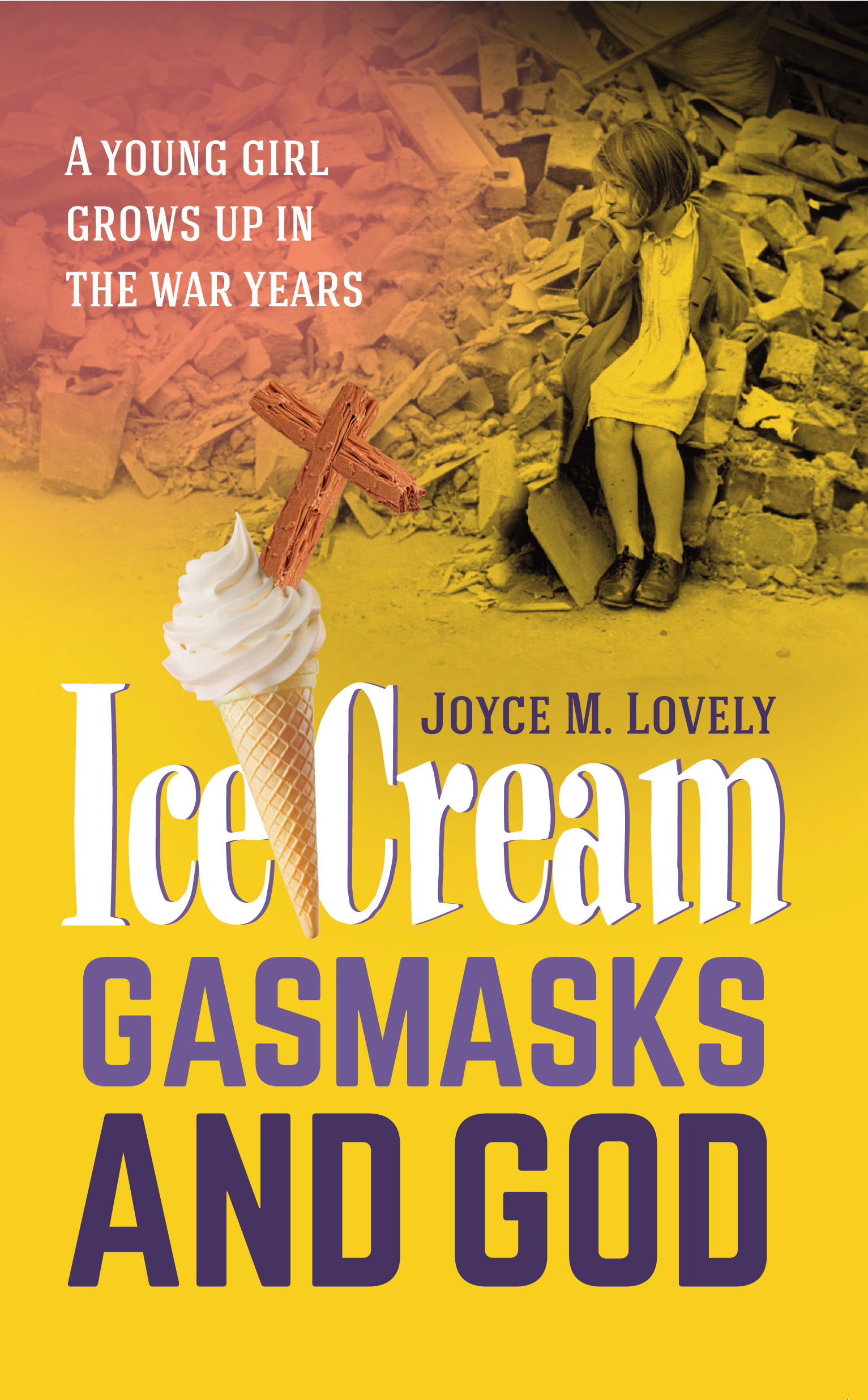
Ice Cream, Gas Masks and God – the perfect summer read

Ice Cream, Gas Masks and God
A young girl grows up in the war years

By Joyce M Lovely

PUBLICATION DATE: 22 June 2015
Mereo Books www.mereobooks.com

Gasmasks and God cover CS 19.5mm_Layout 103

A funny, touching and heart-warming portrait of war time and beyond, Ice Cream, Gas Masks and God is the author’s trip down memory lane to 1940s Liverpool, where early reminiscences include not just the hated gas mask, but also the regular night time spells in the air raid shelter as the bombs fell.

A beautifully drawn portrait of the place and its people, from Calder High School Joyce went on to work at the Eagle Star Insurance Company and the office of the Dunlop Rubber Factory. Missing out on being one of the first to see The Beatles perform at the Cavern Club (because she didn’t fancy the sound of them from her sister’s description!), she moved to London to study Nursing at St Bartholomew’s. Marriage took her on to the Shetland Islands – where life as a parson’s wife meant that prayer was sometimes relied upon to provide dinner – and then to the West Riding of Yorkshire, before finally settling in Maine, USA.

A natural storyteller, Joyce’s recollections of people, places and events are effortlessly recounted. From the exotic neighbour who had been in the German Resistance (but whose priority was now pudding) to her splendid Spirella Corsetier grandmother, Ice Cream, Gas Masks and God is a gentle, fascinating and humorous personal history, rich in colour and detail.

Gloriously nostalgic and beautifully written, this is the perfect summer read.

IMG_1603

Sneak preview extracts

“Jerry made one heck of a mess here, didn’t he?” said Dad. “And all my best willow pattern china has been smashed” Mum sniffed, trying not to cry again. Dad put his arm around her. “Don’t worry, love. We’ll get through this.” And we did, even though I heard a few days later that eight people had been killed in their air-raid shelters, along with many others, including some in the public shelters. Much later I learned that 2000 Liverpudlians had been killed in just that week, with thousands more injured and homeless.

I sat stunned. First I felt the pricking of tears, and then I began to laugh. There lay my ancient, despised, childhood World War II gasmask. It rested there staring at me eerily, the eyepiece still displaying the   oval sickly-brown cellophane, which wasn’t even cracked. I sat back. My eyes closed, and the memories streamed back…

I remember vividly growing up in Liverpool, amidst air raids, bombs and gasmasks. My story is from a childhood perspective, leaving the grown-ups to worry about battles and shortages. We observed strict morals as a teenager in the fifties, yet still had boyfriends, stolen kisses and fun. This memoir concludes with my marriage to a minister and our adventures in the distant Shetland Islands. Here I experienced the islanders’ expectations of ‘yon minister’s wife’ often resulting in unexpected humorous consequences…

Humour, tenacity, sharing and resourcefulness, especially by the women on the home front, kept life normal for us children. We laughed, cried, hoped and dreamed, but we never asked for more than what we knew was around us.

About the author

Born in Liverpool, Joyce M Lovely now lives in Maine, USA. She has had numerous articles and stories published in magazines and periodicals and she is a member of a writing group. Joyce worked in education for many years, as a teacher and then later in administration, working with teachers and leading workshops.

Words for the Wounded Independent Author Book Award Part 2

As I said last week, The Independent Author Book Award has been a revelation. There are just so many good writers out there, which made our task hugely enjoyable, if difficult. At last we decided on commended, highly commended, and then – the winners. In the end, our decision was unanimous. Great books all three of them. Thank you all so much for entering – rest assured that 100% of the entry fees go to the wounded.

Last week we highlighted First Place achieved by Jane Cable with The Cheesemaker’s House, in the recent competition. Today we have the second place winner, Janet O’Kane.

Words for the Wounded Independent Author Book Award By WforW founder Margaret Grahampalamedes

Thank you, Palamedes PR for sponsoring a professional press release for the winner, and the opportunity of a discounted press release for 2nd and 3rd. Thank you Frost Magazine for publishing a review of the top three.

pic7Frost

The great good news is that Felicity Trew, of the highly respected Caroline Sheldon Literary Agency, is now representing the winner, Jane Cable.

We’re totally delighted to reveal that Felicity Trew will also be our final judge for the 2015 Independent Author Book Award. The WforW team is so excited.

2nd Place.

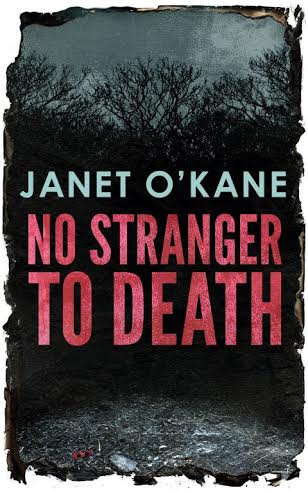
No Stranger to Death  by  Janet O’Kane 

Zoe Moreland is a GP who stumbles upon a corpse.  Set in the Scottish Borders,  her own life experience is revealed, alongside the unfolding crime story.

Words for the Wounded Independent Author Book Award janeto'kaneno strangertodeath

No Stranger to Death  Janet O’Kane 

Judges’ comments. A crime novel must grab you from the first sentence. This one does: “Zoe Moreland saw her first dead body at the age of twelve … “ You also need a reason for the person to be consulted or somehow involved with a dead body, especially if you want to keep open the possibility of a series. Tick number two: she’s a GP. This sets everything up well for a crime novel and the other necessities for any novel, including  interesting setting described with a vivid sense of place (the Scottish Borders) and rounded characters with distinctive personalities and back stories which appear gradually, are all here. Tick, tick, tick. We particularly liked the way Janet O’Kane lets facts and personalities emerge naturally, by incremental details rather than through the dreaded information download. She credits the reader with the ability to put details together. This crime novel has a well-constructed plot with interesting characters and we look forward to reading the next one in the series. Well done.

Words for the Wounded Independent Author Book Award janeto'kanel

When Janet O’Kane outgrew Enid Blyton’s books she moved on to what her Mum liked reading: crime novels. And despite occasional dalliances with other types of fiction, that’s where she has happily stayed.

Her career before turning to writing full-time included selling underpants to Roger Moore in Harrods of Knightsbridge and marketing nappies for Boots the Chemist. It was when she helped run a GP surgery that she decided a doctor would make an excellent main character for a series of crime novels.

Janet lives in the Scottish Borders with her stonemason husband, a cat, two dogs and far too many chickens. She is now writing the sequel to No Stranger to Death and learning to tap-dance. She’s delighted to have been placed second in a competition which raises money for such a good cause.


Month 5 of my Reading Challenge by Frances Colville

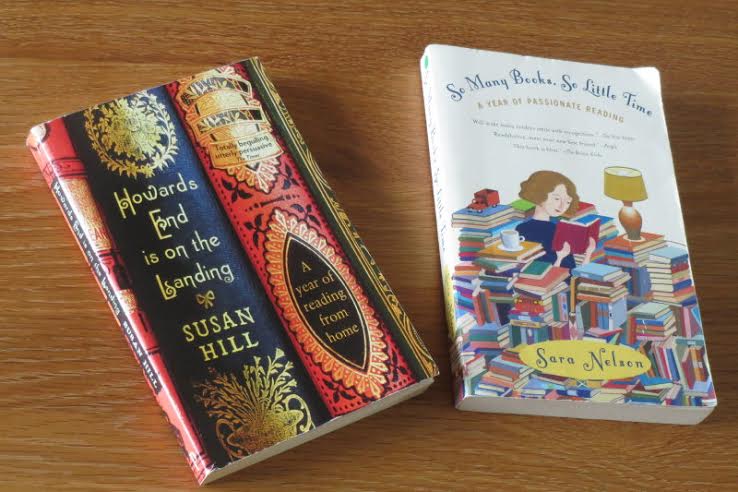
When I first started out on this project, I rather naively thought I was being original.  Of course I wasn’t and it has since become apparent that not only have others done the same thing, but they have also gone on to write books from the experience. So this month I’ve looked at a couple of those books.  The first, Howards End is on the Landing by Susan Hill, was the result of the author’s decision not to buy books for a year but to read from her existing library.  Many of the books she read turned out to be books I have already enjoyed, but I was also able to compile a long list to add to my ‘to read soon’ pile.  I was bewildered by a throwaway comment disparaging Khaled Hosseni (author of The Kite Runner, A Thousand Splendid Suns and And The Mountains Echoed) but on the whole her choice of books and her commentary on them and on her life as a reader worked well for me.  So Many Books, So Little Time by Sara Nelson (similar theme of focusing on a year of reading) was less interesting to me because as an American her book experiences were very different from mine.  But I enjoyed her writing style and the way in which she wove comments about her life into her discussion of books and authors.  I have yet to read The Year of Reading Dangerously: How Fifty Great Books Saved my Life by Andy Miller but it is definitely on my list.

Month 5 of my Reading Challenge by Frances Colville1

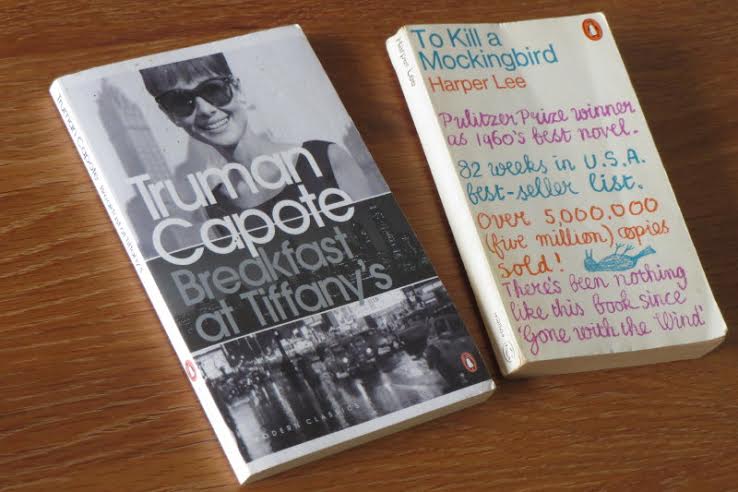
I don’t know whether Breakfast at Tiffany’s by Truman Capote counts as a short novel or a long story.  Either way it seems to me to be a brilliantly crafted piece of writing, with no words wasted, and perfectly located in time and place.  My copy has the added benefit of including three short stories.  There is an obvious connection between this and my next read To Kill a Mocking Bird by Harper Lee.  The two authors were childhood friends and in fact Lee bases Dill, one of the characters in her book, on Capote.  I’ve read To Kill a Mocking Bird before (who of my generation hasn’t?) but was very happy to have the opportunity to re-read when it came up as a book group choice this month.  One of my top ten of all time books, it’s a beautifully written portrayal of life in the southern USA during the 1930s depression, told from the point of view of the unforgettable 8 year old Scout, and focusing on a court case in which a white lawyer (Scout’s father Atticus) defends a black man charged with rape.  It is of course the 50th anniversary of the book’s publication this year and there is a new edition available for anyone who can’t get hold of one of the original copies.  The only other book ever published by this author Go Set A Watchman is about to be released.  One more for my list.

Month 5 of my Reading Challenge by Frances Colville2

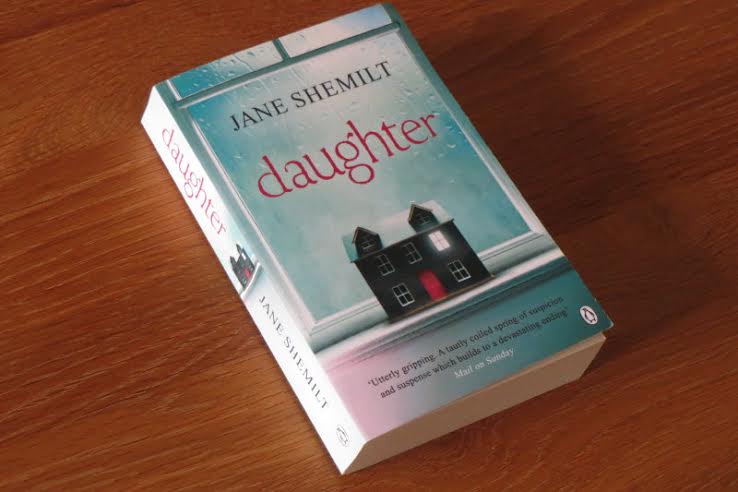
My next book – Daughter by Jane Shemilt – was a good read and a fast-paced one.  Having once started it, I found it hard to put down.  Both a family story and a crime novel, it is narrated by a GP working full time in a pressured job, while trying to be a good mother to her three teenage children, a good wife and at the same time keep her own identity and free up time to indulge her love of painting.  It seems inevitable from the beginning that something will go wrong and of course it does.  But this is not a predictable story; there are several twists and turns in the plot and I was kept guessing until the end.

Month 5 of my Reading Challenge by Frances Colville3

The Rosie Project by Graeme Simsion has been on my pile for some time, having been recommended by my daughters.  Another good read.  Again I didn’t want to put it down, and I found myself willing the narrator (an undiagnosed Asperger’s sufferer) on to success in his endeavours.  It’s funny, insightful and interesting.  And yet it left me feeling a bit uncomfortable.  I’m not quite sure why, but I think perhaps it’s because the view of autism it portrays is over-simplistic and too generalised.  Still well worth reading though, and if you enjoyed The Curious Incident of the Dog at Night-time by Mark Haddon, I think you will enjoy this too.  There is also a follow-up entitled The Rosie Effect.                                 

Month 5 of my Reading Challenge by Frances Colville4

© Frances Colville


A Damsel In Distress, Chichester Festival Theatre – review

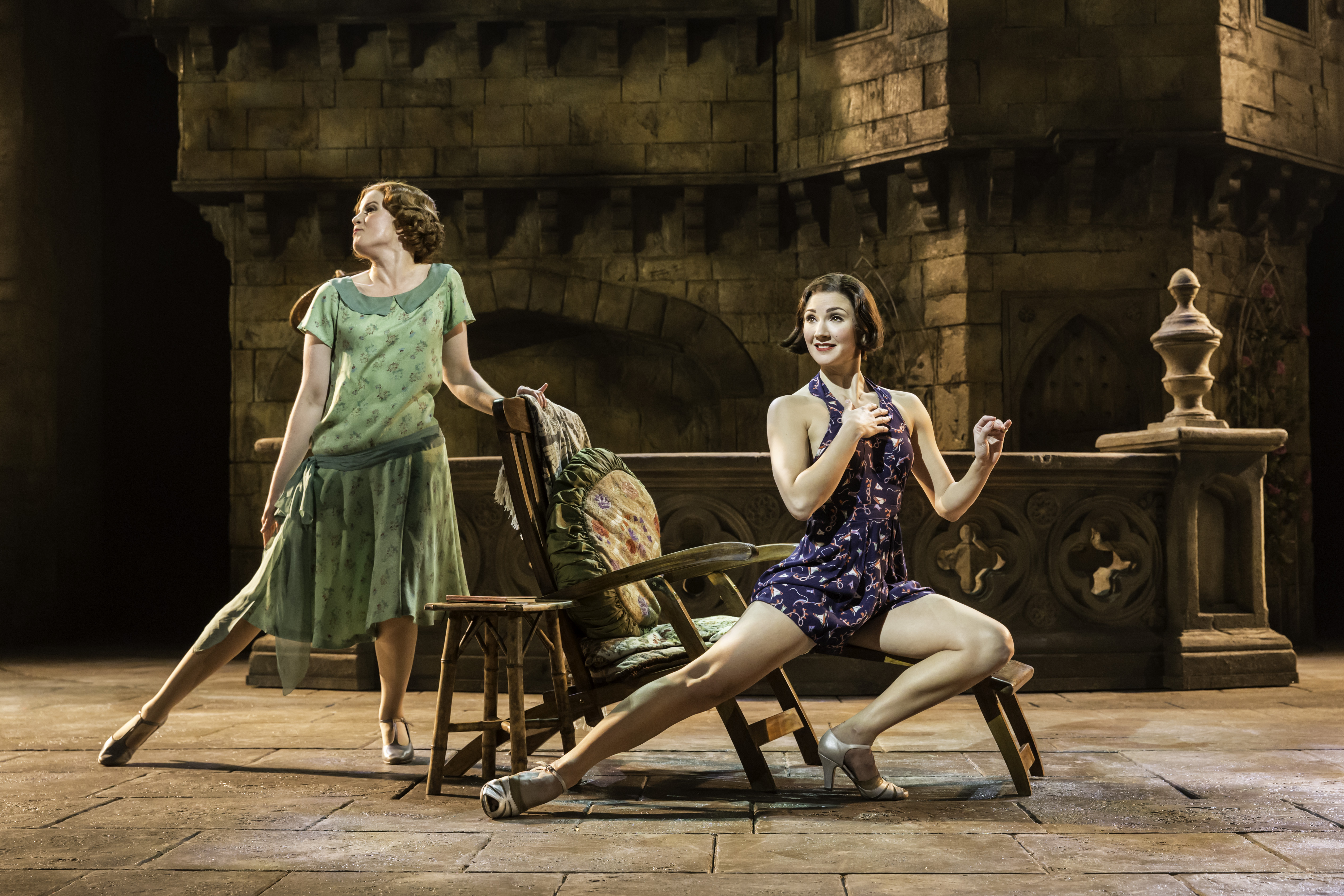
Photo credit Johan Persson

Photo credit Johan Perssonzpfile000

A Damsel In Distress
Chichester Festival Theatre
Until 27 June
Box office: 01243 781312
www.cft.org.uk

Gad zukes! What a delightful piece of froth! Perfect for summer, especially given the Festival Theatre’s glorious setting (what could be jollier than a pre-theatre G&T in the park?), the 1930s novel by PG Wodehouse initially adapted as a play, and later as a film for which Gershwin composed songs, enjoys new life as a stage musical by Jeremy Sams and Robert Hudson.

A topping blend of music, song and ripping fun, the story is about as daft as they come. Maud, a headstrong 1920s English rose, is locked in the tower of a stately home and guarded by her dragon of an aunt who is determined to prevent her niece marrying a penniless poet. But it’s an American theatre director who is smitten with the girl. If he can’t sleigh the dragon then he’s set on shoving her out of the way so that he can at least declare his heart. Spamalot meets Downton Abbey. But with more tap dancing.

Marshalling the whole charming caboodle, Rob Ashford directs and choreographs. The score may not be the most memorable in the world, but a cast of ace singers and dancers give it all they’ve got, adding plenty of visual fizz as they belt and hoof with as much infectious enthusiasm as dazzling skill. Clutching mops, rakes, and even oversized quivering jellies, routines are high octane and high camp.

It’s a terrific team effort but Isla Blair as fire-breathing Lady Caroline is a splendid battle-axe. Richard Fleeshman as George and Summer Strallen as the feisty ‘damsel’ of the title are in superb voice, while Nicholas Farrell as the aging lord of the manor who rediscovers his va va vroom when he meets showgirl Billie (a warm and effortlessly sexy Sally Ann Triplett) is gloriously funny. Delighted to have found a siren who not only has a cleavage like the Rhonda Valley but who also shares his passion for pigs and roses, the pair provide some of the production’s most uproarious moments.

Further comedic expertise is demonstrated by Desmond Barrit as butler Keggs, and also David Roberts. Managing to switch roles between Perkins the theatre director and Pierre the highly strung chef, as the latter Roberts inspires yet more laughter. Richard Dempsey meanwhile is adorable as dim toff Reggie.

Designed by Christopher Oram, the set, as Reggie would say, is bally clever. Revolving rose gardens and castle turrets cunningly morph into the stage at the Savoy and the kitchen of a stately home.

Chekov it ain’t. Brilliantly executed blissful nonsense it most definitely is. Don’t be a frightful clot – book tickets today!

How to Photograph Your Kids

howtophotographyourkids

kidphotographyThis famous mom photographer shares her secrets with Frost Magazine and SmugMug.

Last year, Elena Shumilova took photos of her sons as they played by the Russian countryside. She uploaded the photos online, they started getting shared, and shared again… until they became a viral sensation, with over 60 million views.

These photos hit something magical all across the Internet — a sense of nostalgia for a childhood past. She even started getting letters from people in their nineties, saying the photos moved them to tears.

As parents, we instinctively want to take photos of our kids. We’re trying to preserve this brief slice of time before they grow up. But when we take our kids to professional photo studios, the results can end up looking stilted and unnatural.

We want to remember our kids as they actually are — not with the forced smile a stranger coaxed out of them at the studio, but with the real smiles and giggles they share with us every day.

How can we capture natural photos of our kids, the kind Elena seemingly has a magic touch for?

Elena has mostly been quiet since her photos have gone viral, undistracted by all the media attention. Instead, she focuses on raising her kids and continues to photograph them every day.

Given how quiet Elena has been, we are excited to share a behind-the-scenes look at her in action.

5 Tips to Get Better Photographs of Your Kids

1. How to get your kids to look natural, not “posed.”

So you catch your kids in the perfect moment — they’re outside playing and laughing, the lighting is just right, and you see this perfect picture you want to capture. You rush to get out your camera, but then…

They see the camera. They stiffen up. They start posing. The moment is lost.

What do you do?

When photographing children, the single most important thing is to photograph them often — every day.

You can’t just do it sporadically, or they’ll freeze up as soon as the camera comes out. Consistency is key. That way they’ll be comfortable around the camera.

It’s these everyday scenes that you want to capture — the ones you’ll remember best when they grow up.

To get the most genuine photos, I try to catch them in the moment — when they’re playing with each other and have completely forgotten about the camera.

Here they’re playing “airplanes,” a game we also play together at lunchtime when they’re feeling picky about their food.

2. The types of clothes that work the best.

I follow a pretty simple rule: clothes shouldn’t be distracting. They shouldn’t take attention away from what’s happening in the photo.

For such a simple rule, it’s harder to follow than you might think. Kids’ clothes today are designed to grab your attention—with bright colours, cartoon characters, and writing all over them. In photographs, all this takes attention away from your kids.

When I started pursuing photography seriously, I actually replaced all their outfits. This took quite a while to do, but now I know that anything I pull from their closet won’t interfere with the photo.

3. How to best capture kids of different ages.

Newborns
A lot of parents have asked me about this photo — how did you get your one-month-old to look so calm? Infants are notoriously difficult to photograph because they’re often crying or fidgeting.

Here you’ll have an advantage as a parent. I’m his mom. I’m around him 24 hours a day, and I know when he cries and when he doesn’t. Let your parenting instinct help you choose the right moment.

The Golden Age: Ages 2–4
Something I noticed while photographing many children, including my own, is that there seems to be a universal age when kids are the most photogenic.

That seems to happen between ages two and four.

Kids around this age behave very naturally. They don’t care that someone is looking at them, they don’t care what others think, and they don’t care that a camera is pointed at them.

They aren’t yet self- aware. And so, they’re free.

Ages 5 and Older
It gets a bit more difficult when they’re older. As early as age five, they start to become more self-conscious when the camera comes out. They start to pose.

The key here is to be very patient. Let them play while you disappear into the background. My best photos always happen at the end of a photo shoot, when my kids have forgotten all about the camera.

4. How to get good photos of your kids with pets.

Just like people, every animal is different. Some pets like to be photographed, and others don’t.

Because every pet is different, there isn’t a magic formula for this. I spend hours observing our farm animals, figuring out how they move and what angles work best for them — just like I would for people.

I’ve also tried bribing pets with food, but it doesn’t work. It’s almost impossible to get a good picture when they’re chewing or licking their paws. So I’ve learned the hard way not to feed our pets during photo shoots.

With animals, you have to rely on a bit of luck — and constant patience.

5. Don’t give up.

This is the most famous photo I’ve taken. It’s been viewed over 10 million times — but I almost didn’t bring my camera that day.

Before I took this photo, my confidence was at a pretty low point. I had tried for a photo of my son and dog 14 other times — not 14 other photos, but 14 full photo shoots, all failures.

I was convinced that my hands were too clumsy, or my dog was not the right dog for it, or my kid was not the right kid for it. I was just feeling desperate that day and didn’t even want to bring my camera.

But something told me to bring it. And on that fifteenth day, it all just came together.

This dog of ours is now famous — but he’s not all that photogenic from most angles. He’s actually a pretty difficult dog to work with. From the previous 14 photo shoots, I’d learned what angles and body compositions work for him and my son.

It‘s easy to get discouraged. It’s easy to think, “Oh, why bother, it won’t work anyway.” And it may not for the first 14 times. Those 14 photo shoots weren’t failures though, because I learned from them. And they’re what made the fifteenth one possible.

Don’t give up.

Rather than creating high-pressure elaborate setups, observe your kids in everyday simple situations. Do it every day. Bring your camera along.

And then — when the right moment comes along — you’ll be ready.


Words for the Wounded Fiction/Memoir/Poetry Prize Results

Words for the Wounded Fiction/Memoir/Poetry Prize Results by Margaret Graham

Words for the Wounded Independent Author Book Award By WforW founder Margaret Grahamwordsforthewounded

Words for the Wounded have had a wonderful time reading all the entries for the Fiction/Memoir/Poetry Prize – 400 word maximum 2015.

It was a tough call because as always the entries were many and varied. In the end our decision was unanimous, and we thank everyone who entered, as every penny raised goes to where it should because the organisers absorb all the costs of the charity.

1st: Next of Kin. Sue Hawkins
2nd Worms Hannah Froggatt
3rd A Soldier’s dream of glory. G. Mortensen

Highly Commended

The Call of the Merman. F. Colville
The Factory Machine J. Elford
Heart’s-ease. C. Elstow
Adeline on Tuesday Morning C. Givern
Colour K. Hood
The Undressing J. Moran Neil
Piano Legs and Loose Knickers. M.Rowan.
Lost and Found. A. Taplin
One Day D. Waite.
The Solicitor’s Letter M. Wright

Commended

Under the Hen’s Bottom W. Breckon
Clipped Wings A. Campbell Kearsley
Ephraim Climbs Mount Kilimanjaro P. Heath
Two little faces C. Hewitt
Mr Percy Flint T. Loader
No Secrets T. Oswick
Pickled Turnips M. Pieris
Ronald Dawe J. Pollinger
The Beatles: My part in their rise to fame C. Tolson

The great good news is that Felicity Trew, of the highly respected Caroline Sheldon Literary Agency, is now representing the winner of WforW Independent Author Book Award Jane Cable run at the same time.

Further: Felicity Trew will be judging next year’s Words for the Wounded Independent Author Book Award – open for entries on 11th November 2015.

www.wordsforthewounded.co.uk to read the short prize entries and judges’ comments.