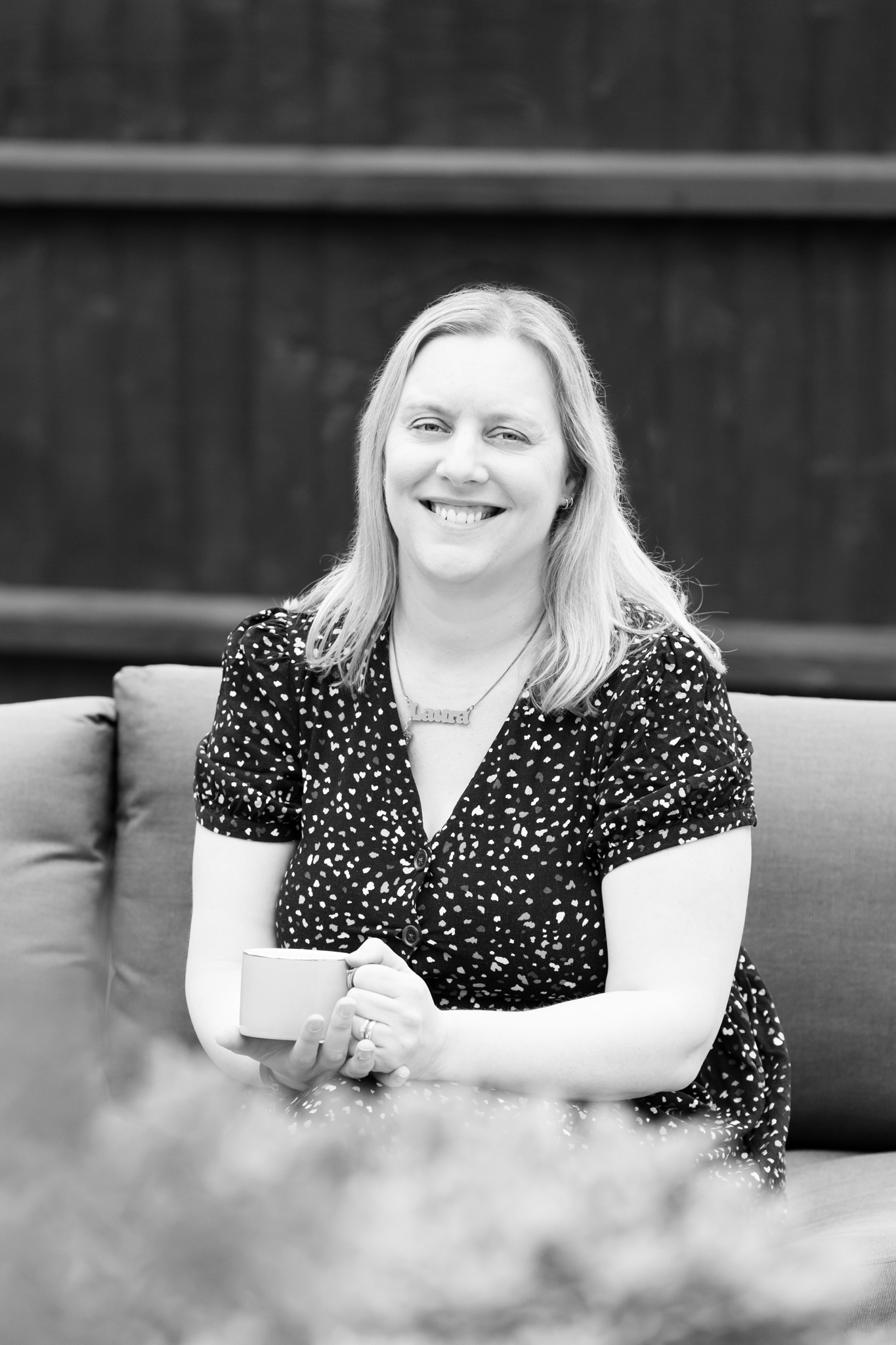
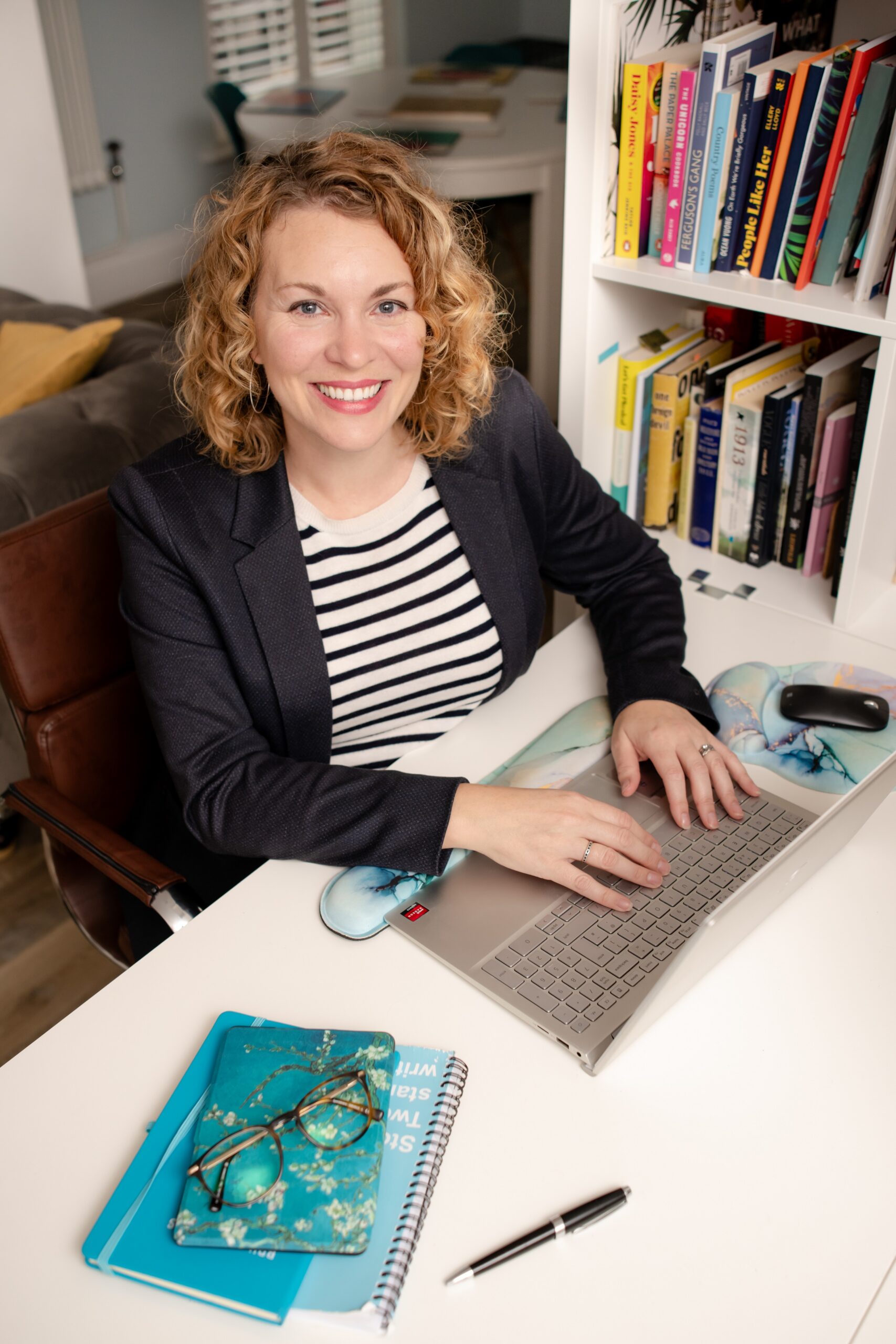
Hi. I’m Laura, I live in a village in Leicestershire with my husband, our two children and our cat. I’m pretty obsessed with reading and writing, and as well as writing novels I help run a Facebook book club called The Bookload.
Did you always want to be a writer?
I did, from about the age of six. I wrote and illustrated my first book about a witch at that time. It was about two pages long. I didn’t realise that illustrator was a separate job (and only usually required for children’s books).
What do you consider your big break?
I think getting my first offer of publication, because it had been such a long time coming.
What was your publication journey like?
Long and rocky. Which I think is true for most people. I finished writing my first book in 2010 and my first book was published in 2018. It wasn’t the same book but the first one did also get published. I’ve had three agents and two publishers and a huge amount of rejections.
Did you ever believe The Last List of Mabel Beaumont would do so well?
I really had no idea. My confidence was on the floor because I’d been trying to get another book published for four years at that point. My expectations were low, I was just over the moon to be published again. When she started to take off, it was amazing to watch. I think she’s exceeded everyone’s expectations for her.
What has changed since selling so many books?
I think I just feel more comfortable in describing myself as an author and spending so much of my time writing books. It’s really hard to believe in yourself if it feels like no one else does. Now I have an agent and an editor I can go to with questions or for support and that makes a huge difference. Also, people say really lovely things about my books all the time and it’s often so unexpected. Even though I know I’ve sold a lot of copies I’m still always surprised when anyone’s read them!
What advice would you give to other writers?
I think just to keep going if you possibly can. Obviously there can come a point where it’s not the best thing for you, but up to that point, keep writing, keep submitting. It’s all about finding the right match and it can take a long time. Rejections don’t mean you’re not good enough, they just mean you haven’t found the right person yet.
How do you become, and stay, successful as a writer?
Ask me in ten years’ time! I have no idea whether my success will last. I was so delighted when I got my first three-book deal but then I had another years-long rough patch, so nothing’s guaranteed. I am contracted to write quite a lot more novels for Boldwood Books, which I’m very happy about. But whether or not they’ll sell well remains to be seen. I just keep writing the best books I can. That’s all I can do.
What are your writing ambitions now?
We writers are very good at moving goalposts. Now I’ve sold more books than I ever thought I would, I want to be in a supermarket, and sell more foreign rights, and of course have a TV or film made of one of my books. There’s so much to aim for and I’m very ambitious.
What’s next?
My latest book, The Many Futures of Maddy Hart, came out in early February, and my next comes out in May. I’m not sure whether I’m allowed to tell anyone the title yet, but it’s about two women in their early sixties who meet by chance and are shocked to find that they’re identical. And after that, many more books! I like playing around with speculative ideas and coming up with interesting hooks.
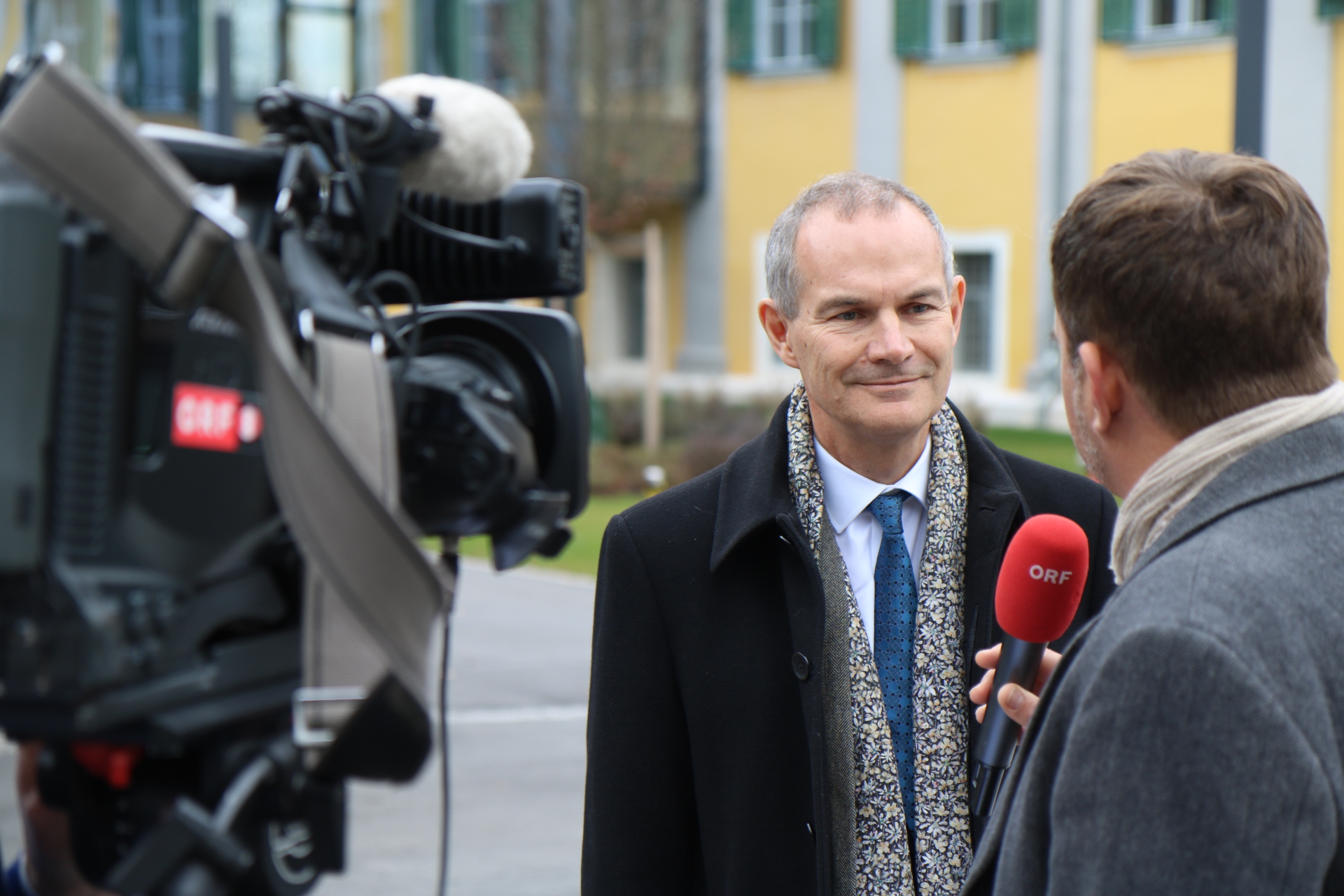
I became a writer in 2002. That was the year I began a four-year break from full-time work at the British Embassy in Berlin to look after our children, then aged eight and ten, so my diplomat wife could work full-time. She took over my job in the embassy. I’d begun my first novel, Eternal Life, in 1986. That was when the British Embassy in Vienna, where I was then working, got its first word-processor. I thought: ‘wow – you can edit your work before printing it! That’ll make writing much easier.’ Of course, it didn’t. But although I made some progress with my writing while I was working full-time as a diplomat, in Vienna, Moscow and Berlin, I found taking a break from full-time work transformative.
In the four years from 2002, I started writing for the Financial Times, sold two treatments to a film company, attended writing courses, and wrote two novels. When I returned to the Foreign Office full-time in 2006 as Director of Overseas Territories (Saint Helena, Bermuda, the Falklands & Co), then as Ambassador to Ukraine, I continued to write.
Unfortunately, the Foreign Office hated me trying to publish fiction and be a diplomat at the same time. They even threatened me with disciplinary action if I persisted after a bust-up in 2014, when I was working as British Consul-General in Istanbul. I started publishing excerpts from my romantic comedy The Cheat on-line. They objected to the rude words! It was a difficult situation.
I’m a bit manic, to be honest. Every morning, after a bit of yoga, I walk my partner to her work, then sit down until lunchtime to write. In the afternoons and sometimes in the evenings I focus on writing-related jobs, including organising book tours and social media – I have a website, a podcast, and post on TikTok, YouTube, Instagram and Linkedin. My “Lessons in Diplomacy” videos on TikTok have the best response – I work hard to publish good stuff for my 5,000 followers! Linkedin yields most speaking opportunities, including talks about “Lessons in Diplomacy”. I always make time to attend schools and universities, in particular, to discuss the book and answer questions.
You have written non-fiction and fiction. What is your favourite?
I love both! Creating characters and stories in fiction is a thrill. I love to work late into the night on a scene, then review what I’ve written in the morning, and find that characters, apparently independently, have led the story into unexpected places. Writing Lessons in Diplomacy was a different experience. The months of painstaking research, scouring my records, fact-checking and – above all – choosing the most fun, enlightening stories to illustrate the “life lessons” that make up the book, was rewarding. Like other writers, I sometimes worry that I’m putting too much of myself on display. When the publishers urged me to include even more Russian honeytrap stories about my travels to Novosibirsk, Vladivostok and elsewhere from 1992-95, I declined. But maybe if there’s ever a Volume 2 I’ll go further.
I loved Lessons in Diplomacy. What are your hopes for the book? Do you want to help people become diplomats?
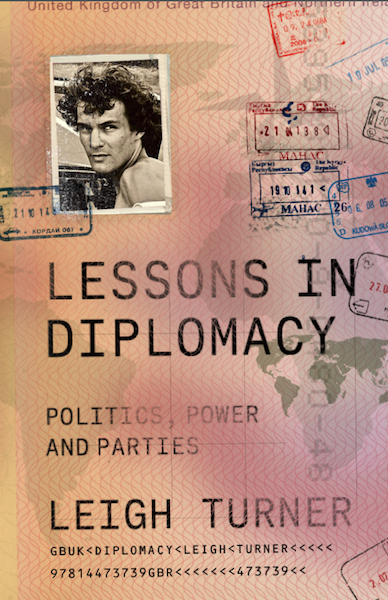
The aim of Lessons in Diplomacy is three-fold. I wanted a book about diplomacy that was fun to read, opening up the truth about diplomatic life to the non-expert. Too many of us have a stereotypical view of upper-class twits swanning round the globe. Diplomacy is changing fast, including many more women and other under-represented groups becoming diplomats and ambassadors.
The book is also designed as a collection of life lessons from diplomacy. It’s not for nothing that the book includes chapters on “How to craft a career”, “How to drink wine and know things”, and “How to know people”. The skills and attributes that make a good diplomat can be applied to many – perhaps all – jobs and careers. I hope people find it useful.
Finally, I hope the book is a breath of fresh air for anyone studying politics or international relations. Many academic textbooks about diplomacy are written by great academics who have never been a diplomat. Others are written by great diplomats who have never written a book. I’m hoping readers will find Lessons in Diplomacy both useful and a great read.
You have lived an exciting life. What made you go into diplomacy?
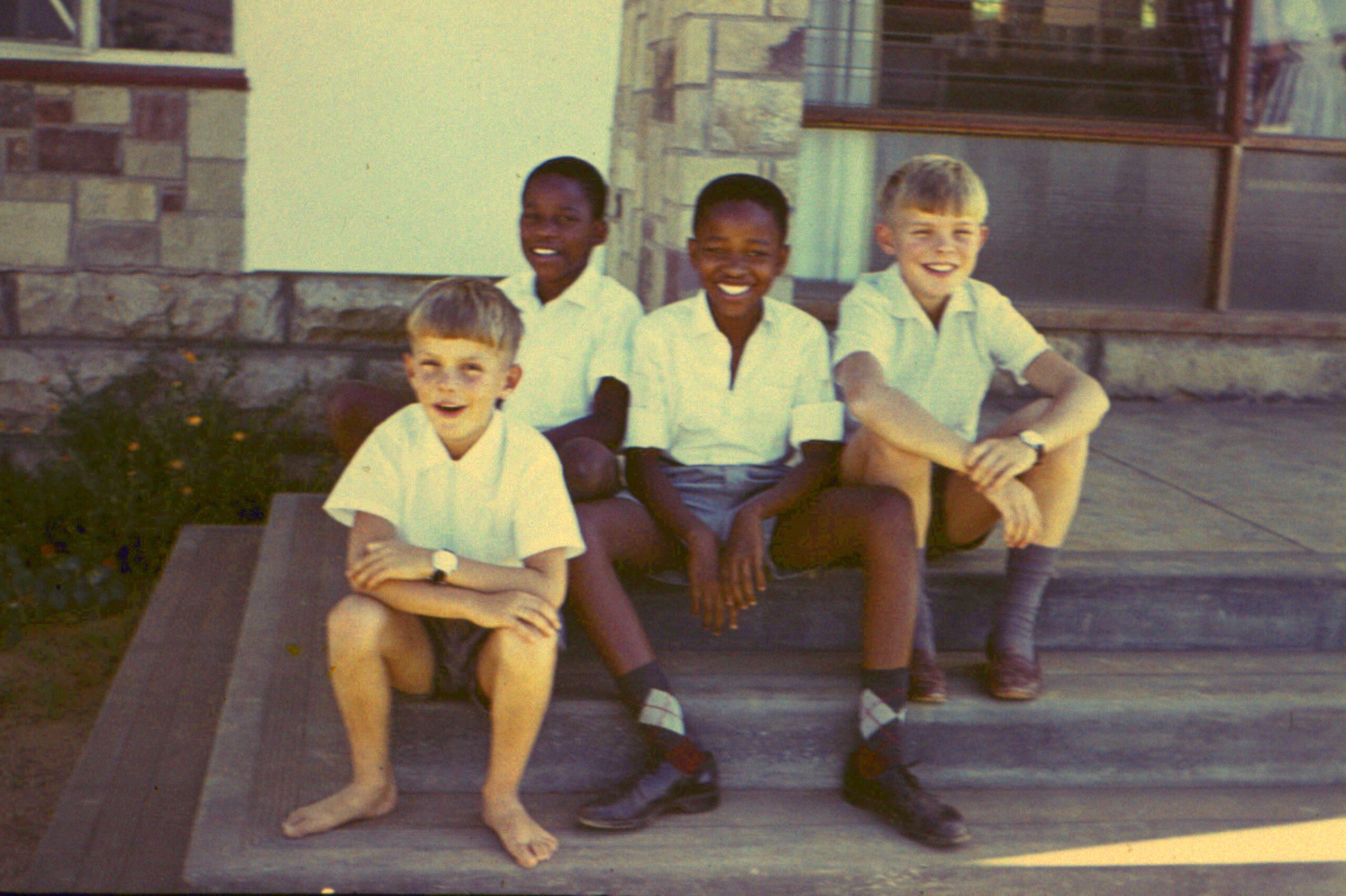
My parents’ life was a lot more exciting than mine! They moved in 1951, as young adults, to northern Nigeria, and later to Lesotho, in southern Africa. Living in different countries instilled in me a deep interest in what made countries tick, as well as a restless desire to travel. Diplomacy was an obvious job choice, and I had great fortune in getting into the Foreign Office – on my second attempt. But as I say in Lessons in Diplomacy, “Don’t judge a book by its cover.” The jobs I did before the Foreign Office – in the Department of the Environment and the Treasury – were some of the most exciting I ever did – far more so than most Foreign Office jobs!
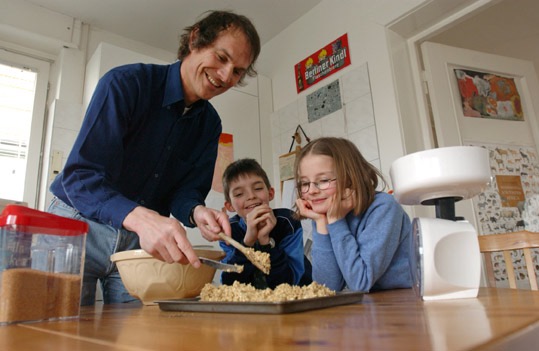
Germany, Berlin, 08.04.2003
Leigh Turner, author, with his children Owen and Anna preparing cakes. Working on a novel set in the Foreign Office. Job Swaps.
(c) Stefan Boness/Ipon, www.iponphoto.com
I loved how you took some time out to be with your children. Do you wish more men would do this?
The four years I spent looking after the children full-time, while my wife took my job in the British Embassy in Berlin, were the best four years of my working life. I was able to form a deeper bond with my children, to look at the world in a different way. I encourage all men to take seriously the option of some time out to help raise their kids. I recognise that not all parents have jobs that allow them to stop work for four years; or enough income for one parent to support the family. But do explore the options! Many women thought a man taking time off to bring up children was fabulous. But many men were hostile. They seemed to feel threatened by what I was doing.
Who are your favourite authors and books?
I’m an eclectic reader. I immensely enjoy modern thrillers such as Lee Child or Vince Flynn. But I also love romantic thrillers – I recently enjoyed books by Sophie Kinsella and Mhairi McFarlane. And I have a soft spot for the classics – I’m nearing the end of a “read all books by Dickens” campaign, and love anything by Anthony Trollope. I’ve written a lot about Trollope on my rleighturner.com blog – although he’s a 19thC writer he has a lot to tell us about relationships, gender and power.
What advice do you have for aspiring writers?
Persevere, and train your writing skills! Submitting books to agents and publishers is a cruel, unrelenting slog. But you have to keep doing it in the hope that one day, your painstakingly constructed work will see the light of day. There’s also the option of self-publishing, which I have tried, and which can work brilliantly. But it’s worth trying for a “traditional” publishing route first, if you can, to give your book the best chance.
I’m also a huge fan of honing your art. Writing courses are great ways to get feedback on your work, and mutual support. I go on courses regularly, and am even teaching on one in September 2025, in Lesbos, Greece. Details of the Lesbos course, and on other writing courses I’ve attended, and recommend, are on my blog.
Writing groups are also terrific. I’m in a virtual group with five writers from the US and Canada that meets every month. Their comments on my work have helped me improve my writing. They’ve also strengthened my self-belief – invaluable!
What’s next?
I’m currently working on a trilogy of romantic comedies I call the “Diplomats in trouble” series. I’m excited about it, although, as always, it’s not yet certain it will ever see the light of day. My hero Angus is a protagonist many test readers, mostly women, love to see try, and fail, and try and try again, to find love and a meaningful relationship in the chaos that is modern life. Watch this space.
Leigh has also written extensively about Russia’s war on Ukraine, in his book “Lessons in Diplomacy” and on his website.
One of the things I like to talk about (within the context of writing, at least!) is rejection. Simply because my publishing journey is chock-full of it! And the more authors I chat to (and I talk to them a lot on my podcast, The Rejected Writers’ Club) the more I realise that all of us face rejection all the time. Talking about it normalises and neutralises it – it’s not something to fear or be ashamed of, but it’s something to be embraced as part of the writing life.
The first kind of rejection I faced was self-rejection. I have always wanted to be a writer, but every time I managed to write something I would read it back and be appalled at how awful it was. Every attempt ended up in the bin.
But then my father-in-law died suddenly at the age of 56. He was a lovely man who I wish I’d had longer to know. His death taught me that we may not get as much time as we think we will, so if there is something we want to do, we need to hecking well get on with it.
From then on, I didn’t let myself reject myself (can you tell I’m a writer?!). I still thought (and think) my first drafts were awful, but I no longer let that stop me. I love telling stories and even if they don’t come out right straight away, that’s okay. That’s what editing is for.
Rejection then came from other people. I submitted my first novel to 113 agents and received 113 rejections. There were a couple of full requests in there, but they all ended in the same way. No one wanted that story.
So I wrote another one. And another one. And another one.
I didn’t query quite as hard again – mainly because I am soft and squishy and couldn’t handle such a solid wall of no’s again – but I did make sure to send my stories out to people I thought would connect with them. I got a whole load more rejections, until one person said yes.
Now, I want to pause here and say something that I absolutely didn’t listen to but that I really hope you will if you’re a writer looking for an agent and (let’s be honest, we all are) feeling a bit desperate: having no agent is better than having one who doesn’t get you. I promise this is true.
I signed with an agent and there was absolutely nothing wrong with them as a person, but they weren’t the right fit for me and my stories. I was writing gentle YA while they wanted something plotty and loud.
Parting ways with my first agent was one of the most painful moments of my publishing journey. I see it as a rejection, as it was a split that they initiated, but it was the right decision. I couldn’t see that at the time, but looking back I can see that we weren’t the right fit at all.
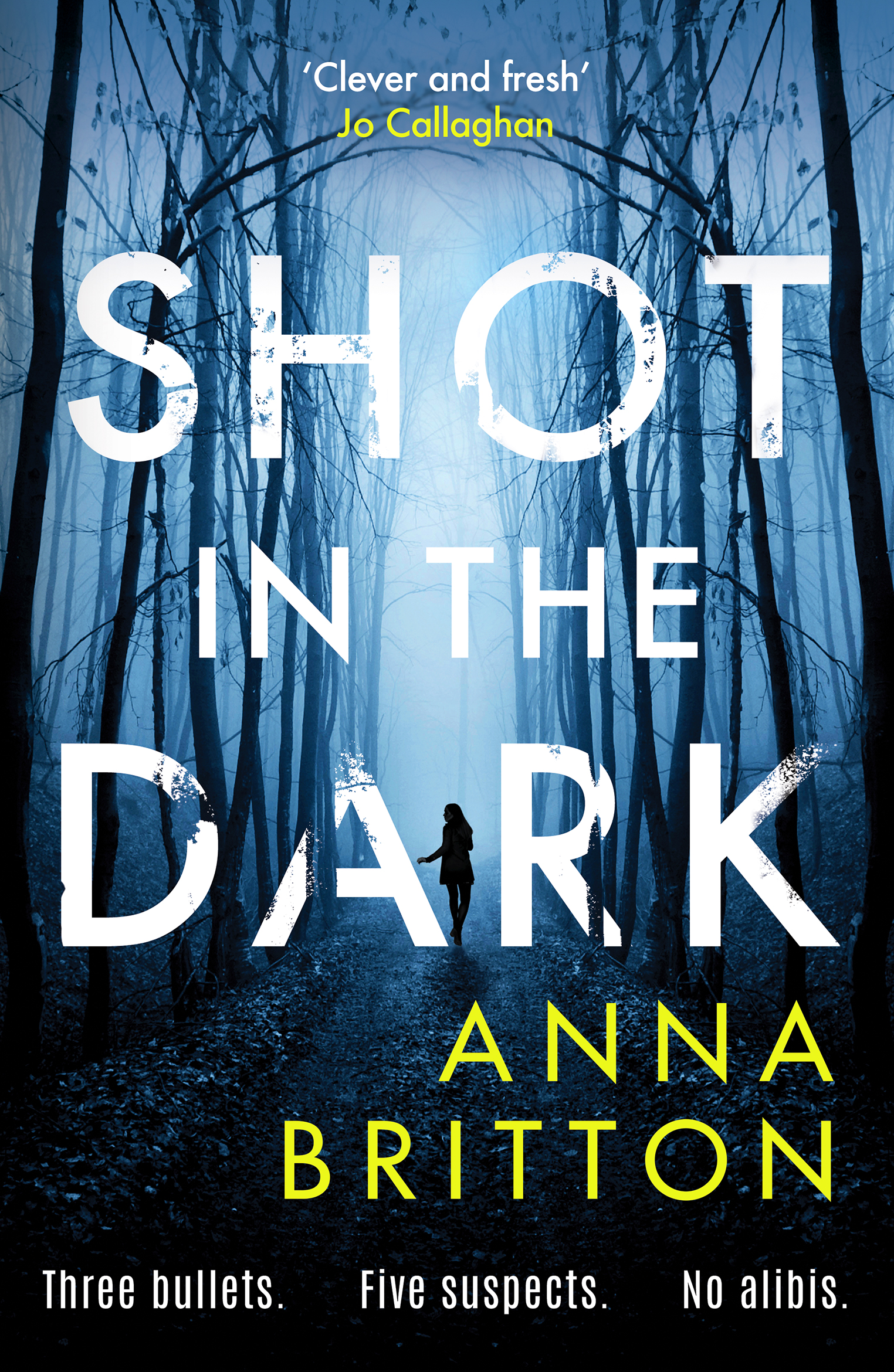
I was totally gutted by this, but it didn’t change my dream; to be a published author. I ditched the stories I had been working on and dove into edits on a crime novel with a bi detective with PTSD at its heart, fell in love with her cold and confusing partner, and solved a murder. I sent this story (which would eventually become the first in the Martin and Stern series – Shot in the Dark) out into the world and I was blown away by the response. Relatively quickly, I signed with my lovely agent – Saskia Leach at Kate Nash Literary Agency – and signed a three-book deal with Canelo Crime.
It was a whirlwind, especially coming off the back of such a mountain of rejection. And that rejection doesn’t leave you. The sting has lessened over time and I’m not quite so afraid of opening my inbox anymore, but the years of hearing no again and again don’t magically disappear just because I can go point at my book in my local Waterstones.
Those years of rejection taught me resilience. They taught me to be sure of the stories I want to tell and to make sure I’ve got people on my team who have the same vision. They taught me that sometimes I’m going to have to fight for my stories and that sometimes I will fail, but that I will write another story and try again.
My journey to publication was long and winding and painful, but it was 100% worth it in the end. And not just because I have two (two!) books published, but because I’ve carved out a space in the world for my stories. I spend time doing something I utterly love. I’ve met incredible people along the way and have had so much more fun than sadness.
Not at all. I wanted to be a writer! But I studied at London School of Economics in college, and fell in love with living abroad and foreign affairs. It was the 1990s and communism had collapsed, which was a fascinating time to be in Europe. After I graduated, I edited a newspaper in Prague, then worked as an intelligence analyst for the U.S. government in Cambridge, England, shuttling back and forth to the Balkans. I found I was passionate about intelligence work, so I applied to the CIA. While waiting for my application to process, I attended law school and studied international law. 9/11 happened while I was in law school, and I felt grateful I was on a job track that would serve my country.
When did you realise you wanted to be a writer?
For as long as I can remember! I’ve always loved books and words. My adolescence and young adulthood are littered with failed attempts at novels. While traveling Europe in my twenties – exploring, trying to figure out who I was – I remember musing in my journal that, while I’d probably follow a more practical career path, my secret dream was to be a writer. But it wasn’t until I’d worked as a spy that I had something really meaningful to write about, that it all came together.
What do you think is behind the world’s fascination with the CIA and the world of spies?
The secrecy, I think. Espionage is an entire world beneath the surface, a netherworld. And spying is a profession of high stakes, where lives and geopolitics – the fate of both people and nations – are on the line. Also, espionage involves inherently colorful characters – people willing to commit the ultimate betrayal.
Your characters are so vivid. Do you base them on real people?
My characters are mostly composites, except for the station chief, who was inspired by a real person. Also, the expat community is based on real people, and much of the dialogue is taken verbatim from actual conversations.
Can you describe your writing routine.
I try to go for a three-mile run each morning. Then I either go to my local coffeeshop or set up camp in my study and write for a few hours. I can’t write too much without printing out and editing, because things read differently to me on paper, and I need to get the story right before I proceed too far.
The book is negative about the CIA. Where you disillusioned?
A bit. I joined the Agency a few months after 9/11, and it was a time of transition and, at times, chaos. My first tour, as a counterterrorist case office in Baghdad during the apex of the war (fall 2004 to fall 2005), was challenging: we weren’t making much progress, the work environment was stressful, and most of us – myself included – returned with PTSD. I made decisions in a fog of war and espionage that haunted me and carried their own trauma. The fundamental skill required for the job – manipulating people – never sat easily with me. Now, years later, with the dust settled, I have a softer view of that time. I wouldn’t say my book paints the CIA in a negative light so much as it paints espionage in a negative light. For me, spying was an uncomfortable, debilitating profession, and that’s what I wanted to convey.
What are your thoughts on the CIA now. Did you find writing the book healing?
I think the CIA has made a lot of progress. The war on terror is over, and the Agency has had time to take a breath, evaluate its operations and internal culture. It’s more introspective and self-critical now. When I was there, the Agency was a bit of an old boys network. Since then, the “Me Too” movement has had an impact: there are rules about and awareness of sexual harassment; female officers speak up about inappropriate treatment; and women fill more leadership positions. I do think writing my book was cathartic. When I finished, I realized how many of my ghosts had come out on the pages. They’re still with me, but now I can better articulate and make sense of them.
The book is unflinchingly honest and brave. Did you ever have a moment of doubt about putting your heart and soul on the page?
Thank you! Yes – though more so after my book was published. I wrote my manuscript in a vacuum (CIA rules prohibit me from showing my writing to anyone until it’s been cleared), so I didn’t even think about getting my story out in the world at the time. Exposing my inner turmoil was still an abstraction. Once I was published, I realized that now everyone could see my scars and the effect espionage had on me. But so many former intelligence officers have found my book resonant, I’ve felt more reward than apprehension in telling this story.
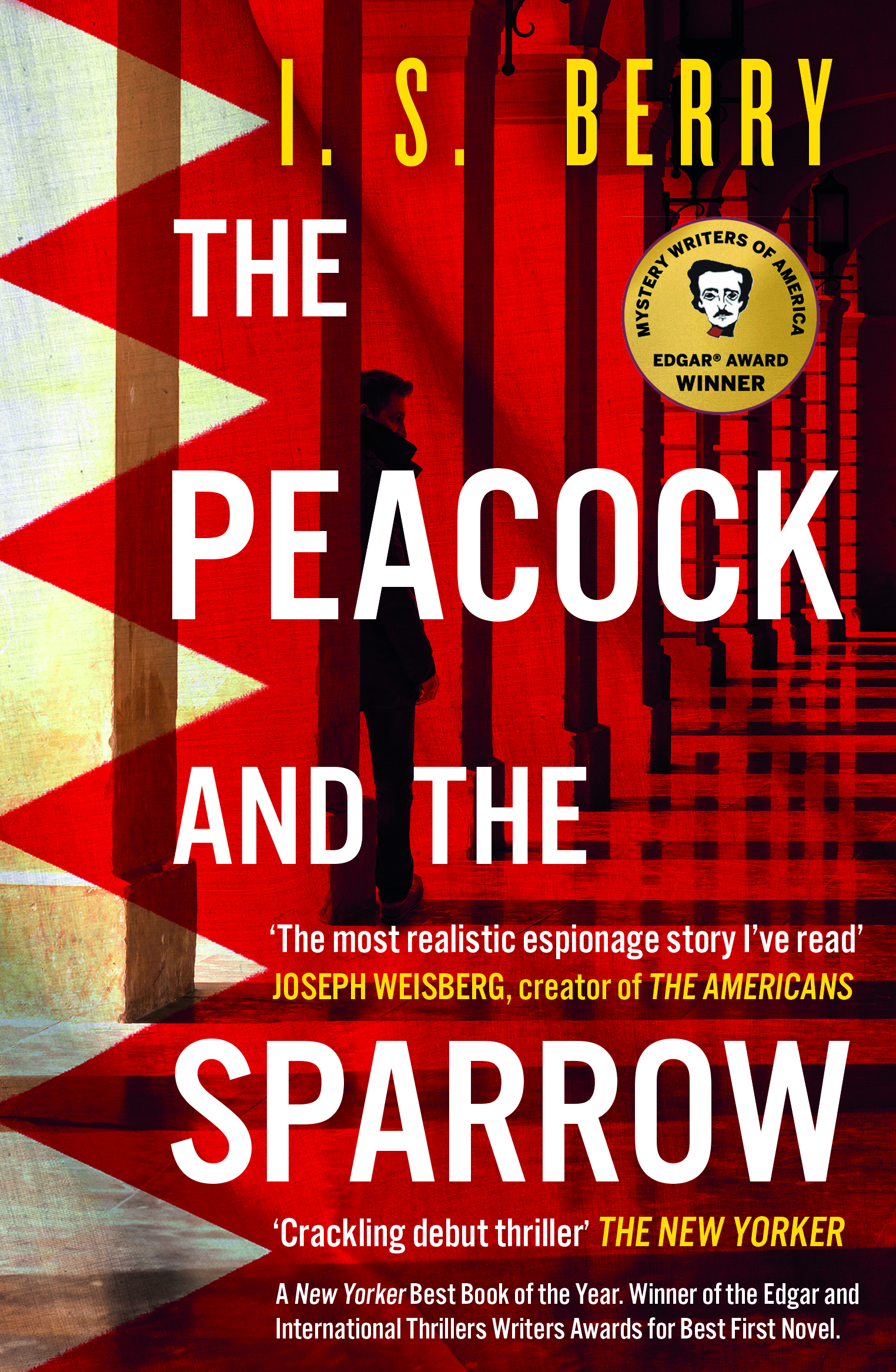
Joseph Weisberg, creator of the TV series The Americans, called your book the “the most realistic espionage story I’ve read.” How did that feel, and do you agree?
Well, I haven’t read all the spy novels out there, so I feel unqualified to judge! But I take Joe’s blurb as a huge compliment, and was honored to get such an amazing endorsement from the creator of a masterful, iconic series. I do think many spy novels skew toward the sensational – car chases, roof scaling – and mine is based more on my own experiences, and the tradecraft and operations I conducted. Also, tradecraft is fundamentally psychological, not technological or gadget-based, and I think my story reflects this. Above all, I wanted to convey a visceral sense of espionage, and insiders tell me I’ve succeeded at that.
What books, films and TV shows get the spy world right?
For film, Beirut, Spy Game, and Ghosts of Beirut are some of my favorites. For novels, Graham Greene’s The Quiet American and most of le Carré books (The Little Drummer Girl is my favorite) – all written years ago, but, in the most important ways, as authentic today as they were then.
It’s nice to have a female voice in the world of spy novelists. Do you think you’ve paved the way for more?
I hope so! It’s shocking to me how few female spy novelists there are (though, we’re out there – I’m in good company with Merle Nygate and Alma Katsu, to name a few).
What’s next?
Another spy novel! This time, a female protagonist. It’s about the intersection of spying and writing…and I think that’s all I can say for now!
Lying about your age can cause problems, especially if you’re no good at maths and lying doesn’t come naturally. At the age of fifty-six, and thinking about the Big Six-0, I decided to knock ten years off my age. When my daughter was informed, she said she’d knock ten years off too, making her twenty-six. My grandson looked up in horror. He was better at maths than me and declared, ‘But that would make me minus one. I don’t want to be minus one.’
We decided dropping ten years was not such a good idea so why did I do it again when approaching a publisher? The submission form asked for date of birth. I hovered over the keyboard before typing in 6.2.1960. My thought was that the publisher would think I had more mileage in me.
I’d been selling my writing for over forty years by then.
When asked what I’ve written it’s easier to respond with, ‘I’ve not covered poetry or pornography.’ I’ve written rude greeting cards, silly advertisements, flirted with journalism, sold articles and interviews, had hundreds of short stories published, a children’s book and several non-fiction books. I’ve also been a ghostwriter.
It wasn’t until the first lockdown that I decided it was time to get a novel published. There was an unpublished one, written around the turn of the century but it had never found a home. I dug it out, read it, and could see why. I had twenty more years of experience so set out to do a rewrite.
That was in 2020. I was 70 years old and ready to prove that you are never too old to have a new dream.
xr:d:DAFXcllhtvs:9,j:41911437,t:23030217
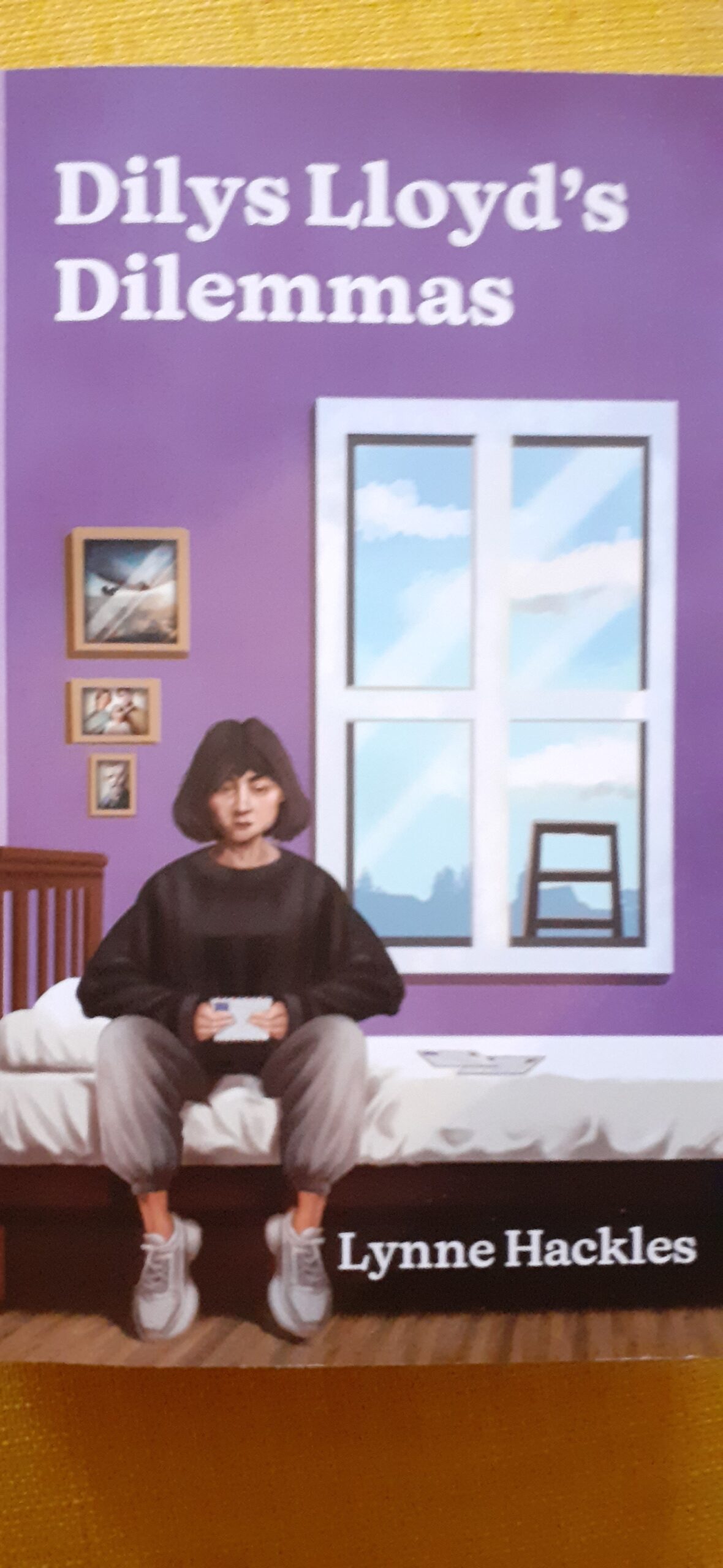
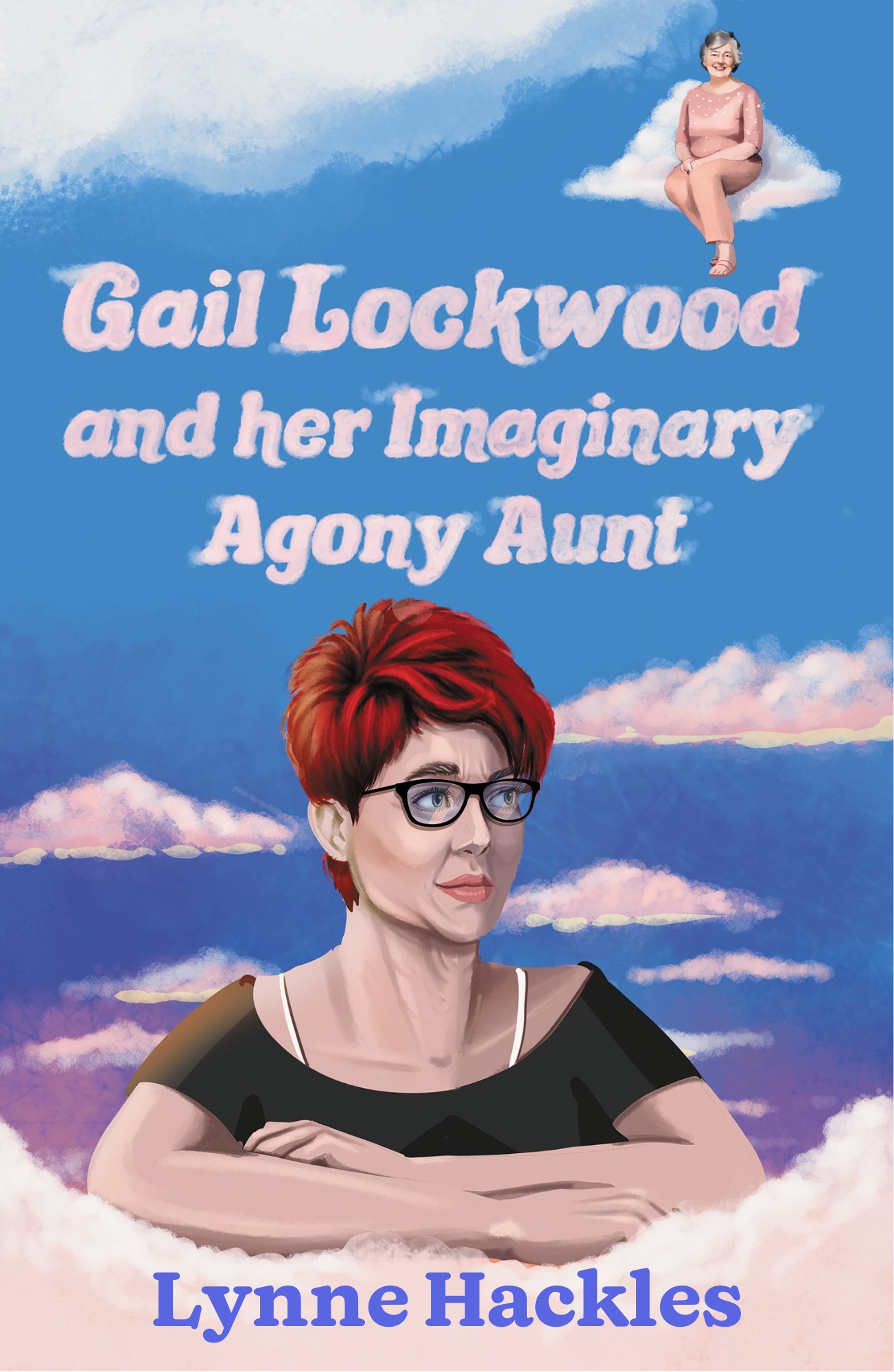
In 2023, Gail Lockwood and Her Imaginary Agony Aunt was published by Cahill Davis Publishing. Now the follow-up to that, Dilys Lloyd’s Dilemmas is out. If there was such a genre they would be classed as ‘mature romantic-comedy’.
The books have working class characters, the important ones all being over fifty. They have problems with jobs, weight, and lack of love lives, but they work hard, remain cheerful most of the time, have adventures and hide in Fred’s Fries for a decent meal when they come out of Flabfighters after being weighed.
My publisher arranged an interview for me with a media company. I was delighted and apprehensive. I’d interviewed many people during my time working for a local newspaper and one of the first questions asked is, ‘How old are you?’
That’s what happened with the media company. ‘I’m sixty-three,’ I lied and, once that hurdle was over, went on to discuss my debut novel and my life. Then came the question that tripped me up. ‘How long have you been married?’
I wasn’t expecting it. Out slipped the truth. ‘Fifty-six years,’ I said.
‘Married at seven?’ My interviewer was more than surprised.
I came clean. Then confessed to my publisher who was lovely, telling me that older people have more experience and therefore their writing is richer. Phew!
I finished reading The Commuter in a day. I raced through it. It’s a brilliant domestic thriller which had me hooked from the very first page. Here’s my interview with Emma.
The Commuter is your seventh novel. How does that feel? It’s a huge achievement.
It feels like a huge achievement! I started writing, submitting and getting rejections when I was in my late twenties, found an agent in my late forties and published my debut when I was fifty, so I definitely put the work in. I still sometimes pinch myself.
Does the writing get easier?
I think the writing does, the editing doesn’t. It’s a long hard slog full of dead ends, frustrations and moments when I want to run away from it all. But when it’s finally signed off the satisfaction is huge. Writing the first draft is such a pleasure. If only the first draft was the last!
Where did the idea for come from?
I’ve lived in London and used the tube all my life and I’ve always enjoyed the free newspapers. The Rush Hour Crush feature in the Metro is so intriguing. When I was a teenager I used to look for Mr Darcys, now I scan faces and wonder what I’d write if I fancied someone. No one so far! It seemed like there could be a thriller in there somewhere.
What is your writing routine?
I get up early, ideally around 6am, have breakfast and start work. Then I work fairly solidly until twelve, have lunch and go for a long walk to mull over what I’ve done and set up the next chapter for the next morning. I like routine and deadlines and I’m not very flexible. But it gets things done.
Do you have a favourite novel that you have written?
Yes, my favourite is Keep Her Quiet which came out in 2020. One of the protagonists is an arrogant male author. I loved writing him!
What books have you read recently that you loved?
The Paper Palace by Miranda Cowley-Heller. I recommend it to anyone who asks me what to read next.
Do you have any favourite authors?
Loads! JP Delaney for quirky concept thrillers. Stephen King for lessons in story-telling. Celeste Ng is fantastic for family based noir. Robert Galbraith because I adore Cormoran Strike and need to know what happens between him and Robin. I like American literature too. AM Homes is a favourite. I wish Chimamanda Ngozi Adichie would publish another novel!
How did you get published?
Since it took me such a long time, that is a very good question. I had given up for a few years, then my oldest child went off to University and I felt like I had to have another go. I wrote two novels, both rejected, then started writing short stories and entering them in online competitions. These did well. I had about a 25% hit rate of first, second and third prizes and those gave me credibility in the eyes of agents. I needed that because I had zero connection to the publishing industry. I turned one of the prize winning stories into a novel and this time, instead of sending it out to a handful of agents, getting rejections and losing heart, I sent it to thirty within three weeks so that I wouldn’t give up at the first No Thanks. That worked. I had twenty-six rejections, four requests for the full manuscript and an offer. One of the best days of my life. My agent at the time, Victoria Hobbs at AM Heath, secured a deal with Transworld.
What advice would you give other writers?
Mark out your time, even if it’s only half an hour a day. Stick to a routine and write even if you don’t feel like it.
Learn to properly critique and edit your own work before you give it to anyone else – I did a course on this and it was invaluable (Jericho Writers).
Don’t give your MS to friends and family to read and comment on. It puts them in a difficult position. Instead, if you’re serious start saving up for a professional critique from a reputable company like Cornerstones, Jericho Writers or The Novelry. But don’t send them anything until you’ve gone the extra mile. (see learn to critique and edit your own work!)
Also, interrogate your ego. It could be getting between you and representation. There’s the ego that will organise a professional edit but not take the advice because it doesn’t agree. There’s the ego that has that one precious pearl of a book and can’t move on from it despite repeated rejections. There’s the ego which will only write ‘what I want to write’, and won’t look for the space where what it wants to write dovetails with what people want to read.
What’s next for you?
Next is a thriller about the devastating aftermath of a lie told by an angry and embarrassed teenage girl. That’s coming out in October 2025 and I’ve just sent a draft to my agent to take a look at before it goes to my editor. I have everything crossed! I heard today that she’s read a third of it and loves it. Hopefully the next two-thirds won’t change her mind.
No other genre offers the unique ‘triple E’ rating as much as Historical Fiction: education, entertainment and escapism. Best are those books that revive a hitherto hidden heroine: a woman with agency, who isn’t formulaic. Finding them isn’t easy, and the leap from fact to fiction a labour of love. Let me take you by the hand and lead you back in time for a millennium.
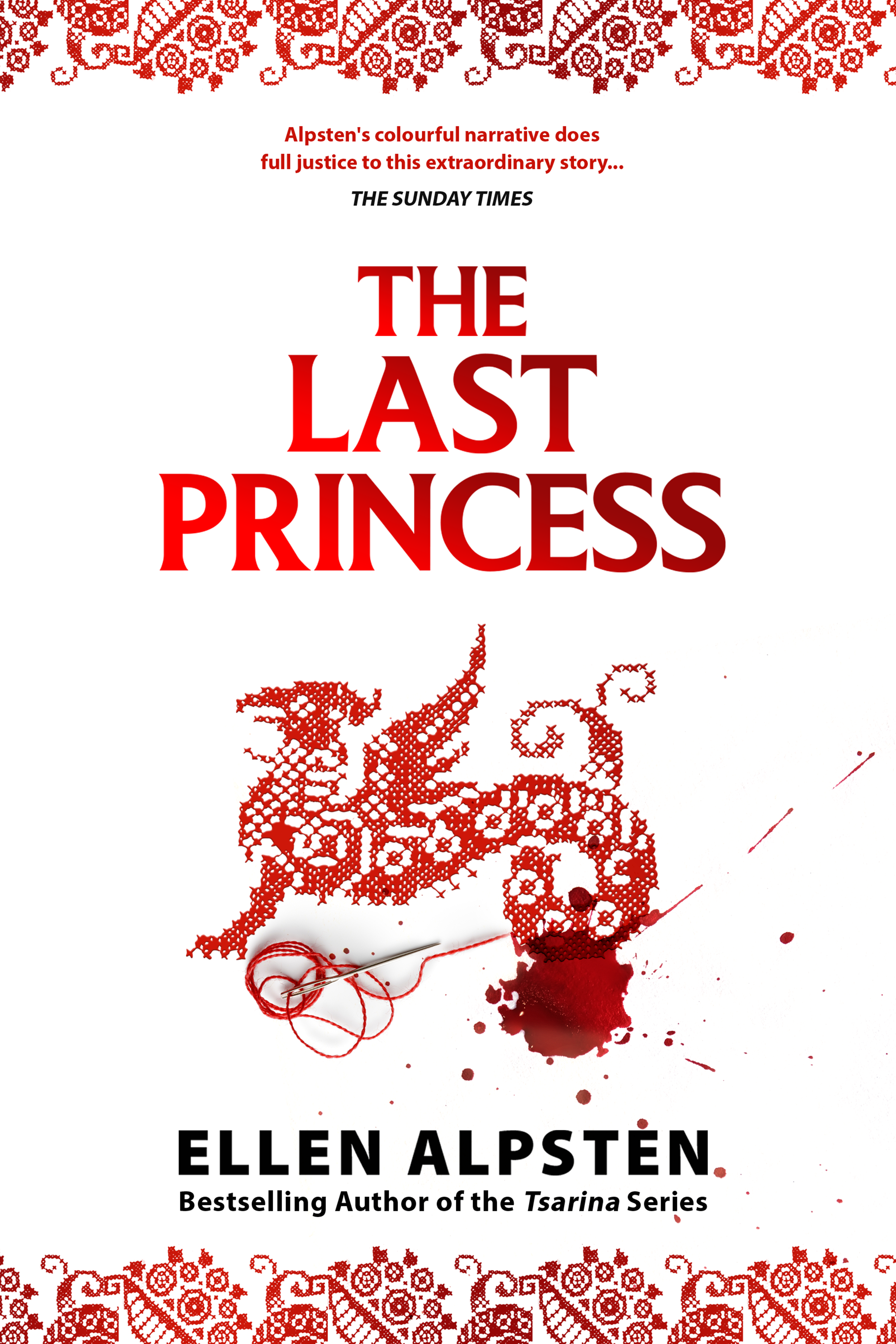
My new novel ‘The Last Princess’ is about Gytha Godwinson, the daughter of England’s true House of Dragons and of its last Anglo-Saxon King, Harold II. Godwinson – isn’t that in 1066, that hour zero of the British Isles? Yes, it is. But if this vast timespan is an enormous challenge, it also gives you great liberty.
Yet rule number one of writing historical fiction is stringent research before you even think of picking up the pen. I read for almost a year to immerse myself in this long bygone world. Research is the rigid, non-negotiable frame in which the story and the plot may teem and swarm as the most colourful of images – an image I am determined to paint in ‘The Last Princess’. A reader gives me their most valuable – and that is not their money, but their time.
But the Anglo-Saxons treaded famously lightly on the surface of this earth, building in mud, wattle, and daub and living in harmony with nature and its seasons: call it medieval mindfulness. If their ‘settlements’ are long gone, Bosham’s chapel is largely unchanged since Anglo-Saxon days. The distinct two storey architecture of Gytha’s family home, Bosham Manor, is depicted on the Bayeux tapestry. It is here that Gytha’s story starts, during a raucous Modranecht, and the candle-lit glory of a great Hall. But already, the seed of discord is sewn, and it turns the ground beneath her feet into quicksand. The events of that evening will swallow her life and her world, forcing her forward into her fabulous fate. This fills the firm framework of research such as an image popping with colour, swarming and surprising! Gytha’s times – the High Middle Ages– were an era of intense change, especially for women.
By autumn 1066, Christianity had reached most corners of the European world. Historically, there is much more evidence of women and how they interacted with the world around them, both religious and secular. Yet it also triggered a type of repression in which women’s bodies are seen as inherently polluting. At the same time, Christianity enables female spiritual growth and the development of canon law also impacted Christian women’s status. If the Fourth Lateran Council solidified the need for consent within marriage, Thomas Aquinas dictated that women owed their husbands ‘a conjugal debt.’
It is in this field of tension that Gytha grows up: ancient rites clash with strict Christian morals. This gives Gytha the courage to question the powers in place and makes her story irresistible: prepare yourself for a wild ride. ‘The Last Princess’ is stringent historical fiction that teems with trolls, malevolent stars, green-faced fairy folk, giants, nasty Norse sorceresses, handsome hunks, and an evil spell that keeps our beautiful, flame-haired Princess captive – and it’s all true. After she witnesses the Battle of Hastings through a crazy twist of super-natural story-telling – we are a 1000 years ago, aren’t we? – Gytha’s life has different plans for her; or does she have different plans for her life? She dares the unthinkable and as she faces fight or flight, she picks both: Gytha lives trial, terror and finally triumph. Her story bridges myth and modernity: She speaks in a strong, clear and modern voice about the demise of a cursed kingdom and the emergence of a new empire.
But which empire is it that the last Anglo-Saxon Princess founded?
Let me surprise you: I am writing book two of the series ‘The Sunrise Queen’ as we speak.
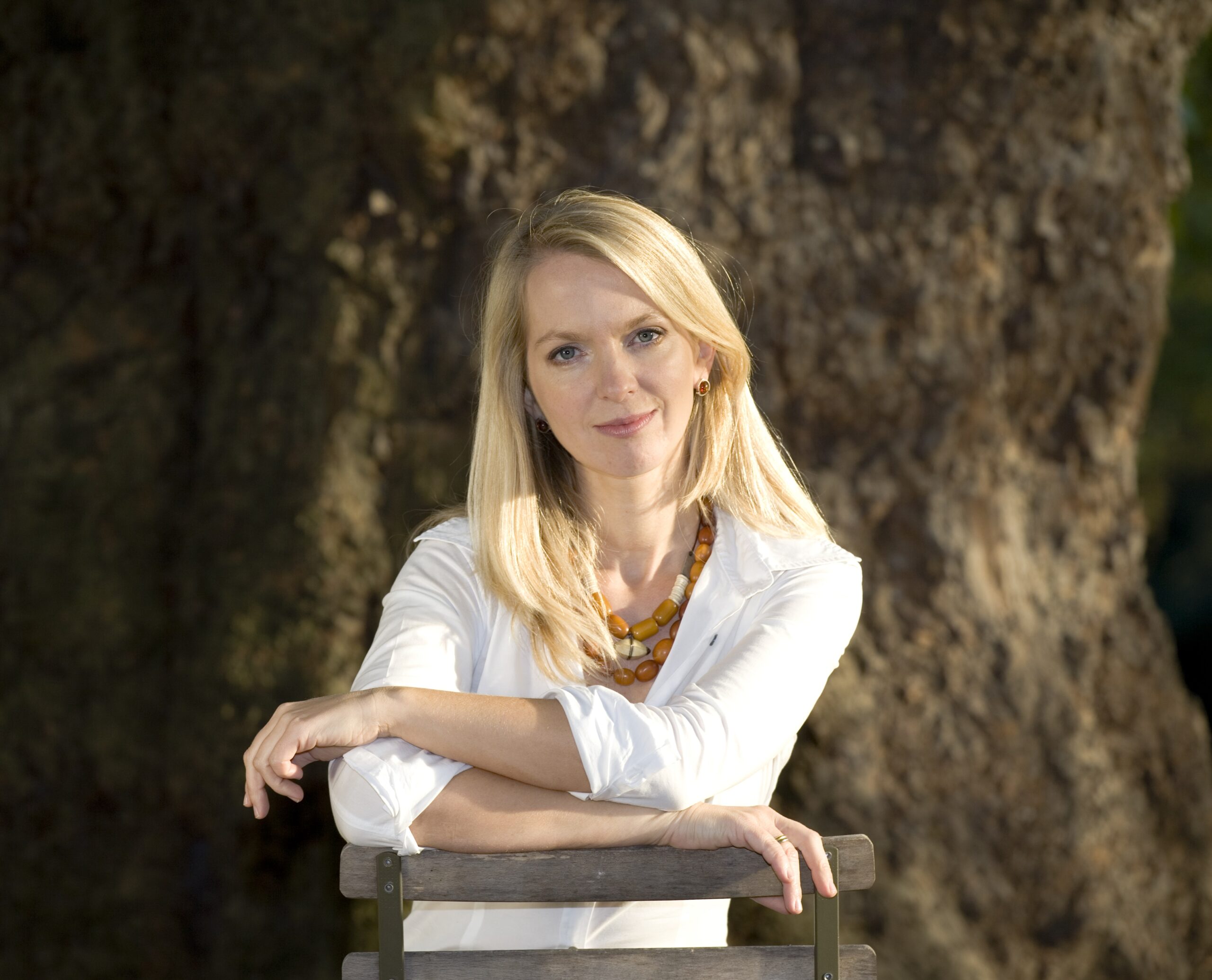
Ellen Alpsten was born and raised in the Kenyan highlands and holds a MSc from the IEP de Paris. She worked as a News-Anchor for Bloomberg TV before writing fulltime. Her debut novel ‘Tsarina’ and its sequel ‘The Tsarina’s Daughter’ (both Bloomsbury Publishing) is widely translated and were shortlisted for numerous awards.
I’ve written since I can remember. I wanted to be a journalist from about 6yo and my passion for telling stories has continued since then! It was lockdown that gave me the time to write my first book, it gave me a chance to escape
Where do you get your inspiration from?
Oh everywhere! For my romcoms it’s a mixture of people watching (listening!) and dreaming of exotic places. For the historical ones I have a real passion for telling forgotten women’s stories, particularly from the early 20th century so I’m often on the lookout for the next story. Swim was inspired by something I saw on the Antiques Roadshow, whilst the one I’m working on at the moment was influenced by an advert I saw!
What’s your writing routine?
I don’t know if it’s a routine to be honest. I’d love to say I have a special desk with a view where it’s all peaceful, like the writers of yesterday, but mainly it’s write whenever I’m free. Sometimes I can get a chapter down first thing in the morning, other times it’s much later in the day. If I’m writing a book I do tend to try and get a chapter down a day as a minimum, so I don’t lose the momentum.
You also write novellas as Holly Green which is very cool. Can you tell us more about that?
The novellas were a way for me to dip my toe into writing romcoms, but I thought it best to write under a pen name whilst also bringing out the other books (it’s been a busy ten months), to prevent confusion. I like the novellas as they’re all around 40k, they’re all marketed as fun, light reads, and I love the response I’ve had to them! They’re called the Secret Series, but can be read in any order.
You have written for twenty years, what advice would you give to aspiring writers?
Write the thing. I know it’s tempting to go on loads of courses and read lots of advice, but honestly, the two things are write the thing you want to say, and make sure you read loads too, whether that’s in your genre or the magazine you want to write for. You’re not a writer if you’re thinking about writing a book…but you are if you’re actually putting words down on paper!
You write both historical and contemporary fiction. Do you have a favourite?
That’s like trying to choose a favourite child… I love them both equally because they do different things for me. I love writing commercial and romantic fiction because I love telling a fun story, I love bringing the way I view the world to paper, whereas with historical fiction it needs so much research and can be a slog to get it to work, but once I’ve got under the skin of the character and can say what I want to say, something clicks and the words flow.
Star Survivor is based on reality television. Did the drama those shows have make it easier or harder to write the book?
To be honest, reality TV isn’t just about the drama on screen, it’s as much about whatever is happening off screen too. Take Love Island, we see what’s on screen, then we discuss it all on social media and make judgements, and then afterwards we dissect relationships and people as though they’re characters. It’s too easy for us to forget they’re real, that’s part of the reason I wanted to write SS.
You write about a real life Olympian, Lucy Morton, in Swim. How did you weave fact and fiction together so well?
I wanted to celebrate Lucy’s story, I was surprised noone had before. But I realised that it couldn’t be a book ‘just’ about swimming, there needed to be things other people could be interested in. That’s where the fiction came into it. I wanted to talk about what was happening in those times in the context of a woman’s place. I love Swim, and am thrilled at the reception it’s getting.
I love your social media posts. Especially TikTok. Do you have any advice for writers who want to put themselves out there?
To be honest, all authors need to be on social media, unless you’re Margaret Attwood! I’d recommend choosing one or two channels and sticking with them. The most important thing is to be real. Don’t try and be someone you’re not, or follow trends. It’s all well and good trying to go viral, but most of the times there’s no real rhyme or reason to a successful sm post. Be yourself and have fun. If you don’t want your face on there, don’t do it. Post about the themes of your books, or your research but mainly try and engage with people.
What’s next for you?
Lots! The third in the Secret series is out September, Secret Crush. I’m working on a second historical fiction novel set in the same era as Swim, and have a couple of other projects in the pipeline too. Though three novellas and two books in 11 months is enough for this year…