SISTER SCRIBES’ GUEST: MORTON S GRAY ON WRITING AS A MUM AND A CARER

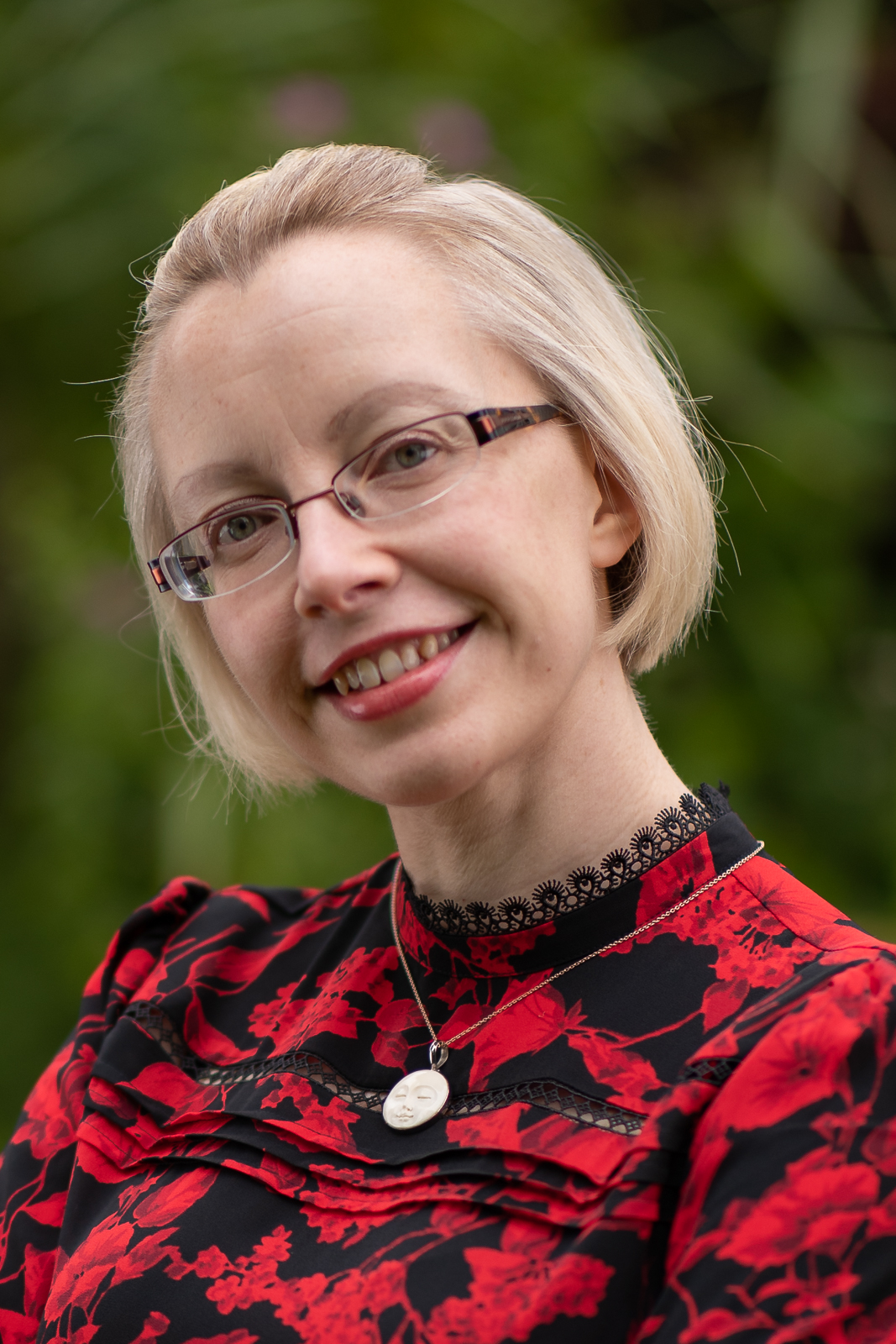
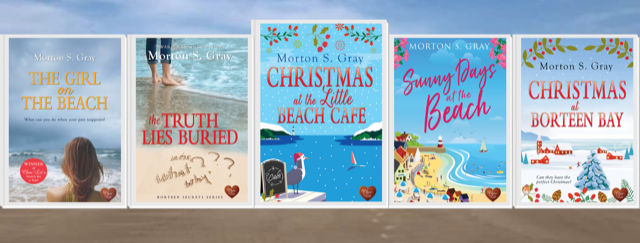
Today I’m joined by author friend Morton S Gray who writes romance with a mystery to solve for Choc Lit all set in her fictional seaside town of Borteen. The better I get to know Morton, the more we seem to have in common, but I am frankly in awe of her daily regime – it’s an absolute inspiration!

I often hear people say that they could write a book, but they’re too busy. So, how do you fit writing into a busy day? I thought I’d give blog readers an idea of how I personally do it. Don’t get me wrong, there are days when I don’t manage a word, but here is an example of a good day!

When I started to compose this post, I realised how important thinking time contributes to the number of words I manage to get down.

Alarm sounds at six o’clock, ten minutes thinking time about latest work in progress, book seven, a Christmas novella for November 2021 publication. Continue thinking in the shower where ideas really begin to flow stimulated somehow by the scents of the shower products. Dressing, I jot down ideas from the shower so I don’t forget, e.g. “dancing on the beach scene” “shock event near the Christmas tree”.

Drive son to station and on way back mull over how to write on from my earlier writing prompts. Breakfast, sit at pc and type. I’m now so ready to write that I can produce about 800 words really quickly.

Tidy house, washing, dishwasher. Early walk with homeworking hubbie. Maybe float a few ideas about my plot to see what he can add. He works in IT but can often give a different and male perspective. We once outlined a complete murder mystery on our walk, but I’m yet to write that one. Other ideas often come to me when walking too.

Back to computer and write. Around 400 words this time.

I visit my mother who has dementia every day after lunch. Sort out problems, shopping and tablets. Mom is a surprisingly good sounding board for my writing too. She’s usually reading one of my books and the plots are always new because she can’t remember the stories.

Once home I tackle admin, phone calls, tweeting, Facebooking and emails. If I’m lucky another quick writing session, let’s say100 words.

Back to station to collect son, listen to music on the way back as lyrics will jump out at me to use as writing prompts. I’ll make notes on my phone waiting at the station, but little time to write until after our evening meal.

Usually add another 300 words in the evening with my laptop on my knee and one eye on a television programme. After writing from notes on phone, I’ll review what I’ve written so far, add extra words and description.

So, by bedtime I should have an extra 1,600 words to show for my day. If it’s a good day sometimes nearer 2,000. Off to bed, but crucially before I turn out the light, I think about any sticky points in the manuscript and often have an answer in my head by morning.

Sleep and repeat.

Morton S Gray’s fifth book, Christmas at the Little Beach Café, was published in November. You can catch up with Morton, her blog and her books on her website www.mortonsgray.com


5 Books That Changed Me: CJ Daugherty

 CJ Daugherty The Secret History, by Donna Tartt

This fast-paced but dreamy novel set at a private university in the New England mountains, starts with a murder and tells the story of how it happened in reverse, as a group of elegant young friends obsessed with Greek mythology take everything too far, and close friendships fall to pieces. In her most restrained and elegant book, Tartt performs a magic trick by inventing fascinating characters who are capable of cold-blooded murder, and then making you like them. You know from the start they are killers, and yet you still want to be their friend. I re-read this book regularly.

The Likeness, by Tana French

This Irish crime novel by Tana French is one of my all-time favorite books. I’ve read it multiple times. It follows a female detective as she investigates a murder victim who looks exactly like her. Using their alikeness as a weapon, she takes over the dead woman’s life – moving in with her friends into a house in the countryside outside Dublin. She begins investigating them from within but then, slowly becomes seduced by them, and the rambling mansion where they live. Unfortunately, this is a very dangerous decision. Because one of them is a killer.

The Night Circus, by Erin Morgenstern

This is an elegant, wandering, multi-strand tale of a mysterious circus that travels in secrecy and arrives without warning. Nobody knows when or where it will appear, or how long it will stay. The tents are filled with magical, mysterious displays. People are obsessed with it, and for good reason. It could be dangerous or simply wonderful — even after reading the book it’s hard to know which. Either way it doesn’t matter. It’s so beautifully written, I long to wake up one morning, as dawn washes the dark from the sky, to find the circus has appeared in my town. 

Station 11, by Emily St John Mandel

I bought this book after everyone I trust in the world told me it was amazing, and they were ALL right. It starts in a pandemic apocalypse (sound familiar?) and then jumps forward in time to follow a group of survivors who are exploring the remains of America in a roving band of Shakespearean actors, travelling from settlement to settlement performing plays for people who can barely remember a time before life was like this. It’s both scary and thoughtful, and ultimately filled with hope. Maybe just skim the first chapter while we’re all locked in our houses, but the rest will lift you.

Circe, by Madeline Miller

This feminist reinterpretation of The Odyssey told from the perspective of the banished witch, Circe, is the most beautiful, heartbreaking, glorious look at the Greek myths in all of time. Circe’s story is bittersweet. She’s young and voiceless, expected to be nothing but beautiful and compliant. Because she isn’t either of those things, she’s punished by being banished to an island to live completely alone. There, in isolation, she finds herself. The tale is told with wonderful compassion. It’s funny and dry, and terribly poignant in places. I cried 3 times listening to the audiobook. Honestly, it’s so gorgeously written I don’t know why I bother.


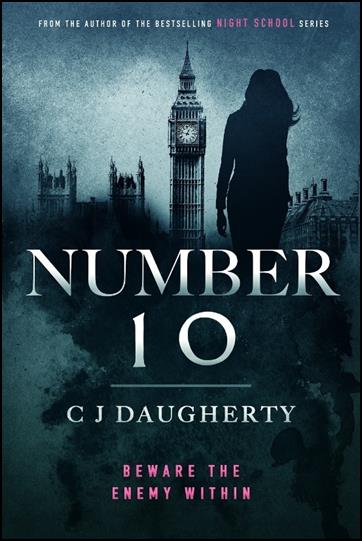
Number 10 by CJ Daugherty is out now, £9.99 from Moonflower Books available on Amazon here.


My Writing Process Leith MacArthur

Leith MacArthur, author, writerMy Writing Routine:

I write every day for 2-4 hours, from roughly 8am to 11am, depending on how open my creative flow remains. I consider the “flow” to be a kind of pathway or conduit to the Infinite, where all events, thoughts, problems, solutions, lives and deaths occur, whether past, present, or future.

A Bit About Me:

I began writing when I was about ten years old. Short stories, poems, and a children’s book about a germ who saves the world. When I was introduced to alcohol and drugs at the age of fourteen, I became instantly addicted and my internal writer went into a coma. I wrote not another word until my mid-thirties when a novel burst out of me. I continued to write novels, but everything I expressed, whether it was through writing or raging, was being forced through a translation device, fueled and energized by drugs and booze. I drank, drugged and wrote for a total of forty-seven years. When, at the age of 66, I finally got clean, my writing began to take on a life of its own: it began to mature in the process. In essence, the act of writing became “natural” and, for the first time in my life, I realized I had been born with the gift of expression. My recently released novel, The Death of Harry Crow, is my best work. I’m now hard at work on the sequel, and the writing continues to flow with ease and assurance. 

What I Have Written, Past and Present:

Various poems and short stories; a children’s book called, Gerry the Germ; a supernatural thriller called, The Duplicating Man;  a book specifically for women called How To Buy An Excellent Used Car; a biographical novel (part memoir) about my life called, An Artificial Life;  five novels in The William Snow Series, Beneath the Bridge, The Stones of Mirabella, The Barnes and Blackwell Affair, The Finding Man, and (the only one published from the series) The Death of Harry Crow. I am currently at work putting the finishing touches on the sequel to Harry Crow, called The Man in the Moon. It’s good stuff.

What I Am Promoting Now:

The Death of Harry Crow

A bit about the process of writing:

I write directly from my thoughts. No plan. If I don’t happen to have any interesting thoughts that are worthy of words, I put down words anyway. Random words. Misspelled words. Incomplete sentences. It doesn’t matter. Eventually, something readable comes out.

How Do I Do My Structure:

These days I write only novels. I have no plan and I use no outline. Because I write straight out of the Infinite, I have no real structure; I just write until the work announces to me that it’s done. However, because I write thrillers, I do prefer to write short, impactful chapters that keep the action going, a bit like a Gatling gun.

What Do I Find Hard About Writing:

The toughest thing for me is dealing with Creep, the ungrateful primate who lives in a cave at the back of my skull. When Creep comes lumbering out of his cave with his knuckles dragging along my brain pan, he has but one purpose: to keep me from becoming a self-supporting writer. Creep came close to killing me (his true objective) by convincing me, across a span of 47 years, that drugs were the only way to deal with pain. Creep almost won, but when I learned that expressing pain is the only way to heal it, he lost most of his power over me. He’s still there, but I know how to deal with him now: I write.

What Do I Love About Writing:

I love that I can leave. When I write, I leave the world behind me: it’s only me, the words, and the fantasy in my head. I have unlimited power. I can do anything.

Advice For Other Writers:

Do these three things: read, read, and read. If you are meant to write, the words will follow.

The Death of Harry Crow by Leith MacArthur available in paperback, £9.99, via Amazon or to order in any good bookshop. 


My Writing Process Terence Gallagher

My writing routine:

I spend a lot of time working out in my head what I am going to write before I commit anything to my iPad which is my preferred writing tool. Only one to two hours a day is spent typing. I like to work out phrases and dialogue while I’m out walking my two Irish Setters or riding my bike. I also do a fair amount of research while I’m on the go. I use my iPhone in coffee shops to surf the web as I nail down the details of locales I am using, or to check historical facts. 

A bit about me:

I am Irish. I grew up in Dublin in the sixties. I am a proud graduate of  Trinity College Dublin. After College I went into management consultancy and ended up working in a wide variety of cities and countries worldwide. I am married with three grown children and split my time between Naples Florida, and Howth, a small fishing village north of Dublin. In both cases I live by water. I find it therapeutic to look out on a seascape whether it be the Gulf of Mexico or the Irish sea. My hobbies include, biking, working out, and walking. I am a music lover with a particular affinity for classical and Blues. My home in Howth  stands on an acre and this has made me a reluctant gardener.

What I have written, past and present:

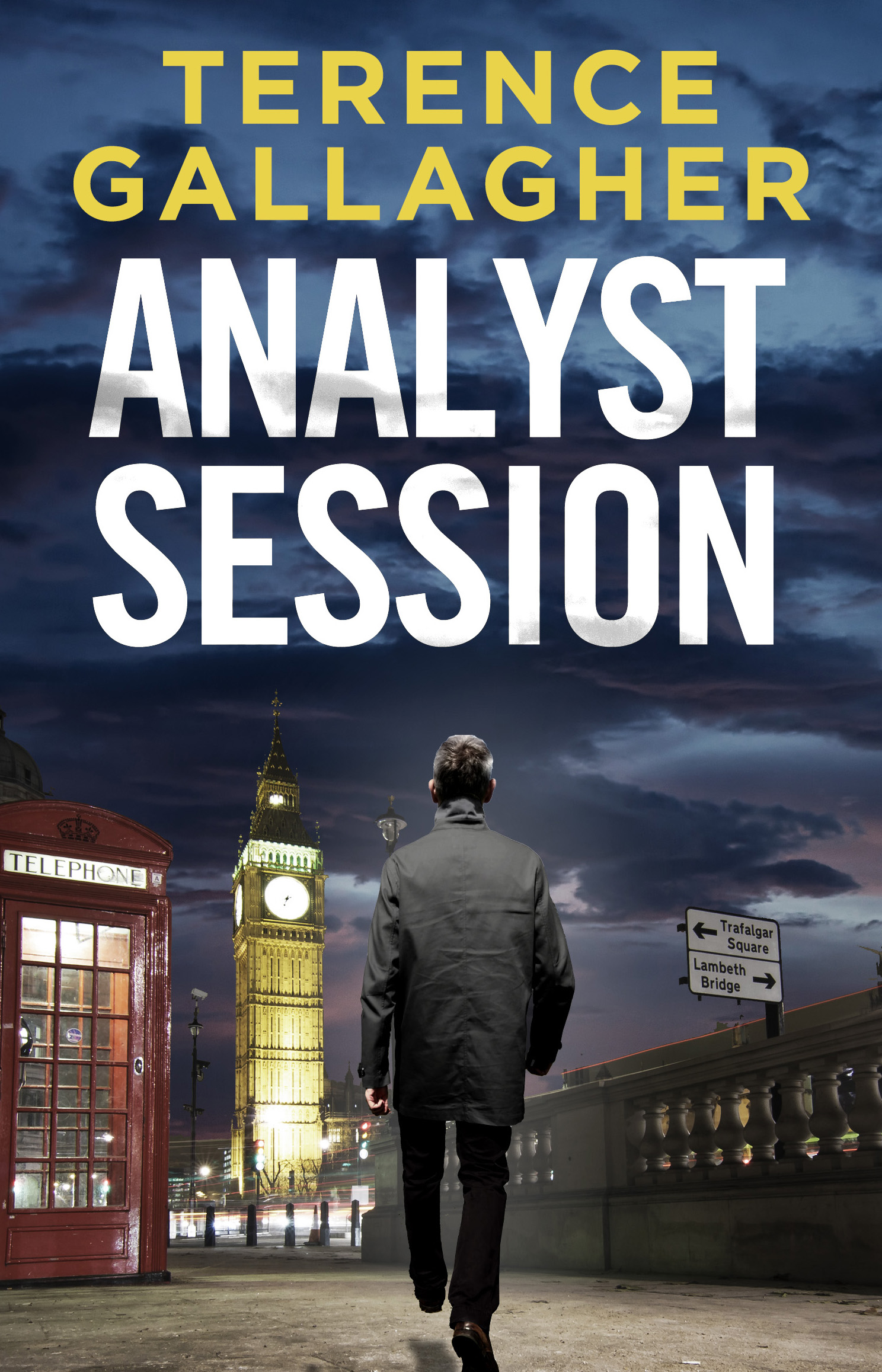
So far I have published two novels, Fujita 4, and Analyst Session. Both of these are available as ebooks and in paperback. I also had Fujita 4 professionally narrated and it is in audiobook format. I found it very exciting to have my characters brought to life and given a voice by a skilled actor. I am currently working on my third novel, A Coup in Makati.

What I am promoting now:

 Analyst Session was just recently published and I am busy with promotional activity. It’s quite a juggling act to stay on top of PR for one book while trying to make progress on the next.

My writing process:

I use Scrivener word processing software to structure the outline of a book before I begin writing in earnest. Scrivener is specifically designed for authors. I create a summary of each chapter. I also use it to store sketches of  all the major characters and to keep research notes. I then methodically work my way through from start to finish of the book. This means that each day I know what I have to work on next and I can keep from being overwhelmed by the magnitude of my task.

What about word count?:

As regards word count I go in aiming to create a work of between sixty and seventy thousand words. If I know how many chapters I have outlined, I roughly know how many words a chapter. This helps  me figure out where the plot is light or I need to do more with characterisation. I run work in progress through Grammarly. This is a decent software package that will catch typos and many grammatical errors. 

How do I create my structure:

It starts with the central character. I have to really know and understand him or her. Its as if they stand alone on an empty stage. I then like to create life situations which test my protagonist’s moral belief system. The milieu in which this plays out will be a place where I have lived or spent significant time in my own life. It’s easier to have the settings for the story be realistic. Other characters whose actions will precipitate the moral conflict then come to life. 

What do I find hard about writing:

The most challenging aspect of writing for me is communicating the interior emotional life of my characters, particularly my female characters. The daily word output slows dramatically when I am wrestling with this. 

What I love:

What I love about writing is conceiving a cast of characters, placing them in my fictional world, and seeing how they react and evolve. They tend to take on a life of their own. It wreaks havoc with the plot-line a lot of the time but I wouldn’t have it any other way.

Advice for other writers:

Advice I would have is take advantage of some the great software out there to help with the writing process. I have also used a variety of professionals to help edit and polish my work. I have used Reedsy and Fiverr to hire these and by and large it has worked out well for me. 

Georges Simenon, the author of  the Maigret stories was able to crank out a book in eleven days! It took Flaubert five years to write Madame Bovary. Every writer has their own pace. Writing is a solitary activity. It requires self discipline. All sorts of distractions can get in the way if you let them. It is important to have some sort of routine and schedule when setting out to write something.

Analyst Session is available as an ebook or in paperback from Amazon.

SISTER SCRIBES: JANE CABLE ON THE START OF A NEW ERA

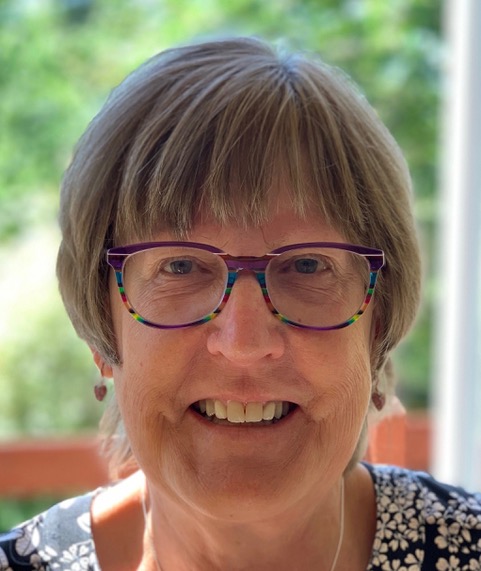
This will be the last time I sharpen my pencil to write a Sister Scribes article for Frost. There is no great drama, and next year will bring an exciting new group of writers to the magazine, but for now Sister Scribes has run its course.

When we started two years ago our writing careers were in very different places. Not all of us had publishers or agents, although some of us had indie published very successfully. We all had the luxury of a little more time. Now we find ourselves working on multiple projects, often for more than one publisher, and even with five of us in the team, producing a weekly article just isn’t tenable.

Of course it doesn’t mean we won’t remain friends – the connections between us are too strong for that. We have been through the best and worst of times together, and that forms incredible bonds. As we have said so many times before, writing can be a lonely business unless you have buddies.

I don’t think our positions are unusual. Everywhere I look around me, there are writers juggling tasks, deadlines looming over them, professional reputations on the line. It seems to me that once you are lucky enough to break down the doors to the publishing world, you can quickly become in great demand, while equally talented writers who perhaps don’t have the confidence, or the perseverance, or the luck of the right book landing on the right desk at the right time, look on from the outside, waiting for their turn.

But enough of this philosophising. We are close to the end of a year that has been frankly terrible for many, so let’s look forward. Let’s be positive and hopeful as we stare down the barrel of 2021.

Sister Scribes will be replaced in Frost by two elements, brought to you by the same team. Our ever popular monthly Reading Round Up will become Cariads’ Choice, and fortnightly we will bring you Welsh Writing Wednesdays.

The team is broadly the Cariad Chapter of the Romantic Novelists’ Association, with a few other Welsh writers, or writers based in Wales, added for good measure. Although I live in Cornwall, because I am from South Wales, Cariad feels as though it is my natural chapter, and lockdown has made attending events so much easier; just a quick link onto Zoom rather than a three hour drive.

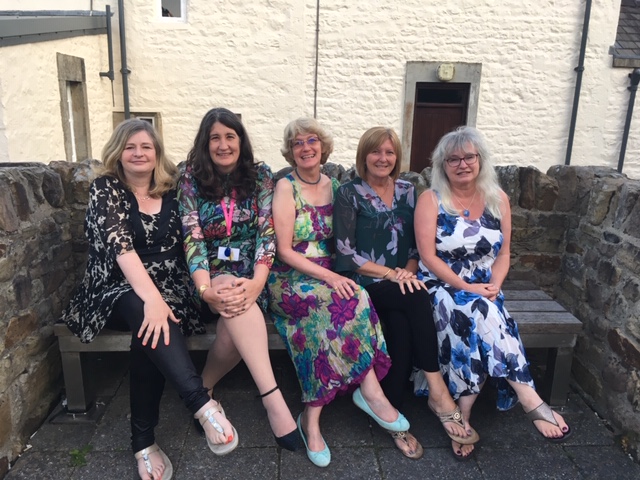
I met my first Cariads, Sue McDonagh and Jan Baynham, at the RNA Conference in 2017 and two years later they shared a flat with the Sister Scribes. I knew Jill Barry by email, because we were both signed to Endeavour at the time, and added Evonne Wareham to the list when we did a library talk together in Cardiff. Former Frost ‘Take Four Writers’ contributor Lucy Coleman is also a member, as is Sister Scribe Kitty Wilson, as she only lives just over the border in England and has become a Cariad too.

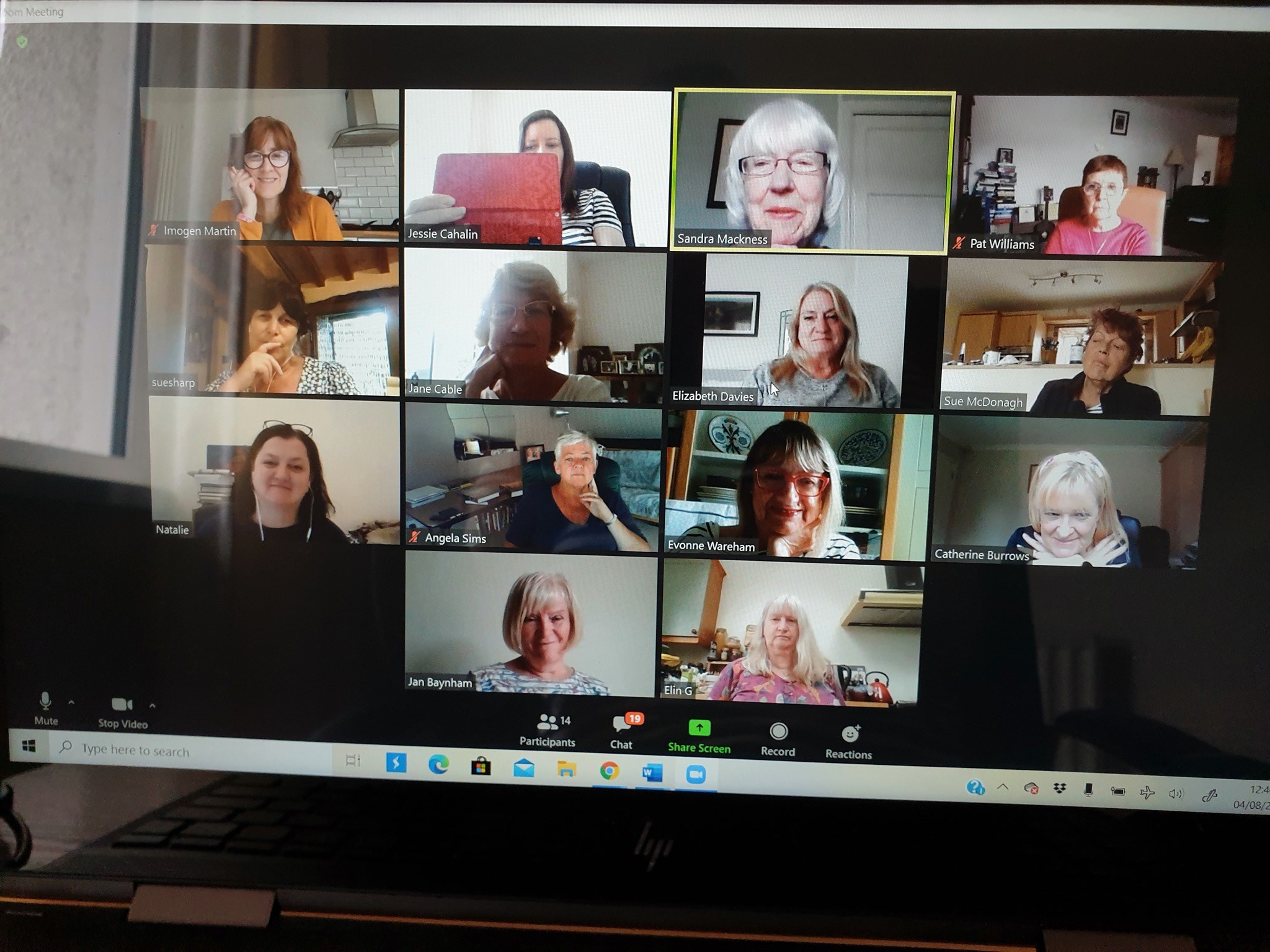
We have a private Facebook group and monthly Zoom meetings, and through this I have come to know the other members of the chapter, and I am sure you will enjoy doing the same next year. The articles pledged will be wide ranging, but inevitably landscape will feature more than once, as will Dylan Thomas. And I just know you are going to enjoy them.


My Writing Process CJ Daugherty

I’m a former journalist and ex-Whitehall civil servant. I was raised in Texas, but have lived in Britain most of my adult life. 

I’m the author of the boarding-school thriller series, Night School, and the US-based crime series, The Echo Killing, set in the southern town of Savannah. 

My new novel, Number 10, follows the 16-year-old daughter of the new prime minister as she rebels against the constraints of living in Number 10 Downing Street, and the intense security that surrounds her. When she stumbles across a Russia-led plot to kill her mother and replace her with a puppet prime minister, she’s determined to stop it. But will anyone believe her? 

 A bit about your process of writing. 

I discovered long ago that trying to write in the morning was pointless for me. I use mornings for admin and other work, and I usually settle down to write at about 3pm. I turn off the internet and the phone, and I write for four hours straight, stopping at around seven. If the writing’s going well, I often pick it up again after dinner and write until midnight. 

 CJ Daugherty

Do you plan or just write?

I plan a moderate amount. My first step is always a one-page synopsis, which I share with my agent. If she likes it, I expand it to two pages, and then to eight. My theory is, if I can’t get eight pages out of the plot, I don’t have a big enough of an idea for the book. Once I do have that much material, I sit down to write chapter one. 

What about word count?

Word count for me is a tale of three halves, basically. In the first 10 chapters of the book, I’m happy if I reach 500 words a day. From chapter 10 to chapter 20, I expect 1200 words a day. After chapter 20, if I don’t reach 2,000 words a day, it’s a bad day.

 How do you do your structure?

My structure is freeform, but I shoot for a W-shape to every plot. Start on a high. Then develop character and explore the plot. Build to a mid-book crescendo. Then dip the pace a little as the characters investigate the main incident and I thread in b-plot and c-plot. End on a high. One of my books (A Beautiful Corpse) ends with the main character deploying a baseball bat against a murderer. Nothing like a fight scene to get the story moving.

 What do you find hard about writing?

It’s very hard for me to be patient with the amount of time it takes to conceive of and create each book. Even once I’ve got the idea and it’s begun to take shape, there’s still months of thought and planning that has to happen before I can build flesh and blood around the basic bones of that first idea. Taking the time to methodically go over and over the same content requires real effort.

 What do you love about writing? 

The magic of it. The moment when I can hear my characters’ voices in my head. The way I can see the locations in the book in vivid, three-dimensional form, as if I’ve been inside their houses. Stood on those porches. Walked through their woods. I spent so much time inventing the inside of Number 10 Downing Street for my latest book, I felt as if I’d lived there myself. It’s an extraordinary illusion, and it comes from taking the time to build those places in your mind, and on the page.

 Advice for other writers. 

To get through the start of a book it helps to know what the ending will be. When you begin planning, think it through all the way. Once you have a beginning and an ending, then you can spend time on the rest of the journey. I think most writers give up when writing because they get stuck, and I think they get stuck because they don’t know exactly where they’re going. Find your ending, and the rest may fall into place.

 Number 10 by CJ Daugherty is out now, £9.99 from Moonflower Books available on Amazon here.


JANE CABLE INTERVIEWS CAROL THOMAS ABOUT HER CHRISTMAS BOOK FOR CHILDREN

In a year where kindness and thinking of others have been brought to the fore, I am delighted to be chatting to Carol Thomas about the release of her latest children’s book, Being a Friend at Christmas. You may be more familiar with Carol as a romance writer, but her children’s books are wonderful too.

In this, the second in her Little Pup series of books, Little Pup is looking forward to his first Christmas in his new home, but he also remembers the dogs he left behind in the shelter and wants them to have a happy Christmas too. Little Pup has an idea, but he needs Father Christmas’ help to make his wish come true.

I love the premise of the book and the fact it carries a message of thinking about others, what inspired you to write it?

Having seen Little Pup settle into his forever home in the first book, I couldn’t resist revisiting him at Christmas. I had the idea for the story soon after writing the first. As a teacher and a mum of four, I think children are good at grasping concepts, such as empathy, kindness and generosity, from the books they read. Stories can be enjoyable and fun, as well as inspiring a conversation, and I believe that’s what this book does.

I know you illustrated the book too, which do you prefer illustrating or writing?

Writing definitely, but I did love drawing the pictures for Being a Friend at Christmas. I drew them during lockdown while homeschooling my son and supervising my two high school aged daughters with their studies. It was quite therapeutic. I love dogs, so bringing Little Pup to life was a lot of fun.

How did you manage to keep the creativity going during lockdown?

There are five of us at home, and it was actually lovely to find our own rhythms for the day. We started work at times that suited us, went for walks, and did things like sit down and eat together – something usually prohibited by getting to various after-school clubs. I think focusing on those positives and not putting pressure on ourselves really helped.

I wasn’t the only one who got creative in our household, either. My daughter started making bracelets, earrings, bead art and keyrings and opened an Etsy shop. She’s had some lovely, positive feedback and I think it’s great to see a teenager being creative and using their initiative. You can check out her crafts here: https://www.etsy.com/uk/shop/RedDaisyCrafts

 As people turn their attention to buying for Christmas, I am sure they will make great stocking fillers, as will your book.

Thank you. I hope so. I love to share Christmas stories with my own children and hope others feel the same. There is something very special about sharing a book, and snuggling up in the winter months complete with pyjamas, slippers and a heartwarming story; it’s is a real treat!


And with being a friend and thinking of others in mind, between now and Christmas, Carol is raising funds for Angel’s Garden, dog shelter, in Xanthi, Greece on all purchases of Being a Friend at Christmas, made from this link: https://www.carol-thomas.co.uk/blog-dogs-at-christmas/

SISTER SCRIBES’ GUEST: ALISON KNIGHT ON WRITING A VERY SPECIAL BOOK

Alison Knight is a writer, teacher and editor living within sight of Glastonbury Tor. She is a member of the Society of Authors and The Romantic Novelists’ Association. She carries the dubious distinction of having introduced Kitty and Jane at an RNA conference.

I’ve always found entertainment, wisdom and solace in reading. When times are tough, it’s good to be able to escape into a story that takes you away from your everyday life and worries. So I suppose it was natural for me to become a writer.

Creating a legacy

My latest book, Mine, which is published by Darkstroke Books, is my fourth novel and a project that is very close to my heart because it is based on real events that happened in my family in the late 1960s. I’m the only one left who can tell this story and it was important to me to wrote it in order to introduce my children, nieces and nephews to people that have gone before. It’s my legacy to them, helping them to understand that the world was very different fifty-odd years ago and the people I portray in Mine were driven by the attitudes of society at that time. If the same things happened today, the outcome would be very different.

Understanding why

I also wanted to write Mine for myself. My memories of that time were stuck in the mind of a ten-year-old child. By putting myself into the minds and shoes of the main characters, I was finally able to understand what happened with an adult’s perspective.

I’ve written it as a novel rather than a memoir because I didn’t want it to be all about me. Instead, I wanted to explore how ordinary people made decisions that led them into an extraordinary situation. I was also aware that I would never be able to find out exactly what happened as the people who could tell me are not longer here. Instead I used my memories, conversations with family members, newspaper reports and official documents to piece together the story. Where there were gaps, I used what I knew and took into account the culture of the times and used my imagination to fill them. It soon became clear that the guiding themes were class, ambition and sexual politics.

Getting published

It has been an interesting journey to publication. At first, the book was far too long at 140,000 words for any publisher to take it on. A rewrite reduced it by over 20,000 words. Some agents and publishers suggested I give it a happier ending or turn it into a psychological thriller. If Mine had been pure fiction, I’d have considered these suggestions. But because it is based on real events, there were some things I simply couldn’t do.

The question of genre was a problem too. It’s a love story, but not a romance with a happy ever after. It was turned down several times because publishers weren’t sure how to market it. When asked to categorise Mine, I describe it as a family drama, or domestic noir.

But then I found Darkstroke Books, an excellent small publisher with a reputation for hard-hitting fiction. After years of rejection, Darkstroke’s acceptance happened quickly and Mine is finally being launched in November 2020. The editing process was fairly painless – my brilliant editor totally ‘got’ what I was trying to do and Darkstroke have been wonderfully sensitive and supportive.

So, how do I feel about finally sending this story out into the world? I’m excited, but also slightly terrified. It’s not often a writer is featured as a character in her own novel!


Find out more about Alison at www.facebook.com/alison.knight.942