Advantages of the writing service

From this article, you will get to know what main advantages of the writing service are and will discuss how and where you can order the college paper.

The paper is the small report of the certain theme or the discipline, where you will need to present it in the front of the audience and sometimes, even, with the presentation. The paper writing is a small preparation to more difficult and serious work like the thesis or dissertation. The work has to be interesting, unique, and with the proper content. The volume of the paper should be, on the average, 10-20 pages. The content of the information has to relate to the given topic. When you don’t have enough time to write or you don’t know how to write it, then the writing service will be the best place to buy college papers.

The reliability and the guarantor of the quality

Papers, tests, theses are usual tasks at the college and university, but students not always can fulfill them because they don’t have the opportunity or don’t have enough time. But on the first sight, on such easy task you may spend a lot of time for looking the information and analyzing it.

To make own life easier, students start to search the information and the ready paper on the Internet. You can try to find the one, but you also can have the opportunity to get the bad mark because the main requirement for the paper writing is its uniqueness.

Nowadays, there are a lot of writing services that offer to do it for you. When you ask professionals for the help, you can be sure that it will be written from scratch and will be absolutely unique.

What do you get?

If you buy the paper, you get:

  • the result according to all appropriate methodic requirements;
  • the use of actual resources;
  • the verification of the uniqueness;
  • the opportunity for free refinement of the work during the certain period of time.

Advantages of the writing service

There are some reasons why you need to buy the college paper and its advantages:

  1. The quick response to your request. You don’t need to wait for the letter or reply too long – they will respond right away;
  2. The paper will be ready right on the necessary date and time;
  3. The working experience. Asking writing service with years under the belt, you will face with professionals who will write it and you could be sure you’ll get the positive grade;
  4. The urgency. Your paper can be ready in a day!;
  5. The work will be unique and you don’t have to be afraid the teacher will tell that you have the same paper as your groupmate (because you copied or downloaded it from the same website);
  6. The use of the newest material as the resource for your college paper;
  7. The availability of the great number of specialists in different fields who work there for years. As the result, the work is done very fast and qualitatively;
  8. Reasonable prices. Every student is able to order a paper, moreover, he can get loyalty program;
  9. Free changes/rewriting. Sometimes when the paper is complete the teacher asks to add something or rewrite it because every teacher has his own requirements, so, it will be done for you for free;
  10. You can reach the manager anytime. You can call the manager and ask how everything is going on with your paper or if you need some additional information to be added, they can react in a moment;
  11. The offer of the original work. There are only creative and qualified people and all their works are original, they create individual texts and don’t just rewrite the information from the book;
  12. The quality is the priority! The client is satisfied when he gets the qualitative work. If you have some special requirements from your academic adviser – just tell them and everything will be done.

THE BUSINESS OF BOOKS: THE DREADED S WORD

Jane Cable tries to pick out the positives of writing a synopsis

Having completed the edits on one manuscript and having rescued my rights for Another You from Endeavour Press, this month has been all about considering submissions – which in most cases involves the bane of my writing life – the synopsis.

I’m not talking about the sort of synopsis you use as you create your novel, or to check structure and record plot points as you go along; I’m talking about that big, scary, one-and-only-chance-to-get-it-right document which accompanies your submission to agents and publishing houses. The synopsis as sales tool – in particular the short version – fills me with dread in a way no other blank page can.

This time, I thought I’d cracked it. Fellow RNA member and Choc Lit author Lynda Stacey very kindly sent me her template and using it made perfect sense. Like me, Lynda writes romantic suspense and has to shoehorn complex plots into a single page. I was happy with what I’d written, but when I showed it to Claire Dyer (an editor as well as an author) she drove a coach and horses through it. Clearly I need to improve.

So, what have I learnt from this sorry state of affairs.

A template to follow is really, really useful

When you are staring at a blank piece of paper there is nothing more helpful than something which lists the paragraphs you need and gives you some guidance about what to put in each. It helps you to have a method. For my short synopsis I set out the beginning of the book, then the end of the book, and filled in the middle last. It was also brilliant for pulling out the main plot strands and that focussed me through my final edits.

You’re going to need more than one carefully tailored synopsis

I’m concentrating on the direct submissions route for my novels and am hand picking the publishers I think would be right for them and who I’m really keen to work with. I don’t mean to sound arrogant, but I’m quite comfortable being an indie author if I can’t land that special deal. But what struck me when I was making my shortlist was that they all want something different; everything from a 3,000 word essay to a two paragraph blurb. It’s so important to tailor what you send to their requirements and to show you understand where your book would sit in their portfolio.

A synopsis is not a blurb It may be a selling document, but it’s not a blurb.

I was delighted when my first choice publisher asked for a blurb as I find them so much easier to write. Of course there are similarities – both have to grab the person reading it – but in different ways. A blurb entices, teases, reveals just enough. A synopsis tells the whole story. No surprises. The most important thing to bear in mind is that a publisher or agent will be thinking about how they can sell the story – a reader will be using the blurb to decide if they want to buy it.

Not everyone you submit to will need a synopsis

Yes. Really. But don’t use it as a cop out or to select who you submit to. Most agents require a synopsis, but the length varies. So will most publishers, but some have other priorities, such as finding out about your author brand – they will rely on your manuscript to see whether your book is worth taking on. You will need to become expert in selling your novel in all sorts of ways but one thing is certain: the better you become at all of them the more chance you have of landing a deal.


BUSINESS OF BOOKS: FIRST, LAST, EVERYTHING – EBOOK PROGRAMME MANAGER MEGAN LOCKWOOD-JONES

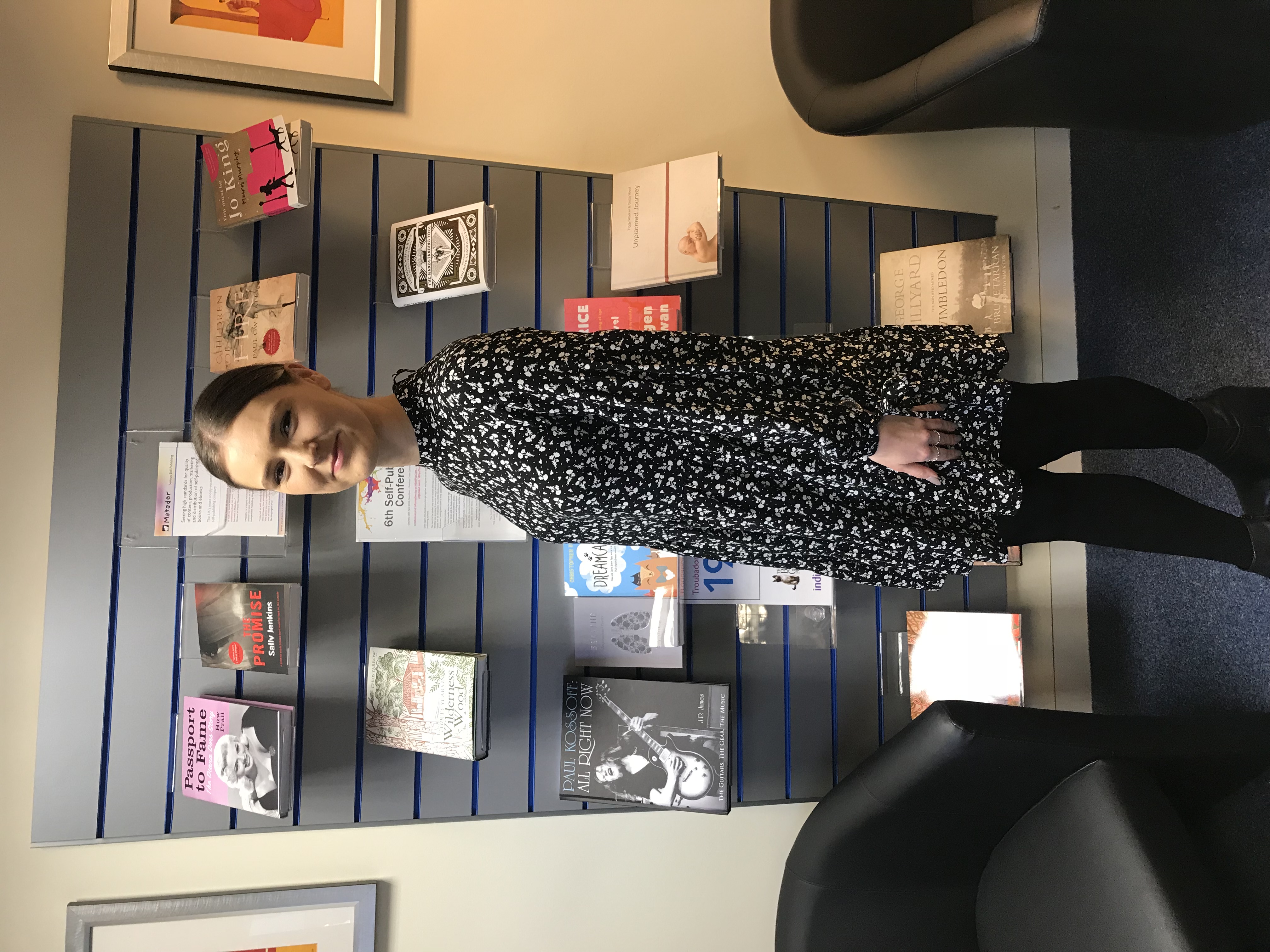
Megan Lockwood-Jones is the Ebook Programme Manager at my favourite assisted publishing house, Matador. She is the first point of contact for ebook authors and her knowledge is second to none. 

What was the first piece of publishing advice you were given?

The first piece of publishing advice I was given was to ensure self-publishing authors are choosing the right company and right services for them. At Matador we assist over 500 authors a year to publish physical and ebooks. However, it is important that authors do their research to ensure that they are using a reputable company and that the company they choose can offer the services that are right for them – not every author will have the same requirements or aims when publishing. Some may only want a few copies of a book for family and friends, others want to see their book stocked in bookshops, others only want an e-version. Read testimonials to find out what other authors’ experiences with that company were like. If you are new to the world of publishing then you’ll want to find a company that are easily contactable via telephone rather than one that can only be contacted by email – as a first time author, you may not even know the kinds of questions you should be asking so sometimes a phone call can be more reassuring.

What was the most recent piece of publishing advice you gave?

I spend the majority of my day talking to authors about ebook publishing options – as well as speaking at events such as The Self-Publishing Conference and the Experience Days we run at our offices.

The most recent advice I gave was in regards to ebook distribution. There are many different routes that authors can take, for example if you have a non-fiction ebook, why not consider making it available for pre-order? Readers are more willing to pre-order and wait for an ebook on a subject that interests them, rather than a fiction ebook where they can simply browse and select ebooks in similar genres that are already available. If you make a lot of sales during a pre-order period then these accumulate and count towards the total number of sales made on the release date, which boosts your ranking on retailers’ sites, in turn making your ebook appear earlier in search results.

If you’re interested in making your ebook available for free for a short period of time, Amazon’s KDP Select programme could be a good option for you. To be eligible, your ebook has to be exclusive to Amazon for 90 days, so it’s worth bearing this in mind if you’re considering selling the ebook through other retailers too. During the KDP Select period, you can make your ebook available for free for up to five days, and any downloads during this time can increase your ranking in the Free charts!


What is the piece of advice you would most like to pass on?

One of the aspects of my job I enjoy the most is cover design but if designing your own cover, think about how it’s going to be viewed by customers. Ebook jackets will be seen as thumbnails on retailers’ sites so you need to ensure that the title can still be read. A small, thin font in a colour that doesn’t stand out isn’t the best and don’t clutter your cover – try to keep it simple and avoid too much text.

If you’re paying for a professional cover design, be open-minded about the designer’s ideas. Designers spend a lot of time researching trends and amazing covers can be created if they are given a little freedom. As the author, of course you know the book best so do share any ideas or thoughts with the designer so that they can incorporate them, but let them use their expertise! Remember, you’ve paid for a professional designer for a reason, so have faith in them and trust that they aren’t going to design a cover that will be detrimental to sales.


REBORN SURVIVOR: WHAT SIX YEARS IN A CHRISTIAN CULT TAUGHT ME

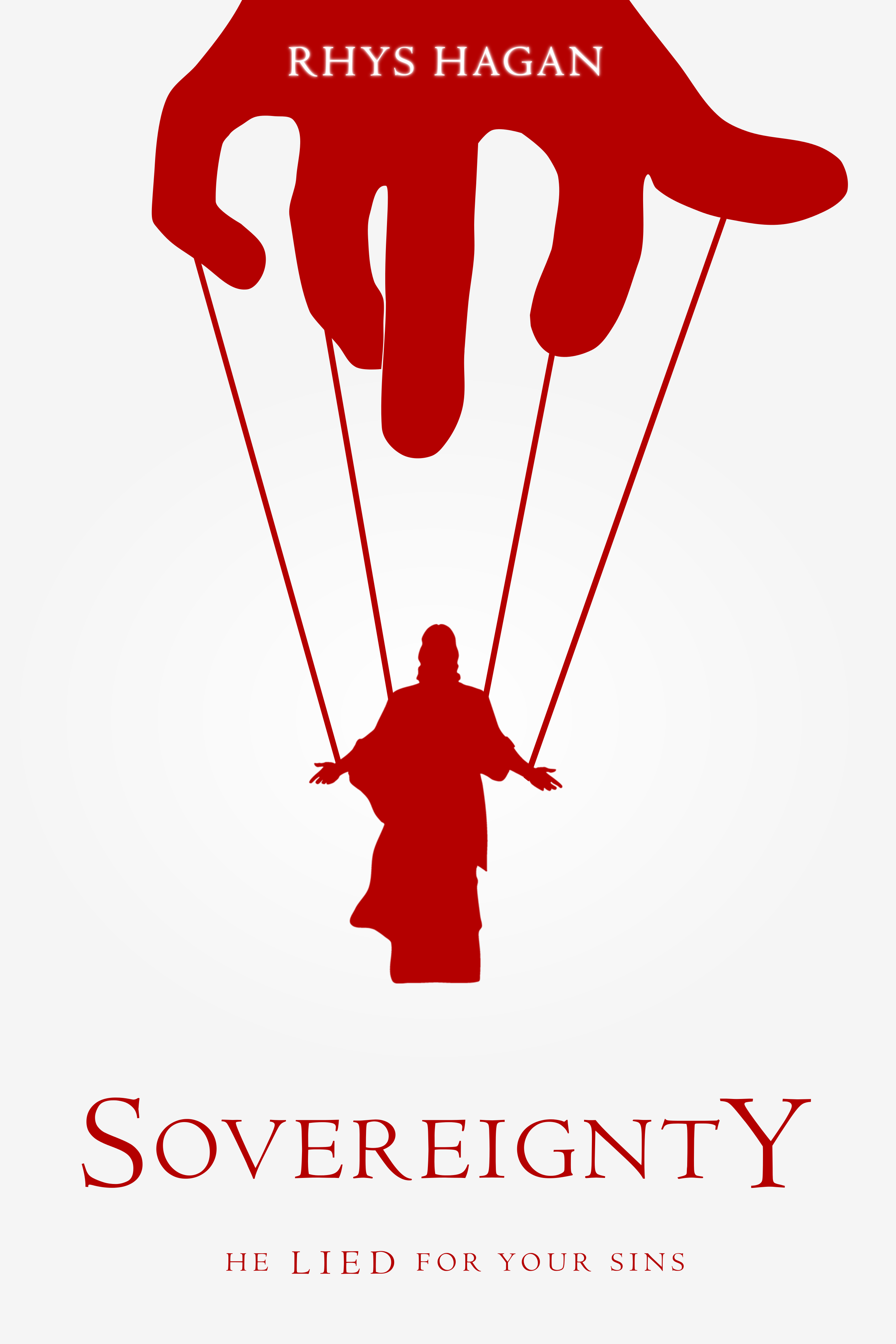
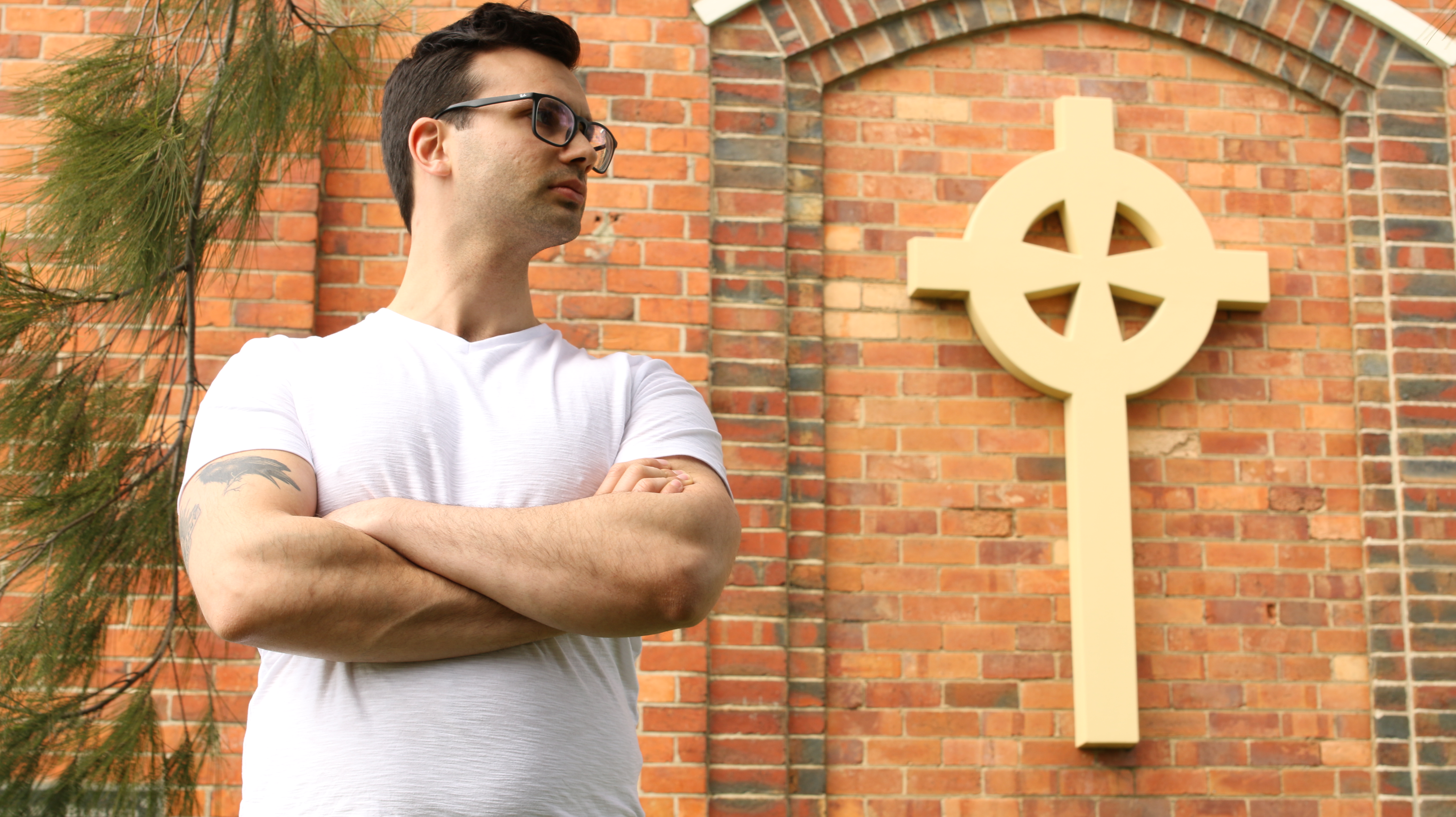
Rhys Hagan was drawn into an alleged Christian cult which left him broke and alienated from friends and family. He finally cut ties and rebuilt his life after surviving six “long years of hell” but the emotional scars remain. Here, he explains how it feels to be brainwashed and warns of the destruction that cults can cause. His new book, Sovereignty, is out now.

When most people hear the word cult their minds’ probably jump to a scene from a movie of hooded figures chanting around a cauldron, not a small Baptist church with singing and a potluck. While that first scene would most definitely depict a cult, the second can be just as likely a culprit. Don’t get me wrong, there are plenty of community churches which provide a support network that’s healthy and beneficial for all, but there are those—tucked away in a remote part of town—masquerading as a harmless, almost apathetic congregation which dismiss the wellbeing of its members for the sake of power and wealth.

Only a few years ago I was a member and youth leader in one such church, but once my family and I witnessed the leader physically attack a small boy, we were forced to confront the nature of what we’d become a part of. In the coming years, the rehabilitation I underwent set me on a path of critical thought and independent living which has resulting in me writing my novel, Sovereignty.

While I managed to fit my most valuable philosophies into my novel, I could write volumes on the lessons I took away from my time in the church, but they all have a common theme. It’s that theme I’d like to share with you now. And it’s a tale as old as time, or at least as old as John Dalberg-Acton: Power corrupts.

To have power over your own life is self-control. To have power over another’s is oppression. Now, I’m not saying you should go to your boss and tell them to stick their authority up their holiest of holies; after all, they don’t have power over your life, only your work. No, the power I’m talking about is the power for one person to dictate what another will believe. The power to insist a child stop associating with their parent or for a parent to kick their child to the streets for not conforming to the leader’s demands. The power to make a single statement and say it means one thing while also meaning the opposite (a principle called ‘doublethink’ by George Orwell in 1984).

When someone establishes this kind of control, or even desires to, a group crosses the line from being a community gathering to a cult. How do you tell? In a fair community anyone can challenge anything and anyone if they choose without formal consequence. In a cult, any criticism of the leader(s) or the ideals they uphold ends in reprisal or excommunication.

I know, it sounds confusing, as if I’m suggesting you be involved in your community while being sceptical of everyone in it. But, like monitoring what you eat, it’s important to have balance. A healthy level of scepticism goes a long way and, if you’re ever unsure about whether or not someone in your circle is healthy or radical, just remember what the bible says, “Judge a tree by its fruit.”

Sovereignty by Rhys Hagan is out now in print and as an eBook priced £11.97 and £4.79. It is available from Amazon . For more information about Rhys’s story, go to www.rhyshagan.com/


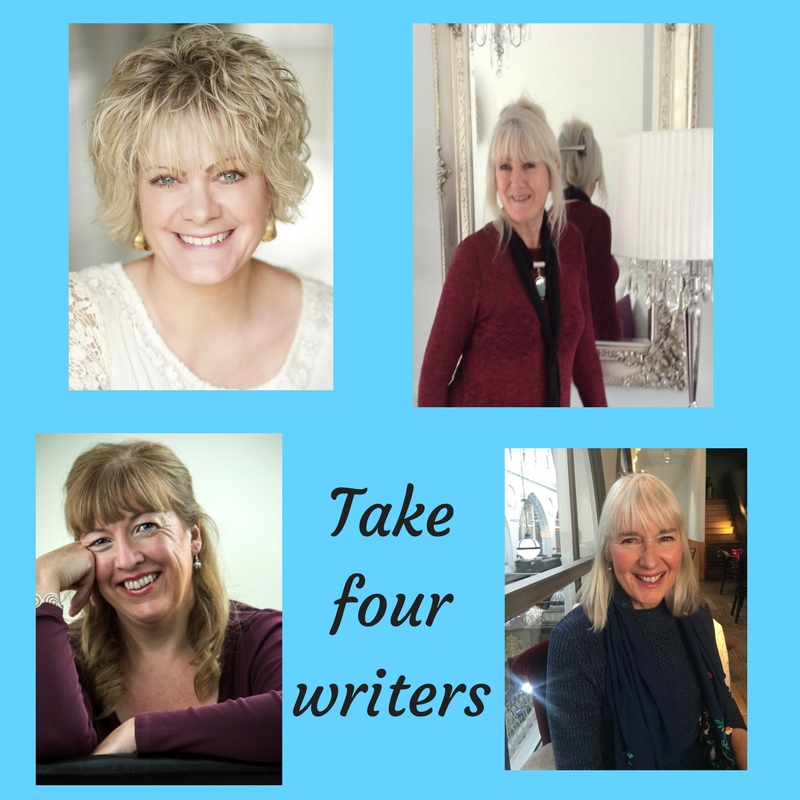
TAKE FOUR WRITERS: LAUNCHING, DRAFTING, EDITING & MULTI-TASKING

FEBRUARY UPDATE FROM OUR FOUR WRITERS…

CLAIRE DYER… LAUNCHING

January and February have seen much excitement in the run up to and the actual launch of ‘The Last Day’. I have been overwhelmed by the love and support of my publishers, bloggers and fellow authors during this time, especially as no one knows the joy and despair of times like these like they do.

I’ve come to learn that it’s all about letting go. We tend to write in the privacy of our own homes and, for a long while, it’s all about just the two of us: ourselves and our book. And then if we’re lucky, we send it to our agent and, if we’re even luckier, thence to a publisher and eventually, if we cross our fingers and toes tightly enough, it goes out into the big wide world.

And this is where the joy and despair comes in. Will the world like it? That’s the despair. And, the joy? Well, that’s easy: the book I wrote is an actual real thing with pages and a cover and everything!

.

ANGELA PETCH… DRAFTING

I am almost three quarters through my writer’s draft of “Mavis and Dot” and I use walks along the sea to plan out the final chapters. There is something scary about finishing off a novel. In the meantime, I have been busy hunting for an illustrator. Unfortunately, my first three candidates dropped out, for reasons varying from cold feet and time factors. I hope I have at last found someone to work with. She is a very supportive editor of a local magazine and after tea and cakes (and discussion), she is on board. I am trying not to be too distracted from M & D but the publisher of my two first novels recently went into voluntary liquidation. It means a return to indie publishing but there is relief in the return of control. However, it entails more work. My other concern is to which cancer charity I should donate my profits. A writer’s work is never done…


JACKIE BALDWIN…EDITING

Hello, February has been a rather grim month. I have been completely immersed in my structural edit. Day after day I have sat at my desk from first thing in the morning until last thing at night editing. Then, eat, sleep, repeat. You get the idea! It’s a bad state of affairs when your characters have a better social life than you do. However, by the time you read this, I will be done! Hurrah!

I did get one overnight pass which was a wee trip to Newcastle to read at Noir at The Bar. It was the first time I had read the prologue from Perfect Dead. I also met loads of new crime writers and readers which was fun. During the day, I edited at the Lit and Phil which is a fab library. It even sells cake!

See you next month!


LUCY COLEMAN… MULTI-TASKING

February TO DO list:

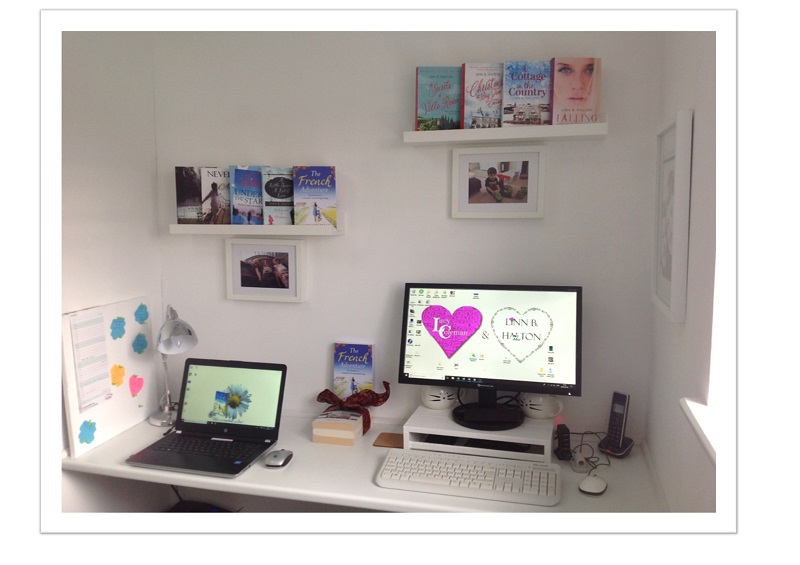
Set up new office and new computer equipment in new house.
Online celebrations for launch day of first book with Aria Fiction, under new pen name.
Daily social media activity to support TWO book tours running concurrently for new arrival.
Produce new graphics to celebrate latest book baby.
Complete and submit Aria book no. 3 manuscript to my agent for comments.
Complete round one of structural edits for my other publisher.
Action suggested revisions by my agent for book no. 3.
Keep up with normal daily social media for my other books and write blog posts etc.
Get through February with your sanity intact.

Okay, so I’m exaggerating a little because I did survive the month, but only just! My new laptop seemed to get slower by the day after its first round of software updates. If I action a retweet on Twitter it times out! The battle continues.

If only it was JUST about the writing …

BUSINESS OF BOOKS: FIRST, LAST, EVERYTHING – WRITER CLARE SWATMAN

Clare Swatman spent almost 20 years working in women’s weekly magazines. Her debut novel Before You Go was published last year, and her second, The Mother’s Secret, is published by Pan Macmillan on 22 February. She’s currently writing her third novel.

What was the first writing advice you were ever given?

‘Write about what you know’ is the advice most people give, and I was no exception. But for me it really did ring true, especially the first time round. When I started writing Before You Go it was with the idea that I just wanted to write something. I wanted to be able to say I’d given it a go, and never regret not having tried; I had no expectation that anyone would ever read it, or want to read it, so I was really writing it for myself, with the hope that some day, something might come of it – but it might not. And so, while concentrating on the plot and developing the characters, I found it really helpful to write about places I was familiar with; Newcastle, where I went to university, Crouch End, where I used to live, Doncaster, where my best friend lives. It meant there was one less thing to worry about getting right, and I could concentrate on the story in hand. I also used my experience of writing true life stories to develop the characters and the situations they find themselves in. Years of interviewing people about the things that have happened to them has given me a good insight into how people respond to happiness, heartache and difficulties – and it’s not always how you’d expect!

What was the most recent writing advice you were given?

There’s no magic bestseller formula (if there were we’d all be making millions of pounds!) – all you can do is write the best book you can. That’s it. And if you try and write to be a bestseller you’re more than likely going to set yourself up for disappointment. It’s a tough one to swallow, because of course as a writer you dream of selling lots of books and of everyone loving what you’ve spent years writing, but it’s easier to expect smaller things, and be pleased by them, otherwise you’d live in a perpetual state of disappointment and anxiety! So now I try to remember how pleased I am to be published and keep trying to write the best stories I can.

What Is the piece of advice you’d most like to pass on?

Don’t compare yourself to others. This has been a big hurdle to overcome, and I have to admit I’m still working on it! I love my social media, and think it has great value in my life. But there are times when I think it can work against you, and the publication of a new book can often be one of those times. I’ve found it always feels, rightly or wrongly, as though every other book being released, read or even written is mentioned all the time on Twitter, Facebook, Instagram – except mine! It also feels as though everyone else is selling hundreds of thousands of copies and getting huge success within days of publication. Of course this probably isn’t true, but as with everything, social media takes the shiny parts of people’s lives and magnifies them. So comparing your own life and career to the life and career of someone else portrayed online is not only pointless but can be damaging. So I’ve had to learn to stop – and I would definitely give this piece of advice to anyone starting out in writing or any other career. Just do you own thing, enjoy it, and stop worrying about everyone else!


THE BUSINESS OF BOOKS: ONLY TAKE IT ON IF YOU CAN SEE IT THROUGH

Jane Cable considers what it takes to organise a successful event

Never one to ask others to do what I won’t myself, I thought that this year I would focus my own articles on advice given and received as well. Except as I have the privilege of writing my own column once a month I’m planning to focus each article on something relevant to my writing life.

So let’s start with writers’ events. I don’t know whether it’s because I’m willing, or I’m bossy, or I forget to duck below the parapet, but very often it seems to be me doing the organising. Last week I was at a library in Cardiff with two other Welsh authors, talking about routes to publication. It was a bitterly cold evening and it had snowed during the day. We’d already cancelled the afternoon event due to low bookings but were determined this one should go ahead. Perhaps, between us, we did know a significant number of people in the audience, but that was probably because they were writers yet to get a book out there and wanted to pick our brains. That said, we all enjoyed the evening and the library reported enthusiastic feedback from our guests.

So, what did I learn? And what advice would I give other writers looking to try their hand at connecting with their audience in this way?

  1. Only take it on if you can see it through If you initiate an event it is down to you to finish it. You may have a helpful venue (as we did in Cardiff last week), but if you promise something you have to deliver or your reputation will be at stake. This can mean finding other writers willing to take part, pulling together publicity material, sorting out IT and refreshments. If you can’t give it the time and the energy, don’t go there.
  2. Know your audience Think about who you would like to attend and find a venue, time and topic to suit them. Sometimes at least one of these will be fixed (eg a library or a festival) but there will always be something you can control to entice people in. Last week in Cardiff we over-estimated the appeal of an afternoon discussion about favourite books aimed at readers of romance. We were targeting retired people, thinking they would enjoy the interaction and not want to be talked at. What we didn’t factor in was the weather – the same event in the summer might well have been popular.
  3. Know when to quit We had six people signed up to that afternoon event and there were four presenters so it was a no brainer that it had to go. We, and the library, tried everything to up the numbers but to no avail so we pulled the plug and made sure everyone knew about it. But quitting isn’t always the right answer. A couple of years ago Chindi Authors organised a mini litfest to raise funds for Words for the Wounded. Tickets sold slowly for the main lunchtime event and I was ready to pull the plug, but the wonderful children’s author Christopher Joyce refused to let me and as it happened we would have struggled to fit another person in – and the weekend as a whole raised almost £1,000 for the charity.
  4. Only do it if you’re going to enjoy it There is no point putting all this effort in if, on the day, you’re going to be a gibbering wreck. If you hate public speaking then find another way to raise your profile. Nothing is compulsory. Play to your strengths.

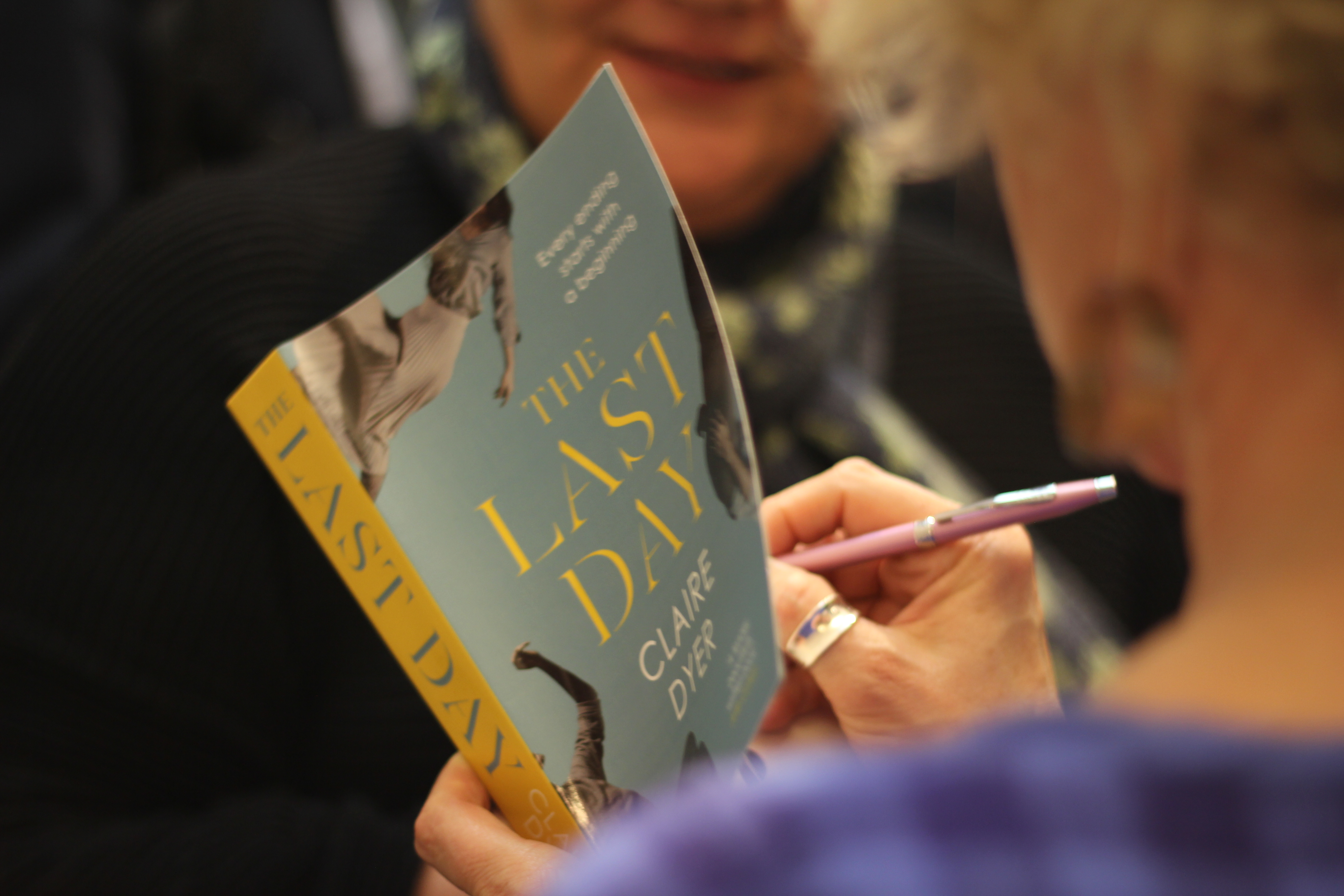
JANE CABLE REVIEWS: THE LAST DAY by CLAIRE DYER


This is a clever book on so many levels. Just as you are settling in with the characters Claire Dyer throws a curve ball which grips you and makes it impossible not to read on.

Vita, Boyd and Honey are not a love triangle. They can’t be; Vita got over Boyd years ago, but nevertheless it is a surreal situation for them all when Boyd and Honey need to move into Vita’s home in Albert Terrace. And of course they all have secrets – there have to be secrets. In fact there is only one character in book who doesn’t have one.

As days turn into weeks, and weeks turn into months, the new normality of life in Albert Terrace is punctured by glimpses of the past which tie the characters together, yet rip them apart. As time marches on towards the last day – which the reader knows has to come – secrets are revealed and slowly the jigsaw falls into place. Just one mystery remains: will the last day in fact be the first?

The Last Day is Claire Dyer’s first book for The Dome Press and she seems to have found the right home for her particular brand of character driven fiction. Dyer is also a poet and it shows; every word in this carefully constructed novel counts and has the feeling of being deliberately placed. Yet the genius is that this is still a smooth read which carries you to the Surrey small town world of the characters and keeps you there long after you’ve finished reading.

As the story takes off you forget about the writer’s skill and become immersed. You cease to notice that one character alone narrates in the first person, that the whole book is in the present tense. This is how it should be with great writing and Dyer, with her MA in Creative Writing, slips into the background as her story takes over.

Highly recommended.

The Last Day is published on 15th February 2018 by The Dome Press. Claire Dyer is one of four writers Frost’s Business of Books column is following this year. Look out for updates on the last Wednesday of every month.