Bookshop.org Generates £1 Million for Independent Bookshops in Just Four Months

bookshop

Chener Books (London)

200,000 customers flock to ethical ecommerce platform, as book buyers vote with their wallets to support the high street while shopping online

Independent booksellers report that Bookshop.org has helped them avoid putting staff on furlough, attract new customers, build an online presence, feel connected to their customer community and even open new stores

 Bookshop, the book buying site that empowers socially conscious shoppers to financially support independent bookshops when shopping online, has generated over £1million in profit for indie booksellers in just over four months of trading, with over 200k customers embracing the new platform to date.

The East Gate Bookshop (Totnes);

At a time when the majority of the UK’s bookshops have been forced to close their physical stores due to lockdown restrictions, by choosing Bookshop.org book-buyers have generated over £1million in profit for the 410 independent bookshops using the platform.

 As of 4 February 2021, 82 per cent of sales on Bookshop were generated by titles selling four or less copies each, and 54 per cent from titles selling a single copy, demonstrating how the platform helps draw attention to books beyond bestseller lists and celebrates diversity within the publishing ecosystem.

Booksellers using the platform have reported the many ways in which Bookshop.org has been a financial lifeline in a particularly challenging time, with the additional income allowing many to avoid furloughing staff, pay out Christmas bonuses, strengthen their online presence to better compete online, and even open new stores.

Miranda Peake from Chener Books, London, who likewise hasn’t previously had the resource for online bookselling, reported new customers discovering her shop online: “I had no expectations when we joined Bookshop.org in November, but it was very successful for us right from the word go. I haven’t had the time or resources to set up an online shop, so having a well-managed, efficient and lovely looking website to direct customers to has been absolutely brilliant. It’s been so gratifying to see so many of our regular customers using the website, as well as lots of new customers, friends and contacts from further afield who are not able to visit the bookshop but want to support us. We are enormously grateful to be part of this initiative.”


Nigel and Claire Jones were able to open The East Gate Bookshop in Totnes in December. The co-founders said: “The positive impact of customers being able to buy from our shop has been immense. And it’s not just the revenue that Bookshop.org creates – which of course is essential. Having an online presence confirms to our customers that we are a ‘proper’ professional retailer; it’s what’s expected, but we’d never have the skills, time or the deep pockets to operate online at all without Bookshop.org. Bookshop.org arrived in the nick of time for us, I honestly don’t think we could have managed financially and emotionally without it.”


Bookshop.org offers an ethical online marketplace that ensures independent bookshops receive 30 per cent of the cover price from each sale they generate on the platform. Moreover, 10 per cent from any sale not attributed to a specific bookshop goes into the shared profit pool. In addition, a number of publishers – including Canongate, Atlantic, Murdoch, Profile, Serpent’s Tail, Faber, Pushkin Press, Scribe, Nosy Crow, Simon & Schuster, Pan Macmillan, PRH, Hachette, Usborne and Europa Editions – have chosen to forego their 10 per cent affiliate commission and opted for it to go into the shared profit pool, to be split equally by independent bookshops using the site.

A recent survey conducted by the Booksellers Association found that 80 per cent of booksellers had a “good” or “very good” experience of using Bookshop.org to date.

Meryl Halls, MD at the Booksellers Association, commented: “The £1m milestone for Bookshop.org is a remarkable moment for indie bookselling, and in the fight against Amazon’s dominance in the book market over the last 10 months.   For those booksellers using the platform, Bookshop.org has provided a lifeline, often, and an additional sales channel, to indie booksellers forced to close and otherwise struggling to provide an ecommerce offer to their loyal customers.  The team at Bookshop.org deserve huge credit for the speed of the launch, the empathy and openness they’ve shown to booksellers and the supportive community they’ve created for their users.    In our newly hybrid world, the need for online bookselling is not going to abate, and we are delighted that indies are now able to join the other high street booksellers, Waterstones, WHS, Foyles and Blackwells, in reaching book-buyers online – and we urge publishers and authors to link to specialist high street booksellers online, rather than lazily linking to Amazon, who certainly don’t need the money.”

 With over 6,000 affiliates – spanning publishers, authors, book bloggers and beyond – using the site to support bookshops, the early success of Bookshop.org has been welcomed by many publishers:


Stephen Page, Chief Executive at Faber, said: “A clear truth that has been emphasised this past year is that independent booksellers play a key role for readers in their discovery of a wide range of interesting books. The arrival of Bookshop.org ensures that independents now have a great partner whose service allows them to offer both a brilliant online and physical service to their customers.”


Bookshop was founded with the belief that independent bookshops are vital to our culture. As consumers are increasingly realising that where they spend their money matters, Bookshop.org offers an entirely new approach to online shopping, giving customers the power to support the local high street when they buy books online.


Highlighting recommendations from real booksellers, authors, publishers and beyond, Bookshop.org takes a human approach to book curation that avoids relying on algorithms, reflecting the unique browsing experience of a physical bookshop. Authors who have supported the platform by curating reading lists have often increased sales of the books featured, including: Elena Ferrante, Malorie Blackman, Marian Keyes, Nikesh Shukla, Julia Quinn, Edmund de Waal, and more.


The Beauty of Eczema – For People Who Have Eczema, And People Who Don’t – by Award Winning Author Dr Kathleen Thompson


I’ve become quite addicted to Beauty of Eczema products, invented by Camille Knowles, who struggled with such dreadful eczema that her life was a complete misery. Nowadays she looks just fabulous after having worked out a regime of life-style, diet and skin products, and she’s keen to help others with her Vlog and books and of course her fabulous skin range.

The nice thing about her skin products is that they’re all made with high quality, pure ingredients (plus a little magic in the form of crystals), so even if you don’t have eczema you’ll find they are fantastic for your skin, smell great and are perfect for a pampering evening. And if your skin is sensitive, they’re particularly good.

Calming Cream for example, is formulated with Mango and Shea butters and Jojoba Seed Oil. It also contains Omega 3 and 6, balanced to reduce inflammation and Oat lipids (a rich source of vitamin E). Rhamnosoft is based on a fermented sugar which protects and soothes and Bioecolia is a prebiotic to encourage beneficial skin bacteria. The final ingredients are Smithsonite and Rhodochrosite crystals for serenity, calmness and self-love.

Other items in her range include Pamper Me Bathing Oil, Skin Warrior Wash and Salty Soother and they are all fabulous and look so attractive in pretty pink.

If you’re wondering what to get Mum for Mother’s Day, look no further. All products are available from her website.

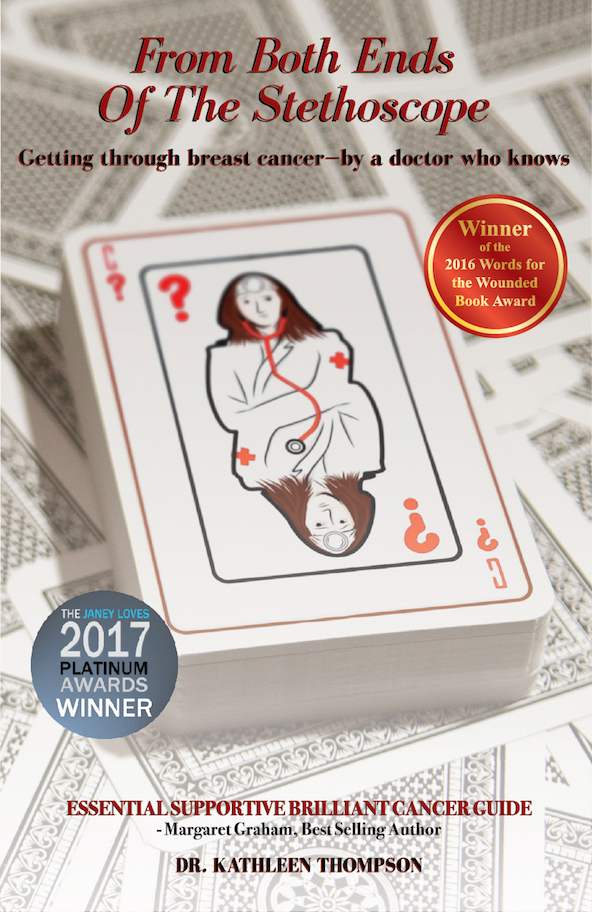
By Dr K Thompson, award-winning author of From Both Ends of the Stethoscope: Getting through breast cancer – by a doctor who knows

http://www.amazon.co.uk/dp/B01A7DM42Q http://www.amazon.com/dp/B01A7DM42Q

http://faitobooks.co.uk

Note: These articles express personal views. No warranty is made as to the accuracy or completeness of information given and you should always consult a doctor if you need medical advice.

Energydot – Retuning and Harmonising Radiomagnetic Fields – What Do We Think? – by Award Winning Author Dr Kathleen Thompson


With average mobile phone use at around three hours each day and rising, there are concerns about possible health effects. Wireless devices including phones emit radio-frequency waves, and one area of concern is whether this can affect our brains. Some research has been done, but more is needed. In the mean time using a speakerphone where possible is probably sensible.

Energydots make low-powered magnets which, they say, are programmed with a specific, naturally-occurring frequency. They explain that each DOT performs a slightly different function and the smartDOT and bioDOT protect from harmful effects of wireless radiation. They clarify that the DOTs do not shield from radiation, rather ‘retune (or harmonise) the emissions to a more natural coherent frequency’. The sleepDOT ‘uses passive micro vibrational technology to slow brain waves from beta to theta and delta (sleep) frequencies.’

To be honest, as a doctor, I don’t understand what ‘retuning or harmonising’ radio-frequency waves means and cannot endorse this from my medical or scientific background. I am curious to know how the sleepDOT changes brain waves.

To Energydot’s credit, they have commissioned a couple of quite small studies of the effect of the DOTs on mobile phone exposure, although I am unsure of the clinical relevance of the results.

However I try to have an open mind and wearing magnets is a popular treatment for arthritis and other diseases, albeit of unproven benefit, so I have given the DOTs a go.

I have tried the Bioband – a rather neat disc on a rubberised wrist band; I’ve also stuck a smartDOT in my mobile phone case and a sleepDOT on my bed. They’ve only been in place for two days so a little too soon to tell. I do confess to feeling a little calmer – whether it’s a placebo effect I can’t say.

So what’s my view on Energydot? I think Energydot have an interesting idea. I would have liked more information on their technology and their theory as to why it could work. Some serious research is needed to establish whether the DOTs do have a beneficial effect and I hope they will commission further work.

In the meantime I’m prepared to try the DOTS for a little longer – I can’t see that they would do any harm and with lockdown I think we can all benefit from anything which may help us sleep.

They are available from the Energydot website.

By Dr K Thompson, author of From Both Ends of the Stethoscope: Getting through breast cancer – by a doctor who knows

http://www.amazon.co.uk/dp/B01A7DM42Q http://www.amazon.com/dp/B01A7DM42Q

http://faitobooks.co.uk

Note: These articles express personal views. No warranty is made as to the accuracy or completeness of information given and you should always consult a doctor if you need medical advice.

Magical Thinking – Channel Your Super Powers – by Award Winning Author Dr Kathleen Thompson


Does magic really exist? According to coaches Kirsty and Morgana at The Manifesting Institute yes it does. I too think that we have more power over our lives than we realise, and we don’t always believe it, or know how to harness it – and sometimes we inadvertently misuse it – we must indeed ‘be careful what we wish for’.

So let’s take a look at Magical Thinking’s five key ways to channel your super powers and transform your life:

  1. Conscious rituals can create great unconscious habits

The body holds on to negative experiences and trauma. Affirmations may help, but try something physical, linking to where your want to be in life, like a regular self-care routine.

  1. Choose your ‘intentions’ carefully 

Choose intentions about who you want to be not what you want to have. People who feel lucky are luckier.

  1. Think and act in 3D

If you dream about a beach house, bring in shells, driftwood etc. Direct love towards your intentions and don’t be passive, interact with these physical objects daily. Think about a person or business you admire. Obtaining something that has a direct connection can have a magical effect.

  1. Be intentional 

Be intentional in every area of your life, what you wear, your hairstyle, your jewellery. Disneybounding uses fictional characters. By dressing up (subtly or overtly) as an admired character we can resonate with their best traits.

  1. Everything manifests – so remove things you’re not resonating with 

A cluttered room can affect you even if the door is closed. Remove what doesn’t resonate with your imagined best version of you. Physically declutter; delete time-sucking apps and discard clothes which make you feel bad. Ask before you buy something, is this a great collaboration for my best life? Or is it taking time, energy, money?

I like these ideas and will be trying them. To clarify, this doesn’t imply that if bad things happen, it’s your fault. There’s an important difference between being able to positively influence our lives, and taking undeserved blame for bad things that may happen to us.

If you’re interested in making your life the best it can be, check out the courses and ideas on the Magical Thinking website. Why not?

By Dr K Thompson, author of From Both Ends of the Stethoscope: Getting through breast cancer – by a doctor who knows

http://www.amazon.co.uk/dp/B01A7DM42Q http://www.amazon.com/dp/B01A7DM42Q

http://faitobooks.co.uk

Note: These articles express personal views. No warranty is made as to the accuracy or completeness of information given and you should always consult a doctor if you need medical advice.

Skinsmiths, the chain of trusted clinics dedicated to ultimate skin confidence

Skinsmiths, beauty, beauty reviews, skincare. For those who do not know Skinsmiths yet, they are a chain of trusted clinics dedicated to ultimate skin confidence. You can buy their products, or you can get curated skincare for your skin needs. You can also have a membership. We reviewed some of their products to get our glow back.

Wake up with the glow your skin deserves. Skinsmiths Overnight Glow is an exfoliating treatment, packed with a mix of high concentration active ingredients  – say goodbye to dead skin cells and clogged pores. And, hello to softer, smoother, glowing skin.

• Boost radiance

• Smooth skin texture

A mix of AHA’s, including Glycolic (7%) and Lactic acid (2%), clear away skin build-up on the surface helping skin appear smoother and brighter.

Salicylic Acid (BHA) (1%) soothes the skin while exfoliating the surface and deeper into the pores for calm, clear skin.

With a concentration of over 10% acids, this is a high strength treatment is perfect for oily skin, dry skin, acneic skin, dull skin. Everyone can benefit from a great exfoliant.

We loved this. It works so well and gives a gorgeous glow. 

Next up was the Hydration Booster. This was much needed. It gives dry skin what it needs. Impressive. 

This Hydration Booster is jam packed with ingredients that draw moisture into the skin. It this floods the skin with hydration and helps your skin to retain it too, leaving it plump and replenished.

We also loved the reusable cotton pads. They are so much better for the environment. 

These dual textured cotton pads are gentle on skin and the environment.

What they do

  • Remove makeup and impurities.
  • Delicately clean around the eyes.
  • Reduce the need for disposables.


You can also take out a membership to Skinsmiths.

  • A membership provides
    you with:
  • A personalised treatment schedule
  • Regular reviews
  • Expert advice


SKINSMITHS.COM

We really loved the products. 


Life’s Not Yoga or is it …? By Jacqui Burnett – Book Review by Award Winning Author Dr Kathleen Thompson


This is the personal memoirs of a lady who grew up as an Afrikaaner in apartheid South Africa. It gives an insight into her every day life and her relationship with her father who she portrays as a rather bullying, racist character. She goes on to describe her various relationships, both in South Africa and USA, where she traveled ‘to find love and meaning’. She shares her innermost thoughts with the reader and the book contains much self-examination as the author tries to understand her behaviour and her life.

The author says that she wrote her memoir in a quest to make spiritual sense of the traumatic life events she has experienced.

To be honest, this book wasn’t for me, but it may help others who resonate with her experiences.

.

By Dr K Thompson, award-winning author of From Both Ends of the Stethoscope: Getting through breast cancer – by a doctor who knows

http://www.amazon.co.uk/dp/B01A7DM42Q http://www.amazon.com/dp/B01A7DM42Q

http://faitobooks.co.uk

Note: These articles express personal views. No warranty is made as to the accuracy or completeness of information given and you should always consult a doctor if you need medical advice.

Bridal Style Terminology Every Bride-to-be Should Recognize.

wedding planning, wedding, weddings,When searching for a wedding dress online or in-store, many brides may come across unfamiliar terms. While this could be due to a multitude of reasons, it’s essential to understand these terms, as they often imply a wide range of bridal styles.

Particularly for brides searching for designer bridal wedding gowns online, knowing and understanding these terms may also make it easier to find her ideal dress. However, this knowledge also helps brides shopping in-store when meeting with bridal consultants to discuss what dresses to try on. 

Silhouettes

The silhouette of her gown is the first aspect a bride should narrow in on. Think of it as the outline of the dress, its overall shape. It tells how fitted a gown is and whether it hugs certain areas of the body tighter. A few typical silhouettes are:

  • Mermaid: A mermaid style silhouette is fitted at the bust, waist, and hips while flaring out at the knee. The flare gives the effect of a mermaid tail (hence the name). This style flatters curvy body types or women with wider hips than shoulders. 
  • A-line: An a-line silhouette is fitted through the waist while flaring out softly to create an ‘A’ shape, which offers increased mobility. This style works well for all body types.
  • Ball gown: This silhouette is more on the extravagant side. The ball gown often hugs in at the waist or hips and dramatically flares out for an hourglass effect, hence why this shape works well on women with an hourglass body shape. Ball gowns look great on thin women or women with broader shoulders as it gives the illusion of wider hips. 
  • Sheath: A sheath silhouette is a perfect alternative to a voluminous dress. The style hugs the body and drops straight to the floor, which elongates the bride’s shape. Petite women may find this style flattering.
  • Jumpsuit: This style is a one-piece with a top and long connected pants. There are versions that look great on all body types.

Necklines

The next element is to learn about different necklines. Simply put, the neckline is the top edge of a dress near the neck and chest. Some of the most popular necklines include:

  • Sweetheart: Just like the name suggests, the sweetheart neckline resembles the top half of a heart and gives the bride a leaner appearance. This neckline is very popular on strapless dresses. 
  • High neck: A high neckline dress provides the most coverage of any bridal style and comes up to the base of the neck or above.
  • Off-the-shoulder: The off-the-shoulder neckline is perfect for summer weddings, as it highlights the collarbones and shoulders with its draped sleeves. 
  • V-neck: A v-neckline is ideal for brides looking for the appearance of a longer torso. V-neck dresses appear in a ‘V’ shape and usually have straps or sleeves.
  • Straight across and Square: These necklines are similar in that the dress’s edge lies in a straight line across a women’s decollete. The difference is whether the gown is strapless or not.

Sleeve Styles

Depending on the season, a bride may opt for a dress with sleeves. Some of the most popular sleeve styles include: 

  • Long sleeves: These are more of a formal style and come down to the wrist without being over-the-top. Within the category of long-sleeved dresses is variation in sleeve style. Some dresses have fitted long sleeves made from just lace, while others feature illusion lace. Bell sleeves are another option; made popular in the 1970s but are currently making a comeback. 
  • Off-the-shoulder: These sleeves are great for highlighting the bride’s shoulders and collarbones in a very chic way. 
  • Cap sleeves: These are very short and flutter from the shoulder but does not feature any fabric underneath the arm.
  • Strapless: This style means there are no straps or sleeves on the dress, highlighting the neck, shoulders, and collarbone. For a traditional bride, long gloves look elegant with a strapless ball gown.
  • Puff sleeve: A puff sleeve is fitted at the bottom of the wrist with elastic to keep it in place. It offers a youthful look and can sometimes look bohemian if done right. 
  • Spaghetti strap: These are more of a dainty detail and hold up the dress without covering the arms.

Waistlines

The waistline may seem insignificant compared to the other elements of a wedding dress. However, it adds a signature defining area to the silhouette. Some popular waistline styles to consider are: 

  • Basque waistline: The seams on the basque create a ‘U’ or ‘V’ shape in the front and are on hourglass ball gowns.
  • Empire waistline: This waistline sits just below the bust and is high and raised, creating a tall and slender appearance. 
  • Dropped waistline: This waistline drops to the thighs, creating a leaner and longer torso. This is not necessarily the same as the mermaid style.
  • Medium/natural waistline: This waistline sits at the bride’s natural waist, offering more comfort. 

Trains

The train of a wedding dress adds extra length to the end of the dress. The most common train styles include: 

  • Sweep: This is the shortest train for a dress, at about 10 inches long, and is perfect for outdoor weddings. 
  • Court: The court train is the same size as the sweep, except it extends from the waist rather than the hem. 
  • Chapel: This is 3 feet from the waist and is perfect for brides who want simple.
  • Cathedral: This train is 6 feet from the waist and suits indoor weddings the best.

Terminology Is Helpful 

With so much variation in the style of wedding dresses, researching and understanding bridal terminology before shopping can make the experience much less stressful. It’s helpful for brides to understand what they want but also for when it comes to explaining what kind of dress they’re looking for with ease. 


Collaborative post with our brand partner.

Attitudes to Mindfulness: the second in the Mindfulness series by Alex Bannard – note the free meditation for Frost readers


The attitudes of mindfulness are the ways in which we approach mindfulness to embody the essence of the practice. They are very much practices in & of themselves & are interlinked. Often when we start to really embody the essence of non-judgment for example, we’ll find the spirit of acceptance & forgiveness is easier to cultivate.

So let’s investigate these attitudes in a little more detail:

Non-judgment – we are essentially quite a judge-y species. The first step in not judging, as in changing any behaviour, is to become aware of it, the second step is to not judge the judging – simply notice it. Overtime you will become aware of the judgment subsiding. It’s all about not being quite so critical of ourselves or others.

Kindful acceptance, forgiveness & compassion – if we are kinder, more accepting, forgiving & compassionate to ourselves we are generally kinder, more accepting, forgiving & compassionate to others. Acceptance, forgiveness, kindness & compassion are all choices we make. They are not a giving up or giving in energy but simply a conscious choice to let go, surrender & release the stories we are telling ourselves. They are attitudes which help us to cultivate a sense of patience & trust in ourselves, others & in the process itself.

Playful curiosity – this is sometimes a tough one for us adults, we sometimes take ourselves & life a little too seriously. Again this about a choice: choosing joy, fun & happiness & noticing how this really shifts our energy. It is about not criticising our thoughts, feelings or emotions but bringing an essence of playful curiosity to whatever we are experiencing: a sense of oooh that’s interesting or I wonder what that’s all about. Playful curiosity is closely linked to the idea of a beginner’s mind, bringing a sense of childlike wonder, the sense of what was it like the first time we experienced something.

Non-striving – this is something else we often struggle with because we have been conditioned to pursue goals, push for achievements & accomplishments. The funny thing with non-striving is actually once we take the pressure off & start to enjoy the process instead of the outcome, we actually start to ‘achieve’ more! Something that is also worth noticing when we start to cultivate an attitude of non-striving: an ability to slow down & actually take some time to reflect upon, acknowledge & appreciate our achievements. Sadly, we are often so programed to achieve & strive that we rarely take time to appreciate what we have actually achieved before we are onto the next thing.

Gratitude – cultivating a sense of appreciation & gratitude for our lives, experiences, thoughts, feelings literally helps to rewire our brains. I have practiced gratitude almost daily for the past 8 years & I credit it, together with a daily meditation & yoga practice, with changing the way I think about & relate to myself & others.

Heartfulness – in Asian cultures the word for heart & mind are often interchangeable so we can think of the essence of mindfulness as heartfulness.

In the end, as we start to embrace one or two of these mindful attitudes, we begin to see how closely related & interlinked they are & it becomes easier to embrace other attitudes. But just like mindfulness, yoga & meditation, these attitudes are all practices, the more we practice, the more they influence our lives for the better.

This week’s meditation is a mindfulness of breath meditation & to obtain your copy, just simply email Alex to the email address below quoting Frost mindfulness attitudes. Next time we will be exploring why & how we can use the breath & the body to anchor ourselves into the present moment & cultivate a more mindful approach to living & being.

Alex is based on the edge of the stunning Cotswolds & has been sharing her love for all things yoga & mindfulness for the last 8 years, not just in the UK but also around the world. Her mission is to help everyone discover a sense of peace & calm within & to encourage them to embrace regular self-care practices.

If you would like more information on how to practice mindfulness, meditation & yoga message her at alex@myananda.co.uk.

For free resources check out her Facebook group: Mindfulness & Yoga for Self-Care, here is the link: https://www.facebook.com/groups/MindfulnessYoga4Relationships

Alternatively please check out her website: www.myananda.co.uk