SISTER SCRIBES: KITTY WILSON ON HOW ROMANCE IS HOPE

Back in November I wrote a post here about Why I Love Romance as a genre. I explained that I had inadvertently written an essay on this subject and that first post covered how I believe romance is universal and utterly relatable, especially romantic comedy, my own specific sub-genre.

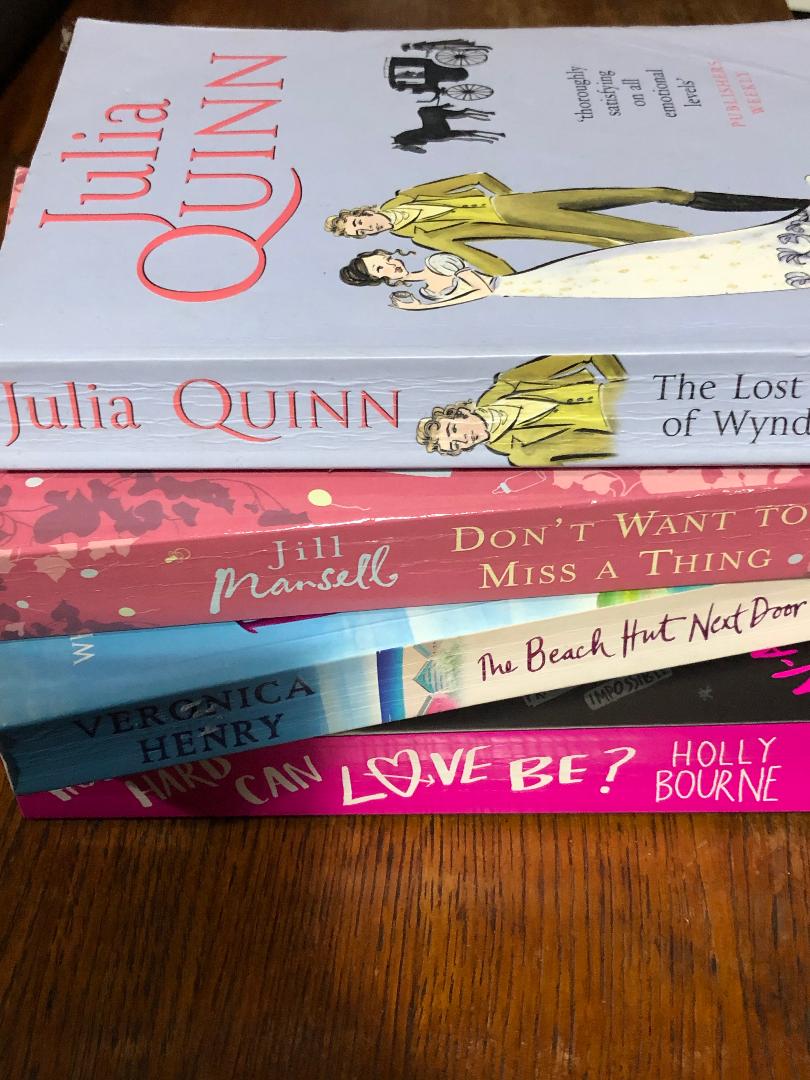
Today I wanted to return to that theme and talk about romance novels giving us hope in an often bleak and daunting world. I truly believe this – that romance novels help us have hope in life, the absolute certainty of a happy ending is sometimes exactly what you need to escape real life, whether it be dreadful news or just the day to day monotony.

Whilst trawling the internet a while ago I came across a tweet from a writer, Angela James, asking people to share their romance positive moments. The response was overwhelming, hope was right up at the top of that list and I have picked a couple as illustrations as they say it so much better than I could.
‘I found Romance after my brother commited suicide. It was a very dark and hopeless time, but Romance taught me that hope can rise again even after the darkest of moments and love, in all its forms, can be found if you just open yourself up to it.’

‘I began reading romance novels after my first miscarriage. I believe they re-wired my brain and helped me remember what optimism felt like.’

‘I started reading romance novels while was undergoing cancer treatment. I needed positive, escapist stories that promised a HEA.’

Now I’m not saying that romance is a cure-all, of course it isn’t. But romance novels are often easy and quick to read thus providing escape for an hour or two. They can’t rid you of the burdens that life brings, but being lost in the pages of a novel can give you a brief pause from them. I fell in love with romance when I became poorly at the age of thirteen. My friends were ringing me and asking if I was dying (I wasn’t but they were a dramatic bunch) and all I knew was that my body wasn’t behaving as it should. If I hadn’t had romance novels to read, to lose myself in, I think I would have struggled to cope.

We all know that life is not a romance but these books do give us the thrill of living vicariously, of confronting challenges and winning, of reading about someone’s longing turning into reality. To be fair, that’s true of reading in general but with romance you get the added ahhh factor, the satisfaction of a romance played out, of willing the hero and heroine on without any of the risk or leaving the comfort of your own home. I can be sunbathing on a tropical island or dancing the cha-cha whilst in reality I’m wrapped in a blanket and drinking a cup of tea, ignoring the stuff that I don’t want to have to deal with at that minute.

Happy-Ever-Afters are a reminder that not everything in life is bleak, that there’s the possibility of dreams coming true, that life contains so much positivity. Building a future with someone you love – the pinnacle of Romance – is forward-facing, optimistic, both the essence of hope and an act of hope. Romance Novels are the reassuring and toasty comfort blanket of the fiction world and I love them.

Edit – I wrote this well before Covid-19 was dominating the globe and considered pulling it, but I stand by the fact that in an ever-turbulent world the predictability of a happy-ever-after is reassuring so I’m off to hibernate with my kindle. Keep safe everyone,

Much love, Kitty x


CAN YOU HELP FIND BRITAIN’S OLDEST FEMALE WW2 VETERAN?

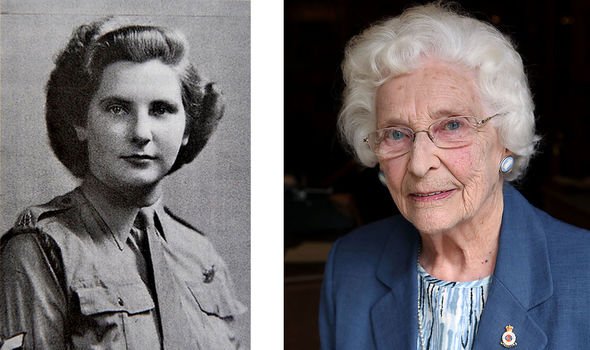
In January, Britain’s oldest female WW2 veteran died. Anne Robson had served as a physical training instructor in the Army, and had reached the grand age of 108 when she passed away in Scotland.

The Women’s Royal Army Corps Association has since decided to launch a campaign to ‘Help us find our Oldest A.T.S. Veteran’ – #FindOurOATS – www.FindOurOATS.org – to ensure that the contribution of female veterans during WW2 is duly and appropriately honoured. Afterall, their contribution helped to carve out new roles for women in society as a whole.

This year – 2020 – will mark 75 years since the end of WW2. As such, women (as well as men) who served must be remembered. In the words of retired Col Alison Brown, “The purpose of the ‘Find Our OATS’ campaign is to find the oldest surviving female WW2 veteran to record her experiences for the purpose of future generations: her legacy should not be forgotten!”

Betty Webb MBE, is also backing the campaign. She is the 97 year old a member of the WRAC Association (charity) who helped to crack enemy codes at Bletchley Park during WW2. She notes: “I am very proud of all the achievements of the thousands of other women who joined the Auxiliary Territorial Service to serve in WW2. We must remember the contribution of these  ladies.”

Over 345,000 women served in the ATS (Auxiliary Territorial Service) from 1938 –1949. Ahead of the VE Day (8th May) and VJ Day (15th Aug) celebrations that are being planned around the world, the charity wishes to ensure that the focus of these anniversaries includes female veterans. These women may have served for just 1 day, or up to 11 years in the ATS between 1938 and 1949. However, many such women emigrated to countries such as the USA, Canada and Australia, after the hostilities ended. This is why spreading the message about #FindOurOATS internationally is so important.

The oldest British female WW2 veteran may well not be a WRAC Association member. Furthermore, the charity in no way wishes to put ‘pressure’ on this lady, once she is found. Instead, it simply wishes to help identify her, so that in due time, it can appropriately honour and champion her pioneering service as the only charity that specifically supports women who serve, or have served, in the British Army.

Women only need to have service for one day or more in the British Army to be eligible to apply for benefits available via the WRAC Association. As a vibrant charity, it has two main objectives: providing comradeship, friendship and support – plus – distributing grants to former servicewomen (1917-1992) who are in need of financial assistance. In 2016 the charity awarded over £220K in benevolence grants for items such as white goods, and services such as care home top-up fees and stairlifts.

You can help to find the oldest surviving female WW2 veteran by spreading the word about the campaign: Go to the website www.FindOurOATS.org and/or share its social media content using the hashtag – #FindOurOATS.

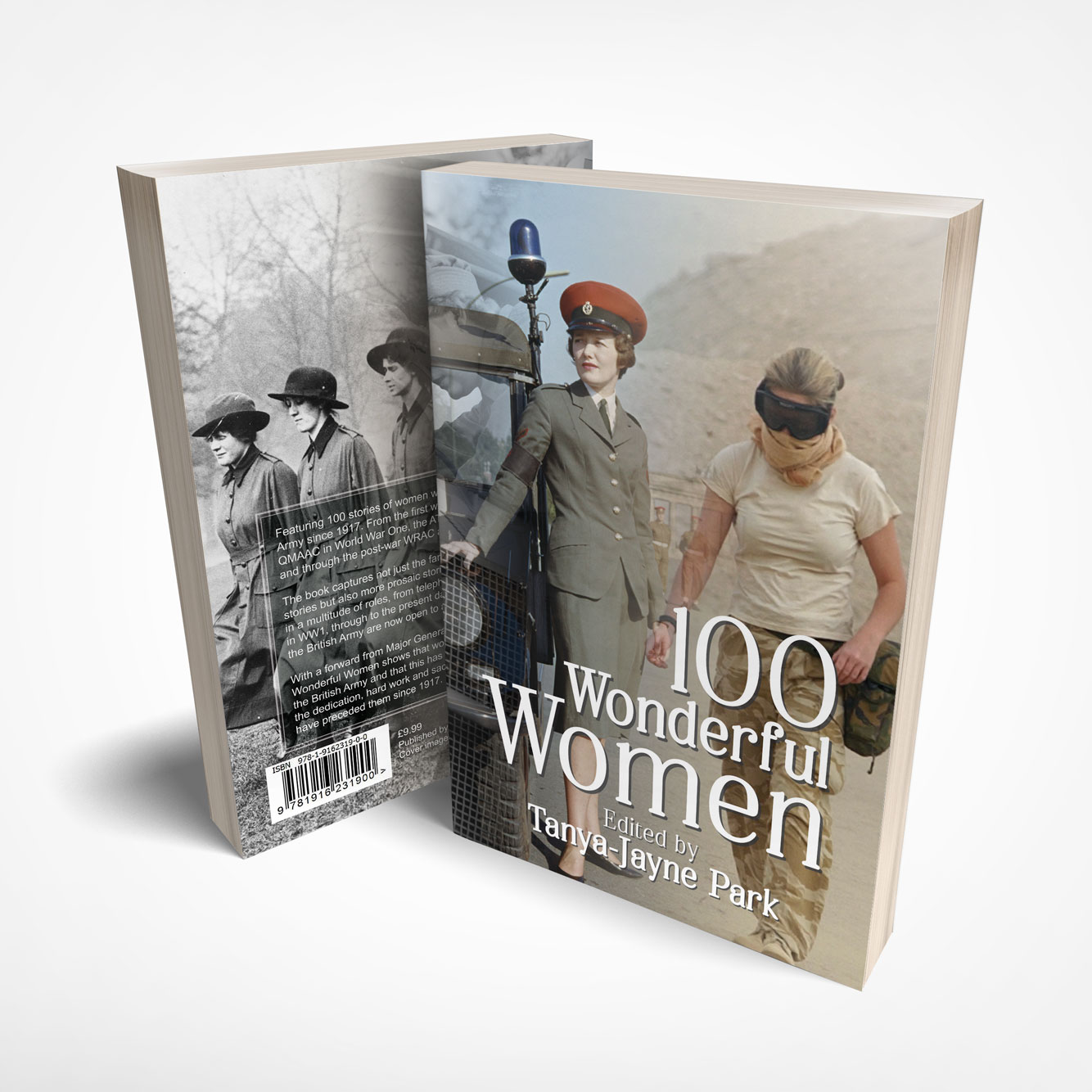
The WRAC has also printed a broad spectrum of stories of women who have served in the British Army since 1917.  The book is called “Wonderful Women 100 Book” and is available to buy on the WRAC website.  https://wonderful-women.org/product/wonderful-women-100-book/

Living with Alzheimers – I wish I’d paid more attention to Paul Daniels’s Magic shows by Chris Suich.

Living with Alzheimers- Bob and Chris Suich

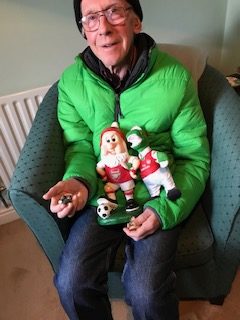
It was a big match day for Arsenal. I’d got the ‘football room’ suitably attired for Bob with the lucky Arsenal gnome, the two Irish leprechauns and the Gunnersaurus. They were lined up looking towards the TV. We were waiting for our friend to come round and watch it with us.
Bob had recently had a bit of an obsession about door handles. He kept trying the handle, pushing them down fiercely (several times) to such an extent the latch was sticking and I couldn’t get into some rooms. The only way I could get the latch to move back was to get my bank card, slide it in the gap, and push the latch back. In the end I had been so annoyed that I’d actually taken the handles off the door in the ‘ football room’. I left the door wide open with a note sellotaped to it ‘DO NOT SHUT’ and put a square pouffe in front to hold the door back to the wall.
Our friend came round and the game became very exciting. The beers flowed and we became totally absorbed in the match. Suddenly I realised the door was shut.
I screamed out in horror. ‘ The door’s shut!’

‘It wasn’t me.’ chanted Bob over and over (who was sitting on the pouffe.)
‘It must have been you though, Bob because you’ve moved the pouffe and shut the door at the same time.’
‘It wasn’t me,’ Bob repeated.
There was no door handle to get out and the door was fast shut. My purse with the bank card was in my handbag – the other side of the door. My phone was also in my bag so I couldn’t even phone a neighbour for help. I had a vision of us all being locked in until the postman came the next day, and us waving frantically at him shouting ‘Save us. Save us!’
How could we get out? I remembered the front door was unlocked – if we could get out of the window. But the window was so small. There was no way I could get out as my back was playing up and if I tried to twist it my muscles might go into an agonising spasm. Our friend is a 6 footer so I couldn’t imagine he could get through the window. But Bob was thin and small perhaps I could persuade him somehow to try to get out.
Bob was the right size but could he understand how to climb out of the window? I started to try to make him understand.
‘If I tipped you up, Bob, out of that top window and held onto your ankles you might be able to do a forward roll like the SAS, do you think you could do it?’
‘Not me.’
That was when I wished I had paid more attention to those Paul Daniels magic shows where they put people into a box and they become very small people, contortionists I think they are called. If only I knew how to make myself that small I could have got through the window. I had a flash back to a show Bob had booked where I had watched a young lady supposedly chopped up with a sword and all the time they were in a tiny space where the sword never went.
Then our friend saved the day.
‘I think I might be able to get out of that window’ he exclaimed.
‘ Really?’ I answered, a little hope in my heart.
We cleared the windowsill of the ornaments and pictures and our friend climbed up. It was at this moment that the ridiculousness of the situation took a hold of me and I became a hopeless giggling mass. Desperately trying not to let our friend see me laughing as he was struggling to balance with one leg either side of the frame. He became that very small person I had seen in the magic shows.

He managed it! He jumped down onto the path. He walked in through the front door and between us we did the bank card trick in the edge of the door where the latch was, and managed to push it backwards so the door opened.
Well, that was a game to remember for all the wrong reasons!

Thank goodness Arsenal won.

Living with Alzheimers – A New Challenge for 2020 by Chris Suich

 new challenge for 2020 Bob Suich Chris Suich

Welcome to the New Year 2020! Christmas came and went. We had a pleasant enough one without incident. Can’t say that of the new year though.

The first few days of 2020 were a bit of a challenge. I noticed Bob’s ankle was a bit puffy after his bath. I’ll have to keep an eye on that, I thought. Perhaps his sock was too tight around his ankle, but I thought I’d put on his open topped non-elastic ones.

The next day his lower left leg was huge and his foot resembled a block of lard. No understanding or pain noted from Bob.  It was Saturday, no GP available. I went on the NHS website to check and rang 111 just to make sure I wouldn’t be wasting anyone’s time if I took him to the ’Walk in Care’ at the local hospital. I realised it probably was a blood clot as the answers pointed to that. The lady rang me back from the NHS helpline to tell me I’d got an appointment for 8.30pm and to take him in. We were seen by 11.30pm.

It was an endurance test for us both. Bob wanted to go to bed, he’d been saying this every two minutes since 3pm and was getting more and more distressed.

‘Let’s do a runner,’ he whispered conspiratorially. It crossed my mind. Then he’d ask everyone if they were a doctor and that he thought it was ridiculous that there were no doctors there. If someone spoke loudly or a child squealed it upset him.

There was a blood clot. He had a scan to confirm on the following Monday. We had to go in again on the Sunday and Monday for an Injection of blood thinner in his tummy; another endless wait.

Finally, I think the penny dropped that waiting for hours for a two minute injection was stressful for Bob and the waiting audience of patients. I was presented with 10 injections, a safe needle disposal box and told to get on with it. Nurse Suich at your service!

Poor Bob. I was now the baddy, hurting his tummy every night. What fights we had getting that needle in – and how close did I come to getting it in me, not Bob.  A Carry On film comes to mind.

I still feel though the physical side of caring isn’t the hardest part: the hardest part is the loss of freedom, the absolute tie, the relentlessness of the duty, the repetitive nature, the hyper vigilance of constant watching, the fact you can no longer call your life your own.

SISTER SCRIBES’ WOMEN’S WRITING WISDOM 2019

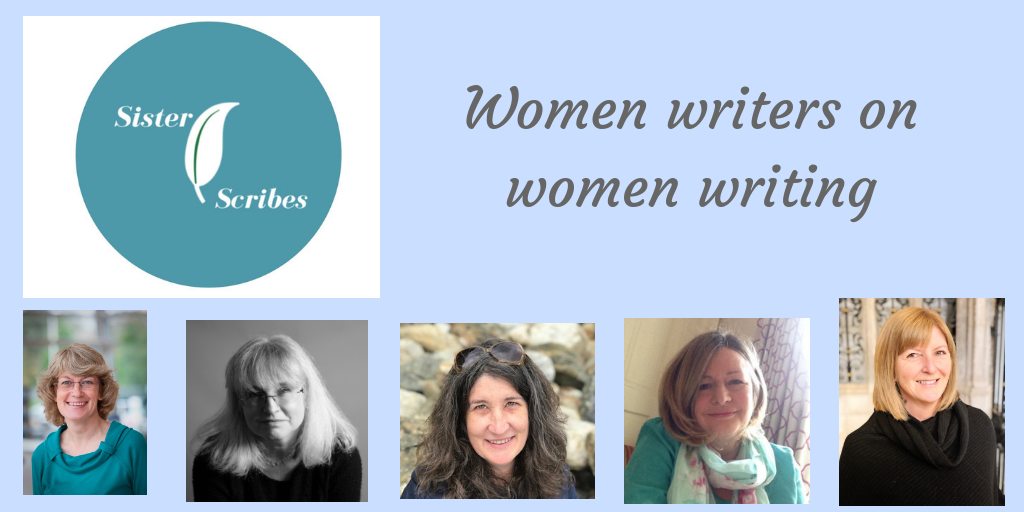
During 2019 Sister Scribes were lucky enough to welcome women writers we admire and have some connection with to Frost and in the process we learnt a great deal. With a new year approaching, here as some of the choicest nuggets to mull over.


Alexa Adams: My network of women who I can depend on, confide in, and trust has exploded, and I have a hard time recalling how I ever got by without them. These friendships are the most unexpected gift that writing has bestowed on me, and for them I am immeasurably grateful.

Carol Thomas: Three top tips for working collaboratively:
1) Take a little time to find your way, but also be prepared to step up. Somewhat obvious but … the key to collaboration is collaborating.
2) Be prepared to compromise. Working as part of a group will require it at some point.
3) Be actively supportive of others; you’ll get more from it than you might think. Rightfully so, when it comes to working in a group, you tend to get out, what you put in.

Catherine Boardman: Telling stories is what I love to do.  The solitary nature of sitting down to write suits me perfectly.  Yet it is the support and friendship of fellow female writers makes the procrastination so much more fun.

Daisy Tate: THERE ARE NO FOES in the world of women’s fiction. Along this windy path I’ve walked, I have only met people who are there to help others.

Dr Gaby Malcolm: Ignore anything other than constructive criticism and admire your own work.

Jessica Redland: So far, our joint venture [The Yorkshire Rose Writers] has worked well and we love working together. We’re both excited to see where it could go in the future. My advice to anyone thinking about such a venture, though, is be really clear on your aims and your time commitment right at the start so you’re on the same page.

Maddie Please:  I try to keep the boxes of stationery under control but boxes of pencils, Sharpies and Post-it notes are like cat-nip to me!

Merryn Allingham: When several members of my book group announced recently they didn’t like historical fiction, I was disappointed. But stunned when one went on to say she couldn’t see the point of history. For me, discovering the past doesn’t just illuminate quirky corners of a bygone age but helps understand the world of today….. Researching history complicates that first simple ‘take’ on a culture and a period, changes our perspective, makes connections. And, crucially,  illuminates our own troubled present. Worth paying attention then!

Rachel Brimble: I could not write without women from the past, the present and undoubtedly, the future. Here’s to the strong women who have gone before us and who continue to walk with us today!

RL Fearnley: I realise that I don’t have to write ‘women’ in my stories, I just have to write ‘people’. It should not be a revelation to see that these two things are not mutually exclusive. After all, in worlds where anything is possible, why can’t the quiet, plain girl at the back of the class be the one who takes up the sword and slays the troll?

Tracy Rees: Exploring our dreams as far as possible makes us happier, fuller people, which in turn allows us to help and support others.


SISTER SCRIBES GUEST: MADDIE PLEASE ON LIVING AND WRITING IN DEVON

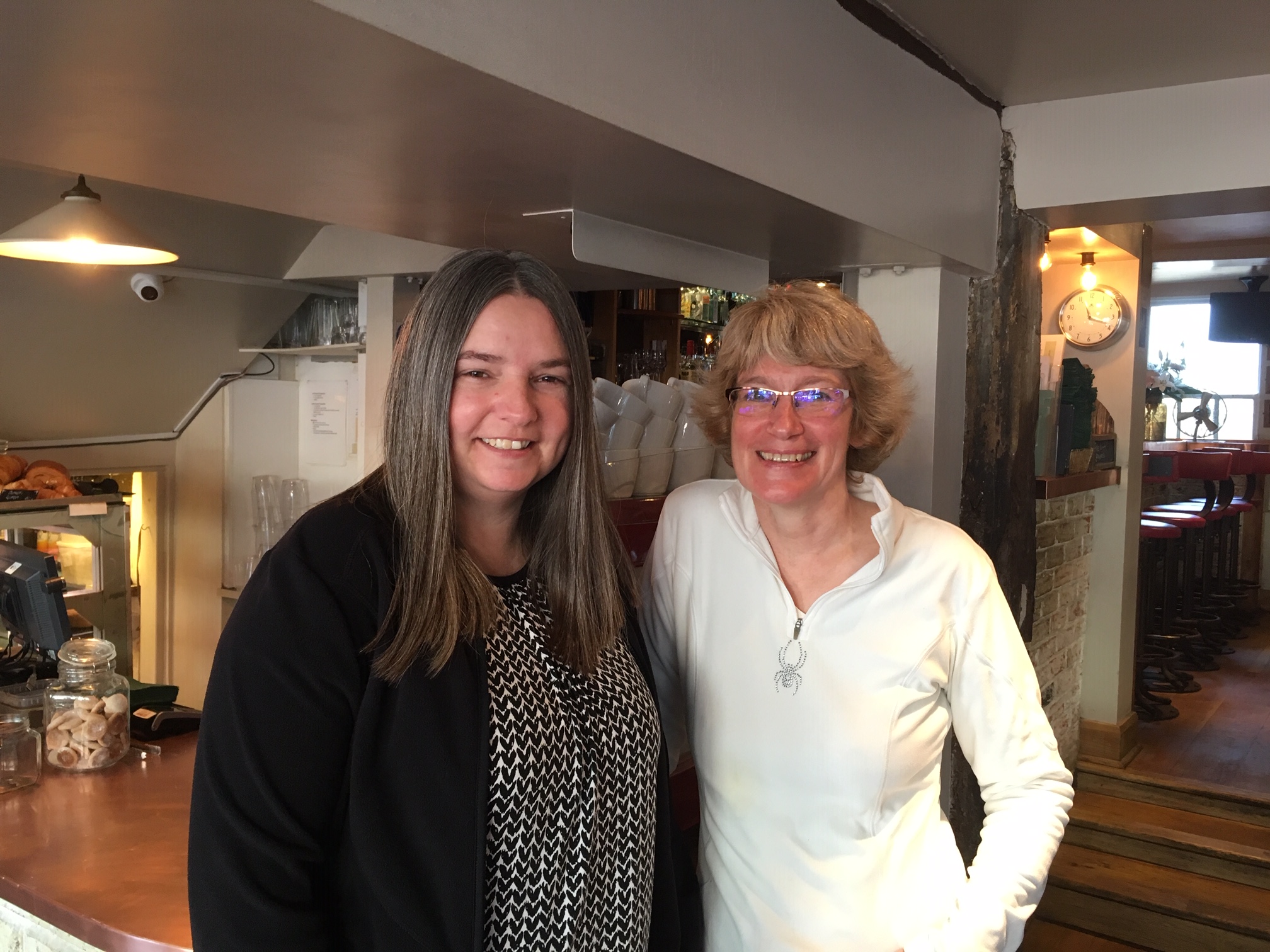
I’m delighted to introduce my good friend Maddie Please. Maddie writes the most hilarious romcoms set in Devon and we met at one of the retreats she runs with Jane Ayres at The Place To Write. I visited her lovely house near Exeter and asked her what it’s like to live and write in Devon.

In May 2015 we moved into our lovely house on top of a hill midway between Exeter and Crediton. We were convinced we were downsizing. (It wasn’t until we actually moved in that we realised we hadn’t.) The house had remained empty for a year before we bought it, and the main decorating influence we inherited was wood chip wallpaper, painted magnolia and apparently stuck on with superglue.

The garden was overgrown and very neglected but we have never regretted the move, and the starry skies at night are wonderful.

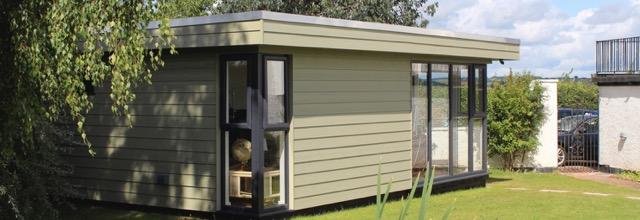
The first thing we did when we moved here was build a garden office, which I share with my husband. This means my daily commute is now twenty-five steps; I just counted them.

Occasionally we hear pheasants or pigeons trampling about on the roof. At this time of year the neighbouring fields are busy with the harvest and tractors and farm machinery trundle past our gate, something which is very exciting for our grandchildren when they come to visit.

In our garden office I have my own desk where I work just about every day.

I have s lovely hand painted cushion from my Bestie Jane to make life more comfortable. I am in charge of filling the stationery cupboard too! Any writer will know how much fun that is. I mean going into an office supplies superstore or Paperchase or Smiths and calling it work related is a dream!

Our makeshift shelving got a bit out of control last year so we replaced it with some industrial units from Big Dug. An excellent purchase. I try to keep the boxes of stationery under control but boxes of pencils, Sharpies and Post-it notes are like cat-nip to me!

I’m usually at work between 8 and 9 o’clock and unlike some writers who prefer to work without distraction, I have a wonderful view of the garden and beyond that the Creedy valley. I don’t like working in silence either, so I listen to BBC Radio Devon, which is my daily companion; I love it. Gordon Sparks and the Gordon Hour, David Fitzgerald and his Fighting Fitz competition or Janet Kipling and her Devon Debates – there are enough plot ideas there every day to keep any writer thinking.

I’m often to be found with a vacant expression as I do some important thinking and when I’m using earphones have been known to sing along. Much to my husband’s utter delight. Maybe that’s not the right word?

I occasionally go back into the house to make us coffee and usually by 3.30 in the afternoon, I’m done for the day.

Does the Internet distract me? Well of course. I am an avid Twitter and Facebook user and I have been known to check my Amazon reviews once or twice…

But I do regard writing as a job not a hobby.  My debut The Summer of Second Chances was based on this area with its winding lanes and fabulous views. So was my fourth book; The Mini-Break which takes successful writer Lulu out of her London comfort zone and into the muddy and glorious Devon landscape.

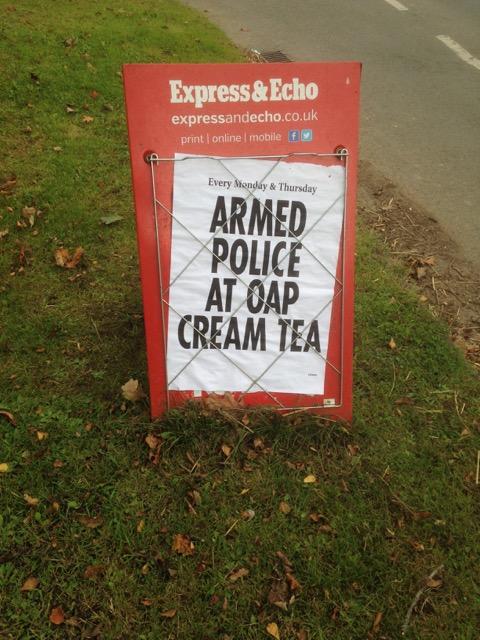
Living here is simply lovely, our local pub is the award-winning Beer Engine, and despite the headline story in the local paper, our neighbours are friendly and welcoming.

My husband has always been interested in researching his family history and found details of his ancestors who had lived nearby in 1674. Perhaps something called us back here?

To us this is the very best place to live and work.


SISTER SCRIBES: SUSANNA BAVIN ON A CHANGE OF NAME

In common with many women, I have gone through the process of a name change. I have twice gone through the hassle of changing my surname. Incidentally, if ever you have to send away your marriage certificate, do include in your covering letter a specific instruction that the certificate should be returned to you after the admin people have finished with it. Some years ago, I blithely sent off my marriage certificate… and it wasn’t returned. Not only that, but no one in the office could track it down. In the end, it transpired that someone had stashed it away in the safe – and all because I hadn’t given a specific instruction to return it!

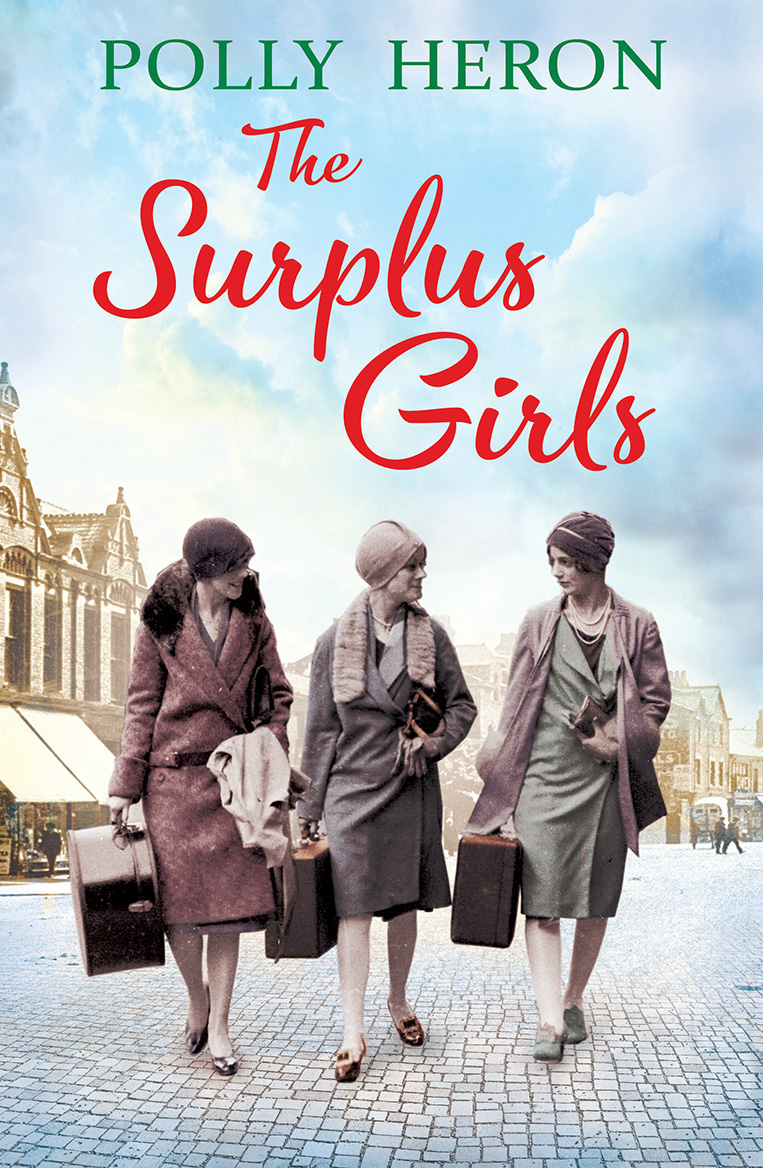
Anyway, I am in the process of having another change of name, but this time it is to introduce a new pen name – Polly Heron – and it’s because I have a new publisher – Corvus, which is the commercial fiction imprint of Atlantic Books. The Corvus list includes women’s fiction, romance, historical fiction, sci-fi, crime and thrillers. As a saga writer, I’m not sure whether I come under ‘historical’ or ‘romance.’ Possibly a bit of both.

My first book for Corvus is the start of a series. Both the series and the first book are called The Surplus Girls. So who were the surplus girls, exactly?

They were the generation of young women, who, after the Great War, were left without the possibility of marriage, because of the appalling death toll exacted on the battlefields. This was at a time when marriage to a man who could support you and the children you would have, was pretty well universally regarded as the correct and desirable aim for any girl. So these young women, whose possible husbands had perished, found themselves – unexpectedly and without preparation – in the position of facing a future of providing for themselves. Not only that, but no woman could hope to earn as much as a man, even a man doing the same job (sounds familiar?).

Writing about the 1920s is something I have done before, in two of my books written as Susanna Bavin – The Deserter’s Daughter and A Respectable Woman. Although the decade was all but a century ago, to me it feels very close. My parents weren’t exactly spring chickens when they had their children and they were themselves born in the 1920s, so it is an era I grew up hearing about when family tales were told and, of course, I have family photographs as well.

It is in some ways perhaps a bit odd to write about surplus girls in the context of a saga in which, by definition, the heroine will end up with the hero and therefore no longer be a surplus girl, but I hope I have also conveyed both the universal shock and sorrow that pervaded society at the loss of such a large number of men and also the way that these losses brought the lives of individual girls and women into a new, sharper focus as they faced life on their own.

Living with Alzheimers – A Carer’s Story by Chris Suich

Living-with-Alzheimers-Chris-Bob-Suich

In 2012 my husband, Bob, was diagnosed with Amnesia and we were told it could become Dementia. Three years later he was diagnosed as having vascular dementia. However, after two weeks in hospital in 2018 with severe anxiety linked to the condition, we finally saw a dementia specialist who diagnosed Alzheimers. Nothing could prepare us as a family for the devastating news – and that there was no cure. To see this dynamic and clever man become so dependent and scared of day to day things was devastating. My life now revolves around caring for the man I have been with for over 40 years.

I met Bob whilst having a gap year working on Cleethorpes Pier before starting a degree at Hull University. I was only 17, but we got on so well and shared so many interests that we became inseparable. We married a year later. Bob was theatre manager on the pier and went on to pursue a career in tourism and leisure, and I put my degree on hold to support him in his anti-social hours and bringing up our two boys, Joseph and Edward.

Whilst they were babies I enrolled in the Open University and after six years managed to gain a BA in English, History and Cultural Studies. After a year I started teaching full time at a local primary school. Bob’s career grew and soon he was in charge of tourism and leisure for East Lindsey District Council in Lincolnshire. We met many stars of show business such as Norman Wisdom, Ken Dodd, Joe Pasquale, Lulu, and Barbara Windsor, who sadly also suffers from Alzheimers.

Bob worked hard and had a knack for securing TV appearances. He would follow up every bit of publicity he could, including swimming in the sea in January to prove how clean the water was after gaining a Blue Badge award.

He was managing a huge budget, a very successful manager and well-liked by his many staff. We had a great life. but so much has changed since his diagnosis.

Life isn’t easy but we do manage to share lots of fun and laughter. In sharing our story, I hope to cast a little awareness of what it’s like to be a carer for someone living with dementia.

A typical Sunday in our house.

Bob has taken to waking up very early. Today it was 4.00 am.

‘Hello ‘ he says. ‘ Are we getting up yet?’

‘It’s early, go back to sleep,’ I say. ‘I’m not at school today.’

Then the restlessness starts. We manage a few more hours then I give in, get him up, bathed, hair washed all clean set of clothes, wet shaved, pills, hair combed and all the other small things it takes to get him ready for the day. It’s exhausting and the day’s barely begun. He looks smart and well though, so it’s worth it.

We listen to the news whilst we share our morning coffee, having a discussion of the likelihood of which Tory will become the next prime minister. Bob has me howling as he has a complaint about them all.

Then it’s out for Sunday lunch at a friend’s house. Bob eats a small plateful, but I have to chop it up and feed him as he never manages more than a few spoonfuls himself. He’ll say he’s finished but I can usually get more down him as he forgets what he’s said.

When we get home another friend calls in for a glass of wine. He sits with Bob and they enjoy a beer for an hour. Bob ‘loves him’ because he knows him and feels safe. This gives me a break as I have real problems keeping Bob occupied. He wants to do something all the time, but his concentration is nil and so I’m not able to get on with as much as I’d like.

I put ‘Babe’ on the TV for Bob while I mow the grass. He enjoys children’s films as the story is not difficult to follow. I try to dodge the showers and just manage it before the heavens open. When it stops our friend helps me dig some plants in and put the heavy green bin out for dustbin men.

Our friend leaves and we settle down on the sofa, side by side, to watch footie for a bit. If it goes to penalties I might just be able to escape to do the pack ups and the organisation for work tomorrow.

Then out comes the doodle book with his nice new pencil crayons. He lasts fifteen minutes but I am cajoling him the whole time.

Getting Bob to bed is a huge undertaking as by 9.00 pm he is tired and irritable. I start by getting him in his pjs. He complains about getting changed as he wants to go to bed in his clothes. I have to manoeuvre his arms and legs as he can’t do it himself and his arms are stiff as he no longer knows what to do to get undressed.

Then the teeth.

‘Oh, not that!’ he says.

He hates the sound of the motor on the electric toothbrush and I have to brush his teeth as he would never do them.

Then the pills.

‘Not them’ he says.

Bob is on a cocktail of tablets: one for his memory, one for anxiety and several others. Then we go downstairs for a glass of ‘something lovely’ – part of the deal for co-operating in the getting ready for bed routine. Bed by 10.00 -10.30pm and Bob goes out like a light.

Whereas I am laid awake thinking; thinking about how my life has changed, how Bob must feel so bewildered, and how I’m going to have the strength to start it all again tomorrow.