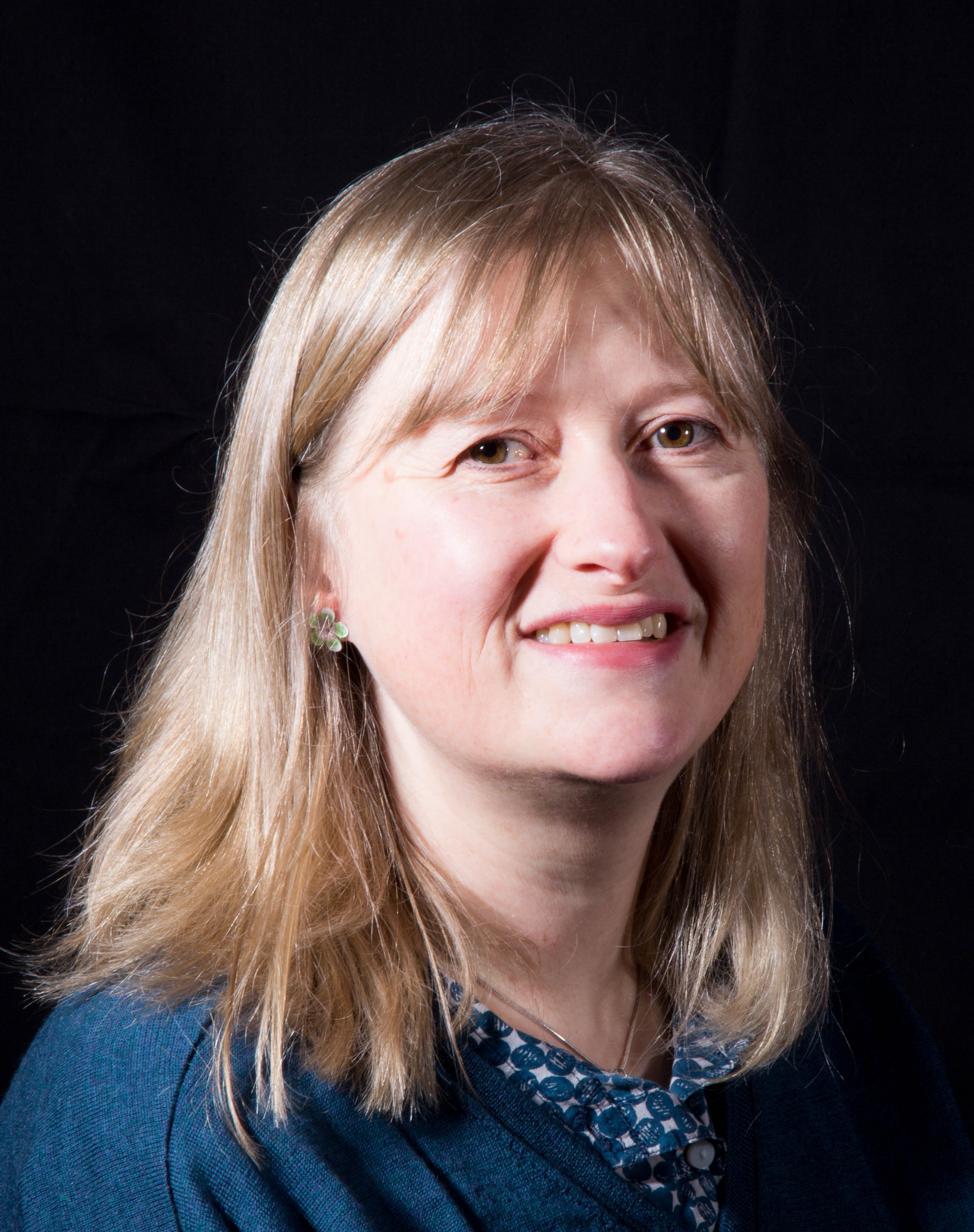
SUNDAY SCENE: VICKI BEEBY ON HER FAVOURITE SCENE FROM A NEW START FOR THE WRENS

The first time I visited Orkney, I’d gone to visit the fascinating Neolithic sites. However, I was surprised to find other, much more recent remains – the leftovers of Orkney’s wartime heritage. Along with ancient stone circles, tombs and stone houses, I saw concrete gun emplacements and the buildings still standing in Lyness on Hoy where there had been a huge naval base. Until then I hadn’t known about the large presence of the armed forces in Orkney during the war but after that I threw myself into research. When I learned that a lot of Wrens were posted to Orkney, it fired my imagination and I started to wonder what it must have been like for the young women who left the comforts of their homes to serve in Orkney.

It was a couple of years before I was able to start my story, and one of the first decisions I had to make when planning it was whether to make the setting wholly real or if I should blend real settings with fictional ones. In the end, lockdown made up my mind for me. The research trip I’d planned had to be postponed indefinitely and yet my deadlines were fixed and looming. As I was going to have to rely on my memories of my visit, plus maps and books, it made sense to create a fictional signal station where my Wrens would be based.
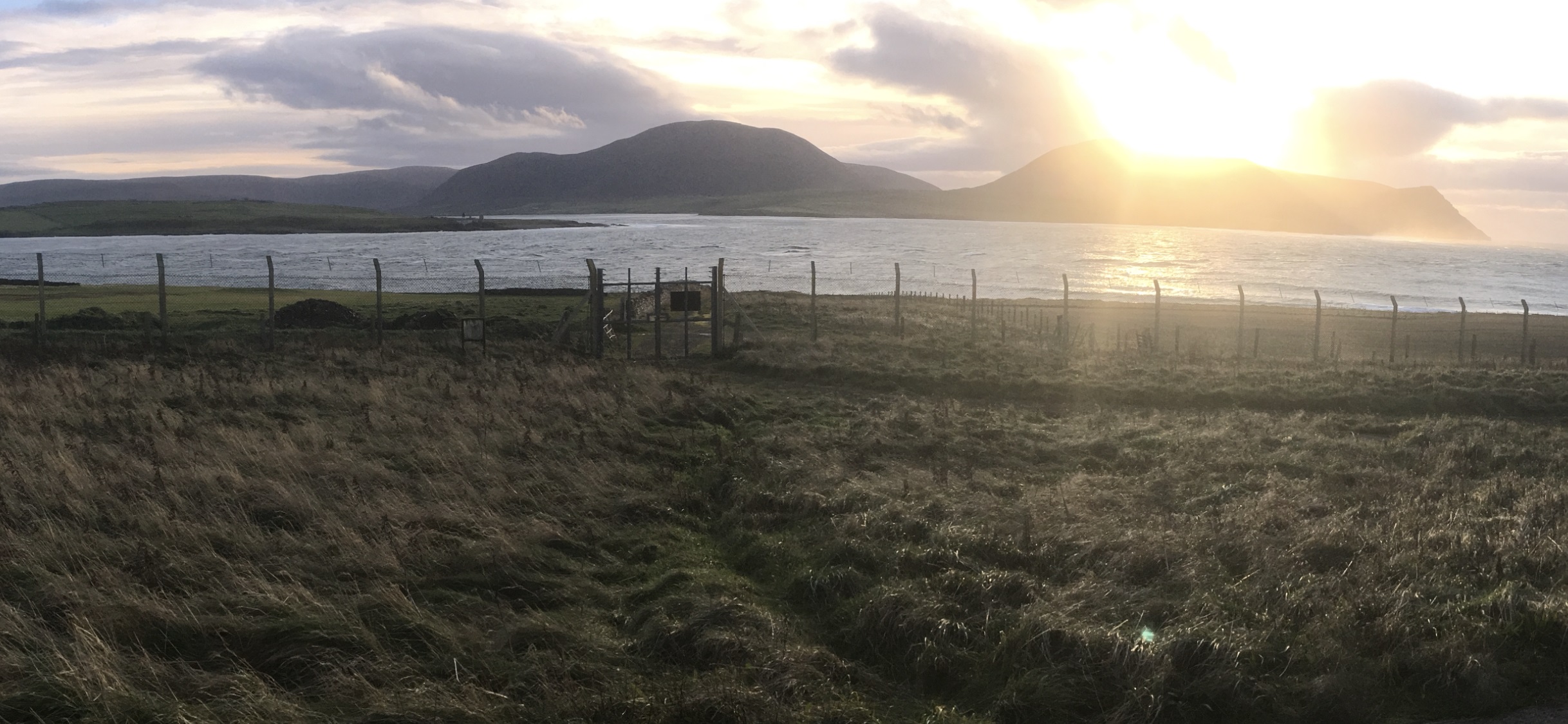
In the book they are tasked with challenging and monitoring all shipping entering and leaving Hoy Sound, the entrance to Scapa Flow, which was the wartime anchorage for Britain’s Home Fleet. I made up a headland, which I called Kyeness, where the signal station would be based, placing it just outside Stromness. Now I’m writing the third book in the series, it feels like a very real place to me, up on a high headland with stunning views across Hoy Sound, with the Hoy Hills beyond.

Another fictional location is the Wrennery, the large old house where the Wrens are billeted. However, it’s located in Stromness. It’s one of my favourite places in Orkney, with its narrow, winding streets and stunning views across the harbour. In one of my favourite scenes in the book, Iris, the heroine, goes for a walk with her sweetheart while recovering from a terrifying experience the night before. The route I describe is all real, starting in Stromness, and I spent ages studying maps and Google Street View, hoping I didn’t get anything wrong. When I visited Orkney again last November, I followed the same route myself and was relieved to find I’d described the scene correctly, although with the addition of barrage balloons and warships!
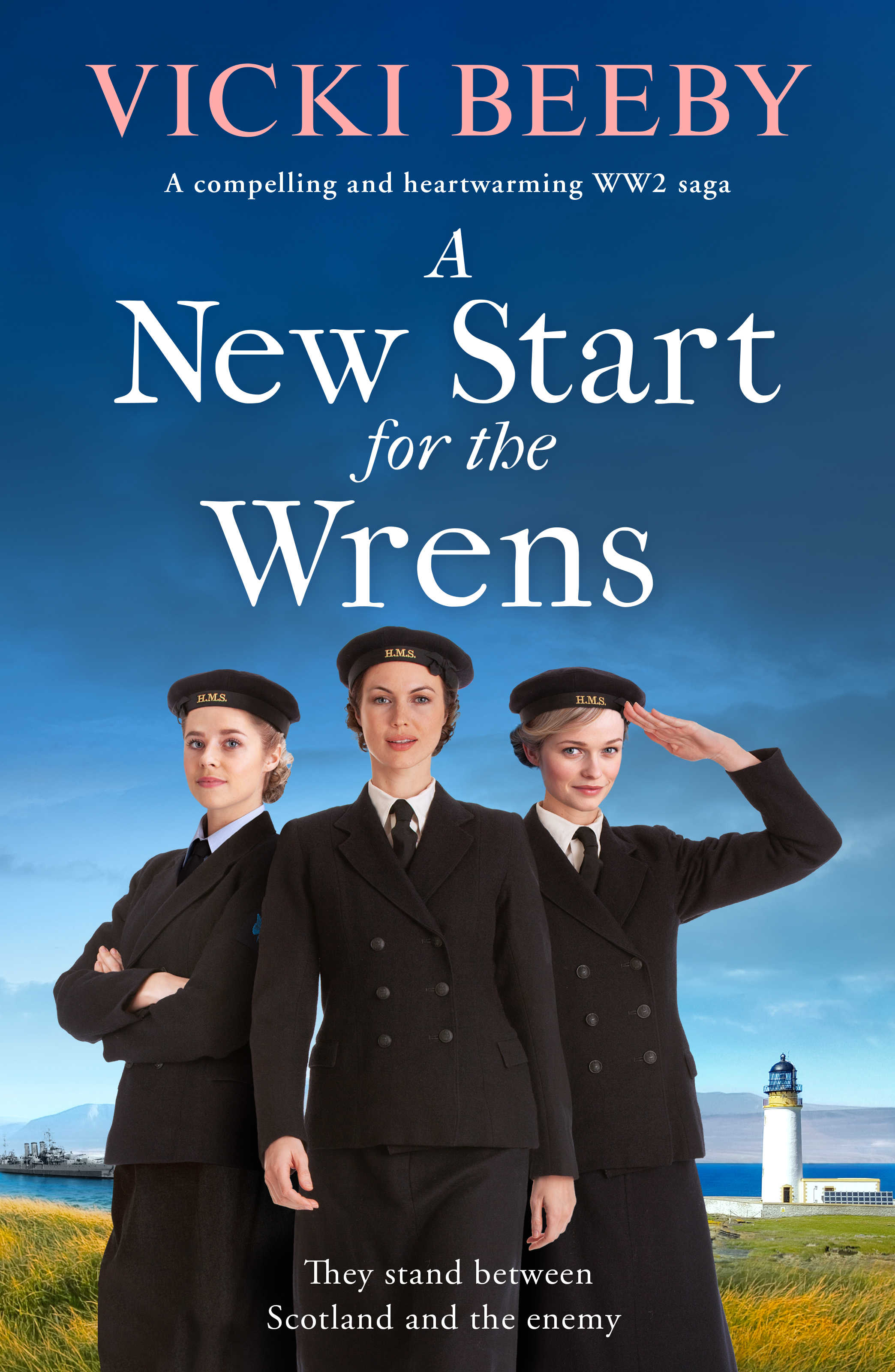
‘… they walked out of Stromness on the Howe Road. The road climbed steadily until, looking back, Iris could see across Scapa Flow. The waters were now still and a clear blue, reflecting the sunlit sky. ‘It’s hard to believe it was so stormy out there last night.’ With the daffodils dancing in the breeze along the verges and even the barrage balloons gleaming in the sunshine, Iris felt the lingering fear of the night fall away. Far across the bay, she could see the faint outline of ships at anchor. At that distance, the water looked like silver, the ships set upon the surface like toys. Thoughts of yesterday’s stormy weather and those terrifying moments when she was being dragged beneath the water were fast fading like a half-remembered nightmare.’


To find out more about me and my books, please visit my website: vickibeeby.co.uk


Joffe tells our readers some wonderful news, as well as letting you know about a few fabulous new books

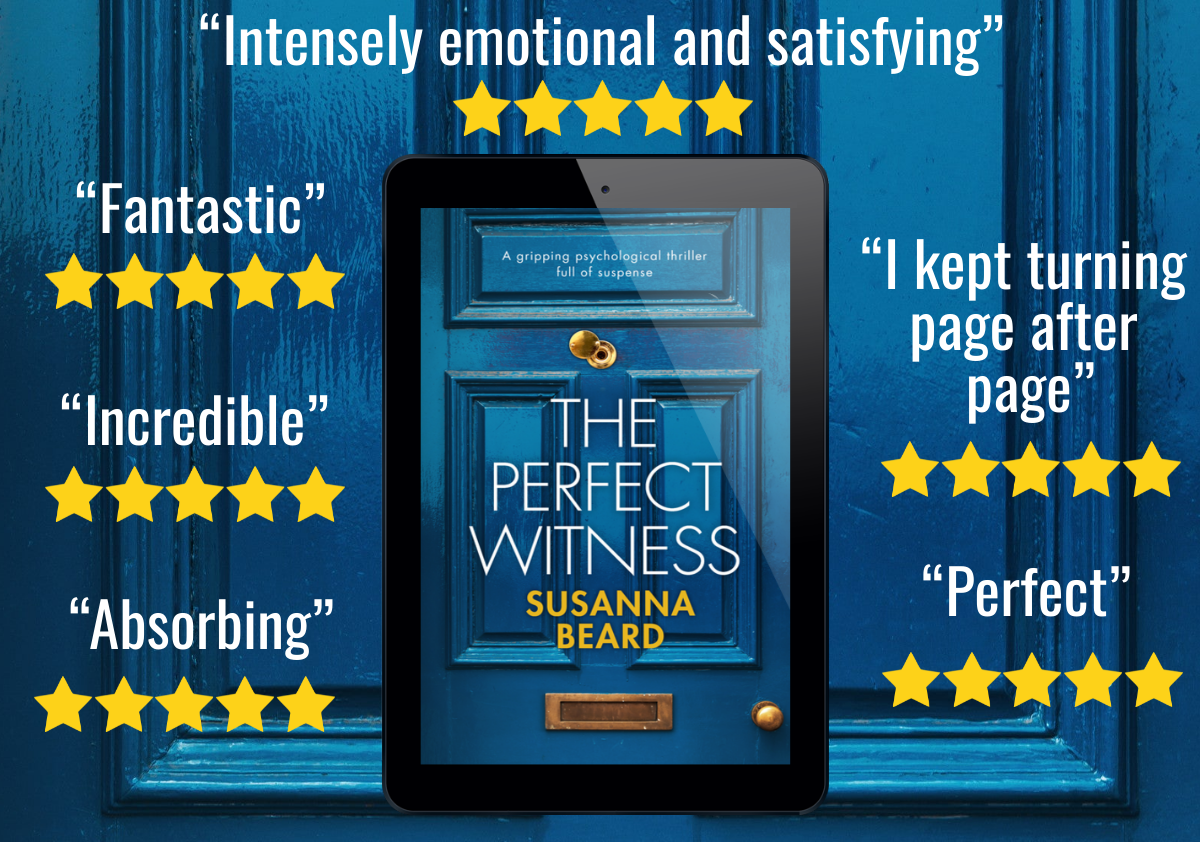
Joffe’s book of the week is the electrifying new thriller THE PERFECT WITNESS, out now for just 99p | 99c. Filled with great characters and gripping twists and turns, the new psychological suspense by bestselling author Susanna Beard is certain to hook you from the first page to the riveting conclusion.

We know that if you love books by Gillian Flynn, T.M. Logan, Liane Moriarty or Celeste Ng, then you’ll devour this page-turning, character-driven psychological thriller from Susanna Beard, author of What Happened That Night, and The Perfect Neighbour.

CLICK HERE TO BUY THE PERFECT WITNESS BY BESTSELLING AUTHOR SUSANNA BEARD FOR 99P | 99C.

And now for just a very few of this week’s new offerings…


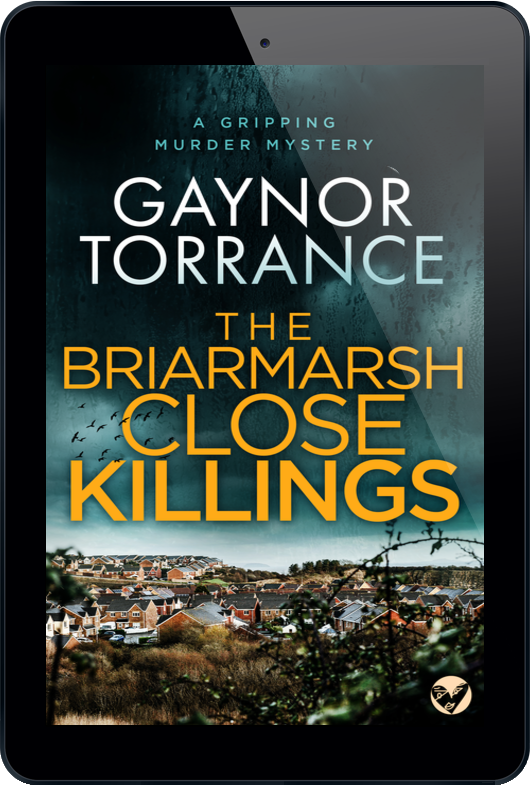
The Briarmarsh Close Killings by Gaynor Torrance 

Discover a page-turning new murder mystery set in Cardiff from bestselling author Gaynor Torrance, filled with stunning twists and turns and featuring a complex and compelling protagonist in DI Jemima Huxley.

OUT NOW — £1.99 | $2.99

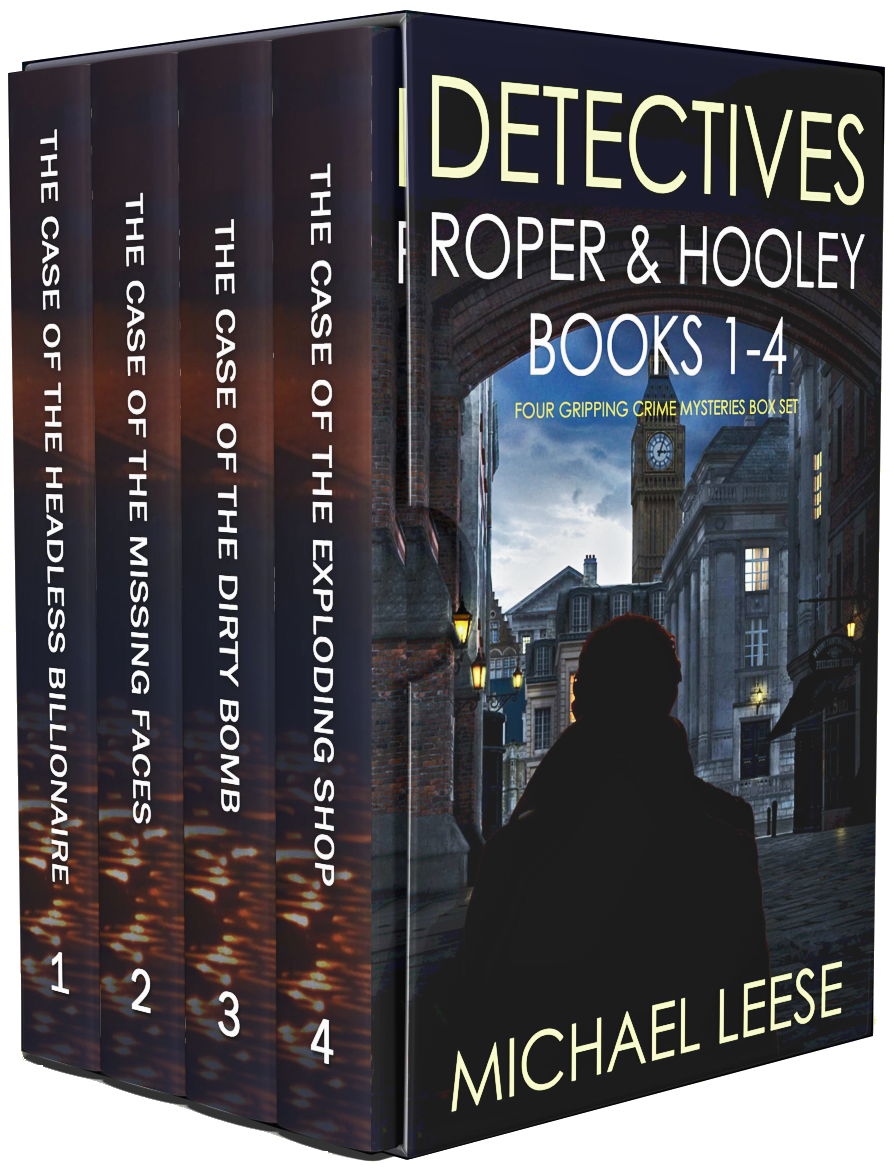
Detectives Roper & Hooley Books 1 – 4 by Michael Leese

A fabulous offer from Joffe: FOUR gripping crime mysteries featuring the unforgettable odd couple pairing of Consulting Investigator Jonathan Roper and DCI Brian Hooley in Michael Leese’s beloved series — just 99p | 99c

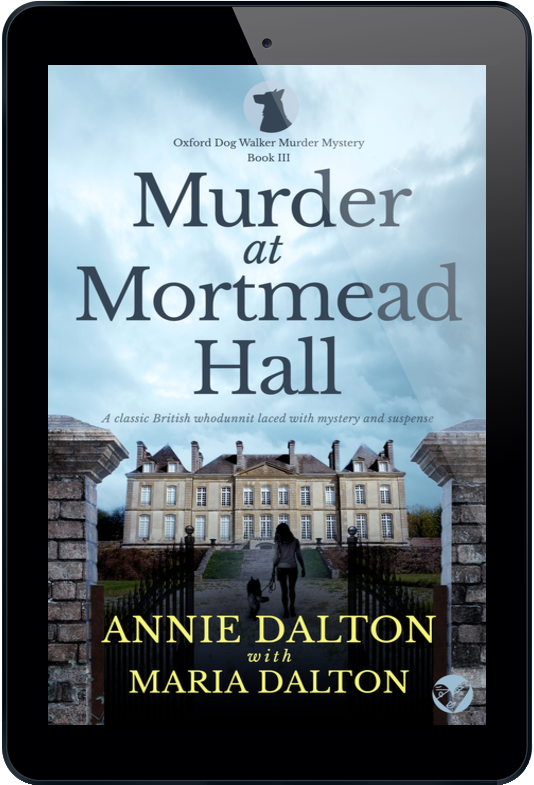
Murder at Mortmead Hall by Annie Dalton with Maria Dalton

Anna, Isadora and Tansy, dog walkers and part-time sleuths, go to a WWII-themed murder mystery weekend at the ramshackle Mortmead Hall.

As the weekend unfolds, they find themselves caught up in a web of intrigue that puts them on the trail of a lost painting and a devastating secret . . .  99p/99c

Now for some really exciting, but not entirely unexpected news given the nature of JOFFE BOOKS. They  are  SHORTLISTED FOR INDEPENDENT PUBLISHER OF THE YEAR (AGAIN!)  Hip hip hooray.

Joffe Books are delighted to have been nominated for Independent Publisher of the Year at the British Book Awards by the Bookseller magazine, the leading trade magazine for the book industry, for the third year in a row. Hooray hooray say Frost Magazine. Whoop whoop!

This has been a record-breaking year for Joffe: they doubled their staff numbers and became the sixth-biggest e-Book seller in the UK.

Last year Joffe Books also launched its very first prize for crime writers of colour, which was awarded to Christie J. Newport. Her debut novel will be launched later this year. Watch this space . . .

The past year has been truly remarkable and all at Joffe Books want to thank their amazing readers and authors for this honour.

For more news about books go to Joffe Books

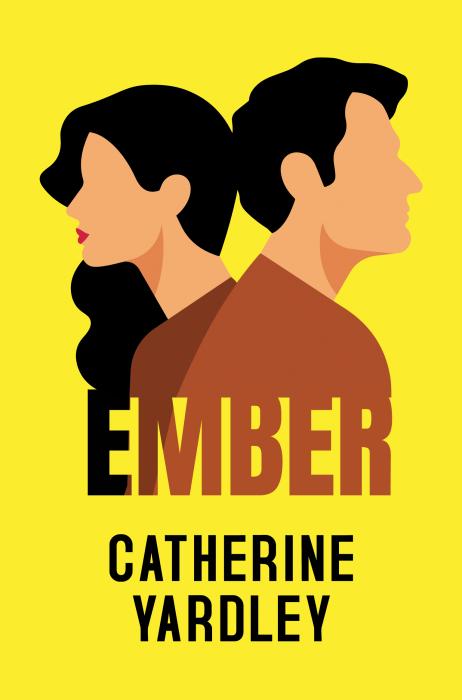
Author Catherine Yardley is interviewed by Natalie Jayne Peake about her acclaimed debut novel Ember which is launched today

Congratulations on your debut novel Ember, Catherine, tell me about it: to start with what inspired it ?

Ember started as a film script I wrote years ago. Then I completely forgot about it. I was writing another novel set in the world of acting and in-between drafts I wanted to write another book. I came across the script and I thought, there is something here. Originally it was about three sisters who go to their father’s funeral and then all of the past family drama comes to the fore. It is a completely different book now, but there are two warring sisters!

You were one of the top 50 actresses in Scotland,  tell us what made you change course and pursue writing

I became really disillusioned with the film industry. It is such a tough environment and most of the castings I was offered required nudity. I am way too shy to do nudity so it limited my career. I hurt my back on a film set and it took a year of physiotherapy to correct it and then I had a baby. I wanted to be around more for my children and focus on being a mother. Writing fits in perfectly with that.

You have also launched a highly successful online magazine,  what does it cover ? Is it still growing ?

Frost magazine was launched twelve years ago. That seems unbelievable to me. It is still growing and is something I am immensely proud of. We cover books and lifestyle. We have a good reach and fantastic engagement. I am so proud of Frost and the little team behind it.

What does 2022 have in store for you and your readers?

Well I have another book on sub at the moment. I am writing short stories and editing another novel. Then I will start on yet another novel. I am going to keep writing and submitting. I have four novels written, a short story collection and a children’s book. I would like to see all of them published.

What advice would you give any budding writers ?

Work hard. Don’t give up and submit your work. A lot of writers are too scared to submit, or the rejection gets to them and they quit. You have to take the rejection and be relentless. It is the only way.

What research did you have to do whilst writing Ember ?

All novels require research. I feel like some people don’t realise how much research goes into a work of fiction. I had to research fertility treatment as I am lucky enough to never have needed any. I also had to research little things about driving from one place to another. I had a lovely doctor friend who writers for Frost called Dr Kathleen Thompson who answered a lot of questions and helped me create an accurate portrayal of an obstetrician’s work life.

Let’s talk about your writing process – what comes first .the characters or the plot ?

An idea always comes first. Sometimes I hear a song and that is it, other times I read an article, or I see someone on the street. It can be anything. I sometimes panic that I won’t come up with another idea after I finish a book, but the ideas always come. It is turning them into an eighty thousand word novel that is the hard part.

What is the hardest thing about writing a book and what is the easiest ?

The easiest is the first draft where you are just writing and it flows. For me anyway. The hardest is the endless edits and reading the book a million times. Oh, and publicising it.

Who has been your biggest supporter of your writing career ?

My agent Susan Yearwood is amazing. She made such a difference to my life when she took me on.

My publishers as well.I was so stoked to get a traditional book deal. I have self published before and it is so exhausting. My family and friends have been amazing. My mother was such a cheerleader when I first started writing. Margaret Graham has been invaluable. Jane Cable has also been amazing. Both Margaret and Jane are so inspirational. My debut 22 writing group have saved my sanity so many times. I love those people.

Claire Dyer write an early draft which was terrible and I realised how to fix the book after. Poor Claire.

A question I like to ask everyone- If you could invite any three people, past or present, real or fictional, to a dinner party, who would you invite and what would you serve ?

Jesus would be a good one. I would also have to have Barack and Michelle Obama. I am such a fan of both. If Jesus wasn’t available Beyonce could come. I love Queen Bey.

Ember by Catherine Yardley. in pb and e-book. Available here


Frost’s Wellness and Wellbeing editor, Alex Bannard, invites us to understand: the Chakras

Teaching & practicing yoga as much as I do & embarking on my own personal & spiritual quest, it was inevitable I would eventually spend more time & energy investigating the chakras. I regularly practice & teach a chakra cleanse & wholeheartedly believe in the importance of each chakra not just energetically but also for our physical, mental & emotional wellbeing.

But what exactly is a chakra?

Chakra is Sanskrit for wheel or circle. The chakras represent spinning spheres of bio-energetic activity along the spinal column associated with major nerve centres. They are not physical organs themselves but they are associated with nerve centres & physical organs. Chakras collect & transmit energy for physical, mental & spiritual use & promote harmony within your inner & outer world.

They may be dormant or underdeveloped, spinning backwards or blocked (early life trauma & abuse can cause resistance & blocks in certain chakras).  Blockages in chakras mean that energy, life force is not flowing smoothly, whereas weaknesses are inviting an infusion of energy. By healing the chakras, we can increase energy levels, reduce anxiety & depression, promote inner peace & harmony, improve sleep, concentration, memory & clarity. Once your life force (prana in yoga speak) is flowing freely, you will be in optimum physical, mental, emotional & spiritual health.

There are 7 chakras & each one represents something subtly different.

The root chakra is at the base of the spine & is responsible for that sense of grounding, connection, trust & belonging. It is symbolised by a lotus flower with 4 petals & an earthy red colour. This chakra is impacted by our earliest experiences & memories & is all about stability.

The sacral chakra is below the belly button around the sex organs & is the centre for emotional & creative energy. It is symbolised by the colour orange & a lotus flower with 6 petals. This chakra is all about flow & letting go, characterised by water. If this chakra is blocked we may experience a sense of anhedonia, the medical term for a lack of joy.

The solar plexus chakra is the centre for confidence, self-esteem, determination & courage. Our fire element if you will, it is associated with the colour yellow, a lotus flower with 10 petals & is all about our ability to make our dreams our reality.

The heart chakra is the most sacred of the energy centres, linking the lower survival chakras & the higher chakras. It is the centre for love, compassion, kindness, acceptance, understanding & forgiveness for all – necessities not luxuries. Associated with the colour green, a lotus flower with 12 petals & the element of air, representing the concept that just like air is all around us, so too is unconditional love.

The throat chakra is all about speaking our truth & tapping into our authentic voice with truth & clarity. It connects our basic needs of the lower chakras with our higher spiritual wisdom. If it is blocked it may manifest as a sore throat or a frog in the throat, an in ability to express or a tendency to over express. It is symbolised by a light blue colour & a lotus flower with 16 petals.

The 3rd eye chakra governs our perception & ability to see things clearly not clouded by the stories we tell ourselves. It is believed to be where the right & left optic nerve cross, literally our 3rd eye & is all about trusting our inner wisdom & intuition. Associated with a dark blue colour & a lotus flower with just 2 petals.

The crown chakra is at or above the crown of our head (depending on what you believe). Some interpret it to be centred where the pituitary & pineal glands reside. It is represented by a lotus flower with a thousand petals, the colour violet or white light, symbolising universal consciousness, spirituality & enlightenment, governing our identity & higher purpose.

Noticing the opposite of what each chakra represents can be indicative of a block or imbalance in this energy centre. Yoga poses (asanas), meditation & breath work can help to cleanse & shift imbalances & blockages to create a sense of balanced alignment & harmony, life flows with grace & ease, it is joyful & easy.

If you would like to find out more about cleansing & balancing your chakras check out Alex’s FB group: https://www.facebook.com/groups/mindfulnessyoga4selfcare

Or on Instagram: https://www.instagram.com/alexbannard/

Incorporate short yoga sequences & meditations as part of your self-care toolkit with guided practices on Alex’s YouTube Channel: https://www.youtube.com/channel/UCQlKZJ7MeyYc6lqkv6seISw

For more info check out www.alexbannard.com

Alex is based on the edge of the stunning Cotswolds & has been sharing her love for all things yoga & mindfulness for almost a decade, not just in the UK but also around the world. Having used her training & knowledge to navigate her own menopausal journey & create a life in which she is thriving, Alex is devoted in supporting other’s in this life changing transition.

T. Orr Munro: My Writing Process


My Writing Routine

I write Mondays to Wednesdays from 9am until around 4 or 5pm. Occasionally I’ll write at other times but I find the distance of just a few days useful for honing ideas.


A bit about you.

I live in North Devon where I also grew up. I’m a freelance journalist, specializing in writing about policing, but, a long time ago, I was a CSI or Scenes of Crime Officer as they are also called.


What you have written, past and present.

I’ve a rather eclectic back catalogue! I’ve written a YA novel, ghostwritten the memoirs of a Battle of Britain pilot and a children’s history of Devon. I also have around five unpublished novels in my bottom drawer! I’m currently writing my second crime novel.


What you are promoting now.

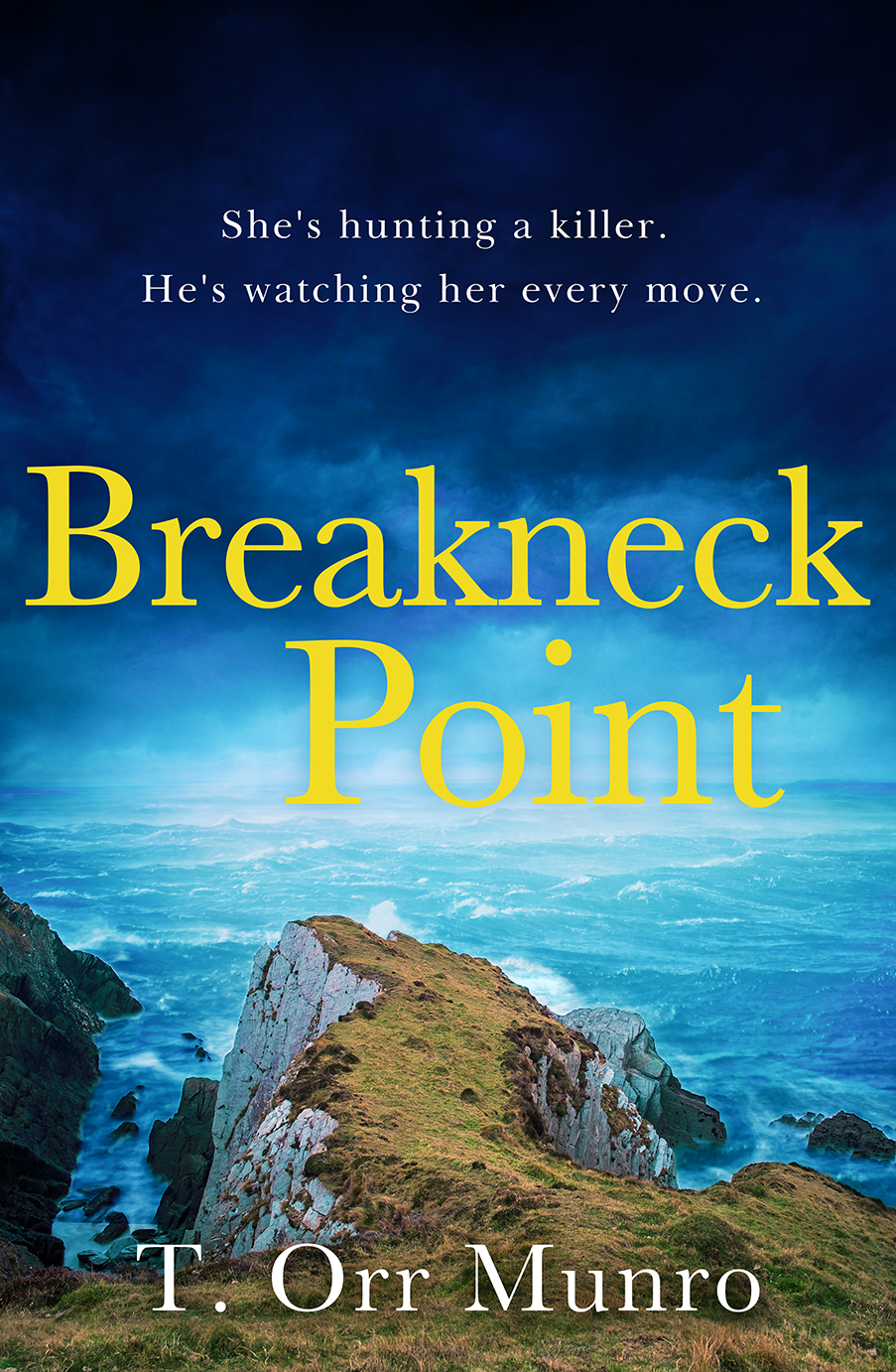
Breakneck Point is my debut crime novel out in April about CSI Ally Dymond who is redeployed to a Devon backwater after blowing the whistle on police corruption, but the sleepy coastal town of Bidecombe doesn’t turn out to be quite as quiet as she anticipated.


A bit about your process of writing.

I’m quite disciplined about writing. I think it comes from being a journalist and having to sit down and write even when I don’t always feel like it. I’m a ‘reviser’ rather than someone who aims to get it right first time which means that it is sometimes hard to know when to stop.


Do you plan or just write?

I’m a planner. I try to plot the entire book out before I start although it invariably changes. However, it means that I tend to know what I’m going to write before I switch my laptop on. I don’t write linearly either. I’ll often write a scene in a different part of the book because I’ve had a particular idea or I’m in the mood to do it. My head has to be in the right place to write difficult scenes, usually 3.00am in the morning when I can’t sleep.


What about word count?

I don’t set myself daily word counts. It’s too much pressure! I’m also one of those writers who underwrites and struggles to get enough words down on the page rather than one that writes too many and has to cut back. I dream of writing too many words! It’s a constant challenge for me. I blame starting out as a print journalist where I would constantly look to strip out words so the story would fit the page. Old habits die hard.


How do you do your structure?

My books often just start with an image which I then work into a story. For instance, I’m writing book two in the CSI Ally Dymond series and that began life as a single scene which happens towards the end of the book. I do use various reference books. I’m a bit of a magpie, taking the bits that work for me, but I find them helpful for getting me over a plotting blip. I regularly dip into Creating Character Arcs by K.M. Weiland. Save the Cat Writes a Novel by Jessica Brody is good for checking that I’m on the right track and I quite like the approach taken in Book Architecture by Stuart Horwitz.


What do you find hard about writing?

Finding myself hurtling down a blind alley! It’s that horrible feeling in the pit of your stomach when you know something isn’t working, but you can’t work out what and you’ve already written thousands of words that you also know are probably going to wind up in the trash. It’s when I come closest to giving up altogether.


What do you love about writing?

As soon as I learnt to read I was utterly enthralled by words and how they could be used to transport me to other worlds. When I learnt to write, I realized I too could use words, but to create my own worlds. I get to play god, basically!


What is the “Don’t Tread On Me” Flag?

Flags have long existed and everyone loves to own one. The design and symbol give a flag its meaning and history, and its bearers get a sense of pride. 

There are many types of flags designed each year, and each one holds its significance. For instance, the “don’t tread on me flag”, also known as the Gadsden Flag, is a famous American flag. It gives tremendous pride to its bearers because the flag stands for a celebration of rights, privileges, and liberties. The snake especially reflects strength, courge, assertiveness and vigilance.

What is the history of the Gadsden flag?

The Gadsden flag, often known as the Dont Tread On Me flag or the flag with the coiled rattlesnake, has a rich and fascinating history attached to it. The flag is one of the earliest flags in the United States of America. It is based on the timber rattlesnake, which is usually found in the eastern region of the United States. The serpent that became the Gadsden flag’s focal point was initially a motif on the drums of the first five businesses of United States Marines. 

The earliest documented usage of the Gadsden flag was during the American Navy’s first expedition, sometime in December 1775. Just before the navy sailed, South Carolina businessman and veteran Christopher Gadsden made the flag during the American Revolution and presented it to the captain of the fleet, Esek Hopkins. The flag was the motto and a personalized flag of his ship.

Later, Gadsden had gained inspiration from Hopkins’ last post’s banner, the Providence Train of Artillery. On a gold backdrop, their version of the flag contained a curled rattlesnake and the inscription “Do Not Tread on Me,” as well as an anchor, artillery, and the phrase “In God We Hope.”

Gadsden provided Hopkins with a simpler version of the Don’t Tread On Me flag. Despite its usage by the emerging US navy, Congress adopted the rattlesnake sign as the War Office’s authorized signatory in 1778.

The Gadsden flag had existed since the beginning of dissatisfaction. The inscription “Don’t Tread On Me” was co-opted by Tea Party demonstrators in the early 2000s. The flag had flown everything from the midst of Iraq to Riverdale, New Jersey’s town hall.

Where to get the Gadsden flag?

The Gadsden or the don’t tread on me flag can be purchased through any online store where you can see many buying options and variants of the flags. Apart from designs, the online stores can give you the best quality flags with no compromise on the delivery of the product. 

When you get the finest Gadsden flag online, you can proudly display this flag in front of your house or apartment for everyone to see. Because of the robust polyester material, these flags will survive a lot longer, even when exhibited outside. Thanks to the knitted polyester material, adverse weather will not damage or spoil the flag. After first being acclimated to changing conditions, the paint will stay in good condition. High-quality dye-sublimation technology produces vibrant colors that will not peel or tear off the flag easily.

Interestingly, the graphics of the flag are imprinted solely on the single side of the flag. But due to the reverse design that is flowing to the other side because of the material used, the graphic will be seen through both sides without incurring any issue. 

You can purchase the flag in the usual 3×5 size or add components to your order to assemble the flag. Select a hand-held flagpole, a wall mounting, a pole mount, or a huge in-ground metal pole. Just remember to buy a tear-resistant flag and use it anywhere.

Collaborative post with our brand partner.

CARIADS’ CHOICE: MARCH 2022 BOOK REVIEWS

Milly Johnson’s My One True North reviewed by Carol Thomas

My One True North is a story about loss and grief on more than one level. There are predictable elements but this didn’t detract from my interest in the characters’ individual journeys.

There are many touching moments: The support group emanated a sense of care and community; Pete – the male lead – and his brother’s relationship was realistic and their love for their dad was warm and honest; I greatly enjoyed scenes at the pub where Pete and Laurie got to know each other. And I welcomed glimpses of characters from previous novels.

I hoped for a bit more to be made of the ending, especially as it had been clear where the final stage would be set from early on. It didn’t feel as wrapped up as Milly Johnson’s other stories, however, it was an enjoyable read, with likeable main characters, that tackled the difficult subject of loss well.


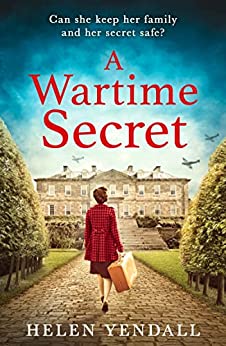
Helen Yendall’s A Wartime Secret reviewed by Imogen Martin

Maggie is an East End girl with a dangerous secret at a time of war: her beloved mother is German.

When the bank Maggie works for is relocated to a grand house in the Cotswolds, she is apprehensive about leaving. Her sister Violet has been sent to the country as an evacuee, her mother interned, and Maggie is left managing her overbearing father. Nevertheless, she is determined to do her bit for the war effort. But will Maggie be able to reach her sister? And can she find out where her mother has gone?

The novel has the style of a saga: a range of vivid characters including friends and enemies for Maggie, plots and sub-plots to be unravelled, and an underlying love story. Apparently, the move of the bank to the country is based on fact. This book is filled with authentic detail from the first page and is an addictive read. A fantastic debut novel.


Audrey Cowie’s Lost in Translation reviewed by Jessie Cahalin

A clever twist on the romantic comedy genre. It was wonderful to meet Charlotte and follow her new life in Switzerland with her husband and children. I adored the way the character found her voice and her identity and slowly changed. This story had me hooked from the outset because I feared the worse and wanted Charlotte to triumph. Perfect escape to Switzerland for me, and I read it very quickly. The writing style is fun and engaging – so entertaining to get inside of Charlotte’s head and hear what she thinks. There are some fantastic moments in this novel. This is an uplifting feel-good book with a satisfying ending. I loved it!


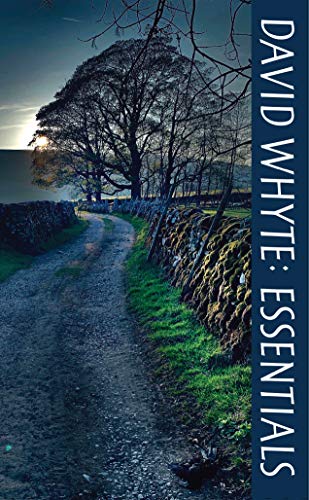
David Whyte’s Essentials reviewed by Morton S Gray

I have been a fan of David Whyte’s poetry ever since I saw him perform live at Ledbury Poetry Festival. It is interesting that he made such a big impact on me on that long ago evening that whenever I read his work I can hear his voice reciting the words.

The cover of this volume of poems is so tactile that I love just holding it and I savoured every page after buying a copy for both myself and one for my friend.

One of my favourite poems, ‘What to Remember when Waking’ features as an extract on the back cover and I have read and reread it so many times. The book contains many more of my other favourites, including ‘Start Close In’, ‘The Journey’, ‘Sweet Darkness’, ‘Marmeen” and ‘The House of Belonging’.

This is a lovely book and makes a wonderful gift. In my opinion, everyone should have a copy!


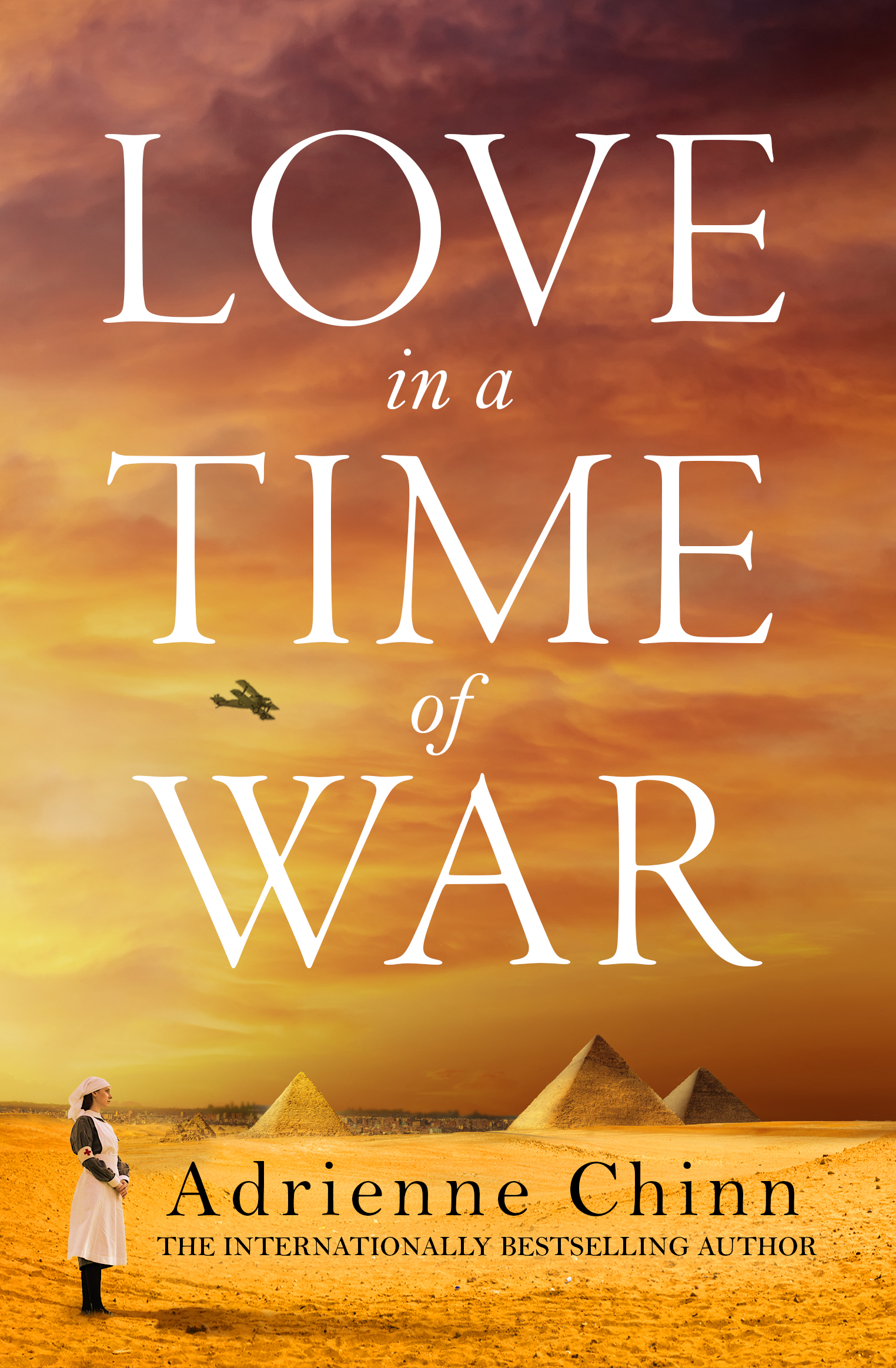
SUNDAY SCENE: ADRIENNE CHINN ON HER FAVOURITE SCENE FROM LOVE IN A TIME OF WAR

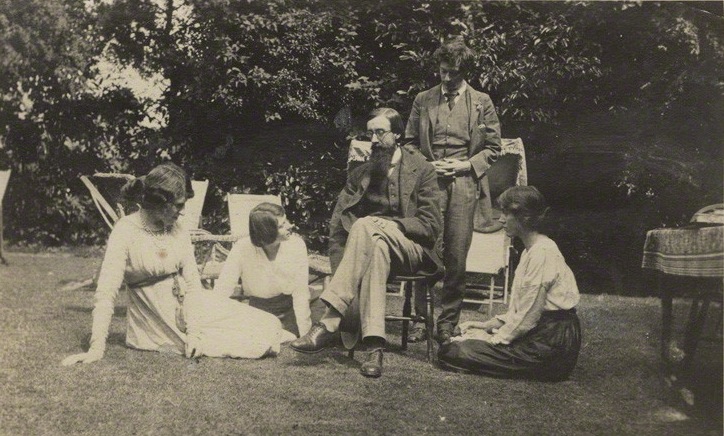
In 1914 the youngest Fry sister, Etta, is thrust into the bohemian world of the Bloomsbury Group through her lover, the Italian artist Carlo Marinetti. They attend a weekend at the Sussex home of Virginia Woolf, and the conversation turns to the war.


Etta sits in a canvas lawn chair on the stone patio behind the house, where the group has clustered on lawn chairs amongst the roses and honeysuckle trailing over trellises … She looks over at Virginia’s husband, Leonard, and watches him make notations in a black-covered notebook in his lap.

‘Mongoose, whatever are you listing now?’ Virginia says to her husband. ‘The spoonfuls of sugar we’ve consumed in our tea?’

‘If you must know, my dear mandrill, the cost of John Teasel’s cream has gone up by three pence. I must keep abreast of these things or we shall be living in penury before you know it.’

‘We already live in penury, Mongoose.’

Virginia’s sister, Vanessa, sets down the canvas she is embroidering with roses and playing cards. ‘Why on earth are we talking about the cost of cream? War has just broken out. Why is no one talking about that?’

by Unknown photographer, vintage snapshot print, July 1915

Roger Fry spoons a dollop of strawberry jam onto a scone. ‘What is there to say, Vanessa? There will be a few skirmishes over on the Continent, exactly like what happened in the Franco–Prussian War, and everyone will be home for Christmas, which is fortunate as we shall have a fully stocked shop for the holidays.’

Etta sets her teacup down in the saucer in her lap. ‘The train station in Brighton was heaving with soldiers leaving on trains for London. I almost missed the train to Glynde because of them. They were all very jolly, like they were going off to a party, singing songs and everything.’

Virginia’s long, serious face brightens. ‘Really? What were they singing?’

‘It was all about Tipperary. Quite a jolly song.’

Leonard slams shut the notebook. ‘It’s all senseless and useless. It’s absolutely ridiculous to solve political disagreements by violent force. Italy has the right idea. Staying neutral.’

Roger brushes a crumb from his lip. ‘Hold on. Wasn’t Italy signed up with the Austrians and the Germans in the Triple Alliance before the war broke out? Shouldn’t you be on the other side, Carlo?’ He taps his lips. ‘Maybe we ought to watch what we say around you.’

Carlo leans back in the lawn chair. ‘The war in Europe is none of Italy’s, or my, affair. If anyone steps onto Italian soil, this, of course, will be another matter.’

Virginia sets down her teacup with a rattle. ‘War is just a preposterous masculine fiction. The chief occupations of men are the shedding of blood, the making of money, the giving of orders, and the wearing of uniforms. I have had quite enough of it already.’ She turns to Duncan, who is scribbling doodles in a scrapbook. ‘Duncan, tell me, who are you sleeping with this month? Anyone here?’


Visit the Sussex home of Virginia Woolf’s sister, artist Vanessa Bell: https://www.charleston.org.uk/

Caption for photo: L to R: Lady Ottoline Morrell, Maria Nys, Lytton Strachey, Duncan Grant and Vanessa Bell at Charleston House, West Sussex. Photographer unknown.