Blimey, I’m Knackered! An American’s Survival Guide To British English by Marshall Hall sounds like a corker, and it’s reviewed by Paul Vates Frost’s drama critic

a weighty and wonderful addition to any bookshelf

Do you need to see a doctor if you have a water butt? What’s the proper response if someone knocks you up? Is it correct to go to the stationer’s if you have no lead in your pencil? Our language is confusing enough for the British, so imagine what it must be like trying to understand us if you’re not from these Isles. English is chock-a-block with idioms, colloquialisms and slang – see what I did there?!

Well, Marshall Hall, an American resident in the UK, has over many years collected hundreds of phrases and compiled them into his ‘Britspeak for Yanks’ lexicon Blimey, I’m Knackered!

Split into chapters, the book is a delightful way to discover over 1,200 genuine down-to-earth differences between the two nations’ languages. It doesn’t just explain, it educates with factual references throughout. All done in Marshall’s calm and witty style – and he doesn’t shy away from the naughty bits!

There are intermittent illustrations by Mark Cowie, enhancing what is already a perfect book to dip in and out of. The hardback has 348 pages – making it a weighty and wonderful addition to any bookshelf.

Published by Imbrifex Books – available now in Hardback and ebook

Email BlimeyImKnackered@outlook.com

Facebook @MarshallHallAuthor

Instagram @MarshallHall15

Photo credit: Peter Thody

How I Got Published By Alec Marsh

Alec Marsh, writer, authorWhen I was 21 I started to write a novel. It wasn’t very good. I was working as a reporter for a local paper in Cornwall and my book… was about a reporter working for a local paper in Cornwall. 

Soon I moved to London to work for the Daily Telegraph and started writing a second novel. It was about a young journalist working for a newspaper in London. 

It wasn’t very good either. 

I met a top agent at a function and asked him if he’d see it. 

‘What’s it about?’ he asked.

After several seconds of flannelling he cut in: ‘If you can’t tell me in under 11 seconds then I’m not interested.’ 

I’d been introduced to the idea of the elevator pitch. If you can’t encapsulate your idea in a nutshell, you’ve had it.

I kept writing and the rejection slips (paper in those days) kept piling up.

Then one day a friend suggested I try my hand at historical fiction. ‘You’re obsessed about the past,’ he said. And it was true.

About a year later I read The Da Vinci Code, and was hooked. 

And I thought, “I can do that.”

So I started thinking about a historical mystery that could sit at the heart of a story, and some characters that would have sticking power.

That was around 2004. Before I knew it, I had started writing what would become my first novel, Rule Britannia. And I knew I was onto something, I could feel it in my fingertips. My characters – a historian and mountaineer Ernest Drabble and his pal, a journalist named Harris – were alive. And so was the story.

With a half-written book, I started polishing and went looking for an agent. Again the rejection slips piled up (still paper).

Then one day in 2008 an email landed at about 6pm on Saturday evening from an agent. Do you have any more, he asked?

I didn’t sleep that night. Soon I’d emailed the next three chapters, then we had a meeting. After that, I had an agent and went off to finish the book – armed with the self-confidence to finish it properly, to believe in myself and the benefits of his insights.

The agent then took it to market. But it was 2009 and e-readers, Amazon and the global financial crisis was hitting hard, and – for whatever reason – my book didn’t sell. After a dozen very polite rejections from major publishers, my agent suggested I try writing a different book. Which I did. 

For five years I wrote a book set in the First World War, but Drabble and Harris were still in the back of my mind, calling to me from the binary prison of a hard drive. 

By 2015 the First World War book was finished – but so was my relationship with my agent who finally spelled it out to me when he told me this was not a book that he could sell to his clients. We were finished.

Exhausted and disappointed, I stopped knocking on doors that wouldn’t open and focused instead on my day job. Every now and then someone would ask about Drabble and Harris; I would change the subject.

Then my son Herbie was born in 2016, and his arrival rekindled my ambition. So in the small hours, I dug out Rule Britannia and reread it, shook my head at parts that hadn’t aged well, and I polished it. And I pitched it again.

After a string of rejections (emails now), I went direct to publishers, finding an independent in Cardiff, named Accent Press. 

When the owner telephoned me and told me she’d take it – and she’d want two more books after – I was standing in a corridor at work. I didn’t punch the air, but a tear might have come to my eye. It had taken 20 years and I had endured numerous disappointments but it had finally happened. Drabble and Harris would get to their readers, and I was going to have a novel out. So what’s my advice for would-be authors. Don’t give up. And as Martin Amis once told me when I asked him for advice at book-signing: keep writing. After all, what else are you going to do?

Alec Marsh is author of the Drabble & Harris novels, published by Headline Accent. The latest book, ‘Ghosts of the West’ is published in original paperback and ebook on 9 September


Bee Bald – a complete line of men’s premium quality grooming, shave and skin care products reviewed by Natalie Jayne Peeke, West Country Correspondent


Is it ever too early to think of who to give what for Christmas? No, especially the men in your life.

So Bee Bald was definitely worth a look, and a try… So did it pass the test?

For a start Bee Bald is a complete line of men’s premium quality grooming, shave and skin care products which seem to tick the boxes. A gentle face wash, a deep cleansing/exfoliating pre-shave scrub, a quality shaving cream, and for after… a healing balm and moisturiser.

But wait… Is this only for the Bald? Nope, if you have  hair Bee Bald is for you too. So why the name, Bee Bald? Well, why not, when honey and pollen extracts are components in each of Bee Bold’s products and  Dennis Fisher is … bald  and wanted to create products that were suitable for his face and head.

So has he done it?

Living with a man who has sensitive skin and is always changing his mind between a beard or clean shaven and having a buzz cut or letting his hair grow. I have witnessed the shaving burns  on his face and head, Not just that, but the  irritation  is not only painful to him but can cause self confidence issues.

Of course, being a busybody I have recommended some products that I have used and that have helped me but without success. He found they had a harsh floral or fruity scent and were not sensitive enough for his skin.

Since using the Bee Bald regime irritation is a thing of the past, and his skin is so smooth, I was jealous so I thought that I would try the moisturiser as well. All I can say is “wow” no more irritated skin, Bee Bald is now the go to product for both of us , it is incredible.

www.beebald.co.uk


When is the best time to get pregnant?

Trying to conceive or even planning when to get pregnant can be a difficult topic. But, why should it be? The Fertility Partnership (TFP), one of the UK’s largest IVF providers and fertility specialists, shares some insight into the best time to get pregnant and factors to consider when planning for a new addition to your family.

traveling in london while pregnant, traveling in london with pram, traveling in London with baby, with child, London, tube, step free access, babyonboardbadgetravelinginpregnantwhenpregnant

The best time to have sex in order to get pregnant is during a woman’s fertile window. This can last up to six days of every month, when the body is leading up to ovulation, and the day of, when the body releases an egg.

The egg survives for around one day once it has been released. However, sperm can survive inside a woman for up to a week, resulting in a six-day window for the sperm to meet an egg.

Women are most likely to conceive if they have sex within a day or two of ovulation. However, it can be difficult to know when ovulation is going to occur and therefore the days before it. Many women like to be precise and use calendars to help them work out when they will ovulate, but it’s healthiest to enjoy sex every two to three days for best results.

When a woman ovulates in any given cycle, it depends on a couple of factors:

  • The length of the woman’s menstrual cycle
  • How regular the woman’s periods are

A menstrual cycle can last between 21 and 40 days, though the average cycle is around 28 days. Regardless of how short or long a woman’s cycle normally is, ovulation will often occur around two weeks before her next period begins. If a woman has a 28-day menstrual cycle, she is likely to start ovulating around the middle of her cycle. Those with a short cycle can ovulate within days of her period coming to an end.

If a woman’s menstrual cycle is different from one month to the next, her fertile window is likely to vary by about a week between each period. This explains why it’s best to have sex every two to three days throughout a cycle. It has proven to be more effective than focusing only on the days of ovulation. Regular sex also improves the quality of sperm compared to daily sex.

How will you know when you are going to ovulate?

Many women are very aware of when they are going to ovulate, however others experience little to no changes at all. For women who are thinking about getting pregnant, it’s important to get in touch with your body and start looking out for and recognising signs of an approaching ovulation. These signs may appear around three weeks before a woman can expect her next period. Some common signs to look out for are:

  • Increased vaginal discharge (fertile mucus) that’s wetter and more stretchy than usual
  • Slight discomfort on one side of the stomach
  • Increased libido

Checking cervical mucus is one of the easiest ways to work out what days you will be most fertile. Changes to mucus are one of the easiest signs for women to spot.


What if you have irregular periods – will it be harder for you to get pregnant?

No, not necessarily. Irregular periods do not mean that a woman is less fertile than women with regular periods. However, if you are experiencing periods that are continuously irregular or more than 36 days apart, it is advised to see your doctor. Irregular periods can be caused by conditions like polycystic ovarian syndrome (PCOS) and thyroid disorders. Unfortunately, these conditions can affect a woman’s chances of conceiving, so it’s ideal to visit a doctor to obtain help and advice.

If you’re still experiencing issues with conceiving and think you need some extra assistance, The Fertility Partnership can help. Offering many different kinds of treatment including IVF, fertility preservation, fertility assessments and more it has over 200 fertility specialists within its nine clinics across the UK & Ireland.

To find out more about the treatments it offers, what would work best for you or simply to find your nearest clinic visit www.thefertilitypartnership.com.


WELSH WRITING WEDNESDAYS: INTRODUCING INDEPENDENT AUTHOR ALIENORA BROWNING

Writing is, for me, like breathing: I feel oxygen-starved without it, and it has the same natural rhythms, dips and soaring highs. It is also my dominant ‘voice’ since I tend to be a listener, rather than a talker, in many situations.

I do not remember learning to write per se, but I do recall a wonderful ‘Aha!’ moment, when I was five or six, when I suddenly made the connection between the five letters which made up my nickname, its sound and the fact that it was part of me!

I wrote a play when I was eleven – and have it still, neatly written in a little blue exercise book. This was during the summer of 1969, just after my class watched the Moon Landing – and as I waited to start grammar school, having passed the 11+.

I can see that younger self, sitting in the hammock in the back garden, pen in hand, sun shining down on my hunched back, scribbling away – and feel the wave of creative excitement which lifted me up and suspended me, briefly, above the everyday world.

My now-nearly-fifty-year journal-writing habit started by accident (in the sense that I had never thought of such a way of expressing myself until then) in early January 1972.

Two days before my fourteenth birthday, a group of us from my school went to Glasbury, in Wales, for a fortnight of physical activity: climbing, canoeing, camping, gorge-walking and so forth. As part of the course, we were each given a pale green notebook – and asked to keep a diary account of our experiences.

I fell in love with this means of expression immediately – and, while most of the girls loathed having to do it every day, I relished the exercise and very much felt as if I had found my voice, as a girl and as a writer; in fact, so enamoured of it did I become that I ended up filling two green books!

I now have over a hundred volumes of the journal, currently stashed away in a safe space – and use it almost every day (though there are, inevitably, gaps over the years and decades), even writing in it whilst in labour and on the day my son was born!

The novel-writing came upon me towards the end of my time at Aberystwyth University – and early drafts of books won me an honourable mention, a third prize and a first prize in local South West Arts Writers in Progress awards.

Motherhood, marriage and full time teaching very much put the novel-writing side of things on the back burner – and it was only when I took early retirement in 2011 that I was able to complete previous books and write more.

I now have seven books published via Amazon and KDP (all available as both e-books and paperbacks) – and ideas for an eighth are bubbling excitedly away in my creative cauldron.

The truth is very simple: I absolutely love writing – and that intimate, joyous connection between mind, hand, pen and paper never fails to delight and inspire me.


Around The Table – Great British Chefs In Your Own Kitchen (Well Almost) – Book Review by Award Winning Author Dr Kathleen Thompson

Wouldn’t you love to have Michelin chef, Shaun Hill peering over your shoulder as you’re putting together a quick Chicken Bourride? ‘No dear, not flour, pop in a big dollop of garlic aioli to thicken the sauce, your guests will love it.’

If that resonates with you, then you need this fabulous new cookbook. Not just Shaun Hill, but sixteen top British chefs from around the UK share their secret tips for luxurious cuisine including: Chef Patron at KOL, Santiago Lastra; Great British Menu finalists Kerth Gumbs and Roberta Hall-McCarron; Executive Chef at Barrafina, Angel Zapata Martin; and Head Chef at acclaimed gastropub The Parkers Arms, Stosie Madi.

I love that this cookbook features the types of dishes so popular with modern entertaining: Small Plates, Sharing Platters, One Pots, Al Fresco, Dinner Party Starters, Dinner Party Mains, and Make-Ahead Desserts.

The recipes have that fine dining feel and yet are easy and fun to make, with plenty of supportive advice in the clear instructions. From Tuscan Fish Stew to Olive Oil Cake with Thyme Jelly and Elderflower Cream, even the titles make your mouth water.

The book’s beautifully illustrated, so you can see what you’re aiming for and it would make a fabulous gift (yes, Christmas is careering towards us rather too quickly).

Just to tempt you further the Wild Garlic Malfatti (an Italian gnocchi-dumpling hybrid) and the Sesame and Pink Grapefruit Treacle Tart are pictured below – how perfect for a late summer soirée?

Published by Great British Chefs, Around The Table is available from 2nd September 2021 priced at £24.99.

And now I need to start lunch – that Chicken Bourride isn’t going to make itself (even with Shaun Hill’s help).

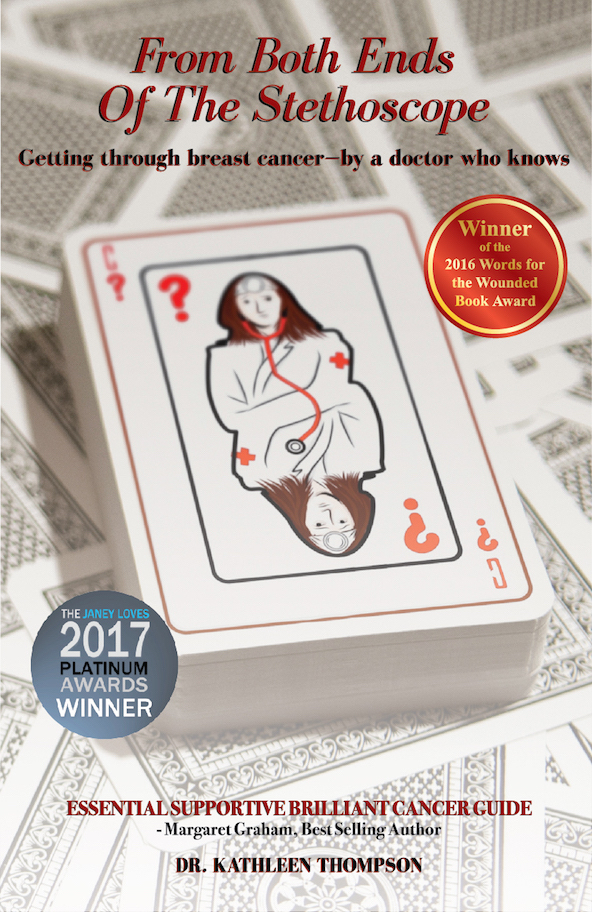
By Dr K Thompson, award-winning author of From Both Ends of the Stethoscope: Getting through breast cancer – by a doctor who knows

http://www.amazon.co.uk/dp/B01A7DM42Q http://www.amazon.com/dp/B01A7DM42Q

http://faitobooks.co.uk

Note: These articles express personal views. No warranty is made as to the accuracy or completeness of information given and you should always consult a doctor if you need medical advice.

CARIADS’ CHOICE: AUGUST BOOK REVIEWS

Eva Glyn’s The Missing Pieces of Us, reviewed by Jan Baynham

I enjoyed ‘The Missing Pieces of Us’ immensely. Eva Glyn takes us on an emotional journey with the two main characters, Izzie and Robin. I liked the way the themes of love, grief, loss, and memory are explored from each of their POVs. The story slowly reveals how things that happened twenty years before have impacted on the two characters and made them the people they are today. The character of Claire is also developed well so that she plays a pivotal role in the journey. Central to the story is the fairy tree where people can come to make wishes and leave gifts. For me, that added element of folk-lore and magic makes the novel a little bit different.


Sandy Barker’s The Dating Game, reviewed by Kitty Wilson

I loved this perfect, feelgood summer read. The Dating Game is a gorgeous slow-burn romance with whip-smart humour threaded through every page.

Abby has been coerced into taking part on a dating show in Sydney to help inform her as she writes snarky reviews of each episode as her hilarious alter-ego, Anastasia. Whilst there, her relationship builds with the handsome producer, Jack, and I was rooting for them to get together all the way through.

This book isn’t a simple romance though, it is also a book that testifies to the strength of female friendship even when these women are pitted against each other.

Sandy Baker writes with such wit and warmth that it’s impossible not to get totally invested in this story and I frequently laughed out loud as we followed Abby and the other Does from one hideous Stag date to another. Wonderful, feelgood romcom escapism and highly recommended.


Philip Gwynne Jones’ The Venetian Game, reviewed by Evonne Wareham

If the lure of “Venice” in the title and the sumptuous cover tempt you into this book – you won’t be disappointed. Philip Gwynne Jones is Welsh, but now lives in Venice and it shows. This is the first in a series – now up to five – featuring Honorary British Consul Nathan Sutherland who has a talent for getting involved in unusual crimes that are rooted in the life of the city and which offer a real opportunity for some authentic armchair travel. Other than his consular work Nathan lives a more or less blameless life translating lawn mower manuals, frequenting the local bar and pandering to his ungrateful cat Gramsci. In this first in the series his consular role sees him reluctantly taking charge of a mysterious package which leads him into a tangled trail of forgery, theft and violence – an art scandal embedded in a deadly and longstanding feud between a pair of brothers.


Deborah Carr’s An Island at War, reviewed by Jane Cable

The fact Deborah Carr was born and bred in Jersey shines through in this novel, which is impeccably researched, apparently with the aid of family records.

The story is one of the German occupation and starts just a few days before the troops arrived and ends as they leave. I loved the fact that the passage of time and the events in the characters’ lives seemed so natural and it allowed Estelle’s story to unfold at just the right pace. The characters are wonderful too, and I came to really care about what happened to them, particularly enjoying the sensitive portrayal of how war can change everything, even the things we think are written in stone, about ourselves and about other people.

The one thing I was unsure about was the ending, but all the same I applaud the author for it. To say anything more would spoil the book and I wouldn’t want to do that, because it’s one you should read for yourself.


EVA GLYN ON THE INSPIRATION BEHIND THE OLIVE GROVE

Sometimes an idea for a book creeps into your heart and stays there. That was how The Olive Grove started for me, with a story told by our tour guide when we were on holiday in Croatia.

We were on a small-boat cruise that began in Dubrovnik and after visiting the main islands off the Dalmatian coast and some interesting places on the mainland, ended up in Trogir. And when we were on board travelling there were talks we could listen to and to make our experience complete we wanted to lap up every one.

The war in Yugoslavia was perhaps not a particularly enticing topic when the alternative was to sit on deck, watching the glistening sea ripple alongside the boat while soaking up some sun, but I remembered hearing about the war on the news at the time and was keen to know more. And then, somewhere between the dates, whys and wherefores, our guide Darko began to tell an incredible story. His own.

I suppose I had assumed Darko was Croatian, but he is in fact Bosnian and grew up in Mostar, one of the towns that was to be worst hit by the fighting. His father was a soldier in the Yugoslav army, but when everything fractured and splintered he followed his ethnicity and joined the Croatian side, having to leave his Serbian wife (and Serbia was now the enemy) at home with their sons.

I will never forget the silence in the room at the horror of what we were told. No electricity, no water, bombs raining down, queuing for food at the community organisation – life as we would all recognise it wiped out over the course of a few days in a war that would last for years. Darko’s life moved underground to the shelters, because they were the only safe place. And he was one of the lucky ones, because living in the army housing meant the shelters were purpose-built, deep and strong.

There were moments to awful to contemplate. Darko’s mother actually disappeared, as many people did during ethnic cleansing, but he was one of the few lucky ones because she actually came back. But there were moments of light too; finding a food parcel dropped by the UN and hoping it was one with chocolate inside.

These incidents and more form the kernel of The Olive Grove, but viewed through the prism of time by my proud Croatian character Damir. Orphaned during the war he was brought up by his aunt on the beautiful island of Korcula (which we visited during our trip); brought up to forget everything about his life before he came to the island. But when she dies, the past creeps back to find him.

While Darko wears his wartime past with relative ease (which is often the case when everyone around the child is having the same experiences, when the awfulness becomes a sort of normal), fictional Damir no longer can. And help comes from a surprising quarter. A middle aged English woman called Antonia who feels she has messed up her life so badly she takes a job on the island to take stock and to heal.

And that’s what The Olive Grove is really about. It’s about healing and friendship. Like Darko’s childhood memories there is sunshine and shade. And unlike them there is the most incredibly beautiful setting.

With Darko’s help over countless Zoom meetings during lockdown I have been able to create authentic Croatian characters and culture, so as well as the initial inspiration, there are many other reasons why The Olive Grove could not have been written without him. And what’s even better, we have become friends across the miles too.