7 of the Most Beautiful Places to Visit in Tulum

As one of Mexico’s most historic and stylish retreats, it’s difficult not to feel swept up in the magic of Tulum. Tucked away on Mexico’s Caribbean coast, the area attracts visitors from all over the globe due to its top-tier restaurants, luxury condo rentals, gorgeous beaches, and remarkable historical sites. Here are just a few great places to visit on your next trip to this remarkable location.

1. El Castillo

Perched over a rocky sea bluff, El Castillo (“The Castle”) is an ancient Mayan ruin that has captivated visitors to Tulum for generations. Said to have once served as a beacon for Mayan turquoise traders traveling by canoe, the structure reminds us that Tulum was once a key trading port for this ancient civilization.

2. Temple of Frescoes

Like El Castillo, the Temple of Frescoes whisks visitors away to the world of ancient Mayan traders and everyday citizens. Named for its painted depictions of Mayan gods, the temple is a wonderful stop on any tour of the region’s historical sites. The building’s otherworldly carvings of scenes from Mayan myths also provide visitors with a glimpse into another age.

3. Luxury Rental Condos

For a home base in Tulum, it’s difficult to top a stay at one of the area’s luxury condos. Known for their amenities and stylishness, Tulum luxury condos offer visitors a first-class way to experience the good life in this wonderful region. Close to Tulum’s fine-dining establishments, compelling local arts scene, and vibrant nightlife hotspots, these condos are a must for people who love to travel in comfort and style.

4. Playa Ruinas

With its crystal-clear waters, white sandy beaches, and proximity to some of the region’s most beautiful Mayan ruins, it’s easy to see why the Playa Ruinas has become immensely popular with in-the-know travelers in recent years. Still one of Mexico’s best-kept secrets, the Playa Ruinas is a relaxing oasis from the workaday world.

5. The Tulum Restaurant Scene

With their gorgeous outdoor settings and remarkable takes on Mexican cuisine, Tulum’s restaurants are justly treasured among travelers to the area. Aficionados of local restaurants cherish the hearty breakfasts served up with a smile at Don Cafeto, and late-night eateries like Antojitos la Chiapaneca offer travelers a chance to choose from a delicious selection of tacos and other items.

For haute cuisine options, travelers can enjoy winning takes on Latin favorites at Kitchen Table or take in the open-air splendor of Bal Nak and its truly stunning approach to Mexican seafood.

6. Cenote Dos Ojos

Extremely popular among travelers to the region, cenotes around Tulum are natural sinkholes and cave systems where visitors can swim and snorkel in wonderful natural surroundings. In the grotto-like natural structure of the Cenote Dos Ojos (“Cenote Two Eyes”), visitors can explore a remarkable underwater world that seems straight out of a fairytale; it’s a perfect spot for people who love snorkeling and diving in beautiful surroundings.

7. Playa Paraiso

Another one of Tulum’s most beautiful beaches, the Playa Paraiso is tucked away in one of the region’s most gorgeous areas. With fewer visitors than the Playa Ruinas, it also makes a perfect picnic location for travelers who like to get away from it all and take in the best that Mexico has to offer.

Without a doubt, Tulum offers visitors a wide variety of magical experiences to remember for a lifetime. With its ancient Mayan ruins, pristine beaches, stunning rock formations, and a cultural scene that is both charming and inspiring in equal measure, Tulum will likely retain its status as the place to be for true travel connoisseurs for the foreseeable future.


Sponsored Post.
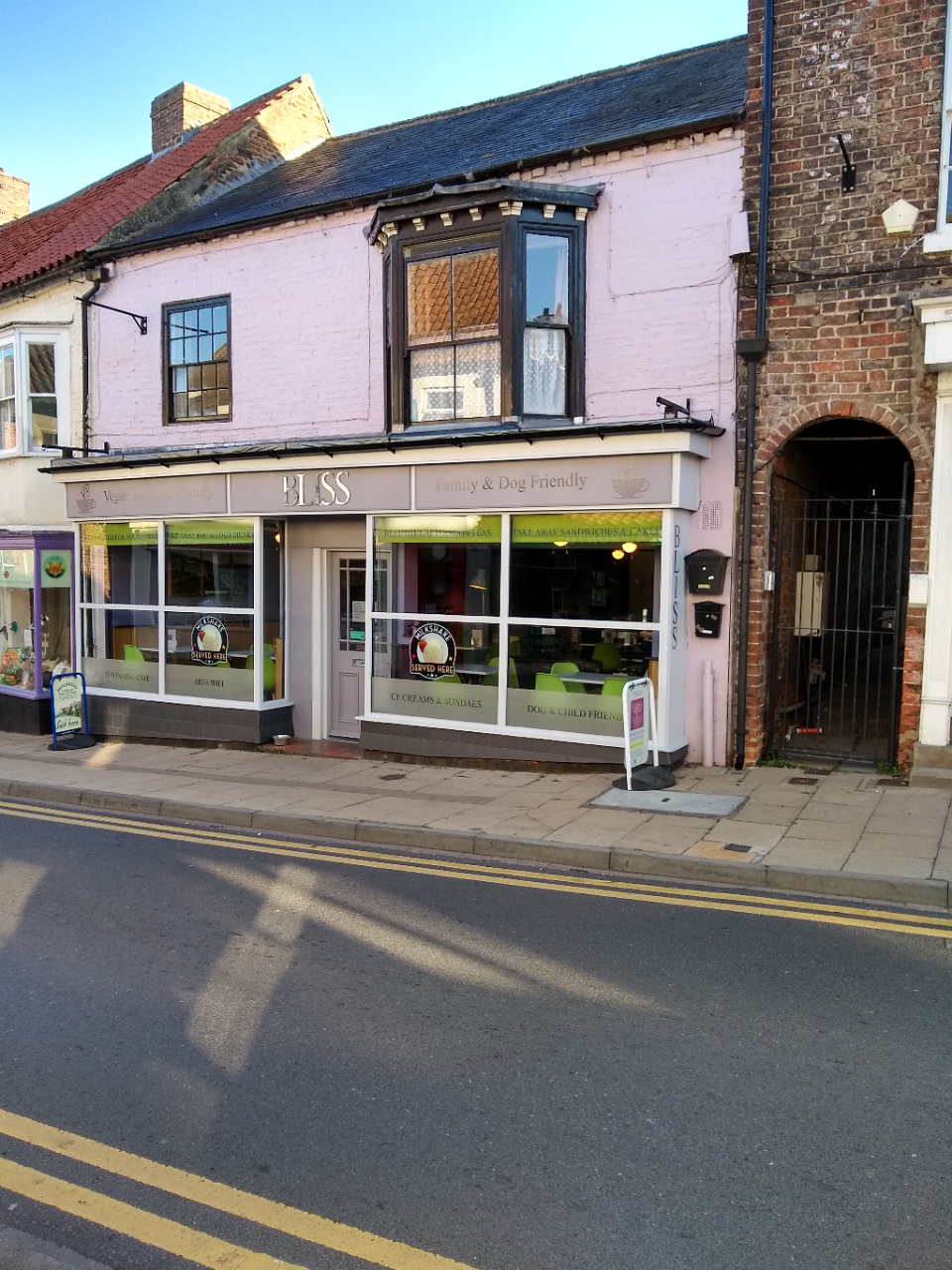
 

Bliss Café Thirsk, wins Frost Magazine’s Friendliest Café Award 2019

Award winning Bliss Cafe in Thirsk North Yorkshire – home to the Yorkshire Vets and the unforgettable late James Herriot – has earned yet another accolade: Frost Magazine’s Most Friendly café Award 2019

Recommendations were received not just from Thirsk, but nationwide, including High Wycombe (near London) Exeter and Lytham St Anne’s.

So – why?

As one of those who recommended Bliss Café said – It’s a sanctuary, not just for people but their dogs and children. Just like stepping into a friend’s house. There’s great food, good coffee and lots of laughter, or tranquility, if that’s what you need.

Another: There is such a sense of companionship – come into my house, and let’s chat.

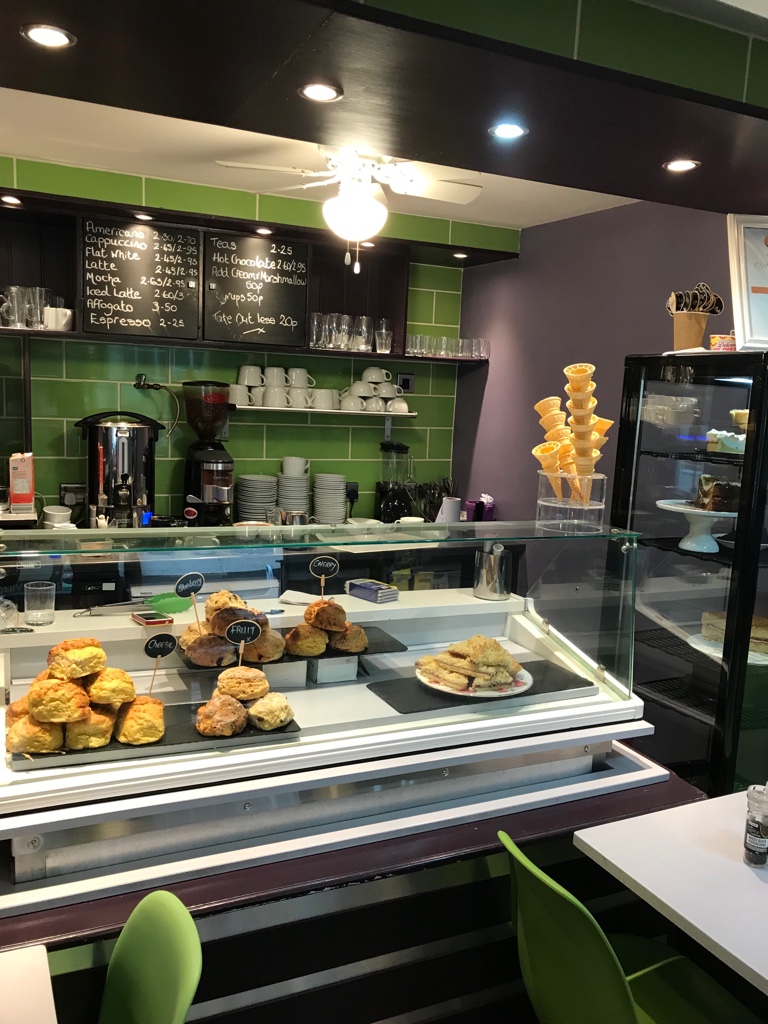
And yet another: Jacqui Collyns and her staff greeted us as though we were friends who’d dropped in for a chat and a coffee. Food is brilliant too: scones, cakes, breakfast and each day a different lunch menu.

And so it went on.

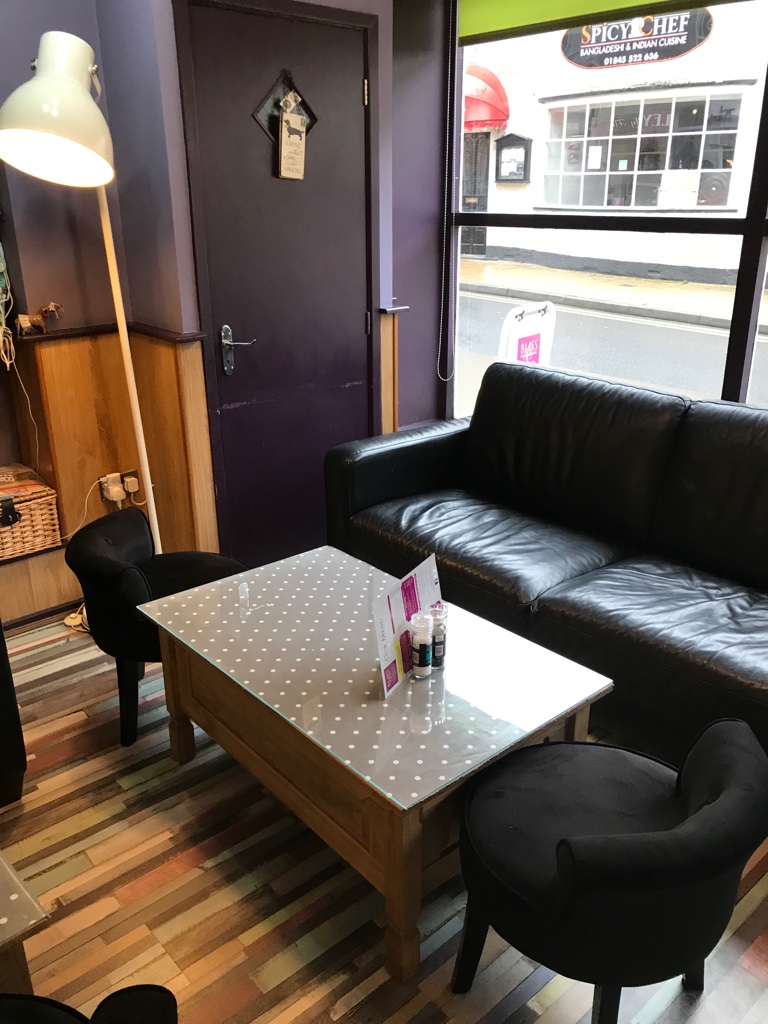
Bliss Café is set in Millgate, Thirsk. In the morning, if a tourist, you can visit the James Herriot Museum and then head across the market square to Millgate, and Bliss. Once there, take the weight off your feet, and collapse on one of the leather sofas, or sit up round a table. If you have your phone, there is wifi. If you have dogs they will be served first, with sliced sausage.

If you have children they will loved the relaxed ambiance. Around you locals will be chatting to one another, and probably you. Jacqui her daughters and staff will definitely be chatting to everyone.

We asked Jacqui how Bliss Café came into being?

My life changed ten years ago, and there I was, a single parent with two children, five and ten, Madeline and Isabel, and dogs, and I had to start again. But what to do?

I was travelling through Thirsk on my motorbike (yes, you heard Jacqui correctly) and saw this rather sad empty shop. A friend travelling with me, said. ‘That’s could be a café. Your café. You love having friends dropping in, with their dogs and kids, and cooking, baking, making coffee, tea. Do it for a living. Make your cafe a home from home.’

It appealed to me: somewhere to put down roots, a way of adding to the community, and being in the hub of things. But could I make it work?

And has it for you, as well as your customers, or should we say friends?

Oh yes, it’s absurd to love earning a living so much. Bliss has enhanced my life, given me a grounding, enveloped me in friendship.

Frost Magazine listened to, and chatted with customers. One mentioned Bliss as a sanctuary, before he went on his way home. He comes in most mornings, as do several others it seems. Another talked of the fun which swirls around the café. Another mentioned the sense of belonging.

So, bravo Bliss, bravo Jacqui. Long may you continue to  create a home from home for your customers – oops sorry, friends, old and new.

Bliss Café: 12 Millgate, Thirsk YO7 1AA Open 7 days a week. 01845 868163

Images courtesy of Bliss Cafe


My Writing Process – Ian Wilfred

Do men write romance? They certainly do, as Romantic Novelists’ Association member Ian Wilfred proves. Ian’s characters are instantly relatable and he has a knack of choosing gorgeous settings, from Tenerife to Greece to his native Norfolk.

On top of all that, Ian is one of the most supportive authors you could wish to meet. Which was just one of the reasons Jane Cable invited him to share his writing process.

Tell us a bit about you?

I’m 50+ but in my head I will always be 39. I live on the Norfolk coast with my husband and west highland terrier and I’m a member of the Romantic Novelist Association. My first book was published in 2013.

What you have written, past and present?

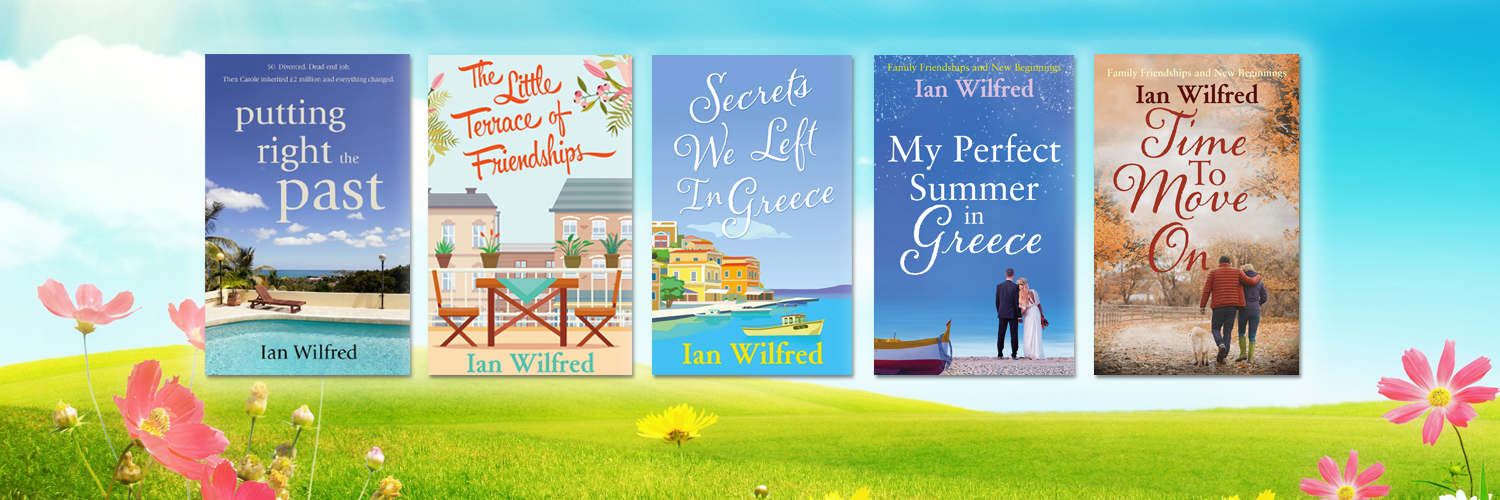
I’ve written and published five books. In the first four all my leading characters were women over 50 who are starting again and leaving the past behind, but in this year’s summer book, My Perfect Summer in Greece, Cheryl is a much younger heroine and this was lovely change

What you are promoting now?

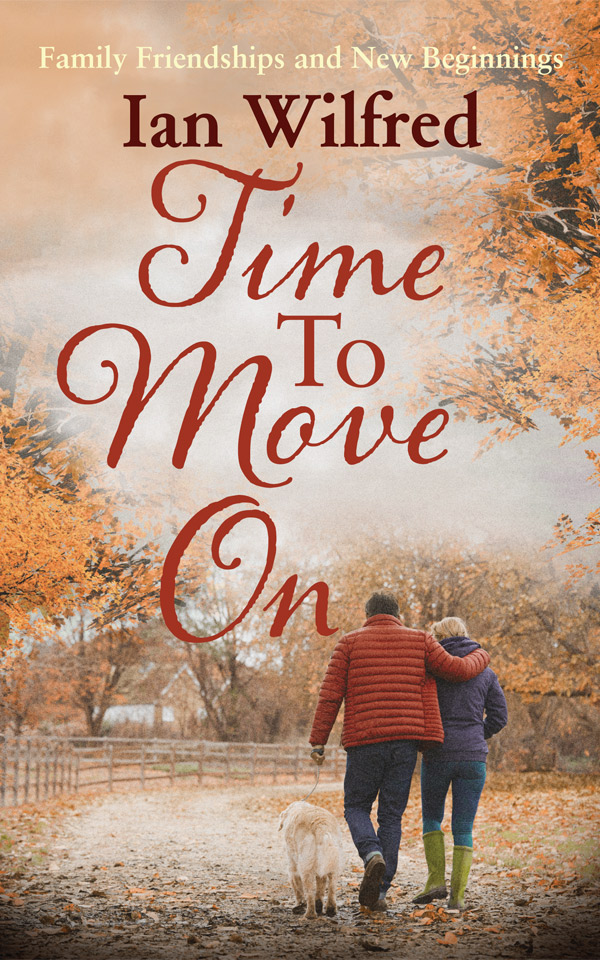
My new book Time To Move On, which is out on 24th September. It’s the story of Billie coming to terms with her divorce and being made redundant, and moving to Norfolk from London.

What’s the most important thing about your process of writing?

I love to write every day even if it’s just a few hundred words. I have to keep the story fresh in my head.

Do you plan or just write?

I plan a lot more with each book I write and for me this seems to work better each time.

What about word count?

I don’t give myself a daily or weekly word count but I do like to do 40,000 words a month for the first draft. Then I take two months to rewrite and rewrite before I send it off to my editor.

How do you do your structure?

I don’t plan that – it just sort of happens. I have a beginning, a middle and an end in my head and off I go.

What do you find hard about writing?

Everything! Each book is a learning process with many mistakes made over the years, but you just have to move on and know you’re improving.

What do you love about writing? 

The characters. I love the first draft when they are in your head and you can’t wait to get them on the page and bring them to life.

Any advice for other writers?

I get asked this a lot and I always give the same two answers; write every day, and read and watch every article Milly Johnson has ever done on writing tips. She is the best for advice.

You can follow Ian on Twitter @IanWilfred39. He’s great at sharing news from a wide range of romantic novelists. 


Hape Baby Einstein Range: Color Mixer Bead Maze – by Dr Kathleen Thompson


Did I mention I liked Hape toys? Yes I believe I have ‘hape’d on about them rather a lot.  Well their Einstein range is something else and I was quite taken aback by their Color Mixer Bead Maze.  Whilst retaining the simplicity of a good old-fashioned toy, Hape have introduced some really clever features, which will hold a child’s attention and keep them learning well into their toddler years.

At first sight it is the tried and tested bead maze – where the child can move different colored beads along a wire, all set attractively in an eye-catching wooden frame. But, hello, what is that white disc at the bottom? Well it’s the first clue that this is not a simple mechanical toy, although it certainly does help develop fine-motor skills.

As your child moves the beads along, the white disc flashes a different colour, and a voice says the colour name – in English, then Spanish, then French – how cool is that? There are so many initiatives for introducing children to foreign languages at a very early age, and this toy really complements these – and maybe the parents can learn a few words too? Who knew that amarillo meant yellow, in Spanish? Yes, OK, quite a high percentage of the world’s population I suppose…

And to keep the younger kids interested, the toy also plays attractive tunes and flashes rainbow sequences.  This novel and yet robust toy will maintain a toddler’s interest for a long time.  At £19.99 from Amazon it is well worth considering for Christmas.


By Dr K Thompson, author of From Both Ends of the Stethoscope: Getting through breast cancer – by a doctor who knows

http://www.amazon.co.uk/dp/B01A7DM42Q http://www.amazon.com/dp/B01A7DM42Q

http://faitobooks.co.uk


Note: These articles express personal views. No warranty is made as to the accuracy or completeness of information given and you should always consult a doctor if you need medical advice.

Revlon Salon One-step Hair Dryer and Volumiser  – by Dr Kathleen Thompson


Is it just me who struggles to handle a hairdryer AND a brush AND sections of hair – all at the same time? I mean, how do hairdressers do it?  If I’m not dropping either dryer, or brush, or both just as I’m poised to tackle a selected section of hair, I’m catching stray clumps in the brush which then tangle to it so tightly that it ends up riveted to my head – not a great look. Not only this, but, unlike most hairdressers, my wrists don’t appear to have a swivel function, so how am I supposed to keep turning the brush round and round using my one free hand, to get even a faint wave in my straight-as-a-die locks?

So thank you Revlon for creating a hairdryer and brush combined – oh, and which volumises too – something beyond my wildest hopes.

The whole thing resembles a large but light oval hairbrush. A flick of a switch and air blows through vents within the brush at a choice of temperatures, so all you have to cope with is the brush itself. With simple manoeuvring you can straighten your hair, or, in my case, give it a lovely neat wave.  So easy, even for someone with my total lack of coordination.

But it isn’t just a hairbrush emitting hot air. Oh no, it uses ionic technology too. Ionic technology simply means that the hot air contains lots of negatively-charged ions. These have several benefits – they break down the water molecules, promoting evaporation and hence they speed up drying. Apparently they also tighten the hair cuticles, creating smooth and shiny hair and reduced frizziness – a big help in creating that I’ve-just-been-to-the-hairdresser look which we all crave but usually find so hard to achieve.

And now to my pet-hate – tangles. Well Revlon have thought of this too. The hairdryer-brush has special bristles – short, tufted, natural bristles and longer bobbled ones, which both prevent tangling and also help volumise.

And finally – it has a ceramic coating to protect from heat damage, and the cord has a swivel function (unlike my wrists).

For such a neat product there are a lot of well-thought out features, which pretty much cover every base for someone with limited hairdressing skills. You too can achieve a professional-looking hair-style quickly and stress-free, at home. I even astounded myself with the results.

And at just £59.99 it’s not much more than the price of just one professional blow-dry.  Available at Amazon or Boots.


By Dr K Thompson, author of From Both Ends of the Stethoscope: Getting through breast cancer – by a doctor who knows

http://www.amazon.co.uk/dp/B01A7DM42Q http://www.amazon.com/dp/B01A7DM42Q

http://faitobooks.co.uk


Note: These articles express personal views. No warranty is made as to the accuracy or completeness of information given and you should always consult a doctor if you need medical advice.

Living with Alzheimers – The Day Bob Got Lost by Chris Suich

Living with Alzheimers the day bob got lost

It was a glorious Autumn day. The leaves were just turning into swathes of gold and red and the sky was the brightest clearest blue. Not a cloud in the sky, great for walking and a ‘feeling good to be alive day’. Bob at this time enjoyed walking in the countryside. Indeed he had even joined the ‘Ramblers’ and joined in with a group to explore the local countryside without me, when I was at work.On this particular day I had a hair appointment which was near to  a local beauty spot, Hubbard’s Hills.
‘I’ll come with you’ he exclaimed, ‘I can walk around Hubbard’s Hills whilst you have your hair done.’
‘Well take your little Nokia so I can let you know when I’m done,’ I replied. (Thank God I’d thought of that phone!)
We drove together to the hairdressers and Bob went off in one direction and I rushed off to the hairdressers.
We arranged to meet up at the car, or ring each other whoever was finished first. It was me who rang Bob to find out where he was. I’d been waiting in the car for about half an hour  – that was just over two hours since I had left him.

‘Where are you?’ I asked him slightly irritated.
‘I’m on my way back’ he said.
‘Ok, I’m in the car waiting for you. ‘
Another 30 mins passed and I thought I’ll go and look for him coming along the road near to Hubbard’s Hills. I’ll spot him I thought, as the road is straight and I’ll easily see him coming.
No sign.
I rang him again, slightly anxious. ‘Where are you?’
‘I don’t know.’
I asked him what he meant, and if he could see any buildings, or if he could see the church spire from where he was.
‘No’ he said, ‘I can’t see anything just miles of fields.’
I knew I had to stay calm because Bob was in a panic. I told him to see if he could see anyone to ask. He explained that there was a man in a tractor in the field that he could see. He was beginning to walk through the field to get to him.After a few minutes the farmer was put on the phone to me. He told me the name of the hamlet which I didn’t really know and told me that Bob had got himself lost. He pointed him back on the road to home and I said I would drive to get him.
In hindsight I should have said keep him there and I will come to you, because Bob carried on walking and when I got to the hamlet he was nowhere in sight.
It was 6 hours later and I had driven around searching for Bob on every little road leading back to our town I could think of. I decided to go home and ring the police as it was getting dark. Panic was starting to envelop every part of me.
I had just picked up the phone when a 4×4 roared into the drive. Bob had been picked up by an immensely kind man and brought home. He was cold and muddy and very sorry for himself but none the worse for his adventure. He was able to recite his address and let the man know where he lived. (Even now his address and date of birth are imprinted on his mind).
I knew he was upset so I didn’t get cross to add to his trauma but simply said ‘ It’s alright Bob you’re home now and I’ve got some lovely warm soup and a nice warm fire.’
To the kind stranger I simply said. ‘Thank you so much, I’ve been out of my mind.’ I pressed a bottle of our best red wine into his hands and told him to have a drink on us.
It was after this incident that I found out about The Herbert Protocol, a scheme where you can fill in a form and give it to the local police with a picture in case a loved one like Bob ever goes missing again. It can save vital time in this sort of emergency.

Later I asked Bob how he had managed to get lost and he said matter of factly, ‘I forgot to turn round and head back.’

He was walking further and further away without knowing!
And that’s when I realised he wasn’t safe to go off walking in the countryside on his own.


Michael Rowan hopes that this Indian Summer lasts until Christmas, or at least until he can finish the beautiful Jaisalmer Indian Craft Gin.


Never judge a book by its cover, is an adage that has stood me in good stead for many years, so why am I to be found stroking the frosted black bottle and label of Jaisalmer Gin, like some James Bond villain, stroking his cat?

Normally immune to artistic labels on bottles of alcohol, I am in awe of this design. The bottle is tactile, demanding to be admired and at the base, a small but pleasing punt. The label is ridged with embossed gold lettering on a black label and then a dramatic splash of turquoise that screams sophistication.

With expectations raised this high I fear that the gin will not be able to compete, despite the bold claim that it is ‘The whole of India in one bottle.’

Gin & Tonic was invented in India, when in the 1820’s, officers from the British Army, in an attempt to ward off malaria, mixed quinine with sugar and water creating the first Indian Tonic Water.  The addition of gin made the drink more palatable.

Jaisalmer Indian Craft Gin harks back to the imperial age of the Maharajas, named after the historic Golden City of the same name and pronounced ‘Jessalmeer,’ it is located in the North West of India in the state of Rajasthan.

Jaisalmer Indian Craft Gin is a triple-distilled spirit, handcrafted in one of India’s oldest distilleries, located in the foothills of the Himalayas.

The use of botanicals is a time-honoured tradition in India and Jaisalmer’s gin recipe is derived from the ancient Indian knowledge of herbs. Seven of the 11 botanicals used in the distillation come from India; Coriander and Vetiver grown in the fields around Jaisalmer, sweet Orange peel from Central India, whilst the Cubeb Berries and Lemongrass are from Southern India. The Darjeeling Green tea leaves come from Eastern India and the Lemon Peel from Western India.

Truly the whole of India in one bottle.


The Master Distiller wanted to retain the classic gin flavour using juniper berries whilst adding a refreshing twist with the Indian botanicals.

So, with Copa glass filled with ice and a fat piece of orange peel, twisted to release its oil, it was with much trepidation that I poured my very first Jaisalmer Gin. (Tip – before twisting the peel run it around the rim of the glass)

With nose set as close to the ice cubes as I dare without risking frostbite, I am hit by an initial crisp aroma of zesty Lemon and Coriander.

This gin does not disappoint, with Pine notes from the Juniper, woody and earthy notes from the Angelica Root and Liquorice whilst the spicy definitive notes from Cubeb Pepper keep this gin medium to full-bodied.

Finally, there is the elegant and refreshing finish, that lingers long after the first sip and which in my case, left me smacking my lips with satisfaction.

Please don’t worry if you miss the Indian summer, this is a gin to be savoured on a mellow autumn afternoon or a dark winter evening and is so beautifully packaged that it would make a most welcome gift come Christmas.

There is also a very helpful list of recipes for cocktails and for the purposes of this review I made the

THE G&T Signature Serve and the Indian Negroni, both of which I can thoroughly recommend and I am looking forward to trying the others very soon. (Purely in the name of science you understand)

Images courtesy of Rob Lawson.

STOCKISTS -The Whisky Exchange www.thewhiskyexchange.com RSP: £34.95 for a 70cl bottle ABV: 43%


SISTER SCRIBES GUEST: CATHIE HARTIGAN BEHIND THE SCENES AT CREATIVE WRITING MATTERS

I am so happy to introduce you all to Cathie on this month’s Frost. She is responsible for taking me under her wing at my very first RNA conference and was one of the very first people to ever read my work and encourage me to keep going. She is part of the Creative Writing Matters team who support writers in so many ways; mentorship, teaching, handbooks and the running of renowned competitions such as The Exeter Novel Prize.


Does creative writing matter? Yes, a great deal to us.  Margaret James and Sophie Duffy and I have been working together for nearly a decade now. As teachers of creative writing, and because a student’s success is as thrilling as one’s own – well, nearly – we encourage our students in any way we can.

What did they want in a textbook? What would really be useful for them? Would our experience as competition judges as well as teachers be of help? Margaret and I spent a year consulting them before we published The Creative Writing Student’s Handbook.

A dream for most novice writers, is that they should do well in a short story competition. I was thrilled when the first story I sent out bounded into a shortlist. What joy! More successes followed, but then, so did no listing at all. I soon discovered that just because it may not have done well in one competition, doesn’t mean to say it won’t succeed elsewhere. How many entries, who is judging, and whether there’s a strong entry or particular subject that resonates with the judge(s), all are factors.

During my years as a music teacher I was often charged with putting pupils through exams, and my sympathetic cup ran over on many occasions when I saw the terror with which many faced such trauma. But my goodness though, didn’t they all try harder when the exam loomed. Most got exponentially better!

On the back of my experience, I had the notion to hold a tiny competition in a creative writing class. The result was the same. Suddenly, all those last minutes unedited stories were tidied up. They took notice of the word count, the spelling and grammar, and familiar topics were rethought. I was surprised and delighted. Unlike music exams or driving tests though, entering a writing competition it isn’t a do or die situation. Okay, a particular judge may prefer another story, but it is possible to give of your best by crafting your story days or weeks previously.

Sophie won both the Yeovil Novel Prize and the Luke Bitmead Award, the latter leading to the publication of The Generation Game. Margaret was shortlisted for the RNA Romantic Comedy Award with The Wedding Diary, and for many years, had been the administrator for the Harry Bowling Prize. My short stories were being regularly listed and my debut novel, Secret of the Song was shortlisted for the Hall and Woodhouse Dorchester Literary Festival prize. Competitions were something we knew about. It wasn’t long before we realised that our fair city of Exeter was missing something – a novel prize. Seven years on, we can celebrate the publishing success of many fantastic writers who either won or were listed.

One of the lovely things about being a competition judge is being continually amazed by the extent of the human imagination. The sheer variety of subject matter that people choose to write about is extraordinary, but weird doesn’t necessarily triumph over the ordinary. The ability to move, surprise, make us laugh and/or cry will raise a story above the rest, but how or why isn’t easy to quantify.  Difficult choices have to be made. Sometimes there is a stand-out winner, but not often. Obviously, it’s nice to do well, but any listing is significant. A good record of success, at whatever level, shows commitment as well as quality.

Cathie Hartigan is a musician, novelist, and the founder of www.creativewritingmatters.co.uk and the creative director of www.exelitfest.com. Her second novel, Notes from the Lost will be published in October.