The White Rose BookCafe’s literary events sparkle in the summer sun. By Milly Adams

The White Rose Book Cafe have told Frost Magazine about their fabulous programme as the school holidays approach, and then there’s the drift into autumn after a summer which reminds our office of the 1976 glory. Well, those that were born then, anyway.


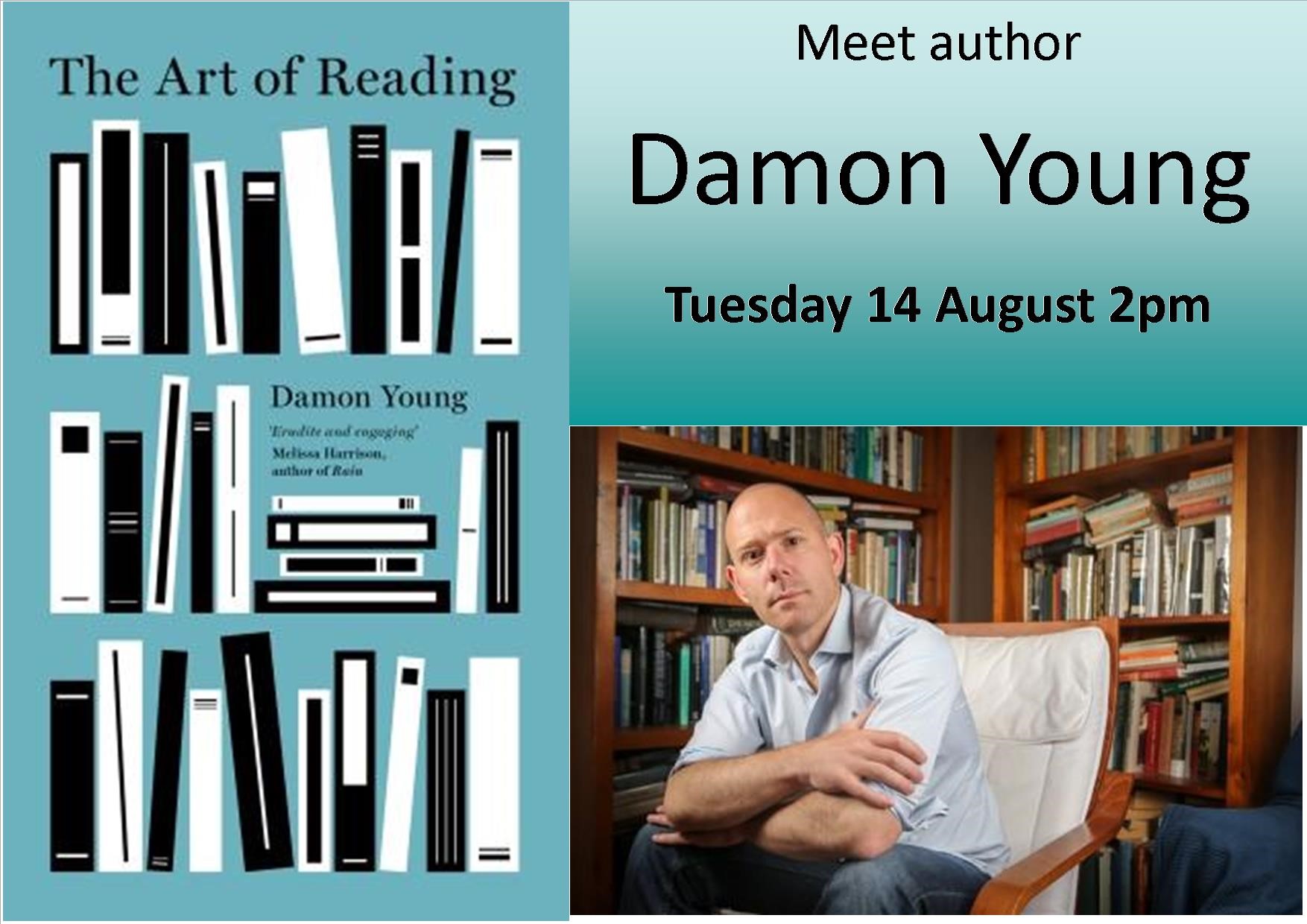
The Art of Reading by Damon Young is a celebratory tribute to the power of one of our must undervalued skills – an ideal gift for the avid reader. ‘An engaging enquiry into the transformative power of reading: Melissa Harrison, author of Rain.


Tel: 01845 524353 to reserve a signed copy of the book. A Free Event.


Ripon Festival in September

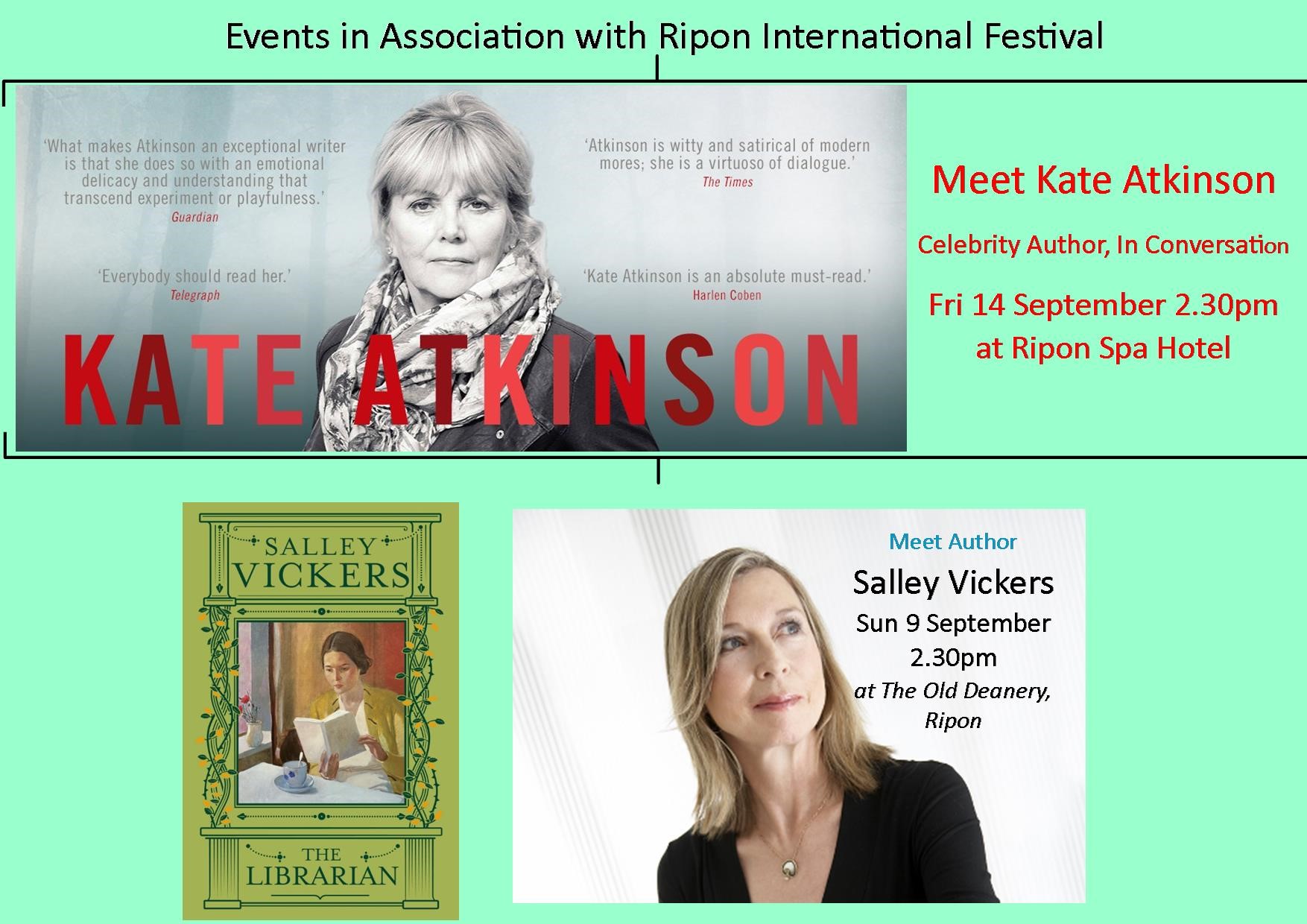
White Rose BookCafe is delighted to host a couple of events in association with Ripon International Festival.

Tickets are available at the bookshop.

Kate Atkinson: 14th September. Tickets £10 each (student £5) – £5 off the purchase of the book ‘Transcription’

Salley Vickers – 9th September at 2.30  Tickets £7 each

Tickets also from the Festival website where further details can be obtained.

http:www.riponinternationalfestival.com

Books can be reserved at the bookshop

And also, – a roll of drums if you please, maestro – two of my favourite ‘lads’:

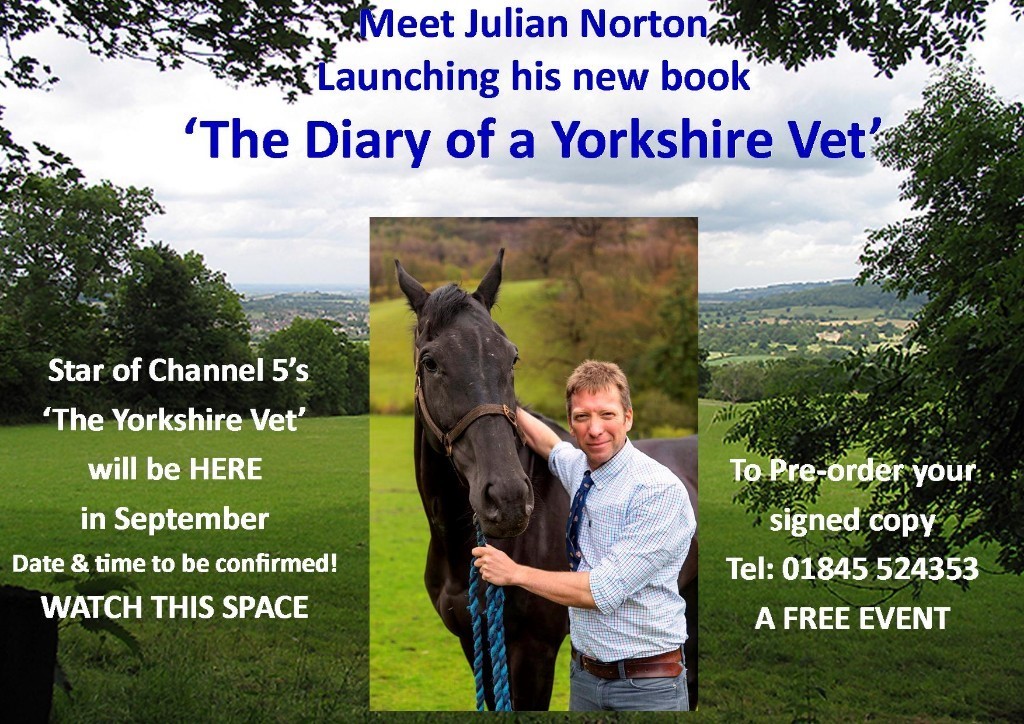
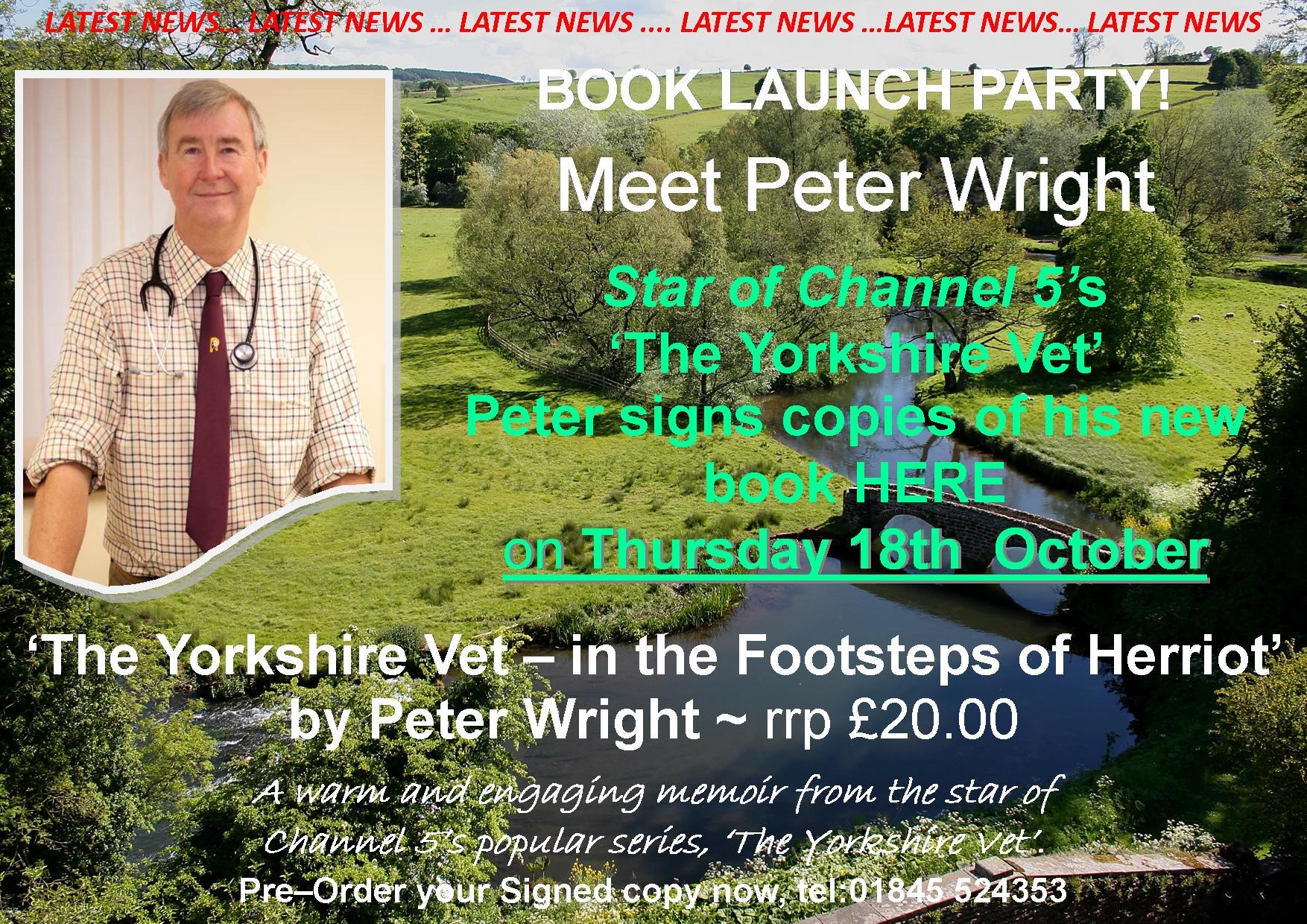
The stars of Channel 5’s The Yorkshire Vet will be talking about their books. I’ve read and loved Julian’s so am thrilled to see a third, and having listened to Peter’s whimsical humour it’ll be a good one – who can forget him cornering the cat, I was on the floor laughing, just as much as he was, on the floor I mean, not  laughing.

Julian you can meet in September, date to be advised, and Peter’s book is launched in October, and the party will be at – roll of drums… White Rose BookCafe 18th  October.Author  Milly Adams aka author  Margaret Graham, who will be a new resident of Thirsk by then, will be there, notebook in hand to report on it for the international Frost Magazine.

(Images courtesy of White Rose BookCafe)


BUSINESS OF BOOKS: FIRST, LAST EVERYTHING – MENTOR AND NOVELIST CATHIE HARTIGAN

What was the first piece of publishing advice you received?

The first piece of publishing advice I received wasn’t offered directly, but came in the form of a question. It was over ten years ago now and I was in my first one-to-one with an agent. After she set the timer ticking for ten minutes, and put it on the table between us, she said. ‘Tell me, when do you write?’ This took me completely by surprise; but I understood that she was looking for my commitment to being a professional author.

It also reinforced in my mind, that publishing is an industry, and unless you are that very rare literary writer who sells in large numbers, the commercial market is very likely to want you to write one, or even two books a year.

My answer to the agent by the way was all the time. Not that she took me on. I was disappointed at the time, but thankful now. I had yet to finish my first novel, and I’ve learned a great deal since.


What was the most recent publishing advice you gave or received?

Don’t be in a hurry to self-publish. I’m often approached for advice on the back of my own self-publishing success with my debut novel Secret of the Song. It’s impossible to predict how a book will fare once it’s out in the world. I was very fortunate, but I was also well connected within the writing community, as a creative writing teacher, co-author of a successful textbook, and organiser of the Exeter Novel, Story and Flash prizes. I feel sad for people who put so much effort into writing a novel, and then see it become plankton in the ocean of books available. Having said that, self-publishing can be a brilliant option for books that have a limited, but ready-made market, such as family memoirs or books about very niche subjects.


What is the piece of advice you’d most like to pass on?

If you’re going to self-publish, it’s important to go through the same steps as a mainstream publisher would prior to publication. Think carefully before using free resources unless you’re convinced about the result. It’s usually worth paying professionals for edits, proofing and cover design.


Cathie Hartigan is a novelist and founder of www.creativewritingmatters.co.uk which offers a range of services for writers, including competitions, mentoring and manuscript appraisals. Cathie’s novel, Secret of the Song, was recently shortlisted for the inaugural Hall & Woodhouse Dorchester Literary Festival Writing Prize.

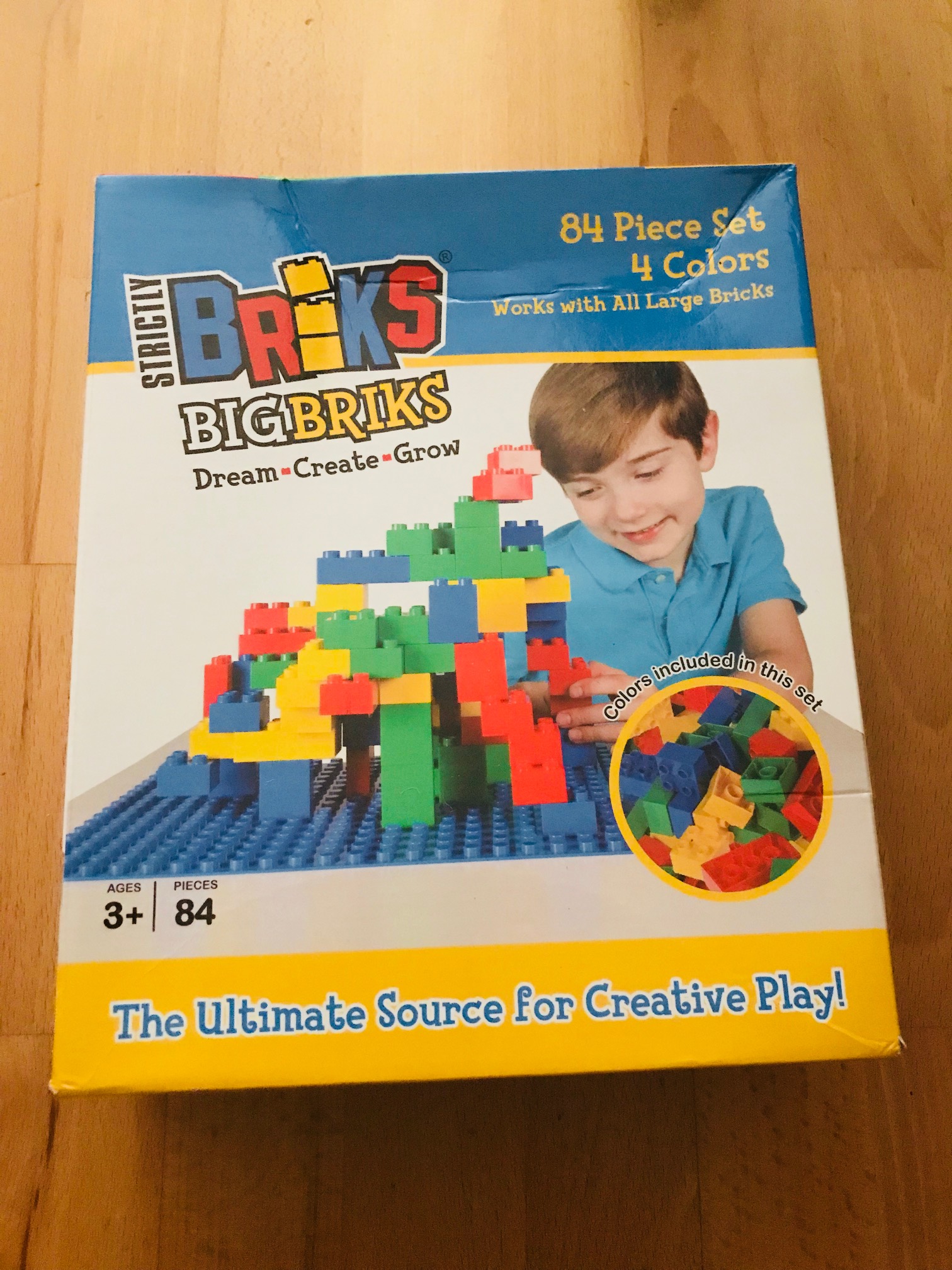
Strictly Briks Big Briks Review

Kids loving building bricks. I think this is one of the truest sentences in life. So this big set of bricks from Strictly Briks went down well with the toddler. It is an 84 piece set with 4 different colours. They work with all large bricks so you can mix and match brands. This is a great starter set and really lets your childs imagination go wild. Recommended.

Strictly Briks 84 piece set available here.


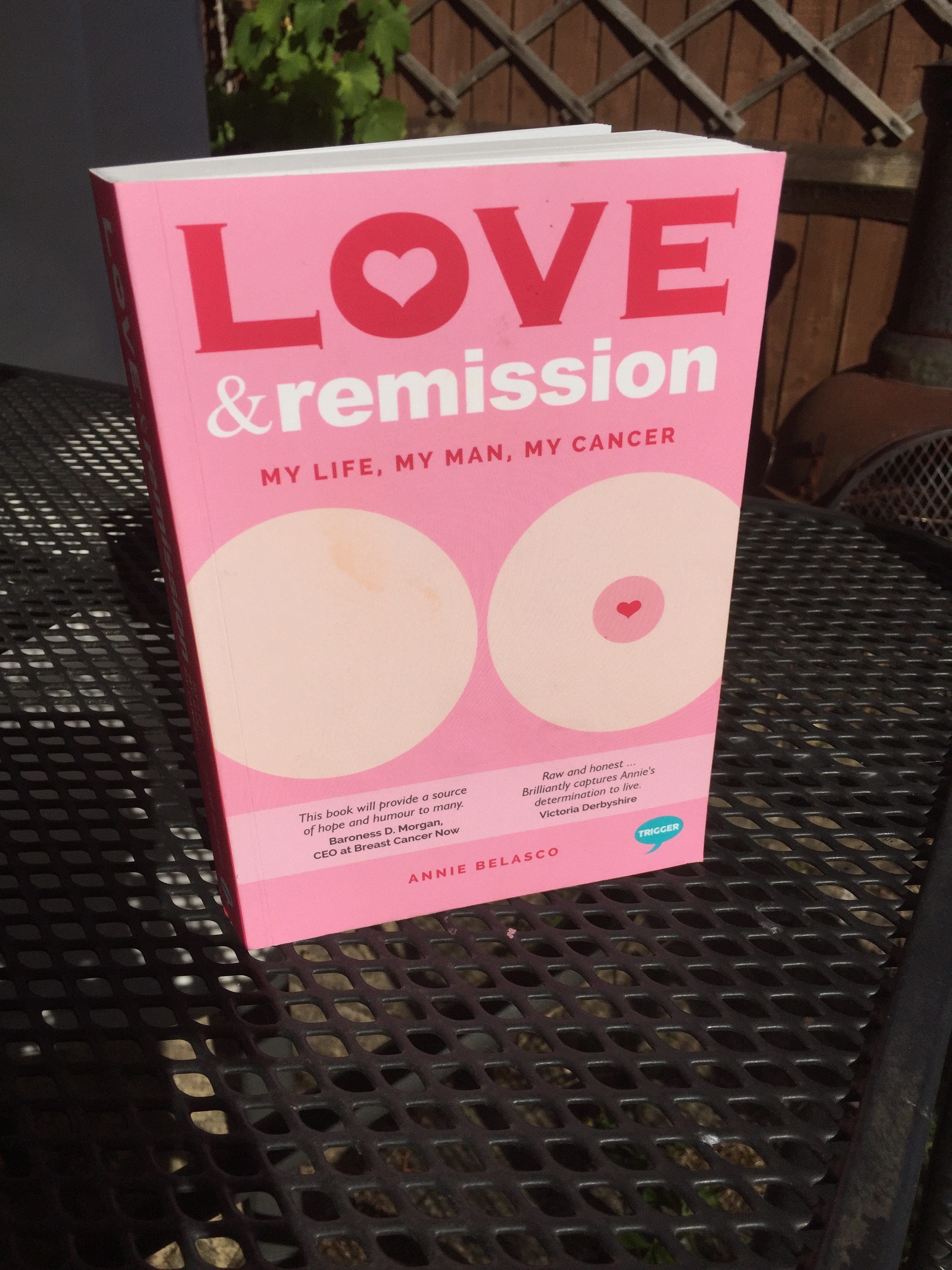
Love and Remission – My Life, My Man, My Cancer by Annie Belasco – Book review by Dr Kathleen Thompson


As the author of a breast cancer guide myself, I was keen to review Annie Belasco’s book.

Was it another of those personal accounts of cancer? Well yes … and no.

Annie tells a gripping tale about having breast cancer in her early twenties and dealing with the fear, the surgery, and the gruelling chemotherapy.

But what makes Annie’s story stand out is the journey into her psyche – and the impact of a life-changing diagnosis on the mind of a young woman – and it isn’t always pretty.

At the start, Annie is looking for her Prince Charming amongst the bars of Benidorm. She gives on-line dating more attention than the rather large lump in her breast. After all, that was probably just a cyst.

Except it wasn’t, and totally shell-shocked, she has to face urgent decisions she just doesn’t want to make – like should she have her eggs frozen in case the chemotherapy affects her fertility? Damn it, she hasn’t even got a partner. And yet, she has to decide, and quick.

Through her treatment, she continues her quest for a soul mate. Amazingly she finds the wonderful Sammy, who is not phased by her wig, or the fact that one boob is currently AWOL.  He really is Mr Perfect, and Annie admitted to me when we spoke, that in some ways it was because of her cancer that she found him.

So did she spend all her time telling this hero how much she loved him? Well, no, not really …

And this is where Annie is frank about the psychological effects of cancer.  We know that, when people are undergoing any catastrophic life situation, they go through stages of denial, anger, bargaining and depression before they can finally accept and deal with it. During this process, at least some of the time, they can be irritable, unreasonable, confrontational and generally not very nice – often to those they care about most, and Annie illustrates this beautifully in her account.

This very normal behaviour can of course affect relationships, particularly if loved ones don’t understand that it isn’t ‘personal’. Fortunately Sammie was made of sterner stuff and Annie’s book has a happy ending.

This is a fabulous book for anyone trying to deal with a serious illness, directly or indirectly and consequently it was snapped up by TriggerPublishing.com, a publisher which specialises in mental health issues.

Annie is speaking at the Pink Ribbon – RSM Conference: What Causes Breast Cancer? What Cures It? On 14 September 2018 at Royal Society of Medicine, 1 Wimpole Street, London. This is an excellent conference with world-class breast cancer experts, so do come along and listen to Annie and her fellow speakers.

Love and Remission by Annie Belasco

 Dr K Thompson, author of From Both Ends of the Stethoscope: Getting through breast cancer – by a doctor who knows


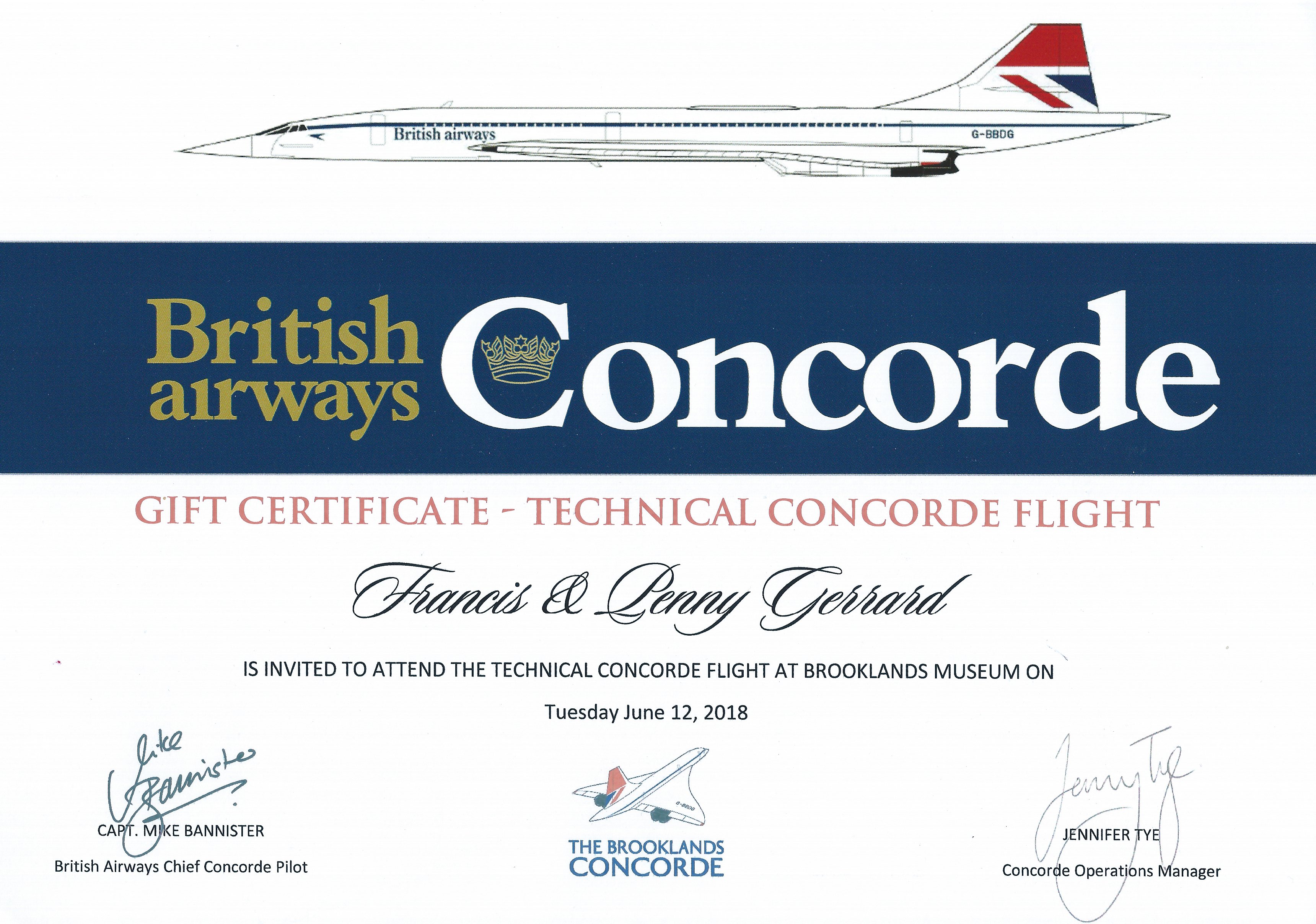
Brooklands Concorde Technical Flight by Penny Gerrard


What to buy for the husband who has everything? A Concorde Technical Flight at the famous Brooklands Race Track and centre of British aviation fitted the bill and for only £30 each.

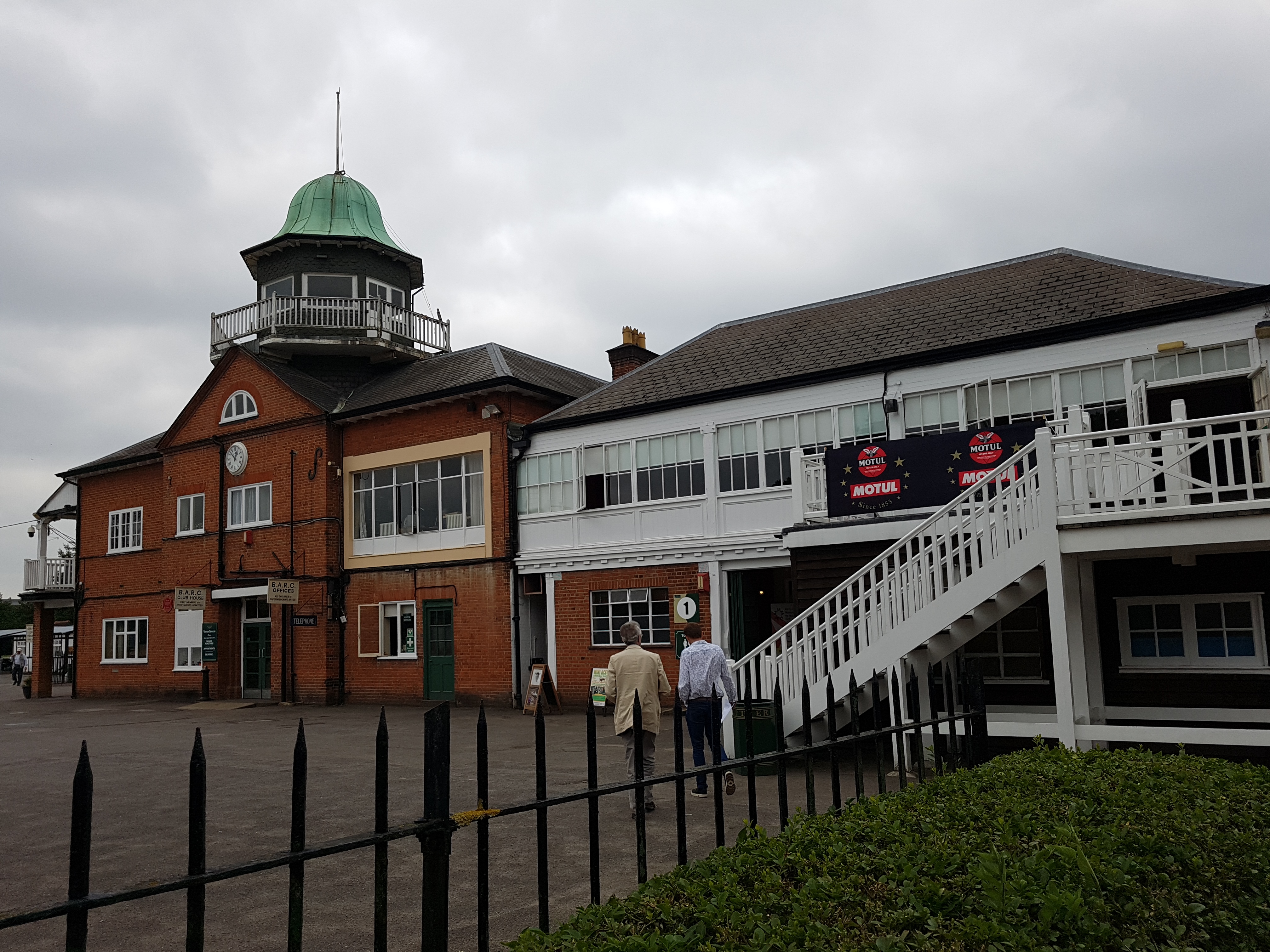
Our experience started in the nostalgic club house – unchanged since Brooklands was opened by Hugh Locke-King at in Surrey in 1907 as a banked oval racetrack.   It thrived for 30 years and I remember tales of my father riding the circuit in the 1930s on his Velocette motorcycle.

The original Clubhouse at Brooklands – now a listed building

Vic, one of the many passionate  volunteers who keep Brooklands going today, gave us a fascinating talk about the Brookland’s history.  He spoke about its life as a race track – now only discernable in the sad remnants of the track which appear in small sections on the perimeter – often covered by weeds.


Then he described its history as one of the most significant places in the development of British Aviation.  This saw 18600 planes built there through the years when aviation progressed from planes which looked like bicycles with rudimentary fabric wings to Concorde and the Harrier Jump Jet.

Harrier Jump Jet

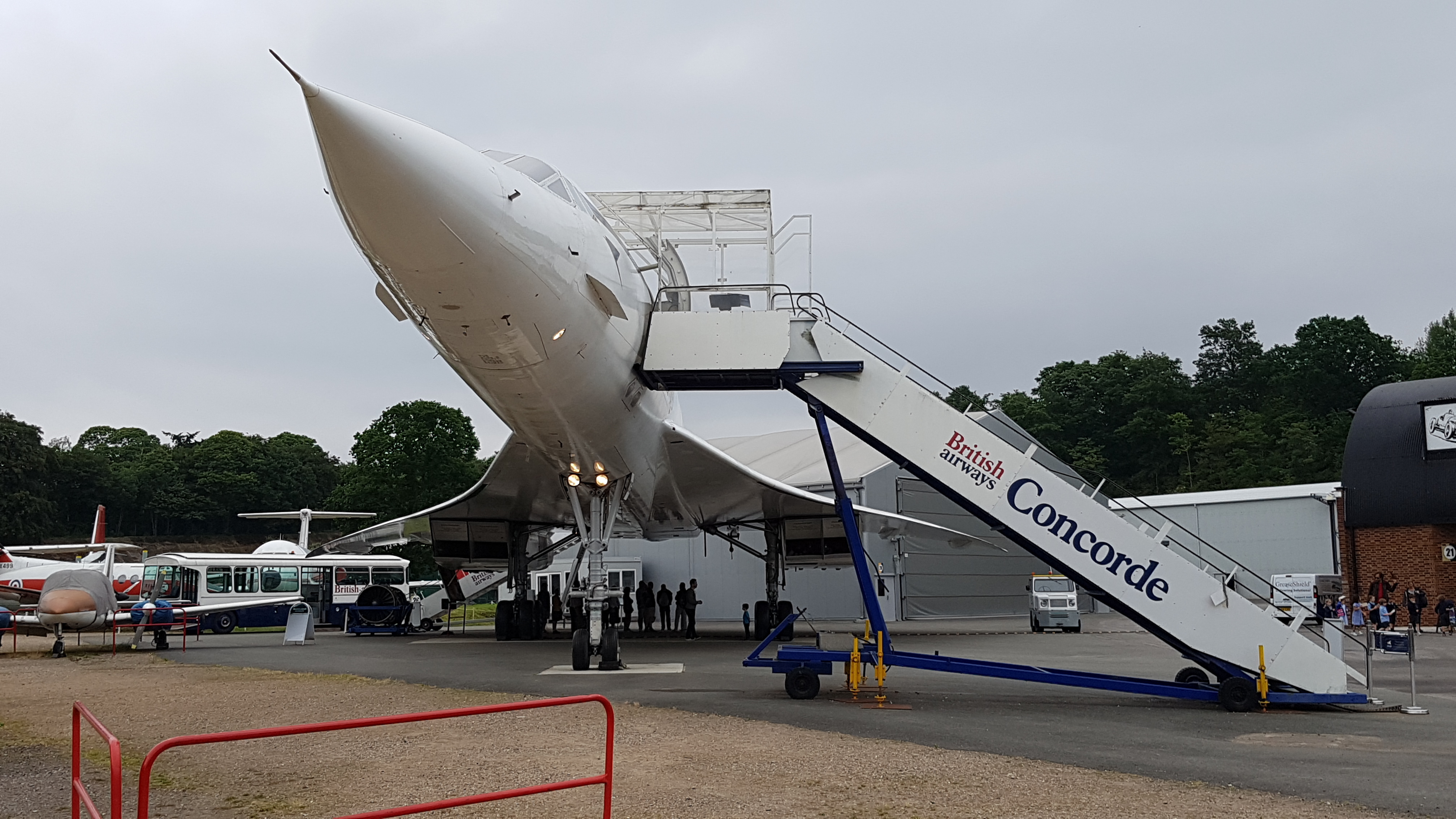
We were led to the glossy white Concorde which stands in pride of place on the tarmac – looking as if it could take off at any minute.   The last Concorde flew in 2003 having become economically unviable.   We climbed the steps and walked along the cabin which, in comparison with the wide bodied jets most of us are familiar with these days, rather resembles a toothpaste tube!   Once in our seats our imaginary flight began – the seats vibrating and the Mach indicators climbing to more than twice the speed of sound while the captain talked us through the flight.   The experience went a way towards showing us what an adventure it would have been to set off, knowing that you would be in New York in a matter of three hours or so.

Concorde

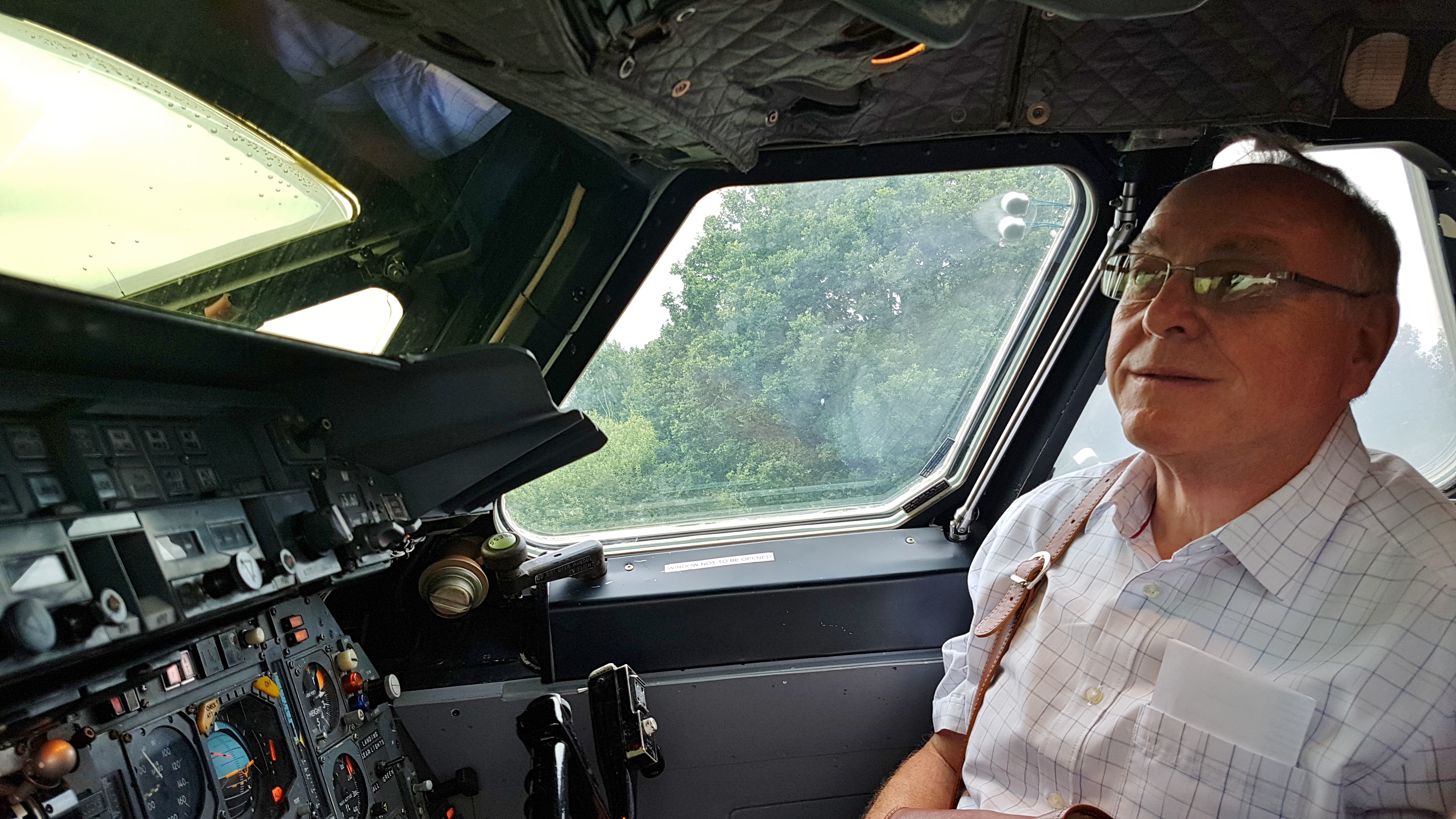
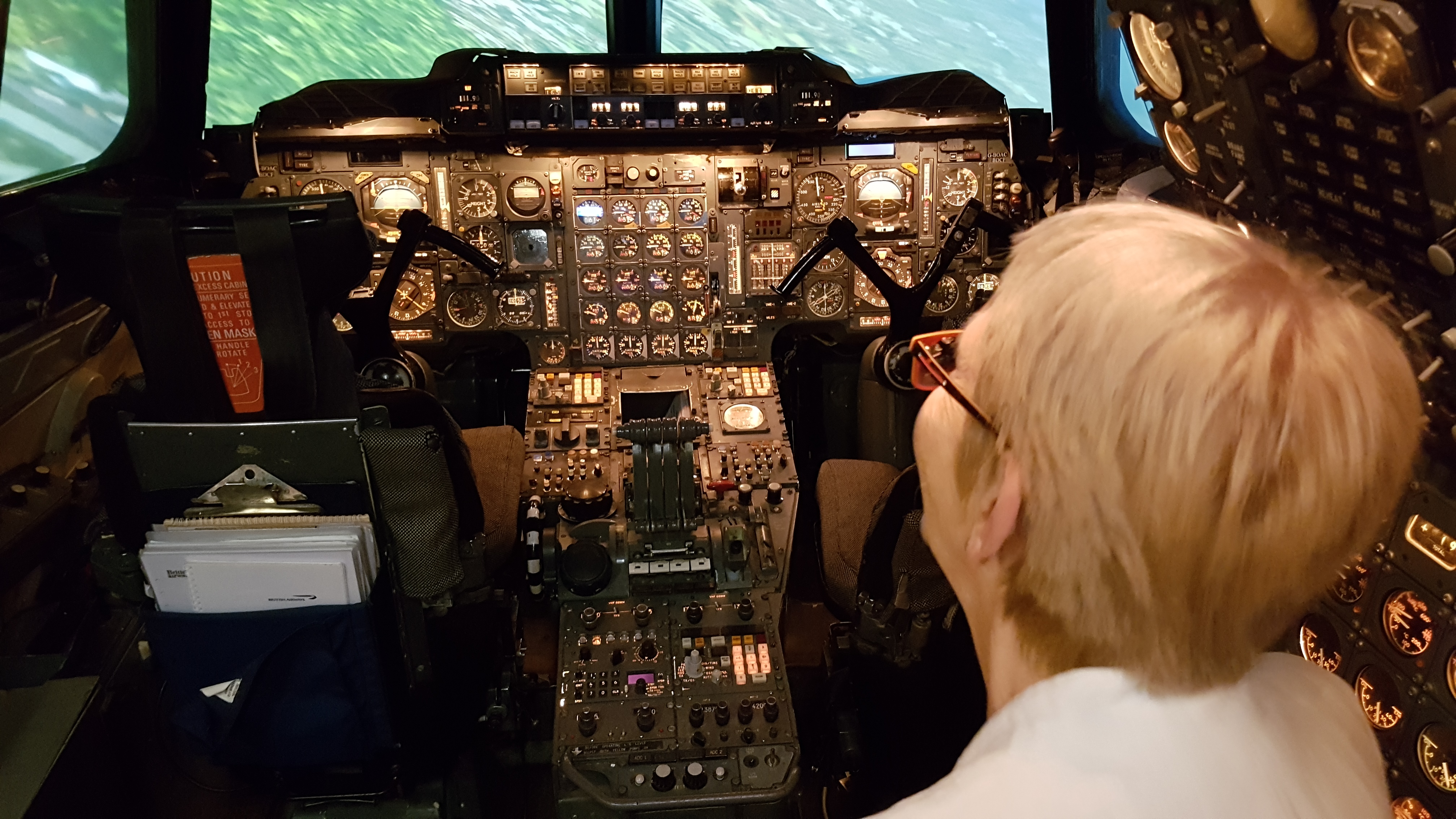
The highlight was being taken the cockpit where I chose the Captain’s seat, relegating the birthday boy to the status of co-pilot and we had fun moving what our guide called the “tiller” and generally marvelling at how anyone could ever get their heads round the mass of instruments – still analogue in those days of course.

 Concorde’s Cockpit

Once we had mastered the intricacies of how to fly the thing, we visited the flight simulator used to train Concorde pilots – really something.    Now the simulator does not move, but the display through the windscreen does such a good job of moving that you would swear you were flying, climbing, banking, coming in to land.  A marvellous experience and a great birthday present.

The Concorde Simulator

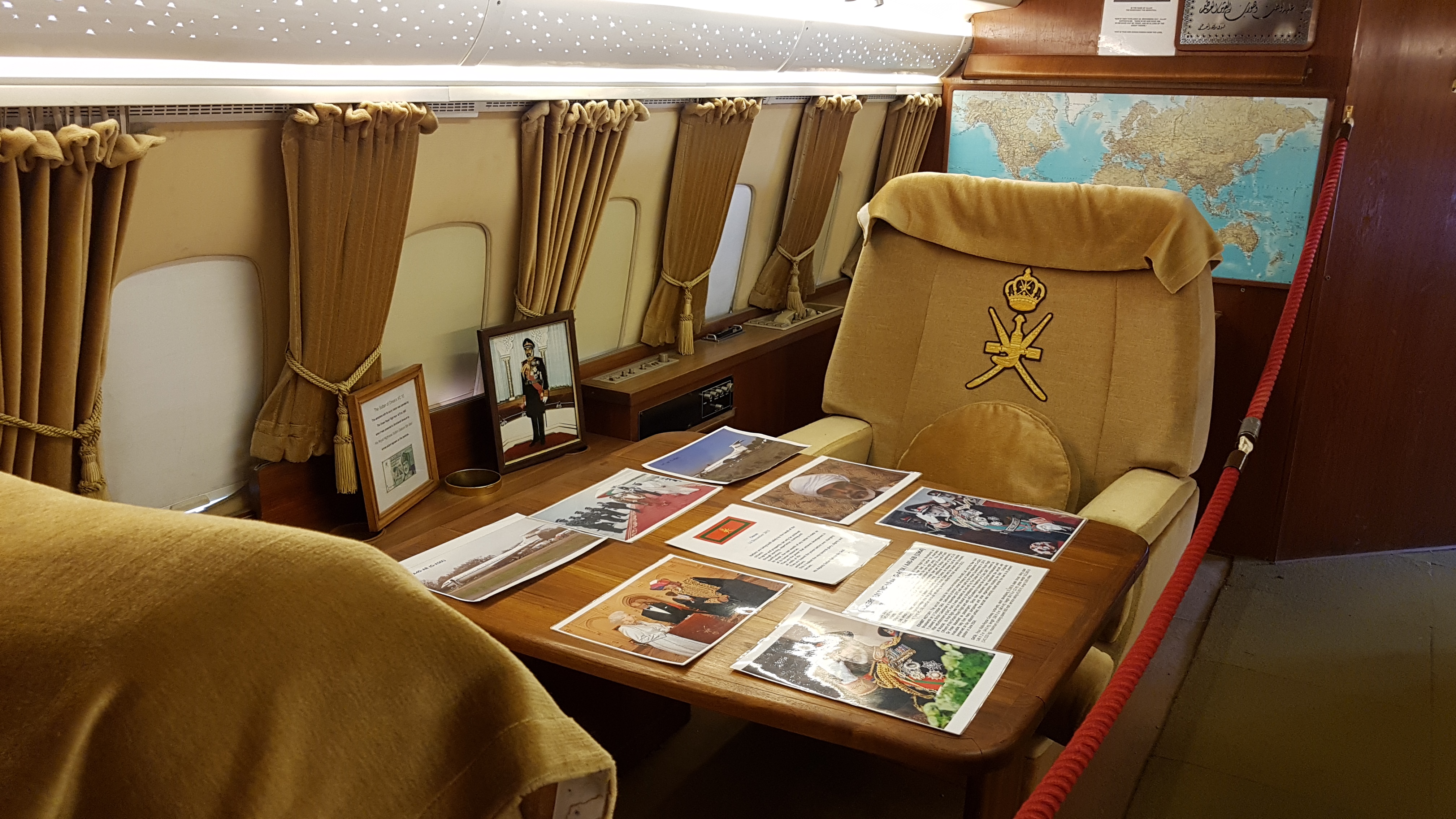
Our main visit complete, we had the afternoon to visit the Art Deco Café for lunch and then explore what else was on offer at Brooklands.  The highlights?   The first was visiting the Sultan of Oman’s VC 10 with its wealth of mustard coloured Dralon (even the TV was upholstered in it).   That certainly took us back to the early days of our married life when you were nobody unless you had a Dralon “settee”.


 The Sultan of Oman’s vintage VC 10

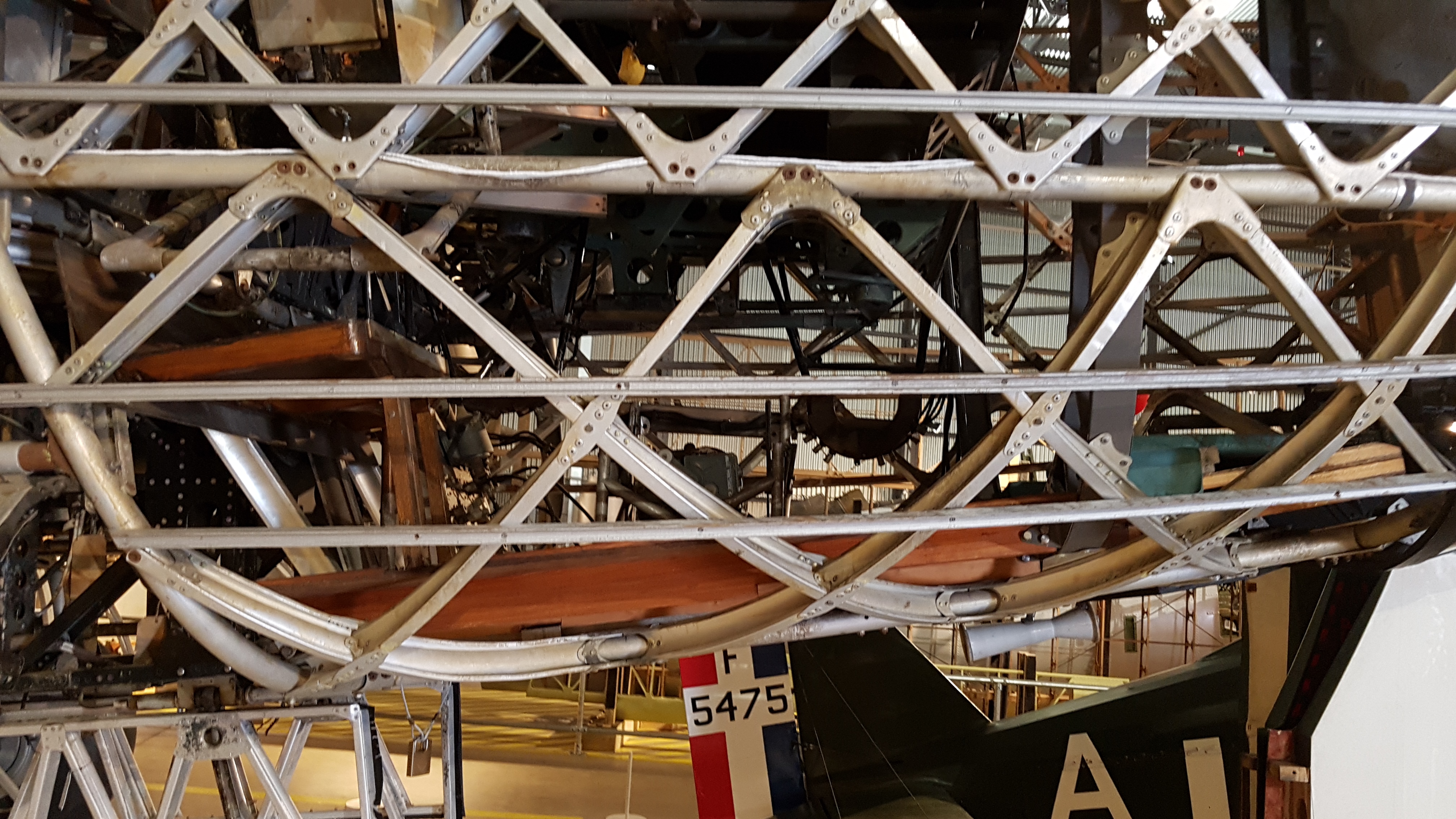
The main museum was set up as an aircraft factory.   I clocked in and out for the first time in my life, constructed a model aeroplane, and looked into a Wellington Bomber (particularly poignant as it gave me an insight into what it was like for my father lying in the belly of a Stirling Bomber as a Bomb Aimer in the war).

Bomb Aimer area of Wellington Bomber

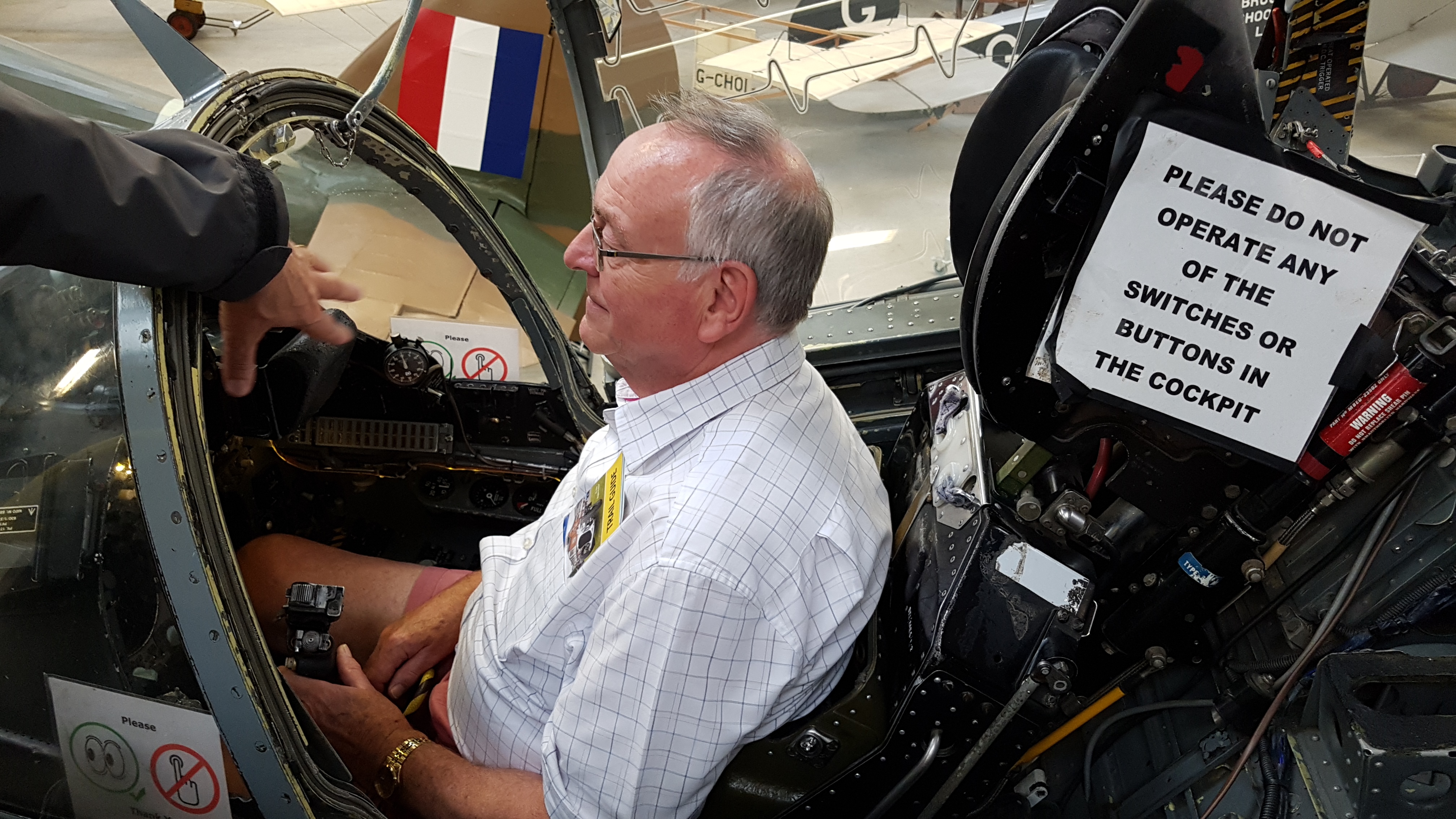
And lastly, we had the treat of climbing into the cockpit of the Harrier Jump Jet.    Being instructed not to press any buttons created the illusion that we were moments from firing the ejector seat and being shot through the roof.      We enjoyed a fascinating time with the Harrier volunteer – endlessly knowledgeable about aviation and able to bring things to life brilliantly.

Francis Gerrard in the Harrier Cockpit

We recommend a visit to Brooklands an excellent place for a fascinating day out -see www.brooklandsmuseum.com

Images with the permission of P. Gerrard


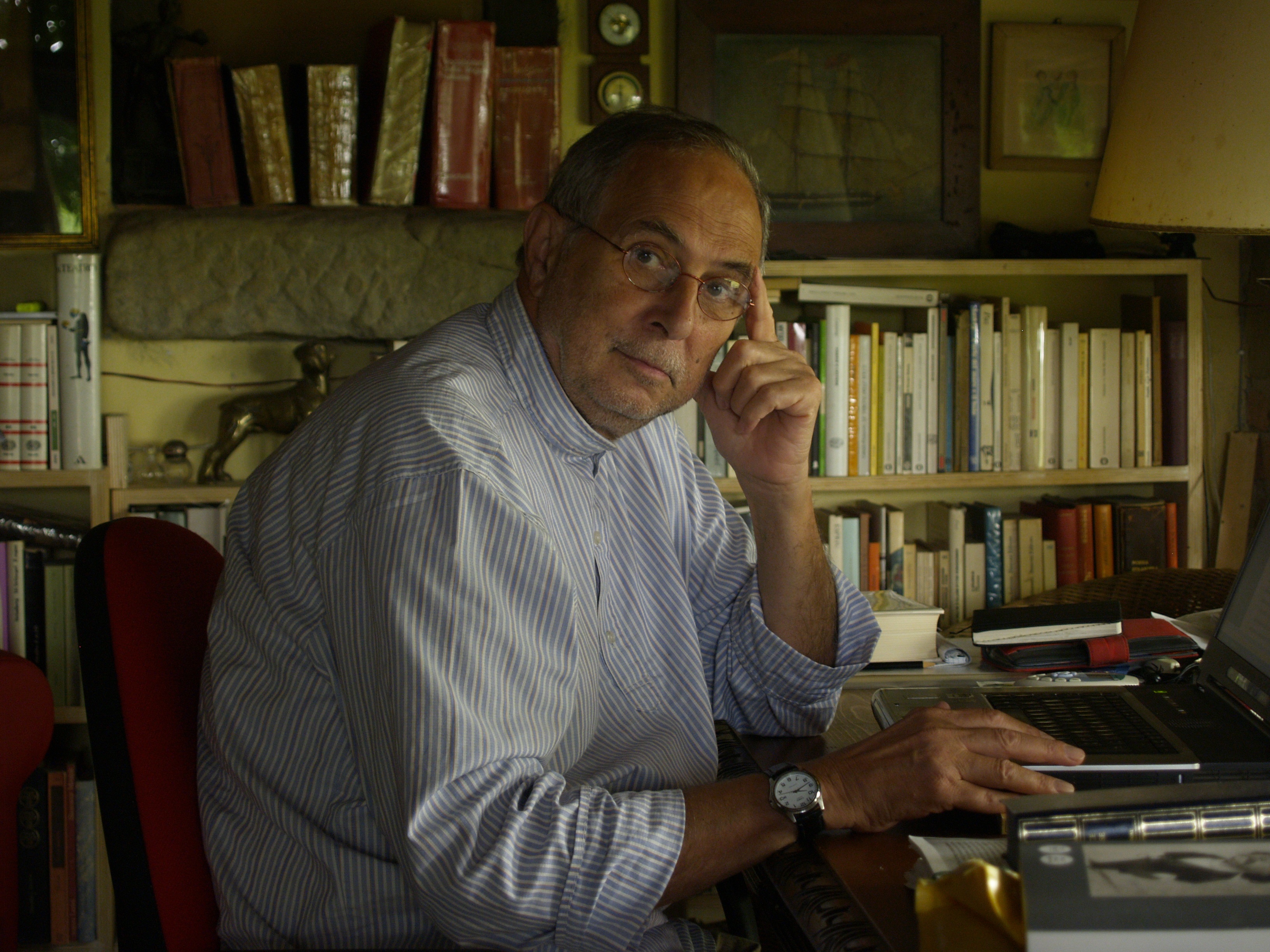
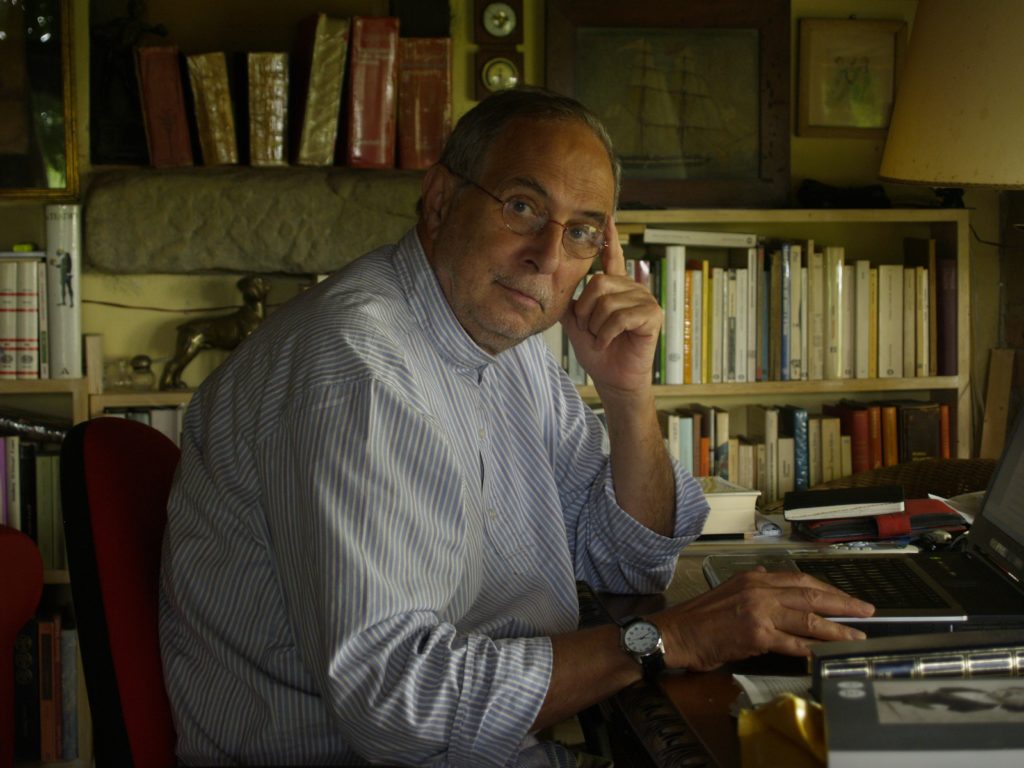
Stranger than fiction: Q&A with ‘bio-fiction’ creator, Giuseppe Cafiero

The acclaimed Italian author Giuseppe Cafiero has created a new literary genre that weaves traditional fiction with real-life biography. In this exclusive interview, he tells Frost Magazine what inspired his unique style of ‘bio-fiction’.

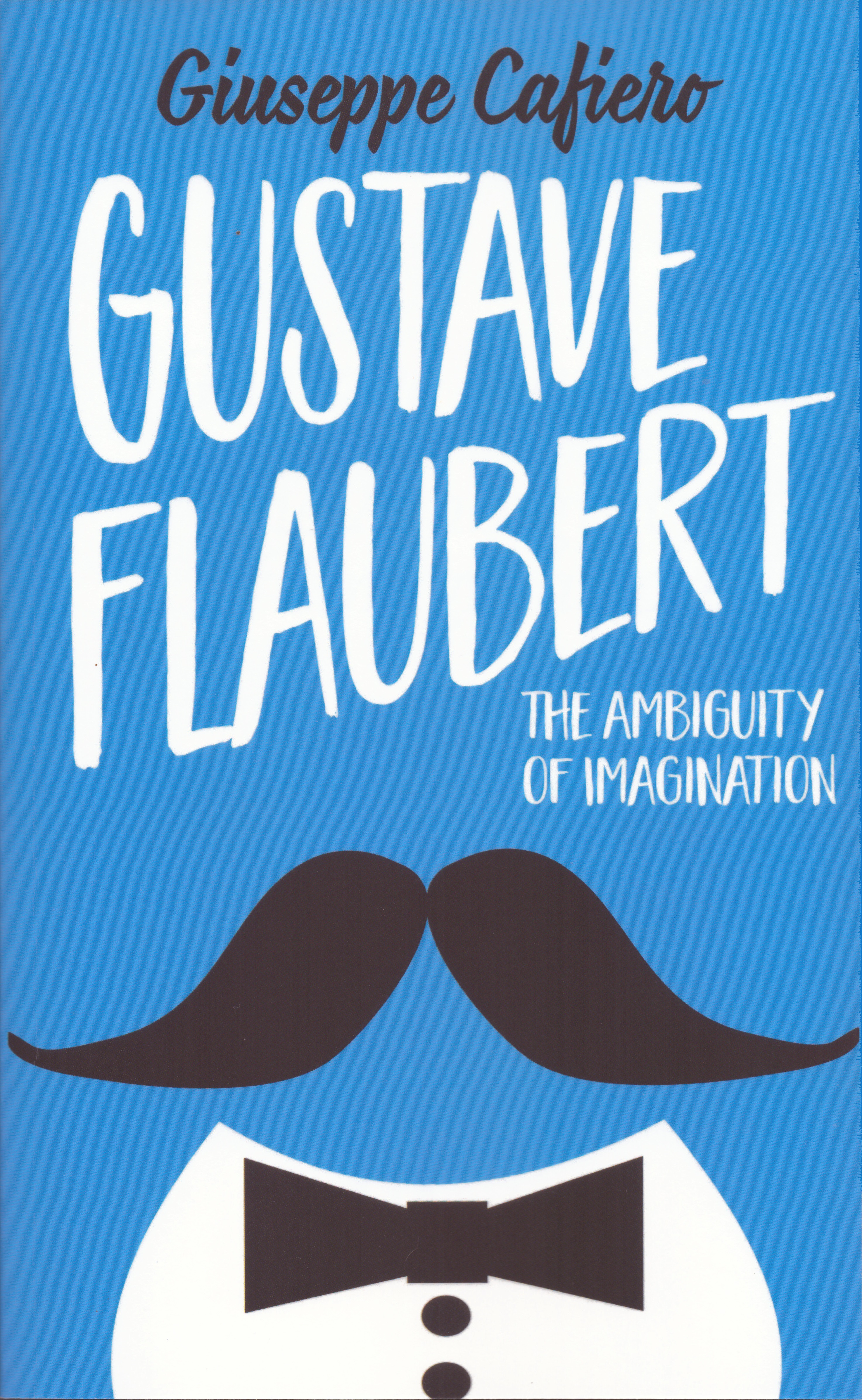
Frost Magazine (FM): Your novel, Gustave Flaubert: The Ambiguity of Imagination, describes in detail the life and writing of the famous 19th century author. What is the importance and lasting fascination of Flaubert?

Giuseppe Cafiero (GC): Flaubert’s attention to writing. He was very careful in choosing words. He was very scrupulous in the composition of the sentences. He was very much looking forward to the balance of dialogues.

FM: You are clearly a fan of Flaubert’s writing. Which of your novels or stories would you recommend as the best to read first, and why?

GC: An incomplete book: Bouvard and Pecuchet. This is the book that inspired me to write Gustave Flaubert: The Ambiguity Of Imagination.

FM: Your work is part of the surreal genres and metafictions. Why do you find these genres as satisfying as an author? What can the reader take from these genres that are not offered by other types of writing?

GC: Because it’s suggestive to talk about ambiguity. Because it is very suggestive to speak in a surreal way about the ambiguity of a writer. It’s necessary to engage the reader in different readings by looking at an author under another aspect that intrigues with the surreal

FM: You are the inventor of a literary genre that you have dubbed ‘bio-fiction’. What do you mean by this term and how does it differ from biography or fiction?

GC: My literary genre is neither fiction nor biography. I try to tell a story about the life of a writer in which a surreal element intervenes that modifies reality. This is only an interpretative ambiguity of events that changes what was considered an absolute truth

FM: In your novel, Flaubert presents himself as a rather flawed individual. Do you think that his sexual and mental obsessions were an essential factor in allowing him to write the great works of literature for which he is famous?

GC: Undoubtedly. It is precisely these obsessions that have made Flaubert a particular writer. Without these pathological obsessions Flaubert would have been perhaps an insignificant writer

FM: Which authors have had more influence on your writing and why?

GC: My writing was influenced very much by Jorge Luis Borges, because if Borges has viewed the world and influenced his writings through the use of duplicity, I have believed that ambiguity would be deciphering in the world in a different but also very suggestive way

FM: How do you decide which historical figures to give biofocus treatment? Are there any character traits you are looking for that make an ideal subject?

GC: There are some characters (writers, painters, musicians) that interest me a lot. Certainly these characters have had adventures or have had friends or loves that lend themselves very well to the game of ambiguity

FM: What other authors do you think to give to the “bio-fiction” treatment in the future and why?

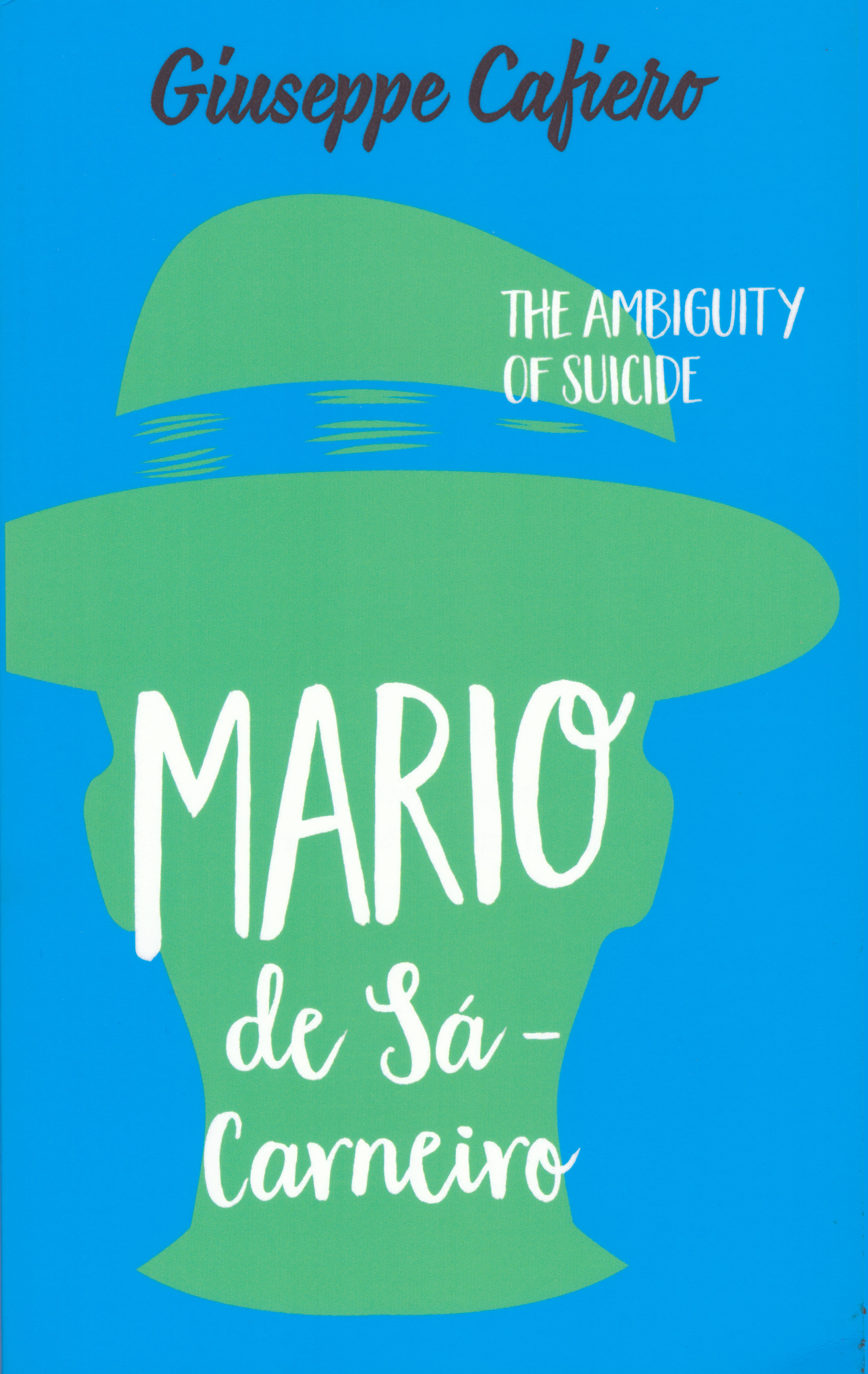
GC: The Portuguese poet Mario de Sa Carneiro for the ambiguity of his suicide. Virginia Woolf for the ambiguity of her lesbian love. James Joyce for the ambiguity of the epiphanies. Edgar Allan Poe for the ambiguity of his death for alcoholism.

FM: Your novels address the main theme of “ambiguity”. Why does this concept fascinate you and how does this idea link to what we can hope to understand as “truth” from literature and history?

GC: The theme of ambiguity fascinates me because it’s possible to look at the life and works of an artist in a different way through a keyhole that deforms things just because this keyhole is ambiguity. It is an ambiguity that can show another truth.
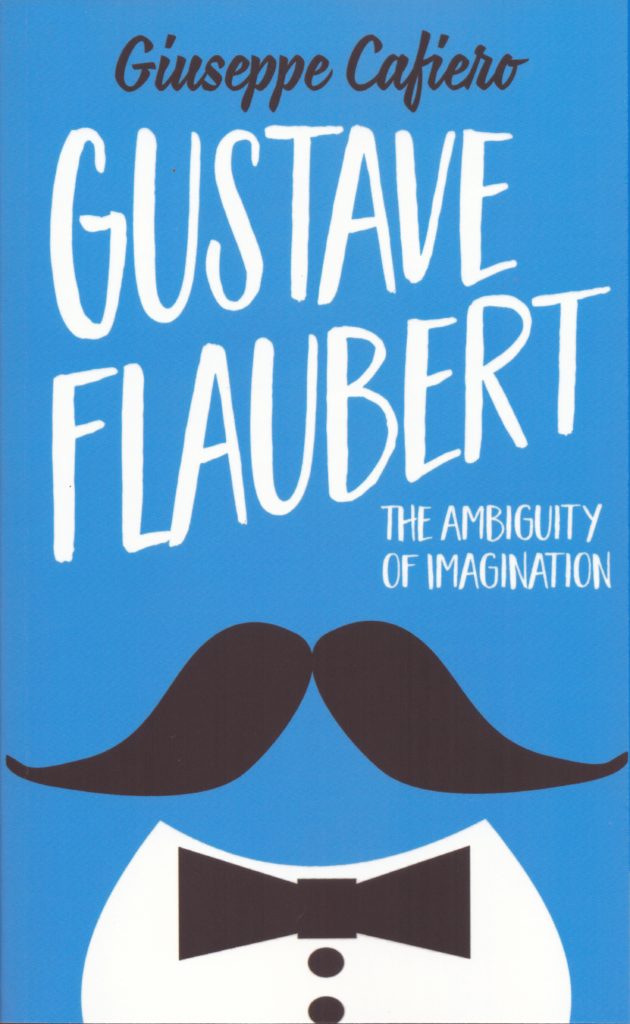
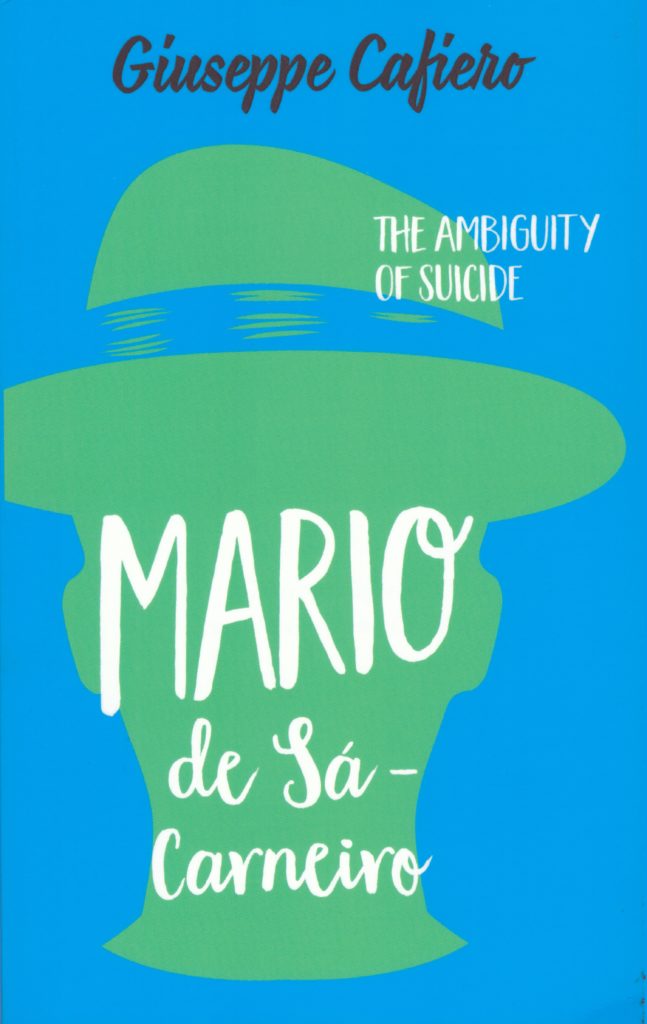
Gustave Flaubert: The Ambiguity Of Imagination and Mário De Sá-Carneiro: The Ambiguity Of A Suicide, both by Giuseppe Cafiero, are out now.

 

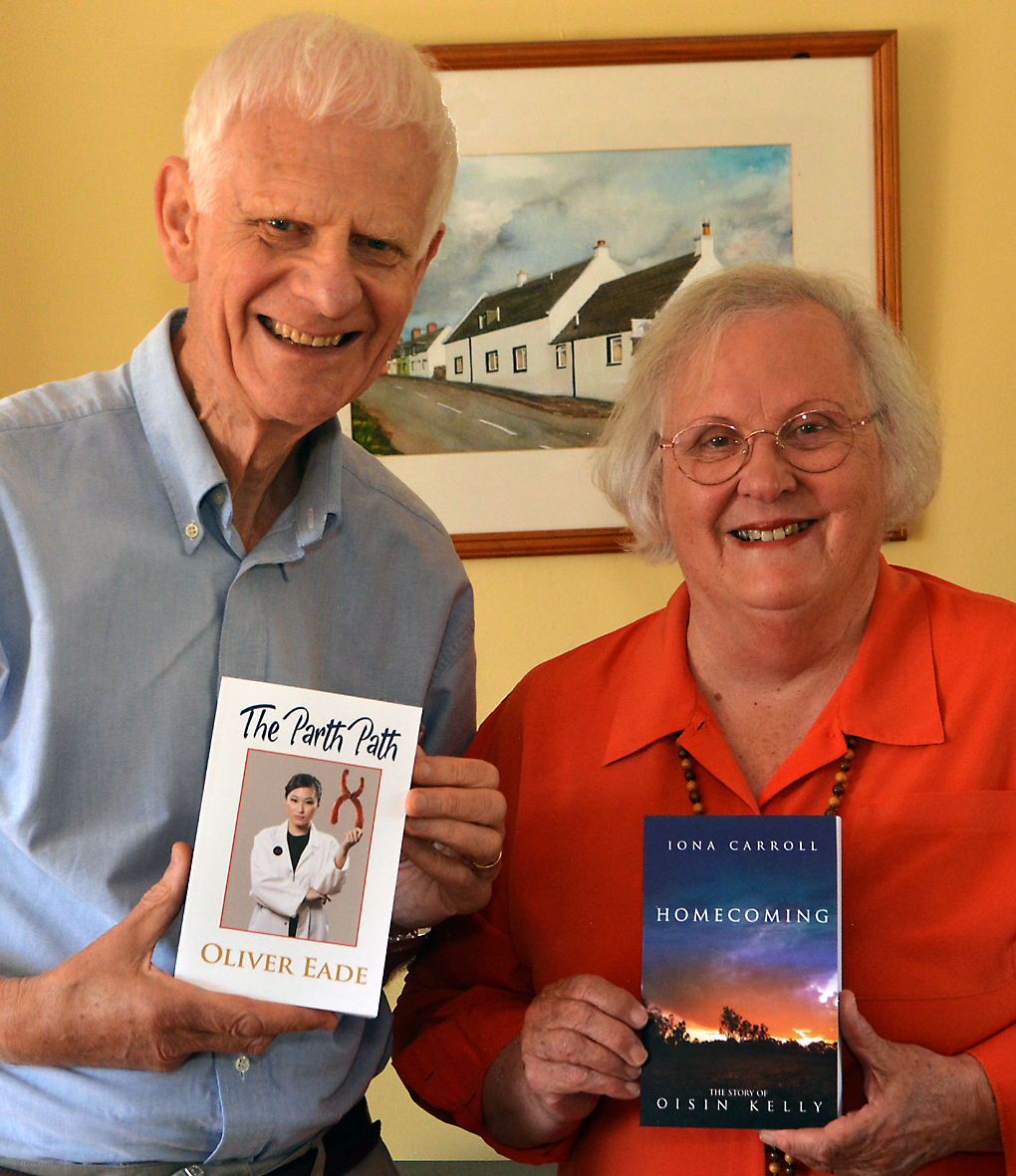
Two great books just launched. Milly Adams reviews them.

Ladies first on this occasion, as Frost Magazine has a look at two novels just launched.

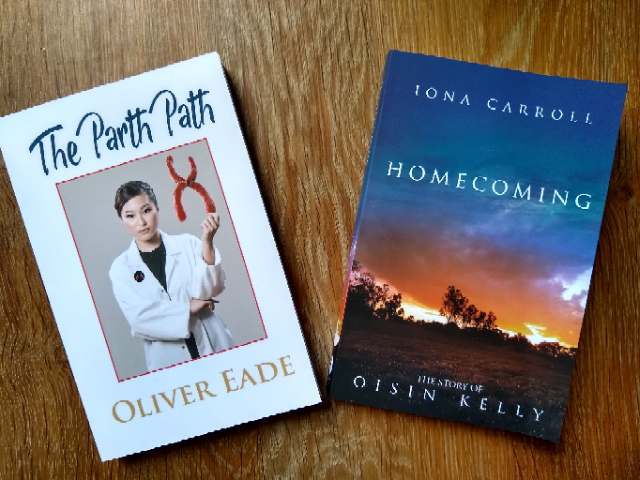
Homecoming by Iona Carroll is the third in the series about Oisin Kelly, but is quite definitely a stand alone story too, so don’t be put off if you haven’t read the first two.

It is written with lyricism – about memories I suppose. How they sneak into our minds and lurk ready to ambush us. Memories we have to address, comes to terms with.

Oisin Kelly has embedded himself in the outback Queensland town of Kilgoolga when a Vietnam veteran enters his life. Both men suffer from post traumatic stress, and it asserts itself  sometimes similarly, sometimes not. As the memories surface, always carried on a lyrical wave or writing, Oisin Kelly begins to wonder, or so I though, what is the point of life? But more – where is his true home? And is love or submission to darkness the answer to the path he must follow.

Evocative lyrical writing, creating an environment you can smell and see, and with an eye to the traditional structure of a novel. With author Iona Carroll we feel we are in safe hands and tackling a subject that Frost Magazine supports, in its association withthe charity  Words for the Wounded.

Homecoming by Iona Carroll.

Launching also is The Parth Path by Oliver Eade

Oliver Eade won the Words for the Wounded Georgina Hawtrey-Woore Award Fiction for Yong Adults category with The Kelpie’s Eyes, and here is his latest novel for young adults.

Set in a post-apocalyptic Scotland dominated by women, Peter escapes from a mancamp, hoping to reach the island with Rea, a beautiful clonie. The dastardly truth is…  Should I tell you?

Oh, well, I’ll spill just a few beans, for you need to read The Part Path in all its glory to find out what really happens. Is this journey something that Peter and Rea  have really decided upon,  or are they being manipulated? If so, by whom?  Who to trust in other words? A real teaser.

As with The Kelpie’s Eyes, this has a firm plot, an imaginative grasp of concepts which I would struggle to conjure up. Clever, clever. Written with pace and verve.

The Parth Path by Oliver Eade

5 Reasons Why You Should Begin Saving After Landing a Job

When you land your first job out of college, it’s tempting to want to live large. Especially if you’re living with family or have a few roommates, you may have some funds to play around with. Or save. 

But even though the draw is strong to have fun while you’re young, it’s much better to start saving. Here are five reasons why you should save instead of spend after landing a new job. 

  1. Time goes faster than you think

What does every older person tell you? It’s like a broken record that plays on repeat: The years go by fast. Before you know it, you may be approaching fifty without a decent savings or retirement account. And what do you do then? People who find themselves in that position may end up working for the rest of their lives. 

Even if it’s five dollars a week, get in the habit of saving while you’re young. As you get older and make more money, you can save more. It really adds up. And since time goes faster than we’d like, before you know it, you’ll have a good chunk of change in the bank. 

  1. Interest adds up over time

Let’s say you save five dollars a week for five years. With 1.5 percent interest, you can make $20 on the $1,300 saved. That may not sound like a lot, but remember that it increases exponentially as you save more money. Whenever you can stash away $100 per week, you’ll make close to $400 in interest in that same 5-year period. Of course, interest rates can change based on market values and savings options. If you choose a high-yield savings account, you may make a higher percentage. 

  1. Rainy-day expenses are real

Imagine you’re living paycheck-to-paycheck and you get two flat tires. That could easily end up costing $200 that you don’t have. What do you do? You need your car and only have one donut (not that you’re supposed to put mileage on those anyway). Without a good safety net, you could get stuck in some pretty precarious situations that aren’t easy to get out of. On the other hand, if you have even a thousand dollars in savings, you can get back on the road in no time. 

  1. You can avoid a lifetime of debt

If you start your career by spending every penny you get, you’re more likely to rely on credit cards and loans to get out of sticky situations. Once you do this, you’re setting a pattern that can hold you down for the rest of your life. Remember the example of how much you can earn through interest? Well, it works overtime in reverse. Interest rates on loans and credit cards are much higher than they are on savings accounts. You could end up paying 25 percent or more every time you use your credit card. And if you don’t have the money to pay it off, you’ll pay even more over time. 

  1. You may want to make a big purchase

From the moment you start your new job, it’s time to start thinking like an adult. This means that you may want to consider buying a house or condo. At the very least, you’ll probably want a decent car. Some of the pricey yet still great European vehicles may catch your eye. Or you may opt for a luxury American-made model. Either way, it’s best if you can make sizable down payments to avoid getting strapped down with a massive amount of debt. 

Saving is never the “fun” option, but ironically, having a decent savings account can help you get more out of your life. It may not sound like fun to work instead of going on vacation, but making the smart decision can save you stress in the long run. Start saving now and enjoy peace of mind for years to come.