BUSINESS OF BOOKS: FIRST, LAST, EVERYTHING – NOVELIST MORTON GRAY

What was the first piece of writing advice you were ever given?

When I first began to write I attended a weekly writing course run by author Sue Johnson in the lovely town of Pershore in Worcestershire. Sue gave us a variety of writing prompts each week, such as poems, pictures, leaves, random objects, word lists and such like. Then she’d give up a time limit in which to write something. The idea was just to relax and see what appeared on the page from the stimulus of the prompt. I still use this technique to get started with stories, or if I’m stuck in the middle of a book. I am very grateful that this early training enables me to write quickly if I need to.

 

What was the most recent piece of writing advice you received or gave?

I went on an editing course recently and was advised to highlight the different points of view in my manuscript using different colours. The idea being that the distribution of the colour throughout the manuscript enables you to see if the balance between each characters’ points of view is even. This is an invaluable tip, as often I get fixated on one character’s view point and this enables me to present a balanced piece of work.


What piece of advice (writing or otherwise) would you like to pass on?

Oh dear … it is difficult to stick to one, so I’m going for three!

  1. It is never too late to begin to write.
  2. You should always stay true to your own work and not worry about what others are writing.
  3. Writing is such a solitary occupation that it is important to find fellow writers to speak to and share with, be that online or in real life.


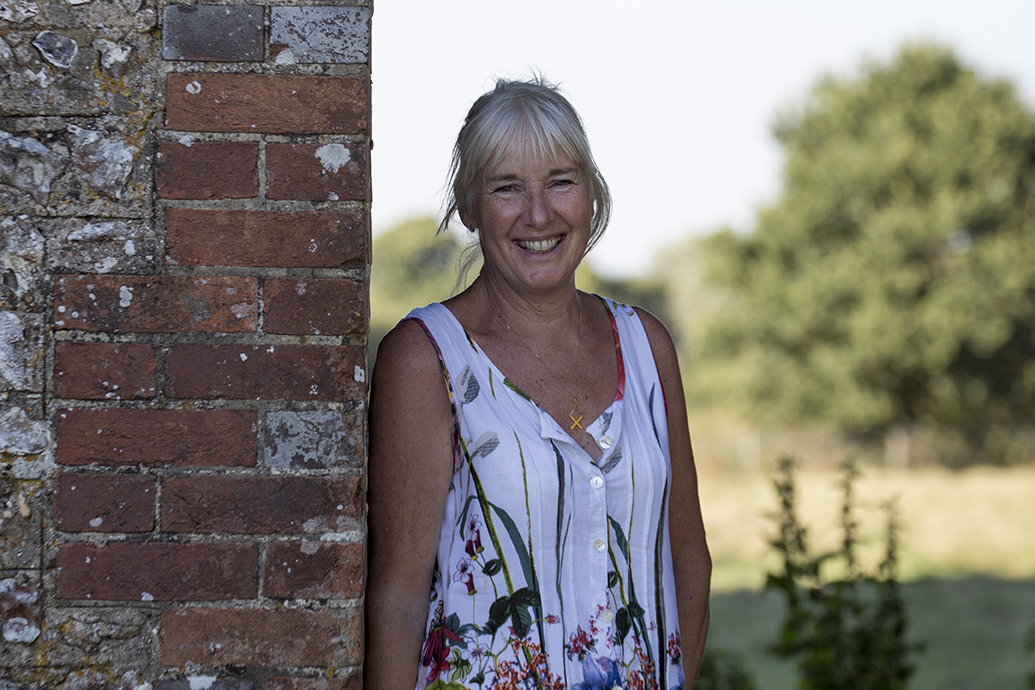
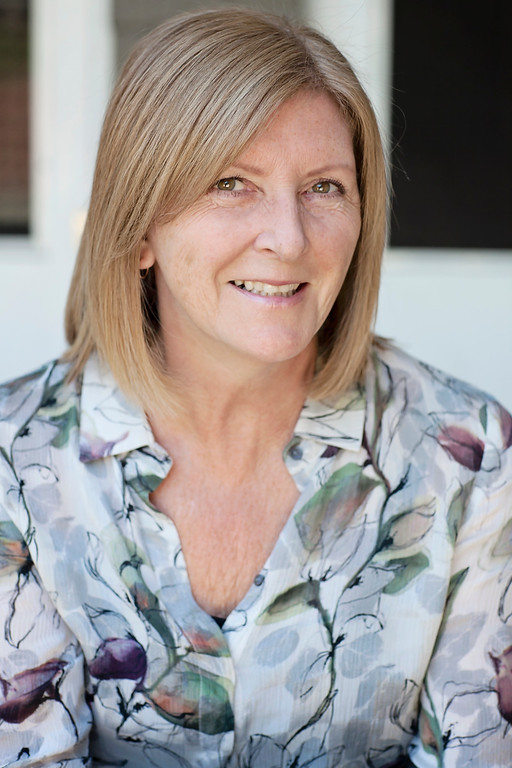
Morton has been reading and writing fiction for as long as she can remember, penning her first attempt at a novel aged fourteen. Her debut novel The Girl on the Beach was published after she won Choc Lit Publishing Search for a Star competition. She is now writing a series of novels based in her fictional seaside town of Borteen. Her second novel The Truth Lies Buried is to be followed by Christmas at Borteen Bay out on 13 November 2018.


You can catch up with Morton on her website www.mortonsgray.com on

Twitter – @MortonSGray, her Facebook page – Morton S. Gray Author – https://www.facebook.com/mortonsgray/ and

Instagram – https://www.instagram.com/morton_s_gray/
BUSINESS OF BOOKS: TAKE FOUR WRITERS – DOWN, DEEPER, DOWN – AND LIGHT

LUCY COLEMAN

It’s been an emotional month. With a close family member in ICU for over two weeks and still critical, our hearts have been breaking. In the middle of this my other half and I had stomach flu and then structural edits arrived on my desk. The bug cut our hospital vigil short, so we text and support the ‘supporters’ by phone.

Aside from passing on messages to the wider family, my way of coping is to write. I channelled all that emotional turmoil into my edits and then into my current work in progress. All we can do is pray for a good outcome and when you can’t physically be there to help, it’s important to keep busy.

Writing for me is escapism. But I don’t avoid the harsher side of life and most of my novels reflect the mixed bag fate dishes out. What I’ve learnt this month is that there is a lot of kindness and love in this world, and often it comes from strangers – nurses and doctors who are there when you most need them. It’s truly humbling and a remind of how precious life is.


CLAIRE DYER

And so I’ve been faced with something that can bring a chill to any author’s heart – the rewrite. I have written a novel. It has been seen by quite a few people and one of these people has suggested that it would be stronger, better, more commercial were I to … It’s quite a long list!

But rather than recoil, I find myself embracing the challenge. They’re right. The book will be stronger, better, more commercial if I make the suggested changes. The only problem is, can I? Not as in may I, or do I want to, but am I able to? It seems a huge task. Six strands need editing, all the possible knock-on effects of these edits need to be spotted to ensure consistency; I have to match the tone, voice, spirit of the original even though time has passed and other things have crowded into my mind.

And so I’m going in. Will let you know how I get on!

STOP PRESS: some weeks have passed and I think I’m done. The six strands have been buffed, honed, added to, had stuff deleted from and I’m exhausted. I’ve re-read the book what seems like a gazillion times. I’ve loved it and I’ve hated it. I’ve wept from despair, and also because the story has come from somewhere deep within where a lot of sadness is. It is a different beast from the novel I started two years ago and I too am altered. I hope we’ve both changed for the better, but only time will tell. I have certainly valued the experience in a bizarre sort of way. However, now it has to go off into the world and we all know what that means …!


JACKIE BALDWIN

There have been many highs in this writing year but this month has not been amongst them. I discovered that my lovely Golden Retriever, Poppy, who has just turned six, is terminally ill and not expected to be with us long. A real blow to us all. As a result, I don’t have much in the way of news as I have been staying close to home.

I have been tying myself into knots over the plot in my third book and may well have to abandon it completely and start again. I’ve been thinking about it so hard I might have broken my brain. This must be what writer’s block feels like, a creeping paralysis of creative thought. I have to believe that it will pass and the pieces will gradually fall into place.

I hope that by this time next month I will be writing up a storm again!


ANGELA PETCH

The mountainside is a picture of fiery golds and rich reds as we start to pack up our Italian house for winter. We might return for New Year, which is celebrated in Italy with delicious feasts. Maurice and I enjoyed a much-needed five-day break last week in the Abruzzo region, walking up the majestic Gran Sasso, visiting devastated hill-top towns in this earthquake area.  I have a fascination for ruins and they will feature in my third Tuscan novel, very much in the planning and research stages. While we were away, no writing was done. And that is good, but my mind was still absorbing sights, sounds and new ideas.

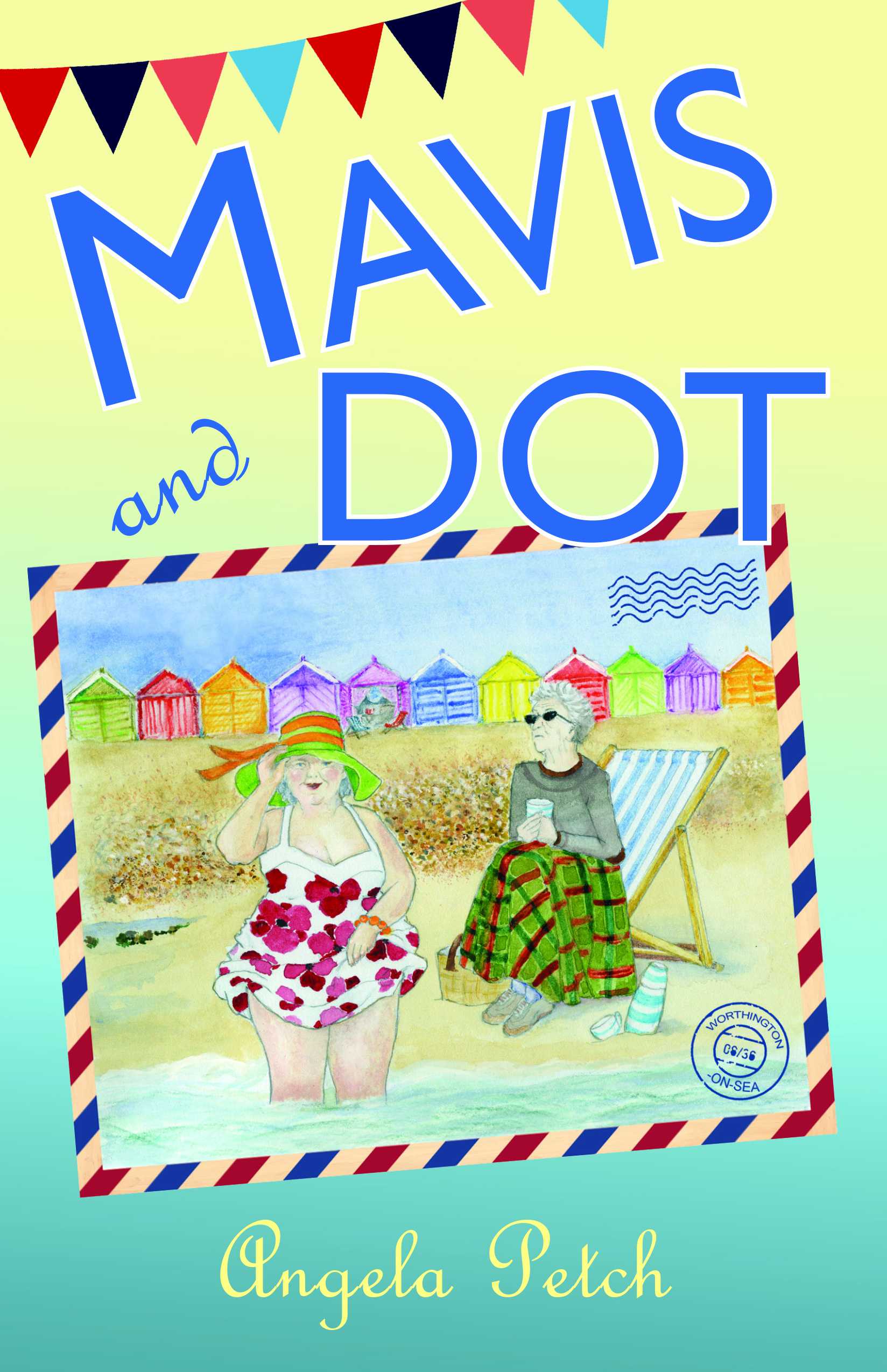
Mavis and Dot is going on a blog tour with Rachel’s Random Resources in mid-November, so I’ve been busy with interviews and making the final decision about the cover. I’m really pleased with it and I used a professional designer this time. Watch this space.


BUSINESS OF BOOKS: FELINES, FILMS AND FINESSING

If there’s one creative mountain that’s harder to climb than getting a book accepted by a publisher, it’s selling a screenplay to a film company. But stripped back to its most basic level you’re actually creating, and selling, the same thing – a story.

Of course I’d heard of novelists using screenplay techniques but I’d never given it serious thought until one day last summer when I was lazing in author Liz Fenwick’s gorgeous garden and she told me these were methods she used. Given how much I admire Liz’s work I quite literally sat up and took notice. And given how much of an evangelist for these skills she is, just a few hours later she sent me a reading list.

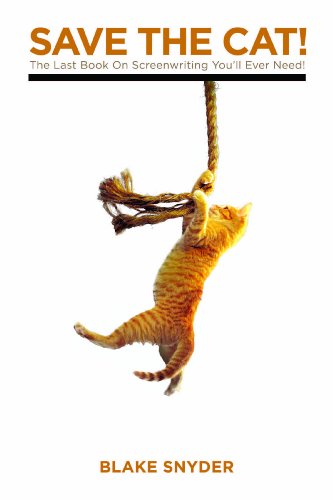
The first book on it has the unlikely title of Save the Cat and is written by Hollywood screenwriter Blake Snyder. While the title is intriguing the contents are a veritable bible and one or two areas in particular resonated with me. Especially as I’ve always struggled with what authors term ‘the elevator pitch’ and what Snyder calls ‘the log line.’

The log line’s job is to sell your screenplay – or your novel – in one or two sentences. I think we all know that. But Snyder digs down into what a great log line should be and stresses that you shouldn’t get too far into your opus (or indeed start it at all) until the log line has been pinned down, finessed, and tested. Once it has, it isn’t just a selling tool either – it becomes the starting point for developing your story.

The first question it needs to answer is ‘what is the book about?’ Go on, scribble it down. Just reducing it to a couple of sentences will most likely be a challenge. But honing it until you have the right selection of words takes much more skill and again Snyder gives us the tools: Does it hook the reader’s interest? Does it create a compelling mental picture? Is it easy to tell who the intended audience is? There’s a whole chapter on genre and categorising your story in film terms – which gives a very interesting perspective on classifying novels too.

After the ‘what’, comes the ‘who’. Who is the hero? And what is he or she up against? If that’s already clear from your log line, then great – but the chances are it won’t be, so out comes the red pen again. Snyder advises that at the very least you need to have an adjective to describe the hero, an adjective to describe the bad guy (in the widest possible use of the term), and to show the hero’s compelling goal – which has to be one the audience will identify with.

And once you have all that right there’s just one more tiny thing – the killer title. I didn’t say this was going to be easy, did I? Talking of killer titles, what exactly does Save the Cat mean? It refers to that small but important moment early in the story where the hero does something to make the audience love him or her – a very small point in the overall context of the book – but as titles go it certainly does its job.

Of course I’m skating over a great deal of detail here – my aim is to whet your appetite, not give a blow by blow account of the whole technique. There are so many valuable hints and tips between the pages of Save the Cat any writer who wants to perfect the log line would be wise to read it themselves.


BUSINESS OF BOOKS: TAKE FOUR WRITERS – CONNECTING, SIGNING, RETREATING

LUCY COLEMAN… CONNECTING

My second novel writing as Lucy Coleman for Aria Fiction is now staring back at me from my bookshelf. And I will admit that it’s still a huge thrill for me, even though it’s my thirteenth.

Snowflakes Over Holly Cove begins and ends at Christmas, but the year in between is an emotional rollercoaster.

The first reviews are in and one reviewer said it brought tears to her eyes. Why? Because of the mention of eggnog in one emotional scene.

In real life it’s the little memories that often attach themselves to the silliest of things. In this story, for the character Tia, it reminds her of her mother… and the sentiment and connection touched that reviewer’s heart, too.

An author can’t ask for any more than that. I’m feeling truly blessed and reminded why I write. And that is reader power. Reviews touch authors’ hearts, too!


ANGELA PETCH… SIGNING

Whoops! It’s been quite a month and I almost missed my Frost deadline. (Visions of ed, visor pulled down to cover glower, tapping fingers on her desk…sorry!)

I’m now officially a hybrid author. I can’t explain how happy I feel to have signed a two-book deal with the Bookouture “family”, as they describe their publishing team. My first novel is to be edited and reissued June 2019 and a new Tuscan novel, released April 2020. They have been understanding about deadlines. How lucky am I?

I’m exchanging ideas with my cover designer for “Mavis and Dot”, but as soon as I self-publish and launch on December 1st, then it is action stations with Bookouture. I’m so excited.

Other news: a successful first “Write Away in Tuscany” ended five days ago – exhausting but exhilarating. Eight writers travelled to our corner of Tuscany and we shared scrumptious Italian food and writing sessions. We are running it next year with modified content. Bring on 2019…


CLAIRE DYER… RETREATING

Last month I went on a writing retreat at Tŷ Newydd in North Wales (http://www.literaturewales.org/our-projects/ty-newydd/). It was the sixth time I’d spent time there, having previously attended both poetry and prose tutored workshops. This one was slightly different in that there was no formal element to the week. Our facilitator, Julia Forester, gently guided us, provided the chance to have one-on-one chats with her and ran a couple of sessions on submitting work and managing our time. The rest of the week was spent blissfully either working on our current projects, walking the footpath down to the beach, visiting local places of interest, chatting to one another over cups of tea or swimming in the sea. The food and company were both delicious.

My aim in going was to work on some poems I hope will form the basis of a new collection. The subject matter was hard and painful. In addition, my home life, rather than retreating to a safe distance and leaving me alone, intruded when both of my children had issues they wanted mum-input on and, seeing that being a mum is my main job and being a writer is my second job, I had to respond.

And what did this prove? We may go on retreat but we take our real lives with us. The writer’s life means we have to fit our writing in around other stuff and that this other stuff informs our writing. An ivory tower might sound a nice idea, but I think one would be both impractical and uninspiring!


JACKIE BALDWIN… DRAFTING

Hello again! Another busy month. I’ve been getting on with the first draft of book 3 in my DI Frank Farrell series. It always takes me a while to get into the rhythm of writing a new book but I’ve settled into it now and at the exciting stage where I don’t yet quite know what’s going to happen!

On 5th September, I was up in Edinburgh to read an extract from my work at’ Noir at the Bar.’ It was a criminally good night with a great variety of crime writers both published and unpublished.

This weekend I was at ‘Bloody Scotland’ in Stirling. It provides a great opportunity to catch up with old friends and make some new ones in the crime writing and crime reading fraternities. A particular highlight was the Pitch Perfect Session where eight writers have exactly three minutes to convince a panel of agents and publishers that they must read their book.

See you next month!

BUSINESS OF BOOKS: FIRST, LAST, EVERYTHING – FACT & FICTION AUTHOR ANYA ACRES

What was the first piece of writing advice you were given?

Well, that’s a very interesting question really, as my writing style is kind of self-taught. I write because I enjoy it. My mum kept all my old school books from the age of five, believe you me, there are a lot, and there are so many stories! I used to write and write and write! Anything from diaries, letters, postcards, children’s stories and young adult stories. My stories are never planned, and they usually ‘pop’ into my head when I’m asleep. I made the mistake once, of turning over, thinking I’d remember my ideas in the morning – I didn’t! I never made that mistake again! I guess, in answer to your question, is what my son was told at school, ‘write what you know’.


What is the most recent advice you gave, or were given?

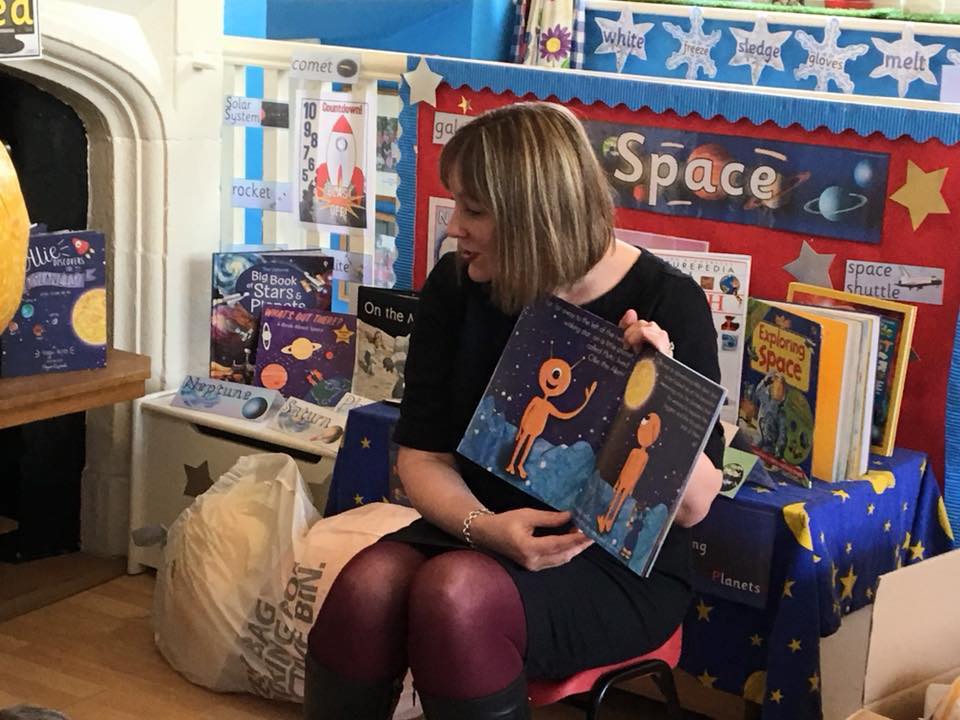
Since I self-published my first book, ‘Ollie Discovers the Planets’, I was told by a traditional-published author, to never pay a publisher, they should pay you! It was very wise advice, and I would never have entered into the world of self-publishing without it. It’s a wonderful world to be in, and I love marketing and promoting my own book. I have found within me, a confidence that I never knew I had! I provide author visits and Skype-chats to schools worldwide (Serbia, Australia and Qatar so far), and my book was only published in January of this year!


What piece of advice would you most like to pass on?

If you are a self-published author, I highly recommend that you market your book way in advance of its release date. Make a website (mine is www.olliediscovers.co.uk), enter the world of social media, approach bookshops and local newspapers, so even before the book is in your hand, people know about it, and are waiting to buy it. Approach book bloggers (some charge a small fee), asking if they’d mind reviewing your book. Don’t be afraid to give away free books, and I advise sending freebies to teachers & parents with lots of Twitter/Instagram/Facebook followers. It sounds a little contrived, but you are after all, giving away a free copy of your book! If people ‘like’ or ‘share’ your posts, be polite and thank them, as they’ll be more inclined to do it again! I could actually write a book on how to market your book on social media . . . maybe that should be my next book!!!!


Anya Acres is the author of ‘Ollie Discovers the Planets’. A book she scribbled down on paper 20 years ago, for a reception class during a teaching practice in Derbyshire. It is unique, as it is both ‘fact & fiction’, which is a great tool or ‘hook’ to start a curriculum topic with young children. After being made redundant from a teaching job she loved, in 2017, she hunted out her handwritten copy, and decided that it was a ‘now or never’ moment! With a huge amount of support from her husband and two young sons, Anya decided to pursue her dream; to be a children’s author.

‘Ollie Discovers the Dinosaurs’ will be released in the Autumn, and ‘Ollie Discovers the Arctic’ will be released in 2019.


BUSINESS OF BOOKS: DIGGING AROUND

Jane Cable leaves the comfort of her desk

Authors do many things in the name of research and some of them are definitely more fun than others. To be honest, most research these days is carried out hunched over a laptop, flicking from website to website, desperately trying not to be side-tracked. How historical novelists manage it I’ll never know, but I take my hat off to them.

The manuscript I’ve been struggling over for what feels like (and may even be) years has an archaeologist as its heroine. At the moment it’s undergoing a major, major rewrite – which started after a research visit to an antiques centre at a former RAF base – and Rachel’s job is actually less important, but I still wanted to know how it felt to be working in a trench.

Step in DigVentures. For those who don’t know it’s a social enterprise that designs and delivers collaborative archaeology projects using community involvement, crowd funding and digital technology to enable public participation at every level. Including with a trowel. Which is mighty unusual as volunteers at many other digs are restricted to moving barrow-loads of earth or washing finds.

My husband’s always been interested in archaeology so when the call went out on Facebook for volunteers for a dig on the edge of Bodmin Moor we signed up with alacrity. Just as well we did, because there were very few places available. With mounting excitement we read the brief about a Bronze Age/Iron Age settlement, bought ourselves lightweight gardening gloves and packed enough picnic food to last a week.

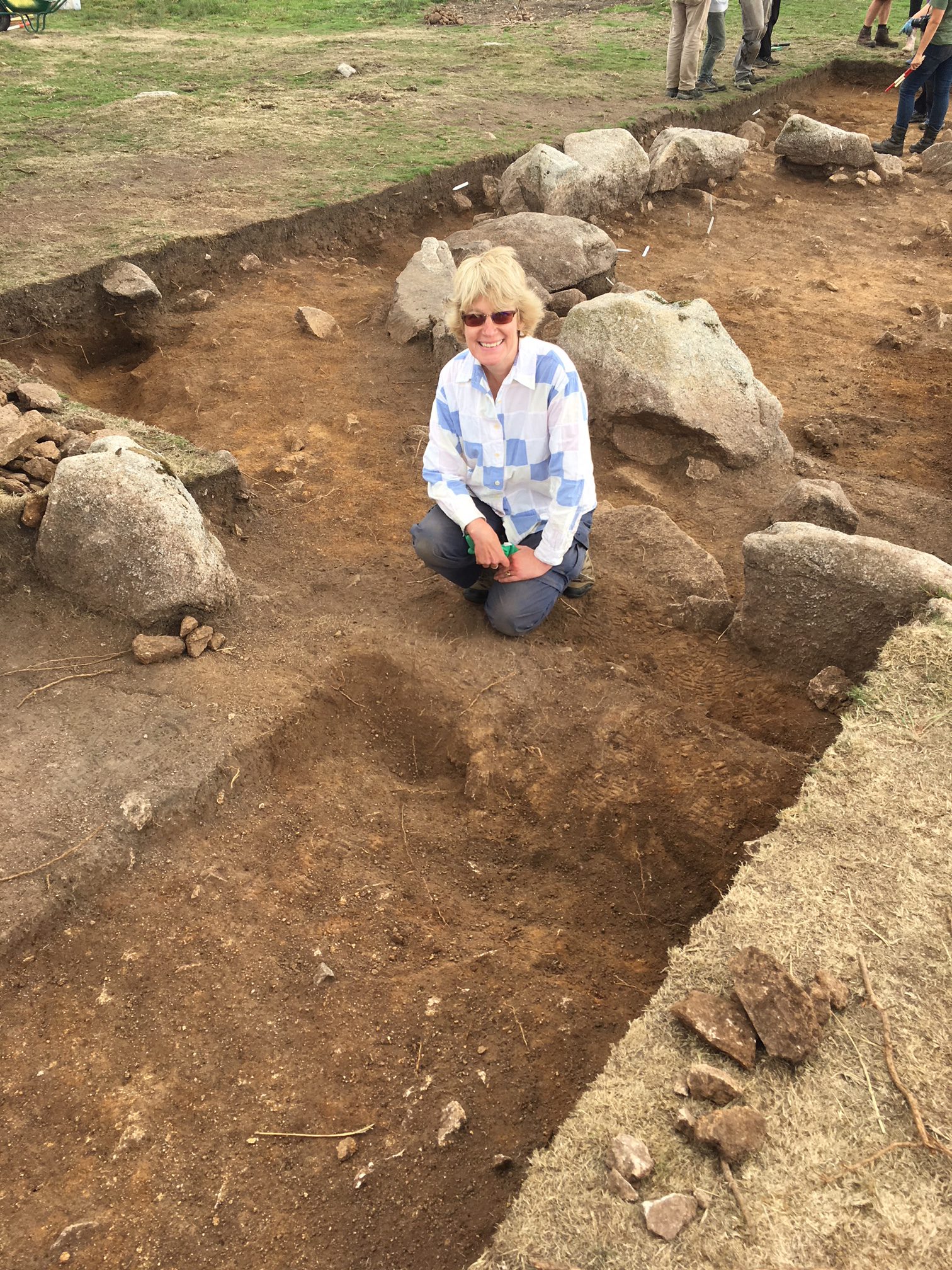
Our fellow diggers and the professional archaeologists were a friendly lot, and most of them had already been at St Neot for almost two weeks. We were coming in right at the end of things, so after a briefing we were taken to a trench and set to work cleaning a small section. Looking back this could have been a test just to make sure we weren’t too cack-handed – a real possibility in my case – then we were moved to our very own area.

This was exciting. Under the watchful eye of trench supervisor Indie and constant visits from Bronze Age specialist Ed we were to scrape through an unusual hard, grey deposit and collect it in bags to be sampled. Indie explained that back in the lab it would be separated and tested in the hope that particles of vegetation or valuable dating evidence would be found.

The area we were digging was part of the bank surrounding the settlement and had a large ditch on the outer side. Behind us in the main trench were the clear remains of a roundhouse, marked out by stones. The earth there was a completely different colour – the orangey-brown ‘natural’ that we would need to scrape down to find. We filled our three bags and the charcoal we kept coming across took me back to my mother taking the ashes from the fire out and spreading them on the garden. It gave me goosebumps that people could have been doing the very same thing for thousands of years.

I learnt a great deal about archaeology. As Ed told us, we went straight from level one to level five in one fell swoop. But what did I learn of value for my book? Tiny things, but important things. How the rain soaks through your gloves and your fingers chafe. Which parts of your body ache the most. The dust that fills your nose and coats your hair. So many things that will help to make Rachel real.

As I shared the experience on social media many friends expressed envious interest, but really, DigVentures makes it possible for anyone to join in. We’ll certainly be back again. And again. And again.

Find out more about DigVentures and St Neot here: https://digventures.com/st-neot/


BUSINESS OF BOOKS: FIRST, LAST, EVERYTHING – ROMANCE AUTHOR CASSANDRA GRAFTON

What was the first writing advice you were ever given?

If I think back to when I started to seriously consider writing full-length stories, the first piece of advice I recall was ‘just keep putting the words on the page’. After all, you can’t polish and edit a blank page, can you?

At the time, I’d only ever completed short stories, mostly co-written, for online communities. A solo writing project was a challenge in itself, but I didn’t really think of it as ‘writing a novel’ because of the serial nature of posting online.

It was the encouragement (and above advice) from those communities that helped me to get started, and it’s down to their on-going support and feedback that I managed to keep going, no matter what life threw at me. I just kept putting one word after the other, until eventually I’d finished telling the story I wanted to share.


Photo copyright is Adrea Scheidler Photography

What was the most recent writing advice you were given?

I follow a lot of writing blogs on Twitter, and many of them have wonderful snippets of advice, one of the most practical of which in recent months was about removing redundant words from your manuscript.

I discovered there were plenty of lists out there, once I’d put ‘redundant words in your novel’ into Google, and soon I was working my way through my extremely long manuscript and culling them (thank you, Word, for the Search and Replace function). In the end, nearly 10,000 redundant words sailed off into the blue yonder; not one of them was missed!

It turns out, however, that my biggest overuse of anything is not a specific word, but a punctuation mark. It was pointed out to me at a writing retreat last year that I need to ‘kill the exclamation mark.’ When I looked into it, I was appalled by how often I used them. I did, indeed, have a bit of a fetish going on. Hopefully, I’ve managed to keep them to a minimum in this blog post!


What is the piece of advice you’d most like to pass on?

There are variations on these words, but it boils down “don’t wait for your boat to come in; row out to meet it”.

It’s something I wish I’d taken on-board (if you’ll excuse the pun) earlier in my life. It can, of course, relate to all aspects of life, but with regard to my writing, it translates into this: Don’t let time slip away from you.

I’d wanted to write all my life, but always I made excuses: “no time, children to look after, piles of marking to get through, got to work late, too tired”. Even when the children were teenagers and didn’t need the same level of attention, even when I had an unexpected year of not having to work full time, always I seemed to have an excuse for actually sitting down and doing it.

I was 50 before the realisation struck that I needed to heed this advice – when it almost felt too late. I’d had a recent run-in with cancer, which led to a couple of rather unpleasant years, and as my milestone birthday approached, I started to re-evaluate my life. If I didn’t get my act together and produce a book sometime soon, perhaps I would never fulfil my lifelong dream?

It would be another year (2013) before I finally took the plunge into publishing my first novel. The story had been seven years in the making, for all the aforementioned reasons, but I did it.

It had still been a challenge. I was working full time, long hours, and any writing time was limited to weekends and holidays (thankfully I have a very patient and supportive husband, who would hoover around my chair at weekends as I sat at the computer, or read the paper in a pub when we were on holiday as I scribbled away at scenes in my notebook).

In more recent years, having moved to Switzerland and no longer having a day job, I have had the time to write, but still I procrastinate. My New Year’s Resolution this year was to treat my writing like a job, not a hobby, and I’m improving, but there’s a way to go yet.

So please don’t do as I do, do as I say: don’t let the time slip away from you!


Cassandra has published two historical romances and has co-written and published a contemporary cosy mystery/romance. She is currently working on a series of contemporary feel-good romances set in Cornwall. She loves traveling, reading, cats and dry wine and splits her time between Switzerland, where she lives with her husband, and England, where she lives with her characters.


https://cassandragrafton.com

BUSINESS OF BOOKS: SENIOR SERVICE

Jane Cable gives a talk at a local retirement community and finds the learning experience is mutual

It was Liz Fenwick who put me up to it. Since moving to Cornwall I’ve been lucky enough to fall in with a fabulous group of writers who give each other a great deal of support in every conceivable way.

When Liz told our little band she’d had a wonderful afternoon giving a talk at an independent living retirement community and they were looking for more speakers, I jumped at the chance. For two reasons, really; it was just down the road and Liz used those incredibly motivational words: “They give you cake – and they buy books.”

Luckily the talk was to be an informal one. I say luckily because I was also in the middle of preparing for an appearance at Helly’s International Festival with another of our happy Cornish band, historical fiction writer Victoria Cornwall. We’re tackling the serious subject of setting in novels and that’s required thinking, research – and rehearsal.

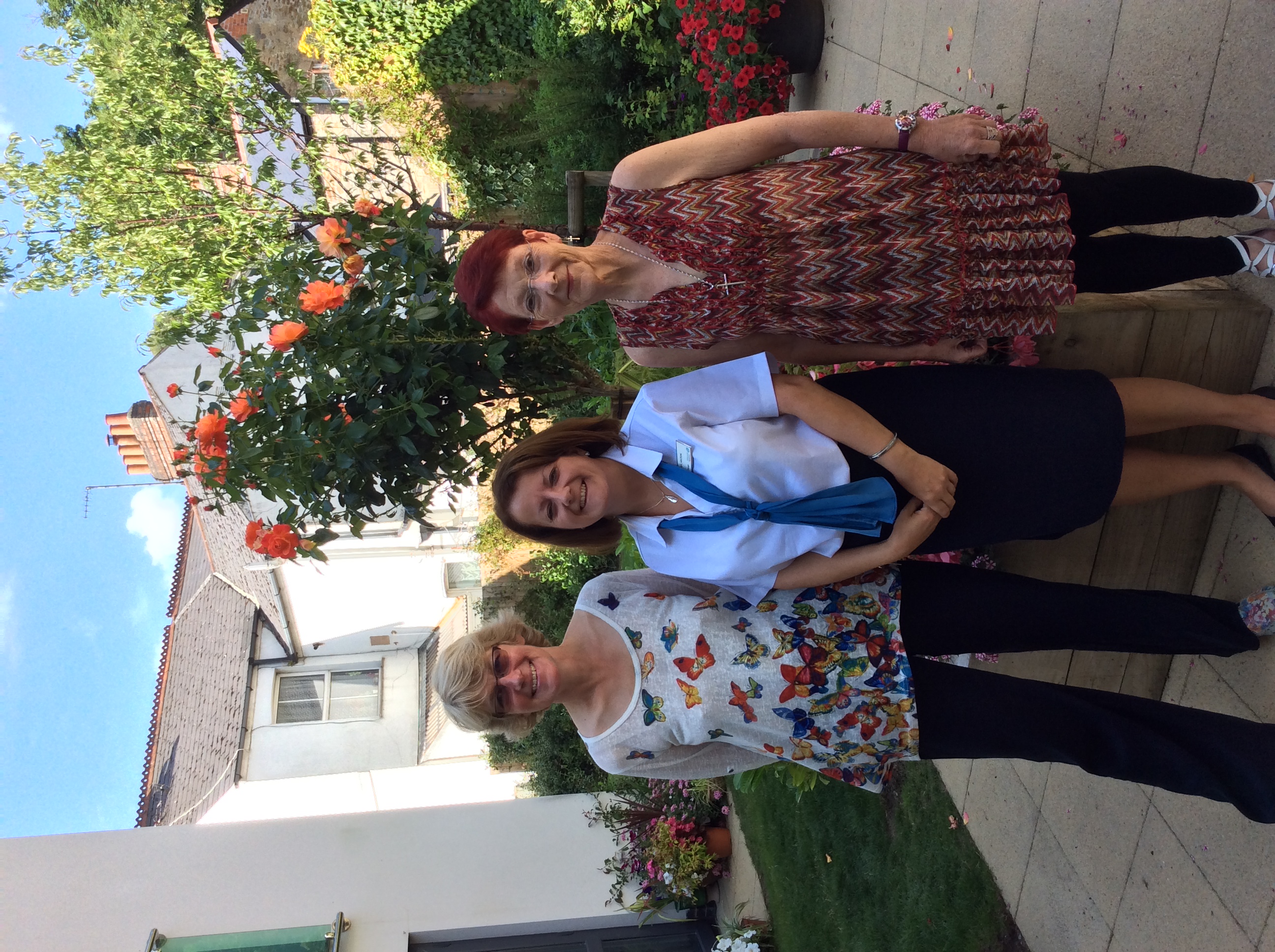
So on a Thursday afternoon a couple of weeks ago I pottered up the road with a few notes and a rucksack of books on my back. I arrived early and was welcomed by the book club organiser and the community manager and given a Jackanory (for those old enough to remember) style armchair in front of several rows of seats in the elegant dayroom. Slowly but surely the rows started to fill and looking around the room I wondered if I would be able to keep so many elderly people awake.

I needn’t have worried. After my brief introduction and a slightly stuttering start, the questions flowed. When did I write? What was my inspiration? What about editing? There was quite a lively discussion about the use of commas at one point – lively and well informed. These people were serious readers.

But when I mentioned I was researching World War 2 the tables turned and I was the one asking the questions. Some of the residents had very clear memories and two had actually been in Lincolnshire at the time – which made me very excited because it’s where I’m setting my book. Listening to their tales of watching for returning planes from Lincoln Castle, or visiting a cousin based at RAF Scampton, brought the war alive in the way no other research could have done.

This is a generation we’re on the verge of losing. Or if not losing, writing off as too geriatric to make a contribution. How very, very wrong. They were interesting, amusing and fun to be with. Not only do they want to read, but some of them want to write as well. Rather rashly I volunteered to help them start a creative writing group and there are already ten people signed up for the autumn. To be honest I’m feeling just a little out of my depth but I know if I go in with the attitude we’ll all learn from each other then we’ll have a fabulous time.

At the end of the talk I was given tea and the promised cake. Gluten free cake, which the community manager had gone to the trouble of buying specially. I spent so long chatting and signing books that I had a text from my husband asking where I was. I sold so many I had to go back the next day to fulfil the orders.

Since then I have persuaded three more of my Cornish writer friends to book themselves in and the book club calendar’s full until Christmas. And then, I hope they have a party. And I hope I’m invited!