Does Your Child Need Urgent Medical Attention? By Dr Kathleen Thompson


Healthy children, who have died following a short but severe infection have hit the news recently.

The problem is that young children can become sick within hours. Most recover equally quickly—but, despite best care, some don’t, particularly if they have meningitis or other overwhelming infection.

One year-old William Mead died of sepsis, apparently after ‘111’ staff didn’t appreciate how ill he had become. I won’t comment without knowing all the facts, except to say it can be difficult, sometimes even for experts, to assess whether a small child is seriously ill.

However, as an ex-paediatrician, I do have concerns about telephone diagnosis, whether the 111 service, swine-flu helplines, or GPs asking parents to hold the telephone over a child’s chest so they can hear their breathing (yes I have known this to happen). Professor Neena Modi, a senior paediatrician, has also publically voiced similar concerns recently.

Small children have an immature immune system, and consequently don’t react to, or show signs of, illness in the same way as adults. Whenever I was asked to see a sick child, my first concern was whether they needed immediate emergency treatment, or whether I could take my time, asking more questions and making a detailed examination. The signs in the Table would help me decide, and sometimes I just knew from experience.  I remember assessing a new-born baby, who simply wouldn’t stop crying. Something wasn’t right. We did some tests on the special baby unit—he had meningitis and needed urgent antibiotics. Happily he made a full recovery.

I am not suggesting that every crying child needs an urgent medical assessment—just that signs of illness in babies and toddlers can be subtle, and experience helps.

So how does a parent know whether to seek urgent medical help?
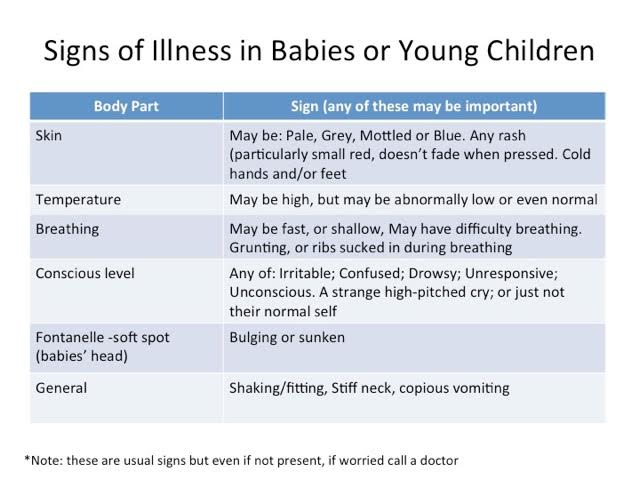
Does Your Child Need Urgent Medical Attention? signsofillnessinbabiesandchildren

The Table provides pointers, however, you know your child, and, even if they don’t shown any of these signs, if you are worried, you must insist they are seen by a doctor—better to ‘waste someone’s time’ than miss a serious infection. As a personal example, I was convinced one night that my young son had meningitis. I rushed him to A&E department, where he made a miraculous recovery, just before my colleague came in to examine him. Embarrassing, but I would do it again.

So if you are worried, what should you do?

Options include:

  • Phone your GP
  • Phone 111 and ask to see a doctor that day (or within the hour if you are really worried)
  • Go to your local A&E department (check first that it is open).

If all else fails, and your child is getting worse, dial 999 for an ambulance.

Although it is important that you are aware of these signs and what to do, please do remember, though, that overwhelming childhood infections are relatively rare. Most infections are not serious, and most times your child will be dancing around the next day.

By Dr K Thompson, author of From Both Ends of the Stethoscope: Getting through breast cancer – by a doctor who knows

http://www.amazon.co.uk/dp/B01A7DM42Q

Further information:

http://www.nhs.uk/Conditions/pregnancy-and-baby/Pages/spotting-signs-serious-illness.aspx

http://www.news-medical.net/news/20120704/Signs-that-a-child-is-seriously-ill-Interview-with-Professor-Middleton.aspx

Note: These articles express personal views. No warranty is made as to the accuracy or completeness of information given and you should always consult a doctor if you need medical advice.
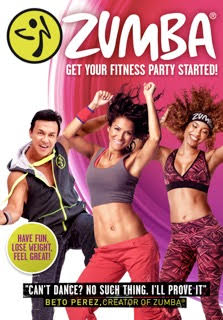


Zumba DVD Review: Get Your Fitness Party Started + 2 Copies to Giveaway!

Zumba DVD Review Get Your Fitness Party Started- 2 Copies to Giveaway!I have been a fan of Zumba for a while now. I even have the Zumba video game for the Wii. This DVD is just as fun. It is suitable for beginners or those who have done Zumba for a while. There is a step-by-step guide where you can learn the basics of the four core rhythms, an easy-to-follow class and then an intense, high calorie-busting routine which has super cardio bursts which are optional. The great thing about this DVD is that you can go at your own pace and it’s fun. Rare for a workout. We have two copies to giveaway.

We have two copies to giveaway. To be in with the chance of winning this fantastic prize, follow @Frostmag on Twitter or Instagram, or like us on Facebook. Alternatively, sign up to our newsletter. Or subscribe to Frost Magazine TV on YouTube here: http://t.co/9etf8j0kkz.Then comment below saying what you did or email frostmagazine@gmail.com Competition finishes end of March.

Out to own now on DVD and Digital HD Zumba® is your chance to join the dance-fitness revolution that has changed the way we “workout” forever. It’s fun, effective and best of all is made for everyone.

Regardless of your ability and whether or not you have previously tried Zumba® this is the product for you that’s guaranteed to get you dancing! Over 15 million people from all around the world have joined the calorie-burning dance fitness party and achieved amazing results – and now it’s your turn.

Featuring three easy-to-follow dance-fitness workouts, you can learn from the creator of the Zumba® fitness program himself, Beto Perez, as he takes you through the essential moves to get you dancing yourself into shape.

Zumba® is perfect for everybody and every body. It takes the ‘work’ out of workout by mixing low-intensity and high-intensity moves for an interval-style, calorie-burning dance fitness party. Zumba® combines all the elements of fitness – cardio, muscle conditioning, balance and flexibility and boosted energy. As the Latin rhythms take over, you will quickly see why Zumba® is often called exercise in disguise.

Zumba DVD Review Get Your Fitness Party Started- 2 Copies to Giveaway!1

EXERCISE BREAKDOWN: THREE EASY-TO-FOLLOW DANCE FITNESS WORKOUTS

STEP-BY-STEP
Learn the basic steps of the 4 core rhythms found in a Zumba® class. (30 mins runtime)

DANCE, DANCE, DANCE!
Put those new moves to work as you rock out in this easy-to-follow class. (30 mins runtime)

SUPER CARDIO DANCE PARTY
Get a total body rush with this intense, high calorie-blasting workout with super cardio bursts in every routine. (55 mins runtime)

ZUMBA DVD PRODUCT DETAILS

Release date:               Out now
RRP:                               £19.99
Discs:                             1
CERT:                             Exempt
Cat No:                          8306280
Barcode:                       50530-8306280-4
Running Time:             1 hour 55 minutes


Power through the New Year with Whitworths Shots

12509320_983654521694360_6075094379455575424_n

So January’s finally over and how many of those resolutions have you stuck to thus far? In a study conducted by leading healthy snack brand Whitworths, nearly 10 million Brits wave goodbye to their diet plans as we enter into the month of February due to faltering willpower. So what is the solution and how do we claw back our start of year “New Year, New Me” mindset?

Frost had the pleasure of experiencing a workout of a very different kind hosted by the brains behind Whitworths called The Willpower Workout. The workout is the foundations of what will help us to turn our healthy eating patterns into habits. So why do so many of us struggle to keep and maintain healthy eating patterns? The study showed that the population is set to lose willpower due to things like boredom of healthy food, with 26% of us claiming a lack of low calorie snacks are easily available, 19% feeling down about the bad weather and 9% of us a lack of sleep Karen Cox, Brand Controller at Whitworths comments; “As a brand that promotes healthy snacking, we believe that working on maintaining willpower is the key to succeeding in losing weight. Our ‘Willpower Workout’, which launched this month, is a little different to classes you’ll find in your local gym – featuring experts in the fields of hypnotherapy and sleep therapy as well as fitness and nutrition.”  

Want to have a go…? Check out this video to try the very first and exclusive Willpower Workout.

So who are Whitworths? They are the brain-child of the award-winning shots range, not the alcoholic kind ahem, but the kind that will give you a satisfying and healthy snack boost throughout your day. In this day and age where the demand for healthy-snacks is through the roof, Whitworths are committed to providing us with something a lot tastier than your average rice cake or salad. Whitworths Shots have it all covered with eight incredible flavours to choose from;

Berry and White Chocolate Shot: An indulgent mix of cranberries, extra juicy, plump and large Chilean flame raisins and creamy white chocolate pieces (93 calories per pack)

Toffee Pecan Shot: A sweet and satisfying collection of juicy sultanas, dried chopped dates, toffee pieces and crunchy pecan nuts (99 calories per pack)

Fruity Biscuit Shot: A fruity blend of sunshine sultanas, cranberries and rich white chocolate-coated shortcake biscuits (93 calories per pack)

Orange and Chocolate Seed Shot: A classic mix of orange flavour cranberries, golden, succulent raisins, milk chocolate-coated and natural pumpkin seeds (95 calories per pack)

Raisin and Chocolate Shot: Plump golden and crimson raisins paired with rich dark chocolate balls make this the perfect simple-but-satisfying treat (91 calories per pack)

Blueberry and Seed Shot: A delicious juicy jumble of raisins, pumpkin seeds, yogurt-coated sunflower seeds and dried blueberries (98 calories per pack)

Cranberry and Almond Shot: A super-saintly mix of juicy, succulent crimson raisins, little jewel cranberries and toasted, crunchy almond slices with no added refined sugar (97 calories per pack)

Apricot and Seed Shot: A ‘clean eating’ blend of chopped, tender apricots, tangy cranberries, pumpkin seeds and sunflower seeds with no added refined sugar (88 calories per pack)

12615299_990037541056058_5404995075360575477_o

All at under 100 Cals per shot. So turn your healthy eating patterns into habits with Whitworths Willpower Workouts and let us know how you get on. Remember, it only takes 21 days to make a habit.

Shots are available now in Tesco, Asda, Sainsbury’s, Superdrug and WHSmith from 49p per pack.

https://www.facebook.com/WhitworthsUK/
www.whitworths.co.uk

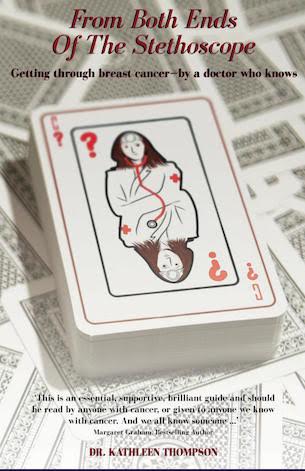
From Both Ends Of The Stethoscope by Dr. Kathleen Thompson

Review by Margaret Graham

From Both Ends Of The Stethoscope by Dr. Kathleen Thompson book review, health, breast cancer,

Many of you will be familiar with Frost Magazine’s Dr Kathleen Thompson’s regular health features, which are topical, succinct accessible and helpful.


It is no surprise, therefore, that Dr Kathleen Thompson brings just the same skills to From Both Ends Of The Stethoscope – Getting through breast cancer – by a doctor who knows.


This guide should be read by anyone with cancer, or given to anyone we know with the disease. Not only that, it should be read by relatives who are suddenly thrust into a unexpected supportive role, which leaves them as confused and upset as the patient.


In the guide, Dr Kathleen Thompson has the courage to use her personal experiences of breast cancer to explore the situation. She acknowledges not only her reluctance to face up to the symptoms, but her initial fear and confusion as she adjusted to this change in her fortunes.

As a medical insider, she reflects and applies her understanding of the medical procedures brought to bear to counteract the progress of the disease. She suggests the questions patients could, or perhaps should ask. She explains the possible treatments, (remember, that knowledge is power).


This is the key to the guide, it seemed to me: it is important for the patient to take control of the situation, and for the relatives to support this stance. To control a situation you need education because education leads to knowledge, which leads to power. Here I must acknowledge the fantastic Andy McNabb, who made this suggestion in a talk he gave. I thought it profound, and use it often.


Indeed, everyone should keep it as a mantra.


I loved, particularly,  the chapter on how patients manipulate the staff to achieve, or not, the results they require – read it, learn, and laugh.


Sensibly laid out, each chapter is easy to navigate. In other words, it won’t be too much or too difficult for those under stress.


Importantly, the author explains medical research, and how to assess the credibility of the numerous cancer treatment claims, and what we can all do to protect ourselves from cancer.


This is an important book, in either e-book or paperback.


Published by Faito Books it is available on Amazon.co.uk at £12.99


http://www.amazon.co.uk/dp/0993508308


Cholesterol Egg-splained by Dr Kathleen Thompson

egg-24404_640

When I was a child, eggs were definitely good for us – We were encouraged to ‘go to work on an egg’ and boiled eggs with runny yolks and toast soldiers were a healthy meal.

Then in the 1970s everything changed. We were warned that eggs raised blood cholesterol. This caused atherosclerotic plaques (fatty deposits), which narrowed our arteries and reduced blood flow, resulting in heart attacks and strokes.

Cholesterol Egg-splained by Dr Kathleen Thompson

Overnight the egg was recast from hero to villain.

These changes were based on some small studies of animals which were fed high-cholesterol diets, plus large trials involving people who regularly ate cholesterol-rich foods such as eggs.

Forty-years on, we understand that the conclusions reached were flawed.

Dietary studies are always difficult. It is relatively easy to compare a group of patients who are given a new drug with a group who aren’t. In contrast, one can hardly make a group of people eat copious daily eggs for several years, to see whether they suffer more heart attacks than people who don’t.

So, usually people with a certain eating pattern of interest (eg high egg consumption) are followed, and their rates of disease are compared to those with different eating patterns.

However, confounding factors can influence these results. The people who ate lots of eggs in the cholesterol studies often also consumed more saturated fats and trans fats too, in red and processed meat. Other important factors which can affect blood cholesterol, such as physical activity and exercise, were also different between the two groups.

Consequently, eggs were wrongly blamed for blood cholesterol increases.

One should always be wary of facts based on research. Studies are very powerful tools, and numerous important advances have resulted, but the accuracy of data is dependent on the design of the study and interpretation of the results, and can be misleading.

The reality for cholesterol is more complicated than people thought. Our body makes most of our cholesterol itself. Food sources only contribute slightly in most people. Even then, eating eggs raises (protective) high density lipoprotein (HDL) cholesterol, rather than the harmful low density lipopoprotein (LDL) type.

Diabetics handle cholesterol differently, and some people are sensitive to cholesterol. These, in addition to people with familial hypercholesterolaemia (an inherited condition) may need to limit dietary intake.

For most though, blood cholesterol is best controlled with exercise, not smoking, weight control and avoiding saturated and trans fats.

Eggs are an excellent food source. Egg protein provides all the amino acids needed to build healthy muscle. The fat in eggs is mainly monosaturated (44%) and polysaturated (11%). They provide vitamin D and other important nutrients and a medium egg only contains 80 calories.

Free-range chickens can eat worms, insects and other natural foods, which could theoretically improve the quality of their eggs, but all eggs are good.

So, why not go to work on one?

Further Information and References:

http://www.bmj.com/content/346/bmj.e8539

http://www.webmd.com/heart-disease/guide/heart-disease-lower-cholesterol-risk

Note: These articles express personal views. No warranty is made as to the accuracy or completeness of information given and you should always consult a doctor if you need medical advice


Hocus Pocus or an underexploited resource? By Abbigail Langstone-Wring

By Margaret Grham

Hocus Pocus or an underexploited resource? By Abbigail Langstone-

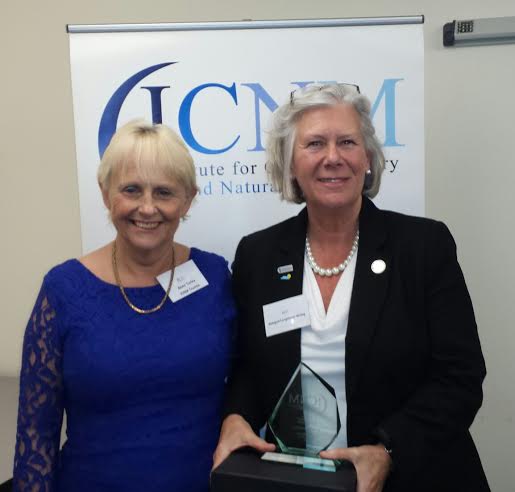
Frost Magazine is delighted to announced that Abbigail Langstone-Wring , our regular Complementary Practioner contributor, has been presented with an award in the “Best Complementary Practitioner “ category of the Institute of Complementary and Natural Medicine 2015 Awards.   Bravo, bravo,

A COMPLEMENTARY PRACTICE.
by Abbigail Langstone- Wring.  BSc   SBRCP  MAR.   Director  ICR.

Hocus Pocus or an underexploited resource?  By Abbigail Langstone

As a Complementary Practitioner celebrating twenty-five years in professional practice I am still amazed by the positive feedback of the beneficial effects of the therapies I deliver. None more so than the recently gathered information from a Clinical Reflexology  project that I have been working on since Nov 2014.

The aim of the project, as put forward  by the Lead Cancer Nurse Specialist, was to introduce Complementary Therapies into a Cancer Ward and Chemotherapy Unit at the local NHS Hospital with a view to reduce patient anxiety to enhance the patient experience.
I formally declared my interest and snet off a detailed CV that contained evidence of my range of skills and  techniques and specialist work experience gained through being a local hospice volunteer in palliative care.  A funder for the project was already in place and with their approval a hospital interview was arranged with the result of an honorary contract being granted to me.
I must just stop and say that not only was I honoured and proud, but also momentarily overwhelmed at the possible importance of this responsibility.

Hocus Pocus or an underexploited resource? By Abbigail Langstone-reflexology

I began the project by looking for information of past studies and research published in journals on the role of Complementary Therapies in stress management. After a great deal of thought I settled with the decision to trial Clinical Reflexology.

Why?  Primarily for it’s mode of action.

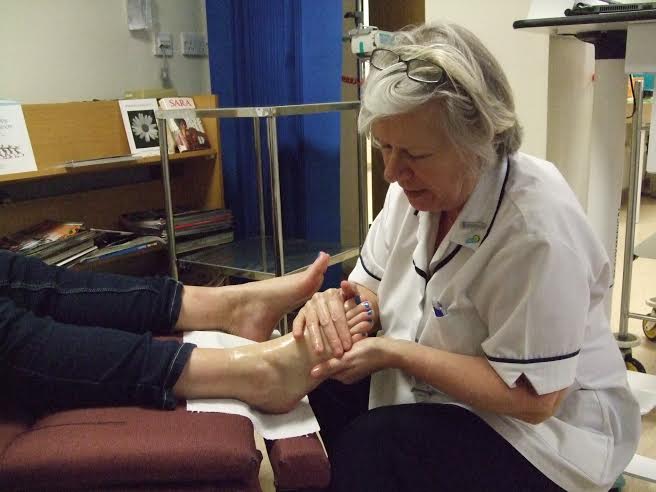
For those not aware of what Clinical Reflexology is or how it works. Briefly, it is the application of pressure via the fingers or thumbs to mapped areas on the feet, hand or ears that correspond to organs and systems of the body. Having a close affinity to Acupuncture/ Acupressure, it may calm and ease tension throughout the nervous system, encouraging relaxation throughout the body. Given the specialist patient group my treatments were modified to be sympathetic to the established side effects of their individual medical treatment.
Secondly, suitability of delivery. Choosing to work via the feet, it would enable me to access patients on the ward in their beds, or chairs and on the chemotherapy unit in their reclining chairs whilst receiving their chemotherapy treatment. Also, it would be the least obtrusive, offering no disruption to the staff and the everyday running of a busy ward and unit.
To enable me to asses the effectiveness of my treatments I collected data via a simple evaluation tool. At the end of the year ( November ) I will have completed 300 treatments. The feedback from patients and staff has been very positive. I am busy compiling a final report but the evidence is indicating  an average  drop of between 2-4  points in stress levels following my treatment.
Due to these positive findings, the good news is that I have been successful in acquiring funding to extend and expand the project into 2016/7.
 

Plantar Fasciitis by Dr Kathleen Thompson

With all those modern-day labour-saving devices, can we put our feet up and enjoy life? No, we are told to shed our sedentary life-style and get fit. But at what cost?

Having spent many Sunday afternoons, patching up sports injuries in A&E departments, the price often seems high.

Besides acute injuries acquired on rugby pitches or tennis courts, our new-found fitness enthusiasm can have more insidious effects, particularly if we dash out, after sitting at a computer for eight hours, to pound the tarmac in our new go-faster runners. We often forget to allow our bodies to gradually adjust and strengthen, pushing ourselves to train too fast and for too long.

This can all take its toll on our fascia. Which is …?

Fascia is an unsung hero. Much of our body is held together by fascia—fibrous sheets and cords under skin, around muscles and organs, forming a framework and providing structure.

Normally it has a smooth surface, allowing muscles to glide over each other. However if strained, it becomes sticky, lumpy and tight. That’s when we start to notice it.

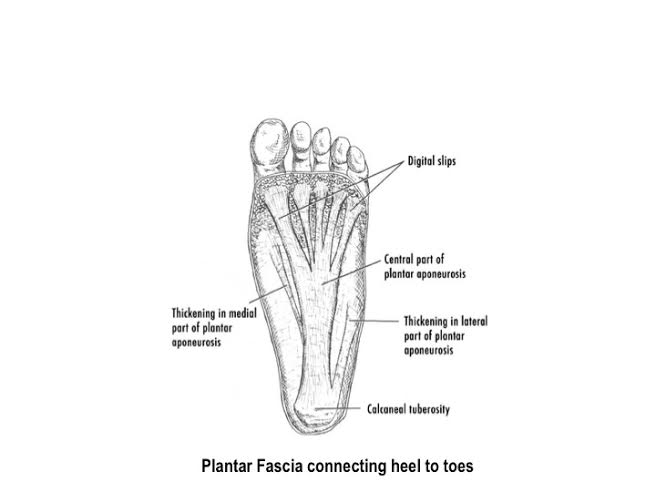
The plantar fascia lies underneath our soles, connecting our heel bone to our toes, and supporting our foot arch. Plantar Fasciitis by Dr Kathleen Thompson3

We usually neglect our poor feet, which carry our weight and absorb intense and rapidly changing forces during many sports.  The plantar fascia struggles to support and maintain foot shape during these activities, but if it is strained, it develops small tears and becomes inflamed.

The first sign is pain under our heel, which, counter-intuitively, is usually worse on getting out of bed, and paradoxically improves when warmed up by exercise. However don’t be fooled. You need to rest your foot to recover. If you don’t you could have chronic problems.

It is most frequent in women, aged 40-60 years, and is induced by long-distance running, walking or dancing,
 obesity and occupations involving standing or walking.

Importantly, the root cause may be elsewhere in the leg, the plantar fasciitis being a manifestation of poor biomechanics and abnormal walking/running movement.

Besides resting, anti-inflammatories, such as ibuprofen help. Most people recommend stretching the plantar fascia, and, importantly, also the Achilles tendon and the calf, as tightness in these may aggravate the plantar fascia. Night splints can maintain stretching whilst you sleep. Others advise against stretching the fascia itself whilst it is inflamed.

Ice massage is useful, for example, rolling your foot on a frozen orange.  The massage is quite painful, and the ice has a numbing effect. Personally, I recommend buying a quarter bottle of Prosecco. Drink the contents, half-fill with water and freeze, then roll your sole on the frozen bottle (the Prosecco takes your mind off the pain).

Shoe arch supports ease the fascia, or your therapist may use strapping.

The fasciitis will eventually settle, but may take up to two years. Steroid injections, give temporary relief but weaken the fascia in the long-term.

So what inspired me to write about this? Let’s just say, I’m rolling my foot on a frozen Prosecco bottle as I write.

Further Information and References:

http://www.mayoclinic.org/diseases-conditions/plantar-fasciitis/basics/definition/con-20025664

http://www.runnersworld.com/tag/plantar-fasciitis

http://www.kttape.com/instructions/plantar-fasciitis/

Note: These articles express personal views. No warranty is made as to the accuracy or completeness of information given and you should always consult a doctor if you need medical advice


Women ‘Three Times More Likely to die of Heart Disease than Breast Cancer’

fitness-get healthyCardiovascular disease kills as many women in the UK as it does men, accounting for a combined total of 155,000 deaths each year or one death every three minutes.

More than 30,000 women die from coronary heart disease in the UK every year with over 700,000 women living with the consequences of heart disease and stroke, according to research published by The British Heart Foundation ahead of World Heart Day on 29th September.

World Heart Day is organised by the World Heart Federation and aims to raise awareness of heart disease through education, advocacy and research. The aim of World Heart Day is to create healthy heart environments and encourage individuals to make healthy heart choices wherever they live, work and play.

This year, World Heart Day will be focusing on women’s heart health, as despite the shocking statistics above, The British Heart Foundation claim that women often wait longer then men before calling 999 after experiencing symptoms of a heart attack. Often, this is due to women being less likely to recognise the symptoms of a heart attack or being reluctant to cause a fuss. As Dr Cliff Bucknall, Consultant Cardiologist at London Bridge Hospital, notes,

“Many women believe that heart disease is a condition that only affects men. This is simply not true and as a result, women are less likely to be aware of the associated risks, particularly, around heart disease and contraception.” 

Dr Bucknall states that for most women taking oral contraception, or Evorel HRT patches, there is a very low risk of experiencing a heart attack. However, this does rise with age as the risk of having a heart attack rises significantly following the menopause. Dr Bucknall comments:

“There are different types of hormonal contraception which can have different effects on the formation of blood clots and potential heart attacks. Consequently, it is extremely important to discuss with your healthcare provider the birth control options that carry the least risk for you.”

Also, Dr Bucknall dispels the myth that Hormone Replacement Therapy (HRT) medication protects women against heart disease. He states,

“HRT will help to relieve menopausal hot flushes and night sweats but don’t expect it to help your heart. Recent research now suggests that HRT isn’t heart protective and, as with all drug treatments there are potential side effects.” 

For women who are worried about their heart health, Dr Bucknall shares the following advice:

“There are a number of simple self-help actions that women can take to reduce their risk of heart disease. These include, giving up smoking, maintaining a healthy weight and undertaking more physical activity.”