SISTER SCRIBES READING ROUND UP: JANUARY


Jane:

I’m the first to admit I’m not the greatest reader. It’s not that I don’t want to be – I love reading – but in recent years time has been my enemy. In 2019 that is set to change as I kick my other business commitments into touch to become a full time writer. Surely there will be time for reading as well?

Many of the books I read at the moment are either for research purposes or to help out other authors, mainly so I can give reviews. I used to laugh at my father for reading only books by people he knew, but now I understand.
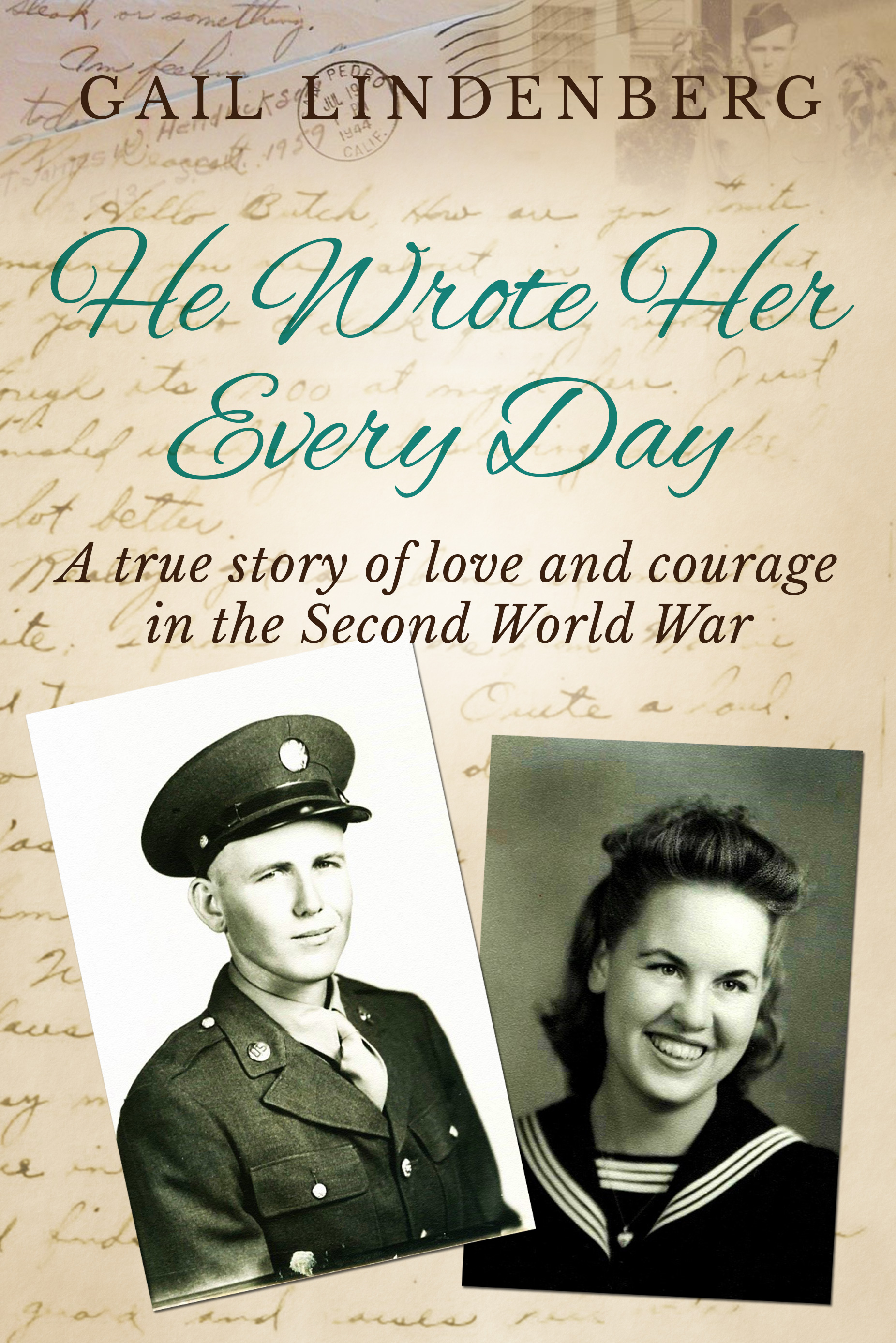
First off the blocks was Sapere author Gail Lindenberg’s He Wrote Her Every Day. It’s the story of her GI father’s Second World War, told mainly through his letters, and I chose it partly for research, partly so I could review it and partly because I knew I would enjoy it.

It was a fascinating insight into the life of an American soldier, both training before traveling to Europe and in the final push across Belgium and Germany. Because it was based on Jim’s letters home there are no gory details, but it’s an accurate historical account of one soldier’s war as well as the love story of the early days of his marriage.

With broadening my horizons in mind I’ve joined a book club at my local pub. At my first meeting we spent most of the time chatting about life and books in general, rather than about Wolf Hall, which had been their book for November/December. Very few people had managed to finish it, not because of its quality, but because of its length. I think we were all rather relieved that January’s book was a slim volume, My Uncle Silas, by HE Bates. Although beautifully written I found it rather dated for modern tastes and I’ll be interested to hear what the others make of it.


Kitty:

I always have a huge pile of books on the go at the same time, so my flittergibbet butterfly mind always has something to keep it hooked. At the start of this month I promised myself that as well as reading copious amounts of romantic comedies, which are always a pleasure but also help me keep apace of the market, I would begin to revisit some of the books I loved as an adolescent and revel in the stories that helped shape my notions of romance.
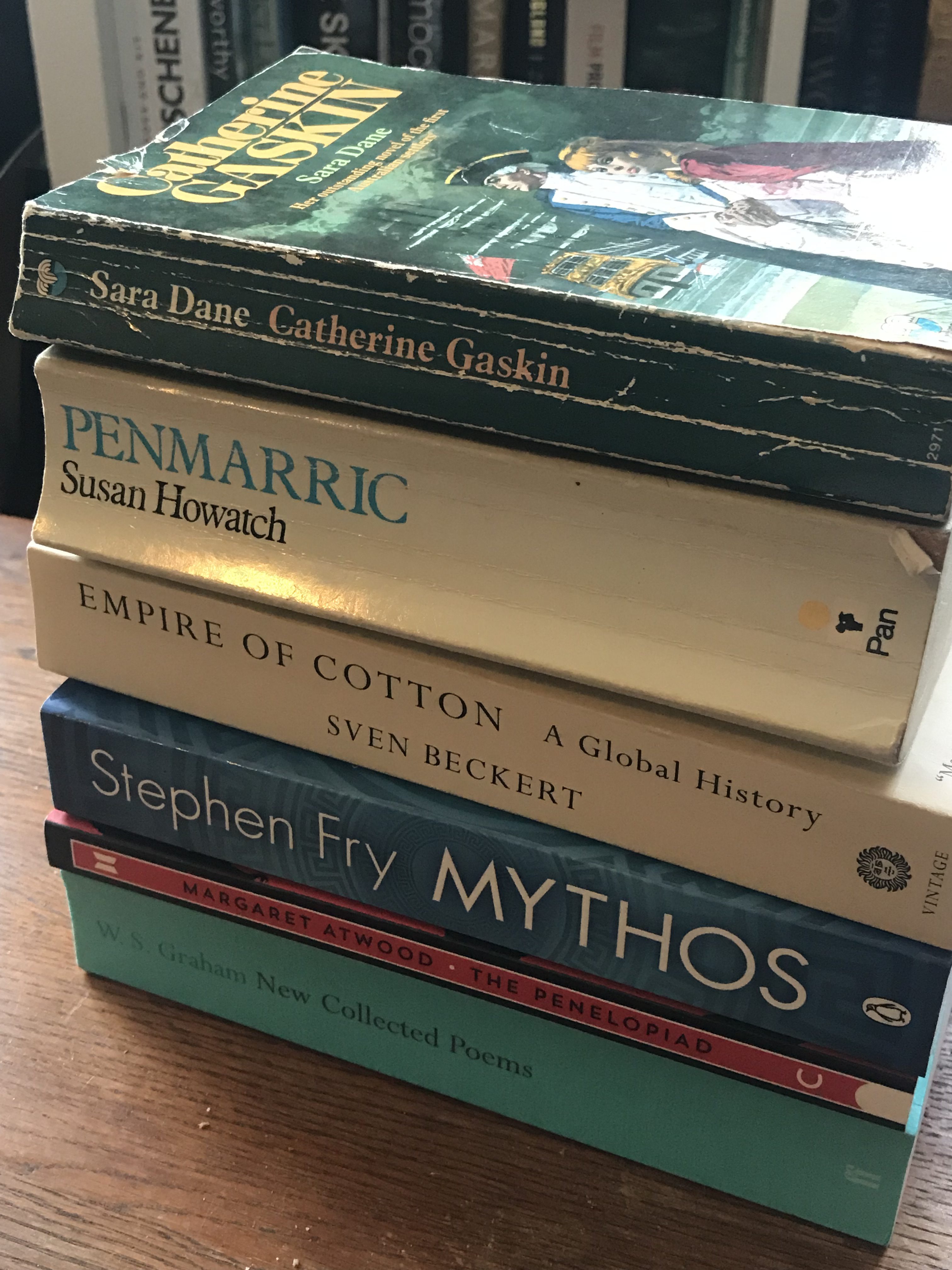
I’m pleased I’m doing it and I’m loving it, although some of those epic sagas I used to devour very much reflect the time and attitudes of when they were published. I raced through Hardacre by C S Skelton and adored it as much as I ever did and am currently half way through Penmarric by Susan Howatch which is being remade for television as I type and is chock full of dark brooding Cornish heroes that probably deserve to be locked up!

I’ve just finished Margaret James’ new thriller, The Final Reckoning which had a twist I didn’t see coming at all and The Wedding Shop on Wexley Street which was my first by Rachel Dove but won’t be my last, made me roar with laughter and was exactly my kind of humour. I’ve also just finished Sophie Duffy’s Betsy and Lilibet which is a perfect example of her feelgood women’s fiction which always leave me warm and smooshy on the inside. And on a more serious note, I’ve started reading Empire of CottonA global history by Sven Beckert which is a non-fiction book all about, obviously, the cotton trade and appeals to my inner history geek. It’s been a busy old month.
 

BUSINESS OF BOOKS: FIRST, LAST, EVERYTHING – WRITER CLARE SWATMAN

Clare Swatman spent almost 20 years working in women’s weekly magazines. Her debut novel Before You Go was published last year, and her second, The Mother’s Secret, is published by Pan Macmillan on 22 February. She’s currently writing her third novel.

What was the first writing advice you were ever given?

‘Write about what you know’ is the advice most people give, and I was no exception. But for me it really did ring true, especially the first time round. When I started writing Before You Go it was with the idea that I just wanted to write something. I wanted to be able to say I’d given it a go, and never regret not having tried; I had no expectation that anyone would ever read it, or want to read it, so I was really writing it for myself, with the hope that some day, something might come of it – but it might not. And so, while concentrating on the plot and developing the characters, I found it really helpful to write about places I was familiar with; Newcastle, where I went to university, Crouch End, where I used to live, Doncaster, where my best friend lives. It meant there was one less thing to worry about getting right, and I could concentrate on the story in hand. I also used my experience of writing true life stories to develop the characters and the situations they find themselves in. Years of interviewing people about the things that have happened to them has given me a good insight into how people respond to happiness, heartache and difficulties – and it’s not always how you’d expect!

What was the most recent writing advice you were given?

There’s no magic bestseller formula (if there were we’d all be making millions of pounds!) – all you can do is write the best book you can. That’s it. And if you try and write to be a bestseller you’re more than likely going to set yourself up for disappointment. It’s a tough one to swallow, because of course as a writer you dream of selling lots of books and of everyone loving what you’ve spent years writing, but it’s easier to expect smaller things, and be pleased by them, otherwise you’d live in a perpetual state of disappointment and anxiety! So now I try to remember how pleased I am to be published and keep trying to write the best stories I can.

What Is the piece of advice you’d most like to pass on?

Don’t compare yourself to others. This has been a big hurdle to overcome, and I have to admit I’m still working on it! I love my social media, and think it has great value in my life. But there are times when I think it can work against you, and the publication of a new book can often be one of those times. I’ve found it always feels, rightly or wrongly, as though every other book being released, read or even written is mentioned all the time on Twitter, Facebook, Instagram – except mine! It also feels as though everyone else is selling hundreds of thousands of copies and getting huge success within days of publication. Of course this probably isn’t true, but as with everything, social media takes the shiny parts of people’s lives and magnifies them. So comparing your own life and career to the life and career of someone else portrayed online is not only pointless but can be damaging. So I’ve had to learn to stop – and I would definitely give this piece of advice to anyone starting out in writing or any other career. Just do you own thing, enjoy it, and stop worrying about everyone else!


Business of Books: So Much to Give – Part 2: Jane Cable on how individual authors help charities

Business of Books: So Much to Give – Part 2

Jane Cable on how individual authors help charities

Two weeks ago I wrote about how groups of authors help charities so now I’m going to turn my attention to the valuable input that individual writers can have, both in terms of time and money.


Although many authors band together to organise events others go it alone, using all their creativity to make it work. Historical novelist Victoria Cornwall helped her husband to raise funds for the local Cornish branch of Mind by running a slot car racing competition at a vintage vehicle show. To help attract families to the stand she gave away chocolates and bookmarks promoting her debut novel with Choclit. Did it help with book sales? “In truth, I have no idea,” she admits. “But we were raising money for a charity which supports adults with mental health problems so promoting my novel took a back seat.”


There are writers who donate all or part of their royalties to causes related to their books or close to their hearts. With the author only receiving a small slice of the price paid by the reader anyway, even amounts which sound quite small – like 10% or £1 a copy – are actually pretty generous gifts. Examples where the book fits the charity are Cassandra Grafton supporting the Jane Austen Literacy Foundation through her latest Austen inspired novel, and TV producer turned satirist Gloria Grayson donating to Mutts With Friends Dog Rescue because a dog is the star of her newly released book.


Indie author Emily Williams is so passionate about helping horse charities she is actually writing a young adult novel specifically to raise money. It’s an ambitious project and very much a work in progress, but she’s determined to succeed, even perfecting the art of making origami horses to feature on the cover.


Other writers give their time to mentor (psychological drama writer Amanda Reynolds volunteers for The WoMentoring Project) or give motivational talks; former soldier, police officer and crime writer Matt Johnson helps other veterans in this way and is a great example that with the right treatment PTSD can be controlled and overcome. Author and media doctor Carol Cooper will blog to support charities and waive her fees for articles to support good causes. For writers – and for many charities, time is as precious as cold, hard cash.


I would wager that most writers do something, however modest. Val Portelli (who writes as Voinks), typically plays down her own contributions: “The only things I’ve done are donate copies of my books as a prize for a fund raising campaign to keep a library open, send copies to a book shop struggling for stock after a devastating area flood, and donate some copies to an old people’s home where a friend worked as a carer.” That really doesn’t sound too much like ‘only’ to me.


But for some, the urge to help takes over their lives. Claire Louise Brown’s latest book has Inspired her to set up a charity to build a recuperation centre for veterans. “It’s early stages but hopefully one day what is in the book will be real and helping people every day,” she explains. Freelance writer and teacher Anne Hamilton made that dream real after she visited Bangladesh working for an NGO and wrote a travel memoir about it. This was the starting point for her involvement with Bhola’s Children, a charity which provides a home and school for orphaned and disabled children. She is a trustee and visits Bangladesh regularly. Find out more about the charity here: http://www.bholaschildren.org/.


The Business of Books: Jane Cable talks to Choclit author and Romaniac Laura E James

THE BUSINESS OF BOOKS: Connect, engage – and write!

Jane Cable talks to Choclit author and Romaniac Laura E James

1: How much of your working life does the business of books take up?

I like to start the day by clearing my emails and writing my guest posts, updating the accounts, attending to social media – connecting with readers and writers, sharing book-related news, creating adverts – before settling into working on the manuscript, be that research, writing or editing. Quite often time will run away from me, so I’m attempting to stick to a plan of sorting out on what I loosely term admin, until 11:00, leaving the rest of the day for writing, which is anything from one to seven hours. It’s not an exact answer to the question because my working day depends on my health. I have autoimmune conditions, which can dictate my hours.

2: What’s your business model to earn a living from writing?

It’s only recently I’ve converted my way of thinking to writing as a business, so I’m learning and in the process of developing the business model. I write character and issue driven relationship novels, I engage on social media, run workshops and present talks to groups interested in writing and/or my books, take part in interviews, and network when possible. In its simplest form: keep writing, keep engaging, and keep building my readership.

3: What do you write and what do you consider to be your major successes?

I write commercial fiction, often centred on family relationships, with issues and moral dilemmas sending my characters down dark paths. There are strong elements of romance, so I will always guide my characters and my readers towards a happy or hopeful ending. I’m a Jodi Picoult fan and reading her books has had a major influence on what and possibly, how I write.

My first major success was being shortlisted for a short story competition run by Choc Lit (publisher), which resulted in my entry achieving the runner-up position. I repeated this with their second short story competition, and went on to have my debut, TRUTH OR DARE?, published with them.

FOLLOW ME FOLLOW YOU, my second book, was my first to go into paperback, large print, and audio, and the moment I received my author copies is one I cherish. In January 2017, the book was chosen by Apple to be the free iBook of the Week, and it hit the number one spot – my first number one. I was on a writing retreat with friends at the time. Celebrations were had.

My latest novel, WHAT DOESN’T KILL YOU, spearheaded a new imprint – Dark Choc Lit. I feel privileged to have had that opportunity and love that an imprint is in place for darker, harder hitting novels. This is the first of my novels to be sold through WH Smith, in the Travel shops, which is a dream come true.

The Romaniacs, an online blogging group of eight writers, formed in 2011, has to be one of my favourite successes, but it’s not my success, it’s our success. The support and friendship is phenomenal, as is the output – seven out of eight are published/to be published, and/or with agents. In 2015, we won the inaugural RNA Industry Media Stars Award for our work in promoting the romance writing industry. But the real success is how eight people, who met through the Festival of Romance and the Romantic Novelists’ Association’s New Writers’ Scheme, have formed solid friendships for life.

4: Tell me about your latest project.

I’m working on two projects – a mother-daughter relationship story, which has been planned, researched and mapped out on one of my white boards, but is hovering in the background, maturing, and a novel about rebuilding one’s life from the ground floor up, following an emotionally abusive relationship.

Laura E James writes romance without the soft edges.
For further information, go to: www.lauraejames.co.uk or www.theromaniacs.co.uk


Business of Books: So Much to Give – Part 1

Jane Cable on how authors get together to support charities

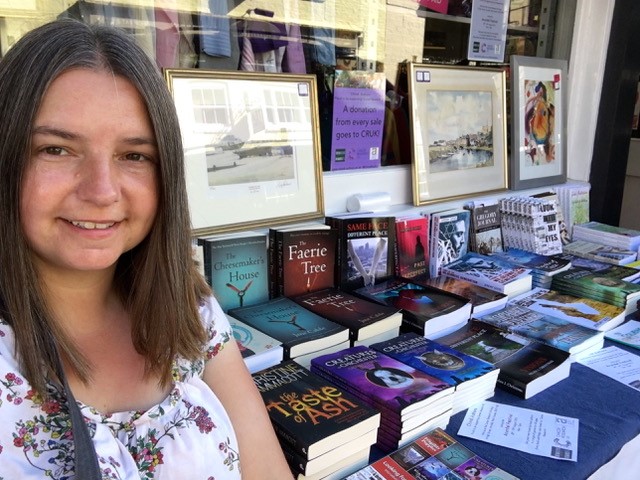
It’s that time of year again. The time when Chindi Authors stand outside the Cancer Research UK shop in Arundel for ten whole days during the town’s festival trying to sell books. Not an easy task when the second hand offerings inside are so much cheaper, but we stick at it because we can add to the coffers of this excellent cause, promote our own books and meet readers.

We know we’ll be well supported by our members and local people, but organiser romantic novelist and kidlit writer Carol Thomas was asked by author contacts up and down the country if they could donate too. While she did the charitable thing and set up a donation page – http://www.carol-thomas.co.uk/Chindi-cruk/ – her generosity simply got me thinking about how much writers achieve when they band together for good causes.

The most high profile recent example of this was the Authors for Grenfell online auction which attracted pledges of more than £150,000, over £30,000 of which was for Philip Pullman to name a character after one of the young victims of the fire. Quirky lots did well too, with conductor and writer Lev Parikian putting together a package which bridged both his worlds: “I offered signed books and (more importantly on this occasion, I think) conducting lessons. A bidding war between three people meant we raised £1,700.”


CLIC Sargent runs an annual ‘Get in Character’ eBay auction where authors such as crime writer E V Seymour and novelist and poet Claire Dyer have offered bidders a range of lots including – you guessed it – having a character in a book named after them. Critiques prove equally popular and previous Business of Books guest Karen King (https://www.frostmagazine.com/2017/04/how-to-have-more-than-100-titles-published/) offered one in the Authors for Refugees auction last year, an initiative which raised £22,000.


Another way of writers getting together to raise money is by giving their time to contribute to and to edit anthologies for causes as diverse as cancer and heart charities, earthquake appeals, women’s rescues and hospices. Some have very personal links to the cause, including saga writer Elaine Everest (also a previous Business of Books guest): “I organised and edited the anthology ‘Diamonds and Pearls’ (Accent Press) to celebrate my 30th anniversary of surviving breast cancer (7 years ago) with funds going to Against Breast Cancer.”


Crime & thriller writer Jane Risdon is a serial contributor to anthologies, supporting amongst others Women for Women, Breakthrough, Women’s Aid, The Norfolk Hospice, The Princess Alice Hospice and Save The Children. She was slightly upset when there was no thanks from certain charities, but would still do it again. Other authors say that smaller charities are more responsive than the larger ones so they prefer to work with these.


Some writers go the whole nine yards and get together to form charities of their own. A prime example of this is saga writer and Frost contributing editor, Margaret Graham, who together with Jan Speedie and Penny Deacon set up Words for the Wounded which exists to raise funds for injured service personnel through writing prizes and events. It’s a wonderful organisation and every penny goes directly to the people who need it. Authors can help in a variety of ways – Chindi raised almost a thousand pounds by organising a litfest, others give their time to speak at events or in my case I donate £1 for every Amazon review of my book Another You. Find out more about W4W here: http://www.wordsforthewounded.co.uk/.


Business Of Books: Jane Cable talks to publishing polymath, Liz Barnsley


BUSINESS OF BOOKS: LOVING BOOKS, LIVING BOOKS

Jane Cable talks to publishing polymath, Liz Barnsley

What is your book related job or business?

First of all I’m a reader and reviewer with my own website, Liz Loves Books  – all done for the love of it. On the professional side I work freelance as a submission reader for Orenda books and now as an Editor and Publicity Manager for Lisa Hall at Manatee, our new digital publishing venture. I also take on individual editing, first draft critique and proof reading amongst other things. I also have a “day job” which I’m loathe to give up as I love that too – so all in all it is a busy bookish life and a busy life life! Going into this venture with Lisa was a no brainer for me however – she is an incredible writer and a voracious reader and she knows what a good book looks like and how to get it out there. Who wouldn’t want to be part of that?


What is the most rewarding part of it?

Definitely the most rewarding part is seeing the book complete and published and finding a readership – every little that I do to help that happen gives me a huge buzz. I also like the collaborative side of editing when I’m excited about a story and the author is excited about their story – it is all hugely satisfying seeing that spark of an idea become a brilliant novel. I have to say I love reading the raw material before it goes through all the stages, seeing the talent and story emerge from underneath that first sprawl of creativity. I never tire of reading the same narrative during the tweaks because you get a whole different sense of it every time. Ultimately (hopefully!) the white noise disappears and you are left with a beautiful, readable, emotionally resonant or edge of the seat story that you can send out into the world.


What do you consider to be your major successes?

Manatee is in the very early stages at the moment so I don’t think we can claim any major successes just yet – although I’m very excited by the authors we have signed so far, all of whom are bringing something different to the table and are putting their trust in us. We focus on crime and women’s fiction – I look after the crime and Lisa looks after the women’s fiction and all our authors so far have written, in my opinion, absolutely excellent, engaging and addictive stories. Also it was somewhat of a confidence boost that bestselling crime writer Neil White had enough faith in Manatee to entrust to us his non crime novel Lost In Nashville. We have persuaded him he might want to write some more fiction for us – he is an incredible writer both within the crime genre and out of it. Watch this space. He will probably tell me off now as he’s busy with his next amazing crime novel for Bonnier Zaffre – but it had to be said that he is certainly not a one trick pony. Now he’ll tell me off some more…


Have you always loved books and what are you reading at the moment?

I have ALWAYS loved books. I’ve read many books a week every week since I was very young and I can’t see that stopping anytime soon even though I’m now rather older. Right now I’m reading a brilliant and highly atmospheric novel called “The Monsters Daughter” by Michelle Pretorius – look out for that one – but also several others as I multi read, they include The Innocent Wife by Amy Lloyd, Need to Know by Karen Cleveland, The Fate of the Tearling by Erica Johansen and Strange Practice by Vivian Shaw. Great books all.


Manatee Books focuses on quality, ethical, author focused digital publishing. Their aim is to bring a wide range of exemplary fiction to a broad readership, time and time again.

Find out more at www.manateebooks.co.uk.


A Break From Business: Holiday Reading: Jane Cable on fiction from Cornwall, her adopted county

The question I’m asked most frequently since moving to Cornwall is ‘so are you going to write a Cornish book now?’ The answer is that I’m in no hurry to, but in that I seem to be alone and with so much fiction set in the county I thought I’d pick out a few which would make great holiday reading.

Old favourites

I would have to start with Daphne du Maurier’s Rebecca, in many ways the ultimate in romantic fiction with a seriously heavy twist of suspense. The beautiful house by the sea, the spooky aged retainer and the dear departed wife in the background, it has it all – especially as it didn’t resolve in the way I expected.

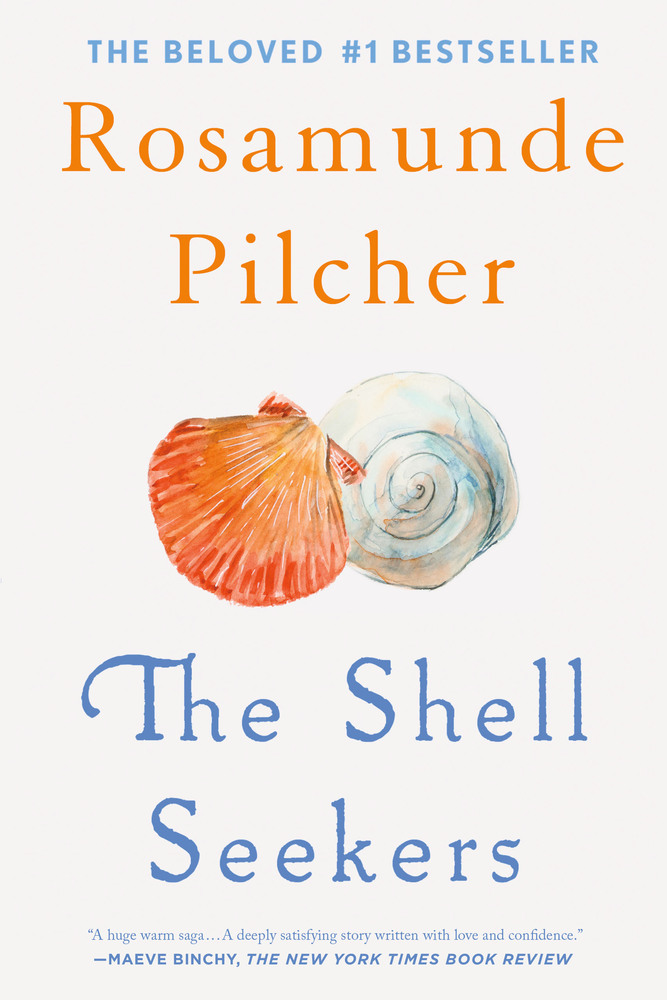
Also a classic is Rosamunde Pilcher’s The Shell Seekers which is in part set in Cornwall and known to readers of this column as my favourite book. The characters are so superbly drawn they could break – or make – your heart every time. But almost as good and often forgotten is Pilcher’s Coming Home, a saga which starts in Cornwall in the late 1930s and follows the heroine and her adopted family through the Second World War.

Another writer from my youth associated with the county is Mary Wesley. Camomile Lawn is her most famous Cornish novel and always a popular choice but I enjoyed Harnessing Peacocks far more. I like her heroine Hebe’s unconventional take on life – it seems especially suited to a backdrop in Cornwall.

In a totally different vein is Patrick Gale’s Notes From an Exhibition which perfectly captures (for me, anyway) the artist community at St Ives. The book tells the story of a family coming to terms with the dazzling genius of their late mother. At times a harrowing tale of depression, the wonderful language Gale uses lifts us and takes us to a completely different place.

New friends

Cornwall is now famous for chicklit and romcoms, a trend surely started by Judy Astley with her Just for the Summer, a sharp, witty read about Londoners who decamp to their Cornish second homes for the holidays.

Among those new out this summer, which means I haven’t actually read them but they may well appeal, are these:

Confetti at The Cornish Café by Phillipa Ashley – the third book in this hugely successful series sees the café become a celebrity wedding venue. Described as warm, funny and feel good by doyenne of romantic fiction Katie Fforde.

The Returning Tide by Liz Fenwick – the latest from a writer who has a built a career based on Cornish novels, this time with a saga of sisters and a wartime betrayal that spans the generations.

The Cornish Hotel by the Sea by Karen King – a heart-warming novel from my April Business of Books guest. Ellie returns to help her widowed mother keep the family hotel afloat, but will she succeed or will love intervene?

Dying to Take The Tour by Chrissie Loveday – a murder mystery set against the backdrop of a Poldark sightseeing tour. Cosy crime from a writer who I have to admit is a Cornish neighbour and is also published by Endeavour Press.


Business of Books: Going Up! Jane Cable on the importance of the elevator pitch

Jane Cable on the importance of the elevator pitch

It is indeed true that the word is getting shorter. Everything reduced to bitesize for folks in too much of a hurry to stop and listen, hungry to gulp down as many tweet-sized pieces of information as possible.

This is not entirely a bad thing. The book business knows that with so much competition for leisure time and money the potential consumer’s attention needs to be grabbed in a flash. A reader may spend hours savouring a good book, but their buying decision is often made in an instant.

Enter the elevator pitch – the ability to describe your latest work in two sentences at most. Catherine Miller’s excellent talk at the Romantic Novelist’s Association conference drew quite a crowd, encouraged no doubt by the lure of a competition for the winning pitch’s manuscript to be read in full by her agent, Hattie Grunewald of Blake Friedmann.

I learnt a great deal while preparing my entry. On a large piece of paper I set out the major themes and keywords for the book, turning them in my mind and distilling them into two neat sentences. I fiddled with the words, one at a time. I was happy with the first sentence: ‘When archaeologist Rachel Ward visits a remote Lincolnshire field she realises it’s where the voice in her head has been leading her for years.’ For ages I couldn’t get the second to gel, then the next morning I woke up with the perfect solution in my head: ‘But as she starts to dig an unseen danger circles ever closer and Rachel is forced to confront her own past in order to survive.’

The process of preparing what turned out to be the winning pitch had actually shown me that the ending of the book wasn’t sufficiently strong – to be fair, the edit notes I’d received said the same – but crystallising the very essence of the story into a couple of sentences made me focus on the issue – and solve it – in a way that nothing else had.

This week has shown me that two sentences is too long. Try pitching in 140 characters – actually 124 when you need to leave space for #HQBookPitch2017 – when Harper Collins’ HQ Digital division opened its virtual doors for tweeted pitches. I tried but failed to pack enough excitement into so few characters but again it was a great learning experience.

At no deadline was given so rather than research the type of books they were looking for I plunged straight in. At any one time I have a number of concepts on the block so I picked one I thought would do and tried to make it sound succinct and sexy. Not sexy enough, clearly, but I have learnt to target publishers I’m interested in better (a number of them do use this technique) and hone relevant pitches so they’re ready.

So what does a successful Twitter pitch look like? I am lucky enough to know two authors who have been asked to submit further and this is what they came up with and how they describe themselves in a tweet:

‘Lucy swaps her husband for a motorbike and has the best ride of her life’ from Sue McDonagh: “I love building my characters, then letting them loose. Should I admit that they do things I hadn’t planned for them and make me laugh?”

‘Millie should have known an archaeological dig is no place to escape the past. But can she uncover her future there too?’ from Kirsten Hesketh: “Pantser, people watcher, procrastinator extraordinaire. Twitter counts as writing, right?”

It goes without saying that everyone at Frost is rooting for them. We’ll let you know how they get on.