
This is my favourite topic!
I’ve written about it in newsletters and blogs.
Essentially, I don’t work like a majority of authors.
For a start, I can’t work in public places as the noise would
disrupt me. As a practising psychologist, my writing happens
every chance I get between patient consultations, meetings
and conferences. I write weekends, early mornings prior to work,
evenings, nights and during holidays. In fact, I’ve not had a break
for a very long time. I enjoy my line of work very much but writing
is my passion. Both fit well together as my day job perfectly fit with
my genre, Character Driven Psychological Thrillers With A Noir Edge.
My writing routine:
Irrelevant of when I work on a book, I always work at my desk in my home
or work office. No disruptions, calls, messages, nothing except what I focus
on there and then. I read through what I’ve written the last time to get a sense
structure, sequence and, most importantly, a feel for the characters and storyline.
Without a flow and prose, points of views and being part of the scenes and dialogues,
my characters wouldn’t come across as intended.
I write in long stretches, so for ex if writing early mornings and late evenings
and weekends and holidays, I always work for at least four to five hours after
which I have a break, an hour’s walk to clear my mind, playing with my cat, Teddy,
who faithfully sits next to me in his old wooden box or in a favourite chair.
I continue working on my book/books for at least another four to five hours,
edit that day’s work and make notes on what to work on, improve and much more
prior to the next writing session. I write biographies of all characters, their interaction,
similarities and differences. My characters drive the storyline so must be satisfied
they come across as real people, relatable and identifiable.
The Swedish part of me is very organised, structured and self disciplined. All of it
helps to keep me ahead of deadlines and time to return to parts of the storyline
and plot that require more attention. You’d be right thinking my characters take
some time to create, develop further and the storyline evolves around them.
It’s the reason I prefer to write a synopsis later, usually when mid through the novel.
Because only then will I know exactly what outcome and tie up loose ends.
I’m Anglo Swedish, my birth place is Malmö, Sweden’s third largest city. I’ve been a performing musical artist when younger, come from a very cosmopolitan
family and background, British and Swedish parents. I’m bilingual and so far lived
longer in the U.K. than my native Sweden. I love writing every chance I get,
love my day job and all the wonderful people I get to meet and counsel.
I love animals and sports, couldn’t imagine a life without literature and am a ferocious
reader, mainly of my own genre, as well as cross reading.
I enjoy long conversations, travelling, lots of getting togethers over Fika ( coffee breaks ) In lovely cafes, parks and beaches, the spectacular scenery and nature in Malmö
and similar places in London.
I communicate well with all kinds of people, carry a notebook when out and about
even on the bedside table in case I come up with new ideas for characters and stories
when asleep! Characters come to me when I least expect it, and premises for
new storylines. I’ve so far never suffered with writer’s block and have many books
just waiting to be written in the foreseeable future. I make notes of new casts
of characters and novels, short stories and blogs. I enjoy socialising with special
people, friends and family, eating and cooking are favourite pastimes.
I’m very grounded, extremely communicative and a good listener.
Quite simply; I love life and have a positive outlook and attitude.
So far, I’ve written five books. Because Of You, We Never Said Goodbye, His Guilty Secret, and One Fatal Night which was published recently.
I’ve also written a short story collection, Who’s Sorry Now?
I’m working on my next psychological thriller, The Matchmaker.
One Fatal Night, set in Norway with an explosive plot, protagonists
I work to a brief plan, write the first couple of drafts and edit after I’ve finished the novel after which I and my editor collaborate on the editing process.
My writing’s very intuitive, the characters come first so must feel the storyline
works for and with them or I’ll change the story while still keeping the initial premise.
I don’t worry about that as long as everything fits with what I intended. My debut novel’s word count is over 140000 words, the others between
50-100.000.
I know exactly the sequence of what must follow each chapter. So no detailed synopsis until mid through the novel, but a very clear
and detailed content for each chapter and, of course, much emphasis
on my characters.
Getting the inspiration when I’m tired after a long day’s work. The isolation of working on my own with no one to discuss ideas with.
Apart from that, writing comes natural to me since I’m very used to working
without company and quite enjoy it. Living with my characters!
The progress when getting the characters and storylines just right. Feeling my characters emotions, being there in the scene with them,
and excitement when the story turns out just like I planned and intended.
Significantly, holding the book and feeling a sense of pride I Did it!
Getting positive feedback and comments from my readers mean the world to me.
Always write what you want and what comes natural to you.
Don’t follow trends and Never copy other authors.
Your voice and uniqueness are what truly makes you special.
I never read when writing my books and stories for fear others work
will influence me subconsciously.
Having a positive attitude helps a lot too! Oh, and patience!
|
Author Archives: Catherine Balavage
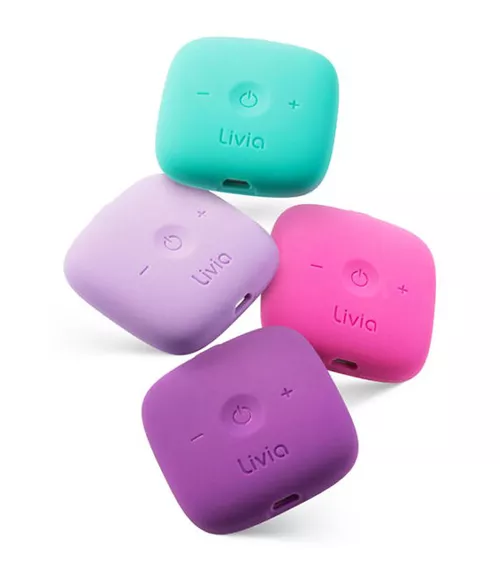
Livia – the drug free device that promises to ‘switch off’ menstrual pain, period.
I have had bad period pain my entire life. It was so bad when I was younger and it would start a week before my periods. Two weeks out of four weeks was agony. Thankfully it is better than it used to be but it still hurts a lot. I hate taking drugs so taking paracetamol always annoyed me and does not take away all of the pain.
I was excited to hear about Livia, which is a device that ‘switches off’ period pain. I was cynical to begin with. I sounded a bit too-good-to-be-true. And…it does work. Livia is portable and wearable. I did not find it annoying and you can wear it under your clothes.
Livia is pretty and easy-to-use. I cannot recommend it enough. It works for period pain and lets you get on with your life. You can buy yours here.
THE SCIENTIFICALLY PROVEN DRUG FREE DEVICE TO INSTANTLY ‘SWITCH OFF’ PAIN FROM CRAMPING LINKED TO PERIOD/MENSTRUAL CYCLES, ENDOMETRIOSIS AND OTHER PAINS
• Livia is a scientifically proven device that ‘instantly ‘switches off’ pain for women
drug free.
• Portable, wearable device uses patented SmartWaveTM technology to stimulate
nerves to block pain.
• Etailer www.uk.mylivia.com had a waiting list of over 4,000 consumers wanting to
get their hands on the device on the back of reviews globally.
The pain and discomfort of cramping linked to menstrual cycles and
periods affects 80% of women at some point in their life with 5% to 10%
of women saying menstruation pain is so severe it affects their life
(according to the Women’s Health Concern). Then there is the pain
associated with endometriosis affecting 1 in 10 women of reproductive
age in the UK. It is therefore no surprise many of us feel physically and
emotionally drained by the impact of symptoms on our lives.
Now there is a scientifically proven device that offers remarkable
results in ‘switching off’ pain instantly, giving relief to women without
the need for pain killers. Livia is a portable, wearable device that stimulates nerves to block pain.
Available from https://uk.mylivia.com/ it is so popular the online retailer had a waiting list of over
4,000 consumers wanting to get their hands on the device on the back of reviews globally.
In clinical studies, Livia showed 90% of participants reported pain reduction, 59% reported
moderate relief, 31% reported complete pain relief and 32% said Livia provided significantly faster
pain relief than drugs.
No waiting for pain killers to take effect, Livia uses technology based on the gate control theory, it transmits unique pulses to keep the nerves “busy” and block the signals that cause pain. The state-
of-the-art patented SmartWaveTM technology uses unique micro-pulses to stimulate nerves and block painful cramps. No drugs, chemicals, or tolerance build-up!
Approved by the FDA and CE under the supervision of renowned global women’s medicine expert,
Professor Bari Kaplan at the Mayanei Hayeshua Medical Center. Professor Bari Kaplan comments
“Livia stimulates the nerves, making it impossible for pain to pass. The method Livia uses has been
proven effective in several clinical studies and I strongly recommend the use of the device to relieve
PMS at any time.”
Relieving pain in even the most severe cases, including impressive results with women suffering
from endometriosis. Livia is safe for women of all ages and is discreet enough to wear under clothing.
Livia £150 and each package includes the device, a choice of
colourful classic covers, a USB charging cable, protective
travel case, set of Livia flower pads and a 3-month supply of
Livia gel pads. Available from https://uk.mylivia.com/
With hundreds of satisfied customers globally giving 5 star reviews such as JaslynT
5-star rating
The best invention ever!
Livia totally saved my life. I was suffering from terrible period pains ever since I was young and it only
got worse. It came to a point where I can no longer function during period pains and had to pop
painkillers which stopped working. I have been using Living for 2 months now and I no longer take any
painkillers during my period and could actuaRead more about Livia totally saved my life. I was
lly function normally! Thanks Livia!!
Di M.
Verified Buyer
5-star rating
Works better than I hoped
Light, portable and easy to use. Makes a huge difference to pain levels. I have used it for menstruation
pain as well as chronic hip pain. I can now sleep through the night without needing to top up my
medication.
Marieke Nijkamp – My Writing Process.
 What you have written, past and present.
I wrote my first book—or what felt like a book at a time—when I was ten or eleven. It was, effectively, fanfiction of my favourite book at the time. It certainly wasn’t a full length book, but once I started, I never looked back. I’ve written books and short stories ever since!
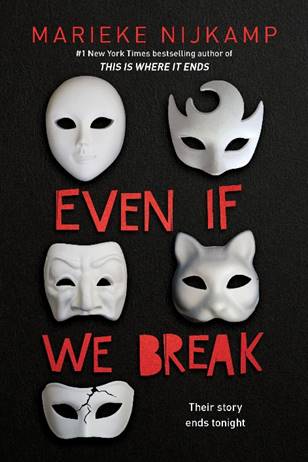
My first published novel was a contemporary YA called This Is Where It Ends, a story about a school shooting. It takes place over the course of fifty-four minutes and follows four teens who all have a reason to fear the boy with the gun. I followed it up with Before I Let Go, a YA murder mystery set in a creepy Alaskan town full of secrets, where one girl is trying to uncover the truth behind her best friend’s death. And now Even If We Break, a geeky YA thriller, but more on that later!
I also write comics and graphic novels, most recently The Oracle Code (with art by Manuel Preitano), a DC graphic novel about a young Barbara Gordon who has to solve the mysteries of a spooky Arkham mansion, all while adjusting to life in a wheelchair. And currently ongoing, Goosebumps: Secrets of the Swamp (with art by Yasmin Flores Montanez), about three girls, one swamp, and a whole lot of werewolves.
And just to complete the line-up, I also write short stories for MG and YA anthologies, and had the distinct pleasure of editing the anthology Unbroken: 13 Stories Starring Disabled Teens.
• What you are promoting now?
My most recent YA, Even If We Break is a cabin-in-the-woods thriller about five friends who plan to spend the weekend together to play the RPG that brought them together one last time. But their friendship has grown strained, there are secrets between them, and this is where the game turns deadly. Even If We Break is geeky, terrifying, and at its core a story about friendships and growing up.
• A bit about your process of writing.
I’m a fulltime writer, and I generally write every weekday. Regular office hours, with the evenings for administration, email, interview questions… and occasionally some gaming! I try to be sensible about keeping my weekends a little freer, because work-life balance is important too.
• Do you plan or just write?
Oh no, I plan, in detail! I’ve plotted books with spreadsheets and flashcards and entire character profiles. These days, I usually create a story bible in advance and a full outline with scene and character beats. It’s quite a bit of work beforehand, but I love it. If gives me a feel for the shape of the story and what needs to happen when. Even if some details end up changing between the outline and the story—or the balance between chapters changes just so.
• What about word count?
A rough idea of word count is absolutely part of the planning, but that also very much depends on what the story needs!
• How do you do your structure?
Chapter-by-chapter, question-by-question.
• What do you find hard about writing?
Writing is incredibly personal, and that’s terrifying sometimes. Whether it’s exploring parts of myself in characters or staying vulnerable to approach the emotional truth of a story, writing can be highly intimidating.
It isn’t easy, but then again, it doesn’t have to be.
• What do you love about writing?
I love stories. I love exploring new worlds. I love taking story threads and weaving them into narrative. Above all else, I love how stories shape us and how we can shape stories. I absolutely believe storytelling is what makes us human.
Even If We Break by Marieke Nijkamp is out now in hardback by Source Books.
The surprising Scandinavian approaches to child-rearing by Alex Dahl
 ‘Playdate’ by Alex Dahl is out now. Published by Head of Zeus and has been made into an excellent TV series called, The Stolen Girl.
In the Scandinavian countries, children are raised quite differently than in the UK and most of the rest of the world, where fear culture feels more prevalent- fear of strangers, accidents, legal action, bad weather- the list goes on. The Scandi approach is rather less fussy and children are given an almost baffling level of freedom. They are expected to get to and from school alone, often from the age of six, sometimes walking a considerable distance, come rain or shine (or more likely, blizzards.) In the winter it is pitch-black dark when they leave home.
When I was a child growing up in Norway, my mother’s policy was- spend most of your time outdoors, and if there’s a problem- fix it. I had a pocket full of band-aids and a bus pass, plus a few tried-and-tested recipes for afternoon snacks.
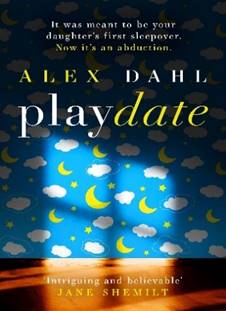
As an adult, and a domestic-noir/psychological thriller writer, I draw inspiration from the Scandinavian countries’ laissez-faire attitude, and will gladly admit that it’s rather convenient that certain plotlines, which may seem unlikely to happen in the UK are perfectly feasible in Norway. Like being asked to take a little boy home on a stormy evening, whose parents have failed to turn up- the very premise for my debut thriller, The Boy at the Door. It’s happened to me, more than once, and I’ve also turned up to pick up my kids from somewhere, only to be told that they’ve already been collected by ‘so-and-so’s dad’ or random uncle, whom I’ve never met. Or like sending your child on a sleepover when you’ve only briefly met the parents once, a decision that has disastrous consequences in my new thriller, Playdate.
I ended up doing some involuntary research when my own daughter went briefly missing during the edits of Playdate. I had recently returned to Norway and was adjusting to the Scandinavian style of parenting after a stint in London. I allowed my then nine-year-old daughter to take a bus alone home with a friend to the friend’s house after school. I was in my office, working on the book, when the mother of the friend called, several hours later. She asked whether the girls had gone to ours. Floored by panic, I explained they had definitely gone to theirs, and she said- well, they can’t have as the alarm was activated and the dog shut away in one room, and the first thing the girls would do when they get home is deactivate the alarm and let the dog out.
The other mother immediately started to comb the neighborhood for them while I rushed over. We were about to phone the police, when she went into a local shop to ask whether the girls had been in, and another customer overheard, saying he’d seen two little girls in the nearby forest, trying to free a ride-on pink Barbie truck from thick mud. The girls had refused offers of help, having been drilled on the dangers of strangers… I got my girl home, but had never known such fear, and I went back over Playdate and infused it into the mother of the missing girl.
Booksellers Unveil Their Top Books of 2020
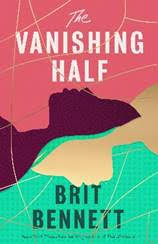 Bookshops across the UK & Ireland have revealed their favourite books and authors of 2020.
This year’s shortlist includes: The Vanishing Half, by New York Time bestseller Brit Bennett; Diary of a Young Naturalist, by 16-year-old Dara McAnulty; the most hopeful book of the pandemic, Humankind by international bestselling author Rutger Bregman; The Devil and the Dark Water by 2018 Books Are My Bag Readers Awards winner Stuart Turton; South Korean sensational #MeToo bestseller Kim Jiyoung, Born 1982 by Cho Nam-joo(translated by Jamie Chang); Cinderella is Dead, a retelling of the popular fairy tale by Kalynn Bayron; and 2019-shortlistee Alice Oseman forHeartstopper Vol 3.
Grace Dent to host virtual Books Are My Bag Readers Awards ceremony on Tuesday 10thNovember, sponsored by National Book Tokens
· 16-year-old nature writer, two graphic novelists, previously shortlisted Alice Oseman, South Korean sensation Cho Nam-joo, and nine debut writers among booksellers’ top books of the year
· Books on sexuality, dance, Cinderella and Greek myths make the shortlist, hand-picked by booksellers
· Record number of books from independent publishers are shortlisted
Nine debut writers are among the 25-strong shortlists across six categories. In addition to Cho Nam-joo, Dara McAnulty and Kalynn Bayron, the other debut authors shortlisted are: Eliza Clark for her celebrated novel Boy Parts; Summer Young for her Tracy Emin-like pamphlet Sylvanian Family;Elle McNicoll for her children’s fiction book A Kind of Spark; Jean Menzies for her retellings of mythical tales Greek Myths (illustrator Katie Ponder);Kiley Reid for her Booker longlisted debut Such a Fun Age; Douglas Stuart for his heart-rending novel set in 1980s Glasgow Shuggie Bain.
More than half of this year’s nominated titles – spanning Fiction, Non-Fiction, Poetry, Young Adult Fiction, Children’s Fiction and Breakthrough Author – come from independent publishers, including Influx Press, Granta Books, Little Toller, Verso Books, Bad Betty Press, Nosy Crow and Knights Of. In addition, this year almost 40% of the shortlisted titles re from first-time writers.
The public vote opens today, ahead of Bookshop Day this weekend, to decide the winners across the six categories. The public is invited to vote for a winning title from each shortlist from Thursday 1 October until 11pm of Sunday 25 October, with the winners being announced on Tuesday 10 November at a virtual awards ceremony hosted by restaurant critic and author Grace Dent. The ceremony will be streamed at 5:30pm across the @booksaremybag YouTube, Twitter and Facebook channels.
The 2020 Books Are My Bag Readers Awards Shortlist, as chosen by bookshops:
Fiction
Boy Parts by Eliza Clark (Influx Press)
The Devil and the Dark Water by Stuart Turton (Bloomsbury)
Kim Jiyoung, Born 1982 by Cho Nam-joo (Simon & Schuster)
The Vanishing Half by Brit Bennett (Dialogue Books)
Weather by Jenny Offill (Granta Books)
Non-Fiction
The Dance Cure by Dr Peter Lovatt (Short Books Ltd)
Diary of a Young Naturalist by Dara McAnulty (Little Toller Books)
Humankind by Rutger Bregman (Bloomsbury)
Insurgent Empire: Anticolonial Resistance and British Dissent by Priyamvada Gopal (Verso Books)
Poetry
Homie by Danez Smith (Vintage)
Seagull Seagull by James K Baxter (Gecko Press)
Sylvanian Family by Summer Young (Bad Betty Press)
Tiger, Tiger Burning Bright: An Animal Poem for Every Day of the Year by Britta Teckentrup and Fiona Waters (Nosy Crow)
Young Adult Fiction
Children of Virtue and Vengeance by Tomi Adeyemi (Pan Macmillan)
Cinderella is Dead by Kalynn Bayron (Bloomsbury)
The Crossover: Graphic Novel by Kwame Alexander (author), Dawud Anyabwile (illustrator) (Andersen Press)
Heartstopper Vol 3 by Alice Oseman (Hachette Children’s Group)
Children’s Fiction
A Kind of Spark by Elle McNicoll (Knights Of)
Blended by Sharon M. Draper (Simon & Schuster)
Gargantis by Thomas Taylor (Walker)
The Highland Falcon Thief by M.G. Leonard & Sam Sedgman (Pan Macmillan)
Breakthrough Author
Brit Bennett author of The Vanishing Half (Dialogue Books)
Jean Menzies author of Greek Myths (Dorling Kindersley)
Kiley Reid author of Such a Fun Age (Bloomsbury)
Douglas Stuart author of Shuggie Bain (Pan Macmillan)
Danez Smith, author of Homie, said: “Books saved me, save me, will save me as long as I have a spirit to rescue from its own darkness and the dark corners of the world. To think that my little words might be doing the same for someone else, even one person, makes the work worth it. To be shortlisted for the Books are My Bag Readers Awards is beyond an honor, it affirms for me that my duty to poetry isn’t some selfish need to confess and be heard, but that poems are how we nourish one another, how we make sanctuary and fight for one another. I’m humbled to share the company of incredible writers, and to share the love and need of poetry with booksellers and readers everywhere.”
Jenny Offill, author of Weather, said: “I am a former bookseller myself, so this feels like the highest of honors to me! I am utterly thrilled to be nominated by such a discerning group of readers.”
Jean Mezies, nominated in the Breakthrough Author category, said: “It’s an absolute honour to have been nominated for the Books Are My Bag Breakthrough Award for Greek Myths, particularly given that it was chosen by booksellers. Exploring bookshops as a child and discovering titles on new and exciting topics thanks to the staff who curated their shelves is one of the main reasons I’m an Ancient Historian now.”
Emma Bradshaw, Head of Campaigns at the Booksellers Association, commented: “Curated by booksellers, the book experts par excellence, the Books Are My Bags Readers Awards are truly special awards. The shortlist always gives a fascinating insight into the reading trends of the year, and this year’s shortlist is particularly poignant given the impact COVID-19 has had on both our reading and shopping habits. Consumers appreciated anew the knowledge, dedication and expertise of booksellers during lockdown; a time when for many books were the only thing to bring hope and comfort. While we were unable to physically browse in bookshops, booksellers found new and creative ways of pairing their customers with the right book at the right time.
This year we encourage consumers to think about their Christmas shopping earlier than usual and to support their high street. Whether you shop in-store or online with your local bookshop this Christmas, the Books Are My Bag Readers Awards shortlist is the ultimate book guide for shoppers; there’s something there for everyone. We hope book lovers will continue to support bookshops this Bookshop Day and beyond.”
Alex de Berry, Managing Director of National Book Tokens, said: “Not only are the Readers Awards the only book awards where the winners are chosen by truly democratic public vote, they have also proved to be a positive platform for diverse voices. We are immensely proud to have helped create these awards and to continue to be able to sponsor them.”
The Books Are My Bag Readers Awards, now in their fifth year, are the only book awards curated by booksellers, and voted for by readers. The shortlist panel comprises: Katharine Fry (Blackwell’s), Meera Ghanshamdas (Moon Lane Books), James Routledge (Forum Books), Mog and Pauline Harris (Warwick Books), Amy Vale (Book-ish) and Joe Hedinger (The Book Hive). The shortlist categories open for public vote are: Fiction, Non-Fiction, Poetry, Young Adult Fiction, Children’s Fiction and Breakthrough Author. In addition to voting on the shortlisted titles in the categories above, the public are invited to nominate their favourite book of the year – any book they’ve read in the past year – as the Readers’ Choice winner.
The public can vote online at the following link: www.nationalbooktokens.com/
The Books Are My Bag Readers Awards are sponsored by National Book Tokens and are part of Books Are My Bag – the annual campaign celebrating the vital importance of bookshops.
For more information visit www.booksaremybag.com / @BooksAreMyBag / #BAMBReadersAwards
My Writing Process Glenda Young
 The Girl with the Scarlet Ribbon by Glenda Young is published 1st October (£7.99, Paperback, Headline)
1. A bit about you.
My name’s Glenda Young and I’ve loved writing ever since I was a child. I live in the northeast and my novels are set in the coalmining village of Ryhope where I was born and bred. You don’t need to know the village to enjoy the books, which are gritty and dramatic and have a feisty, young heroine at their core. All of my books are stand alone books and you can read them in any order.
I’m a life-long fan of the soap opera Coronation Street run two Coronation Street fan sites – Corrie.net online since 1995 and the Coronation Street Blog which was launched in 2007.
2. What you have written, past and present.
I’ve written six novels to date published with Headline. The first four are now available and these are Belle of the Back Streets, The Tuppenny Child, Pearl of Pit Lane and The Girl with the Scarlet Ribbon. Still to come are The Paper Mill Girl and novel six which has the title to be confirmed. The novels are gritty sagas, inspired by my love of soap opera, really dramatic with lots of action and some great women characters!
I’ve also built an impressive reputation as an award-winning short story writer. Plus, I have an unusual claim to fame! I’m the creator of the first ever weekly soap opera Riverside to appear in The People’s Friend, the longest running women’s magazine in the world. My short fiction has appeared in magazines including Take a Break, My Weekly and The People’s Friend. In 2019 I was a finalist in the Clement & Le Frenais Comedy Award.
As a life-long fan of the soap opera Coronation Street I’ve written TV Tie-In books about the show including Coronation Street: The official colouring book, Deirdre: A Life on Coronation Street, A Perfect Duet. The Diary of Roy and Hayley Cropper in Coronation Street, and have written major updates to Coronation Street: The Novel and Coronation Street: The Complete Saga.
3. What you are promoting now.
My fourth novel is The Girl with the Scarlet Ribbon. It’s a dramatic, gritty story set in a small village in 1919. It begins with a new born baby girl being left on the doorstep of a very grand house. The baby is left in a basket that has a scarlet ribbon tied around the handle. The housekeeper of the wealthy McNally family takes the baby into her care and names her Jess. Sworn to secrecy about the baby’s true identity, the housekeeper brings Jess up as her own, giving Jess no reason to question where she came from. But when the housekeeper passes away, grief-stricken Jess, now sixteen, is banished from the place she’s always called home. With the scarlet ribbon the only connection to her past, will Jess ever find out where she really belongs? And will she uncover the truth about the ruthless McNallys?
4. A bit about your process of writing.
I write in the mornings when I can concentrate better. I stop for coffee and have a break, do some thinking and then return to writing. I try to write 2,000 words per day. I find I’m much more able and creative in the mornings than in the afternoon. I live close to a lovely beach so I walk on the beach in the afternoons or go for a bike ride. This helps clear my head after writing all morning.
5. Do you plan or just write?
I always plan, even if it’s just a short story I’ll make a list of say, ten things I want to include from start to finish. I plot and plan loosely as I think all writers know that once you start writing your work takes on a life of its own and you should go with the flow to a certain extent. I liken my plotting and planning to building a frame on which to weave my words. It’s always flexible to change as I go but I always have a structure in place so I know what I’m doing and where I’m going, even if sometimes I go off on a side road for a little while.
6. What about word count?
For novels it’s usually around 100,000 words and for short stories for women’s magazines, it can be anything from 700 words up to 3,000 and beyond.
7. How do you do your structure?
For my novels I take sheets of A4 paper, one for each chapter and lay them out on the floor. Then I take my plot points and spread them out on post-it notes across the book, moving them around until I’m happy. Then I type up chapter plans, just a couple of paragraphs for each chapter so I know what I’m doing within each one. Then once I start writing, characters appear I never planned for, incidents happen I never envisaged and the book takes on a life of its own. It’s quite scary how it happens and I don’t truly understand it. Perhaps that’s the secret?
8. What do you find hard about writing?
Switching off. When I’m writing a novel it’s all encompassing, my entire concentration goes into my work for the duration I’m writing it. I’m living in that world and I love it, it’s all I can think about as I immerse myself into the story.
9. What do you love about writing?
Everything! From getting that initial spark of an idea to seeing my books on the shelves of the bookshops and getting amazing reviews online and in the press and on radio, etc. There’s nothing I don’t like.
10. Advice for other writers?
Never give up. Never.
@flaming_nora on Twitter.
My Writing Process Alex Hart
 My Writing Routine:
I’ve written since an early age, whether it was short stories, poems (dreadful ones!), or novels. I read voraciously and love many genres. I have worked in the film and television industry for over twenty five years and have always felt passionate about story telling whether on screen or in books. To be able to disappear into someone else’s world, even temporarily and experience a different life is something that will never lose its thrill.
What you have written, past and present.
I’m currently working on a couple of novels, one which is the next in the series of Take Me Home, and another which is a standalone thriller.
What you are promoting now.
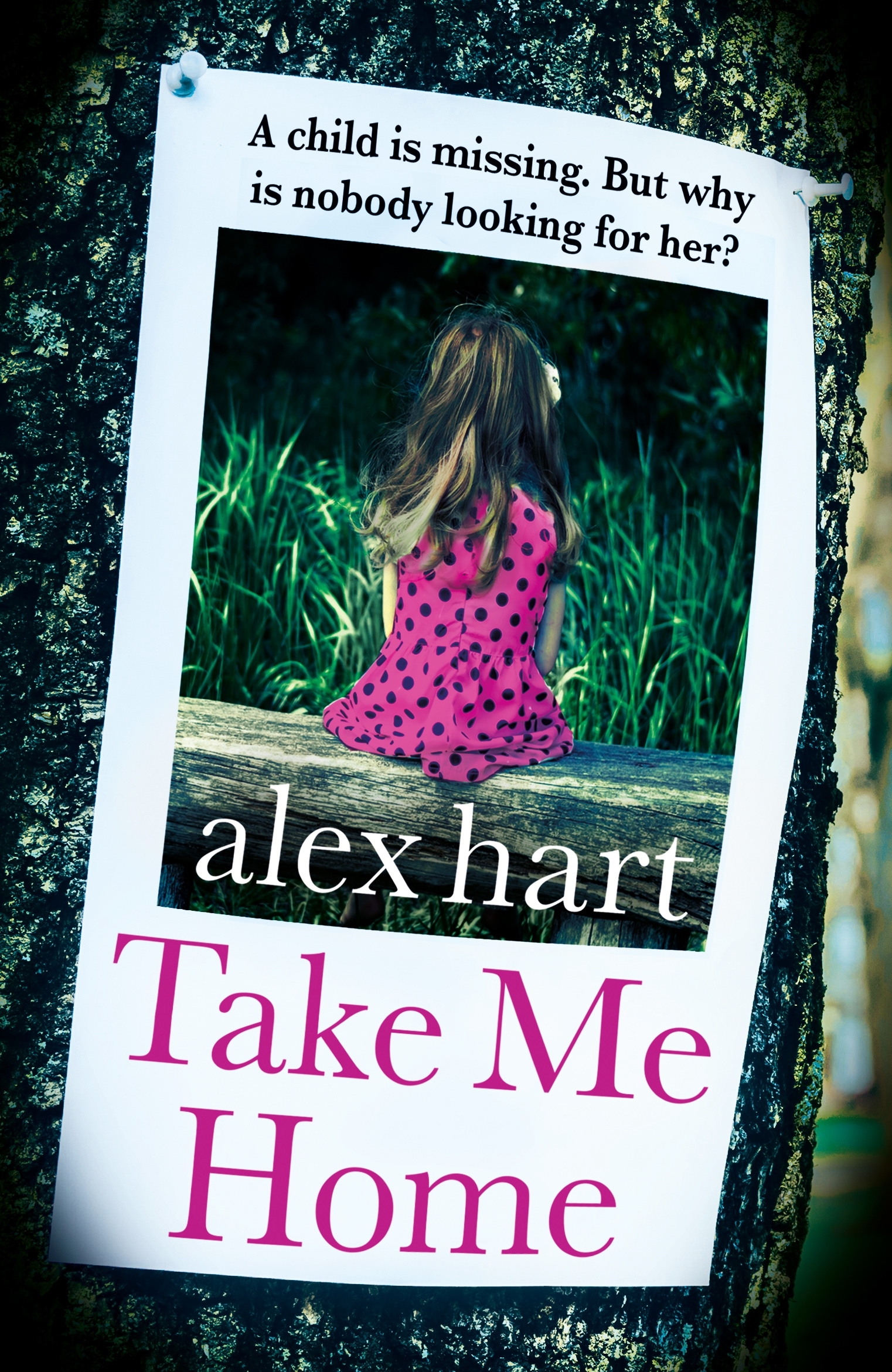
Take Me Home is a mystery thriller. The main character Harper finds a young girl left alone in a New York store and sets out to find out where she has come from. No one has reported her missing yet the little girl May says she misses her mom. Harper is someone who is strong and feisty. She paints outside of the lines, yet relentlessly strives for the truth. Despite her outwardly spiky edges, she is sensitive and warm-hearted. I hope she is someone the reader enjoys spending time with, along with her friends TJ and Reggie (the yin to her yang, the cheese to her macaroni) as they try to unravel the mystery along with her. It raises the questions, ‘What would we do in that situation?’ ‘How far would we go for strangers and those we love?’ and ‘What constitutes family?’
A bit about your process of writing.
I’m pretty disciplined when I have a project I’m working on. My day usually starts at the gym (before Covid!) where I am waking up my brain and beginning to think about the task ahead. Once I am at my desk, I often turn off my phone so there are less distractions and set to on that day’s goal. If I have the book planned out, I’ll always aim to write a chapter a day; even if I know what I’m writing is trash. If I started to edit as I went along, I think I would come to a grinding halt. If there is something on the page, I at least have words to play with.
Do you plan or just write?
I always plan. I don’t know any other way. For me, a plan is a safe way of being able to go off piste sometimes, as I know I can always refer back to it. Things often change when you’re writing; either something you are sure was going to work, suddenly falls apart in your hands, or you get further inspiration meaning the story changes direction. I think, so long as you have a plan you can explore these options without going off on a tangent too much.
What about word count?
I really don’t think about it in the first draft. I just want to get the bones of the story down and I’ll worry about word count later. Often or not, it just works out at the right length.
How do you do your structure?
I always work with paper and pen at the beginning, just writing down notes, random thoughts, character traits etc and once I am able to formulate a basic beginning, middle and end, I begin to scratch out a structure. If I get stuck, I always refer back to the usual; Joseph Campbell, Christopher Vogler, Robert McKee, Syd Field, Dan Harman. I’ll re-read what they’re saying and think how my story and characters fit and start penning out a potential paradigm.
What do you find hard about writing?
When I lose confidence! There’s nothing worse than facing the day thinking ‘something isn’t working’, ‘I’m the worst writer known to man’, ‘what was I thinking even attempting this?!’ I think this happens to all writers at some point of their journey. You’re all alone in this room, with your imaginary characters (who you have become close to and feel you are letting down) and you only have yourself to argue with. When those days come, (and they do!) rather than give up and beat myself up further, I make myself write 100 words. Often or not, I’ll end up writing more and suddenly you’re up and running again.
What do you love about writing?
Everything except for the above days!
Advice for other writers.
The same any writer gives, read, read, read, write, write, write. For me, there is no other way. My motto has always been, ‘Get it down, then get it done. Get it written, then get it right.’
TAKE ME HOME by Alex Hart is published by Orion (Paperback, £7.99) on 1st October.
Take Me Home by Alex Hart Book Review
Take Me Home by Alex Hart is a tightly written thriller which is classically New York. It dives deep into the characters and really tells the story. Full of twists and brilliant description, Take Me Home is the perfect thriller to take some time out of your day and just enjoy.
How much would you risk for a child who isn’t yours?
An ingenious, taut, global thriller for fans of Linwood Barclay and Harlan Coben…
When struggling journalist Harper returns a dress to the shop she bought it from that morning, she sees the same little girl sitting in the exact same place she saw her hours ago.
No one in the shop knows who the girl is.
No desperate parents have contacted mall security to say they’ve lost their daughter.
And the local police have no new reports of a missing child.The girl says she misses her mother.
But why is nobody looking for her?
And what if finding her home is the worst thing you could do?Take Me Home by Alex Hart is available here.
