THE BUSINESS OF READING: JANE CABLE TAKES A HOLIDAY WITH A FEW GOOD BOOKS

I’ve just been half way around the world on holiday, but visiting Cambodia and Vietnam it actually felt further than that. Intense heat, spicy food, incense drifting from temples and a recent history which shocked and disturbed me. Strange or inevitable then, that my choice of holiday reading was firmly fixed back home in Cornwall.

For a long while I’ve been promising myself I’d read some of Winston Graham’s Poldark novels. I can barely remember the 1970s TV series starring Robin Ellis and I’ve never watched the current BBC dramatization, but I wanted to read the books. And I was entranced to find that they were set exactly in my part of Cornwall, and in the limited gaps between excursions, I devoured the first three.

But the first book I read, at the beginning of the holiday, was Cornish writer Liz Fenwick’s latest and it was anything other than what I was expecting…
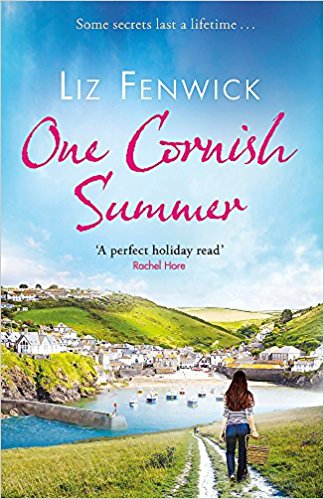
Jane Cable’s review of One Cornish Summer by Liz Fenwick.

Book marketing can sometimes be a slightly disingenuous thing. The cover and the blurb promise one thing, but the story inside delivers quite another. Sometimes this can lead to disappointment, but at others the opposite is true. And this is very much the case with Liz Fenwick’s latest novel. It isn’t a light and fluffy holiday read – it’s brilliant and challenging and altogether so much more.
To me it seems a shame that the publisher wasn’t entirely as brave as the author. The blurb describes Hebe as having ‘a life changing diagnosis’ and ‘memories slipping away’, but shies from actually mentioning the ugliness of Alzheimer’s.  From very early on in the book it’s clear Hebe has early onset dementia. And what’s more, she is written in the first person, something only a truly accomplished writer like Fenwick can pull off.

Hebe is every inch a full and rounded character, and one I sorely missed once I’d finished the book. To chart the cruel descent of her illness in such a way as to carry the reader with her must have been a serious challenge and I asked Liz Fenwick why she chose to do so.

“My best friend’s sister has early on-set Alzheimer’s and it has been sitting in the back of my mind waiting for me to find the story to write…in a way so that I could work through my own grief. And that leads into research…first hand, reading a great deal through the various support groups and finally my mother is in the early stages…so although not the same I was living it.”

One Cornish Summer is actually set over the course of a Cornish autumn and winter but the title is not a misnomer, even if the cover image might mislead. Hebe and her niece Lucy’s days in the damp and draughty ‘Hell House’ are contrasted with the former’s memories of a bright and colourful summer just the previous year when she was able to share Cornwall with the love of her life before her memories of it completely dissolved away.

As Hebe’s condition worsens, parts of the book are heart-breaking to read, for example when she answers the door without her trousers on. But there are thoroughly heart-warming parts too, as ‘Hell House’ reveals its secrets and Lucy, at least, is finally able to move forwards. Thought-provoking and ultimately life affirming, One Cornish Summer is an excellent read.
 

BUSINESS OF BOOKS: FIRST, LAST, EVERYTHING – NOVELIST SANDRA DANBY

What was the first writing advice you were ever given?

As a young English graduate longing to be a journalist, I chose a bad time to graduate. It was 1982 and publishers were closing their training schemes. Only two courses existed; one at the London College of Printing, the other at Cardiff Journalism School. Out of the blue I received a job offer on a new graduate trainee scheme run by business publisher Benn Publications. It was there in September 1982, sitting around the boardroom table in the impromptu Training Room, that I was given the piece of advice I still remember today and still use. Training editor Val Williams taught us Rudyard Kipling’s quote: “I keep six honest serving men (they taught me all I knew); Their names are What and Why and When And How And Where and Who.” It has stood me in good stead whether writing a news story, a feature, a press release or a novel. And the journalist in Connectedness, Rose Haldane, uses it too when she gets stuck in her research.
What was the most recent writing advice you were given?

That’s easy, it is something that had never occurred to me before until my copy editor pointed it out to me during the editing of Connectedness. It applied to the name of a character, Maud Nettlebed. I realise now I chose Maud’s surname because of a liking for the word, Nettlebed, which goes back to my days as a reporter writing about a furniture company called Brights of Nettlebed. The name stuck. However Dea Parkin, my editor, said it was an unlikely surname that took her attention off the page every time she read it. And that, she said, is a cardinal sin. Avoid anything that distracts the reader from the page, which breaks their concentration, which returns them to the real world, which stops them turning the page and reading another chapter. I guess this is a subjective judgement, but it appeals to the journalist in me who dislikes embellishments and sub-clauses in long sentences. So, I changed Maud’s surname to Nettles.
What is the piece of advice you’d most like to pass on?

Listen to the advice you are given but do not blindly accept it or reject it without consideration. Evaluate it, then adopt or discard it. There is no ultimate template of how you should write, what you should write, the rules you should obey or break. But, and it is a big but, you must listen to the advice and consider it before rejecting it. You must know the rules, before breaking them. You will be a better writer for it. We are bombarded these days with writing advice, never have novelists been so vocal about how they write, when they write, at what time of day. There is no right way and wrong way; there is your way. Be true to yourself. Listen to feedback and suggestions, be polite, be prepared to offer positive feedback and suggestions in return, always give the person giving the advice the respect of considering it. I have participated in many writing classes – as student and teacher – and watched as some students, whose minds were closed to advice, simply did not hear suggestions that could help them. I’ve also watched other students writing copious notes about how their work should be changed and I worry they would subsequently make changes without analysing why. Knowing who you are as a writer, having confidence in what you write, is not easily earned. There is a truth in Malcolm Gladwell’s 10,000 Hour Rule.


Novelist Sandra Danby is a proud Yorkshire woman, tennis nut and tea drinker. She believes a walk on the beach will cure most ills. Unlike Rose Haldane, the identity detective in her two novels, Ignoring Gravity and Connectedness, Sandra is not adopted. Follow her on Twitter @SandraDanby


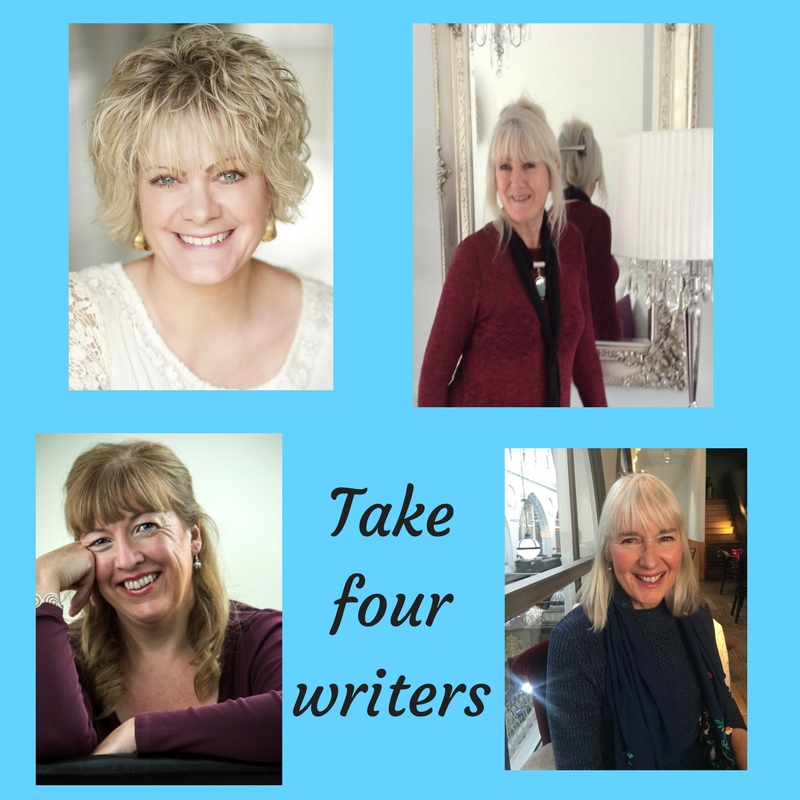
TAKE FOUR WRITERS: RECOVERING, COMPLETING, REVIEWING, CHARTING

ANGELA PETCH… RECOVERING

I spent time with my characters on their bench by the sea and they told me the rest of their stories. I’ve 95% finished the first draft of “Mavis and Dot” and very soon the editing slog will start. Beta-readers and illustrator are on board and deadlines are in place with blog tours and an author week arranged for mid-November. I’ve also booked a December 1st launch in Worthing (the location for my book) and contacted Cancer Research for support – (I am donating profits to this organisation, so fingers-crossed I make some.

In the midst of all this planning, I ended up in hospital with a warning. My memory disappeared for a few hours; a stroke or tumour was suspected. However, a brain scan revealed all was well (some would disagree!) I need to slow down. My writing is for fun – anything else is a bonus.

“If you listen to your body when it whispers, you won’t have to hear it scream.”


JACKIE BALDWIN… COMPLETING

Hello. This month I finished my line edit and answered all those squirmy plot questions. Things are starting to gather momentum now. I’ve been told that my cover reveal will be happening on the Killer Reads page at 8pm on Sunday 29th April which is exciting! I’ve had a few days off as I wait for the copy-edit to arrive. Once that is finished the book will be in its final form.

Tasting freedom, I’ve been gallivanting in the Lake District and up visiting The Kelpies near Falkirk.

I’ve also started planning my blog tour with Love Books Group. It will start on 15th June when the book is released and last two weeks. I’ll need to prepare guest posts and Q/A’s for that. The day after it ends I’m off to a Greek island to stitch my shredded nerves together with my long suffering husband.


CLAIRE DYER… REVIEWING

So, after the launch and after the blog tour come the reviews!

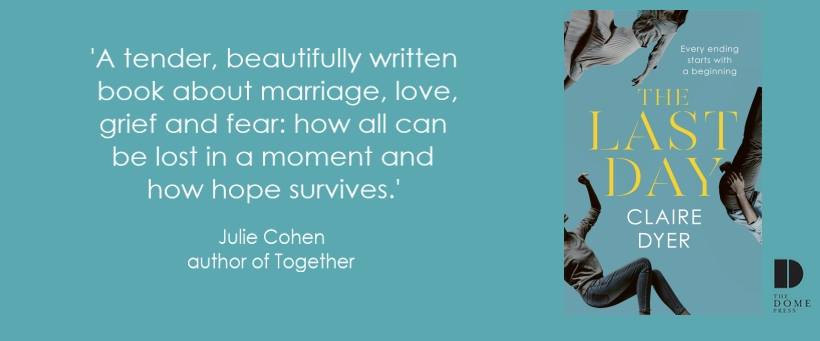
I’ve long thought that writing is an odd thing to do. You spend a year or two writing a novel, editing it, rewriting it, editing it again, doing copy edits, checking covers, planning the PR and then there’s one glorious day when you hold the book in your hand and think, ‘Crikey, it’s a real thing and it’s going to go out into the world and (hopefully) be read by others.’ It’s a bit like hoping people will like your kids when they leave home and strike out on their own.

And, as much as we don’t like people passing judgement on our children, authors do need reviews of their books. I always do them for novels I’ve enjoyed and it’s a wonderful way to support authors and their publishers. Doing shout-outs on Twitter, popping up a 5* on Amazon and/or Goodreads is a lovely way to show support for the writing community. And, if I didn’t enjoy a book so much, I tend to keep quiet. Not because I don’t believe in freedom of speech, because I do, but because I don’t think giving a negative review is helpful. Reading tastes are so subjective, after all.

I would, however, like to thank all the lovely people who’ve left reviews of ‘The Last Day’ and who’ve messaged me privately to say they’ve enjoyed reading it. These are, naturally, the judgements I do like!


LUCY COLEMAN… CHARTING

It’s been a month of celebrating and being grateful for reader power. Amazon is only one of the online market places but it’s a useful measure. An eye-catching cover and a tantalising book blurb are essential, but reviews are a major influencer.

A reader apologised to me recently for the fact that she only writes very short reviews. Always five stars and a simple statement of appreciation. I wish I could have jumped through the monitor to hug her, because EVERY positive review is a blessing.

This month ‘The French Adventure’ soared up the charts and peaked at a dizzying #81 in the overall Amazon UK Kindle chart. Having passed that top 100 magical number before, I always wonder ‘Will the readers take me there again?’

As a reader, never underestimate YOUR power – your voice counts, so let your favourite authors know that and they will keep on writing.

JANE CABLE VISITS THE KILLING FIELDS

“Listen – the birds are singing. I’ve missed that.”

She’s right. All through Vietnam there has been hardly any birdsong, but now we’re in Cambodia, at Choeung Ek, the most famous of the hundreds of killing fields, there is.

Perhaps we hear them because our normally ebullient group is stunned into silence as our guide explains the process into our headsets, his tone without emotion. He was a tiny child when this happened. He is only alive today because his father saw what was coming and prepared accordingly. Even so, the family barely managed to keep their heads below the parapet until it was over.

In three years, eight months and twenty days from 17th April 1975 Pol Pot’s regime killed somewhere north of 1.5 million people. No-one was safe, least of all the children of between 10 and 15 years old who were brainwashed into carrying out the killings. The regime figured they would tire of it but couldn’t afford for them to talk. After eight months or so they joined their victims in the mass graves.

At Choeung Ek no-one survived. They were very careful. The victims arrived by  truck, having been told they were being taken from prison to a new life. Shackled and blind-folded they were held in a wooden shelter and taken one at a time to the edge of the graves then hit over the back of the head. Then their throats and wrists were slit. Particularly sadistic killers would use the serrated edges of palm fronds instead of knives. All of this while music blared from speakers hanging in trees to drown out their screams. For children and babies the process was simpler – swing them by the feet and bash their brains out on a tree trunk studded with nails.

Why kill babies too? Simply because the regime believed they were born with their parents’ beliefs. And the regime wanted to restock Cambodia with only the genes of 40,000 carefully chosen party members. Everyone else would die. The population of the country at the time was around 7.5 million.

Had I been born in Cambodia I would have been one of the first to go. I wear glasses, you see. And glasses were a sign of wealth and education. Education was a dangerous commodity. Even 20,000 Cambodians studying at universities abroad were lured back to the country to be part of a brave new world then imprisoned the moment their planes touched the ground. Imprisoned and killed – the same fate as any foreigner who had the mischance to be in the country at the time.

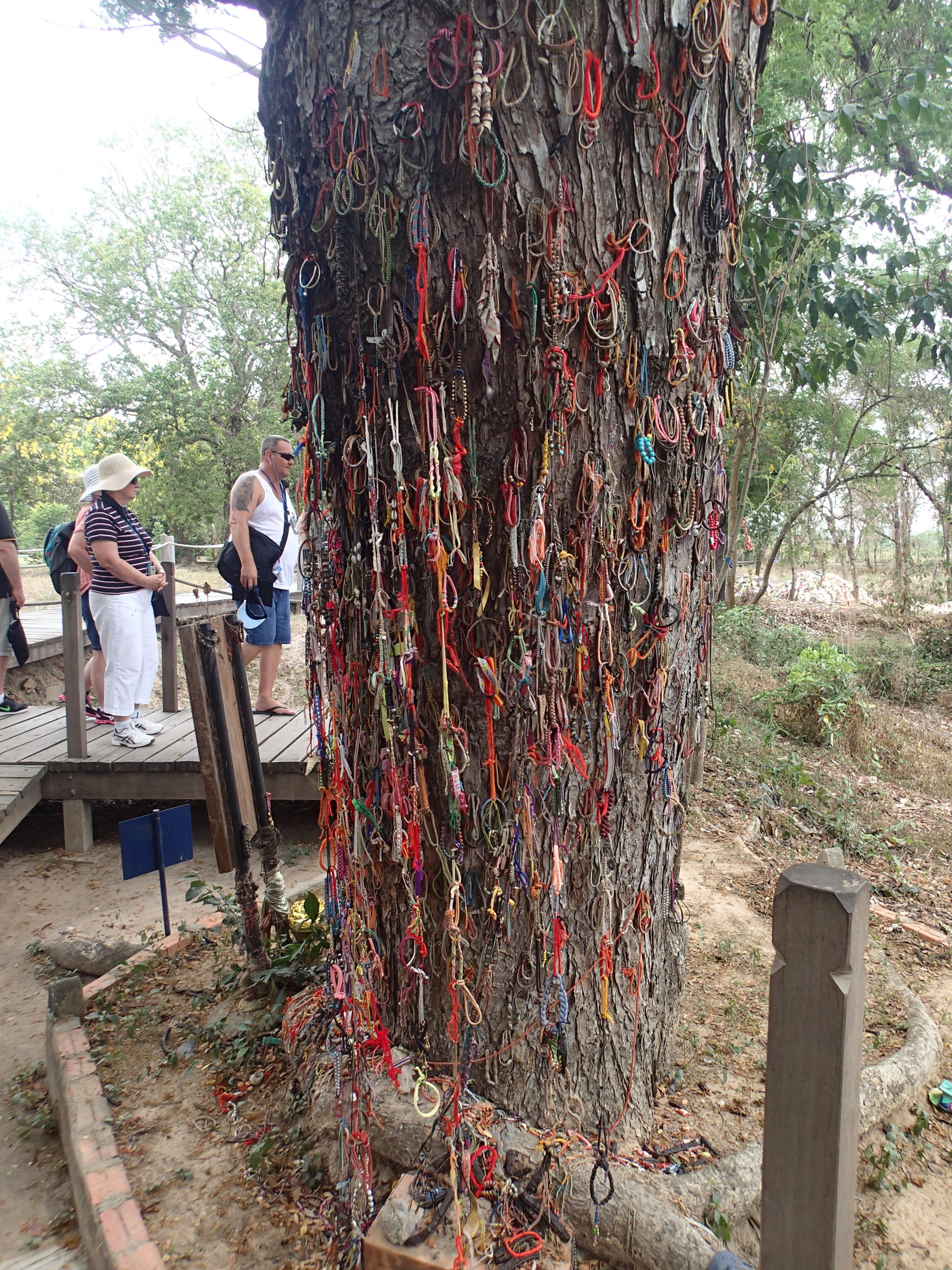
The killing field at Choeung Ek pulls no punches. The memorial at the centre contains shelf after shelf of skulls, many gazing out through the windows over the lumpy ground. Enough graves were excavated to demonstrate the scale of the atrocity and the rest left in peace. But even so as you walk around you spot the odd bone near the path or under a tree. Some of the graves have been fenced in and to these fences are fixed hundreds of friendship bracelets. They also adorn the tree where the children were killed, as far up the trunk as a human arm can reach.

The idea is to tell people, make sure the world knows so that nothing like this can happen again. But in Cambodia children are no longer taught about it in school. Perhaps because some of those associated with old regime have returned to positions of power. What seems inconceivable to us is not to a country which is fundamentally Buddhist – you do not seek revenge, you forgive. Because punishment will be dealt with after this life and is not the preserve of mortals.

While I applaud this approach it worries me that it leaves the country vulnerable. The real safety valve is probably that Cambodia is looking to build its future in large part on tourism so needs to remain an attractive destination. Which recent history aside it most definitely is.

BUSINESS OF BOOKS: FIRST, LAST, EVERYTHING – FREELANCE EDITOR J L DEAN

What was the first publishing business advice you were given?

Be clear and be on time. There’s the myth of the maverick writer who delays and delays only to appear at the eleventh hour with a work of genius. Editors can’t do that. The role of the editor is to make a piece of writing the best piece of writing it can be. That can mean anything from a little judicious rephrasing here and there to hitting the alarm bell when a character inexplicably undergoes a personality change halfway through a novel. Editing is primarily a support role. Yes, it takes a lot of skill and yes, a good reputation will make for an excellent career. However, you’re not the star, the writer is. Editing someone else’s book is not an opportunity to rewrite it in your own writerly image. Respect their style and adapt your approach accordingly.

By being clear, I mean when the writer received their edited manuscript from you, the only queries should be regarding the suggestions you have made. It is fine if they disagree or want to challenge, but you should be concerned if they have to ask you to explain yourself. Again, you’re there for support. Don’t be cryptic, be helpful, encouraging and reassuring.


What was the most recent piece of publishing advice you gave or received?

I did a lot of academic proof-editing for German clients when I lived in Bonn. More often than not I’d have to go back to them and ask, “UK or US English?” A lot of the time, they wouldn’t know. I had a young client was writing an article on the Nuremberg trials for publication in England so I contacted the publisher directly and asked for their house style. My advice to him, at the beginning of his academic career, was always to ask the publisher or publication for which he is writing for a copy of their house-style. Most have them and failing to follow it can mean instant rejection or, if you’re lucky, a lot of extra work within a very short space of time. No editor, however brilliant, can save you if you overlook that piece of advice. Make life easier for yourself and make sure you get it right from the start.


What is the piece of advice you’d most like to pass on?

Graham Norton asked Michael Morpurgo the same question in an interview a couple of days ago. Michael’s response; “Live an interesting life”. That’s got to be my answer too. It seems to me that, at this point in time, there’s a lot of emphasis on academic qualifications in creative writing. Agents are even starting to ask for that information in submissions. I feel very uneasy about that; I think it’s the wrong route for the publishing industry to take but that’s another article! For me, writing comes from within and it needs to be fed from within.

So my advice would be; don’t rush to be the ingénue novelist who has known nothing but the inside of a university lecture hall. OK, you’ll look good in the publicity photos and the press will adore you for the full fifteen minutes, but what experiences are you drawing on. What are you really giving the reader, and therefore the world? Go out and live your life, meet people and challenge yourself. No matter if you want to write medieval crime thrillers or contemporary romance; stories are about people and people are the key to stories; even in their absence, there’s a story. You won’t learn about people in a classroom. Get out there, but take your notebook.


J L Dean is an a freelance editor and historical novelist, recently returned from three years living in Germany, she divides her time between work, law studies and that difficult second novel.


THE BUSINESS OF BOOKS: FROM PITCH TO PUBLICATION

Jane Cable picks up a good book.

Doubts happen to every writer, at every level. For me, at this precise moment, it’s about whether I’ve written the right book. It’s a book I wanted to write, with characters I’m passionate about and a story I believe in, but as I begin the submission process the doubts have set in.

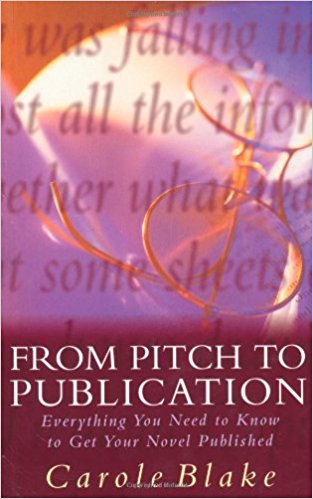
As ever, it was a writer friend who gave me a helping hand out of the hole I was rapidly digging for myself. Take a bow, Barbara Copperthwaite, for recommending an excellent book; From Pitch to Publication by the late, great literary agent Carole Blake. Barbara credits reading the book with helping her to land her agent and publishing deal. “Turns out I was doing it all wrong,” she told me. And because I know ‘all wrong’ was nothing to do with the quality of her writing, I downloaded the book straight away.

It isn’t a book you read cover to cover – you keep it by your side and refer to different chapters at different stages of your life as a writer of commercial fiction. And some of the advice seems just a tiny bit dated, written as it was in the days (not that long ago) before direct submission and digital only publishers became major players in the market. But the first chapter alone gave me plenty to think about.


So, what have I learnt from this wonderful tome?

What is the right book?

The very first pages start with the question that had been haunting me. And answered it from a very commercial angle. Yes, write what moves you but with an eye on the eventual market. Trends are impossible to spot but there are certain aspects of a novel you can build in from the start which will help it appeal to publishers; for example the right well-researched location, the right choice of profession for your protagonists. Both need a touch of glamour – or at least desirability. Keep the word ‘aspirational’ in mind and you can’t go far wrong.
Follow your genre’s rules

Genre is massively important in commercial fiction terms and you need to understand the rules of your genre inside out. To do that you need to read a lot of it. While your idea and your voice need to be sparkling and original, your story needs to meet your readers’ expectations. Romances have to end HEA or HFN (happily ever after or happy for now). Every genre has its optimum length. But never, ever, pick a subject because you think it’s going to be the next best thing – your lack of passion for it will show in your writing.
There is a checklist… a magical checklist

I’m not going to give the whole game away, because that wouldn’t be fair and if you’re serious about a career as a commercial writer then you need to buy this book. But here are just a few of the items on it which seemed most important to me:

Is the world where the novel is set one in which readers will want to spend time even before they have come to know the characters?

Is my central character fully developed and someone readers can readily identify with?

Are my plot strands so overly complicated that readers will get confused?

Can I sum up my storyline in one sentence?


And finally, the magical triangle

This had never entered my head but it makes the most sense of all. As a writer you need to be able to build and control the relationship not only between writer and character, but between writer and reader – and reader and character. Not just for one book, but in a way that will forge a lengthy career. It’s a huge question but one, as writers, we really need to ask.


From Pitch to Publication by Carole Blake is published by Macmillan

BUSINESS OF BOOKS: FIRST, LAST, EVERYTHING – CO-AUTHOR SUE FEATHERSTONE

What was the first writing advice you were ever given

Truthfully, I don’t remember who gave me my first writing advice or what advice was offered but the first piece of advice that stands out came from a chap called Frank Littlewood, a tutor at Richmond College in Sheffield where I did my journalism training. Frank was a plump former Yorkshire Post sub-editor, who always wore a grubby knitted yellow waistcoat, and was absolutely passionate about good writing and correct spelling and grammar.

He could be a bit long-winded sometimes but he knew his trade and every rookie reporter who sat in his classroom learned a lot from him. I can see him now, in that virulently-coloured waistcoat, wagging a finger and telling us: ‘News is people.’ In other words, stories are about people and what happens to them and why? That applies to novelists just as much as journalists: good characters matter and it doesn’t matter whether readers love them or hate them so long as they want to read about them.


What was the most recent writing advice you’ve been given?

That’s easy: show don’t tell.

Easy to say, not so easy to do but the trick which I’ve learned from Rebecca Carpenter, my copy editor at Lakewater Press, is to replace what she calls ‘weak’ verbs with ‘strong’ ones that paint word pictures creating heightened mood and tension.

What’s a weak verb? A really good example is the word ‘looked’, which it is really easy to overuse. For example, consider this sentence: Sally looked at her father. Here ‘looked’ is a weak verb because it tells the reader nothing about the scene or Sally’s mood or her relationship with her dad. But, replace ‘looked’ with a stronger, more descriptive verb, such as peeked, and the scene comes alive because the writer shows the reader how Sally is feeling – clearly she is apprehensive or afraid.

Think about it: Sally peeked at her father. You could change the mood again by using a different word: Sally stared at her father. This time, it’s obvious Sally is surprised or incredulous. It’s a small change but so effective.


What is the piece of advice you’d most like to pass on?

Oh dear! This is a really hard question because there are so many pieces of advice I’d like to pass on. These include: the harder I work, the luckier I get, which has been attributed to, amongst others former US president Thomas Jefferson and movie mogul Samuel Goldwyn.

I’ve also learned that achieving your dreams is a marathon and not a sprint and that your first job may not be your dream job but it will be good preparation for the dream job.

However, if pushed, the one piece of advice that has helped me in both my personal and professional life is: treat others as you’d want them to treat you. So be polite and considerate and don’t take advantage of other people. Never say something behind someone’s back you wouldn’t say to their face and if you make a mistake, apologise and move on. And never try and attribute blame. Mistakes happen, learn from them.


Sue Featherstone is a former journalist and public relations practitioner turned academic then author. Together with her friend and writing partner Susan Pape, she has written two successful journalism text books and their first novel, A Falling Friend, was published by Lakewater Press in 2016 and a sequel A Forsaken Friend is published on March 21, 2018.

They now write about books at https://bookloversbooklist.com/


TAKE FOUR WRITERS: CELEBRATING, TOURING, SPINNING & FACE-PLANTING

MARCH UPDATE FROM OUR FOUR WRITERS…

LUCY COLEMAN… CELEBRATING

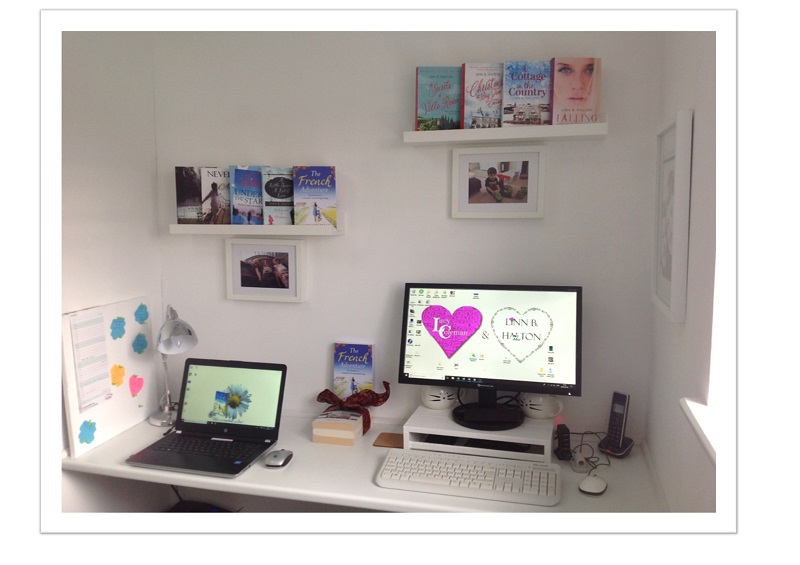
March 1st began with a roar – the Beast from the East arrived but it just happened to be the day I started writing my fourth novel for Aria Fiction. Thankfully, after last month’s stressful IT problems, my new office set up is now working well.

The arrival of the snow was perfect timing, though, as my new WIP is a Christmas story and it helped set the scene perfectly!

I was also able to take time out to celebrate my first release with Aria. As the reviews begin to roll in this has been a month of counting my blessings. So many wonderful readers and bloggers have shown support for my first book writing as Lucy Coleman, that I have been overwhelmed.

But now my newest cast of characters are calling and I’m in writing heaven again. Have a lovely Easter and I hope to see you here again next month!  

CLAIRE DYER… TOURING

The two weeks after the publication of The Last Day saw myself and my book on tour.

Each day one lovely blogger would host us on their blog, either including a feature by me or a Q&A designed by them and answered by me. And each day I’d eagerly anticipate the tweet that would alert me to the fact that the post was public, click on the link and scroll down the page, my heart in my mouth, until I found their review of the novel.

I can assure you this was a really scary moment because their good opinion means so much. Bloggers are amazing people. They champion writers and novels and promote reading by their enthusiasm and love of all things book-related. Between us, The Dome Press and I were lucky enough to be hosted by 16 bloggers who each brought a unique insight into what The Last Day is about and how it resonated with them. I learned a great deal about my book by reading their reviews and am eternally grateful to them for each and every one.


ANGELA PETCH… SPINNING

You know that feeling when you are chasing your tail? It seems like you’re achieving zilch? “…Busy doin’ nothin’ working the whole day through…”? I have lots of plates spinning at the moment.

I’ve established “Write Away in Tuscany” for September 11th to 18th and found a fab tutor to run the morning classes for this course. I’ve scouted for help with covers that need revamping since Endeavour Press went into liquidation. People’s Friend encouraged me to write a serial and I had three more stories accepted. I’m co-writing a ghost book for Littlehampton Festival. I gave a talk to Ferring book club and accepted a bigger talk in Chichester in April. I attended the Southern Book Show and “networked”. And poor Mavis and Dot? They are sitting on a bench on the prom somewhere, waiting for me to write their fate in the last two chapters.

Oh yes – and I went to Snowdonia for five days to escape.


JACKIE BALDWIN… FACE-PLANTING

Hello, again. What have I been up to this month? Editing again! This time it is a line-edit where you really get down to the nitty-gritty. Repetitions are identified and eliminated. Very Special Forces! Someone goes to dinner and vanishes into a space time continuum for five days. Your characters leap to wild, insane conclusions and you have to go back and put the seeding in earlier on. You get the drift. The absolute opposite of fun! Right now, going to Tesco, doing the ironing, even cleaning the bathroom, seem sparkling with allure. Feeling the pressure as my book, Perfect Dead, is due out on 15th June and I still have a copy-edit to go through too. My mood was not improved by doing a total face plant in Dumfries High Street yesterday. I look like I’ve been in a bare knuckle fight and lost!