JANE CABLE REVIEWS LIZ FENWICK’S EXCEPTIONAL NEW NOVEL

For some years the pinned Tweet on Liz Fenwick’s profile has been about kindness, and it struck me that in many ways The River Between Us is too. The First World War heroine, Alice, must learn to be kind to others, and her modern counterpart Theo needs to be kind to herself.
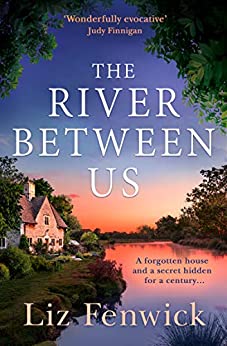
Their stories are more than linked – they are woven together – by place and by so much more. But as always with Liz Fenwick’s books, it isn’t so much the resolution of the mystery that is important, it is the journey itself. And this is an especially rich and sensual one.

Newly divorced Theo buys a ramshackle cottage on the Cornish banks of the River Tamar, once part of the estate belonging to the manor house, now hotel, on the Devon side. The seeds of mystery are planted quickly, as Theo discovers a box of letters dating from the First World War, and when her grandmother dies it comes to light that she had secrets of her own.

In the historical narrative, which begins in 1914, Alice is a rebellious debutante, determined to speak out for force-fed suffragettes to the king and queen during her season. When she does so she is banished to Abbotswood in Devon, where she is attracted to the ghillie, Zachariah Carne.

The coincidences may fall a little too thick and fast for some, but this takes none of the enjoyment from the story. Liz Fenwick’s prose takes the reader from seeing Abbotswood as a prison for a young girl, to casting it in a dream-like quality, full of beauty and wonder, as Theo falls in love. In this book the tiniest of details matter – the tying of flies, the shells in the shell house, the flowers and their meanings. And that is brilliance of it.

But The River Between Us is more than an exhibition of faultless prose; the characters leap from the page and sink into your heart. Both contemporary and historical plots are complex and resonate with each other, and by the end of the story all the strands are as neatly woven together as DNA.

Books as good as this one are the reason I don’t read when I am writing a first draft, because they have the power to transport you to a different world, even when you aren’t physically turning the pages. But I am discovering they are excellent to read when editing; tomorrow I need to return to my own work in progress, inspired to make it so much better.


Publisher’s blurb:

Following the breakdown of her marriage, Theo has bought a tumbledown cottage on the banks of the river Tamar which divides Cornwall and Devon. The peace and tranquillity of Boatman’s Cottage, nestled by the water, is just what she needs to heal.

Yet soon after her arrival, Theo discovers a stash of hidden letters tied with a ribbon, untouched for more than a century. The letters – sent from the battlefields of France during WW1 – tell of a young servant from the nearby manor house, Abbotswood, and his love for a woman he was destined to lose.

As she begins to bring Boatman’s Cottage and its gardens back to life, Theo pieces together a story of star-crossed lovers played out against the river, while finding her own new path to happiness.

The River Between Us beautifully explores the mystery and secrets of a long-forgotten love affair, and is published by Harper Fiction on 10th June.
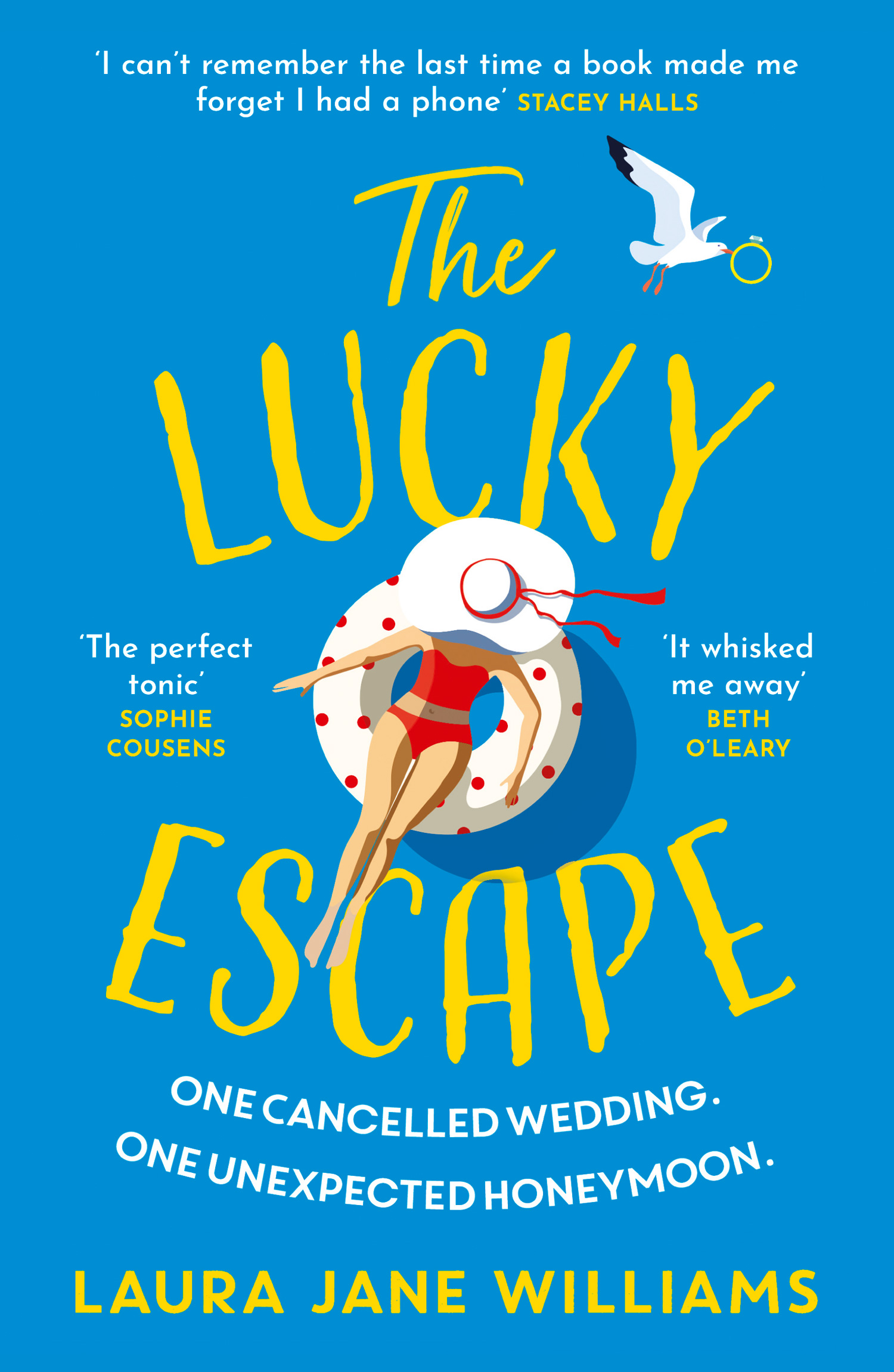


5 Books that Changed My Life By The Lucky Escape Author Laura Jane Williams

The Babysitter’s Club series

My parents had a rule when we were growing up: they’d always say yes to a book. I remember being in Waterstone’s Durham and randomly pulling a Babysitter’s Club of off the shelf, purely to get my dad’s attention and praise. Turns out, it was a gateway drug. Over the next few years I collected all of them, devouring the stories of these incredibly glamourous Americans who essentially ran their own little business. Couple that with starting highs school as The Spice Girls hit number one and a lot of my personality suddenly makes sense!

lucky escape, Laura Jane Williams, books that changed me,

On Beauty, Zadie Smith

I read this when I was about 20, and it opened a secret door within me that I hadn’t known about before. Every character in this book leaps off the page – there is no such thing as a flat or incidental character, everyone is 3-D and complete. It was the first time I remember being aware of not just enjoying the story, but that the story was created by somebody, a writer, who had worked at it and used certain techniques and skills to make their point. I know every man and his dog has been inspired by Zadie, but it really is for a reason. She’s remarkable – she’s got the most smart, intelligent brain.

Heartburn, Nora Ephron

I’ve read and re-read this book, and every time I just cannot get over the self-awareness of it. It’s so funny. There’s not a line wasted. It’s no mean feat, writing a character with so much life in them, with strong opinions and questionable choices who is still utterly likeable. It’s the same for Bridget Jones. I love knowing that the novel is a roman a clef and picking out which bits are slightly less veiled retellings of actual events than others. It must only be about 50,000 words, if that, so it’s proof that not every story needs to be an opus to be impactful.

Homegoing by Yaa Gyasi

This book taught me more about the lasting impact of slavery than anything else I’d ever read up until that point. I remember knowing that whilst the third chapter was some of the most difficult reading I’d come across it was unquestionably important. The novel branches out to illustrate the continued echoes of white supremacy alive today and so much clicked for me, then – my privilege had not allowed me to see so much, and through the gift of this story I could. It was a jumping off point for so much more interrogation into racial inequality.

Last Night, Mhairi McFarlane

I’d never read and Mhairi before this one, but offfft! What a book to get started on! Right from the first page I was sucked in to this world of banter and wholehearted friendship, and whilst I think the sort of rom-com/women’s fiction genre gets deliberately misunderstood (don’t get me started on that!) there’s no mistaking this book as an incisive, accomplished balance between hilarious and heart-breaking. That’s masterful! I read it in awe of her skill, trying to unpick how she’d done what she’d done. That’s how I know I’ve been impressed – I hold the thing up to the light desperate to learn from it!


The Lucky Escape publishing on the 10th June, is the third unmissable new novel from the bestselling author of Our Stop and The Love Square. The perfect romcom, and more: full of effortless banter; sizzling sexual tension and, above all, an overwhelming sense of hopefulness – in life as well as love.

THE DIARY OF A BOOK, MAY 2021

The first of Jane Cable’s monthly post charts acquisition and initial research

There is always a fascination with how books are written, but so very often when they’re started an author doesn’t know whether they will see the light of day so we’re unwilling to share what could be a disappointing journey. But as I signed the contract with Sapere for my second Cornish Echoes novel, The Lost Heir, in April, I thought I would tell the story of its creation too.

All the Cornish Echoes books will be standalone dual timeline romantic mysteries with one foot in the present and the other in the Poldark era (as I like to think of it), or the Regency period (for the purposes of Amazon classification). It was a fascinating time in Cornwall’s history when mine owners were making fortunes and building houses to prove it but there was still an element of lawlessness in the Cornish spirit. You’ve probably read or seen Poldark, so you will know what I’m talking about.

Each book is based around one of these great houses and at least some of the people connected with them – both in the early nineteenth century and the present day. The first, The Forgotten Maid, takes its inspiration from Trelissick, now owned by the National Trust and open to the public. For The Lost Heir it’s Tehidy, which burnt down in 1919, had a hospital on the site for almost seventy years, and is now a country park.

Sapere acquired the book on the basis of an outline, which for me means a four page summary of the characters, setting, history and plot. I had very little of the 1810 story but had discovered that the daughter of the house, Frances, remained unmarried – most unusual at the time, especially given the baronetcy was drawn up to pass through the female line as well. You could say my curiosity was piqued.

So in May the detailed research began and initially it involved a great deal of walking. Luckily my husband and I really enjoy it, so we tramped paths old and new to us both within the country park and around it; along the fabulous North Cliffs which run a field’s width from Tehidy’s boundary, then heading out to discover the farmhouse where important characters would live, and down old tracks into the harbour village of Portreath. All valuable settings for both timelines.

Alongside this I set out on some internet research into the history of Tehidy and the Basset family in the Poldark era. To my great delight I unearthed the possible existence of an illegitimate son, William. And the more I dug, the more certain it seemed he existed and what’s more, led a pretty colourful life.

His and Frances’ father was no slouch in that respect either, but as one of Cornwall’s most famous landowners it was easy to track down information about him. The online catalogue of Cornwall’s library system has an excellent search engine and through it I discovered books which mentioned him and a slim volume all about him, including accounts of how his household was run and guests’ impressions of the family and their magnificent home. Gold dust for a writer. The era – and the plot – were filling out.

But if these books were gold dust, a footnote in one of them led me to the actual gold. A family memoir of the type I assumed I would need to go to Kresen Kernow, Cornwall’s archives, to ferret out. But no, here it was in the library catalogue and it popped up at Truro branch within a few days. And it started with William. Lots about William. But to tell too much would spoil the story…


CARIADS’ CHOICE: MAY BOOK REVIEWS

Jan Baynham’s Her Mother’s Secret, reviewed by Judith Barrow

Her Mother’s Secret is set against the background of the Greek island of Péfka during different eras; 1969 and 2011. Two time frames linked by the two main characters, Alexandra and her mother, Elin; connected through time, by the diary that Alexandra finds after her mother’s death.

Elin and Alexandra are complex, well-rounded characters; very much of their time. Although never together in any scenes, the love they have for each other is threaded throughout the story. And the author has ensured that the reader becomes engrossed in these characters by intertwining their stories with a cast of believable minor characters.

The portrayals of the settings give an evocative sense of place.

There are many themes: of love, relationships, mystery, crime, secrets and friendships, woven to give a good balance of romance with a believable darker side of life.

Her Mother’s Secret is a novel I recommend to readers who enjoys a story grounded in the Romance genre but reveals itself to be so much more.


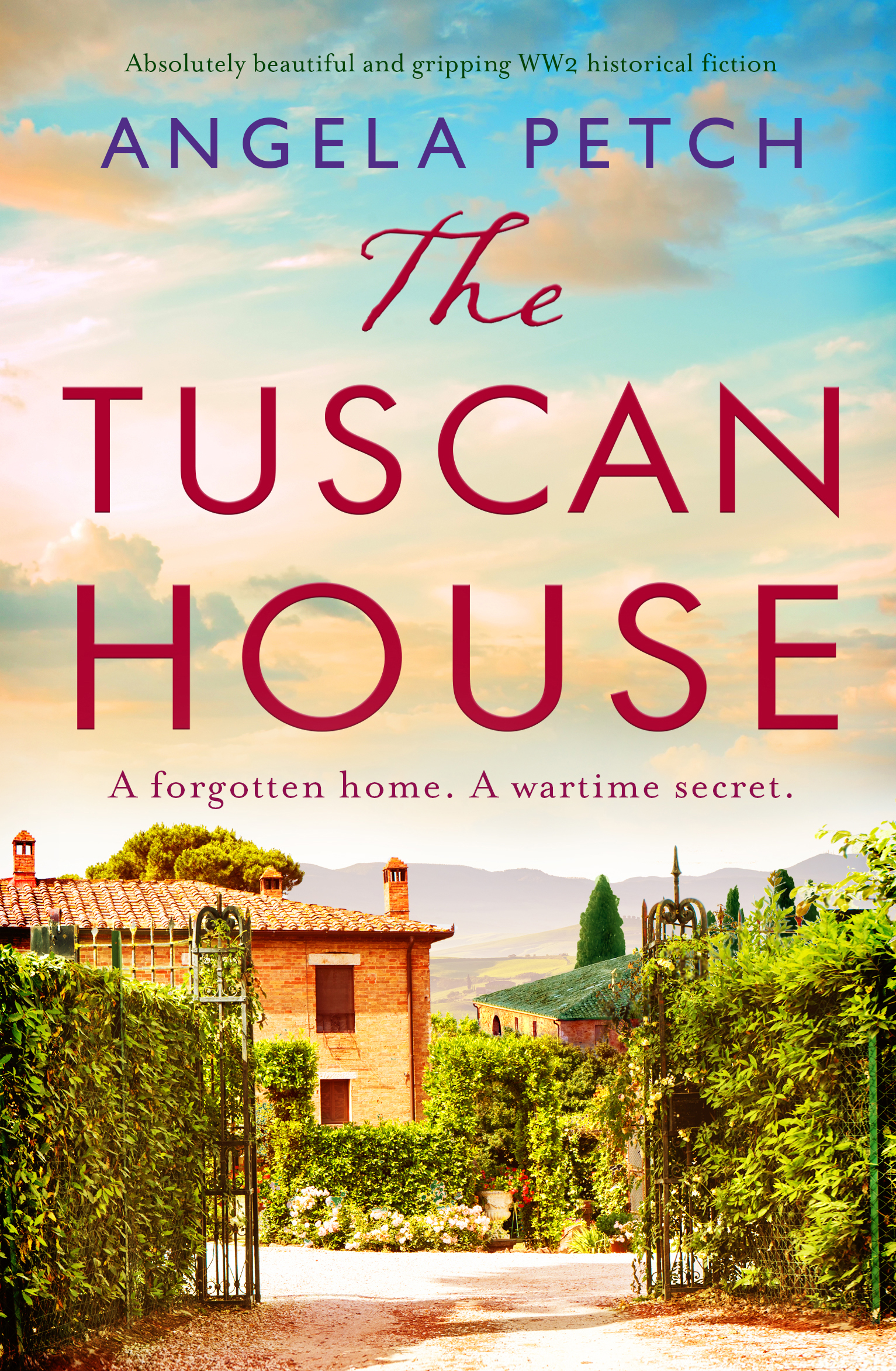
Angela Petch’s The Tuscan House, reviewed by Jessie Cahalin

A story about the extraordinary lives of ordinary people during World War Two. The colours and culture of Italy are scarred with the horrors of war, and I was transported to war torn Italy by this clever, sensory writer.

Fosca’s resilience and resourcefulness impressed me.  She recounts the bravery of women resistance fighters (partigiani) who took unthinkable risks, but never boasts about her own wonderful courage. Petch creates wonderfully real characters who involve you in their emotional journeys and you witness them change.  Fosca shares the wisdom she had learned throughout.

Tuscan House is also crammed with action sequences and a wonderful secret. This complex world is presented effortlessly and explores love, motherhood, friendship and courage.

Another gripping novel from this writer. This novel is so much more than another story of a Tuscan house and I highly recommend it. I can’t wait to read the next book.


Kate Field’s Finding Home, reviewed by Morton Gray

Loved this book and the concept that a chance encounter can lead to a whole new way of life. I related to Mim and her wounded soul. The story made me long to be at the seaside again and to find out more about fossil hunting. The characters are well drawn and the hero, Corin very attractive on the page. I even worried about the dog! I’ve loved all of Kate Field’s books and this was no exception. More please …


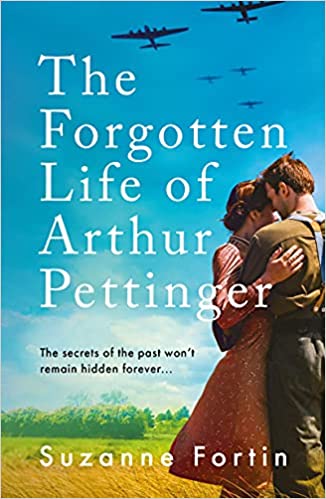
Suzanne Fortin’s The Forgotten Life of Arthur Pettinger, reviewed by Carol Thomas

When I saw this book’s gorgeous front cover I knew I wanted to read it. From the very start, I was drawn into Arthur Pettinger’s life, a man in his nineties struggling with his memory as dementia is increasingly taking hold.

I adored Arthur, who has led an incredible life, including his SOE role in the war. His granddaughter, Maddy, and great-granddaughter, Esther, were lovely, supportive characters. Their warmth towards Arthur, compassion and understanding was touching.

The dual timeline that runs through the book, revealing snippets of Arthur’s life and love in WWII occupied France, had me turning the pages, as did the present-day search for Maryse (his past love).

The story is one of emotional highs and lows, love and loss. The ending is beautifully written, albeit that it had me sobbing. I loved this emotional, heartfelt read as much as I did Arthur, but I would advise having tissues at the ready.


CARIADS’ CHOICE: BANK HOLIDAY SPECIAL BOOK REVIEWS

Lizzie Lamb’s Harper’s Highland Fling, reviewed by Jessie Cahalin

Harper expected to travel to Tibet on her holiday adventure, but her niece decided to run away to Scotland with the son of the local car mechanic. Witty, feisty headmistress, Harper, meets her match and is forced to squeeze into biker’s leathers to travel with Rocco to Scotland.

‘At least she hadn’t fallen off the motorbike…or clung to him like a medieval maiden slung across a knight’s errant saddle.’

Forget Nepal, Harper must save Ariel, or does Harper really need to save herself? The novel is packed with expectation, and stereotypes of a headmistress and car mechanic are challenged as we get to know and love the characters – perfect.

Rocco is not about to save the feisty maiden but ‘without meaning to she’d got under his skin and he couldn’t resist winding her up.’ On the other hand, Harper thinks Rocco is ‘an enigma wrapped in a conundrum.’


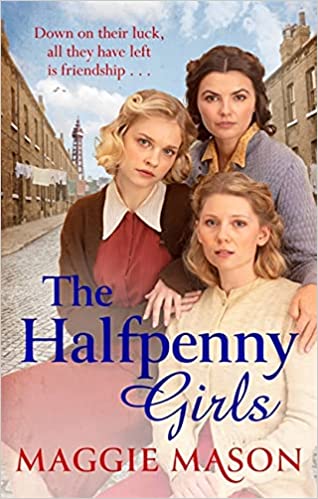
Maggie Mason’s The Halfpenny Girls, reviewed by Susanna Bavin

What I loved about this book, and what made it, for me, a stand-out saga, was the concentration on family life. Sagas often revolve around the work-place, but this pre-war story is firmly rooted in the hardships faced by three close friends because of their family circumstances. Violence, alcoholism, betrayal and dementia are all woven into the tale – alongside love, loyalty and the determination of the three young heroines to do their very best for their nearest and dearest, despite every hardship. There are no easy answers to the problems each family faces – just a wealth of warmth and understanding from an accomplished author. This is a complex story with strong, cleverly interwoven plots; well-drawn, multi-layered characters; and, above all, a powerful sense of the importance of family.


Faith Hogan’s The Ladies’ Midnight Swimming Club, reviewed by Morton Gray

Loved this book on so many different levels – the characters and the challenges they face. I didn’t think I would like the book being written from so many different points of view, but it was seamless and added to the story. He doesn’t even feature in the novel, but I wanted to bop Elizabeth’s late husband on the nose, especially towards the end of the book. I was praying for Lucy’s son, Niall to make the right choices, shed tears over Jo and Dan. I want to go and stay in Dan’s rented house on the hill and take part in the Ladies’ Midnight Swimming Club. Great book and I’m off to find the author’s other stories.


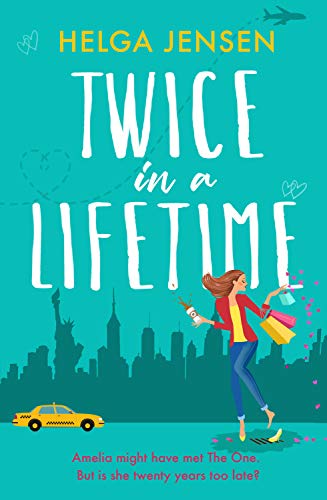
Helga Jensen’s Twice in a Lifetime, reviewed by Natalie Normann

This book is pure enjoyment from start to finish.

Amelia is the mother of twin boys, recently divorced and mostly a sensible woman. She struggles  with how her life has turned out. When Amelia finds the phone number of a gorgeous man she met in New York years earlier, her best friend Sian starts looking for him. And despite all of Amelia’s attempts to hold back, she soon finds herself in a huge mess. It’s hilarious!

This book got me through tax season, by providing a wonderful distraction and lots of laughs. Amelia is such a lovely person who tries so hard, you can’t help falling in love with her. There are twists that I didn’t see coming, and I loved the surprises. All I wanted was for it not to end! Helga Jensen knows how to tell a good story that stands out in the crowd. It’s right there on my top romcoms list now. That’s a five stars from me!


ERIC CARLE, 1929 – 2021

Eric Clarke, author, hungry caterpillar.
‘In the light of the moon,
holding on to a good star,
a painter of rainbows
is now traveling across the night sky’
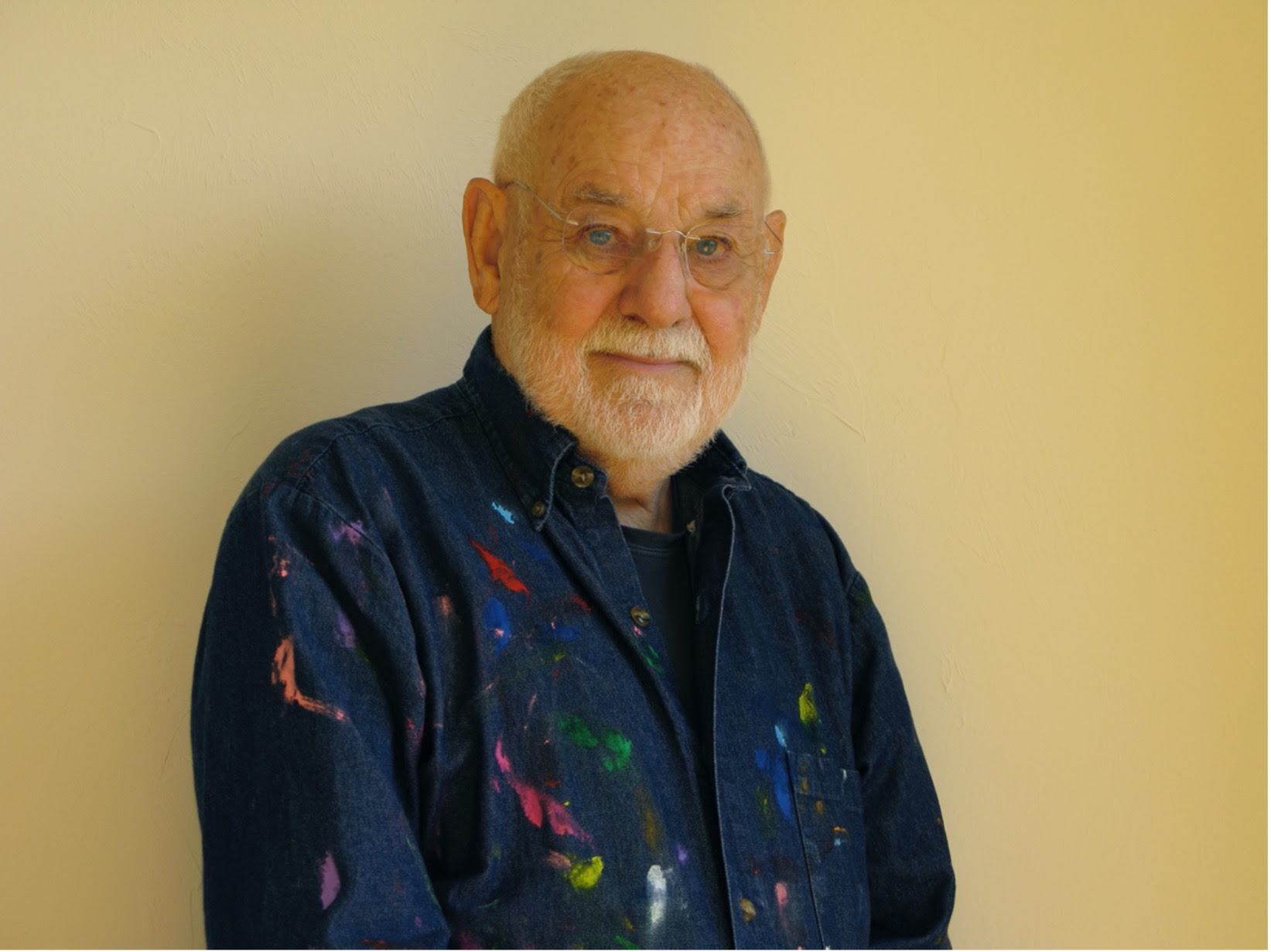
The Carle family announces with great sadness that Eric Carle, beloved artist, illustrator, and writer, passed away peacefully and surrounded by family members on May 23, 2021  at his summer studio in Northampton, Massachusetts. Eric was 91.

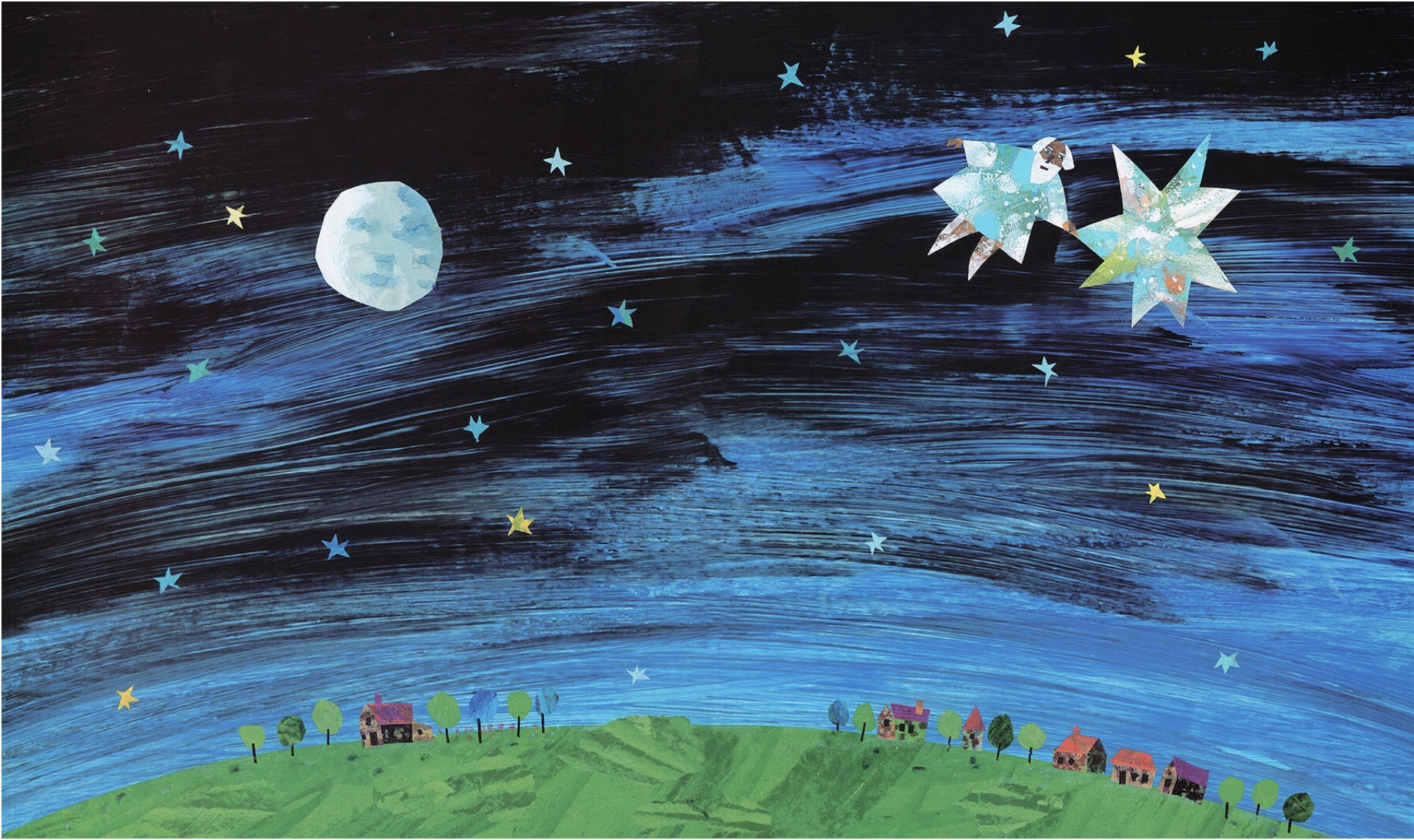
A true creator, Eric Carle is renowned for his multi-dimensional practice, spanning a large body of fine art works in collage, painting, works on paper and fabric, and sculpture; theater and furniture design; and the stories he envisioned in over 70 brilliantly illustrated and designed children’s picture books. The books Eric created across more than 60 decades have sold over 170 million copies and include timeless classics such as Do You Want to Be My Friend? (1971), The Grouchy Ladybug (1977), Papa, Please Get the Moon for Me(1986), “Slowly, Slowly, Slowly,” said the Sloth (2002), The Very Clumsy Cricket (2017), and so many more. His best-known work, The Very Hungry Caterpillar, has been translated into over 70 languages (including Mongolian) and shared around the world since its publication in 1969.

Drawing on his formal training and ongoing practice as an artist (which Eric fondly referred to as his “art art”), Eric quickly developed a distinctive, personal style that he continued to explore and refine in his books, illustrations, and fine art. Numerous artistic influences came together in Eric’s creative output. His art took root in the long tradition of collage, an artistic technique tracing back to the 1900s Dadaist movement, combined with his hand-painted, colorful, and textured tissue papers, which recall the work of abstract artists associated with the Academy of Fine Art Stuttgart (the so-called Stuttgart avantgardists), from where he earned his fine art degree.


Eric Carle. Photo: Motoko Inoue
Eric’s prolific career as a picture book illustrator began by chance in 1967 when author Bill Martin Jr, while in a doctor’s office waiting room, saw a medical advertisement in a medical journal for antihistamines with an illustration Eric had done of a big red lobster. Soon after, Martin invited him to illustrate Brown Bear, Brown Bear, What Do You See? and the experience sparked his interest in creating his own stories, combining his artistic abilities with his experience in the field of printing.

His first original, 1,2,3 to the Zoo, was published the very same year. The book was published by Philomel Books, an imprint of Penguin Young Readers, and edited by the late Ann Beneduce, who Eric has always credited the success of his early works. They would go on to work together for the next fifty years.

Bright collage images, imaginative stories, and little details – die cut pages, a firefly’s twinkling lights, a quiet cricket’s song – made Eric’s illustrations uniquely playful. Eric was the recipient of the 2003 Laura Ingalls Wilder Award (now called Children’s Literature Legacy Award) and held eight honorary degrees, including from Williams College and Amherst College. He remains an important influence on artists and illustrators at work today.

In 2018, Penguin Young Readers established The World of Eric Carle, an imprint dedicated to Eric’s work. Eric is also published by Simon & Schuster, HarperCollins Children’s Books, and Macmillan. In 2020, the World of Eric Carle was the #1 bestselling literary preschool brand, led by The Very Hungry Caterpillar,which was 2020’s 16th bestselling book of the year, and the #1 best-selling board book. Penguin Young Readers continues to publish new books featuring Eric’s iconic and beloved characters and artwork under The World of Eric Carle imprint.

Eric’s career as a creator extended far beyond his beloved children’s books—his independent artwork (or “art art”) is the root of his deeply individual style, reflecting a sense of whimsy, unfettered creativity, and calculated spontaneity. Utilizing materials such as aluminum, silk, glass, including scraps, and objects found in his studio, Eric amassed an extensive body of visual artworks throughout his lifetime including abstract collages, glass sculptures, and works on paper. Part of Eric’s early training as an artist was to treat all the arts, commercial or otherwise, with the same dedication, the same passion, and the same respect.

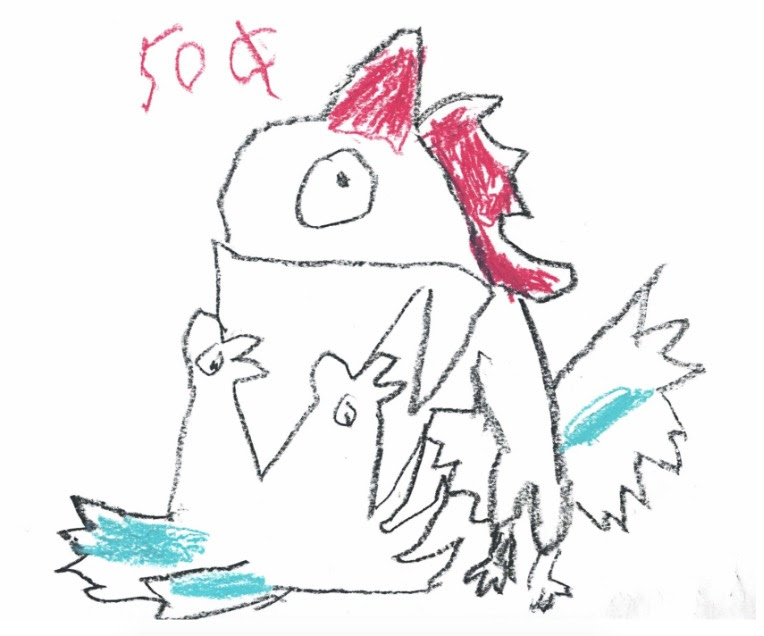
Eric was a true artist until the end—creating drawings as recently as this spring. Eric’s last drawing series, created in his final years, include several with “50 cents” written onto the image. When asked about this choice, he said that “children should know they too can sell their artwork.” A child at heart, the secret to Eric’s incredible legacy as a creator of picture books lay in his intuitive understanding of young minds—their feelings and their inquisitiveness, their creativity, and their intellectual growth. Besides being beautiful and entertaining, his books always offer children the opportunity to learn something about the world around them and encourage them to engage as artists themselves.

It was in this spirit that Eric and his wife Bobbie Carle (1938­-2015) co-founded The Eric Carle Museum of Picture Book Art in Amherst, Massachusetts in 2002. The Carles envisioned the museum as “a place for young visitors’ very first visit to a museum”, preparing them to develop the habits of museum going and discovery. The first major museum in the country dedicated to picture book art, it is a champion for illustrated children’s literature, collecting and exhibiting original illustration, and encouraging guests of all ages to read and create art. In summer 2020, The Eric Carle Museum of Picture Book Art presented Eric Carle’s Angels: An Homage to Paul Klee, an exhibition of 20 abstract assemblages dedicated to artist Paul Klee (1879-1940), who created over 70 drawings and paintings of angels during his lifetime. Eric’s singular, bold, three-dimensional “Angels”, created from painted cardboard and found objects, are a testament to the expressive power of collage in the hands of a master. His wishes for this series were that they never be conserved. Instead, he asked they be allowed to naturally disintegrate. The series represents a small but notable period of Eric’s extensive work in visual art.

Eric was born is Syracuse, New York on June 25th, 1929, and at the age of six moved with his parents Johanna and Erich Carle, both German immigrants, back to their hometown of Stuttgart, Germany. After graduating in 1950 from the prestigious Academy of Fine Arts Stuttgart (Akademie der bildenden Künste), he fulfilled his dream to return to America—the place of his happiest childhood memories. In 1952, with a portfolio in hand and $40 in his pocket, he arrived in New York City. With the help of the illustrator and art director Leo Lionni, who would go on to become a mentor, Eric landed a job as a graphic designer at The New York Times. He was drafted into the U.S. Army during the Korean War; after discharge he returned to his job with The New York Times and later he became an art director of a medical advertising agency, L.W. Frolich. Eventually, he was promoted to oversee International Hiring, recruiting art directors for the agency’s international offices (London, Mexico City, and Frankfurt), a job that took him away from designing himself. He soon left and began a career as a freelancer designing book jackets, album covers, and eventually children’s books.

Eric is survived by his two children from his first marriage to Dorothea Carle (née Dorothea Wohlenberg), Rolf Carle and Cirsten Carle, and Rolf’s wife Teresa Toro; his sister Christa Bareis, and his sister-in-law Rita Wiseman. Eric was preceded in death by his wife of 42 years Barbara ‘Bobbie’ Carle (1938 – 2015). Eric was a resident of Key Largo, Florida, where he and Bobbie lived since 2004.

An artist till the end, Eric continued to create art until early May 2021. Some of his latest works on paper can be seen here.

Online condolences, memories, and photos may be shared with the Carle family at:

Website: www.ericcarle.art/
Facebook: @ericcarleartist
Instagram: @ericcarleartist
#RememberingEricCarle

The Pact by Sharon Bolton | Book Review

I love getting my teeth into a good thriller and The Pact by Sharon Bolton is like a big, juicy steak. The characters are so vivid and the writing is so insightful that I loved every page. This clever book about six talented friends and the consequences of a very stupid thing they do. The daredevil game goes wrong and a woman and her two children die. It is heart-rendering stuff and someone must pay the price.
One of the friends, Meghan, takes the blame and pays a huge price. When she is released from prison the real fun begins. This is a clever and entertaining book that leaves you gripped all the way to the end.

A golden summer, and six talented friends are looking forward to the brightest of futures – until a daredevil game goes horribly wrong, and a woman and two children are killed.

18-year-old Megan takes the blame, leaving the others free to get on with their lives. In return, they each agree to a ‘favour’, payable on her release from prison.

Twenty years later Megan is free.
Let the games begin . . .

The Pact is available here.

Animal by Lisa Taddeo Book Review

Lisa Taddeo, Animal, book, book review,

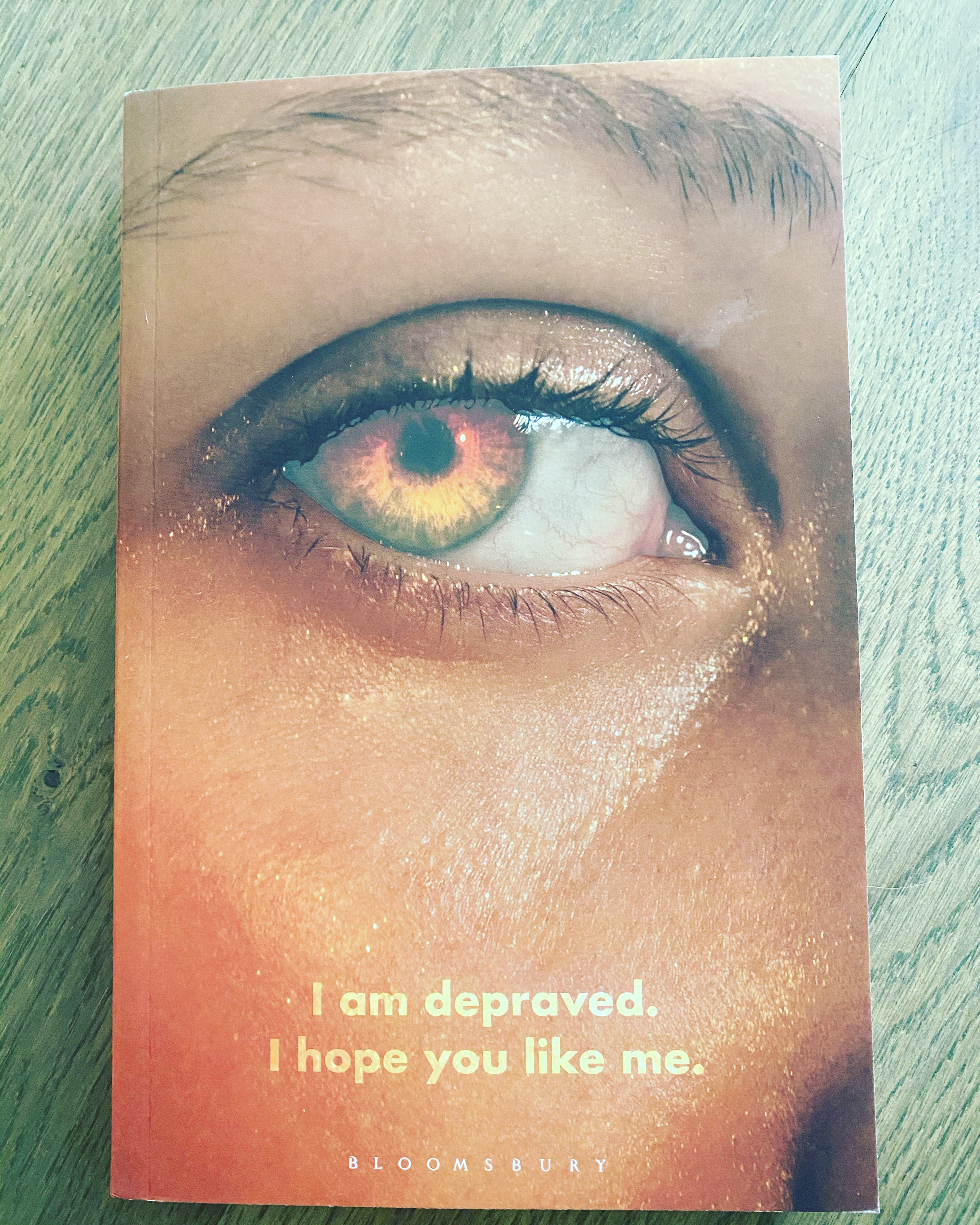
Animal is a searingly dark book. Lisa Taddeo takes you into the dark heart of what trauma does to a woman. All of those ‘tiny little rapes’ and things that happen that build up to the pure rage of a woman. It is so refreshing to have a writer who writes about women to unapologetically, and who writes about their anger and rage. Even if the character is one who makes bad life decisions. Yet Taddeo writes the story so perfectly that she unwraps the psychology of her character and how she came to be who she is with precision. You don’t need to like female characters.

Taddeo is so brave and writes with no filter. It is how all writing should be done, of course. That makes the writer no less brave for putting a story out there. There was never any doubt that Animal was going to be one of the books of 2021. But beware, before you read it: brace yourself. You will not be able to forget it.

This is the first novel from the author of Three Women which was a global phenomenon.

I drove myself out of New York City where a man shot himself in front of me. He was a gluttonous man and when his blood came out it looked like the blood of a pig.

That’s a cruel thing to think, I know. He did it in a restaurant where I was having dinner with another man, another married man.

Do you see how this is going? But I wasn’t always that way.

I am depraved. I hope you like me.

MEET JOAN: 24th June 2021.

Animal is available here.