WHOSE HOUSE? JANE CABLE TALKS TO AUTHORS MORTON S GRAY AND CAROL THOMAS

It seems a year of lockdowns and an inability to travel has caused authors to look closer to home for inspiration. This summer is seeing a surge in books with large or stately homes as their setting and family secrets at their centre.

For Morton S Gray and Carol Thomas, both published by the award winning romance publisher Choc Lit, their similarities in setting choice only came to light when their covers were revealed. The friends, who message each other almost every day, were unaware of the coincidence but saw the funny side. With Morton writing romantic suspense and Carol writing romantic comedy they are confident their stories are very different, but I was intrigued to find out more.
Summarise your story in a single sentence

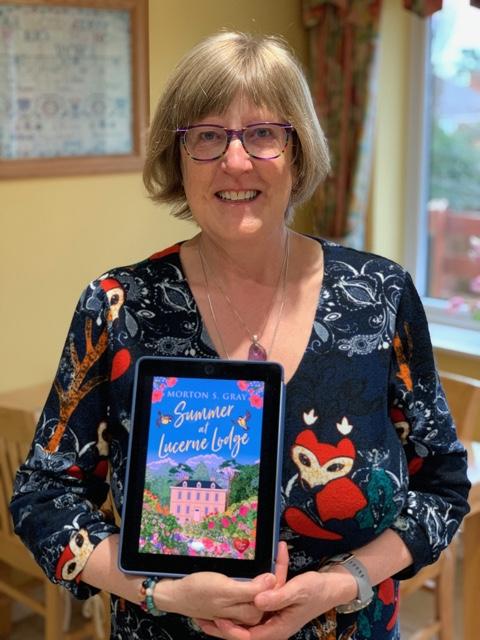
 M: Summer at Lucerne Lodge is a contemporary novel set in my fictional seaside town of Borteen about family secrets and their consequences for main characters Tanner Bryant and Rosie Phillips.

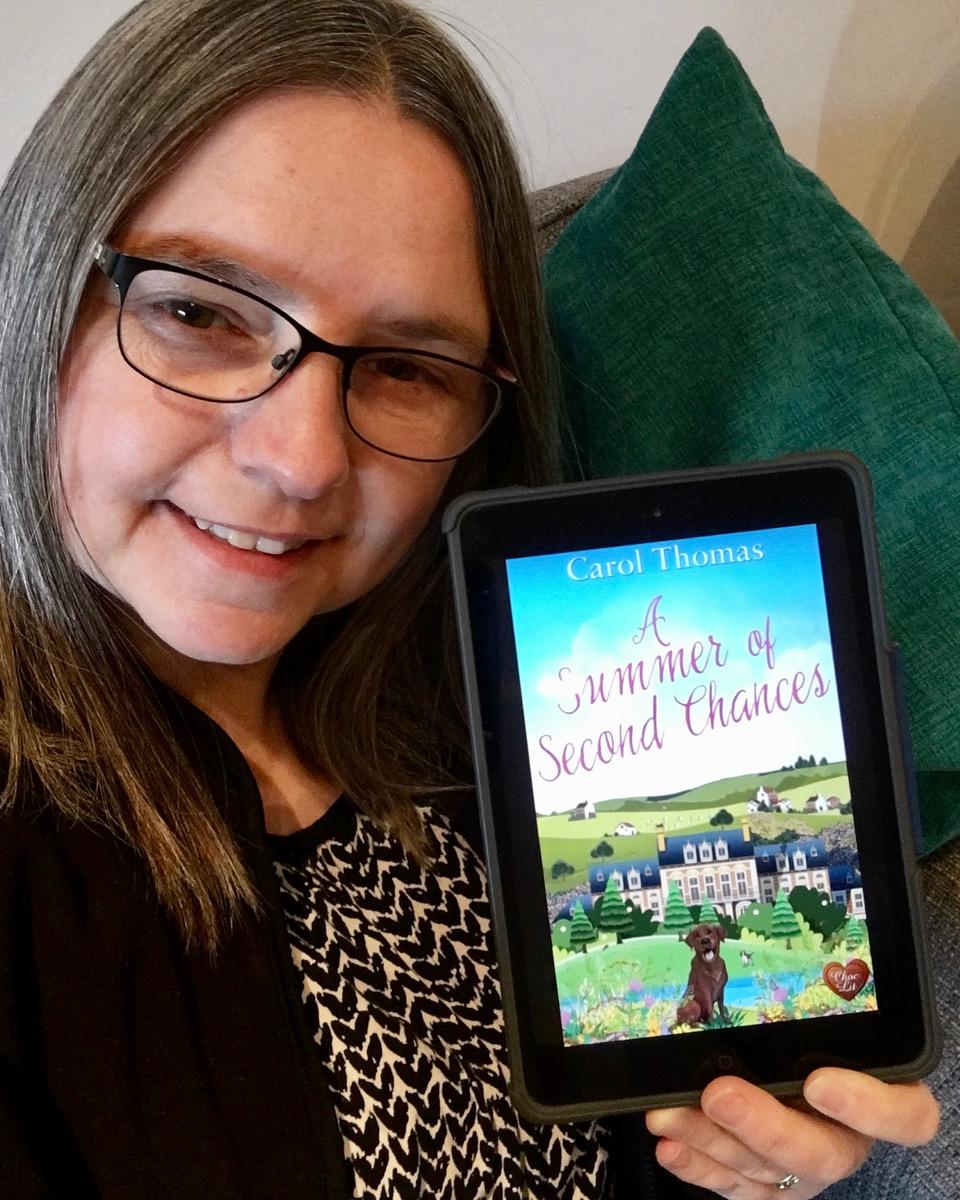
C: A Summer of Second Chances is a romantic comedy telling the story of Ava Flynn who runs a charity shop and receives a donation that unlocks secrets and passions relating to her past.

Tell us more about those stately looking homes on your covers

 M: Lucerne Lodge is an almost stately home, near my fictional seaside town of Borteen. It has a wrought-iron gate, gardens and a lake. At the start of the book there is a huge marquee on the lawn to house a charity auction.

C: Dapplebury House is a stately home that has been in the Bramlington family for generations, but with changes afoot in the village, the future of the house and its estate are in jeopardy.

The house in my book was inspired by visits to Petworth House and Uppark. I was lucky enough to visit Uppark with my dad, just before the first lockdown, we wandered through the wonderful house and gardens soaking up the atmosphere.
What inspired your story?

 M: I love writing about mysteries. I don’t plan my books, so I am telling myself the story as I write. At the beginning of Summer at Lucerne Lodge hero Tanner has found a private investigator’s file on his father’s desk about Rosie Phillips and wants to know why his father is so interested in her.

C: I volunteer in a charity shop and received a donation of a photo album. As I was checking the quality of it for resale I spotted a single photograph that had been left inside. My mind began to weave plots and possibilities from that.

Who is your favourite character and why?

M: Rosie is my favourite, because she goes through so much emotion in the course of the book. However, I liked one of my secondary characters so much – Buzz, a mystic man who runs a crystal shop in Borteen, that I’ve almost finished a novel about his story too!

C: I always love my K-9 characters but also fall a little for my hero because I think its important to feel the attraction my heroine has for him, so I’ll go with my lead, Henry Bramlington, who has to face up to his past and all that he has been running away from in order to forge the future he wants.

How can we find out more about you and your books?

M: My website is at www.mortonsgray.com, where you will also find a link to my weekly blog.

C: I love readers getting in touch and enjoy getting followers involved with my research. My contact and social media information can all be found on my website. http://www.carol-thomas.co.uk


CARIADS’ CHOICE: APRIL BOOK REVIEWS

Natalie Meg Evans’ Into the Burning Dawn, reviewed by Jill Barry

This sweeping novel is a step away from the world of Parisian haute couture for Natalie Meg Evans, whose books often feature heroines involved in fashion. A successful author of historical fiction, Evans mixes intricate details of a family business with an absorbing plot.  If you enjoy plenty of conflict in a love story, this novel will delight you. Set in Italy, descriptions of the sparkling sea, the scent of ripening lemons and the undercurrent of wartime passions all combine to make this World War Two romance an absorbing read. Heroine Imogen, faced with tough choices, is forced to decide which path to take. And her personal safety and determination to remain in her job are doubly important as she seeks to provide love and stability for the children in her charge.

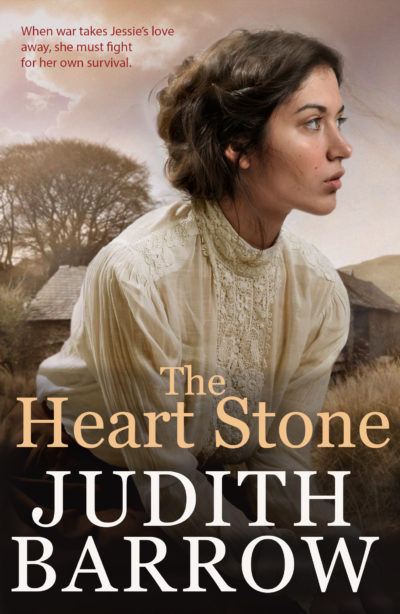
Judith Barrow’s The Heart Stone, reviewed by Jessie Cahalin

It is 1914 and war is declared. Childhood friends, Jessie and Arthur, declare their love for each other on the day he set to join the army and consummate the relationship. Jessie falls pregnant and her life becomes a series of trials and conflict, but she fights and fights. She is a well-drawn character with a distinct voice during a time when women did not have a voice. The enthralling narrative is fraught with conflict and heartbreak, but there are powerful moments of kindness and tenderness. Thank goodness for the warmth of the maternal role models in Jessie’s life – what an inspiration! This love story remained with me long after I had turned the first page.

I adore all of Judith Barrow’s novels as her writing breathes life into history through her characters; she is not afraid to deal with hardship and horrible people.

Sophie Nicholls’ The Dress, reviewed by Angela Petch

I’d listened to Sophie Nicholls talking about writing. Lines from The Dress were discussed and caught my attention: “The best words are chosen. They choose themselves while working on the garment… Let the words find you.”  In this novel, Fabia is a dressmaker, a salvager of vintage clothes, who sews mindful words into seams and hems of garments she creates. A heading for a different item kicks off each chapter.

This is “the story of Mamma and me,” her daughter Ella tells us and “a story that belongs to all of us, if it belongs to anyone.”

Mother and daughter (who have a particular gift of sixth sense) are continually on the move to city to escape the mother’s secret. But Ella, at fifteen, wants to settle and has made friends: Billy and Katrina. Nicholls is good at teenagers; I loved these cameos.

I would award 5 stars for the dreamy, magical prose but have to subtract half because of a guessable twist.

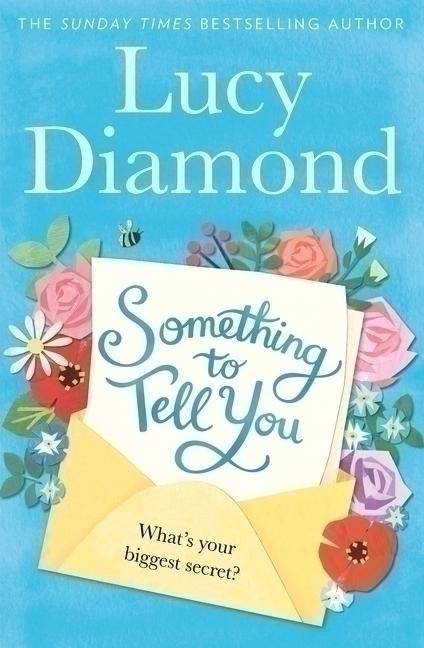
Lucy Diamond’s Something to Tell You, reviewed by Carol Thomas

Something to Tell You is a light, family-based read that tells the Mortimer family’s story as they come to terms with secrets that threaten their stability. It is a book of two halves. The earlier chapters include an attention-grabbing hook, while the later chapters, with their slower pace and happy resolutions, lead the reader by the hand to the story’s conclusion.

There were many characters to keep track of, each with their own issues, so the book required focus. The majority of the characters were likeable and optimistic. The author touched on some harder-hitting issues in their pasts but not in great depth. Because of that, it remained an easy-going read (as I had hoped). The resolutions felt a little easily won, but as I was looking for a book with little angst, it didn’t detract from the reading pleasure.


JANE CABLE REVIEWS TWO NOVELS WITH LINKS TO THE FIRST WORLD WAR

I am coming to think that I enjoy a saga more than any other sort of book. Yes, I poke fun at so many of them being ‘The Something Girls’, but it does mean you know what you are getting; a well constructed and multi-layered story about female friendship – and finding love – in the face of adversity. You often have the added security of knowing that if you enjoy the book, there will be at least two more to follow.

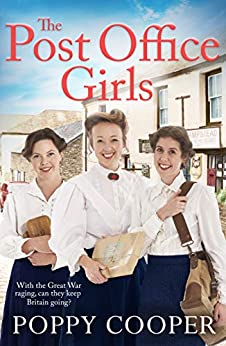
Poppy Cooper’s debut, The Post Office Girls, bears all the hallmarks of a quality saga. The classic cover featuring the three protagonists, a war going on to throw them out of their comfort zones, and some very assured writing.

The writing is, in fact, a delight. The main character, Beth, is just eighteen years old and the author has slipped easily into the head of one so young, making her an utterly believable and compelling character. It was done with such skill that I even forgave the exclamation marks. Because they were right!

The Post Office Girls, once it gets going, is a good pacey story too. In classic saga style three girls from vastly different backgrounds decide to do their bit in World War One by working at the sorting office erected in Regents Park for the duration. Beth is a shopkeeper’s daughter from the Home Counties whose parents are horrified she would dare do such a thing. Milly is from the East End and is a bit of a loose cannon, and gangly Nora comes from a very wealthy background indeed. They all have different views on life – and on how they should each support the suffrage movement, which plays an increasing role in the book.

It was a brave move to pick a man with moral objections to the war as Beth’s potential love interest and I am really looking forward to seeing how this plays out in subsequent books. The Post Office Girls is set in 1915, pre conscription, so it was less of an issue then, although as a reader you shudder to know what James will face.

This book strikes just the right balance between the internal conflicts of the characters and the action that surrounds them. There is peril and drama, without ever going over the top. There is plenty of laughter and quite a few tears, and I would certainly recommend it to anyone.

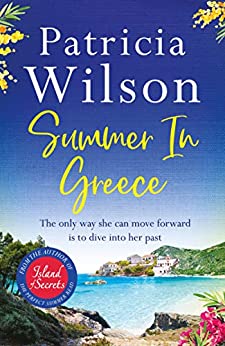
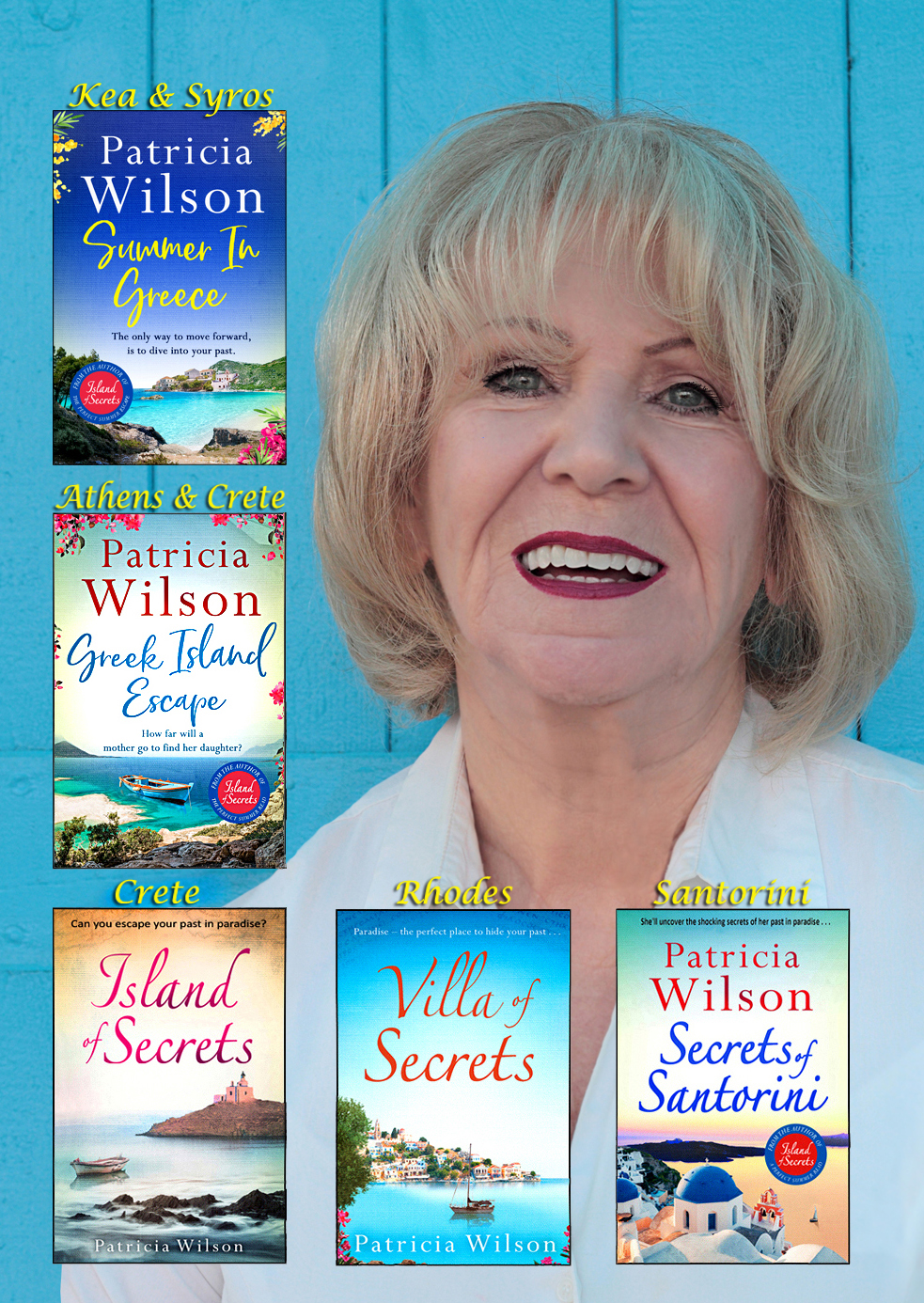
To review alongside The Post Office Girls I chose another book with links to the First World War, but this one a dual timeline. Patricia Wilson’s Summer in Greece is marketed as a holiday read – just look at that cover, with its promise of Greek Islands.

It isn’t a promise the book delivered for me and I felt a little let down that much of the present day action takes place in Dover, with just a couple of trips to Greece, and the Greek parts were so very beautiful it made me especially sorry that was the case.

Far more of the 1916 timeline was set in the Mediterranean and centred around the sinking of the hospital ship Britannic. There is a gritty truth in the way both this and working in a field hospital are described with no question at all of young VAD Gertie flitting between beds mopping brows.

If I am totally honest there were a few too many twists and turns in the contemporary narrative for me and I found myself wondering how many more tragedies could have possibly have befallen poor Shelly as one unheralded surprise revealed itself after another. But I know many readers will enjoy the story; after all there is a reason why Patricia Wilson is so very successful.

The Wish List by Sophia Money-Coutts | Book Review

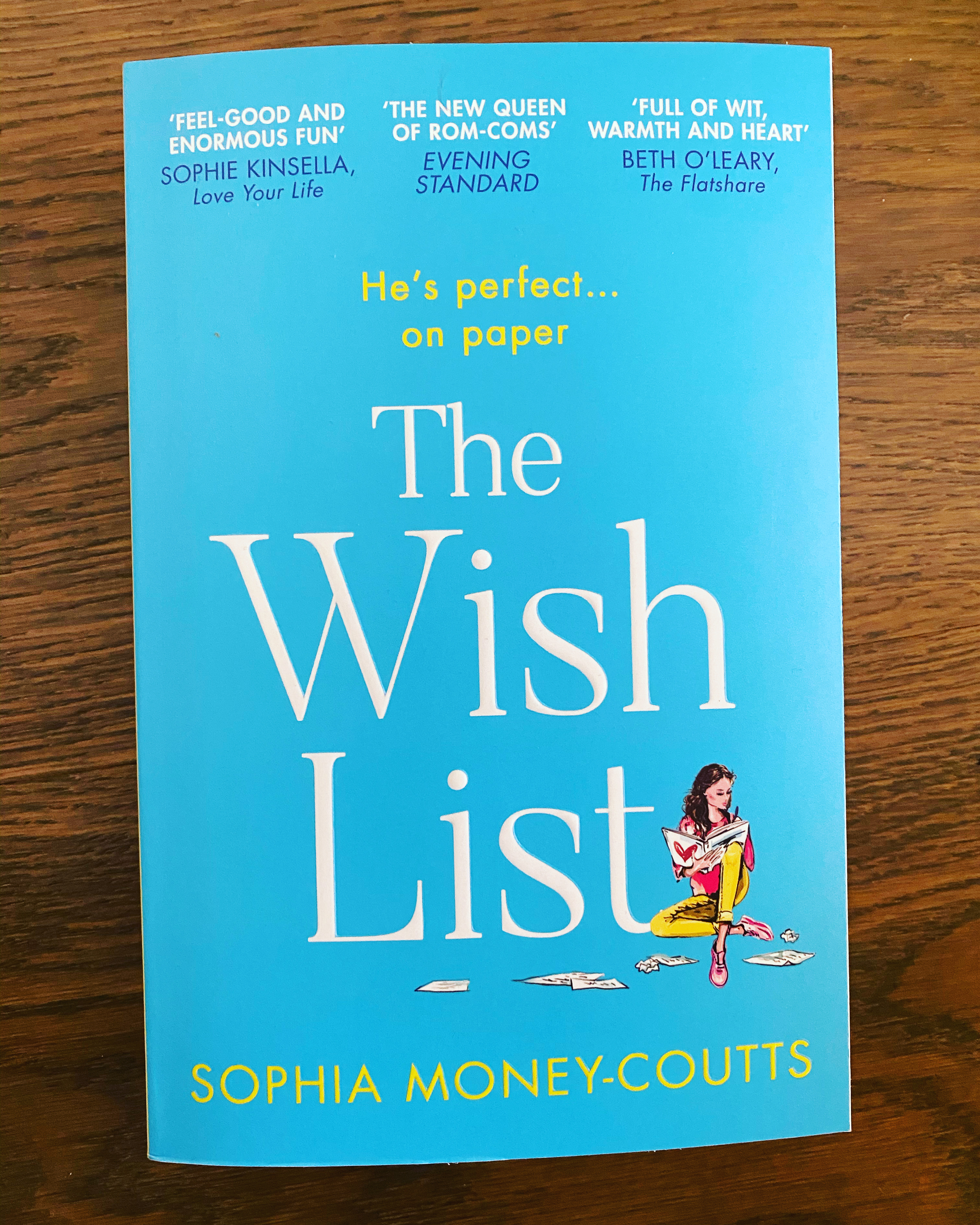
I need to start this review by admitting that I read every book written by Sophia Money-Coutts. I think she is a great writer. The Wish List is another triumph and my favourite book yet. It follows Florence Fairfax who writes a wish list of what she wants in a man, and then it seems like that man turns up. But will the course of love run smoothly?  Money-Coutts is a great writer, she is so perceptive about the little things in life, and in people. She writes in beautiful detail and really knows her characters. You can get lost in this book. I recommend reading it in the bath or in your comfiest chair with a good cup of tea. The Wish List is a fun and feel-good rom-com. It is perfect to unwind with. This is the perfect romance novel.

The Wish List, book, book review, Sophia Money-Coutts,

Florence Fairfax might have been single for quite a while – well, forever, actually – but she isn’t lonely. She loves her job at the little bookshop in Chelsea and her beloved cat Marmalade who keeps her company at night. She’s perfectly happy, thank you.

So when Florence meets an eccentric love coach who asks her to write a wish list describing her perfect man, she refuses to take it seriously. Until later that week, Rory, a handsome blond man with the sexual athleticism of James Bond she asked for just happens to walk into the bookshop…

Rory seems to tick all of the boxes on Florence’s list. But is she about to discover there’s more to love than being perfect on paper?

The Wish List is available here and is publishing in paperback on 24th June.


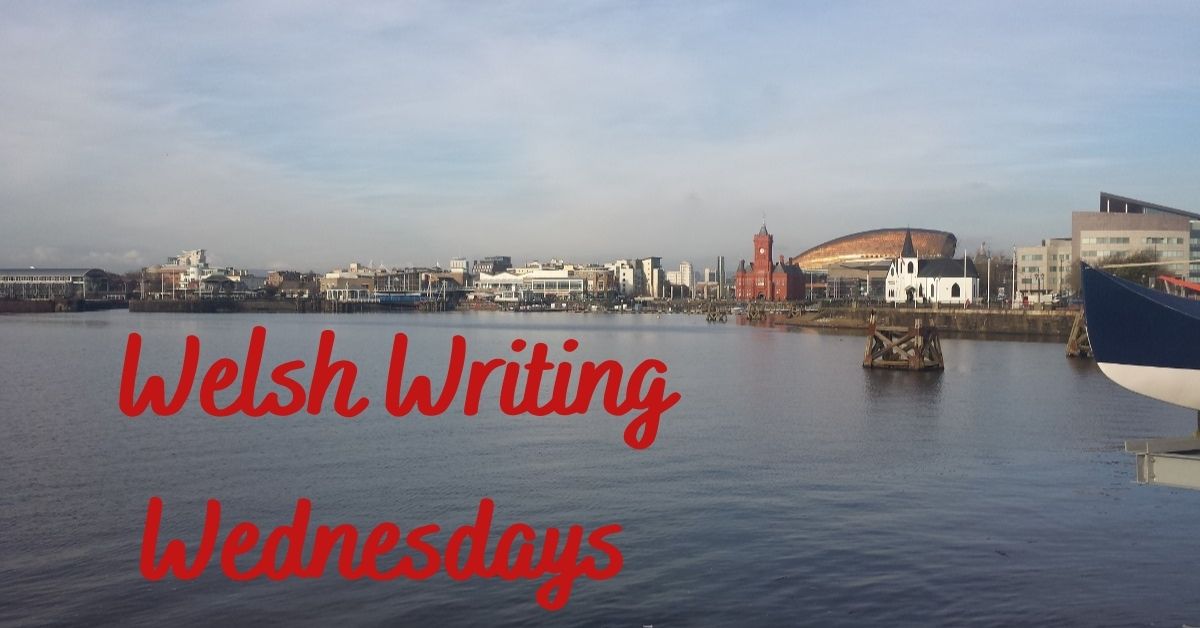
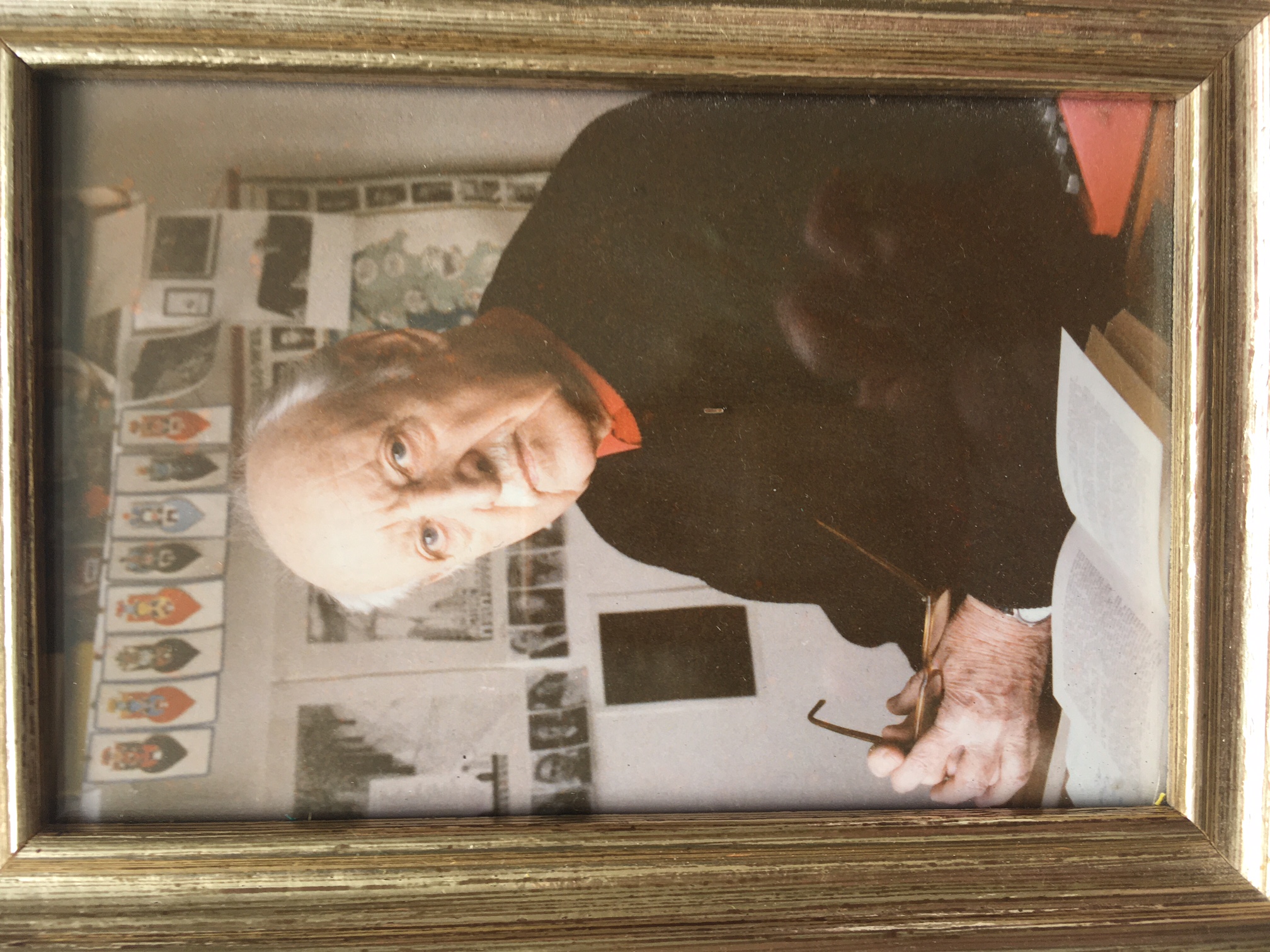
WELSH WRITING WEDNESDAYS: GLYN JONES – POET, AUTHOR, GENTLE MAN – A PERSONAL APPRECIATION BY JANE CABLE

I have a confession to make. When I first signed up to write this article, the subject matter was to be twentieth century Anglo-Welsh poetry, but slowly it dawned on me I could not do justice to those wonderful writers so Tony Curtis, Gillian Clarke, and even my own father, Mercer Simpson, will have to wait. Glyn Jones must take centre stage.

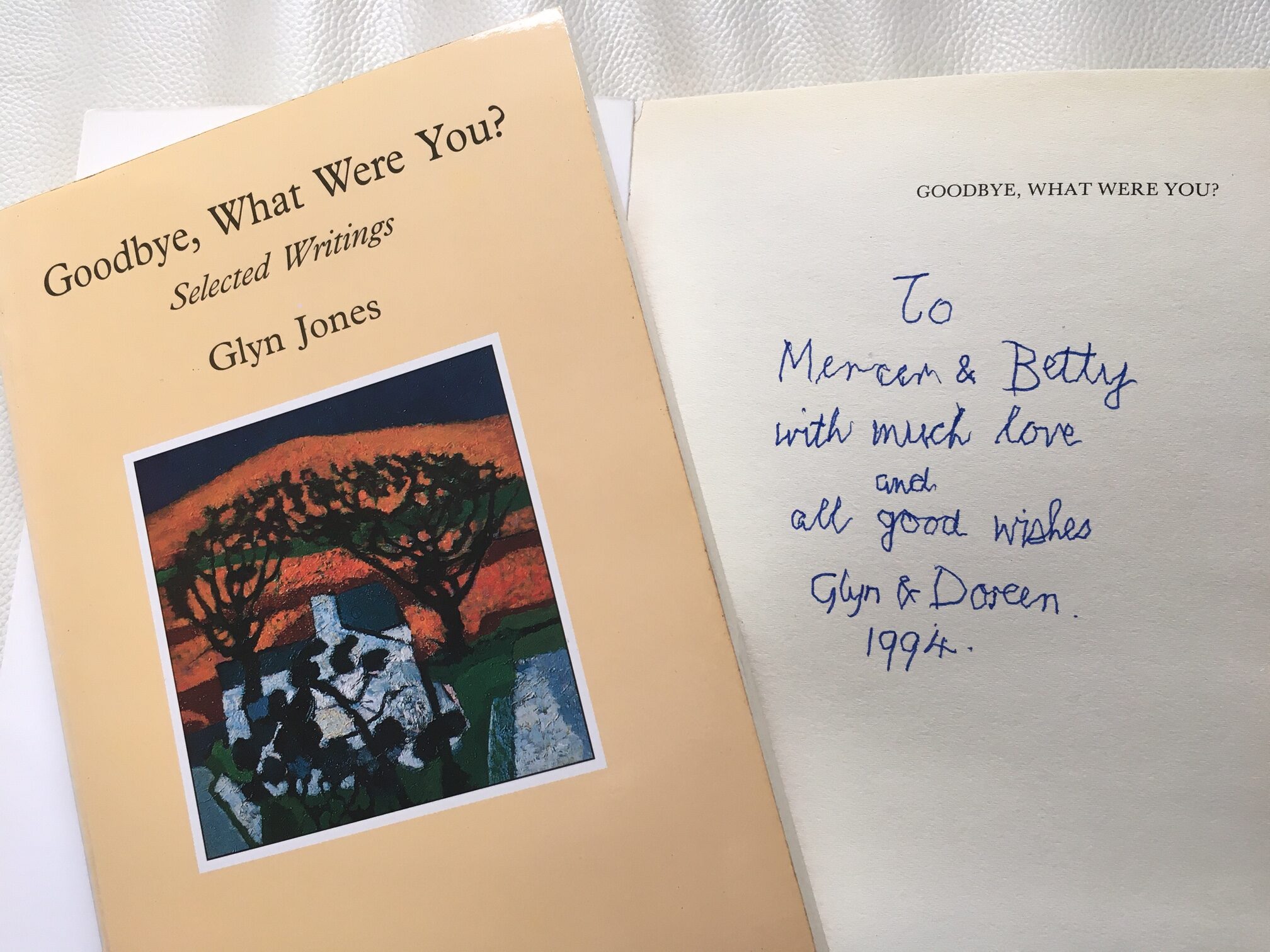
In later life Glyn and his wife Doreen were great friends of my parents. Glyn and my father met through the Welsh Academy (of literature) and found a common bond in their love of words. They lived quite close to each other in Cardiff and on sunny afternoons the Jones could often be found in my parents’ garden, tucking into tea and homemade cakes. Glyn was the ultimate gentle man, always unassuming, with a quiet sparkle about him. The last time I saw him was at a party my parents held to celebrate both my qualification as a chartered accountant and my engagement. A quiet man himself, my husband-to-be adored him too.

Both in the years before, and after, Glyn’s death, my father became the go-to expert on his work. He was interviewed extensively for a BBC documentary about Glyn’s life made in 1996 and wrote the introduction to the University of Wales Press collected poems published the same year. In that he wrote:

‘Generous in his encouragement of younger writers and in his remarkable gift of friendship, Glyn Jones was so modest about his great gifts that they have still to receive the critical attention they so richly merit.’

Although a friend of Dylan Thomas’, Jones was his polar opposite, a chapel-goer all his life, a man steadfast in his beliefs (he lost his teaching job after becoming a conscientious objector in World War Two), he was indeed too modest to push himself forward. While Jones never created a masterpiece like Under Milk Wood – few people do – he was still a master of his craft as a writer, and his epic poem-play, Seven Keys to Shaderdom, which was unfinished at his death, certainly comes close:

‘Before a dazzling evening’s lemon glow all your repose,
Your writhings, were there alone in open pasture. Bareness
Assumed, in spring’s hysteria, against the soaking snow of
Clouds, green fabrics of your opening foliage, glittering
Sunlit deluges of grain-like silver’

His novels were published in the 1950s and 60s to critical acclaim. The Island of Apples is one of my all-time favourites, a coming of age story told from the viewpoint of a pre-adolescent boy, with descriptions so vivid and perfect it makes you want to stop and read them again and again. I remember becoming so completely lost in the time and place I can picture it to this day.

Glyn Jones also wrote short stories and translated poems, plays and other literary works from welsh to english, bringing them to a wider audience. But it is his poetry for which he is most remembered. Or perhaps what I most remember him for. The morning my mother died I took his Collected Poems from the shelf and read to her. Her favourite was The Meaning of Fuchsias, but in the end I decided to read Goodbye, What Were You? at her funeral:

‘At the voice of the mother on a warm hearth,
Dark and firelit, where the hobbed kettle crinkled
In the creak and shudder of the rained-on window,
This world had its beginning
And was here redeemed.’

My ultimate tribute to Glyn is taking his name in my pseudonym, Eva Glyn. I just hope I can live up to his example.


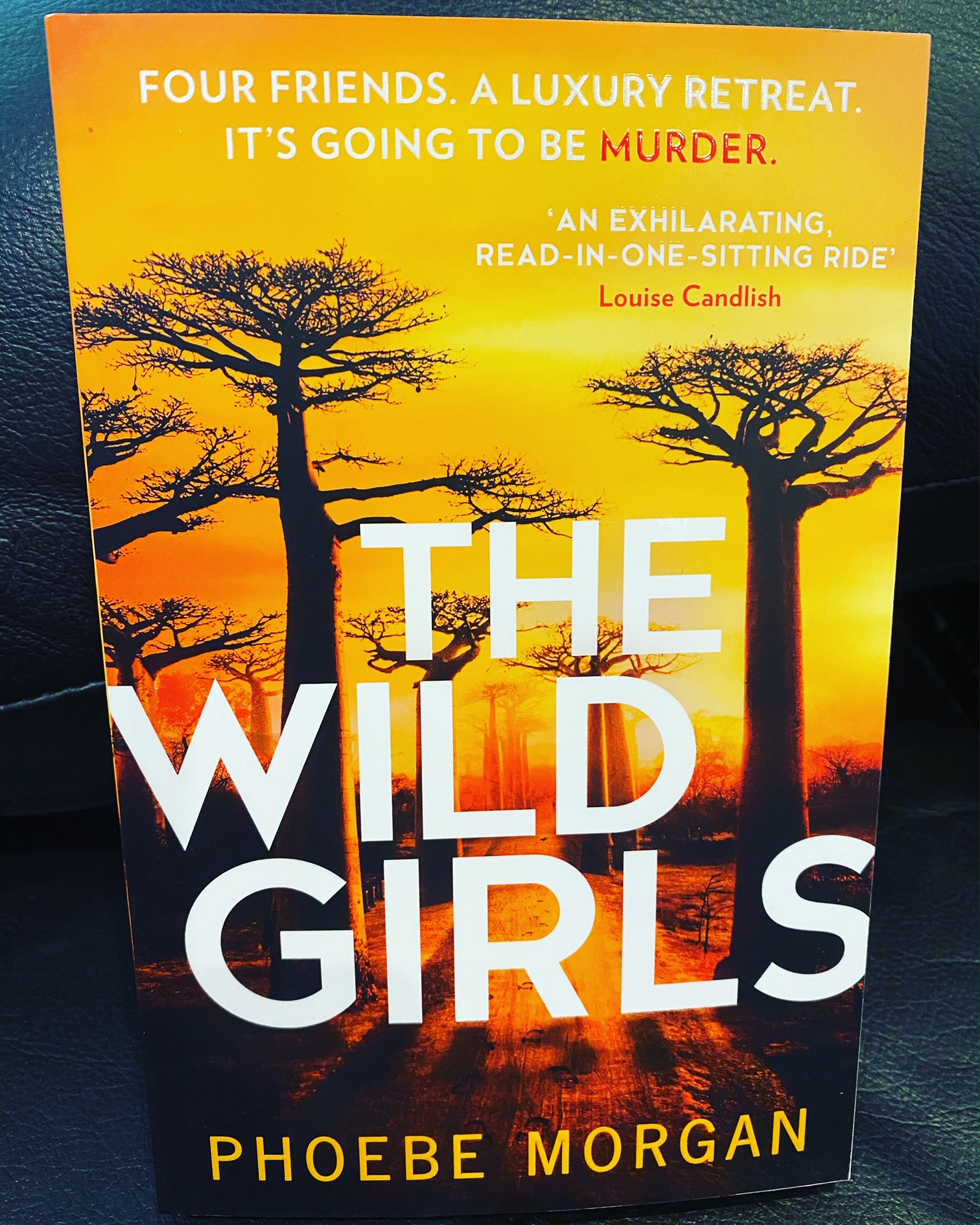
The Wild Girls by Phoebe Morgan | Book Review

Is there anything better than a good thriller? Well yes, a good thriller where the characters are female. In my opinion anyway. The Wild Girls is about four wildly (sorry) different women who all go on holiday to Botswana to celebrate their friend Felicity’s birthday. They have not seen each other in years and the last time they did see each other it did not go well. All of the women have secrets, and they want to keep them to themselves.

the wild girls, book, phoebe morgan, book, book review.
Hannah is a new mother, finally after years of infertility. Grace has been a hermit after suffering trauma. She lives with a flatmate who has a boyfriend who is rude to her. She needs to make changes and she knows it. Alison lives with her terrible boyfriend in a flat she can barely afford the mortgage for. All of the women are struggling in their lives. They all need something, so they accept the invitation from Felicity. No one has seen Felicity for years, she immigrated to New York with her boyfriend Nathaniel. It is an all-expenses trip to a luxury lodge in Botswana. Who could possibly say no?

The women arrive at the lodge and Felicity is nowhere to be seen. Things go downhill from there as the women realise that things are not quite right and more strange things keep happening. I do not want to give any of the plot away and to give the review I really wanted- and to truly capture how amazing I think Grace is, a truly brilliant character- I would have to. So instead I will say this: all of the characters are so vivid and perfectly written. There are four different women and each of them is so different and given so much depth. The plot races along. It is hard to put this book down and I really tried not to. I finished it in record time. I reckon you will too. From the great plot to the brilliant characters this book is pretty much perfect. Whats more, you will not see the ending coming. I loved it. A must read.

In a luxury lodge on Botswana’s sun-soaked plains, four friends reunite for a birthday celebration…

THE BIRTHDAY GIRL
Has it all, but chose love over her friends…

THE TEACHER
Feels the walls of her flat and classroom closing in…

THE MOTHER
Loves her baby, but desperately needs a break…

THE INTROVERT
Yearns for adventure after suffering for too long…

Arriving at the safari lodge, a feeling of unease settles over them. There’s no sign of the party that was promised. There’s no phone signal. They’re alone, in the wild.

THE HUNT IS ON.

The Wild Girls is available here.


MY WRITING JOURNEY – PATRICIA WILSON

At fifteen I left school and went to work as a Co-op window dresser. By the time I reached 35, I had two clothing alteration and repair shops, seven staff, a small catering business, a party-plan business selling childrenswear and toys, a husband and two children. I hardly had time to think, yet I was delighted by my own success. Then a catastrophic event caught me off guard. For the first time, I asked myself: Why am I working myself to death?

At around this time, A Place in The Sun started on TV. It seemed so appealing to retire to a warm country, so I made a plan to retire at 45. After another ten years of hard work, my goal came to fruition. We sold everything and bought a lovely place on Crete. After such a hectic life, I found it impossible to just stop, lie on a sunbed all day, and drink cocktails in the evenings. I decided to teach myself something that I wanted to do but had never made the time before. I would treat the task like a part time job for a year, and commit to it for three hours a day, five days a week.

I learned to sail single-handedly, play guitar, self-sufficiency, scuba and free dive, paint, distil raki and make wine, use a computer, plaster and do stonewalling, photography, video, until after about ten years, I ran out of things I wanted to learn. I know, I thought, I’ll write a book. Being dyslexic, it was the most difficult thing I ever attempted! My computer had Word installed, which was my greatest friend. It had a spellcheck, which I managed to confuse, and had endless patience. For the first time in my life, I found myself able to put my thoughts down on (virtual) paper. What miracle was this? I cannot describe the joy it gave me. I wrote simple poems, short stories, letters to people, a journal of my adventures in Greece. I thrilled whenever anyone said, ‘Thanks for the letter, I really enjoyed it.’

Naively, I had every confidence in my blockbuster’s success, assuming I would easily find an agent and get published. Soon enough, I faced up to my first total failure since leaving school – no one was interested in that first novel.

The following year we moved to a remote mountain village where I happened upon a machine gun buried in my garden! I showed it to the locals and with tears in their eyes, the old village women told me such moving tales from WW2. I felt a duty to record these events, so I created a character who was an amalgamation of these brave women and told their stories. That I was living in the house where such tragedy happened only hyped up my own emotion, which poured onto the pages.

That manuscript became Island of Secrets, represented by my agent, Tina Betts, then my publisher, Bonnier Books UK. The team at Bonnier guided me into producing a moving novel based on brave women and historical events surrounding the machine gun. From that moment, I decided to write about injustice, forgotten wrongs, and empowered women. All my novels link the Greece islands with Britain and are based on real, if little known, events in Greek/British history.

My fifth novel, Summer in Greece, is out on 15th April. RMS Titanic’s sister ship, HMHS Britannic, was a luxury liner that sailed out of Belfast, heading for Greece to rescue soldiers wounded at Gallipoli in WW1. My novel is a story of tragedy and triumph – tears and laughter, and a drama that continues to this day.


The Hit List By Holly Seddon | Book Review

The Hit List By Holly Seddon is one of my favourite books of the year so far. From the first page it drew me in and would not let go. The characters are all perfectly done and the clever story leaves you guessing. Holly Seddon is a master at plotting. It was exciting to read this brilliant novel as a reader, but also as a writer. Ah, that is how it is done, I thought to myself. This book is a must read. No exceptions.

On the anniversary of her husband’s accidental death, Marianne seeks comfort in everything Greg left behind. She wears his shirt and cologne, reads their love letters and emails. Soon she’s following his footsteps across the web, but her desperation to cling to any trace of him leads her to the dark web. And a hit list with her name on it.

To try to save herself from Sam, the assassin hired to kill her, Marianne must first unpick the wicked web in which Greg became tangled. Was Greg trying to protect her or did he want her dead?

The Hit List is available here.