Look What You Made Me Do by Nikki Smith

I love getting my teeth into a good psychological thriller and Look What You Made Me Do did not disappoint. The story is based around two sisters and what happens after their father dies and there is an inheritance up for grabs. But all is not as it seems and this books leads you through a gripping plot while your feet never touch the ground. The characters are all fabulously written. This book is outstanding and entertaining, what more could anyone want?

Two people can keep a secret . . . if one of them is dead.

Sisters Jo and Caroline are used to hiding things from each other. They’ve never been close – taking it in turns to feel on the outside of their family unit, playing an endless game of favourites.

Jo envies Caroline’s life – things have always come so easy to her. Then a family inheritance falls entirely to Jo, and suddenly now Caroline wants what Jo has. Needs it, even.

But just how far will she go to get it?

The Art of Repair by Molly Martin

the art of repair , molly martin, repair, mend, This is the book we all need in lockdown. Never have we had more time on our hands, and never have we appreciated the value of things more. This book show you how to mindfully mend and breathe new life into the things that you already have. It is also beautifully illustrated. Truly wonderful.

For Molly Martin, it all started with a pair of socks. Her favourite pair. When the heels became threadbare, her mother got out her darning mushroom and showed her how to reinforce the thinning stitches and bring them back to life. She has been stitching and darning ever since.

In The Art of Repair, Molly explores the humble origins of repair and how the act of mending a cherished item carefully by hand offers not just a practical solution but nourishment for the soul. Using her own beautiful illustrations, she guides us through the basics of the craft – from piecing and patching to the ancient Japanese art of Sashiko.

This book will stay with you long after you put down your needle and thread. It offers an antidote to our increasingly disposable lifestyle, encouraging us to reconnect not just with the everyday objects in our environment but also with ourselves.

Available here.

CARIADS’ CHOICE: MARCH BOOK REVIEWS

Carmel Harrington’s My Pear Shaped Life, reviewed by Kitty Wilson

I thoroughly enjoyed this story of Greta Gale, the highs and lows of trying to learn to value yourself. The author wrote empathetically about addiction, body issues and familial relationships. As a reader I was willing Greta on and particularly loved her travels across The States. We could all do with an Uncle like Ray. The author weaves the story of The Wizard of Oz throughout which is exceptionally deftly done, beautifully illustrating the light and the dark within us all.


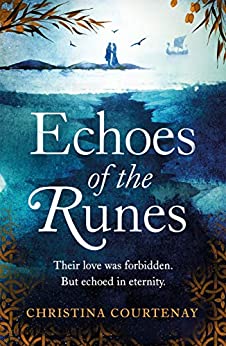
Christina Courtenay’s Echoes of the Runes, reviewed by Kitty Wilson

I thoroughly enjoyed this novel, both narratives kept my attention and made me want to keep reading. It was fascinating reading the contemporary storyline and the archaeological detail. The romance kept me hooked and the little bit of jeopardy (no spoilers!) had me willing Mia and Haakon on.

However, it was Ceri and Haukr who captured my heart. I loved this storyline and could have read so much more about them. I rarely find a captive and captor romance convincing but Christina Courtenay writes these characters with such empathy it is impossible not to fall a little in love with them and their story. Am greatly looking forward to the next in the series.


Kate Johnson’s Death on the Aisle, reviewed by Evonne Wareham

This is the third book in the Molly Higgins amateur sleuth series from award winning author Kate Johnson, who confidently mixes romance with cosy crime. It can be read as a stand-alone but there are recurring characters and story lines so reading the series in order would be beneficial, and all are enjoyable. The first, Death Comes to Cornwall, was a recent nominee for the Jackie Collins Romantic Thriller of the Year Award. In this third book Kate takes some classic ingredients for romance – hunky hero, capable independent heroine, a Cornish fishing village and a cupcake café and mixes in a celebrity wedding, a film set, a virtual reality show, the wedding planner from hell and a couple of fairly gruesome murders. If you like romance with a hefty dash of crime and sleuthing, it’s an enjoyable read.


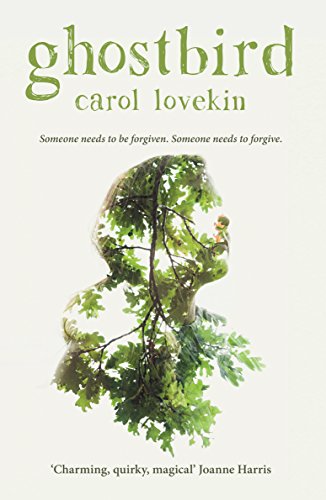
Carol Lovekin’s Ghostbird, reviewed by Jan Baynham

This is a magical tale that kept me spellbound until the end. I was able to marvel at the figurative language and poetic nature of the prose without it detracting from the pace of the story. The characters are very well drawn, displaying deep emotions, and I was particularly fond of Cadi. Secrets unravelled and the reader journeyed with all the characters to a satisfying conclusion. I loved the interaction between Cadi and the ghost. With its beautiful cover, Ghostbird is a book I thoroughly enjoyed, a book I kept returning to in my thoughts long after I’d finished reading it. Highly recommended.


Maisie Thomas’s Secrets of the Railway Girls, reviewed by Jane Cable

I loved the first Railways Girls saga, and the second book in the series did not disappoint. Set in World War Two in Manchester it vividly portrays the lives of women from vastly different backgrounds thrown together to help keep the country’s rail network running.

Although this book focuses on Dot, a working class forty-something grandmother, other stories are woven around hers so cleverly you just have to keep turning the pages. From the horrors of the Christmas blitz to cosy chats in the station tea room, all human nature is here and the writing is so wonderful it draws you in completely. I’m definitely having withdrawal symptoms having finished this one – luckily the next book is due out in April.


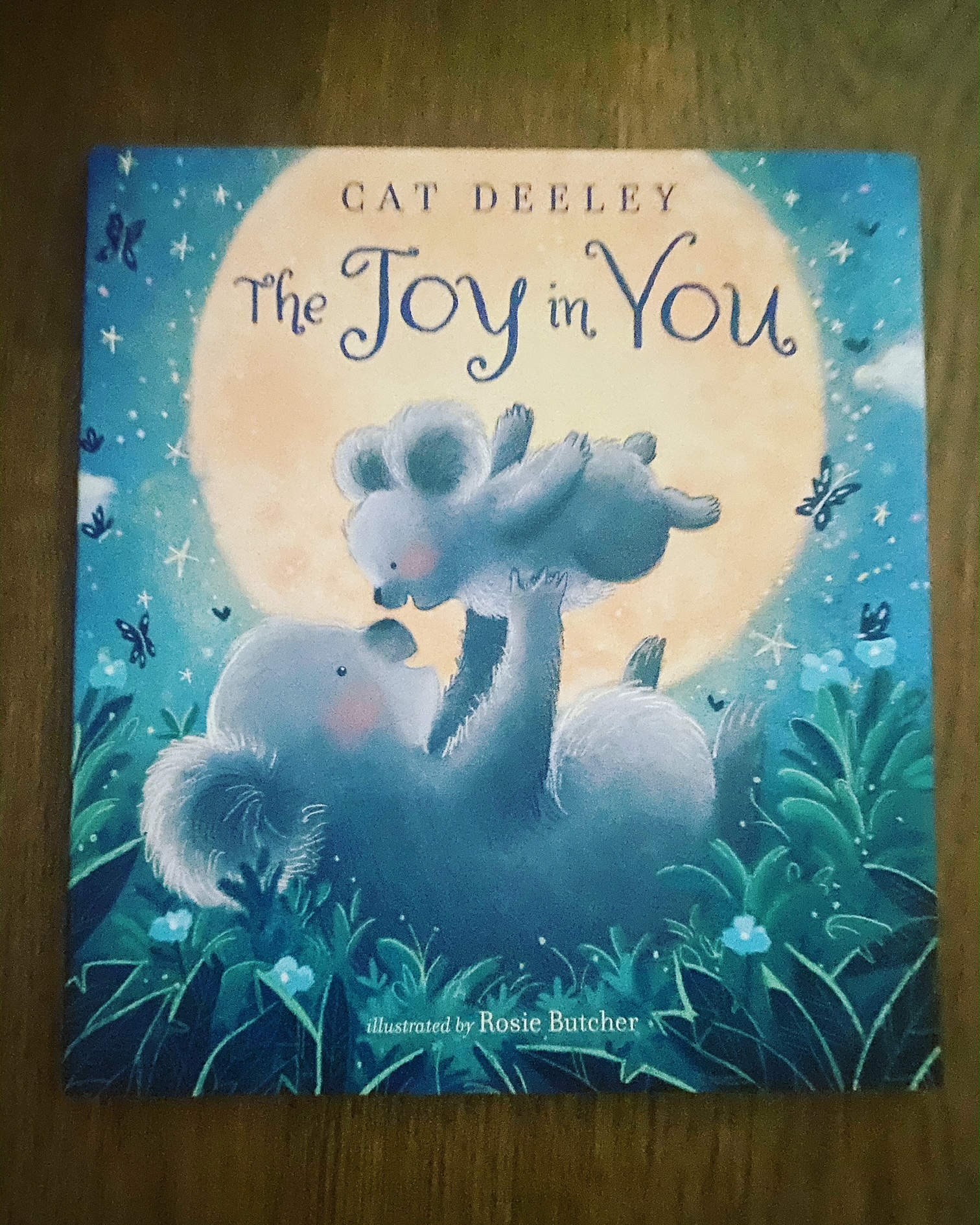
The Joy in You by Cat Deeley | Book Reviews.

The Joy in You, Cat Deeley, children's book, review, book

I really loved this book. It has beautiful illustrations which are matched with lovely, inspiring words to let children know that it is okay to be themselves, and also go after their dreams. A great book from TV presenter Cat Deeley. My children loved it. Inspiring and positively affirming.

Encourage kids to live out loud and be their truest selves with this picture book from media personality, national treasure and mum, Cat Deeley.

Dream big, as big as the night sky full of stars.
When you discover the things you love, you’ll find true joy.

Journey through a magical world, filled with a colourful cast of animals, where readers have endless opportunities to be themselves and find freedom in expression. They will delight in the silly humour and undeniable spirit of this rhythmic and beautifully illustrated picture book-and take to heart the message that they are enough exactly as they are!

Cat Deeley’s debut is an ideal bedtime book that you can read to your little one over and over again and is the perfect gift for birthdays and baby showers.

The Joy in You is available here.

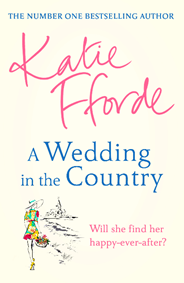
A Wedding in the Country By Katie Fforde Review

Katie Fforde a wedding in a country

Katie Fforde is a writer who needs no introduction, such is the weight of her talent and accomplishments. She is a national institution. Each one of her books is eagerly awaited and I cannot pretend I was not excited to receive this one. A Wedding in the Country is the perfect novel for these times. It is set in the 1960s which is a decade I have always loved (despite being born a few decades later). It is the perfect book to get lost in. The book has so much depth and I felt like I had been transported to another time. I loved the character of Lizzie and I could not wait to follow her journey. Get your hands on a copy of this dazzling book now. It is like a hot bath at the end of a tough day,  perfect up-lifting escapism.

This book is the most autobiographical for Katie Fforde. The book follows Lizzie who has arrived in London to do a cooking course, which Katie herself did, and Lizzie meets two other girls who become her best friends and moves into a run-down house in Belgravia. Her mother is determined she should have a nice wedding in the country to a Suitable Man chosen by her. But Lizzie wants to have some fun first.

Thank goodness for Katie Fforde. The perfect author to bring comfort in difficult times. She really is the queen of uplifting, feel good romance.’ A.J. Pearce

 Katie Fforde lives in the beautiful Cotswold countryside with her family, and is a true country girl at heart. Each of her books explores a different profession or background and her research has helped her bring these to life. She’s been a porter in an auction house, tried her hand at pottery, refurbished furniture, delved behind the scenes of a dating website, and she’s even been on a Ray Mears survival course. She particularly enjoys writing love stories. She believes falling in love is the best thing in the world, and she wants all her characters to experience it, and her readers to share their stories.

A Wedding in the Country is available here.


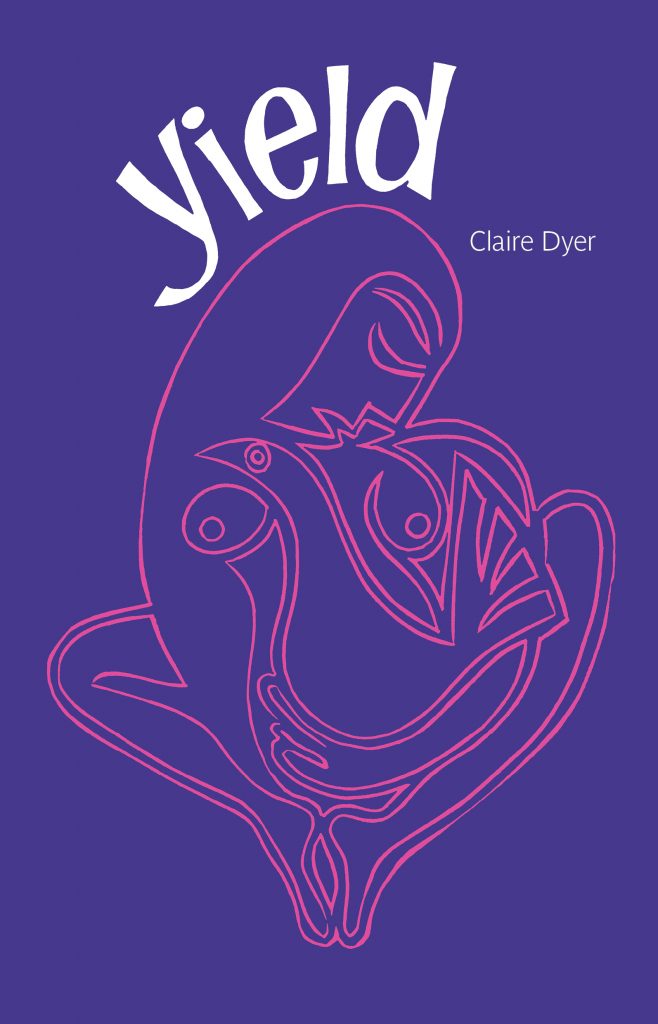
YIELD – CLAIRE DYER’S MOVING AND DEEPLY PERSONAL POETRY COLLECTION ABOUT HER CHILD’S TRANSITION FROM SON TO DAUGHTER

Reading Claire Dyer’s latest poetry collection, Yield, is to share an intimate journey told in a way very few people – if, indeed, anyone else – could tell it.
A collection of poems that tell a recognisable story is a rare and beautiful thing, but at times this story is not beautiful, although it does have a happy ending. As a mother, how do you feel when your son comes home and tells you that they are really your daughter? What does it mean to accompany them through their transition from one to the other?

The order of poems in any collection is key and Yield is punctuated by poems with the same name, but numbered; Yield, Clinic, Coming Out. They give the book unity and rhythm, and show the reader the key elements of the transition process, the ones that I guess everyone would go through.

Some readers find poetry difficult; I think because some poets consider their role is to obfuscate, but Claire Dyer’s style is very different. There is a clear communication of ideas, through a clever use of everyday language, for example the opening lines of Abroad:

“the waiters mistake us for sisters.
No, we say, laughing.

We know they know we’re not,
but we’re more than

who we seem.”

In this poem and in others there is a real sense of storytelling; vignettes from mother and child’s life before, during and after the transition process. Fireflies is about a sleepless winter night; the stunning Doing Cartwheels at the Ritz speaks for itself; Wardrobe the heartache of a mother clearing boyhood clothes – which has a truly joyful counterpoint in Shopping:

Let us go then, you and I, to Primark, Zara, Reiss.
The sky’ll be brilliant and,

around us, shoppers will burst into song,
dance on the up escalators and the down

as we load our arms with gorgeousness,
lacework brushing our shins.”
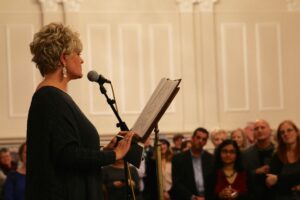
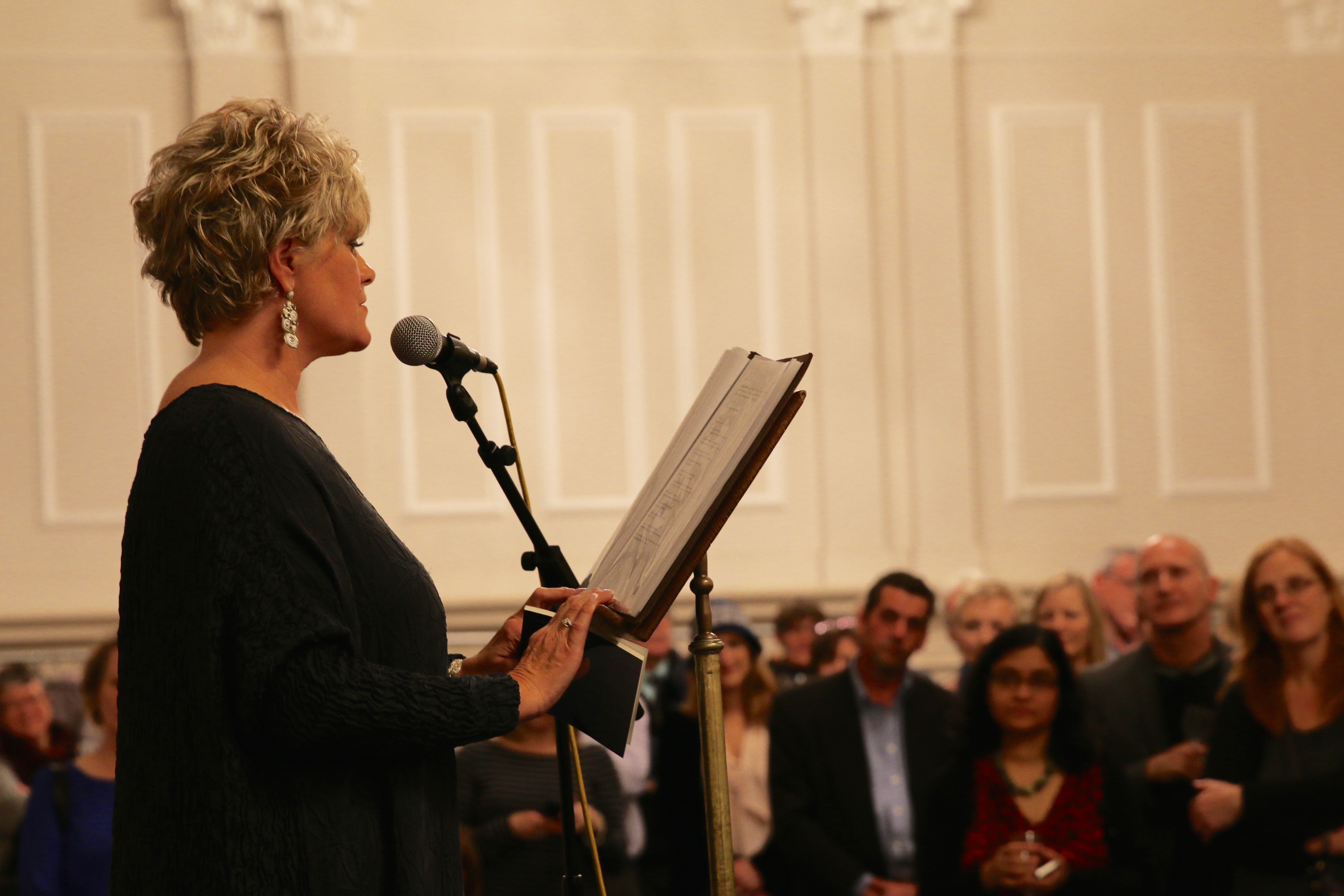
I do wonder if one of the reasons I love this poem so much is because I know Claire to be an expert shopper; so elegant in her own dress, and generous in her time to help those less  ‘expert’, like me. I remember once we spent hours in Reading as she guided my choice of the perfect handbag, which I would point out that was no mean feat as I detest shopping and had multiple – and not always compatible – criteria, for even this simple requirement.

There are other moments depicted in Yield that, having been alongside Claire for at least some of this journey, I recognise. To have listened as Claire talked about her son becoming her daughter, inch by painstaking inch, was a privilege and I was proud to be confided in, but not being a mother myself there was so much I could not understand.

Not least was that for a long time we called Lucy ‘L’. Having read one short poem, I now get it completely. And that is what great poetry does; it increases our understanding.

I wrote your names

                 with a knife on my heart and voiced them
in black ink and blue ink   I typed texted

and dreamt the names you were meant to pass on
that you’ve passed on now you have names

I can’t say because try as they might they’re not in my chest like
the rest that are still holding fast to the bones

in my back and my neck and my mouth is full
of dry grasses rivers and trees”


Yield is Claire Dyer’s third poetry collection and is published by Two Rivers Press.



CARIADS’ CHOICE: FEBRUARY BOOK REVIEWS

Jill Barry The House Sitter, reviewed by Jessie Cahalin

Characters’ actions are measured with precision in this gripping psychological thriller. The house sitter, Ruth Morgan, is complex and plans to be an integral part of the Deacons’ lives.

‘A fledgling idea trembles in the dark recesses of Ruth’s imagination… Up went the hand to stroke her throat.’

Shadows of the past haunts Ruth. Lost in the tension at the midpoint of this novel, I fell into the abyss with Ruth and worried that I felt empathy for this dangerous character.

Bethan is Ruth’s counterfoil, and her investigation orchestrates intrigue. Love is in the air for Bethan and this adds a hopeful dimension in this thrilling narrative.

Clues and tension are skilfully woven into the characters’ viewpoints. Clever writing with an intricate narrative that will chill you to the bone.


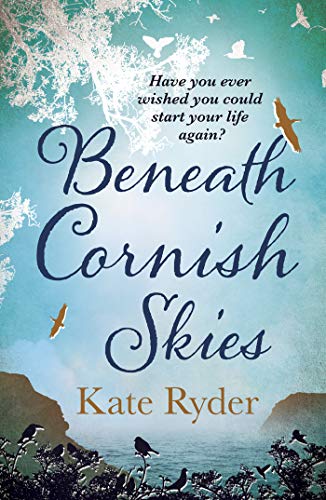
Kate Ryder Beneath Cornish Skies, reviewed by Jane Cable

Beneath Cornish Skies tells the story of Cassandra Shaw, who leaves behind her outwardly perfect but soulless life in Sussex to work for a chaotic Cornish family. The contrasts between the two settings are sharp, but united by the author’s love of horses, nature, and the lore attaching to the natural world.

This book blends romance with new beginnings and a ghostly past. Don’t be put off by the fact it’s described as ‘book 3 of 3’ on Amazon, it is in fact a standalone novel and has achieved a bestseller flag in paranormal ghost romance.


Naomi Miller Imperfect Alchemist reviewed by Kitty Wilson

I adored this well-written tale of two women at opposite ends of the social spectrum in the sixteenth century coming together and working in tandem in herbalism and alchemy. Their story covers a myriad of themes from both lives, including the suspicion and misogyny behind witchcraft trials in the villages and their impact alongside the high arts represented by Mary Sidney’s renowned Wilton Circle. Although a fictional account of The Countess of Pembroke’s life, the author’s knowledge of history and the literature alongside her skill at writing makes this a novel that pulls you in utterly, making me as a reader willing to believe this is how it was. It certainly is a fitting tribute to a woman who was at the forefront of new thinking and intellectual debate in a time women were overlooked in every arena. I loved it and shall be looking for more books from this author.


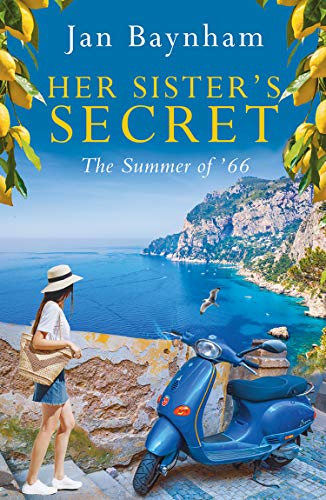
Jan Baynham Her Sister’s Secret, reviewed by Imogen Martin

Jan Baynham’s second novel slips seamlessly between Rose in the 1940s and Jennifer in the 1960s. It opens in a mid-Wales village where Rose works at the Big House whilst Mam tries to keep the peace at home. When Rose meets Italian prisoner-of-war Marco, the sparks fly. I was fascinated, as I have a friend whose Italian father and Welsh mother met in exactly this way. Unlike my friend, there’s no happy ending for Rose when her domineering father finds out about the relationship.

In the 1960s, the family secret comes tumbling out after a chance discovery by Jennifer. Will she have the courage to travel to Sicily to find out the truth?

Jan Baynham captures the excitement of standing on the cusp of a new life in Cardiff, the big city, in contrast to the vivid portrayal of small Welsh village life.

Her Sister’s Secret is a cracking read with passion, hurt and wisdom intertwined.  Whilst it has parallels with Jan’s debut novel Her Mother’s Secret, this is a stand-alone saga.


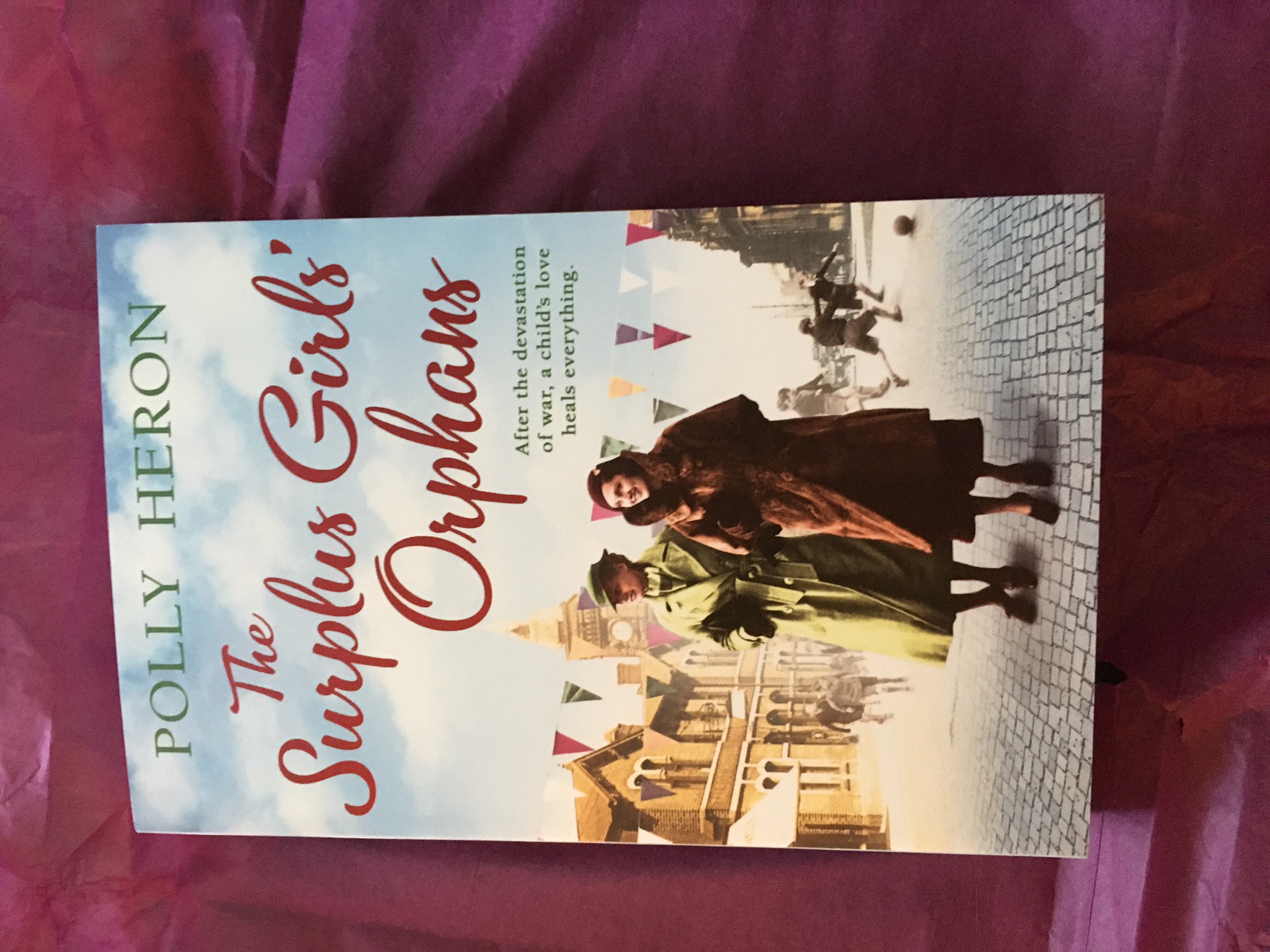
THE SURPLUS GIRLS’ ORPHANS – POLLY HERON’S EXCEPTIONAL NEW SAGA

Much as I enjoyed Polly Heron’s The Surplus Girls, I can honestly say that The Surplus Girls’ Orphans is the best saga I have read. The restricted lives of women in the inter-war period is captured perfectly, but with a fresh eye and brilliant story-telling that avoids the ‘grit and grim’ which I find makes some sagas less than a pleasure to read.

I know, as a writer, that the essential structure of a saga is to pour increasingly huge problems onto the heroine, twisting and turning the plot until she (apparently) has no way out. But of course, as a reader, you know she will find one. While all the time I find myself wondering how much more of the unremitting misery I can take.

Polly Heron’s books are not like that. There is joy and beauty in small things; in the orphans playing pirates on a wet evening, in the barley-sugar legs of a washstand, in children dancing around a maypole. And the plots and subplots are so beautifully drawn together than even when life is incredibly tough – which was, after all the reality of the time – as a reader you are led from one storyline to another without ever having time to get depressed. Angry, frightened, heart-warmed, amused… but never down right miserable.

Drawing on some of the characters in The Surplus Girls, and still wound into the story of the Miss Hesketh’s business school, The Surplus Girls’ Orphans is a standalone novel in its own right, although readers will get more out of the story having read the first book. As well as the Hesketh family, two of the Layton children feature, also as Mrs Atwood, and of course the backdrop is still the Chorlton area of Manchester.

However there is an entirely new main character in the form of Molly Watson, who is suffering perhaps the longest engagement ever, to a penny-pinching, controlling man. Deciding she would rather be a surplus girl, to the horror and shame of her family she breaks free to find work in an office, and then the orphanage, where she looks to change the lives of those around her and not just her own.

Her relationship with Aaron Abrams unfolds beautifully; the initial misunderstandings never overdone, the attraction between them perfectly paced. Nothing is sugar-coated and although the ending is perhaps inevitable (as it has to be to satisfy the genre) their journey feels unforced in a way all the best fictional romances do.

The subplots work perfectly too, in symmetry with the main story. A single thread connects Molly and the Hesketh household as secrets are revealed, with certainly some big surprises along the way. And Jacob Layton’s bullying at the hands of the inescapable thug Shirl brings an at times terrifying tension to the book.

Polly Heron has tremendous skill as a story-teller, but on top of that the quality of her writing shines through. She has a knack of wasting not a word on description, but of weaving detail into the action so the reader had a perfect mental image of a place and time as the story unfolds around them.

Overall, this is a brilliant book. I smiled when I read the acknowledgments, seeing that some of it had been written while we were on a retreat in Bath. I clearly remember Polly at the kitchen table, writing in longhand in a large notebook, and it is gratifying to think that as well as friendships, such a fabulous novel was forged at that time.