The Business of Books: Blending Fact and Fiction – Jane Cable meets GP turned author Carol Cooper


1) How much of your working life does the business of books take up?

About half my working hours are now taken up with book-related activities. It’s not all writing, as there’s social media, marketing, research, and the rest.

The other half of the time, I teach medical students, do some journalism, and fit in a spot of charity work. I’m involved with Tamba (Twins & Multiple Births Association), Lucy Air Ambulance for Children, and APEC (Action on Pre-Eclampsia). I have more time these days because I’m taking a sabbatical from seeing patients. After three decades as a family doctor, it’s lovely to have a break. Before that, writing had to be done during evenings and at weekends, but now my writing doesn’t just get the ‘tired me’.


2) What’s your business model to earn a living from writing?

Like most journalists who fell into writing books, I didn’t set out with a business model. My dozen or so non-fiction books bring in more income than my two novels. But journalism is still a more important revenue stream for me than books. Then there are activities like TV and radio appearances, and occasionally work for PR companies. I could earn more if I did more doctoring, but I enjoy the change of pace that I’ve allowed myself.

While I don’t normally spend much on book marketing, I did engage a publicist for my second novel, Hampstead Fever. That probably helped get it into bookstores. It certainly spared me a lot of time and footwork.

3) What do you write and what do you consider to be your major successes?

I’m now concentrating on fiction. My first two novels, One Night at the Jacaranda and Hampstead Fever, are contemporary tales about dating, relationships, and family life. Set in London, they feature multiple viewpoints. Think of the film Love, Actually, and you’ll have good idea of the structure.

My non-fiction books are mostly on child health and parenting, but there are also two textbooks on general practice, co-authored with medical colleagues. I’m not ruling out writing another health book, but publishing has changed, especially for non-fiction because there’s now so much web-based information.

My major successes include writing for The Sun newspaper for the last 18 years as the Sun Doctor. My role is to write fast authoritative copy as needed when a health story breaks. I know some people are sniffy about tabloid journalism, but it’s a real skill being able to get ideas across in just a few words, and I work alongside some of the best in the business.

I’m also proud of my book Twins & Multiple Births: the essential parenting guide from pregnancy to adulthood. The first edition came out 20 years ago and the title is still going strong. It was also very gratifying when General Practice at a Glance received a British Medical Association book award.

With my fiction, I was thrilled this year when WH Smith picked Hampstead Fever for a front-of-store promotion in their travel bookstores. There’s nothing like your novel being in airports and stations to make you feel you’ve arrived!


4) Tell me about your latest project

The novel I’m now working on is a new challenge. It’s set mainly in Egypt where I grew up. While story covers nearly 70 years, and there’s only one point of view, it is still mainly about relationships. It’s the book I want to write.

Carol Cooper is a doctor, journalist, and author who turned to fiction after writing a string of popular health books. She lives in North London and Cambridge, and has three grownup sons. Find out more about Carol here:

Blog Pills & Pillow-Talk

Website drcarolcooper.com

Twitter @DrCarolCooper


The Soft(er) Side of Stephen King By Richard Warburton

Via YouTube.

Many of you will have noticed the posters for the latest adaptation of Stephen King’s It.  Some feature a sinister red balloon being proffered to a small boy while others show the eponymous killer clown’s grotesque face – a malevolent grinning monster.  This sort of thing sends me bolting to the nearest Cineworld while others avert their eyes and try to think nice thoughts.  However, for all you cinephiles who don’t ‘do’ horror, then Stephen King’s cinematic canon does offer pleasures that are not so reliant on scares and gore.

It was probably the success of The Exorcist that gave King his break.  William Friedkin’s occult shocker was the second most popular film of 1974 eventually becoming the ninth highest grossing movie of all time.  Publishing houses took note and signed the likes of Anne Rice and James Herbert.  Over sixty cinematic adaptations of his work have been filmed which have varied wildly in terms of quality and revenues.  Nevertheless, amongst the horror classics like Carrie or The Shining there are several sensitive and thoughtful films that may interest viewers put off by the King brand.

Discussions of this subject usually begin and sometimes end with prison drama The Shawshank Redemption.  No supernatural monsters here, just the human variety in a film that accents perseverance and hope in the face of institutionalised brutality.  Instead, I would consider Stand By Me, a tale of four young boys who set out into the woods to search for the body of a missing child.  The film captures something that Stephen King renders so well in his prose, that is the exhilaration, vulnerability and confusion of what it is to be a kid.  Ironically King masters these themes in It and the latest film does a solid job of conveying childish camaraderie in the face of undiluted evil.

Of course It is not for the squeamish so next I would turn to Hearts in Atlantis which stars Anthony Hopkins as an elderly psychic who becomes the confidante of his landlady’s son.  It’s a curiously old fashioned film that played poorly in cinemas and divided critics.  However, its whimsical charms should win over the less cynical while its supernatural elements never dominate what is really a simple coming-of-age story.

Dolores Claiborne is a sombre and profound psychological mystery starring Jennifer Jason Leigh as the daughter of the eponymous Dolores played by Cathy Bates.  Dolores is the prime suspect in the suspicious death of her frosty employer and her estranged daughter is not convinced of her mother’s innocence either.  The mother / daughter relationship is delicately teased out.  King’s empathetic depictions of women, something rarely appreciated in his writing, are on show here.  And, despite the gothic gloom, Dolores Claiborne tightens its grip over two mesmerising hours.

Horror fans would no doubt be disappointed if they watched these films based on their familiarity of King’s signature output.  They might take some solace from another prison drama, The Green Mile, with its graphic execution scenes but the film spends more of its time examining humanity and dignity than revelling in shock and gore.

There is more diversity to Stephen King than his reputation suggests.  If you are willing to dip your toe into an unfamiliar genre then reading the long and terrific novel of It would be a rewarding starting point.  The film adaptation is the first of two with the second part due to go into production next year.  And, if you are curious as to why horror is such a popular genre then the upcoming book Why Horror Seduces by Mathias Clasen should provide the answers.


The Business of Books: A Sense of Place – Jane Cable on how fact and fiction can easily blur

Writers are inspired by many different things but for me it always starts with a place. A little over two years ago I found myself in the middle of the steam punk festival in Lincoln. People in amazing costumes were everywhere, breathing life into the city’s cobbled climbs and quirky coffee shops. It felt as though I had walked into the beginning of a novel and very quickly I realised that I had. It was just down to me to write it.

Last week I went back. The latest round of editing is almost complete – it won’t be the last, but I’m finally satisfied that the manuscript is almost in good enough shape to be found a home. I have a couple of agents in my sights and a shortlist of three publishers who take direct submissions and whose criteria it fits. This time I’m going to be very careful.

The story has two main locations, the city of Lincoln itself and the picturesque village of Winteringham on the banks of the Humber. I construct the settings for my stories very carefully; I know where the characters’ houses, flats – and barges – are; the places they work; the bars and restaurants they frequent and where my heroine Rachel goes running. In my own mind I create details so rich I inhabit the settings myself – so it comes as something of a shock when they are not quite as I remembered.

Much of the Lincoln part of the story takes place along the Fossdyke Navigation which joins the heart of the city to the River Trent. I think I surprised my husband by saying, “That’s Rachel’s flat” – and surprised myself by having forgotten it has a balcony overlooking the canal. But the story doesn’t need a balcony so I won’t be adding one. The apartment in my mind is so very real it would feel uncomfortable anyway.

I don’t think this is especially strange or odd – no more than is normal for writers anyway. The best of fiction is so much about the richness of the characters, to create them I think you need to actually walk in their footsteps, inhabit their world. For me, once I’ve grounded them in a physical setting, everything else falls into place. I am completely in awe of authors who can imagine and populate whole new worlds.

But I’m having to accept that my memory is far from perfect. I needed a male character who was a without doubt a local man so I picked an unusual surname from Winteringham’s war memorial. On a return visit to the museum in Lincoln I thought it such a co-incidence a Daubney was quoted on one of the display panels. When we arrived in Winteringham, the name wasn’t on the memorial at all. I read it three or four times with growing disbelief. Was another of my characters, the enigmatic Nick, up to his tricks again?

It seems so… either that or subliminal recall is far stronger than we think. I needed to name one of the properties close to the village centre. Not anything too twee, but something comfortingly rural, so I decided on Bramble Cottage. This visit I noticed that the alleyway running up the side of the houses is called Bramble Lane. I leave you to draw your own conclusions.


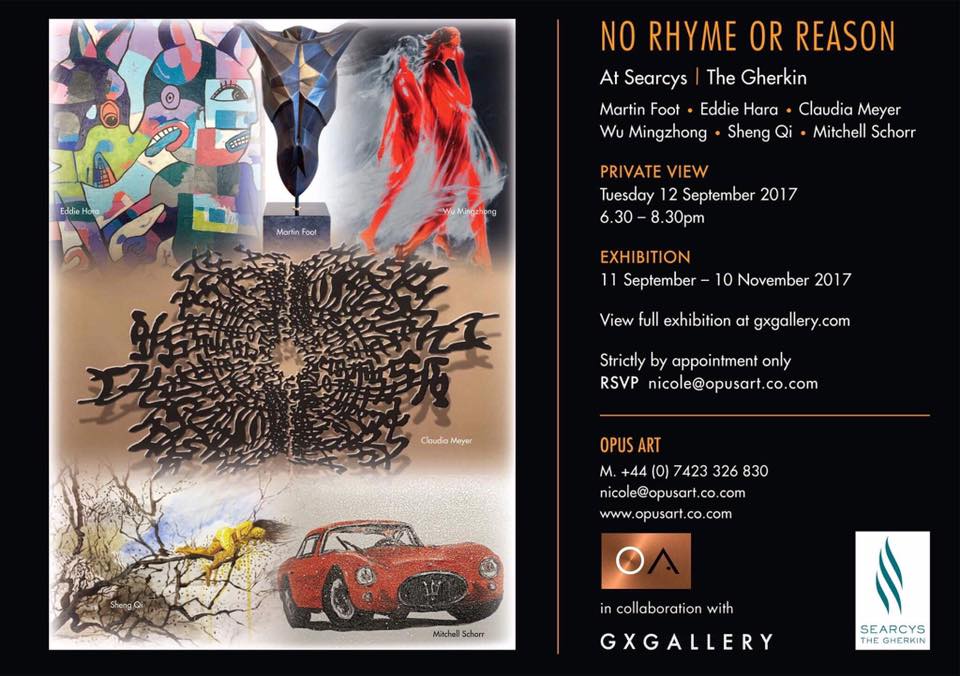
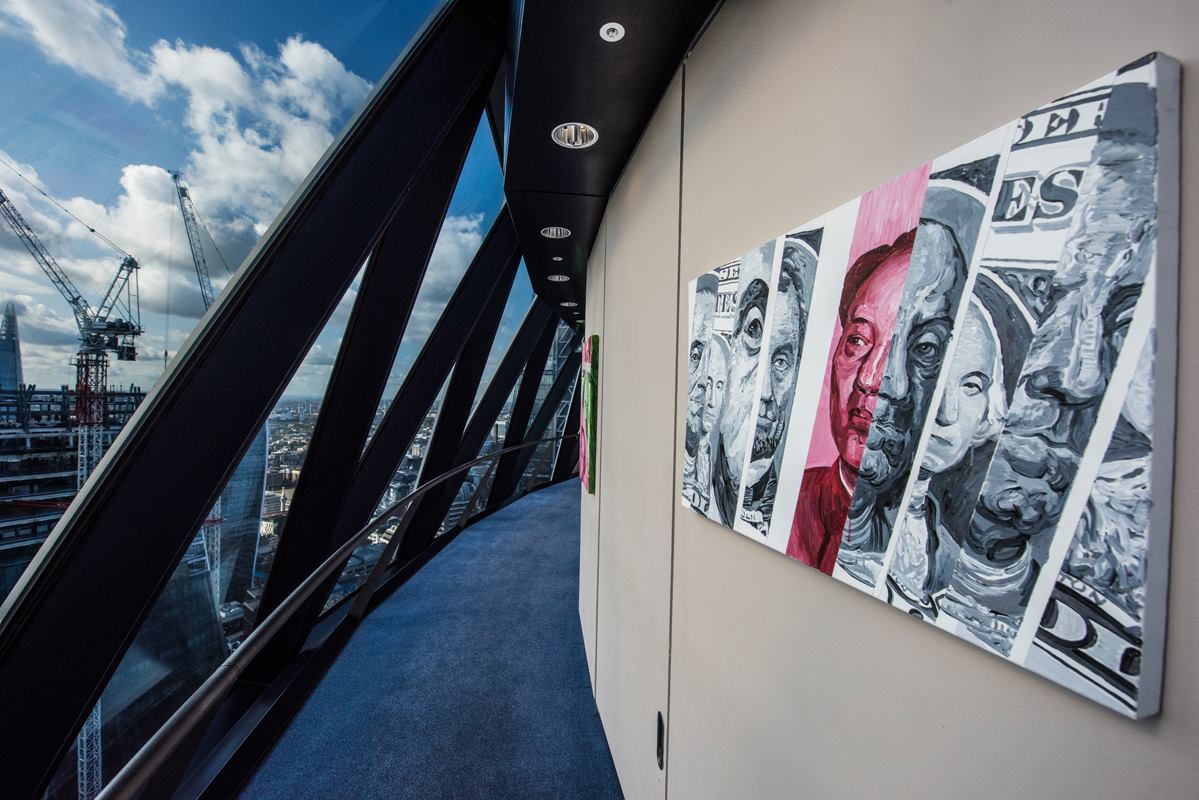
No Rhyme Or Reason: Searcy’s At The Gherkin Plays Host To New Opus Art-Curated Exhibition…

No Rhyme Or Reason: At Searcys, The Gherkin

11 September – 10 November 2017

An exhibition curated by Opus Art in collaboration with G X Gallery

Featuring works by Martin Foot, Eddie Hara, Claudia Meyer, Wu Mingzhong, Sheng Qi and Mitchell Schorr

At Searcys | The Gherkin

Visits by appointment only.

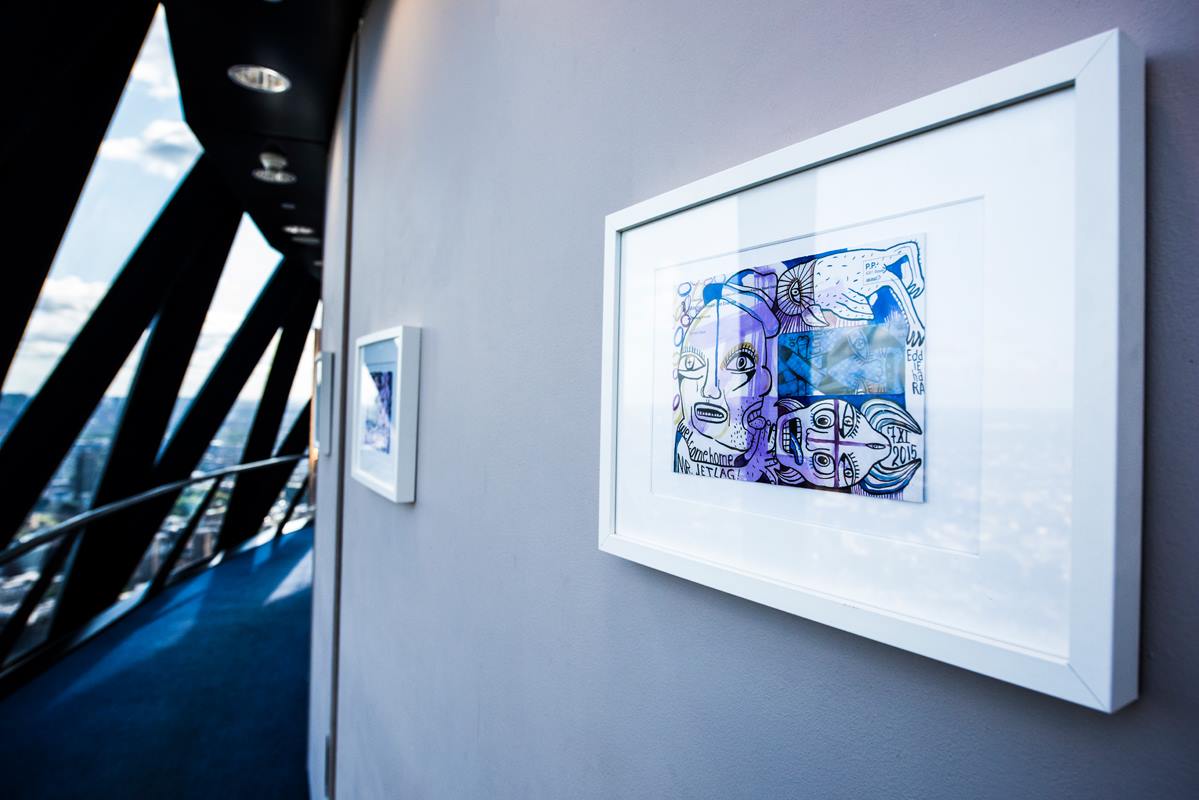
Imagery: Shane Finn at VOUZ! Photography

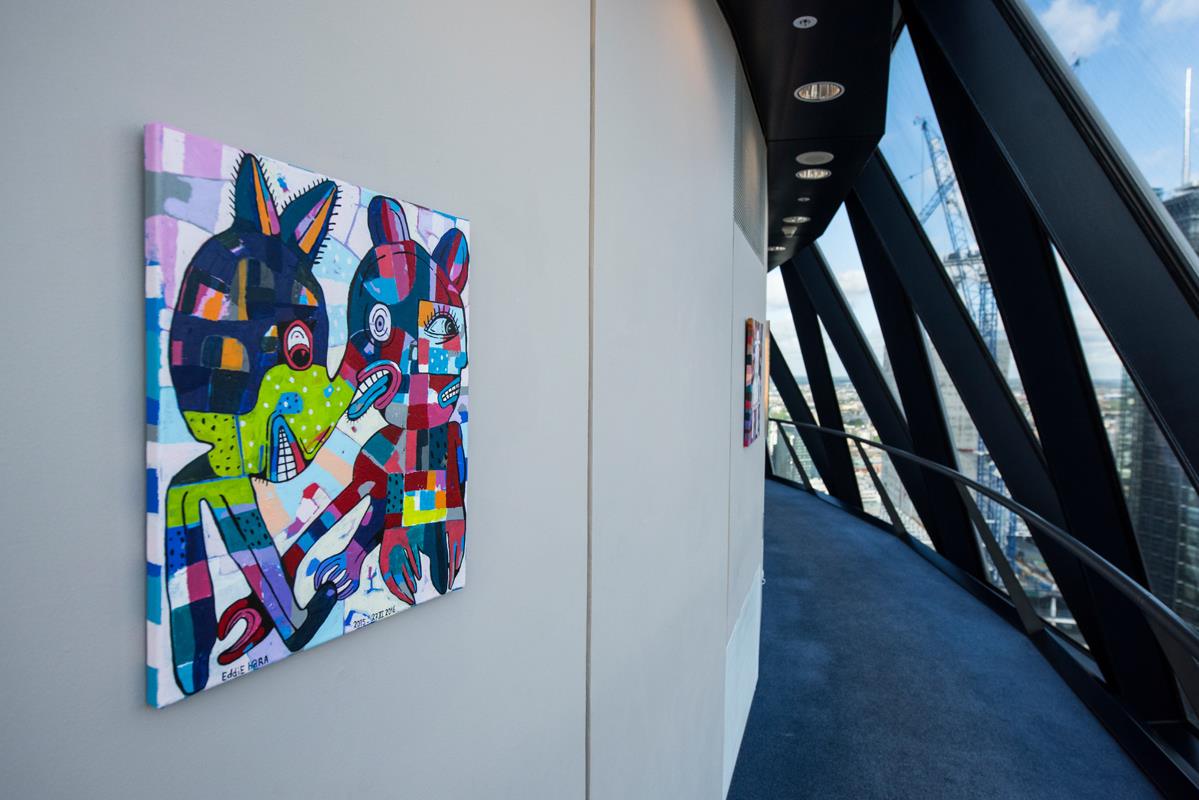
EDDIE HARA

THE THIRD PERSON

2005 Acrylic on Canvas

50 x 40 cm 19 3/4 x 15 3/4 in

WU MINGZHONG

HEY! SLOW DOWN, 2014

Silkscreen Print, Ed of 99

96.5 x 76.2 cm 38 x 30 in

Edition of 99

CLAUDIA MEYER

ACCORDANCE IV, 2015

Mixed Media on Acrylglas, LED

80 x 80 cm 31 1/2 x 31 1/2 in

CLAUDIA MEYER

CURSIVE, 2017

Stainless Steel, Acrylglas

180 x 180 cm 70 7/8 x 70 7/8 in

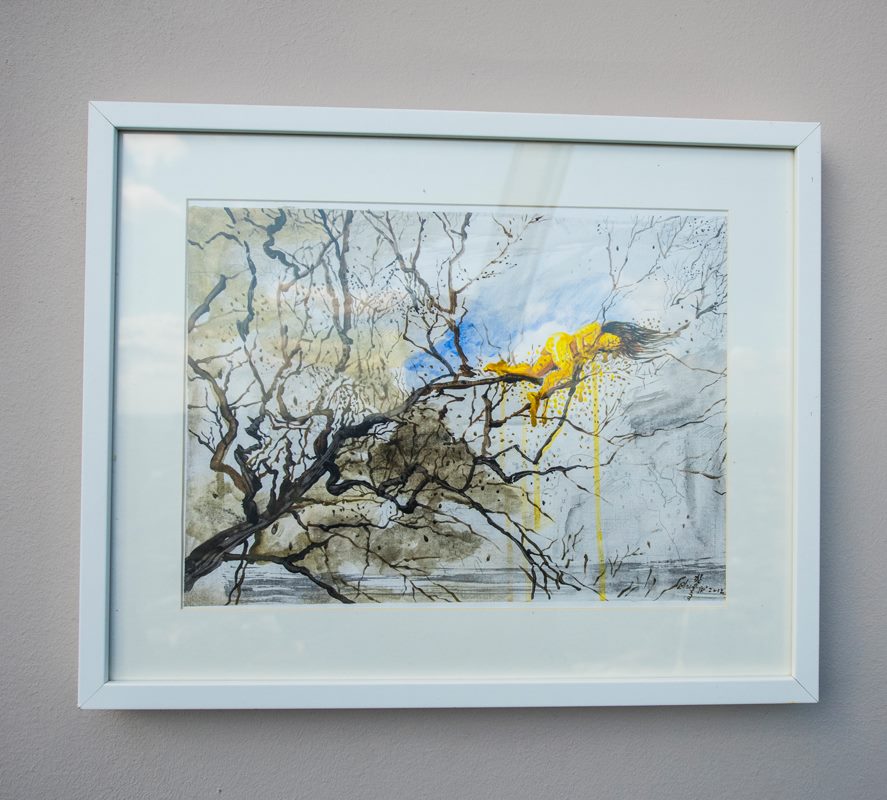
SHENG QI

WOMAN ON THE TREE, 2013

Watercolour on Paper

29.7 x 42 cm 11 3/4 x 16 1/2 in

SHENG QI

MOVE ALONG, 2014

Acrylic on Canvas

60 x 90 cm 23 5/8 x 35 3/8 in

SHENG QI

YELLOW UMBRELLA, 2014

Acrylic on Canvas

70 x 60 cm 27 1/2 x 23 5/8 in

MITCHELL SCHORR

VIRTUE, 2004

Oil on Canvas

51 x 61 cm 20 1/8 x 24 1/8 in

MITCHELL SCHORR

VICE, 2004

Oil on Canvas

41 x 61 cm 16 1/8 x 24 1/8 in

MARTIN FOOT

SOGNO DI PACE

Travertine Marble

47.7 x 16.5 cm (inc. base) 18 3/4 x 6 1/2 in (inc. base)

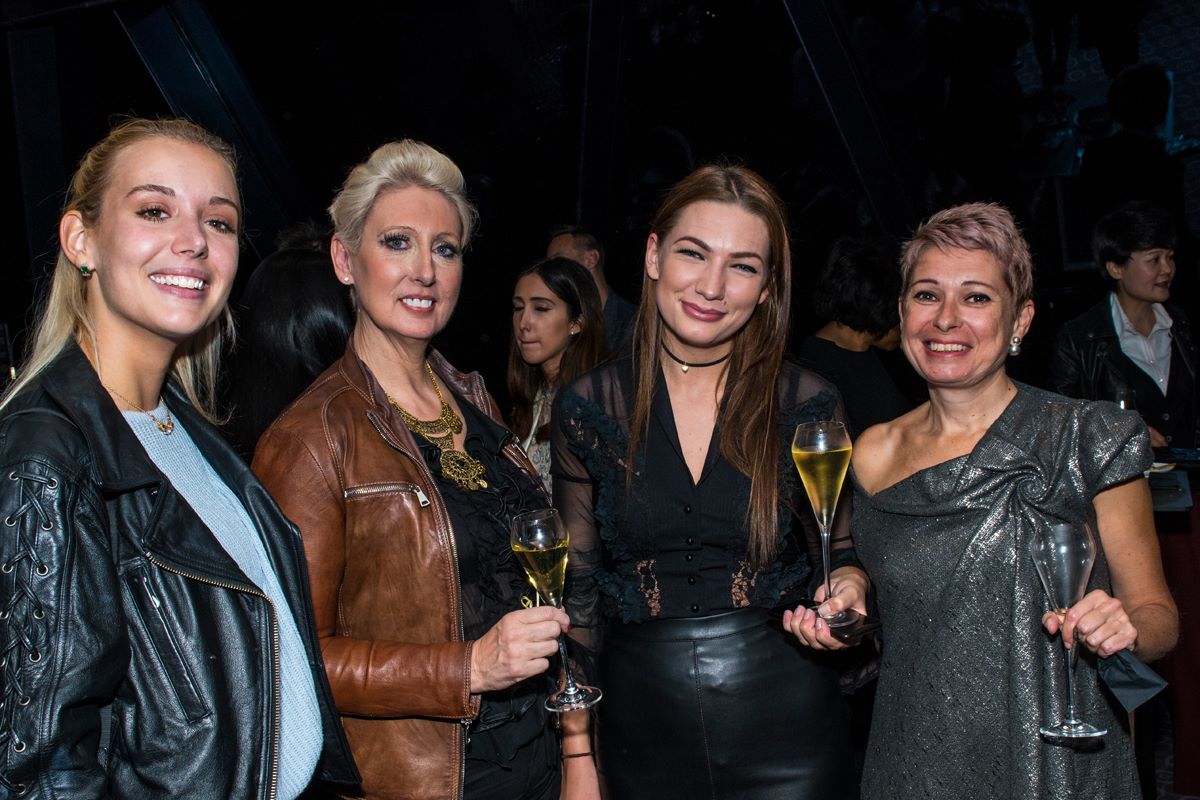
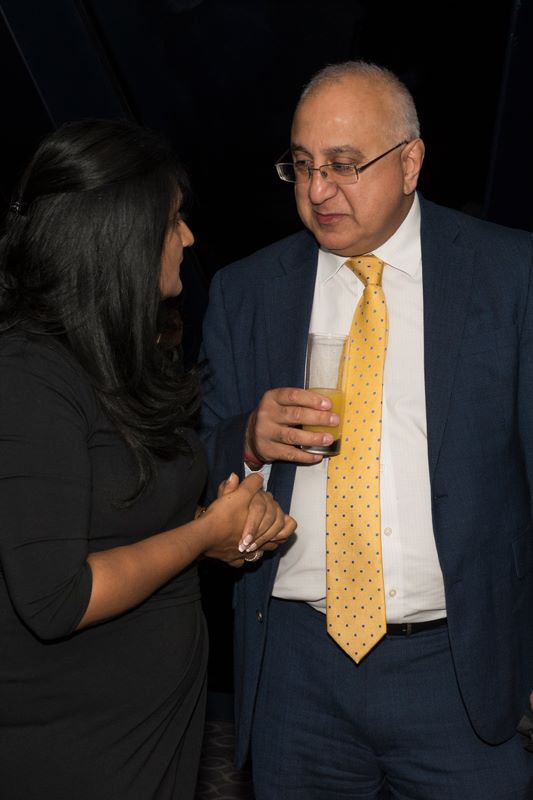
Private view – 12 September 2017

About Opus Art…

Nicole Barbezat is a professional art dealer and an avid art collector with a long life passion for art, based in London, offering private solutions to individual collectors and institutions seeking to build and manage their art portfolios.As an artist she has been drawing and painting since an early age, and has attended the Venice International Summer Academy for Fine Arts amongst other. Nicole was also actively involved with Sotheby’s Institute of Art.Over the years, Nicole has supported emerging artists, art foundations and charities that promote the arts.Nicole has also a strong background in Private Banking and Wealth Management having been active in this field for over 15 years. Today, she is fortunate to combine this invaluable financial experience and her passion for art enabling her to better serve and understand her clients, and find the subtle synergies between the beauty of art and the investment aspects of this alternative asset.

www.opusart.co.com

About G X Gallery…

GX Gallery (established 2001) is a leading contemporary art gallery in London. representing emerging and established artists. They have a regular programme of solo and group exhibitions and exhibit at art fairs throughout the year.

The gallery offers a wide range of services including advice on building your art collection, framing, installing artwork and delivery and shipment worldwide.

www.gxgallery.com

About Searcy’s at The Gherkin…

Based on the 39th and 40th floors of The Gherkin are the elegant cocktail bar and fine dining restaurant with panoramic views of London. Whether you are looking for a restaurant for a special occasion, a restaurant with a view in London or a cocktail bar in the city, their restaurant and bar is the perfect place to enjoy fantastic food and drink.

Events

The top three floors of this iconic venue are available for private hire. Their events team can host stunning seated dinners for up to 140 or elegant standing receptions for up to 260. If you are organising a conference, a special family occasion, a private party or a corporate event, the two floors are a truly special space with an amazing view of London.

Weddings

This world renowned building is one of the most impressive wedding venues in London! The beautiful event space is located on the top two floors of the building, both of which are licenced to hold ceremonies, dinners for up to 140 people or 260 guests for cocktail receptions. The Searcy’s experienced events team will be on hand to tailor-make your special day. With breath-taking 360 degree views over London, this is a truly unique venue to say “I do”!

Searcy’s Private Members Club

Searcy’s Club at The Gherkin one of the most unique and exclusive Private Members Clubs in London. Membership allows you access to a club lounge, fine dining restaurant and elegant bar situated under the world renowned dome.  We pride ourselves in handpicking our members; to apply please get in touch where your application will be reviewed by our committee board.

Private Dining

The Gherkin private dining experience is both refined and secluded, offering a privileged perspective to impress your guests. From a special birthday, a business lunch or even an intimate wedding reception, enjoy their private dining rooms with a view of London.

www.searcysatthegherkin.co.uk

What’s More Popular for Online Gaming Laptops, Desktops, Tablets or Smartphones?

Video games have never been in a stronger place than they are in 2017, with the estimated market value of the industry sitting at around $108 billion dollars. Of this staggering figure, mobile gaming takes a huge percentage, valued at around $35.3bn, consoles following closely at $33.5bn and PC gaming, often considered by many gaming elitists to be the better platform, coming in last at $29.4bn, down 2.6% since the previous year.

What’s considered best will always come down to personal preference, but in the last decade mobile gaming, and mobile technology in general has seen a colossal, almost unbelievable rise in popularity. Although it really comes as no surprise, as of 2014 the number of mobile phones on planet earth surpassed the number of human beings, with roughly 7.22 billion handsets being in circulation. In history, no product, device or trend has proved as popular, especially as it’s only been in production for less than fifty years. Mobile gaming has taken the world by storm in a way that neither PC nor Console ever could. Casual players across all genders and age ranges can now enjoy their favorite puzzles, platformers or beat ‘em ups at the tips of their fingers. Not only is convenience a huge factor, but accessibility also makes a huge difference, as most people have smart phones with access to an App Store. The average apps are incredibly good value, with the majority of the market under $5 or even free, meaning anyone on any pay scale can take part, where as many AAA console games can reach prices up to $70 simply for standard editions. That’s before taking limited editions, collectors’ items and day one versions into account. Another huge factor in mobile gaming’s favor is the ever increasing graphic and performance capability. Let’s take a look at Apples flagship product, the ever infamous and often controversial iPhone.

  • 2007 – iPhone: 32-bit 412 MHz Samsung ARM processor, 128MB of RAM, 4GB or 8GB storage
  • 2016 – iPhone 7: A10 processor, 2GB RAM, 32GB/128GB/256GB storage

Just to put that into perspective, when the original iPhone arrived in 2007, it had 93.75% less processing power than the 2016 model, released less than a decade later. Its largest available storage capacity, was 32x smaller than the iPhone 7, showing you just how far mobile technology has come.

Despite being costly, consoles are still a huge part of many peoples day to day life, with Sony’s Playstation 4 selling 63.3 million units and Microsoft’s Xbox One selling around 30 million units. Sony’s Playstation 2, released in 2000 is the world’s highest selling console, shifting upwards of 155 million units in less than a decade and a half. Sony & Microsoft have led the console world for over a decade now, with Japanese company Nintendo following closely behind, with a global value of $32.8 Billion.

The argument that PC is better than all has raged since the earliest days of video games, but how much of this is really true? The PC will always be the most powerful platform for gamers to play on, improving their gaming experience (especially online) dramatically. PC is also the exclusive home of the platform Steam, the digital distribution platform (store) that allows players to buy digital versions of games. As of 2015, it had 125 million users, and accounted for 15% of the total PC game sales that year. According to an industry report by Spil Games, an estimated 1.2 billion players are gaming across the globe, with roughly 700 million of those playing online games. That’s an estimated 44% of the entire online population, proving just how popular the world of video games truly is.

Article provided courtesy of games.paddypower.com 


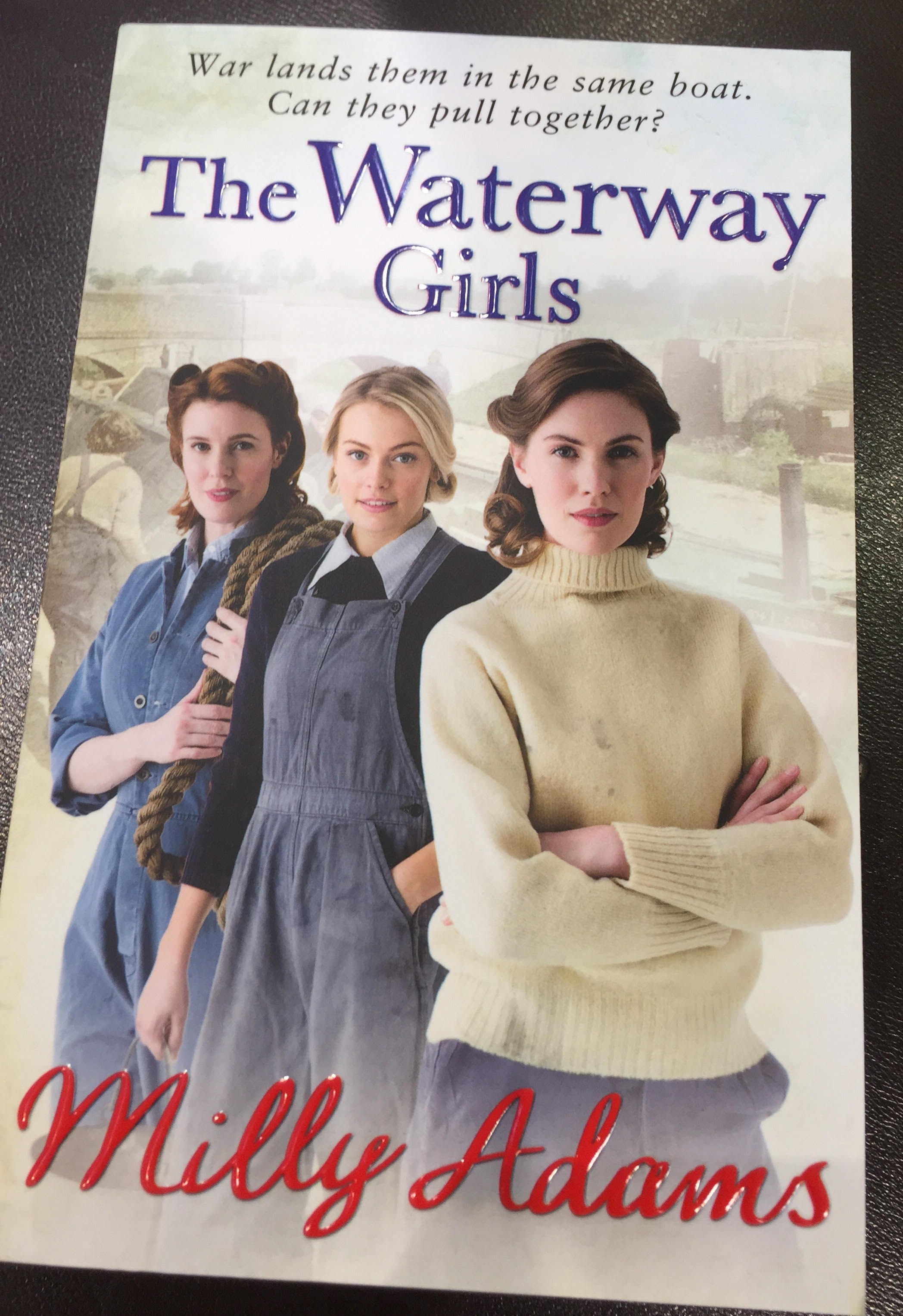
The Waterway Girls by Milly Adams

The_Waterway_Girls_Milly_Adams

I’m always delighted when the latest novel from Milly Adams arrives on my desk and happy to say her latest, The Waterway Girls, did not disappoint. More than that, I discovered that this is the start of a series which follows the unsung heroes who spent the war on the canals.

It is October, 1943 and nineteen year-old Polly Holmes is leaving bombed out London to join the war effort on Britain’s canals.

She boards the Marigold in the pouring rain and soon discovers she has plenty to contend with. Not least her fellow crew: strong and impetuous Verity, and seasoned skipper Bet.

With Polly’s sweetheart away fighting in the RAF and her beloved brother killed in action, there is plenty of heartache to be healed on the waterway. And as Polly rolls up her sleeves and gets stuck into life on board the narrowboat she discovers new beginnings await amid the anguish of war.

What can I say? I was soon absorbed in life on the canal and the journey from London to Birmingham. Adams draws her characters so finely that I half expect to bump into them when I pop to the shops. Life on the canals was tough and relentless and the descriptions of how the canals and locks operated is described in such a way that gives the reader a glimpse into the life of the boaters, without being over technical and slowing the story down. But there is beauty there too, and we are able to see this through Polly’s eyes as she settles to the rhythm of the waterways.

There is such warmth and humanity in the writing  that it makes the characters and the setting leap from the page. Among the pages you’ll find romance, humour and ordinary people doing their best to survive and get along in extraordinary circumstances.

I’m so relieved that this isn’t the last we have heard of the Waterway Girls. I can’t wait to discover what lies ahead for Polly, Verity and Bet.


The Waterway Girls by Milly Adams is published by Arrow.

Price £5.99

TheBruvs – Animated Comedy Series

Why hasn’t there been a massively successful UK animated sitcom – in the style of US juggernauts The Simpsons or Family Guy?

That’s a question that got me thinking about 10 years ago. Just over two years ago I decided to try to do something about it. That is how TheBruvs.com was born.

Short, punchy comedy animations featuring a family of London villains trying to go straight in Essex – and failing, the films feature brothers Doug and Den, their dad, sister Janice, her son Jason and the lovely Chanterelle.

It’s my first proper venture into animation, although I was lucky enough to write a piece for Homer Simpson, no less, for a message to Simon Cowell on his This Is Your Life programme.

My background is news, current affairs, comedy and entertainment TV shows. Throw in projects with Jeremy Clarkson and some Top Gear credits and that makes up my CV – working with a lot of household names along the way.

But I wanted to do animation. I had the idea for The Bruvs and touted it round broadcasters and production companies. The costs and time involved with animation put all off.

Then I managed to persuade award winning animation director Eoin Clarke and sound and editing wizard Paul Richmond to come in on the project with me.

It is a passion project – which means persuading others to work on something with you on less than a shoestring.

We decided to have a go and put the films on YouTube. We also set up a website. And I had to get to grips with social media… setting up The Bruvs’ facebook, twitter, tumblr and instagram accounts.

Two years on and we have 17 films on YouTube – and 11 films running on the UKTV channel Dave and their on-demand service UKTVplay.

We have many more big ideas. I’m not saying we are anywhere near The Simpsons, American Dad or South Park but The Bruvs is growing and there has been a lot of positive feedback from round the world.

To have taken something – literally – from page to screen – is very rewarding. The instant feedback from the social media sites is also a great encouragement – on the most part. Our hope is to gradually lengthen the episodes and develop them and the characters into more of a sitcom style. We have many plans for all the characters.

Now we have music too – thanks to the very talented Stig Winslet and Pete Harbour – who have brought a new dimension to The Bruvs with songs about their antics. If something we come up with amuses us, we tend to put it into the films – subject to our budget and time constraints.

It’s still relatively early days, but The Bruvs are growing and are finding their feet on the world stage.

They have come a long way since they moved to Essex. It might be something in the water.

By Ian Brown

TV writer and producer / co-creator TheBruvs.com

THEBRUVS

CREDITS  

Writer : Ian Brown

Director : Eoin Clarke

Sound : Paul Richmond

Music : Stig Winslet, Pete Harbour


YOUTUBE CHANNEL: https://www.youtube.com/channel/UCI5al_Dl4V0kh-dxBsbjyig

twitter / facebook : @TheBruvsTV

instagram: thebruvstv


Business of Books: So Much to Give – Part 2: Jane Cable on how individual authors help charities

Business of Books: So Much to Give – Part 2

Jane Cable on how individual authors help charities

Two weeks ago I wrote about how groups of authors help charities so now I’m going to turn my attention to the valuable input that individual writers can have, both in terms of time and money.


Although many authors band together to organise events others go it alone, using all their creativity to make it work. Historical novelist Victoria Cornwall helped her husband to raise funds for the local Cornish branch of Mind by running a slot car racing competition at a vintage vehicle show. To help attract families to the stand she gave away chocolates and bookmarks promoting her debut novel with Choclit. Did it help with book sales? “In truth, I have no idea,” she admits. “But we were raising money for a charity which supports adults with mental health problems so promoting my novel took a back seat.”


There are writers who donate all or part of their royalties to causes related to their books or close to their hearts. With the author only receiving a small slice of the price paid by the reader anyway, even amounts which sound quite small – like 10% or £1 a copy – are actually pretty generous gifts. Examples where the book fits the charity are Cassandra Grafton supporting the Jane Austen Literacy Foundation through her latest Austen inspired novel, and TV producer turned satirist Gloria Grayson donating to Mutts With Friends Dog Rescue because a dog is the star of her newly released book.


Indie author Emily Williams is so passionate about helping horse charities she is actually writing a young adult novel specifically to raise money. It’s an ambitious project and very much a work in progress, but she’s determined to succeed, even perfecting the art of making origami horses to feature on the cover.


Other writers give their time to mentor (psychological drama writer Amanda Reynolds volunteers for The WoMentoring Project) or give motivational talks; former soldier, police officer and crime writer Matt Johnson helps other veterans in this way and is a great example that with the right treatment PTSD can be controlled and overcome. Author and media doctor Carol Cooper will blog to support charities and waive her fees for articles to support good causes. For writers – and for many charities, time is as precious as cold, hard cash.


I would wager that most writers do something, however modest. Val Portelli (who writes as Voinks), typically plays down her own contributions: “The only things I’ve done are donate copies of my books as a prize for a fund raising campaign to keep a library open, send copies to a book shop struggling for stock after a devastating area flood, and donate some copies to an old people’s home where a friend worked as a carer.” That really doesn’t sound too much like ‘only’ to me.


But for some, the urge to help takes over their lives. Claire Louise Brown’s latest book has Inspired her to set up a charity to build a recuperation centre for veterans. “It’s early stages but hopefully one day what is in the book will be real and helping people every day,” she explains. Freelance writer and teacher Anne Hamilton made that dream real after she visited Bangladesh working for an NGO and wrote a travel memoir about it. This was the starting point for her involvement with Bhola’s Children, a charity which provides a home and school for orphaned and disabled children. She is a trustee and visits Bangladesh regularly. Find out more about the charity here: http://www.bholaschildren.org/.