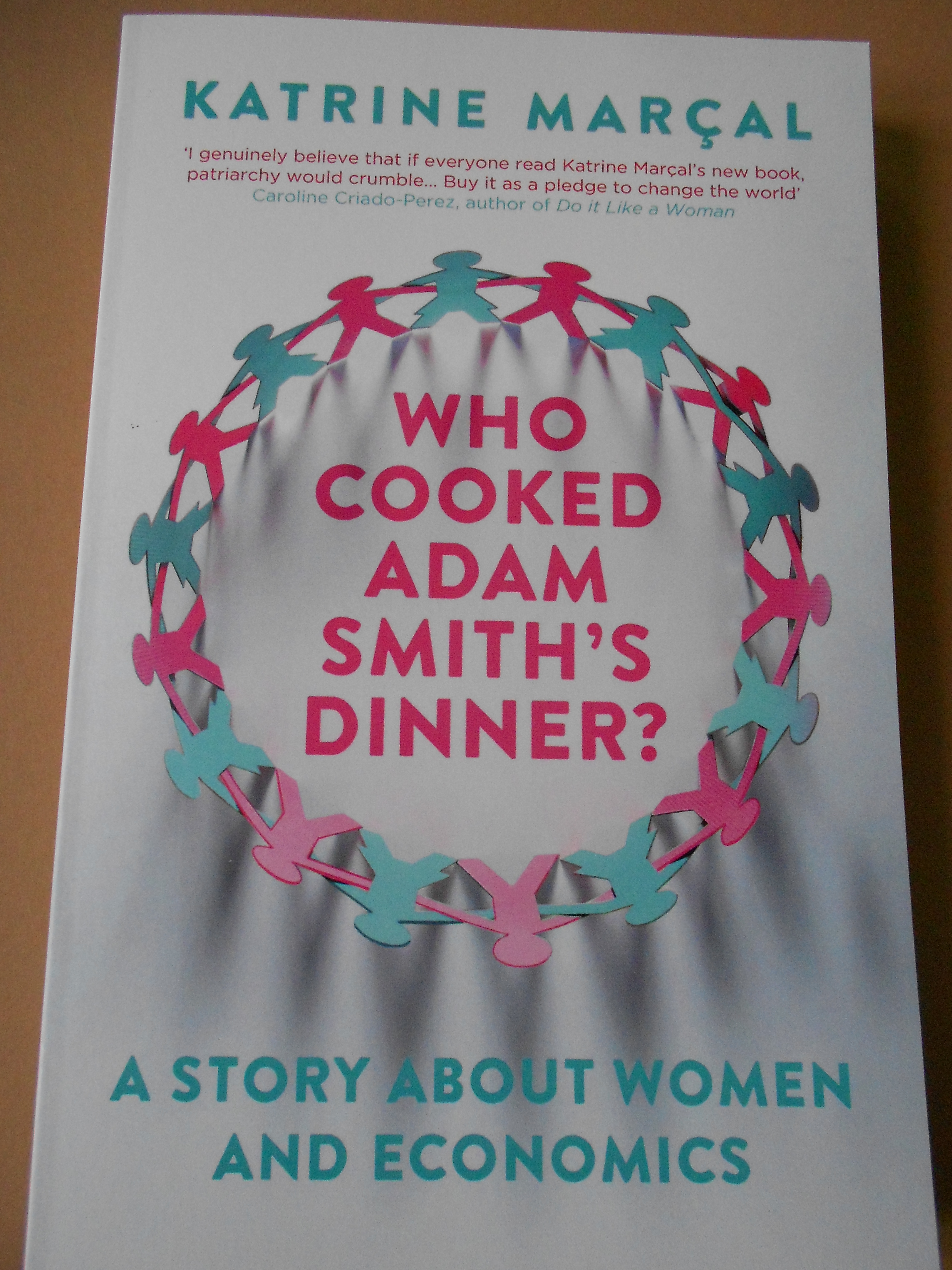
Who Cooked Adam Smith’s Dinner? by Katrine Marçal


Who Cooked Adam Smith's Dinner

A Story about Women and Economics

For two hundred years, economics has argued that the world turns because of self-interest and this logic has spread from the market to how we shop, work and date. But what if our unpaid labour – particularly the work of caring, cleaning and cooking traditionally performed by women- was valued by economics? What would our society look like then? From Adam Smith’s dinner table to the recent financial crisis Katrine Marçal tackles the myth of self-interest and shows us how out economics is failing us, and how much better things could be.

Adam Smith was able to write The Wealth of Nations because he went home to his mother who cooked, cleaned and nurtured him. Would society benefit if these qualities were not only valued but received remuneration on an appropriate scale?

This is an overview of economics written with wit and clarity and challenging the notion of Economic Man. The Equal Pay Act came into force in Britain over 45 years ago and despite this women still earn less than men. So called ‘women’s work’ is still underpaid, undervalued and overlooked. Feminism is about money, says Marçal and proceeds to tell the reader exactly why this is so. Well researched and written; who would have thought that economics could be so interesting? Thanks to Marçal’s erudite writing it is and I enjoyed this book far more than I expected. It made me think about feminism and finances it a totally different way.

The one quote I will definitely take away is that:

‘Men teach us that there are things worth dying for. Women teach us that there are things worth living for.’

Highly recommended.

Who Cooked Adam Smith’s Dinner is published by Portobello Books


Caitlin Moran Interview

Caitlin Moran InterviewHow did you find the whole experience of making series one?

Oh God, it was amazing! I’ve always worked on my own, so first of all working with my sister, who I’d always suspected was a genius, and indeed turned out to be – not least because about two weeks into the process I realised I had no idea how to produce a plot or use the script-writing software. She knew how to do it all, having written plays for years and had loads of stuff on up in Edinburgh. And then bringing it to a team and making it happen. In a way, it was always obvious that me and Caz would work together, and do something about our family, because that’s what we used to do when we were kids. We’d have Sindys and play Sindy games, and write scripts, and making clothes for the Sindys by wrapping bits of tinfoil around them and putting pins in their ears to make little stud earrings. And when you make a TV show, you don’t have to at any point wrap Rebekah Staton in tin foil and put pins in her ears, because they’ve got a wardrobe department who actually put clothes on them. You’ve suddenly got all these resources.

Sometimes you come up with an idea that people look very scared about. In series one, we just wrote the sentence “The dog is having a poo” and it turned out to take half-a-day to film. You have ten fully-grown professional people standing around in the cold in Manchester, watched by passers-by, waiting for a dog to drop its biscuits. Such is the awful, evil power of a writer that you can just sit in the warm and write “The dog is having a poo” and suddenly you’ve ruined someone’s day.


Having worked in front of and behind the camera, which do you prefer?

Oh god, no question. You may have noticed that I’m not on television at all now. I presented a TV show when I was 18, and at the time, and I only did that because if you’re offered a TV show when you’re 18, of course you’re going to say yes. But I knew I was a terrible presenter. And this posh voice that I’ve got now – I just started speaking in it as soon as I went on camera, because I was so nervous, and I’ve never been able to break out of it since. Literally, before I went on camera, I had a very broad Wolvo accent. I felt I couldn’t be me on television, and there was a very posh girl on set called Isabel, and she seemed really confident, so I just copied Isabel’s voice. And I’ve literally not been able to shake it since, so you can tell how traumatic an incident it was that it still marks my voice almost 30 years later. It’s just horrible; I don’t know how actors do it. The whole thing of a room going silent and everyone waiting for you to do a thing on camera, and every minute is money. My job is the exact opposite of that. I sit on a chair, nobody has a clue what I’m doing, I’m in my pyjamas, eating sardines out of the tin with my fingers, chain smoking and singing and wandering around talking to myself. That’s my preferred working environment

Do you prevaricate an enormous amount, working from home?

I know a lot of writers who will sit in front of a blank page, or spend all morning hovering between the keys in their keyboard, but I’ve always had so much work I just can’t do that. I’d go mad. I run on anxiety anyway, I’ve always got five or six things on the go, and I’ve worked since I was 13. I come from a poor place, and I’m running from a nameless horror. So every day, I have something to do, and if I haven’t done that then I’m fucked, because I have to do twice as much the next day. I’ve never missed a deadline. I file early.

Were you pleased with the reception of the first series of Raised By Wolves?

Oh God yeah, it was amazing. I’m always waiting, with everything I do, for someone to come up and kick me up the bum and say “Get back to Wolvo.” And it was just across the board amazing reviews. The cover of the Guardian Guide was me and my sister and the two people who were playing us. That’s a pretty surreal moment. Then it broadcast in Canada a couple of months ago, so we started getting all these messages from Canada, asking what all these British slang words meant. And we’re in the process of doing it in America now as well, which is incredibly exciting. It kind of makes more sense there, because home education is much bigger there, and that whole prepping for the apocalypse thing that Della is doing, that’s massive there.

You mentioned getting tweets from Canada. How did the show go down in the bear pit that is Twitter over here?

When the show was on, I just couldn’t go on to Twitter – that’s just a short way to madness – but my husband was filtering it every night, and I had literally four bitchy comments, which, as a woman on Twitter is extraordinary. Given that you can be a woman on Twitter and come on and say “I love you all, here’s a pound, everyone,” and someone will just go “Shut up you fat bitch #mensrights”. So I was astonished.

We did it out of so much love. We love those girls. We want it to reach families like that, working class matriarchs, weird teenage girls, fat teenage girls, angry ginger lesbian girls, weird freaky Goth girls. They never get served anywhere. As a woman, it just does your eyes so much good to see people who look like that on your telly. Often on telly even something that’s really edgy has got women on it who are really toned, and if they’re really stressed, they’re in a little vesty singlet and tiny pants and they’re sitting on their bed with their hair in a bunch and glasses on to look intellectual but still looking hot. And to see someone who’s just dressed in rags and talking about wanking is just so different. Big girls, both in personality and stature, doing stuff and not really doubting themselves and being triumphant. We still don’t have enough of that.

You bust quite a few taboos in the series. Do you enjoy that?

I’ve never seen a taboo that I didn’t want to grab and pull out into the open whilst banging on a pan with a spoon and going “Here’s a taboo, let’s talk about the taboo.” What are taboos? They’re just things that we’ve decided, for whatever reason, we don’t talk about. To which I would add the word “…yet.” Why don’t we? It’s insane that American Pie has gone through eight iterations, an entire franchise based on a man having a wank in a pie, and yet female masturbation is never spoken about. And if you look at teenage girls in this generation, and how fucked up they are sexually, and the majority of their sex education is coming from porn, and it’s all from the male viewpoint, there’s nothing about what you want, you’re just some cock-vessel for some horrible porn star. So to have a teenage girl who looks like that, waking away her grief, trying to encourage her uptight sister to follow suit in a graveyard at a funeral – no, sex is funny!

Are you very conscious of the responsibility you have to younger female viewers when you’re writing the series?

Oh God, constantly. I was raised by media and culture, which is why I’m so hyper-aware of what there is and what there isn’t. And when I wrote How to Be a Woman, I thought it would maybe sell to women of my age, but it was all teenagers who bought that book. It was an astonishing array of girls – really fucked up girls, girls who’d self-harm, girls with eating disorders, girls with anxiety, girls with depression, and then really brilliant beautiful girls who didn’t know what to do with their energy, girls who were ashamed of their sexuality, just this massive parade of girls who didn’t see themselves anywhere, and felt incredibly vulnerable, and would grab on to one thing – one book or CD or film – and that gives them the first tiny platform they’ve got to start building their personality. And I think so much of what women see on television or in magazines makes them feel awful or hectored or lectured to or that their life is a massive fucking to-do list. I’m so conscious of the need to make jokes about it. And when we’ve finished laughing about it, we need to plan the revolution, because I’m not going to have another generation of girls growing up feeling as fucked up and unhappy about themselves as I did.


After the success of series one you’ve got you’re the difficult second album syndrome. How did you find writing series 2?

Actually a lot easier – because we knew things like don’t write ‘a dog has a poo.’ We tried to write a scene with a swan and were told not to. Basically, don’t do anything involving livestock. That’s probably a good rule for life anyway. And we knew how to plot things; we became better at that, mastering the technical side so that it worked as a drama as well as a comedy. But whenever anyone gives an answer like that in interviews that I read, I think “That’s incredibly boring, tell me a funny anecdote about you going out and doing a shit load of poppers on Canal Street and falling off a table.” And I did that as well.

So what can fans expect from the series?

Their dad is back, so we get to see how he and Della met, why they broke up, why their kids are how they are. He’s not in it that much, he’s like a wandering albatross that floats into the series but floats back out again, revealing a couple of interesting things. Otherwise – Germaine has become worse! The revelation at the end of the last series that not only would she not have to pay for sex, but that people would pay her for sex, that she could be a prostitute – this has been the bolt of good luck that is all Germaine needed to become truly insufferable. In episode one, she does something so disgusting that everyone presumed it was me, but it was actually Caz’s idea. Germaine has come up with a life hack for attracting boys that is appalling. Aretha has taken her destiny into her own hands and realised that being educated at home is not going to get her out of that house – particularly for the two jobs that she really wants, which is either to be a hermit or a lighthouse keeper. So she goes out and finds a mentor who becomes really important to her. And the person we have in to play that role is such a hero of ours; we are so thrilled to have her on the show. And we also see where Della works, and her boss, who is the other person we are so excited to have on the show. He is amazing, it was his first TV, and we immediately went away and wrote him a bigger part. In three years he’ll have his own sitcom.

Della is an amazing character, beautifully played by Rebekah Staton. When you wrote her, did you mean her to be so sexy?

No! We’d written her as someone quite small, angry and compact, just scrubbing her front doorstep and hating everyone and being very proper at all times. And then Bex came in for the audition and said “I’m just going to drop this in – I’ve just done a film with Clint Eastwood, and I want to play Della like Clint Eastwood.” Her dad was a preacher as well, and I think she plays Della as a cross between a preacher man and a cowboy. And she just brought this incredible physicality to it. To have her to write for is a true, true privilege. She’s amazing. You can just throw anything at her. She has such talent. On set she’s amazing. I’ve visited a lot of sets in my time. The king of being on set has always been David Tennant. On Doctor Who, he knew everyone, was talking to everyone, he’d bring the whole mood up, he’d have lunch with everybody, he’d be joking the whole time. Bex is the only person I’ve ever seen who’s even better than David Tennant. In between every take she’s so funny; it’s like a proper stand-up routine. And she goes round hugging everyone, and she’s looking after all the kids at the same time, she’s like a mum to them. And she’s messing about, and then suddenly she’s standing up delivering these huge speeches, and she’s word-perfect every time. I don’t know how he does it.


How important is Wolverhampton in the show. Could it take place anywhere else?

No. It’s a very specific humour that the Midlands has. A friend of mine told me that people from Wolverhampton are what Scousers think they are – very dry, very downbeat, resilient, with a wry humour.


You took press on a tour of Wolverhampton before series one. What was that like?

That was amazing. There was one main highlight. Wolverhampton has a massive chapter of the Hell’s Angels – I think the biggest one in the UK. They had a huge club house on Penn Road, it was a terrifying big gothic house with huge gates. And I was explaining to people on the tour bus about this big scary house, and we pulled up opposite, and they’d taken the gates down, had a really lovely sculpted garden, a netball court and a tennis court. It had all been done up. So I explained that it must have been sold, and the guy who worked for the local paper went “no, no, they still live there!” The Hell’s Angels were gentrified. Sarah Beeny must have been in there and given them a lovely colour scheme, all Farrow and Ball.

So do you fancy yourself as a tour guide?

Yeah, it was really good fun. But it’s made easier by the fact that Wolvo has the biggest concentration of characters anywhere. We had a tramp who loved on the roundabout, and had a tent there, and he was there for so long that the council wired him up to the mans, so he could have a fridge, a telly and a satellite dish there. When he died, people found out he’d been a Polish airman in the war, and had been in a concentration camp, where he’d been terribly traumatised, so he didn’t want to be around people any more. So he lived on this roundabout. And there are loads of Sikhs in Wolverhampton, and their philosophy is that anyone who decides to be a hermit is a holy man. So people from the Sikh community would leave him food every day, which he hated, because he didn’t like spicy food, so he complained about it. That’s so Wolvo. Then there was a guy called Barry the God, who walked around with a gold cup on a chain, and who had apparently seen God; there was The Cowboy, who walked around dressed as a cowboy at all times; there was The Preacher Man, who wore a bowler hat and would get on the buses and start reading the bible to everyone. It’s a very interesting place, is Wolvo.

Interview with thanks to those at Channel 4.

 

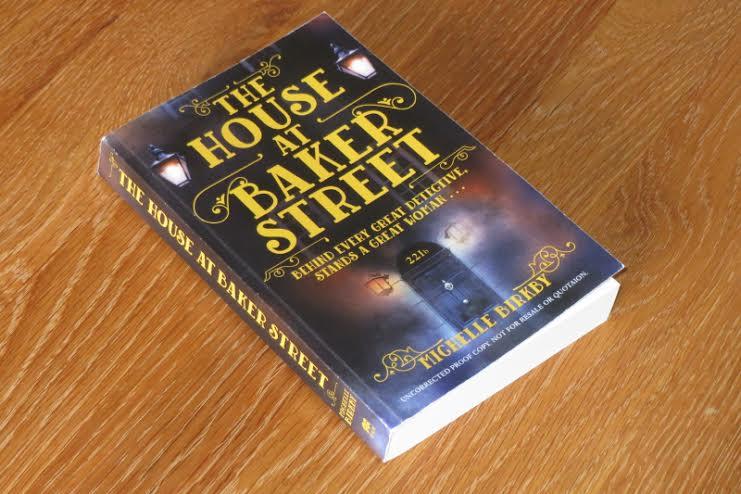
The House at Baker Street by Michelle Birkby Reviewed By Frances Colville

The House at Baker Street by Michelle Birkby Reviewed By Frances Colville

It’s a growing trend to write fiction about the women behind famous men, and a brilliant idea to extend this to write about the women behind fictional characters too; in this case the women connected to Sherlock Holmes and Dr Watson.  The House at Baker Street by Michelle Birkby puts together the scraps of information we learn about these ‘background’ women in the Arthur Conan Doyle stories and gives them a detective adventure of their own.

Both Martha Hudson and Mary Watson are believable characters and the plot is a good one, though not perhaps quite of the standard of an original Conan Doyle.  The book doesn’t have the same period feel as the Conan Doyle stories either, but then why should it?  It was written a hundred years later and doesn’t make any pretentions to be the same as the originals.

As far as I can tell, without extensive knowledge of the Sherlock Holmes books, it fits in well and I didn’t come across any annoying anomalies.  In short, it could have happened!  I enjoyed it very much and I particularly liked the way the scene is now set for further adventures by the same pair of intrepid female detectives.

The House at Baker Street by Michelle Birkby is published by Pan Macmillan and will be available in paperback from 25 February 2016


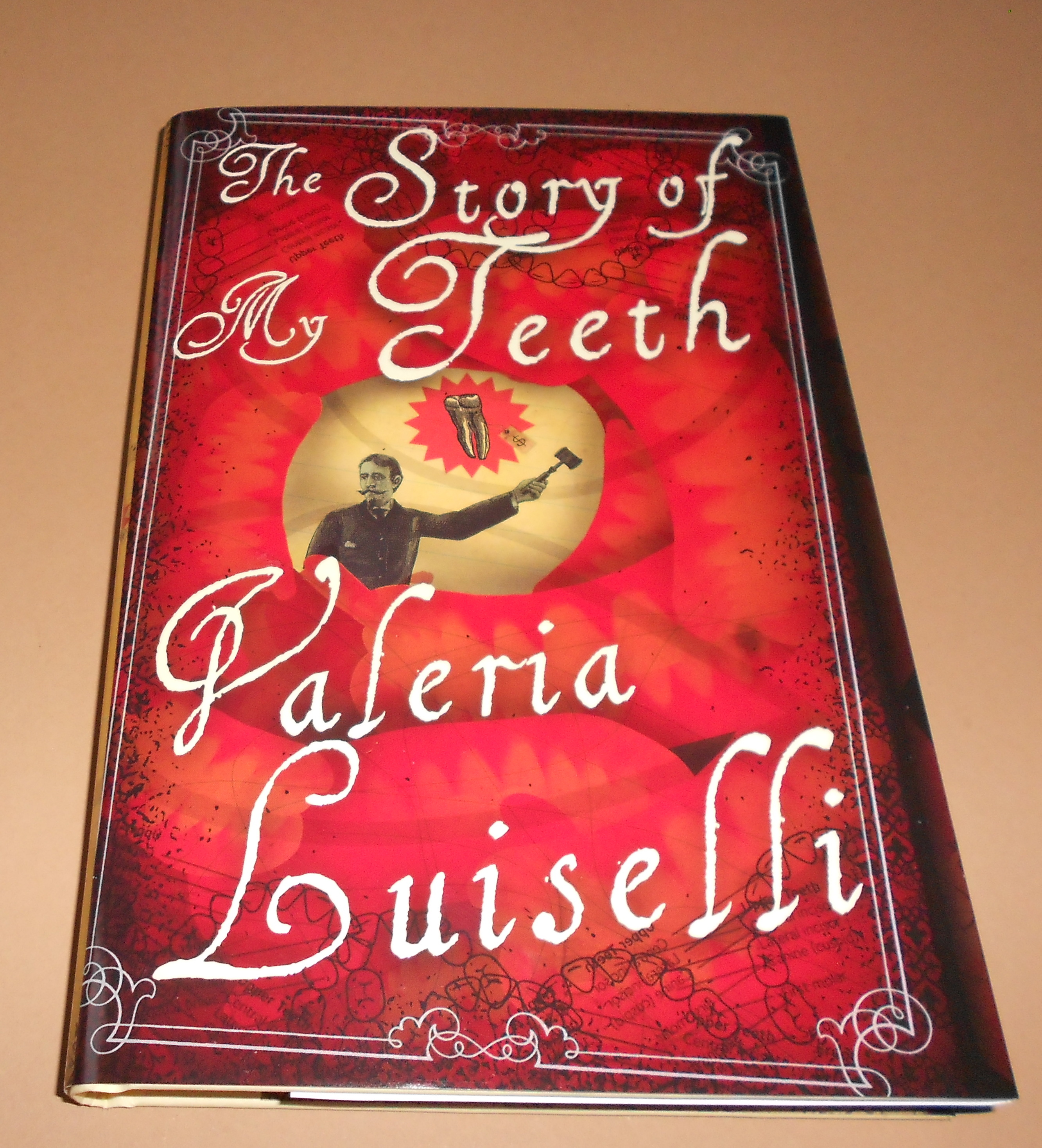
The Story of My Teeth by Valeria Luisella Translated by Christina MacSweeney

Story_of_my_Teeth_VL

‘Some men have luck, some men have charisma. I’ve got both. I’m the best auction caller in the world, my name is Gustavo Sanchez Sanchez and this is the story of my teeth.’

Gustavo ‘Highway’ Sanchez is a man with a mission: he is planning to replace every last one of his unsightly teeth. He has a few skills that might help him on his way: he can imitate Janis Joplin after two rums, he can interpret Chinese fortune cookies, he can stand an egg upright on a table, and he can float on his back.

Written with elegance, wit and exhilarating boldness, Valeria Luiselli takes us on an idiosyncratic and hugely enjoyable journey that offers as insightful meditation on value, worth and creation, and the points at which they overlap.

A thoroughly enjoyable read and so funny in parts that it made me laugh out loud. I can only liken it to a piece of modern art that someone has to explain to you at the end which I presume was the point of the exercise. As such it worked incredibly well.  This was an entertaining read and if you have been to Mexico and know a little of the country that helps, although it is not at all necessary. All in all it’s a quite bizarre and eccentric tale but when you read the explanation afterwards it all makes complete sense. Well , almost.

It is beautifully written with an engaging central character and you really want him to succeed in his attempt to replace his ugly teeth and improve his life.

I found the afterword incredibly interesting. The story being written as a serial to read to workers in the juice factory in the style of  Cuban ‘tobacco readers’ of the 19th century. The tobacco readers would read aloud to workers while they made cigars, to relieve the tedium of repetitive labour. Emile Zola and Victor Hugo were particular favourites.

This would be a great book club read as I am sure it would create plenty of discussion and divided opinion – just as good art should do.

From Both Ends of the Stethoscope by Dr Kathleen Thompson Book Launch

From Both Ends of the Stethoscope  by Dr Kathleen Thompson Book Launch
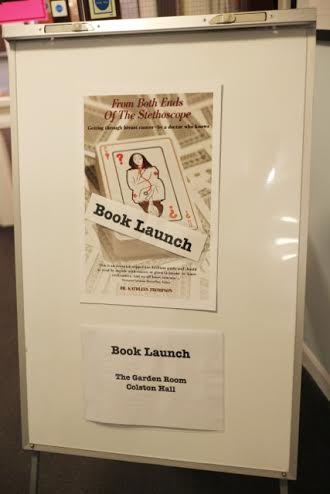
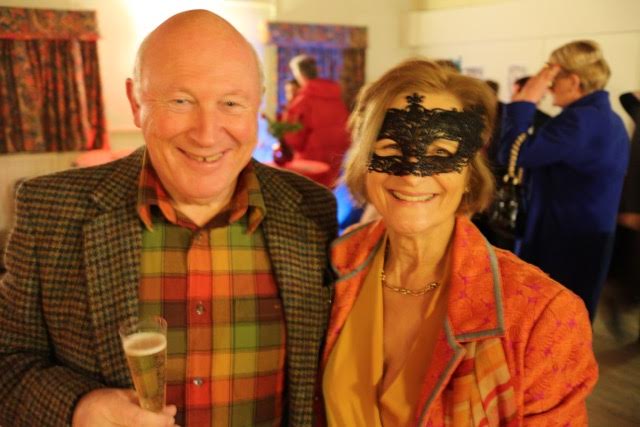
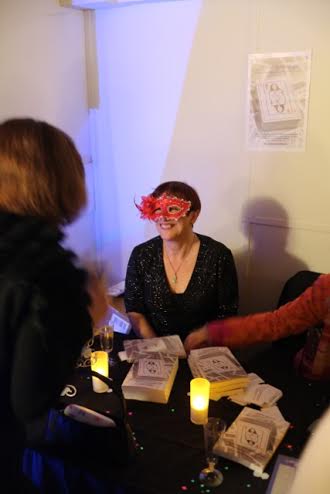
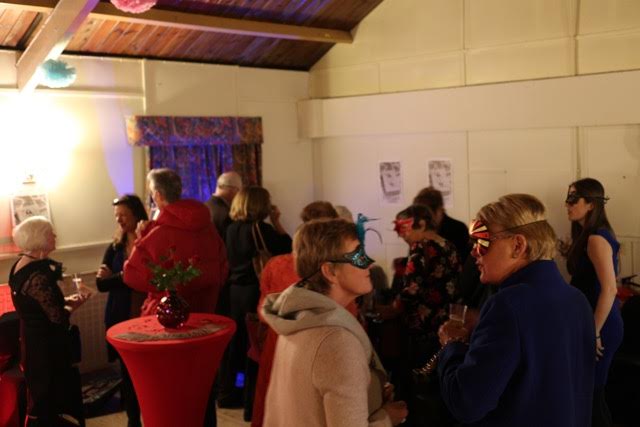
Frost was exceptionally pleased to be invited to the launch of From Both Ends of the Stethoscope by Dr Kathleen Thompson. Yes, we had champagne, and yes, the eats were fantastic, and most of us wore masks, but it it was the occasion. It was such fun, and the ideal way to launch a book – a book which after all, could be life changing.

From Both Ends of the Stethoscope  by Dr Kathleen Thompson Book Launch4
Frost’s Margaret Graham, duly masked meeting those waiting to buy a copy of From Both Ends of the Stethoscope

If you haven’t yet readthis guide which Dr Thompson wrote to help those with breast cancer, you should do so. She  explains the ins and outs of treatment, the questions to ask, and includes wise words on helping to prevent a recurrence. All this alongside her own journey to recovery from the disease.
From Both Ends of the Stethoscope  by Dr Kathleen Thompson Book Launch1 From Both Ends of the Stethoscope  by Dr Kathleen Thompson Book Launch2
Dr Kathleen Thompson signing copies of her books.

Frost is proud to include a further excerpt from this truly fascinating book.

Chapter 1

Let’s face it, cancer is what happens to other people. Poor souls, with the sword of Damocles swinging on a fraying thread over their heads, these are people who are inevitably going to die, and soon. Of course we feel sorry for them — we’ll send them a card, a basket of fruit, some flowers, but we certainly don’t have plans to join their exclusive club.

Well guess what? All of us have cancer cells in our bodies on a fairly regular basis, and more than one in three of us in the western world will experience some form of cancer during our lives. So I’m afraid there’s a fairly high chance of ‘us’ becoming ‘them’. Maybe you’re reading this because you’ve already joined the ‘club’.

The good news is, our bodies are very capable of fighting cancer. Indeed, most of the time cancer cells are destroyed as soon as they develop, much in the way that our immune system hunts down and destroys bacteria or viruses. Other times, the cancer sneaks through our defences, but even if it does, it can still be overcome. I say ‘can’ because despite all efforts, some people do succumb. To keep things in perspective though, many cancer sufferers live to a very respectable old age, and eventually fill up completely different columns in the ‘cause of death’ statistics.

Cancer is on the increase, and there are many theories as to why. So, what steps can we take to reduce our chance of getting cancer, or to help fight an existing cancer? I have some ideas for you inside this book.

But first, who am I? What qualifications do I have that would permit me to offer you advice in what could be an extremely traumatic time? I’m a medical doctor. I’m on the wrong side of fifty and divorced. I have two fabulous children, a loving extended family and some good friends. I’d always worked hard, but I was starting to ease off, take up more hobbies and enjoy myself — when my life changed.

Like you, I never thought I would get cancer.

As a doctor, I would sympathise with cancer patients and offer them encouragement from within my armour-plated white-coat. They were the patients, I was the doctor. Simple.

Even when my developing cancer crept into my consciousness, I ignored it, and my own advice.

Maybe it would just go away.

But it didn’t, and I had to face the realisation that my life might be cut very short. Then, on top of that, I had to negotiate my way through complicated highly-specialised medical treatments and, on occasions, challenge medical decisions. I found this extremely hard, even as a doctor, because I was also a vulnerable patient, and I was depending on other doctors for my survival.

Cancer taught me a great deal. Primarily it taught me that diagnosis is not a death sentence. People can and do survive cancer, most of the time. However, being forced to face the possibility of my imminent demise, I gradually learned not to fear death either. I also learned to appreciate every day of this wonderful thing called life.

I have a lot to share with you, so welcome to Cancer Club —whether you have cancer yourself or you know someone who has.
From Both Ends Of The Stethoscope by Dr Kathleen Thompson

Available from: http://www.amazon.co.uk/Both-Ends-Stethoscope


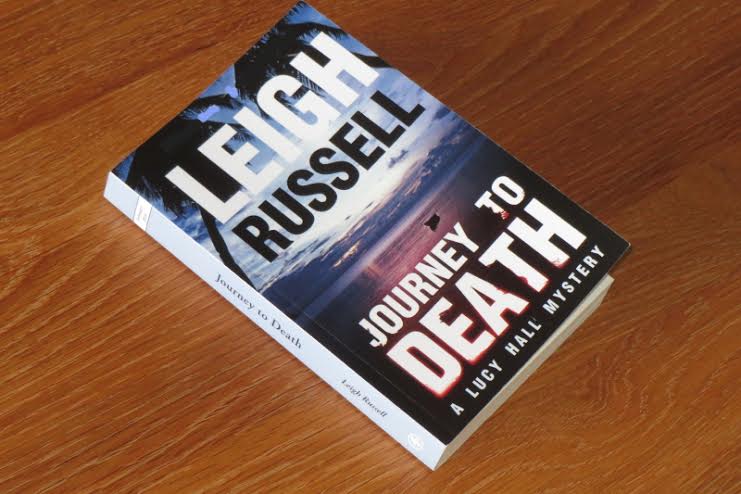
Journey to Death by Leigh Russell Review by Frances Colville

Journey to Death by Leigh Russell Review by Frances Colville

The first of a new series by established crime writer Leigh Russell, Journey to Death is set on an island in The Seychelles.  Lucy Hall arrives on the island with her parents for a holiday following the traumatic break-up of a relationship, but soon becomes aware that all is not as it seems.  Behind the warmth and tranquility of a popular tourist destination lies a dark and mysterious threat to the safety of Lucy and her family.  Is someone trying to frighten or even kill them, and if so, why?


Lucy is an appealing if rather naive character who steps up to try  to solve a crime in which the authorities are not particularly interested.  I enjoyed the setting, and the descriptions of the island and its beaches and thought the book was generally well plotted.  There were a few occasions when it was all a bit slow and tedious and I wanted things to speed up and get sorted.  But overall it’s a good read – uncomplicated and easy to follow.  And intriguing enough to make you want to get to the end and discover how it all works out.


Journey to Death is a stand-alone book but the seeds are sown within it for a new crime series featuring Lucy Hall.  Published February 2016 by Thomas & Mercer (an imprint of Amazon Publishing) and available in paperback and e-book versions.


Spandau Baddie: Martin Kemp Meets Vicky Edwards

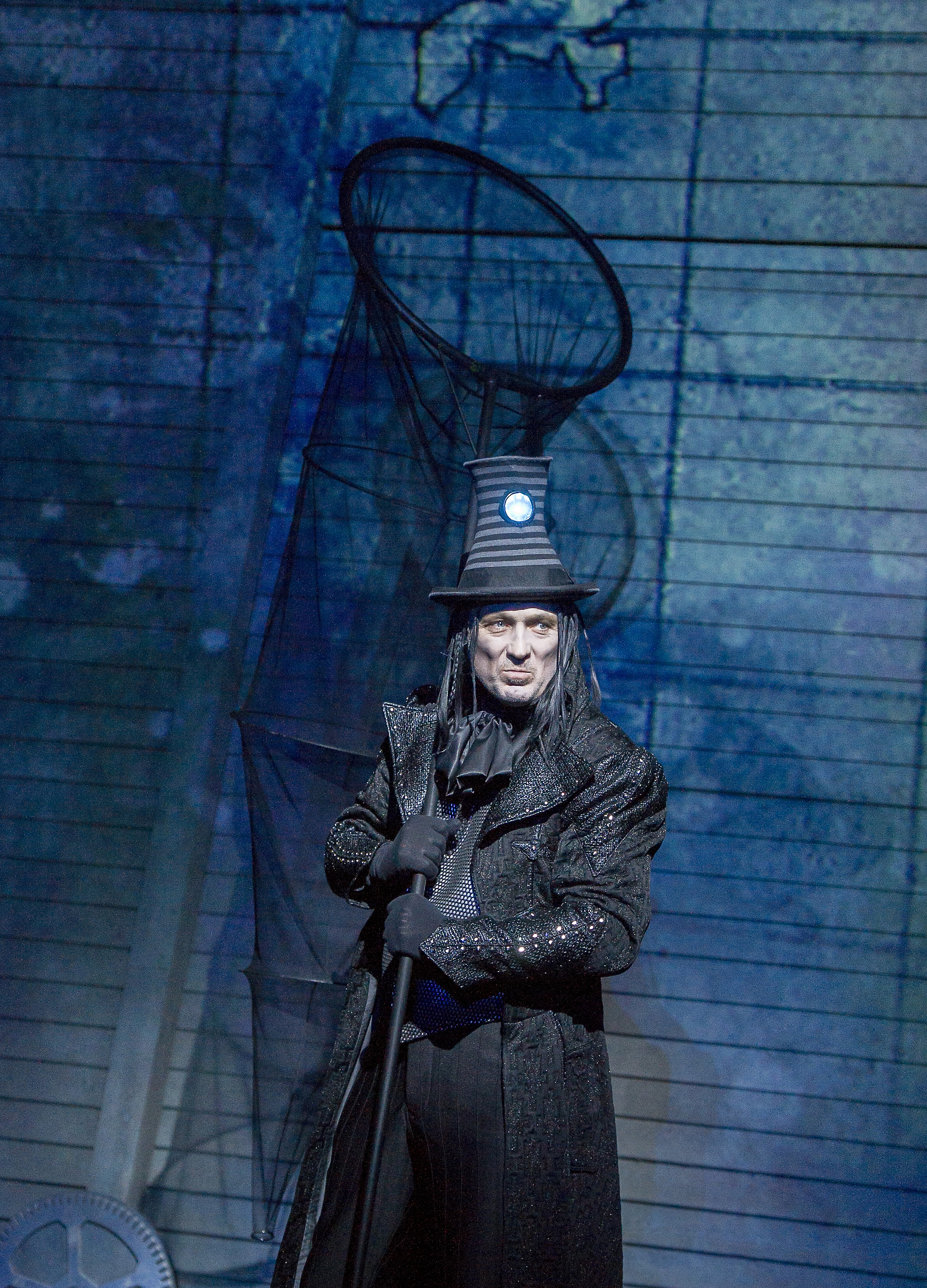
Martin Kemp tells Vicky Edwards why his musical theatre debut is going with a bang-bang…

'

Photo credit: Alastair Muir

From gangster Reggie Kray to evil control freak Steve Owen in EastEnders, Martin Kemp is extremely good at being bad. Currently on tour in Chitty Chitty Bang Bang playing the Childcatcher, arguably one of the most iconic villains of all time, Martin is drawing on his previous roles for inspiration, but admits that there’s unchartered territory to explore when it comes to the character that regularly tops the polls of movie monsters.
“The Childcatcher is an exaggerated version of everything I have ever done before, but it comes from a completely different angle,” explained Martin. “He’s a step away from reality; all the characters are really, especially in the second half when we go to Vulgaria.
“In the first half I play a character called the Junk Man, but in the second half that kind of Alice in Wonderland thing happens and the Junk Man becomes the Childcatcher. Robert Helpmann did an amazing job [in the film], but my physicality is not the same as his; I don’t have his ballet background, so instead I try to bring a bit more horror to the role.”
Judging from the booing that fills the theatre before he has even set foot on the stage, he’s clearly doing that very effectively.
“Kids are scared of the name: Childcatcher. When the Baron says “Call for the Childcatcher!” I can feel the tension in the theatre and then I hear the boos,” he laughed, adding, “But that’s part of the whole experience. If you haven’t laughed, cried and been scared then you haven’t seen a good show. You need to be taken to all those places.”
And with cheers at the curtain call almost taking the roof off the theatre, it seems that it’s a journey that audiences of all ages are delighted to undertake. A co-production between Music & Lyrics Limited and West Yorkshire Playhouse, this brand spanking new reimagining of the much-loved Sherman Brothers musical is winning critical acclaim as well as standing ovations.
“Ten years ago I saw the show in London and the main thing I remembered about it afterwards was the car,” said Martin. “But now it’s very much about the story. It amazes me, but every night I walk out of stage door and people are there saying how much they loved the whole show. From old people who saw the movie on their first date to kids meeting Chitty for the very first time, the demographic is extraordinary. Yes, it’s changed from the book, and then again from the film and again from the original stage musical, but it really works. We’re sending people home with big smiles on their faces.”
As for his fellow cast members, mention them and it is Martin with a big smile on his face. “It’s a great cast,” he enthused. “I’ve worked with Michelle [Collins] before and it’s lovely to work with her again, but they are all brilliant performers.” And so they are. Funny men Jason Manford as Caractacus Potts and Phill Jupitus as Lord Scrumptious and Baron Bomburst are joined by Martin and Michelle, as well as Andy Hockley of Phantom of the Opera fame as Grandpa Potts, and West End leading lady Amy Griffiths as Truly Scrumptious. Add to that a world class company of singers and dancers and you have a show that is dazzling, star-studded and that absolutely lives up to the ‘fantasmagorical’ praise.
But while the story of Chitty might have been knocking around for a good while, musical theatre is a new challenge for Martin.
“One reason I am here is that I have never done a musical before and I thought this might be a nice way to dip my toe in. I love trying new things and I love working with new people.”
That happy-go-lucky, have-a-go attitude wasn’t always there, however. In fact, as a child he confesses that he struggled with crippling shyness.
“I’ve been doing this a while now but at the age of eight I was incredibly shy, so my mum sent me to Anna Scher’s drama workshops,” said Martin, who knows first-hand what an advantage drama classes can be to children.
“What drama clubs give you is a small amount of this magic dust called charisma. I always say that I owe everything to Anna Scher because she formed my personality as a kid.”
Pointing out that whether you become an actor or join a band or you just use that acquired confidence to get through interviews when you’re 16, Martin is certain that drama clubs are a fantastic way of developing both character and life skills.
As for children watching live theatre, absorbing stories close up rather than on a screen, Martin loves the way they get totally involved.
“Adults watch, but kids believe and become part of the world they see unfolding; they just dive in,” he nodded.
“For Chitty we recently did what is called a ‘Relaxed Performance’ for children with disabilities and conditions like Autism. The show was adapted around the audience’s needs and it was a wonderful thing to be part of.”
A member of one of the most popular bands of all time, star of movies, TV and now a musical, Martin certainly can’t complain of always doing the same old same old.
“I have always changed it up a bit and I like never knowing what’s around the corner,” he laughed, although actually this time he does know what is coming next.
“I have just finished a year on tour with Spandau which was wonderful, but it’s this great big machine that needs five artic trucks and a 100-strong crew. When you play huge arenas the size of Wembley you know that to people at the back you’re just a speck of dust in the distance and that you’ll never get to meet those people. So in May I am doing the sort of antidote to not meeting people with a show that’s going to tour called An Audience with Martin Kemp. I’ll be travelling around England chatting about my life and career and taking questions from the audience. Yeah, it’s going to be different and fun,” he grinned.
With such a busy professional life, relaxation, he says, comes in the form of painting.“That’s my down time. Sometimes it shuts me off from the world and I lose myself completely.” Asked what he paints and the smile that stole my sixteen-year-old heart lights up his face again. “I paint rock ‘n’ roll,” he says with a chuckle.
Super-talented, funny, warm and with rock ‘n’ roll artistic flair to boot, however brilliantly nasty he is as the Childcatcher, in real life Martin Kemp is a total sweetie.
Vicky Edwards


One in Five Women have felt Sexually Discriminated Against in the Workplace

Some bad news on the equality front: a third of working women have experienced discrimination and harassment in the workplace, according to research.

They’ve been spoken over or had opinions dismissed in meetings, received unwelcome comments on their appearance or clothing and been called “woman” and “clever girl”.

The poll of 2,000 working women revealed many have had their work and achievements hijacked by male colleagues or have experienced unwanted touching, brushing or stroking from other members of their team.

One woman lost her job after refusing a marriage proposal from her line manager while another was frequently ordered to make her male colleagues their drinks.

Another reported a male employee was taken on to do the same job as her – and later discovered he was being paid £1,000 more.

And a female shop worker ended up getting unwanted texts from a security guard who went into the manager’s office and took her mobile phone number from personnel records.

Georgina Calvert-Lee, Senior Litigation Counsel at law firm McAllister Olivarius, which commissioned the research to understand better what women are facing in the workplace, said: “It’s sad to hear that these kinds of things continue and are so widespread. It confirms what our clients tell us about their own experiences.

“We’re sure many women will feel as though they are the only ones having to deal with situations like this.

“But we’re certain there will be women out there who don’t actually realise they’re experiencing sexual discrimination or harassment.”

“Sometimes it can feel a bit daunting speaking up; especially if you’re afraid of losing your job for standing your ground.

“But the only way these situations are going to be solved is by making others aware of it and not suffering in silence.”

Of the 42 per cent of women who have ever taken maternity leave, one in 10 said they felt discriminated against when they returned to work.

One mum explained that once she had returned to work after maternity leave her job had ‘disappeared’, and she was given menial tasks which weren’t enough to fill the day.

Another respondent said her manager had told her there was no point in promoting young female staff as “they all leave on maternity anyway”.

One in six women in management said they have been called ‘bossy’ when instructing another member of staff.

Four in 10 women have experienced colleagues trying to turn workplace conversations into sexualised ones.

In fact one in five have felt sexually discriminated against in their current workplace at least once.

Twenty four per cent of women in work have never sought help for the bad experiences they’ve had in at work – but have considered it.

And because of this, many women believe it would make sense to make sure sexual discrimination should be discussed in the work place so it’s recognised a little easier.

Georgina added: “Women who have experienced sexual discrimination and harassment don’t need to suffer in silence.

“It’s illegal, and you can get help. Good companies want to fix it. Other companies can be persuaded by legal action”.

McAllister Olivarius is an international law firm representing people who face discrimination in their professional lives.


TOP 10 MOST FREQUENT DISCRIMINATION AND HARRASSMENT INCIDENTS IN THE WORK PLACE FOR WOMEN


1. Been spoken over of had their opinion dismissed in meetings

2. Received unwelcome comments on appearance or clothes

3. Been called “woman”, “clever girl” or other dismissive terms

4. Been asked to make tea or run errands more than male colleagues

5. Felt unable to complain about being treated unprofessionally for fear of being accused of being oversensitive

6. Been referred to as ‘bossy’ due to instructing another member of staff

7. Been judged / commented on for their sexual attractiveness

8. Having credit for their work taken by male colleagues

9. Been assumed to be the assistant / PA or lower ranking member of staff

10. Experienced unwanted touching, brushing or stroking from other colleagues