Gardening Fun for the Kids

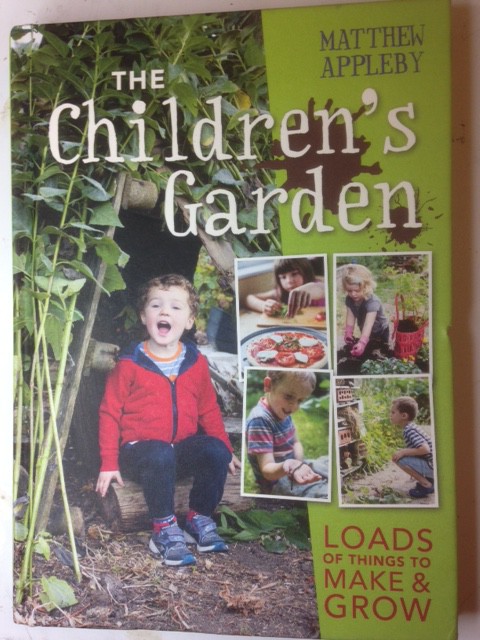
The Children's Garden

The Children’s Garden

There are two ways of getting your children into the garden and away from their Xboxes and Playstations. Either you can lock them outside and ignore their frenzied screams, or you can buy them a book like this.

The Children’s Garden is written with parents in mind. it has lots of great ideas and projects, so that youngsters can actually enjoy their time in the great oudoors. You can have a lot of great fun, with very little money if you do simple things such as pond-dipping or going on bug hunts to uncover beetles and woodlice and other creepy crawlies

The book has chapters devoted to simple things such as growing vegetables, including potatoes and spring onions, which can all be done in just about any container. And it makes the very valid point that children are more likely to eat things that they’ve grown themselves. And they can have lots of fun growing flowers from seed such as nasturtiums and sunflowers – which are really great because they are completely edible so even if the seeds end up in a toddler’s mouth, they won’t do any harm.

This book is a handy size – not too big – and has lots of great pictures. And if you want to inspire your child with a lifelong love of gardens and gardening, this is a great place to start.

The Children’s Garden by Matthew Appleby is published by Frances Lincoln, £14.99

.


Writing Short Stories for Magazines

Short Story Magazines

The Most Important Thing You Need to Know


There isn’t a secret recipe to success so it’s no use looking for the answer here.  If you want to write short stories and sell them there is one thing you need to do before you even begin to write your story. Market Research. You can’t write a story and send it off willy nilly. You may sell one or two that way, if you are extremely lucky, but for continuous success you need to know your reader.

I’d advise selecting one or two magazines that publish short stories. Those accepting them at the moment are, among others, Woman’s Weekly, Take A Break, Fiction Feast, The People’s Friend and Yours. You can find a full list of markets at www.womagwriter.blogspot.co.uk

Read through all of the stories in your chosen magazine and find something that resonates with you, those that might be similar to stories you would choose to write. Most importantly, read them with respect. Don’t sneer and pass judgement. It’s a hard market to crack and if you disrespect your reader your writing will come across as patronising. Guess what? No sale.

Get a pen and paper and make notes. What are the characters names, what ages? Where do they work?  Where are the stories set? What are they about – family, romance, comedy, thriller? Each market has its subtleties and you need to make yourself familiar with them if you are to have any hope of success.

What is the word count? Each magazine has set limits. It’s no good sending a 700 word story  to Woman’s Weekly when they only take 1,000 or 2,000 words. It will come straight back to you.

Now read the entire magazine, the articles, the readers’ letters, the adverts, the problem pages. You can learn so much about the readership by doing this and then you will be able to build a picture of your ideal reader. Do it as an exercise. Imagine a woman buying that magazine – what does she look like? What job does she have? Where does she live? Before you know it you will have a character; you may even have a story – get writing.

Editors are busy people. Make things easy for them. Present your work as per their guidelines, found on their website. If you are unsure how to set things out pop over to writer Sue Moorcroft’s website because she has the best example I’ve seen on how to present a professional manuscript. It will save you so much time and effort  www.suemoorcroft.wordpress.com/manuscript-presentation


I’ll be talking at Words for the Wounded Literary Festival on 16th April and will be happy to chat about writing short stories for the commercial market throughout the day.


Tracy Baines’ stories have appeared in Woman’s Weekly, Best, Take a Break, The People’s Friend, Candis, My Weekly, Yours in the UK – and magazines in Scandinavia, Australia and South Africa. She has completed a book on Eating Disorders and is now working on a novel.

On International Women’s Day FEMALE ARTS launched Friend Scheme as a #PledgeForParity

female, arts, feminismFemale Arts magazine launched a friend scheme on International Women’s Day, 8 March 2016.

The online arts review magazine, headed by Editor-In-Chief Wendy Thomson is based at South Street Arts Centre, Reading and reviews events across the UK.

“The theme of this year’s International Women’s Day is #PledgeForParity where business leaders from Sir Richard Branson, founder of the Virgin Group to Mark A. Weinberger the CEO of E&Y have made the pledge. We’re inviting everyone to make the pledge by joining our friend scheme so that we can continue our work to promote gender equality in the arts.”

Female Arts magazine annually reviews hundreds of female led performances, exhibitions and events and has a dedicated volunteer team of writers headed by an editorial team including London editor Michael Davis and Interviews Editor Amie Taylor.

Female Arts also produce events. Wendy Thomson said, ”As part of this year’s International Women’s Day celebrations we co-produced the launch of a new award for emerging female playwrights at the Greenwich Theatre in London – RED Women’s Theatre Award on Sunday 6th March 2016. We have also organized events at The Southbank Centre and The Bread and Roses Theatre, working with other advocates for gender equality including Gender and Performance (GAP) Salon and the So and So Arts Club.”

The Female Arts friend scheme is available to join from £30 a year at www.femalearts.com/friend where the benefits include a profile on the Female Arts website and networking opportunities.

Facebook: www.facebook.com/femalearts Twitter www.twitter.com/femalearts

International Women’s Day #IWD2016  #PledgeforParity  http://www.internationalwomensday.com/


J.D. Robb Brotherhood in Death Book Review

J.D. Robb Brotherhood in Death Book Review

J.D Robb (AKA Nora Roberts) does it again. This is a riveting and well written book. It is almost impossible to put it down. A superb, entertaining thriller. Get your hands on a copy now.

The new novel featuring homicide detective Eve Dallas from the #1 New York Timesbestselling author of Devoted in Death.

Sometimes brotherhood can be another word for conspiracy. . . .

Dennis Mira just had two unpleasant surprises. First he learned that his cousin Edward was secretly meeting with a real estate agent about their late grandfather’s magnificent West Village brownstone, despite the promise they both made to keep it in the family. Then, when he went to the house to confront Edward about it, he got a blunt object to the back of the head.

Luckily Dennis is married to Charlotte Mira, the NYPSD’s top profiler and a good friend of Lieutenant Eve Dallas. When the two arrive on the scene, he explains that the last thing he saw was Edward in a chair, bruised and bloody. When he came to, his cousin was gone. With the mess cleaned up and the security disks removed, there’s nothing left behind but a few traces for forensics to analyze.

As a former lawyer, judge, and senator, Edward Mira mingled with the elite and crossed paths with criminals, making enemies on a regular basis. Like so many politicians, he also made some very close friends behind closed—and locked—doors. But a badge and a billionaire husband can get you into places others can’t go, and Eve intends to shine some light on the dirty deals and dark motives behind the disappearance of a powerful man, the family discord over a multimillion-dollar piece of real estate . . . and a new case that no one saw coming.

Brotherhood in Death is available here.


30 Days of Gratitude Day Eight #30daysofgratitude

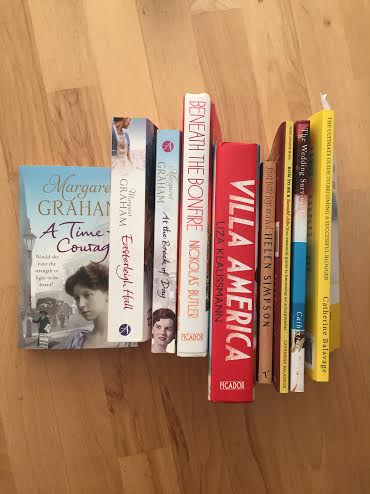
Today I am grateful for books. I have loved reading all my life. There are very few pleasures in life as great as reading a good book. My love of reading has also given me a career that I love, and broadened my view of the world. Reading is great for the imagination and it makes you smarter. Some of these books are written by Frost contributing editor Margaret Graham and some others were written by me. Margaret is a bestselling author for Random House so she is on another level. I hope I get there one day.

good books, author, writer, Margaret Graham, Catherine Balavage, bestselling author

Catch up on other days:

Day 1.
Day 2.

Day 3.

Day 4.

Day 5.

Day 6.

Day 7.

What are you grateful for?


Words for the Wounded Host Their Annual LitFest Literary Festival

Words for the Wounded Host Their Annual LitFest Literary Festivallogo

Great excitement – Words for the Wounded which raises funds for wounded troops and veterans by creating  opportunities for aspiring writers and readers is holding its annual LitFest again on April 16th.

The WforW LitFest Day will be held as always at the lovely Downley Community Centre, School Close, Downley, High Wycombe HP13 5TR
10.00am to 5.00pm.

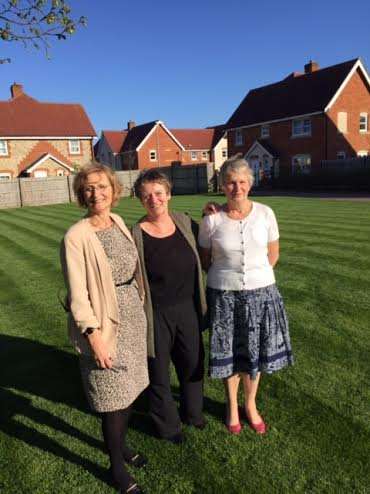
As everyone knows by now, the three grannies, Margaret Graham,  Jan Speedie (both Frost Magazine writers) and Penny Deacon absorb all the costs of the charity and therefore 100% of everything they raise goes to where it should.

Words for the Wounded Host Their Annual LitFest Literary Festival

The speakers this year are:  Sunday Times No 1 bestselling author and a patron of WforW –  Elizabeth Buchan talking about her work.

Words for the Wounded Host Their Annual LitFest Literary Festivalelizabeth buchanan

Jemima Hunt, editor and literary agent, and director of The Writers’ Practice with advice on editing your work and attracting an agent.
Tracy Baines, successful women’s magazine  short story writer with tips about getting published.

Catherine_Balavage_023
Further excitement as Catherine Balavage, blogger and editor of Frost Magazine will be joining the day to talk about blogging, running a magazine, and her various successful books.

Paul Vates, the brilliant actor, and friend of Words for the Wounded, will be reading from the work of our speakers.

Sharon Bennett will be displaying her art.

Cost £35 (which includes lunch with wine, morning coffee and afternoon tea)

For Tickets, send a cheque or postal order to: (cheques payable to Words for the Wounded)
Words for the Wounded
12 Woodcote Green, Downley, High Wycombe, HP13 5UN
Please include a SAE

Trains from London are frequent, and there are taxis for the 10 minute journey.

www.wordsforthewounded.co.uk

Who Cooked Adam Smith’s Dinner? by Katrine Marçal


Who Cooked Adam Smith's Dinner

A Story about Women and Economics

For two hundred years, economics has argued that the world turns because of self-interest and this logic has spread from the market to how we shop, work and date. But what if our unpaid labour – particularly the work of caring, cleaning and cooking traditionally performed by women- was valued by economics? What would our society look like then? From Adam Smith’s dinner table to the recent financial crisis Katrine Marçal tackles the myth of self-interest and shows us how out economics is failing us, and how much better things could be.

Adam Smith was able to write The Wealth of Nations because he went home to his mother who cooked, cleaned and nurtured him. Would society benefit if these qualities were not only valued but received remuneration on an appropriate scale?

This is an overview of economics written with wit and clarity and challenging the notion of Economic Man. The Equal Pay Act came into force in Britain over 45 years ago and despite this women still earn less than men. So called ‘women’s work’ is still underpaid, undervalued and overlooked. Feminism is about money, says Marçal and proceeds to tell the reader exactly why this is so. Well researched and written; who would have thought that economics could be so interesting? Thanks to Marçal’s erudite writing it is and I enjoyed this book far more than I expected. It made me think about feminism and finances it a totally different way.

The one quote I will definitely take away is that:

‘Men teach us that there are things worth dying for. Women teach us that there are things worth living for.’

Highly recommended.

Who Cooked Adam Smith’s Dinner is published by Portobello Books


Caitlin Moran Interview

Caitlin Moran InterviewHow did you find the whole experience of making series one?

Oh God, it was amazing! I’ve always worked on my own, so first of all working with my sister, who I’d always suspected was a genius, and indeed turned out to be – not least because about two weeks into the process I realised I had no idea how to produce a plot or use the script-writing software. She knew how to do it all, having written plays for years and had loads of stuff on up in Edinburgh. And then bringing it to a team and making it happen. In a way, it was always obvious that me and Caz would work together, and do something about our family, because that’s what we used to do when we were kids. We’d have Sindys and play Sindy games, and write scripts, and making clothes for the Sindys by wrapping bits of tinfoil around them and putting pins in their ears to make little stud earrings. And when you make a TV show, you don’t have to at any point wrap Rebekah Staton in tin foil and put pins in her ears, because they’ve got a wardrobe department who actually put clothes on them. You’ve suddenly got all these resources.

Sometimes you come up with an idea that people look very scared about. In series one, we just wrote the sentence “The dog is having a poo” and it turned out to take half-a-day to film. You have ten fully-grown professional people standing around in the cold in Manchester, watched by passers-by, waiting for a dog to drop its biscuits. Such is the awful, evil power of a writer that you can just sit in the warm and write “The dog is having a poo” and suddenly you’ve ruined someone’s day.


Having worked in front of and behind the camera, which do you prefer?

Oh god, no question. You may have noticed that I’m not on television at all now. I presented a TV show when I was 18, and at the time, and I only did that because if you’re offered a TV show when you’re 18, of course you’re going to say yes. But I knew I was a terrible presenter. And this posh voice that I’ve got now – I just started speaking in it as soon as I went on camera, because I was so nervous, and I’ve never been able to break out of it since. Literally, before I went on camera, I had a very broad Wolvo accent. I felt I couldn’t be me on television, and there was a very posh girl on set called Isabel, and she seemed really confident, so I just copied Isabel’s voice. And I’ve literally not been able to shake it since, so you can tell how traumatic an incident it was that it still marks my voice almost 30 years later. It’s just horrible; I don’t know how actors do it. The whole thing of a room going silent and everyone waiting for you to do a thing on camera, and every minute is money. My job is the exact opposite of that. I sit on a chair, nobody has a clue what I’m doing, I’m in my pyjamas, eating sardines out of the tin with my fingers, chain smoking and singing and wandering around talking to myself. That’s my preferred working environment

Do you prevaricate an enormous amount, working from home?

I know a lot of writers who will sit in front of a blank page, or spend all morning hovering between the keys in their keyboard, but I’ve always had so much work I just can’t do that. I’d go mad. I run on anxiety anyway, I’ve always got five or six things on the go, and I’ve worked since I was 13. I come from a poor place, and I’m running from a nameless horror. So every day, I have something to do, and if I haven’t done that then I’m fucked, because I have to do twice as much the next day. I’ve never missed a deadline. I file early.

Were you pleased with the reception of the first series of Raised By Wolves?

Oh God yeah, it was amazing. I’m always waiting, with everything I do, for someone to come up and kick me up the bum and say “Get back to Wolvo.” And it was just across the board amazing reviews. The cover of the Guardian Guide was me and my sister and the two people who were playing us. That’s a pretty surreal moment. Then it broadcast in Canada a couple of months ago, so we started getting all these messages from Canada, asking what all these British slang words meant. And we’re in the process of doing it in America now as well, which is incredibly exciting. It kind of makes more sense there, because home education is much bigger there, and that whole prepping for the apocalypse thing that Della is doing, that’s massive there.

You mentioned getting tweets from Canada. How did the show go down in the bear pit that is Twitter over here?

When the show was on, I just couldn’t go on to Twitter – that’s just a short way to madness – but my husband was filtering it every night, and I had literally four bitchy comments, which, as a woman on Twitter is extraordinary. Given that you can be a woman on Twitter and come on and say “I love you all, here’s a pound, everyone,” and someone will just go “Shut up you fat bitch #mensrights”. So I was astonished.

We did it out of so much love. We love those girls. We want it to reach families like that, working class matriarchs, weird teenage girls, fat teenage girls, angry ginger lesbian girls, weird freaky Goth girls. They never get served anywhere. As a woman, it just does your eyes so much good to see people who look like that on your telly. Often on telly even something that’s really edgy has got women on it who are really toned, and if they’re really stressed, they’re in a little vesty singlet and tiny pants and they’re sitting on their bed with their hair in a bunch and glasses on to look intellectual but still looking hot. And to see someone who’s just dressed in rags and talking about wanking is just so different. Big girls, both in personality and stature, doing stuff and not really doubting themselves and being triumphant. We still don’t have enough of that.

You bust quite a few taboos in the series. Do you enjoy that?

I’ve never seen a taboo that I didn’t want to grab and pull out into the open whilst banging on a pan with a spoon and going “Here’s a taboo, let’s talk about the taboo.” What are taboos? They’re just things that we’ve decided, for whatever reason, we don’t talk about. To which I would add the word “…yet.” Why don’t we? It’s insane that American Pie has gone through eight iterations, an entire franchise based on a man having a wank in a pie, and yet female masturbation is never spoken about. And if you look at teenage girls in this generation, and how fucked up they are sexually, and the majority of their sex education is coming from porn, and it’s all from the male viewpoint, there’s nothing about what you want, you’re just some cock-vessel for some horrible porn star. So to have a teenage girl who looks like that, waking away her grief, trying to encourage her uptight sister to follow suit in a graveyard at a funeral – no, sex is funny!

Are you very conscious of the responsibility you have to younger female viewers when you’re writing the series?

Oh God, constantly. I was raised by media and culture, which is why I’m so hyper-aware of what there is and what there isn’t. And when I wrote How to Be a Woman, I thought it would maybe sell to women of my age, but it was all teenagers who bought that book. It was an astonishing array of girls – really fucked up girls, girls who’d self-harm, girls with eating disorders, girls with anxiety, girls with depression, and then really brilliant beautiful girls who didn’t know what to do with their energy, girls who were ashamed of their sexuality, just this massive parade of girls who didn’t see themselves anywhere, and felt incredibly vulnerable, and would grab on to one thing – one book or CD or film – and that gives them the first tiny platform they’ve got to start building their personality. And I think so much of what women see on television or in magazines makes them feel awful or hectored or lectured to or that their life is a massive fucking to-do list. I’m so conscious of the need to make jokes about it. And when we’ve finished laughing about it, we need to plan the revolution, because I’m not going to have another generation of girls growing up feeling as fucked up and unhappy about themselves as I did.


After the success of series one you’ve got you’re the difficult second album syndrome. How did you find writing series 2?

Actually a lot easier – because we knew things like don’t write ‘a dog has a poo.’ We tried to write a scene with a swan and were told not to. Basically, don’t do anything involving livestock. That’s probably a good rule for life anyway. And we knew how to plot things; we became better at that, mastering the technical side so that it worked as a drama as well as a comedy. But whenever anyone gives an answer like that in interviews that I read, I think “That’s incredibly boring, tell me a funny anecdote about you going out and doing a shit load of poppers on Canal Street and falling off a table.” And I did that as well.

So what can fans expect from the series?

Their dad is back, so we get to see how he and Della met, why they broke up, why their kids are how they are. He’s not in it that much, he’s like a wandering albatross that floats into the series but floats back out again, revealing a couple of interesting things. Otherwise – Germaine has become worse! The revelation at the end of the last series that not only would she not have to pay for sex, but that people would pay her for sex, that she could be a prostitute – this has been the bolt of good luck that is all Germaine needed to become truly insufferable. In episode one, she does something so disgusting that everyone presumed it was me, but it was actually Caz’s idea. Germaine has come up with a life hack for attracting boys that is appalling. Aretha has taken her destiny into her own hands and realised that being educated at home is not going to get her out of that house – particularly for the two jobs that she really wants, which is either to be a hermit or a lighthouse keeper. So she goes out and finds a mentor who becomes really important to her. And the person we have in to play that role is such a hero of ours; we are so thrilled to have her on the show. And we also see where Della works, and her boss, who is the other person we are so excited to have on the show. He is amazing, it was his first TV, and we immediately went away and wrote him a bigger part. In three years he’ll have his own sitcom.

Della is an amazing character, beautifully played by Rebekah Staton. When you wrote her, did you mean her to be so sexy?

No! We’d written her as someone quite small, angry and compact, just scrubbing her front doorstep and hating everyone and being very proper at all times. And then Bex came in for the audition and said “I’m just going to drop this in – I’ve just done a film with Clint Eastwood, and I want to play Della like Clint Eastwood.” Her dad was a preacher as well, and I think she plays Della as a cross between a preacher man and a cowboy. And she just brought this incredible physicality to it. To have her to write for is a true, true privilege. She’s amazing. You can just throw anything at her. She has such talent. On set she’s amazing. I’ve visited a lot of sets in my time. The king of being on set has always been David Tennant. On Doctor Who, he knew everyone, was talking to everyone, he’d bring the whole mood up, he’d have lunch with everybody, he’d be joking the whole time. Bex is the only person I’ve ever seen who’s even better than David Tennant. In between every take she’s so funny; it’s like a proper stand-up routine. And she goes round hugging everyone, and she’s looking after all the kids at the same time, she’s like a mum to them. And she’s messing about, and then suddenly she’s standing up delivering these huge speeches, and she’s word-perfect every time. I don’t know how he does it.


How important is Wolverhampton in the show. Could it take place anywhere else?

No. It’s a very specific humour that the Midlands has. A friend of mine told me that people from Wolverhampton are what Scousers think they are – very dry, very downbeat, resilient, with a wry humour.


You took press on a tour of Wolverhampton before series one. What was that like?

That was amazing. There was one main highlight. Wolverhampton has a massive chapter of the Hell’s Angels – I think the biggest one in the UK. They had a huge club house on Penn Road, it was a terrifying big gothic house with huge gates. And I was explaining to people on the tour bus about this big scary house, and we pulled up opposite, and they’d taken the gates down, had a really lovely sculpted garden, a netball court and a tennis court. It had all been done up. So I explained that it must have been sold, and the guy who worked for the local paper went “no, no, they still live there!” The Hell’s Angels were gentrified. Sarah Beeny must have been in there and given them a lovely colour scheme, all Farrow and Ball.

So do you fancy yourself as a tour guide?

Yeah, it was really good fun. But it’s made easier by the fact that Wolvo has the biggest concentration of characters anywhere. We had a tramp who loved on the roundabout, and had a tent there, and he was there for so long that the council wired him up to the mans, so he could have a fridge, a telly and a satellite dish there. When he died, people found out he’d been a Polish airman in the war, and had been in a concentration camp, where he’d been terribly traumatised, so he didn’t want to be around people any more. So he lived on this roundabout. And there are loads of Sikhs in Wolverhampton, and their philosophy is that anyone who decides to be a hermit is a holy man. So people from the Sikh community would leave him food every day, which he hated, because he didn’t like spicy food, so he complained about it. That’s so Wolvo. Then there was a guy called Barry the God, who walked around with a gold cup on a chain, and who had apparently seen God; there was The Cowboy, who walked around dressed as a cowboy at all times; there was The Preacher Man, who wore a bowler hat and would get on the buses and start reading the bible to everyone. It’s a very interesting place, is Wolvo.

Interview with thanks to those at Channel 4.