Grow Healthy Babies: The Evidence-Based Guide to a Healthy Pregnancy

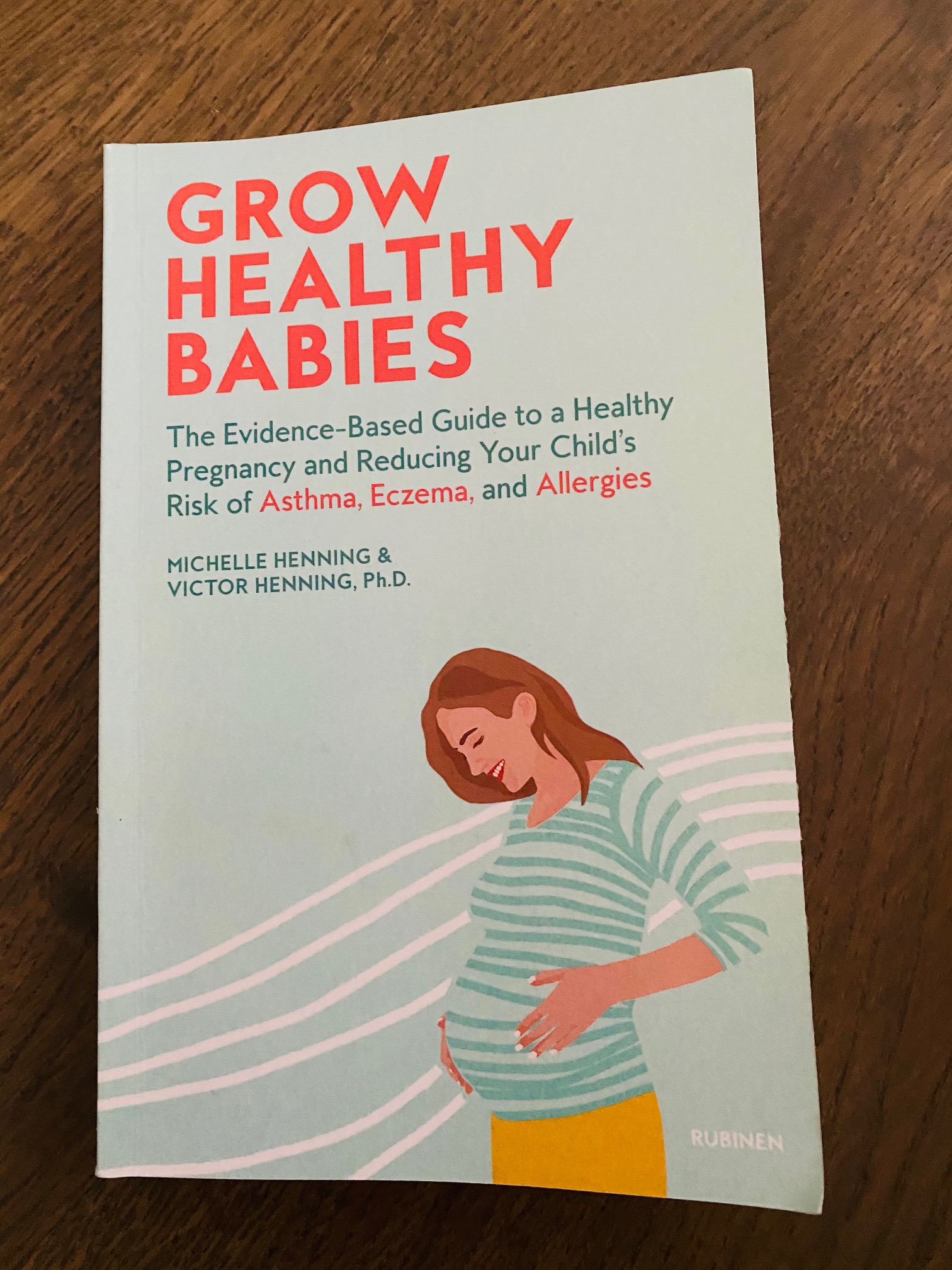
grow healthy babies, pregnancy book, pregnancy, Being pregnant can feel like a minefield. Knowing what to eat and what to avoid can feel overwhelming. With allergies on the rise it adds more pressure. So I was excited to see the Grow Healthy Babies book. It is an evidence-based guide to reducing your child’s risk of asthma, eczema and allergies.

I was hoping it would not be a hippy-dippy book preaching to others what to eat and do, and I am happy to report it is not. It is a fantastic, well-researched book which backs up everything it says in droves. This book shows that you can make a huge difference to the health of your child, and it all starts in pregnancy. Pregnant women have more power than they realise.

While some of the research is not helpful to everyone- eating organic food is not within everyone’s range- I found the advice in this book invaluable. I would recommend it to anyone who is having a baby, or even thinking about getting pregnant. It is a truly great book and a triumph for the authors.


When lifelong asthma, eczema, and allergy sufferers Michelle Henning, a certified Nutrition & Health Coach, and her husband Dr. Victor Henning decided to become parents, they were well aware that half of all babies born today will develop allergies and up to a third will become asthmatic or suffer from eczema. Using their combined backgrounds in nutrition and science, they began investigating a mountain of medical literature on how to prevent chronic illness so that their baby would grow up healthy.

In their honest and enlightening new book Grow Healthy Babies, the Hennings share their research by distilling the latest medical evidence into a practical, easy to read guide that provides expecting parents with clear and simple steps to lower a baby’s risk of developing a chronic condition by up to 90%. With the goal of empowering parents-to-be or those planning to get pregnant with information about simple choices that improve their health and their child’s health, they cover a multitude of topics including:

  • You can make a difference: By making different choices during/after pregnancy, you have the power to shape your baby’s health for life
  • How your baby’s immune system develops, and how you can strengthen it to prevent chronic illness
  • How friendly bacteria, your microbiome, shape both your and your baby’s health, and how to protect and improve your microbiome
  • Which food choices and supplements during and after pregnancy make a real difference to your baby’s health, according to scientific studies
  • Why environmental factors and certain household products can trigger chronic disease, and how to choose healthier alternatives
  • How birth choices and breastfeeding can influence your baby’s long-term health


Grow Healthy Babies: The Evidence-Based Guide to a Healthy Pregnancy and Reducing Your Child’s Risk of Asthma, Eczema, and Allergies is available for pre-order at bookstores nationwide and online retailers such as Amazon.
WELSH WRITING WEDNESDAYS: REINTRODUCING JANE CABLE

I have been writing for Frost for so long I tend to assume everyone knows who I am, but common sense tells me that isn’t the case. Our readership is growing all the time, so many won’t have the first clue about why the Contributing Editor blathers on so endlessly about writing and books. And. this year, about Welsh writing in particular.

So the first thing you need to know is that I am Welsh. I was born in Cardiff and my formative years were spent in and around the city, although I left to go to college at eighteen and never lived there again. In modern parlance you would say that, despite living in England for so long, I ‘identify as’ Welsh and will do so until the day I die.

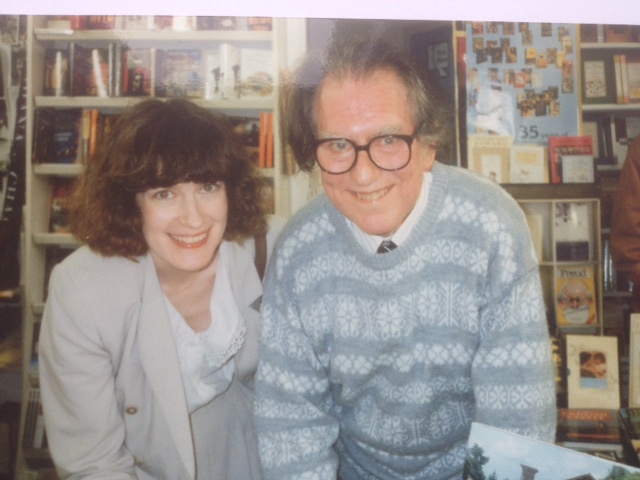
With my Dad at the launch of his first book

I was a teenager when I discovered there was a rich literary tradition on my doorstep. My father, Mercer Simpson, was a lecturer at the Polytechnic of Wales and worked with Tony Curtis, and I remember the great excitement in our household when Tony won the 1984 National Poetry Competition. By that time my father had retired and was spending his time reading for the Welsh Arts Council and editing the Welsh Academy of Literature’s magazine so the house was stuffed full of books by Welsh authors.

This may have been my literary heritage, but I eschewed literature, refusing to take english as an A-level. When I was a student Dad and I would debate whether there was such a thing as intrinsically ‘good’ and ‘bad’ in the arts and could never see eye to eye, largely because I considered his views desperately old fashioned. Never an academic, my normal reading was romances, women’s fiction and historical sagas. In other words, popular fiction.

My father reviewed books endlessly and became an acknowledged expert on Anglo-Welsh literature. By the time he died in 2007 he’d had four of his own poetry collections published, the last of which he’d worked on during his final illness and his publisher brought the first copies to his funeral.

By then I had started writing too, experimenting with romantic fiction, something he barely understood, but my mother ploughed through my early stories and gave me both encouragement and useful feedback. Instead my father was really proud of the fact I freelanced as a cricket journalist. My mother’s bragging rights came a few years later when, in 2011, I reached the final of The Alan Titchmarsh Show’s People’s Novelist competition.

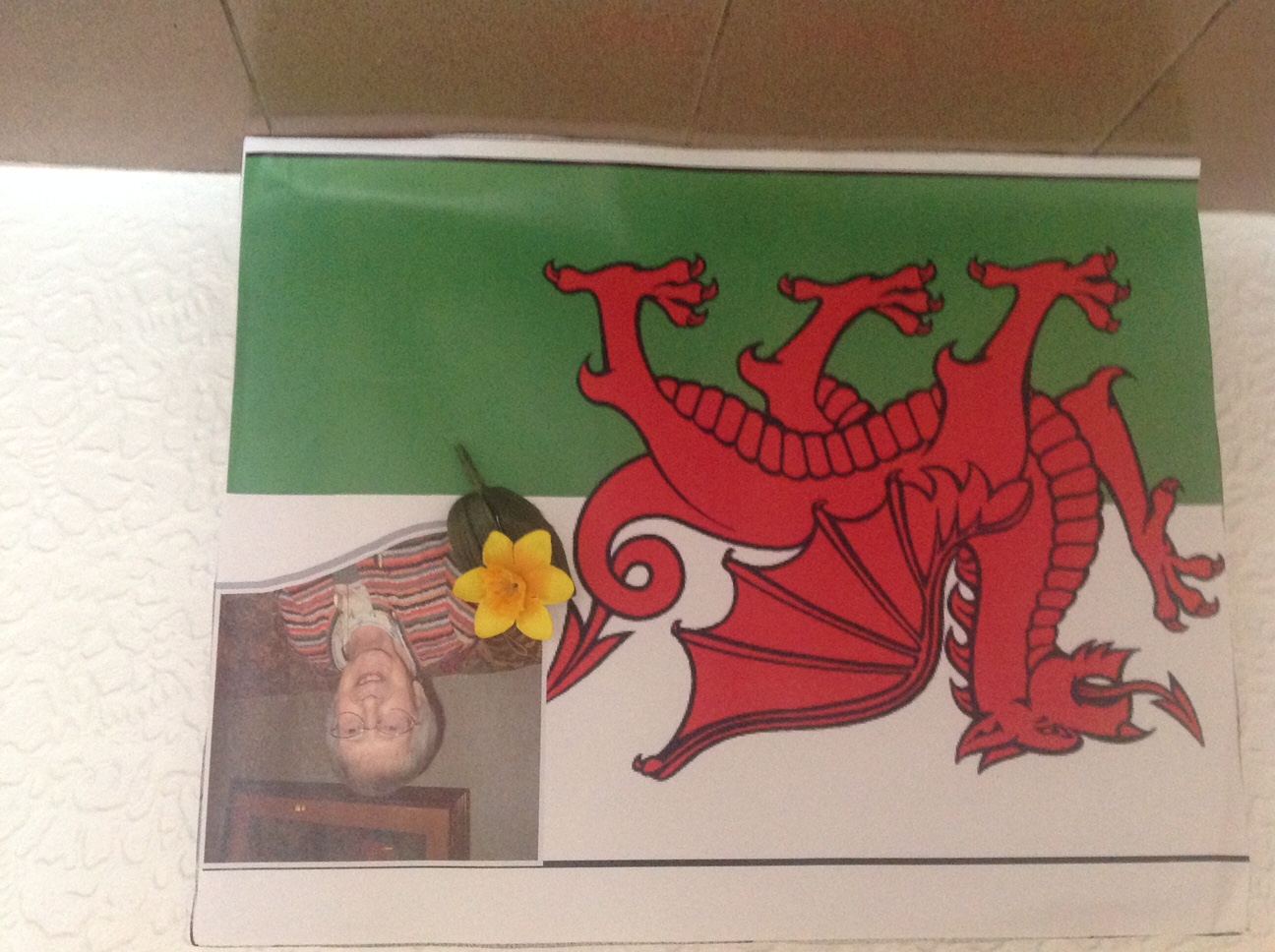
Mum and her Welsh flag

My mother loved reading but loathed formulaic romances, and her opinion has had more influence that anything over the way I write. I love a love story, but there has to be more. More for the reader to get their teeth into; a hint of mystery, research so good it teaches you something, a broadening of horizons. These are the stories I aim to write.

My career as a published author had a bit of a rocky start, but in 2018 I settled with Sapere Books, writing contemporary romances with a look over the shoulder at the past. The first two books were World War Two influenced, and later this year my debut dual timeline will be published by them, set in Cornwall in 1815 and 2015.

Last year I took another step forwards and signed a two book deal with One More Chapter, a division of Harper Collins. Both will be out this summer, written under the name of Eva Glyn. Eva for my paternal grandmother and Glyn for the Welsh novelist and poet Glyn Jones, a great friend to both of my parents and an emblem of my literary roots.


JANE CABLE INTRODUCES ANGELA PETCH AND THE IDEAS BEHIND THE TUSCAN HOUSE

I have known Angela since we were both indie authors in Chichester, so the success of her gripping World War Two novels with Bookouture has delighted me more than most.

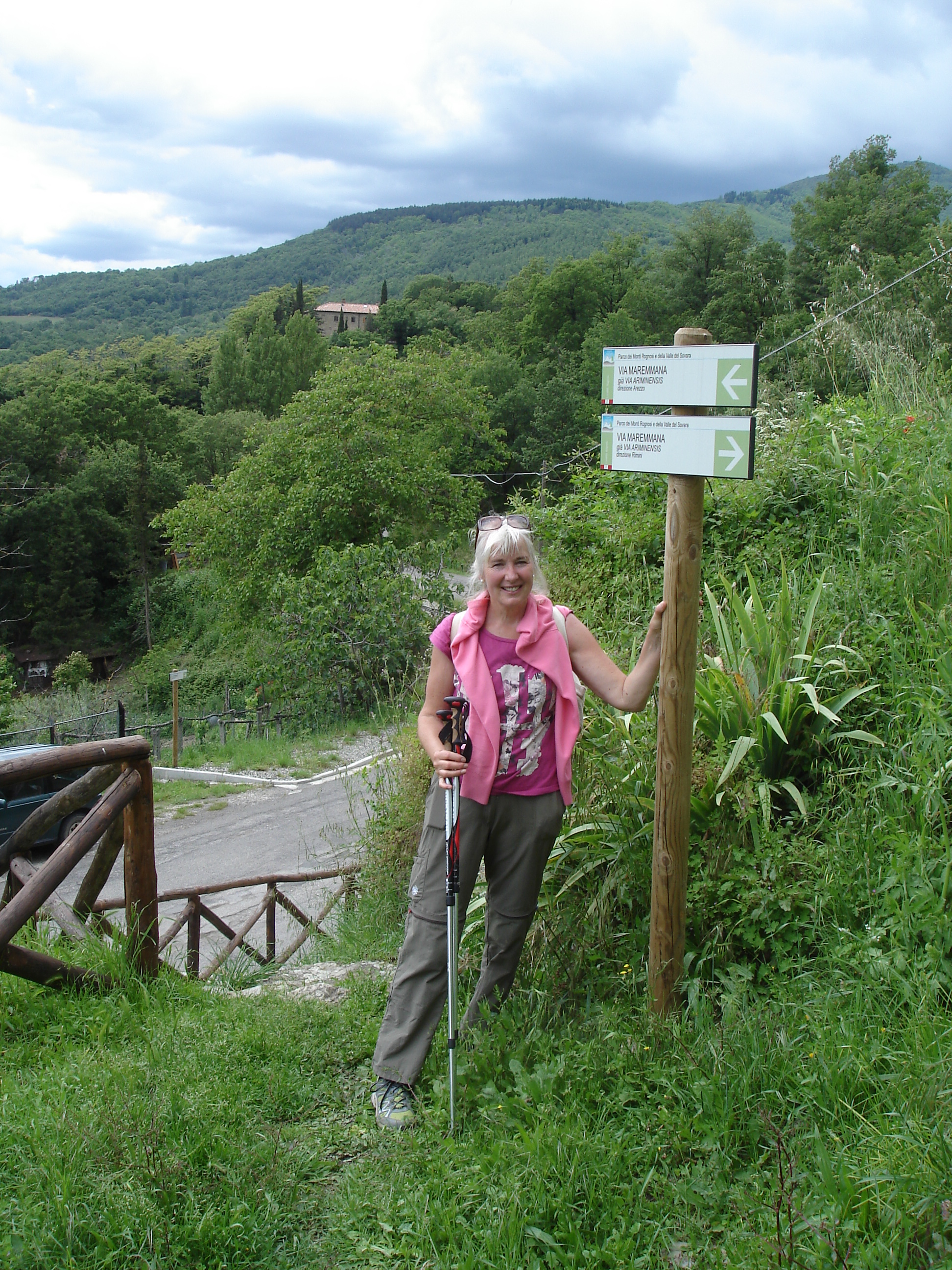
Every summer she moves to Tuscany for six months where she and her husband own a renovated watermill which they let out to friends and family. When not exploring their unspoilt corner of the Apennines, she disappears to her writing desk at the top of a converted stable. In her Italian handbag or hiking rucksack she always makes sure to store notebook and pen to jot down ideas.

The winter months are spent in Sussex where most of her family live. When Angela’s not helping out with grandchildren, she catches up with writer friends. Obviously we haven’t been able to do so this year, but I am still hoping.

Now, over to Angela.

It’s interesting how new ideas for novels germinate. I love that moment when I am grabbed by an event or a person and the desire to write a story is born. It can come from a newspaper article, an obituary, a photo or from somebody’s memories.

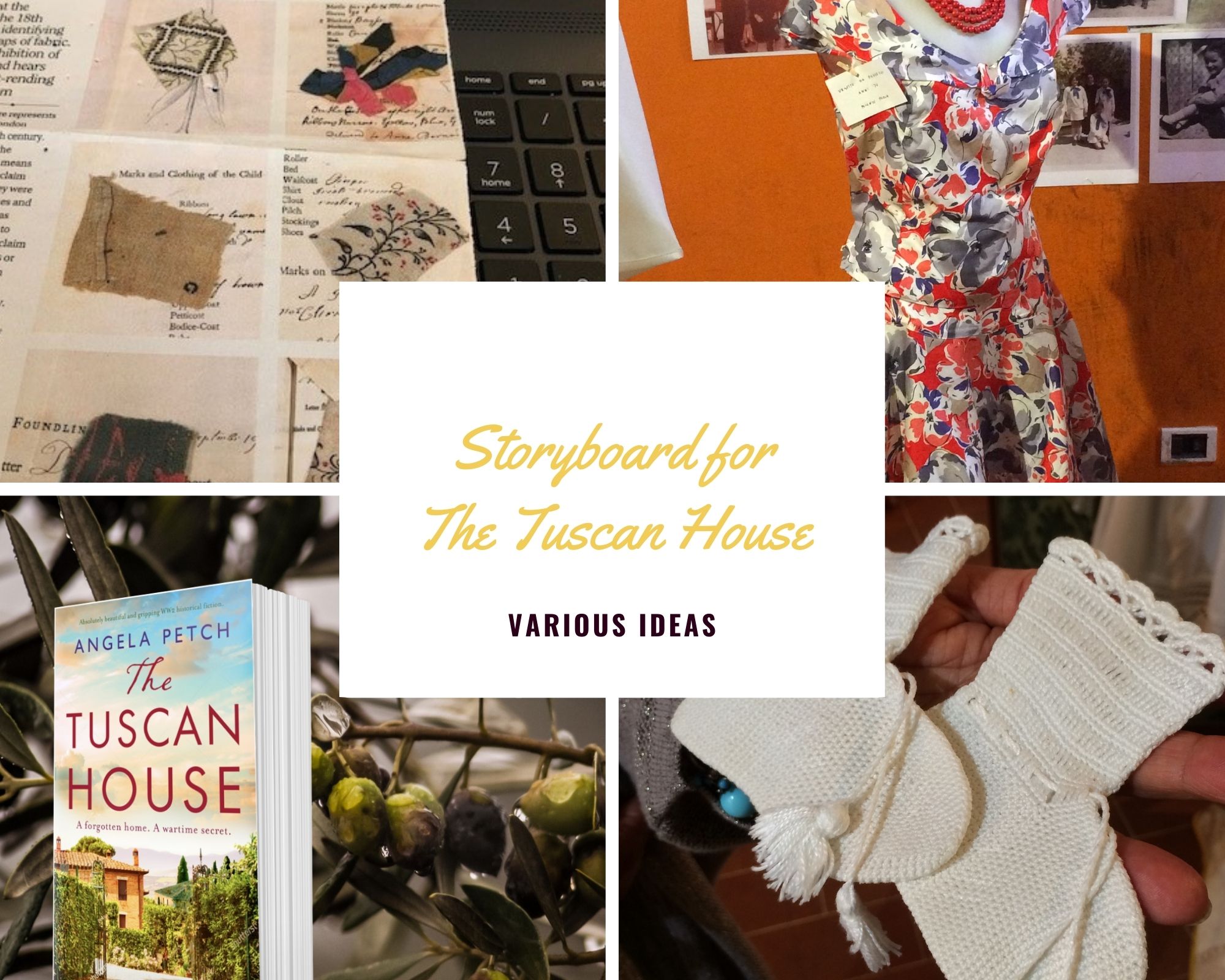
A few years ago, I cut out a magazine article with the title Swatched at birth. When babies were left at the Foundling Hospital in the 18th century, the only things identifying them were tiny scraps of fabric. The details on these swatches spoke to me: “A girl, about one day old, admitted 4 March 1759”. A piece of fabric pinned to her dress with a pattern of blue and burgundy flowers was the only link with this child’s past.

I’ve had this article for more than six years, but it gave rise to a detail in my new novel, to be published April 7th by Bookouture: The Tuscan House.

Similarly, on a shopping trip in Tuscany to our nearest town, I came across a simple exhibition of one family’s possessions. There were several outfits on mannequins and a wide-skirted 1950s dress was perfect for one of my characters. Click, click went my phone. And then I caught sight of a pair of slightly grubby booties. Click, click.  My characters come alive for me through such props and I hope to transmit the same through my words.

Maurice and I were persuaded in September 2013 to take a parish coach trip down to the Maremmana Tuscan coast. Most of the passengers were elderly and this annual Sunday had become a kind of pilgrimage to the past. Up until the 1950s, the men and boys of their families trekked down from our mountains to the sea to find better pastures for their sheep and cattle. I had never heard of the transumanza before (transhumance) and found myself scribbling down their stories. How could families bear to be separated for five long months every year? How did the women cope? What did the men get up to? My imagination went into overdrive. This led to my husband and I planning our own twenty-seven mile walk along part of the route and then another book was written. Originally, I self-published, but Bookouture acquired the rights. A Tuscan Memory  is a bit niche but a book I felt compelled to write.

We have to be in love with the stories we write and hope that our readers love them too.


Find out more about Angela and her writing on her blog: https://angelapetchsblogsite.wordpress.com


Look What You Made Me Do by Nikki Smith

I love getting my teeth into a good psychological thriller and Look What You Made Me Do did not disappoint. The story is based around two sisters and what happens after their father dies and there is an inheritance up for grabs. But all is not as it seems and this books leads you through a gripping plot while your feet never touch the ground. The characters are all fabulously written. This book is outstanding and entertaining, what more could anyone want?

Two people can keep a secret . . . if one of them is dead.

Sisters Jo and Caroline are used to hiding things from each other. They’ve never been close – taking it in turns to feel on the outside of their family unit, playing an endless game of favourites.

Jo envies Caroline’s life – things have always come so easy to her. Then a family inheritance falls entirely to Jo, and suddenly now Caroline wants what Jo has. Needs it, even.

But just how far will she go to get it?

The Art of Repair by Molly Martin

the art of repair , molly martin, repair, mend, This is the book we all need in lockdown. Never have we had more time on our hands, and never have we appreciated the value of things more. This book show you how to mindfully mend and breathe new life into the things that you already have. It is also beautifully illustrated. Truly wonderful.

For Molly Martin, it all started with a pair of socks. Her favourite pair. When the heels became threadbare, her mother got out her darning mushroom and showed her how to reinforce the thinning stitches and bring them back to life. She has been stitching and darning ever since.

In The Art of Repair, Molly explores the humble origins of repair and how the act of mending a cherished item carefully by hand offers not just a practical solution but nourishment for the soul. Using her own beautiful illustrations, she guides us through the basics of the craft – from piecing and patching to the ancient Japanese art of Sashiko.

This book will stay with you long after you put down your needle and thread. It offers an antidote to our increasingly disposable lifestyle, encouraging us to reconnect not just with the everyday objects in our environment but also with ourselves.

Available here.

CARIADS’ CHOICE: MARCH BOOK REVIEWS

Carmel Harrington’s My Pear Shaped Life, reviewed by Kitty Wilson

I thoroughly enjoyed this story of Greta Gale, the highs and lows of trying to learn to value yourself. The author wrote empathetically about addiction, body issues and familial relationships. As a reader I was willing Greta on and particularly loved her travels across The States. We could all do with an Uncle like Ray. The author weaves the story of The Wizard of Oz throughout which is exceptionally deftly done, beautifully illustrating the light and the dark within us all.


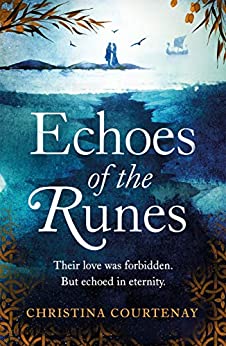
Christina Courtenay’s Echoes of the Runes, reviewed by Kitty Wilson

I thoroughly enjoyed this novel, both narratives kept my attention and made me want to keep reading. It was fascinating reading the contemporary storyline and the archaeological detail. The romance kept me hooked and the little bit of jeopardy (no spoilers!) had me willing Mia and Haakon on.

However, it was Ceri and Haukr who captured my heart. I loved this storyline and could have read so much more about them. I rarely find a captive and captor romance convincing but Christina Courtenay writes these characters with such empathy it is impossible not to fall a little in love with them and their story. Am greatly looking forward to the next in the series.


Kate Johnson’s Death on the Aisle, reviewed by Evonne Wareham

This is the third book in the Molly Higgins amateur sleuth series from award winning author Kate Johnson, who confidently mixes romance with cosy crime. It can be read as a stand-alone but there are recurring characters and story lines so reading the series in order would be beneficial, and all are enjoyable. The first, Death Comes to Cornwall, was a recent nominee for the Jackie Collins Romantic Thriller of the Year Award. In this third book Kate takes some classic ingredients for romance – hunky hero, capable independent heroine, a Cornish fishing village and a cupcake café and mixes in a celebrity wedding, a film set, a virtual reality show, the wedding planner from hell and a couple of fairly gruesome murders. If you like romance with a hefty dash of crime and sleuthing, it’s an enjoyable read.


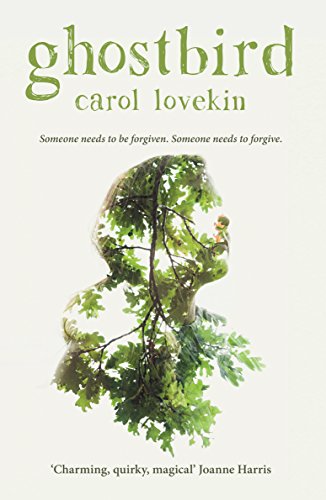
Carol Lovekin’s Ghostbird, reviewed by Jan Baynham

This is a magical tale that kept me spellbound until the end. I was able to marvel at the figurative language and poetic nature of the prose without it detracting from the pace of the story. The characters are very well drawn, displaying deep emotions, and I was particularly fond of Cadi. Secrets unravelled and the reader journeyed with all the characters to a satisfying conclusion. I loved the interaction between Cadi and the ghost. With its beautiful cover, Ghostbird is a book I thoroughly enjoyed, a book I kept returning to in my thoughts long after I’d finished reading it. Highly recommended.


Maisie Thomas’s Secrets of the Railway Girls, reviewed by Jane Cable

I loved the first Railways Girls saga, and the second book in the series did not disappoint. Set in World War Two in Manchester it vividly portrays the lives of women from vastly different backgrounds thrown together to help keep the country’s rail network running.

Although this book focuses on Dot, a working class forty-something grandmother, other stories are woven around hers so cleverly you just have to keep turning the pages. From the horrors of the Christmas blitz to cosy chats in the station tea room, all human nature is here and the writing is so wonderful it draws you in completely. I’m definitely having withdrawal symptoms having finished this one – luckily the next book is due out in April.


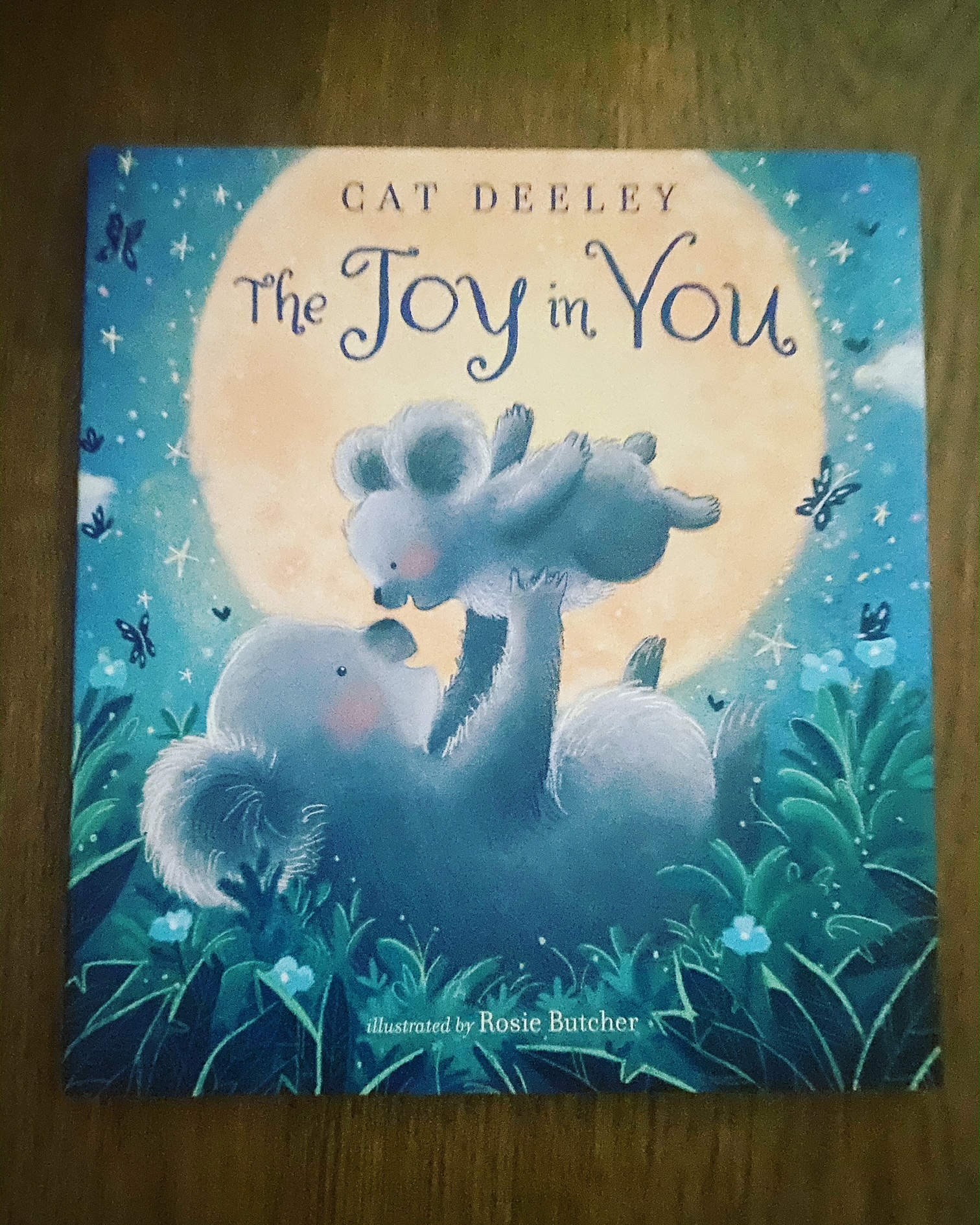
The Joy in You by Cat Deeley | Book Reviews.

The Joy in You, Cat Deeley, children's book, review, book

I really loved this book. It has beautiful illustrations which are matched with lovely, inspiring words to let children know that it is okay to be themselves, and also go after their dreams. A great book from TV presenter Cat Deeley. My children loved it. Inspiring and positively affirming.

Encourage kids to live out loud and be their truest selves with this picture book from media personality, national treasure and mum, Cat Deeley.

Dream big, as big as the night sky full of stars.
When you discover the things you love, you’ll find true joy.

Journey through a magical world, filled with a colourful cast of animals, where readers have endless opportunities to be themselves and find freedom in expression. They will delight in the silly humour and undeniable spirit of this rhythmic and beautifully illustrated picture book-and take to heart the message that they are enough exactly as they are!

Cat Deeley’s debut is an ideal bedtime book that you can read to your little one over and over again and is the perfect gift for birthdays and baby showers.

The Joy in You is available here.

WELSH WRITING WEDNESDAYS: JAN BAYNHAM ON HER LOVE FOR UNDER MILK WOOD

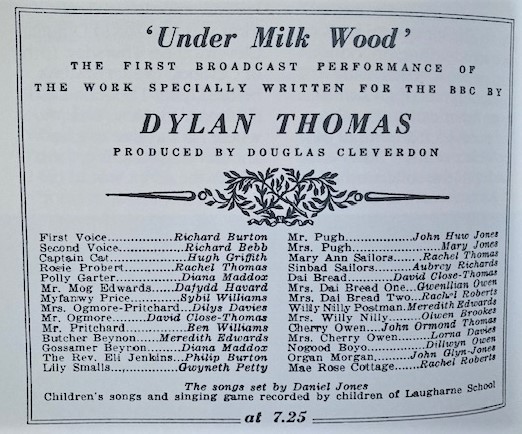
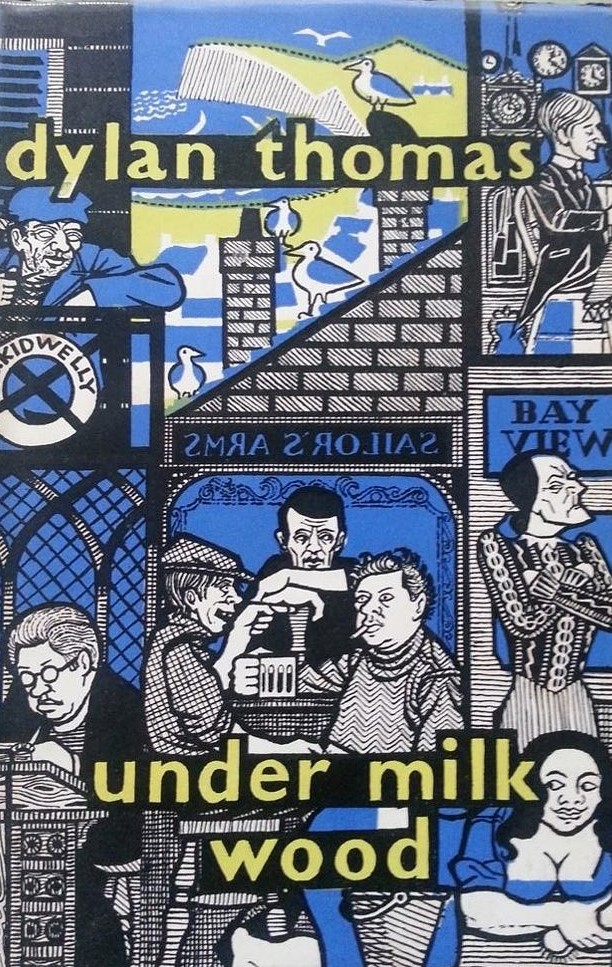
Those of you who know me or read my posts on Jan Baynham Writer Facebook page will realise I’m a big fan of Dylan Thomas and his writing, from his wonderful poetry to his short stories and especially his famous play for voices, Under Milk Wood. My first encounter with the play was, in fact, not on the radio but a stage performance at the tiny but grandly named theatre, the Albert Hall, in my hometown of Llandrindod Wells. As a teenager, I can remember being mesmerised by the poetic language, his use of imagery, and the wide range of eclectic and eccentric people he’d created.

The characters live in a small fictional Welsh village by the sea, named Llareggub (read it backwards!) or Llaregyb (contrary to Thomas’s wishes) in some earlier versions of the play. A long time in its making, the play tells of the ‘dreams, fantasies and realities of the inhabitants’ of Llareggub ‘as they unfold across the cycle of one spring day’. The villagers are presented in a humorous, ribald way, created and exaggerated maybe from the poet’s observations of the oddities and the pieces of gossip of a small-town community that he lapped up every morning in Brown’s Hotel in Laugharne, Carmarthenshire.

The play opens at night and a narrator invites the audience to listen in on the dreams of the townspeople of Llareggub while they sleep, “from where you are”.

“To begin at the beginning:

It is spring, moonless night in the small town, starless and bible-black, the cobblestreets silent and the hunched’-and-rabbits’ wood limping invisible down the sloeblack, slow, black, crowblack, fishingboat-bobbing sea…”

We are taken straight there, invited to listen to the villagers’ innermost thoughts. They include Captain Cat, the blind sea captain, reliving his times at sea and his drowned ship mates and Mrs. Ogmore-Pritchard, relentlessly nagging her two dead husbands. Almost all the characters in the play are introduced as the audience witnesses a moment of their dreams until “…dawn inches up.”

Through the characters, more than sixty of them, we are given a glimpse of village life albeit through their eccentricities. The Reverend Eli Jenkins delivers a morning sermon about his love for the village. I love the choice of names – Gossamer Beynon, Willy Nilly, Evans the Death, Dai Bread, Nogood Boyo. Through their actions and what they say, the characters come alive. Taking up her morning tea, Mr. Pugh imagines poisoning his nagging wife and whispers:

“Here’s your arsenic, dear.
And your weedkiller biscuit…
Here’s your…
…nice tea, dear.”

At Mrs. Organ-Morgan’s general shop, women gossip about the townspeople. Children play in the schoolyard; Polly Garter scrubs floors and sings about her illicit lovers of the past. Later, Mrs. Organ-Morgan shares some of that gossip with her husband:

“I saw you talking to a saint this morning. Saint Polly Garter. She was martyred again last night…”

As night begins, Reverend Jenkins recites another poem. Cherry Owen heads to the Sailor’s Arms, where Sinbad still longs for Gossamer Beynon. The town prepares for the evening and the inhabitants of Llareggub return to their dreams again.

Since my first introduction to Under Milk Wood as a teen, I’ve heard it played many times with a variety of casts, seen stage performances and film versions. It never fails to intrigue me, and I find new snippets of language to marvel at each time. It has been called poetry but Dylan Thomas’s own description of it is ‘prose with blood-pressure’! If you are not familiar with the play, I can’t recommend it highly enough.