The Surface Breaks Louise O’Neill | Recommended Reads

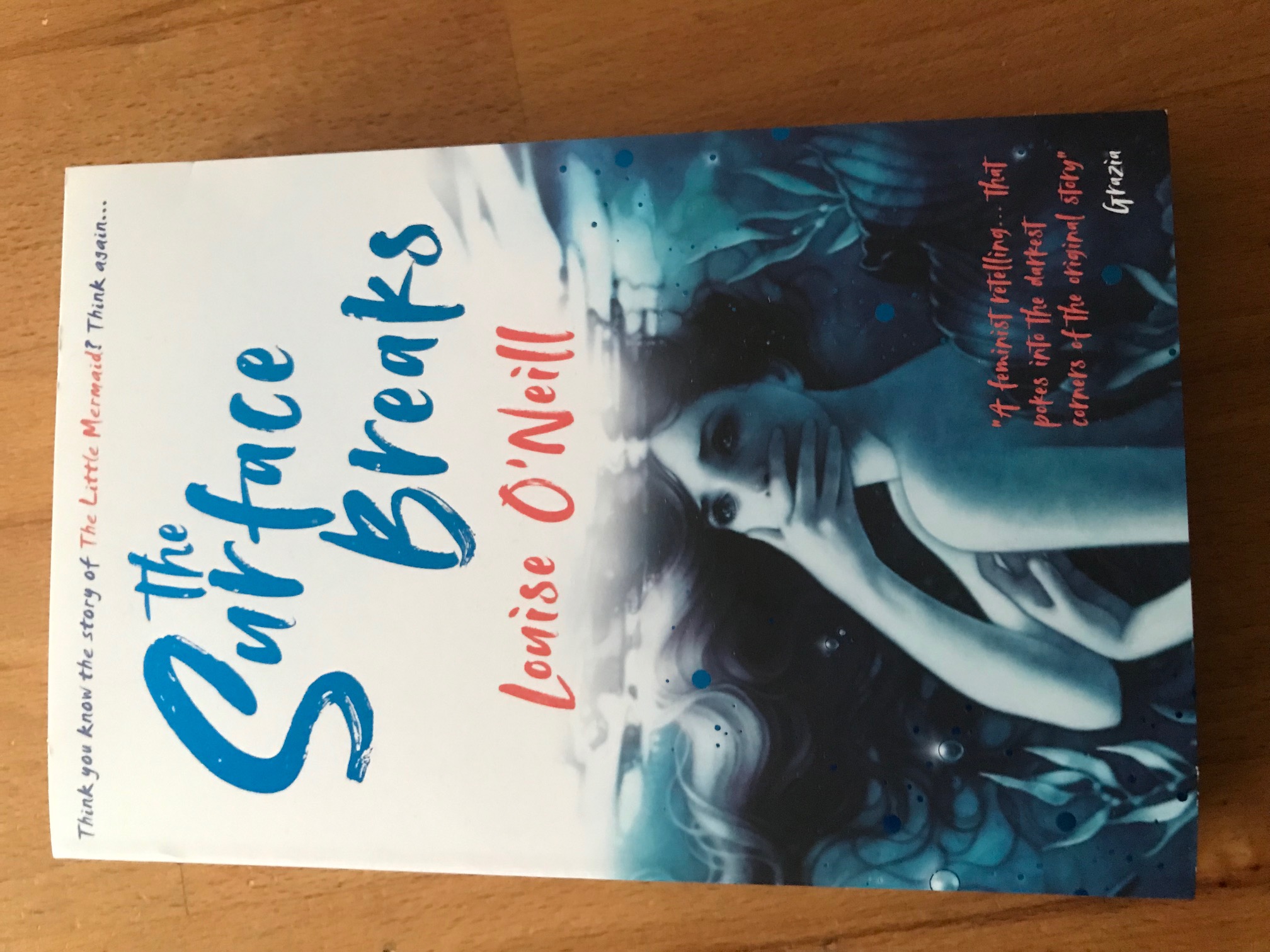
the surface breaks, Louise O'Neill

This is a clever reimagining of The Little Mermaid.

SHORTLISTED FOR THE SPECSAVERS NATIONAL BOOK AWARDS

Think you know the story of The Little Mermaid? Think again…
This is a book with the darkest of undercurrents, full of rage and rallying cries: storytelling at its most spellbinding.
Deep beneath the sea, off the cold Irish coast, Gaia is a young mermaid who dreams of freedom from her controlling father. On her first swim to the surface, she is drawn towards a human boy. She longs to join his carefree world, but how much will she have to sacrifice? What will it take for the little mermaid to find her voice? Hans Christian Andersen’s original fairy tale is reimagined through a searing feminist lens, with the stunning, scalpel-sharp writing and world building that has won Louise her legions of devoted fans.

Available here.


SISTER SCRIBES GUEST: JESSICA REDLAND ON TWO HEADS BEING BETTER THAN ONE

Writing can be a solitary business. Some writers dip into the general online community for support, others – like the Sister Scribes – get together in a more formal group. This week guest is Jessica Redland, who talks about getting together with her chum, Sharon Booth, to form the Yorkshire Roses.

They say that two heads are better than one and that’s exactly what Sharon Booth and I were thinking when we joined forces in late 2018 to become The Yorkshire Rose Writers.

We’ve been friends for several years, having met through the Romantic Novelists’ Association when we were in the New Writers’ Scheme. Sharon lives in Hull in East Yorkshire and I live in Scarborough in North Yorkshire so we’re well placed for a regular meet-up for tea, cake and a good old writerly catch-up.

Last autumn, over cake, we chatted about our discomfort at promoting our own work but how we didn’t feel this when promoting each other’s books or blog posts. The idea of joining forces was mooted to overcome this and, the more we talked about it, the more it seemed like a great idea. We both write romantic comedies and contemporary romances set in Yorkshire that would appeal to a similar readership so a collaborative approach could be a good way of gaining us both new readers.

Coming up with a name was probably the hardest task. This wasn’t because we couldn’t agree but simply because we couldn’t find something that was quite right. When we finally decided on a name, we discovered that a Canadian website already had it! Back to the drawing board. We then came up with The Yorkshire Rose Writers, the white rose being the county’s heraldic flower, and we both loved it as we felt that this conveyed what we are: Yorkshire-based writers who write about Yorkshire.

We set up a blog and began posting twice weekly with a long post on a Tuesday and shorter magazine-style snippets every Friday. This turned out to be too ambitious with posts being frantically prepared late the night before so we cut this back to one post on a Friday, alternating the style of content. We both contribute each week although we’ve learned by experience that one of us needs to take the lead on the longer posts, writing the start and conclusion, to avoid duplication. It’s all a learning experience but, because we’re good friends, none of these teething issues have been problems. Typically, we just laugh about them. We plan the schedule about 4-6 weeks in advance which means that, if deadlines are looming, we can prepare our part ahead of time or, if not feeling inspired by one of the subjects, the person taking the lead has plenty of notice to write the full post.

We’re on Facebook, Instagram and Twitter. Sharon’s brilliant at keeping on top of these, regularly posting new content. I confess to barely adding anything but we’d discussed this at the start and knew that Sharon would need to do the lion’s share of the promotion work during the first year. Sharon’s a full-time author but I squeeze writing around a day job and studying a Masters in Creative Writing so time is a massive struggle. When my Masters finishes in October this year, we’ll share this more evenly. Although Sharon’s so good at it, maybe she’d like to keep this ;-)

We’ll introduce a newsletter and competitions/giveaways later, but we need to do a lot more planning around this. There’s an excuse for more cake if ever I heard one!

So far, our joint venture has worked well and we love working together. We’re both excited to see where it could go in the future. My advice to anyone thinking about such a venture, though, is be really clear on your aims and your time commitment right at the start so you’re on the same page.


Jessica Redland on behalf of Yorkshire Rose Writers

www.yorkshirerosewriters.com

@YorkRoseWriters

https://www.facebook.com/yorkshirerosewriters/


SISTER SCRIBES: SUSANNA BAVIN ON BEING READ TO

When I was a teacher, I made a practice of reading to the children every day, whether it was a complete story or the continuing story of what the children called a “chapter book.” Often there would be time for both on the same day. The children loved being read to. I remember the near-hysteria that was occasioned time and again by John Prater’s Once Upon a Time, as the young audience glimpsed the fairy tale characters strolling one by one onto the pages; and all those favourites that were loved by class after class, such as Gobbolino, the Witch’s Cat, Red Herring and The Kitnapping of Mittens.

Perhaps my favourite memory is of finishing reading Dick King-Smith’s Lady Daisy to a Year 2 class. There was a moment of breathless silence at the sheer perfection of the ending and then the children burst into spontaneous applause. (Those children will be doing their A levels this summer!)

Frankly, I think that being read to is one of life’s joys. I also think that the pleasure of being read to is something we never grow out of. As an adult, I always have two books on the go – the book I am reading and the one I’m listening to. As well as having favourite authors, I also have favourite readers and there have been times when I have chosen a talking book by an author I have never read, simply because I know I will enjoy the reader’s performance. Yes, reading an audiobook is a performance, a proper acting job, and it takes huge and specialist skill.

The narrator is required to tell the story in a way that conveys character and atmosphere, but without their reading being intrusive. The listener should be absorbed by the story itself and, other than enjoying listening to it, shouldn’t be specially aware of the reader’s voice at the time. Gordon Griffin is the master of this. A veteran of more than six hundred audiobooks, he has a companionable and quietly expressive voice that is easy to listen to.

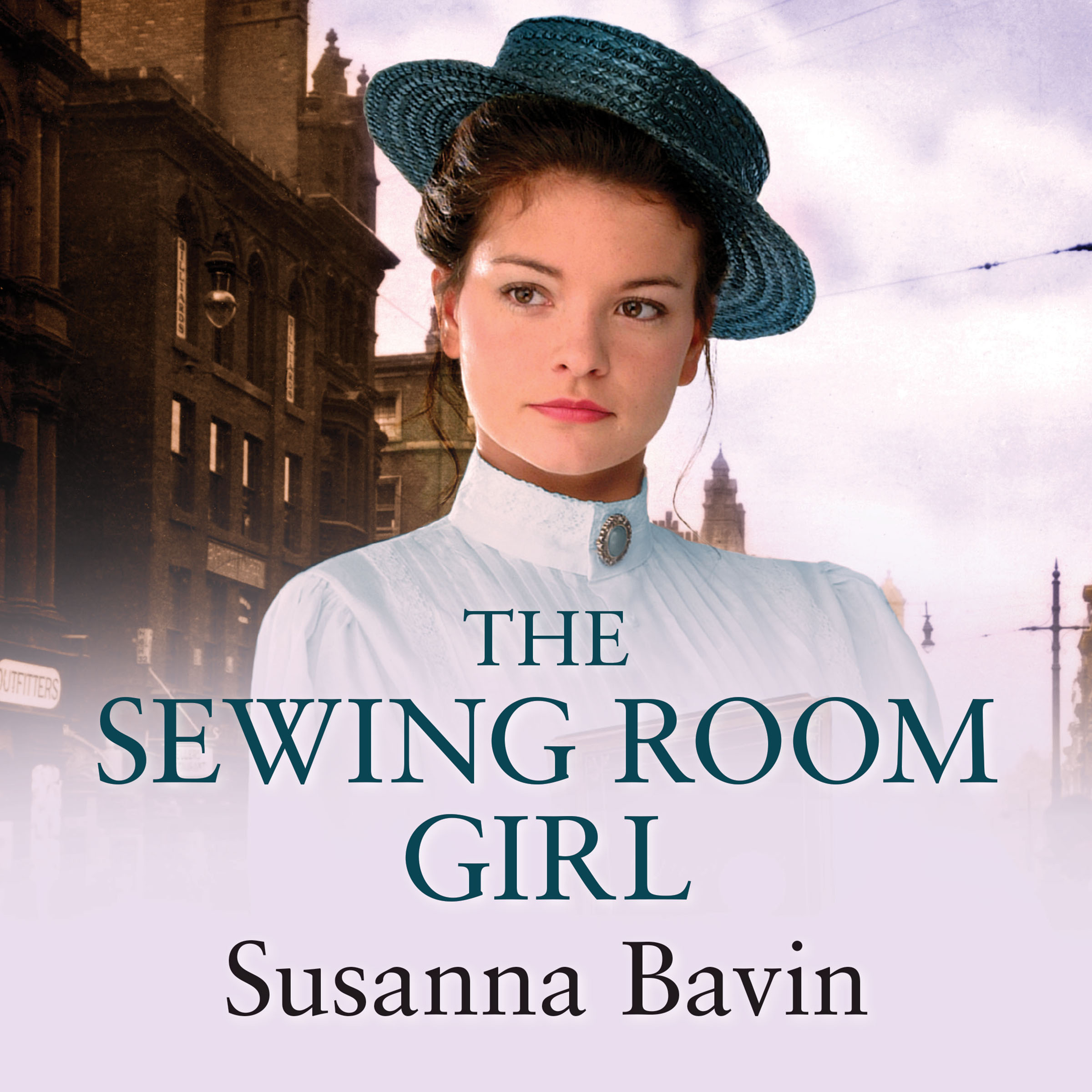
When The Deserter’s Daughter was published in 2017, the audiobook rights were bought by Isis Soundings and, as a keen talking book listener, I was thrilled to think that my book was going to be recorded. I was curious as to which actress would be chosen. Anxious, too. What if they selected a reader whom I wasn’t keen on? In the event, Julia Franklin was invited to do the job – and I couldn’t be happier. She has been up there among my favourite readers for years and I am enormously proud to have her as ‘my’ reader. Her performances are engaging and unforced, with an intuitive sense of character and timing. I don’t know whether authors are supposed to listen to their own talking books, but I loved listening to The Deserter’s Daughter and A Respectable Woman and am delighted that Julia has added an extra dimension to my books.


The Autistic Author: Debut Book by 16-Year-Old With ASD

oliver storm, autism. autistic author, the autistic author, #theautisticauthor
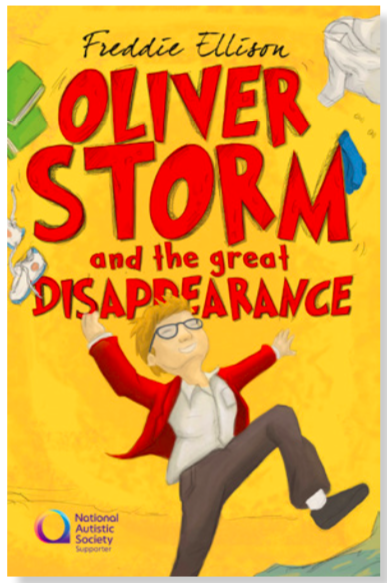
Freddie Ellison is a 16-year-old North Londoner who, at the age of three, was diagnosed with Autism Spectrum Condition (ASC). Freddie had problems with social interaction and communication, and a tendency to engage in repetitive behaviours, and from an early age he struggled in the education system. In March 2017, he was excluded from his school and he spent the following 18 months at home with no educational support, while his family fought legal proceedings to get him placed at an appropriate school. During this time he started writing, often several stories at once. He quickly moved into
a routine of picking up his briefcase and walking down to his local branch of Costa Coffee where he would pen his latest tale. SJH Publishing has committed to producing three books with Freddie, whose dream it is to one day write a bestseller that is turned into a movie.
Book synopsis
Oliver Storm and The Great Disappearance is the story of a teenage boy who, along with his sister and friends, tries to reverse the effects of an experiment that has made all the adults in the world vanish in the blink of an eye. Having been expelled from his latest school, Oliver is sent to Oakwood Academy where, in his first science lesson, the children watch a live TV broadcast. Seconds later, the world has changed and all the adults have disappeared without a trace. With gangs of children soon running wild, and looting and violence taking over the street, Oliver and his friends decide that they must find a way to bring the adults back. In a race against time, Team Storm struggle to reverse the experiment before it is too late.
#theautisticauthor


Read our exclusive interview below. 

You made the best out of a bad situation and are now a published novelist. Do you have any advice for others who want to follow in your footsteps?

Yes I have one, Go onto YouTube and find someone who gives tips on how to be an Author. And look up Heroes Journey. Search a lot on the internet for inspiration. If you find reading difficult then listen to an audio book or watch movies and find something you bond with.


What is the book about?

​A world without adults, Oliver Storm is the main character with some friends and they try to find a way to bring the adults back as there are lots of gangs in chaos.


How do you come up with your ideas?

​I took ideas from Pop culture, taking little bits. I learnt from J.K Rowling don’t be scared to write what you want to write about even if its a little gory. I like to use real life places and inspiration from TV and films. My favourite film is Dark Tower and my favourite tv programme is The Order. 


Do you have a daily word count?

I write when i imagine it and when i feel like it


What is next?

After the Oliver Storm books  are finished i want to write a ZAfrica trilogy. It will be about a fantasy land in Africa.


SISTER SCRIBES GUEST: RACHEL BRIMBLE ON WRITING ABOUT STRONG WOMEN

I first met Rachel when I tentatively joined a new chapter of the Romantic Novelists Association in anticipation of a house move, Rachel could not have been more welcoming and instantly made me feel at home. She manages to combine this open and friendly manner with a dedication to her career that makes her one of the most prolific authors I know.  


I’ve always wanted to write, but it wasn’t until my youngest daughter started school full-time that I started to pursue my dream of becoming a published novelist. That was in 2005 and my first book was published in 2007. I was ecstatic!

This book had been through the New Writers’ Scheme which is an amazing opportunity for a full manuscript to be critiqued by a published member of the Romantic Novelists Association. The RNA is an amazing group of female novelists (and a few men!) who support, encourage and applaud romance writers throughout the UK. It is a true honour to be a part of such a wonderful organisation and has almost certainly provided the push needed over and over again when I’ve felt I couldn’t continue to write.

Just recently, I handed in my twenty-third full-length novel to my current publisher (Aria Fiction). I have always loved drawing inspiration from real-life progressive and inspirational women, and this is reflected in the types of heroines I like to portray in my books.

As I write romance, these women ultimately end up falling in love, but it is their journey of self-discovery and empowerment that drives me to write and ensure my characters succeed. The love aspect is merely a much-welcomed added extra!

I write mainstream contemporary romance, romantic suspense and historical romance. My latest series is set in the fictional Pennington’s Department Store in Bath, England. Influenced by my love of the TV series Mr Selfridge and The Paradise, I was inspired to write a series that focused on the women’s issues of the early 20th century.

Once I’d decided on the theme of ‘female empowerment’, there was no stopping my fingers at the keyboard. I am passionate about self-growth, belief and achievement and to write about women determined to make a societal change appeals to me in every way. Book 1 in the series (The Mistress of Pennington’s) is about women striving to make their mark in business amid an extremely male-dominated world, book 2 and my latest release (A Rebel At Pennington’s) is about women’s suffrage and book 3 (hopefully released in the Autumn) is about the stigma surrounding divorce at the time.

As you can no doubt imagine, the research I undertook to uncover the required characterisation and inspiration to create these female protagonists led me to learn about some truly phenomenal women. Discoveries that will stay with me forever. There are so names we are familiar with – famous suffragettes, women aviators, doctors and scientists who all excelled and made their mark at the turn of the century, but there were also many women who remain unknown to us. Or at least, they were to me.

It is these women that inspire my work and the heroines I want to spend months and months with as I pen a 100,000 word novel about their evolving lives. The Edwardian period was a time of great change for women and it’s exciting to be a part of that. I love bringing historic women’s issues to the foreground of my novels and hopefully inspiring a woman in her own life today.

I could not write without women from the past, the present and undoubtedly, the future.

Here’s to the strong women who have gone before us and who continue to walk with us today!


Rachel Brimble lives in a small market town near Bath with her husband, two daughters and mad chocolate Labrador, Tyler. When she’s not writing, she likes to read, knit and walk the beautiful English countryside. Author of over 20 romance novels, Rachel hopes to sign a new contract for a contemporary romance trilogy in the not too distant future.

Website: https://rachelbrimble.com/

Instagram: https://www.instagram.com/rachelbrimbleauthor/?hl=en

Facebook: https://www.facebook.com/rachelbrimbleauthor/

Twitter: https://twitter.com/RachelBrimble


March Reading Round-up.

Kitty. 

I finished Circe by Madeline Miller this month and I cannot do justice to how much I loved it. The story of Circe, a woman locked in by her divinity whilst also dealing with the very female roles of mother, daughter, sister and lover. This retelling made Circe much more accessible and empathetic than the male-centric version that I grew up with. Full of self-discovery, courage and empowerment it turns the myth of vicious witch into a story of a true heroine. I loved it so much that having read it once I am going to store it, like a secret treasure, for a re-read in a few months so I can wallow in it slowly and feel the magic again. 

I’m also reading Lionel Shriver’s Property, a collection of short stories. I very rarely read short stories and have such a marmite reaction to Shriver’s novels (sometimes I adore her, others not so much – I am, however, always in awe) that I wanted to read these. As ever, her writing is taut, crisp and twisty with each story leaving me admiring her incisive skill and her insight into the reality of the human condition. Sometimes unnerving, sometimes a little bleak but razor-sharp. Quite remarkable. 

Kirsten.

It’s been non-fiction for me this month. I am researching London during World War One for a possible upcoming WIP and I stumbled across A Home Front Diary by Lillie Scales. Lillie lived in Hornsey and ‘she wrote about everything that came to mind … the result is an intimate and honest portrayal of day to day like for a middle-class family’. It’s fascinating – from the difficulty of getting food and the introduction of rationing, to the fear of the ever-increasing bombing raids. It’s all much more as I imagined the Second World War – sheltering from bombs in the Underground Stations and such like. I have also been reading Round About A Pound A Week by Maud Pember Reeves which concerns itself with the other end of the social scale. To quote the preface ‘for four years between 1909 and 1915, Maud Pember Reeves and other members of the Fabian Women’s Group visited 42 families in and around Lambeth-Walk to record in minute detail exactly how they survived on their low incomes.’ Reading about their daily struggle to survive makes absolutely fascinating – yet sober and harrowing – reading. It’s also so uplifting to read about the cheerful and loving homes that many women created in the midst of appalling poverty and depravation. Inspirational and humbling! 

Cass.

In Stolen Sister, the latest release from Linda Huber, the contrasting actions of two people many years earlier result in repercussions no one could have imagined.
When young parents, Paula and Joe, head off to a reunion with their barely days old daughter, they have no idea of the tragedy about to befall them. Their two older children, Vicky and Jamie (who suffers from disabilities and needs constant care), were to be cared for by Paula’s aunt, Maisie – just for a couple of days, or so it was assumed.
The tragedy has a far-reaching impact, with both Aunt Maisie and the young couple’s friend, Sylvie (also at the reunion) making decisions in a moment of crisis that will haunt them for the rest of their lives.
With siblings torn apart without their knowledge, a ‘mother’ who seems intent on history repeating itself and a race against time to protect a child, Linda Huber has crafted an excellent, gripping family drama!

pastedGraphic.png

Why The Lack of LGBT Book Prizes?

LGBT, LGBT issuesIf you imagine that finding a traditional publisher for a first-time unknown author is hard, think scaling the north face of the Eiger when it comes to LGBT writers. Equality has given us many opportunities in life, but in the world of publishing it has strangely reduced our chances. For while most publishing houses these days have LGBT authors and books on their catalogues, they are reluctant to take on too many and certainly when it comes to risky first-timers. Publishing, like any business, is driven by profit margins, and since gay authors and LGBT themed books are limited in their sales revenue, any manuscript landing on a publisher’s desk with a rainbow theme running through it, stands even less of a chance than the thousands of others already in the slush pile. Once, traditional publishers wouldn’t touch overtly LGBT books. Thus, it was left to independent presses to print small numbers, but which at least meant they were going into the shops, if only to be tucked away on a shelf at the back. Today, though the stigma of books dealing with a sexuality other than ‘the norm’ no longer holds sway, still the readership is relatively small and does not translate into big enough profits for the main influencers, the publishers who are supplying the highstreets and airport shops.

What percentage of book sales are LGBT? I scoured the internet for information but could find nothing. Someone must have these figures?

The scarcity LGBT bookshops seems also ironic, given the diversity we so enjoy today. There are only two in the UK (correct me if I’m wrong); Gay’s The Word in London, and Category Is Books in Glasgow. While LGBT only bookshelves are disappearing from the high street, independent bookshops such as the two mentioned provide much needed havens in which gay men and women can browse quietly and mix with other LGBT people. But why are there not more of these oases in our cities and towns? Are we missing something? Have we let the mainstream absorb so much of our culture that we are in danger of losing our identity and risk being ignored altogether? Is this what equality is?

Women in literature faced a similar dilemma when in 1992 a group of people from all areas of the literary world got together to discuss why The Booker Prize shortlist the previous year had not included any women writers. This was puzzling since 60% of books published were by women and yet they had been so underrepresented. The group discussed the value and purpose of literary prizes and whether they promoted reading or put people off, and the positive role such awards can bring to authors. From that meeting the Orange Prize for Fiction was launched in 1996. It is now called The Women’s Prize and is an important and integral event in the literary calendar.   

Apart from the Polari Prize for first time LGBT authors and the Diva Literary Awards, the only other solely LGBT prize is the LAMDAs based in the U.S. While the acceptance of LGBT literature into the mainstream has given it just as much chance of winning any of the plethora of book awards, and is welcomed, the fact remains that the LGBT category will always be so small it will inevitably make little impact on the shortlists.

The Green Carnation Prize was initiated in 2010 when, together with journalist and blogger Simon Savidge, Paul Magrs highlighted this ‘scandalous lack of prizes for gay men’ in the UK. Since 2017 and despite its success, it has fallen dormant. If help is required, the gay community must assist in either resurrecting this prize or establishing another if we are to give gay authors and their books the attention they deserve. It will take the support of major players and sponsors for it to happen and to be sustainable, but as the Women’s Prize has proved, it can be done.


Amazon’s Kindle Storyteller Award celebrates independent writing talent with £20,000 prize

An exciting new writing competition is here!

Kindle Storyteller Award returns to the UK for third year, recognising the best talent
in independent publishing

Amazon today announced that the Kindle Storyteller Award, recognising outstanding work by independent authors with a £20,000 cash prize, will return for its third year in 2019. The award is open to all authors who publish their book through Kindle Direct Publishing on Amazon.co.uk from 1st May 2019 to 31st August 2019.

The prize will be awarded to the work that garners praise not just from the judging panel of book and publishing industry experts, but also from readers. The shortlist will be compiled on the basis of a number of factors, including reviews, sales and pages read in Kindle Unlimited.

The winner will be announced at a ceremony in London this Autumn, and awarded the cash prize of £20,000, a marketing campaign to support the book on Amazon.co.uk, and the opportunity to have their book translated for readers around the world.

The award has been won previously by contemporary fiction author Hannah Lynn and action thriller writer David Leadbeater. Since winning the Prize, Leadbeater has sold more than 165,000 books, and Lynn has gone on to publish three further novels.

Other Kindle Direct Publishing success stories include LJ Ross, who has had seven Kindle number one bestsellers and five books go to number one on pre-orders alone, and Rachel Abbott, who has sold over three million books to date.

Alessio Santarelli, Director, Kindle Content said: “Following the enthusiasm and huge number of entries in 2018, we are delighted to bring the Kindle Storyteller Award back for its third year. The encouragement and support of aspiring authors is an endeavour we continue to champion at Amazon. Publishing a book has never been easier and we are proud to provide a service that allows for a breadth of diverse stories to be told.”

Hannah Lynn, winner of the 2018 UK Kindle Storyteller Award said: “Hearing my name called out last October for The Afterlife of Walter Augustus was incredible. To receive such recognition for only my second book was such a fantastic confidence boost that has made me all the more determined to keep writing. I wish the best of luck to the 2019 entrants and urge any writers who are on the fence to enter – you never know what might happen!”

The Kindle Storyteller Award will be open to submissions of new books in the English language, published using Kindle Direct Publishing. Titles must be previously unpublished, with a minimum of 24 pages in paperback. Readers can access all titles entered into the prize in print or on the Kindle store on any device with the free Kindle app for iPhone, iPad, Android phones and tablets, PC and Mac, and on Kindle e-readers and Fire Tablets.

The Kindle Storyteller Award 2019 opens for entries on 1st May 2019, and titles must be enrolled in KDP Select while they are in the competition. For further information, authors can visit www.amazon.co.uk/storyteller.