My Writing Process Kat Dunn

  • What you have written, past and present

DANGEROUS REMEDY was my debut novel, published in 2020. MONSTROUS DESIGN is the second in the series, out June 2021, and I’m in the midst of writing the third and final book in the series, 

Before my debut I wrote a whole host of finished, part-written and completely abandoned novels, none of which I let myself take seriously.
  • What you are promoting now

MONSTROUS DESIGN is the sequel to DANGEROUS REMEDY, and comes out 10 June 2021. The first book in the series saw Camille, her girlfriend Ada, and their band of outcasts rescue a girl with strange powers from the guillotine in revolutionary Paris. In the second book, the gang is split between London and Paris struggling against Royalist forces that are growing ever stronger. Think duels, necromancy, betrayal, and a cast of queer, found family misfits.

  • A bit about your process of writing

I work a 9-5 day job, so I write evenings, weekends, lunch breaks and early mornings. It’s not always been easy to find the time to write, and I’ve had to put aside other aspects of my life to make it work. But I’ve been writing since I was a small child, and there’s nothing else I’ve ever wanted to do with my life.

I usually have anything from 5-10 ideas fermenting in my head at once, but I try to focus on 1-2 projects at a time. I’ll usually write a draft in 3-4 months, go back straight away and fix all the bits I know are wrong, then chunk it over to someone else (whether my editor, agent, or a friend) to get some more direction for the next round of edits. 

  • Do you plan or just write?

I used to think I was a planner, but the more real planners I meet the more I realise I’m somewhere between planner and pantser.  

It feels like someone’s dumped out a jigsaw puzzle into my brain, and I have some pieces that are obviously corners or edges, or here are a whole heap that connect together to make a building or cloud or something, and then there’s the mess of unknown pieces. So I’ll try to write the bits I know out in a very sketch note form. I like scrivener for this, because I can make a document for each puzzle piece and then start grouping them and moving them around, while making notes of all the things I think should happen in that scene. 

Then writing it is like putting the puzzle together. Sometimes it zooms along, sometimes you realise what you thought was a cloud was actually snow and it’s in the wrong place and you have to pull things apart…. You get the idea. 

  • What about word count?

Apart from a few outliers, I end up somewhere between 80-110k for most drafts. Things grow and shrink during edits, but I don’t have an over or under writing problem. I write the right number of words, they’re just the wrong words and have to go in the bin.

  • How do you do your structure?

I really love books about story structure. I don’t think there are really any hard and fast rules (and a lot of those rules are western-centric and automatically dismiss other forms of storytelling). But I like knowing what sort of patterns are out there, and pulling them apart. 

DANGEROUS REMEDY and MONSTROUS DESIGN are fast paced stories that take place over a handful of days each. I didn’t get to play around with structure too much, but I did use the structure to think a lot about what information I share with the reader and what I withhold until the right moment. I love a good twist and to make them work you’ve got to do a lot of work before you can whip back the curtain and reveal the truth. Having a clear idea of my structure helps me work out where I need to lay seeds. 

  • What do you find hard about writing?

I’ve found it tricky know how to structure stories that are driven by emotions and character over big flashy plots. I’ve been working on a side project where this has been my main challenge and I’ve learnt so much. It’s made me think about my writing in a really different way and prove to myself that even though I’m a published author now, there’s still so much more to do and learn.

I find editing harder than drafting. It stops being potential and starts being a real thing, which will always disappoint me a bit for not being exactly the thing in my head.

  • What do you love about writing?

I had to think about this for a while. It’s like someone’s asked me what do I love about air. I like that it means I can breathe? I’ve been through a lot of difficulty in my life, and for a lot of it been on my own, so writing has been as essential as water or sunlight. It means I can exist. It gives me purpose and meaning and joy. 

If I have to say something specific, I think my greatest joy is when character drives plot and plot drives character in a really effective way – a slow burn character arc that takes a hero to a villain. I love writing in moral grey areas, where good people do terrible things and terrible people do good things.
 

My Writing Process Joy Ellis

1) What have you written, past and present.

To be honest, quite a lot, and mainly in the last five years. I’m at present writing my 26th book for Joffe Books, but have two more completed novels lurking in a cupboard (and in a completely different genre) that will probably never see the light of day. There are twelve books in the DI Nikki Galena, Fen Series; seven in the DI Jackman and DS Evans series; three Matt Ballards; and one stand-alone novel. Oh, and two more completed and already in the editing process with my publisher. Right now I’m working on book thirteen in the Fen Series. I sometimes wonder just how much mileage you can get from one detective, but from the messages sent to me by the amazingly supportive ‘Nikki Fans’, I’m beginning to think I’ll rival Coronation Street for longevity! 

2)What are you promoting now.

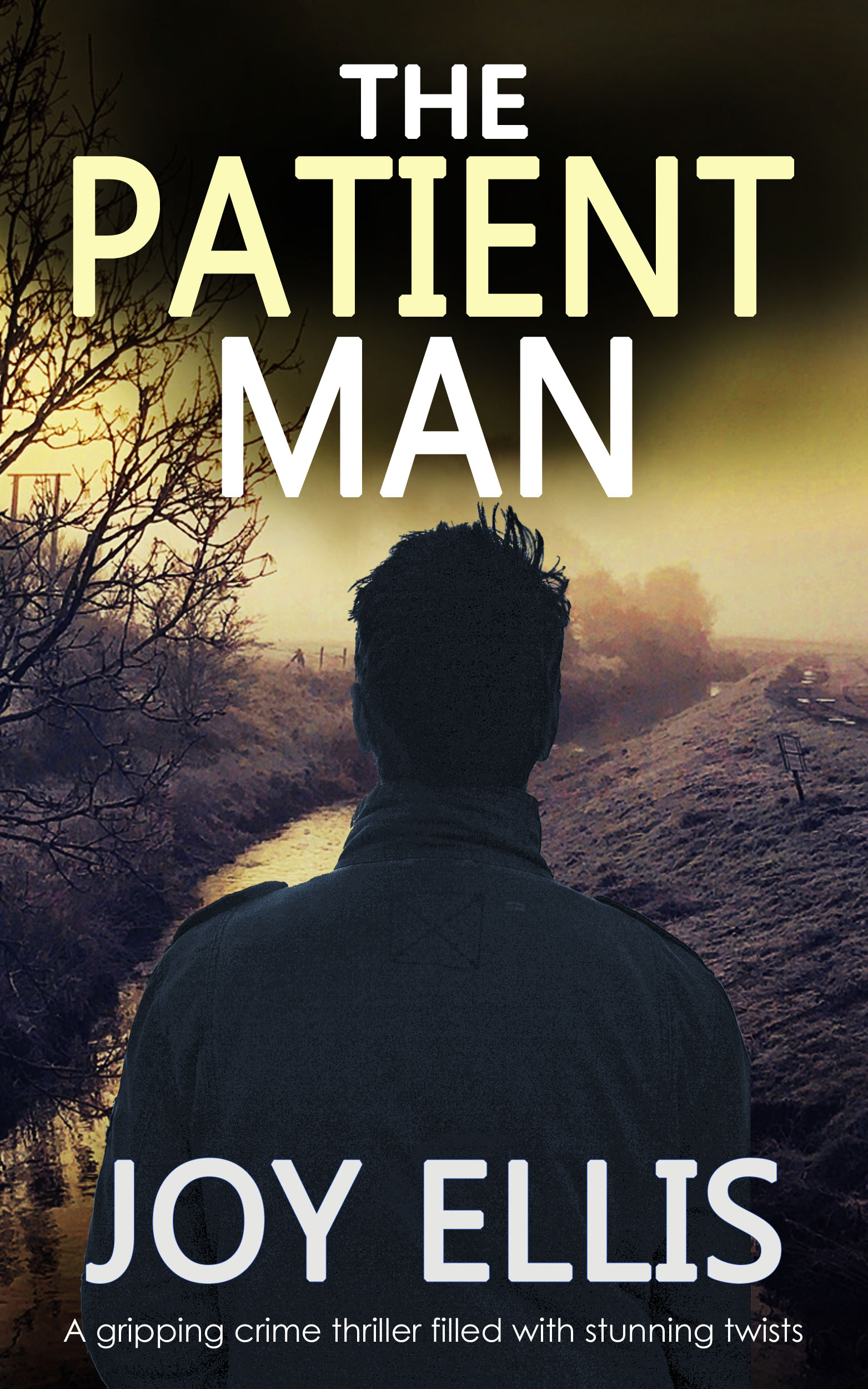
At the moment, because of it being shortlisted for The British Book Awards, Book of the Year, Fiction: Crime and Thriller section, all interest is on The Patient Man, Book 6 in the Jackman series. I loved writing this book as it was one that allowed me to use some wonderfully dysfunctional characters, and a particularly vindictive and vengeful killer who had set his sights on Jackman and Marie. I have to confess to enjoying writing the ‘baddies’ as the scope of what they are capable of is endless. Having said that, I always strive for a satisfactory outcome, which means good triumphing over evil… well, most of the time…

3) A bit about the process of writing.

It always starts with asking myself, ‘What if…?’ Just a thought, a vague idea that almost instantly begins to escalate. At that point I grab a notebook and scribble down these tenuous threads that might lead to a new novel. A whole book can materialise from a couple of lines hurriedly written in a notebook. They sometimes take the form of a cameo; a brief scene played out in my mind, and that becomes the foundation for the novel. A perfect example of this was when I was considering a plotline for one of the earlier books in the Fen Series. I envisaged the collapse of a building, trapping two strangers, a man and a woman. Believing the injured woman trapped with him to be dying, the man confesses that he has just killed someone. But, what if she didn’t die? What if she remembered what he had told her? And what if, he discovered that she was still alive? No more was needed to begin writing Stalker on the Fens.

4) Do you plan or just write.

I’m an organic writer, so once I have written Chapter One, I’m off! No detailed plans, I just work with my basic idea and run with it. I firmly believe that I set the scene, introduce my characters, then hand the whole thing over to them to do as they will. If I don’t, half the time they highjack the story anyway! 

5) What about word count.

It’s a little bit odd, but I seem to write each novel to finish up with a similar word count. It’s not intentional, as far as I’m concerned, the book is as long as it needs to be. It just works out that way. I use Word for my manuscripts, type in Times New Roman, font size 12, and always double space the text. For four books in a row, when I finally typed those wonderful words, The End, it was on page 406, and I have no idea how that happened. As to wordage, it’s generally around 120,000 words. My last book was a little longer and came in at 127,949 words, but of course that’s before my editor gets to work and prunes it heartily! 

6) How do you do your structure

This is quite hard to describe, because although I know how important it is, especially for a new writer, to structure a book well, it isn’t something I do consciously. Perhaps because of having written so many books, I’ve found a mental blue-print, and work to that automatically. And it’s as simple as one, two, three… because that is exactly what it is. A beginning, a middle, and an end. I’ve always thought of it as three acts, the first where you introduce the characters, the location and present the problem; the second where that problem is confronted; and the final act, where the problem is solved. And through all of this I endeavour to keep up the tension, and pay careful attention to the pace of the novel. Pace is incredibly important, and I see that as a wavy line with peaks and troughs. Build the pace and hold it, then slow it down and allow your reader to breath again! Then stick them back on the roller-coaster for a while! If you don’t give them time to gather themselves, they will fall, exhausted and gasping, across the finish line and wonder what on earth that was all about. Even if I’m not totally conscious of it, I know I’m aiming to structure my book to continually connect with my reader and keep them with me, page after page, until we reach a satisfactory ending… together.

7) What do you find hard about writing.

About the actual writing, very little! The hard part is when life gets in the way! If I’m on a roll, I really resent appointments, and doing all the things that still have to be done to exist. And as I’m not exactly in the first flush of youth anymore, sitting for long periods of time does me no favours! I am sometimes forced to stop simply through pain, and that is irritating beyond words, especially if the muse is with me. Yes, for me, the hardest thing about writing is striking a work/life balance, and I can truthfully say, that’s one thing I’m rubbish at!

8) What do you love about writing.

How long have you got? I love everything about writing. Recently however I’ve come to realise things that I never truly appreciated before the pandemic. I’ve always loved books and reading. My favourite present at Christmas as a child would be a book. It provided escapism, company, and adventure. Now, from some of the heart-warming messages that I’ve received in the last year, I’m understanding how much deeper this goes. Books have been an absolute  lifeline to so many people during this worldwide period of isolation and fear, and it’s really come home to me that writing books, is actually helping people to cope in extreme situations. It’s very humbling, and some of the stories I’ve been sent have literally reduced me to tears. So, I have to say the thing I love about writing the most, is finally understanding the positive power that books have to really make a difference.


THE BOOKS THAT CHANGED ME BY HÉLENE FERMONT 


Ever since I was very young my parents instilled in me a love for literature. We had a big library room at the back of the house, with books by all kinds of authors, Swedish and international, filling the shelves. I distinctly recall my mother’s delight each time someone gave her a new book – she’d read and share it with the members of her book club. She went to great lengths preparing lovely delicious lunches and dressed up for the occasion. Back then, in the 80s, books were special and quite expensive. Some even impossible to get hold of. My parents queued up outside the biggest bookseller for hours on end one night in February every year to browse and buy new books by their favourite authors. They always bought new books for me and my brother and gave them to us on our birthdays. I still remember the excitement of reading a new book.
There are too many authors whose books I loved then, and regularly return to, to list here. My favourite books are the kind of books that linger in my heart and mind long after I’ve finished reading them. As the author of character driven Psychological Thrillers, and a huge fan of character focused books, the following books changed me and inspired me to write.

Loves Music Loves To Dance by Mary Higgins Clark
This book centres around personal ads, and was published before the Internet.
It highlights the dangers of meeting strangers and is a gripping story with great characters. I’ve read all her books and learn something new each time I return to them.

The Girl With The Dragon Tattoo by Stieg Larson
After reading this intriguing and very graphic book, I became hooked on the sequels and, of course, the wonderful complex main character and storyline.

Small Town Girl by LaVyrle Spencer
The storyline centres around a famous singer who returns home to look after her mother. The characters are so vivid, complex and human I instantly felt and feel as if they could be part of my life. I always return to this author’s books to inspire me.

Hamilton Beach by Linda Olsson
This is a very sad book about grief and the grieving process, and how loss affects us when we least expect it. The book is written from the main character’s point of view and perspective of what happened years ago and the place they used to love. The characters and emotional journeys are wonderful as is the beautiful scenery. This is a hard book to read but very relatable for people in a similar situation. The author’s books centre around universal topics and unexpected life changing events.

Yes Of Course It Hurts When Buds Are Breaking by Karin Boye
Karin Boye’s one of Sweden’s most famous author and poet. This is my favourite poem as it touches my heart in numerous ways.The words and sentiments are beautiful, very relatable and sad. I think of my beloved parents and all the wonderful times we had together. This was their favourite poem as well.


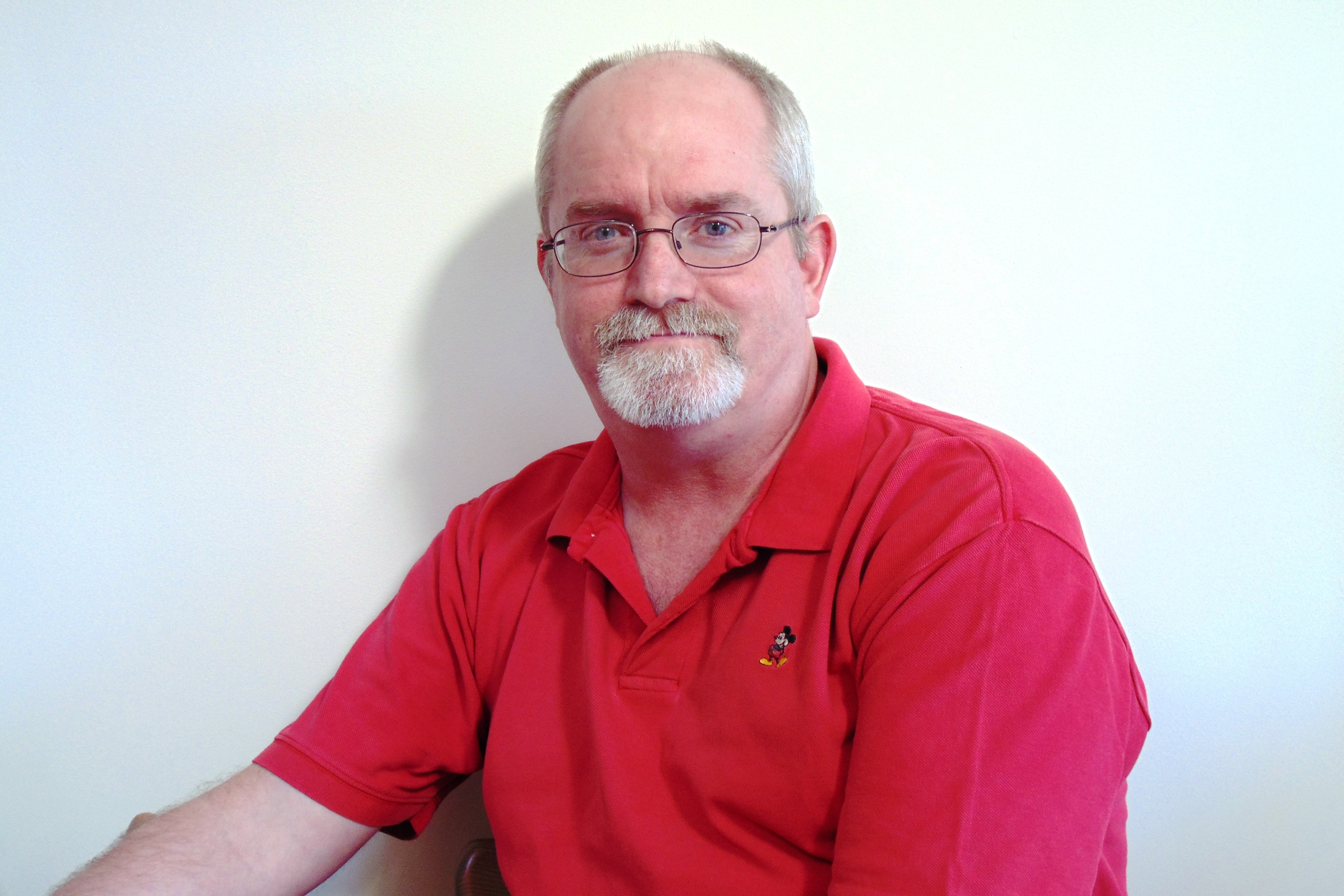
M W ARNOLD – A MAN IN A WOMAN’S WORLD?

Not all romance writers are women… so I asked Mick Arnold to write about his publishing journey.

Good day and thank you very much for having me. My name is Mick Arnold and I write sagas as M W Arnold.

Those are words I certainly don’t think I’d have been putting down even a year or two back. So what was I doing at that time? Well, doing my best to recover after being laid low by illness, to be truthful and writing wasn’t top of my to-do list. I had written and indeed, had a women’s fiction novel, ‘The Season for Love’ published back in 2017, but whilst recovering I hadn’t been able to pick up my work-in-progress. An author friend persuaded me to try something different, something which wouldn’t put me in a bad place, so to speak.

Shortly after she’d made this suggestion – the author in question was Elaine Everest by the way – I watched a documentary on the Air Transport Auxiliary. This sparked something inside me and shortly after, I found myself scrolling around the internet to find out more about this organization who were responsible for the delivery of the military aircraft used by the Royal Air Force during WW2.

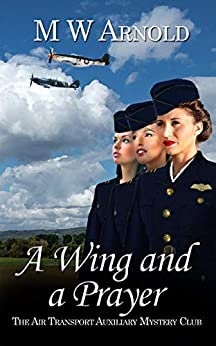
Fast forward about nine or so months, and I found myself pitching the story to some agents at the Romantic Novelists’ Association conference. Nothing came of that, so I began to pitch it to publishers online. I ended up with a contract for what became ‘A Wing and a Prayer’ with the American publishing house, The Wild Rose Press. From virtually out of nowhere, I was being published again.

Once more, I’ve found myself published in a predominantly female line of publishing…I couldn’t be happier! I’ve many good friends in the romance genre due to my previous book and my membership of the Romantic Novelists’ Association, and I’m very happy to have found the same very warm welcome in the saga/historical genre. I do find this a little strange as in most lines of work where you are in direct competition, there is much back-stabbing, but there has been none of that. Everyone has been so very welcoming and I feel as if I’m in a big, happy family. I don’t feel like I’ve been treated any different being a man as I would if I were a woman, and there aren’t many lines of work I reckon could say that.

My one regret? Well, no prizes for guessing. I’ve only, like everyone else, been able to chat online with my fellow authors and I really can’t wait for that to end!

Find out more about Mick and his books at https://www.facebook.com/MWArnoldAuthor


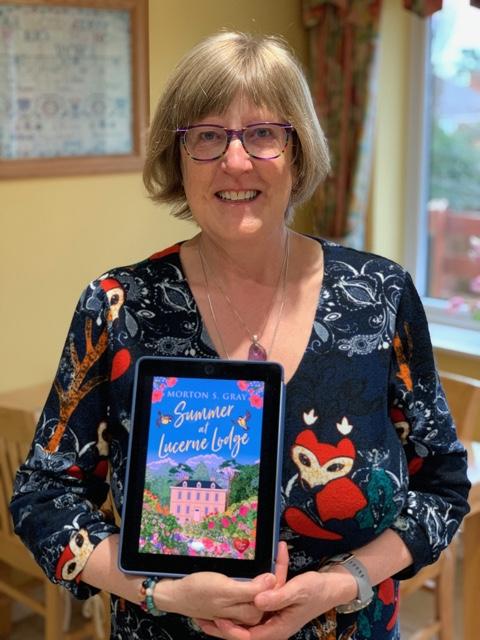
WHOSE HOUSE? JANE CABLE TALKS TO AUTHORS MORTON S GRAY AND CAROL THOMAS

It seems a year of lockdowns and an inability to travel has caused authors to look closer to home for inspiration. This summer is seeing a surge in books with large or stately homes as their setting and family secrets at their centre.

For Morton S Gray and Carol Thomas, both published by the award winning romance publisher Choc Lit, their similarities in setting choice only came to light when their covers were revealed. The friends, who message each other almost every day, were unaware of the coincidence but saw the funny side. With Morton writing romantic suspense and Carol writing romantic comedy they are confident their stories are very different, but I was intrigued to find out more.

Summarise your story in a single sentence

 M: Summer at Lucerne Lodge is a contemporary novel set in my fictional seaside town of Borteen about family secrets and their consequences for main characters Tanner Bryant and Rosie Phillips.

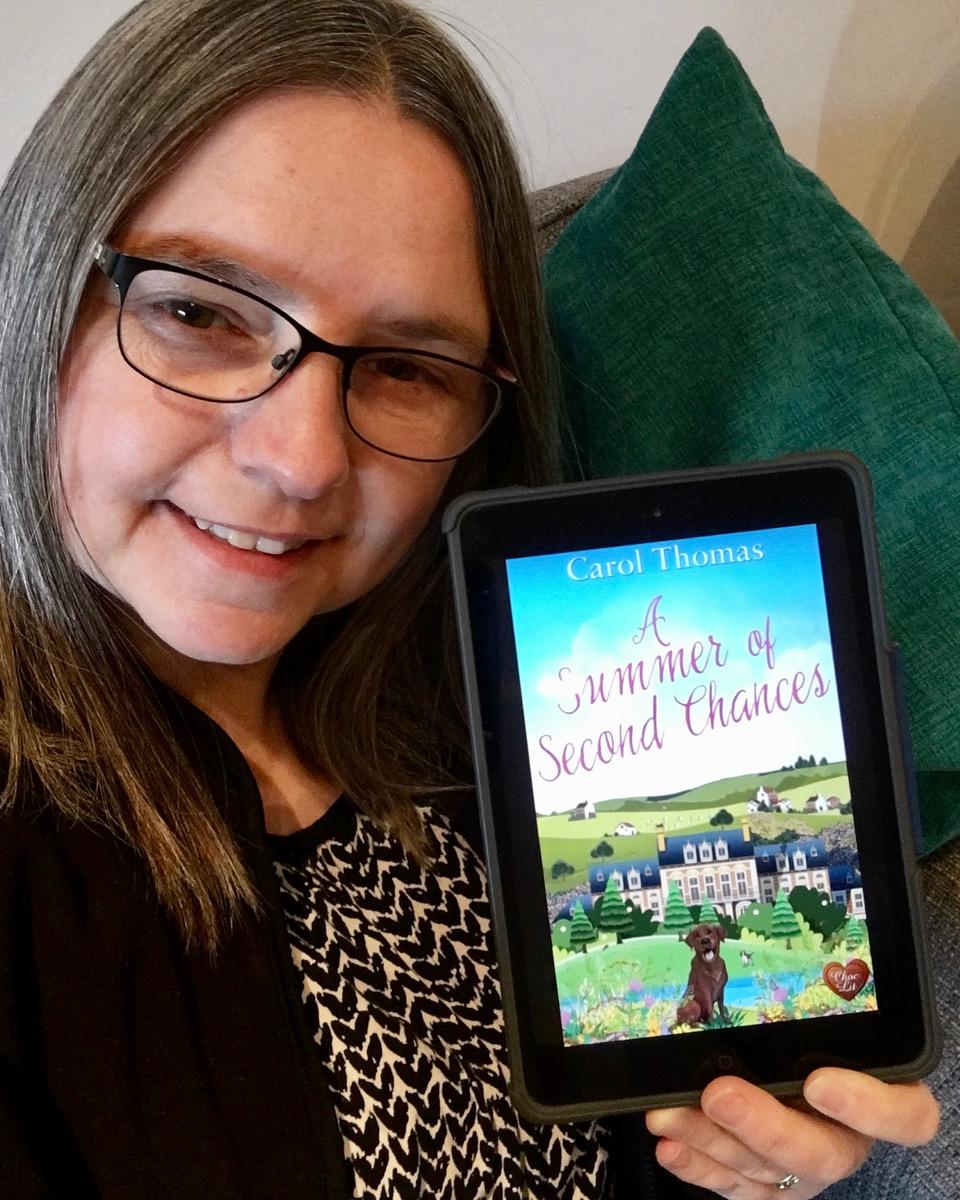
C: A Summer of Second Chances is a romantic comedy telling the story of Ava Flynn who runs a charity shop and receives a donation that unlocks secrets and passions relating to her past.

Tell us more about those stately looking homes on your covers

 M: Lucerne Lodge is an almost stately home, near my fictional seaside town of Borteen. It has a wrought-iron gate, gardens and a lake. At the start of the book there is a huge marquee on the lawn to house a charity auction.

C: Dapplebury House is a stately home that has been in the Bramlington family for generations, but with changes afoot in the village, the future of the house and its estate are in jeopardy.

The house in my book was inspired by visits to Petworth House and Uppark. I was lucky enough to visit Uppark with my dad, just before the first lockdown, we wandered through the wonderful house and gardens soaking up the atmosphere.

What inspired your story?

 M: I love writing about mysteries. I don’t plan my books, so I am telling myself the story as I write. At the beginning of Summer at Lucerne Lodge hero Tanner has found a private investigator’s file on his father’s desk about Rosie Phillips and wants to know why his father is so interested in her.

C: I volunteer in a charity shop and received a donation of a photo album. As I was checking the quality of it for resale I spotted a single photograph that had been left inside. My mind began to weave plots and possibilities from that.

Who is your favourite character and why?

M: Rosie is my favourite, because she goes through so much emotion in the course of the book. However, I liked one of my secondary characters so much – Buzz, a mystic man who runs a crystal shop in Borteen, that I’ve almost finished a novel about his story too!

C: I always love my K-9 characters but also fall a little for my hero because I think its important to feel the attraction my heroine has for him, so I’ll go with my lead, Henry Bramlington, who has to face up to his past and all that he has been running away from in order to forge the future he wants.

How can we find out more about you and your books?

M: My website is at www.mortonsgray.com, where you will also find a link to my weekly blog.

C: I love readers getting in touch and enjoy getting followers involved with my research. My contact and social media information can all be found on my website. http://www.carol-thomas.co.uk


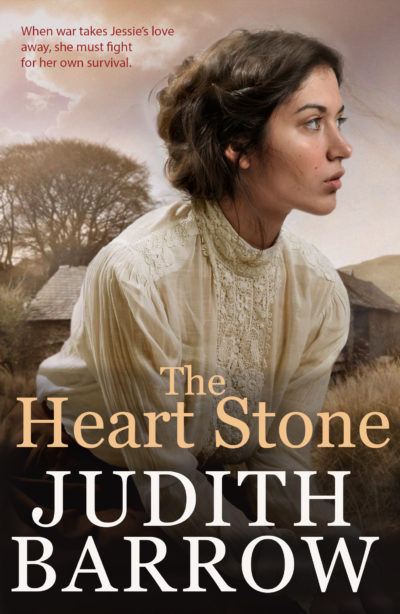
WELSH WRITING WEDNESDAYS: INTRODUCING JUDITH BARROW

As a child and into my teens I wrote voraciously. I wrote for competitions, wrote for the school magazine, wrote for the sheer joy of making images through words.

Then I entered the workplace; the Civil Service – where words meant facts, policies, rules – and I met my future husband.

We were young and infatuated with one another – we married – writing flew out of the window; there was no time to live in the imaginary world; we had the real world to explore, to live.

Seven years later, with three children under five, an old cottage half renovated, and my husband’s small business that took up a lot of time, we decided to get off the treadmill. At least for a fortnight.

Pre children, cottage and business, we holidayed abroad. Too expensive, too ambitious with three children we decided to go to Wales. David’s grandfather originated from Four Crosses, near Welshpool; we’d call there on our way to Pembrokeshire. Though, in nineteen seventy-eight, there was no easy route from the North of England to West Wales, it was still easier than going abroad.

And it was to change our lives.

We found a lovely big house that needed TLC – or so husband decided. We could afford it – or so husband thought. And with Pembrokeshire’s wonderful beaches for the children, how could we not put in a bid?

One cold, wet, miserable November, we moved from England to Wales.

Years passed, Husband started a new business, it flourished, the children had many hobbies, in the spirit of giving something back I was on every committee (usually as the secretary). We had two aunts living with us in the flat attached to the house (both of whom eventually developed dementia). We did a stint at B&B.

But I realised I was yearning to write again.

I hadn’t been allowed to stay on for the sixth form in school so, in my forties by now, I took my A level in English Literature, completed various creative writing courses, took a script writing/drama course at Swansea University, and started a BA degree course with the Open University. This took longer than I expected due to contracting breast cancer halfway through the course.

During those years I had short stories and poems published, a play performed at the Dylan Thomas Centre in Swansea and one play filmed.

Eventually I gained a MA degree at what was then, Trinity College, in Carmarthen.

Shortly afterwards I was asked if I would tutor some creative writing classes for Pembrokeshire County Council, under an adult Lifelong Learning Scheme. Something I’m still doing. I will be so glad to get back to the classrooms once we can carry on in ‘real’ life.

I write family sagas which crosses various genres, and, over the last twelve years, I have been published by Honno, the longest-standing independent women’s press in the UK.

I made many friends in the writing world. One of those was Jan Baynham. Although she lives some miles away, we managed to meet up to ‘talk writing’. She is one of the original members of the Cardiff Chapter, now renamed the Cariad Chapter. I became a member of the RNA. Unfortunately, I was unable to go to the meetings as they were held at the same time as I was teaching, Still, I kept in touch with all the news.

The lockdown brought many problems, one of which was keeping in touch online. Eventually I bought a new laptop to replace my ancient PC which enabled me to be on Zoom and join in with RNA and Cariad Chapter meetings, and the courses and workshops.

And who knows, one of these days I’ll be able to attend one of the Romantic Novelists’ Association conferences. Certainly something to look forward to.


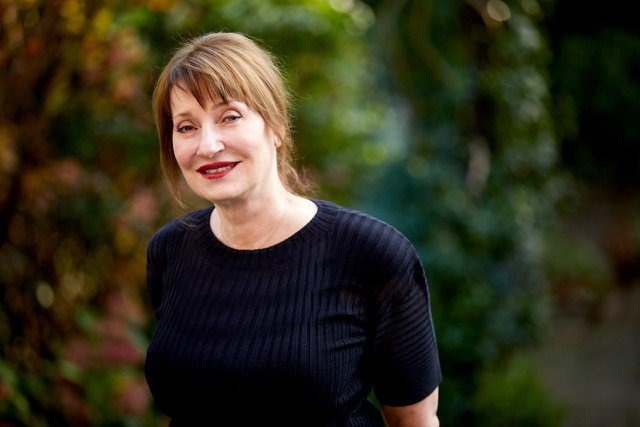
My Writing Process: Marika Cobbold | How I write.

monika cobbold, author. in hampstead heath. What you have written, past and present.

I’ve written eight novels, a number of short stories, and I also write for newspapers, here in the UK and in my native Sweden.

What you are promoting now.
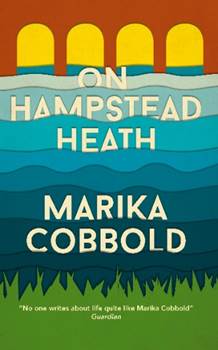
We authors prefer to think that we’re not so much promoting as drawing your attention with cunning and stealth, but leaving that to one side, my new novel, On Hampstead Heath is just out so, of course, I want everyone to know about it. It’s a novel about Truth and its ugly stepsister, Fake News and it tells a news story written and filed, in haste and a haze of gin, by my otherwise principled journalist protagonist, Thorn Marsh. Written and deeply regretted the morning after, by which time the story of the Angel of the Heath has gone viral and it’s all Thorn can do to survive the fall-out. It’s a serious book, at heart, but also, I hope, fun to read.

monika cobbold, author. in hampstead heath.

A bit about your process of writing.

Slow, is the best way of describing it. On Hampstead Heath, at some 240 pages, is a relatively short novel, but it, or variations of it, took me the best part of ten years, and some several thousand discard pages, to write. Not all my books have proven so challenging to write but the process is similar with each one: I dream and think and make notes by longhand. (I’ve discovered a wonderful make of notebooks called Leuchtturm, they’re a bit like Moleskin but even nicer.) A filled notebook or two later, I sit down to write the book proper, always straight onto my laptop. My handwriting is too painfully bad to lend itself to long-form. I then go back over and over the same fifty or so pages, perfecting every last word. I eventually progress, only to realise that most of those preceding pages are now redundant to the story and have to be discarded. It’s not so much “kill your darlings” as the Texas Chain Massacre.

What About Word Count.

I think more in terms of pages, but on average, I suppose I write between six and eight hundred words a day.

How do you do your structure.

Part of it is intuitive; I build my structure as I go along. Then, with each ensuing draft (I do at least ten complete drafts before I get to a version that I feel I can send to my agent and editor), I cut and paste and shape and shift. Finally, I print out and go through the entire manuscript, notebook in hand, for a final shaping of the text.

What do you find hard about writing.
I think an easier question, in my case, would be, What don’t you find hard about writing? To which the answer would be, the point where I’ve worked myself into near insanity over a number of months, or even years, to find the story really is beginning to take on a life of its own. By then I know my characters as well, or better than I know myself, and subsequently, the writing flows.

What do you love about writing?
That final push, and the rare eureka moments when I look over a paragraph just written and think, “That’s not bad, not bad at all!”.

On Hampstead Heath by Marika Cobbold is out in hardback by Arcadia.

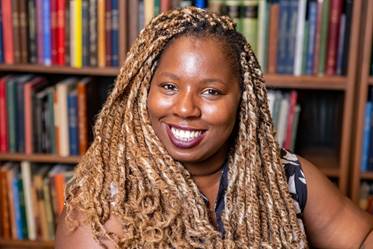
My Writing Process: Maame Blue

writer, Maame Blue, bad loveWhat you have written, past and present 

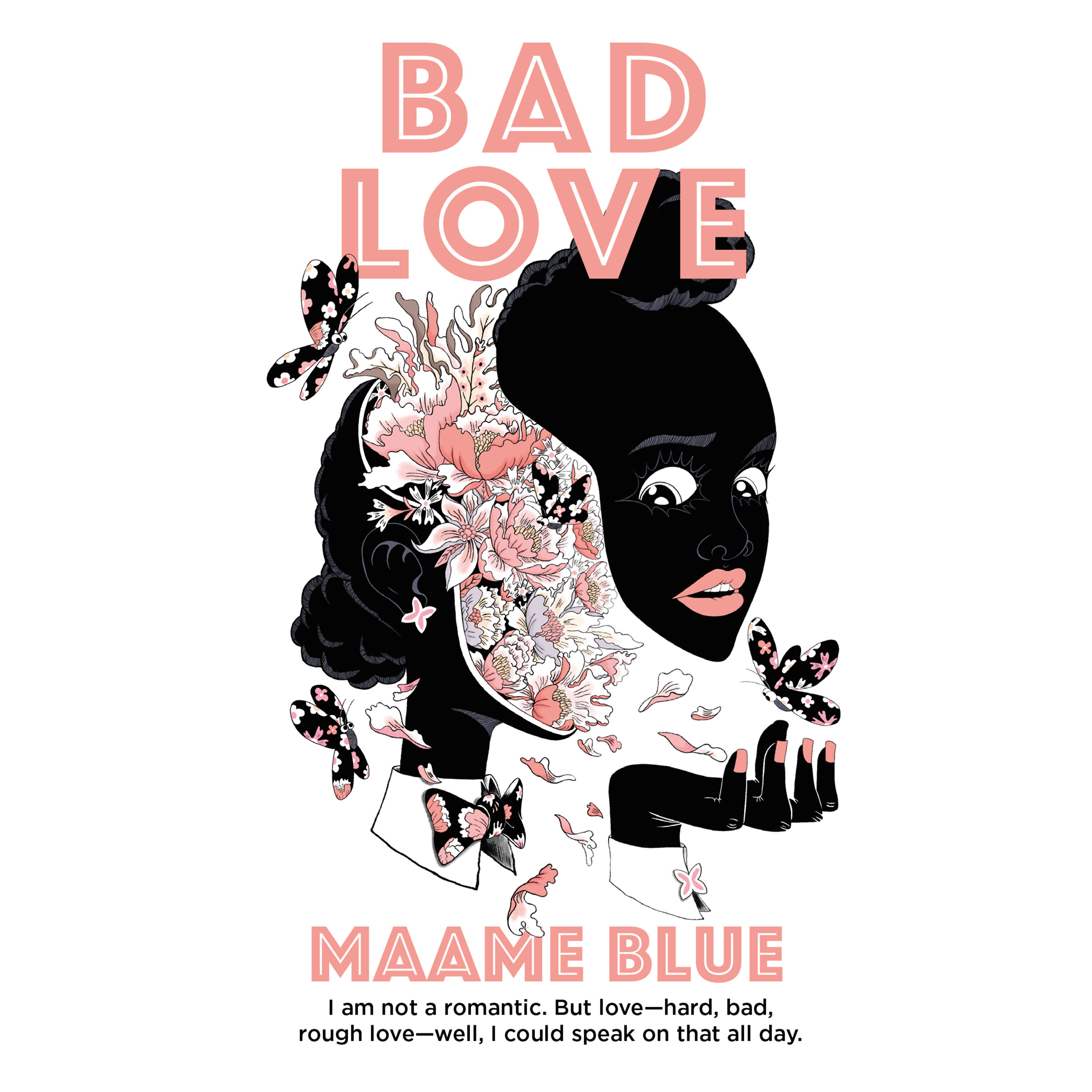
After 4 years of writing it, my debut novel Bad Love has finally been published by Jacaranda Books! It was a bit of a travelling manuscript too because I wrote parts of it in London, New York and Melbourne. Aside from the novel, I’ve written short stories about a grandmother losing her memory, and a couple grieving the unexpected loss of a child. I’ve also written creative nonfiction about the perils of dating as a black woman living in Australia, and the experience of being a young psychotherapist. Presently, I’ve just written a piece for an anthology called Visual Verse, where writers are given an image and one hour to write a corresponding piece to it. This one was especially important to me as it was in tribute to the Grenfell tower victims and in support of the Black Lives Matter movement.

What you are promoting now

Right now I’m promoting my debut novel Bad Love – published by Jacaranda Books as part of their #Twentyin2020 initiative (to publish 20 Black British Writers in 2020), and it’s also available as an audiobook. Bad Love tells the story of Ghanaian-Londoner Ekuah and her tumultuous experience with first love, and how her subsequent relationships and those of her parents, eventually shape her identity.

A bit about your process of writing

Until a couple of years ago, my writing process involved fitting it around whatever full time job I had at the time. But more recently, I try to sit down and write on Fridays. I’ll have some herbal tea, pull out a notebook of a work in progress (I probably have too many of those) and then put a song on repeat that I feel best resonates with whatever I’m writing about. If I can get into that headspace for at least a couple of hours, I feel like I’ve done something, even if I only manage to get a sentence down.

writer, Maame Blue, bad love, book

Do you plan or just write?

I’m a great planner in life but not so much in my writing. If I mapped out a structure, I guarantee whatever I end up writing will be bad, because it automatically makes it feel like work. Instead I might have an idea for something, some story, with a very loose framework. I will have a vague idea of where I want it to go, but I keep it brief enough so that when I start writing and it goes in another direction, that’s ok.

What about word count?

I actually enjoy a word count. That might come from my other work in project management, but it’s the only sort of hard structure that my writing positively responds to. And the shorter the word count, the better – I like a challenge!

How do you do your structure?

Again, I’m a bit structureless. But if I’m commissioned to write something, I usually respond quite well to a theme or prompt as that tends to focus my mind a little more. With Bad Love for example, I knew that I wanted to write about complicated relationships, from one young woman’s perspective. The idea was to explore the multiple facets of love as it shows itself in relationships between people, and how each element impacts a person’s personality. But I felt that the strongest way to do that was to write it from an intimately personal perspective, showing the pitfalls and the small joys as they happen.

What do you find hard about writing?

Mostly it’s finding the time to write and giving it enough space to develop. There’s something I’m working on at the moment that I have to get into the zone for, so sometimes competing writing deadlines make that difficult. 

What do you love about writing?

The magic of creating characters from scratch and building an emotional world that hopefully resonates with the reader – positively or negatively. I don’t mind which, as long as it makes you feel something!


Maame Blue is part of Jacaranda’s #Twentyin2020 initiative. Her debut novel Bad Love is available to buy online, at Foyles and all good Indie bookshops, and as an Audible audiobook. https://maamebluewrites.com / @MaameBlueWrites