MY WRITING JOURNEY – PATRICIA WILSON

At fifteen I left school and went to work as a Co-op window dresser. By the time I reached 35, I had two clothing alteration and repair shops, seven staff, a small catering business, a party-plan business selling childrenswear and toys, a husband and two children. I hardly had time to think, yet I was delighted by my own success. Then a catastrophic event caught me off guard. For the first time, I asked myself: Why am I working myself to death?
At around this time, A Place in The Sun started on TV. It seemed so appealing to retire to a warm country, so I made a plan to retire at 45. After another ten years of hard work, my goal came to fruition. We sold everything and bought a lovely place on Crete. After such a hectic life, I found it impossible to just stop, lie on a sunbed all day, and drink cocktails in the evenings. I decided to teach myself something that I wanted to do but had never made the time before. I would treat the task like a part time job for a year, and commit to it for three hours a day, five days a week.

I learned to sail single-handedly, play guitar, self-sufficiency, scuba and free dive, paint, distil raki and make wine, use a computer, plaster and do stonewalling, photography, video, until after about ten years, I ran out of things I wanted to learn. I know, I thought, I’ll write a book. Being dyslexic, it was the most difficult thing I ever attempted! My computer had Word installed, which was my greatest friend. It had a spellcheck, which I managed to confuse, and had endless patience. For the first time in my life, I found myself able to put my thoughts down on (virtual) paper. What miracle was this? I cannot describe the joy it gave me. I wrote simple poems, short stories, letters to people, a journal of my adventures in Greece. I thrilled whenever anyone said, ‘Thanks for the letter, I really enjoyed it.’

Naively, I had every confidence in my blockbuster’s success, assuming I would easily find an agent and get published. Soon enough, I faced up to my first total failure since leaving school – no one was interested in that first novel.

The following year we moved to a remote mountain village where I happened upon a machine gun buried in my garden! I showed it to the locals and with tears in their eyes, the old village women told me such moving tales from WW2. I felt a duty to record these events, so I created a character who was an amalgamation of these brave women and told their stories. That I was living in the house where such tragedy happened only hyped up my own emotion, which poured onto the pages.

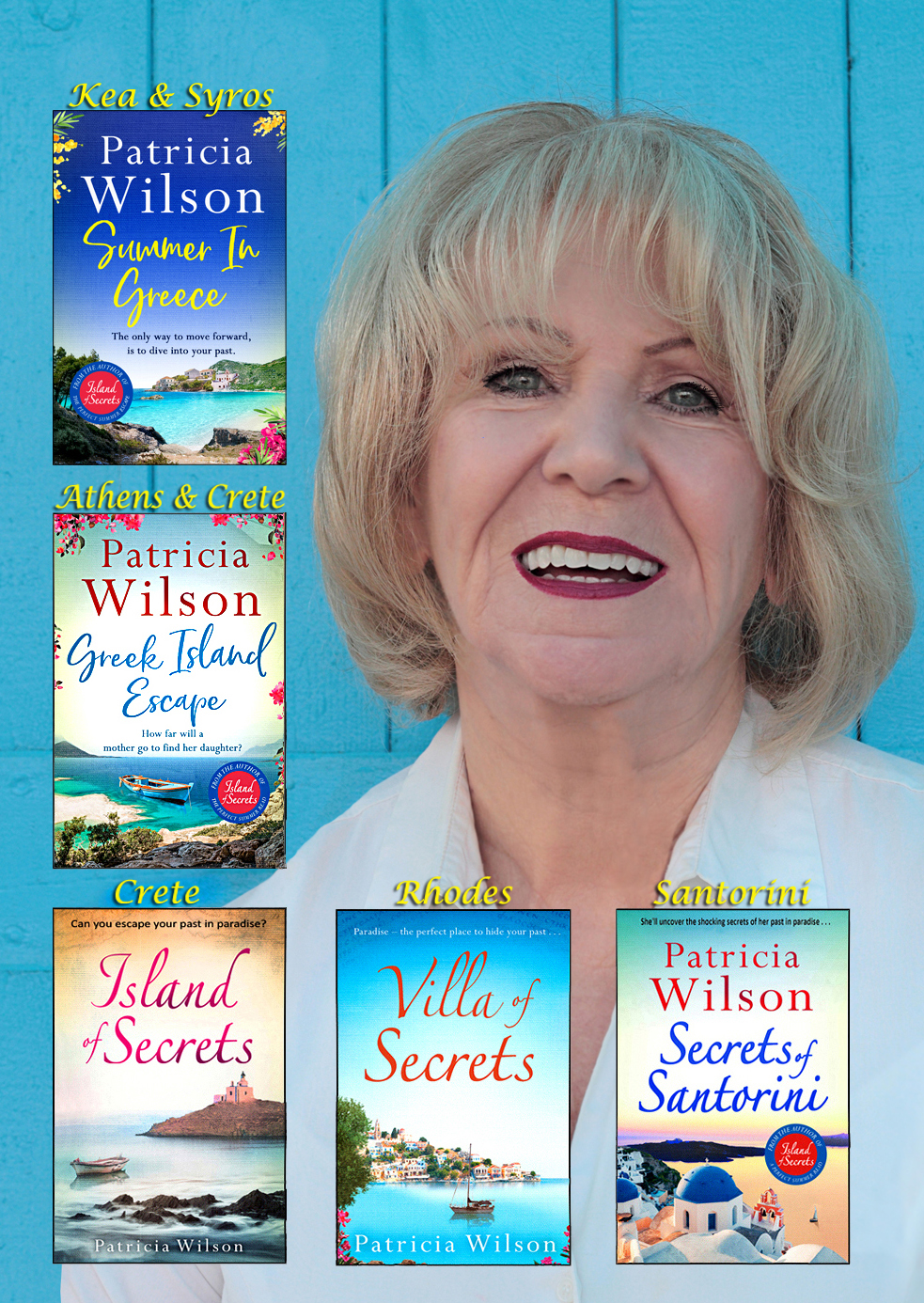
That manuscript became Island of Secrets, represented by my agent, Tina Betts, then my publisher, Bonnier Books UK. The team at Bonnier guided me into producing a moving novel based on brave women and historical events surrounding the machine gun. From that moment, I decided to write about injustice, forgotten wrongs, and empowered women. All my novels link the Greece islands with Britain and are based on real, if little known, events in Greek/British history.

My fifth novel, Summer in Greece, is out on 15th April. RMS Titanic’s sister ship, HMHS Britannic, was a luxury liner that sailed out of Belfast, heading for Greece to rescue soldiers wounded at Gallipoli in WW1. My novel is a story of tragedy and triumph – tears and laughter, and a drama that continues to this day.


THE RAILWAY GIRLS IN LOVE AND THE CHALLENGE OF WRITING THE BOOK

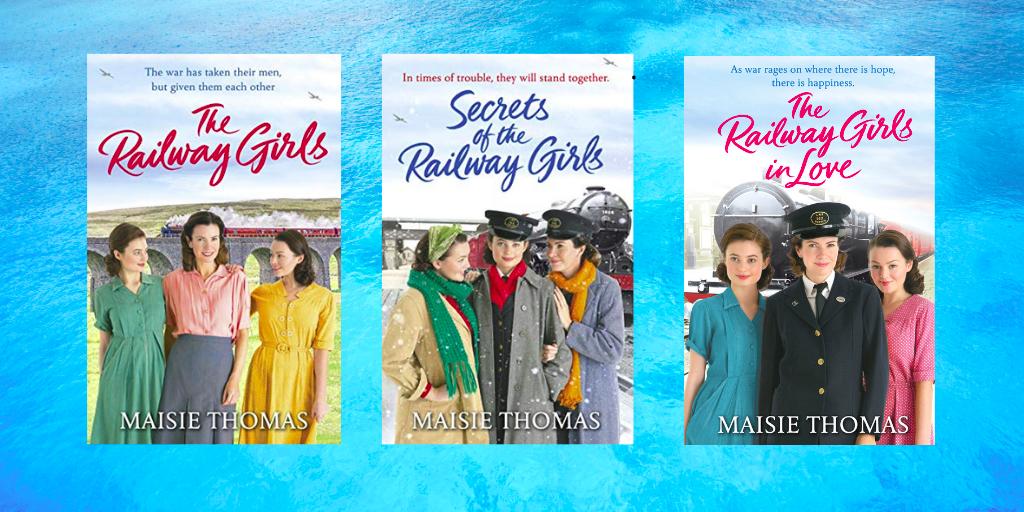
“What was the most challenging aspect of writing The Railway Girls in Love?” That’s what Jane Cable asked me. I imagine she – and you – think maybe it was difficulties with the plot. But no. The plot was sorted out eighteen months previously. The book is part of a series, you see, and I have to be on top of the plot at all times, and that includes knowing what is going to happen in future books.

Maybe, then, you’re wondering if there was a particular character I found tricky to put on the page. Again, no. Having already written two books about my Railway Girls, I feel I know them inside out.

What, then, was the most challenging thing? Was it when my editor mistakenly sent me the wrong version of the track-change document for editing? Nope. That ended up meaning that I had two track-change documents open side by side, but it couldn’t be described as a challenge.

The most challenging thing – and I can’t begin to describe how I struggled to cope – was that The Railway Girls in Love was my spring 2020 lockdown novel – and the public library was shut. If I tell you that all but a few scenes of both The Railway Girls and Secrets of the Railway Girls were written in the local library, you’ll perhaps start to understand why the library closure posed a problem. For me, writing is about discipline, and discipline is about routine – and my routine was to go to the library every morning and knuckle down to work. I was astonished by how hard I found it to work at home. It’s not as though I live in a madcap household full of noise and disruption – quite the opposite. I can’t explain it. All I can say is I found it remarkably tough to work at home instead of tucked away in my little corner of the library.

***********

And now, dear Frost reader, you may be asking why I asked Maisie Thomas that particular question. It was because the more I thought about The Railway Girls books, the more I realised they were about the challenges these women faced. It could be said that is the essence of a saga – the increasing obstacles heaped on the characters, who have to beat them all to find their happy ending.

That could all sound rather grim. As could living through wartime Manchester with its air raids, worries about dear ones at home and abroad, and all the suffering and privations that entails. But The Railway Girls in Love, although dramatic at times, poignant at others, is a genuinely uplifting read as these vastly different women help each other and themselves to live out their hopes and resolve their fears.

The third book in the series, this one brings the stories of Joan, Mabel and Dot to resolution with a happy ever after for one of them (as much as can be achieved in wartime, that is) and at the very least happy for nows for the others. It has recently been announced there will be more Railway Girls books (hooray!), focussing on three of the other characters, but I can’t help thinking there is still more to tell about these three too.

I am sure you can tell I am a huge fan of these books. Why? Rich in research, with period detail woven into the story rather than distracting from it, writing that carries you along without you even noticing it. Add to that characters you really care about and gripping plot lines, they really are the most accomplished and enjoyable books.


The Railway Girls in Love is published by Arrow on 15th April.


WELSH WRITING WEDNESDAYS: REINTRODUCING JANE CABLE

I have been writing for Frost for so long I tend to assume everyone knows who I am, but common sense tells me that isn’t the case. Our readership is growing all the time, so many won’t have the first clue about why the Contributing Editor blathers on so endlessly about writing and books. And. this year, about Welsh writing in particular.

So the first thing you need to know is that I am Welsh. I was born in Cardiff and my formative years were spent in and around the city, although I left to go to college at eighteen and never lived there again. In modern parlance you would say that, despite living in England for so long, I ‘identify as’ Welsh and will do so until the day I die.

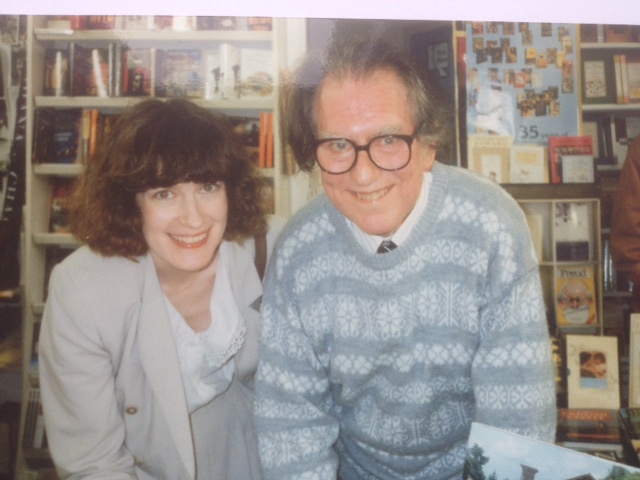
With my Dad at the launch of his first book

I was a teenager when I discovered there was a rich literary tradition on my doorstep. My father, Mercer Simpson, was a lecturer at the Polytechnic of Wales and worked with Tony Curtis, and I remember the great excitement in our household when Tony won the 1984 National Poetry Competition. By that time my father had retired and was spending his time reading for the Welsh Arts Council and editing the Welsh Academy of Literature’s magazine so the house was stuffed full of books by Welsh authors.

This may have been my literary heritage, but I eschewed literature, refusing to take english as an A-level. When I was a student Dad and I would debate whether there was such a thing as intrinsically ‘good’ and ‘bad’ in the arts and could never see eye to eye, largely because I considered his views desperately old fashioned. Never an academic, my normal reading was romances, women’s fiction and historical sagas. In other words, popular fiction.

My father reviewed books endlessly and became an acknowledged expert on Anglo-Welsh literature. By the time he died in 2007 he’d had four of his own poetry collections published, the last of which he’d worked on during his final illness and his publisher brought the first copies to his funeral.

By then I had started writing too, experimenting with romantic fiction, something he barely understood, but my mother ploughed through my early stories and gave me both encouragement and useful feedback. Instead my father was really proud of the fact I freelanced as a cricket journalist. My mother’s bragging rights came a few years later when, in 2011, I reached the final of The Alan Titchmarsh Show’s People’s Novelist competition.

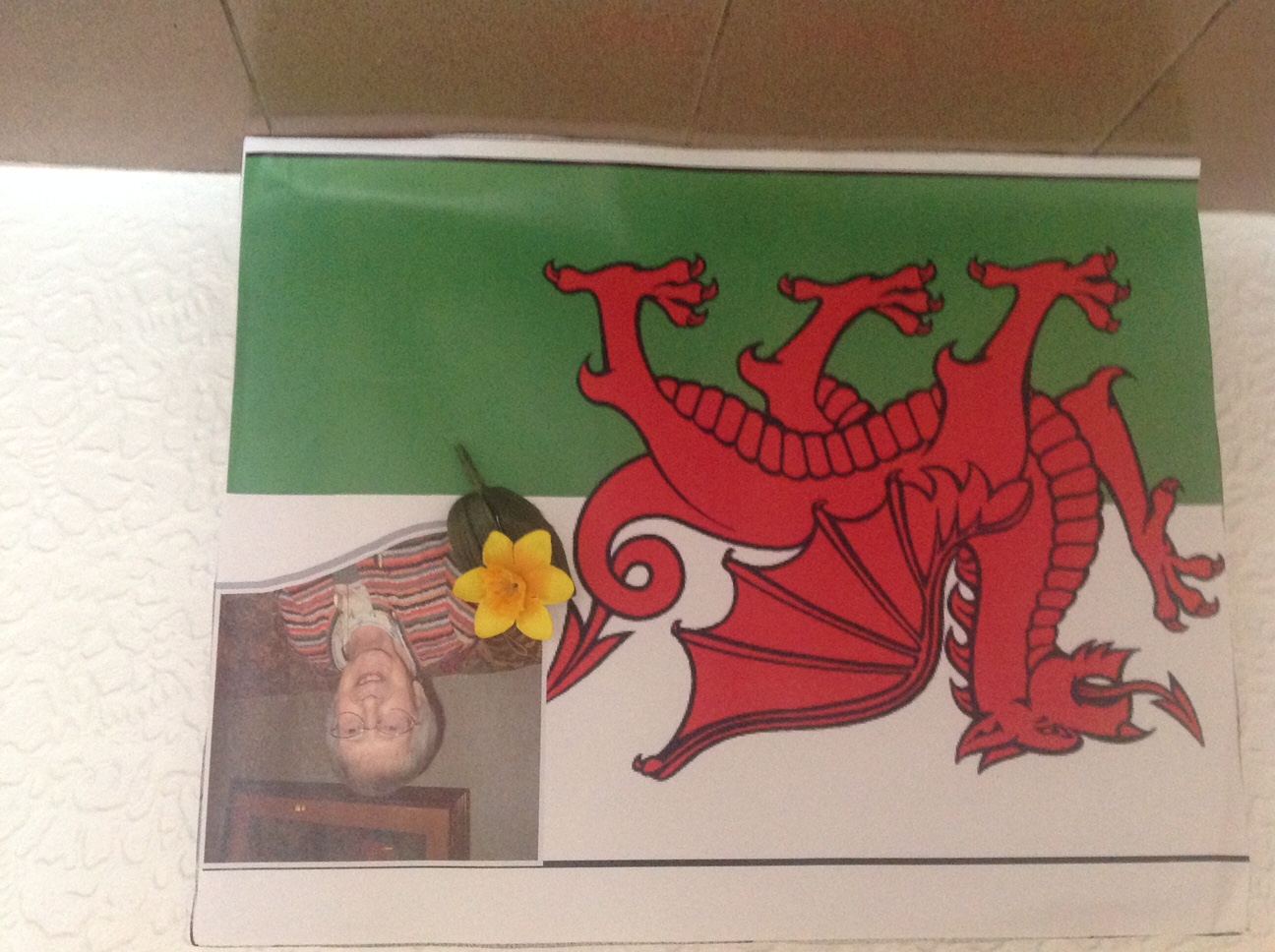
Mum and her Welsh flag

My mother loved reading but loathed formulaic romances, and her opinion has had more influence that anything over the way I write. I love a love story, but there has to be more. More for the reader to get their teeth into; a hint of mystery, research so good it teaches you something, a broadening of horizons. These are the stories I aim to write.

My career as a published author had a bit of a rocky start, but in 2018 I settled with Sapere Books, writing contemporary romances with a look over the shoulder at the past. The first two books were World War Two influenced, and later this year my debut dual timeline will be published by them, set in Cornwall in 1815 and 2015.

Last year I took another step forwards and signed a two book deal with One More Chapter, a division of Harper Collins. Both will be out this summer, written under the name of Eva Glyn. Eva for my paternal grandmother and Glyn for the Welsh novelist and poet Glyn Jones, a great friend to both of my parents and an emblem of my literary roots.


JANE CABLE INTRODUCES ANGELA PETCH AND THE IDEAS BEHIND THE TUSCAN HOUSE

I have known Angela since we were both indie authors in Chichester, so the success of her gripping World War Two novels with Bookouture has delighted me more than most.

Every summer she moves to Tuscany for six months where she and her husband own a renovated watermill which they let out to friends and family. When not exploring their unspoilt corner of the Apennines, she disappears to her writing desk at the top of a converted stable. In her Italian handbag or hiking rucksack she always makes sure to store notebook and pen to jot down ideas.

The winter months are spent in Sussex where most of her family live. When Angela’s not helping out with grandchildren, she catches up with writer friends. Obviously we haven’t been able to do so this year, but I am still hoping.

Now, over to Angela.

It’s interesting how new ideas for novels germinate. I love that moment when I am grabbed by an event or a person and the desire to write a story is born. It can come from a newspaper article, an obituary, a photo or from somebody’s memories.

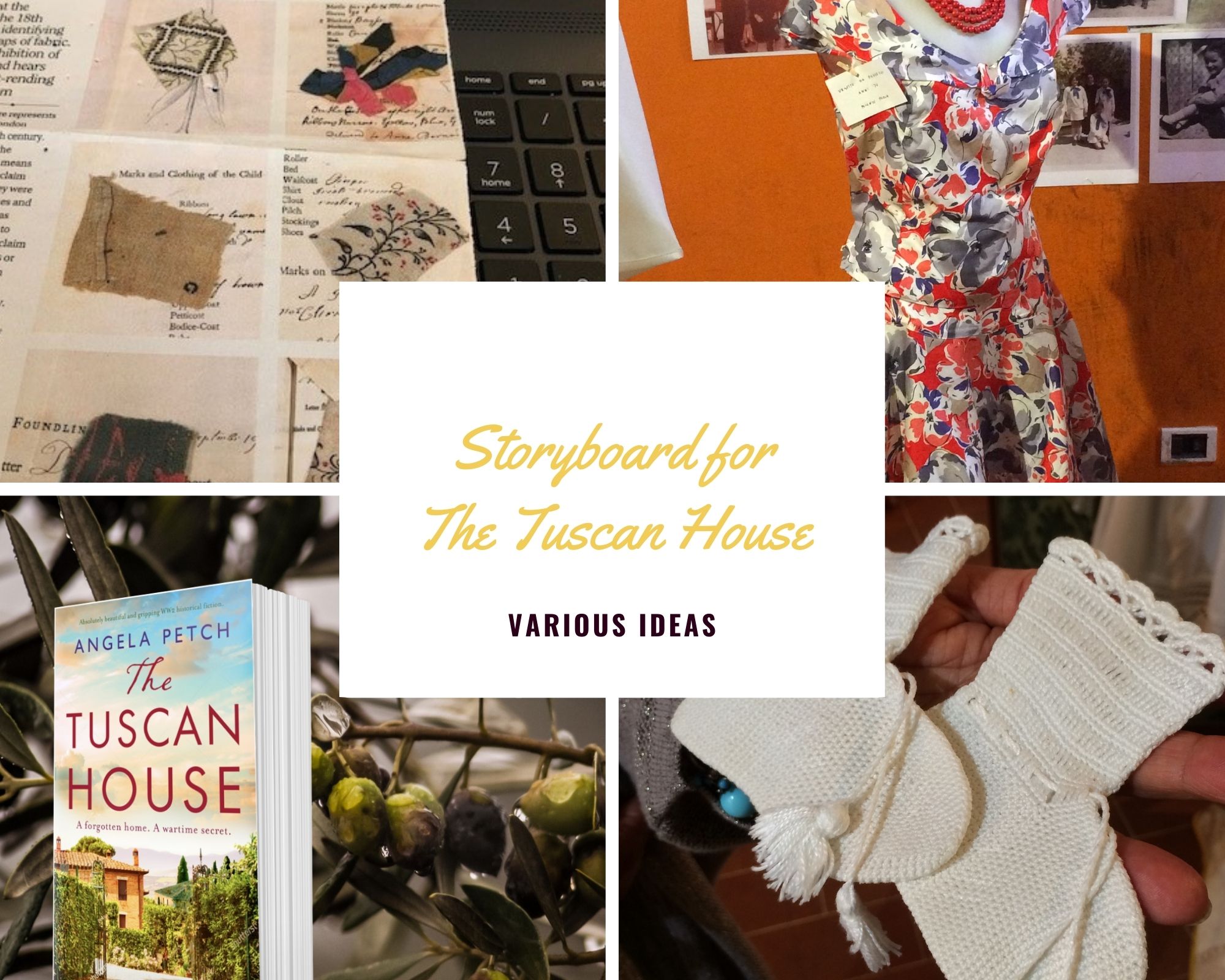
A few years ago, I cut out a magazine article with the title Swatched at birth. When babies were left at the Foundling Hospital in the 18th century, the only things identifying them were tiny scraps of fabric. The details on these swatches spoke to me: “A girl, about one day old, admitted 4 March 1759”. A piece of fabric pinned to her dress with a pattern of blue and burgundy flowers was the only link with this child’s past.

I’ve had this article for more than six years, but it gave rise to a detail in my new novel, to be published April 7th by Bookouture: The Tuscan House.

Similarly, on a shopping trip in Tuscany to our nearest town, I came across a simple exhibition of one family’s possessions. There were several outfits on mannequins and a wide-skirted 1950s dress was perfect for one of my characters. Click, click went my phone. And then I caught sight of a pair of slightly grubby booties. Click, click.  My characters come alive for me through such props and I hope to transmit the same through my words.

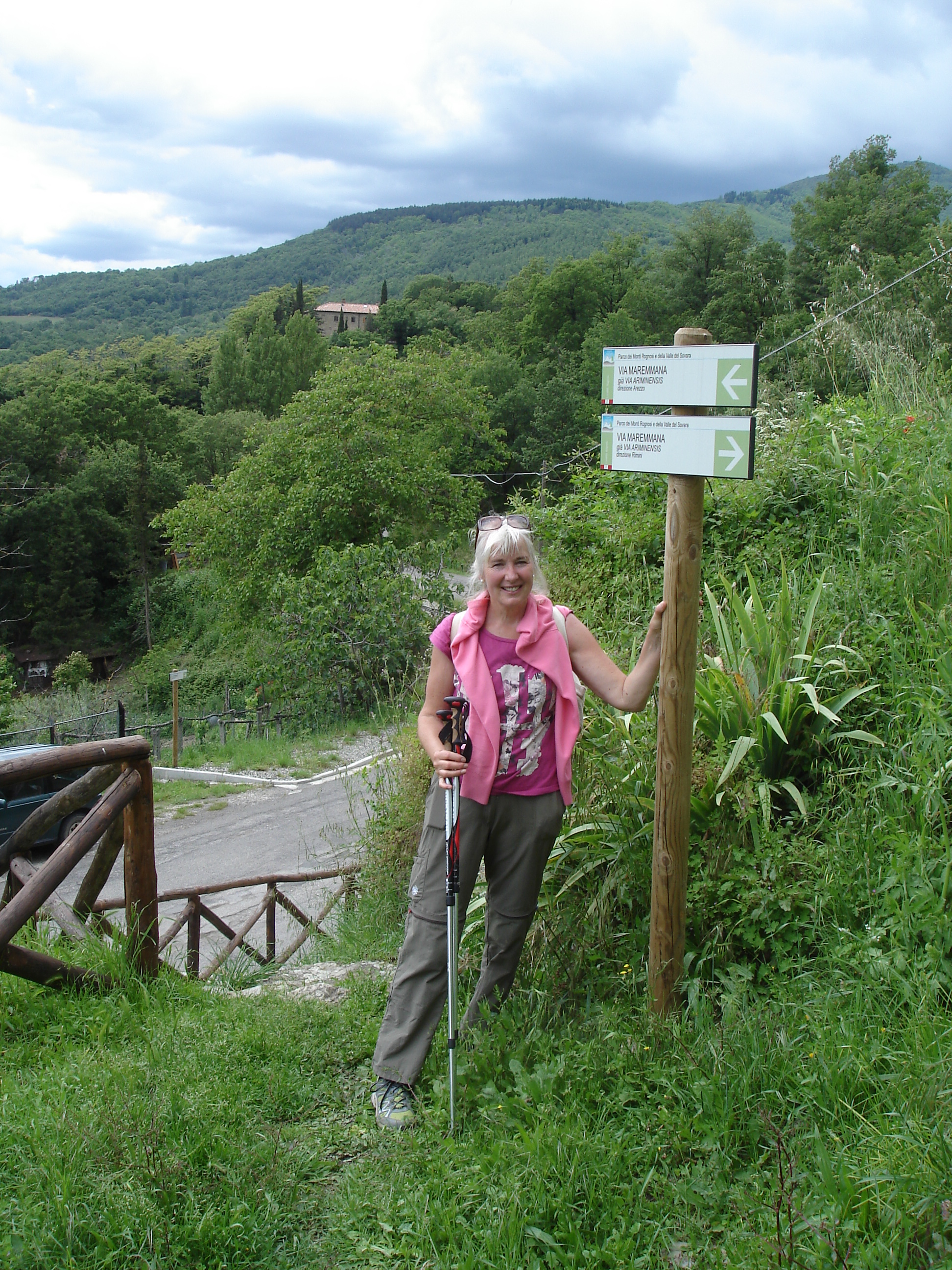
Maurice and I were persuaded in September 2013 to take a parish coach trip down to the Maremmana Tuscan coast. Most of the passengers were elderly and this annual Sunday had become a kind of pilgrimage to the past. Up until the 1950s, the men and boys of their families trekked down from our mountains to the sea to find better pastures for their sheep and cattle. I had never heard of the transumanza before (transhumance) and found myself scribbling down their stories. How could families bear to be separated for five long months every year? How did the women cope? What did the men get up to? My imagination went into overdrive. This led to my husband and I planning our own twenty-seven mile walk along part of the route and then another book was written. Originally, I self-published, but Bookouture acquired the rights. A Tuscan Memory  is a bit niche but a book I felt compelled to write.

We have to be in love with the stories we write and hope that our readers love them too.


Find out more about Angela and her writing on her blog: https://angelapetchsblogsite.wordpress.com


My Writing Process KL SLATER

After years of unsuccessfully trying to get my stories noticed from the slush pile, I went back to university to study for an MA in Creative Writing at the age of 40. Before graduation I’d secured both a literary agent and a book deal. I’m now a full-time writer and live in Nottingham. Sounds quick but it took a long time, if you count the ten long years of prior rejections.

What you have written, past and present.
I wrote four Young Adult books between 2014-2018, published by Macmillan Children’s Books. Then in 2016 I moved back to writing my first love: adult psychological crime fiction and that’s what I write exclusively today for Hachette’s Bookouture, a digital-first publisher. Audible publish my audiobooks and I’ve also written two Audible Originals exclusively for them. I’ve just written my fifteenth adult thriller.

What you are promoting now.
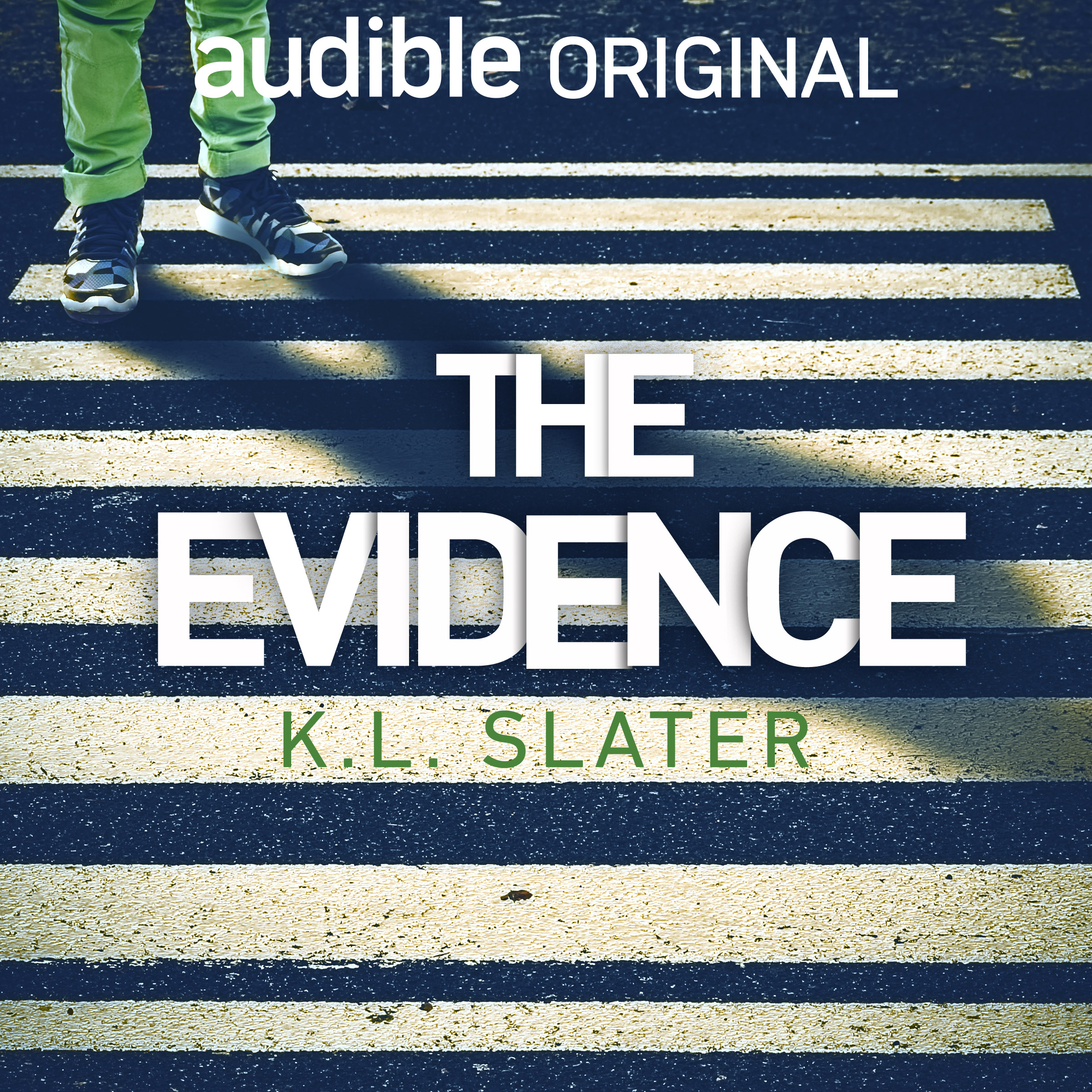
THE EVIDENCE, a psychological thriller I’ve written exclusively for Audible published 11th February 2021.

A bit about your process of writing.
I work best during the morning. This discipline is a throwback to working a full-time day job and writing between 6-8 am before I went out to work. Sometimes I write in bed immediately after waking and, on a good day, I can get a couple of thousand words down before I get up. But usually, after reading and surfing online for a while, I go downstairs to my office and start work between 8 and 9 am. In pre-lockdown days we’d go out somewhere in the afternoons. Remember that?

Do you plan or just write?
I used to just write a short blurb and that was the extent of my natural urge to plan. But writing commercial thrillers and a few a year, means I now have to plan the book more thoroughly … thoroughly for me, anyway. I’ll do a long outline which I agree with my editor and then add to it as I start writing. I don’t know a lot about the story at the beginning of the process, I just have my initial idea and a sense of how I want it to feel. It doesn’t mean the plot can’t differ from the outline – it nearly always does – but in order to provide the twists and turns the modern reader expects, there has to be some element of planning.

What about word count?
I write a few books a year so it’s essential I’m disciplined about achieving minimum daily word counts when I begin a first draft. I try and get a basic draft down in no more than a couple of months so I’m looking at 1-2k a day. I often add substantial word count during structural and line edits. Sometimes I like to use an app on my phone called Focus Keeper. The ticking timer drives some people crazy but it keeps me … well, focused.

How do you do your structure?
I tend to draft out my initial outline in the form of five acts to start writing to a recognisable shape. But I’m not a slave to a turning point at 10%, another at 25%, that kind of thing. I just find it a useful template to get me started.

What do you find hard about writing?
Stopping. I find it so hard to break off or have a whole day off so I have to force myself as there’s a real world out there and real people I care about and want to spend time with. I’ve found getting out of the house is key to breaking the spell. I’m constantly striving to achieve that illusive but tempting cliché: work-life balance.

What do you love about writing?
I love how the world and characters I’m writing seem so real. I love that I’m earning a great living doing something I would do – and for many years did do – for free. And I love writing digital-first; it’s incredible that 6-8 months after having a new idea, the book can be out there.

Advice for other writers.
Write. Sounds obvious but most writers I know, myself included, have a precarious state of mind that is prone to self-sabotage and procrastination. So many new writers – I used to be one of them – spend too much time striving for perfection instead of getting the book down and then using editing as a powerful tool to refine the story. It’s really hard to get something good the first time around. I like to think of the writing process as a kind of sculpting: starting with a lump of clay and through many stages and revisions, finally ending up with something good.

The Evidence by K.L. Slater is available exclusively on Audible now.

Marian Keyes Shares Her Ultimate Comfort Reads for Hard Times.

International best-selling novelist Marian Keyes (Watermelon, Rachel’s Holiday and The Break) has today revealed her Ultimate Comfort Reads for challenging times, with a curated list shared on Bookshop in support of indie bookshops, and to mark the paperback publication of her globally acclaimed Sunday Times No.1 novel, Grown Ups (Penguin Michael Joseph, £8.99).

Marien Keyes, comfort books, Marien Keyes, comfort books,

Confessing she’s “personally … desperate for a holiday from reality and from my head”, Marian’s recommended reads will offer readers some much-needed solace and escapism into a world of bookish pleasure during lockdown, and beyond.

Marien Keyes, comfort books,

From Booker-nominated debut novels to fiercely funny memoirs, and from heart-warming stories turned into much-loved TV series to feminist retellings of traditional fairy tales, Marian’s curated list aims to inspire, engage and entertain, as an antidote to the difficult times we’re living in.

Marian’s list includes: Stella Gibbons’s Cold Comfort Farm, a classic comedy novel named one of BBC ‘100 Novels That Shaped Our World’; The Surface Breaks by Louise O’Neill, a feminist reimagining of The Little Mermaid; My Sister, The Serial Killer by Oyinkan Braithwaite, the sensational debut novel nominated for the Booker Prize in 2019; Love, Nina by Nina Stibbe, a laugh-out-lout memoir adapted into a popular BBC series by Nick Hornby; Eligible by Curtis Sittenfeld, a Pride and Prejudice catapulted into our modern world; Dear Mrs Bird by AJ Pearce, the Sunday Times best-seller chosen as a Richard & Judy Book Club Pick; the WWII romance The Morning Gift by Eva Ibbotson, based on the author’s own experience as a refugee.

The list has been released by Bookshop.org – the alternative to Amazon for shoppers wanting to support independent bookshops when they shop online. Celebrated by critics, readers and booksellers, Marian is known for her untiring support of independent bookshops. She was one of the first authors to take part in “At Home with Four Indies”, the virtual series of events launched in lockdown by independent booksellers from Linghams (Heswall), Booka (Oswestery), Book-ish (Crickhowell) and Forum Books (Corbridge).

Marian Keyes, author of Grown Ups, said: “Life is very challenging at the moment and personally, I’m desperate for a holiday from reality and from my head. Reading has always been a huge pleasure for me but because so much fear is circulating, there are lots of subjects I’m currently not able for. I’ve put together a collection of titles that I’ve found engaging, uplifting, distracting and entertaining. I hope that some of them give you enjoyment and respite. I am thrilled to share this list on a platform that supports the vital work of independent bookshops.

One of the most successful novelists of all time, Keyes’ books have sold over 30 million copies in 33 languages, and her writing has received several accolades, including the British Book Awards, the Irish Book Awards and the inaugural Melissa Nathan Prize for Comedy Romance. In the last year, Marian has been chair of judges for the Comedy Women in Print prize, and the second series of her instant hit, Between Ourselves, will air on BBC Radio 4 on 18 February 2021.

Marian joins a growing number of authors to share a curated reading list on Bookshop.org, such as: Elena Ferrante, Malorie Blackman, Nikesh ShuklaEmma Gannon and more. Author reading lists on Bookshop.org have proven to have a tangible impact on sales figures for the books they feature, shining a light on many lesser known works beyond bestseller lists.

Marian Keyes’ Ultimate Comfort Reads:

  • The Secret Countess by Eva Ibbotson (Pan MacMillan)
  • Oh My God, What A Complete Aisling by Emer McLysaght and Sarah Breen (PRH)
  • I Never Said I Loved You by Rhik Samadder (Hachette)
  • Gravity is the Thing by Jacqueline Moriarty (Atlantic)
  • Standard Deviation by Katherine Heiny (Harper Collins)
  • Love, Nina by Nina Stibbe (PRH)
  • Professor Chandra Follows His Bliss by Ranjeev Balasubramanyam (PRH)
  • Writers and Lovers by Lily King (Pan MacMillan)
  • The Surface Breaks by Louise O’Neill (Scholastic)
  • The Loveliest Chocolate Shop in Paris by Jenny Colgan (Little, Brown)
  • Cold Comfort Farm by Stella Gibbons (PRH)
  • Filter This by Sophie White (Hachette)
  • The Diary of a Provincial Lady by E.M. Delafield (PRH)
  • My Sister, The Serial Killer by Oyinkan Braithwaite (Atlantic)
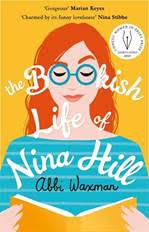
  • The Bookish Life of Nina Hill by Abi Waxman (Hachette)
  • If I Never Met You by Mhairi McFarlane (Harper Collins)
  • Odd One Out by Lissa Evans (Simon & Schuster)
  • Such A Fun Age by Kiley Reid (Bloomsbury)
  • The Switch by Beth O’Leary (Hachette)
  • The Cazalet Chronicles by Elizabeth Jane Howard (Pan MacMillan)
  • Dear Mrs Bird by AJ Pearce (Pan MacMillan)
  • Brother of The More Famous Jack by Barbara Trapido (Bloomsbury)
  • The Morning Gift by Eva Ibbotson (PanMacMillan)
  • Eligible by Curtis Sittenfeld (Harper Collins)


What would you add?

www.Bookshop.org

My Writing Process – Emma Eker.

I’m a searcher – always have been, potentially always will be. I’ve questioned the status quo from the moment I had the capacity to do so – finding myself dissatisfied and unconvinced with the answers I was given. I mention this so you may understand that I spent my whole life pushing boundaries, rebelling against ‘the machine’ and searching for the Truth. This quest came with a restlessness that ensured I couldn’t stay still for any substantial amount of time, moving from place to place, job to job and person to person for as long as I can remember – I was always trying to get ‘there’… destination unknown. 

What you have written, past and present.

Apart from writing a teenage diary, essays for my psychology training, helping friends formulate emails and blogging through social media, my professional writing CV, up until this point, has been limited! Until recent years, although with a great love for writing, I am not sure that I considered utilising this in any particular way, either professionally or for any paid or altruistic offering – it simply wasn’t in my consciousness awareness to do so.

What you are promoting now.

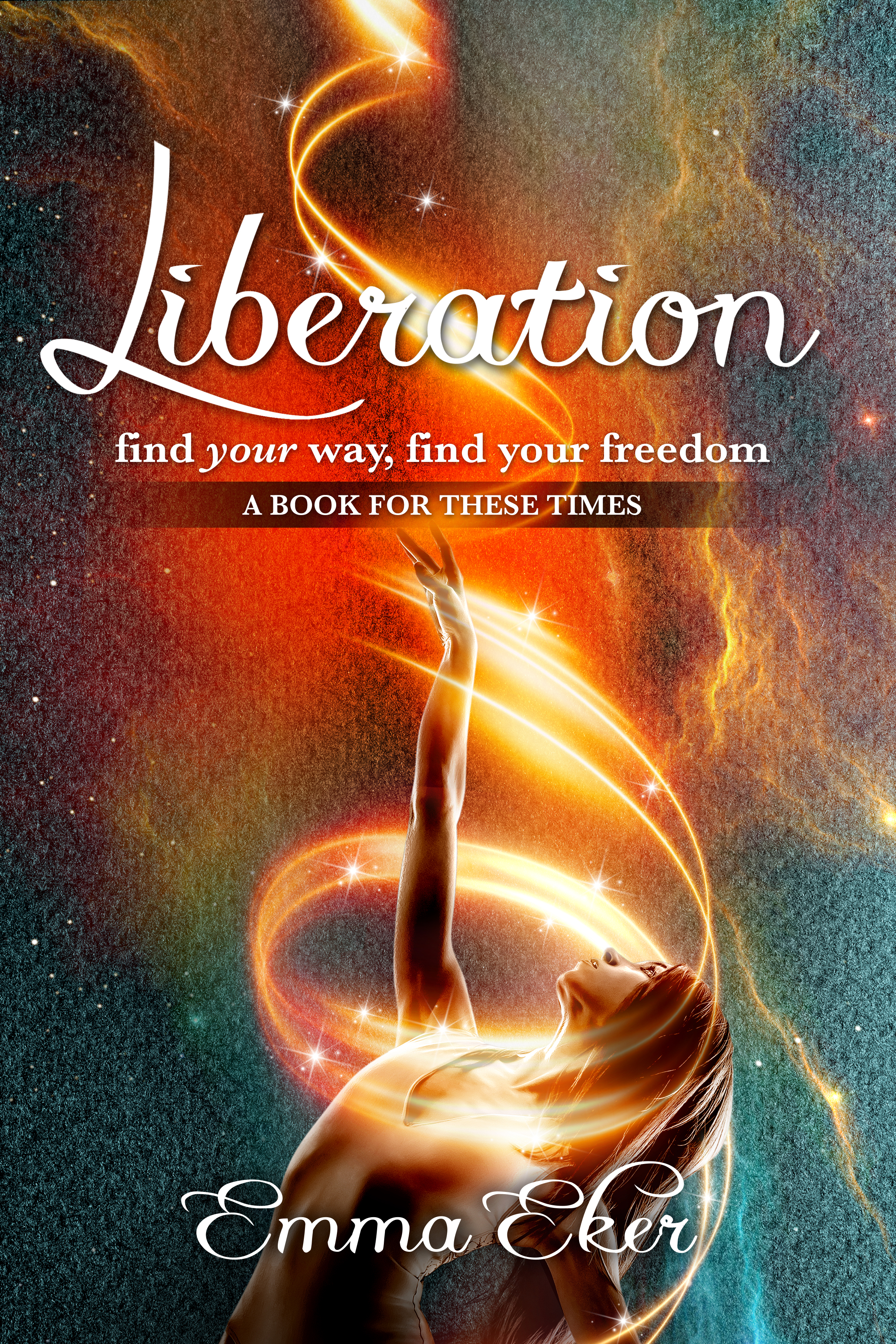
My book is called “Liberation”. It has been a labour of love and is predominantly a solution-based memoir, highlighting my journey through life – moving through addiction, heartache, temporary loss of Self and many of the trappings of the human experience. I have always been solution-based, always aware that life is magic and benevolent and therefore I could not, would not, write a book relating to struggle without presenting the reader with a solution. Too many books in the mainstream point to the ‘problem’, providing identification but little or no hope for the eradication of that which the reader may be battling with. I believe we are all whole and perfect, but for our belief systems and this is what Liberation allows the reader to see. 

3. A bit about your process of writing.

If anyone is looking for ‘good advice’ from me in this area, they may be disappointed! My writing process has been totally haphazard. Some days / weeks I would be in ‘the zone’, writing flowing, immersed in the creative process and other times, my laptop would be left unattended whilst I found it more important to do absolutely nothing at all! Many a time I have found myself in judgement around my process, but I have come to see that everything happens perfectly and in divine timing. What I will say is this, I have learnt to hear and to listen to the still quiet voice within me that taps gently in order to gain my attention and nudges me in the right direction. When the ‘knowing’ comes knocking, I know it’s time to put fingers to keyboard. 

4. Do you plan or just write?

Absolutely no planning whatsoever. I truly trust my writing process and I go with what feels right, rather than what I could have set out in black and white with regard to a structure. I have never worked logically, despite being thrown into a system that required it. I must be honest and say I don’t think I ever planned any of the book at all. Everyone’s process is different though and we need to find what works best for us which is simply a matter of trial and error. I know that when I sit down in front of my computer with the intention to write, the words will flow through me and if they don’t, I recognise it isn’t the right time. For me, the trick is to take my thinking mind out of it and go with the (creative) flow.

· What about word count?

With “Liberation”, there was no specific word count. I made the decision to self-publish rather than write for a traditional publishing house who may have required a certain length of manuscript.   

· How do you do your structure?

There was no specific structure, although, before I made the decision to self-publish, I was in discussions with a traditional publishing company who had asked me to draw up a synopsis and provide a rough chapter breakdown. I did, on some level, find this helpful to refer to as the writing process began. I held the structure loosely, understanding that the ‘story’ would unfold and become clearer as time moved on. Therefore, the format continually changed as the writing flowed and took on different directions, but it was useful to at least know the direction in which I was headed.  

· What do you find hard about writing?

At many times, thoughts, ideas and words would flow into my mind incredibly quickly and leave just as quickly making it difficult at points (not to mention incredibly frustrating) to grab hold of and capture them. Because I have a perfectionist within me, I would find myself continually editing, editing and re-editing some more which again, can be incredibly frustrating. I have however learnt, that if there is something that needs language which I temporarily ‘forget’, it will revisit me again to make its way onto the page. Moving out of my own way to make way for the creative process has also been a challenge for me, left vs right brain – practice is the name of the game. 

· What do you love about writing?

It’s an interesting question. Is it enough to say that it feels like an extension of who I am? I love putting words together and creating something that touches or resonates with another human being in order to gain identification and understanding. The ‘writing zone’ is a very real thing and I love getting lost in here.

· Advice for other writers.

If you feel there is something you have to offer and have a desire to write, trust it. Do not give up. It does not always feel easy to take what is inside of us and give language to it ‘out there’ and at many times you may feel you are in a battle with and up against yourself, but you must trust your heartfelt desire to do it. For if it wasn’t yours to do, you would not have the desire in the first place. And remember, everything has its ‘perfect’ time, so trust that too!


Liberation by Emma Eker is out by Spiffing Covers on 28 January. You can buy a copy of Liberation by Emma Eker via her website or Amazon.


THE BOOK I NEEDED TO WRITE – MICHAEL PARKER

When I was a Chindi Author (a group of indie writers in Chichester), Michael Parker was our elder statesman, the author who had been traditionally published, and who had time for everyone. It was hard to think I could come to respect him more, but since his beloved wife Pat died last year, he has written an incredible tribute which I hope to review for Frost next month.

I have always been able to write. As a teenager at Grammar school, I used to write hooky notes for my mates and charge them one cigarette for each note. You could say I was earning royalties even then. I was a prolific reader too and often found myself in awe of the authors and how clever they were. But I never aspired to become a writer; that was something only the clever ones did: those with university degrees and a middle-class upbringing. For someone like me: a working-class lad with no qualifications, I never believed I could become a published author.

I started dabbling with storytelling in my mid-twenties and wrote a family saga. It never saw the light of day, but it did become the seed, that feeling that there was something there. I remember contacting the Daily Mirror and asking them how I could get my book published. I had no clue about the publishing world. Their advice was to get an agent. It was when I was in my late thirties that I finally succeeded, when Macmillan agreed to publish my first novel, North Slope, in 1978. The Financial Times called me a “gifted narrator”. As rewarding as that was, it didn’t mean I would become a successful author.

Years later, when I was living in Spain with my wife, Pat, I found myself writing and being published. Eventually I ended up with seven traditionally published novels; six of them with Robert Hale of London. I was published in Norway, Denmark and Canada. Now I have fourteen books to my credit: all of them available on-line. But the book I needed to write: the book I want to talk about now, was a tribute to my lovely Pat who sadly died of cancer last year, 2020.

Pat became ill after a five-week trip to Australia and the Far East. She was diagnosed with cancer on our return after an examination for a spider bite. I looked after Pat for almost two years, here at home, until she finally succumbed to the disease. By this time, I’d already given up writing; there was no longer any inclination or desire. My sole reason for living was to be by Pat’s side and nurse her.

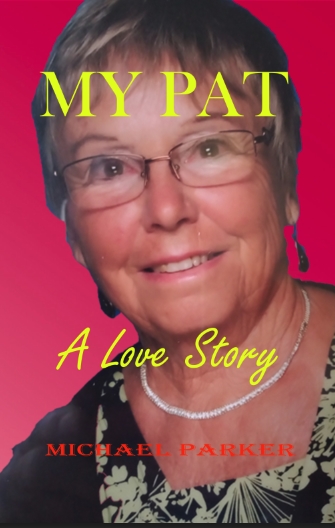
When it was all over, I was asked if I would start writing again. I would shake my head and say probably never. But my granddaughter, Gemma, wanted to know more about her Nan, and it was this that encouraged me to write down my memories after sixty years of marriage, and put them in book form: a tribute to my lovely wife. The book has now been published and is called, My Pat, a love story.

I don’t have enough time here to explain what a lovely woman Pat was, but the following is a short extract from the book:

I first laid eyes on Pat when she was fourteen. I was a “mature fifteen-year-old” who could not possibly have any interest in a girl as young as that. Besides, Pat was my mate’s little sister, and it was beyond parody to think I could have anything to do with her. But I still remember her dark hair, lovely eyes and generous mouth, plus the fact that she was wearing a canary yellow sweater. So, it stands to reason I couldn’t have noticed her. Four years later we were married.

Whether I’ll write again remains to be seen, but I am happy that I have published my best work ever.

You can learn more of me and my books by hopping over to my website: www.michaelparkerbooks.com.