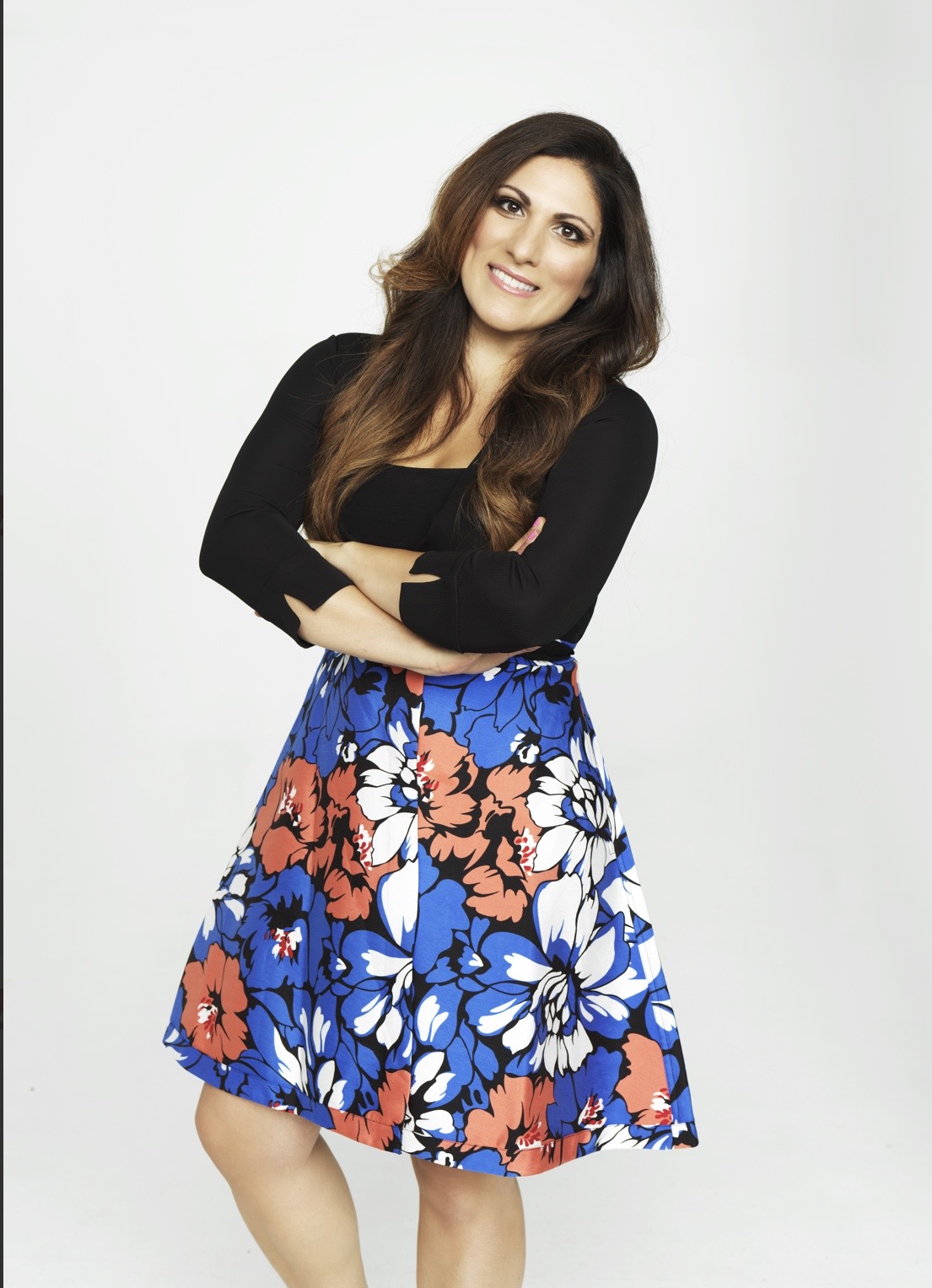
Interview With Vicki Psarias-Broadbent: Honest Mum And Author of Greek Myths, Folktales & Legends.

I’m reading your book, Greek Myths: Folk Tales and Legends, with my 10-year-old son at the moment. We are both loving it. Where did the idea come from? 

The idea landed on my lap from the Greek gods and goddesses themselves I reckon (ha) and in the form of a modern day Hermes in my literary agent, Jo Bell, whom Scholastic had contacted to see if she represented anyone of Greek origin who might like to write the book as part of their Classic series. I submitted a draft retelling Medusa and another as the first was a little too mature for 8-12s and was commissioned to retell 20 myths. What followed was a period of immersive and meticulous research prior to allowing myself creative licence to retell these famous and some rare stories too, for a modern audience. It was a joy to reconnect with my ancestry and culture, the process provided intellectual stimulation and by the end I’d felt like I’d crammed a Classic MA into a year! 

What is your writing process? I would submit 3 stories at a time to my diligent editor Bella and enjoyed working in batches, writing a minimum of two drafts of each story, before sending on for feedback and then rewriting.  Writing is all in the rewriting after all.  I had several months to write each batch and would aim to write 500 words a day as a minimum. I shed characters that didn’t drive the stories forward and invented poems and songs within the plots so these stories are very much my own interpretations, based and inspired on the original myths written over 2500 years ago. I used my experience as a screenwriter to create what I hope are memorable, cinematic stories children could imagine with ease. I wanted history to come to life for the reader.

This is your second book. Does writing them get any easier? I think when you’re passionate about a project, in my case anyway, I tend to hyper fixate on it and write, and write and write. I loved the research required here and returning to the earliest versions of these myths I could find, and then working from there, in many cases righting some of my ancestors’ wrongs in the process. 

I find you inspirational. You are a mum-of-three, an influencer, broadcaster, and writer. How do you manage to juggle it all? I think I often fail, freak out, feel burnt out and struggle with imposter syndrome as much as I experience career milestones and highs, just like everyone else. In terms of the practical infrastructure in place, my youngest is at pre school and my parents help out in the holidays. It takes a village to raise a child and it takes a village to raise a working mum. 

Emotionally, I oscillate between feeling confident and content and completely unworthy and sometimes in a single day. Sleep deprivation doesn’t help. My 4 year old has never been a great sleeper so that hasn’t helped with regulating emotions but I take each day as it comes, it’s the only way. Creative pursuits feel healing and give me purpose. 

What advice do you have for other working mothers? Focus on what you can do, not what you can’t. That applies to every area of motherhood, careers, friendships and relationships. If you want to write, try to commit to 200 words a day or 500, whatever feels possible. Know that each phase passes, the best of phases and the worst. 

You interviewed Keir Starmer. Tell us about the experience. It was a surprise to receive an invitation from No 10  asking if I’d like to interview Sir Keir Starmer during a school visit in Reading so we could discuss the success of the first 500 Breakfast Clubs rolled out across the country. 1 in 3 parents sadly struggle to provide breakfast for their children so these clubs are helping the most vulnerable, with many more planned. They will also serve working parents who are time-short on a morning, providing additional free childcare along with breakfast for children. The PM shared that he was committed to help improve the workplace for working parents. I’ve spoken in Parliament on several occasions, collaborated with the Department of Education and helped encourage the Online Safety Bill to be passed onto The House Lords (which it was and is now the Online Safety Act 2023). Politics is an area I’m interested and invested in although I couldn’t stand as an MP currently with a young child and two teenagers but I’d like to work more in this sector, continuing to advocate for working parents in particular. 

Who else would you like to interview? I think Jacinda Ardern, the former PM of NZ would be top of my list. The way she led from the heart and during the pandemic under such unprecedented times, turned everything on its head that we’ve been led to believe about leadership. She’s an inspiration. 

You’re incredibly supportive of other women. As well as being open and honest. What can women do to support each other? I think working on yourself is number 1, accessing therapy if you can or working on meditation/ yoga/ self improvement because operating from a healed place makes us the best and most calm and in control version of ourselves and in turn better friends, parents and allies to others. Ascertaining what your triggers are, if you are holding onto trauma or internalised misogyny for eg allows you to work through learnt behaviours and patterns and bad experiences, that might be harmful or destructive to yourself and others. I’ve had years of therapy and have found them to be life changing. There are a lot of women professing to support others when in truth, they haven’t done the work to fully champion those they profess to be behind. I am lucky to have a supportive community around me and have always enjoyed championing others, there’s a genuine ‘helper’s high’ from seeing others shine. I know myself deeply and I know there’s room for us all to thrive but only when we work side by side. 

Tell us an interesting fact about you. I came 4th in the North in Junior Masterchef at 11 in the regional heats. My Dad was gutted I didn’t make the TV show as they only needed 3 contestants.  My caterpillar brows at the time are forever thankful I didn’t. Another plus is that I learnt to cook well like high end fare and I wasn’t even a teen. My first week at uni was cooking 3 course meals for the other students in my halls. My Mum still laughs that I asked for a dinner set before I left home!!

I would also say as a bonus fun fact, that many don’t know I had what feels like another lifetime of a career as a screenwriter and filmmaker before pivoting into the digital world. My dream is to return to that industry one day. 


You have had an amazing year. What’s next for you?  Ooh, I’m not sure, a novel or screenplay perhaps, I relish a challenge and have a few ideas which I believe ‘have legs’ as they say in the film industry!
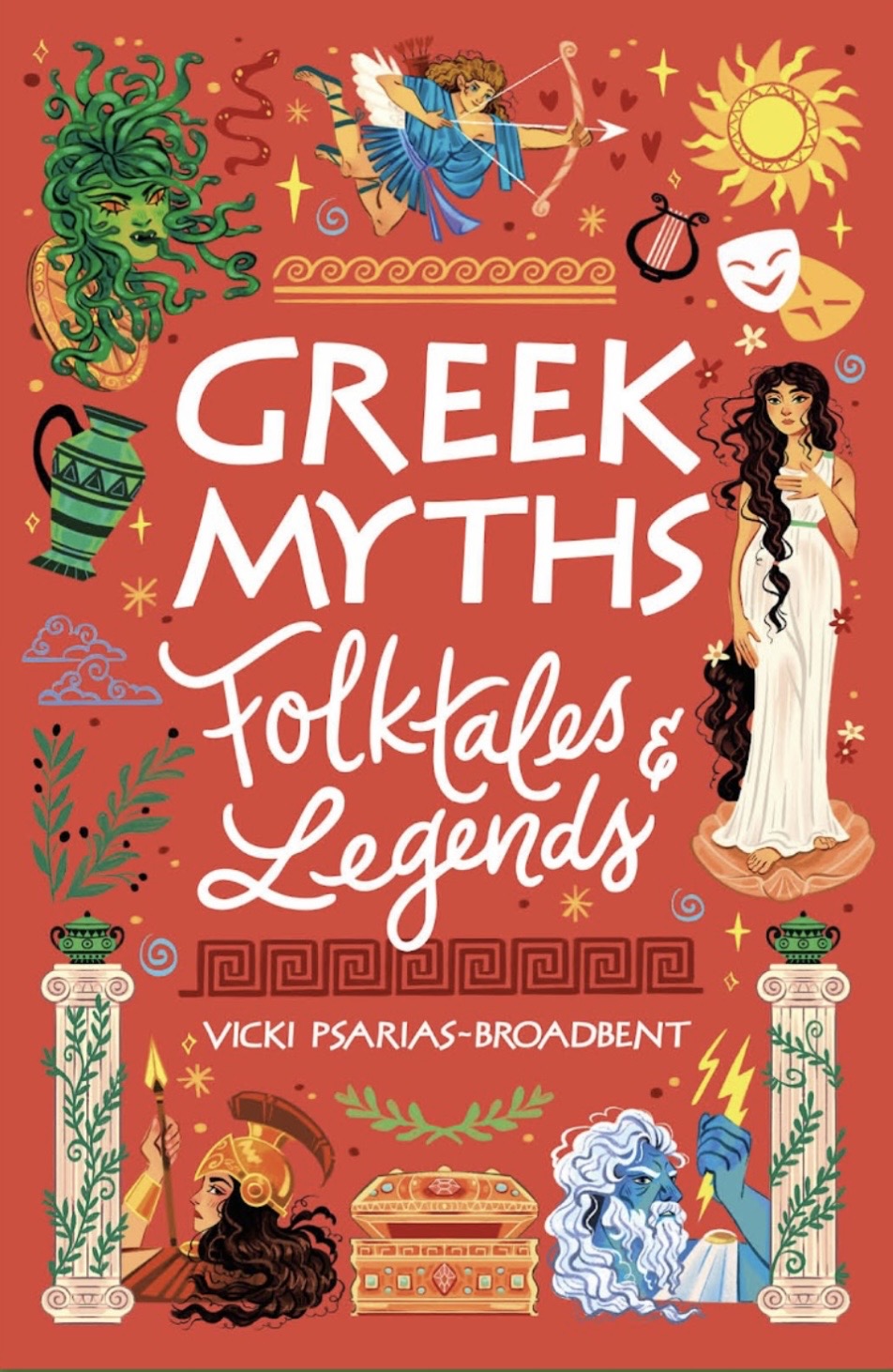
Greek Myths, Folktales & Legends for 8-12 year olds, published by Scholastic UK is OUT NOW in all good books shops and on Amazon.
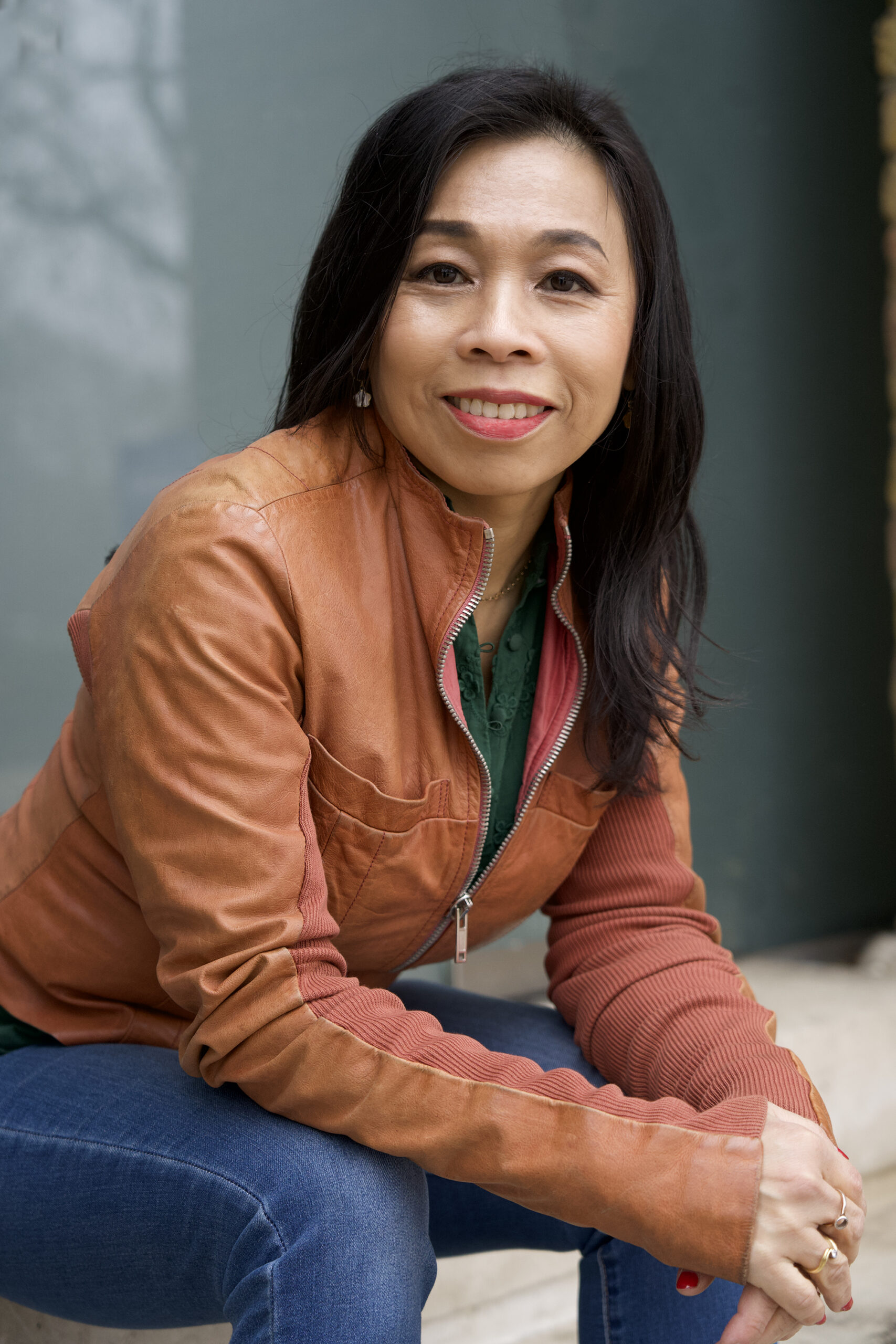
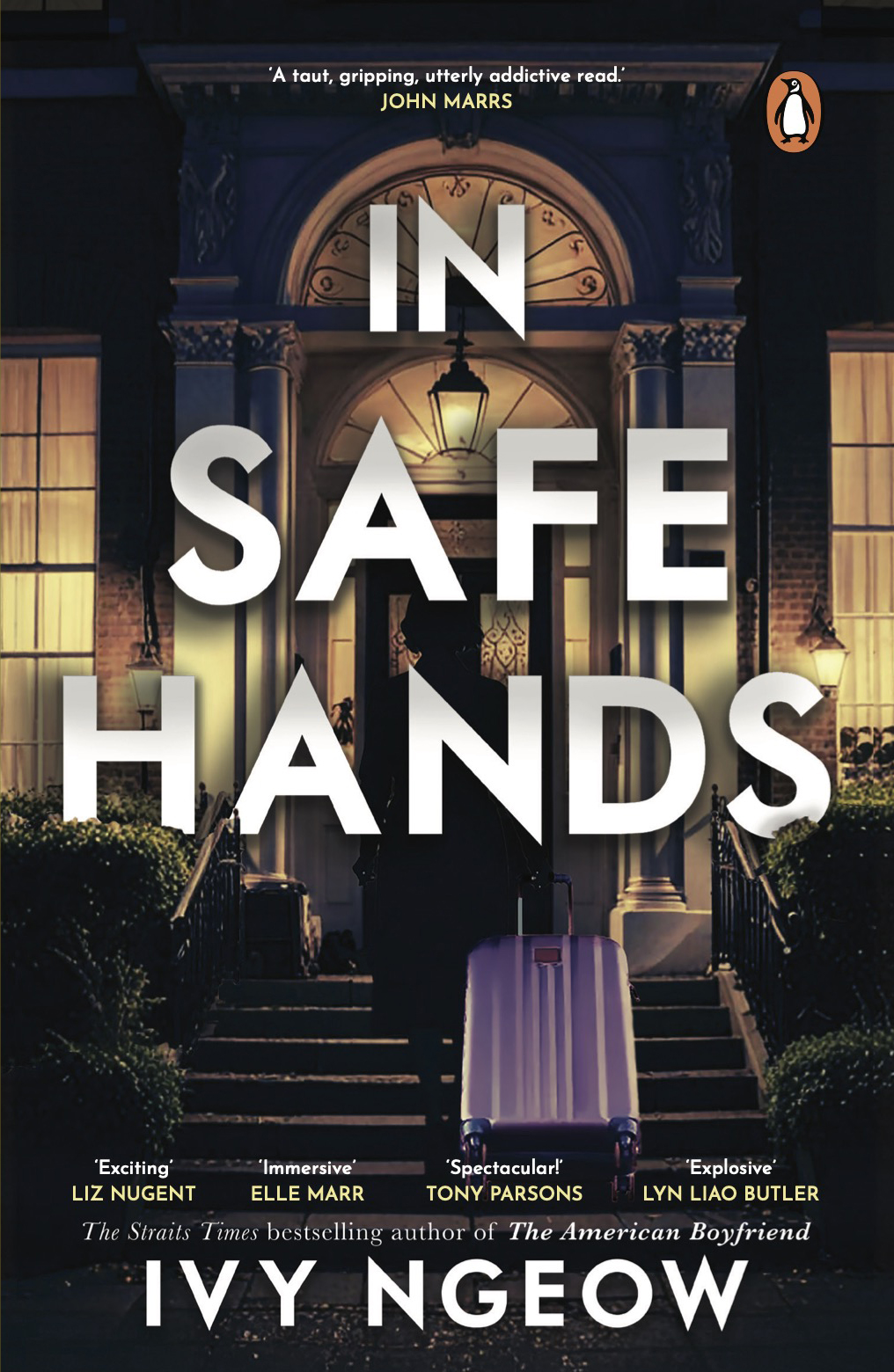
Interview With Ivy Ngeow Author of In Safe Hands

Tell us about In Safe Hands.

In Safe Hands is a psychological thriller set in London and Singapore, about a once successful but now penniless woman who seeks help from her elderly, wealthy father but finds that her role has been replaced by an attractive and efficient caregiver.

Where does your inspiration come from?

For me, inspiration comes from reading, theatre, sightseeing and walking, travel, TV and movies. I very rarely take inspiration from real people as I want to create settings and characters that are larger than life. Fiction is about stretching the boundaries of our imagination. For In Safe Hands, I was inspired by the class struggle and status consciousness in both Singapore and London, two parallel cities absorbed with economic and commercial growth which made me want to write about the have and have-not characters.

What does it feel like to be published by Penguin Random House?

Like most authors, I grew up on Penguin classics. I used to admire the plain orange spines, and wonder how I would ever write a book that appears on the shelf with the Penguin logo. When I received an offer 9 months after submission for The American Boyfriend, I thought it had to be a scam. I didn’t even reply for a week. After investigating the email, I was grateful that I was going to be not just an author, but a Penguin author.

Can you describe the moment you signed your book deal?

The moment I signed my book deal, I felt excited and light-headed, Prosecco-filled and buzzing. This was swiftly followed by a heavy responsibility, and also that I was an amateur and not good enough. Although in theory every author feels a debilitating sense of anxiety and inferiority, I felt the pressure of no longer someone who was just messing about, experimenting with writing, with sporadic success. Now I was a “real” writer and there were consequences, which were a sense of professional duty to perform, the urge to gain readers from all over the world, while developing my author brand, and finally the responsibility in delivering a top quality product to the world.

Tell us about your writing journey.

My writing journey actually began quite early, even though I only published my debut novel in my late 40s. I was writing short stories throughout my childhood for fun. Some received national commendation. I had always been interested in competitions, in case I won something. A real breakthrough came when one of my short stories was broadcast on the BBC World Service. I was actually even paid for it. It was the first time I had been paid for my writing. Gradually I entered more competitions and eventually won two big first prize competitions. 

Encouraged by my initial success, I signed up for an MA in Writing. I began writing my first novel then, which won a literary prize in Hong Kong. After I started writing novels, I was less interested in writing short stories, which I saw as something you do in between novels, like a side dish or a snack. I really enjoy investing time and energy into novel writing, which I feel is all-consuming and more like a satisfying, seriously rich meal.

In Safe Hands is your sixth book. Does it get easier?

Yes and no. They’re like children. The problems change and get bigger. Before, they just come out, exist and you make sure they don’t die. Then, when you have more books, you have to look after the whole family, your brand identity, your own development, the commercialisation of your writing, your publishing strategy and plan. There is no more hodgepodge or random scribblings, unless they are just for fun. The marketing and promo is the least fun bit of being an author, yet a significantly and disproportionately large part of publishing today, to the detriment of the fun bit: just writing. Everytime I make a reel, I know I’m not writing.

Which book is your favourite?

In Safe Hands is my favourite book. I say this not just because it is my latest book. I have made meteoric improvements since my debut 8 years ago. I exceed my own expectations with each book. I wrote better and better books. With each book, I tackle a little weakness or strength learned from previous books. Had I given up, which of course, I have considered doing many times, I would never have realised my potential to grow as a creative thinker and writer. 

What is your writing routine?

I don’t have a writing routine. Being a full-time architect and mum of two, I just write whenever I can. If I have one hour while waiting for my daughter at ballet, then I’ll write for one hour. If I have 15 minutes in between appointments, then I will write for 15 minutes. I don’t schedule any of it or get stressed if the words don’t come, because I feel that eventually when you get those minutes or an hour, the words will come. If it’s a story, then the story will be told sooner or later.

Are you a plotter or a panster?

I’m definitely a plotter, as I had made the mistake of spending 12 years writing my first novel due to not having any plot. I would just make things up as I felt like, until I got to the end. This only cost me many more years of rewrites. Now I can fill an A3 page with a diagram of my plot, and a google sheet with my chapter plan. It gives me a sense of peace just staring at these diagrams or Google sheets. I don’t mind if I have to spend a bit more time on the plotting. I see them as just as valid as plans for a building, or instructions to construct an object.

What writers and books do you love?

I enjoy character-driven plots. I read Liz Nugent, Elle Marr, Tony Parsons, Emily Barr, Shari Lapena, Lisa Jewell and Andrea Mara. I also enjoy literary fiction. Books which have influenced me include Penguin Classics. For contemporary book club fiction, I enjoy JM Coetzee, John Lanchester and Rebecca Kuang. An automatic read for me would be David Szalay. I have already ordered his Booker winner, Flesh. I love anything he’s written.

Greg Mosse Interview: On Writing, Trilogies, A.I. and Kate. 

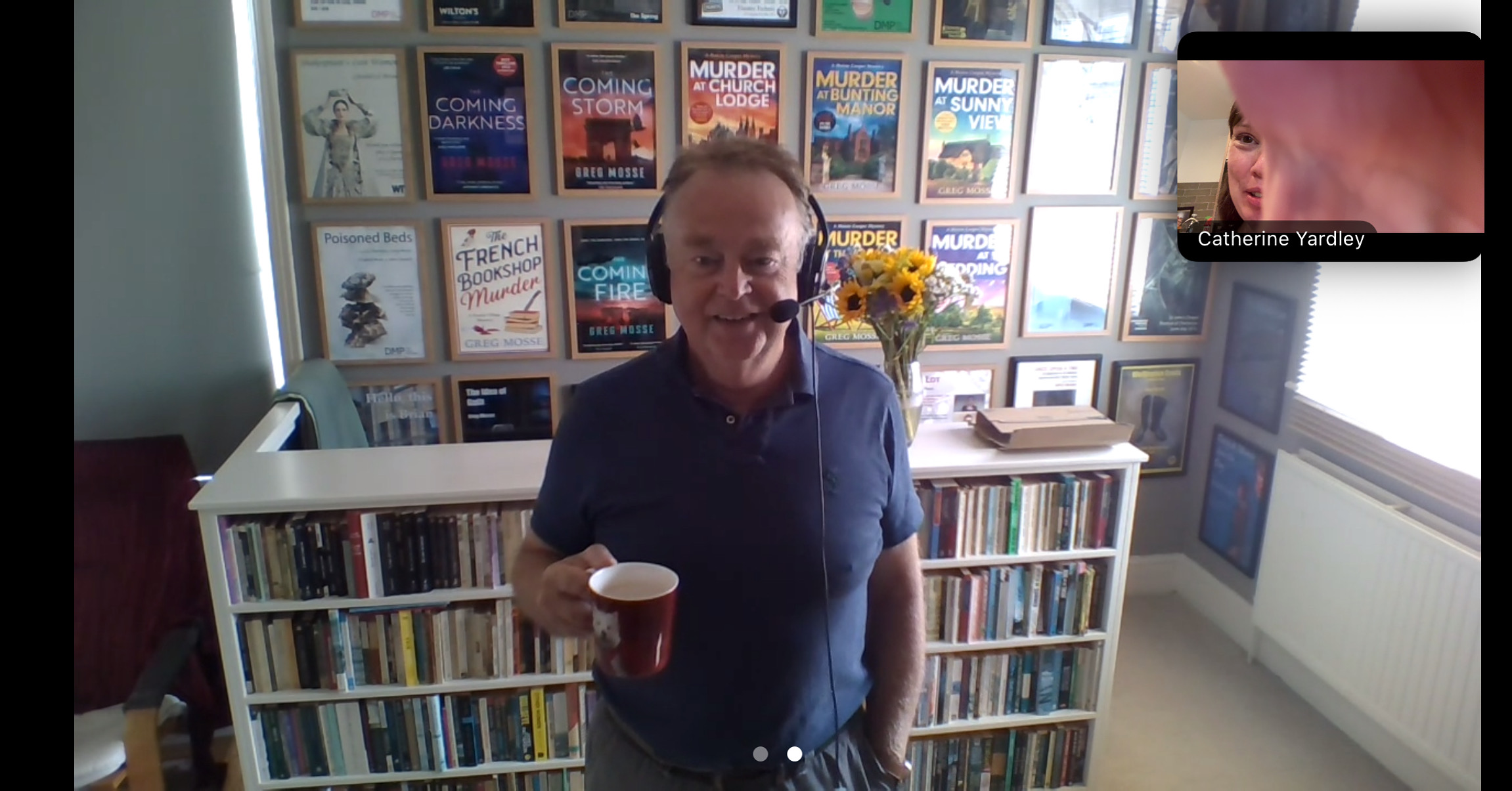
One of the best things about being editor-in-chief of Frost Magazine is all of the people I get to meet. Having a chat with a writer I admire is also exciting for my other life as an author. Greg Mosse is a great interviewee. Candid, kind, and bursting with interesting information. I read The Coming Darkness in 2022 and loved how unique it was. It is a great thriller. Now, the third in the trilogy, The Coming Fire, is out. I interviewed him over Zoom to talk all things writing, A.I., and Kate.  

Greg complimented my children’s artwork on the fridge, and I complimented his impressive book posters. 

On the impermanence of theatre and writing during lockdown: ‘The posters on the wall, most of them are mementos of my theatre work, because theatre is a wonderful fugitive experience. It’s that brilliant moment shared by the audience live in the room together that can never be repeated, but at the end of a run of theatre, for most shows it’s gone forever. And unless you’re in Les Mis or something like that, and it doesn’t stop, it’s great to have the poster on the wall as a reminder of, ‘Oh yes, I did that.’ 

The rhythm of my life under coronavirus lockdowns changed completely. In one way, because theatre had become illegal, and so there was really no point in writing new plays for I didn’t know how long, but in another way, it didn’t change at all. It just meant that I sat in the corner of my study, there with my red blanket, because it was March, wasn’t it? It was cold at first, and then it got really hot. It just changed from writing dialogue to writing prose and that’s why, in the centre of the wall of posters behind me, are all the novels I’ve published.’ 

That was a smart thing to do. Yes, but remember, we were utterly unemployed, weren’t we? We had to fill our days and I did find it very easy to be productive, because I was utterly without distractions.

As the lockdown started, I actually went and I picked up both of our children. My wife, Kate Mosse, and I. Felix was working in Norwich. He was on stage in a show that shut, and Martha was living in North London in a flat in a block, and we thought both of those circumstances would be a less pleasant way of being locked down than in our house in Sussex with fields that you could walk out to and all of those lucky things that we had, but that said, you know, they’re grown-ups, so it’s not like I brought them home and had to look after them. So I had not limitless time, but I had a lack of distractions, which really taught me how valuable that can be in terms of working quickly, but not necessarily efficiently. 

On writing a trilogy: For The Coming Darkness, the first book in the Alex Lamarque trilogy, I wrote 170,000 words from which ultimately I cut 70,000 words because the thriller that MoonfFlower, my brilliant publisher wanted, was just under 100,000 words. However, when The Coming Darkness went very well, I got excellent reviews for which I’m very grateful. It meant that I had these subplots I cut from the first draft that were the heart of the second book, The Coming Storm. That also accelerated the process. So it wasn’t like I had to sort of start again. My hero, who’s like an action hero, a member of the French secret services. He wins at the end of The Coming Darkness, but he only wins a fragment of the battle that he’s engaged in. But I already had the heart of The Coming Storm already on the page. It had to be massaged into a different shape, a different timeline, but it already existed. The future, historical background to the book that I researched by reading lots of scientific papers and government papers and NGOs and everybody who’s predicting the future, trying to plan for what’s coming next. Five years, 10 years, 15 years, a generation. All of those notes were super valuable over the whole of the trilogy, and the things that we’re worried about today in 2037 are more urgent, more dramatic, more desperate, but they are the same things, but more so.

The Coming Fire is the culmination of a trilogy about a time when everything that we’re worried about today is more intensely felt and more intruding, more fully on people’s lives. So that meant I’ve already got a crescendo that can play out over three books, and then the other way of describing it. The further Alex goes towards the heart of this terrorist mystery, the closer he gets to the biggest, hardest enemy to defeat. There’s an overall shape that you know you’re writing into. I sometimes describe it as pouring creativity into a pre-existing shape, yet not just writing to find the shape, but the shapes already there in the back of my mind.

On authors being pigeonholed: As a writer for theatre, nobody says to you, “You know, last year, you wrote a play about smugglers, set in 1749. Why are you now writing a play about the First World War?” Whereas, as a novel writer, people say that to you all the time. Being able to write in these different voices, to tune into a different quality of creativity, is really normal for a playwright and to write dialogue in different voices. One day a king, another day a minor living 300 years later, another day a 12-year-old child living today, is totally normal. Now, the other part of your question, which one do I like best, writing plays or books? The great thing is that they refresh one another. You know what I was just saying about playwriting? That’s one of the best things about writing plays. So a full-length, two-hour play is about 20,000 words, whereas The Coming Fire is 98,000, I think. So a full-length, two-hour play is a fifth of a novel. So it’s more difficult to get that refreshing change in novel writing because the scale of the creative enterprise is so much bigger. If you have sympathetic publishers who understand that you’ve got these different goals, entertaining people in different ways, that’s what it’s about. They really bounce off each other super well. 

On his writing routine: It’s 6:30 till 10:30 more or less every day. When I say every day, it’s like six days out of seven. Sometimes I’m travelling for other parts of my life. And so it can’t happen if I’m driving to London in the morning for the work I do in theatre, for example. But about six days out of seven. 6:30 to 10:30. In that time I’d expect to write a couple of 1,000 words. I’d expect it to begin with a two. Doing that for six weeks of six days a week, 2,000 words a day that’s 72,000 words, isn’t it? And once I’ve got to sort of that, I’ve actually got an unpublished novel in my computer over there that I’ve written about 65,000 words of, and I’m currently editing it because I’ve got an idea of how it will end, like a framework for how it will end, but in order to write the last quarter of the book, I need to make sure everything in the first three quarters ties up and is completely coherent, and that I’ve probably been writing for about six weeks and now it’s going to go really slowly for a week or 10 days, maybe because I’m reviewing everything, and I have to keep going backwards and forwards, you know, to tie things together. And I’ll find a thing on page 102 and God, where was that, although I referenced that. And then there it is on page 17. And all of that over and over and over again. And only once I’ve got all of that done, probably through the whole of those 65,000 words twice. Only then will I write the last quarter of the book. And then, of course, I’ll have to check it from line one to the last line again to make sure I’ve got it all right. So that means about 10 weeks in total for a draft that I am willing to show one person alone, and that person is my wife, Kate Mosse, [Most people would be scared to give Kate Mosse the first draft of their novel] yeah, probably. But, you know, there she is. She’s having a cup of tea in the morning, eating her Marmite on toast, and she’s trapped. You know, there’s nothing she can do.

I was asked this weekend, as I usually am at some point at festivals, ‘Greg’, was it helpful at all to be married to the international best-selling novelist Kate Mosse?’ And I always say she is the wave that I surf.

On supporting other writers: When Twitter was invented, before it became a cesspool of bots and hatred, it is I chose as my Twitter description, ‘writer and encourager of writers.’ Back then, almost all of my writing was theatre, of course, and that’s changed, but the encourager of writers hasn’t. It’s the reason why, with my son Felix Mosse, we run a theatre script development programme at the Criterion Theatre, Piccadilly Circus, which is free to the mid-career playwrights who take part. And then when I’m at a festival, like Harrogate, or in the new year, Kate and I will be in Jaipur, and then Dubai, at the Emirates Festival, the majority of my time there will actually be spent with readers and writers, aspirant writers, trying to help them develop their plots, understand the business. You know, all of that stuff. And that’s super rewarding.

His thoughts on A.I: My thoughts on A.I., what I wanted to put on stage in The Coming Fire was the fact that the terrorists, the big, bad, evil presence behind the whole of the trilogy, has a view on A.I. that you and I and many people probably share, which is that it’s an enormous danger, and there are two parts to this danger. There is a relinquishing of humanity, and thinking that A.I. is probably as good as the ways in which humans have evolved, in doing things over a gazillion years over evolution, and then recorded history.

And then the other part of it is that relates to the creative arts. There’s a brilliant, I think it’s in an Arthur C. Clarke science fiction story from many years ago, where he compares a flawless reproduction of a piano to a real piano. And he says it’s like the difference between being told that you’re loved and being held in your parents’ embrace. It’s great. It may not be a quotation, but it’s something like that, right? You know what I mean there, there is a difference that feels elusive, but it’s also really substantial.

Yes. So then the other part of it is the fact that, and we’ve seen this all through the technological age, technologies respond in ways that we don’t predict. There’s always a law of unintended consequences. There’s always unfortunate outcomes, even with the best of intentions. My brother, who has a sardonic cast of mind, sometimes says to me, no good deed ever goes unpunished, and you want, but people who are, I would argue, unthinkingly embracing technology, assume the best, whereas I’m a much more precautionary cast of mind. You never know where this will end up. So coming back to the big baddie in The Coming Fire.

He wants to set back Earth’s technological development by a few generations. He wants to destroy the hyper-connected world, the global village, and fragment and atomise human populations. Now, of course, that also means that he’s a completely inhumane barbarian,

utterly insensible to human tragedy and loss of life. Those things are meaningless to him because he has this conceptual idea of turning back the technological human clock,

and a thing that he can’t see is the inhumanity of the A.I. that he wants to exploit in order to achieve those terrible goals is actually super similar to his own cast of mind, and that’s why Alex must stop him.

Well, it’s the third part of a trilogy. There is a hero. Usually, the hero wins, but of course, it would be a spoiler to say if he does. I have a friend who’s a neuroscientist who works at the University of Sussex, with whom I was talking quite recently about the fact that he gets infuriated when he’s told that artificial intelligence has discovered or devised something. And he says there is no artificial intelligence. What there is is an algorithm that analyses statistical probabilities and comes up with likely scenarios from which it can choose one. But it’s not intelligence. It’s a sifting of data to find the most likely average outcome. 

Thank you Greg. 

The Coming Fire is out now and published by Moonflower. 

Interview With Land of Hope Author Cate Baum

Cate Baum, Land of hope author

Did you always want to be a writer? 

I think I did. I fantasised about being Charlotte Brontë or Daphne Du Maurier, and being a difficult woman living in a big house in the wilds. It was always going to be that or a musician or artists of some kind. I got lazy with music and art when I grew up but writing was a constant. I wrote my first book when I was seven, and I still have it. It was a sci-fi adventure about children who leave Earth in a protective cloud! I’m certainly a difficult woman living in a big house. Not in the wilds though, unless Spain is a sort of wild.

What books did you read growing up? 

My parents had a full library and were avid readers. They didn’t prevent me or my sister from reading anything except perhaps the racy works of Jilly Cooper! I remember reading Jane Eyre when I was really young. I didn’t get any of the deep stuff obviously, but it gave me the distinct impression women were in an inferior position in life and even influenced my novel Land of Hope. I also treasured a book called The Wickedest Witch In The World by Beverley Nichols, who I was disappointed to find out was a man. But I still have that book, and it seems to be a sort of phenomenon for people who know of it. I also read Born Free and Tarka The Otter, and these left a big adventurous impression on me but now I can’t read anything about animals in case they die in the end. I think The Razor’s Edge by William Somerset Maugham had the biggest impression on me, and it was my father’s favourite book. I am still fascinated with the idea of running away like Larry Darrell in the novel. The Two Faces of January by Patricia Highsmith is the reason I became a serious writer. It’s such a slapped together novel with somewhat tipsy grammar and a funny arc but the storytelling is just stunning. I wanted to do that. It seemed almost delinquent and I loved it.

What was the idea behind Land of Hope? It has had an amazing reception. Did you expect that? 

Yes and no. I think any writer who has their book published is both a complete egoist and suffers from imposter syndrome. I knew I’d written something special because I stopped seeing the seams after I wrote something. I’d read it back and congratulate myself because I didn’t remember writing it. I see that as a sign the muse has been at work and I’ve channelled the words successfully onto the page. I take no credit whatsoever. It’s the lady who sits behind me dictating the story from another world and time where my book already existed for aeons… I’m just the seer with typing fingers.

Can you tell us about your publishing journey? 

I went to UCLA in Los Angeles to study screenwriting initially. I loved it and did very well but I found it all a bit banal when it came to sending out queries. So I started back on my novels, and interviewed for an MA course that caught my eye at City University in London. I was so taken with the leader of the course, Jonathan Myerson (award-winning novelist and screenwriter), who just seemed like a guru of all things literary, that I took the place and moved to London for two years to do it. I learned things I didn’t even know I didn’t know about writing. I was a complete pain on the course, as it was hard to go to uni in my forties. But I came out on top, won the prize for best novel (a different novel), and started looking for an agent. It took me about six months of hardcore Excel spreadsheet action researching and understanding you cannot just blanket query. Each submission must be thoughtful and you must want to be with the agent you are querying. They know somehow! And I got a lot of rejections, and a few near-misses before Sabhbh Curran at Curtis Brown took a gamble on me and we started working on the novel in earnest with many passes before she felt it was ready. Including an entire rewrite! She’s great because she invested in me and not just the book, and helped me develop as an author along the way so that by the time she got an offer from The Indigo Press for the manuscript I felt entirely ready to embrace the work.

Jonathan Myerson and I are still friends and it was the best decision I ever made to go to City. He’s interviewing me at the Haringey Arts Festival on July 18th in London at a book signing event.

What’s your writing routine? 

I don’t write until it hits me. I’ll think and think. Then I’ll let myself just write as purple as I like, and maybe knock out a good 40k words to make sure the idea has legs. Oftentimes people think they have a book, but it’s just a premise with no development. This might be a whole night of writing, or a few hours here there. But it’s never when I expect it. I have to make room for that happening in my life. It entails shutting the door and entry is prohibited expect in the case of fire or flood. I might not eat or sleep. People are let down. Appointments not attended. It doesn’t matter to me if I’m on a roll. Then, I start out with a synopsis, a habit I procured from my screenwriting days, and I make a beat sheet (every beat of the hero’s journey). I was mentored by Claire Fuller at City, and she drew me a tiny diagram that shows the arc of a novel. I kept it and refer to it constantly! Then I talk each character’s journey through with someone, who is right now my assistant Arthur Lemon, a poet from Estonia who happens to be a fantastic editor and stickler for English grammar. I make a sort of diagram of the story with his notes, and then I take that to my desk and start with a few bits. Once I have a good 50k, I will give that to my readers, who will be Arthur, my husband Henry, and Jonathan Myerson for the next one. I get notes and impressions from them, and kick it all up. Usually I end up with about 20k words from the original 50k and have to really be tough with myself. But actually it’s a bit like cleaning a closet. It feels like a task but then I start enjoying chucking stuff out. I kill all my darlings to a serial level. When I finish, I don’t look at it for a while. There’s usually quite a lot of nonsense in it when I go back. I feel like writing a novel is more about what’s left when you’ve deleted almost everything you thought you’d done well with.

Who are your favourite authors and books?

I love a lot of older writers. Joan Didion’s essays, Emily Dickenson and Sylvia Plath’s poems, and Lucia Berlin’s shorts. I love Milan Kundera and Vladimir Nabokov. Modern writers I love are Michel Faber, Philippe Djian, Virginie Despentes, Rachel Cusk, and Suzanne Collins. But some of my favourite books are The English Patient by Michael Ondaatje, The Red Parts by Maggie Nelson, Bitter Orange by Claire Fuller, and Surfacing by Margaret Atwood. I’ve also recently enjoyed Daisy Johnson’s The Hotel. I could go on all day.

What’s your favourite thing about being a writer? And the least? 

Best? That I get to make up stuff for a living and don’t have to speak to anyone except my very favourite people in the world, and then only about abstract subjects. Worst? Writer’s bum. I have to make sure I get on that treadmill of a morning or all is lost.

What’s next? 

I am working on my second novel’s synopsis for my agent, which will be in the vein of folk horror and fantasy once again. This time in East Anglia… I’m also looking forward to seeing what’s happening with selling the movie rights for Land of Hope, which is in the pipeline. And in July, Land of Hope comes out in the United States, which is truly exciting!

Land of Hope is out now.

Interview With Author and Publishing Director Phoebe Morgan

I am excited to interview Phoebe Morgan for Frost. Phoebe is the author of fantastic thrillers while also being the publishing director of Hodder and Stoughton. I have no idea how she manages it. I also know if Phoebe has worked on a book then it is definitely worth reading. Phoebe has a new Substack, The Honest Editor, which gets into the nitty gritty of publishing. It is essential reading for all authors.

 Tell us about you.

I am a publishing director at Hodder and Stoughton, working on commercial fiction. I also write my own novels on the side! I’ve worked in the industry since 2013, and I love finding new authors to work with, as well as progressing my own creative career. It’s a juggle but I am lucky to do two jobs I love!


You have written five books. Does writing ever get easier?

I would say psychologically it does, because you know you are capable of getting to the finish line and so that can be reassuring. But it’s still a slog at times, of course, and I am not a huge plotter so I am often running into plot problems as I go and figuring it out as I go along! So each book is still a marathon, but you do feel a sense of security when you have had a couple of books out – it’s so important to push through and get a first draft down, I think, so that’s always my initial aim, and then you can go back and edit afterwards (which is the fun part!)

Do you have a favourite?

Of my books, the second one is probably my favourite (The Girl Next Door). It’s set in Essex, in a small village where I used to live, about a teenage girl found dead in a field of buttercups at the back of the community hall. I love the couple at the heart of it, and although it’s not my biggest seller, it’s the one I always want more people to read.


How do you find time to write when you also have a busy publishing job?

I tend to write in big chunks at weekends rather than every day. I am quite a fast writer when I get going, so if I can clear a free Saturday for example I can really try to focus and get a lot down at once. You do need a lot of drive and determination to do both, though, as my day job is very absorbing and is always my priority. 


What is a typical day like for you?

I work full time at Hodder, so a typical day involves a lot of meetings! I manage a commercial fiction team so my time is spent catching up with them, attending acquisitions meetings, cover art meetings, production meetings etc in-house, and also working with my existing list of writers (I have about 20 at the moment). I edit their novels and send notes to them, and brief their jackets, and liaise with our marketing and publicity teams on their campaigns. I also read submissions from agents, but this is usually done outside the 9-5! My own writing is reserved for weekends. In my spare time I also run, kickbox, and am part of a drama group.


What are the best, and worst, things about your job?

The best thing is seeing new books reach readers, and being the first to read amazing manuscripts. It is a lot of reading, but I always remind myself that it is also an incredible privilege. If I had told my younger self that I would get to read for a living, I’m not sure I’d have believed her! Conversely, the worst thing is having to disappoint writers – not being able to get a book through acquisitions, or not achieving strong sales, and it’s also the inability to read for fun any more! I basically only read for fun on holiday…

Who are your favourite authors? What books should we keep a look out for?

I love Liane Moriarty, Maggie O’Farrell, Jennifer Close, Louise Candlish, Lorrie Moore, Katherine Heiny, Abigail Dean (who I published at HarperCollins) and Cara Hunter (ditto). I am sure there are tons more too! This year, do keep an eye out for upcoming thrillers on the Hodder list, Julie Tudor Is Not A Psychopath (a hilarious thriller about an office worker who is convinced she’s in love with her younger colleague) and Party of Liars (think Big Little Lies meets du Maurier’s Rebecca…)


What advice would you give writers to have a long career?

Keep writing! It is a long game, and the road can be bumpy. I know authors who have had huge success followed by years of low sales, and vice versa, but it can all change overnight sometimes and the key is to keep writing what you love, keep taking advice, keep plugging away and remember to be proud of yourself, too.


How has the publishing industry changed?

It’s changed a lot even in the decade I’ve been in it – we’ve seen some retailers rise and fall (e.g. the supermarkets) and some genres come in and out of fashion (e.g. romantasy). Reading habits have shifted due to the cost of living crisis, the explosion of subscription boxes, and the boom of audio (thanks in some part to Spotify) and part of my job is to stay alert to that data and what it tells us, and work out how we can continue to provide readers with what they want.


What’s next?

For me, I am writing book six this year which is something a little bit different that I am very excited about. And I’m always hunting for new authors for my list at Hodder. Genre wise, SFF and romance are dominating the charts, but there’s always going to be room for a bit of crime, too…

Phoebe Morgan’s books are available here.

There is a New Literary Hotspot And it’s in Scotland.

Is there something in the water? I think so. My birthplace, Lanarkshire has produced an impressive number of authors. From Shuggie Bain author Douglas Stuart, and won the Booker Prize, and Elissa Soave, author of Ginger and Me. Elissa sets her books in Lanarkshire. Her brilliant, new, novel, Graffiti Girls, is set in Hamilton. It’s a fantastic book.

Lanarkshire is a historical county in Scotland that includes Glasgow and the surrounding areas. Lanarkshire is the heart of the central lowlands of Scotland. It’s a beautiful place with a lot of culture and music.

Former Guardian journalist, Deborah Orr, who sadly died in twenty nineteen, wrote her acclaimed memoir, Motherwell. It is all about the industrial town she grew up in. The book was a huge hit. I also note that Andrew O’Hagan, author of Sunday Times bestseller, Caledonian Road (set in London) and three times Booker Prize nominee was born in Glasgow. 

I grew up in the Scottish Borders and moved back to Lanarkshire as a teen. I spent a lot of my youth in Glasgow, Motherwell, and Strathclyde Park. Lanarkshire is a literary hotspot, churning out fantastic writers. Here is a short list: Val McDermid, Ian Rankin, Niall Ferguson, Liz Lochhead, Alasdair Gray, Damian Barr, Graeme Armstrong and Julie Kennedy.

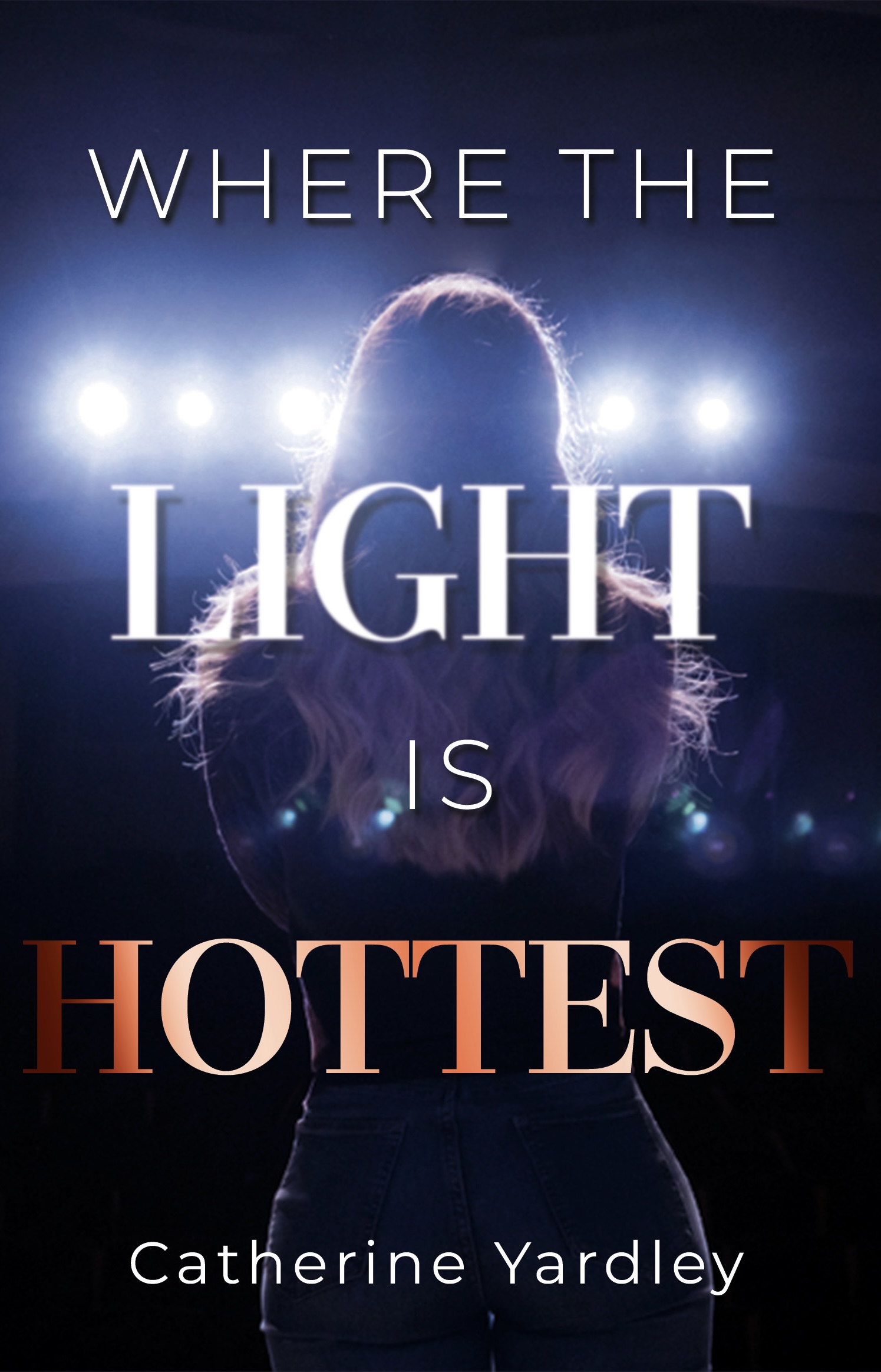
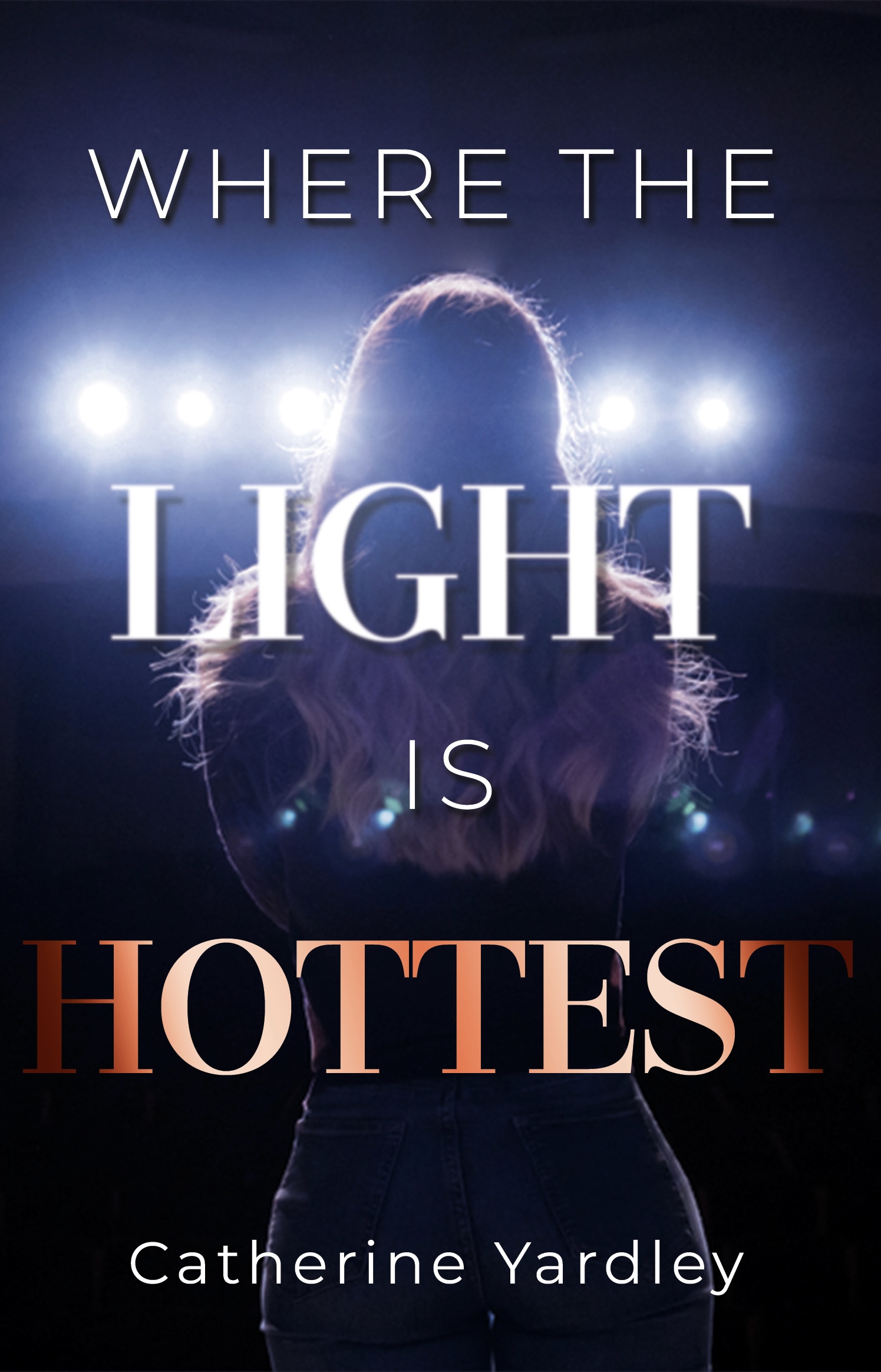
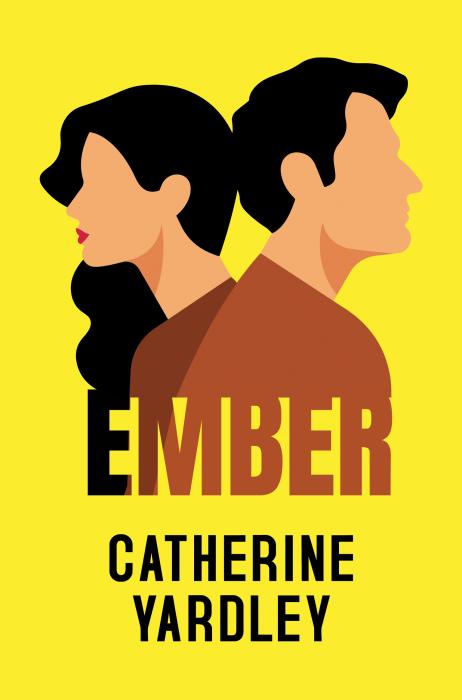
Then there is me. Catherine Yardley, author of Ember and Where The Light is Hottest. Who also writes as Catherine Balavage. Where The Light is Hottest is partly set in Lanarkshire. The county may be cold, but it’s having its time in the sun. I have lived in London most of my adult life and consider myself a Londoner now, but a part of my heart will always belong to Lanarkshire. My family still live there and I visit. I can’t wait for the next author for Lanarkshire to publish their work.

Where The Light is Hottest is available now in paperback, ebook and kindle unlimited.

What I Want Querying Writers To Know. On Finding a Literary Agent

My journey to become Catherine Yardley, author, was a tough one. It’s a known fact that writing is hard. Yes, the actual writing part can be tedious, but those who decide to go the traditional route quickly find out that writing the book was the easy part. The next part is getting a literary agent. The gatekeeper to a publishing deal. Finishing a book is a huge accomplishment in itself. When so much work goes into something, you want it to pay off. I had previously written non-fiction, and when the time came to try and get it published, I bought a copy of The Writer’s and Artist’s Yearbook.
It’s embarrassing to admit now, but I thought the whole get-an-agent-thing seemed exhausting. I was already exhausted from writing the bloody book! So I did a ton of research and went straight to publishers. Even more shockingly, all the editors replied, and the book went to acquisitions. Everyone was so nice and supportive. This was in 2013. You would probably get blacklisted emailing your book to editors nowadays.
I first queried my first fiction book, Ember, in 2020. It was a turbulent time in everyone’s life, and I wanted something good to happen. Yet I did not think for one second I would get an agent. Every rejection was confirmation of my belief that the book wasn’t good enough. This was just my first novel, I told myself. I will write more and query them too. In fact, I had two books: Ember and Where The Light is Hottest. I didn’t think the latter was ready yet. It took me six years to write both books simultaneously. I recommend having more than one book because an agent might like your writing but not the book you are querying. So, the first time was hard, but I wasn’t expecting success. 2020 was an incredibly traumatic year for me, and I was just trying to survive. In the end, I got two full requests from agents, signed with an agent, and also got offered two book deals. All good. Ember came out in March 2022 and did well. My agent was lovely, but we ended up parting ways.
Which brings me to what I want every querying writer to know: other than losing a loved one or a traumatic event, querying was the worst thing for my mental health. The constant rejections, the full requests that might lead to all of your dreams coming true. It’s a rollercoaster of pain and elation. I got a full request immediately. Then another. Still, it took an entire year for me to sign with a new agent. I was relentless. For every rejection, I send another three queries out. I want writers to understand the physical and emotional toll querying takes on you. It is a hard thing to go through. I believe querying is harder than ever. Publishing is slow at the moment, so agents are being cautious about what they take on. The day I cancelled my premium querytracker subscription (a site with all of the agents on which lets you directly submit to them) was a brilliant one. Take care of yourself. Join up with other querying writers. Take regular mental health breaks. Know that it can happen at any moment. It only takes one yes. More than anything, know that going after your dreams is hard and you are brave.

Keep at it. You will get there too. Just keep writing those books.


Where The Light is Hottest came out end of February and I Ember is also available here.

Becoming an Author Takes a Huge Amount of Talent. We Deserve Better Than AI and Piracy.

Last week, thanks to a fantastic article in The Atlantic, I found out that one of my books had been taken from a piracy site and used by Meta to train their AI. Seeing your book on a piracy site hurts a lot. It takes years to write a book. There is a huge amount of sacrifice. Of sleep, time spend with loves ones, and time spent with Netflix. Querying is hard and tough on your mental health. After all of that, your book can then die on submission. Then you have to write another book and start the whole thing from the beginning.

Where The Light is Hottest, Catherine Yardley, Balavage

Authors do not earn a lot of money. At last count the average was seven thousand pounds a year. If you worked out the hours we put in, it is below minimum wage. You have to really love it to be an author. The highs are liking nothing on earth and the lows are crushing.

@balavage It is hard being an author. I know this is a bit of a rant but please bare with me. Leave your comments below. #booktok#writertok#authortok#writingcommunity#authorscommunity#writing#publishing♬ original sound – Catherine Balavage Yardley

Being an author is as hard as any other career. Yes, it has a huge amount of benefits. Working from home, being creative and seeing your work out there in the world. But the work can be tedious. Reading the same book multiple times. Editing it so many times that you want to give up. Then you market it while writing your next one. It is the dream, it really is. Don’t get me wrong, but there is a lot of work involved. If you cannot afford books you can go to the library. Authors get paid when you borrow our books. There is also the Libby library app if you are not near a library. My two books, Where The Light is Hottest and Ember are both on kindle unlimited. I hate to be downer and I know how lucky I am. I feel privileged and happy every day, but please stop stealing our work. Especially if you are a trillion dollar company. We can only write if our books sell. Publishers will not give us contracts if they think we have no readers. Publishing is a business like no other. It is all about the bottom line. Thank you. Please share any comments below.