SISTER SCRIBES: CASS GRAFTON ON WHY WRITING IS A NEVER-ENDING ADVENTURE

For me, pursuing a career as a writer is not just a journey; it’s an expedition into a world I’m still discovering. It’s ‘the world inside my head’ meets ‘the world out there’, and they are only on their third date. It seems fair to say, therefore, that I’m not only a writer but also an explorer.

I’ve been published since 2013, a combination of solo and co-writing across seven novels, some indie published and some with a publisher, Canelo Escape. Everything I’ve written so far has had, at its core, a love story —I love romantic storylines.

So, how is my writing career now on its third ‘date’? It’s to do with the genre of romance and the many categories that further define it. I’ve published in two of these ‘sub’ categories: historical romance (Regency era) and time-travel romance. These were the first two ‘dates’, and they went quite well—I’m certainly going to be seeing them again—but for now I’m rather excited about my upcoming third. This date is with contemporary romance.

When I was young, I dreamed of writing love stories, but always in the present day. No breeches and fluttering fans; no flitting to and fro through the centuries courtesy of a charmed necklace. My dream was of writing modern romances—relatable, believable and with characters doing everyday things, but always, ultimately, falling in love.
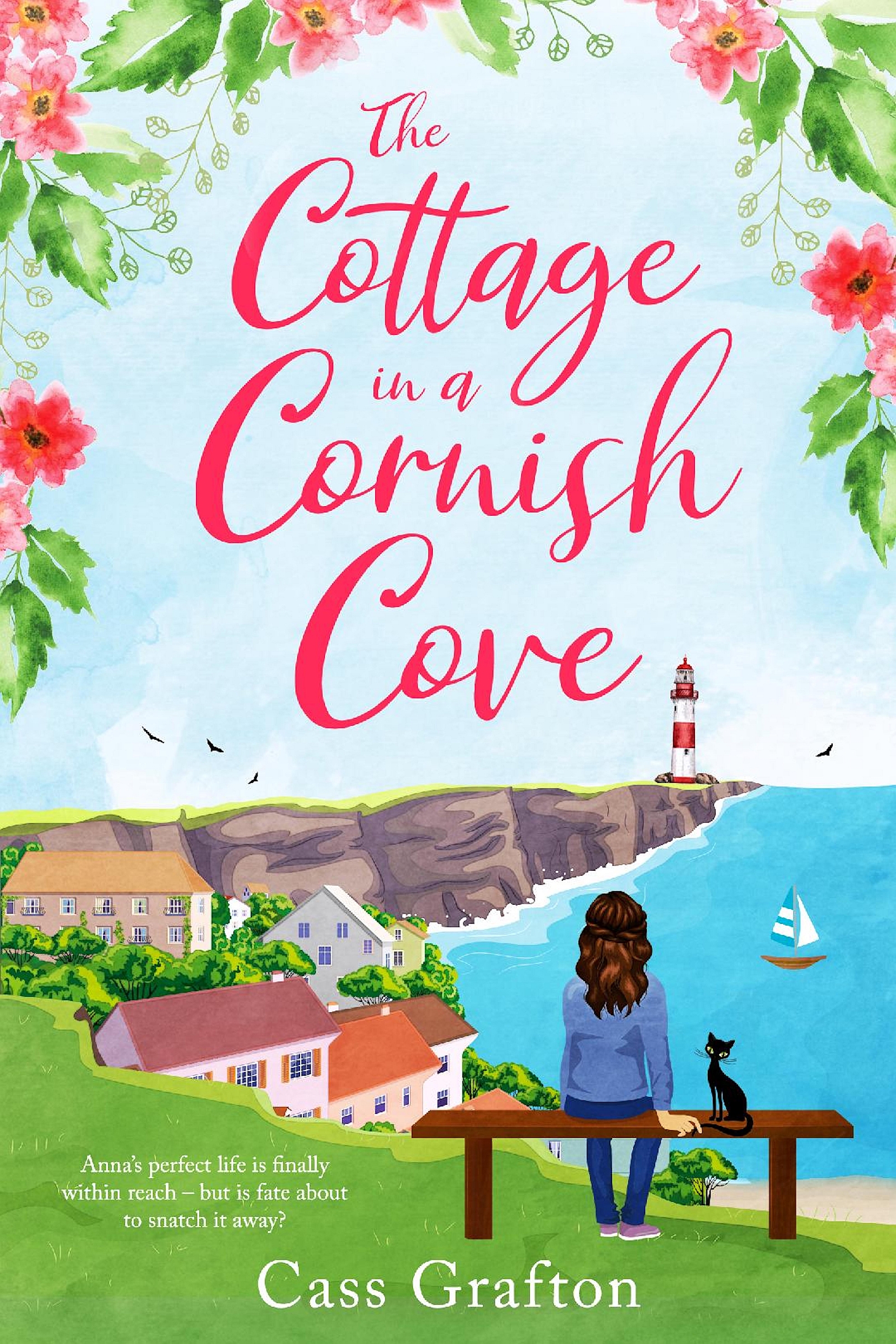
I’ve been toying with the idea behind The Cottage in a Cornish Cove since the days when my hair was a box-shaped perm, my shoulder pads needed scaffolding to support them and keeping in touch with non-local friends was done by a landline phone or with good old pen and paper.

Although the story I’ve now written bears little resemblance to those initial ideas other than the inciting incident that sets the plot in motion, I view it with the affection of an old friend, one of those worlds inside my head that simply took a long time to emerge and meet the world outside.

So what’s it about, I pretend to hear you cry?

It’s a heart-warming tale of discovering all you never wanted is exactly what you need.

Much of Anna Redding’s happiness as a child came from the long summer holidays spent with an elderly family friend, Aunt Meg, in the charming village of Polkerran.

With Aunt Meg’s passing, Anna is drawn back to the West Country, relocating to the Cornish cove where she was once so happy. Settling into her new life, and enjoying her work for the older, reclusive and—to be honest—often exasperating Oliver Seymour, Anna is delighted when Alex Tremayne, an old crush of hers, reappears in Polkerran and sweeps her off her feet.

The stars finally seem to be aligned, but just as Anna thinks all she’s ever wished for is within reach, a shock discovery reveals she’s living a dream that isn’t hers…


As for those other dates, is the adventure over? Definitely not! They are part of my on-going expedition, my journey as a writer, so I won’t be deserting them. Ada Bright (my co-writing partner) and I still have a third time-travel romance up our sleeves, and I have two Regency romances in the works, which I hope to finish soon.

In the meantime, though, if you’re up for a bit of eavesdropping on my third date, come and join us in gorgeous Cornwall, wallow in the quaintness of Polkerran, get to know the locals and fall in love with romance all over again.

The Cottage in a Cornish Cove will be released on 11th February 2020.
 

SISTER SCRIBES: JANE CABLE ON PLANNING FOR CREATIVITY

It’s the first morning of the decade and I’m making plans. Or rather I’m ordering dreams and prioritising my wish list, licking them into some sort of order. But shouldn’t the magic of creativity just be allowed to flow?

To my mind that’s a ridiculously self indulgent approach when you have chosen writing as a career. Having some sort of plan is so much better than sitting at a crossroads scratching your head. I have so many ideas for books I’ll probably never write them all – but which should I be following up? And what else needs to be done to make them successful?

Over the last few years I’ve developed a plan for planning – an easy ‘to do’ list for January 1st (or thereabouts), which keeps me on track.

  • Scrawl a quick review of the previous year in two sections – what went well, and what didn’t. Coming straight off the top of your head helps focus on what’s been important to you; what you need to do more of and what needs putting right.
  • Consider how you’d like to develop your writing life this year in each and every direction. For me the most important things are to understand more about (and hopefully write!) books with stronger hooks, and to find out more about winning at Amazon. Once you’ve worked out what your priorities are, allow yourself to dream a little – where would you like to be in five years’ time? How will this year’s plans help you to get there?
  • Now you have the basics you can set out your goals for the year. In my business life I had many clients who used the SMART system (specific, measurable, attainable, relevant and timely) and they’re a pretty good rule of thumb for writing too. Except I quibble a little with ‘attainable’ here, because I like to think in writing we continue to grow beyond our current skill sets – and what’s wrong with stretching ourselves anyway?
  • Next write down what you’re not going to do this year. It may sound a bit negative, but most people are prone to a bit (or a lot) of time wasting so cutting the draining tasks from your life is actually one of the most productive things you can do. One of my weaknesses is volunteering for too much so I’ve promised myself nothing new this year.
  • Then write down what you are going to do – the things that will make the biggest difference to your reaching your goals. What works in your writing life? What makes you feel good about it? What do you have to do more of to succeed?
  • The last part of my plan is to break down my goals and put them on a timeline. I do a rough quarterly guide, then an action plan for the first few months of the year. This will develop as projects move on. I also use quite small boxes for each month so I’m not tempted to overfill them and tackle too much too soon. I have a tendency to want everything to happen now, so this is very useful in spreading the workload. And, of course, it leaves room for some all important flexibility. Because even in the most ordered of worlds, real life happens.

So all this comes with a caveat: you can only plan everything when you are in control of everything. And in writing, as with most careers, you’re not. I was expecting my next book to be out by now, but it isn’t. Nobody’s fault – just one of those things. And I suspect when I look back this time next year there will be other things that haven’t happened too. But without any plan at all, I wouldn’t even know where to start.


A PUBLISHER’S YEAR: DECEMBER – PUBLICATIONS AND PROSPECTS

Hello and welcome to the final Sapere Books update of 2019! We’ve had a fantastic year and it’s all thanks to the incredible authors who have trusted us to publish their books. We aren’t signing up many new authors at the moment because we already have such a great list we are looking after, but we are leaving our submissions page open in case anything pops up that we just can’t say no to!

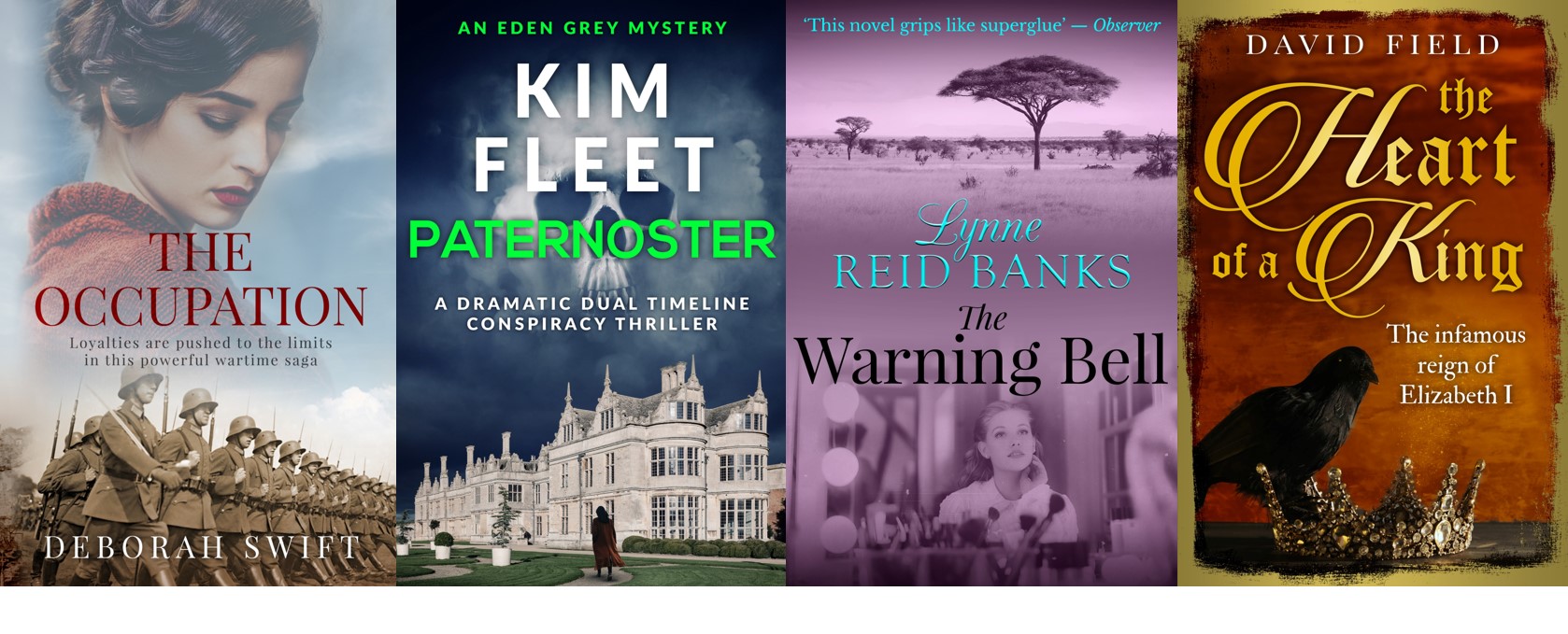
We are rounding up the year with the publication of some more brilliant fiction. Over the past few weeks we have reissued three of Alan Williams’ classic espionage novels, published THE OCCUPATION – a brand new Second World War saga by Deborah Swift, launched the last book in David Field’s Tudor series and republished PATERNOSTER – the first book in Kim Fleet’s time slip thriller series. We also reissued THE WARNING BELL – a historical novel by award-winning author Lynne Reid Banks.

All of our authors are busy with new works in progress and we have lots of exciting projects to launch in the new year. As well as our thriving fiction list, we will soon be launching our non-fiction list. Richard Simpson, one of my fellow co-founders is currently looking for military history books, in particular backlist titles, and he is preparing the first few to launch on our second anniversary next March.

Thank you to everyone who has been following these update, and to Frost Magazine for hosting us, and we hope you all have a wonderful Christmas and a prosperous New Year! We are very excited to see what will happen in 2020. Watch this space!


Amy Durant

SISTER SCRIBES’ WOMEN’S WRITING WISDOM 2019

During 2019 Sister Scribes were lucky enough to welcome women writers we admire and have some connection with to Frost and in the process we learnt a great deal. With a new year approaching, here as some of the choicest nuggets to mull over.


Alexa Adams: My network of women who I can depend on, confide in, and trust has exploded, and I have a hard time recalling how I ever got by without them. These friendships are the most unexpected gift that writing has bestowed on me, and for them I am immeasurably grateful.

Carol Thomas: Three top tips for working collaboratively:
1) Take a little time to find your way, but also be prepared to step up. Somewhat obvious but … the key to collaboration is collaborating.
2) Be prepared to compromise. Working as part of a group will require it at some point.
3) Be actively supportive of others; you’ll get more from it than you might think. Rightfully so, when it comes to working in a group, you tend to get out, what you put in.

Catherine Boardman: Telling stories is what I love to do.  The solitary nature of sitting down to write suits me perfectly.  Yet it is the support and friendship of fellow female writers makes the procrastination so much more fun.

Daisy Tate: THERE ARE NO FOES in the world of women’s fiction. Along this windy path I’ve walked, I have only met people who are there to help others.

Dr Gaby Malcolm: Ignore anything other than constructive criticism and admire your own work.

Jessica Redland: So far, our joint venture [The Yorkshire Rose Writers] has worked well and we love working together. We’re both excited to see where it could go in the future. My advice to anyone thinking about such a venture, though, is be really clear on your aims and your time commitment right at the start so you’re on the same page.

Maddie Please:  I try to keep the boxes of stationery under control but boxes of pencils, Sharpies and Post-it notes are like cat-nip to me!

Merryn Allingham: When several members of my book group announced recently they didn’t like historical fiction, I was disappointed. But stunned when one went on to say she couldn’t see the point of history. For me, discovering the past doesn’t just illuminate quirky corners of a bygone age but helps understand the world of today….. Researching history complicates that first simple ‘take’ on a culture and a period, changes our perspective, makes connections. And, crucially,  illuminates our own troubled present. Worth paying attention then!

Rachel Brimble: I could not write without women from the past, the present and undoubtedly, the future. Here’s to the strong women who have gone before us and who continue to walk with us today!

RL Fearnley: I realise that I don’t have to write ‘women’ in my stories, I just have to write ‘people’. It should not be a revelation to see that these two things are not mutually exclusive. After all, in worlds where anything is possible, why can’t the quiet, plain girl at the back of the class be the one who takes up the sword and slays the troll?

Tracy Rees: Exploring our dreams as far as possible makes us happier, fuller people, which in turn allows us to help and support others.


DAZZLING DIAMOND YEAR OF ROMANCE


We are more than delighted to announce that Frost magazine will play a part in the Romantic Novelists’ Association’s Diamond Anniversary celebrations in 2020. On the last Wednesday of every month we’ll be running articles about the RNA’s year, written by their fabulous authors, which we’re sure will be fascinating insights into the world of this incredible organisation.


The Romantic Novelists’ Association was started in 1960 by a group of six romance writers amongst them Catherine Cookson, Barbara Cartland and Rosamunde Pilcher and today we have over one thousand members. Our focus has always been to raise the prestige of romantic fiction, and to encourage romantic authorship. 2020 is our Diamond Anniversary year and we are marking this celebration with a year packed full of events.

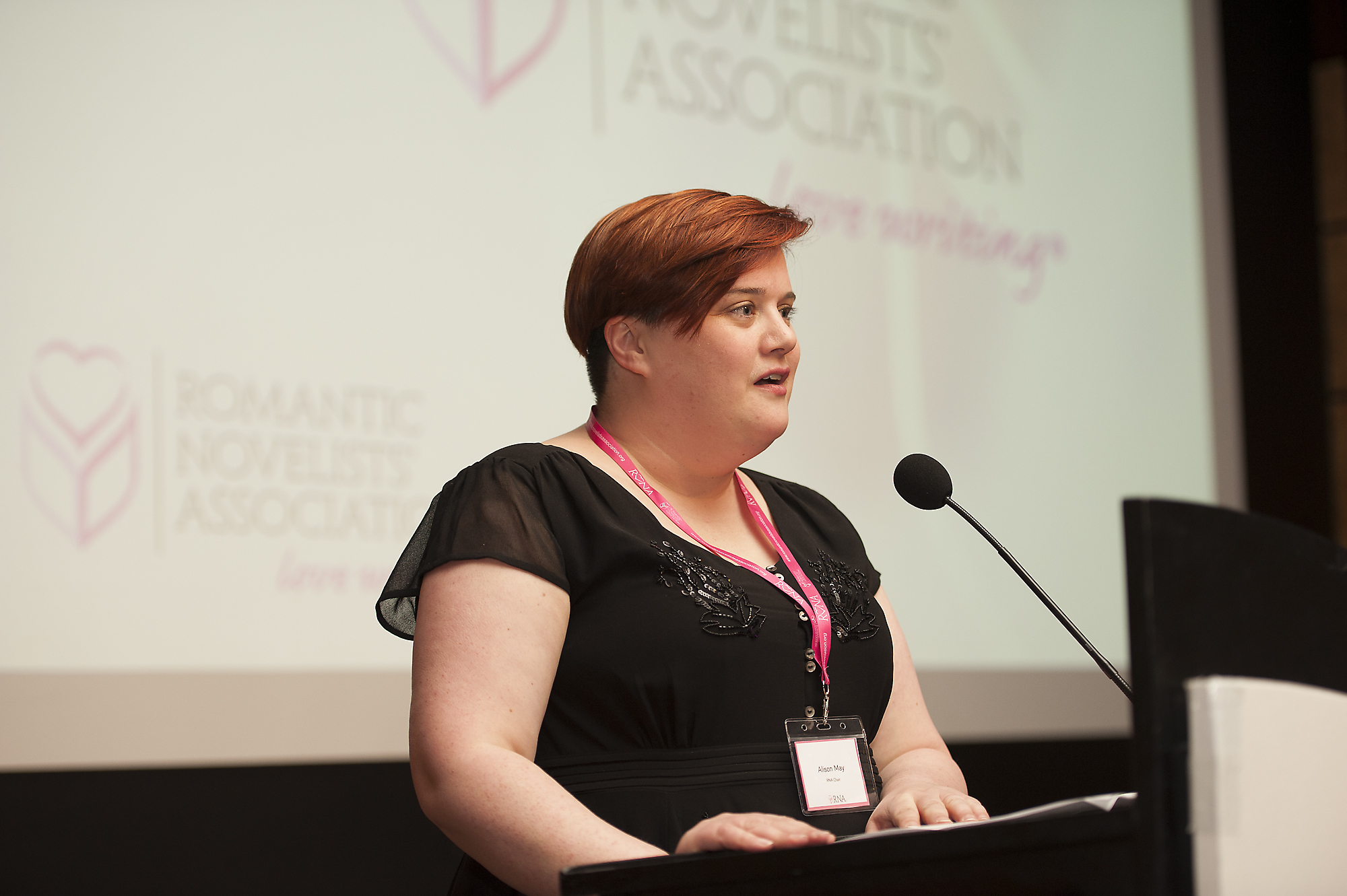
  • Alison May (MLR photo)

    We’re launching new bursaries to encourage writers from underrepresented groups to join the RNA

  • In February we’re launching the inaugural Romance Reading Month
  • We’ll be hosting and promoting romantic fiction events with literary festivals and universities – starting on 15th February when we’ll be in Manchester http://www.manchesterwritingschool.co.uk/events/the-love-writing-manchester-series-launch-event-with-special-guest-author-d
  • On 4th June there will be a virtual romance festival where we will be live streaming a series of events from a prestigious London location before our 60th birthday party in the evening
  • And we’ll also be asking what is the nation’s favourite romantic novel of the last 60 years

And that’s on top of the events and activities the RNA undertakes every year. We have our New Writers’ Scheme that allows 300 unpublished authors to join the RNA and get a critique on their novel in progress. We also organise and present the annual Romantic Novel Awards, and also our Industry Award which celebrate publishers, agents, booksellers and bloggers who champion romantic fiction. We host a conference for romantic authors and industry professionals every year, and present the Joan Hessayon Award to a debut author who has ‘graduated’ from the New Writers’ Scheme. We also publish a quarterly magazine for our members and have a network of local chapter groups across the UK and Ireland.

Bella Osborne

All of that takes planning and organisation, and the RNA, like many arts and literary organisations, is run by volunteers from amongst our own members. The planning for the 60th Anniversary, for example, started in 2017 when Bella Osborne joined the RNA’s management board as Special Projects Officer for the Diamond Anniversary. Since then Bella has recruited a team of volunteers to work with her developing guidance for members on approaching literary festivals, organising events, and planning for Romance Reading Month.

We’re hoping to make 2020 an especially exciting and romantic fiction-filled year, but it’s going to be incredibly busy as well. So it’s incredibly exciting to be teaming up with Frost Magazine to bring you an insight behind the scenes into a very special year in the life of the RNA.

Please follow the hashtag #RNA60 for the latest events and get involved during 2020.


Alison May & Bella Osborne


SISTER SCRIBES GUEST: LORNA COOK ON THE IMPORTANCE OF WRITING BUDDIES

I love this post, it sums up everything I have found to be true of the writing community. After reading and loving The Forgotten Village, I was lucky enough to meet Lorna at the Joan Hessayon Award this year, which she deservedly won. She was an absolute joy – funny, friendly and unassuming – and I cannot wait for her next book. 


When I started writing my debut novel, The Forgotten Village, I had zero writing buddies. Not one. I had just had my second child and we were going through that odd stage together where she slept most of the day (and not at all at night!). It left me slightly frazzled, very jaded and I was left to my own devices while my hubby went out to work and I took maternity leave. I joined lots of little groups with my tiny newborn but I sorely missed colleagues. And that joy of real human interaction that has nothing to do with nappy-chat was hard to find.

Don’t get me wrong – I did not go through the equal amounts of pain and joy of writing a novel so I could make chums. That was the happy by-product of this crazy and often misunderstood realm of fiction writing. And it is misunderstood. When I very quietly, very cagily, tell people I write novels it is only because someone has asked me directly ‘So, Lorna, what do you do for a living?’

And then begin the questions about how much I earn and if I am the next JK Rowling. Every single time. Praise be for The Romantic Novelists’ Association. I’m not sure I’d be quite as sane (manic laugh) as I am now without the RNA and the wonderful friends I’ve found there who just get it.  I joined the RNA’s New Writers’ Scheme in 2017 and no one ever made me feel as if I ‘wasn’t quite one of them’, because I was unpublished. I had found likeminded souls, who knew the pain and pleasure of being a novelist. Most of them were also unpublished like me and we’ve had many an hour of gossiping about industry one-to-ones at the RNA conference, about disastrous critiques from independent editors and the sheer joy of meeting new people.

I joined the RNA’s Chelmsford Chapter and was made to feel instantly welcome. I try to make it to all the lunches, which are once a month so I can share in dramas and pain, excitement and what everyone is working on at the mo. It’s brilliant. I always come away motivated. As a result of the Chelmsford Chapter, a few of us have formed a breakaway writing group called … wait for it, ‘Write Club’. You think we’d be better at puns than this – what with being writers, but there it is.  And once a month we meet and share in the ups and downs, as well as helping each other with our current WIPs.

I owe so much of my sanity to the RNA and the friends I’ve found there. Honestly, I don’t know where I’d be without it.


LORNA COOK lives by the coast with her husband, daughters and a Staffy named Socks.  She is the 2019 winner of the RNA’s Joan Hessayon Award for her debut novel The Forgotten Village, which sold 150,000 copies and reached Number 1 in the Kindle Chart. Her second novel, The Forbidden Promise, is out in spring 2020. A former journalist and publicist, she owns more cookery books than one woman should and barely gets time to cook.

@LornaCookWriter (Facebook) @LornaCookAuthor (Twitter) @LornaCookAuthor (Instagram)  http://www.lornacookauthor.com

SISTER SCRIBES GUEST: CLARE FLYNN ON THE BENEFITS OF A CRITIQUE GROUP

I’m delighted to welcome Clare Flynn as my guest. Clare is the author of ten historical novels and a short story collection, and we met over dinner on the opening night of my first ever RNA conference a couple of years ago. Today, she sharing her thoughts on the benefits of critique groups for writers.

Soon after leaving London for the beautiful South Downs and Sussex coast, I had the good fortune to come across two fellow members of organisations I’m in – the Romantic Novelists Association and the Historical Novel Society. One is an author and the other an editor with authorial aspirations, both Eastbourne residents. We decided to set up a critique group and subsequently two more authors have joined our posse. We five now meet every Friday afternoon at a seafront hotel.

Our aim is to offer mutual support and encouragement, share tips on marketing and publishing, and most of all to give constructive criticism of our work. None of us wanted to do workshop style exercises, as apart from the editor we are all published – two of us hybrid, one indie and one trade. What we all have in common is the desire for a sounding board and some tough love during the writing process.

A few days before our weekly meeting, we email each other the extracts we want to review, usually a chapter of around 2,000 words so we get a chance to read them all at leisure. Everyone prints off a copy of each submission annotated with comments and brings it to the session.

We used to read the work aloud but it became too time-consuming and we have so much else to talk about. Instead, we take each submission in turn, with each person offering their comments. The criticism is always constructive and now we know each other well we don’t pull our punches. All of us share a desire to help each other produce the best work possible.

We have had short stories as well as extracts from works in progress. We use the approach of Adopt/ Adapt/ Reject, although most of the feedback makes eminent sense and is mostly acted upon.

Some examples of changes made as a result of feedback in these sessions:

  • Inconsistencies of character,
  • Lack of tempo and pace
  • Anachronisms and clichés etc
  • Details such as titles, uniforms and spotting costume gaffes
  • Metaphors that don’t work or take one out of the story
  • Making awkward sentences flow
  • Avoiding repetition
  • Spelling and grammar
  • Identifying a character going to sit down when they were already seated (it happens so easily!)

Not everyone submits an extract every time if they don’t happen to have a piece ready to review, but the weekly meetings act as a spur to getting the next chapter ready.

The group has been going now for nearly four years. Thirteen published novels have emerged so far from our sessions. This early input identifies any major issues before the final draft is released to the editor, agent and beta readers.

We meet in one of the public lounges and I often wonder what unsuspecting hotel guests think when passing by as we respectable looking women of a certain age hotly debate the choreography of a sex scene or the best way to kill someone off.

There’s always plenty to talk about as well as the work. We share publishing news, marketing ideas, gossip and plans for attending conferences and industry parties. It’s a very supportive and encouraging group.

The writer’s life is by definition a solitary one for much of the time, so having a weekly gathering to share triumphs and setbacks is an absolute godsend.


Clare Flynn is the author of ten historical novels and a short story collection. Her latest novel, The Pearl of Penang, set in Malaya in 1939 through to the end of the war with Japan, is now available for pre-order.

Website http://www.clareflynn.co.uk

Twitter – https://twitter.com/clarefly

Facebook – https://www.facebook.com/authorclareflynn


A PUBLISHER’S YEAR: OCTOBER – AWARDS, ASSOCIATIONS AND AUDIOBOOKS

Hello and welcome to the next Sapere Books instalment! Lots of exciting things have happened over the past few months. In August I worked with Simon and Schuster’s Sara-Jade Virtue to judge the RNA’s annual Joan Hessayon Award for New Writers. The books we read were all very different and very worthy nominees, but luckily we were unanimous with our winner: The Lost Village by Lorna Cook.

September also saw the whole Sapere Books team attend the Independent Publishers Guild Autumn Conference. The IPG has a wealth of resources for publishers and arranged fantastic talks for the conference. One area it has led us to mull over is audiobook publishing. We have come to the conclusion that it is too expensive for us to experiment with at the moment, but we will certainly be pitching all of our books to audio publishers both in the UK and the US to try and secure publishing deals. We did actually get approached by Tantor Media last month, and we have sold the audio rights to them for the first three books in J C Briggs Charles Dickens Investigations series, which is exciting!

At the beginning of this month we hosted one of our semi-annual author meet-ups. It is lovely to spend some time with our authors face to face, and to encourage all our authors to get to know one another. Everyone is spread out all over the country, and not all of them belong to genre-specific groups like the RNA and CWA, so it feels good to have informal catch ups to discuss industry news, writing projects – and life in general!

Last week the team attended the Crime Writers’ Association Gala Dinner, which happens every year to reveal the winners of their prestigious Dagger Awards. We are the current sponsor of their Historical Dagger, which had already been whittled down to six fantastic books, but I have to say S G MacLean was a very worthy winner for her third Seeker novel, Destroying Angel.

We also have some exciting company news to share. If you have been following these blog posts, you will know that we had been actively looking to sign up some historical nautical fiction. Well, I can know officially announce that we have signed Justin Fox, represented by the Aoife Lennon-Ritchie to our list. Justin is working on a series of novels set in the second world war around the South African Cape, and we hope to publish the first one next year.

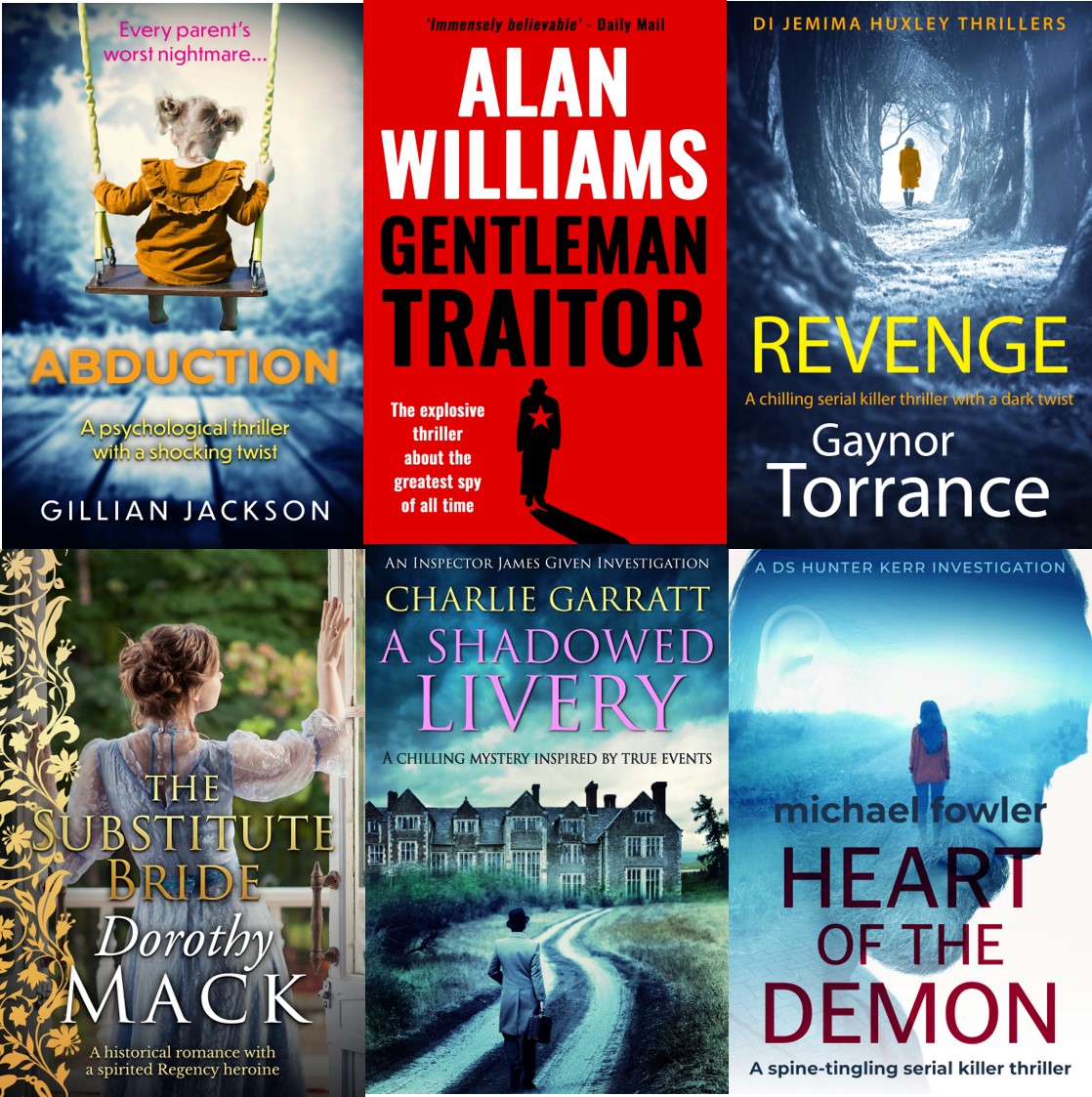
As always, we’ve been busy publishing lots of fantastic books. New series we have launched include the Inspector James Given series by Charlie Garratt – traditional English murder mysteries set in the lead up to the Second World War; the DI Jemima Huxley series by Gaynor Torrance – a troubled female detective struggling to stay sane while solving complex murder cases; and the DS Hunter Kerr Investigations by Michael Fowler – a crime team solving serial killer cases in Yorkshire. We’ve also launched two psychological thrillers by Gillian Jackson – ABDUCTION and SNATCHED – which are receiving fantastic reviews on Amazon and Goodreads.

We also focussed on publishing more ‘backlist’ titles. We recently signed up Dorothy Mack’s Regency romance backlist, which were first published in the 1980s/90s. The first one, THE SUBSTITUTE BRIDE is selling particularly well at the moment. And we have just starting reissuing Alan Williams’ historical thrillers, with his Cold War espionage novel, GENTLEMAN TRAITOR, out this month.

Amy