BUSINESS OF BOOKS: FIRST, LAST, EVERYTHING – HISTORICAL NOVELIST VICTORIA CORNWALL

The first piece of writing advice you were ever given

The summer of 2014 was an exciting time. I had submitted my manuscript to a carefully selected list of agents and was waiting to hear back. An agent requested a full manuscript and I felt I was finally going to achieve my dream of becoming a published author. By the time Christmas arrived I had been rejected by all of them and had received my first professional writing advice. “You have a gift for writing, but you need to edit it on paper.” I put down the phone confused by the advice. What did she mean? Grumbling to myself, I printed my novel on A4 paper and began to read it. This was a pivotal moment in my writing career. Multiple small errors, which were mysteriously invisible before, began to jump out at me. It was a valuable lesson and now I always edit a paper version at some point during my self-editing phase.


The most recent piece of writing advice you gave or received

Strangely this is linked to editing again. Two author friends, at separate times, said they were listening to their manuscripts for errors and suggested it was a good way to edit. A Daughter’s Christmas Wish was the first time I added this method of editing to my writing process. Once again, I was amazed. It is easy to read what we expect to see rather than what is truly there. Our hearing is very sensitive. A misspelt word, repetition or a sentence that is far too long, is more obvious to our ears. It is another tool to use to improve the standard and flow of your writing. All software have the option to have a voice narrating your text and it is normally free and easy to use. If you are unsure how to find the speaker option, search “How to” on the internet and there will be a step by step guide on how to activate it.


The piece of advice you’d most like to pass on.

Don’t let agents’ rejections stop you pursuing your dream. The reasons they reject you are varied. It might be related to your writing, but it may also be not what they are looking for at that time. Many successful writers have been rejected by agents and/or publishers at some point in their career. I was. Their rejection initially crushed me, but they also made me more determined to prove them wrong.

Four years after that summer of rejections, which I mentioned earlier, I have four traditionally published books out in the big wide world. All my books are released as ebooks and audiobooks, two have been released as paperbacks. I have been shortlisted for the New Talent Award at the Festival of Romantic Fiction, a finalist at the Joan Hessayon Award and reached number 21 in the paid kindle rank for Victorian romance. I was tempted to give up writing after I was rejected and I’m so glad I didn’t. Don’t let the rejections crush your joy for writing, just see them as part of the journey to get to where you want to be.


Victoria Cornwall is the author of the Cornish Tales series published by Choc Lit. Her novels are historical, Cornwall based fiction, with romance and drama at their core. She is married, with two children and is a member of the Romantic Novelists’ Association.


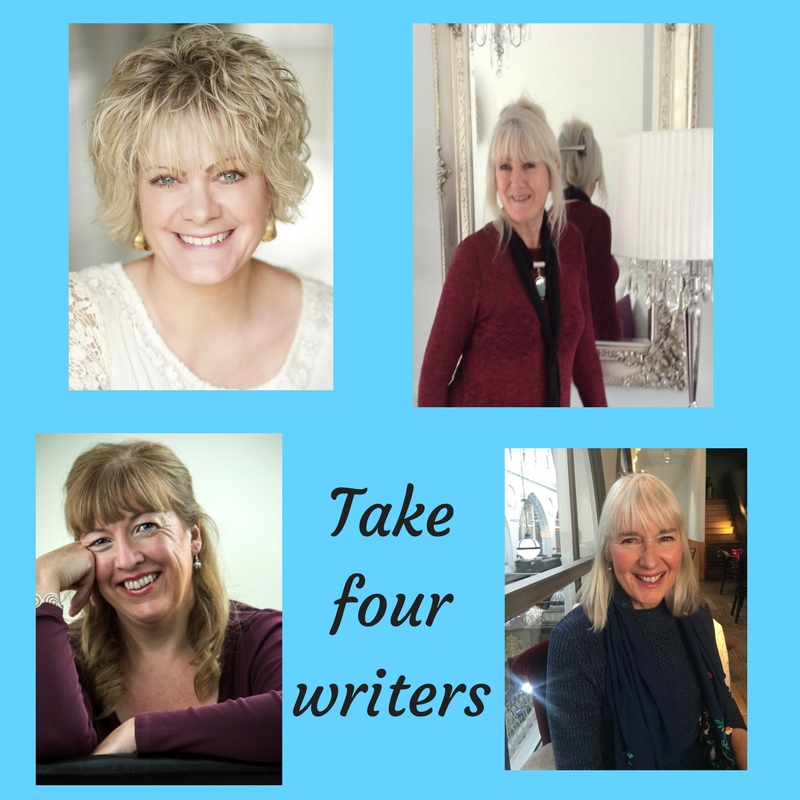
BUSINESS OF BOOKS: TAKE FOUR WRITERS – DIVIDING, EDITING, DREAMING AND TOURING

CLAIRE DYER: DIVIDING

This month I’d like to talk about my ‘other’ life. I see myself as both a poet and a novelist and people often ask which I prefer being. My answer is always that I like them both the same. However, there are big differences in the way poetry and fiction are published and so this does inevitably alter things.

For a start a poem is a constantly changing thing. Even when it’s been in print, a poet can change elements of his/her poem when it’s republished or collated in a collection. Secondly, putting together a collection takes YEARS! Novelists think it takes an age to get a book published, but collections of poetry can take mini-lifetimes. My last one, ‘Interference Effects’ kindly published by the very wonderful Two Rivers Press took five years from being a spark in my eye to a book in my hand.

The collection I’m working on at the moment contains poems first written in 2014, the manuscript is due to be delivered to the very wonderful Two Rivers Press in June 2020 and it will be a further year or so before possible publication. And this is fine because it takes patience, love and a whole heap of courage to be a poet. However, all this fades to nothing when a line comes that sets your hairline fizzing or you stand in front of an audience and read something that makes them laugh, gasp or (even better) weep.

Poetry books may be slim, time-consuming, delicate and easily lost in the noise of mass paperback sales, but they are things of beauty nonetheless.


LUCY COLEMAN: COUNTING

Finally welcoming in the good news this month, as a loved one is out of intensive care. It feels like a dark shadow has been lifted and the sun can shine again. Miracles can happen!

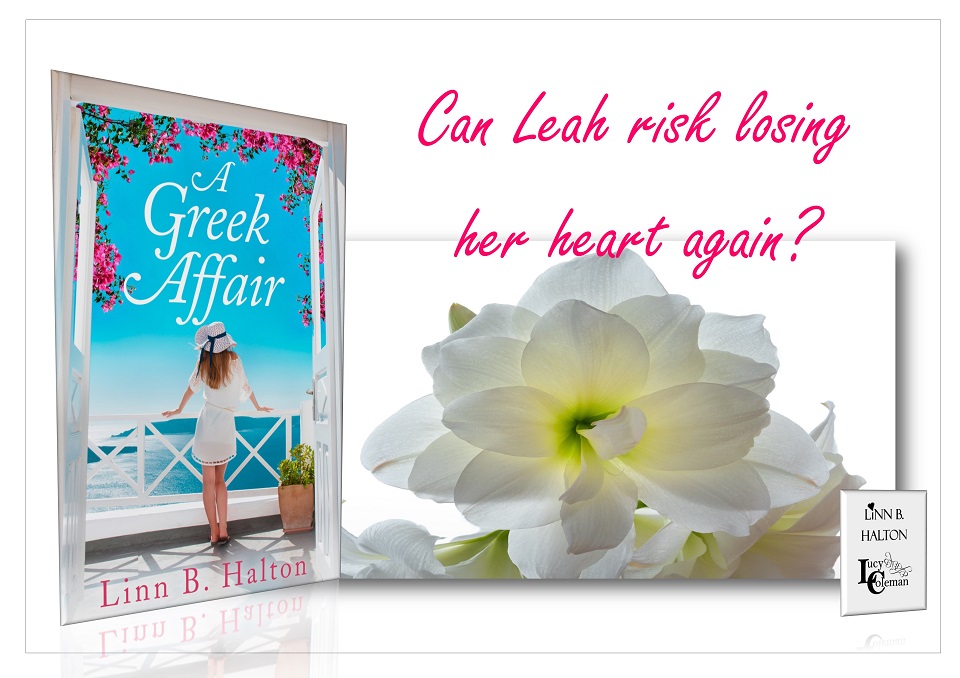
I’ve hardly moved from my desk with line edits and a cover reveal for A Greek Affair, in preparation for its release on the 28 December 2018 by Harper Impulse. And copy edits for The Writing Retreat on the Italian Lake, due for release on 5 February 2018 by Aria Fiction.

And my first audio book, for The French Adventure, is due out on 29 November 2018.

The good news keeps on coming and there’s even more, but authors get used to sitting on things for a while. So, my lips are sealed. But after the darkest of Octobers, I feel that Christmas has come early and I’m truly counting my blessings!


ANGELA PETCH: DREAMING

What about a monthly report starting with:  I’ve been dozing in my hammock on the island of Zanzibar, wondering what to do next. Ha ha! More like – I’ve been wondering how on earth to tackle my to-do list.

“Mavis and Dot” are on a blog tour and I’m relieved my two ladies/babies are appealing to readers. When you read comments from complete strangers like: “I could really see this gem of a book as a fantastic movie…”; “A must read…”; “This book was a total joy from beginning to end…” your heart has to sing. It justifies hours of sitting hunched over a pc. This month has been a mine-field of formatting issues but lovely authors have helped.

But I’m a hybrid and have just come off the phone from a chat with my editor at Bookouture. No peace for the wicked: I have major edits to carry out on my re-write of “Tuscan Roots”.

Where’s that hammock?


JACKIE BALDWIN: TOURING

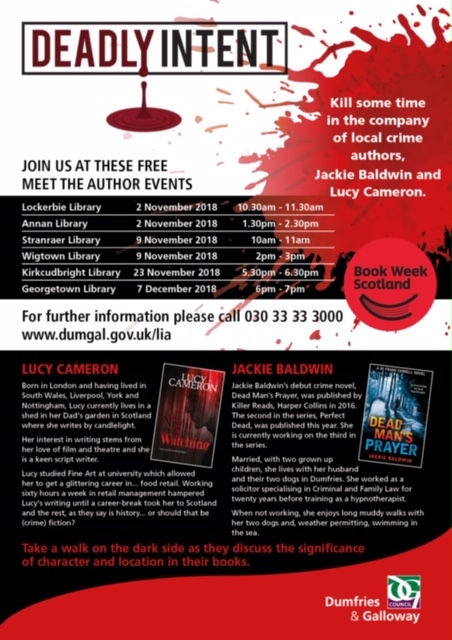
November has been fairly busy as I have been on a Deadly Intent tour around some of the many libraries in Dumfries and Galloway with my partner in crime, Lucy Cameron. It’s been a lot of fun getting out and about to meet readers and some of the libraries have totally spoiled us. In Wigtown, for example, we were all treated to freshly baked scones with jam and cream!

As part of Book Week Scotland, we’re reading along with some other authors at a gin/rum night at The Selkirk Arms in Kirkcudbright, which, coincidentally, is where my second novel, Perfect Dead, is set.

On 29th November, I’ll be on a wee jaunt to Edinburgh for Noir at the Bar which is always a fun night and a chance to discover some great new crime authors.

Finally, I’m pleased to report that my third novel is firmly back on track after all the thrashing about with it last month. I’ve now nailed down the plot which nearly got the better of me and I’m pushing on through the first draft.

See you next month!


BUSINESS OF BOOKS: FIRST, LAST, EVERYTHING – LIBRARIAN AND BOOK BLOGGER LARA MARSHALL

What was the first piece of book business related advice you were given?

When I first started in libraries I was told to “shout about what I was passionate about” (maybe not literally, but close enough!). I took this advice to heart and made sure that I told anyone who would listen about books that I enjoyed, books that connected with me and books that changed my view of the world. Whether this was through displays, reviews, blogs, or good old word of mouth.

Book blogging has become a natural extension of that, as I try to reach people from all over the world, to talk to them about the books that meant a lot to me. I feel strongly about talking about what resonates with you, and if something doesn’t that’s fine.

What was the most recent piece of bookish advice you gave or received?

Be careful what you say on Twitter! The book industry is a very, very small world, including publishing, libraries, authors and bloggers, and everyone is on Twitter. News has a terrifying way of travelling fast! Of course, if this is positive all the better, but if you are difficult or accidentally slight one person be prepared for everyone to know about it!

What piece of advice would you most like to pass on?

If you’re not enjoying a book, don’t struggle through it and make the whole process horrible. There are so many amazing books out their for a variety of tastes, passions and interests – find something that sparks a light in you and devour it! There will be a book out there for you, I can guarantee it!

Then once you’re on a roll, no one will be able to stop you.


Lara is a library manager and book blogger from North-West London. She has worked in libraries for twelve years and blogging for 2. She began to suspect she was slightly different to other children when, at seven years old, her most prized possession was the ‘A’ volume of the children’s Encyclopaedia Britannica (her family couldn’t afford the rest).

When she isn’t working, blogging or reading, chances are she’s doing something “vaguely bookish”.

You can find Lara’s blog here: https://bookishlara.com/


BUSINESS OF BOOKS: RETREAT OR TREAT?

Retreat or treat? When five writers arrived in Bath last month, we didn’t really know how it would pan out. We intended to work, but it was the first time we’d seen each other since meeting at the Romantic Novelists’ Association conference fifteen months earlier, so would there be too much gossiping going on? Or even a frosty silence as we realised we didn’t actually like each other that much after all.

We certainly started being very polite. Cassandra Grafton (no stranger to Bath with her Austen-esque novels) found an enormous Georgian house we could rent from Bath Boutique Stays and there was quite a bit of ‘after you – no, after you’ as we chose our bedrooms.

It soon became clear that our centre of operations would be the kitchen with its windows either end and huge table. We had no plans to cook, but Kitty Wilson and I had raided M&S on the way (she is one serious snack shopper) and what with our booty and all the wine, the fridge was filled to bursting point. But did we open a bottle straight away? No – we made a nice cup of tea.

So the first myth was busted open – we were not destined to spend our three nights drinking ourselves into a stupor. A drink with dinner (we tried a variety of local restaurants, culminating at the amazing Aqua) then another one or two afterwards was about our limit and while the vodka bottle was hit pretty hard (you know who you are, ladies), the gin went almost untouched and only two half bottles of Prosecco from our stash were consumed.

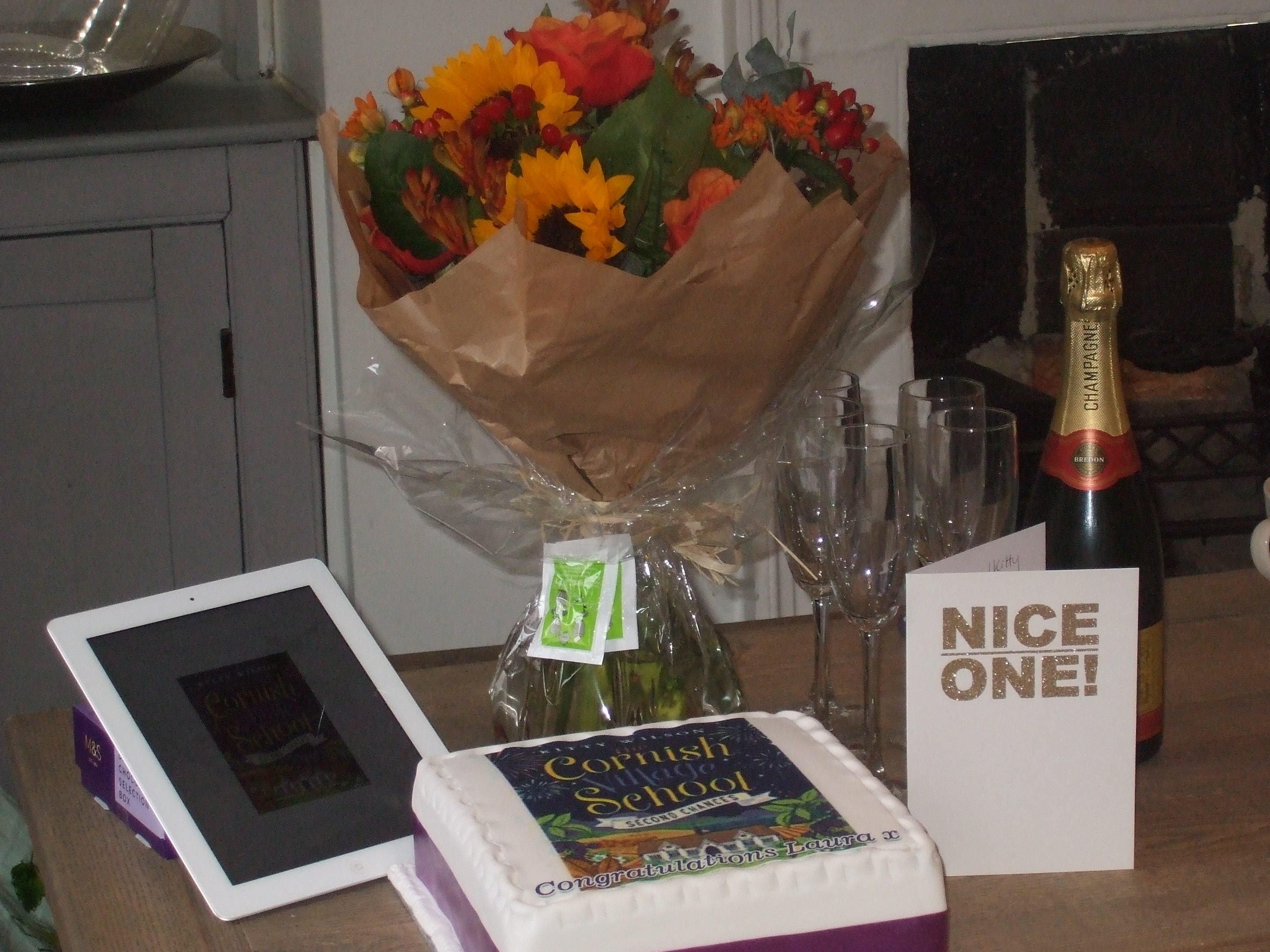
We did drink on the second morning though as we celebrated the launch of Kitty’s second book. Champagne and cake well before the sun was anywhere near the yard arm, flowers smuggled into the house and hidden the previous day, and a gift from us all. Of course, before we could touch any of it we had to stage a photo or two for social media. And then spend a great deal of time sharing them to all our followers.

Second myth – we had no real intention of doing any work. Wrong again. Susanna Bavin wrote more twenty pages in longhand towards the trilogy of sagas she’s working on. I completed the structural edit of the second book of my Sapere deal. Kirsten Hesketh was busy reworking the draft of her second novel while Kitty focussed on guest posts for her blog tour (not to mention keeping up her daily word count) and Cassandra worked her way through her ‘to do’ list following the announcement of her contract with Canelo.

But more than anything we supported each other in ways small and large. I helped Kitty with her guest blogs (I’ve done so many of them) and she and Susanna critiqued the outline I’d prepared for Sapere. Kirsten’s agent had started to send her manuscript to publishers and had received a few initial rejections – and there always are rejections – but that doesn’t mean they hurt any the less. I like to think we were all there for her.

The two days and three nights flew past, mainly because we were in the company of other writers. It’s a profession where you have no colleagues, no daily water cooler moments and just to be around each other and chat authorly things was utter bliss. Noone understands writers like other writers – the highs, and the lows, and the mundane bits in between.

We left Bath on the Friday morning with the firm resolve to do it again. But something else had happened along the way; bonds had been formed and friendships deepened. We’d become, as Kitty put it, sister scribes.

Q&A with Children’s Author, Natalie Savvides


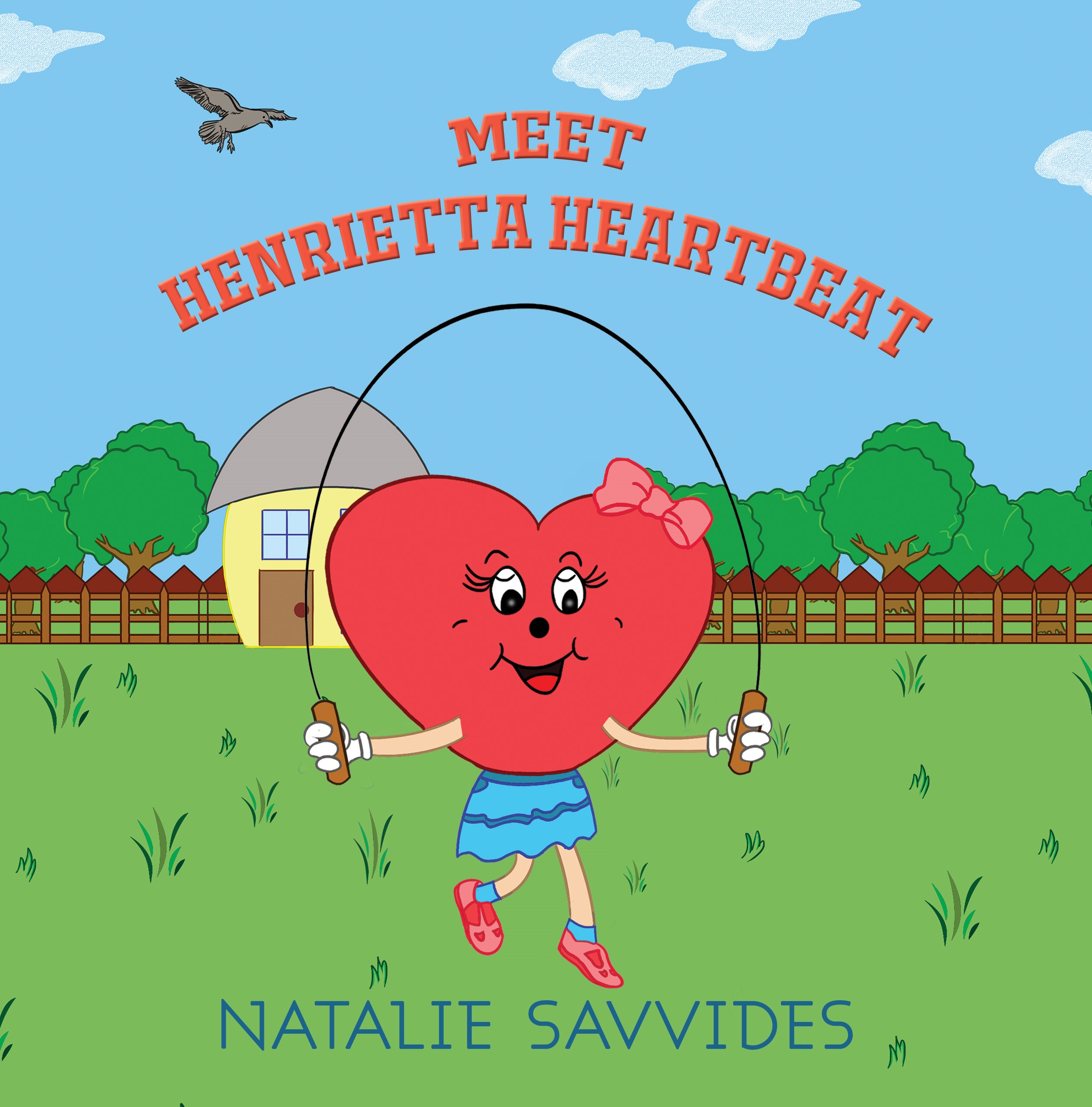
Natalie Savvides is a staunch anti-bullying campaigner whose series of Henrietta and Henry Heartbeat books focus on imparting positivity, good behaviour and kindness among young readers aged up to six years old. In this exclusive Q&A, Frost Magazine speaks to Natalie about her new Meet Henrietta Heartbeat books and about her plans to spark a “kindness revolution”

Frost Magazine (FM): You published your first Young Adult (YA) novel, Full Circle, in 2016. How did you find the transition from writing YA to young children?
Natalie Savvides (NS): To be honest, the transition came very naturally, I didn’t even think about it. I never thought I’d write children’s books but as soon as I felt something needed to be done to educate the youngest generation in kindness, the process was utterly spontaneous. The characters just came to me, as did the stories. I’ve always loved poetry, writing in rhyme and having been a teacher of English to foreign students for some years my mind is accustomed to getting messages across in the simplest most understandable way. I wrote about what I saw with my own children, so the topics were many and presented themselves.

FM: Tell us more about the Meet Henrietta Heartbeat series of novels and who they will most appeal to.
NS: Henry & Henrietta Heartbeat, It’s cool to be kind is the series, of which the first book currently on sale is “Meet Henrietta Heartbeat” and is an introduction to one of the main characters. Henry & Henrietta are brother and sister in the Heartbeat family and they go about their days showing people how to be kind, by demonstrating what to do, how to act in situations of conflict or confusion with other children. The series of books which are all very short stories, in rhyme and heavily illustrated are set to appeal to the critical formative years 0-6…. The idea is to make being kind a way of life and a natural, spontaneous behaviour by it being learnt, understood and most importantly enjoyed at the earliest stage of education. It is proven that early PSED (personal social emotional development) has a huge impact on well-being, achievement, and happiness later on.

FM: How did the series come into being?
NS: The stories came about when I realised that in order to protect my children’s life experience outside of the home and those of all children something had to be done about instilling kindness before unkind behaviour appears. The trigger was when my son told me that some of the boys that he liked at nursery didn’t want to play with him and he simply didn’t understand and was terribly upset by it. It broke my heart. There is no need for this type of behaviour and I wanted to try and show children that. I wanted to find a way to educate children in a fun way that it really is cool to be kind to everyone and that we all benefit when everyone is happy. I realised there was a need for something visual that children could relate to, refer to in order to bring the message to life and help it sink in. I felt cartoon characters would be the most obvious answer. I created Henry & Henrietta Heartbeat as big happy hearts with strong characters that appeal to young children as transporters of this increasingly important message of acting with kindness. Henry & Henrietta subtly but clearly educate children though simple rhyming stories showing how to always act with care, inclusion, acceptance, love and kindness and how everyone is happier when living this way.

FM: Some parents (and teachers) believe that dealing with unkindness (and to some extent with bullies) is a rite of passage and one that prepares them for the real world. What is your view on this?
NS: Whilst that may be true at the moment – that is exactly what I’m trying to change! It’s a little defeatist to say let’s get them prepared for what’s to come – because large parts of the ‘real world’ are relatively unkind – instead of accepting this and ‘preparing’ our children for it, why not try to change the future for the better. If we manage to educate the younger generation in kindness until it’s a spontaneous way of life the future would be brighter! We wouldn’t need to prepare them for unkindness as there would be less of it. L. R. Knost sums it up nicely here: “Its not out job to toughen our children up to face a cruel and heartless world. It’s our job to raise children who will make the world a little less cruel and heartless.”

FM: You believe that society could benefit from a ‘kindness revolution’; what do you mean by that?
NS: Yes, I believe that society could benefit in many ways from a kindness revolution. Acting with kindness is scientifically proven to benefit our physical and mental health our wellbeing, achievements, success and happiness in general. What I mean by a kindness revolution is exactly that: to transform our society by beginning a change that will reshape our environment into a more caring and positive one. This is not something that could happen overnight, obviously, but eventually.
FM: Can bullying ever be eradicated in all of its various forms and, if so, over what period of time? Will we see it in our lifetime?
NS: I don’t know – I would seriously like to think so to some degree… I am sure there will always be some, but our aim is to minimise it… we need to start from the root to make a long-lasting change. We can but try… If everyone does what they can to educate kindness it can certainly only help.

FM: To what extent should schools generally, and teachers specifically, be held to account for the actions of bullies in their care?
NS: I am no expert on how to deal with bullies hence I am focusing on a theory of prevention rather than cure. However, I do believe that where a child has been identified as a bully if there is no change after three warnings, I believe that the child should be first suspended, thereafter upon return if there is no improvement the child should be expelled.

FM: In what practical ways can schools and teachers educate children about the importance of being kind, and should children be marked or assessed on their propensity towards it?
NS: They can hold kindness work shops where scenarios are set out and children participate in role play then do feedback sessions, try to step into the shoes of the bullies and victims to see how it feels, lessons learnt! Yes, children should be marked or assessed on their propensity towards it. Kindness is as important as any other behaviour or performance children are assessed on.

FM: Should ‘kindness lessons’ be adopted by and continued through high school?
NS: Yes absolutely – the content is endless.

FM: Finally, what one message would you share with readers whose own children are being bullied?
NS: Continue encouraging their children that things will get better. Focus on whatever positives there are at school. Always, always listen. Look out for changed behaviour and address it. Raise it with the school (if not done so already) as subtle things can be done to separate the children. Reassure them that it’s not their fault and encourage them to stay confident in who they are! There are also online support groups for victims of bullying

Meet Henrietta Heartbeat by Natalie Savvides (Austin Macauley Publishers) is available now on Amazon UK priced £9.99 in paperback. Meet Henry Heartbeat, the second in the series, will be published in the UK in January 2019. For further information about Natalie Savvides and her work, go to www.nataliesavvides.com


BUSINESS OF BOOKS: FIRST, LAST, EVERYTHING – NOVELIST MORTON GRAY

What was the first piece of writing advice you were ever given?

When I first began to write I attended a weekly writing course run by author Sue Johnson in the lovely town of Pershore in Worcestershire. Sue gave us a variety of writing prompts each week, such as poems, pictures, leaves, random objects, word lists and such like. Then she’d give up a time limit in which to write something. The idea was just to relax and see what appeared on the page from the stimulus of the prompt. I still use this technique to get started with stories, or if I’m stuck in the middle of a book. I am very grateful that this early training enables me to write quickly if I need to.


What was the most recent piece of writing advice you received or gave?

I went on an editing course recently and was advised to highlight the different points of view in my manuscript using different colours. The idea being that the distribution of the colour throughout the manuscript enables you to see if the balance between each characters’ points of view is even. This is an invaluable tip, as often I get fixated on one character’s view point and this enables me to present a balanced piece of work.


What piece of advice (writing or otherwise) would you like to pass on?

Oh dear … it is difficult to stick to one, so I’m going for three!

  1. It is never too late to begin to write.
  2. You should always stay true to your own work and not worry about what others are writing.
  3. Writing is such a solitary occupation that it is important to find fellow writers to speak to and share with, be that online or in real life.


Morton has been reading and writing fiction for as long as she can remember, penning her first attempt at a novel aged fourteen. Her debut novel The Girl on the Beach was published after she won Choc Lit Publishing Search for a Star competition. She is now writing a series of novels based in her fictional seaside town of Borteen. Her second novel The Truth Lies Buried is to be followed by Christmas at Borteen Bay out on 13 November 2018.


You can catch up with Morton on her website www.mortonsgray.com on

Twitter – @MortonSGray, her Facebook page – Morton S. Gray Author – https://www.facebook.com/mortonsgray/ and

Instagram – https://www.instagram.com/morton_s_gray/

Let Kindness Triumph Over Materialism this Christmas

Go cold turkey on consumerism this Christmas and give the best present there is – love, urges the acclaimed children’s author M.C.D. Etheridge.

By M.C.D. Etheridge

What do you love most about Christmas? From the uplifting chorus of carols to the fragrant smell of pine needles and unmistakable taste of figgy pudding, a traditional Christmas really is an assault on the senses. Yet, maybe it’s the way that Christmas makes us feel that really brings us joy.

Because when it comes to this special holiday, it doesn’t really matter if you’re a church-going Christian or if you simply value the time you get to spend with your family, what you probably love most about Christmas is love itself.

It’s easy to lose sight of this when you’re lost in the frenzied aisles of the shopping mall where even the calmest individual can find themselves part of an angry, anxious mob. You don’t even have to venture further than the multi-storey carpark to witness the annual pilgrimage to these great cathedrals of consumerism spiralling out of control. Just observe the alarming scream of car horns crying mayhem over the distant loop of Christmas jingles. It’s enough to drown out any semblance of festive cheer before you’ve even set foot in the building. Meanwhile, as you fight your way towards the snaking check-out queues to purchase the overpriced items your children reassured you they wanted just hours ago, they’re at school, immersed in the unforgiving, materialistic mania that brainwashes them into wanting something else entirely. Don’t get sucked in.

The pressure we put on ourselves at this time of year can be overwhelming. It’s enough to drive you insane. So let’s, just for a moment, take a step back and try to remember what this holiday is all about, because it’s not just about buying things.

In the 21st Century, we have to acknowledge that for many people in modern Britain, Christmas has evolved from the Christian celebration of the birth of Jesus, and yet most of us continue to celebrate the constant theme central to the Nativity. For at its heart, Christmas, both in the biblical narrative and in its modern form, is a celebration of the family. And rightly so. Let’s not forget that if you have a family, you are lucky. If you have friends, you are luckier still. For some of us at Christmas, our friends are our family and there’s nothing wrong with that either. Christmas is a time to celebrate, appreciate and love the people we have in our lives.

It’s also a time when we experience the joy of giving and the Christmas tradition of being kind. For if the Nativity introduces our children to the idea that the family is special, then it’s Santa Claus who arrives as the champion of human kindness. The way he introduces our kids to the idea that there are people out there who do things for others out of the kindness of their heart is wonderful. For this reason alone, he’s epic.

In many ways, with all his Christmas magic, Santa is the first superhero our kids experience, and yet ever since I was a boy, I’ve felt this incredible Christmas character has been missing a worthy backstory. It’s the reason why I put pen to paper to write Whitebeard.

Whitebeard, my new book, is Santa’s origin story and as the name might suggest, reimagines Santa as a good-natured, Falstaffian pirate captain. It’s been enormous fun writing this children’s adventure story and so much of the joy lies in the fact that everyone already knows how the story ends. We know Santa must have a flying sleigh and reindeer, the ability to deliver gifts to all the children of the world and have a heart as pure as the driven snow. It’s how he gets there, and who he meets along the way, that makes it fun.

My research uncovered the little-known fact that Saint Nicholas (the man on whom most Santa traditions are based) is not only the patron saint of children, but of repentant thieves and sailors too. It would emerge that seafaring adventures and repentance are themes historically linked to the famous and loving Christmas character. Well, if that doesn’t shout out reformed pirate I don’t know what does and I just loved the idea of an old, saltwater thief changing his ways to become the man we know and love as Father Christmas. The triumph of kindness over materialism is therefore at the heart of the story I wanted to write.

Admittedly, I haven’t received an official thumbs up from Lapland on the authenticity of my festive tale, so I like to think of it more as an unofficial biography. I don’t expect to receive too many complaints though, because between the pages of Whitebeard there’s a healthy respect for all our favourite Christmas traditions and a determination to celebrate family, kindness and love. And whichever way you look at it, that’s what Christmas is all about.

M.C.D. Etheridge is a journalist and TV producer for SKY News, ITN, ITV, Channel 5, and Australia’s Channel 9. His new children’s book, Whitebeard, is described as a “rollicking Christmas adventure story” and is ideal for children aged between 8 and 12. It is out now on Amazon UK priced £7.99 in paperback and £1.99 in eBook. Visit www.whitebeardbook.com 


BUSINESS OF BOOKS: TAKE FOUR WRITERS – DOWN, DEEPER, DOWN – AND LIGHT

LUCY COLEMAN

It’s been an emotional month. With a close family member in ICU for over two weeks and still critical, our hearts have been breaking. In the middle of this my other half and I had stomach flu and then structural edits arrived on my desk. The bug cut our hospital vigil short, so we text and support the ‘supporters’ by phone.

Aside from passing on messages to the wider family, my way of coping is to write. I channelled all that emotional turmoil into my edits and then into my current work in progress. All we can do is pray for a good outcome and when you can’t physically be there to help, it’s important to keep busy.

Writing for me is escapism. But I don’t avoid the harsher side of life and most of my novels reflect the mixed bag fate dishes out. What I’ve learnt this month is that there is a lot of kindness and love in this world, and often it comes from strangers – nurses and doctors who are there when you most need them. It’s truly humbling and a remind of how precious life is.


CLAIRE DYER

And so I’ve been faced with something that can bring a chill to any author’s heart – the rewrite. I have written a novel. It has been seen by quite a few people and one of these people has suggested that it would be stronger, better, more commercial were I to … It’s quite a long list!

But rather than recoil, I find myself embracing the challenge. They’re right. The book will be stronger, better, more commercial if I make the suggested changes. The only problem is, can I? Not as in may I, or do I want to, but am I able to? It seems a huge task. Six strands need editing, all the possible knock-on effects of these edits need to be spotted to ensure consistency; I have to match the tone, voice, spirit of the original even though time has passed and other things have crowded into my mind.

And so I’m going in. Will let you know how I get on!

STOP PRESS: some weeks have passed and I think I’m done. The six strands have been buffed, honed, added to, had stuff deleted from and I’m exhausted. I’ve re-read the book what seems like a gazillion times. I’ve loved it and I’ve hated it. I’ve wept from despair, and also because the story has come from somewhere deep within where a lot of sadness is. It is a different beast from the novel I started two years ago and I too am altered. I hope we’ve both changed for the better, but only time will tell. I have certainly valued the experience in a bizarre sort of way. However, now it has to go off into the world and we all know what that means …!


JACKIE BALDWIN

There have been many highs in this writing year but this month has not been amongst them. I discovered that my lovely Golden Retriever, Poppy, who has just turned six, is terminally ill and not expected to be with us long. A real blow to us all. As a result, I don’t have much in the way of news as I have been staying close to home.

I have been tying myself into knots over the plot in my third book and may well have to abandon it completely and start again. I’ve been thinking about it so hard I might have broken my brain. This must be what writer’s block feels like, a creeping paralysis of creative thought. I have to believe that it will pass and the pieces will gradually fall into place.

I hope that by this time next month I will be writing up a storm again!


ANGELA PETCH

The mountainside is a picture of fiery golds and rich reds as we start to pack up our Italian house for winter. We might return for New Year, which is celebrated in Italy with delicious feasts. Maurice and I enjoyed a much-needed five-day break last week in the Abruzzo region, walking up the majestic Gran Sasso, visiting devastated hill-top towns in this earthquake area.  I have a fascination for ruins and they will feature in my third Tuscan novel, very much in the planning and research stages. While we were away, no writing was done. And that is good, but my mind was still absorbing sights, sounds and new ideas.

Mavis and Dot is going on a blog tour with Rachel’s Random Resources in mid-November, so I’ve been busy with interviews and making the final decision about the cover. I’m really pleased with it and I used a professional designer this time. Watch this space.