Frost Loves: Hape Pound N Tap Bench

hape, toys, reviews, This glorious musical toy arrived at the weekend. Much to the delight of the Frost toddler. The Frost baby was also fascinated by the colour and the noise, but was swiftly moved along for being too young to play with it. It is a smart idea and well made. As all Hape toys are. Lots of fun is to be had with this and the xylophone also pulls out and can be played with individually. Frost loves….

The Hape pound and tap bench features a pull out xylophone and pounding station. Explore cause and effect as balls drop when they hit the pounding area which sends the balls tinkling over the xylophone. Pull out the keyboard and the xylophone can be played solo. Experiment with playful rhythm patterns for a musical delight and sound experience


Suitable from 12 Months+ The Hape Pound N Tap Bench is available from Poppets for £24.95.

BUSINESS OF BOOKS: FIRST, LAST, EVERYTHING – INDIE AUTHOR JULIE STOCK

Julie Stock is an indie author of contemporary romance from around the world: novels, novellas and short stories. Her latest novel, Over You, is now available. Follow Julie on Twitter @wood_beez48

What was the first writing advice you were ever given?

The first writing advice I remember being given was in November 2013 when I attended a Festival of Romance in Bedford, near where I live. I’d been writing my début novel for about 8 months by then and I had about 80,000 words of my story written but I just couldn’t seem to finish it. I sought feedback from so many different places and my head was spinning from the conflicting advice I’d been getting.

I remember being so excited to find there was even going to be a Festival of Romance in Bedford, of all places! I went to a session in the morning where I saw Sue Moorcroft and listened to her reading from her latest book. Then I walked around the big hall in Bedford town centre, meeting romance authors who were selling their books. Straight after this, I sat down to listen to a panel of authors chatting about writing and publishing their books. Bravely at the end, I asked them for advice about my dilemma. That was when Phillipa Ashley and Rowan Coleman both advised me without a second’s hesitation to join the Romantic Novelists’ Association’s New Writers’ Scheme. I went on and joined in the January of 2014, and published that début novel the following year. I’m now an independent member of the RNA, and I wouldn’t have achieved that without their support.


What is the most recent writing advice you’ve been given?

Along with many writers, I suffer from doubts and insecurities about whether my writing is any good on a fairly regular basis! Usually, this happens when I’m struggling with a first draft or when I get feedback telling me that something in a book isn’t working. I find rewriting and editing the hardest job, and really have to force myself to do it. So, when I felt like this most recently and mentioned it to one of my writing friends, her advice was not to give up. She reminded me that I’d felt like this before and that I’d probably feel like it again.

It is hard to keep going when you’re finding it hard to write or to rewrite, but it is also true that you can find inspiration in the strangest of places. I know as well that rewriting has definitely made my books better, and sometimes this is all that keeps me going to get through to the end. Then when you publish and someone takes the time to tell you how much they enjoyed the book, it makes all the pain worthwhile!


What is the piece of advice you’d most like to pass on?

I didn’t start writing until I was in my late 40s. I was having a tough time in my job then and I began writing as a way of taking my mind off things. It became a form of therapy. When I started, I hadn’t even heard of self-publishing, although I had recently received a Kindle from my husband. Then I read Sealed With a Kiss by Rachael Lucas, and she explained how she’d self-published it. As I was approaching my 50th birthday by then, I didn’t want to waste any time approaching agents/publishers, I just wanted to get on and do it. And I did. So I think my advice is not to let yourself be put off from doing something you really want to do. Reinvent yourself if you want to – it’s never too late!


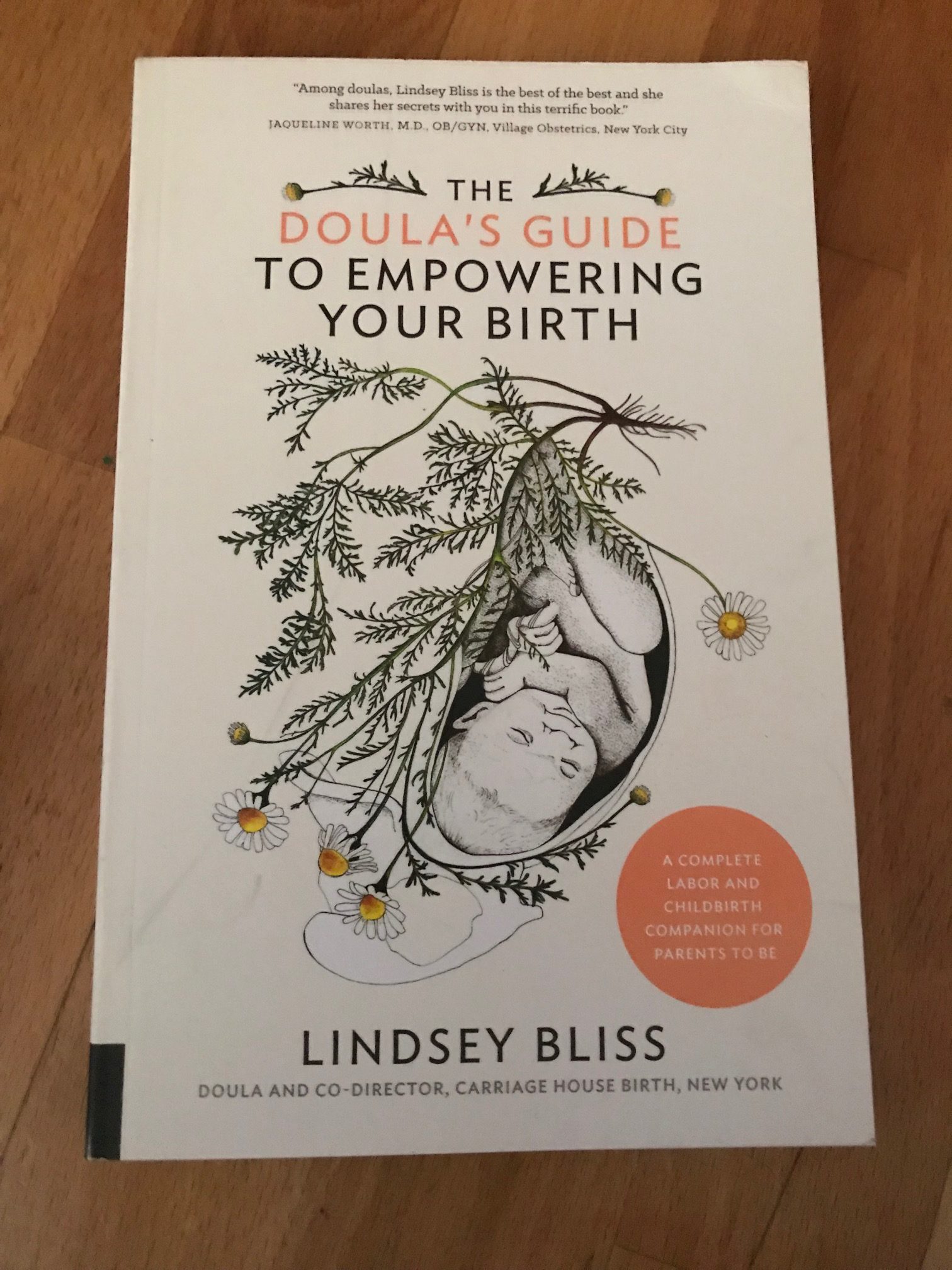
The Doula’s Guide to Empowering Your Birth: A Complete Labor and Childbirth Companion for Parents to Be

Experienced doula, Linsey Bliss, shows you how to prepare physically and mentally for every element of having a child, from pregnancy to fourth trimester in The Doula's Guide to Empowering Your Birth. Lindsey Bliss, who has assisted as a doula at hundreds of births and is herself a mother of seven, reveals here all the wisdom and advice that doulas share with the new mothers who hire them. The Doula's Guide to Empowering Your Birth covers the period from pregnancy through labor and birth to fourth trimester healing. The focus, however, is on preparing for birth--including topics like how to pick the right childbirth class and the right birthing method. You’ll also see how to assemble the team of professionals, family members, and friends who will support you through labor and birth, and how to approach last-minute decisions about pain medications and cesarean sections. Bliss's tone throughout is at once authoritative and confident as well as warm and encouraging. Her concern in her practice as well as in these pages is to listen to and help secure each new mom's own personal vision of a birthing experience that is safe, fulfilling, and meaningful.

This is a truly wonderful book from a doula who really knows her stuff. Linsey Bliss has seven children. Six of those are biological and she has had two sets of twins. She has also assisted hundreds of births. This book tells you all you need to know about pregnancy, childbirth and even what happens after. This well-written book is enjoyable to read and is like having your own personal doula and best friend in one. Essential. 

Experienced doula, Linsey Bliss, shows you how to prepare physically and mentally for every element of having a child, from pregnancy to fourth trimester in The Doula’s Guide to Empowering Your Birth.

Lindsey Bliss, who has assisted as a doula at hundreds of births and is herself a mother of seven, reveals here all the wisdom and advice that doulas share with the new mothers who hire them.

The Doula’s Guide to Empowering Your Birth covers the period from pregnancy through labor and birth to fourth trimester healing. The focus, however, is on preparing for birth–including topics like how to pick the right childbirth class and the right birthing method. You’ll also see how to assemble the team of professionals, family members, and friends who will support youthrough labor and birth, and how to approach last-minute decisions about pain medications and cesarean sections.

Bliss’s tone throughout is at once authoritative and confident as well as warm and encouraging. Her concern in her practice as well as in these pages is to listen to and help secure each new mom’s own personal vision of a birthing experience that is safe, fulfilling, and meaningful.

The Doula’s Guide to Empowering Your Birth: A Complete Labor and Childbirth Companion for Parents to Be is available here.


Almost half of new mums suffer from frightening thoughts or hallucinations

By Gemma Francis

Almost half of new mums suffer from frightening thoughts or hallucinations – but two thirds of these hide how they feel for fear of being judged negatively or having their baby taken away, a study has found.

The images – which include thoughts of killing or harming their child – are still taboo among mums with just 37 per cent admitting to others how they feel.

The most common thought is a fear that ‘something dreadful will happen to my baby’, with 62 per cent vividly feeling this.

A further 44 per cent were plagued by the belief their baby might die, while 13 per cent have imagined killing or harming their own child.

The study by parenting site ChannelMum.com also found one in 50 even believed ‘my baby hated me’ while one per cent were convinced their mother-in-law was trying to take their baby,

Others had visions of their child being eaten by a crocodile or snatched by the Grim Reaper.

Two in five (39%) felt their child and partner would be ‘better off without me’ and 16 per cent considered suicide.

An additional 31 per cent admit to having an irrational fear that someone ‘will steal or harm my baby’, making it impossible for them to meet or talk to strangers.

Yet despite 43 per cent of mums suffering these extreme thoughts, 65 per cent of those were never told pregnancy and parenthood could affect their mental health.

As a result, one in five (19%) feared they were ‘going mad’ when they fell ill.

Half (49%) of the mums who suffered were also scared of being ‘judged negatively’.

Forty three per cent believed others will think they are a ‘bad parent’, while 26 per cent were ‘ashamed’ of being mentally ill.

The stigma is so great that a disturbing 17 per cent of mums who fall ill admitted they thought about self-harm to try to cope, with one in 20 going on to self-harm.

One of the biggest barriers to getting help is the fear your child will be taken into care.

One in five mums (19%) who suffered mental illness after birth reported refusing to access help in case their child was taken away.

Official NHS figures show just ten to 15 per cent of mums experience serious mental health issues.

But as a result, some experts now believe there could be a ‘hidden epidemic’ of maternal mental illness, as 64 per cent of mums who fall ill never try to get a formal diagnosis so are missed by official figures.

Overall, the survey showed the most common mental health ailment suffered by new mums is anxiety, experienced by 68 per cent of women after birth, alongside 48 per cent who undergo insomnia due to worry.

A further 35 per cent battle Post Natal Depression, a third (33%) become agoraphobic and 23 per cent are hit by panic attacks.

On average, women’s symptoms lasted three to six months, but 29 per cent felt mentally low for a year or longer.

Women were five times more likely to spot their own symptoms with 69 per cent realising themselves they were ill, compared to just 14 per cent whose partners detected they were unwell.

However, almost two in five mums who become ill (38%) never tell anybody how they feel and just a third confide in their GP (33%).

The most common way mums covered up their feelings was to pretend to be ‘fine’ when quizzed on how they felt, with 94 per cent admitting they lied about their feelings.

Lack of sleep was seen as the main trigger for mums falling ill, with 55 per cent believing this contributed to their condition.

A further 54 per cent said they felt ‘emotionally overwhelmed’ as a new parent, alongside 39 per cent who admitted they tried to ‘be the perfect parent’.

Two in five (41%) blamed hormonal changes while 14 per cent pinned the blame on ‘the pressure of living up to others on social media.

As a result, a resounding 80 per cent of mums want society to be more open about maternal mental health issues and the extreme thoughts mums can have.

Seven in ten (69%) want ‘society to realise it can happen to anyone’ while 55 per cent seek reassurances that their child will not automatically be taken into care if they come forward for treatment.

ChannelMum.com founder Siobhan Freegard said: “If your body is broken after birth, everyone understand and supports you.

“But when your mind is broken, mums still feel they have to keep it hidden.

“These thoughts are disturbing and terrifying – but very often they are part of becoming a mum.

“We need to talk about it, normalise it and make mums realise they are not alone. You are not different or ‘going mad’ just because you experience it – but you may need professional care and help.

“I suffered from post natal depression and visualised extreme images after the birth of my first child then tried to cover it up, so I know exactly what women are going through when they hide it.

“There is so much pressure to cope and be the perfect parent that when you are crying inside while everyone around you is smiling, it makes you feel you are failing your baby and your whole family.

“Mums need to know they will get the right support and their baby won’t be taken away.

“With care, compassion and the right treatment, you can get better quickly, bond with your baby and go on to be the parent you want to be.”

ChannelMum.com psychologist Emma Kenny added: “This research has highlighted the plight of large numbers of mums in the UK and evidences that even in 2018 post natal depression is still no closer to being effectively dealt with.

“Good maternal mental health is something that every woman deserves, but due to the lack of knowledge and support this simply isn’t the case, leaving women to deal with some of the most terrifying and debilitating feelings at a time when they should be enjoying their positive new beginnings.

“We need to address this subject openly, removing the shame and stigma so that mums no longer feel that they have to cope alone.”

EXTREME THOUGHTS MOTHERS HAVE EXPERIENCED:
I believed my baby hated me and was trying to kill me
I planned jumping off the balcony with my baby
I thought my flat was haunted and would stay outside from dawn til dusk until my husband got home
I thought my baby would die if I didn’t wash up before my microwave pinged
I saw the Grim Reaper outside my bedroom door
I thought my twins weren’t mine
I thought that my mother in law was planning to take my baby
I thought that baby would die because of germs. So I made everyone disinfect themselves before they could touch him. Someone touched my pram in a supermarket once and I couldn’t move due to fear of contamination. I stood in the cleaning isle vigorously disinfecting my pram.
I believed if I went to sleep, someone would break in and smother us all to death
I wanted to throw my daughter out of the window
I thought a crocodile was trying to eat my baby
I wanted to drive the car into a wall and kill my baby and myself
I cut all my hair off as I thought my baby was eating it and making himself ill
I thought everyone would be better off without me
I imagined an iron melting into my baby’s face
Just blackness, despair like being trapped in thick mud.


 

BUSINESS OF BOOKS: FIRST, LAST, EVERYTHING – EBOOK PROGRAMME MANAGER MEGAN LOCKWOOD-JONES

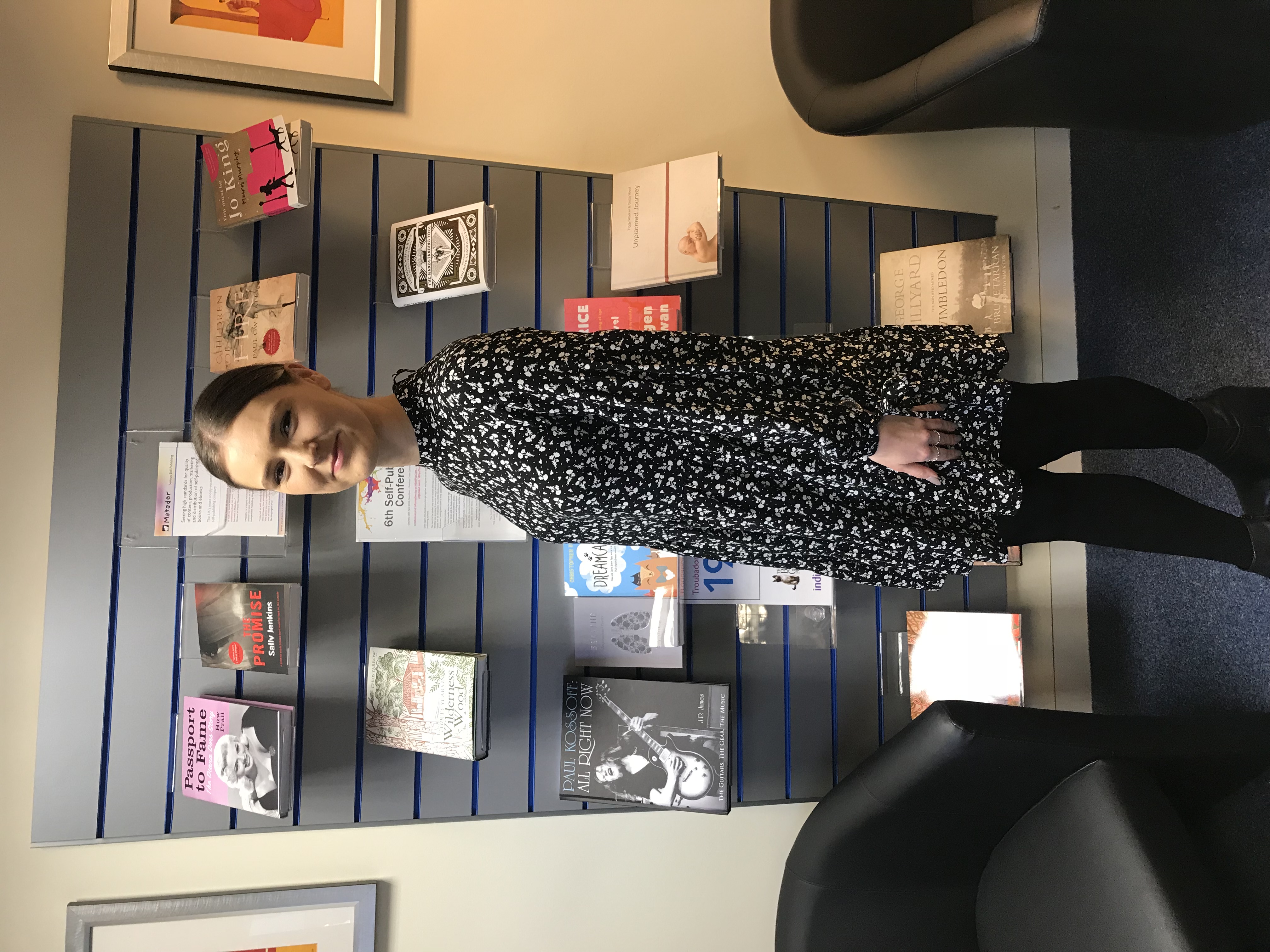
Megan Lockwood-Jones is the Ebook Programme Manager at my favourite assisted publishing house, Matador. She is the first point of contact for ebook authors and her knowledge is second to none. 

What was the first piece of publishing advice you were given?

The first piece of publishing advice I was given was to ensure self-publishing authors are choosing the right company and right services for them. At Matador we assist over 500 authors a year to publish physical and ebooks. However, it is important that authors do their research to ensure that they are using a reputable company and that the company they choose can offer the services that are right for them – not every author will have the same requirements or aims when publishing. Some may only want a few copies of a book for family and friends, others want to see their book stocked in bookshops, others only want an e-version. Read testimonials to find out what other authors’ experiences with that company were like. If you are new to the world of publishing then you’ll want to find a company that are easily contactable via telephone rather than one that can only be contacted by email – as a first time author, you may not even know the kinds of questions you should be asking so sometimes a phone call can be more reassuring.

What was the most recent piece of publishing advice you gave?

I spend the majority of my day talking to authors about ebook publishing options – as well as speaking at events such as The Self-Publishing Conference and the Experience Days we run at our offices.

The most recent advice I gave was in regards to ebook distribution. There are many different routes that authors can take, for example if you have a non-fiction ebook, why not consider making it available for pre-order? Readers are more willing to pre-order and wait for an ebook on a subject that interests them, rather than a fiction ebook where they can simply browse and select ebooks in similar genres that are already available. If you make a lot of sales during a pre-order period then these accumulate and count towards the total number of sales made on the release date, which boosts your ranking on retailers’ sites, in turn making your ebook appear earlier in search results.

If you’re interested in making your ebook available for free for a short period of time, Amazon’s KDP Select programme could be a good option for you. To be eligible, your ebook has to be exclusive to Amazon for 90 days, so it’s worth bearing this in mind if you’re considering selling the ebook through other retailers too. During the KDP Select period, you can make your ebook available for free for up to five days, and any downloads during this time can increase your ranking in the Free charts!


What is the piece of advice you would most like to pass on?

One of the aspects of my job I enjoy the most is cover design but if designing your own cover, think about how it’s going to be viewed by customers. Ebook jackets will be seen as thumbnails on retailers’ sites so you need to ensure that the title can still be read. A small, thin font in a colour that doesn’t stand out isn’t the best and don’t clutter your cover – try to keep it simple and avoid too much text.

If you’re paying for a professional cover design, be open-minded about the designer’s ideas. Designers spend a lot of time researching trends and amazing covers can be created if they are given a little freedom. As the author, of course you know the book best so do share any ideas or thoughts with the designer so that they can incorporate them, but let them use their expertise! Remember, you’ve paid for a professional designer for a reason, so have faith in them and trust that they aren’t going to design a cover that will be detrimental to sales.


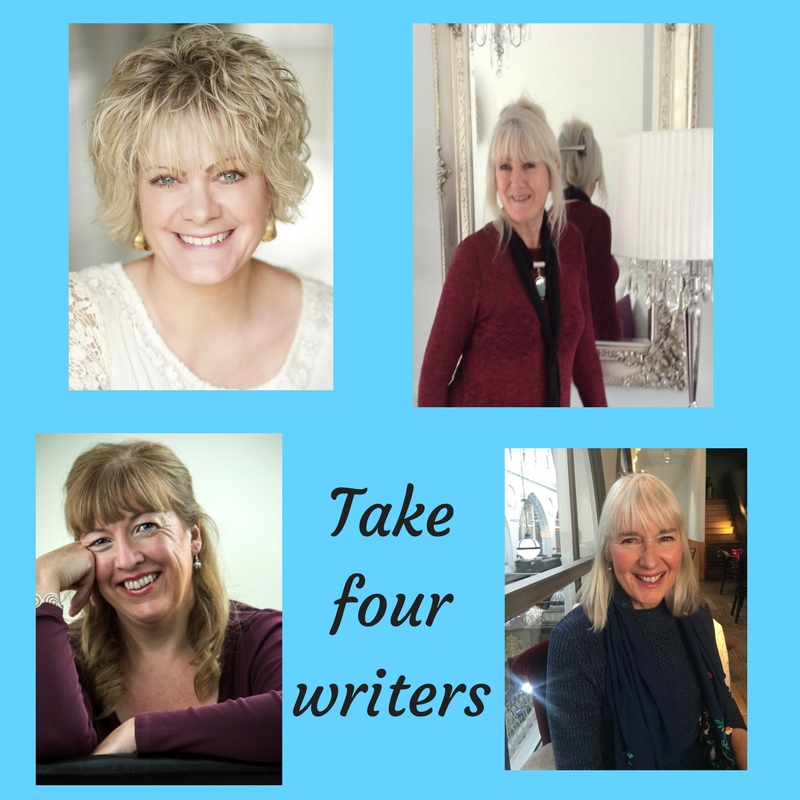
TAKE FOUR WRITERS: LAUNCHING, DRAFTING, EDITING & MULTI-TASKING

FEBRUARY UPDATE FROM OUR FOUR WRITERS…

CLAIRE DYER… LAUNCHING

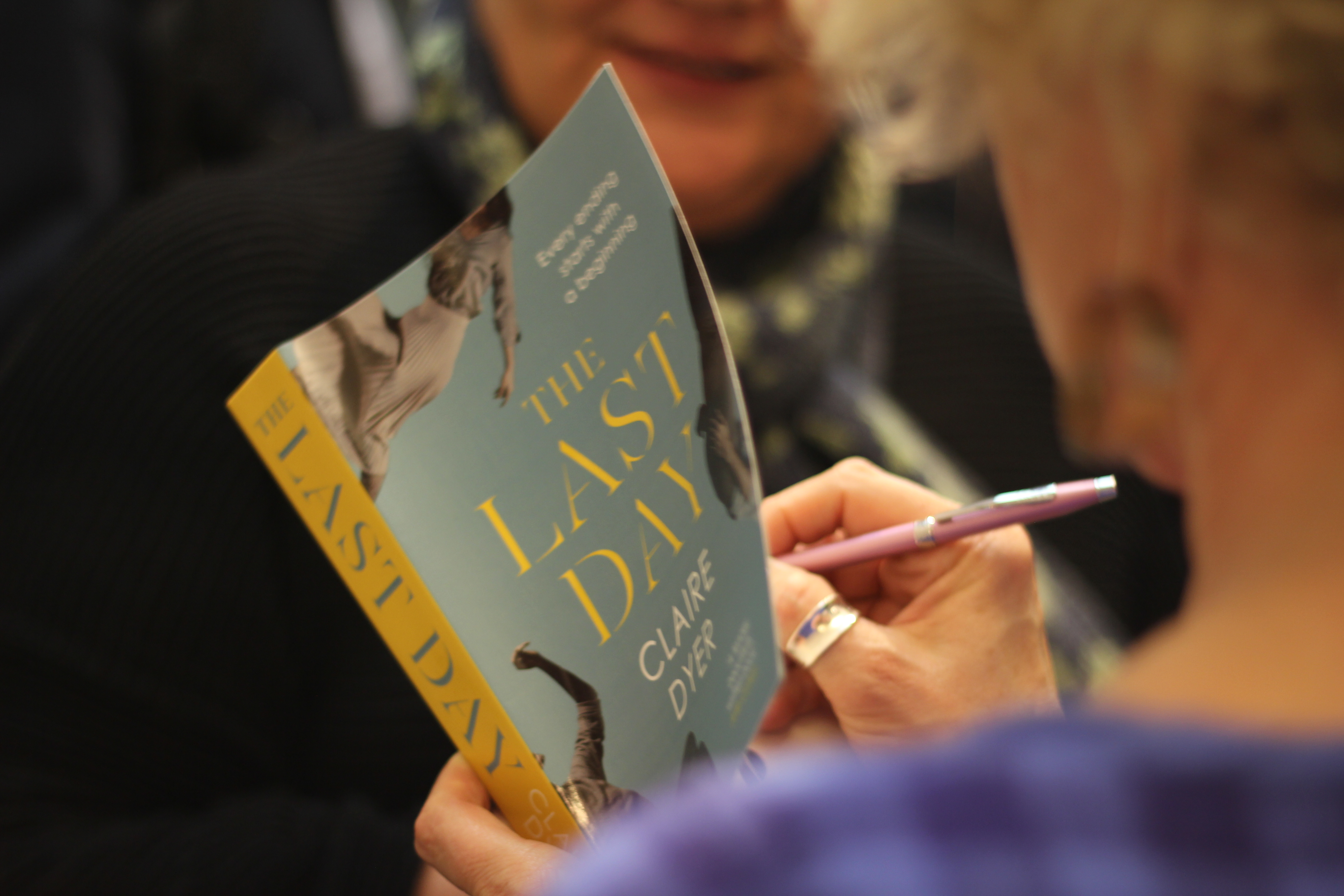
January and February have seen much excitement in the run up to and the actual launch of ‘The Last Day’. I have been overwhelmed by the love and support of my publishers, bloggers and fellow authors during this time, especially as no one knows the joy and despair of times like these like they do.

I’ve come to learn that it’s all about letting go. We tend to write in the privacy of our own homes and, for a long while, it’s all about just the two of us: ourselves and our book. And then if we’re lucky, we send it to our agent and, if we’re even luckier, thence to a publisher and eventually, if we cross our fingers and toes tightly enough, it goes out into the big wide world.

And this is where the joy and despair comes in. Will the world like it? That’s the despair. And, the joy? Well, that’s easy: the book I wrote is an actual real thing with pages and a cover and everything!

.

ANGELA PETCH… DRAFTING

I am almost three quarters through my writer’s draft of “Mavis and Dot” and I use walks along the sea to plan out the final chapters. There is something scary about finishing off a novel. In the meantime, I have been busy hunting for an illustrator. Unfortunately, my first three candidates dropped out, for reasons varying from cold feet and time factors. I hope I have at last found someone to work with. She is a very supportive editor of a local magazine and after tea and cakes (and discussion), she is on board. I am trying not to be too distracted from M & D but the publisher of my two first novels recently went into voluntary liquidation. It means a return to indie publishing but there is relief in the return of control. However, it entails more work. My other concern is to which cancer charity I should donate my profits. A writer’s work is never done…


JACKIE BALDWIN…EDITING

Hello, February has been a rather grim month. I have been completely immersed in my structural edit. Day after day I have sat at my desk from first thing in the morning until last thing at night editing. Then, eat, sleep, repeat. You get the idea! It’s a bad state of affairs when your characters have a better social life than you do. However, by the time you read this, I will be done! Hurrah!

I did get one overnight pass which was a wee trip to Newcastle to read at Noir at The Bar. It was the first time I had read the prologue from Perfect Dead. I also met loads of new crime writers and readers which was fun. During the day, I edited at the Lit and Phil which is a fab library. It even sells cake!

See you next month!


LUCY COLEMAN… MULTI-TASKING

February TO DO list:

Set up new office and new computer equipment in new house.
Online celebrations for launch day of first book with Aria Fiction, under new pen name.
Daily social media activity to support TWO book tours running concurrently for new arrival.
Produce new graphics to celebrate latest book baby.
Complete and submit Aria book no. 3 manuscript to my agent for comments.
Complete round one of structural edits for my other publisher.
Action suggested revisions by my agent for book no. 3.
Keep up with normal daily social media for my other books and write blog posts etc.
Get through February with your sanity intact.

Okay, so I’m exaggerating a little because I did survive the month, but only just! My new laptop seemed to get slower by the day after its first round of software updates. If I action a retweet on Twitter it times out! The battle continues.

If only it was JUST about the writing …

BUSINESS OF BOOKS: FIRST, LAST, EVERYTHING – WRITER CLARE SWATMAN

Clare Swatman spent almost 20 years working in women’s weekly magazines. Her debut novel Before You Go was published last year, and her second, The Mother’s Secret, is published by Pan Macmillan on 22 February. She’s currently writing her third novel.

What was the first writing advice you were ever given?

‘Write about what you know’ is the advice most people give, and I was no exception. But for me it really did ring true, especially the first time round. When I started writing Before You Go it was with the idea that I just wanted to write something. I wanted to be able to say I’d given it a go, and never regret not having tried; I had no expectation that anyone would ever read it, or want to read it, so I was really writing it for myself, with the hope that some day, something might come of it – but it might not. And so, while concentrating on the plot and developing the characters, I found it really helpful to write about places I was familiar with; Newcastle, where I went to university, Crouch End, where I used to live, Doncaster, where my best friend lives. It meant there was one less thing to worry about getting right, and I could concentrate on the story in hand. I also used my experience of writing true life stories to develop the characters and the situations they find themselves in. Years of interviewing people about the things that have happened to them has given me a good insight into how people respond to happiness, heartache and difficulties – and it’s not always how you’d expect!

What was the most recent writing advice you were given?

There’s no magic bestseller formula (if there were we’d all be making millions of pounds!) – all you can do is write the best book you can. That’s it. And if you try and write to be a bestseller you’re more than likely going to set yourself up for disappointment. It’s a tough one to swallow, because of course as a writer you dream of selling lots of books and of everyone loving what you’ve spent years writing, but it’s easier to expect smaller things, and be pleased by them, otherwise you’d live in a perpetual state of disappointment and anxiety! So now I try to remember how pleased I am to be published and keep trying to write the best stories I can.

What Is the piece of advice you’d most like to pass on?

Don’t compare yourself to others. This has been a big hurdle to overcome, and I have to admit I’m still working on it! I love my social media, and think it has great value in my life. But there are times when I think it can work against you, and the publication of a new book can often be one of those times. I’ve found it always feels, rightly or wrongly, as though every other book being released, read or even written is mentioned all the time on Twitter, Facebook, Instagram – except mine! It also feels as though everyone else is selling hundreds of thousands of copies and getting huge success within days of publication. Of course this probably isn’t true, but as with everything, social media takes the shiny parts of people’s lives and magnifies them. So comparing your own life and career to the life and career of someone else portrayed online is not only pointless but can be damaging. So I’ve had to learn to stop – and I would definitely give this piece of advice to anyone starting out in writing or any other career. Just do you own thing, enjoy it, and stop worrying about everyone else!


Men’s Bathrooms Need To Have Baby Changing Stations

baby, shared parental leave, feminism, equality, childcare, leave, maternal, work, working mothers, lean inWhen it comes to sexism parenting is rife with it. Women are asked how they juggle having children and a job, men rarely, if ever. Most parenting events for mother are 9-5 Monday-Friday, and the events for men are on a weekend. Because women don’t work, right? Because men don’t look after their own children? It infuriates me. Anyway, on to the case in point. In America President Obama (and he still is, just. Sniff) signed the Bathrooms Accessible in Every Situation Act. It doesn’t cover restaurants yet, but it is a start. America is behind the UK when it comes to maternity leave, and general maternal care, so we should take their lead on this. It is sexism pure and simple. Sexist against men but sometimes women just want a break. There has been times when I have to change our son because my husband can’t go into the ladies room to change him. It is BS. We have to start lobbying our MP and doing what we can. Ask restaurants and other places to have the baby changing in both bathrooms, or a separate one that both parents can go into. There has to be more equality in parenting, and men’s bathrooms having baby changing is a good start.