THE TRUTH ABOUT BULLYING – ALEXANDER WALLIS

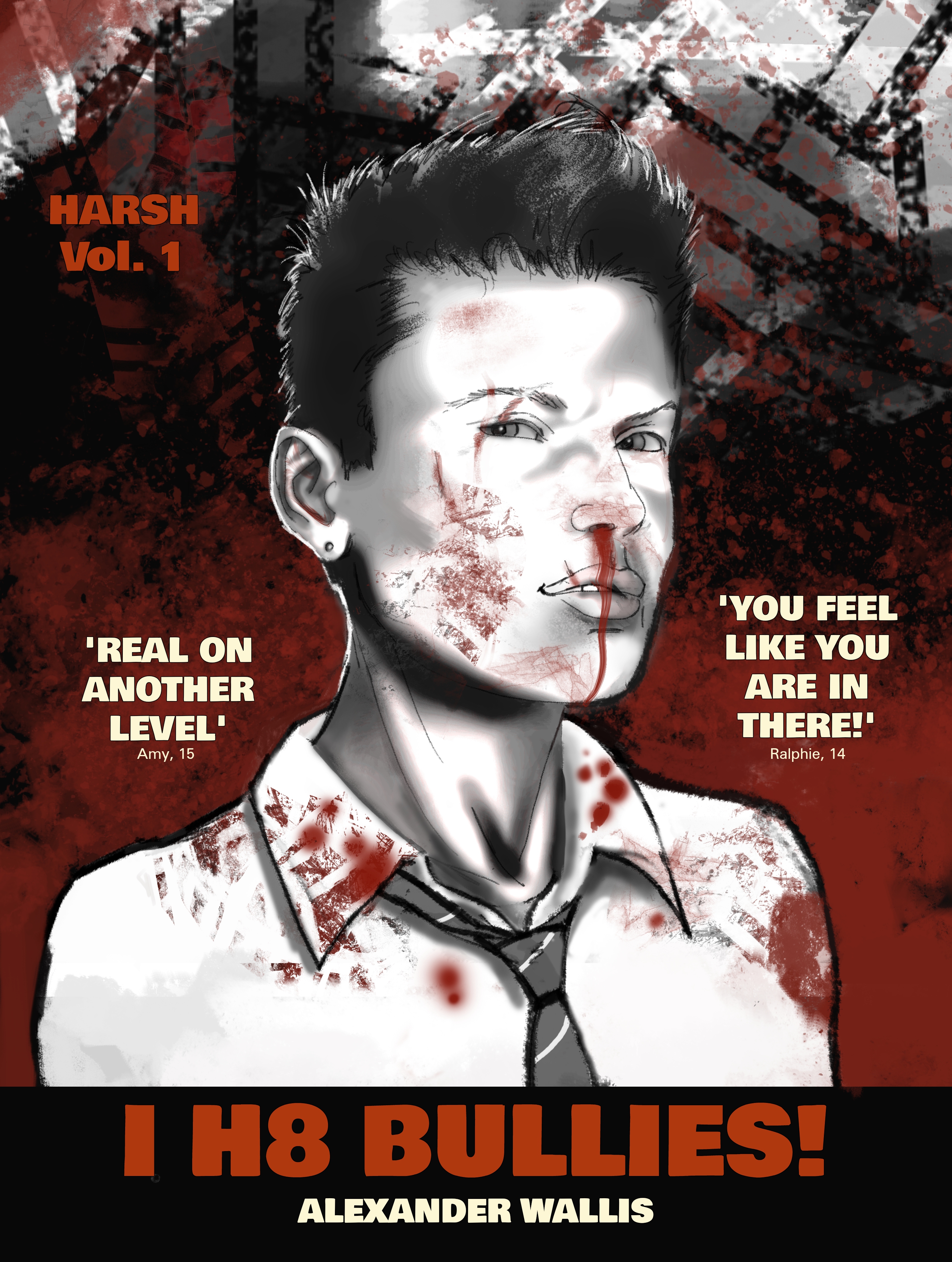
Jane Cable: Last week I received an email from an author I used to know when I lived in Chichester. I remembered him as a warm and principled man, a youth worker who’d written a fantasy book with a moral message. He’d contacted me to let me know he’d written a novel about bullying, aimed at teenagers and children. Not my normal read, but I clicked the link to I H8 Bullies anyway. Then I clicked on ‘look inside’. I read two pages and I was compelled, yes, compelled, to buy it.

It’s written from the point of view of a teenage lad in rich yet accessible language. The voice rings true. Alex’s blurb says it’s written for kids who don’t like books, and at only 66 pages short I can believe it. I also think it should be compulsory reading. Which is why I asked Alex to write this article for Frost.


The truth about bullying is that it can rarely be stopped.

The act of undermining others is a survival strategy – however maladaptive – which feeds vampiric ego at the target’s cost. Its excesses are applauded by those who don’t want to be next in the firing line and whose silence (or laughter) serve to timidly collude. Organisations enable rather than contain its flourishing, hierarchical lines supporting those who narcissistically abuse their power.
Nowhere can bullying be better studied than in a school, where adolescence stirs thicker the drama and thinner the consequences. A fully-stocked armoury is available to the teenager who bullies, from opportunity to physically aggress (within the relatively less punitive micro-society of the school discipline system), to ample places to regularly do it and the chance to capture and further torment on social media.

School anti-bullying programmes lean towards ‘awareness raising’, as if this phenomena is not already deeply understood. Since Goliath took up against David, humans have recognised that superior size, privilege or opportunity presents the risk of some throwing their weight around more than they should.

Interviewing students helped me to better understand the experience from the target’s view. Bullying somehow forces an intense self-examination, our own inner critic immediately jumping ship to add to the gang of detractors. Targeted students were not just conscious of the way they looked, but made to think deliberately of how they walked or talked. Thrown into a deep self-critique which often stemmed from an already sensitive and self-conscious life position.

When I began writing I H8 Bullies, my thoughts were initially on my own school experience, decades earlier. Old school bullying more often took the form of a thump to the ear, a pounding by some bigger boys (which we had sometimes provoked) and, at worst, the wave of a penknife.

Bullying feels more enduring and emotionally damaging now. Social media provides means to shame a person that is only limited by the imagination and which can endure long beyond the school bell. It can follow a person from place to place, preserving images better forgotten.

Sometimes the only factor under a target’s control is how they themselves react (or don’t). The quiet dignity of preserving your own values, even if you are still discovering for yourself what you think and feel. Bullying can rarely be stopped but it can be survived. It is about winning the battle within, and that is what the story of I H8 Bullies is all about.

Alexander Wallis is a youth worker for Sussex Against Bullying and the author of I H8 Bullies.


SISTERS SCRIBES: KITTY WILSON ON STRUCTURAL EDITS

Hello, it’s lovely to be on Frost again and I thought I’d take the chance to tell you what’s happening in my writing life right now.

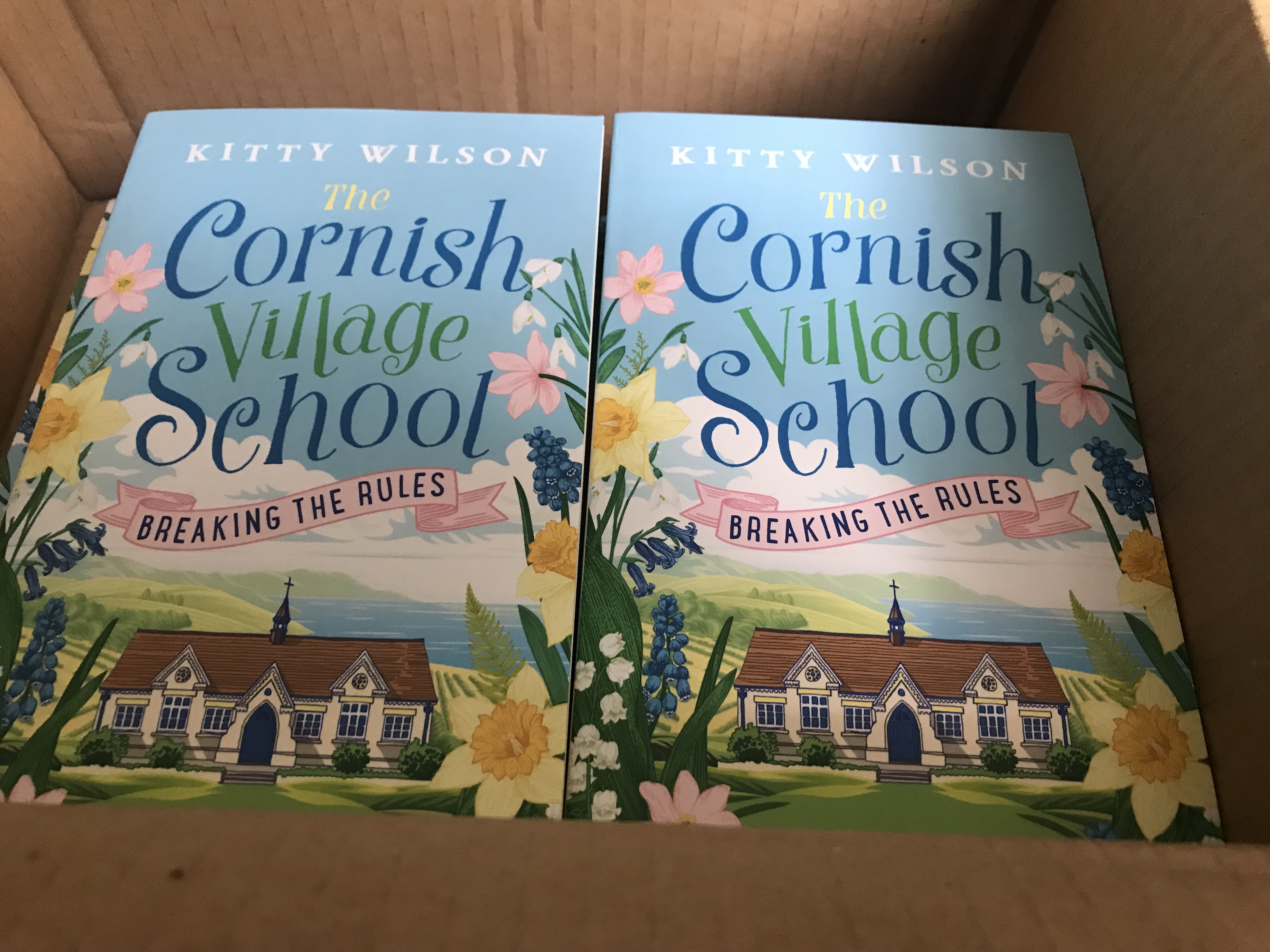
It’s been a busy couple of months for The Cornish Village School series. At the time of writing this I’m working through the structural edits on book three, have signed off on the cover for the audio release of book two and received my first copies of the paperbacks for book one.

Structural edits are the first thing that needs to be tackled once you’ve finished and polished the first (second, third, umpteenth) draft and bitten the bullet and sent it off to your editor to see what they think. Because the author tends to be so close to the book, these edits are a vital, objective view of what needs to be tidied up, changed and possibly cut, possibly extended. Chapters may need to be moved or restructured and it usually involves ‘killing your darlings’.

For me, waiting for these is the most terrifying time; I somehow expect them to receive, read and critique my draft within the first fifteen minutes. I fill that quarter of an hour by biting my nails and opening up Indeed.co.uk and looking for jobs. I could definitely be a cast member in the Disney Store (as long as there is no singing required), perhaps that job negotiating exit from the EU would be simpler than any edits I will have to do (this job was advertised during my last panic browse. I considered it). Then I give myself a good talking to about rational behaviour and decide that I could do some housework, change my mind (no need for desperate measures), panic a bit more and start the next book in an attempt to distract myself.

The starting of the next book thing is a jolly good move. It’s my favourite bit of the process – that time where the world is full of possibilities, deadlines are so far away they may as well not exist and you can make anything happen. Once I’d written the first chapter with a vicar (my new hero and I’m already in love with him), a guerrilla yarn-bombing octogenarian and a secret underground dungeon, all was right again in my world. In fact, I was so enthused I almost forgot the dreaded edits. Which were made even more worrisome this time around by the fact that I have a new editor* and I am a little oppositional to change (I still have the screws to my bunkbed that my mother dismantled when I was eight).

When the structural edits did come in I read them, had a mini meltdown and it took a couple of days before I processed the words in front of me – all of which were fair, true and actually very positive. In fact, there was nothing at all that warranted the seismic earthquake of stroppiness I had engaged in but which is, apparently, a natural part of the process, because only after that could I start working my way diligently through her fairly short list of suggestions.

The next phase is the line edits and the proofread, all of which I’m hoping will be completed by the time you are reading this and I should be well on the way to finding romance for my handsome vicar. I enjoy these, or at least I think I do. If you’ve heard screaming bouncing across the British Isles recently then there’s a good chance I was kidding myself. Keep your fingers crossed for me!

All love, Kitty.

*who’s proved to be lovely btw.


Follow us @Sister5cribes

WHY HOMOPHOBIA HAS A STRONGHOLD IN SPORT

By David Ledain, the latest addition to the Frost magazine team, writing on LGBT issues

Sport is a phenomenon which can both bond and divide in equal measure. Tribal instincts and loyalties are challenged and revered, and in football especially, young men can be empowered and at the same time hidden from view.

Homophobia and anti-gay violence seems to crystalize young males in football tribes and gangs. It proves their heterosexuality and obliterates any secret homosexual desires of their own they may have. Targeting gay men is not seen by the perpetrators as hatred towards the individuals, but rather as an extreme expression of society’s expectations of them – that they are conducting themselves within what they have learned as acceptable male behaviour. They are in part driven by fear. The potential of any young man, regardless of his sexual orientation, to be labelled as ‘gay’ and weak, and ostracised from his family and the surrogate families of his football tribe, schoolfriends, work colleagues or neighbours, for being or unknowingly presenting anything other than the heteronormative, is so damning, even dangerous, that men are pressurised into characterising themselves to a very narrow set of male gender stereotypes. Owen Jones, the columnist, author and social activist, concurs, saying that the majority of homophobic abuse is ironically directed at straight males, and that almost all men will have been subjected to some sort of malicious homo-name-calling in their lives and been told in no uncertain terms what sort of a man they should be.

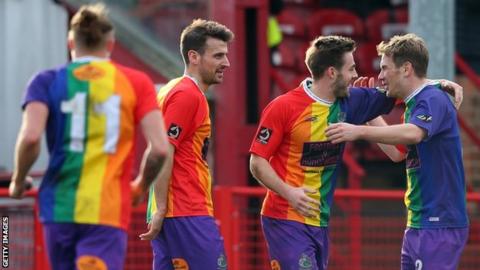
Photograph by kind permission of Altrincham FC

‘You grow up hearing people use what you are as the ultimate derogatory insult,’ Jones says. ‘Society tells you you should be heterosexual. It’s even subtler than that. There’s that awful patronising thing when people say, “Oh, I never would have guessed that you’re gay”, and you’re left feeling almost flattered that your leprosy isn’t publicly obvious.’

The potency of the idealised masculine heteronormative which captivates and imprisons young men especially, through its facade of power and place in the world, even when those same young men whose circumstances gives them no real power at all, is the derisible falsehood that is so destructive. Males who aspire to this gender stereotype, yet have no means of ever realising it due to factors out of their control, and not always economic or social, may feel their only way to make a mark in the world, to stand out in their community, is to carry out attacks on vulnerable groups, particularly, homosexuals – easy targets which they see as the antithesis of who they are and who they want to be.

Altrincham FC recently made the headlines by tackling the issue of homophobia in football by going out on pitch in a rainbow coloured kit, and in 2017 Stonewall backed the Rainbow Laces campaign to get everyone who plays sport to support LGBT equality. Cricketer, Joe Root, has also been widely applauded for his response to alleged homophobic abuse, telling the West Indies bowler, Shannon Gabriel, ‘There is nothing wrong with being gay.’

Things are slowly changing both on the pitch and in the dressing room but getting to a place where LGBT equality and anti-gay abuse from the terraces is not a topic of discussion any more is difficult to imagine because of the deep-rooted traits of the hetero-biased tribes. But if sport and particularly football continues to move towards diversity and inclusivity, one day we will get there.

You can follow David on Facebook & Twitter @Davidledain

And visit his website www.gaydad.co.uk for more information and his blog.


SISTER SCRIBES: CASS GRAFTON ON MRS GASKELL… ON CHARLOTTE BRONTE

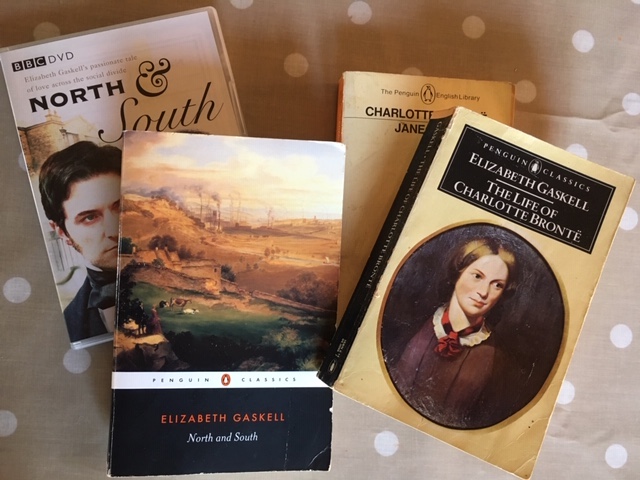
The other day, I had the urge to watch North & South again, the well-received BBC dramatization of Elizabeth Gaskell’s second novel.

I’m not sure if this stemmed from a need to watch a classic film or simply the shallowness of wanting to wallow in Richard Armitage’s smouldering interpretation of John Thornton, but whatever the attraction, it did make me think about Victorian writers.

Written originally for Charles Dickens’ magazine, Household Words, North & South has more recently been dubbed the ‘industrial’ Pride & Prejudice. It is typical of the stories spilling from Mrs Gaskell’s pen at this time: ones that didn’t flinch away from contentious social commentary but always had, at their heart, a bit of romance – and a copious body count!

It wasn’t a novel, however, that first introduced me to Mrs Gaskell’s writing. Back in school, I was obliged to read Jane Eyre as a set book.  My teenage heart was swept away by the passion of Charlotte Brontë’s classic and, considering myself plain and unnoticeable, I relished reading about this ‘oh so ordinary’ heroine getting her man.

Intrigued by the story behind the author, I bought a copy of a popular biography of Charlotte – the aforementioned Mrs Gaskell’s account of ‘The Life of Charlotte Brontë, having no idea of the drama surrounding the book.

It was written at the invitation of Charlotte’s father soon after his daughter’s death in 1855. Encouraged by Charlotte’s close friend, Ellen Nussey, Patrick Brontë wanted Mrs Gaskell, also a friend of his daughter’s, “to publish a long or short account of her life and works, just as you deem expedient and proper”.

Mrs Gaskell was used to her own writing exciting controversy amidst the admiration, but although the biography attracted critical acclaim, it was not universally well-received, with some critics not appreciating the whitewashing of certain aspects of Charlotte’s life. Mrs Gaskell had been stuck between the proverbial rock and a hard place – after all, parts of Charlotte’s life (like anyone’s) were not really for public consumption.

More controversy, however, came back to haunt the author. Published in March 1857, the Life attracted enough attention for a second edition to be announced in May of the same year. Suddenly, though, the book was withdrawn from sale, due to the threat of libel proceedings on more than one count and general grumblings from those who felt they had been unfairly depicted in the book.

The three main issues seem to have been these: how Patrick Brontë himself was portrayed; the account of Charlotte’s brother, Branwell’s, decline – exacerbated by the implication of the influence of a ‘lady’, who was described in such a way, all of society knew her identity; and descriptions of Charlotte and her sister, Emily’s, time at the Clergy Daughters’ School at Cowan Bridge.

Mrs Gaskell went on to describe herself as being in ‘the hornet’s nest with a vengeance’ and referred to the biography as ‘this unlucky book’ in a letter to her publisher. Its overall success, however, meant the Life wasn’t going to disappear. Balancing out the unpleasantness of the above, Mrs Gaskell began to receive additional information, either from others who admired what she had already achieved or those who wanted to correct certain details.

She faced a daunting major revision, but set to and the third edition – Revised and Corrected – appeared in the November, less than six months after the original had been withdrawn from sale. It contained a substantial amount of new material.

Despite the challenges she faced, Elizabeth Gaskell did an admirable job, and her insight into the life of Charlotte Brontë is a fascinating read and one I would highly recommend to anyone who enjoys reading about Victorian authors.

As for myself, I think I’ll avoid any attempts to pen biographies for my writing friends and immerse myself in fiction instead – the visual rather than the written version on this occasion! Excuse me whilst I hit play again on North & South… I may be gone some time!


Sources: Various Gaskell letters, and Alan Shelston’s Introduction and Appendices to the Penguin English Library 1975 edition of Jane Eyre


DAVID LEDAIN EXAMINES GENDER DIVERSITY IN HISTORY AND CULTURE

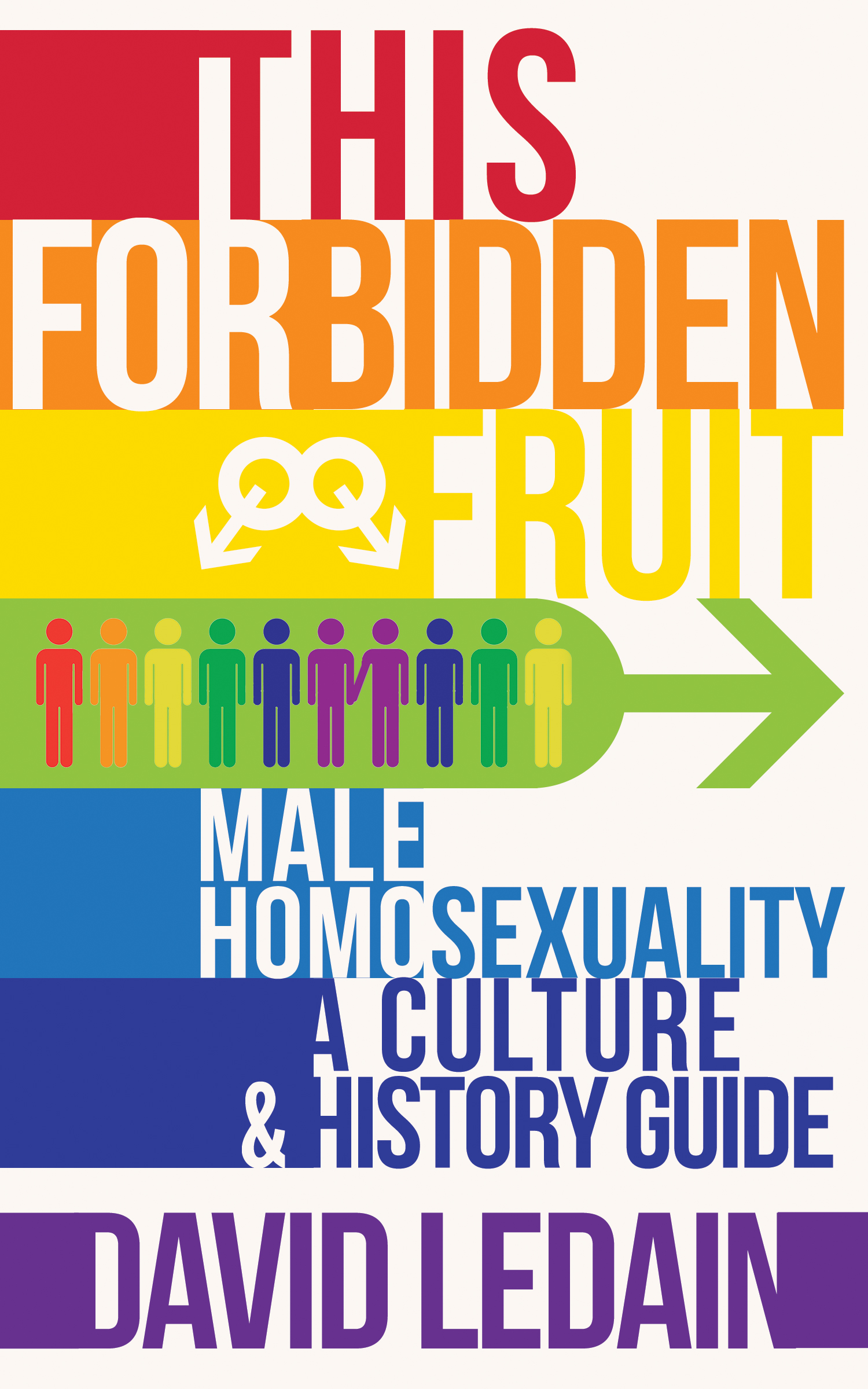
David Ledain is the author of Gay Dad – Ten True Stories of Divorced Gay Men with Kids, Living in the UK Today. Ledain, divorced himself and with two grown up sons, lives in Chichester, West Sussex. His latest book; This Forbidden Fruit: Male Homosexuality – A Culture & History Guide explores what it means to be gay; to live an authentic life when there are little or no references to base it upon.

Our culture provides heterosexual men and women with a vast tradition and depth of lore about what it means to be straight. Women grow up with the myths of Eve, Gaia and the Virgin Mary, while men have Adam, Mars, Zeus and the great religious prophets to identify with. Imagine a world for instance without the representation of women anywhere; a fictitious world in which there are no positive images or examples of women in the church, in government, in film, books or on TV, or indeed of playing any meaningful role throughout history. It is unbelievable, yet this is the way homosexuals have lived, without any gay male archetypes. Because of this lack of backstory, every new gay-themed film, TV show or book that appears, every new celebrity or politician who comes out, is so significant to our collective gay story that we jump on it voraciously. Often, this causes a backlash and straight people can be heard saying things along the lines of ‘They’ve got equal marriage, they can join the army, there are no anti-gay laws anymore, what more do they want? Why do they have to keep harping on?’

Growing up without proper foundations of myth, gender diverse references or role models, is not equality, so every single gay story is as important today as it ever was, even when we have come so far. Story-telling is a fundamental building block of any society. It is what makes us human – passing on our traditions, our wisdom, our folklore and myths from one generation to another. And that is true for homosexuals as well.

This Forbidden Fruit reveals the facts and legends; from Homosexuality in Literature to Coming Out in the Forces; from the First World War – Homosexuality Under Fire to David Bowie 1972; and why, against all odds, homosexuals exist at all.

One possible reason for the evolutionary existence of homosexuals is a means to defend their mothers and siblings by bringing special skills to the family unit that might otherwise be lacking in the other sons. Research shows that another factor in the propensity to bear a gay son might be due to a traumatic event endured by the mother during pregnancy, thus creating the correct hormonal environment for the unborn male foetus to develop more caring, nurturing traits that would be necessary to safeguard the mother’s future well-being. These scenarios require the son to have good caring and nurturing skills, and also to be a character who can negotiate and reconcile situations when for instance, food and resources essential to the family are in limited supply. Homosexual men, though often portrayed in the guise of the stereotypical drama queen, the self-centred narcissist or the vitriolic one-line bitch, more often than not possesses the antitheses of these less desirable character attributes, with softer, more compassionate and supportive qualities. Drawing people together, reconciling, co-operating, and understanding opposite points of view, is familiar to the homosexual character. It is this mythos we need to explore, refine and tell.


You can follow David on Facebook & Twitter @Davidledain

And visit his website www.gaydad.co.uk for more information and his blog.


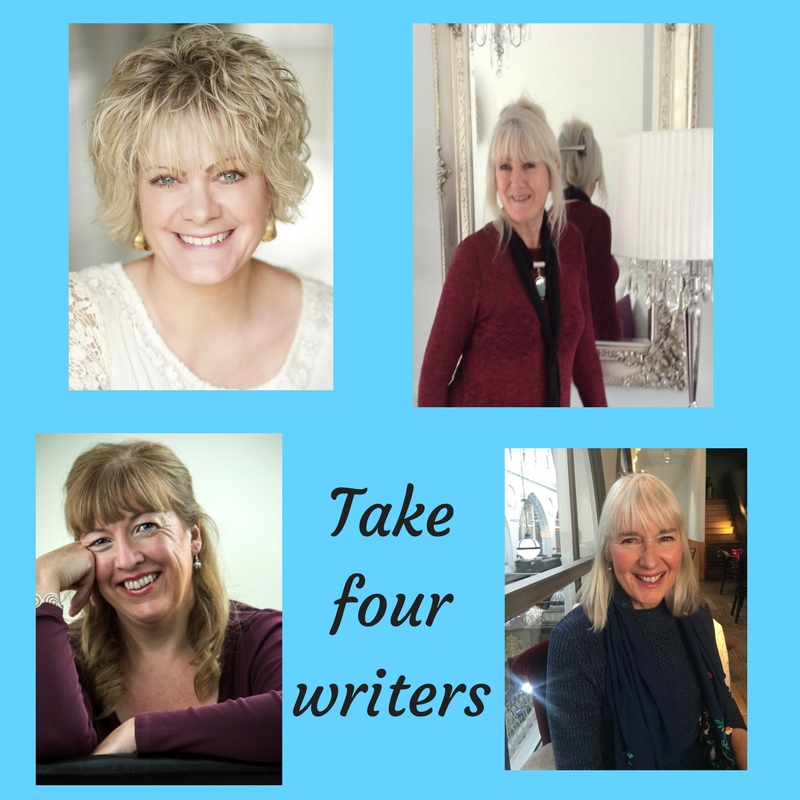
BUSINESS OF BOOKS: TAKE FOUR WRITERS – BALANCING, SHINING, HURDLING, REFLECTING

The final word from our four writers and a heartfelt thank you to them all for sharing their writing years. Ladies – you’re an inspiration.

JACKIE BALDWIN: BALANCING

This month for me has been all about trying to balance the competing demands on my time between the day job, writing the first draft of my third crime novel and getting sorted for Christmas. My heart says write but my head says shop, clean and do the ironing! I have never been good at splitting my focus.

Tis the season to be jolly! I am a member of a wonderful crime writing community called Crime and Publishment in Gretna. Some of us are published whilst others are working on a first draft or at the submission stage.  After our Christmas meal we went round the table celebrating everyone’s writing wins, both big and small. It was heartening to hear how far we have come since our first year in 2014.

For me this time of year is always a time for reflection. To remember those people and animals who are no longer with us but lit up our lives, to be grateful for those who are still here and to think about where I want to direct my energies in the brand new shiny year to come.

It has been a pleasure to share my writing journey with you all this year. Wishing you all a very merry Christmas and a happy New Year.

ANGELA PETCH: SHINING

December Frost:  sparkly, ice-cold, sharp, and a fitting way to skate away from a year of monthly reports. I shall miss them: it’s been a way of focussing during quite a year.

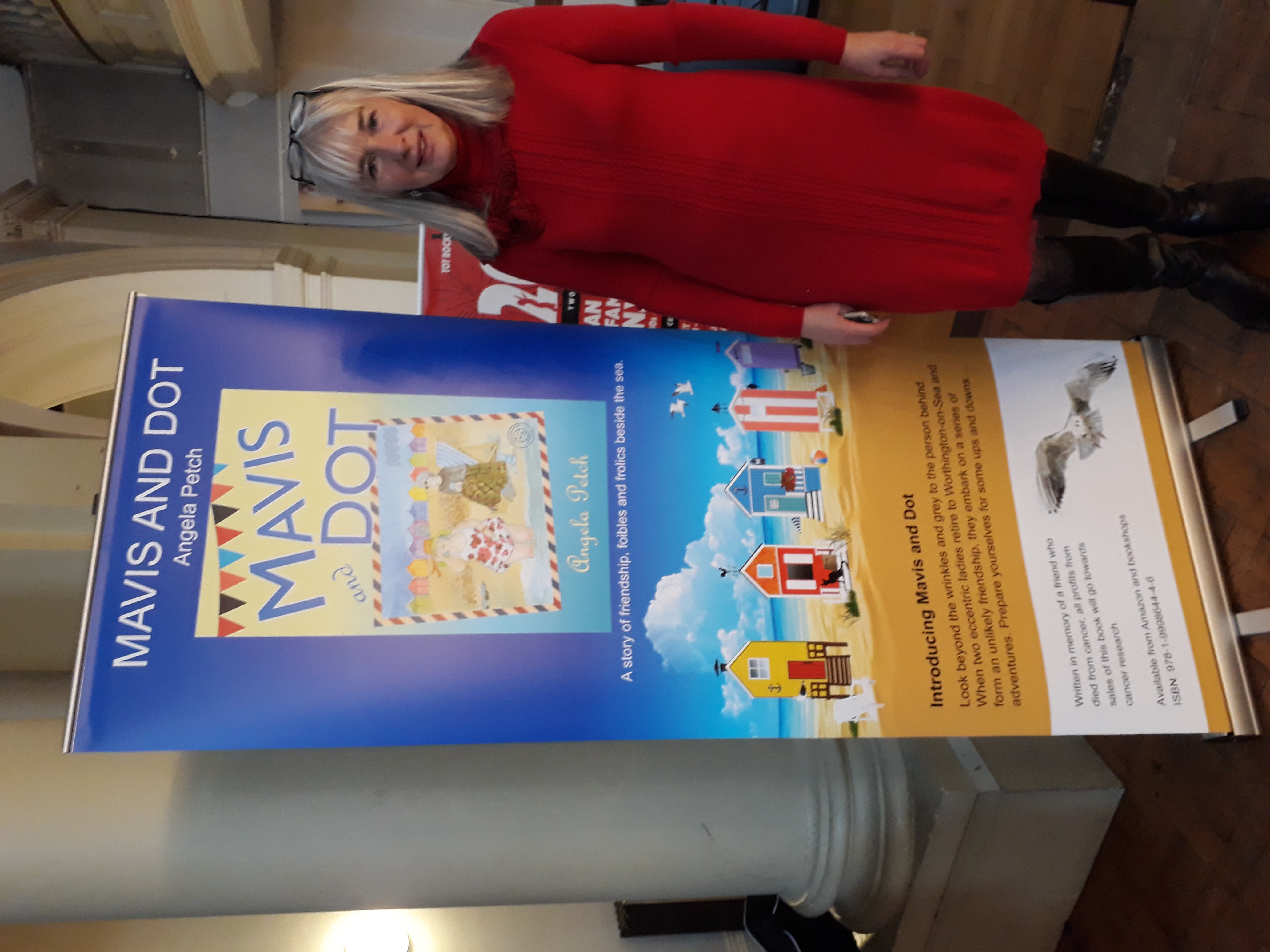
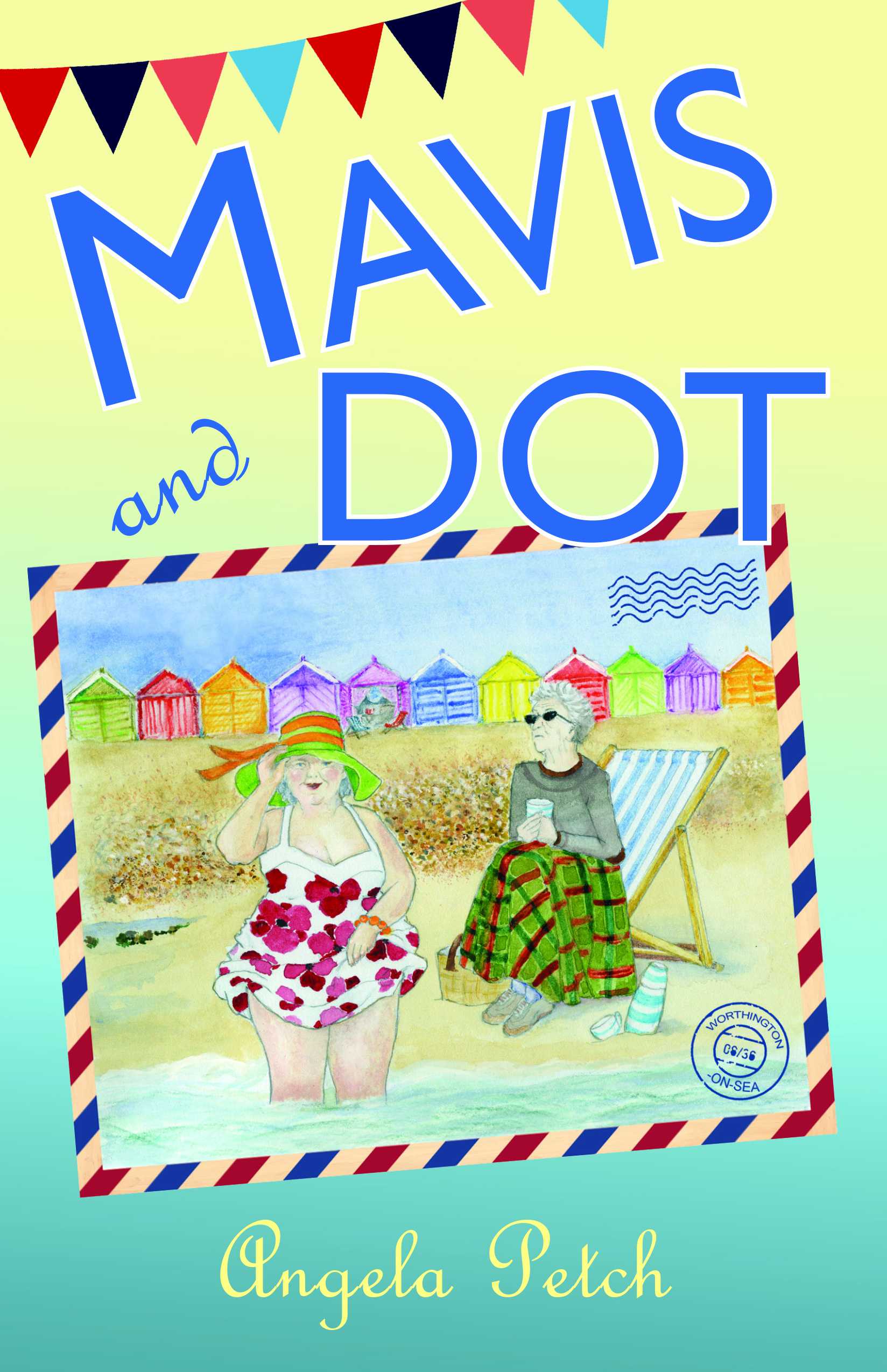
December 1st, I launched my self-published “Mavis and Dot”, and, promoted by a Blog Tour, it’s going well. My shiny new banner helped pull in interested readers. On the following Saturday, I manned a successful book stall outside Arundel Cancer Research Shop. All profits from M and D are destined for this charity.  A sequel has been requested; I’m thinking up scenarios for the two ladies.

Edits for Bookouture are 99% done for the first Tuscan novel commissioned for Spring 2019, (no title yet), and I’ve written a couple of chapters for the second. The rest is in my head. This year I will pin to paper.

Thanks so much to Jane and my trio of friendly authors. New friendships made, new goals formed. Good luck to us all, happy Christmas and 2019.


CLAIRE DYER: HURDLING

So, another year has gone by and I’m definitely a year older, but no wiser I fear!

Some highlights have been (in no particular order): my kids are doing OK; Mr Dyer is well and busy; my cats are still my friends; my novel The Last Day was published and I’ve been working on another two books since which has been both a challenge and a joy; it looks like there may be a new poetry collection in 2021.

Some lowlights have been (in no particular order): my mother’s dementia; the state of the nation; I don’t seem to be ageing like Dame Judi Dench, more like Ena Sharples; Hollywood still hasn’t called to offer to make my book into a movie!

And, as ever, there have been hurdles as is the case of the writer’s life. No sooner are we over one, then another appears. Sometimes they trip us up; sometimes we sail over them, landing gracefully on the other side a bit like a gazelle. And, as ever, there’s no saying which the next one will be as I sit here at the year’s end with the echo of the starting pistol and the crowd’s roar in my ear.

LUCY COLEMAN: REFLECTING

As the year draws to a close it’s a time when I reflect upon the highlights and low points of my working year. But more importantly it’s when I set new goals for the year ahead.

It has been my second most successful year as an author to date, for which I’m incredibly grateful. Hitting the no. 5 spot in the UK Kindle chart with ‘Snowflakes Over Holly Cove’, my second novel writing as Lucy Coleman, was beyond any dream I ever had. The goals I set are never about the results, but about the work required to keep honing my skills.

My goal for 2018 was to write four new books. Tick. And the first novella in a new little project with a new pen name. Tick.

My goal for 2019? Four new books and the second novella.

I write because it’s my passion and I write from the heart. The happiness and fulfilment is in the creation, because it is a little like the lottery. In this case fate is in the hands of the legion of wonderful reviewers and readers who choose your book. And that’s humbling.

Wishing everyone a 2019 filled with happiness, love and good health. And to the incredible Jane Cable and my fellow writers, you are all an inspiration!


BUSINESS OF BOOKS: RETREAT OR TREAT?

Retreat or treat? When five writers arrived in Bath last month, we didn’t really know how it would pan out. We intended to work, but it was the first time we’d seen each other since meeting at the Romantic Novelists’ Association conference fifteen months earlier, so would there be too much gossiping going on? Or even a frosty silence as we realised we didn’t actually like each other that much after all.

We certainly started being very polite. Cassandra Grafton (no stranger to Bath with her Austen-esque novels) found an enormous Georgian house we could rent from Bath Boutique Stays and there was quite a bit of ‘after you – no, after you’ as we chose our bedrooms.

It soon became clear that our centre of operations would be the kitchen with its windows either end and huge table. We had no plans to cook, but Kitty Wilson and I had raided M&S on the way (she is one serious snack shopper) and what with our booty and all the wine, the fridge was filled to bursting point. But did we open a bottle straight away? No – we made a nice cup of tea.

So the first myth was busted open – we were not destined to spend our three nights drinking ourselves into a stupor. A drink with dinner (we tried a variety of local restaurants, culminating at the amazing Aqua) then another one or two afterwards was about our limit and while the vodka bottle was hit pretty hard (you know who you are, ladies), the gin went almost untouched and only two half bottles of Prosecco from our stash were consumed.

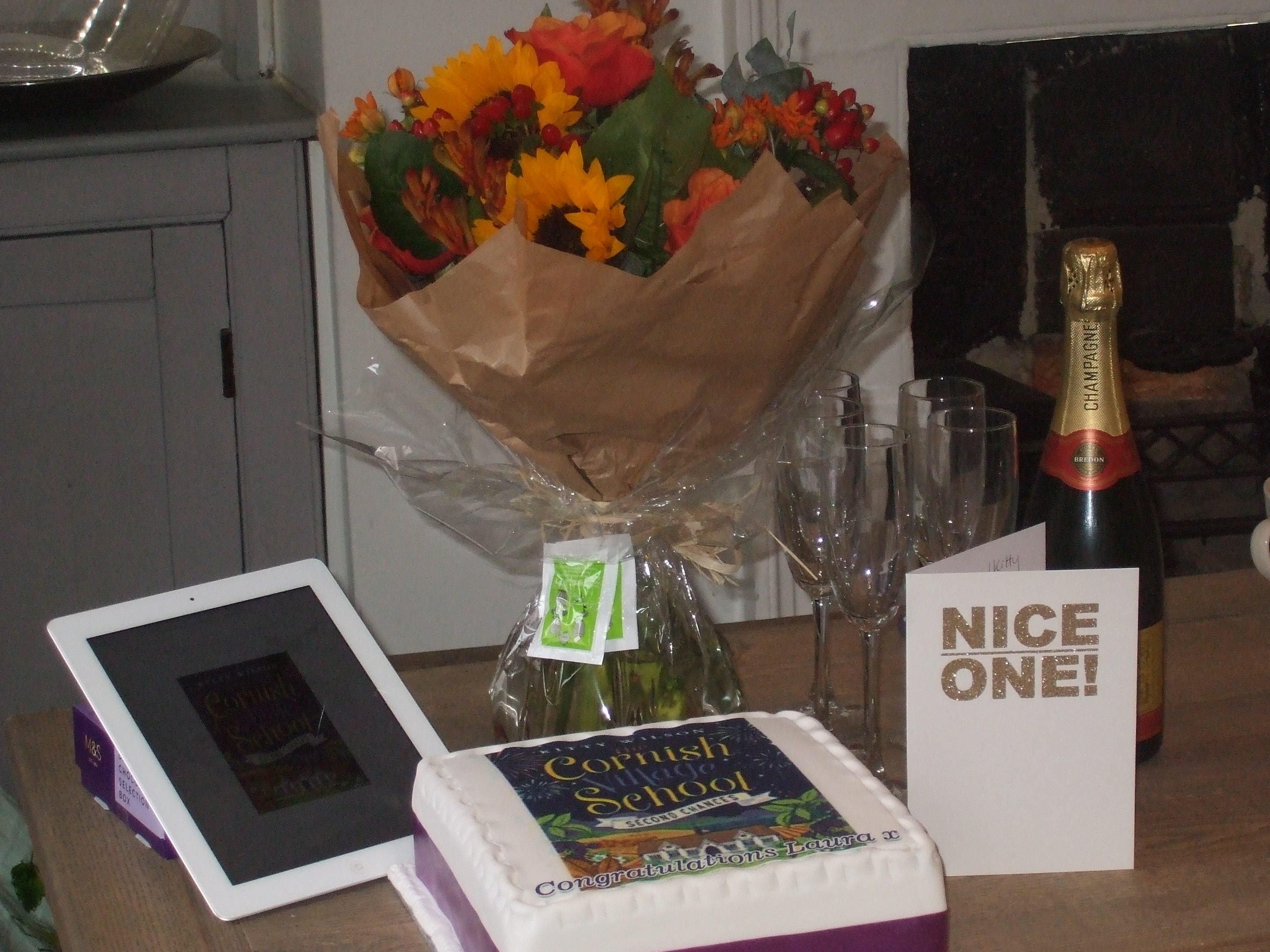
We did drink on the second morning though as we celebrated the launch of Kitty’s second book. Champagne and cake well before the sun was anywhere near the yard arm, flowers smuggled into the house and hidden the previous day, and a gift from us all. Of course, before we could touch any of it we had to stage a photo or two for social media. And then spend a great deal of time sharing them to all our followers.

Second myth – we had no real intention of doing any work. Wrong again. Susanna Bavin wrote more twenty pages in longhand towards the trilogy of sagas she’s working on. I completed the structural edit of the second book of my Sapere deal. Kirsten Hesketh was busy reworking the draft of her second novel while Kitty focussed on guest posts for her blog tour (not to mention keeping up her daily word count) and Cassandra worked her way through her ‘to do’ list following the announcement of her contract with Canelo.

But more than anything we supported each other in ways small and large. I helped Kitty with her guest blogs (I’ve done so many of them) and she and Susanna critiqued the outline I’d prepared for Sapere. Kirsten’s agent had started to send her manuscript to publishers and had received a few initial rejections – and there always are rejections – but that doesn’t mean they hurt any the less. I like to think we were all there for her.

The two days and three nights flew past, mainly because we were in the company of other writers. It’s a profession where you have no colleagues, no daily water cooler moments and just to be around each other and chat authorly things was utter bliss. Noone understands writers like other writers – the highs, and the lows, and the mundane bits in between.

We left Bath on the Friday morning with the firm resolve to do it again. But something else had happened along the way; bonds had been formed and friendships deepened. We’d become, as Kitty put it, sister scribes.

BUSINESS OF BOOKS: TAKE FOUR WRITERS – DOWN, DEEPER, DOWN – AND LIGHT

LUCY COLEMAN

It’s been an emotional month. With a close family member in ICU for over two weeks and still critical, our hearts have been breaking. In the middle of this my other half and I had stomach flu and then structural edits arrived on my desk. The bug cut our hospital vigil short, so we text and support the ‘supporters’ by phone.

Aside from passing on messages to the wider family, my way of coping is to write. I channelled all that emotional turmoil into my edits and then into my current work in progress. All we can do is pray for a good outcome and when you can’t physically be there to help, it’s important to keep busy.

Writing for me is escapism. But I don’t avoid the harsher side of life and most of my novels reflect the mixed bag fate dishes out. What I’ve learnt this month is that there is a lot of kindness and love in this world, and often it comes from strangers – nurses and doctors who are there when you most need them. It’s truly humbling and a remind of how precious life is.


CLAIRE DYER

And so I’ve been faced with something that can bring a chill to any author’s heart – the rewrite. I have written a novel. It has been seen by quite a few people and one of these people has suggested that it would be stronger, better, more commercial were I to … It’s quite a long list!

But rather than recoil, I find myself embracing the challenge. They’re right. The book will be stronger, better, more commercial if I make the suggested changes. The only problem is, can I? Not as in may I, or do I want to, but am I able to? It seems a huge task. Six strands need editing, all the possible knock-on effects of these edits need to be spotted to ensure consistency; I have to match the tone, voice, spirit of the original even though time has passed and other things have crowded into my mind.

And so I’m going in. Will let you know how I get on!

STOP PRESS: some weeks have passed and I think I’m done. The six strands have been buffed, honed, added to, had stuff deleted from and I’m exhausted. I’ve re-read the book what seems like a gazillion times. I’ve loved it and I’ve hated it. I’ve wept from despair, and also because the story has come from somewhere deep within where a lot of sadness is. It is a different beast from the novel I started two years ago and I too am altered. I hope we’ve both changed for the better, but only time will tell. I have certainly valued the experience in a bizarre sort of way. However, now it has to go off into the world and we all know what that means …!


JACKIE BALDWIN

There have been many highs in this writing year but this month has not been amongst them. I discovered that my lovely Golden Retriever, Poppy, who has just turned six, is terminally ill and not expected to be with us long. A real blow to us all. As a result, I don’t have much in the way of news as I have been staying close to home.

I have been tying myself into knots over the plot in my third book and may well have to abandon it completely and start again. I’ve been thinking about it so hard I might have broken my brain. This must be what writer’s block feels like, a creeping paralysis of creative thought. I have to believe that it will pass and the pieces will gradually fall into place.

I hope that by this time next month I will be writing up a storm again!


ANGELA PETCH

The mountainside is a picture of fiery golds and rich reds as we start to pack up our Italian house for winter. We might return for New Year, which is celebrated in Italy with delicious feasts. Maurice and I enjoyed a much-needed five-day break last week in the Abruzzo region, walking up the majestic Gran Sasso, visiting devastated hill-top towns in this earthquake area.  I have a fascination for ruins and they will feature in my third Tuscan novel, very much in the planning and research stages. While we were away, no writing was done. And that is good, but my mind was still absorbing sights, sounds and new ideas.

Mavis and Dot is going on a blog tour with Rachel’s Random Resources in mid-November, so I’ve been busy with interviews and making the final decision about the cover. I’m really pleased with it and I used a professional designer this time. Watch this space.