Kristen Stewart Takes British Glamour Cover, Robert Pattinson

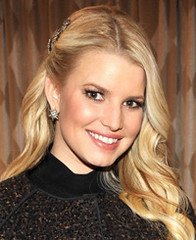
Kristen Stewart is the cover star of British Glamour’s December 2011 issue. She looks amazing and talks of her love of ‘everything’ British inside, including, ahem, the men, as she finally admits to dating Robert Pattinson.

Stewart reveals that the Twilight sex scene between her and real life boyfriend Robert was so steamy it initially got an R rating. Stewart also said; “Doing the sex scene was weird. I was like, ‘Bella! What are you doing? Wow!'”

She also says that she tried too hard to be ‘not fake’ when she was younger and that, ‘The first time Rob was ‘sexiest man in the world’, it was the biggest joke.’


Top 10 Common Faults with Human Thought

When you think about it the human mind is an incredible thing. Cognition, the act or process of thinking, enables us to process immense amounts of information in the blink of an eye. Take just walking down your high street for example; you are multi-tasking walking with taking in stimuli such as sound, smell all whilst looking out for the latest offers. You may be consciously thinking about one specific thing, but you brain is processing thousands of subconscious ideas.

Unfortunately our cognition is not perfect, and there are certain judgment errors that we are prone to making, and left unchecked there are certain habits we can fall into with our thinking which can limit our success. In my own journey of change NLP played a huge part as the key statement is ‘That as you think, so you are’. It shares a lot with the field of psychology ideas that ‘Thought is linked to behaviour’.

I’m going to share with you the top ten faults. If any of these ring true for you don’t worry; they happen to everybody regardless of age, gender, education, intelligence. Some of them are well known, others not, but all of them are interesting. I am sure everyone will find that one has happened to them, (I myself have been prone to several) hopefully you recognise when they are making an error in the future.


10. Gambler’s Fallacy

The Gambler’s fallacy is the tendency to think that future probabilities are altered by past events, when in reality, they are not. Certain probabilities, such as getting a heads when you flip a (fair) coin, are always the same. The probability of getting a heads is 50%, it does not matter if you’ve gotten tails the last 10 flips. Thinking that the probabilities have changed is a common mistake, especially when gambling. For example, I am playing roulette. The last four spins have landed on black, it has to be red this time right? Wrong! The probability of landing on red is still 47.37% (18 red spots divided by 38 total spots). This may sound obvious, but this bias has caused many a gambler to lose money thinking the probabilities have changed.


9. Reactivity

Reactivity is the tendency of people to act or appear differently when they know that they are being observed. In the 1920s, a manufacturing facility commissioned a study to see if different levels of light influenced worker productivity. What they found was incredible, changing the light caused productivity to soar! Unfortunately, when the study was finished, productivity levels decreased to their regular levels. This was because the change in productivity was not due to the light levels, but to the workers being watched. This demonstrated a form of reactivity; when individuals know they are being watched, they are more likely to be motivated to change their behaviour, generally to make themselves look better. Reactivity is a serious problem in research, and has to be controlled in blind experiments (“Blind” is when individuals involved in a research study are purposely withheld information so as not to influence the outcomes).


8. Pareidolia

Pareidolia is when random images or sounds are perceived as significant. Seeing clouds in the shapes of dinosaurs, the image of Jesus on a slice of bread, or hearing messages when a record is played backward are common examples. The common element is that the stimulus is neutral, it does not have intentional meaning; the meaning is in fact the viewer’s perception and reflects as much about them as the situation. So if you are looking for something like a woman in am image you are much more likely to see just that.


7. Self-fulfilling Prophecy

This is perhaps the most powerful fault with human thinking. A self-fulfilling prophecy is a prediction that causes itself to become true. For example, I think my relationship with my significant other is going to fail, so I start acting differently, pulling away emotionally or I refuse to trust them because I have had negative experiences in the past and I think that every partner will cheat on me. Because of my actions, I actually cause the relationship to fail. This is a powerful tool used by so called “psychics” they may implant an idea in your mind and you eventually make it happen because you think it will.

When you start realising this it actually becomes quite shocking. There is an argument to say that Economic Recessions could be a self-fulfilling prophecy. Because a recession is 2 quarters of Gross Domestic Product (GDP) decline, you cannot know you are in a recession until you are at least 6 months into one. Unfortunately, at the first sign of decreasing GDP, the media reports a possible recession, people panic and start a chain of events that actually cause a recession.


6. Halo effect

The Halo effect is the tendency for an individual’s positive or negative trait to “spill over” to other areas of their personality in others’ perceptions of them. This bias happens a lot in employee performance appraisals. For example: my employee, Biff, has been late to work the past three days; I notice this and conclude that Biff is lazy and does not care about his job. There are many possible reasons why Biff was late, perhaps his car broke down, his babysitter did not show up, or there has been bad weather. The problem is, because of one negative aspect that may be out of Biff’s control, I assume that he is a bad worker.

The Physical Attractiveness Stereotype is when people assume that attractive individuals possess other socially desirable qualities, such as happiness, success and intelligence. This becomes a self-fulfilling prophecy when attractive people are given privileged treatment such as better job opportunities and higher salaries.


5. Group Polarisation

Sometimes called Herd Mentality or Mob Mentality, this is the tendency to adopt the opinions and follow the behaviours of the majority to feel safer and to avoid conflict. At its most common form this is none other than peer pressure. We see Herd Mentality in recent incidents such as the riots, but do you notice it at Christmas when everyone wants the latest toy or is perhaps looking at the latest fashion? Creating a must have attitude in consumers is the staple diet of Marketing execs and if they can create it even through viral exposure they will at any cost; all it takes is a group of people who think something is cool, and it catches on.


4. Reactance

Reactance is the urge to do the opposite of what someone wants you to do out of a need to resist a perceived attempt to constrain your freedom of choice. This is common with rebellious teenagers, but any attempt to resist authority due to perceived threats to freedom and/or choice is reactance. The individual may not have a need to do the specific behaviour, however the fact that they cannot do it makes them want to.

Reverse psychology is an attempt to influence people using reactance. Tell someone (particularly children) to do the opposite of what you really want, and they will rebel and actually end up doing what you want.


3. Hyperbolic Discounting

Hyperbolic discounting is the tendency for people to prefer a smaller, immediate payoff over a larger, delayed payoff. Much research has been done on decision-making, and many factors contribute to the individual decision making process. Interestingly, delay time is a big factor in choosing an alternative. Put simply, most people would choose to get £20 today instead of getting £100 one year from today. Assume that the interest rate is 9%, at this interest rate, a rational person would be indifferent to taking £91.74 now, or £100 a year from now. However, it is interesting how much less we are willing to take immediately rather than wait, would you rather have £100 a year from now, or £50 immediately? How about £40 immediately? Where do you draw the line?

There are huge connotations for a society who thinks this way. Just imagine how many people are putting off their pensions because they would rather have the money now than to start saving. Just imagine how many people are getting into debt because of quick fire loans of £1443% apr – Yes I have seen them.

My personal nickname for this is P.I.G – Personal Immediate Gratification and I don’t mind saying that it is the one that I had the most problems with. Essentially it is the ability to put off immediate gratification in favour of a longer term gain. If you read Frost regularly I’ll have more on this in the next few months


2. Escalation of Commitment

Escalation of commitment is the tendency for people to continue to support previously unsuccessful endeavours. With all the decisions people have to make, it is unavoidable that some will be unsuccessful. Of course, the logical thing to do in these instances is to change that decision or try to reverse it. However, sometimes individuals feel compelled not only to stick with their decision, but also to further invest in that decision because they have sunk costs. For example, say you use half of your life savings to start a business. After 6 months, it is evident that the business is going to be unsuccessful. The logical thing to do would be to “cut your losses” and drop the business. However, due to the sunk costs of your life savings, you feel committed to the business and invest even more money into the project hoping that the additional cash will turn the business around.

Just to be clear on this – faltering on the border of failure is not always a bad thing; many successful people I know have come close to bankruptcy many times, many relationships have bordered on the edge of breakdown and in many cases people come through stronger and more educated than before; in fact some would say failure is almost a pre-requisite to success. The key becomes knowing when to walk away and when to stay.


1. Placebo Effect

Number one in my book has to be the Placebo effect. This is when an ineffectual substance that is believed to have healing properties produces the desired effect. Especially common with medications, the placebo effect has been observed when individuals given a sugar pill for a real ailment reported improvement. Placebos are still very much a scientific mystery. It is theorised that placebos cause an “Expectancy Effect”, (In cases of uncertainty, expectation is what is most likely to happen) individuals expect the pills to cure their ailments, so they feel cured. However, this does not explain how the ineffectual pills actually cause a reduction in symptoms.

The term “Placebo” is used when the outcomes are considered favourable or positive, when the outcomes are negative or harmful; the term is called “Nocebo”

Rosemary Lee’s Square Dances – Gordon Square by Mary Tynan

Rosemary Lee’s Square Dances – Gordon Square (part of Dance Umbrella www.danceumbrella.co.uk)

12 performances of Square Dances were held in each of Woburn, Gordon, Queen and Brunswick Squares over the weekend of 8/9 October 2011. I attended the 12pm show in Gordon Square.

Knowing that I was to attend a performance where all the dancers would be carrying handbells, I imagined them as some sort of rhythmic punctuation to an energetic country-style dance, perhaps vaguely Morris or maypole like. The name, Square Dances, also reinforced this impression. However, I couldn’t have been more wrong. The bells were not used to mark time, they were the music – a specially written score by Terry Mann – and created a haunting, ethereal sound which was even slightly disturbing at times.

The choreography appeared to be more ballet than folk inspired. Entering suddenly but softly into one end of the square, the more than 100 dancers conjured up a feeling of nature coming to life, as if the spirit of the place had appeared to share its joys and sorrows with the audience. The execution was flawless, movements flowing together as the performers spread out throughout the garden, or come together in one large group under a tree. After 15 minutes of delight, the dancers gracefully slipped out through the opposite end from which they had entered, the sound of the bells gently fading away as the moved further down the street.

A special experience.

Mary Tynan

Entrepreneurs encourage young people to become economically active

As the latest unemployment figures spike to a 17 year high, two young entrepreneurs prove that a disastrous job market is no obstacle

Unemployment in the UK has hit a 17 year high this month, putting pressure on the government to come up with a better economic strategy. The number of young people out of work is close to the million mark, with 991,000 16-24-year-olds out of work. The new figures, which take into account the last three months, are the worst since records began in the early 1990s.

Kevin Flood and Mike Harty, despite the doom and gloom of the employment market, have set up a unique online company straight out of university as an alternative to getting lost in the crowded jobs scrum. What’s more they are setting out to topple the online giants in the price comparison site arena.

Shopow.co.uk, their Social Shopping start-up, is a new type of shopping search engine that aggregates thousands of retailers and millions of products across all areas of consumer goods. Not only does this allow users to compare goods by criteria such as price, retailer, service and delivery, it also integrates various social functions so shoppers can find all the information they need to make the right decisions when buying online.

Kevin Flood, CEO of Shopow, said, “Our novel idea has meant that we were able to compete against some of the long established names from the outset. All budding entrepreneurs wishing to succeed shouldn’t underestimate the importance of a strong concept. We coupled this with our hard work ethic, detailed research and willingness to take the odd calculated risk in order to get our business off the ground and gathering momentum quickly.”

This momentum has resulted in the pair winning a Young Guns Business Award. Since the launch of Shopow in May 2010, the business anticipates revenues of over £3m in the first year of trading. The pair are confident they can achieve a ‘critical mass’ in the UK this year, and are looking to expand into the USA and mainland Europe imminently.

The message from Kevin and Mike is that business savvy individuals with a great idea can be masters of their own destiny and bypass the busy job market. Recent measures to tackle unemployment such as the Government Work Programme have generated optimism for some bright sparks, and opened other avenues so that they might create companies of their own.

Kevin Flood, Co-founder and CEO of Shopow, said, “We set up Shopow because of our love of business. There were so few opportunities in the job market that we opted to take a risk and move in a new direction, one which we would strongly encourage other young people to pursue.”

The Tory MPs Who Defied David Cameron.

A number of Tory MPs defied David Cameron’s three-line-whip and voted for a referendum on
Britain’s membership of the EU. Here they are:

Steven Baker (Wycombe)
John Baron (Basildon and Billericay)
Andrew Bingham (High Peak)
Brian Binley (Northampton South)
Bob Blackman (Harrow East)
Peter Bone (Wellingborough)
Graham Brady (Altrincham and Sale West)
Andrew Bridgen (North West Leicestershire)
Steve Brine (Winchester)
Fiona Bruce (Congleton)
Dan Byles (North Warwickshire)
Douglas Carswell (Clacton)
Bill Cash (Stone)
Christopher Chope (Christchurch)
James Clappison (Hertsmere)
Tracey Crouch (Chatham and Aylesford)
David TC Davies (Monmouth)
Philip Davies (Shipley)
David Davis (Haltemprice and Howden)
Nick de Bois (Enfield North)
Caroline Dinenage (Gosport)
Nadine Dorries (Mid Bedfordshire)
Richard Drax (South Dorset)
Mark Field (Cities of London and Westminster)
Lorraine Fullbrook (South Ribble)
Zac Goldsmith (Richmond Park)
James Gray (North Wiltshire)
Chris Heaton-Harris (Daventry)
Gordon Henderson (Sittingbourne and Sheppey)
George Hollingberry (Meon Valley)
Philip Hollobone (Kettering)
Adam Holloway (Gravesham)
Stewart Jackson (Peterborough)
Bernard Jenkin (Harwich and North Essex)
Marcus Jones (Nuneaton)
Chris Kelly (Dudley South)
Andrea Leadsom (South Northamptonshire)
Jeremy Lefroy (Stafford)
Edward Leigh (Gainsborough)
Julian Lewis (New Forest East)
Dr Sarah Wollaston (Totnes)
Jason McCartney (Colne Valley)
Karl McCartney (Lincoln)
Stephen McPartland (Stevenage)
Anne Main (St Albans)
Patrick Mercer (Newark)
Nigel Mills (Amber Valley)
Anne Marie Morris (Newton Abbot)
James Morris (Halesowen and Rowley Regis)
Stephen Mosley (City of Chester)
Sheryll Murray (South East Cornwall)
David Nuttall (Bury North)
Matthew Offord (Hendon)
Neil Parish (Tiverton and Honiton)
Priti Patel (Witham)
Andrew Percy (Brigg and Goole)
Mark Pritchard (The Wrekin)
Mark Reckless (Rochester and Strood)
John Redwood (Wokingham)
Jacob Rees-Mogg (North East Somerset)
Simon Reevell (Dewsbury)
Laurence Robertson (Tewkesbury)
Andrew Rossindell (Romford)
Richard Shepherd (Aldridge-Brownhills)
Henry Smith (Crawley)
John Stevenson (Carlisle)
Bob Stewart (Beckenham)
Gary Streeter (South West Devon)
Julian Sturdy (York Outer)
Sir Peter Tapsell (Louth and Horncastle)
Justin Tomlinson (North Swindon)
Andrew Turner (Isle of Wight)
Martin Vickers (Cleethorpes)
Charles Walker (Broxbourne)
Robin Walker (Worcester)
Heather Wheeler (South Derbyshire)
Craig Whittaker (Calder Valley)
John Whittingdale (Maldon)
Karen Lumley (Redditch)
Caroline Nokes (Romsey and Southampton North)

MPs who voted for a referendum
Nineteen Labour MPs defied the party leadership to support the motion:
Ronnie Campbell (Blyth Valley)
Rosie Cooper (Lancashire West)
Jeremy Corbyn (Islington North)
Jon Cruddas (Dagenham & Rainham)
John Cryer (Leyton & Wanstead)
Ian Davidson (Glasgow South West)
Natascha Engel (Derbyshire North East)
Frank Field (Birkenhead)
Roger Godsiff (Birmingham Hall Green)
Kate Hoey (Vauxhall)
Kelvin Hopkins (Luton North)
Steve McCabe (Birmingham Selly Oak)
John McDonnell (Hayes & Harlington)
Austin Mitchell (Great Grimsby)
Dennis Skinner (Bolsover)
Andrew Smith (Oxford East)
Graham Stringer (Blackley & Broughton)
Gisela Stuart (Birmingham Edgbaston)
Mike Wood (Batley & Spen).

One Lib Dem, Adrian Sanders (Torbay) voted for the motion.

Green leader Caroline Lucas (Brighton Pavilion) voted for the motion.
Eight Democratic Unionist Party MPs voted for the motion:
Gregory Campbell (Londonderry East)
Nigel Dodds (Belfast North)
Jeffrey Donaldson (Lagan Valley)
Rev William McCrea (Antrim South)
Ian Paisley Junior (Antrim North)
Jim Shannon (Strangford)
David Simpson (Upper Bann)
Sammy Wilson (Antrim East)
Independent MP Lady Sylvia Hermon (Down North) voted for the motion.

Pane in The Neck.

PANE IN THE NECK

Talk about being saddled with a difficult job…Housewife Emma Massingale has found a novel way of window washing without a ladder.

The 29-year-old balances on the back of her two horses to reach the upstairs panes of her farm in Bradworthy, Devon.

Married Emma, an equine behaviourist, said: “In my line of work, even house work is never dull.”

A Failing Education System – A Recent Student's Perspective

The education system in the UK is failing, despite what the politicians may tell us. Recently a Labour party MP illustrated what a wonderful job they had done in power. It was the usual infuriating Labour spin and refusal to accept any responsibility. She set out an array of meaningless statistics, stating how much grades and standards had improved.

Frankly grade statistics mean absolutely nothing. Grade inflation benefits everyone. It benefits the, politicians the teachers, the parents and the students. Is it any wonder grades keep increasing? Only one statistic really matters, youth unemployment. Youth unemployment will soon hit a million. It is a damning indictment of Labours 10 years in power. For all the great grades people may have it means nothing when it comes to getting a job and ultimately that’s all that matters.

What’s the problem? The problem is teaching culture. It is an obsession with exams and teaching the test. Teachers have become very good at teaching tests and students have become very good at doing them. Everything in the exams can be learnt. There is no opportunity for the students to show their own ideas. All the answers have to fit into a mark scheme (which we studied extensively) even the so called evaluation questions (where a student is supposed to be expressing their own ideas). All this stems from uncreative rigid syllabuses all again designed to fit into a nice and easy marking scheme. This is not how learning should be.

Don’t get me wrong I’m not blaming the teachers it’s certainly not their fault. Most teachers would love to spend more of their time doing real teaching but what choice do they have when their jobs are on the line. The problem is excessive central control and a system which treats everybody as a statistic rather than an individual and is obsessed with targets.

How many practice papers do you think I undertook for each A level module. 5? 10? The true number was closer to 25 per module. By the time I got into the exam I’d already seen and answered all the questions before. Was it any wonder I got great grades? But was it really a test of my intelligence and skill? What did I really learn? I’ve now been doing exams every term since the age of 8. If the education has left me with one thing it’s the ability to pass an exam.

When I came out of the education system I naively thought that with my great grades I would walk into a job. As it was I was completely unprepared.

In my next article I will show what we need to do to fix the system and prevent the country becoming engulfed in crisis in the future, because believe me, if we don’t fix this, it will. In the meantime please add your own ideas and thoughts below.

Angelina Jolie's Directorial Debut, Trailer Released.

If there was an award for over-achieving Angelina Jolie would definitely win it, an Oscar winning actor, six children, Brad Pitt on her arm, and an activist.

Layed up with flu for a few days and quarantined from her children, she banged out the script for ‘In the Land of Blood and Honey’, her directorial debut. A women of substance, Jolie’s debut is a political film about the war in Bosnia. It looks amazing, and we can’t wait to see it. Check it out below.

In the Land of Blood and Honey opens on Dec. 23.