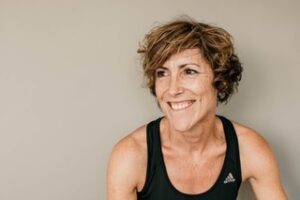
WELSH WRITING WEDNESDAYS: REINTRODUCING JANE CABLE

I have been writing for Frost for so long I tend to assume everyone knows who I am, but common sense tells me that isn’t the case. Our readership is growing all the time, so many won’t have the first clue about why the Contributing Editor blathers on so endlessly about writing and books. And. this year, about Welsh writing in particular.

So the first thing you need to know is that I am Welsh. I was born in Cardiff and my formative years were spent in and around the city, although I left to go to college at eighteen and never lived there again. In modern parlance you would say that, despite living in England for so long, I ‘identify as’ Welsh and will do so until the day I die.

With my Dad at the launch of his first book

I was a teenager when I discovered there was a rich literary tradition on my doorstep. My father, Mercer Simpson, was a lecturer at the Polytechnic of Wales and worked with Tony Curtis, and I remember the great excitement in our household when Tony won the 1984 National Poetry Competition. By that time my father had retired and was spending his time reading for the Welsh Arts Council and editing the Welsh Academy of Literature’s magazine so the house was stuffed full of books by Welsh authors.

This may have been my literary heritage, but I eschewed literature, refusing to take english as an A-level. When I was a student Dad and I would debate whether there was such a thing as intrinsically ‘good’ and ‘bad’ in the arts and could never see eye to eye, largely because I considered his views desperately old fashioned. Never an academic, my normal reading was romances, women’s fiction and historical sagas. In other words, popular fiction.

My father reviewed books endlessly and became an acknowledged expert on Anglo-Welsh literature. By the time he died in 2007 he’d had four of his own poetry collections published, the last of which he’d worked on during his final illness and his publisher brought the first copies to his funeral.

By then I had started writing too, experimenting with romantic fiction, something he barely understood, but my mother ploughed through my early stories and gave me both encouragement and useful feedback. Instead my father was really proud of the fact I freelanced as a cricket journalist. My mother’s bragging rights came a few years later when, in 2011, I reached the final of The Alan Titchmarsh Show’s People’s Novelist competition.

Mum and her Welsh flag

My mother loved reading but loathed formulaic romances, and her opinion has had more influence that anything over the way I write. I love a love story, but there has to be more. More for the reader to get their teeth into; a hint of mystery, research so good it teaches you something, a broadening of horizons. These are the stories I aim to write.

My career as a published author had a bit of a rocky start, but in 2018 I settled with Sapere Books, writing contemporary romances with a look over the shoulder at the past. The first two books were World War Two influenced, and later this year my debut dual timeline will be published by them, set in Cornwall in 1815 and 2015.

Last year I took another step forwards and signed a two book deal with One More Chapter, a division of Harper Collins. Both will be out this summer, written under the name of Eva Glyn. Eva for my paternal grandmother and Glyn for the Welsh novelist and poet Glyn Jones, a great friend to both of my parents and an emblem of my literary roots.


Week 5: There are many benefits to practicing mindfulness & meditation & science is beginning to prove what the ancients knew : by Alex Bannard who offers a FREE meditation…


First let’s remind ourselves what mindfulness is: the moment to moment awareness & acceptance of our thoughts, feelings, emotions & behaviour, without judgment, criticism or beating ourselves up.

Mindfulness is like exercise for the brain, the more you do, the more you’ll benefit. As little as 20 mins 3 times a week can change the neuron pathways in your brain.  Physically mindfulness improves our health: we are more relaxed; our heart is healthier; we tend to sleep better; our immune system is stronger & mindfulness is more effective at pain relief than morphine.

Scientists have discovered that mindfulness helps to rebuild telomerase – this is the little cap on the end of our DNA which gets eroded over time & especially with stress; meditation helps to rebuild these caps, essentially slowing the aging process.  The benefits to our mind include improved focus, reduced rumination, better memory, a clearer mind whilst restoring emotional balance & building resilience.

Studies in mindfulness have shown it to be more effective than medication at reducing depression rates by up to 50%; teenagers & adults report a 38% reduction in anxiety levels after practicing mindfulness consistently; it also helps us manage stress, anger & frustration, reduce feelings of loneliness & improve feelings of happiness & well being, whilst lowering anger levels.

It helps us to improve our social relationships since it gives us the time & space to respond instead of reacting.  Mindfulness also helps us become more aware of & sensitive to the needs of our body – recognizing the signs of stress, anxiety & overwhelm & doing something kind to care for our selves.

The science of neuroplasticity is beginning to reveal that by practicing mindfulness we can literally rewire our brains, changing the way we think & interact. Neurons that fire together wire together! Mindfulness is not just a relaxation technique it helps us notice what is going on, we become more aware of patterns in our mind & body, we can identify real & perceived threats, shift away from negative thoughts & reconnect to the present moment, a calmer more compassionate space in which to reside.

Mindfulness shrinks amygdala, the almond sized part of the brain responsible for the fight or flight response. When the amygdala is activated, it floods the body with the stress hormone cortisol getting you ready to fight or run away. Cortisol makes the amygdala more sensitive so it’s more likely to be triggered & a vicious cycle begins. Mindfulness helps to shrink the amygdala making it less sensitive, introducing a virtuous cycle instead of a vicious cycle.

Meditation engages the prefrontal cortex which helps to offset stress & bring the nervous system back in alignment reducing the feelings of overwhelm & anxiety.   Meditation helps to change our grey matter. Matthieu Ricard a scientist who became a monk is known as the happiest man on the planet after they found his brain had the highest level of gamma rays, those associated with attention, memory & happiness ever recorded by science.

Meditation, just like mindfulness helps to reduce stress by lowering the production of cortisol the stress hormone, it helps to reduce anxiety & depression, build resilience & emotional balance, it increases focus & creativity & improves memory. But both mindfulness & meditation are a practice – so it takes practice. Just like we can’t expect to get a 6-pack doing 10 sit-ups, you won’t experience all these benefits with 1 meditation. The more often you practice the more you’ll benefit. I tend to think little & often is more beneficial than extended practices irregularly. It’s not an overnight cure all, some days will be easier than others but it has changed my life & I believe it has the power to significantly improve the lives of others

This week’s FREE meditation is the 3 minute breathing space, which I like to think of as the martini of meditations – you can use it any time any place any where. It is a really useful tool & because it is so short it’s easy to use wherever you are when you need it. To try the 3 minute breathing space meditation for yourself, simply email Alex to the email address below quoting Frost 3MBS.

Next time we will be exploring the obstacles & difficulties to practicing & some ways to overcome them.

Alex is based on the edge of the stunning Cotswolds & has been sharing her love for all things yoga & mindfulness for the last 8 years, not just in the UK but also around the world. Her mission is to help everyone discover a sense of peace & calm within & to encourage them to embrace regular self-care practices.

If you would like more information on how to practice mindfulness, meditation & yoga message her at alex@myananda.co.uk.

For free resources check out her Facebook group: Mindfulness & Yoga for Self-Care, here is the link: https://www.facebook.com/groups/MindfulnessYoga4Relationships

Alternatively please check out her website: www.myananda.co.uk

New Geomag Supercolor | Toy Reviews

I am as much of a fan of Geomag as my children are. I am super excited that they have brought out two new products. The brand new Geomag Supercolor, which is made from 100% recycled plastic, is fantastic for learning in so many ways. It has limitless construction and a handy booklet to give you ideas for play. It offers hours of fun.

geomag shapes

Play with magnets and let creativity and imagination take over with the fun Geomag toy that works like pure magic. Thanks to the simple Geomag elements and the magic of magnetism, you can build endless 3D constructions with creativity and imagination. The elongated magnetic rods, steel balls and the various panel shapes make up the building system, which stimulates play and learning.

The Geomag 337 Supercolor Panels 35 Piece set costs £26 from Coolshop.co.uk

magicubes, magnetic toys, animals. , geomag magicubes, magnetic toys, animals, geomag


Next up is the gloriously fun Magicube. They are shapes you can make numerous animals out of. My daughter absolutely loves these. They are great for imaginative play and developing motor skills. They are also made from 100% recycled plastic. Highly recommended for your little one. Fab and fun.


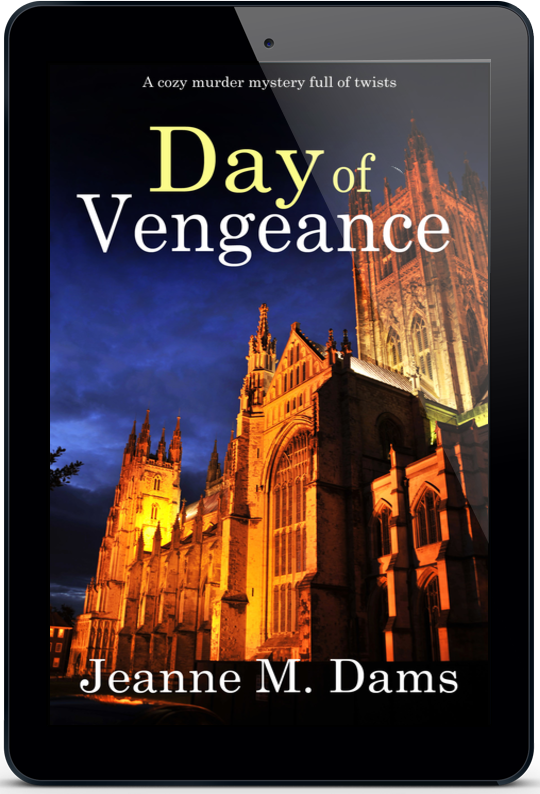
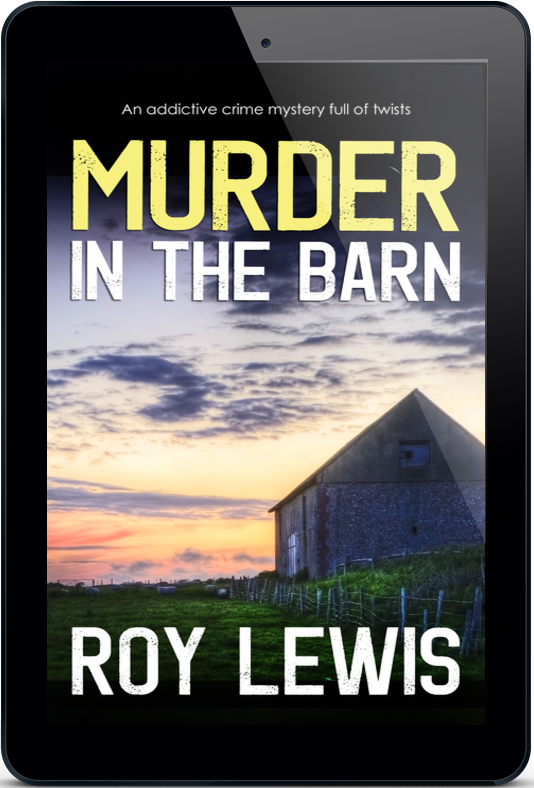
Excellent offers from Joffe Books again – shortlisted for Independent Publisher of the Year Award 2021 (The British Book Awards)

SEVEN bestselling mysteries in one box set today. The Eric Ward Mysteries Books 8 – 14 by Roy Lewis for only 99p / 99c.   Praise for the Eric Ward series:

Tightly written, well-paced and relentlessly accurate.” Oxford Times

“Lewis is at his well-rooted best in this drama of bent solicitors and corrupt businessmen living high. Well worked-out investigation, excellent characterisation and a tense climax. Highly recommended.” Sunday Telegraph

“Lewis is a master of his craft and pilots Ward through the shoal waters of business chicanery and physical violence with a sure hand.” Somerset Express

So, a good read is just a click away. More information: Joffe Books

Now, for more goodies,  have a look:

The Sisters Twin by Jane Adams  99p/99c

Lily Spencer asks Ray Flowers to investigate the death of her twin sister. The only problem being that she’s not dead yet — her death has only been foretold by a tarot reader.  Ray refuses to believe her, until a woman is stabbed to death, with a tarot card left at the scene.

“Takes the psychological suspense novel into new realms of mystery.” Val McDermid, Manchester Evening News

Constable over the Stile by Nicholas Rhea   £1.99/$1.99

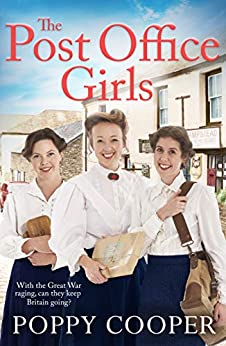
The Yorkshire Moors are full of secrets.   Constable Nick thinks he knows his patch like the back of his hand. But events are about to prove him wrong. At Frost Magazine we love cosy entertaining books and this is at the top of the list, what’s more,  it is the series that inspired the ever popular 90s TV series Heartbeat

“It’s original, it’s funny . . . one of life’s little pleasures.” Yorkshire Post  

Read it, while drinking tea, and eating a cake. Make it a really good spoiling session.

The Searcher by Tessa Morris Suzuki   FREE UNTIL APRIL 4TH

Meet Adah Flint and discover the untold story of THE SEARCHER . . .  A young girl is found dead and Adah Flint must examine the child’s body to determine the cause of death.   Adah’s search for the truth takes her through the cosmopolitan backstreets of early 19th-century London, with its inns and prisons, street markets and prostitution, cruelty and compassion.

For more information on the books available, go to  Joffe Books
Now for something a bit different but so so interesting, just as Joffe has told Frost Magazine  if you want to know what criminal investigation is like in real life, then get ready for a podcast that puts YOU at the crime scene.

This series will look at the latest developments, the famous cases and how the forensic scientists are meeting the challenge laid down by a criminal who is forensically aware.

Lynda La Plante has always been fascinated by criminality and the people that solve crime. Her books are celebrated for their authentic depictions of crime scenes and police procedures – something she achieves through meticulous research with her colleague, CSI Cass Sutherland.

Over six episodes, Lynda and Cass will investigate six branches of forensics — discussing their own experiences, talking with experts, hearing how real life crime scenes are worked, exploring the latest innovations and demonstrating how CSI fact is just as thrilling as CSI fiction.


JANE CABLE INTRODUCES ANGELA PETCH AND THE IDEAS BEHIND THE TUSCAN HOUSE

I have known Angela since we were both indie authors in Chichester, so the success of her gripping World War Two novels with Bookouture has delighted me more than most.

Every summer she moves to Tuscany for six months where she and her husband own a renovated watermill which they let out to friends and family. When not exploring their unspoilt corner of the Apennines, she disappears to her writing desk at the top of a converted stable. In her Italian handbag or hiking rucksack she always makes sure to store notebook and pen to jot down ideas.

The winter months are spent in Sussex where most of her family live. When Angela’s not helping out with grandchildren, she catches up with writer friends. Obviously we haven’t been able to do so this year, but I am still hoping.

Now, over to Angela.

It’s interesting how new ideas for novels germinate. I love that moment when I am grabbed by an event or a person and the desire to write a story is born. It can come from a newspaper article, an obituary, a photo or from somebody’s memories.

A few years ago, I cut out a magazine article with the title Swatched at birth. When babies were left at the Foundling Hospital in the 18th century, the only things identifying them were tiny scraps of fabric. The details on these swatches spoke to me: “A girl, about one day old, admitted 4 March 1759”. A piece of fabric pinned to her dress with a pattern of blue and burgundy flowers was the only link with this child’s past.

I’ve had this article for more than six years, but it gave rise to a detail in my new novel, to be published April 7th by Bookouture: The Tuscan House.

Similarly, on a shopping trip in Tuscany to our nearest town, I came across a simple exhibition of one family’s possessions. There were several outfits on mannequins and a wide-skirted 1950s dress was perfect for one of my characters. Click, click went my phone. And then I caught sight of a pair of slightly grubby booties. Click, click.  My characters come alive for me through such props and I hope to transmit the same through my words.

Maurice and I were persuaded in September 2013 to take a parish coach trip down to the Maremmana Tuscan coast. Most of the passengers were elderly and this annual Sunday had become a kind of pilgrimage to the past. Up until the 1950s, the men and boys of their families trekked down from our mountains to the sea to find better pastures for their sheep and cattle. I had never heard of the transumanza before (transhumance) and found myself scribbling down their stories. How could families bear to be separated for five long months every year? How did the women cope? What did the men get up to? My imagination went into overdrive. This led to my husband and I planning our own twenty-seven mile walk along part of the route and then another book was written. Originally, I self-published, but Bookouture acquired the rights. A Tuscan Memory  is a bit niche but a book I felt compelled to write.

We have to be in love with the stories we write and hope that our readers love them too.


Find out more about Angela and her writing on her blog: https://angelapetchsblogsite.wordpress.com


Lizi’s Belgian Chocolate Granola – Satisfy Your Chocolate Cravings Guilt-free – by Award Winning Author Dr Kathleen Thompson


Easter’s here with those egg-shaped temptations poised to derail our post-lockdown healthy resolutions. What to do?

Fortunately Lizi’s have a healthy option for chocolate indulgence.

Frost has featured Lizi’s fabulous mueslis before. Lizi and Mick Shaw create wholesome foods with low Glycaemic Loads (GL), meaning they release sugars into your blood slowly. This is important because large blood sugar spikes after eating sweet foods and junk foods (even savoury ones) can trigger inflammation. This (unhelpful) inflammation has been implicated in heart disease, cancer and type II diabetes. The sugar spikes also make your body overreact and lower blood sugar too quickly – causing you to feel hungry again an hour later. So eating whole foods with low GLs is important to keep you healthy and slim.

The great news is whole foods don’t have to be boring – let me introduce Lizi’s new Belgian Chocolate Granola – it’s positively sinful. Dark, sumptuous real Belgian chocolate pieces paired with cocoa powder, vanilla, toasted oats, and a range of nuts and seeds.

But isn’t granola full of sugar? And what about the Belgian chocolate?

You’re absolutely right, as a doctor, I’m very interested in healthy diets, and normally I give granola a wide birth – but not this one.

It’s made from the best quality ingredients and is packed with flavanols. One 50g serving contains 249 calories, 14.4g healthy fats (from nuts and seeds mainly), just over a tea-spoon of sugars, 5.4g protein and 6.5g fibre. Served with 60g of milk, it has a healthy, low GL of 6.6. Unsurprisingly it’s vegan too.

So we’ve established it’s a healthy breakfast, which will keep you full until lunch due to the slow-release carbohydrate, protein and natural fats. But (important question) does it taste good?

Having road-tested (rather too much) I can reassure you unreservedly – it tastes amazing. The 5% Belgian chocolate is just enough to provide that smooth, decadent richness of a bar of the good stuff – and it turns the milk into choc-au-lait, which is a super bonus. Never has eating healthily been such a pleasure.

Where can you buy this heaven in a bowl? Lizi’s Belgian Chocolate Granola is available in convenient resealable packs from Ocado and from Lizi’s Website RRP £3.70.

If you want an Easter treat without the guilt, I highly recommend it.

By Dr K Thompson, award-winning author of From Both Ends of the Stethoscope: Getting through breast cancer – by a doctor who knows

http://www.amazon.co.uk/dp/B01A7DM42Q http://www.amazon.com/dp/B01A7DM42Q

http://faitobooks.co.uk

Note: These articles express personal views. No warranty is made as to the accuracy or completeness of information given and you should always consult a doctor if you need medical advice.

Michael Rowan lets daylight in on magic as he sips Noctails by moonlight as the Sexton Malt Irish Whiskey launches the world’s first nocturnal cocktail kit, made of ingredients that thrive in the night-time, designed to be enjoyed entirely in the dark. 

Unusually, I feel that I should begin this review with something of an apology, as I am about to tell you how good they are without explaining exactly where or how you can acquire them.

Noctails, are cocktails that are made for the night, but to be honest, they will taste pretty good at any time.

The Nocturnal Cocktail Kit only available in their sporadic competitions but when you see it advertised, I advise you to act quickly as they are well worth winning.

This is the best advice I can give you is that these Noctails will be popping up throughout the year, so make a note and you can thank me later.

The full-bodied Sexton, Irish Single Malt Whiskey is definitely worth seeking out and is available from Amazon as well as Waitrose and other selected outlets):  https://www.amazon.co.uk/Sexton-Single-Malt-Irish-Whiskey/dp/B07L15WVCS , and even if you can’t get hold of the kit, you can always get the constituents to make some seriously delicious cocktails.

Unconventional and edgy, The Sexton Whiskey satisfies even the most restless of spirits. A single malt to be drunk however you like…even in the dark.


I can thoroughly recommend the Rhubarb Sour, which was a clever balance of sweet and sour, but beware I found it to be addictively moreish, even the Maraschino cherry, (words that I thought that I would never write.)

The Noctail mixologists have really mixed things up (see what I did there?) so if you manage to get hold of the cocktail kit it contains all the ingredients that you need to make two exclusive cocktails made from ingredients that thrive in the darkness scientifically -proven to be sweeter than those grown in the daylight.

From forced rhubarb to dried mushroom, each ‘Noctail’ kit contains all the nocturnal ingredients needed to create two signature ‘Noctails’ – The Rhubarb Sour and the Umami Old Fashioned

The Umami Old Fashioned, a revision of the classic Old Fashioned, containing mushrooms, maple syrup, Angostura bitters and of course, The Sexton Single Malt Whiskey

The Rhubarb Sour, a midnight-take on The Whiskey Sour, featuring forced rhubarb, organic cinnamon, maraschino cherries and apple cider vinegar.

Hopefully, you know me better than to think that I would just tease you about Noctails so here is a link to the recipe for the Rhubarb Sour. https://www.instagram.com/p/CMUu_HTF9di/


Women can’t catch men’s earnings, even after any children have left home

  • In 2018/19, women earned an average of £22,200 and men £27,400 (median).
  • Men earned more than women at every age. At 20-24, men averaged £19,100 and women £17,700.
  • On average, income before tax peaked at age 40-44 at £30,200. However, it peaked for men between the ages of 45-49, at an average of £34,100, and for women at age 40-44 at £26,000.

Now is the time for us ladies to take charge of our finances. Check your state pension entitlement and make sure there are no gaps in National Insurance contributions. Also consider taking out a LISA.


HMRC has issued a range of tax and income statistics: https://www.gov.uk/government/collections/personal-income-by-tax-year

Sarah Coles, personal finance analyst, Hargreaves Lansdown:

“Women are out-earned by men at every stage of their career, so if women are waiting for a better time to get started with their financial plans, they could be in for a very long wait.

Despite the fact that on average female students get better results at school, are more likely to go to university, and get more first class and upper second degrees, when they emerge from the education system, men are paid more. Between the ages of 20 and 24, women earn 7% less.

The official pay gap – which measures people doing the same work – is close to zero below the age of 40, so the difference is likely to owe much to the careers dominated by women being lower paid than those dominated by men, and how we value particular skills as a society. It’s also influenced by more women working part time from the outset, and some starting families at younger ages.

The gap between the average pay of women and men widens dramatically when people reach the age when they typically start a family. By their early 30s the gap is 13%, and by their early 40s it’s 22%. This is partly because women are overwhelmingly more likely to take career breaks in their children’s early lives, and make compromises over working hours and commutes in order to have more flexibility during their children’s school years.

There’s no time to catch up afterwards either, because not only are women paid far less later in their career, but they reach their peak earning years well before men too – at the age of 40-44 rather than 45-50. This owes something to the fact that senior management roles tend to have a later pay peak, so women continue to pay for missing out on promotions during key childcare years.

Women are also paid less later in their careers partly because once they have taken a financial hit relatively early on, they’re in the frame for any caring responsibilities that come along – including caring for elderly parents. This may mean they have to move into working part-time once again.

A solution to unequal pay requires a combination of an awful lot of things – from changing the way different skills are rewarded, to altering the balance of caring responsibilities in the home, and building workplaces that allow equality of flexibility. The pandemic may help accelerate some of this change, by revealing just how many jobs can be effectively completed with a much higher degree of flexibly, but this kind of societal change tends to be slow and incremental.

It means women can’t afford to wait for pay to equalise, they need to protect themselves now. These figures show the risk of putting off saving and investing, or building up your pension, until you’re in a better place financially. If you postpone it because you’re on a starting salary, or going on maternity leave or working part-time, then you could find yourself putting it off forever.”