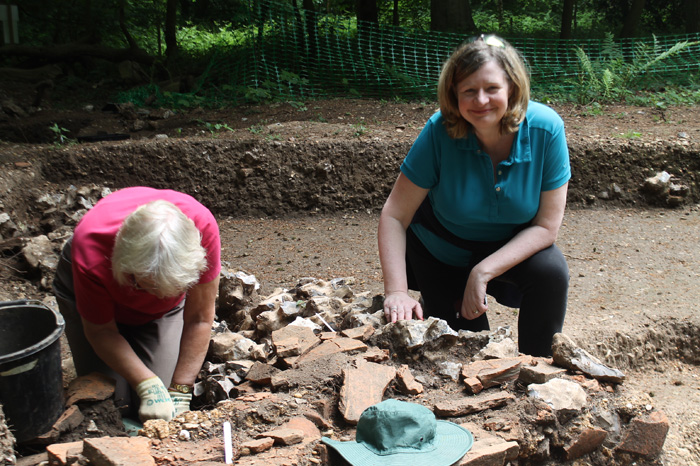
Interview with Minnie Driver who stars in new E4 comedy Speechless

Minnie Driver, interview

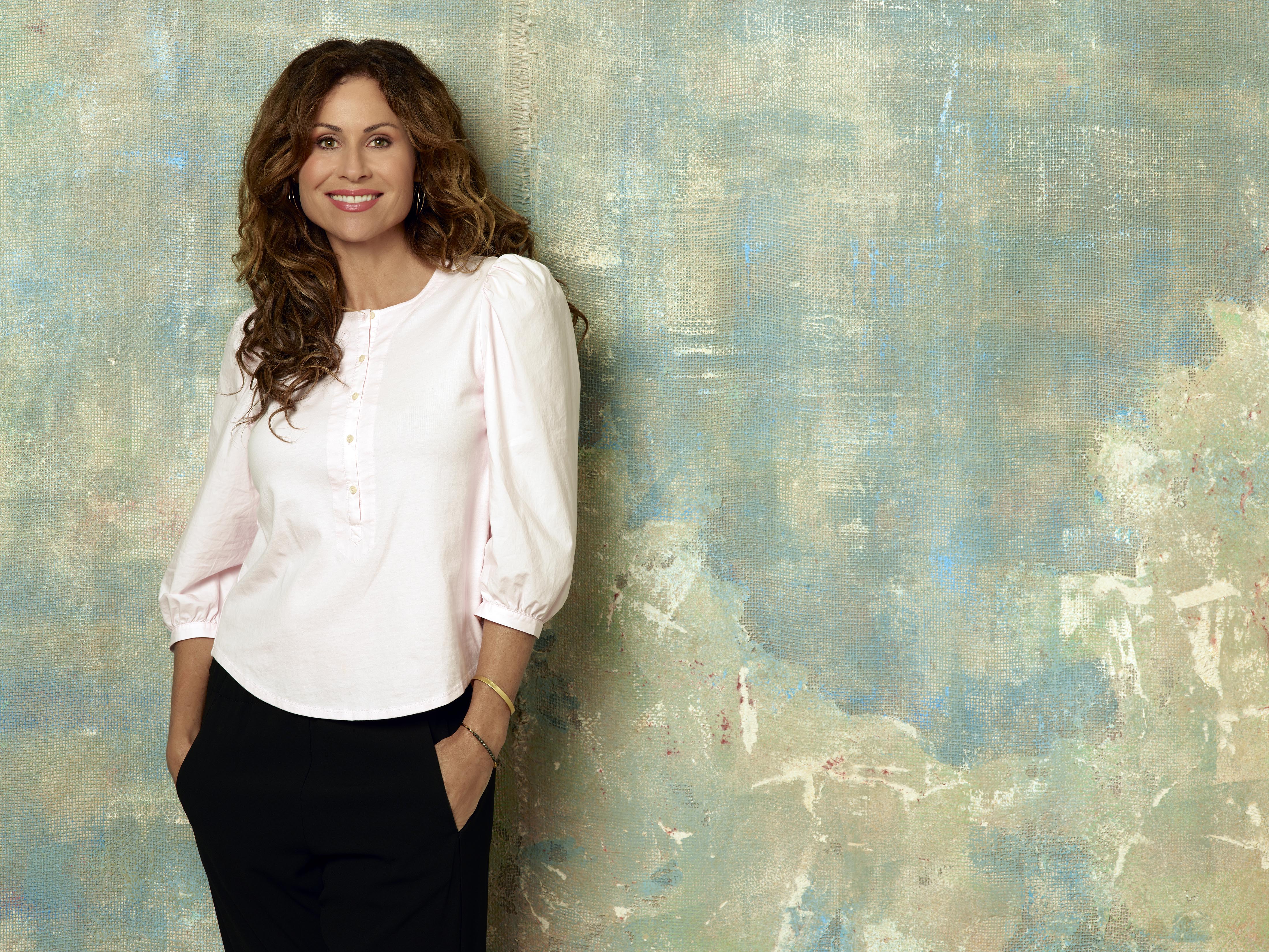
Pictured: Minnie Driver

Can you start off by briefly summing up the premise of Speechless?

Fundamentally it’s about a family that don’t have any money, and who want to get their kids into a school where their son, JJ, who has cerebral palsy, can have an aide. They constantly move around, and everything is defined by them trying to ensure he has access to a good education. And they land in a posh neighbourhood, and they have the crappest house, and they somehow pull it together. It’s really about a family who have a particular set of circumstances. It’s a very personal story to Scott [Silveri], who wrote it, whose brother was non-verbal CP. I think he can approach it with all of the humour and largesse that he grew up with.


You play Maya, who is something of a force of nature, isn’t she?

That is a really nice way of putting it. She is. She’s difficult, because she’s had to fight very hard. She’s a parent, first and foremost, she advocates for her children, but she’s also a self-aware narcissist as a personality type, which is funny and awful, when you give that type of person a mission. She’s a very interesting, complex character. But first and foremost she’s a mother, and all of these special needs mothers that I’ve spoken to over the years, they all have to advocate in this way, which is to fight. It’s a fight, a constant battle.


So what did you do, and who did you speak to, in order to research the role?

Well, first of all, a lot of our writing staff have disabilities. A lot of our advisors. Ava, who basically was the person who came up with the laser on her glasses, which she figured out she could point to a board – so that was developed. [In the programme, JJ communicates by pointing a laser, on his glasses, at a message board]. I talked to her, and I talked to tonnes and tonnes of caregivers, often mothers and fathers, but mostly the mothers. We’d invite people to the set and sit in the conference room and chat, and talk about the nuts and bolts of physically what it means to transfer a person with a disability into the shower, to get them to bed, to get them dressed, what kind of accessibility you’re looking for. So there was nuts and bolts which I needed to understand. And then there were the things you come up against – insurance companies, schools, accessibility, getting an aide, who’s that person going to be? I love the fact that JJ chooses the guy with the cool voice, who turns out to be this amazing person. Of course we’d all want a cool voice to be our voice. I love that. Fundamentally, he’s just a normal teenager, with all of the proclivities and desires and ambitions and feelings that a teenager has. And he wants a cool voice.


And he’s a teenager, as well, in the sense that he’s excruciatingly embarrassed of his mother.

Incredibly embarrassed. And he does have a very embarrassing mother, there’s no doubt.


Did you draw on your own experience as a mother, and how protective you feel when you become a parent?

Absolutely. Whilst my child is able-bodied, it’s the same fierceness, you love and you want what’s best for them at all times, and that comes before everything else. You just have a different way of looking at things. We’re planning our summer holiday right now, and I realised all my friends without kids are going and doing these wonderful things that don’t involve kids, but you’re constantly looking at life from the point of view of “Well, I’ve got my son, is it going to be fun for him? What are we going to do and how will it work?” You book places on the basis of whether there’s enough for kids to do. I’d quite like to go walking in the Pyrenees. That’s not going to happen! Oh, a yoga retreat in Bali? Nope!


Was she written as a Brit, or did that come after you were cast? Was there ever discussion about you playing her as an American?

Yeah, there was. We actually read it through for the studio and network both ways. They liked the English accent, I think primarily because you have a cadence of your own humour in your own accent. I wanted her to be an American. I’d just done About a Boy, and I’d been British in that, and I wanted the challenge of being American. She was written as an American, and that’s what I wanted to do, but it just turned out to be funnier the other way around.


There are so many pitfalls to a show like this, from being overly sentimental to preachy to exploitative. The show treads that tightrope incredibly well, doesn’t it?

It really, really does. I got that from the pilot, and from talking to Scott Silveri, and to Chris Gernon, who’s one of my great friends, who is our executive producer and directed loads of the episodes. She directed every episode of Gavin and Stacey. We were all of us allergic to the notion of sentimentality and melodrama, primarily because that is the way that the media represents disability. You’re not only often looking at able-bodied actors playing disabled characters, but they’re trying to get away. They’re either trying to kill themselves or they’re trying to get out of this terrible situation. We all wanted to make a funny show, first and foremost, and because of our writing staff, because of Scott, and because of Micah [Fowler, who plays JJ] we’ve got an in as to where the humour lies within that. And if you’re approaching it from a comedic point of view, it’s really easy to avoid all of that other stuff. There are definitely heartfelt, emotional moments, because that happens in any family. But none of it is really around the idea that it’s all impossible and awful and hard.


Do you ever find yourself wondering what Maya would be like if she didn’t have a disabled child?

Yeah, I do, I really do. I think that she would be as big and pushy an advocate, but JJ is a raison d’etre for her, and as JJ grows up and goes off to college, what is she going to do? She won’t have that focus, so much of her identity is tied up with being the mother of a special needs child.


What’s it like working with the kids on the show?

They’re amazing. Genuinely, I have always felt that film and TV sets are no place for a child. You’re missing out on a childhood when you’re working that young. But these kids have unique parents, and they themselves are lovely people. They’re just lovely, and they’re deeply funny. They have funny bones, as opposed to being child actors who have that weird slightly Stepford thing that can happen, where they’re acting being a child because they’ve not actually experienced what that means. They’re all really, really good actors, and they’re all children too! Only they’re not children now, they’re all bloody huge and grown up. We just celebrated Micah’s 21st birthday. He got the part on his 18th birthday. But they are great, and they’re just getting better and better, which is lovely to see. You become weird de facto parents. I feel very maternal towards all of them.


Micah, who plays JJ, manages to bring huge charisma and humour to his role. That’s no mean feat for a non-verbal role, is it?

Absolutely. And I think it’s been a huge learning curve for him. He was very inexperienced when we began, and he’s had to learn on camera really. Plus it’s a very specific thing he’s being asked to do – to calibrate your reactions. It took a minute for all of us to figure out how it was going to work. Doing a scene with Micah is really interesting – when you’re reading ‘for him’ off his board, and then doing your responses as you. It’s not easy, but it’s really interesting. Watching him grow as an actor, and how much he enjoys it, is really lovely.


Have you had any feedback from the disabled community, in terms of what the show means to them?

Yes, a huge amount. Mostly on social media. Reading a tweet from a non-verbal person with Cerebral Palsy, saying “I sit and I watch my experience, and it makes me scream with laughter” is so gratifying. Or families who go “It’s extraordinary that we can all sit down and watch this together, my able-bodied kids and my kid with a disability, and we can all enjoy it and roar with laughter and feel that we are seen”. Without wanting to get too deep on it, the idea of representation for people who I don’t think they have been fairly represented, to be able to see themselves, and for it to be a laugh, I think that’s lovely. And I think it’s expanded the conversation here in America. The more you include, the more impossible it is to maintain your distance and your looking away which, let’s face it, most people do around disability. They don’t know how to interact with it, how to approach it. And I think the humour has broken down that barrier quite a lot.


You’ve talked in the past about the show being pretty exhausting to film, with 65-hour weeks for months on end. That must take a toll…

Definitely. The first two seasons, particularly season one, were the hardest I’ve ever worked in my career, to the point of real exhaustion. Scott’s whole idea was to have a show about someone who can’t really move, so he wanted a fast-paced show, and a show with lots of action in it. But also, when you’re working with someone who uses a wheelchair, that presents unique challenges, which can be really time-consuming. It’s just one of the fundamentals of doing it. So it took a long time for us to get into a swing that was easier. Definitely this season was a bit easier, but shooting nine months, five-days-a-week… now it’s 13-14-hour days, as opposed to 14-17 hours before. So it’s better. But I’m not going to complain, it’s a great job, and it’s meaningful and funny. If you can pull off those two things, you’re ahead.


What does it mean to you to have the show finally going out in the UK?

I cannot tell you how long both Chris Gernon and I have been waiting for this. It doesn’t really mean anything to anyone else, but we were both like “How can this not be on in the UK?” It speaks to social inclusivity, to a National Health Service that gives free health care – these things that we fight against in the US. I’m thrilled, because I just know that this show will land with British viewers, because it is funny, and because Britain has always seemed to me to not be scared of subject matters that other people find difficult. The UK is, Brexit aside, an extremely inclusive place. Always has been. That’s what I grew up in. And I really like it when you have American-British crossover, humour-wise, because when it works I think it is brilliant.


Speechless airs weekdays from today at 7.30pm on E4


SISTER SCRIBES: KIRSTEN HESKETH ON WHY WRITERS CAN’T QUIT

‘At what point do you give up on the writing?’

A friend asked me that the other day. A longstanding friend whose views and judgments I generally respect. We hadn’t seen other for a few months and she asked if I was published yet. When I replied that I was not, she followed through she asked the question above. She asked it pleasantly, with interest, no apparent edge at all. In her mind, clearly a logical and reasonable question.

‘At what point do you give up on the writing?’

I didn’t really answer my friend. I think I just shrugged and the conversation moved on. But it got me thinking. More than that, it knocked me for six.

‘At what point do you give up on the writing?’

What had she meant by that?

Was there an implication that I was failing, maybe had already failed, because I wasn’t yet published? Was there a suggestion that maybe, just maybe, I was deluding myself? Kidding myself that my writing was going somewhere when really there was no hope. That there was no chance of my ever being published. Was that, I asked myself in one of those dark nights of the soul, how other people, other friends saw me? Did they feel sorry for me? Did they shake their heads at each other and say, ‘poor girl, she’s been plugging away at this for so long’?  Did they purse their lips and murmur, ‘she still isn’t published, she’s still warbling away from deep in the querying trenches’?

Then I stopped being paranoid!

It had only been a question.

But maybe this is what I should have replied:

  • Things in publishing work at glacial speeds. It’s not unusual for nothing to happen over a few months – or at least nothing you can announce to the world at large. In fact, since I’d had last seen my friend, I’d been signed by a top London agent. I was moving in the right direction and full of optimism and enthusiasm. But, no, I hadn’t been published.
  • It’s really difficult to get published nowadays. It takes talent, sure, but also loads more persistence than you think you’ll need. And luck. Lots of luck. Getting the right work on the right desk at the right time. I know many really talented writers who are not published yet. And yet hope still springs eternal. It may happen. It will happen ….
  • It’s not just about being published. It’s really not. It’s a journey, not just a destination.
  • I have never thought about ‘giving up’. Oh, sure, when I have a knock-back, I throw things about* and say I’m going to take up crochet instead. But, even at the time, I know I don’t mean it. More than that, I can’t imagine a time when I would.
  • I write because I love writing. I write because I have stories and thoughts and dreams I want to put into words. I write because I can’t not write. And even if I am never published, will it still have been ‘worth it’? Hell, yeah.

So, what should I have said when my friend asked at what point I would give up writing?

‘At what point do you give up on the writing?’

I should have told her the truth.

I should have said ‘never’.


Writers, how would you have responded to my friend’s question? Do you agree with my points above? What else would you add? I’d love to know.

Join the discussion below or @Sister5cribes


Nordés Atlantic Galician gin: Michael Rowan becomes the latest convert 


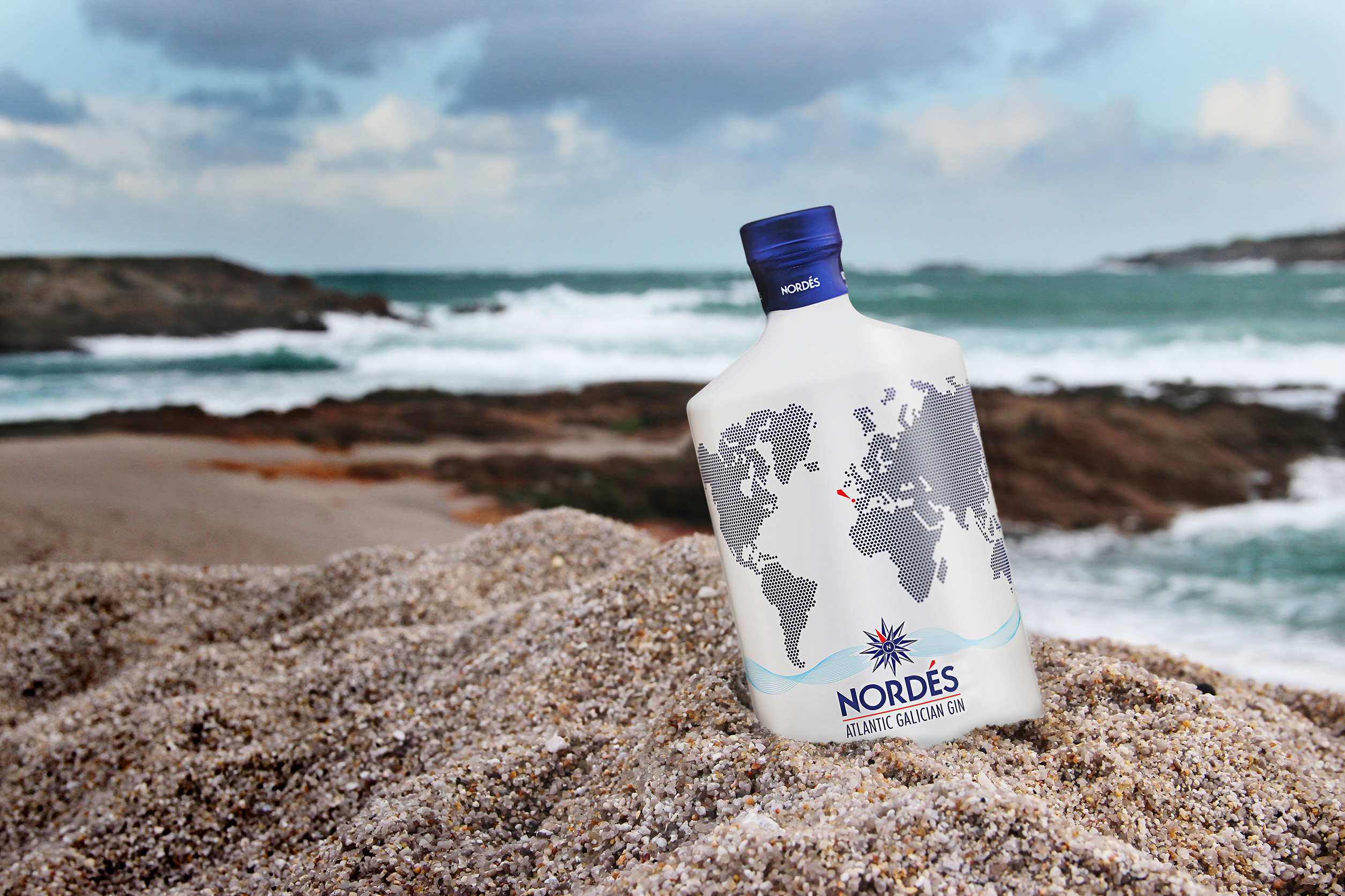
Not content with getting us Brits hooked on Tapas, those talented Spaniards have done it once again, this time by introducing us to Nordés Atlantic Galician gin, Spain’s fastest growing premium gin.


However, Nordés believe that their gin’s herbal and highly aromatic flavour profile makes it the perfect accompaniment to a wide range of savoury and sweet dishes, suggesting that perhaps it’s time to challenge the habits of British drinkers like me, and not restrict ourselves to drinking gin as an aperitif.


Always one to accept a challenge and being an avid drinker of gin for the better part of 35 years I can assure them that I am not to be so easily persuaded.


Of course, back then the choice of gins was limited and presented with 2 ice cubes, a slice of lemon and a bottle of tonic.

Thirty five years later and this once callow youth has developed a somewhat more discerning palate.

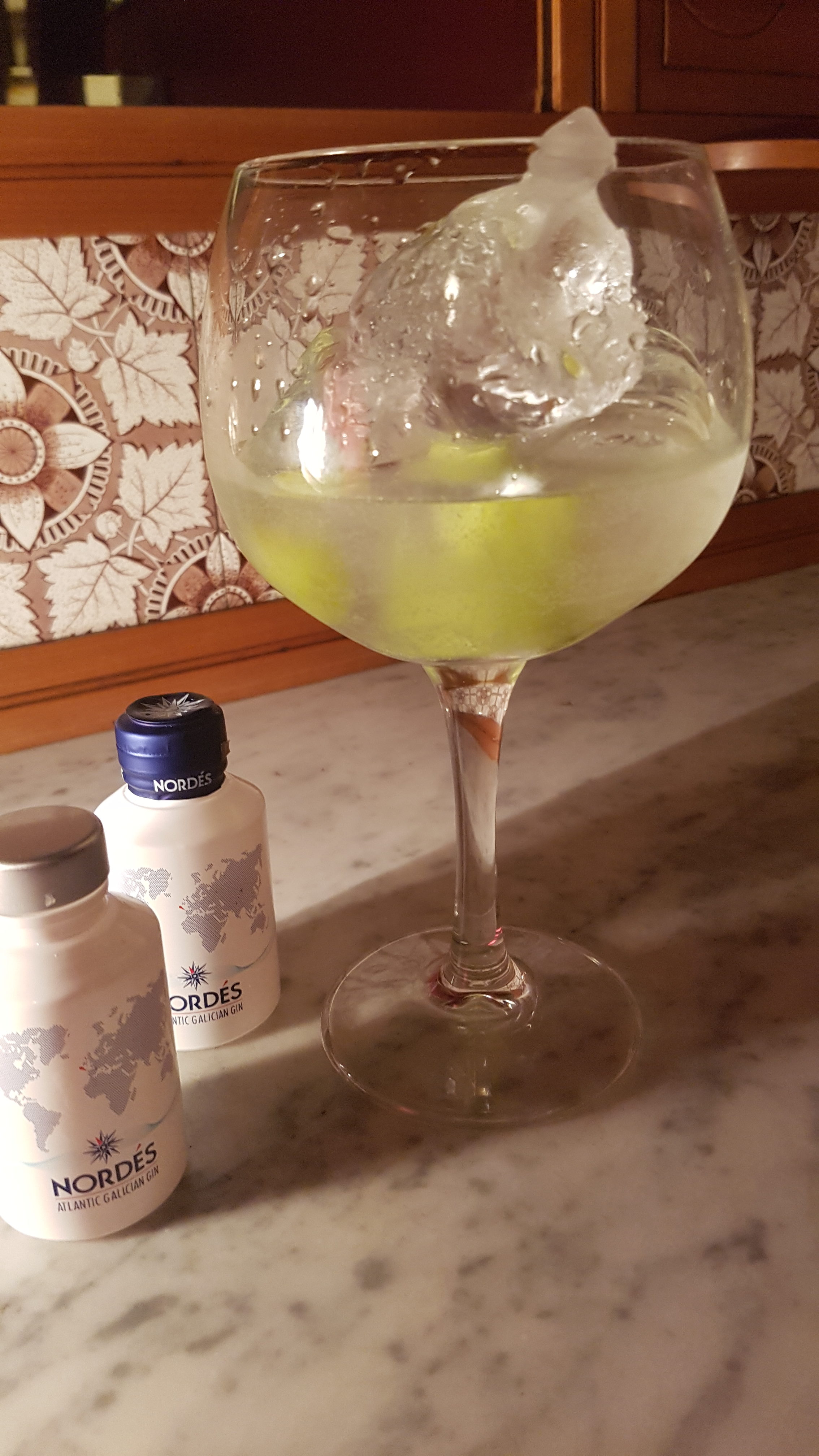
A large Copa balloon gin glass filled with ice, three white grapes for garnish and a large measure of Nordés Atlantic Gin, and I was raring to go.

It is important to taste the gin before adding tonic in order to really appreciate the aromatics. This is particularly true in this case, as the gin is light and flavoursome.

If my love affair with gin has taught me anything it is to add the tonic sparingly. You can always add more tonic, but you can’t take it out.

This gin has gastronomic notes of eucalyptus, laurel and mint and delicate flavours of white fruit, presumably due to the White albariñograpes, from which this gin is derived.


If you don’t have traditional tapas to hand, Nordés suggests pairing a well – made gin and tonic (try serving it with fresh sage leaves) alongside a smoked salmon starter or spicy sausage. As a main, match the gin with Thai cuisine to bring out the lemon verbena notes. And for desert, it could be paired with a summer fruit sorbet and a sprig of mint to bring out the sweeter aromatics.


My verdict is that this is a highly aromatic gin with a superb fresh taste and cliché or no, it certainly had me smacking my lips, or maybe that was the Nordés Atlantic gin-soaked grapes?


But the big question has to be, would I buy this gin and I have to say that I most definitely would.


Nordés gin (70 cl) ABV 40% with a RRP of £35 and is available nationwide at Amazon and Master of Malts.

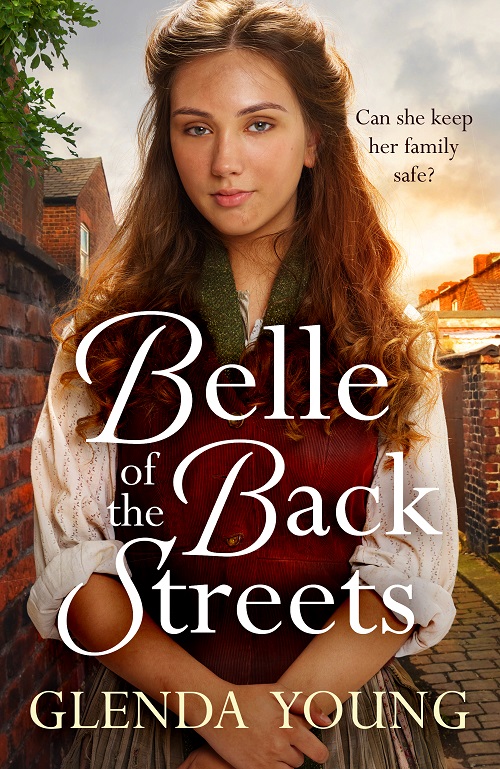
Belle of the Backstreets by Glenda Young


Belle-of-the-Backstreets-Glenda-Young

When Meg Sutcliffe’s father returns from the Great War he teaches his fifteen year old daughter, Meg the ways of the rag and bone man. But when tragedy strikes Meg has no other option than to carry on alone with her trusty dog, Spot at her side and her beloved horse, Stella pulling the wagon. 

Meg is a beauty and attracts attention wherever she goes – not all of it of the right sort, and when she catches the eye of charming Clarky it looks like she might have found a protector and a chance of happiness. But is Clarky really what he seems? And could Adam, Meg’s loyal childhood friend, be the one who really deserves her heart?

Meg Sutclifffe is a feisty beauty who will do whatever it takes to keep her family fed, and a roof over their heads. The Sutcliffe family may not have much but they have each other. Totally unsuited to the hard, heavy work of her father’s rag and bone round, Meg will not be deterred and sets out to build up the business to provide for her family.

Set in the mining village of Ryhope in the north east, Glenda Young paints such a fine picture of the area and the period that by the end of the book I felt I had been there. Her descriptions of both character and setting are wonderful and although Belle of the Backstreets has its fair share of villains, there are enough good honest people in the community to support and encourage her. There is a warmth and humour in bucket loads and you’ll be rooting for Belle to overcome all the trials that beset her.

A warm-hearted debut from Glenda Young.

Lovers of Dilly Court and Rosie Goodwin will enjoy Belle of the Backstreets.

About Glenda Young

Glenda Young credits her local library in the village of Ryhope, where she grew up, for giving her a love of books. She still lives close by in Sunderland and often gets her ideas for her stories on long bike rides along the coast. A life-long fan of Coronation Street, she runs two fan websites for which she sometimes interviews the cast of the show. For updates on what Glenda is working on, visit her website glendayoungbooks.com and to find out more find her on Facebook/GlendaYoungAuthor and Twitter @flaming_nora.

Headline – Paperback Original – 7th March 2019- £6.99 Also available in E-Book and Audio


A mystery/thriller to chill the soul: review by Kate Hutchinson

It’s a growing trend to  place the care of children at the heart of a thriller as it seems a good way to get  the reader to care quickly about the characters. Here is one which considers the relationship between mother and child.


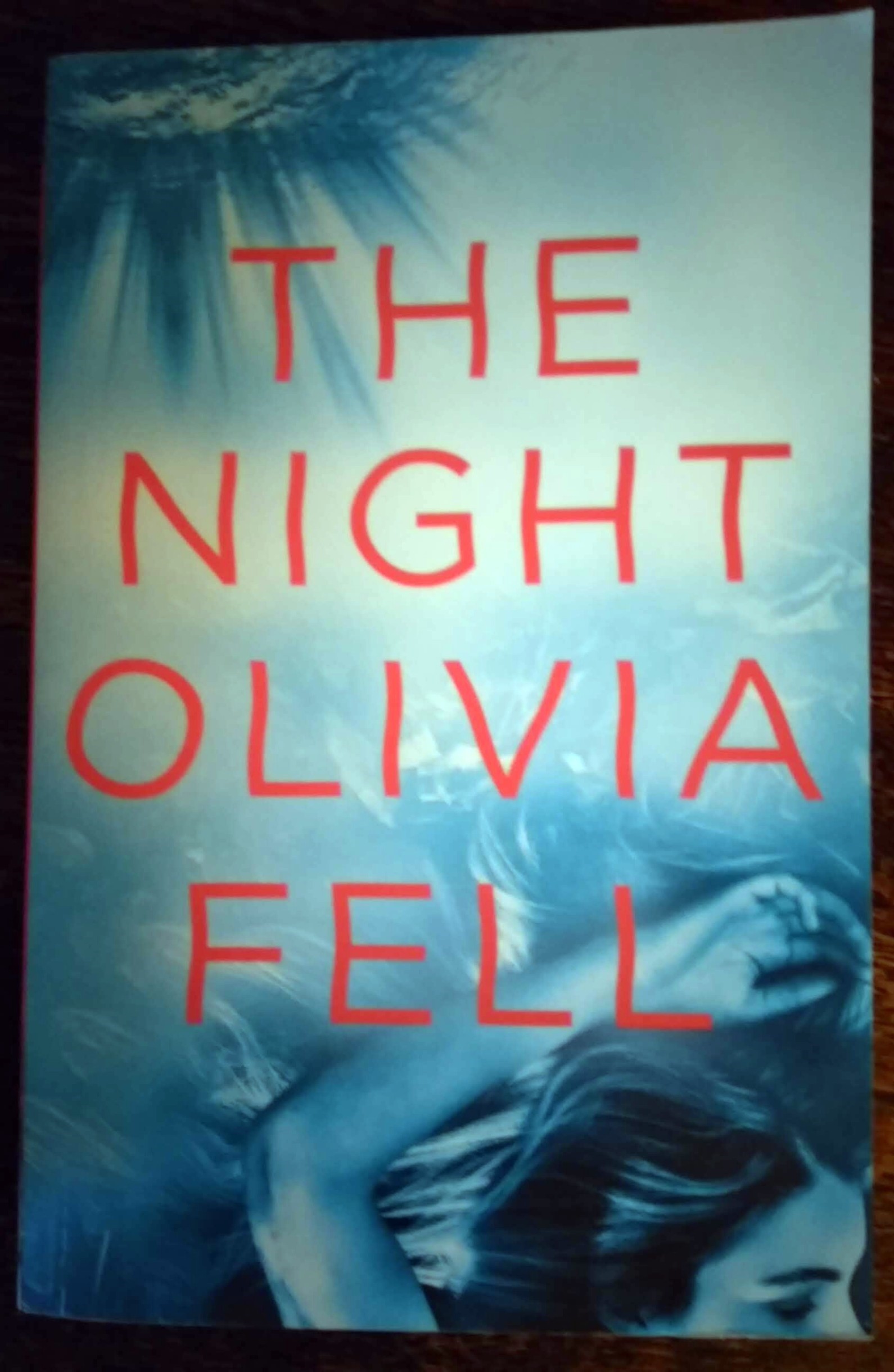
The NIght Olivia Fell by Christina McDonald


It’s every parent’s worst nightmare – to be woken in the middle of the night to hear your child has been in a terrible accident and is now on life support. But then Abi finds that her sensible, hardworking daughter is three months pregnant and she didn’t really know what was going on in Olivia’s life at all. How did Olivia get those unexplained bruises on her wrists, and did she really fall?


The story alternates between Abi in the present, trying desperately to find out what had happened in her daughter’s life and to convince the police to investigate her death, and Olivia in the recent past leading up to the accident. The author brilliantly balances the revelations in each half of the plot, which moves swiftly and it is written with great confidence for a debut novel. The relationship between Abi and her daughter, in particular the difficulty of being a single parent with a single child, is beautifully drawn and I felt all the characters were well-rounded and believable.

A really good story that gets you thoroughly involved.


HarperCollins pb £7.99


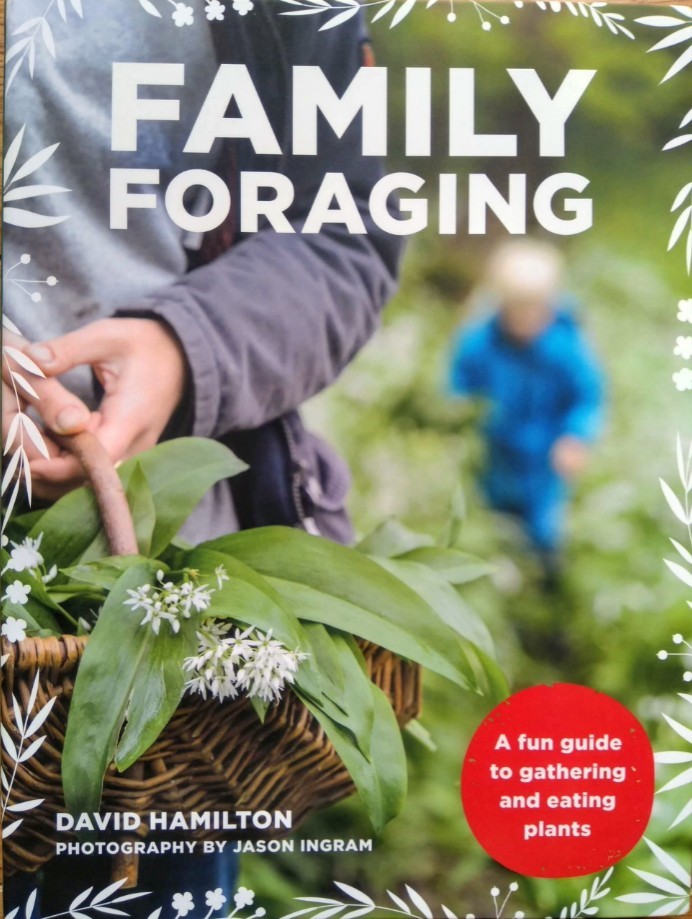
Family Foraging by David Hamilton Photographs by Jason Ingram reviewed by Kate Hutchinson


Blackberrying is one of those beloved childhood memories involving innocent sunlit days, sometimes real and sometimes acquired from The Famous Five or Milly Molly Mandy. It harks back, as they say, to simpler times.


But whilst most of us would still feel confident about taking our children out to harvest a free crop of bramble fruit, there are a lot more great foods to be foraged out there that could turn a family walk into a treasure hunt.


This lovely book lists thirty edible plants in seasonal order, most of which are commonly found in parks, hedgerows and woodlands. Each one has a really clear description of the different parts of the plant, illustrated with both photographs and drawings, making identification easy. Plus a recipe or two so you know what to do with your finds. Fancy homemade hazelnut chocolate spread or wild garlic bread? Elderflower shortbread or a wild cherry ice lolly?


David Hamilton, a gardening journalist and expert forager manages to get just the correct tone; the right language for a child to read it but without any hint of being patronising or annoying for the adult reader. All in all the perfect book to get a family of the sofa, out of the house, and exploring the great outdoors.

White Lion Publishing £16.99


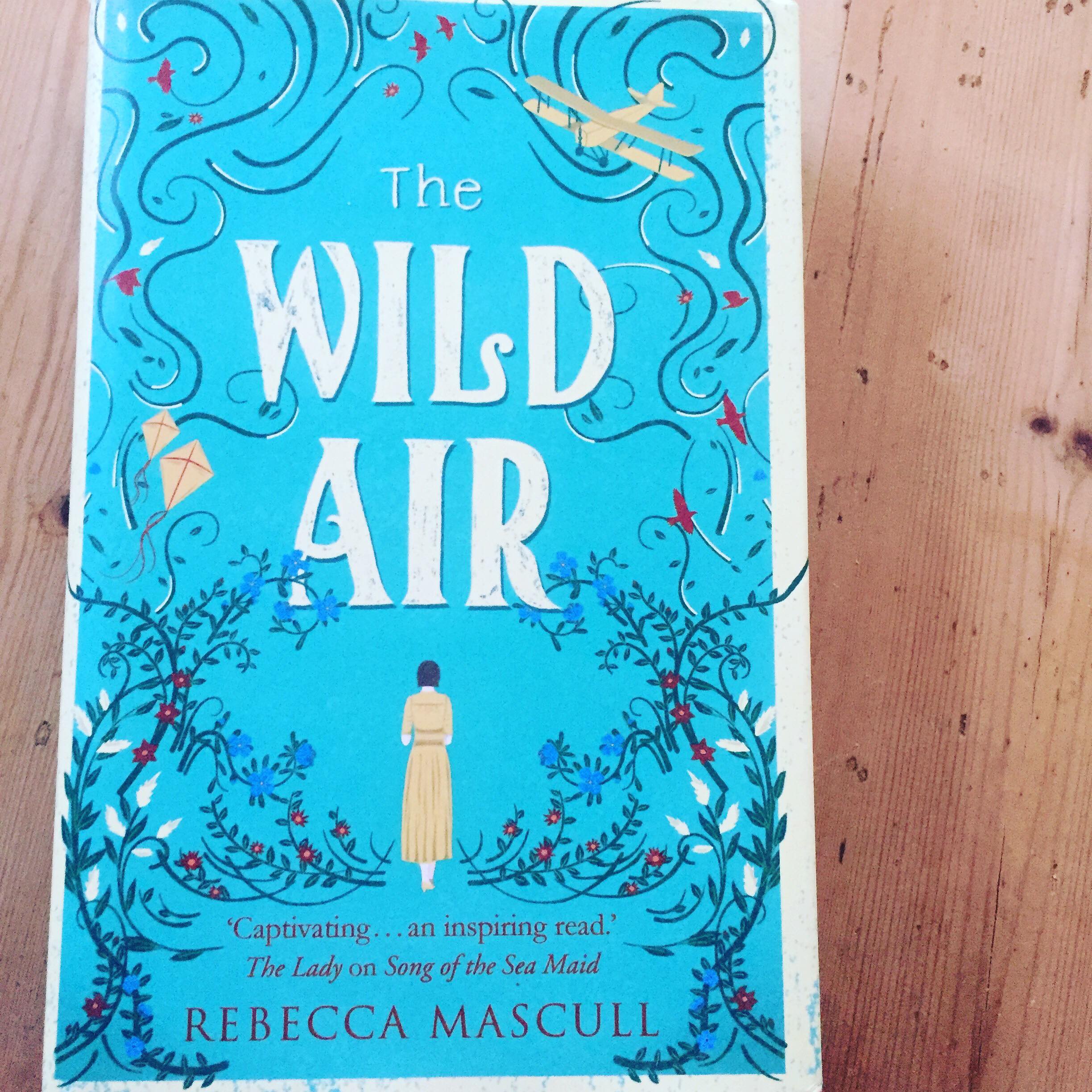
The Wild Air – Rebecca Mascull

Wild-Air-Rebecca-Mascull

Della Dobbs is my kind of heroine. The quiet, unassuming odd-one-out of a colourful family who becomes excited by flight and sets out to follow her dreams.

The Wild Air is set in Edwardian England when flight was in its infancy and aviators were either madmen or superstars, depending on your opinion.

Her father is a retired actor, scuppered by an accident, and his only son, Puck is his golden boy. Both of Della’s older sisters have found their place in life – one as the traditional (of the time) wife and mother, the other an actress living in London. Life holds no surprises for Della until her widowed Great Aunt Betty returns from Kitty Hawk, North Carolina bringing news of a great bird.

Mechanically minded Della is inspired by stories of the Wright brothers and, with her aunt’s encouragement, begins to design and build kites which they fly on the flat sands of Cleethorpes on the Lincolnshire coast. It’s a place I know well and Mascull’s love for the area shines through.

Over time Della’s ambitions grow and she dreams of learning to fly. The majority of aviation pioneers were male, few women allowed to experience the dangers it entailed, but Della is entranced and wants to know what it’s like to soar into the wild air for herself. Despite the odds that are most definitely against her, Della doubles her resolve and goes in search of women and men who will support her. Della takes to the air and we are drawn into her experience to discover how fine a balance life in the air was, the freedom – and the danger.

As the story encompasses the Great War Della meets with danger, loss and tragedy but, ever resourceful, she relies on her passion and knowledge to play her part. There’s plenty of emotion – love, laughter and despair – as Della sets out to shape the world in her own way.

Mascull’s research is meticulous and her attention to detail recreates a time of immense invention and daring. Her own characters are artfully blended with real-life aviation pioneers of the period with ease and fluidity. The Wild Air is well written, with a beautiful use of language that draws the reader in.

The pages are alive with wonderful fully-formed supporting characters – I loved Aunt Betty and the delightful Dudley Willow – isn’t that just the most perfect name?

Della Dobbs is not your average heroine, which in itself is refreshing. All in all, The Wild Air is an  inspiring and uplifting read that leaves the characters in your mind long after you’ve read the last page.

The Wild Air is published by Hodder RRP £9.99


ABOUT REBECCA MASCULL

Rebecca Mascull is the author of three historical novels. She is currently hard at work on her next trilogy of historical fiction, with the first novel due for release in April 2019 to be published by Bonnier Zaffre as The Ironbridge Saga. These will be published under the pen-name of Mollie Walton and the first book in the series is set in the dangerous world of the iron industry: THE DAUGHTERS OF IRONBRIDGE.

Rebecca has previously worked in education, has a Masters in Writing and lives by the sea in the east of England.


SISTER SCRIBES GUEST: ADA BRIGHT ON BEING A CO-AUTHOR

I’m delighted to welcome my very good friend and fellow co-author, Ada Bright, to Sister Scribes. Ada is a novelist and a photographer, a wife and a mom and a very picky eater. She has lived in Southern California her whole life and says she fits into a good number of the stereotypes of the area, including being pretty laid back, considering anything below 65F as frigidly cold, and being unfazed by any earthquake under 5.0.

Over to you, Ada!


Thank you to Cassandra Grafton for inviting me to be a guest on Sister Scribes.  I was going to quip that we really are “sister scribes” since we co-author novels together, and we are unofficial family, but then I was imagining Cass reading it and injuring her eyes because she rolled them so hard… and I wouldn’t want to be the cause of something like that!

My best memories of childhood are from when I was living fictional stories by reading books. The characters I read about and re-read about were so much more formative to who I am than my early peers.

Writing became a natural next step for me. By writing extra scenes or character studies, I could hold on to the world I loved longer. My desire to write novels came more recently, but stemmed from a similar core. I simply wanted more.

Of course, impatience is not usually a good trait for a writer. But, in my case, I got  very, very lucky: I’d already met Cass. While we share a similar taste in stories, our writing is very different. I write in bursts that push the story forward, she composes a scene and always seems to have a handle on just exactly where our characters, our plot and even the reader are in their experiences at any given moment.

While we specialize in different areas, when we co-write, there is not one sentence that is purely one or the other of us. We write alone during our respective work days (which are 9 hours apart, since Cass lives in Switzerland). That means we usually start by waking up to a new scene from the other partner that we will begin by editing. Once we edit the new material, we either ask for a call to clarify what we’ve read or what we need to write next or we just continue on.

So many times, while talking about our first co-written novel The Particular Charm of Miss Jane Austen, I say how much I love co-writing with Cass – I mean, what writer wouldn’t want to hand off a scene that isn’t working to someone else and have it come back polished?! But, the further I get on in my solo novel, the more I realize that this experience of creating a shared world with someone has been a learning experience beyond measure.

As hard as writing can be, Cass and I have created a system that is, with all its ups and downs, fun. I have often joked about how I would leave text in the middle of the manuscript that said something to the effect of “Cass writes something brilliant here.” It can be a crutch, most definitely, but eventually, each writer will have taken a turn at being the hero even if the night before their entire scene ended up in the bin.

What I couldn’t have predicted is that seeing how Cass untangled us taught me both to recognize my negative patterns and also to learn ways of getting myself out of the ditches I’d written myself into.

Last year, Cass and I signed with Canelo Digital Publishing, and we’ve just finished writing our second novel together, which will be out later this year. No matter where our single careers take us, I will always be game to join our words together to create the voice that is both of us but not quite either of us.

Thank you for having me, Sister Scribes!


You can find Ada and Cass on their Blog, Tabby Cowhttps://tabbycow.com

Alternatively, Ada can be found on:

Facebook Ada Bright

Twitter @missyadabright