A Day in the Life of award winning author Jennifer Wilkin Shaw.


Jennifer Wilkin Shaw was awarded joint second place in the WforW Gerogina Hawtrey-Woore Award for Independent Authors, Non-Fiction Category with the beautifully written a Testament of Grief.


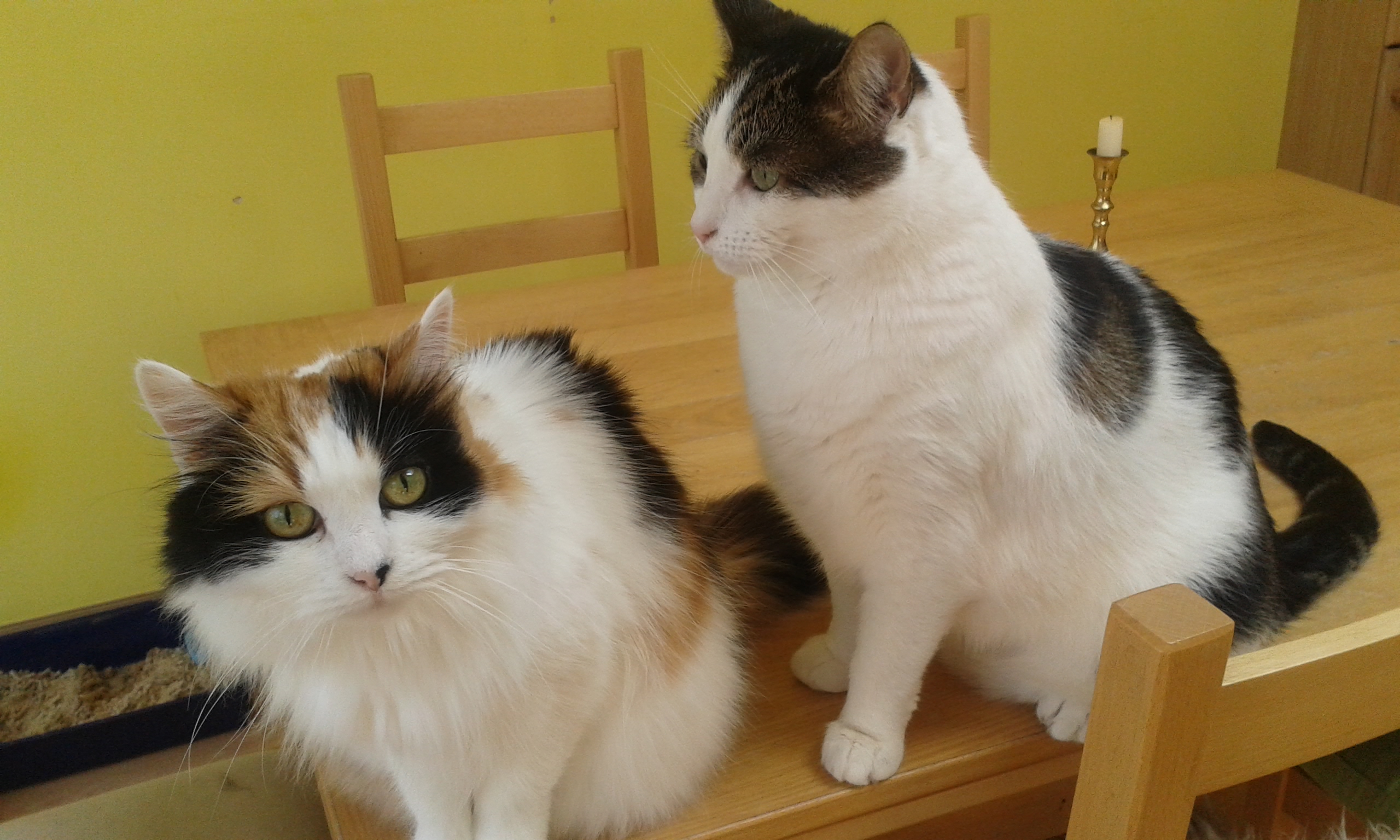
My morning begins at 7.30 when I switch on Classic FM, stroke two cats, breakfast from a tray, including a pot of Earl Grey, and start reading. The latter, a pre-requisite to writing, is company and gets my brain into gear.  My choice is literary biography or rather, ‘other sillies like me’ and often the spouses of those historical literary figures, many of whom were writers themselves: Constance Wilde, Sylvia Plath, Assia Wevill.


I wake up as a writer and now having won a prestigious award I feel recognised and proud. After breakfast I answer emails, usually about my work, plan appointments, future talks, and have a quick audio chat.  I begin writing just after 9. At the moment I am working on a new book and fine tuning my third play, getting it ready for a staged read.

 

Lunch is another chance for reading, part of the writer’s toolbox, and a change of setting, conservatory if warm, my big red sofa if not, and although I’d love to be with the Durrells, chatting and indulging around their huge communal table, at the moment I’m with George Orwell in Paris and London, again! At this point Crumble or Custard may saunter in and lure me into some time wasting, but I resist.
 

People who create have to be single minded and often alone. I depend on solitude to work, but I do have to balance it with social interaction, otherwise, as a writer living in the sticks, I run the risk of feeling cut off. I remember the first time I wrote; a piece about a lonely rabbit. I was seven and confined myself to my bedroom until I finished. Nothing much has changed! So in the afternoon I routinely go out! A coffee shop, independents mainly, different beans, different days, they expect me!
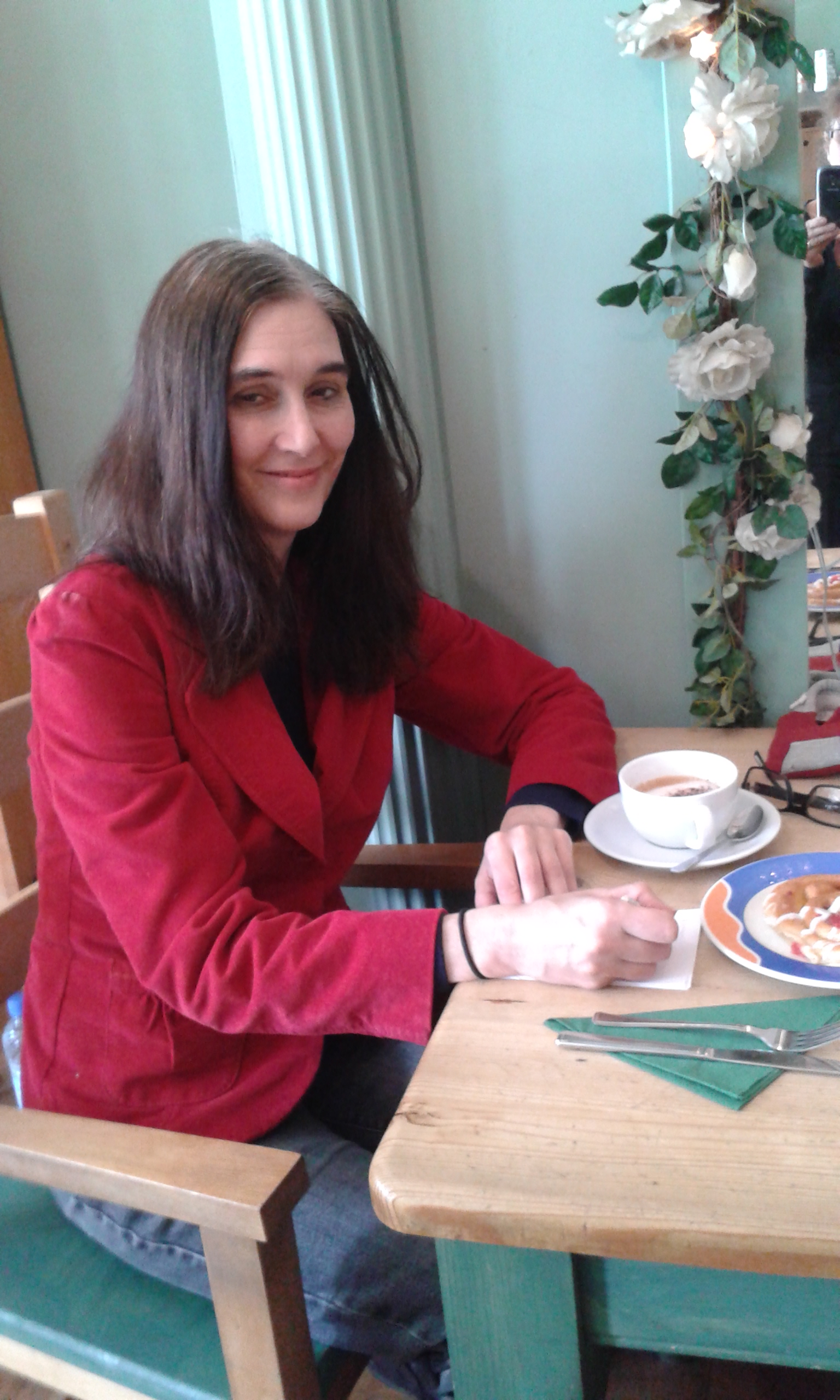
At Filter Through Coffee Shop, Holsworthy

Generally, people take you seriously as a writer if you sit in a corner, fresh from the shower, with a state of the art Apple Mac and headphones. In a western world that struggles with too much, I value the ‘less is more’ approach. Sitting amongst people, with a small piece of paper, a tiny sharp pencil, correcting the work saved on my phone.  My world seems miniature, even my coffee is in a dolls size tea cup a ‘double macchiato’, titchy! But I have produced some of my best monologues this way.

I walk for half an hour to an hour every other day, and after some food shopping I mosey home, meet a good friend for a meal, or sometimes go to the theatre. As a playwright, again this is important, but my default direction is the sofa, a decent glass of red, NCI S, then more corrections. A thoughtful couple of Beeb 2 or 4 programmes, loving Simon Schama’s presentations at the moment, it taps into my other love, Art History, and I am ready for bed; thankful for so many great friends, relatives coming into my life, and the freedom to write.

a Testament of Grief by Jennifer Wilkin Shaw pub Simone Bluestock Publishing

Available as e-book or paperback from: https://www.amazon.co.uk/Testament-Grief-Mothers-Story-Survival/dp/0995594902

www.facebook.com/jennifer.wilkinshaw

www.wordsforthewounded.co.uk
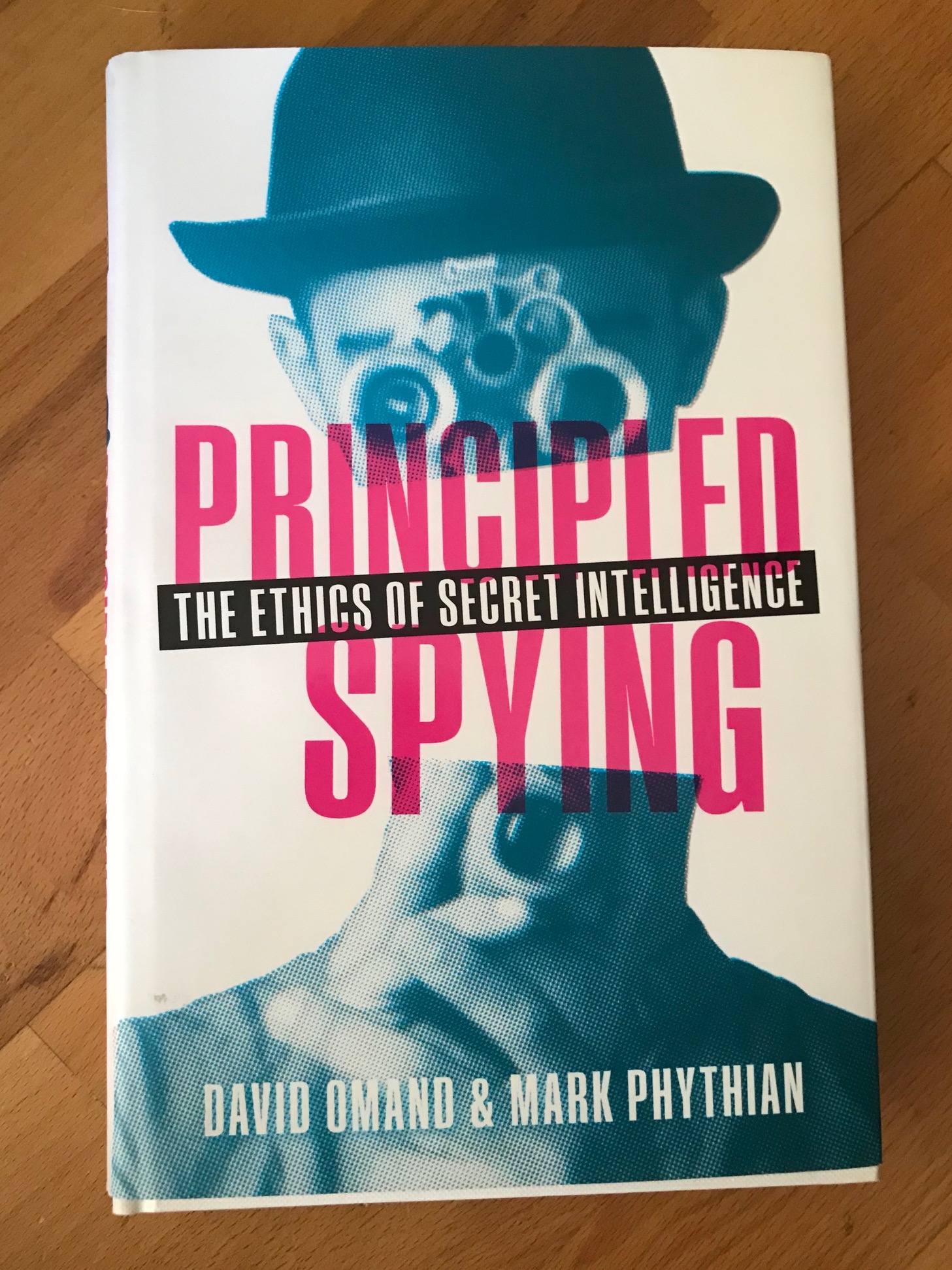


Principled Spying: The Ethics of Secret Intelligence | Book of The Week

principled spying

This book is both timely and much needed. How far should a state go to protect its people? Does the ‘greater good’ argument ever give just cause? This book has lots of fascinating history on spycraft and sound arguments on ethics. A riveting read and a well deserved Book of the Week. 

The question of how far a state should authorise its agents to go in seeking and using secret intelligence is one of the big unresolved issues of public policy for democracies today. The tension between security and privacy sits at the heart of broader debates concerning the relationship between the citizen and the state. The public needs-and wants-protection from the very serious threats posed by domestic and international terrorism, from serious criminality, to be safe in using cyberspace, and to have active foreign and aid policies to help resolve outstanding international problems. Secret intelligence is widely accepted to be essential to these tasks, and to be a legitimate function of the nation state, yet the historical record is that it also can pose significant ethical risks.

Principled Spying lays out a framework for thinking about public policy in this area by clarifying the relationship between ethics and intelligence, both human and technical. In this book, intelligence expert Mark Phythian teams up with the former head of Britain’s GCHQ signals and intelligence agency to try to resolve the knotty question of secret intelligence-and how far it should be allowed to go in a democratic society.

Available here.

Hokusai: The Master’s Legacy Editor, Rosalie Menegazzo. Review by Penny Deacon


I have to admit that I came to this book as someone with very limited knowledge (and even less understanding) of Hokusai’s work. I hope I am not the only one who thought: ‘Hokusai? The Great Wave?’ and then could add very little more. If you are like me then you need this book. I suspect you will get even more from it if you already know something about late 18th and 19th century Japanese art.

Hokusai: The Master’s Legacy presents a selection of more than 200 works. It is a sumptuous volume with exceptionally high quality illustrations coupled with a text that supplies both a historical and an artistic context in which to explore these images.

Setting Hokusai’s life (1760 to 1849) and work in Japanese society gave me the opportunity to begin to appreciate the significance of details (the bow on an obi, the use of colour, the oblique indicators of seasons) and enriched my reading of the art. By pointing out that the arrival of the US Fleet in 1854 opened up Japanese ports to trade with Europe and the USA I realised why the passion for all things Japanese swept Europe soon afterwards. The fabrics, prints, furniture and porcelain must have been an explosive revelation of a new (to us) approach to design, technology and art. Realism gives way to minute detail of stylised figures, perspective is almost abandoned. Impressionism and Post Impressionism show some of the impact.

And I had no idea at all of Hokusai’s range. Yes, The Great Wave keeps its impact, but the landscapes (not just Mount Fuji) and the figurative work are a revelation. And although he was a significant master in his own time, and hugely influential, he did not work alone. The inclusion of a broad selection of works by his contemporary, Keisai Eisen, provides an interesting comparison of styles. Eisien’s seductive female portraits are particularly striking.

Take this book away and linger over it as I have done/am still doing. It will enrich your artistic understanding.

Hokusai: The Master’s Legacy is published by Skira.  Priced $55, £40, €46

Penny Deacon is the author of A Thankless Child and A Kind of Puritan.

Pub: Creative Content Ltd. Available on Amazon.co.uk


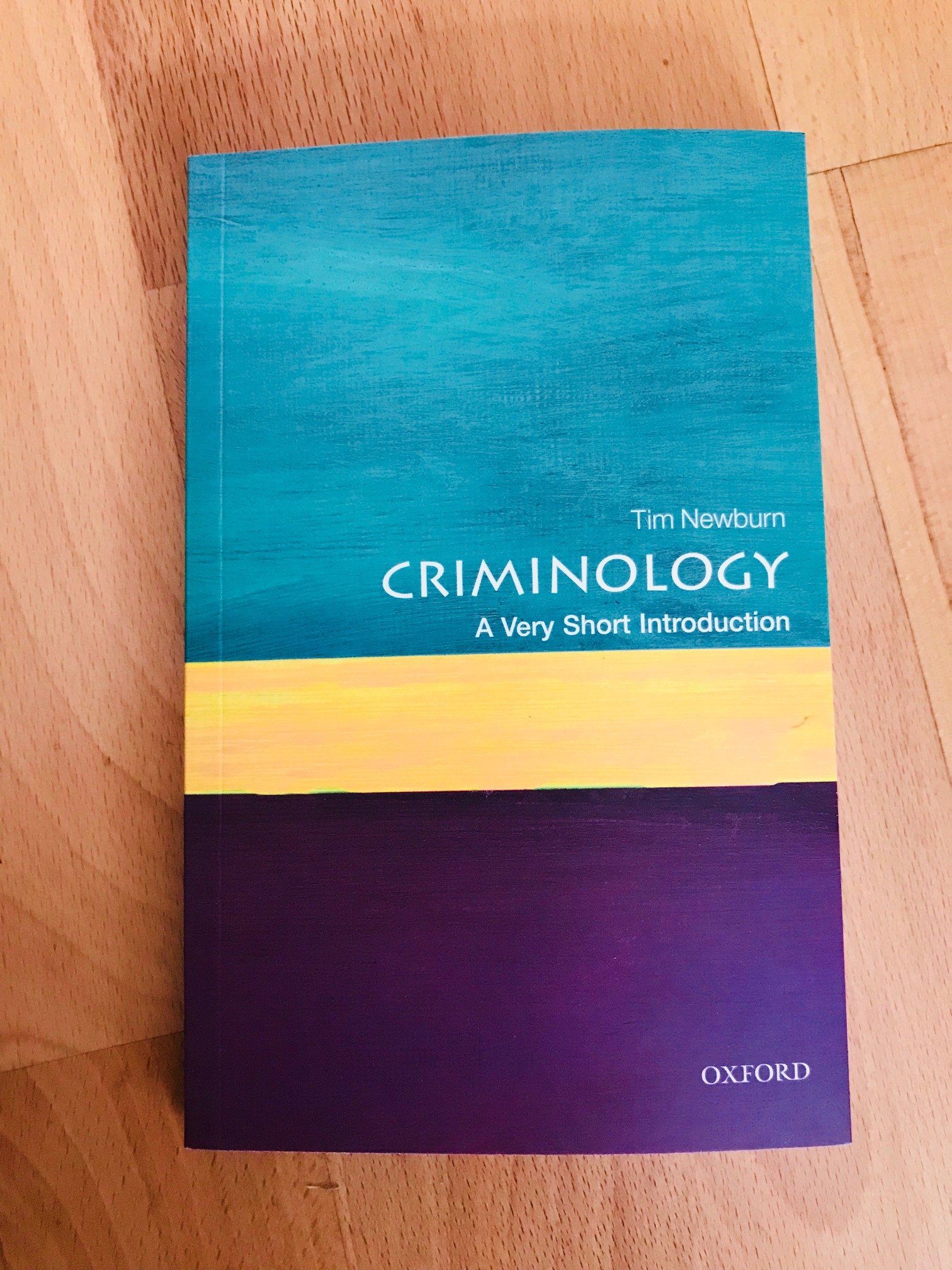
Criminology: A Very Short Introduction

criminology

These Very Short Introduction books are a great way to learn about hundreds of different subjects in an in-depth way. This one on criminology is fascinating stuff. Perfectly written and endlessly fascinating. Essential reading for anyone interested in crime.

Crime is big news. From murder to theft to drug gangs, crime and criminal justice affect the lives of millions of people worldwide. Hardly surprisingly, crime has been pushed high up the public policy agenda across the world. But how can we measure crime, or evaluate the effectiveness of preventative measures? Does the threat of prison reduce someone’s likelihood of reoffending, or would rehabilitation be more constructive?

In this Very Short Introduction Tim Newburn considers how we can study trends in crime, and use them to inform preventative policy and criminal justice. Analysing the history of the subject, he reflects on our understanding of crime and responses to crime in earlier historical periods. Considering trends in crime in the developed world, Newburn discusses its causes, exploring the relationship between drugs and crime, analysing what we know about why people stop offending, and looking
at both formal and informal responses to crime. Newburn concludes by discussing what role criminology can plausibly be anticipated to have in crime control and politics, and what its limits are.

ABOUT THE SERIES: The Very Short Introductions series from Oxford University Press contains hundreds of titles in almost every subject area. These pocket-sized books are the perfect way to get ahead in a new subject quickly. Our expert authors combine facts, analysis, perspective, new ideas, and enthusiasm to make interesting and challenging topics highly readable.

Available here.

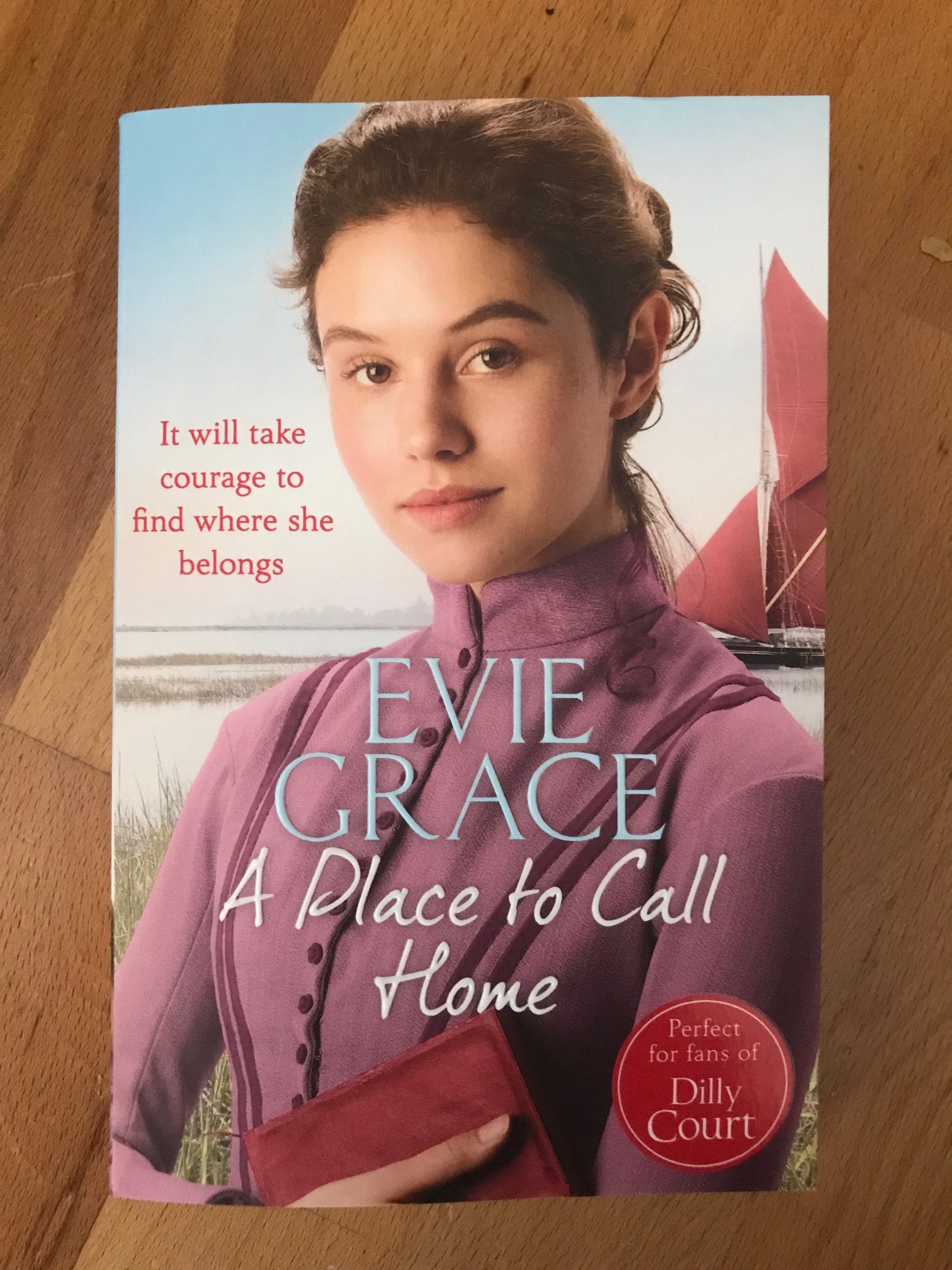
A Place To Call Home By Evie Grace | Recommended Reads

a place to call homeA perfect conclusion to this riveting saga. Get a cup of tea and dig in. The book equivalent to a great Sunday night drama.

THE THIRD AND FINAL SAGA IN EVIE GRACE’S MAIDS OF KENT TRILOGY.

East Kent, 1876

With doting parents and siblings she adores, sixteen-year-old Rose Cheevers leads a contented life at Willow Place in Canterbury. A bright future ahead of her, she dreams of following in her mother’s footsteps and becoming a teacher.

Then one traumatic day turns the Cheevers’ household upside-down. What was once a safe haven has become a place of peril, and Rose is forced to flee with the younger children. Desperate, she seeks refuge in a remote village with a long lost grandmother who did not know she existed.

But safety comes at a price, and the arrival of a young stranger with connections to her past raises uncomfortable questions about what the future holds. Somehow, Rose must find the strength to keep her family together. Above all else, though, she needs a place to call home.

Available here.

BUSINESS OF BOOKS: FIRST, LAST, EVERYTHING – MAGAZINE FICTION WRITER WENDY CLARKE

My very first piece of writing advice wasn’t from a writer or about writing but it was advice that would one day help me in my writing career. I was twenty-two and had just taken up my first teaching position at a junior school with open-plan classrooms divided only by bookcases. Being very new to teaching, and still finding my feet (or my voice, if you like), I was always looking for ways to make my teaching more effective. In the classroom area next to mine was a more experienced teacher who, because of the way the classrooms were laid out, could easily be heard. I was impressed with her control of the class and the attention the children gave her. Realising it was something in her voice (her tone, her inflection, her choice of words) I decided that if I copied her style of teaching, I too would achieve success. How naïve! Of course, it was a disaster – a bit like being on stage and being cast in the wrong role.

Back in the staffroom at break time, the teacher I’d been trying to copy could tell something was wrong. When I told her what had happened, she was very kind, sitting me down and making me a coffee before telling me that no two teachers taught in the same way and the children wouldn’t expect them to. In time I would find my own voice. One that I felt comfortable with. One that would be true to me. When I started writing for magazines, I remembered this advice. I didn’t try to copy the style of any other authors, I just wrote stories I loved – in my own way. My first sale came quickly and I have that teacher to thank!

The most recent piece of writing advice I received was from the writing community on social media. It was during a period when I had become disillusioned with the long and tortuous road you needed to travel in order to get your novel published. With magazine writing, you write a story, sub it, forget about it and start on another. There is no middle man (the agent) and, because I have several stories being considered at one time, it feels as though things are always happening. With a novel, you submit to agents and then wait, sometimes many months, for the inevitable rejection. Even if an agent requests the full manuscript (which happened to me six times) it can be months before hearing anything… if at all. In fact, I am still waiting. The readers of my Facebook post heard my sorry tale. Their advice was to submit directly to the publishers who accept manuscripts without the need of an agent. I did and it’s the best advice I could have been given.

Finally, the piece of advice I’d like to pass on is easy. Be kind to yourself. Set reasonable goals (if that’s the type of writer you are) and don’t beat yourself up if you don’t manage to achieve them. Also have breaks from your writing. If I go on holiday, I leave my writing equipment behind. The rest recharges my battery and helps me put my writing into perspective. This doesn’t mean that my brain isn’t still working behind the scenes though. Often, when I switch off from writing, an idea for a story, or the answer to a difficult plot problem, will float into my head as if from nowhere. Writing isn’t something to be forced but to be enjoyed and, if it isn’t, maybe it’s time to ask ourselves why we’re doing it.


Wendy Clarke has had over two hundred short stories, and two serials, published in national women’s magazines such as The People’s Friend, Take a Break Fiction Feast and Woman’s Weekly. She lives with her husband in Sussex and has just finished writing her debut novel.


https://wendyswritingnow.blogspot.com/

A LIFE IN THE DAY OF A RESEARCHER: Denise Beddows


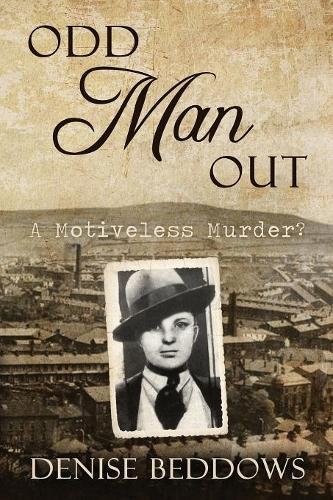
Denise Beddows took joint second place in the WforW Georgina Hawtrey-Woore Award for Independent Authors: Non-Fiction Category with the brilliant and engrossing Odd Man Out. And here she tells us of a typical day in her life.


Many of us recall with warm nostalgia the bedtime stories our mothers used to read to us. My late mother, a former wartime bus conductress in Lancashire, was an avid reader of lurid press accounts of murder. She could recount every detail of every murder of the twentieth century, and recount them she did – every time I begged a bedtime story. Not for me the gentle tales of Noddy or Peter Rabbit. No, tragic Ruth Ellis, last woman hanged in Britain, and Haigh, the acid bath murderer, were my bedtime companions. So, it came as a surprise to me when, only recently, I learned that one of my mother’s fellow ‘clippies’ was executed for murder; a murder Mum never once mentioned.

My curiosity piqued, I set about researching the case. Contemporaneous press reports were brief, perhaps because, although the accused confessed to the crime, she never said why she did it. She did not give evidence in court and nor did she appeal her death sentence. So, had middle-aged Margaret Allen brutally beaten to death Nancy Chadwick, an elderly woman whom she barely knew, and if so, why?

The victim, an eccentric and parsimonious scrounger, was described by her own nephew as ‘abnormal’. The killer, too, was unconventional to say the least. Allen, the twentieth of twenty-two children, born in extreme poverty, believed she was really a man and insisted on being addressed as ‘Bill’. The only explanation Allen offered for the killing was ‘I must have been in one of my funny moods’. The police presented the case as a murder in furtherance of a robbery, albeit that Allen was penniless when arrested. Clearly, the case warranted further investigation.

Close scrutiny of the records showed that much crucial evidence was suppressed by police at the time. Numerous witnesses claimed they had seen the victim hours after the alleged time of death. Statements by Allen’s family, putting her three miles away at the time of the murder, were neither tested nor put before the court. Scurrilous allegations made in court about Allen’s character and behaviour were demonstrably untrue, and public opinion was prejudiced by allegations of a lesbian relationship between Allen and her close friend Annie Cook. Seemingly, like Ruth Ellis, Allen was hanged as much for what she was as for what she was alleged to have done.

Drawing on historic interviews, I also contacted people who had met Allen. Their recollections were of a kind and generous person, not at all the violent, brutish character portrayed in press reports. Although, after one of the shortest murder trials on record, the judge deemed this a ‘motiveless, senseless’ killing, I uncovered a very obvious potential motive.

There comes a point, however, when most researchers experience qualms about delving intrusively into a stranger’s background. Indeed, I questioned my own motives in exploring the intimate detail of Allen’s life. Was I seeking to establish Allen’s motive, to find reason to mitigate this awful crime, and, perhaps, even to prove her innocence, or was this simply morbid curiosity? After much soul-searching, I persuaded myself that, whilst curiosity was my motivation, my aim was to give a voice to a troubled and disadvantaged transgendered individual, a troubled soul who chose to say very little about herself or her crime but went quietly and with dignity to the scaffold. As Margaret’s executioner, Albert Pierrepoint, famously said: ‘murderers are so often ordinary people caught on the wrong foot’.

A volunteer researcher for several history and heritage groups, Denise regularly gives talks to a variety of community groups. She is married with one grown-up daughter.

Denise, who also writes under the name of D J Kelly, has also written the well received Buckinghamshire Spies & Subversives, The Famous and Infamous of The Chalfonts and Gerrards Cross, Chalfont St Peter and Gerrards Cross at War, A Wistful Eye – The Tragedy of a Titanic Shipwright, Running with Crows – The Life and Death of a Black and Tan, Homes for Heroes – Life in a 1940s Prefab (ghost written with Joan Brant).

Odd Man Out – A Motiveless Murder? by Denise Beddows. pub by Misbourne Press in paperback
Available from: https://www.amazon.co.uk/ODD-MAN-OUT-Motiveless-Murder/dp/178697973X/ref=sr_1_sc_1?ie=UTF8&qid=1528376817&sr=8-1-spell&keywords=odd+man+out+Denise+beddowes
www.wordsforthewounded.co.uk

BYE-BYE BORING BLOW DRY!

Let’s be honest here, the main reason washing your hair is such a drag isn’t the refreshing time in the shower. It’s the lengthy blow dry process. Blow drying in the summer? Far too hot to handle. Blow drying in the winter? Nuh-uh, we’re cold and want to snuggle down in bed. Blow drying in the morning? Too much effort for our sleepy heads. You get the gist.

Enter, PowerDry.ME! PowerDry.ME is the brainchild of a Canadian brand, Design.ME, which is selling out of this beaut blow dry essential across the pond. The spray decreases your drying time by up to 50% (really!) so technically you can have a brilliant blow and style in half the time– WIN.

It’s a specially formed micro emulsion which coats hair fibres, while controlling frizz, offering heat and UV protection and smoothing and conditioning your hair. It also has a really soft, sweet scent too – a bit like a traditional bubble bath!

Ready for the super complicated usage instructions? Here we go…

  • Mist onto damp hair from roots to ends
  • Dry
  • Style

See, miracles do happen!

How much? £14.95 for 230ml

I need it! Visit Sally Beauty (online or in store) to purchase.