What’s More Popular for Online Gaming Laptops, Desktops, Tablets or Smartphones?

Video games have never been in a stronger place than they are in 2017, with the estimated market value of the industry sitting at around $108 billion dollars. Of this staggering figure, mobile gaming takes a huge percentage, valued at around $35.3bn, consoles following closely at $33.5bn and PC gaming, often considered by many gaming elitists to be the better platform, coming in last at $29.4bn, down 2.6% since the previous year.

What’s considered best will always come down to personal preference, but in the last decade mobile gaming, and mobile technology in general has seen a colossal, almost unbelievable rise in popularity. Although it really comes as no surprise, as of 2014 the number of mobile phones on planet earth surpassed the number of human beings, with roughly 7.22 billion handsets being in circulation. In history, no product, device or trend has proved as popular, especially as it’s only been in production for less than fifty years. Mobile gaming has taken the world by storm in a way that neither PC nor Console ever could. Casual players across all genders and age ranges can now enjoy their favorite puzzles, platformers or beat ‘em ups at the tips of their fingers. Not only is convenience a huge factor, but accessibility also makes a huge difference, as most people have smart phones with access to an App Store. The average apps are incredibly good value, with the majority of the market under $5 or even free, meaning anyone on any pay scale can take part, where as many AAA console games can reach prices up to $70 simply for standard editions. That’s before taking limited editions, collectors’ items and day one versions into account. Another huge factor in mobile gaming’s favor is the ever increasing graphic and performance capability. Let’s take a look at Apples flagship product, the ever infamous and often controversial iPhone.

  • 2007 – iPhone: 32-bit 412 MHz Samsung ARM processor, 128MB of RAM, 4GB or 8GB storage
  • 2016 – iPhone 7: A10 processor, 2GB RAM, 32GB/128GB/256GB storage

Just to put that into perspective, when the original iPhone arrived in 2007, it had 93.75% less processing power than the 2016 model, released less than a decade later. Its largest available storage capacity, was 32x smaller than the iPhone 7, showing you just how far mobile technology has come.

Despite being costly, consoles are still a huge part of many peoples day to day life, with Sony’s Playstation 4 selling 63.3 million units and Microsoft’s Xbox One selling around 30 million units. Sony’s Playstation 2, released in 2000 is the world’s highest selling console, shifting upwards of 155 million units in less than a decade and a half. Sony & Microsoft have led the console world for over a decade now, with Japanese company Nintendo following closely behind, with a global value of $32.8 Billion.

The argument that PC is better than all has raged since the earliest days of video games, but how much of this is really true? The PC will always be the most powerful platform for gamers to play on, improving their gaming experience (especially online) dramatically. PC is also the exclusive home of the platform Steam, the digital distribution platform (store) that allows players to buy digital versions of games. As of 2015, it had 125 million users, and accounted for 15% of the total PC game sales that year. According to an industry report by Spil Games, an estimated 1.2 billion players are gaming across the globe, with roughly 700 million of those playing online games. That’s an estimated 44% of the entire online population, proving just how popular the world of video games truly is.

Article provided courtesy of games.paddypower.com 
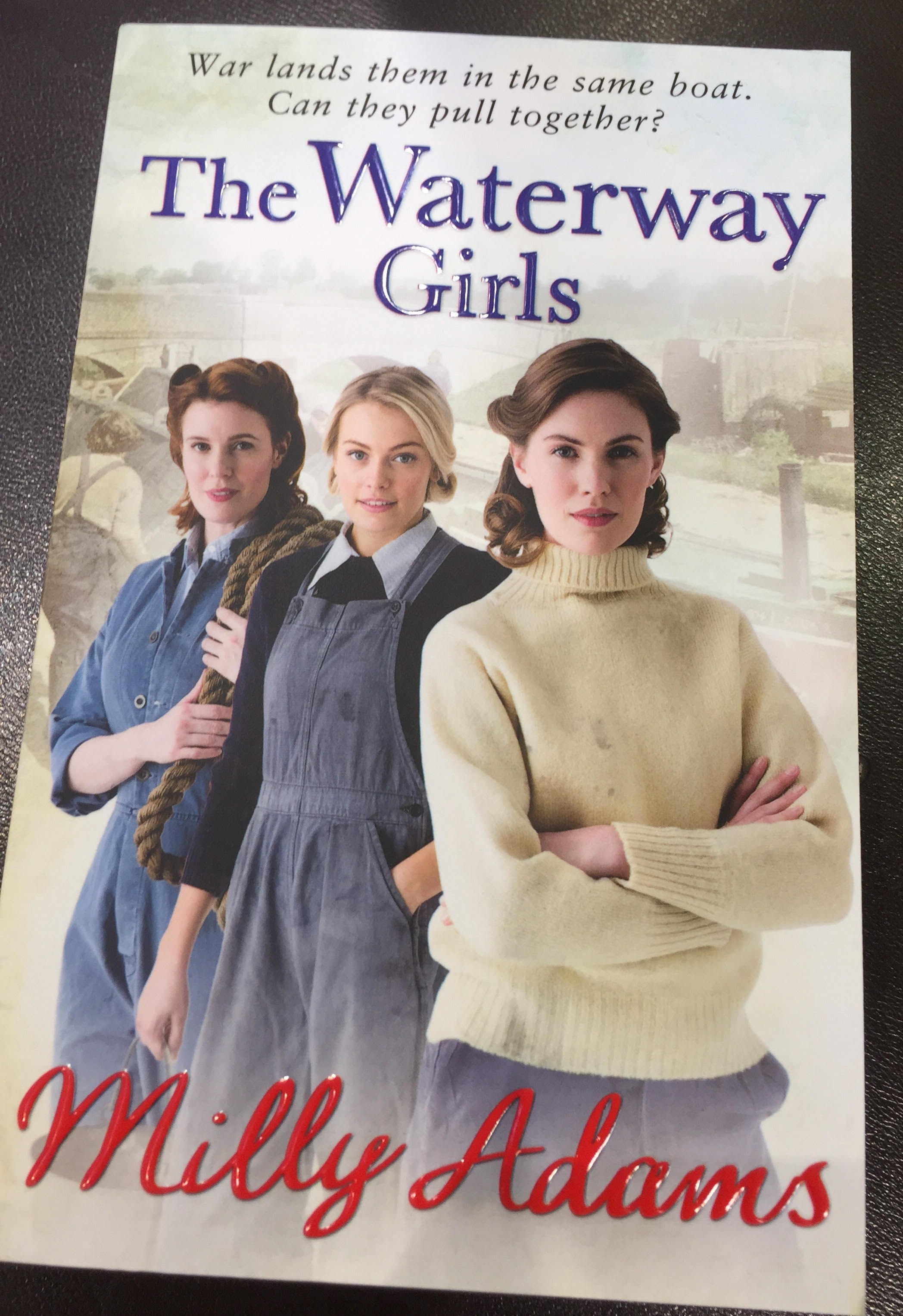


The Waterway Girls by Milly Adams

The_Waterway_Girls_Milly_Adams

I’m always delighted when the latest novel from Milly Adams arrives on my desk and happy to say her latest, The Waterway Girls, did not disappoint. More than that, I discovered that this is the start of a series which follows the unsung heroes who spent the war on the canals.

It is October, 1943 and nineteen year-old Polly Holmes is leaving bombed out London to join the war effort on Britain’s canals.

She boards the Marigold in the pouring rain and soon discovers she has plenty to contend with. Not least her fellow crew: strong and impetuous Verity, and seasoned skipper Bet.

With Polly’s sweetheart away fighting in the RAF and her beloved brother killed in action, there is plenty of heartache to be healed on the waterway. And as Polly rolls up her sleeves and gets stuck into life on board the narrowboat she discovers new beginnings await amid the anguish of war.

What can I say? I was soon absorbed in life on the canal and the journey from London to Birmingham. Adams draws her characters so finely that I half expect to bump into them when I pop to the shops. Life on the canals was tough and relentless and the descriptions of how the canals and locks operated is described in such a way that gives the reader a glimpse into the life of the boaters, without being over technical and slowing the story down. But there is beauty there too, and we are able to see this through Polly’s eyes as she settles to the rhythm of the waterways.

There is such warmth and humanity in the writing  that it makes the characters and the setting leap from the page. Among the pages you’ll find romance, humour and ordinary people doing their best to survive and get along in extraordinary circumstances.

I’m so relieved that this isn’t the last we have heard of the Waterway Girls. I can’t wait to discover what lies ahead for Polly, Verity and Bet.


The Waterway Girls by Milly Adams is published by Arrow.

Price £5.99

Accommodation apps: how are traditional hotels being affected?

The hospitality industry is bigger than you think, and with travelling becoming even easier, it is continuing to grow. The industry contributes towards a large proportion of Britain’s overall GDP – whilst employing a significant number of workers too. Overall, the total gross value-added contribution to GDP was estimated to be around £143 billion in 2014, which is 10% of the UK’s GDP. As well as procuring an indirect employment figure of 775,000 people while directly employing 4.6 million people, for every £1 million the hospitality industry directly contributes, £1.5 million is created and absorbed by other parts of the UK economy.

The hotel industry makes huge contributions to two key sub-sectors in the UK – hospitality and tourism. In the years between 2014 – 16, hotels (excluding the London area) experienced revenue per available room growth of 10.4% in 2014, which was forecasted to increase by 6.3% in 2015 and 4.2% in 2016. Year on year then, it is evident that the hotel industry is experiencing steady growth.

As smart technologies continue to interact and influence the hotel and B&B market, the future growth of the hospitality industry looks uncertain. Together with Shortridge, who specialise in hotel linen hire, we have looked to establish how this emerging digital market is challenging the way we use hotel spaces and how smart technologies may help benefit the hotel industry in the future:

The influence of smart technology

With the rise of apps such as Airbnb and Hostelworld becoming players in the market, the traditional hotel space’s ability to compete in the market is becoming compromised. This is because people who have a vacant space to rent for the night are often appealing to younger consumers who are more inclined to pay for ‘shared space’ accommodation at a cheaper price. Other influences of ‘shared spaces’ are interconnectivity, technology and smart apps and rising urbanisation. Now that users can simply log onto an app and then view many different properties in a convenient location, the idea of a stand-alone hotel becomes less appealing when positioned on a digital platform.

Figures suggest that hotel brands who are sticking to traditional methods of brand awareness are not having the same appeal in a technologically driven market. Research collected by BDRC Continental has suggested that apps similar to Airbnb outperformed hotel brands within a similar awareness scope.

Home stays

Both tourists and homeowners are benefitting from the trend of renting private space within someone’s home. Advertised as a way to submerge yourself into the host country’s culture, staying in a local home has become a cheaper and more quirky form of accommodation.

Figures showed that 9% of tourists and travellers in the UK have rented private space within someone’s home. Within Europe, this is lower than other countries, as France accommodated 11% of travellers in their homes and Germany accommodated 13% in their abodes. Within the European leisure market, it is clear this is an emerging trend and it is only expected to rise as millennials choose a cheaper alternative featured on a digital platform as opposed to more traditional hotels.

In the capital of London alone, over 40 million visitors have stayed in a shared space property found on an app and currently, there are over 30,000 spaces available in the city. This is, however, still lower than the amount of hotel rooms available in the capital – figured in 2015 at 138,769.

Perhaps in response to the growing interest in accommodation apps and homestays, low cost accommodation is set to increase by 29%. If hotel brands are to compete then, understanding that the app or digital platform is as important as the accommodation itself, is one way of fighting against the DIY hotelier revolution.

http://www.bha.org.uk/wordpress/wp-content/uploads/2015/09/Economic-contribution-of-the-UK-hospitality-industry.pdf

https://www.pwc.co.uk/assets/pdf/uk-hotels-forecast-2016.pdf

http://www.londonandpartners.com/media-centre/press-releases/2015/20151118-london-sees-growth-in-hotel-development-as-new-properties-open-across-capital-for-2016


The Breeders’ Cup 2018 is Set to Attract a Worldwide Appeal Once Again

Horse racing continues to maintain its popularity amongst sports fans and the Breeders’ Cup is one of the most prestigious international events on the calendar. The 2018 staging of the event gets underway at the beginning of November with racing enthusiasts and bettors already greatly anticipating the iconic championships.

Source: Twin Spires via Twitter

The Breeders’ Cup is an annual event which takes place across a number of interchanging venues, including Monmouth Park, Santa Anita and Keeneland. In 1996, it was held in Canada for the first time with Woodbine racetrack staging the event. It returns to Churchill Downs in 2018 after a seven-year hiatus, with the Louisville circuit widely considered one of the finest and most recognizable tracks in the USA. It can also boast the highest-ever attendance back in 2010 when over 114,000 spectators flocked to watch some of the world’s finest thoroughbreds.

This year’s event is set to be held at Del Mar for the first time and they are also expecting a bumper crowd. The season ended at the racetrack on September 4 and will return for the Breeders’ Cup on November 2.

It will be the 35th staging of the event and racing fans from around the world will be glued to the action. There are 13 races taking place across the two-day extravaganza, with over $25 million worth of prize money available to connections. NBC will be broadcasting every single contest whilst viewers in the UK, Ireland, France and Germany all enjoy streaming the action. Television figures were down in 2016 but the Breeders’ Cup Classic still chalked up 2.6 million viewers.

Breeders’ Cup winners come from far and wide, with countries such as Japan, Ireland and France all claiming victories in previous years. Britain found success in 2016 with Queens Trust and Highland Reel both travelling back across the Atlantic having clinched victory in the Filly and Mare Turf and Breeders’ Cup Turf respectively.

Source: Racing Post via Twitter

There are a number of high-profile races taking place across the two days including the Breeders’ Cup Juvenile Turf, Breeders’ Cup Distaff, Breeders’ Cup Turf Sprint and the Breeders’ Cup Classic. The Breeders’ Cup Marathon and Juvenile Sprint were discontinued in 2012 and 2013 respectively.

American Pharoah became the first horse to win the “Grand Slam of racing”, claiming a victory in the Kentucky Derby, Preakness Stakes and clinched the Triple Crown with a commanding success in the Belmont Stakes. This triumphant year for the Bob Baffert-trained horse was capped off with a six-and-a-half-length success in the Breeders’ Cup Classic. He captured the imagination of the racing public and his progress was followed by thousands of racing fans. He became one of the most recognisable racehorses in the history of the sport and it is likely to be many years before another Triple Crown is clinched.

The chance to watch well-known horses and jockeys competing in prestigious events against top-class thoroughbreds is always enjoyable for racing fans and punters will often invest heavily in a number of competitors across the card. Aidan O’Brien is one of the top trainers at the Breeders Cup and Irish racing fans are keen to witness his charges in action despite the time-difference. If you’re looking for Irish racing tips when you’re online, sites including The Winners Enclosure offer daily selections on a number of contests, including key buildup races ahead of the Breeders’ Cup in November.

There are always surprises and unexpected outcomes at the Breeders’ Cup and a number of narratives thrown up by the winners and losers in each race. Trainers and jockeys travel far and wide to compete in the prestigious contest and all eyes will be on Del Mar racecourse at the beginning of November as the Breeders’ Cup gets underway for 2017.


THEATRE REVIEW: Thebes Land by Paul Vates


At The Arcola Theatre, London


“It ticks all the boxes”

A three-metre high cage separates us from Martin, a convicted killer. He’s a troubled young man, never receives visitors, orphaned. Cancer killed his mother, he killed his father. All he has, when allowed into this cage, is a basketball and the hoop to aim for.


There are no Hannibal Lecter moments, but that is for the better. ‘T’ introduces him to us. He is a writer/director and putting on a play about Martin.


Trevor White


Thebes Land is a play-within-a-play-within-a-play. Moments are created and recreated. Sometimes the audience are involved, mostly we watch events unfold. It’s part lecture, part biography, part autobiography, part drama.


One would think, therefore, that this overly-developed style is either too dumb or too clever for its own good. Instead, it is pitched perfectly to seamlessly flow into all the genres and leave before it gets too settled.


There are four quarters, plus overtime. The same length as a basketball match. The intelligence of the script doesn’t stop there, though. Thebes, Oedipus, the introduction of Freddie (the actor playing Martin now plays an actor playing Martin). Plus the surveillance cameras, their ‘live’ feeds shown on screens above the cage, showing the action as it happens/happened.

Alex Austin


Amazing how something so complicated can become so beautifully easy. This play won the Best Production at the 2016 OffWestEnd Awards and has reunited its original cast to open the 10th Casa Festival of Latin American Theatre. It was written was the Franco-Uruguayan Sergio Blanco, with the translation and adaptation by Daniel Goldman – who also directs.


CASA 2017

A play that works on so many levels can over-complicate things, but Goldman keeps it just on the right side of believability. Staged like The Young Vic’s Yerma or the classic Trafford Tanzi, it’s basically in the round with the house lights up. There is nowhere to hide for the cast: Trevor White plays ‘T’, the likeable Hugh Laurie-esque storyteller; Alex Austin revels in the dark Martin and the lighter Freddie.

The is a stunning production. It makes you laugh, cry, think. It ticks all the boxes. Even though the audience spend all evening on the outside of the cage, looking in, we are, in reality, in there with them. Probing, searching, discovering. What we find may be scary, but it is common to us all.


At one point, T promises to send a postcard. Martin requests a picture of a moose. When we leave the auditorium, we are given feedback cards. What’s the picture on the front? What else.


Running time: 2 hours 15 (plus an interval).


Production Photographs: Alex Brenner.


Twitter: #ThebesLand, #casa2017, @CasaFestival, @ArcolaTheatre

Facebook: @CasaLatinAmericanTheatreFestival


Performances until 7th October 2017.


Venue: Arcola Theatre, 24 Ashwin Street, Dalston, London E8 3DL.

www.arcolatheatre.com – 020 7503 1646.


Monday – Saturday 7.30pm

Saturday Matinees at 3pm

Tickets £10-£22 – Pay What You Can Tuesdays (limited allocation, in person from 6pm)


The Business of Books: When Academic Research Matters – Jane Cable meets academic Ria Cheyne


What is your book related job?

I’m an academic (university lecturer) who specialises in genre fiction, particularly the representation of disability in literature. This means that I spend a lot of my time talking with students and colleagues about books, and reading fiction and what other people have written about it. A big part of my job is teaching students and all the administration that goes with that, but another key part is producing new interpretations of or theories about literary texts, which I present at conference and publish in journals and books for other academics. You can see some of my presentations and publications on my website.


What is the most rewarding part of it?

It’s a privilege to be able to spend so much of my time reading, writing, thinking, and talking about books. Teaching is also very rewarding: I love the performance element of lecturing, and it’s immensely satisfying when a student who has struggled finally grasps a key idea or offers a really original insight. Like most academics, I could earn more, and work fewer hours, doing something else—it’s not a job you do unless you’re passionate about it.

Recently, I’ve been working on a new project, the Disability and Romance Project. I’m working with romance readers, writers, and publishers to explore how readers respond to depictions of disability in romance novels, and why authors write disabled characters. I’ve found it really satisfying to work directly with people in the industry, and there’s been a really phenomenal response from the romance community so far, with over 500 people taking part in our survey of romance readers.

What do you consider to be your major successes?

The academic job market is so over-subscribed at the moment that managing to get a stable academic job has to be considered a big success for anyone in my field – after my PhD I spent several years doing the academic equivalent of temping before I got a permanent position, and lots of people aren’t that fortunate.

More recently, I’ve just finished writing an academic book on the representation of disability in genre fiction, which will be published by Liverpool University Press. It explores how the portrayal of disability in science fiction, fantasy, horror, crime and romance might shape public attitudes towards disabled people, and it’s been a really long-term project; I first had the idea for the book almost ten years ago! I was also really pleased to receive the Romance Writers of America Academic Research Grant for the Disability and Romance Project. It was great to have that confirmation that one of the key organisations for romance values my research.


Have you always loved books, and what are you reading at the moment?

I’ve always loved books, and been a voracious reader. When I was a child I’d switch my light off and pretend I was asleep when my parents came to check on me last thing at night…then put the light back on and read for hours after they went to bed! As usual, I’m reading a mixture of non-fiction academic books and genre fiction. On the non-fiction side, I’m reading Mad at School by Margaret Price, a brilliant book about mental illness and the university system. I’ve just finished The Burial Hour, the latest in Jeffery Deaver’s series of novels about quadriplegic investigator Lincoln Rhyme, and I’ve started Rook Song, a science fiction novel by Naomi Foyle, after really enjoying Astra, her previous novel.


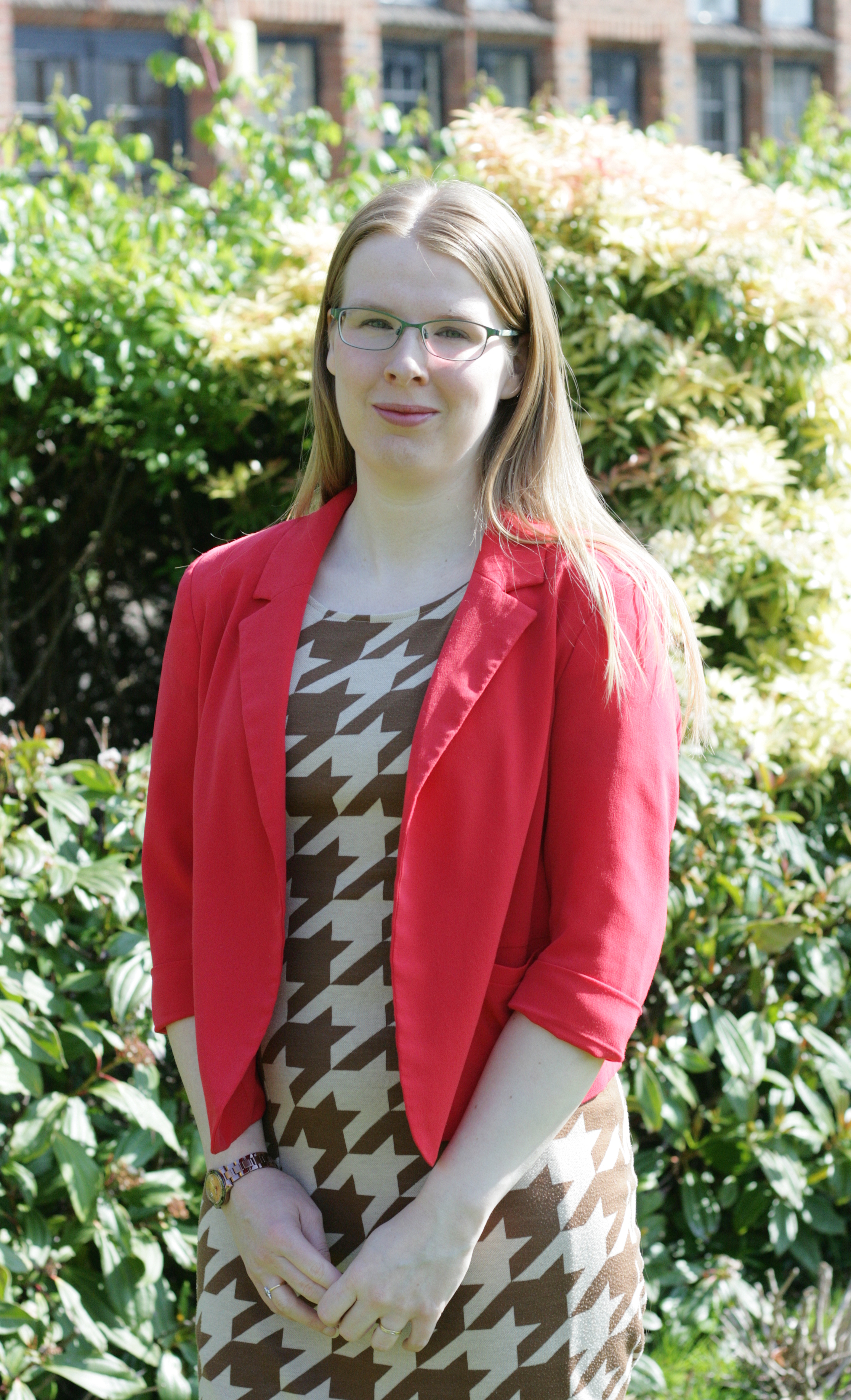
Bio: Ria Cheyne (@riacheyne) researches literature and disability at Liverpool Hope University, where she is a Senior Lecturer in Disability and Education. She runs the Disability and Romance Project – follow on Twitter or Facebook.


Hape Walk-A-Long Snail Review | Toys

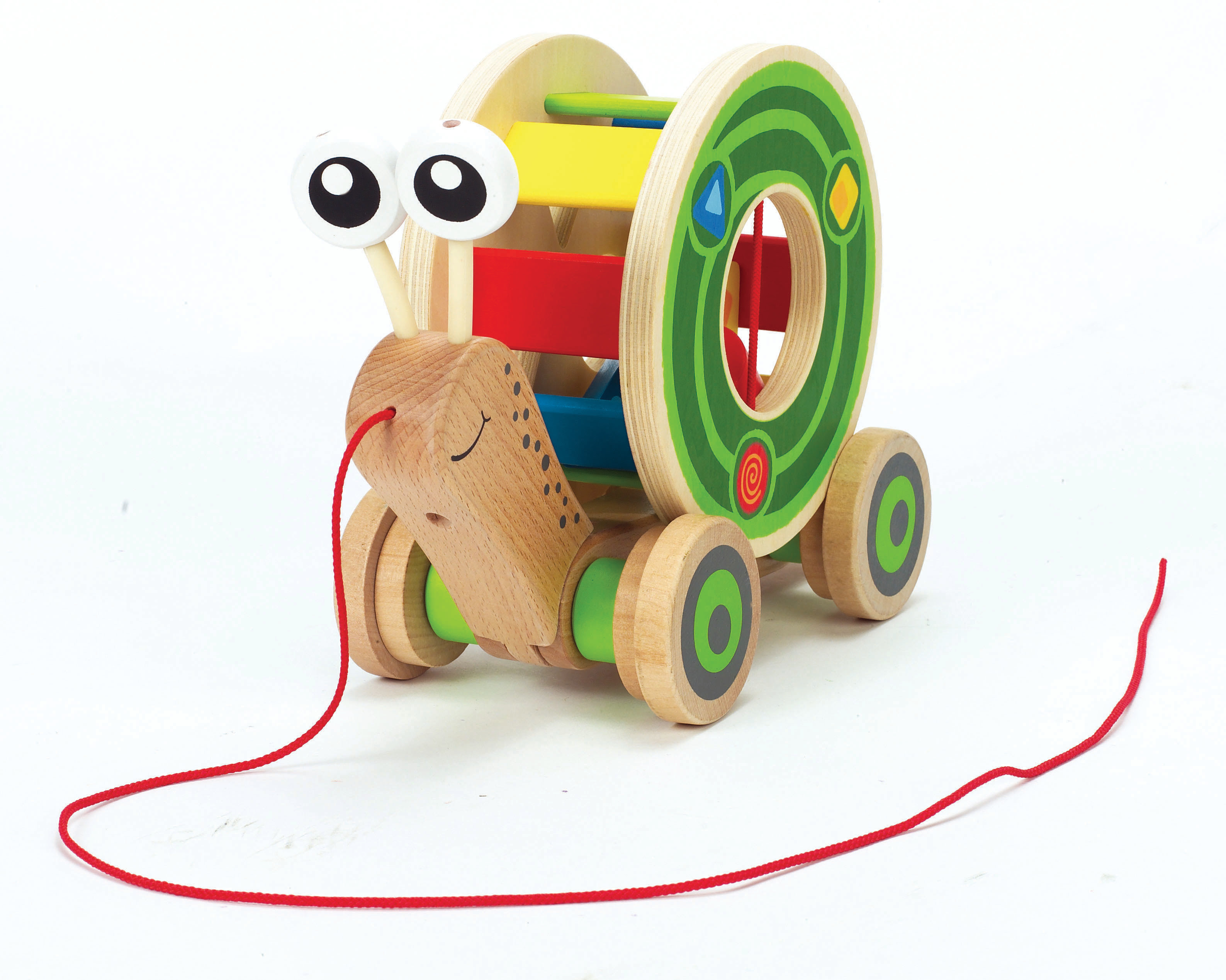
Frost loves the Hape Walk-A-Long Snail. First of all it is cute and looks so happy. Next, it is also a shape sorter. Your little one can pull it along like a cute companion or sit and play with the snail. It is wooden, high quality and very well made. It is also eco conscious. What more could you want?

When your child starts walking, they’re going to need a faithful companion to explore and play with. This is where the Hape Walk-A-Long Snail comes in to save the day.

This playful little snail will become your child’s favourite toy as he loyally tags along. Once they’ve got used to this friendly snail, they won’t want to go anywhere without him.

The snail is extremely versatile and totes a shell full of wooden blocks that can be removed to not only lighten the load, but also to use as a separate colourful shape sorter toy. You can even set up the blocks to create a “maze” that the snail can navigate through.

Your child can experience the wonders of the Walk-A-Long Snail from as young as 12 months. With the high quality wooden construction, your children are in safe hands and are ready to explore the world around them alongside their playful snail companion.

As with the entire Hape range of products, this unique Walk-A-Long Puzzle has been thoroughly designed to the highest of safety and quality standards. Also, with a commitment to sustainability, Hape only use eco-friendly materials and water based paints in order to produce their much loved products.

Give your child a toy that not only provides hours of entertainment, but also allows them to learn valuable skills, getting them ready for a bright future.

Hape’s Walk-A-Long Snail measures H18.6, W11.2, D30.1cm and is available from Argos for £24.99.


Preview of Cheltenham Literature Festival 6 – 15 October by Milly Adams


As everyone knows by now, Frost Magazine is interested in literature, not to mention drama, and painting… Well, the arts in general, but especially literature. So have a look at Cheltenham’s mouth-watering line-up.


Around 1,000 speakers will take part in more than 550 events, from literary heavyweights and emerging talent, to the very best poetry and celebration of classic literature, including Salman Rushdie, Alan Hollinghurst, Sarah Waters, Amit Chaudhuri, Roddy Doyle, Claire Tomalin, Paul Hawkins, Philippa Gregory, Michael Morpurgo, Ian Rankin, Joanne Harris and the 2017 Man Booker Prize shortlisted authors.

The packed poetry programme includes Jackie Kay, John Burnside, Michael Symmons Roberts and Lemn Sissay as well as the stars of the next generation with Andrew McMillan, Luke Wright, Hollie McNish, Rob Auton, Inua Ellams and Sabrina Mahfouz.


This year’s Festival theme Who Do We Think We Are? will ask key questions about British identity and celebrate Britain’s rich literary and cultural heritage, and Cheltenham will also welcome five Guest Curators bringing fresh perspectives and voices:

Will Gompertz, BBC Arts Editor; Sarah Moss, novelist, travel writer and academic; Robin Niblett, Director of Chatham House; Jess Phillips, Labour MP for Birmingham Yardley; and Nikesh Shukla, author, editor and campaigner.


Sounds like a feast, doesn’t it. Lots of my favourites… Must get along.