Charles Dickens and The Star Chip Enterprise

A few years ago was the two-hundredth anniversary of the birth of Charles Dickens, the Star Chip Enterprise is not, and here you may draw a breath of relief, his missing masterpiece and this is not an essay in literary history. However in 1859 Dickens published ‘ A Tale of Two Cities ‘ and included a typical rich description of ‘Husky chips of potatoes, fried with some reluctant drops of oil ’. This is the first acknowledged recorded use of the word chip used in reference to fried potatoes. In ‘ Oliver Twist ‘ he went on to mention fried fish warehouses. You can imagine the likes of Fagin and Dodger fighting over hot freshly fried fish and how tasty it would be.
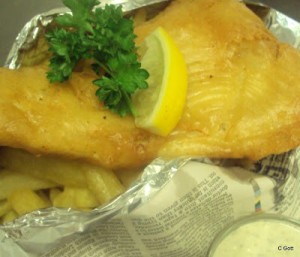
Fish and ChipsFried fish quickly became a staple part of the lower class diet during the Industrial Revolution when the new steam trawlers could fish out in the Atlantic and bring back fresh fish from Iceland and Greenland. The increasing ease of travel with the vast railway network being developed would enable the efficient, fast delivery of fish across the country from the great coastal ports. The fish was fried in deep pots usually in rendered animal fat, such as lard, which has a high smoking point and is able to reach very hot temperatures.

The humble potato chip did not begin with Walter Raleigh bringing Queen Elizabeth the first potatoes from the new world.* They probably, dare we admit it, originated in France or more hopefully Belgium, clever people the Belgians, think Hercule Poirot he was Belgian. In the United Kingdom, chip shops became popular in the north of England and across the border in Scotland. Dundee City Council claims that “…in the 1870s, that glory of British gastronomy – the chip – was first sold by Belgian immigrant Edward De Gernier in the city’s Greenmarket.” The first chippy or chip shop stood on the present site of Oldham’s Tommyfield Market and is commemorated with a blue plaque. So who was it who first sold fish and chips together and created the nation’s favourite dish.

There is as often the case some rivalry as to who first offered the combination, some confusion and more than a little north verses south pride involved. What is certain is in 1863, a John Lees began selling them in Mossley market in Lancashire while Joseph Malin opened the first recorded fish and chip shop in East End London in either 1860 or 1865. The concept of the fish restaurant was introduced by Samuel Isaacs a successful wholesale fishmonger. His first restaurant opened in 1896 serving what is now a fish and chip shop standard, fish, chips, bread and butter and a hot tea for nine pence.

His restaurants were carpeted, had waited for service, tablecloths, flowers, china and cutlery and for the first time what was seen to be the luxurious standards that went only with fine dining for the very wealth was available to the working classes. The chain expanded throughout London and across the popular south coast holiday resorts to eventually number thirty restaurants. His Brighton restaurant at the then prestigious location, number one Marine Parade eventually became a Harry Ramsden’s fish and chip shop, arguably now the country’s most famous fish and chip restaurant chain and operator of the world’s biggest fish and chip shop in Guiseley, West Yorkshire.

Samuel Isaac, god rest his soul, also started what is now almost an art form with his trademark logo of a fish and a pun with the words ‘ This is the Plaice ‘ . Many of today’s fish and chip shops have great names like The Cod Father, Doctor Chipargo’s and Cod by Mr. Chips ( all book and movie themes, what a well-educated bunch of fryers ). An enterprising English couple Nicky Perry and Sean Kavanagh-Dowsett took on the might of New York’s finest deli’s and eateries with A Salt and Battery but my own personal favourite excluding today’s title is the snappy;

SuperCodaFriedulisticChipspeAlliRoeshop. 

Simply stunning.


The Technical bit

So fish and chips became a staple of the nation’s diet and our number one favourite dish. Indeed, it was so popular and such that during World War II fish and chips remained one of the few foods in the United Kingdom not subject to rationing. Today the fish used is commonly Cod or Haddock but other fish such as Pollack, Whiting, Coley and even Rock Salmon can be substituted. Because of concerns about over fishing, it is best to source from a reputable supplier or consult the Fish Online guide. More traditional chippies and some restaurants still use beef fat to fry their fish and chips because of the flavour it imparts. Obviously, this makes the chips unsuitable for vegetarians and so many fry in blended vegetable oils,

Chips are traditionally thicker than French fries. How much cooking fat soaks into a chip depends on the surface area to volume of potato ratio, the frying temperature and how long they are cooked. Chips generally absorb less oil then fries due to their structure they do however take longer to cook than fries. Chips are often blanched or cooked through at a low temperature then flash fried to reheat and crisp the outside at a temperature between 175 and 190 °C (345–375 °F). The best potatoes to use are floury potatoes with a soft, dry texture look for King Edwards, Maris Piper, Romano or Desirée potatoes.

Many fish and chip shops traditionally use a simple water and flour batter, adding a little sodium bicarbonate or baking soda and a little vinegar to create lightness, as they create bubbles of carbon dioxide in the batter. Many restaurants now use a beer batter as the naturally present carbon dioxide in the beer lends a lighter texture to the batter. The sugars present in the beer also help produce a wonderful golden brown colour on frying. A simple beer batter might consist of a 2:3 ratio of flour to beer by volume. The type of beer makes the batter taste different, the alcohol itself is cooked off, so little or none remains in the finished fried fish.


My Perfect Beer Battered Fish

I cannot state how simple my recipe is just beer, flour and seasoning. No eggs, baking powder, turmeric for the colour it could not be easier or tastier. Experiment with some local ales and lagers until you find your own favourite. Lagers are fine and produce very light fine results almost like tempura. I find a nice session bitter or IPA will create a nutty, tasty batter. Your batter is always better made slightly in advance to allow the flour to absorb a little of the liquid and let the gluten relax. Do not make it to early however as the raising agents will effervesce and disappear with time leaving a flat batter mix.

4 thick White Fish fillets ( around 200 – 225 gr per portion )

100 gr Self Raising Flour plus a little for dredging the fish

A Bottle of Beer

Sea Salt and freshly ground Black pPepper

for the frying

3 pints Lard or Dripping to cook

Sieve the flour into a large bowl and add a generous amount of salt and pepper. With a whisk, mixing continuously, add the beer to the flour until you have a thick, smooth batter about the consistency of thick cream. Place the batter in the fridge to rest for between 30 minutes. In a large heavy bottom, pan heat the oil to 160°C / 320 F using a thermometer to check. If you do not have a thermometer have a few cubes of stale white bread to hand. Place a bread cube in the oil if it rises to the surface and cooks to a golden brown in a couple of minutes the oil is hot enough.

Take two tablespoons of flour and place in a shallow tray, season well. Dredge each fish fillet in the seasoned flour until covered. Shake off excess flour and dip into the batter mix before carefully lowering into the hot oil. Fry the fillets for around eight minutes or until the batter is crisp and golden, turning the fillets from time to time with a large slotted spoon.

When the fish is cooked using the slotted spoon remove the fish from the hot oil, drain on kitchen paper, cover with greaseproof paper and keep hot to serve with home-made chips, plenty of lemon and chunky tartare sauce.

* I have to include a link to one of my favourite comedians ever Bob Newhart

( Fish and Chips are not as unhealthy as you would first think, fish and chips have 9.42 grams of fat per 100 grams – the average pizza has 11, a Big Mac meal with medium fries has 12.1. Fish and chips have 595 calories in the average portion with an average pizza around 871. For a healthier method of frying use vegetable oil instead of the beef dripping ).
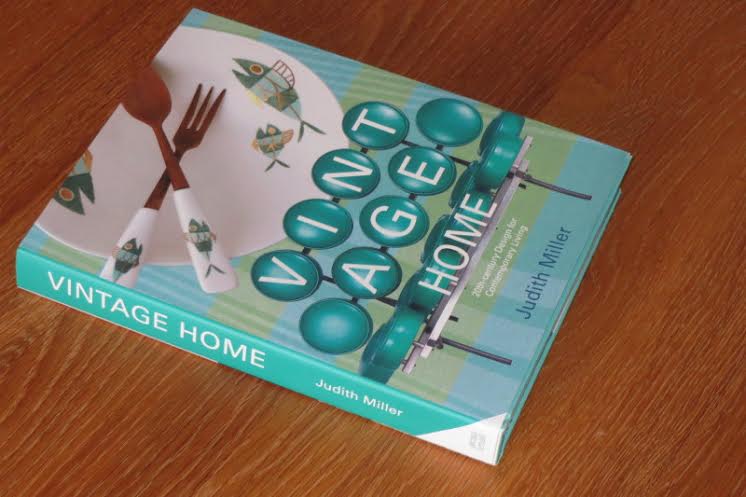
Vintage Home by Judith Miller Reviewed by Frances Colville

VINTAGE HOME by Judith Miller Reviewed by Frances Colville

Judith Miller, of Antiques Roadshow fame, begins her new book Vintage Home with a very useful definition of the word vintage: ‘For the purposes of this book, the term ‘vintage’ covers the many decorative styles of the 20th century’.  And indeed this beautiful book does just that, providing a wealth of information on designs, designers, trends and styles with reference to buildings, whole rooms and individual items.  Whether you are interested in getting an overall view of a style, discovering who designed what, working out what innovations appeared when, investigating the value of a particular item, or indeed putting together a whole new look in your own home, there is something in this book for you.


But this is so much more than just a reference book and what stands out above everything are the stunning photographs on every page.  If what you want is a book filled with images to enjoy and admire, then you need look no further.  I can personally vouch for the number of hours you can happily while away just turning the pages.


Vintage Home by Judith Miller was published in this hardback edition by Jacqui Small in November 2015.


New Self Help Book on Breast Cancer Released

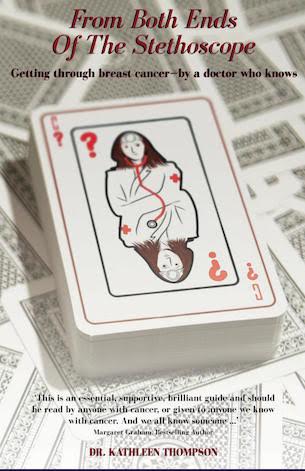
From Both Ends Of The Stethoscope by Dr. Kathleen Thompson book review, health, breast cancer,From Both Ends of the Stethoscope: Getting through breast cancer – by a doctor who knows   by Dr Kathleen Thompson

ISBN: paperback: 978-0-9935083-0-1  ebook: 978-0-9935083-1-8

Published by Faito Books

Cancer cells appear in everyone’s body much of the time, and more than one in three of us will experience some form of cancer during our lives. 

One of the commonest of these is breast cancer.

So what is breast cancer? What is cancer come to that?

What is it like to have breast cancer?

Cancer cells are usually destroyed by our immune system – but sometimes they breach these defences, and we get cancer – why?

What can we do to prevent this?

 Actually there are lots of simple things we can do to avoid cancer in the first place, and to give ourselves the best chance of recovering completely.

This is a non-fiction autobiographical, self-help book written by a doctor who has had breast cancer. Sharing her own experiences, the author takes the reader through the raw emotions associated with having cancer and needing to face one’s own mortality.

Always referring to her own cancer journey, with all its highs and dips, she helps the reader understand what they will experience during the treatment.

She explains the various medical consultations, tests and procedures, and the different treatment options, and how to make the best treatment choices.

She uses her personal experiences of things going wrong to illustrate how to deal with such circumstances, including coping with problems as an in-patient, and challenging incorrect medical decisions.

She deals with the post-treatment period, and what to do if the cancer comes back.

Alternative therapies are discussed, and, importantly, advice is given on how to distinguish credible research, and genuine therapies, from quackery.

Finally that all important question is answered – what can we do to protect ourselves against cancer?

Biography: Dr Kathleen Thompson

Kathleen is a doctor, specialising in pharmaceutical drug research.

A few years ago her life changed completely, when she was diagnosed with breast cancer. This became the inspiration for her first book.

She writes medical contributions for Frost e-Magazine and has authored various scientific research publications through her career.

She has two long-suffering children, who patiently tolerate their mother’s crazy projects, and rescue her from frequent IT catastrophes.

She has a passion for ballroom dancing and enjoys adventures. She has climbed Mount Kilimanjaro, walked the Camino de Santiago (500 miles) and cycled the mountains of Kerala, and also through Rajasthan.  During two of these activities she raised funds for Women v Cancer –which provides funding for three cancer charities, including Breast Cancer Care.


Month 12 of my reading challenge By Frances Colville

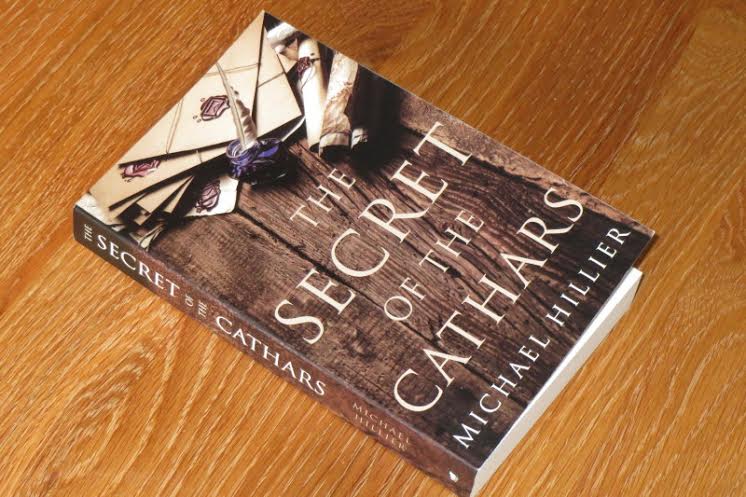
The Secret of the Cathars by Michael Hillier (published Matador 2015) is the first of a new trilogy of books based on the history of the Cathars, a medieval French religious sect.  Lots of different groups of people hunting for various treasures and all a little bit confusing with quite a few loose ends by the end of the book though no doubt that is at least in part because books two and three are still to come.  I think I will read them – it was a good enough plot to hold my interest and I do want to know how it all works out.             Month 12 of my reading challenge By Frances Colville1

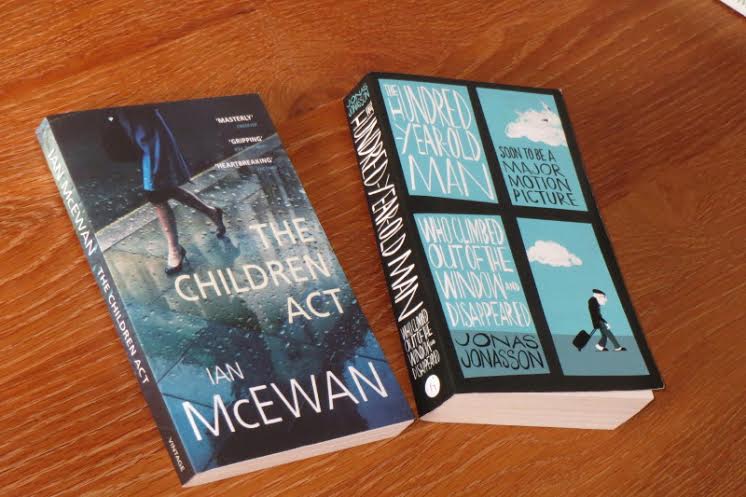
Ian McEwan is one of my favourite authors and his latest book The Children Act (Vintage 2014)didn’t disappoint, although at the same time it didn’t quite measure up to my absolute favourite, On Chesil Beach.  The Children Act tells the story of Fiona, a high court judge who is going through a personal crisis at the same time as being called on to make a hugely important judicial decision.  McEwan’s fascination with judicial issues, with music and poetry, and with the moral conundrum of how far you place your religious beliefs above the life of someone you love, all feature in this book which will leave you thinking long after you have finished it.

Month 12 of my reading challenge By Frances Colville2

The 100 year old man who climbed out of the window and disappeared by Jonas Jonasson (Hesperus Press 2012) has been recommended to me by several people over the last few years but I never quite got round to reading it.  But now I have and I’m very glad indeed.  The book tells the story – obviously – of the 100 year old man who climbs out of a window of his care home and has a succession of adventures with an ever-growing group of people.  At the same time as we progress through these escapades we are told stories about the rest of his life.  It’s absurd, ridiculous, incredible and very funny indeed.  And it has in passing a lot to say about the twentieth century, its events and many of its main characters, and also about the treatment of the elderly.


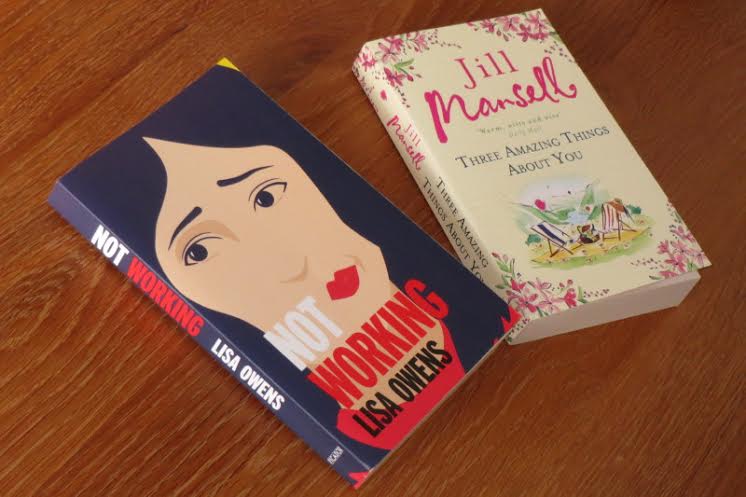
Not Working by Lisa Owens (Picador 2016) was another quick read.  Easy (because it is told in bite-size chunks) to pick up and put down in between enjoying a house full of Christmas visitors.  It’s the story of  Claire who decides to take some time out from work to decide what she really wants to do with her life.  The ending was disappointing, I thought.  It sort of fizzled out as if the author couldn’t quite work out how to finish it more definitively.  I enjoyed it though – I empathised with the main character and I liked the mix of humour and more serious issues.

Month 12 of my reading challenge By Frances Colville3

Jill Mansell has long been an author I turn to when I want something light and cheerful. Three Amazing Things About You (Headline 2015)is her latest book and I thoroughly enjoyed it as I knew I would, though I have to admit there were parts which were definitely not happy-ever-after.  A sensitive handling of some of the issues resulting from chronic ill health, and from the need for transplants.  But the happy ending I hoped for was definitely there.


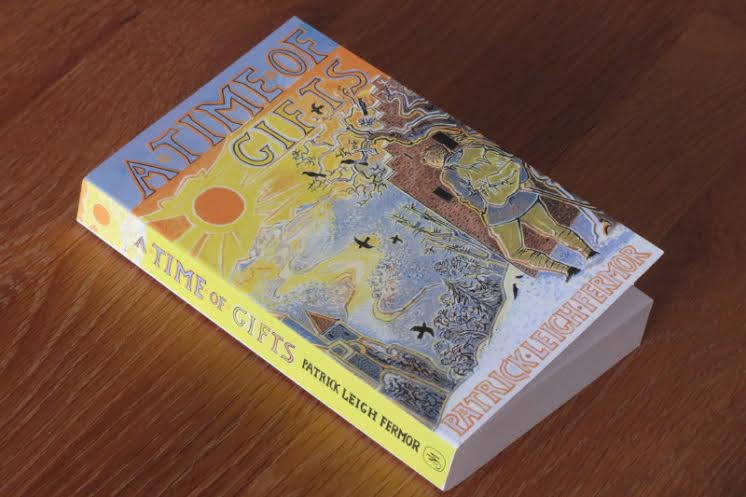
I thought long and hard about my final choice for this month – and indeed this year – and eventually settled on The Time of Gifts by Patrick Leigh Fermor (paperback edition re-issued John Murray2004) which was given to me by my elder daughter and fellow obsessive reader.  I knew as soon as I read the introduction that it was going to work for me – not only did I discover the source of the title of another book I read and enjoyed this year (Like a Tramp, Like a Pilgrim), but there was also a quote from George Herbert, the poet I recommended last month. Very serendipitous!  The author tells the story of a walk he took as a teenager from Rotterdam to Istanbul in the 1930s.  But he wrote the book in the 1960s so has the benefit of hindsight and far more knowledge than he had at the time of the walk.  It’s crammed full of historical, geographical and cultural information and you can learn so much from it.  Or you can just read it and allow the beauty of the language to wash over you.  It’s a wonderful book.

Month 12 of my reading challenge By Frances Colville4

So here I am at the end of my year of reading.  Total of books read  = 63.  And conclusions drawn?  I love variety and I love to read all sorts of books, I admire good and original literary fiction, and – somewhat to my surprise – have become aware during the year that my absolute favourite genre is travel writing.  I also know that even if I reach the grand old age of 105 as my wonderful great-aunt did earlier this year, I will never be able to read all the books I want to read.  Life is, quite simply, always going to be too short.


Where do I go from here?  Not sure yet, but the possibilities are endless – and the prospect so exciting.  I can’t wait.


All books available from www.amazon.co.uk


From Both Ends Of The Stethoscope by Dr. Kathleen Thompson

Review by Margaret Graham

From Both Ends Of The Stethoscope by Dr. Kathleen Thompson book review, health, breast cancer,

Many of you will be familiar with Frost Magazine’s Dr Kathleen Thompson’s regular health features, which are topical, succinct accessible and helpful.


It is no surprise, therefore, that Dr Kathleen Thompson brings just the same skills to From Both Ends Of The Stethoscope – Getting through breast cancer – by a doctor who knows.


This guide should be read by anyone with cancer, or given to anyone we know with the disease. Not only that, it should be read by relatives who are suddenly thrust into a unexpected supportive role, which leaves them as confused and upset as the patient.


In the guide, Dr Kathleen Thompson has the courage to use her personal experiences of breast cancer to explore the situation. She acknowledges not only her reluctance to face up to the symptoms, but her initial fear and confusion as she adjusted to this change in her fortunes.

As a medical insider, she reflects and applies her understanding of the medical procedures brought to bear to counteract the progress of the disease. She suggests the questions patients could, or perhaps should ask. She explains the possible treatments, (remember, that knowledge is power).


This is the key to the guide, it seemed to me: it is important for the patient to take control of the situation, and for the relatives to support this stance. To control a situation you need education because education leads to knowledge, which leads to power. Here I must acknowledge the fantastic Andy McNabb, who made this suggestion in a talk he gave. I thought it profound, and use it often.


Indeed, everyone should keep it as a mantra.


I loved, particularly,  the chapter on how patients manipulate the staff to achieve, or not, the results they require – read it, learn, and laugh.


Sensibly laid out, each chapter is easy to navigate. In other words, it won’t be too much or too difficult for those under stress.


Importantly, the author explains medical research, and how to assess the credibility of the numerous cancer treatment claims, and what we can all do to protect ourselves from cancer.


This is an important book, in either e-book or paperback.


Published by Faito Books it is available on Amazon.co.uk at £12.99


http://www.amazon.co.uk/dp/0993508308


House of Cards Season 4 Trailer Watch Now

House-of-Cards-Season-2-Trailer-Premiere-DateGet ready people, the new season of House of Cards is coming to Netflix on March 4, 2016. To whet your appetite here is the House of Cards Season 4 trailer.

House of Cards revolutionised television. It was the first Netflix original to make a huge impact and change how people watch TV. We love it, do you?

Inflammatory Breast Cancer by Dr Kathleen Thompson

breast cancer, cancer, information on breast cancer, inflammatory breast cancer

Have you read Heidi Loughlin’s blog? Heidi is a young mother who has breast cancer.

She was pregnant when diagnosed, so treatment was started with chemotherapy drugs which were relatively safe for her unborn baby. The birth was to be brought forward, when she would switch to more effective drugs.

However her cancer progressed quickly, requiring an earlier delivery than planned, to allow Heidi to start Herceptin treatment sooner. Devastatingly, her baby daughter died shortly after the birth, just before this Christmas.

Heidi has inflammatory breast cancer (IBC). Although rare  (1-4% of all breast cancers), it is important for two reasons— (1) it grows and spreads rapidly and (2) the appearance may mimic infection or injury (often there is no lump), and so breast cancer may be overlooked and life-saving treatment delayed.

IBC invades the breast skin, and blocks the lymph vessels within it. It tends to spread in sheets, rather than forming a lump.

This results in an unusual picture. The lymph blockages cause fluid build-up, so the skin swells and discolours, and hair follicles enlarge, forming multiple pits. The resulting skin resembles that of an orange (and is called ‘peau d’orange’).

However this classical appearance isn’t always seen either.

The breast may become red, hot and swollen, resembling infection, and if ‘mastitis’ doesn’t respond to antibiotics, IBC should be considered urgently.

Sometimes the skin appears bruised, or ridges or welts appear. There may be ulceration. Sometimes the nipple inverts or leaks fluid/blood, and there may be enlarged lymph nodes in the armpit or collar bone area.

If any of these changes occur, you must see a doctor without delay.

Because there may be no lump, and because it often occurs in younger women, with denser breast tissue, it may not be picked up on a mammogram.

Biopsy of the affected skin is key to diagnosis. AS IBC spreads early, PET or CAT scans of the body, and bone scans will also be needed.

The outlook for IBC used to be very poor. It is still not as good as for other breast cancers, but with modern treatment it has improved, and recent genetic research has yielded potential new hope.

Chemotherapy is usually started before surgery. Afterwards a full mastectomy is generally needed, removing more body tissue than normal, including armpit lymph nodes. Breast reconstruction isn’t normally possible until later on.

Radiotherapy follows surgery, then often more chemotherapy. If the cancer is HER2 positive, Herceptin will be given. If it is sensitive to female hormones, anti-oestrogens, either tamoxifen or an aromatase-inhibitor, such as letrozole will be prescribed.

Treating any cancer during pregnancy involves balancing risks to baby and mother, and, as in Heidi’s case, can involve bitter disappointments.

If you notice any unusual and persistent changes in your breast—not necessarily a lump, you must see your doctor without delay. Unless there is a good explanation for the changes, you should be referred to a breast clinic. Do push for this if you are concerned.

By Dr K Thompson, author of From Both Ends of the Stethoscope: Getting through breast cancer – by a doctor who knows

http://www.amazon.co.uk/dp/B01A7DM42Q

Further information:

http://storminatitcup.blogspot.co.uk/2015_12_01_archive.html

http://www.cancer.gov/types/breast/ibc-fact-sheet

http://www.cancerresearchuk.org/about-cancer/type/breast-cancer/about/types/inflammatory-breast-cancer

http://jnci.oxfordjournals.org/content/101/19/1302.full

Note: These articles express personal views. No warranty is made as to the accuracy or completeness of information given and you should always consult a doctor if you need medical advice


The Hateful Eight – Film Review

the_hateful_eightRolling in at a mammoth three hours and seven minutes, the aptly titled The Hateful Eight is a film that in many ways will divide audiences. Those that love Quentin Tarantino’s style of film-making; the long build ups, exaggerated sword plays of dialogue and immediate violence, the no expense spared approach to making scenes look and feel authentic will no doubt rejoice here. But for those who were perhaps looking for a quick fix of action seen in examples such as Django Unchained and the Kill Bill series are likely to be disappointed or lack the endurance to see this film through to the end. It follows then that this film can be seen as a blessing and a shame in equal measure.

Shot in Ultra Panavision 70 which is apparently super widescreen, a long, and I mean long intro follows a horse and carriage through what must be a the bleakest snow storm. Yes, it is almost ten minutes before we actually get any dialogue. Only Tarantino could do that and not break a sweat. But when people do start speaking its then that you appreciate the depth and texture that he places within his characters.

John Ruth (Kurt Russell) is a bounty hunter carrying his charge Daisy Domergue (Jennifer Jason Leigh) to a town called Red Rock. He never fails to bring his quarry in alive rather than dead so that they can be hanged by the state. Before long he is joined by Major Marquis Warren (played by an incredibly on form Samuel L Jackson) who after some convincing is permitted to share the stagecoach to Red Rock. They are soon after joined by Chris Mannix (Walton Goggins); allegedly Red Rock’s new sheriff, who makes it clear that in return for riding on the stage-coach he’ll ensure that justice will be done on arrival.

The worsening storm forces them to break their journey at Minnie’s; an isolated shop that they intend to use as a stop-over point and it’s here that four more faces join the crowd, potentially all eager for a share of the bounty that is on Daisy Domergue’s head. They are Sanford Smithers (Bruce Dern), an old Confederate general, Joe Gage (Michael Madsen), a taciturn cattle-hand, Oswaldo Mobray (Tim Roth), a flamboyant hangman, and Bob (Demián Bichir), the shop’s temporary Mexican caretaker. Minnie herself however is nowhere to be seen. This sets the scene for a set-up where no one can be trusted and anything can happen.

It’s here where the dialogue goes into overdrive and Tarantino really goes to work building and creating tension. However, it has to be said that it is a shame that it is such a slow build up; a growing crescendo which perhaps would have fared better if the characters had redeeming qualities. The reality is I found I could find little empathy with any one of the characters, they all had behaviours which I found distasteful, but perhaps that is the whole point. The second act plays out almost like an Agatha Christie novel; largely a quest to find out who is behind it all. The characters try and suss each other out. Flashbacks occur; who was where and when this or that happened and people try to talk their way out of being in the guilty frame.

What embellishes this is the fine cast. Very rarely do you find films where every actor shines. The only one I can think of right now where that occurred recently was in The Wolf of Wall Street and again it was because the director was very credible so the cast gave it their all. Here it is the same. They all implicitly trust Quentin so they hit their roles with vigour, the end result is stunning, at times riveting and in so many ways simply wonderful.

Personally, I am not a fan of long films. My friends were divided in equal measure between loving and hating this film. However, it has to be said from Tarantino this film seems intimate, like a personal project he really deliberated, stressed over, savoured and desired to share with his fans. The end result is something only he could realistically pull off at such quality and regardless of whether you love it or hate it you have to admit it’s a fine piece of work.