THE BUSINESS OF BOOKS: TWITTERQUETTE – Jane Cable’s personal foibles

Twitter is looming large in my mind this week. Not just because the potential to be rude to each other has doubled with the letter count, but because Chindi Authors has launched its pre-Christmas social media campaign. Normally we have an event where we sell festive books but this year we’ve chosen to do the same thing online and of course we’re tweeting about it like crazy.

Twitter is a great forum for authors. It’s a place we meet each other, form into street teams and groups (both formal, like @RNATweets, and informal), link up with readers and bloggers, and generally share news about our books. We all have our own styles, but if I was making the rules they would go something like this.

  1. Be nice to each other. Social media can make it very easy for some people with bullying tendencies to be rude. It’s cowardly in the extreme. Don’t do it. I will block you. Twitter should ban you.
  2. Retweets should be reciprocal. While likes and thank yous are nice to have they aren’t the same. If I’m retweeting you the chances are that you’re an author so our followers are likely to be bookish people. They will be as interested in my tweet as my followers will be in yours.
  3. Use pinned tweets. For those lovely, lovely people who do retweet, please make it easy for me to return the favour. I’m not lazy but I’m time poor and I don’t have hours to scroll through pages and pages of your generous retweets looking for your own original content. So please pin it. And change your pinned tweet regularly.
  4. Use a picture. Just because tweets are more noticeable that way. If the picture tells your story, so much the better. That goes for page headers too. There are no excuses – even I can make them using Canva.
  5. Your profile includes a space for words. If you don’t tell me who you are, how can we connect?
  6. Don’t play follow back. This one’s going to be controversial but I only follow back for other RNA, SoA and Chindi members. Otherwise I will thank you for the follow in a personal way which I hope you’ll respond to. Then we can connect properly and share common ground.
  7. Don’t blitz me with the same tweet over and over again. I think we can all be a bit guilty of this but I’m more likely to click through to interesting content such as a blog you’ve written or a review. I’ve actually had to block some accounts which pre-programme the same tweets to fire like bullets. My publisher did it with Another You when it was on free offer and I was more embarrassed than pleased.

    Although these are my personal foibles my fellow @ChindiAuthors contributed to the debate. So thank you @carol_thomas2, @chirosie, @angela_petch, @julia76871430 & @michael_parker.
THE BUSINESS OF BOOKS: RIPPING THE VEIL – Jane Cable on the art of the ghost story

Despite the pumpkin-orange commerciality of Hallowe’en its roots go back deep into history. Further than All Hallows preceding All Saints in the Christian calendar, back to a more pagan past and the festival of Samhain.

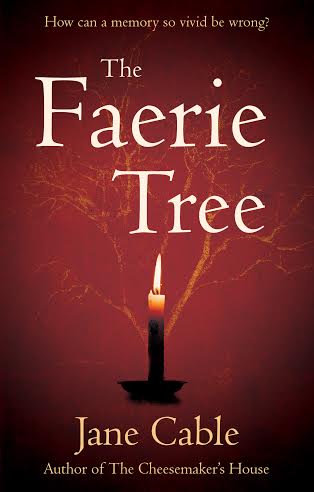
As I discovered when I was researching The Faerie Tree, Samhain is the time when the veil between the living and the spirit world is at its most fragile; the perfect moment to honour the dead and to reconnect with our ancestors. The time when you’re most likely to encounter a spirit, perhaps – or maybe to tell a ghostly story.

I believe that tales of those who have passed beyond our world have been part of human history for millennia. It’s something that archaeology can never prove, but what is known about early civilisations is that they worshipped their ancestors. And if you worship them, you will naturally pass down stories about them and perhaps they will even come back to visit you. So maybe you start to tell stories about that.

Even now there is a great deal of emotion invested in family ghost stories. Authors Rosemary Noble and Julia Macfarlane agree. Julia edited Chichester Ghost Walk, a collection of short stories which form a walk around Chichester city centre or can simply be read for pleasure, and when she guides the walk herself she has to make sure someone else reads The Cottage Vision. “It’s based on my Nanna’s vision of her son drowning,” she explains, “I fill up, every time.”

But how to create a spine tingling ghost story? When I started to write The Cheesemaker’s House I’m not sure it was my intention, and when my characters took me there it was how to get it right that terrified the living daylights out of me. My basic premise was to ground my characters so firmly in the real world that when they slipped elsewhere – or elsewhere slipped to them – it seemed effortless and ephemeral at the same time. Writing in the first person helped; it meant I could be inside Alice’s head, feeling her emotions, and making sure my readers felt them too.

My aim became to write a story which while hard to put down wasn’t so scary that my readers couldn’t sleep when they did. However one of my very few beta readers, a man in his late twenties, rode a coach and horses through that idea when he emailed to say he’d been reading the book while his girlfriend was away and had been forced to sleep with the light on.

Research is also key. I am lucky enough to have access to the library at The College of Psychic Studies which is stacked floor to ceiling with books around the subject of consciousness beyond matter. There I learnt the difference between a spirit and a ghost and was able to read first hand accounts of those experiencing their presence – and those whose calling it is to mediate between the different worlds on either side of the veil. I can’t recommend the college enough as a resource – to find out more about its work visit https://www.collegeofpsychicstudies.co.uk/.

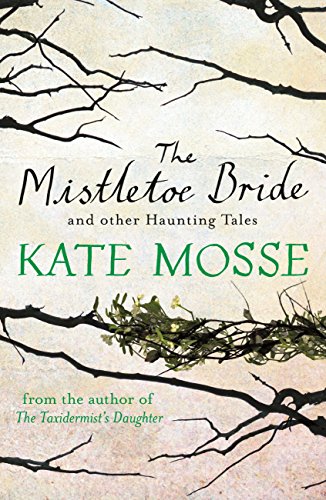
But above all, if you want to write a ghost story then read them. Find out how other writers create emotional buy in and weave a magical web of suspense. For me Kate Mosse is mistress of this art. It was as I was reading The Winter Ghosts I realised that if I could learn her subtlety I could do this too. But for reading around the fireside as the nights draw in dip and out of The Mistletoe Bride & Other Haunting Tales. The stories are so diverse I’m sure you’ll find something to inspire you.

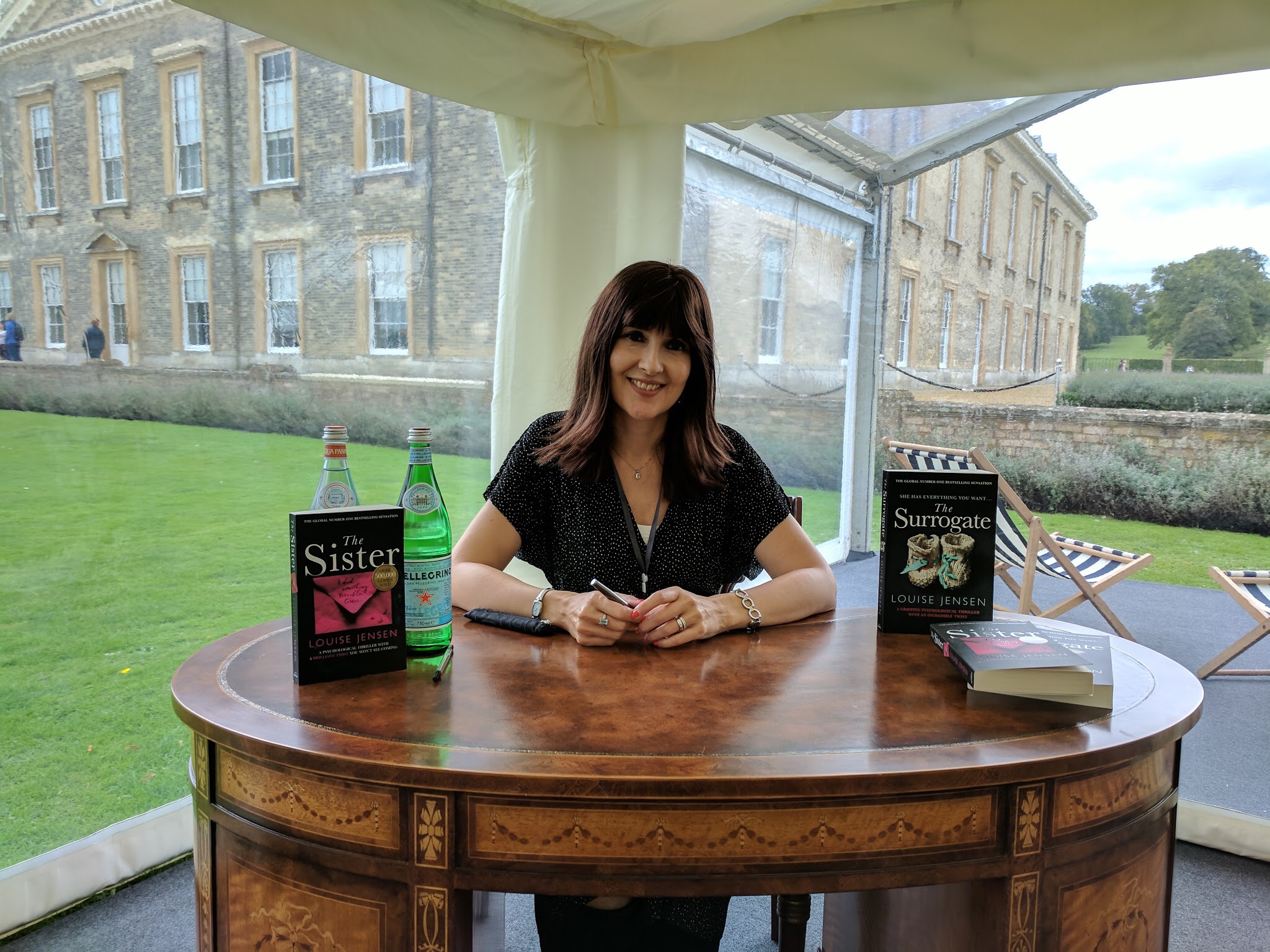
The Business of Books: Millions of Thrills – Jane Cable meets USA Today bestselling author Louise Jensen

Louise’s first two novels, The Sister and The Gift, were both No.1 bestsellers, and have been sold for translation in sixteen territories. The Sister was nominated for The Goodreads Awards Debut of 2016. The Surrogate is out now.

1) How much of your working life does the business of books take up?

I’m quite structured and tend to work 9-3.15 every day to fit in with school hours. If I’m taking a book through the editing process I come back to my desk after the school run and work through until about 5.30 and I generally work for a part of most weekends too. Writing full time is busier than I’d anticipated. Writing new words is only a fraction of my day. There’s admin, interviews, events not to mention social media and blogging. In all honesty it’s taken me about a year to find my feet and settle into a good routine.


2) What’s your business model to earn a living from writing?

I didn’t have one! I started writing as a hobby but after completing the first draft of The Sister I read it back and realised I had something really special. I sat down with my husband and told him I’d love to work part-time for six months to give me a chance to really polish it and submit to agents and publishers. We went through our finances and realised it would be tight and sat down with the kids and discussed it as a family. Everyone agreed I should at least try. Within six months I’d signed a three book deal and six months after that I was fortunate enough to be in the position to be able to write full time.

3) What do you write and what do you consider to be your major successes?

I write psychological thrillers that also have an emotional thread running through the story line. I adore commercial fiction and thrillers and like to blend genres where I can. I love the feeling of being unnerved one second and then having a lump in my throat the next. I want to take readers through a whole spectrum of emotions when they read my stories.

Both my first two novels, The Sister and The Gift were No. 1 International Bestsellers and USA Today Bestsellers and have been sold for translation to sixteen territories. It really was a dreams come true year. The Sister sold half a million copies within the first six months and I was nominated for the Goodreads Debut Author of 2016 and also for the CWA Daggers New Blood 2017. The Sister spent over a year and a half in the psychological thriller top 100 so far.

Initially I published with Bookouture, a digital imprint of Hachette, but Sphere (Little, Brown) have since acquired paperback rights to my first three books, and a fourth to come next year, and I can’t tell you how exciting it is to walk into a bookshop or supermarket and see my stories on a shelf.


4) Tell me about your latest project.

The Surrogate is newly released and is the story of Kat and Nick who are desperate to be parents. They’ve almost given up hope when Kat runs into Lisa, her childhood best friend, who offers to act as a surrogate.

Kat’s longing to be a mother makes this book an emotional read, but the layers to all the characters also make this the darkest book I’ve ever written. Everyone has a secret!

I had such fun writing this story. There was no planning involved and there were so many twists and turns each day was an adventure. The ending completely took me by surprise and made me gasp out loud and so far, no reader has figured it out either, despite the clues I went back and planted.


At the time of publication The Surrogate is featured in a special promotion where the eBook is £0.99/$1.31 across all digital platforms for the next week. You can buy from Amazon here.

You can also find Louise at www.louisejensen.co.uk where she regularly blogs flash fiction and writing tips, and she also spends far too much time over on Twitter.


The Business of Books: Fiction, Friends and New Beginnings – Choc Lit’s latest signing Carol Thomas takes over!

I’d like to start this post by saying thank you to my fellow Chindi Author and friend Jane Cable for inviting me along to share the experience of getting my first publishing contract. She has left me to it, so I am titling this piece Fiction, Friends and New Beginnings and dedicating it to Jane.

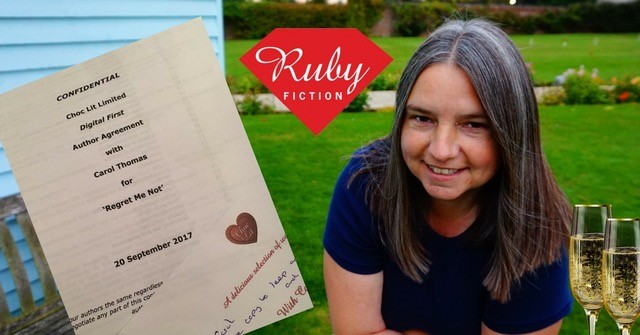
This week, I have been delighted to announce that my next novel, currently titled Regret Me Not, will be published by Ruby Fiction – a new imprint of the award-winning independent publishers Choc Lit.

The deal came as a result of attending a Choc Lit live event and pitching to an editor in May 2017. I had never imagined pitching face to face, and probably never would have, had it not been for a conversation Jane and I had just weeks before.

Jane had read my debut novel, Crazy Over You, and said my writing style was well suited to Choc Lit. She told me (in a lovely polite Jane way) I should stop thinking about it and get on and submit to them. With her words in mind, I put my name down for a pitch slot. I then spent a week researching how to pitch, preparing what to say and generally panicking.

I needn’t have worried. Jane accompanied me to the event and shared a fortifying tea and cake before the pitch. The live event was great, and the authors were lovely, as I knew they would be. I have followed Choc Lit for several years and have enjoyed meeting the authors and building online relationships with them since the start of my writing journey. And Choc Lit editor, Lusana Taylor, quickly put my nerves to rest and got me chatting about my book and online presence. At the end of my session, Lusana requested I send my manuscript into the Choc Lit tasting panel (a panel of readers who give feedback before publishing decisions are made).

Three months later I got a call from Lyn Vernham, director of Choc Lit, who said they wanted to moveforward with publishing my book and that it would be one of the first books to be published under the new imprint, Ruby Fiction. I signed my contract a week later.

And so exciting times are ahead. I am told the title of my novel will change, and I await the first glimpse of the cover. All of which is new to me; as a previously self-published author, I have made my own decisions about titles and used my own illustrator for covers. I am keen to see how the publisher and the cover designer will interpret my book and I can’t wait to be able to share it.

I am thrilled to be starting this new phase of my writing journey with Ruby Fiction – along with Angela Barton and Caroline James who have also recently been signed.

I know that as I begin promoting my book, I will have the support of the fantastic team of Choc Lit authors whose online response to Ruby Fiction has been warm and welcoming, the support of my new Ruby Fiction family and, of course, my fellow Chindi Authors by my side. Without Jane Cable’s friendly nudge in the right direction (that’s the polite way to put it), I might have missed this great opportunity. New beginnings are exciting, but even more so when you have good people by your side. Thank you Jane x


To follow Carol Thomas’ journey to publication visit:

www.carol-thomas.co.uk

http://facebook.com/carolthomasauthor

http://twitter.com/carol_thomas2

www.chindi-authors.co.uk


THE BUSINESS OF BOOKS: MENTAL HEALTH IN FICTION – Jane Cable on romance in the wake of World Mental Health Day

When I was a rookie author working with my first editor I wanted to write a book with a central character who had OCD. I had a friend with quite a severe form of the illness and he was willing to help me to get it right. But I was told in no uncertain terms that I couldn’t write romantic fiction with a hero like that because no-one would want to read it.

I was prepared to accept the fact I couldn’t write it due to my technical ability, but not that the subject was taboo. Yes, it might make uncomfortable reading but surely it fitted perfectly with the romantic genre: X wants Y and Z stops them getting it.

I put the manuscript to one side (it’s still there, but for a different reason) and in the meantime The Cheesemaker’s House won the suspense and crime heat of the Alan Titchmarsh Show’s People’s Novelist competition. I was almost relieved when judge Sophie Hannah told me I needed a better editor. And totally vindicated when Jeffery Archer found Owen (who is teetering on the brink) a fascinating character.

With The Faerie Tree I was inspired to take things further. I had a good friend who’d suffered a major breakdown and I suppose I wanted to show him that a character with similar problems could get their life back on track. Robin’s struggle with depression is central to the story but he’s just like any other romantic hero – he’s funny, self aware and loving – he certainly doesn’t have ‘damaged goods – pity me’ stamped across his forehead.

The Faerie Tree, book, book review, review

Readers loved him too. Amazon reviewers said, “I fell a little in love with Robin myself,” and “Love, relationships, grief, depression, hope. The Faerie Tree covers it all, yet it’s not all doom and gloom.” But the best was from blogger extraordinaire Ann Cater: “Jane Cable creates characters that are believable, who have problems, who are often annoying and frustrating, but whose story is compelling. She cleverly takes the reader into the heads of two damaged and fragile people, and this is done so very well. Despite their faults, both Izzie and Robin are characters that the reader will root for throughout this really excellent novel.”

I’m not quoting these to show off – I’m making a point. People with mental health issues do make good characters in romantic fiction. Not just shuffling on and off the side-lines, but right in the centre of the story. The reviews also made me brave enough to tackle the thorny issue of PTSD amongst service personnel in Another You.

I’m not the only one: search PTSD romance in Kindle books and there are 341 titles in contemporary alone. Big publishers and writers are tackling the issue too, with books like Kristin Hannah’s Home Front (published by Pan) and USA Today best-selling author Kallypso Masters’ Nobody’s Lost.

Sadly it seems more people are suffering from mental health issues. But perhaps it’s just that happily they are more likely to seek help and not feel ashamed. There is a greater understanding that depression and other illnesses have a physical source in the imbalance of brain chemicals (read Tim Cantapher’s Depressive Illness: The Curse of the Strong if you want to know more) so stigma and taboo really shouldn’t come into it.

While readers want romantic fiction to take them away from their everyday lives, many need to be taken to a world they recognise. And in a way that gives them hope. X wants Y and despite Z, they get it.

The Business of Books: Jane Cable talks to Choclit author and Romaniac Laura E James

THE BUSINESS OF BOOKS: Connect, engage – and write!

Jane Cable talks to Choclit author and Romaniac Laura E James

1: How much of your working life does the business of books take up?

I like to start the day by clearing my emails and writing my guest posts, updating the accounts, attending to social media – connecting with readers and writers, sharing book-related news, creating adverts – before settling into working on the manuscript, be that research, writing or editing. Quite often time will run away from me, so I’m attempting to stick to a plan of sorting out on what I loosely term admin, until 11:00, leaving the rest of the day for writing, which is anything from one to seven hours. It’s not an exact answer to the question because my working day depends on my health. I have autoimmune conditions, which can dictate my hours.

2: What’s your business model to earn a living from writing?

It’s only recently I’ve converted my way of thinking to writing as a business, so I’m learning and in the process of developing the business model. I write character and issue driven relationship novels, I engage on social media, run workshops and present talks to groups interested in writing and/or my books, take part in interviews, and network when possible. In its simplest form: keep writing, keep engaging, and keep building my readership.

3: What do you write and what do you consider to be your major successes?

I write commercial fiction, often centred on family relationships, with issues and moral dilemmas sending my characters down dark paths. There are strong elements of romance, so I will always guide my characters and my readers towards a happy or hopeful ending. I’m a Jodi Picoult fan and reading her books has had a major influence on what and possibly, how I write.

My first major success was being shortlisted for a short story competition run by Choc Lit (publisher), which resulted in my entry achieving the runner-up position. I repeated this with their second short story competition, and went on to have my debut, TRUTH OR DARE?, published with them.

FOLLOW ME FOLLOW YOU, my second book, was my first to go into paperback, large print, and audio, and the moment I received my author copies is one I cherish. In January 2017, the book was chosen by Apple to be the free iBook of the Week, and it hit the number one spot – my first number one. I was on a writing retreat with friends at the time. Celebrations were had.

My latest novel, WHAT DOESN’T KILL YOU, spearheaded a new imprint – Dark Choc Lit. I feel privileged to have had that opportunity and love that an imprint is in place for darker, harder hitting novels. This is the first of my novels to be sold through WH Smith, in the Travel shops, which is a dream come true.

The Romaniacs, an online blogging group of eight writers, formed in 2011, has to be one of my favourite successes, but it’s not my success, it’s our success. The support and friendship is phenomenal, as is the output – seven out of eight are published/to be published, and/or with agents. In 2015, we won the inaugural RNA Industry Media Stars Award for our work in promoting the romance writing industry. But the real success is how eight people, who met through the Festival of Romance and the Romantic Novelists’ Association’s New Writers’ Scheme, have formed solid friendships for life.

4: Tell me about your latest project.

I’m working on two projects – a mother-daughter relationship story, which has been planned, researched and mapped out on one of my white boards, but is hovering in the background, maturing, and a novel about rebuilding one’s life from the ground floor up, following an emotionally abusive relationship.

Laura E James writes romance without the soft edges.
For further information, go to: www.lauraejames.co.uk or www.theromaniacs.co.uk


The Business of Books: The Taxman Cometh… Or Does He?

the-business-of-books-interviewswithjanecableJane Cable on taxing income from writing

The first royalty cheque, the first receipts from Amazon – those are exciting moments for any writer. But in the slightly bewildered ‘wow – someone’s paid to read my book’ moment, whether you need to pay tax on the income is the furthest thing from your mind.

First let me say that taxation – any form of taxation – is a minefield. The volume of legislation is massive and while HMRC guidance is helpful and now provided in reasonably understandable lay terms, it is still easy to fall foul of the rules – or at very least not take full advantage of them. If you even think you might need professional advice then talk to an accountant – preferably a qualified one. Most offer free initial meetings and if you can’t find one by recommendation then the ICAEW’s Business Advice Service is a good place to start: http://www.businessadviceservice.com/

Assuming you haven’t set up a company for your writing business then your earnings from the business of books will be classed as self employment. This means that you won’t be taxed on your income, but on your profit. In broad terms, many costs which relate solely to your writing will be allowable for tax, including book production, marketing, attending conferences and agents’ fees. The list is not exhaustive but a good first question to ask yourself is ‘did I do that only for my writing business and was it necessary to do it?’ If the answer is yes, then you are more than half way there but the reality is that a good accountant will be able to maximise what you claim because they will know the laws inside out.

For the tax year just started, things will be quite a lot simpler for the majority of writers who have self employed earnings of under £1,000 per annum. Here I am talking about gross income, before any expenses. This is because the government has introduced a new limit below which HMRC doesn’t even need to know about it. The exception to this is if you already complete a tax return but even then the rules are relatively simple and you can read more about them here: https://www.gov.uk/guidance/tax-free-allowances-on-property-and-trading-income

The Business of Books- The Taxman Cometh… Or Does He?

Of course another issue is whether you are trading or not with your writing, or if it’s just a hobby. Working out when a writer crosses the line is a matter of judgment – and case law – and everyone’s circumstances will be different. The key ingredient is whether you are doing it with a view to making a profit (one day, if not now) but once you actually start selling books, then you probably are.

There is a good chance you might be trading before that day, but this is where the waters become unbelievable muddy. Why would it matter, you may ask yourself, because if I don’t have any income then I’m not making taxable profits. The answer is that you might be making a taxable loss which can be used to reduce the tax on your other income. And this is where professional advice is essential because it’s also where HMRC can become mighty interested and in 2015 they won a landmark case where a tax tribunal decided that someone who had a full time job but poured money into a hobby they loved was not trading so couldn’t claim tax relief. Even though they made a little income from it. Even though they had a professionally designed website. It struck me at the time that the circumstances were pretty similar to most authors when they set out in their writing careers.

The new £1,000 tax free allowance will undoubtedly make things easier for those setting up many businesses, including writing, which can only be a good thing. But remember it’s only half the story. And never, ever, mess with the Inland Revenue!

Please note that this article only points out general rules and should not be used as a substitute for professional advice.


How To Have More Than 100 Titles Published

the-business-of-books-interviewswithjanecable
This week I talk to multi-published and multi-talented author and writing tutor, Karen King.


How much of your working life does the business of books take up?

The short answer is all of it! Writing – and teaching writing – is how I earn my living.  So every day I’m either writing, visiting schools to talk about writing, running a writing course, marking writing students’ assignments or doing social media about my books.


What’s your business model to earn a living from writing? 


Keep writing. Be flexible. Be aware of the market. Be dedicated. I’ve often worked to commissions so I’ve had to be adaptable, to work to publishers’ briefs and keep track of current trends. As I earn my living from writing it’s a priority for me. Writing comes first, ironing and cleaning is way behind. I had four young children when I first started writing so worked around them, early in the morning, evening and late at night. Writing for magazines meant I had deadlines to work to and, at first, this was the days before email so I had to write up my story/article or whatever, and get it in the post often within a few hours.

karenking How To Have More Than 100 Titles Published

What do you write and what do you consider to be your major successes?
I’ve been a published writer for over thirty years now and for the first twenty years I wrote solely for children. I started off my writing career writing for teen magazines like Jackie, Patches and Loving then moved on young children’s magazines such as Thomas the Tank Engine, My Little Pony, Barbie and Sindy. I wrote photo stories, comic strips, short stories, articles, puzzles, the lot. I even wrote a horoscope page and a problem page. Alongside this, I wrote children’s books. Now I tend to write mainly YA and chicklit. I was really delighted when Accent Press contracted me for three chicklit novels, and offered to republish my backlist too. They have such a great reputation and are a delight to work for. That’s my major success so far.

Tell me about your latest project.

I’ve just finished my third chicklit for Accent Press. The second one comes out in July, it’s called The Cornish Hotel by the Sea, and the cover is so lovely I keep looking at it. Accent are also republishing my YA Perfect Summer on 10 May. It’s got a fab new cover and has been completely revised. I’m really excited about it as it deals with two themes close to my heart, the pressure society puts on people to have perfect looks and how people with disabilities are treated. The tagline is ‘In a society obsessed with perfection, being different is a crime’ so that gives you a big clue to the plot.


Author Bio

Karen King is a multi-published author of children’s books, YA and romantic fiction. She has had 120 children’s books published, three romantic novels and several short stories for women’s magazines. She is also a writing tutor. Her YA Perfect Summer is released on 10 May and her second chicklit, The Cornish Hotel by the Sea will be released in July.

Contact links

www.karenking.net

Amazon Author Page

Karen King Children’s Books Facebook

Karen King Romance Author Facebook