SISTER SCRIBES’ GUEST: MORTON S GRAY ON WRITING AS A MUM AND A CARER

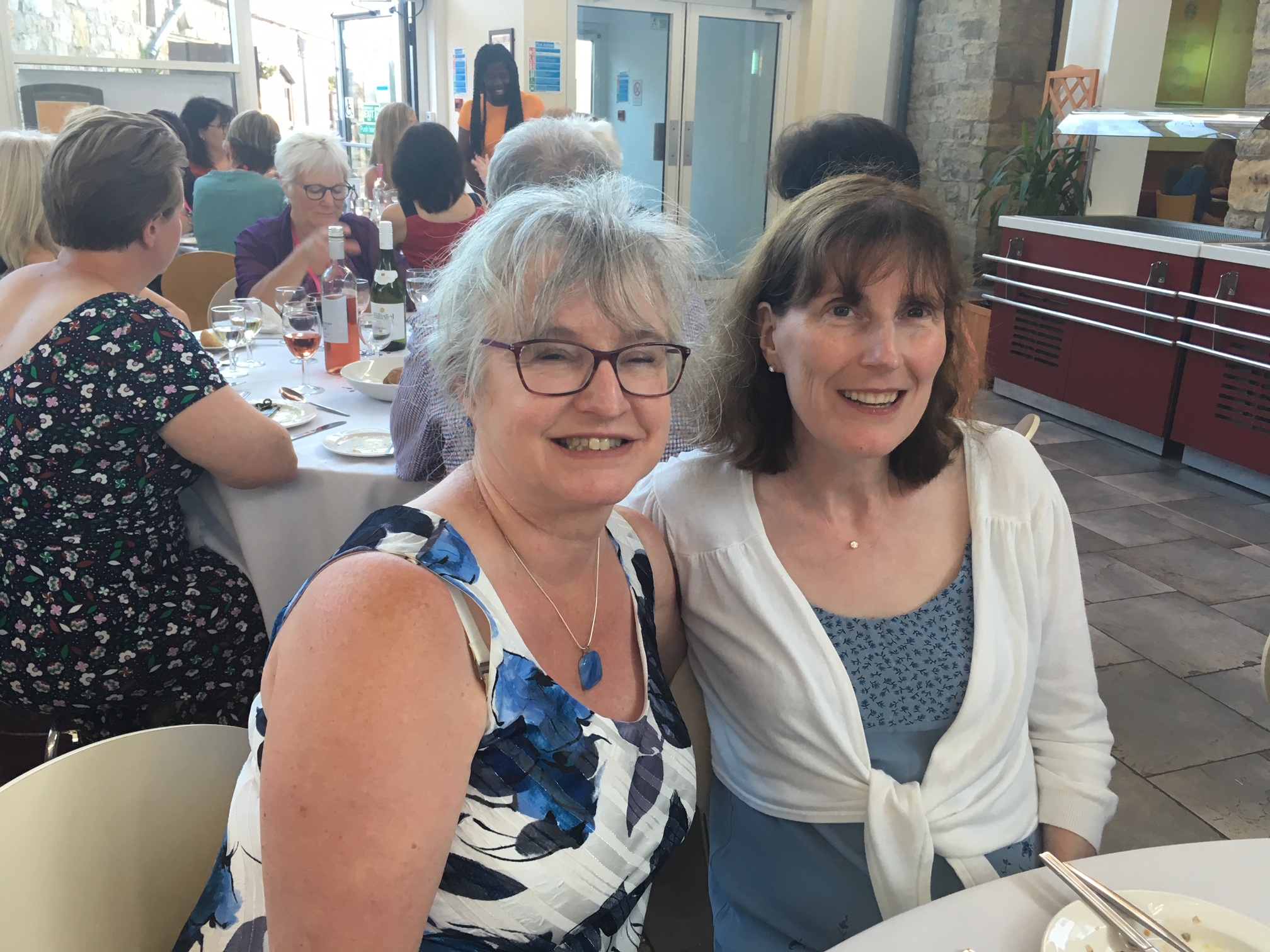
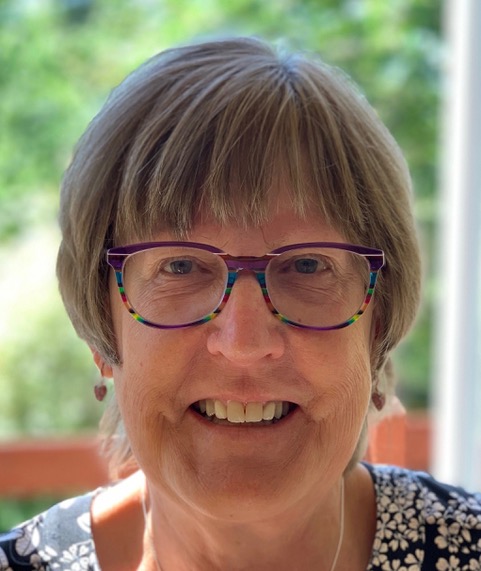
Today I’m joined by author friend Morton S Gray who writes romance with a mystery to solve for Choc Lit all set in her fictional seaside town of Borteen. The better I get to know Morton, the more we seem to have in common, but I am frankly in awe of her daily regime – it’s an absolute inspiration!

I often hear people say that they could write a book, but they’re too busy. So, how do you fit writing into a busy day? I thought I’d give blog readers an idea of how I personally do it. Don’t get me wrong, there are days when I don’t manage a word, but here is an example of a good day!

When I started to compose this post, I realised how important thinking time contributes to the number of words I manage to get down.
Alarm sounds at six o’clock, ten minutes thinking time about latest work in progress, book seven, a Christmas novella for November 2021 publication. Continue thinking in the shower where ideas really begin to flow stimulated somehow by the scents of the shower products. Dressing, I jot down ideas from the shower so I don’t forget, e.g. “dancing on the beach scene” “shock event near the Christmas tree”.

Drive son to station and on way back mull over how to write on from my earlier writing prompts. Breakfast, sit at pc and type. I’m now so ready to write that I can produce about 800 words really quickly.

Tidy house, washing, dishwasher. Early walk with homeworking hubbie. Maybe float a few ideas about my plot to see what he can add. He works in IT but can often give a different and male perspective. We once outlined a complete murder mystery on our walk, but I’m yet to write that one. Other ideas often come to me when walking too.

Back to computer and write. Around 400 words this time.

I visit my mother who has dementia every day after lunch. Sort out problems, shopping and tablets. Mom is a surprisingly good sounding board for my writing too. She’s usually reading one of my books and the plots are always new because she can’t remember the stories.

Once home I tackle admin, phone calls, tweeting, Facebooking and emails. If I’m lucky another quick writing session, let’s say100 words.

Back to station to collect son, listen to music on the way back as lyrics will jump out at me to use as writing prompts. I’ll make notes on my phone waiting at the station, but little time to write until after our evening meal.

Usually add another 300 words in the evening with my laptop on my knee and one eye on a television programme. After writing from notes on phone, I’ll review what I’ve written so far, add extra words and description.

So, by bedtime I should have an extra 1,600 words to show for my day. If it’s a good day sometimes nearer 2,000. Off to bed, but crucially before I turn out the light, I think about any sticky points in the manuscript and often have an answer in my head by morning.

Sleep and repeat.
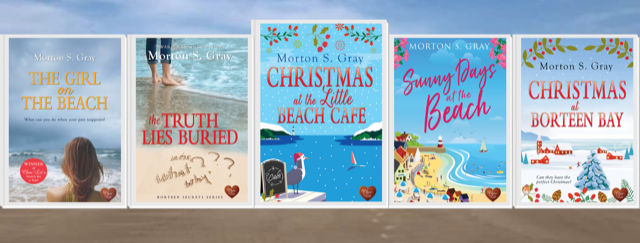
Morton S Gray’s fifth book, Christmas at the Little Beach Café, was published in November. You can catch up with Morton, her blog and her books on her website www.mortonsgray.com


SISTER SCRIBES: JANE CABLE ON THE START OF A NEW ERA

This will be the last time I sharpen my pencil to write a Sister Scribes article for Frost. There is no great drama, and next year will bring an exciting new group of writers to the magazine, but for now Sister Scribes has run its course.

When we started two years ago our writing careers were in very different places. Not all of us had publishers or agents, although some of us had indie published very successfully. We all had the luxury of a little more time. Now we find ourselves working on multiple projects, often for more than one publisher, and even with five of us in the team, producing a weekly article just isn’t tenable.

Of course it doesn’t mean we won’t remain friends – the connections between us are too strong for that. We have been through the best and worst of times together, and that forms incredible bonds. As we have said so many times before, writing can be a lonely business unless you have buddies.

I don’t think our positions are unusual. Everywhere I look around me, there are writers juggling tasks, deadlines looming over them, professional reputations on the line. It seems to me that once you are lucky enough to break down the doors to the publishing world, you can quickly become in great demand, while equally talented writers who perhaps don’t have the confidence, or the perseverance, or the luck of the right book landing on the right desk at the right time, look on from the outside, waiting for their turn.

But enough of this philosophising. We are close to the end of a year that has been frankly terrible for many, so let’s look forward. Let’s be positive and hopeful as we stare down the barrel of 2021.

Sister Scribes will be replaced in Frost by two elements, brought to you by the same team. Our ever popular monthly Reading Round Up will become Cariads’ Choice, and fortnightly we will bring you Welsh Writing Wednesdays.

The team is broadly the Cariad Chapter of the Romantic Novelists’ Association, with a few other Welsh writers, or writers based in Wales, added for good measure. Although I live in Cornwall, because I am from South Wales, Cariad feels as though it is my natural chapter, and lockdown has made attending events so much easier; just a quick link onto Zoom rather than a three hour drive.

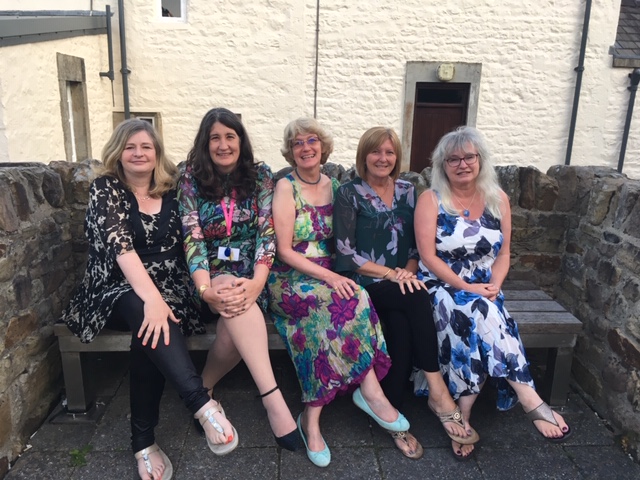
I met my first Cariads, Sue McDonagh and Jan Baynham, at the RNA Conference in 2017 and two years later they shared a flat with the Sister Scribes. I knew Jill Barry by email, because we were both signed to Endeavour at the time, and added Evonne Wareham to the list when we did a library talk together in Cardiff. Former Frost ‘Take Four Writers’ contributor Lucy Coleman is also a member, as is Sister Scribe Kitty Wilson, as she only lives just over the border in England and has become a Cariad too.

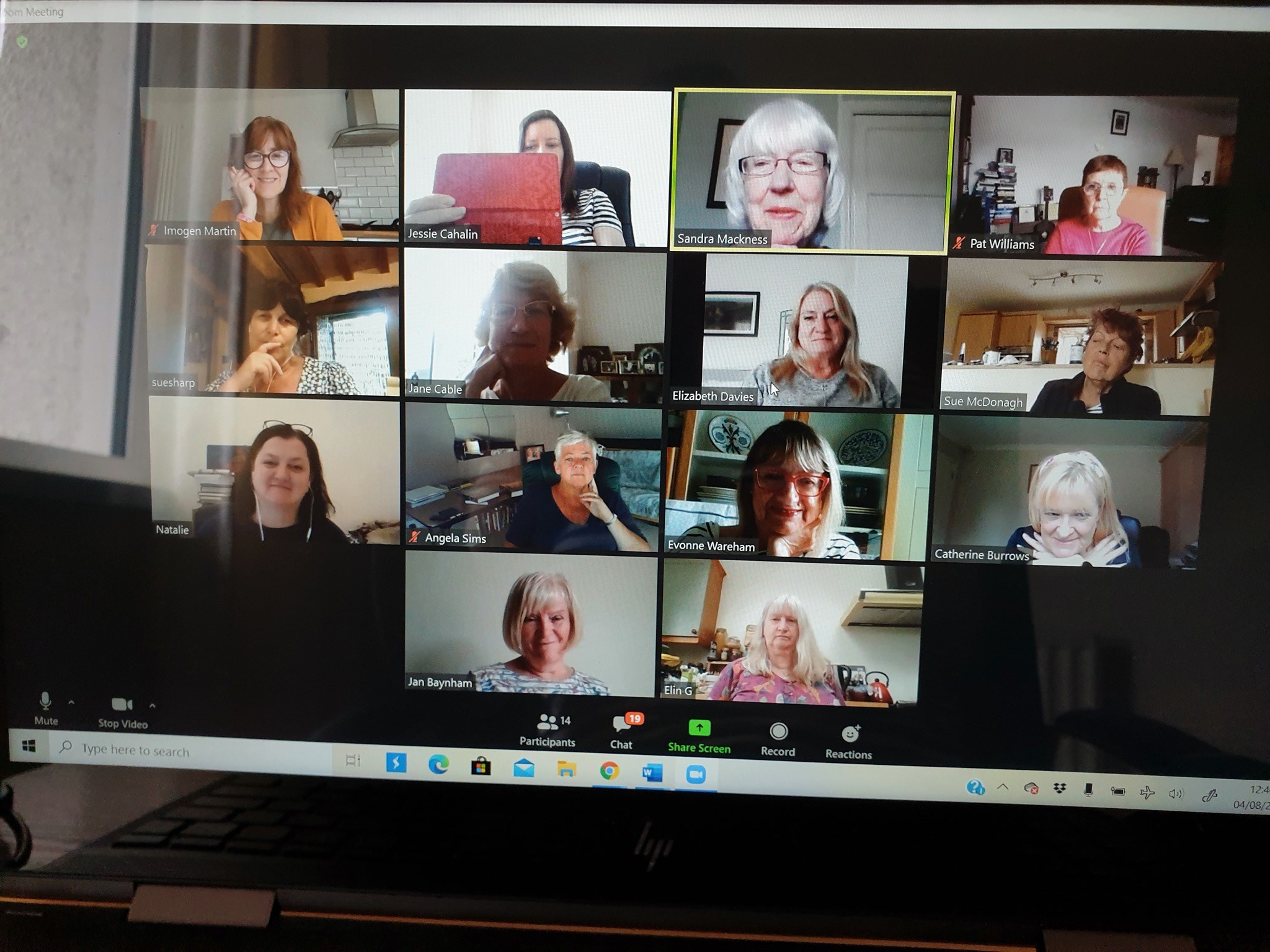
We have a private Facebook group and monthly Zoom meetings, and through this I have come to know the other members of the chapter, and I am sure you will enjoy doing the same next year. The articles pledged will be wide ranging, but inevitably landscape will feature more than once, as will Dylan Thomas. And I just know you are going to enjoy them.


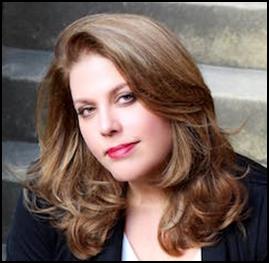
My Writing Process CJ Daugherty

I’m a former journalist and ex-Whitehall civil servant. I was raised in Texas, but have lived in Britain most of my adult life. 

I’m the author of the boarding-school thriller series, Night School, and the US-based crime series, The Echo Killing, set in the southern town of Savannah. 

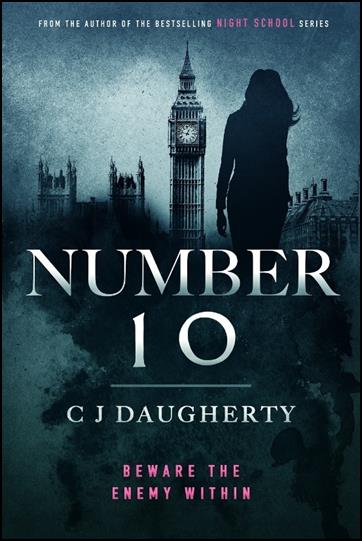
My new novel, Number 10, follows the 16-year-old daughter of the new prime minister as she rebels against the constraints of living in Number 10 Downing Street, and the intense security that surrounds her. When she stumbles across a Russia-led plot to kill her mother and replace her with a puppet prime minister, she’s determined to stop it. But will anyone believe her? 

 A bit about your process of writing. 

I discovered long ago that trying to write in the morning was pointless for me. I use mornings for admin and other work, and I usually settle down to write at about 3pm. I turn off the internet and the phone, and I write for four hours straight, stopping at around seven. If the writing’s going well, I often pick it up again after dinner and write until midnight. 

 CJ Daugherty

Do you plan or just write?

I plan a moderate amount. My first step is always a one-page synopsis, which I share with my agent. If she likes it, I expand it to two pages, and then to eight. My theory is, if I can’t get eight pages out of the plot, I don’t have a big enough of an idea for the book. Once I do have that much material, I sit down to write chapter one. 

What about word count?

Word count for me is a tale of three halves, basically. In the first 10 chapters of the book, I’m happy if I reach 500 words a day. From chapter 10 to chapter 20, I expect 1200 words a day. After chapter 20, if I don’t reach 2,000 words a day, it’s a bad day.

 How do you do your structure?

My structure is freeform, but I shoot for a W-shape to every plot. Start on a high. Then develop character and explore the plot. Build to a mid-book crescendo. Then dip the pace a little as the characters investigate the main incident and I thread in b-plot and c-plot. End on a high. One of my books (A Beautiful Corpse) ends with the main character deploying a baseball bat against a murderer. Nothing like a fight scene to get the story moving.

 What do you find hard about writing?

It’s very hard for me to be patient with the amount of time it takes to conceive of and create each book. Even once I’ve got the idea and it’s begun to take shape, there’s still months of thought and planning that has to happen before I can build flesh and blood around the basic bones of that first idea. Taking the time to methodically go over and over the same content requires real effort.

 What do you love about writing? 

The magic of it. The moment when I can hear my characters’ voices in my head. The way I can see the locations in the book in vivid, three-dimensional form, as if I’ve been inside their houses. Stood on those porches. Walked through their woods. I spent so much time inventing the inside of Number 10 Downing Street for my latest book, I felt as if I’d lived there myself. It’s an extraordinary illusion, and it comes from taking the time to build those places in your mind, and on the page.

 Advice for other writers. 

To get through the start of a book it helps to know what the ending will be. When you begin planning, think it through all the way. Once you have a beginning and an ending, then you can spend time on the rest of the journey. I think most writers give up when writing because they get stuck, and I think they get stuck because they don’t know exactly where they’re going. Find your ending, and the rest may fall into place.

 Number 10 by CJ Daugherty is out now, £9.99 from Moonflower Books available on Amazon here.


SISTER SCRIBES’ GUEST: ALISON KNIGHT ON WRITING A VERY SPECIAL BOOK

Alison Knight is a writer, teacher and editor living within sight of Glastonbury Tor. She is a member of the Society of Authors and The Romantic Novelists’ Association. She carries the dubious distinction of having introduced Kitty and Jane at an RNA conference.

I’ve always found entertainment, wisdom and solace in reading. When times are tough, it’s good to be able to escape into a story that takes you away from your everyday life and worries. So I suppose it was natural for me to become a writer.

Creating a legacy

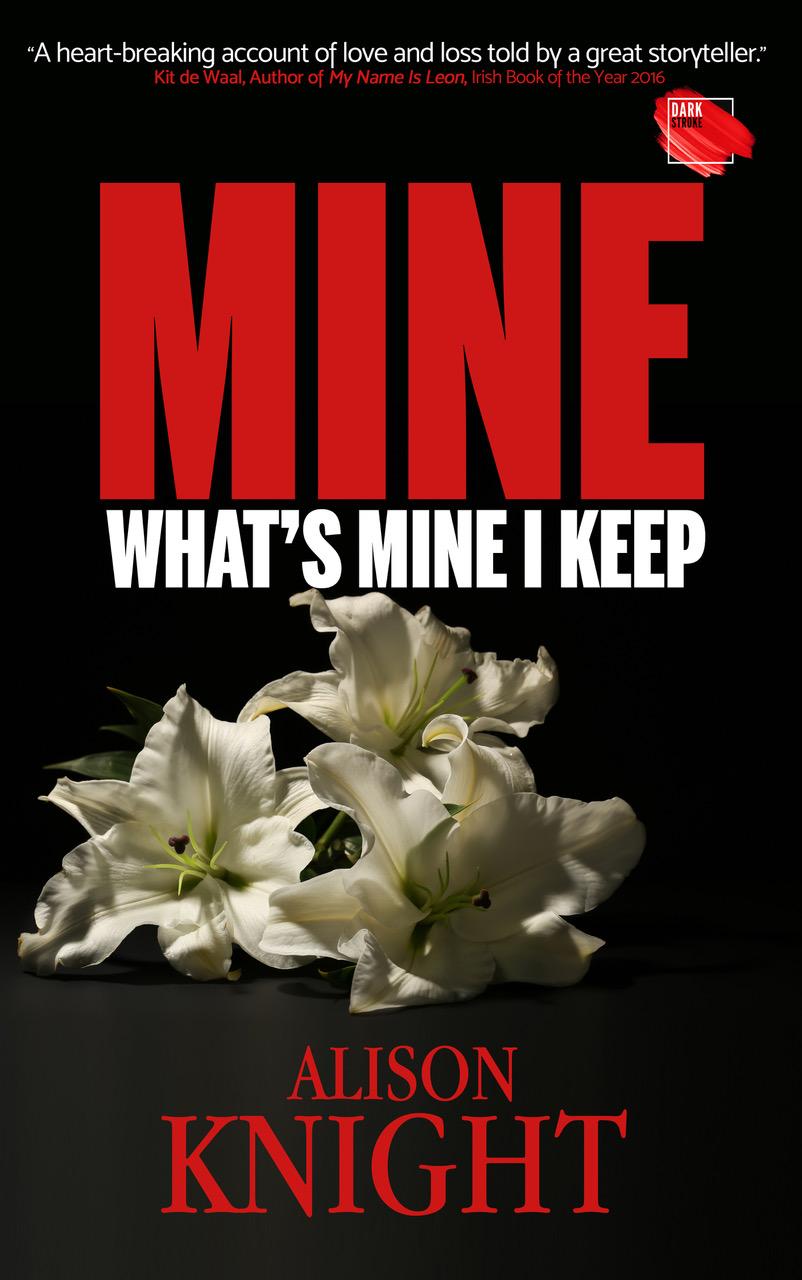
My latest book, Mine, which is published by Darkstroke Books, is my fourth novel and a project that is very close to my heart because it is based on real events that happened in my family in the late 1960s. I’m the only one left who can tell this story and it was important to me to wrote it in order to introduce my children, nieces and nephews to people that have gone before. It’s my legacy to them, helping them to understand that the world was very different fifty-odd years ago and the people I portray in Mine were driven by the attitudes of society at that time. If the same things happened today, the outcome would be very different.

Understanding why

I also wanted to write Mine for myself. My memories of that time were stuck in the mind of a ten-year-old child. By putting myself into the minds and shoes of the main characters, I was finally able to understand what happened with an adult’s perspective.

I’ve written it as a novel rather than a memoir because I didn’t want it to be all about me. Instead, I wanted to explore how ordinary people made decisions that led them into an extraordinary situation. I was also aware that I would never be able to find out exactly what happened as the people who could tell me are not longer here. Instead I used my memories, conversations with family members, newspaper reports and official documents to piece together the story. Where there were gaps, I used what I knew and took into account the culture of the times and used my imagination to fill them. It soon became clear that the guiding themes were class, ambition and sexual politics.

Getting published

It has been an interesting journey to publication. At first, the book was far too long at 140,000 words for any publisher to take it on. A rewrite reduced it by over 20,000 words. Some agents and publishers suggested I give it a happier ending or turn it into a psychological thriller. If Mine had been pure fiction, I’d have considered these suggestions. But because it is based on real events, there were some things I simply couldn’t do.

The question of genre was a problem too. It’s a love story, but not a romance with a happy ever after. It was turned down several times because publishers weren’t sure how to market it. When asked to categorise Mine, I describe it as a family drama, or domestic noir.

But then I found Darkstroke Books, an excellent small publisher with a reputation for hard-hitting fiction. After years of rejection, Darkstroke’s acceptance happened quickly and Mine is finally being launched in November 2020. The editing process was fairly painless – my brilliant editor totally ‘got’ what I was trying to do and Darkstroke have been wonderfully sensitive and supportive.

So, how do I feel about finally sending this story out into the world? I’m excited, but also slightly terrified. It’s not often a writer is featured as a character in her own novel!


Find out more about Alison at www.facebook.com/alison.knight.942


SISTER SCRIBES: KIRSTEN HESKETH ON NANOWRIMO TAKE TWO

I’m writing this on 30th October. It’s nearly a very important date … and one that has been eyeballing me from the calendar for weeks. No, not Halloween – with both children at uni (sob!), there seems little point in ‘celebrating’, (although we have been invited to Zoom into the wedding of the daughter of American friends in our finest Halloween regalia tomorrow!) Not even Firework Night which I do enjoy and which was An Important Social Occasion growing up (and I once got off with Paul Richardson from the swimming club at the Beaconsfield Firework Display in 1977) ….

No. November 1st marks the beginning of #NaNoWriMo …. and I can’t wait!

For the uninitiated, #NaNoWriMo stands for National Novel Writing Month and the challenge is to try and writing 50,000 words (the best part of a novel – or, at least, the first draft) during the month of November. Bonkers, but fun!!!

I’ve attempted – and completed – NaNo once before in 2017. I loved it – and I think it suits me and my writing very well. I have a terrible habit of ignoring the old adage ‘don’t get it right, get it written’ and I can spend hours – days – polishing and repolishing the same old passages or chapter – passages or chapters that never actually make it into the final cut!! What a monumental waste of time and effort that is! So, for me, there’s something very liberating about ‘having’ to write 1,667 words a day, come hell or high water (and there’s been a lot of that, lately, hasn’t there?!) No time to angst over the perfect word, the perfect phrase, the perfect cadence. All that can come later. Now is just the time to get the bare bones of the story down, to ‘tell it to myself’, to commit it to paper. Onwards, always onwards – no looking back – after all, you ‘can’t edit an empty page’! And, for me, all that striving forward makes me a better (maybe) – certainly a braver – writer. With little time to ‘vet’ what I am writing, now is the time to take risks, to go with the flow and to see where it takes me. After all, I can sort it all out later …

NaNoWriMo Mark Two is a different beast for me, though. When I attempted it three years ago, getting an agent – let alone a publishing deal – was just a twinkle in my eye. Now I am lucky enough to have my debut novel ‘out there’ as a proper book, thanks to Canelo. I also have a deal with Hodder & Stoughton for a saga series set in London in World War One. The first book in the series is done and dusted (and out next April) and I am due to start work on the second. To begin with, I dithered. Should I bash out a first draft during NaNo or make a start on the ghostly rom-com I’m dying to write? In the end, I wrote a couple of pages of the second saga book, fell in love with it – and now I want to keep going. So I’m good to go!

Five-page plan agreed with my editor – tick!

Online group of writing buddies – tick! If last time is anything to go by, I will really need them from days 17 to 20 and I’m ready to support them in any way I can too.

Are you doing Nano?

If so, good luck – and see you on the other side!


HISTORICAL NOVELIST NICOLA PRYCE ON HOW SHE APPROACHES HER RESEARCH

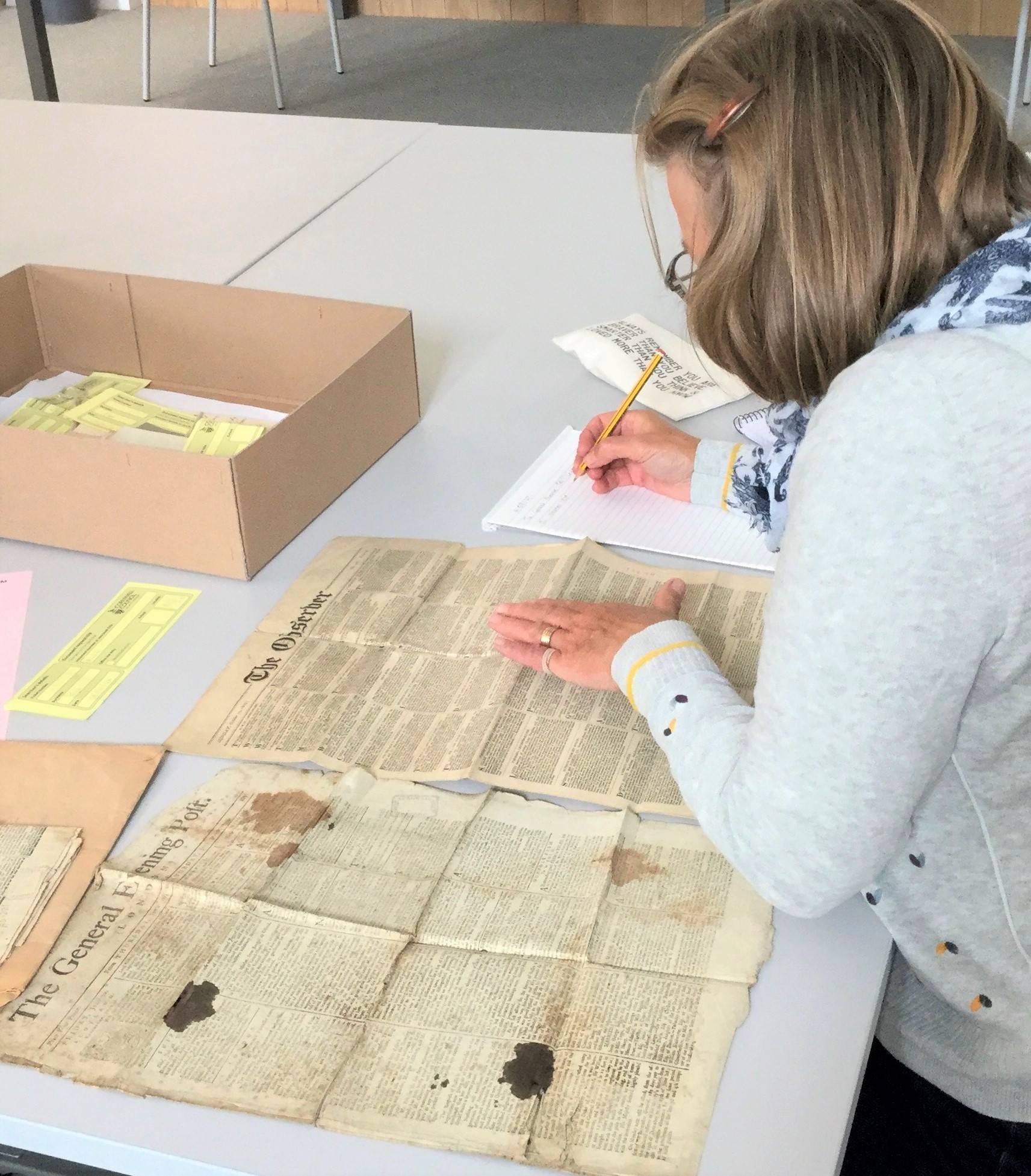
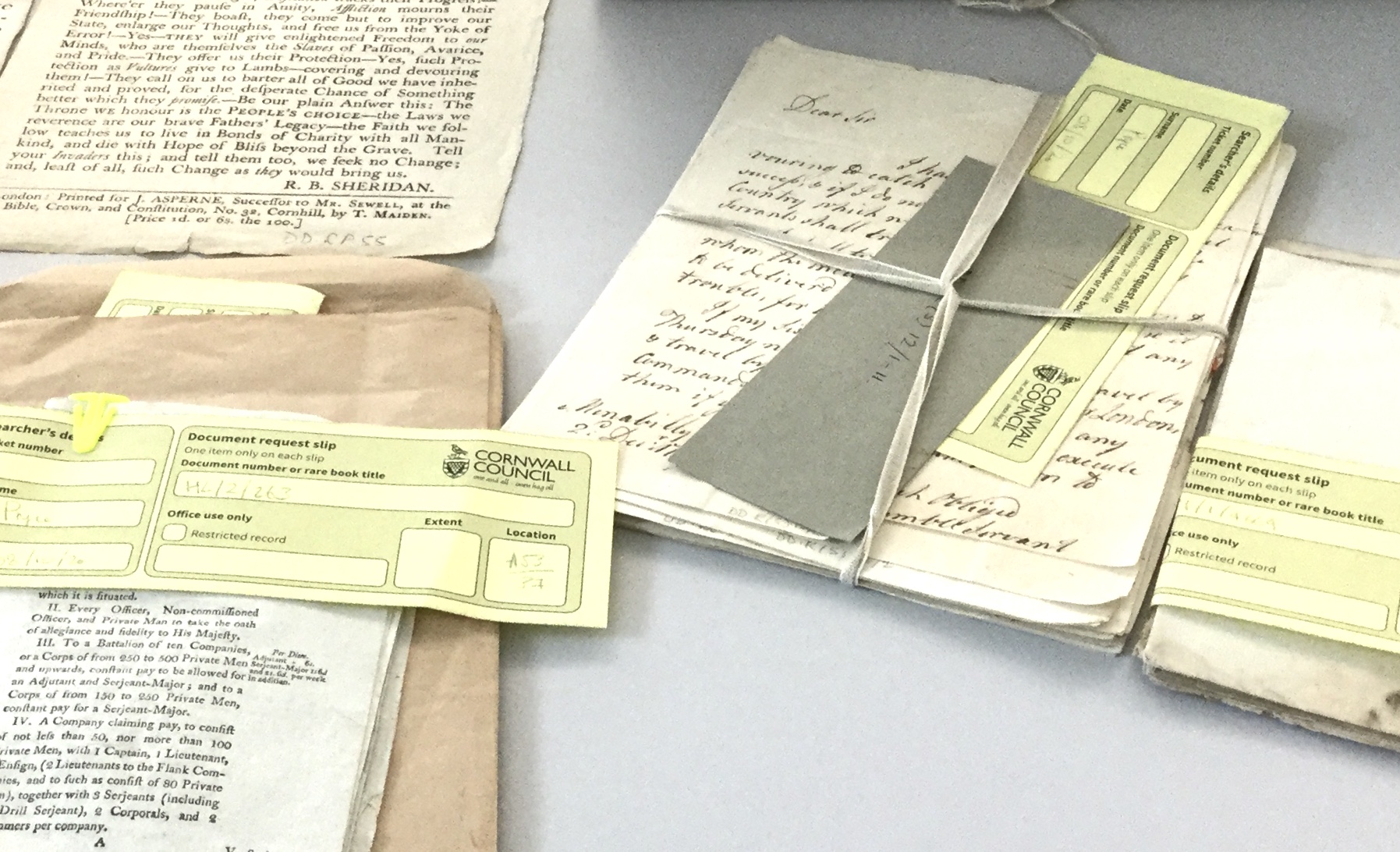
My books are set on the south coast of Cornwall, 1793-1800, so it’s wonderfully fitting that Cornwall’s new archive centre has moved to the old Redruth Brewhouse, built in 1792. The former Brewery has been transformed and incorporated within it is Kresen Kernow which houses 1.5 million records, covering 850 years of Cornish history. I believe there are fourteen miles of shelving!

I loved the Records Office in Truro, but this new centre is fabulous. Starting with the user friendly catalogues, the e-mail lists of chosen archives, the spacious research rooms, and the efficient and charming archivists, it adds to the serious problem of deciding when to stop researching and start writing!

But I’m getting ahead of myself. Other writers tell me they start with a kernel of an idea, a spark that fires their interest, and they expand it from there. I, however, like to start with the whole picture, gradually narrowing it down to the themes I want to explore.

I began my journey into historical fiction knowing the place I wanted to set my stories in – an area I have loved for thirty years. The date was an easy decision because since my Open University degree I’ve been mildly obsessed with the end of the Eighteenth Century, and as the books were to be set on the coast I had a community of shipbuilders, fishermen, clay speculators, merchants, and landowners around whom I could weave my stories.

Hoping my books might make a series, I decided to keep separate areas of research for each book and not cram everything into the first. It was a matter of holding back. Britain was at war with France and the areas I wanted to research were the high levels of bankruptcy among shipbuilders, raising the Volunteer Militia in the face of the very real threat of invasion, the patent row between the engine builders Boulton and Watt and how it impacted Cornish mining, the influx of French prisoners into the prisons, and building the new Infirmary. So much, and yet there is still so much I haven’t mentioned.

We are spoilt for on-line information. The touch of a key brings facts, dates, names, portraits, maps. We can access academic research papers detailing the lives of shipbuilders, midshipman, physicians tackling tropical fevers and the stories in my head slowly become plausible. But I need to know what I say happens could have happened. Every detail is checked – every inn, every stagecoach, every boatyard, even evidence of a French dressmaker in Truro.

I march round the area. I have a plot that could have happened to people who could have lived in the houses I identify. I have the setting, the time, the characters but missing is the most vital aspect of all – authentic voices of people living at the time.

And that’s where the days previously spent in the Records Office are now spent in the stunning Kresen Kernow. I only feel able to start a new book when real voices jump at me from the pages of primary sources – the threat of invasion, the woeful state of the sea defences, the lists of returns in case of subscription. The writs and legal wrangling that kept the price of tin high. The building of the sea-lock, details of rents charged to the tenants in the new harbour, Charlestown. The shambles at Pendennis Castle. The Naval ships awaiting orders in Falmouth.

The words they use, their tone, their sense of urgency or frustration leap from the pages. I can hear my characters and I can finally start writing.


Find out more about Nicola and her novels at: https://nicolapryce.co.uk/


SISTER SCRIBES: SUSANNA BAVIN ON CREATING A SENSE OF TIME

In my previous article for Frost, I celebrated two novels, A Mother’s Secret and The Italian House, which are notable for their wonderful sense of place. In these stories, the authors, respectively Jan Baynham and Teresa Crane, created their settings so evocatively that they produced books of the type that make readers say, ‘It made me feel I was there.’

This time, I’m writing about novels that have a particular depth and interest thanks to the attention paid to the historical detail. Part of the authors’ skill in this is the way each of them has woven the details into the narrative with a deft touch. Their historical details are never popped in just for the sake of it, but always to enrich the story.

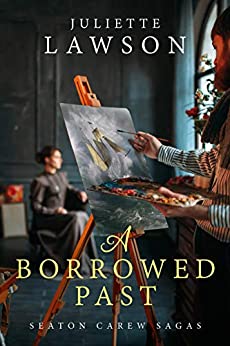
The first book is A Borrowed Past by Juliette Lawson, a clever and increasingly intriguing family mystery set in the Victorian era. A strong narrative is combined with  believable dialogue and a lively mixture of characters, not all of whom are what they seem. Add to this the many tiny details of life at the time and the result is an engrossing read.

Of one historical aspect of the book, Juliette says: “ Class distinctions were strong. Well-off families paid pew rents to reserve their seats in church (you can still see the brass name-card holders) and ran the Local Board to keep the village well-ordered. Children in poorer families were sent into service at a young age or they became mini-entrepreneurs, doing little jobs around the village for a few coins: blowing the bellows for the church organ, delivering meat for the butcher, carrying pails of sea water to the bath houses for visitors to bathe in, or baiting hooks on fishing trips.”

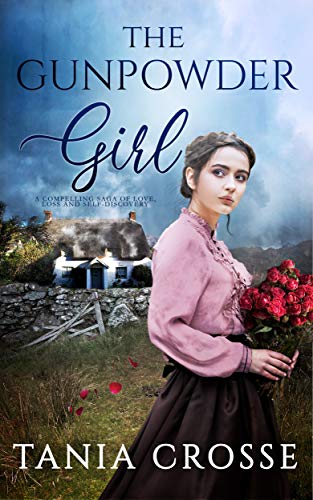
The other book I’ve chosen is the utterly wonderful The Gunpowder Girl (which was originally published as Cherrybrook Rose and A Bouquet of Thorns) by Tania Crosse. This book could just as easily have appeared in my previous blog about stories with a strong sense of place, but it also has its position here, thanks to the author’s characteristic attention to research. Tania Crosse has created an absorbing story laced with powerful themes, a relatable heroine and a gripping plot.

Tania says: “The rugged, savage beauty of Dartmoor is inspirational enough in itself, but its secret history has provided the basis for so many of my novels. In the case of The Gunpowder Girl, the discovery of the ruins of the 19th century Cherrybrook Gunpowder Mills drove me to write a story to illustrate what it would have been like for a beautiful, intelligent young woman to live at this remote, unforgiving location. The other element in the book, still very much in evidence and currently still in use, are the forbidding buildings of Dartmoor Prison. In Victorian times, life there could be hell, not just for the inmates – some of whom were guilty of what today would be considered relatively minor offences – but also for the prison warders and their families who were forced to live in the isolated and exposed prison settlement of Princetown.”

Both of these books drew me into their world. The stories are page-turners in which the characters face secrets and tragedy and both Juliette and Tania have have sprinkled historical details into their narratives in such a way as to make their books come alive.


SISTER SCRIBES GUEST: JEN GILROY ON FINDING YOUR WRITING VOICE

Since Susanna Bavin introduced Canadian romance author Jen Gilroy to us at a Romantic Novelists’ Association conference she has been an honorary Sister Scribe and it’s an absolute delight to welcome her to Frost.

One of the questions I’m often asked when giving talks about writing relates to ‘voice’ and, specifically, how to find it.

For some writers, voice is instinctive. If you’re one of those fortunate people, this post likely isn’t for you!

However, for many others (me included) finding your ‘voice’ isn’t so straightforward.

First off, what is ‘voice?’

For me, it’s what makes one author’s fiction distinctive from that of another. At a superficial level, it relates to word choice, syntax and the mechanics of constructing a story.

Going deeper, though, voice reflects each author’s personal experience—the constellation of factors that make them who they are—as distinctive as their fingerprint.

A tip to identify voice?

Choose books by three favourite authors, set them side-by-side and consider the first few pages. Even if they write in the same genre, it’s likely that in only those early pages you’ll identify major differences in how the writer tells the story and makes you feel.

Those differences are rooted in voice and some authors have such distinctive voices that fans can often identify their work in only a short paragraph—without knowing the book’s title or author.

However, even if you know what ‘voice’ is and can identify it in other writers, how do you find yours?

For me, finding my voice was part of my writing apprenticeship and (as with many other parts of learning the craft) necessitated trial and error.

In the beginning, I sampled genres a bit like food at a tapas bar. From literary fiction through to young adult, historical and more, I tried writing in a number of different areas.

Yet, and like delicious tapas morsels, only one or two genres resonated enough for me to think I’d truly found my own ‘author voice.’

What does ‘voice’ feel like?

I liken my ‘voice’ to wearing my favourite pair of cosy slippers as I snuggle under a blanket by the fire on a cold winter night.

That ‘voice’ is drawn from the innermost part of myself and means I delve into emotions only I feel to express them on the page.

At first, that self-reflection was scary. With career in corporate and technical writing, I was so used to adopting a ‘corporate voice’ that I’d lost my own, and I’d also lost touch with the emotions that are the foundation of fiction.

Yet, with practice and patience—and by reading and writing widely—I dug deep enough to get to that comfortable state of knowing when I was writing in my voice—and when I figured that out, the genres were obvious.

Long before I became a writer, romance and women’s fiction were the genres I read for hope, comfort, escape and more. Not surprisingly, those were also the books that fit my voice and when I started to write from the foundation of who I truly am, the words flowed.

Although finding my voice was one of the most difficult parts of my writing journey, it was also the most rewarding. And, perhaps most importantly, writing with the warmth and intuition that comes from the core of who I am is the most honest gift I can give.


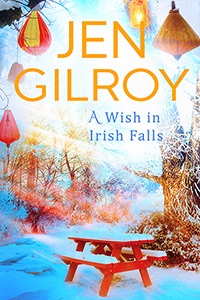
Jen Gilroy writes romance and uplifting women’s fiction with happy, hopeful endings. She’s a wife and mum who calls England and Canada home and her latest release, A Wish in Irish Falls, is out now on Kindle (free with Kindle Unlimited).

Connect with Jen via her website: www.jengilroy.com