SISTER SCRIBES: KITTY WILSON ON WHY SHE WRITES ROMANCE

I was due to speak as part of a panel on Why I Write Romance at Exeter Literary Festival the other day, and knowing that my Sister Scribes post was due I thought I could write about speaking at such events. Unfortunately, chronic ill health meant I was unable to go and thus my intentions disappeared into the ether.

But all was not lost, jotting down my thoughts on why I write Romantic Comedy I inadvertently wrote an essay of over 3,000 words. Too many for here but I can at least share my number one reason for loving romance with you.

Simply put, I love the sheer humanity of romance. Romance is universal, most of us have a desire to find a partner, someone you can share your life with, grow old alongside. But the ability to be a calm, confident and capable individual in life is often lost when faced with someone you are attracted to, even if you didn’t realise you were attracted to them until you start stammering and the flush of your face is radiating like a beacon.

I’ve learnt that no matter how golden or blessed someone appears to be, they usually share this awkwardness, self-doubt is at its height when it comes to meeting a potential partner, self-sabotage often unwittingly kicks in and age does not always make us worry less.
Oh my god! Did I just say that? I said that out loud? Now I’m going to go home and worry for three days.

The adolescent fear – my face is covered in spots and my sibling did something mortifying in school – they’ll never fancy me now, I may as well never leave the house and just curl up in a corner and die.

The slightly older fret – how can anyone love me with a saggy tummy and too much grey hair, I’m nowhere near as attractive as I was when I was in my twenties (although I’d argue actually you’re heaps more attractive but that’s a tangent I’ll get lost in for hours) they’ll never fancy me now…and repeat.

Romance as a genre reminds us everyone feels like this and we are not alone. The playing field here is level. Romance is relatable. Really relatable.

I love a literary novel and am in awe of how those writers deal with topics of race, gender, class, poverty, abuse, justice and so on and when I read literary fiction I feel clever and worthy because that’s how attitudes over the years have conditioned me to feel but romance is what I want to read.

I want to read about the heroine battling with the mundane, the washing machine that’s broken just as she’s stained her best dress and is due to meet the person of her dreams for their first date. I want to read that the dog has just pinched the dinner our hero or heroine has spent hours slaving over and it is now being vomited up over the living room – these things make me feel less alone, make me feel comforted. They make me feel reassured (and thus able to giggle) about my own life which is largely spent in the house dealing with domestic catastrophes rather than my imagined-and-never-quite-realised life trekking across continents being glamourous.

Romantic comedy reminds me that we all have our insecurities, we all have our everyday tribulations, sometimes we can be our own worst enemy but we are all in this together, we all share these emotions but hopefully, like the protagonists of romantic comedy, each day we grow and with that earn our own personalised happy-ever-after.
SISTER SCRIBES GUEST: CLARE FLYNN ON THE BENEFITS OF A CRITIQUE GROUP

I’m delighted to welcome Clare Flynn as my guest. Clare is the author of ten historical novels and a short story collection, and we met over dinner on the opening night of my first ever RNA conference a couple of years ago. Today, she sharing her thoughts on the benefits of critique groups for writers.

Soon after leaving London for the beautiful South Downs and Sussex coast, I had the good fortune to come across two fellow members of organisations I’m in – the Romantic Novelists Association and the Historical Novel Society. One is an author and the other an editor with authorial aspirations, both Eastbourne residents. We decided to set up a critique group and subsequently two more authors have joined our posse. We five now meet every Friday afternoon at a seafront hotel.

Our aim is to offer mutual support and encouragement, share tips on marketing and publishing, and most of all to give constructive criticism of our work. None of us wanted to do workshop style exercises, as apart from the editor we are all published – two of us hybrid, one indie and one trade. What we all have in common is the desire for a sounding board and some tough love during the writing process.

A few days before our weekly meeting, we email each other the extracts we want to review, usually a chapter of around 2,000 words so we get a chance to read them all at leisure. Everyone prints off a copy of each submission annotated with comments and brings it to the session.

We used to read the work aloud but it became too time-consuming and we have so much else to talk about. Instead, we take each submission in turn, with each person offering their comments. The criticism is always constructive and now we know each other well we don’t pull our punches. All of us share a desire to help each other produce the best work possible.

We have had short stories as well as extracts from works in progress. We use the approach of Adopt/ Adapt/ Reject, although most of the feedback makes eminent sense and is mostly acted upon.

Some examples of changes made as a result of feedback in these sessions:

  • Inconsistencies of character,
  • Lack of tempo and pace
  • Anachronisms and clichés etc
  • Details such as titles, uniforms and spotting costume gaffes
  • Metaphors that don’t work or take one out of the story
  • Making awkward sentences flow
  • Avoiding repetition
  • Spelling and grammar
  • Identifying a character going to sit down when they were already seated (it happens so easily!)

Not everyone submits an extract every time if they don’t happen to have a piece ready to review, but the weekly meetings act as a spur to getting the next chapter ready.

The group has been going now for nearly four years. Thirteen published novels have emerged so far from our sessions. This early input identifies any major issues before the final draft is released to the editor, agent and beta readers.

We meet in one of the public lounges and I often wonder what unsuspecting hotel guests think when passing by as we respectable looking women of a certain age hotly debate the choreography of a sex scene or the best way to kill someone off.

There’s always plenty to talk about as well as the work. We share publishing news, marketing ideas, gossip and plans for attending conferences and industry parties. It’s a very supportive and encouraging group.

The writer’s life is by definition a solitary one for much of the time, so having a weekly gathering to share triumphs and setbacks is an absolute godsend.


Clare Flynn is the author of ten historical novels and a short story collection. Her latest novel, The Pearl of Penang, set in Malaya in 1939 through to the end of the war with Japan, is now available for pre-order.

Website http://www.clareflynn.co.uk

Twitter – https://twitter.com/clarefly

Facebook – https://www.facebook.com/authorclareflynn


SISTER SCRIBES GUEST: MADDIE PLEASE ON LIVING AND WRITING IN DEVON

I’m delighted to introduce my good friend Maddie Please. Maddie writes the most hilarious romcoms set in Devon and we met at one of the retreats she runs with Jane Ayres at The Place To Write. I visited her lovely house near Exeter and asked her what it’s like to live and write in Devon.

In May 2015 we moved into our lovely house on top of a hill midway between Exeter and Crediton. We were convinced we were downsizing. (It wasn’t until we actually moved in that we realised we hadn’t.) The house had remained empty for a year before we bought it, and the main decorating influence we inherited was wood chip wallpaper, painted magnolia and apparently stuck on with superglue.

The garden was overgrown and very neglected but we have never regretted the move, and the starry skies at night are wonderful.

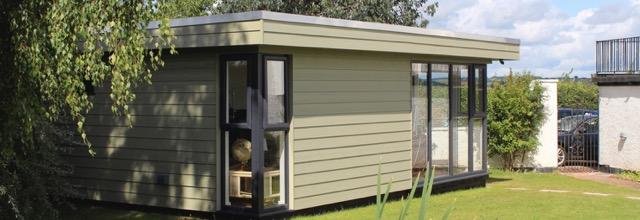
The first thing we did when we moved here was build a garden office, which I share with my husband. This means my daily commute is now twenty-five steps; I just counted them.

Occasionally we hear pheasants or pigeons trampling about on the roof. At this time of year the neighbouring fields are busy with the harvest and tractors and farm machinery trundle past our gate, something which is very exciting for our grandchildren when they come to visit.

In our garden office I have my own desk where I work just about every day.

I have s lovely hand painted cushion from my Bestie Jane to make life more comfortable. I am in charge of filling the stationery cupboard too! Any writer will know how much fun that is. I mean going into an office supplies superstore or Paperchase or Smiths and calling it work related is a dream!

Our makeshift shelving got a bit out of control last year so we replaced it with some industrial units from Big Dug. An excellent purchase. I try to keep the boxes of stationery under control but boxes of pencils, Sharpies and Post-it notes are like cat-nip to me!

I’m usually at work between 8 and 9 o’clock and unlike some writers who prefer to work without distraction, I have a wonderful view of the garden and beyond that the Creedy valley. I don’t like working in silence either, so I listen to BBC Radio Devon, which is my daily companion; I love it. Gordon Sparks and the Gordon Hour, David Fitzgerald and his Fighting Fitz competition or Janet Kipling and her Devon Debates – there are enough plot ideas there every day to keep any writer thinking.

I’m often to be found with a vacant expression as I do some important thinking and when I’m using earphones have been known to sing along. Much to my husband’s utter delight. Maybe that’s not the right word?

I occasionally go back into the house to make us coffee and usually by 3.30 in the afternoon, I’m done for the day.

Does the Internet distract me? Well of course. I am an avid Twitter and Facebook user and I have been known to check my Amazon reviews once or twice…

But I do regard writing as a job not a hobby.  My debut The Summer of Second Chances was based on this area with its winding lanes and fabulous views. So was my fourth book; The Mini-Break which takes successful writer Lulu out of her London comfort zone and into the muddy and glorious Devon landscape.

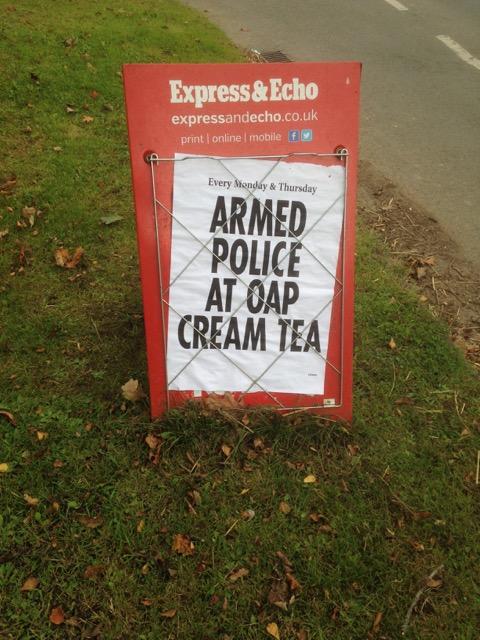
Living here is simply lovely, our local pub is the award-winning Beer Engine, and despite the headline story in the local paper, our neighbours are friendly and welcoming.

My husband has always been interested in researching his family history and found details of his ancestors who had lived nearby in 1674. Perhaps something called us back here?

To us this is the very best place to live and work.


SISTER SCRIBES: SUSANNA BAVIN ON A CHANGE OF NAME

In common with many women, I have gone through the process of a name change. I have twice gone through the hassle of changing my surname. Incidentally, if ever you have to send away your marriage certificate, do include in your covering letter a specific instruction that the certificate should be returned to you after the admin people have finished with it. Some years ago, I blithely sent off my marriage certificate… and it wasn’t returned. Not only that, but no one in the office could track it down. In the end, it transpired that someone had stashed it away in the safe – and all because I hadn’t given a specific instruction to return it!

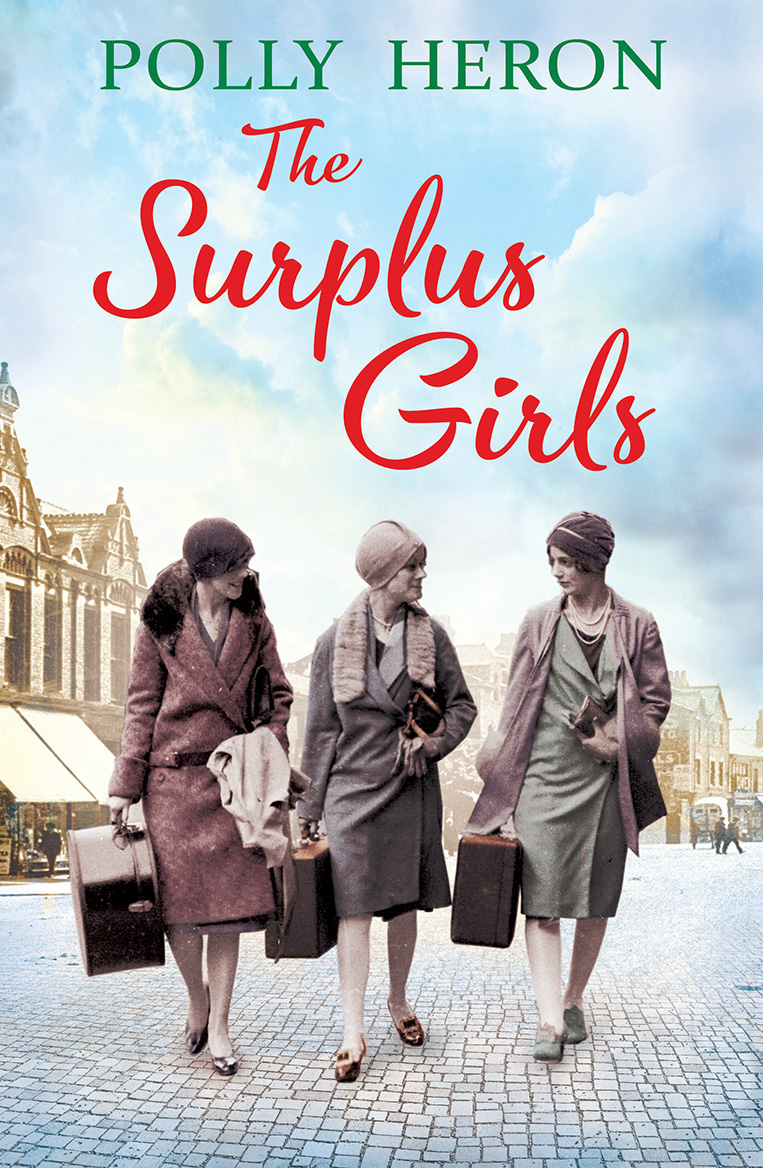
Anyway, I am in the process of having another change of name, but this time it is to introduce a new pen name – Polly Heron – and it’s because I have a new publisher – Corvus, which is the commercial fiction imprint of Atlantic Books. The Corvus list includes women’s fiction, romance, historical fiction, sci-fi, crime and thrillers. As a saga writer, I’m not sure whether I come under ‘historical’ or ‘romance.’ Possibly a bit of both.

My first book for Corvus is the start of a series. Both the series and the first book are called The Surplus Girls. So who were the surplus girls, exactly?

They were the generation of young women, who, after the Great War, were left without the possibility of marriage, because of the appalling death toll exacted on the battlefields. This was at a time when marriage to a man who could support you and the children you would have, was pretty well universally regarded as the correct and desirable aim for any girl. So these young women, whose possible husbands had perished, found themselves – unexpectedly and without preparation – in the position of facing a future of providing for themselves. Not only that, but no woman could hope to earn as much as a man, even a man doing the same job (sounds familiar?).

Writing about the 1920s is something I have done before, in two of my books written as Susanna Bavin – The Deserter’s Daughter and A Respectable Woman. Although the decade was all but a century ago, to me it feels very close. My parents weren’t exactly spring chickens when they had their children and they were themselves born in the 1920s, so it is an era I grew up hearing about when family tales were told and, of course, I have family photographs as well.

It is in some ways perhaps a bit odd to write about surplus girls in the context of a saga in which, by definition, the heroine will end up with the hero and therefore no longer be a surplus girl, but I hope I have also conveyed both the universal shock and sorrow that pervaded society at the loss of such a large number of men and also the way that these losses brought the lives of individual girls and women into a new, sharper focus as they faced life on their own.

My Writing Process – Ian Wilfred

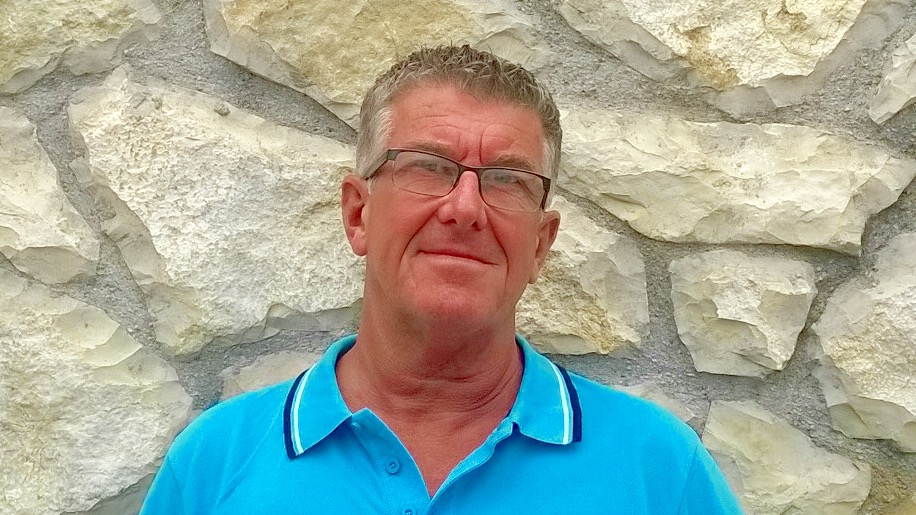
Do men write romance? They certainly do, as Romantic Novelists’ Association member Ian Wilfred proves. Ian’s characters are instantly relatable and he has a knack of choosing gorgeous settings, from Tenerife to Greece to his native Norfolk.

On top of all that, Ian is one of the most supportive authors you could wish to meet. Which was just one of the reasons Jane Cable invited him to share his writing process.

Tell us a bit about you?

I’m 50+ but in my head I will always be 39. I live on the Norfolk coast with my husband and west highland terrier and I’m a member of the Romantic Novelist Association. My first book was published in 2013.

What you have written, past and present?

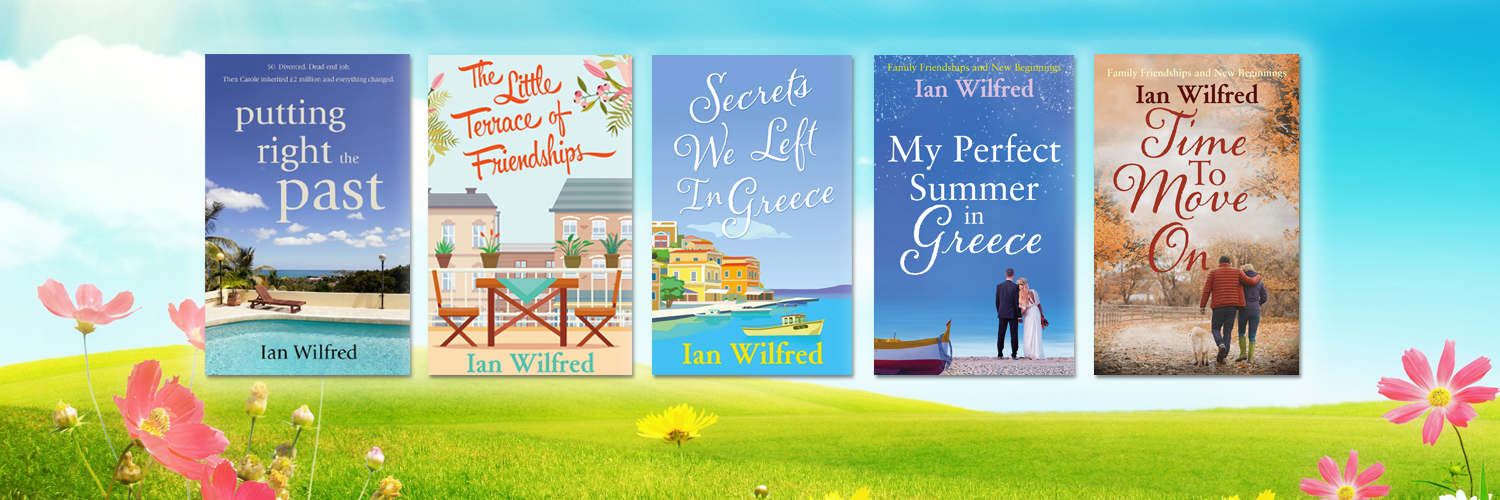
I’ve written and published five books. In the first four all my leading characters were women over 50 who are starting again and leaving the past behind, but in this year’s summer book, My Perfect Summer in Greece, Cheryl is a much younger heroine and this was lovely change

What you are promoting now?

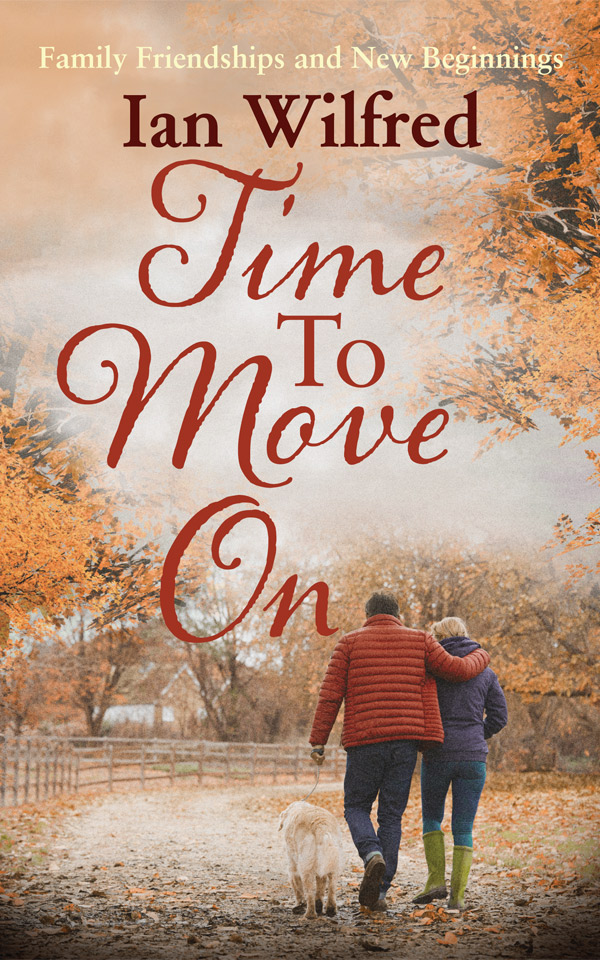
My new book Time To Move On, which is out on 24th September. It’s the story of Billie coming to terms with her divorce and being made redundant, and moving to Norfolk from London.

What’s the most important thing about your process of writing?

I love to write every day even if it’s just a few hundred words. I have to keep the story fresh in my head.

Do you plan or just write?

I plan a lot more with each book I write and for me this seems to work better each time.

What about word count?

I don’t give myself a daily or weekly word count but I do like to do 40,000 words a month for the first draft. Then I take two months to rewrite and rewrite before I send it off to my editor.

How do you do your structure?

I don’t plan that – it just sort of happens. I have a beginning, a middle and an end in my head and off I go.

What do you find hard about writing?

Everything! Each book is a learning process with many mistakes made over the years, but you just have to move on and know you’re improving.

What do you love about writing? 

The characters. I love the first draft when they are in your head and you can’t wait to get them on the page and bring them to life.

Any advice for other writers?

I get asked this a lot and I always give the same two answers; write every day, and read and watch every article Milly Johnson has ever done on writing tips. She is the best for advice.

You can follow Ian on Twitter @IanWilfred39. He’s great at sharing news from a wide range of romantic novelists. 


My Writing Process – Roger Bray


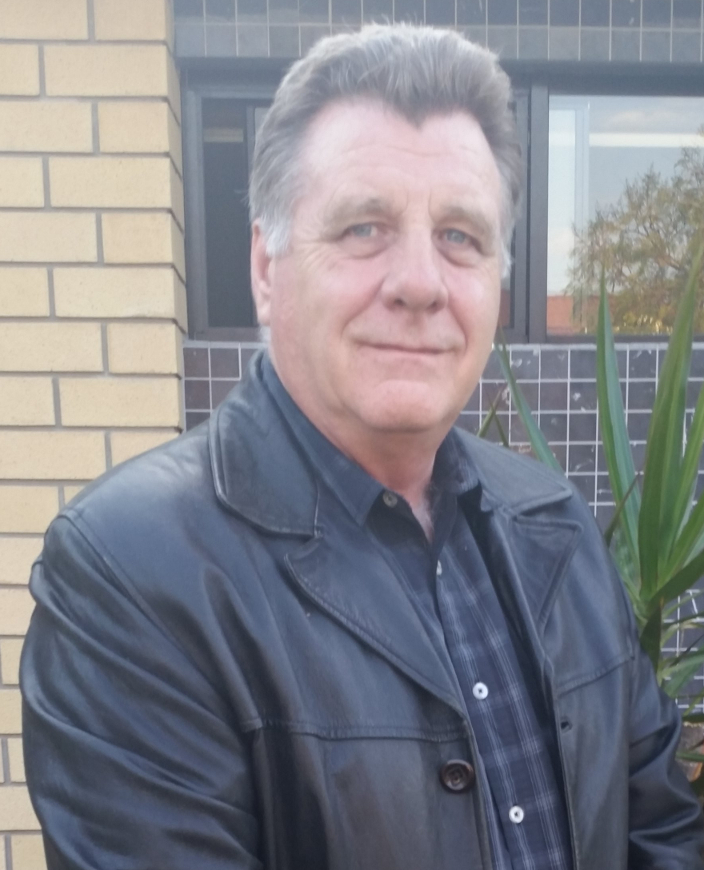
I was raised in Blackburn, Lancashire and served for ten years in the Royal Navy before coming to Australia in 1983, after I returned from the Falklands. Writing is something I have always enjoyed and fiction was a favourite.  I loved being able to write anything within the bounds of the particular subject and not be restrained by anything except my imagination.  One restraint I did learn at school was other people’s perceptions of what is age appropriate for a juvenile to be writing.  Apparently graphic death scenes weren’t. 

My writing stayed in the background for many years until I was invited to write short stories for a couple of magazines which were well-received.  I then dabbled with a novel for a couple of years before getting into my stride and writing my first publication The Picture.

At the moment I am halfway through my fourth novel, currently untitled.  It is a story set in the UK and across Europe and deals with sex trafficking and organised crime from the perspective of an investigative journalist who is fighting his own battle with past tragedy while trying, against his better judgement to report what he has found.

As with all my novels I come up with a very broad idea of where I can see the story going.  I write and rewrite parts and scenes in my mind until I see a path then I commence.  That is how far I plan, maybe I’ll do some research at the start to get me on the right track but broadly speaking, once I start I write linearly.  I stop and research as I go and edit sections before moving on.  My word count is whatever I manage for the day but overall I aim for 90 – 100,00 words for a novel +/- as the editing progresses from me to beta readers and to my editor.

My basic day of writing would be re-read what I had last written, editing as I go.  I find this gets me back into the moment.  I then continue and write until I run out of steam or find myself veering off or woffling to pad out the chapter.  Either way that is the end for the day be it 3 or 8 hours later.  Rinse and repeat the next day until finished.

The hardest part of writing isn’t any sort of blockage, though they happen but I tend to get over them by just writing — sitting down and writing, getting words onto the page is, I have found the best solution.  Even if what you have written isn’t great it gets the process moving along and gives you something to edit.  It is difficult to edit a blank page.  The hardest part for me is staying within the storyline.  I have some great ideas which, unfortunately, don’t fit the arc, but I can waste hours trying to make them fit because I think they are so good — usually mistakenly.

In my current novel I have edited the first 2/3 of the novel to delete some of these great ideas I had but have turned into a bit of a millstone later on, something I have to be firm about.

I find the least enjoyable part is the whole process from writing The End onward.  There are lots of moments of doubt once I release my latest to a broader audience (broader than me and my wife’s cat).  Is it great or is it rubbish?  Typos – the bane of my life, plot holes or bits that grate when read?  All these things need identifying and fixing.  Nothing wrong with having any of them, that’s life as a writer but the process of sorting it out is no longer writing, no longer imagination and art.  It’s a drudge.

Any advice I can give? Keep going — you don’t fail until you stop trying.  Writer’s block?  No such thing — keep writing through, it, you can edit rubbish, you cannot edit a blank, tear stained page.

Website https://rogerbraybooks.com/ 

Facebook https://www.facebook.com/rogerbraybooks/ 

Twitter https://twitter.com/rogerbray22 

SISTER SCRIBES: JANE CABLE ON CONTRADICTIONS AND RABBIT HOLES

For the first time in my writing life I am going back a couple of centuries. Not just with a glance over my shoulder, but really, properly back. With a good half of the novel taking place in 1815. It’s frightening – and exciting – and it’s requiring a great deal of research.

My research is centred on one family, their homes and their business interests. From that point of view, it should have been easy. Their country estate is in the hands of the National Trust, their town house still exists (albeit as offices) and their mine was one of the richest in Cornwall. What could possibly go wrong?

I knew before I started that nothing existed on the ground to show where the mine buildings once stood. I’ve walked past the field in roughly the right place numerous times, and apart from a few lumps and bumps, which may or may not be indicators, there is nothing there. What I didn’t expect was that the mine itself has almost completely disappeared from the records.

There is a portrait of the owner though, and a copy of it is in St Agnes Museum. It’s labelled as showing Ralph and his mine captain, with the mine in the background. Perfect. Except the original of the same painting in the Royal Cornwall Museum says it’s Ralph’s father, and that the mine is unknown. When I eventually found some corroborating evidence, and given when the artist died, the RCM version is almost certainly right.

This sort of thing has dogged my research. Sources you believe would be credible contradict each other. The National Trust had little to offer, telling me there was some confusion in the records as to which works on the house were completed by Ralph, and which by his son. Other sources claim more precision, but are they right?

My husband thinks this is a good thing, his theory being that if nobody really knows what happened, then no-one will know if I get it wrong. But as far as possible, I want to get it right. And thanks to the wonderful Courtney Collection at the RCM I am making progress. Not only are there some records of the mine (very little of it contemporary, however), but also an article from the 1960s about Truro’s Georgian townhouses. I popped in for an hour or two and stayed all day.

Herein lies the rub. The biggest danger of research isn’t necessarily the inaccuracies, it’s the rabbit holes. Does my story require me to know there were eleven shafts in the mine and their precise locations? I found myself becoming a total bore, pointing out to longsuffering walking friends exactly where they all were and the order they were dug. And how much a share in the mine was worth and how that was calculated. And the ages of the pumping engines. No, no, no. Completely irrelevant.

But all the same, it helped me to paint a picture, and some very useful facts did emerge. Like the mine was closed in 1814. It reopened later, but my novel deals in a very thin slice of time. And actually, the fact it was temporarily abandoned suits my story very well. Now I need to sift and sort through the rest of the information covering many pages in my notebooks, to work out what might be right – and what I actually need.

Oh, and I need to avoid any more rabbit holes and actually get writing.

SISTER SCRIBES: KIRSTEN HESKETH WRITING ON THE RUN

I’m writing this a service station halfway up the M6 – en route to the Edinburgh Fringe Festival where I am singing on Saturday with the Rock Choir. (I know!)

To be fair, this particular writing session was prompted and necessitated by the email I received when I pulled into Sandbach services and turned my phone back on. Had I remembered that my latest Sister Scribe missive was due like now …?

But I got me to thinking about how I love writing out and about. I do a lot of it. Part of this is due to sharing a home with teens and a newly retired husband. I love them all to distraction – but without the luxury of my own dedicated writing lair, distraction is often the operative word. It can be really hard to concentrate on my WIP when the children are on holiday and demanding my attention and hubbie wants to involve me in his plans. Far easier to decamp to a convenient coffee shop and give myself over totally to my project.

Sister Scribes write cafe-style

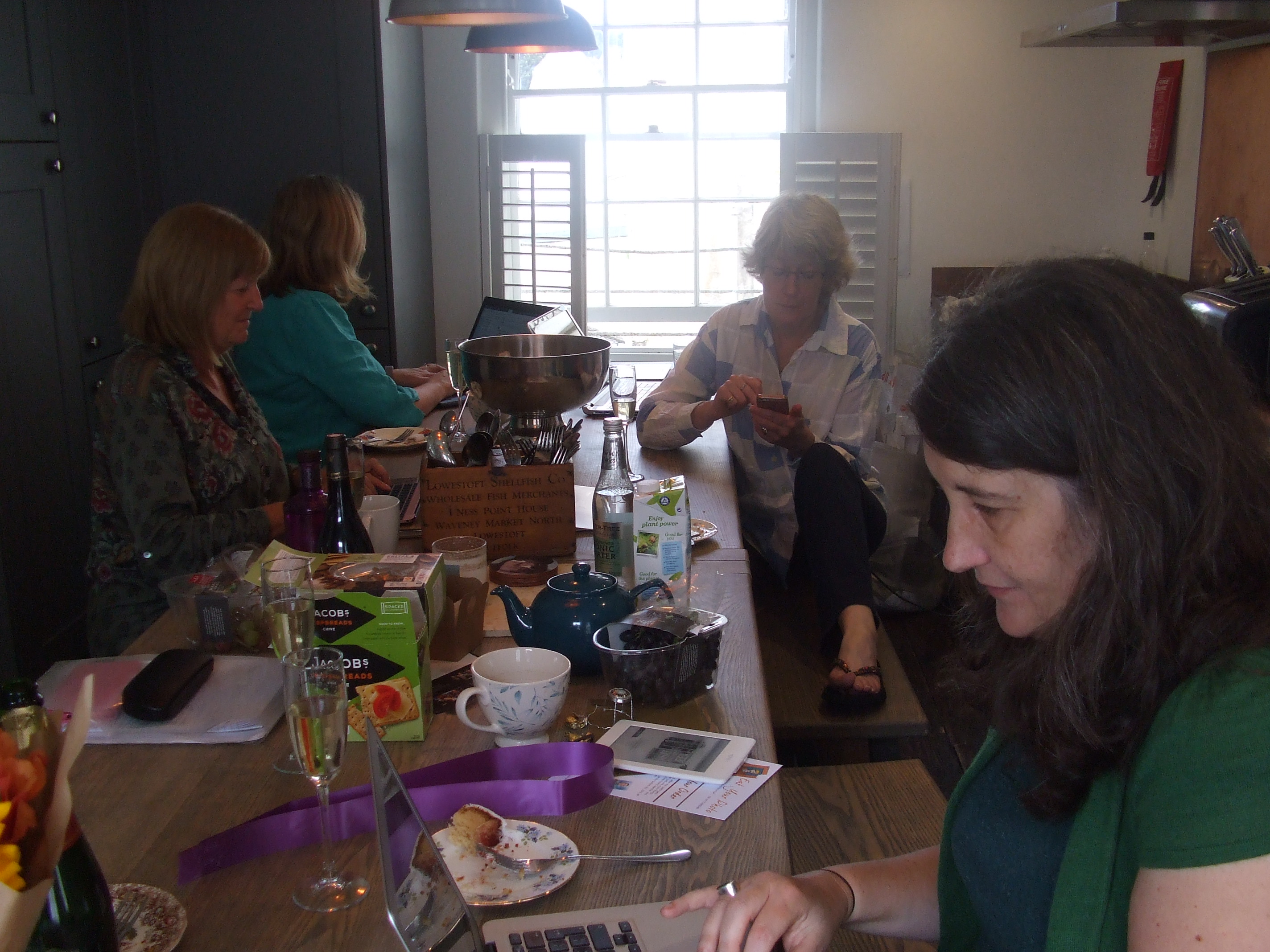
And what a buzz it is. I love it all – being amongst – but not with – people who demand and expect nothing of me, the background chatter, people watching, coffee and CAKE. Best of all, I find, is writing in a café with other writers. That really is the crème de la crème. For me, this happens most often during the school holidays – not just because it is when I need most to escape – but because so many of my writing buddies are teachers. We have our favourite venue – Coppa Club in Sonning – and our favourite table; the big round one in the corner with ample plugs for everyone. This particular table is in hot demand – and we used to amuse ourselves with elaborate plots for how we might secure it (you could tell what genre we were writing by our suggestions!) Then we worked out we could just book it in advance!

I asked a couple of my fellow writers what they most like about these writing sessions. For writer and poet Becci Fearnley, author of Octopus Medicine, it is all about the support. ‘I would probably get more writing done at home,’ she admits, ‘but discussing my progress, sharing in triumph and failure and even just the quiet company of people who understand you are all very much needed in the life of a writer. Writing can be a lonely business and we all need allies.’ Claire Dyer, author of The Last Day and The Perfect Affair agrees, although for her, the background noise can be an issue. (Note to cafes; sometimes the ‘background’ music can be very insistent). ‘I do enjoy the camaraderie of writing with others,’ she says. ‘There’s something collegiate and nurturing about it – and the coffee and breakfasts are scrummy.’

I think that’s it. Writing in cafes with other writers nourishes body, soul and our creative output. More than once, a brief discussion on something I didn’t even really know I was struggling with has been magically solved by a ‘chance’ comment, a plot hole closed or a character developed. Sometimes we muse that advances are being eroded and waistlines expanded, but – hey – everyone knows that you have to suffer for your art, don’t they?

And today, once skinny latte and a toasted sandwich later, my article is complete, and I am ready to hit the motorway again. I’ll proof it in another service station somewhere south of Glasgow and then hit the road for the final push to Edinburgh.