Expecting Better: Why The Conventional Pregnancy Wisdom Is Wrong Book Review

Expecting Better: Why The Conventional Pregnancy Wisdom Is Wrong Book Review, pregnancy, advice, eating, drinking, Expecting Better: Why The Conventional Pregnancy Wisdom Is Wrong created a huge amount of buzz when it was released, and rightly so. Women’s bodies are always political minefields. Everything from our breasts to our rights to abortion are subject to scrutiny and sexism. No more so is this true than when a woman is pregnant. Everyone has an opinion on what you should eat, on what you should do. The amount of unsolicited advice is irritating and the amount of judgement from the conception all the way to how you give birth can be overwhelming. God forbid that people live and let live.

Which is why I love this book. Emily Oster is an associate producer of economics at the University of Chicago Booth School of Business. She has done her research and has the facts. That is the thing with facts: you can’t argue with them. I mean, people will try but the truth is the truth. Let’s start with caffeine and alcohol. Women are told to limit caffeine and not drink during pregnancy. Coffee allegedly causes a rise in miscarriage. But as Oster says:

“Women who drink coffee tend to be older so is it the coffee or is it the maternal age?”

On alcohol she says: “In continental Europe women drink wine when pregnant and there is no evidence at all that there children are not as smart as American children or have any other health problems. In fact there is no evidence of more foetal alcohol syndrome in continental Europe; if anything, rates are higher in the United States. This is interesting as any drinking is frowned upon in the US whilst in continental Europe before are less judgemental.

Ultimately I concluded that these recommendations were not just very cautious, they were too cautious. In moderation, pregnant women should feel comfortable with both alcohol and caffeine.

For alcohol, this means up to one drink a day in the second and third trimester, and a couple of drinks a week in the first. In fact, for the most part studies fail to show negative effects on babies even at levels higher than this. By a drink here I mean a standard drink – 120 millilitres of wine, 30 millilitres of hard spirits, 350 millilitres of beer.”

Considering that a recent legal test case brought by a council tried to pass a law in the UK to make it illegal for women to drink in pregnancy at all, that speaks volume. Women are not trusted with their own bodies and decisions. As Oster puts it “This feels like pregnant women are not given any more credit than children would be in making important decisions.” Quite.

My review of Osters book could go on for thousands more words. Instead I will say: buy it. If you are pregnant, buy it. If you have a pregnant friend, buy if for them. It is the essential pregnancy book. Emily Oster should be applauded for her excellent work and research. This book is groundbreaking, fascinating and practical. I loved it and I could not recommend it more. Steven D. Levitt, the co-author of the brilliant Freakonomics, said this book ‘may be the most important book about pregnancy you read.’ There is no ‘may’ about it. Read it.

Expecting Better: Why the Conventional Pregnancy Wisdom is Wrong and What You Really Need to Know is available here.


Independent Bookshop Opens Doors to Independent Authors

by Catriona Troth.

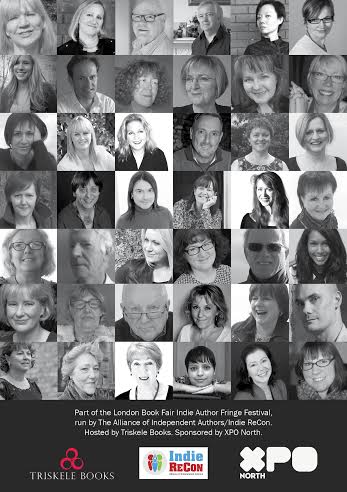
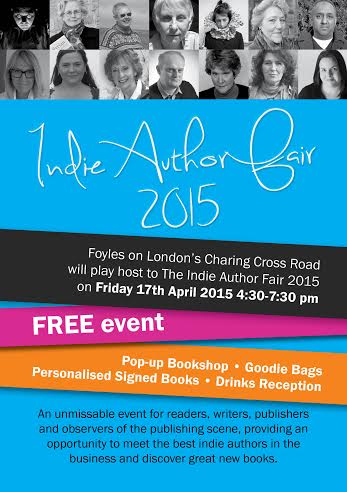
Foyles on London’s Charing Cross Road, is playing host to The Indie Author Fair (IAF) on Friday 17th April 2015.

IAF 2015 Flyer Front

When we wrapped up the Indie Author Fair 2014, most of us assumed that would be it for another year. That was before the Alliance of Independent Authors (ALLi) approached us to run their Member Showcase at the London Book Fair Indie Author Fringe Festival, run by The ALLi /Indie ReCon.

indiereconalli-logo

IndieReCon is a free online writers’ conference, which has been running since 2013. This year, they are working with ALLi to run a live event at Foyles, London’s largest indie bookstore, with the support of London Book Fair’s Book and Screen Week.

To follow this, Triskele Books are organising a second Indie Author Fair – a pop-up bookshop at which more than fifty of ALLi’s members will be represented. The Fair is being sponsored by XPO North, who are bringing with them an exciting group of emerging writers from the Highlands and Islands.

publishing, book, books, writing, authors, festivals

“Bringing writers and readers closer together is a core part of ALLi’s mission,” said Orna Ross, Director of ALLi (Alliance of Independent Authors). “We are delighted that the Indie Author Fair will showcase the talent and enterprise of so many ALLi members and look forward to fostering new author-reader bonds at the fair.”

Indie Author Fair 2015 will take place from 16.30–19.30 and is FREE to the public with drinks reception, goodie bags and personalised signed copies available.

You can read about the full collection of books and authors on show at the Fair here.

Organiser Catriona Troth said, “The Indie Author Fair is an unmissable event for readers, writers, publishers and observers of the publishing scene, providing an opportunity to meet the best indie authors in the business, talk to experts and discover great new books.”


Carole & Nadim Saad Authors of Kids Don’t Come with a Manual Interview

Carole & Nadim Saad Authors of Kids Don’t Come with a Manual Interview, parenting, kids, book, tips, advice, Tell us about your own parenting experience.

As a couple with conflicting parenting styles, we were torn between the gentler ‘laissez-faire’ approach and the more disciplinarian ‘tiger parent’ philosophy. What we really wanted was a way of parenting that could fit with our two different personalities, and allow us to parent in harmony, and raise our children to become happy and fulfilled adults.

So casting the parenting fads to one side, we turned to the latest research in child psychology and neuroscience and devoured hundreds of the world’s leading parenting books to find practical, tried and tested evidence. And we were delighted to discover that there really are clear, straightforward methods for achieving what we call a ‘balanced’ approach to parenting.

How is your book different from other parenting books?

Our book is different in that it gives the perspective of two different parenting styles, which removes the guilt associated with having to fit into an ‘idealised parenting mould’. It also equips parents with specific step-by-step tools that are based on the latest scientific and psychological research in childhood development. These tools are designed to support you through the immediate challenges of everyday parenting, whilst also meeting your long-term goal to raise children to become happy, self-reliant and responsible adults.
Interview With Carole & Nadim Saad Authors of Kids Don’t Come with a Manual parentingexpert

What are the biggest parenting challenges?

It’s difficult to answer this as it largely depends on your child’s temperament/personality and our own personality, as well as our individual style of parenting. We all encounter challenges so the key thing is to learn how to prevent such issues from happening in the first place, which is one of the key objectives of our book. Learning how to anticipate challenges before they happen allows us time to think, so that we can respond rather than react to our children’s misbehaviour. So we’d say that one of the biggest challenges that parents face is learning to be more strategic in their approach to parenting.

Is there ever a right way to raise children?

We are under no illusions about the reality of family life and have no wish to make it ‘perfect’. The fact is that there is no magic wand to make a family life perfect! However, with a bit more awareness of our children’s needs, combined with some simple practical trouble-shooting tools, we can go a long way to making a real difference to our children’s, our family’s and our own lives.

What are the dangers of over-praising our children?

Research suggests that overpraising our children and particularly using evaluative praise with statements such as “You’re smart” or “You’re good” can create a fear of failure, because children become afraid to do anything that could expose their ‘flaws’ and call into question their ‘talent’. This type of praise results in children becoming less likely to try new things or taking risks for fear of not getting it ‘right’ and so they end up missing out on essential opportunities to develop their confidence and sense of self.

How do you stop other relatives becoming too involved?

We think that other relatives will always get involved and we need to accept this as they think that they are doing this to help us. However, if we are more confident in our parenting and we demonstrate that we can manage our kids without overreacting, etc. then other relatives tend to find it impressive, then start making compliments and ultimately become much less involved.

Top parenting tips.

1. Focus on planning and prevention – instead of always being reactive.
2. Give empathy as often as possible – and do not discount feelings.
3. Model any behaviour you want to instil in your children – starting with respect and joy.
4. Use encouragement and descriptive praise – instead of general or evaluative praise.
5. Focus on what you can control – and don’t undermine your authority with empty threats.
6. Allow your children to have some control over their lives – offer them limited choices and ask them questions.
7. Allow mistakes to happen – they are opportunities for learning.
8. Coach your children to own and solve their problems – and they will become self-responsible.
9. If you have to deliver consequences, do it with respect and empathy – and delay them when needed.
10. When you say or do something you regret, ‘Rewind and Replay’ and ‘Repair’ – to keep a strong connection with you children.

What is the biggest mistake people make when raising children?

This is another challenging question as it’s difficult to identify one key mistake! However, one that is really common and can really affect children as they grow up is for their parents to frequently discount their feelings. This is something that parents do, often without even realising it. We tend to either reassure our children or try to ‘toughen them up’ – whichever approach we use, the message they hear is that they’re not supposed to feel the way they are feeling.

They grow unable to trust their feelings and cannot manage their emotions well, and this is an essential life skill. It’s far better to use empathy as a way of establishing and nurturing a bond with your child than try to ‘make light’ of their feelings, as this simply undermines their innate need to be listened to and have their feelings acknowledged.

Can parenting be made easier?

Our book ‘Kids don’t Come With a Manual – The Essential Guide to a Happy Family Life’ is designed to help empower parents to deal with most situations effectively. So that misbehaviour and the challenges that your children throw your way become opportunities for learning and growing rather than being stressors or negative experiences. Our main goal is to empower parents to deal with everyday parenting challenges without confrontation or anger, and raise their children to become the happy and confident individuals that they deserve to be.

Kids Don’t Come with a Manual by Carole and Nadim Saad, Best of Parenting, £12.99, www.bestofparenting.co.uk/books

Kids Don’t Come With a Manual – The Essential Guide to a Happy Family Life is available here.


THE FAERIE TREE: A Book In The Making

book, publishing, self publishing, writing, author, Ostara: A time of rebirth and renewal. A time to celebrate the coming of spring. And the coming of new books…

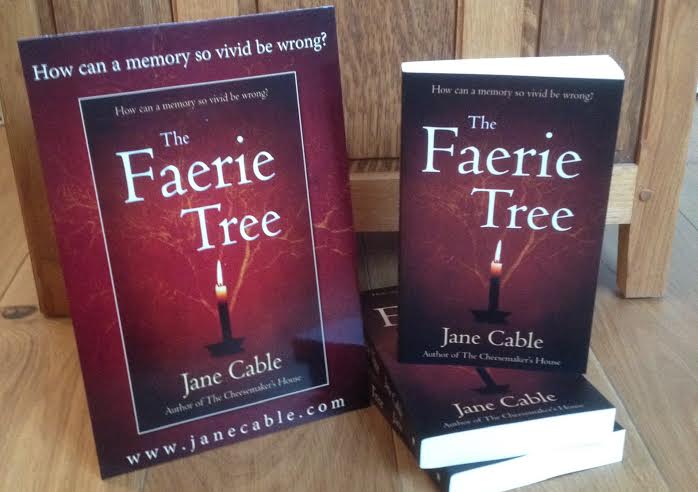
By the time you read this The Faerie Tree will have been unleashed. Actually, even at the time of writing it’s creeping out there; Amazon have stopped listing it as a pre-order and I’ve had to hold Matador back from making the ebook available before its time.

A few boxes of paperbacks have arrived with me as well. Holding one for the first time was tinged with sadness; my mother, who was a huge supporter of my writing, passed away just ten days before so she never got to see the finished book. But she’d read early drafts and approved the cover – and right at this moment is sitting at my shoulder, telling me to get back to the point of this article.

The point is that it’s hard to publish a novel alone. I’ve written before about the ‘official’ team; my editor, the wonderful Margaret Graham (author, teacher and Frost contributing editor) and the folks at Matador, but in recent weeks I’ve received an enormous amount of help from people who, quite frankly, didn’t have to.

In my last article I mentioned my desire to create a faerie tree near my home city of Chichester. I also mentioned this to a few of my fellow Chindi (Chichester Independent) Authors, and children’s writers Christopher Joyce and Becky Edwards leapt in with huge enthusiasm to brainstorm ideas and open their contact books. We were joined by the administrator of the Sussex Centre for Folklore, Fairy Tales and Fantasy – acting in a personal capacity just because she loved the idea so much.

Through them I met Vicky Edwards, a local book-lover (she runs the Spirit FM book club) and PR. She not only gave me some great ideas to improve my press releases but just as importantly introduced me to a local charity with a woodland walk – the ideal home for a faerie tree. I was due to meet them in early March but had to cancel so there is another date in the diary and I hope that in the next article there will be something definite to tell you about this very special project.

I’ve also had a great deal of support from the bloggers who are taking part in the launch tour. These ladies work so hard reviewing books and helping readers make good choices about what they might enjoy. They do it for the love of it – some are retired, but most hold down day jobs as well. And I think I’m busy. Follow the tour (details below) and browse their other posts for great steers on books you might enjoy.

Finally, I’ve had the blessing of the elves, pixies and faeries who live around the real faerie tree where the book is set. You see I did what many people have done before – for over twenty years, in fact – and I put a letter into their little box. And like everyone else, I received a reply; wishing me well and giving me instructions on where to leave their copy. I hope they like it. I hope everyone likes it. It would be a really fitting thank you to all the unsung heroes who’ve helped me along the way.

The Faerie Tree blog tour…

22nd March: Random Things Through My Letterbox – author Q&A
http://randomthingsthroughmyletterbox.blogspot.co.uk/

23rd March: Rosie Amber – review
https://rosieamber.wordpress.com/

24th March: Liz Loves Books – the settings & scenery of The Faerie Tree
http://lizlovesbooks.com/

25th March: My Reading Corner – the faerie tree itself and book giveaway
http://myreading-corner.blogspot.co.uk/

26th March: Crooks on Books – author interview
http://crooksonbooks.blogspot.co.uk/

28th March: Jaffa Reads Too – the inspiration for The Faerie Tree and book giveaway
http://jaffareadstoo.blogspot.co.uk/

29th March: Being Anne – second chances
http://beingannereading.blogspot.co.uk/

31st March: Beadyjan’s Books – writing with women in mind
http://beadyjansbooks.blogspot.co.uk/


The Boy Who Lost Fairyland By Catherynne M Valente Book Review

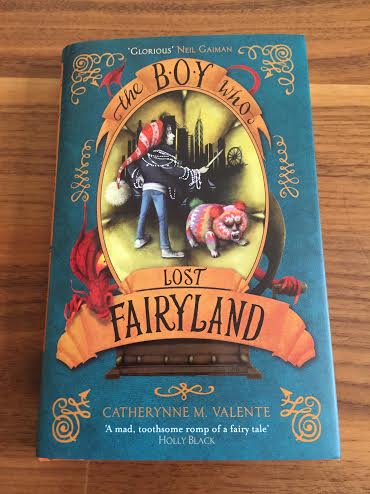
The Boy Who Lost Fairyland By Catherynne M Valente Book Review, book, book review. The Boy Who Lost Fairyland , Catherynne M Valente

This book is the fourth instalment in the popular fairyland series, The Boy Who Lost Fairyland is an intelligent and wonderful fantasy novel for adults as well as children. The book has heart and is a compelling fairy tale. The plot keeps you on your toes and the story  leaves you feeling joy. This is a brilliant and charming novel for readers of all ages. Highly enjoyable. Bestselling children’s author Catherynne M Valente is a winner of the Andre Norton Award and also writes books for adults. Hailed as ‘one of the most extraordinary works of fantasy, for adults or children, published so far this century’ by Time Magazine, get your hands on a copy now.

When a young troll named Hawthorn is stolen from Fairyland by the Golden Wind, he becomes a changeling – a human boy – in the strange city of Chicago, a place no less bizarre and magical than Fairyland when seen through trollish eyes.

Left with a human family, Hawthorn struggles with his troll nature and his changeling fate. But when he turns twelve, he stumbles upon a way back home, to a Fairyland much changed from the one he remembers.

Soon, Hawthorn finds himself at the centre of a changeling revolution – until he comes face to face with a beautiful young Scientiste with very big, very red assistant . . .

With The Boy Who Lost Fairyland, Catherynne M. Valente’s wisdom and wit will continue to charm readers of all ages.

The Boy Who Lost Fairyland is available here.


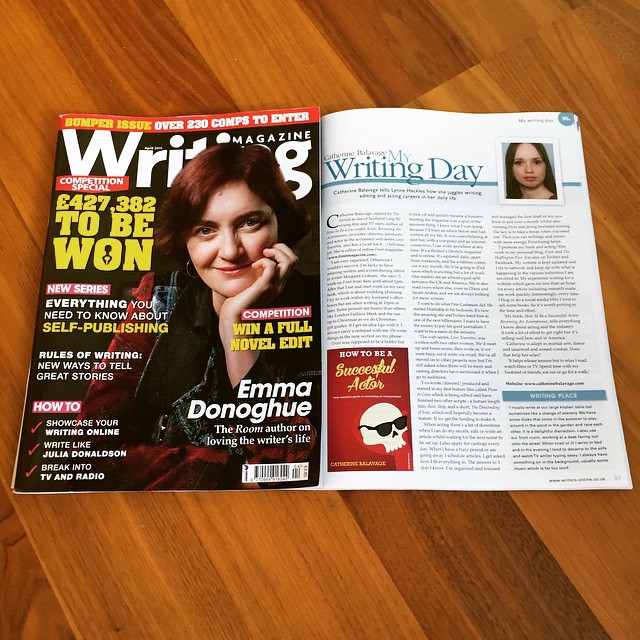
Frost Editor Catherine Balavage Interviewed By Writing Magazine

If you have ever been curious about Frost Magazine editor Catherine Balavage’s writing day then grab a copy of the April 2015 edition of Writing Magazine. Catherine is interviewed by Lynne Hackles. She talks about Frost, writing books and her acting career.

Catherine Balavage, my writing day, writer, writing, magazine, interview, acting,

Catherine is not the first Frost team member to be interviewed by Writing Magazine, contributing editor Margaret Graham was also interviewed about her writing day in a prior issue.

Head down to a newsagents and get your copy now. Available at WHsmith.co.uk, Waterstones.com, all good newsagents or the Writing Magazine website.


Month 2 Of My Reading Challenge by Frances Colville

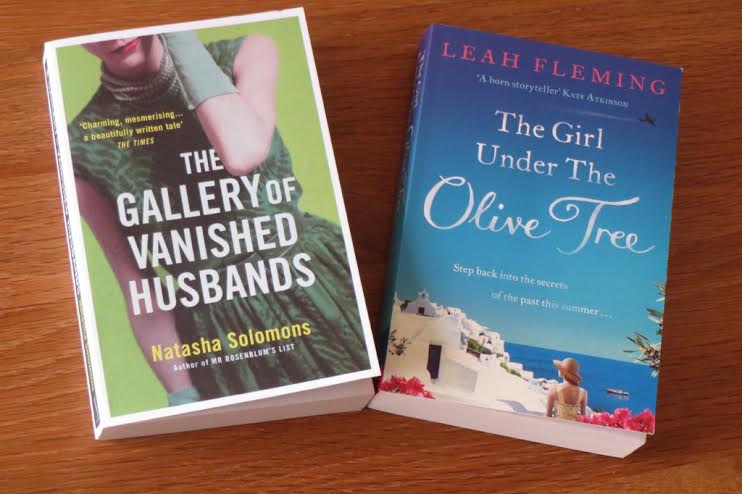
I began with a book I probably wouldn’t have picked up myself, but which was the book of choice for one of my two reading groups.The Girl Under The Olive Tree by Leah Fleming (published Simon and Schuster UK 2013). It should have been a good read (interesting storyline about an English nurse working for the resistance in Crete during WW2) but there were some irritating anomalies and frequent failures to capitalise on opportunities for dramatic tension. I was left feeling dissatisfied, though I did learn some fascinating facts about Crete and WW2.
MONTH 2 OF MY READING CHALLENGE by Frances Colville

My second book also failed to grab me fully. I recently went to a talk by author Natasha Solomons and thought she spoke well and interestingly. I picked up a copy of The Gallery of Vanished Husbands(published Sceptre 2013) and keenly anticipated reading it. But I wasn’t completely convinced by her portrayal of the main character and I found the plot unrealistic in places. However, it is well written; her use of language appealed to me, as did the pace of the book, and there are some excellent descriptive passages. I think I will try another of her books. One more to add to my list.
MONTH 2 OF MY READING CHALLENGE by Frances Colville   2
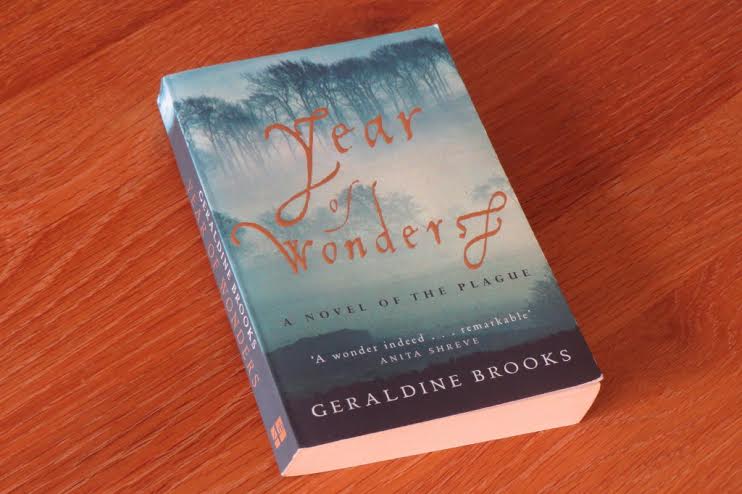
Next I moved on to another reading group choice: The Year of Wonders by Geraldine Brooks(published Fourth Estate 2002). This was in fact a re-read for me, but I relished the opportunity to have a fresh look at a book which has long been on my Top Ten List. It’s based on the true story of a Derbyshire village coping with an outbreak of plague in the seventeenth century and is one of those books which is almost unbearable to read, and yet equally you can hardly bear to put it down.
MONTH 2 OF MY READING CHALLENGE by Frances Colville   3

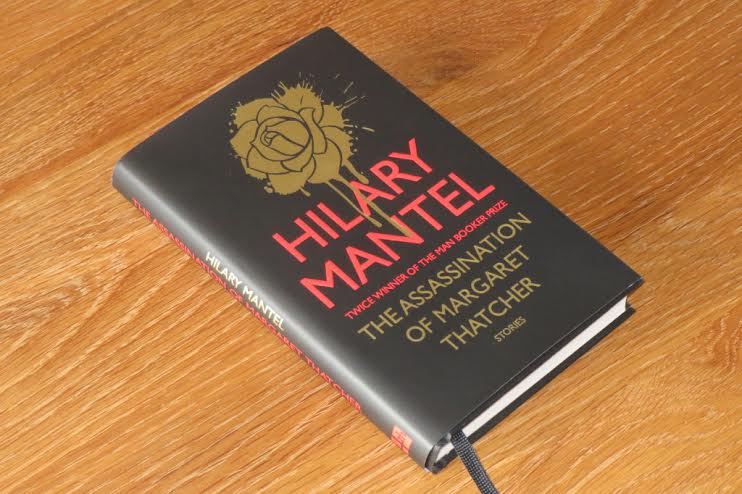
As an aspiring short story and flash fiction writer, I have been eagerly awaiting the chance to read Hilary Mantel’s new short story collection The Assassination of Margaret Thatcher(published Fourth Estate 2014) and I wasn’t disappointed. Each individual story is a compelling read and all are powerful, harrowing, disturbing and haunting. In fact they made me question why I read. Is it for pleasure and relaxation? To learn? To be challenged? Or to appreciate the skill of the writer? In the case of this book, I think it is the latter two. And that is a tribute to Hilary Mantel who is a supremely good writer.
MONTH 2 OF MY READING CHALLENGE by Frances Colville   4

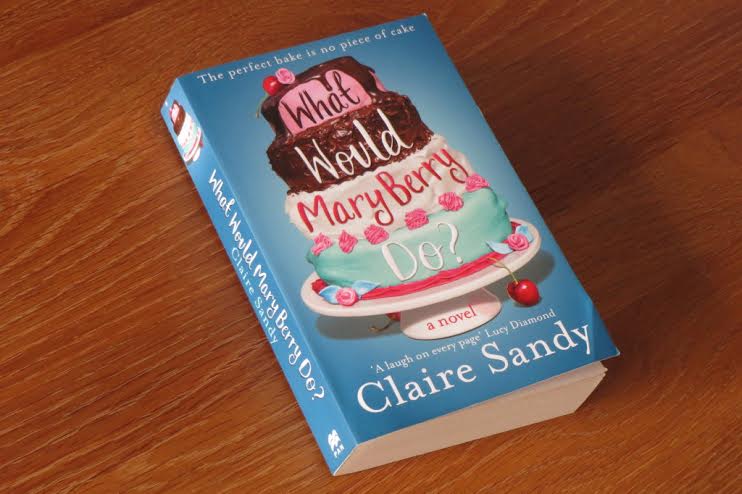
After that, I needed something less stressful and turned to Claire Sandy’s novel What Would Mary Berry Do?(published Pan Books 2014) Who doesn’t love Mary Berry and the Bake Off programmes? I’m a big fan, and this lighthearted tale of a harassed mother teaching herself with Mary Berry’s help to bake appealed to me. In fact I could have done with a bit more of the baking and a bit less of the rest of the story. It isn’t a book that will stick in my mind for years to come, but it is an enjoyable and relaxing read and I definitely recommend it if that’s the sort of book you’re looking for.

It’s a truism to say variety is the spice of life, but I’m learning that my choice of books reflects just that. So now I have a problem. What to pick up first for month 3?


The 50 Books Every Child Should Read By Age 16

top children's books, top children book characters, top children's books, best, children's, books, readingFor World Book Day we have the Top 50 books every child should read. Roald Dahl’s Charlie and the Chocolate Factory has topped the list of 50 books which every child should read by the age of 16.

The study of 2,000 reading enthusiasts was created to determine the ultimate list of the top 50 books that should be on every child’s reading list, encouraging bedtime reading for British families.

The research, commissioned by Sainsbury’s to celebrate World Book Day, found C.S. Lewis’ adventures in Narnia are no less thrilling today – The Lion, the Witch and the Wardrobe finished third in the list of 50 books, while Winnie the Pooh and Black Beauty rounded off the top five.

The research also surveyed parents of children aged under 16 and found a good story really is timeless, results showed – six in ten parents still like to read stories to their children that their own parents once read to them as a little one.

Perhaps it’s no surprise then that 72 per cent of parents said bedtime reading is one of the most key bonding experiences with their child.

Tony Robinson, actor, comedian and author, who worked with Sainsbury’s on the campaign, added: “The response from parents and the lengths they go to in bringing these stories to their children as vividly as possible is amazing.

“It shows that the power of make believe is so important in the development of a child and a key role in parents bonding with their young ones.”

To celebrate the nation’s week of reading, Sainsbury’s is encouraging children to read more by exploring the world of books and dress up as their favourite fictional characters. Sainsburys.co.uk will be hosting in-store ‘Make Believe’ events nationwide, to support the nation’s reading week complete with reading corners and activities to encourage children to read more and inspire parents to get involved.


The 50 Books Every Child Should Read By Age 16

1. Charlie and The Chocolate Factory- Roald Dahl
2. Alice in Wonderland- Lewis Carroll
3.The Lion, the Witch and the Wardrobe- C.S. Lewis
4.Winnie-the-Pooh – A. A. Milne
5. Black Beauty- Anna Sewell
6.James and The Giant Peach- Roald Dahl
7.The BFG-Roald Dahl
8. A Bear Called Paddington- Michael Bond
9. Treasure Island- Robert Louis Stevenson
10. Adventures of Huckleberry Finn- Mark Twain
11. Harry Potter and the Philosopher’s Stone – J.K. Rowling
12. Matilda- Roald Dahl
13. The Railway – E. Nesbit
14. Oliver Twist- Charles Dickens
15.Five on a Treasure Island- Enid Blyton
16.The Wind in the Willows- Kenneth Grahame
17. The Very Hungry Caterpillar- Eric Carle
18. The Jungle Book – Rudyard Kipling
19. Charlotte’s Web- EB White
20. The Tale of Peter Rabbit- Beatrix Potter
21. Watership Down- Richard Adams
22.The Hobbit -J.R.Tolken
23.Harry Potter and the Deathly Hallows- J.K. Rowling
24.Lord of the Flies- William Golding
25.The Secret Diary of Adrian Mole, aged 13 ¾ Sue Townsend
26. Great Expectations- Charles Dickens
27.The Cat in the Hat- Dr Seuss
28. The Secret Garden- Frances Hodgson-Burnett
29.The Diary of a Young Girl- Anne Frank
30. The Twits – Roald Dahl
31. The Wonderful Wizard of Oz- L. Frank Baum
32. The Boy in the Striped Pyjamas – John Boyne
33. Anne of Green Gables- L.M.Montgomery
34.The Tiger Who Came to Tea- Judith Kerr
35.Green Eggs and Ham: Green Back Book – Dr Seuss
36.The Day of the Triffids by John Wyndham
37. Bambi- Felix Selten
38.Tom’s Midnight Garden- Phillipa Pearce
39.Little House on the Prairie- Laura Ingalls Wilder
40.Funny Bones- Janet and Allan Ahlberg
41. Where The Wild Things Are- Maurice Sendak
42.Carrie’s War- Nina Bawden
43.The Curious Incident of the Dog in the Night-Time – Mark Haddon
44.The Magician’s Nephew- C.S. Lewis
45. The Golden Compass – Philip Pullman
46. The Story of Doctor Dolittle- Hugh Lofting
47.The Story of Tracy Beaker – Jacqueline Wilson
48.The Hunger Games – Suzanne Collins
49.Curious George- H.A.Ray
50.Each Peach Pear Plum by Janet and Allan Ahlberg


Top 20 Best-Loved Children Book Characters

1. Paddington Bear

2. Winnie the Pooh

3. The Hungry Caterpillar

4. Postman Pat

5. Thomas the Tank Engine

6. The Gruffalo

7. Harry Potter

8. Cinderella

9. Mr Men

10. Peter Rabbit

11. Charlie from Charlie and the Chocolate Factory

12. Peter Pan

13. The BFG

14. Alice in Wonderland

15. Noddy

16. Willy Wonka

17. Matilda

18. Mog the Cat

19. Toad from Wind in the Willows

20. Pinocchio