Callum Fox And The Mousehole Ghost By AC Hatter Book Review

AC Hatter bookI do have to confess to a love for young adult fiction. When done well there are few things better in life than getting lost in a book which is written with a young imagination in mind.

I am pleased to say that Callum Fox And The Mousehole Ghost By AC Hatter is one such book. A gripping page turner that is the holy grail of young adult fiction: a book that is enjoyable to the young and old alike. Well-written, intelligent and well thought-out. The characters are highly likeable and well rounded. The historical parts, as we flip from the past and present of the Mousehole ghost named in the title, Jim A World War II evacuee, are very well written and researched. I was really drawn into the story and read the entire book in one day. We already included Callum Fox And The Mousehole Ghost in our Perfect Holiday Reading article.

This book is also funny with great observations from the characters. I really felt like I knew the characters and I found them loveable and amusing. Although the book is also about ghosts as well as real people I didn’t have to suspend my disbelief.

Callum is a great character. A very modern boy indeed, loving Facebook and listening to his iPod. He goes through a very interesting journey in this book, making Callum Fox And The Mousehole Ghost a truly wonderful coming-of-age book. Brilliant stuff and I cannot wait to see what AC Hatter does next.

Callum Fox’s summer holiday in Cornwall isn’t working out quite as he’d expected. His Grandad’s turned out to be a miserable old git and Sophie, the girl he met on the train to Penzance, seems to view him as more of a liability than anything else. However, his time in Mousehole starts to get a whole lot more interesting when he meets Jim, the ghost of a World War II evacuee. Seventy years separate Callum and Jim, but as their stories unfold Callum realises they have more in common than anyone could have imagined, and that some secrets last a lifetime… Callum is a fabulous, funny and feisty character who takes us on a roller-coaster of a ride around Cornwall.

Callum Fox and the Mousehole Ghost by AC Hatter is available here.


Top 10 Books Most Commonly Left On Flights | Holiday Reads

holidayreadssummerbooksA good read is one of the essential ingredients for a relaxing holiday, according to 80 per cent* of holidaymakers who always pack one for their travels. Despite this, around 600 books and 1,400 kindles are left on board British Airways flights every year.


The most common is The Holy Bible, accounting for six per cent of books left on board. Some of the more unusual books which have been found include notebooks, personal diaries, wedding sketchbooks and even a cheque book!


The British Airways survey found that books were still the most popular form of reading with three in five taking a book, compared to one in five taking an e-reader. Women are also more likely to own an e-reader (20 per cent) compared to men (15 per cent).


British Airways has compiled a list of the top 10 books most commonly left on flights over the past three months, as inspiration for good holidays reads this summer:


  1. Gone Girl, Gillian Flynn (Fiction, Thriller)
  2. King and Maxwell Series, David Baldacci (Thriller)
  3. The Fault in our Stars, John Green (Novel)
  4. Capital in the Twenty-First Century, Thomas Piketty (Business/Economics)
  5. Alex Cross, Run – James Patterson (Thriller)
  6. The Luminaries, Eleanor Catton (Novel)
  7. Michael Lewis, Flash Boys (Non-fiction)
  8. Fifty Shades of Grey (Freed), EL James (Romance)
  9. Arthur Conan Doyle, The Complete Sherlock Holmes (Novel)
  10. The Racketeer, John Grisham (Thriller)


Novels are the most common type of book found on flights (22 per cent), followed by crime thrillers, study and learning books, travel books, non-fiction and business and economics. The least likely genre to be left behind are ‘chick flicks’.


Some of the most popular biographies found on board were by John Bishop, Muhammad Ali and, no surprise during the Wimbledon Championships – tennis player Rafa Nadal.


The survey also found that Scottish travellers were the most likely to own an e-reader (28 per cent) – the least likely were East Anglia (nine per cent). Nine out of ten people from the East Midlands were likely to take a book on holiday, compared to just a quarter from the North East. Those from the South East are the biggest readers, taking at least two or three books on holiday.

For those prone to losing books, British Airways has a selection of audio titles in its extensive library collection. It includes Jennifer Saunders biography ‘Bonkers; My life in laughs’, Virginia Woolf ‘The mark on the wall’, Roald Dahl ‘The Great Automatic Grammatizator’, Anton Chekhov ‘The Chorus Girl’ and Charles Dickens ‘Great Expectations’ among many others available on selected long-haul flights in July.


*1,000 people surveyed by OnePoll


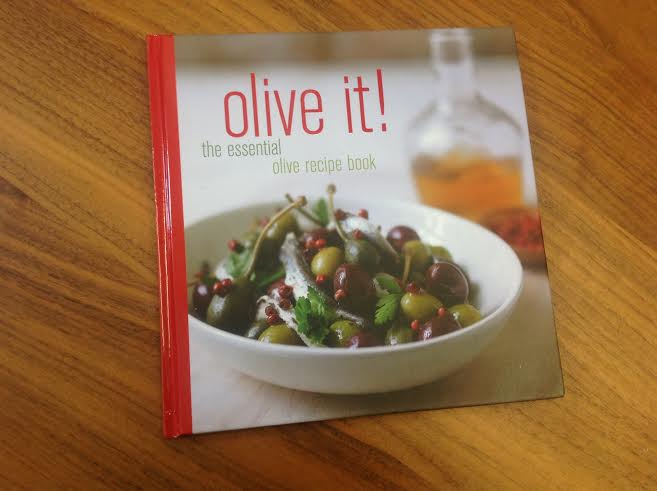
Olive It! The Essential Olive Recipe Book Review

I love this book, I really do. I love olives and will eat them in anything. Unfortunately when it comes to cooking I don’t have much of an imagination. Luckily for me this amazing book has olive recipes a plenty, along with a history of olives, the healthy facts on olives, information on the Olive It! campaign and lots of other great stuff.

My mouth was watering all the way through reading this book. The recipes are also amazing, some are also very unique. I highly recommend this book for olive obsessives like myself.

oliveitrecipebookreview

A delicious ensemble of olive marinades, tapenades, tapas feasting tips and recipes that will spark your imagination.

Designed to inspire you, this beautiful recipe book will take you on a journey of true discovery. Combining tradition with a contemporary twist, the Olive it! recipe book has a dish for everyone and every season, from innovative marinades to tantalising tapas and tapenades.

Join celebrated Spanish chefs José Pizarro and Omar Allibhoy as they share the joy of olives and family-trusted recipes that have passed down generations. Having both grown up surrounded by olive trees and immersed in the Mediterranean diet and culture, their love of olives is deep rooted and evident in these inspired olive dishes. With over 40 recipes that will spark your imagination and awaken new taste sensations, explore unique yet delicious combinations, such as green olives with figs, orange and bay to more adventurous combinations such as black olives with wasabi, ginger and smoked salmon and green olives with manchengo, chorizo and melon.


“Cooking with olives can be fun and exciting, and we hope this book will inspire you in the kitchen and encourage you to create these quick, easy and delicious recipes at home for your loved ones.’

“Olives on their own are great as a tasty snack but when seasoned with new and inventive combinations of ingredients they can produce a true explosion of taste.”

–  Omar Allibhoy

Perfect Holiday Reading: The Books To Read This Summer

Stop! Do not buy any books, nor put any in your suitcase until you have read our essential guide of the best books to read this summer. This is our second instalment of great reads. We hope you enjoy some of the books below and feel free to add you own in the comments section or by emailing frostmagazine@gmail.com


Hard Choices by Hillary Clinton

hillary28n-3-web

Former United States Secretary of State, U.S. Senator, First Lady of the United States and possible future President. What a life, what a woman. We loved her previous book, Living History, and this one is equally good. Brilliant stuff that will also give your brain a workout.

Maeve’s Afternoon Delight by Margaret Graham
maeve afternoon delight Margaret graham

Margaret Graham is one of Frost’s favourite authors and this book is yet another winner. Less historical than the previous books of hers we have reviewed, this has a modern setting. It is a brilliant First Wives style book with a rather loveable heroine in Maeve. A character it is impossible not to love and get excited about. After her husband leaves her for her best friend Maeve starts to make changes in her life. She finds solace in her allotment and the friends she gains. Perfect summer reading. This book would make a great film.
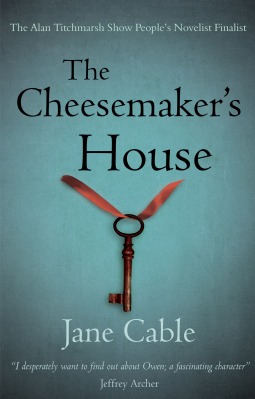
The Cheesemaker's House, Jane Cable, Book review

The Cheesemakers House by Jane Cable
We have already reviewed this book before but wanted to include it on this list due to its great story and pace. Very readable and perfect for the beach.
AC Hatter book

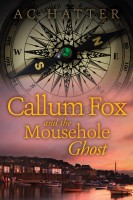
Callum Fox and the Mousehole Ghost by AC Hatter

Well-written with great characters. Perfect for adults too. Great summer reading

Callum Fox’s summer holiday in Cornwall isn’t working out quite as he’d expected. His Grandad’s turned out to be a miserable old git and Sophie, the girl he met on the train to Penzance, seems to view him as more of a liability than anything else. However, his time in Mousehole starts to get a whole lot more interesting when he meets Jim, the ghost of a World War II evacuee. Seventy years separate Callum and Jim, but as their stories unfold Callum realises they have more in common than anyone could have imagined, and that some secrets last a lifetime… Callum is a fabulous, funny and feisty character who takes us on a roller-coaster of a ride around Cornwall.
thebestsummerbooks

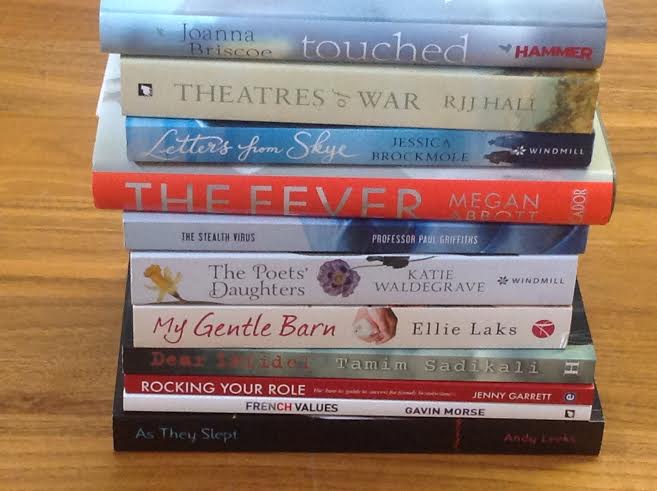
Touched by Joanna Briscoe
This is a gripping, creepy, novel that never lets you go until the end. Highly enjoyable stuff. You won’t even notice the world going by.  Perfect to read in a single sitting


Rowena Crale and her family have moved from London. They now live in a small English village in a cottage which seems to be resisting all attempts at renovation. Walls ooze damp, stains come through layers of wallpaper, celings sag. And strange noises – voices – emanate from empty rooms. As Rowena struggles with the upheaval of builders while trying to be a dutiful wife and a good mother to her young children, her life starts to disintegrate. And then, one by one, her daughters go missing …

Theatres of War by RJJ Hall

Perfect for those who love history and war novels. A very good book.
Winner of The People’s Book Prize (Fiction) 2013/14

On the landing beaches at Salerno in September 1943, two soldiers face the German bombardment together but they come from different worlds: Frank grew up in the backstreets of London but he’s clever and is now an officer; Edmund is a cricketer from a landed family.

Vermillion had fallen for Edmund in Cairo where she monitored German communications. Desperate to see him again, she gets transferred to war-torn Naples. But when Frank discovers an abandoned theatre and stages a revue, she can’t stay away. It proves such a success that Frank is ordered to stay in Naples and put on more shows. Vermillion joins him and her life becomes enmeshed with both men.

While Edmund fights in the bitter winter battles near Monte Cassino, Frank dreams of staging an opera. Vermillion still loves Edmund, but she doesn’t want him running her life. And working with Frank, she experiences the independence she’s longed for.

Vermillion feels fulfilled, but a time is soon coming when she’ll have to choose…

Theatres of War is a love story about sacrifice and duty, and a war story about self-discovery and love. Seen through the eyes of combatants and civilians, it evokes the convulsions of the ‘forgotten’ Italian campaign of World War II.


Letters From Skye by Jessica Brockmole
This is a stunningly wonderful love story, told in a series of letters. Endlessly romantic and the letter format makes the characters feel very real. Wonderful stuff.

Elspeth is fond of saying to her daughter that ‘the first volume of my life is out of print’. But when a bomb hits an Edinburgh street and Margaret finds her mother crouched in the ruins of her bedroom pulling armfuls of yellowed letters onto her lap, the past Elspeth has kept so carefully locked away is out in the open. The next day, Elspeth disappears.

Left alone with the letters, Margaret discovers a mother she never knew existed: a poet living on the Isle of Skye who in 1912 answered a fan letter from an impetuous young man in Illinois.

Without having to worry about appearances or expectations, Elspeth and Davey confess their dreams and their worries, things they’ve never told another soul. Even without meeting, they know one another.

Played out across oceans, in peacetime and wartime but most of all through paper and ink, Letters from Skye is about the transformative power of a letter – the letter that shouldn’t have been sent, the letter that is never sent and the letter the reader will keep for ever.

The Fever by Megan Abbott
This is Megan Abbott’s seventh novel and is her best yet. That is saying something! A brilliant, gripping crime novel. Even the author of Gone Girl, Gillian Flynn likes it. High praise indeed.

The Nash family is close-knit. Tom is a popular teacher, father of two teens: Eli, a hockey star and girl magnet, and his sister Deenie, a diligent student. Their seeming stability, however, is thrown into chaos when Deenie’s best friend is struck by a terrifying, unexplained seizure in class. Rumors of a hazardous outbreak spread through the family, school and community. 

As hysteria and contagion swell, a series of tightly held secrets emerges, threatening to unravel friendships, families and the town’s fragile idea of security. 

A chilling story about guilt, family secrets and the lethal power of desire.


The Stealth Virus by Professor Paul Griffiths
Brilliant, fascinating and food for the brain.

Paul Griffiths, Professor of Virology at the Royal Free Hospital and University College London studied medicine at St Bartholomew’s Hospital in London and has spent his professional life in medical virology. He has an international reputation, unrivalled expertise and insight into the effect that viruses can have on patients and their families. Professor Griffiths uses this experience and stories of real patients to demonstrate how cytomegalovirus has avoided detection and treatment for so long. He introduces you to CMV, an intelligent virus which evolved millions of years ago intending to infect everyone on the planet during childhood, spreading silently throughout the world whilst remaining unrecognised. Professor Griffiths explains how modern living has jolted this stealth virus out of its complacency, rapidly altering the conditions it needs to survive.

Over a period of 100 years (a blink of the eye in evolutionary time) humans have changed their world to become cleaner, longer living life forms which avoid childhood infections, have babies later in life, swap organs during transplantation and even suppress their immune systems with drugs or HIV. Professor Griffiths describes how and why this virus has come out of obscurity to become a top target for elimination. Although you may never have heard its name, there is a good chance that you, your family and your friends have encountered it. After you have heard The Stealth Virus tell its own story, its victims are given a voice too. This book describes how CMV is being confronted and introduces the researchers who will defend us against its insidious and sometimes devastating consequences. This book brings medical virology to life. It is dedicated to those who have encountered The Stealth Virus and to those who have declared war upon it.


The Poet’s Daughters: Dora Wordsworth and Sara Coleridge by Katie Waldegrave
Well researched and fascinating. Waldegrave brings the lives of these two women to life vividly, telling a story that has never truly been heard before. Brilliant stuff.

‘You are the best poetry he ever produced: a bright spark out of two flints.’

Dora Wordsworth and Sara Coleridge, were life-long friends. They were also the daughters of best friends: William Wordsworth and Samuel Taylor Coleridge, the two poetic geniuses who shaped the Romantic Age.

Living in the shadow of their fathers’ extraordinary fame brought Sara and Dora great privilege, but at a terrible cost. In different ways, each father almost destroyed his daughter. Growing up in the shadow of genius, each girl made it her life’s ambition to dedicate herself to her father’s writing and reputation. Anorexia, drug addiction and depression were part of the legacy of fame, but so too were great friendship and love.

Drawing on a host of new sources, Katie Waldegrave tells the never-before-told story of how two young women, born into greatness, shaped their own legacies.

My Gentle Barn: The incredible true story of a place where animals heal and children learn to hope by Ellie Laks
This is an amazing story about healing, hope, love and forgiveness. It is also a powerful story about how well animals can heal things. Highly recommended.


Founder Ellie Laks started The Gentle Barn after adopting a sick goat from a run-down petting zoo in 1999. Some two hundred animals later (including chickens, horses, pigs, cows, rabbits, emus, and more), The Gentle Barn has become an extraordinary nonprofit that brings together a volunteer staff of community members and at-risk teens to rehabilitate abandoned and/or abused animals. As Ellie teaches the volunteers to care for the animals, they learn a new language of healing that works wonders on the humans as well. 

My Gentle Barn weaves together the story of how the Barn came to be what it is today with Ellie’s own journey. Filled with heartwarming animal stories and inspiring recoveries, My Gentle Barn is a feel-good account that will delight animal lovers and memoir readers alike.

Many celebrities including Pamela Anderson, Justin Bieber and Ellen De Generes support The Gentle Barn.


Dear Infidel by Tamim Sadikali
An interesting book on identity. This first book from Tamim Sadkali shows promise.

Two families reunite for a feast on Eid ul-Fitr, the day Muslims celebrate the end of the month of fasting. And boys who grew up together will meet again, as men. As the big day approaches two of the men go to the mosque, one leaves his girlfriend and another watches porn. Nevertheless, they arrive intent on embracing the day. Old enmities are put aside, as they take tentative steps towards each other.

This is a story about love, hate, longing and sexual dysfunction, all sifted through the war on terror. And how we drift from one another, leaving every man stranded across a wasteland of atrophied connections. And so we witness the realities of a post-9/11 world filter down, touch individual lives, combine with some internal tension, and finally spill over.


Rocking Your Role – The ‘How To’ guide to success for Female Breadwinners by Jenny Garrett
A brilliant and informative book for female breadwinners.

This book goes beneath the surface of what it means to be the Female Breadwinner and drags women kicking and screaming out of the closet. Why? Because, being the Female Breadwinner can fundamentally challenge women’s identity. It is the trigger, catalyst and cause for many complex issues that women have to manage. For a successful family life and career, women must address and examine these internal challenges for their physical, mental and spiritual well-being. Find out: where your guilt button is and who is pressing it, what you love about being breadwinner that you were afraid to admit, how you tackle the thorny subject of money, how to cure yourself of Superwoman Syndrome.


French Values by Gavin Morse
An interesting book on culture, identity and the differences between Britain and France.

Gavin Morse is a British national, living and working in Strasbourg, France. French Values is an account of things that may or may not have happened to him while living in the European capital. This is his first novel. It originally started as observations of the pleasures of living and working in a Gallic society. Enjoying writing, Gavin decided to create a novel. In his first piece, he illustrates his cultural views and compares the Ros’ Beefs to the Frogs. Through this fiction, he shares the best and the worst from both sides of the channel.


As They Slept (The comical tales of a London commuter) by Andy Leeks
A brilliant idea that is well executed. A very enjoyable read.

The autobiographical tale of a stubborn, thirty something commuter, who wasn’t prepared to lose a petty argument on Facebook. 
Infuriated by the snoozing passengers surrounding him, Andy posted a status declaring that sleeping on trains is a complete waste of time. His friends disagreed. In a bid to prove them wrong, Andy set out to write a book from start to finish on the daily commute. “As They Slept” is a collection of comical tales of travel and trepidation, guaranteed to make you laugh. In his well received first book, Andy sets out to explain how to eradicate lost property, why women can’t use their pockets, and exactly when it’s ok to lie.
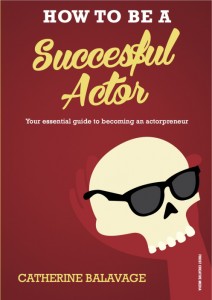
 

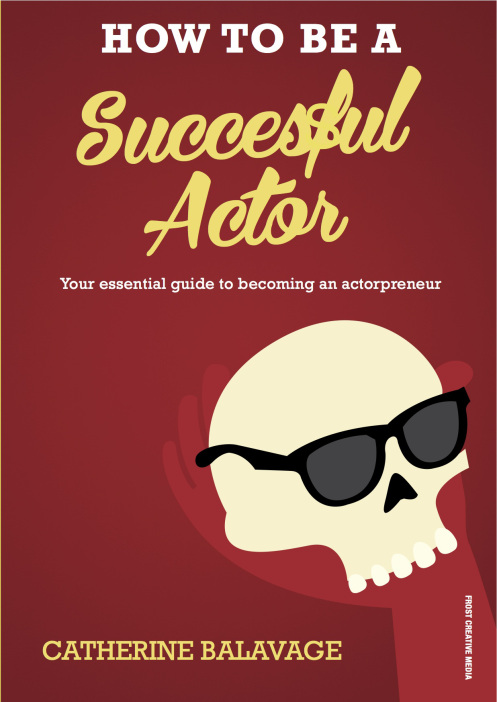
howtobeasuccessful_actor_book become How To Be a Successful Actor: Becoming an Actorpreneur

And if you are an actor, or want to be, then check out our editor, Catherine Balavage’s, new book How To Be a Successful Actor: Becoming an Actorpreneur. Here is a a five-star review it got on Amazon

This really is an excellent guide book into the terribly difficult, but potentially rewarding life of an actor. Balavage tackles the often ignored questions that surround the inexperienced and/or young person who wonders what the best road to take is? She starts with the basics that encompass questions about whether to train at drama school (and thereby find the money to do so), or go another route by getting involved with fringe theatre and/or film school films. Throughout she weighs up the pros and cons in a highly informative and intelligent manner that are also highly credible as she is writing from first-hand experience. Her own entrepreneurship into film-making is included and offers fantastic tips and empowerment, to what is often a dis-empowering profession. She also demystifies the perceived ‘glamour’ of working as an actor and says it how it is. A good wake-up call for those out there that crave instant fame!

Her approach is wholly professional and fundamentally knowledgeable: she interviews working actors, alongside well-known casting directors who give an insider-view into what is required to get ‘ a foot in the door’. I would highly recommend this book to anyone interested in becoming an actor.”


 What would you add?

 

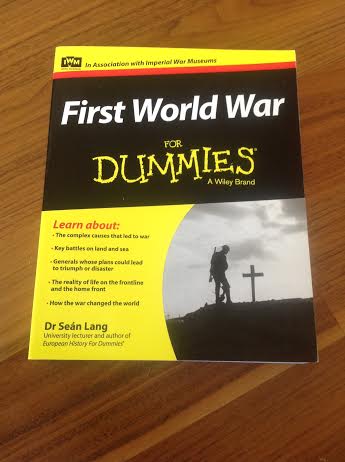
First World War For Dummies Dr Seán Lang Interview

I was very excited to interview Dr Seán Lang, author of First World War For Dummies. Dr Lang has written a great book, you can read our review here. He also gives great answers in the interview below. Enjoy!

firstworldwarfordummiesbookreview

How long did it take to research and write the book?

Not easy to say, because in a sense I have been reading up on the FWW for years, and teaching it to university students for the past four or five years. There was a tight turn-round schedule for the book, especially as the “for Dummies” process involves submitting chapters as you write them, rather than submitting a whole manuscript. The writing itself took about six months.

What is your writing process?

It’s different for the “For Dummies” series because of the very close process of collaboration with the editor. Then not only are there always some academic experts who review your text, but with this book, because of the partnership with the Imperial War Museum, their experts vetted it too. So you have to get a balance between what is academically respectable and what is comprehensible to a wide readership.

The readership is very different from that of a standard academic article or even a textbook: you’re writing for people who might not normally pick up a book, or who might even be a bit scared of them. I’ve seen people taking FD history books off the shelves in bookshops like WH Smith (ie a shop where they might not have gone in to buy a book) and hesitating a long time before deciding whether to buy it or to put it back – and I’ve seen people do both. So I think of the book not in terms of something primarily for people who already know a lot about the war, but rather in terms of the sort of book I would turn to if I needed a quick briefing on something about which I know nothing and of which I have scary memories from school – physics, say, or fairly advanced mathematics. You have to go to where people are and take them forward, not stand where you are and expect them to come to you.

Being a lecturer obviously helps, but did you learn anything that surprised you when writing the book?

There are always part of the narrative which you didn’t know much about before starting to read up for the book – elements of the war in Africa, for example, or the epic journey of the crew of the German raider “Emden”. But I think the greatest surprises lay in some of the images in the IWM’s collection, which we used for the illustrations. We tend to see only a limited range of types of photos from the war – trenches, recruits, women in factories and so on – so it was very refreshing to see images from around the world, some of them quite dramatic.


In the parts of tens you list First World War poets and writers, do you have a personal favourite?

I think probably RC Sherriff, author of “Journey’s End”. Joan Littlewood, who devised and directed “Oh! What a Lovely War” in 1964, loathed the play and wouldn’t allow anyone to mention it in her presence, but I think it is a much more authentic voice from the front line than she managed. It’s a play about a group of officers in 1918 and it captures that loss of schoolboy ideals we associate with the trenches. Sherriff went to the grammar school in Kingston across the road from the one I went to, so maybe there’s a sense in which I see him as the First World War equivalent of me.

A lot of women got their first taste of real work during the first world war, do you think that had a lasting difference?

There’s a lot of debate about this one among historians, because the liberation and emancipation of war work very quickly disappeared when the men came back home and resumed their old jobs, so some people say that the change for women was illusory. There’s also a certain irony in the fact the sort of work that women did in the FWW was often the very sort of work Victorian social reformers had been trying to rescue them from. But yes, I do think the change was long lasting, even if it wasn’t immediate. It made it clear that men and women were all part of the same fighting nation, and that women, whether they were in the factories or whether they were bringing up children at home, had a part to play in the national war effort just as the men had. That idea swung back into action in the Second World War, of course. That in itself effectively smashed the old Victorian idea that men and women inhabited “separate spheres”, both metaphysically and in reality. That idea has never revived, at least not in British society, so yes, I think the war made a lasting difference for women.

What can be learned from World War I?

That’s too big a question to answer fully, so I’ll give just a couple of things that can be learned from it, though I ought to start with a lesson that can’t be learned: I heard someone during this year’s centenary commemorations saying something like “We must learn from this war so it never happens again”, and I thought “Have you never heard that there was a Second World War? It has happened again”. I think the lessons that can be learned include: a) political leaders must avoid playing games of bluff, because that is effectively what was happening in 1914, and everybody’s bluff got called, with disastrous results. b) People always go into war assuming it will be like the Last One (whichever that one is) and it never is, but seldom have expectations about the likely nature of a war been so completely wrong as they were in 1914. So, if you go to war, assume it will be a hundred times worse than you expect. And remember that your decision will mean that a lot of people now alive will soon be dead.

What do you think is the lasting legacy of World War I?

There’s no strict hierarchy about these things, of course, but I would rank the First World War’s legacy as even greater and longer-lasting than the Second’s – after all, the SWW was itself a legacy of the FWW. For example, all the problems that blew up in the Balkans in the 1990s were almost directly a legacy of the FWW. So is the continuing and growing crisis in the Middle East, including Israel-Palestine, resurgent Islam etc. The Middle East (itself a European term) was a backwater before the FWW, when the Europeans carved it up, with all the consequences we are still living with. Ireland’s troubles go back a long way, but the specific issue of Northern Ireland – an issue which never quite goes away – is a direct legacy of the FWW. Above all, a) the Russian Revolution and the formation of the Soviet Union were both precipitated by the FWW (it is arguable that Russia would have had a revolution without the FWW, but there’s also a good case for saying that it wouldn’t have happened without a war to bring things to a head), and b) it was the FWW that first got the United States acting as a Great Power, well outside its own back yard, starting the process of American global action which still dominates the world.


D-Day just had its 70th Anniversary, as time goes by is there a danger of people forgetting what happened, and the lessons learned?

Yes, there is such a danger. Schools and local communities do a very good job of keeping the memory of the FWW alive at the moment, but we can’t assume that will go on for ever: firstly, it is noticeable that Islamist protests against western involvement in Iraq and Afghanistan seem to have taken the form of assaults against FWW symbols – desecrating war memorials, burning poppies, and so on. That might indicate that the commemoration of the FWW could become divisive in future, rather than welding the nation together, as it has done so far. But even if it doesn’t, just think of the children currently going on school trips to the trenches. Their teachers are old enough, except perhaps the very youngest, to have known people who lived through the war – grandparents and so on – so the human link is still there. But in forty years’ time, in 2054, those pupils will be the teachers and parents: they won’t have that direct link, and their children and pupils will be even further removed from it. The FWW will be about as close to them as the American Civil War or the Crimean War are to us. Now, okay we still acknowledge the losses and suffering in those wars, so it may well be that the memory of the FWW will still be kept alive, but it won’t be on anything like the scale of current commemorations. Lastly – and I hate to point this out – future generations may well have wars and disasters of their own to commemorate, which will push the 20th century world wars out of the picture.

Do you think the first World War was avoidable?

Yes. Totally. I think the fall into war in 1914 was entirely avoidable. There are some wars in history which probably had to be fought – the SWW, civil wars, wars against revolutionary regimes, for example – and others which were entirely avoidable, like the US/British ‘War of 1812’, or the Crimean War, but the FWW is the worst. The crisis that provoked it was entirely solvable – assassinations, even of Archdukes, do not usually provoke wars – and the Great Powers HAD solved far more dangerous crises in the years before 1914. But among some statesmen in 1914 there was a certain eagerness that this time they should get a war out of it, and among some – notably in Berlin but also in Vienna – there was a determination that nothing should get in the way of their desire to have a war. You remember that Israeli Eurovision song, “A Little Peace?” Or even John Lennon’s “GIve Peace a Chance?” Well, in 1914 there were some statesmen who thought in terms of having “A Little War” or wanted to “Give War a Chance”. They had no idea of exactly what that war would be like, but they bear a very heavy responsibility nevertheless.

What’s next?

I’m also a playwright. A short play of mine called “The Road Less Travelled” which is set in 1914 and is a reflection on the outbreak of the war has been picking up good reviews and awards recently and will be published soon; I’m also writing a play called “1914: Assassination Before Lunch” which will be performed in Cambridge in October.

First World War For Dummies

The Bestselling England Football Autobiographies | Books

Amazon.co.uk has revealed the bestselling England football autobiographies – and David Beckham is only sixth!

David Beckham Book

Gary Neville tops the list, with David Beckham only making it to number six and Brian Clough beating Bobby Robson to the manager’s job


Looking at England’s players and managers, both past and present, the ranking takes into account print and ebook autobiography sales. Amazon has revealed the top 10 best sellers and translated the list into a full team starting lineup – in a 4-5-1 formation.


The Amazon Autobiography Starting Line Up is:


Stan Collymore

(11)

Paul Gascoigne

(7)

Paul Scholes      Steven Gerrard                 Bobby Charlton                David Beckham

      (4)                              (2)                                         (5)                                                  (6)

Stuart Pearce     Tony Adams       Jamie Carragher               Gary Neville

(16)                       (12)                              (3)                                              (1)

Peter Shilton

(25)


Brian Clough

(Manager) (10)


The Amazon.co.uk Top 10 bestselling autobiographies are:

1. Gary Neville – Red: My Autobiography
2. Steven Gerrard – Gerrard: My Autobiography
3. Jamie Carragher – Carra: My Autobiography
4. Paul Scholes – Scholes: My Story
5. Bobby Charlton – My Manchester United Years
6. David Beckham – David Beckham
7. Paul Gascoigne – Gazza: My Story
8. Frank Lampard – Totally Frank: The Autobiography of Frank Lampard
9. Brian Clough – Clough, The Autobiography
10. Bobby Robson – Farewell but not Goodbye: May Autobiography


How many have you read?


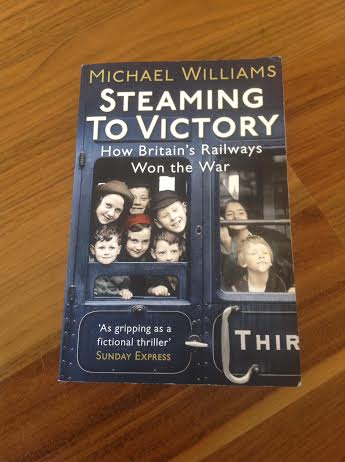
Steaming To Victory: How Britain’s Railway Won The War Michael Williams Book Review

steamingtovictorybookreview My grandfather was a railway man for years. It left him with a lifelong love of the railway. He was also in the RAF during World War II, which veers off topic from this book, although the obvious love and respect Michael Williams has for the railwaymen and women who won the war for Britain is obvious on every page.

This books is riveting and well researched. It is a compelling book that is easy to read, full of information and yet also manages to give a brilliant overall of the war and it’s lasting effect on the people who lived through it. Another thing I learned from this book is that in 1936 a train raced from London to Glasgow in less than six hours, seventy-eight years later, it takes just under five and costs an extortionate amount of money. This book harked back to an amazing period for trains and the railway, it is sadly a long-forgotten period for the British railway industry, let’s hope it can become great again.

In the seven decades since the darkest moments of the Second World War it seems every tenebrous corner of the conflict has been laid bare, prodded and examined from every perspective of military and social history.

But there is a story that has hitherto been largely overlooked. It is a tale of quiet heroism, a story of ordinary people who fought, with enormous self-sacrifice, not with tanks and guns, but with elbow grease and determination. It is the story of the British railways and, above all, the extraordinary men and women who kept them running from 1939 to 1945.

Churchill himself certainly did not underestimate their importance to the wartime story when, in 1943, he praised ‘the unwavering courage and constant resourcefulness of railwaymen of all ranks in contributing so largely towards the final victory.’

And what a story it is.

The railway system during the Second World War was the lifeline of the nation, replacing vulnerable road transport and merchant shipping. The railways mobilised troops, transported munitions, evacuated children from cities and kept vital food supplies moving where other forms of transport failed. Railwaymen and women performed outstanding acts of heroism. Nearly 400 workers were killed at their posts and another 2,400 injured in the line of duty. Another 3,500 railwaymen and women died in action. The trains themselves played just as vital a role. The famous Flying Scotsman train delivered its passengers to safety after being pounded by German bombers and strafed with gunfire from the air. There were astonishing feats of engineering restoring tracks within hours and bridges and viaducts within days. Trains transported millions to and from work each day and sheltered them on underground platforms at night, a refuge from the bombs above. Without the railways, there would have been no Dunkirk evacuation and no D-Day.

Michael Williams, author of the celebrated book On the Slow Train, has written an important and timely book using original research and over a hundred new personal interviews.

This is their story.

Steaming to Victory: How Britain’s Railways Won the War is available here.

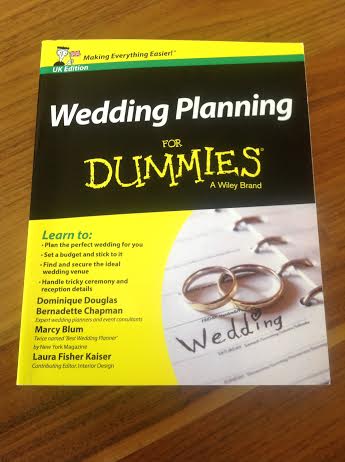
Wedding Planning For Dummies | Book Review

It is well-known that planning a wedding is hard. But it is not until you actually plan a wedding that you realise that it is even harder than you thought it would be. And then some.

weddingplanningfordummiesbookreview

The mixture of organisation, planning, ideas and different family members is quite a toxic mix, making even simple decisions seems insurmountable sometimes. I am planning my own wedding at the moment and it is rapidly approaching. So when Wedding Planning For Dummies dropped through our letterbox I was incredibly happy. I am that dummy and I need that book.

Before a relative reads this and panics about how close the wedding is, it is mostly done, I am just worried I will forget something. Not so with this book. It is thorough and fun to read. What’s more, it taught me things that I never even knew. It may be a ‘For Dummies’ book but, like all in the series, it leaves you feeling very competent in the end.

It has lots of tips on how to not pay too much, tips on finding the perfect venue, ideas for making your wedding personal and suggestions for the invitations.  Actually, it just has every basis covered that you will need for your wedmin.

It even tells you the different types of marquees you can get and I loved the section on how much alcohol to order depending on how many guests you have. It really was invaluable. Brilliant book, a must read for those planning their wedding. The authors really know their stuff.

Wedding Planning For Dummies is available here.