The Good Wife Season 5: Robert and Michelle King Interview

the good wife series 5.4_A2ROBERT and MICHELLE KING – Co-Creators / Executive Producers

How does it feel to be on Season 5 of “The Good Wife”?

Michelle King: It’s tremendous. We’re coming up on our 100th episode. It’s really exciting for us.

Robert King: And exhausting. We end the year very tired and ready to collapse and then start reading the news and go ‘that’s interesting, this is fun, Anthony Weiner, really?’ So, all this starts to get you excited about going the year again.

2. How does the Season 4 finale set the stage for Season 5?

Sometimes it’s great to swerve left and then you swerve right, but I thought thematically it worked for us, in that you thought it was going to romance when in fact it was going to career-end romance. That sets up the next year, as we get to see how Alicia and Cary follow through. If they’re going to start a firm together, what is that going to look like – and they’re going to start the year saying it’s going to be the most ethical firm – and how are they going to be able to follow through? What will that do to Alicia and Will, especially if they take clients along with them? If you’re stealing money from the other firm, which is the way Will and Diane might interpret it, it’s not going to end well. The year for us is about civil war through seeing these characters we’ve embraced in a family and the wedge go in the middle of the family – and how will that renew itself or will it ever?

3. More on setting the stage for Season 5

Michelle King: I feel like we set ourselves up very nicely at the end of Season 4 so I am really excited with the stories we get to tell in Season 5.

Robert King: There is a certain inevitability from the way we left it in Season 4. I would say each year we start with this real excitement and fever pitch to do well, except you have to stretch it out over a marathon and not over a sprint. There can’t be just one burst of energy. There has to be this constant renewal and burst of energy.

4. How has Alicia’s attitude towards Cary changed since Season 1?

Robert King: Julianna’s character over the years has grown respect for Cary, because he wasn’t the yuppie suburban boy that you expect. He has gone through a lot of turmoil. He was fired. He went to the state’s attorney’s office then he came back. He was overlooked for partner, so I think Jules’ character has a real respect for how he keeps bouncing back and that is different from the very first year where everybody thought he was the cliché.

5. How have the fans reacted to the direction the show has taken in Season 5?

Michelle King: What has been nice with the fan reaction is people seem very genuinely excited to see what’s going to happen next professionally with Alicia. With these two firms splitting and starting up I think people see the possibilities and are excited about it.

6. More on fan reaction…

Robert King: I think fans embrace anything new – seeing new versions of relationships, different ways to click people together – and so it’s fun to see Alicia and Cary try to be the new Will and Diane. Everybody knows what that means, all the fans know what that means, and are they going to be up to it.

7. What challenges will Peter and Alicia face going into Season 5?

The bottom line is Alicia and Peter have agreed to recommit to each other and that played into Alicia wanting to move away from Will. The difficulty is that Peter now has moved into a position of power in the governorship and as much as he has sworn over the years to be a changed man, now the test is really going to be put to a test because our theory is that the closer men get to power – and women probably too – the more it becomes that Henry Kissinger like aphrodisiac to women. He is also tempted by using his power as we saw with Anthony Weiner. Power comes with some sense of sexual loosening, so that’s difficult for Alicia and Peter – it’s not that Peter necessarily even acts on it – but that kind of divide in the marriage is difficult and it’s happening at a time when Alicia is feeling her own roots in a way. She has got her own firm, she’s got power, and she may not need Peter as much anymore, so that is a tension in that relationship.

8. Can we expect more big name guest stars in Season 5?

Robert King: It’s still early days but there are people – we’re building a little further ahead so we know Carrie Preston is coming back – she is lovely as Elsbeth Tascioni, and was nominated for an Emmy. We know that Gary Cole is coming back. He plays Kurt McVeigh who is in this relationship with Diane. We know America Ferrera is coming back. She was with us the second year and she has this odd relationship with Eli Gold. Melissa George who is this wonderful actress who is the Ethics Committee Commissioner in the governorship and causes Peter many problems and…

Michelle King: Jeffrey Tambor.

Robert King: Jeffrey Tambor who plays a judge on Arrested Development and Larry Sanders Show. He plays a judge in two of our episodes and is going to cause troubles for Alicia in the future, and then there is Juliet Rylance who plays the romantic interest to Kalinda and we couldn’t be more excited. I mean, there is an intent on our part to focus on our cast – the civil war going on in our cast – but it’s always wonderful to get these people back.

9. What are your plans for the 100th episode of “The Good Wife”?

Robert King: We are intending for it to be a blowout episode. We want the 100th episode to be one of the best we’ve written, but we don’t know what we’re doing yet. There is a movie called Drowning By Numbers that had a countdown in the movie from a 100 to 0. We were thinking about that but then our shows rely on the ability to edit out scenes that aren’t quite working, so you’d throw it off. I think it will come down to a real turning point in Julianna’s life and a case that just blows everybody away.


Interview thanks to Channel 4.

An interview with the star of The Good Wife, Julianna Margulies, is here.

The Good Wife Season Five: Julianna Margulies Interview

the good wife series 5 interview How does it feel to be on Season 5 of The Good Wife?

Julianna Margulies: It doesn’t feel like the fifth season. I have more excitement about this season than I have any season. The first season I was so overwhelmed by it all and the second season you’re trying to keep the momentum going, and then all of a sudden you’re in year five and the writing is even better. I feel like I just landed in a pot of gold.

What was your reaction to the Season 4 finale?

When I read the script of the season finale I was like, oh, we’re still doing this triangle and then all of a sudden you realize how smart they are, these writers are just so smart.

How does the Season 4 finale set the stage for Season 5?

Basically what happens is Alicia chooses to leave her firm because she knows as long as she is there, her heart will always be with Will and she can’t live like that – not after recommitting to her husband. And she starts her own firm or talks about starting her own firm with Cary.

More on setting the stage for Season 5?

It picks up on the exact same night. We open up the episode and you see Alicia and Cary on their second bottle of wine – in her kitchen, getting a little drunk and realizing this could be the best thing that’s ever happened.

Are Alicia and Cary the new Will and Diane?

Cary sells it to her by saying we’re the new Will and Diane. She starts watching how Will and Diane work because when Season 5 starts they’re still there, they have to transition, they have to get offices, they have to figure this all out before they abandon and she’s watching Will and Diane work on a death row case with her and then she’s watching how Cary conducts himself and she is realizing this ain’t no Will and Diane.

What challenges does Alicia face at the start of Season 5?

Her husband is elected governor, so she is now the first lady, and is going to figure out how to leave the firm. They have to steal some clients, it’s ugly and it gets really ugly, and it’s going to be a very tense season because of it.

Are there advantages to being the Governor’s wife?

Being the governor’s wife gives her tremendous status as a lawyer and it has completely opened the door for her. It made her partner at Lockhart & Gardner. They could have chosen anyone, however she was much more valuable to them as the governor’s wife.

What damage will Alicia’s new firm create for Will and Diane?

The three biggest clients that she is taking with her are a blow to Lockhart & Gardner. She takes Chumhum, the drug kingpin Lemond Bishop and Sweeney. That’s at least $44 million a year in business for Lockhart & Gardner. So it’s not just that she is leaving the firm to start her own, she is stabbing them in the back and, even though I truly believe that Alicia doesn’t have a mean bone in her body, it’s the cruellest thing she could ever do to two people who were there for her when she had no-one.

More on the damage Alicia’s new firm creates…

It’s a bloodbath. If we were Game of Thrones, there would be a lot of actual blood, but because we’re lawyers in pretty clothing, there are just a lot of really smart words and emotions.

How will Alicia’s move affect her relationship with Diane?

It’s going to get horribly tense and it’s going to be pretty devastating, but then, and I can’t express it because it will ruin it for everybody – in fact no-one on the show knows except for me and the Kings, Brooke Kennedy and David Zucker – but we take a very big turn and through an event that happens Diane and Alicia are brought closer. This is what I’ve always wanted because they’re two such strong women that women connect to, and I hated that the two strong women on the show weren’t friends.

Why is Alicia’s relationship with Eli important?

The only people that know about Alicia and Will are Eli Gold and Diane. Then Eli becomes Chief of Staff of the governor’s office and as he knows all my secrets, it elevates their friendship as well. I think it’s going to be pretty beautiful and pretty devastating.

How does it feel to reach 100 episodes in Season 5?

It’s a milestone to shoot that many episodes and I remember the feeling on ER thinking a 100 episodes, that’s crazy. We’re talking 84-page scripts, so if you look at a feature length film, they’re usually about 125 to 130 pages, and we shoot that amount in eight days -and it’s quality writing and work. It’s definitely something to be proud of and I’m over the moon that we’ve made it this far. I think that audiences really have responded in an incredibly positive way to the show and I do think it’s just getting better and better.

Interview thanks to Channel 4.

An interview with the creators of The Good Wife is here.

Interview with Simon Horrocks Third Contact Director | Film

What inspired you to make the film?

I had been a screenwriter for many years but, although I had sold screenplays, none had made it to production. I decided if one of my scripts was to be made into a film, I would have to do it. We had no money, but we set about shooting the film with what we had to hand. I felt I was at a ‘now or never’ moment in my life, so I put everything else aside and dedicated myself to one thing – making a feature film.

In fact, many well-known filmmakers have done this. Aronofsky’s first film, Pi, was crowdfunded 10 years before kickstarter become popular. Christopher Nolan shot his first film in London, and the whole production was scaled so that crew, cast and equipment could fit into a London cab. Other filmmakers such as Brits Peter Strickland and Ben Wheatley recently self-funded their first features. In the past, Shane Caruth, Robert Rodriguez and Kevin Smith have launched their careers this way.

thirdcontactfilm

Where did the initial idea come from?

It was inspired from what one critic described as a ‘goldmine of ideas’. I had already worked on a script back in 2006-7 using the idea of ‘quantum suicide’. The script had a rave review from the UK Film Council, comparing it to films such as Blade Runner and Memento, but they passed. So I approached the subject again, but in a different way, scaling the story down so I would be able to improvise my way through the production.

Why do you think the Kickstarter campaign was such a success?

For a few different reasons. I spent a lot of time planning and designing the campaign. I also spent hour after our talking to people online, making allies. As I didn’t have a team, I knew I need some friends who believed in what I was doing, and I was lucky enough to find some. Slowly the buzz started to grow, and as the deadline approached, this growing crowd got behind the campaign in a big way and drove it over the line.

Tell us about the film

The film is a surreal psychological sci-fi thriller about a psychotherapist who investigates the mysterious deaths of two patients. It seems to be a film which different people experience it in different ways. If you like films which are intelligent, puzzling, haunting and thought-provoking, you might like Third Contact.

How hard was it to make?

It took 3 years from writing the script, to production, followed by a year of editing, sound design and scoring the music. I had no professional crew and I was operating camera for the first time, as well. The guys I had recording sound were doing that for the first time too. Bit by bit, we worked through the script, shooting as locations became available.

The challenges were many, but I took the ‘one step at a time’ philosophy, meeting each as we needed to. Otherwise the scale of the project would be too overwhelming for me, as writer/director/producer/camera etc, to attempt to solve every problem in one go.

Often, I didn’t know where we would shoot a certain scene, or who would act in it, even while we were halfway through the rest of the project. The strategy was to get all the scenes in one location in the bag, then move onto the next and work out how and where and with who we would do it.

What is the hardest, and easiest thing about directing?

I think, as a director, your task is to have the overall vision of the film, while the team are focusing on the small details. The overall vision will inform the decisions you need to make, down to the smallest detail. But I think every director is different, so each will have a hardest and easiest element. Some directors come from an acting background, so dealing with actors is easiest for them. While others are more technical and are happier playing with the camera and thinking up shots.

For me, I’m not that interested in the technical side of filmmaking, so I reduced that to a minimum and focused on the story I wanted to tell.

What did you shoot it on?

A HDV camcorder (Canon HV30) which is a consumer camera. It is a high quality one, and had a bit of a cult following, which is the reason I decided to use it. At the time, DSLRs, which are popular now, were just out of reach for me, financially. My philosophy was that a camera doesn’t make a great movie. I’d rather watch a great, imaginative story shot on an iPhone, than something more technically proficient but boring to watch.

I didn’t see using a camcorder as an excuse for making a low budget looking. I saw it as an opportunity to explore using a camcorder to shoot a film. I always intended to create my own aesthetic. People are obsessed with this idea of something looking ‘professional’, which to me is a meaningless quality. Picasso used ordinary house paint to create his masterpieces, which I’m sure many painters at the time would have considered ‘unprofessional’.

You only spent £4000. Where did most of the budget go?

The camera cost £600 and the microphone £700. We also spent over £600 on make up fx, as we had to age the main character 30 years, which involved doing a full head cast and creating a prosthetic mask.

How did you keep the budget so low?

By writing a screenplay with minimal number of characters, and locations which were accessible to us. Many of the scenes were shot in my house, or friends’ houses. We had a very small crew and cast who donated their time to making the film. Also, by improvising certain scenes around what we had available to us. We couldn’t afford to be 100% fussy, otherwise the film would have never got made. Again, I didn’t see this as a set back, but more as part of the creative process. Sometimes, things worked better than they would have, because we were forced by budget restrictions into being more imaginative.

Its like the old story of the mechanical shark used during the filming of JAWS. The thing never worked, so they ended up using underwater shark ‘point of view’ shots, looking up at swimmers’ legs dangling into the water – which, of course, is far more terrifying than seeing a rubber shark swimming around.

What’s next?

We will be getting Third Contact into as many cinemas as possible. After that, looking at the next project. I will need to take stock of everything I have learned in the last 5 years of making and marketing this film solo, without any industry backing, and see how I feel about the next step.

Permanent Make Up Artist Karen Betts Interview

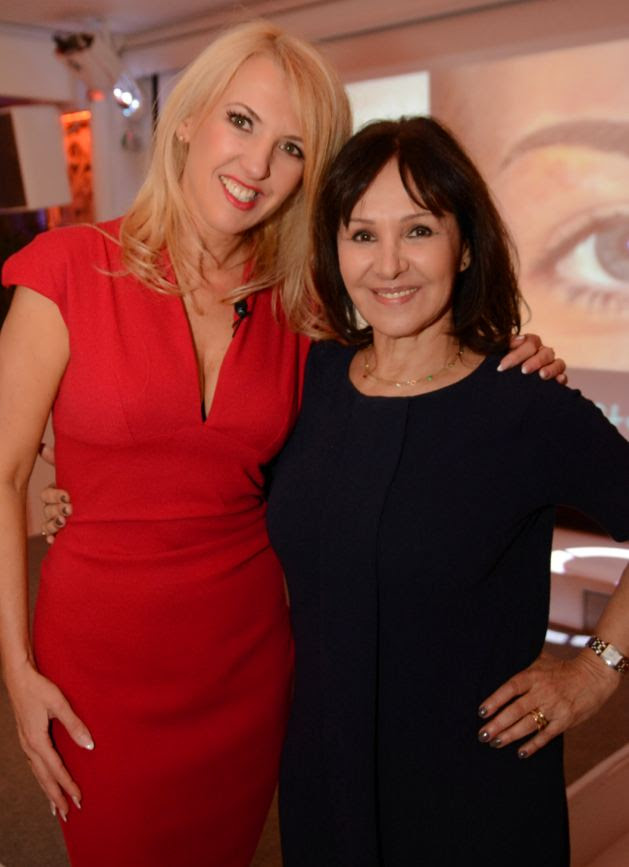
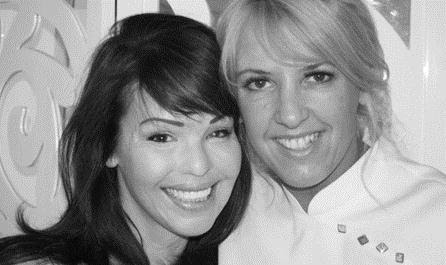
Why are we doing an interview with a permanent make up artist you may ask. Permanent make up isn’t very ‘Frost’ usually, but Karen Betts is different. She gives the gift of confidence to those with illness. Like people who have lost their eyebrows to cancer. Karen has changed the lives of many individuals with medical permanent tattooing. See the photo below as an example. The other two pictures are Karen with Arlene Phillips and Katie Piper.

makeupeyebrows karenbetts katiepiper

When and why did you first become interested in your profession?

I personally ventured into this field in 1996 after a childhood friend was diagnosed with breast cancer. I was not content with being just a pillar of support and wanted to be able to do more. At the time I ran a hair and beauty salon and a conventional tattooist used to rent one of my rooms, I thought to myself if you could adorn people’s bodies with such complex art why could you not develop a technique that would subtly enhance or replace facial features such as eyebrows. That is when I started my research and discovered a micro pigmentation course in the States.


 What, if anything, has given you a competitive edge in this field?


My desire to always learn more, continuously develop my skills and share this knowledge with all who carry the Nouveau Contour name. I am not precious and love showing my students techniques I have developed that improve the quality of a treatment plus I am lucky to have a fabulous relationship with the manufacturer of the Nouveau Contour equipment and pigments and year on year we work together to develop and improve our products, we now have over 82 fundamental pigment colours to choose from, the largest range in the industry.


Describe your typical working day.


I am up very early most days and I do a few hours work on the computer managing my 8 brands before catching the train to one of my 3 training academies in Yorkshire, London or Milton Keynes. I absolutely hate to waste any time so once on the train the laptop is back out and I work solid until I reach my destination. I then either prepare for a training class or a full days clinic where I perform on average 10 permanent cosmetic procedures a day. Then you have guessed it, back on the laptop working on promotional plans, critical paths, training manuals, special offers, and budgets… I could go on and on but in essence I work constant all day every day until either my partner or very patient assistant shouts at me to eat something or go to bed. If there was 8 days in a week I would work them all.


 What do you enjoy most about your job?


The feel good factor you get when you watch someone’s face light up after his or her treatment is just amazing!


 What’s been your biggest professional achievement to date?


Whilst a lot of my clients are memorable in their own rights 2 clients over the last few years have really pulled at my heartstrings and tested my capabilities. The first is a lady named Julie who was born with a cleft lip. Julie’s cleft lip has affected her confidence for as long as she can remember, aware that the shape of her lip had held her back and prevented her from making the most of her life I wanted to give Julie the perfect lip shape she had always dreamed of. To restore a cleft lip using permanent cosmetics requires a real level of skill that does not come over night but I am happy to state that Julie was overwhelmed with the results and quoted “Karen created the lip shape I had been looking for my whole life”. Her smile and the big hug she gave me at the end of her treatment spoke volumes and I am not ashamed to say, made me cry.


The second lady many people will recognise as her recovery from a brutal acid attack in 2008 was documented in the TV series ‘Katie Piper – My Beautiful Face’. I was honoured when I was able to help Katie. Over a twelve month process, I was able to recreate Katie’s lips, brows and eye definition. Over time our personal and professional relationship developed and in 2012 I was announced as the official and exclusive permanent make-up consultant for The Katie Piper Foundation.

What advice would you give to somebody wanting to become a permanent makeup artist?


As Permanent Cosmetics is a very precise procedure, the need for the correct training and support is of the utmost importance. I would advise anyone considering a career in this field  to first attend an insight day if the company offers one, this gives the person an opportunity to discover:

What is permanent cosmetics?

Do I have what it takes to be a successful permanent cosmetics artist?

What are the training options?

How long will the training take and how much will it cost?

What equipment do you need to perform treatments?

What treatments can I train in?

What do I need to do to ensure I get return on my investment?

People also need to look for a company that not only listens to what they want from their training experience but whose trainers actively carry out procedures on a daily basis.

Continuous professional development is paramount in this field as techniques and equipment are improving year on year therefore people should look for training providers who offer continued learning with free workshops and shadowing days.

I also recommend that they ask themselves the following questions:

Am I prepared to change someone’s face?

Have I got the determination and drive to make this a success?


What skills can people learn at the Nouveau Contour Training School?


We offer a developmental training programme designed to turn absolute beginners into elite permanent cosmetics artists. Our foundation courses range from 8 to 31 days long and the student can choose the training option that best suits their lifestyle and financial budget. For a full explaining of our training options visit http://pro.nouveaubeautygroup.com/nouveau-contour/training-options/


What are the pros and cons of permanent makeup?


In today’s increasingly fast-paced world, it can be hard work looking our best all the time. Juggling a career with home life is tough and our appearance isn’t always a priority. That’s why each year in the UK; thousands of women and men opt for permanent cosmetic enhancements as a timesaving way to look their best with minimum effort.


No longer considered a treatment just for the rich and famous, men and women of all backgrounds and social standing are opting for permanent makeup procedures as a way to save time and in many cases boost confidence.


Permanent makeup is also ideal for people who take part in sport, have difficulty applying makeup or are allergic to cosmetics. It can also help to camouflage scarring and bring life-changing benefits to alopecia sufferers and to people who have had breast reconstruction work or have experienced hair loss following chemotherapy treatment.


The only downside is there is some poorly trained permanent cosmetics artist offering treatments. Research your technician and be very clear about the result you want to achieve. The main risk is choosing a poorly educated technician just because they may be less expensive. Permanent makeup should be considered exactly that – permanent. Whilst designed to fade you should always regard the treatment as irreversible and when deciding on your technician you should always research the company they trained with, the equipment and pigments they use and indeed when they last refreshed their skills. I would also recommend that you ask to view their portfolio and do not be afraid to ask if it is their own work they are presenting to you.


Is there any ‘look’ that you’d refuse to do? For example a very unnatural/dramatic look?


With permanent make up it is not about following fashion trends but subtly enhancing or replacing someone’s natural features, obviously I can improve area’s, for example, as we mature we loose volume in our lips and I can use clever shading technique to create the illusion of a softer, plump more youthful mouth, but on the whole I do not look to other people to create permanent make up looks as it is more important to understand the individual personality, lifestyle and look of the person I am treating.


 As well as Katie Piper, have you had any celebrity clients?


Over the last 16 years I have been able to use my skills to help thousands of ladies both for cosmetic and medical purposes and I pride myself on treating every client exactly the same no matter who they are or what their profession.


I am discreet and professional and many high profile clients come to be because of that therefore I can not disclose all my celebrity clients. However on my website with their permission you will see that I have treated Amy Child’s and her manager Claire Powell, Coronation Street actresses Sally Dynevor and Cath Tyldesley, Sugababes Jade Ewan, Olympian Jade Johnson, choreographer, TV presenter and judge of Strictly Come Dancing Arlene Phillips, Spanish model Elen Rivas, TV presenter Lizzie Cundy, TV presenter and model Sue Moxley.


Do a lot of celebrities have permanent makeup nowadays?


Yes they do and in turn these celebrities speaking out about the benefits of permanent make-up has resulted in many new clients coming to see me for a consultation/treatment for both cosmetic and medical treatments.


 What’s the most fulfilling thing about your job i.e. Helping survivors restore confidence


I feel privilege everyday that I have a skill that can help rebuild so many people’s confidence and nothing I have achieved beats the look on a clients face when I have restored a feature that they have lost through illness or an accident.


What’s your motto, or the key premise / message of your business?


My motto is always smile, laugh and try to remain positive even when things are going really bad. Life really is too short to be bogged down with negativity.


The key message of my business is education, education is a powerful tool and I have built my training schools on the premise that at Nouveau Beauty Group we offer long term careers not just course, we want all our students to be the best they can be and actively promote continued professional development. I have been in the beauty business for over 20 years and still do not claim to know everything, I love surrounding myself with people from other industries that I can learn from and often I implement their advise into my business model.


What are the advantages of permanent makeup over regular makeup?


The benefits of permanent makeup over conventional makeup are immeasurable, one example is in the summer when the temperature increases and makeup can sweat off or indeed wash off if you are on holiday and fancy a dip in the pool. With subtly applied permanent cosmetics designed to mimic the most natural makeup look, ladies no longer have to worry about pencilling their eyebrows back in or their eyeliner smudging.


I also recommend everyone to watch the video testimonials on my website as these are real women sharing their personal experience of why they opted for permanent makeup and defy anyone to not understand the advantages of permanent makeup over conventional makeup for those living with an altered facial appearance as a result of an accident or illness.

http://www.karenbetts.co.uk/

New Faces | Roy A. Tindle

Roy A. TindleAre you sick of seeing the same faces in magazines all the time? So are we. As much as we love the people we read about in the magazines we think it is time to inject some freshness into the media landscape, it is time to give other people a chance, the hottest writers, actors, musicians, scientists, businesspeople.

We want to give people the publicity they deserve, our first one is American author Roy A. Tindle, but watch out for more fresh faces; both old and new, and let us know if you know anyone worthy of inclusion.

The first of our New Faces is American writer Roy A. Tindle. We have interviewed him and include some examples of his work below. We hope you like him as much as we do.


Tell us about your writing

I’ve been writing for as long as I can remember. I began writing simple poetry and short

stories then eventually moved on to novellas. Although I had some poetry published,

I never spent much energy trying to publish any of my earlier work until about two years

ago when I finally decided to attempt writing my first full novel. That is when ‘Motive’

was born.


What is your inspiration?

Most of my work may seem a little dark at first glance, but in nearly every case I attempt

to highlight the brighter side of life and love. I enjoy drawing the parallels between

light and dark, good and evil and the contrast between where we are now and where

we might one day be as individuals and as a society. My goal is to cause people to pause

long enough to take a look inside themselves to discover who they really are and ask

themselves the tough questions. Ultimately, I hope to inspire and uplift people with

what I write. These things are what inspire me to write.


What is your writing routine?

My writing routine is anything but a routine. I try to spend time each day writing, but

that isn’t always possible. Research, editing and habitual rereading occupies much of

my time. Frankly, if I manage to finish one good page a day I’m happy. That may not

seem like a lot and it’s true that it’s a slow process, but I’m hoping to produce chapters

that offer a smooth read that is not only entertaining and suspenseful, but is also

technically accurate.


What are you favourite books/authors?

I enjoy reading books of nearly all genres and there are myriad authors who I could

mention here, but to narrow it down to a top three, my favorite authors of all time

would be Dean Koontz, Michael Crichton and Jules Verne and for those who are familiar

with their work will undoubtedly see their influence in my writing style. I’ve always

enjoyed Dean Koontz’s ability to convince his readers that the villain in his stories are

more than human and almost omniscient, but ultimately he demonstrates that true evil

exists all around us and the real boogey man, although he may truly be hiding under

your bed, he isn’t necessarily a supernatural force. He’s the guy next door. Michael

Crichton and Jules Verne perfected the art incorporating real world science into a

fictional format. I’m a tech and science geek and not afraid to admit it. Crichton and

Verne are master story tellers who not only tell a good story, they educate their readers

in the process. Journey to the Center of the Earth is above all my favorite book. I have a

collectible first printing of that classic hidden away someplace.


Tell us about Motive

‘Motive’ is a book about the human condition and perhaps offers some understanding

of who we are. Although Motive is a suspense novel and, consequentially, much of its

focus is on the darker aspects of human nature, there is light at the end of the tunnel.

This story ultimately leads the reader on a journey throughout the mind, not only from

the dark corners of our psyche and the disturbing things we may find there, but also to

the inspiring and sometimes crippling effects of love and loss and hope and faith and all

those things that define who we are.


What is the best thing about writing?

For me, the best thing about writing is being allowed to use my imagination freely and

act a little crazy without the risk of being committed. Lol It is an escape from reality,

really. I think we all need that once in a while. Some people go to the beach. I write…


And the worst?

The worst thing about writing has to be the loneliness. I consider myself a social

dragonfly, but writing is mostly a solitary craft. I enjoy the independence of being

a writer, but I often miss the daily interactions I’d have with friends by working a

traditional job.


What’s next?

What’s next? I’d really like to write something light and fun. I’ve enjoyed writing

Motive very much, but as I mentioned before, the story is a bit dark and highly technical.

I’m playing around with some new ideas and a particular character named Norman

“Northman” Northcutt may be making a debut with his ‘amazing abnormalities’ very soon.


Excerpts below

ABSOLVED OF ABSOLUTION (A Poem) – By Roy A. Tindle


Absolved of Absolution

Pretend it never happened. It is so easy to simply neglect the obligations of our hearts, to follow blindly

our captive minds and to imagine our lives are predetermined to lead by whatever means to a fateful and

hollow solitude. Lonesome tears fall more abundantly when absolved from absolution. You are to blame

yet your ignorance is your innocence.


A wound heals better when salved with the healing blessings from someone whose blessings are passed

without reproach. Become blameless by not placing blame and human in your fallacy. You’ve loved

before without knowing how it is that love should be, yet still you loved disgracefully and now, when love

is not an ignominy, you hide your face in shame.


I pray each night not knowing to who’s ears my prayers fall, but I pray still regardless knowing that even

though deaf ears may hear them I have at least spoken them and therefore I am absolved. I forgive

myself for all I’ve done and not with arrogance. Instead I know that the mistakes I’ve made were made

before knowing that our hearts are equally fragile, therefore I am determined to help you heal yours as

tenderly as if your heart were mine.


We are not much different you and I. No matter how things may seem. We hurt, we cry, we love and

we die and we can only hope we don’t have to do it alone. However in the end no matter when that time

may be, I’ll know that when I close my eyes I’ll have been absolved from absolution.


MOTIVE (Synopsis) – By Roy A. Tindle


In a small sleepy town in southern Michigan, local law enforcement struggles to identify the

cause for a sudden outbreak of horrendous crimes. As the townsfolk continue to disappear,

two desperate detectives team up with an eccentric college professor and forensic psychologist

who may have some insight into the cause. As the team is drawn further into the mystery,

they discover the true potential of man and, by doing so, they begin to understand how dark it

can become when one dives deeper into the cold abyss of the mind. Whether in love or hate,

darkness hides many secrets…. Secrets they’ll wish they had never uncovered.


MOTIVE (Excerpt) – By Roy A. Tindle


Professor Fredericks grimaced when he took the first bite of his steaming TV dinner. He

had become accustomed to the finer things in life and this of course extended to his cuisine. He

ate most meals alone at his favorite Italian restaurant, Giuseppi’s. Most days after leaving the

college he would stop in for dinner, usually spaghetti and salad with the accompaniment of a

house red wine. The staff at the restaurant knew him on a first name basis and, unless he called

ahead to notify them he would be late or absent, as he did today, his table would be reliably

reserved and the preparation of his meal would be in progress prior to his arrival.

Today however, he decided to eat at home. A decision he had come to regret. He had

no desire to be around people again today and what’s done is done. In the mind of the professor,

the best company was no company at all, unless of course you count the professor himself.

Now alone and, being that his talents do not extend to kitchen work and since he did not have the

foresight to grab some kind of carryout, he would have to make do with what he had. Having

been in the habit of not keeping much in his home for meals and, due to his reclusive nature, he

was left with choking down this tasteless meal in a box. The label on the box said it contained

spaghetti, but the quality of the meal offered debate on the side of shredded shoe leather doused

in tomato juice.


After a few agonizing bites of his microwaveable dinner, the professor tossed the

cardboard tray in the trash then attempted to rinse the foul taste from his mouth with an

expensive merlot. He drained his glass then refilled it to the rim. Although the food he kept in

his home lacked of any real quality, he had an extensive stock of delicate wines, one of which he

gluttonously slurped on now. He wasn’t really hungry anyway.


The professor gathered his wine glass, then on second thought the bottle too, and then

carried his defunct liquid meal to his study where he plopped down on to his vintage brown

leather arm chair. The walls of the study were lined with hundreds of books, reference manuals

and text books. He was an avid reader and had read every one of these books at least twice each.

Some he had written himself. Tonight however, he would not be reading.


He felt lazy. Laziness was not a usual aspect of the professor’s personality, but he

allowed himself this occasional indulgence. He picked up the television remote from the small,

ornate table he had positioned next to his chair and pressed the power button. The small color

television in the corner of the room came to life. The volume was too high for the program that

was currently being displayed. An alternative music station played the non-melodic and off-
tempo cadence of an unpopular punk-rock group. The professor quickly changed the channel.

After flipping mindlessly through a few more stations, the Professor began to become lost

in his thoughts. He thought back through days gone by and relished in his memories. He thought

about his youth and all the days so long ago when life was much simpler.


He remembered fishing with his father on the muddy banks of the Dowagiac River. His

father would expertly cast and reel, then cast again a series of three or four fishing poles with

complicated looking reels that somehow spooled the fishing line around an exposed sprocket

instead of pulling it into a closed chamber as did the much simpler red and blue Spiderman pole

he was forced to use. His father said his Spiderman pole had what was called a “closed-bail

reel”, whatever the heck that meant.


He laughed when he remembered how his father rarely caught a fish, not because he

wasn’t a skilled angler, he was, but while fishing with his ungainly son he spent more time

retrieving snagged hooks and lures from the branches of surrounding trees than he did actually

fishing. Regardless of his continued failures and inability to properly cast a fishing line, the

Professor never gave up. He wanted his father to be proud and, although he always felt like he

had disappointed him, his father would gracefully brush off his failures with silence, a knowing

smile or the occasional razzing.


“Look at you go, Justin! You caught that big ‘ole tree and I all I managed to snag was

this measly minnow,” His father would say while holding up a sizeable bass nearly as long as the

young boy’s arm.


He knew his father was patronizing him, but he was glad for it. He would just smile

sheepishly or sometimes play along with his father’s joke. They laughed together and smiled

often. Life was so good then.


The Professor cared deeply for his father. He didn’t love him out of any childish sense of

obligation, but because he knew how much his father loved him and his love was given without

reproach. Their close relationship and great love was sustained through the young Professor’s

life. From childhood to adolescence and on into adulthood, the Professor never lost any love for

his father.


Though the wound created by the tragic and sudden loss of his father nearly twenty

years ago had not yet been fully healed, the time had not diminished his memories either. He

embraced the good memories as well as the pain, for the Professor believed that is through pain

we truly begin to become alive. In the Professor’s opinion, it is impossible to appreciate life

until we know death. Just as it is difficult to truly appreciate water until we walk through the

desert or how we cannot fully appreciate true love until our hearts have been broken a time or

two.


The wounds a heart survives throughout one’s life can sometimes leave it a little callused,

but ultimately it is that same pain that brings understanding, faith and hope. With pain also

comes the loss of innocence and triumph over naivety. Some would call this maturity. The

Professor called it an awakening.


As a child, one doesn’t bother worrying about the day-to-day stuff that overruns the

minds of most adults. When a person is young the only thing that matters is the here and now.

Each day is an adventure, full of new surprises and the unknown. Being new to the world, life

for a child is fresh, vibrant and full of color. Most profound of all, the professor decided, is that

children possess the minds of Saints. This is not to say that children behave in the manner of

a Saint, not in the least, but their innocent minds allow them the ability to expect the best, not

only from the wonderful world in which they live, but also from the people who surround them.

Funny how quickly things can change.


The Professor sometimes allowed himself this selfish session of regressive thinking.

Not only did he enjoy the memories of his youth and of his father, it also helped place into

perspective the contrasted differences of adulthood and the responsibilities that come with the

knowledge gained by it. As a college professor responsible for the education of young minds

in the field of criminal psychology, one must always maintain perspective. To understand the

mind of a criminal, or any mind for that matter, it is of course important to recognize the factors

responsible for the development and ultimate product of an individual’s psyche. Professor

Fredericks knew how much influence one’s childhood could have on their adult lives. Ever

since that day many years ago when his father was murdered before his eyes, the Professor knew

first hand. This is in great part why he became a forensic psychologist, and it is also why he

maintained a personal file for each of his student’s. You never know who you can trust.

Although spying on the personal lives of his students went against every policy and

guideline set forth by the University, the Professor felt it was absolutely necessary. He kept files

for each of his students here, in his home, locked in a file cabinet in the room in which he now

sat. It would be too risky keeping the files in his office at the college. If the college somehow

discovered he kept such personal information on his students, he would at the very least be

reprimanded and, more likely, terminated.


Within any given file, the Professor kept records of everything he thought might be

useful in determining the mindset of the student. He kept medical records which would indicate

any potential drug habits as well as reports of possible domestic violence either perpetrated

against them or by them. He also kept other criminal records as well as any media-related items

and articles from local newspapers and school newspapers that may have been generated as a

result of a student’s mischief. A complete family history was also included along with their

academic reports dating back through their elementary school years. The majority of these

reports were obtained through a little novice hacking of the college’s computer system, the

internet or by photocopying documents hijacked from the school’s office of the registrar. Some

of the information contained within these files could not be obtained through any published or

public source. For the really good stuff he hired a private detective.


He wondered sometimes how his student’s would react if they ever found out that most

days, when they were not in class or studying in their dorms, that their personal lives were being

recorded, documented and filmed. The Professor had spent countless hours reading reports

created by a private detective or watching video of them living out their personal lives. The

Professor knew, with the exception of a few elusive students, who within his class drank too

much, did drugs, if they were straight or gay, who they interacted with, what kind of food they

ate, who they were sleeping with – if anyone, and what kind of car they drove and even how

they drove it. He knew what stores they shopped at and he even knew how much money they

had in their bank accounts to go shopping with. There wasn’t much the Professor did not know.

However, there was at least one thing he had not been able to uncover.


He had learned through these reports, along with a little deduction, that a growing group

of students had been meeting privately over the last couple months. What it is they were meeting

about remained a mystery. Mysteries don’t settle well with the Professor. He liked to know

what his students were up to. This is why he decided to spend this Friday evening on a mission

of discovery. Later he would once again follow this group himself and give the P.I. a night off.

Besides, with all of this thought about his childhood, the professor felt inclined to be like a child

again and set out on an adventure.


He glanced at his watch; an expensive Rolex. He had plenty of time before he had

to leave and he knew just how he would pass the time. The professor settled further into his

comfortable leather chair, once again allowing himself to revisit the memories of his youth.

There was one memory in particular he cherished especially. This beloved memory was a

mental movie that played over and over again upon the silver screen of his mind. Knowing he

would be unable to stop it from playing, even had he wanted to, he easily surrendered to his

thoughts and allowed the aged and spotted film to roll.


He took another sip of merlot then closed his eyes and smiled.


Motive will be available in the spring of this coming year.  It will be available initially on Amazon.com and a few other places.

www.facebook.com/book.motive
www.AuthorRoyATindle.Yolasite.com

House Of Cards Season 2 Preview

House-of-Cards-Season-2-Trailer-Premiere-Date

Right after House of Cards was nominated for four Golden Globes, Netflix released the first trailer for Season 2; Kevin Spacey, Robin Wright and Carey Stoll were nominated for their roles, while the show was nominated for Best Drama Series.

“The road to power is paved with hypocrisy … and casualties,” Frank Underwood (Kevin Spacey), says. Expect this season to be darker, more brutal. We can’t wait for the February 14th 2014 release date. Let the butchery begin.

Q&A With The Springheel Saga Creators Robert Valentine and Jack Bowman

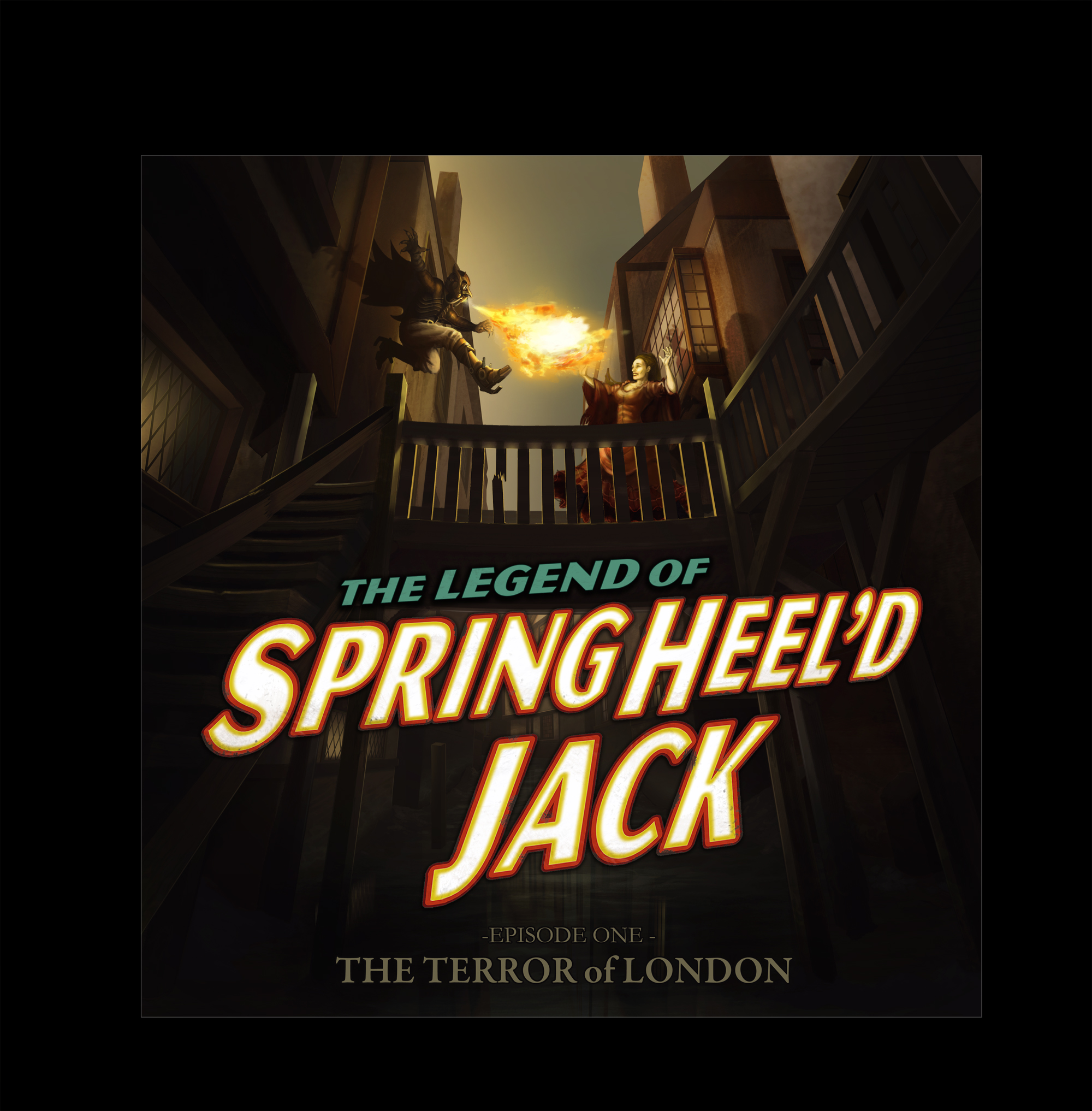
The Springheel Saga interviewThis interview with Robert Valentine and Jack Bowman*, writers of The Legend Of Springheel’d Jack, was conducted over a quiet pint in The Ostrich Inn, Colnbrook.

RV = Robert Valentine
JB = Jack Bowman (who uses the pen name “Gareth Parker”)

Q. So, the second, three-part series of The Springheel Saga: The Legend of Springheel’d Jack – is under way. Where and when does the story continue from Series One, in The Terror Of London?

RV: The Springheel Saga: The Legend Of Springheel’d Jack, picks up seven years after the events of Series One [The Strange Case Of Springheel’d Jack], with the murder of thirteen-year-old pickpocket Maria Davis, who was long said to have been the only person who Springheel Jack ever killed. By this time Springheel Jack is no longer just a London phenomenon but is being seen up and down the country.
JB: And by this point, by the time of The Terror Of London, you’re more likely to see him appearing on stage in a Penny Gaff than in a dark alleyway. It’s 1845, Queen Victoria is well-established in her position as monarch, and Victorian society as we tend to think of it is taking shape. The new series is going to take Jonah Smith into some much darker places.
RV: Starting with the stench and gloom of Jacob’s Island, Bermondsey…

Q. The first series was very faithful to the history of the 1837-38 attacks and sightings. Is this also true of The Legend Of Springheel’d Jack, or have you developed the story with more creative freedom this time?

RV: Our mission statement has always been to follow the history, whether documented or apocryphal, as closely as possible. The Maria Davis incident is a part of the Spring-heeled Jack mythology rather than the true history, but we thought it was important to honour it anyway. Also, it was supposed to have occurred in 1845 and we were very excited to explore Jack’s transition into a folk character around this time. So I wouldn’t say we’ve had more creative freedom on Series Two because we’ve always had that, but I would say we’ve had fewer historical incidents to act as our guide-rope; the original case included an awful lot of solid sightings, but by the 1840s Jack had become a less tangible figure. So rather than a string of attacks, his increasing fame as a pop culture figure is the historical development we explore in this series; the case is over but the legend is growing. Hence the title!
JB: Certainly this time around, the history and the mythology becomes a little less specific; The Strange Case Of Springheel’d Jack dealt with a very strict series of recorded historical events and we took the decision to follow them reasonably accurately. This time, we were slightly freer to tell our story without the need to hit so many historical points.
RV: As long as our story kicked off with Maria’s murder, and took place under the umbrella of 1840s ‘Springheelmania’ – so penny gaffs, penny dreadfuls, Victorian journalism, Jack usurping the Devil’s role in Punch and Judy shows, etcetera – we were otherwise free to continue the story of Jonah Smith’s obsessive quest.
JB: Indeed. Last time we said Smith was going to enter his Ahab phase, and here it starts to happen.

Q. What other cultural influences are felt on this series, both in the series and on your approach to writing it?

RV: Peter Ackroyd’s fantastic book, ‘London: The Biography’ was a big influence on us again. The first series portrayed London as a vision of hell, and had a very infernal image system. This time around we try to present London as a theatre, and everything is given that slant. Also, last time the story was a police investigation and this time – without giving too much away – it’s a more Hitchcock-esque ‘Wrong Man’ thriller. If our audience spots one or two hints of ‘The 39 Steps’ or ‘North By Northwest’ as we go along, that’s not a coincidence!
JB: A few of our personal cultural concerns also remain; there’s our continued love of the British pub in there, and a celebration of London. There was also a lot of fun debating what historical elements could come into play; for example, the now lost Bartholomew’s Fair becomes a very important backdrop in Episode Two, while the breaking of the Portland Vase in the British Museum was part of the original treatment, as was Chough and D’Urberville. But sadly, we couldn’t make those elements work and they got dropped. RV: Interestingly, when we sat down to work out the details of Series Two, our early assumptions were that the story would take place in a theatre, and we were were quite worried that it would end up too much like the brilliant 1977 Doctor Who serial, ‘The Talons of Weng-Chiang’, which takes place at the very end of the 19th century and involves sinister goings on in a Victorian music hall. Luckily, we were rescued by history because in 1845 we were too early for the music hall; this was the time of the Penny Gaff, or Victorian pub theatre. Nevertheless, we remained wary of including anything that might evoke ‘Talons’. It was an anti-influence!

Q. Were you surprised by the response to the first series?

RV: Yes, it was lovely!
JB: Oh yes. That was amazing, and we’re thankful for it every single day.
RV: To be quite honest, I was surprised Series One turned out as well as it did; it was everything we’d hoped it would be back when we didn’t realise what big a task it was going to be!

Q. What was the writing process like this time around?

RV: The writing process differed slightly on Series Two and Three, mainly because Jack was directing Andrew Shepherd’s play, The Shakespeare Conspiracy, and overseeing the remixes of Series One, which was a mammoth project, so he had less time on his hands. We wrote the treatment as before, but I wrote the first draft of most scenes and then sent them to Jack and we did the back-and-forth that way. They were a lot faster to write than Series One because by that time we’d more or less perfected our formula.
JB: We also had the outlines for Series Two and three mapped out before they were commissioned. In fact, it’s fun looking back on the original outline for them, just a few lines long, written in 2008. All of this meant it made the process more efficient, and we’ve slightly tweaked the formula for Series Two because our aim was to tell a bigger story than Series One but with the need for fewer actors. Having said that, our cast was still huge on this one! I feel we made Mariele [Runacre Temple, Producer]’s brain explode last time with the size of the cast, and either we made her head explode a little less on Series 2 or by now she was used to it. Anyway, Rob hit on a brilliant idea that not only helped tell the story, but made it far easier to write, and that was to employ a narrator… James M. Rymer, played by John Holden-White.

RV: Which in a funny way brings us back to the history again, as we wanted a narrator and sidekick character to represent all the Victorian journalists who essentially created the legend of Springheel Jack. Rymer – who was in real life not only a journalist but also the creator of ‘Varney the Vampire’ and ‘Sweeney Todd’ – is the embodiment of all that. He was also meant to be a little bit like the writer Beauchamp in the Clint Eastwood western ‘Unforgiven’; a man steeped in the legend of his own time who suddenly finds himself face- to-face with the reality. As a device, having a narrator really helping the theme of storytelling that permeates Series Two. Whether it helped keep the cast numbers down is another matter!
JB: I saw no evidence of Mariele’s brain exploding this time, so I think we did good!

Q. How different is the world of 1845 London to 1837 Clapham?

RV: The Great Famine is going on in Ireland, so there’s a great Irish influx. And the telegraph has recently been instrumental in the arrest of a murderer called John Tawell. So times are definitely a’changing.
JB: The Metropolitan Police, and the idea of there being police in London at all, starts to feel like it’s an everyday, normal thing – which it wasn’t in 1837. Even the City Of London now has it’s own police force. Everything is creeping towards the London we know today; railway stations, trains, the birth of a metropolis.
RV: But there’s still a long way to go!
JB: As you’ll see when we get to Series Three.

Q. You had an amazing cast in the first series; who is returning, who is new?

RV: We’re delighted to have Christopher Finney return as Smith, who is now a Detective Inspector and a darker, more obsessed figure than he was the first time around. Also, Jessica Dennis returns as Charlotte Fitzrandolph which is wonderful. It would have been awful to bring Charlotte back and then not have Jessica be free to play her!
JB: Yes, she drops back into things when Smith least expects it, as only Charlotte can! This time around though, we’ve lost Hooks, so Smith is more of a lonely figure, but there are many new faces, including his sidekick Rymer (John Holden-White), the tough, gruff Inspector Garrick (Neil McCormack), magician Cuthbert Leach (Nicholas Parsons), magical assistant Lizzie Coombes (Josephine Timmins), impresario Oscar Snitterfield (Jeremy Stockwell) and the mysterious Punch and Judy man, Elijah P. Hopcraft (Andrew Shepherd). Sadly, as I said, we had to lose Chough and D’Urberville, who were the only other characters we planned to bring back, but that doesn’t mean you won’t be hearing Ben Whitehead return at some point…

Q. What was it like to work with Nicholas Parsons?

RV: It was an honour, and we were extremely fortunate to get him.
JB: I was directing another Wireless Theatre production called We Are The BBC in which Nicholas appeared with Stephen Fry, both playing themselves. It was during the talks with Mariele about that, that he asked if we had any other dramatic roles he could sink his teeth into, and Mariele immediately offered him this. And yes, he’s seen as the host of Sale Of The Century, and the chairman of Just A Minute, but to me, he was the doomed Reverend Wainwright in Doctor Who [The Curse Of Fenric]. A wonderful dramatic performance there.

RV: We had desperately hoped to get him in for Series One, so it was lovely not only to finally get our man, but also give him a meatier role than we originally had in mind. I can’t think of anyone better to play a Victorian stage magician, to be honest.
JB: It was a very straight forward day – first, I directed him for We Are The BBC, then Rob took over for The Legend Of Springheel’d Jack. It was a very efficient two and bit hours – as that’s all he was free for – as you’d expect from a National Treasure.

Q. Jeremy Stockwell appears to be channelling the spirit of Ken Campbell in his performance as Oscar; what was the thinking behind this? Was it his idea, or yours?

RV: The ghost of Ken Campbell has loomed large over the project; I just have a feeling it would have been something he might have enjoyed. Had he not passed away suddenly in 2008 we would have tried our darnedest to find a part for him somewhere.
JB: I knew Rob had always wanted to cast Ken Campbell in SHJ; however, he passed away before we even got close to finishing scripting Series One. However, I know Jeremy Stockwell very well, and I also knew he’d been directed by Ken. He tells such wonderfully silly stories about that man! And while we were filming a documentary together for BBC Four, it was then I discovered Jeremy could not only channel a flawless Ken Campbell, but was also planning a stage show where he would be playing him. So I pulled him to one side, mentioned the idea of him ‘being Ken’ in Series Two, and he loved the idea. I love working with Jeremy, and Jeremy loves playing Ken, and Rob got a Ken Campbell performance for SHJ, and Mariele laughed like a drain. It was perfect. I think you’ll love him.

Q. Finally, The Legend Of Springheel’d Jack launches with along with the new-look Wireless Theatre; what was the thinking behind that?

JB: Wireless Theatre has always continued to grow and expand, and it’s reached a point now where it has to find new ways to keep going for the years ahead. Everyone at Wireless Theatre prides themselves on producing and broadcasting modern Radio Drama for a modern world. And because of that, we are determined to keep audio theatre alive and well by creating original, exciting radio productions through fresh new writers and acting talent, and to do so, the model of Wireless Theatre has to change. However, it was Mariele’s idea to put The Legend Of Springheel’d Jack right at the heart of it all – and we couldn’t be more excited for The Springheel Saga and Wireless Theatre. Roll on the 6th December!

Our The Springheel Saga – Series 2: The Legend of Springheel’d Jack Review is here.

Frost Interview | Novelist Hannah Fielding

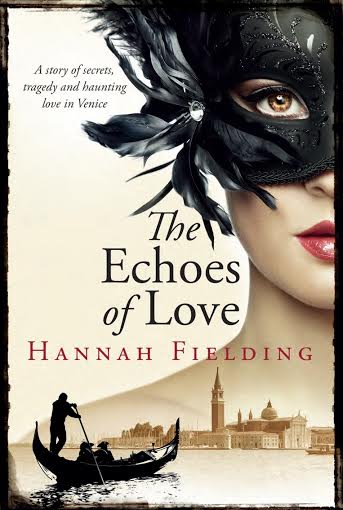
We were very excited to interview The Echoes of Love: A Story of Secrets, Tragedy and Haunting Love in Venice
author Hannah Fielding. Hannah is a great writer and is very well travelled. Read on for her thoughts on her novel, getting published, her writing routine and her favourite places. Portrait of Hannah Fielding and photos of where she writes.

Tell us about your novel

Seduction, passion and the chance for new love is at the heart of The Echoes of Love.

Set in the romantic and mysterious city of Venice, the beautiful landscape of Tuscany and the wild maquis of Sardinia, The Echoes of Love is a touching love story that unfolds at the turn of the new millennium.

What is your writing routine?

I have a very rigid routine which has served me well. Having researched my facts thoroughly, I plan my novel down to the smallest detail. Planning ahead, I have found, makes the writing so much easier and therefore so much more enjoyable. Then, when I am ready to begin writing, I settle into a regular routine – writing each morning andediting the previous day’s work, taking a break for lunch, writing a little more and then going for a walk somewhere inspirational, like the woods or the beach.

How hard was it to get published?

This only gets more difficult. As readers move from paperback to ebooks, publishers are developing new business models and nothing stays the same. My new publisher resulted from the very positive reception of my first book, Burning Embers, which was published by Omnific in the USA. Working with a London publisher and a younger team is very different, but just as enjoyable.

Why did you choose Venice as a setting for your novel?

I first visited Venice as a young child. Then, as now, I was wide-eyed and enchanted by the beauty of the city. I distinctly remember standing in the main square, the Piazza St Marco, gazing up at the stunning architecture of Saint Mark’s Basilica, and feeling I had somehow entered another world – a fairytale world. Then I looked down, at the square itself, which was overrun by hordes of pigeons. There was nothing beautiful about those birds. They were quite spoiling the place. And it struck me then that Venice is a city of two faces: that which the tourists flock to admire, that makes the city the capital of romance, that breathes new life into the imagination and leaves a permanent, inspirational impression. And the other side, the darker side, that which is concealed in what Erica Jong called ‘the city of mirrors, the city of mirages’.

When I returned to the city as an adult, I became quite fascinated by the concept of Venice – what it means to be Venetian; what the city really is beneath the layers of history and grandeur and legend. Frida Giannini wrote, ‘Venice never quite seemsreal, but rather an ornate film set suspended on the water.’ I understand this quote – there is something fairytale about the place, and with that comes some reluctance, perhaps, to see the realism beyond.

Venice so captured my imagination that I knew some day I would write a romance novel set in this most elegant and fascinating of cities. But it had to be the right story to fit the place. For me, that meant a story that reflected the two faces of Venice – the mask she wears, and the true form beneath.

Tell us about your characters

Venetia Aston-Montagu is a young architect in her mid-twenties who has already suffered heartbreak and loss. Brought up by a despotic father and a weak mother who always deferred to her husband, she can’t wait to leave home and work in Venicein her Italian godmother’s architectural practice. Her past experience has left her reserved and wary of men, but deep down she is a romantic who dreams of meeting the man of her dreams.

Paolo Barone is a millionaire Italian entrepreneur in his mid-thirties who has also had his share of suffering, which makes him at times taciturn. The affinity he feels for Venetia is instant. To start off with, like Venetia, he is afraid of the power of the emotions. Still, Paolo’s past and present are filled with secrets that he jealously keeps locked up in his heart, even from Venetia.

Is Venice the most romantic city?

Italy, for me, is the most romantic country in the world, and Venice is the best of its many ancient and beautiful cities. That is why time and again it tops the polls as the most romantic city in the world.

There are so many reasons I can give for this: the stunning architecture, the sense of history all around, the romantic music, the sublime cuisine, the colours of the buildings and their reflections in the water, the Casanova connection, the passionate

Venetians and their beautiful language, the dreamy drift of the lagoon, the blend of hubbub and calming serenity, the exciting Carnival, the gondolas that bear you around the city in such a timeless, gliding fashion…

You were born in Egypt and have travelled a lot. Where are your favourite

places?

1. Aswan, Egypt

One my favourite places in the world is the Old Cataract Hotel in Aswan in southern

Egypt. Built on a granite promontory in the Nubian Desert on the banks of the Nile,

the dark pink edifice, in the style of Belle Époque villas of the 19th century, has

retained all the beauty and splendour of yester-years.


2. The Rift Valley, Kenya

I set my debut novel, Burning Embers, in Kenya because after visiting the country

as a young woman I was captivated by the scenery and the people. The Rift Valley,

in particular, took my breath away, and I could not resist writing a balloon ride into

Burning Embers to allow my heroine, Coral, to take in the magnificent landscape.


3. St Paul de Vence

A beautiful hilltop village in Provence, and one of the oldest – founded in the ninth

century. It is known as Le Bijou de la Côte d’Azur (The Jewel of the Côte d’Azur).

The French painter Marc Chagaechoesoflovehannahfieldingll made the village his home for 20 years, and here he

painted wonderfully warm pictures that pay homage to love, some of which can be

viewed at La Fondation Maeght , 623 Chemin des Gardettes.

Your first novel was published last year. Was this one harder to write?

Yes. Because Burning Embers had such a good response, I found The Echoes of

Love a much more challenging experience because I wanted to live up to my readers’ expectations.


What next?

I have written a trilogy set in Andalucía, Spain, spanning three generations of a

Spanish/English family, from 1950 to the present day.

Greece is also on the map for a new Hannah Fielding romance novel. I am now in the process of researching and planning a very dramatic love story that takes place on one of the many Greek Islands. I chose Greece because I know that captivating country and its people well – I have good Greek friends. I bought my wedding dress in Athens and my husband and I honeymooned on Rhodes Island. Greek mythology was part of the literature course I read at university and Greece is not far from Alexandria, where I grew up.