
Do Medicines Cost Too Much? By Dr Kathleen Thompson

The UK Cancer Drug Fund, which funds non-NHS cancer treatments, has removed twenty-five drugs off its list recently, to combat a £100 million (and rising) overspend. This highlights a recurring dilemma of modern healthcare.

Medical science is advancing with cosmic speed. Patients with desperate diseases have new hope. Genetic advances allow personalised medicine for enhanced individual benefit.

However, drug costs are becoming frighteningly high, and, as people live longer, health budgets rise further. To be cynical, it was cheaper when people simply didn’t survive.

In response, many governments have attempted to force medicine prices down. Politically a quick win. But what are the consequences?

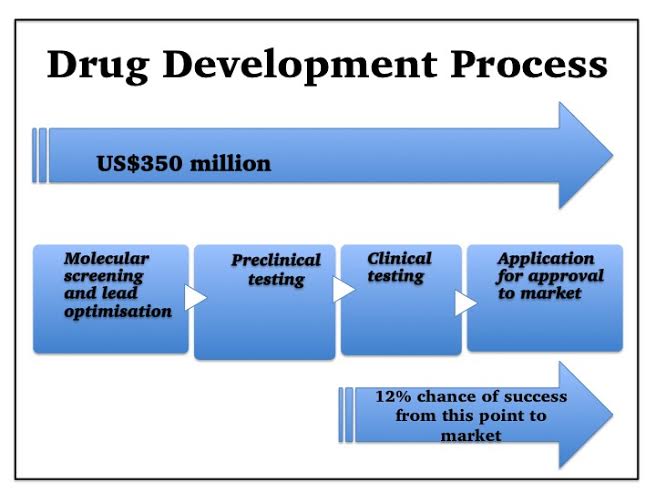
Let’s examine the drug development process. 
picture2drugarticle180915

First a drug target is chosen – often a protein molecule (receptor) on the surface of some of our cells.

Thousands of chemicals are then screened. If they bind to this receptor, they could influence how that cell works, and hence affect disease activity.

Chemicals which do bind are further narrowed down to those with additional potential drug properties—those likely to be well-absorbed, lack toxicity, and remain in the body long enough to work.

A lead candidate is chosen, and then modified further, optimising its chances of success.

Next, as required by government regulations, it is tested in animals and in the test-tube, for potential safety, effectiveness, and suitable dose.

Finally, clinical trials can begin. Often in healthy volunteers first, then small numbers of patients and finally in many patients. Thousands of people are usually tested before a drug can be marketed, and the size and duration of clinical trials has increased, as regulatory requirements have increased1.

Consequently, the typical cost of a new drug development is US$350 million according to a recent study by Forbes2.

But it’s worse than that—the development path is littered with booby-traps and precipices. Fledgling drugs frequently fail, and the Tufts Centre study found that, even those medicines which make it as far as clinical trials, have only  approximately a 12% chance of eventually reaching the market3.

Thus, including the costs of failed developments, the actual cost for each successful drug is nearer US$2.6 billion3, and for many smaller companies, if the roulette wheel isn’t kind, the cost is failure and liquidation.

Pharmaceutical companies are not angels, nor are they demons. To survive, they must make enough profit from their marketed drugs to fund their development pipeline, in addition to returning some profit to shareholders. Long drug-development times, mean they may only have a few years of patent-protection left to achieve this. If governments force prices down, companies sometimes react by reducing development risk – choosing drugs more likely to succeed in preference to innovative but riskier developments for difficult diseases.

A typical drug development takes around ten years – so we won’t see this effect immediately, and when we do, it will be too late – it could take another ten years to correct.

So there’s the problem – health bills cannot continue rising exponentially, but forcing drug prices down has serious consequences too. What to do?

Further Information and References:

1. http://www.phrma.org/sites/default/files/pdf/rd_brochure_022307.pdf

2. http://www.forbes.com/sites/matthewherper/2013/08/11/how-the-staggering-cost-of-inventing-new-drugs-is-shaping-the-future-of-medicine/

3. http://csdd.tufts.edu/files/uploads/Tufts_CSDD_briefing_on_RD_cost_study_-_Nov_18,_2014..pdf

Note: These articles express personal views. No warranty is made as to the accuracy or completeness of information given and you should always consult a doctor if you need medical advice


Planning Tips For Your Dream Wedding

wedding, weddings, wedding planning, wedding book, wedding advice, wedding tips, wedding planning tips, wedding survival guideMany women have dreamed of their wedding day since they were little girls. Although I didn’t and had no idea what I wanted on my big day after getting engaged. I had to start getting some ideas together and make what felt like a million decisions. It was fun but it was stressful. To cut down the stress for other brides I wrote my wedding planning book. Hopefully it will make the journey easier for other brides. In the meantime, here are some tips for creating your dream wedding.

Your Dream Wedding: Wants And Compromises.

You may have a specific idea of your wedding in mind but the reality will probably be different. This doesn’t need to be a bad thing. Just choose the things that you are not willing to negotiate on. When you know what is most important and worth spending money on you can focus on that and then look at cheaper options for other things. Or rope family and friends in. Most will be happy to help.

Budget.

This is the tough one but you need to work out what it is and then you need to stick to it. Enquire if any family members can help and then sit down with your fiancé and have a proper discussion about what you can and cannot afford. There is no point in going into debt for a wedding or taking out a loan. It is only one day of your life, an important one, but one day. You can have an amazing wedding on a small budget. No one should start their married life in debt. Watch out for the ‘W’ bomb. As in ‘wedding’. The W word makes everyone vastly put their prices up.

Guessing cost.

Always overestimate. That way you won’t be left short. Always remember VAT. Some venues and suppliers will be coy about whether VAT is included but ask them and get a direct answer and then make a note of it.

How much it will cost.

This is the question. The answer is: quite a bit. My husband and I managed to get married for less than £10,000. We paid for the majority of this ourselves but did have some family members contribute. Not bad when the average wedding costs £21,000. Spreadsheets are your friend. Negotiating will also be your friend. Try to get money off everything. Don’t take the first quote and rope family and friends into the planning if money is tight.

Controlling Costs.

This is very important. Watch out for VAT and always account for everything. Use a spreadsheet if you can. Keep an eye on the small things as they can all add up.

Dealing With Suppliers.

When dealing with suppliers always remember that you are the customer. Be polite but always be firm. Read the small print and make your wishes clear. More importantly, don’t pay any final invoices until everything has been checked. One supplier charged us for VAT despite the fact they said they wouldn’t. Hmm. Always be careful.

Hatton Gardens. 

Hatton Gardens is the area in London where all of the jewellers are located. You can get a very good deal here.

Spreadsheets

Spreadsheets are your friend. If you don’t know how to do one then quickly brush up your skills. They will be your saving grace. Have one for your wedding budget and one for your wedding guest list. For the wedding guest list one, leave space for information such as dietary requirements, RSVP received, gift given and thank you card sent.

Organisation Tips

Have everyone’s contact details to hand. Use spreadsheets and have plenty ‘to do’ lists. Make sure your partner pulls his or her weight. Weddings are hard and stressful to organise, don’t go it alone.

Wedding Planner: To Go It Alone Or Hire Help.

If I had the money I would have hired a wedding planner in an instant. However, they are expensive and you don’t really need one. I am not saying that in a rude way, they will save time and probably a lot of money but weighing up the cost is important. Your venue might have a wedding planner or venue coordinator onsite. If so, this is a tremendous bonus.

If you get a wedding planner make sure you check their recommendations and also have a clear idea of what you want. It is their job to take your ideas and make them into the wedding of your dreams. Don’t accept anything less, budget permitting.

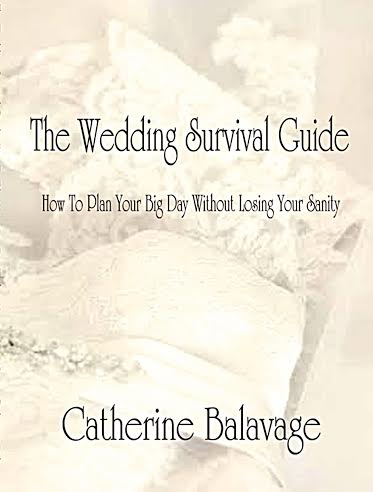
If you are getting married then get your hands on a copy of The Wedding Survival Guide: How To Plan Your Big Day Without Losing Your Sanity. It has great advice on planning your perfect wedding and is written by our editor, Catherine Balavage. It is also available in Ebook format and is a great guide for wedding planning.


Rise of The ‘Returners’ Women Over 30 Starting Their Own Businesses Increases

feminism, working women, equality, Naomi West is at the front of a trend: Women over 30 taking the plunge and starting their own businesses.

Naomi West, 32, worked in digital marketing for a Financial Services company before her first son, Jacob, now almost 3, was born. She no longer wanted to be on conference calls at 6am with her colleagues in Australia and Skype meetings at 9pm with her American team. She freelanced for a while but still found it difficult to juggle family life with deadlines and client commitments. The peaks and troughs of work made planning childcare difficult and when her second son, Benjamin, was born with a heart defect, Naomi knew she needed to find a new way of working that would enable her to be there for her family.


Having enrolled both her children in Baby Sensory classes, Naomi waited for an epiphany about her future career. It came when her Baby Sensory class leader told her she was recruiting for a new class leader and Naomi got the job, gaining valuable experience. When the opportunity to take on her own franchise came up in her area of Bromsgrove, Worcester, she jumped at the chance, borrowing £15,000 in two loans from Startup Direct and launching her first classes in January this year. She now runs 11 classes per week, with up to 20 babies in each class.


“When the opportunity to start my own franchise came up, I felt instantly it was something I could make a success of”, said Naomi. ”I had experience with the business as a client and class leader, and had the skills from my career in digital marketing to set up and market the business in my own area. I now have regular class hours doing something sociable and creative, which fits brilliantly around family life. What’s not to love?”

Data released by Startup Direct shows that the number of women over the age of 30 seeking start up finance and mentoring increased by a third in 2014.


In 2013 women over the age of 30 made up just 25% of enquiries to the Government start up loan provider, but this grew to 57% in 2014, an increase of one third (32%). This trend is being driven largely by ‘Returners’; women who have taken a break from the workplace to have a family and are motivated to start their own business by the challenges of finding flexible and stable employment which is well paid enough to cover the cost of childcare.


They are starting predominantly internet-based micro businesses, employing fewer than 5 employees, which they can run part-time from their homes and are undeterred by the challenge of juggling home and family commitments with the demands of a new business.


James Pattison, CEO of Startup Direct, said: “A growing number of women are disillusioned by the difficulties of combining family life with a traditional 9 to 5 job, not least the inflexible hours, lack of well paid part time work and the cost of childcare, which continues to spiral. The internet has made it easier than ever to start up a business from home and women are drawn to the prospect of being their own boss, choosing their hours and cutting childcare bills by working flexibly around family life.”


Startup Direct is encouraging more women to follow their dream of launching their own business by running a series of workshops aimed specifically at women, offering advice on all aspects of entrepreneurship as well as practical advice on childcare and time management. In particular it is targeting ‘Returners’, those are want to start businesses following a period of maternity leave or a career break after having children.

To apply for a start up loan, visit www.startupdirect.org


Not That Kind of Girl By Lena Dunham Book Review

9780008101268Where to start? I guess with the fact that this book is not what I thought it would be. It’s not bad, it’s just not what I expected. Let’s get the controversy out of the way: I don’t believe Lena molested her sister. The passage about ‘spreading open her vagina’ makes for very uncomfortable reading but, in my opinion, is very different from sexual abuse. Same gender curiosity in young children is different from sexual abuse, many have said that if this book was written by a male things would be different, but not if the male did what Lena did to his brother. Young children don’t even know what sex is. So, end of.

The thing is, I don’t relate to Lena Dunham. Or at least I thought I did until I read this book. I don’t get the drug use, I am very anti-drugs and always have been. I don’t even care if I come across as boring but mentioning casual drug use as if it is not a thing to me is irresponsible. Many people think drug use is ‘cool’ and ‘artistic’ but it’s not. Drugs ruin lives and society. Now go ahead and judge me for my controversial view: I don’t care. The book is full of sex: masturbation and sexual encounters. This also makes for uncomfortable reading. Not bad reading, just uncomfortable. Dunham seems to want to punish herself with jerks and bad sexual encounters. It’s a version of self-loathing and it made me want to pick her up and hug her. Then of course there is the fact that Dunham was raped. Rape is never fun to read about, but Dunham’s courage in telling her story is commendable. The book is full of brutal honesty.

I know that in many ways this review will seem like a bad review, it’s not. I still think Dunham is talented, amazing, brilliant: a trail blazer. We are similar in age and I also made a web series about young twenty-somethings struggling to find their way in life, though with less success than the juggernaut that is Girls. We are both writer/producers/actors/directors and I always thought that Dunham was so together. I think she is now and that is what is interesting about this book. After all of the self-loathing, punishing herself dating/having sex with men who treated her terribly and other self-destructive behaviour the book comes beautifully full circle: she no longer runs away from people and herself, she in many ways, becomes a grown up. She finally stops causing herself pain. While I related more to Amy Poehler and her awesome book, Yes Please, there is something here to learn. Dunham is unvarnished, naked, almost embarrassing in her honesty. Dunham has been called the voice of her generation many times. Truth is, she doesn’t speak for me or many people that I know. But the thing is: it doesn’t matter. She is still paving the way for women, still creating waves in the film and TV industry, still making progress in a brutal, sexist industry. It doesn’t matter that I don’t 100% relate to her: she is still awesome.  I may not write endlessly about my vagina the way Dunham does but then, maybe my vagina just isn’t that interesting. There is a lot of stories of bad sex in this book, and I hope that other women who read it don’t think this is par for the course. It shouldn’t be.

This book is certainly worth a read. It really made me think and feel. This is essentially a collection of autobiographical essays which Dunham was paid £2.3m for by Random House. It is not as good as it could have been, and Dunham could have done with more editing, but she is certainly a talented writer and I am sure there will be more to come. As Dunham says in the book: “There is nothing gutsier to me than a person announcing that their story is one that deserves to be told, especially if that person is a woman,”

Not That Kind of Girl: A Young Woman Tells You What She’s Learned is available here.


Only 2% of Britons Know How Rich They Really Are

moneyWe are not sure if you saw Channel 4’s How Rich Are You Show last night but it was interesting. Take the quiz and find out how rich or poor you are below. The poll is also an eye-opener.

In a new poll commissioned by Channel 4, people in the UK were asked to guess how their income compared with the rest of the country’s, and then answer a series of questions to calculate the true result. Only 2% of the people surveyed guessed correctly.

The poll was commissioned to accompany How Rich Are You (1 x60) which airs at 8pm on the 10th November. Presented by Richard Bacon, this one-off special will show each of us where we stand in the great money map of Britain – and what that position means. With the help of leading experts, a studio audience and individual case studies, the show builds up a shocking and surprising portrait of the country that is now – officially – the most unequal in Europe.

Alongside the programme, the channel has launched a website app which will enable every viewer to take the ‘How Rich Are You’ test at home. Visitors to channel4.com/howrichareyou can answer a set of simple questions to determine if they are as rich or as poor as they think they are. The data for the app has been provided by the Institute for Fiscal Studies.

As many as 67% of the people surveyed underestimated their income compared by more than 10%, indicating a serious lack of understanding as to the economic state of the nation. Only 7% of people overestimated their income compared to the UK – but nobody overestimated by more than 10%. Just 2% correctly estimated their level of income vs the UK population.

The survey reveals that despite the struggles of the current economic climate, 75% of adults say that they manage financially, with 16% stating they struggle to get by.

Despite this there is still a bleak picture of life in 2014, as 61% feel that life in Britain has worsened over the last 20 years. Just 13% feel that life has improved.

The survey shed light on our embarrassment at talking about money. It revealed that 31% of adults surveyed would not be happy to discuss how much money they earn with family and friends, while 19% are not sure how they feel about it.

Interestingly, it is younger people who are more willing to discuss finances, with 60% of those aged 16-24 happy to talk about how much money they make.

When asked about inequality across the UK, the majority of adults (84%) think that the wealthy should pay higher taxes.

Those that feel they have enough money in their household (rating themselves as ‘well off’) feel less strongly on this matter, but still display strong agreement at 73%.

The survey also asked people about average salaries of other professions including a nurse, MP, care worker and average CEO. The results were fascinating with 70% of people overestimating the salaries of a CEO and more than half overestimating the salaries of an MP.

  • An average Nurse in the UK earns just over £26,000. Half of the adults that we spoke to correctly chose this amount, a quarter over estimated how much they earn, while a further quarter under-estimated their wage. Interestingly, those who were struggling in their household underestimated a nurse’s wage the most, while those that were well off overestimated their wage the most.
  • Just 27% of adults correctly knew an MPs current wage of £66,400, while a further 31% thought that MPs were on their soon to be higher wage of £72,000. A further 26% thought that they were paid nearly £20,000 more than their current wage.
  • An average care worker in the UK earns just under £13,000, 42% of adults correctly chose their wage. 50% thought that their earnings were at least 30% higher.
  • An average CEO in the UK earns an annual income of just under £118,000. Just 13% of the adults we spoke to correctly picked this amount, the majority (70%) thought their wage was significantly higher.

Dr Fazia Shaheen, Economist and expert on How Rich Are You? commented: “These numbers serve as a reminder of how little we understand about each other’s lives. We are failing to see the bigger picture – too busy trying to get by on our own wages to notice the growing gap between the very rich and the rest of us.”

John Hay, Commissioning Editor for Channel 4 commented: ““I’m convinced that years from now we will look back on the growing gap between rich and poor as the most significant issue of our age, and I think there’s a real hunger to understand it better (as well as to find out how much our neighbours earn). Richard and the team at Electric Ray have a gift for making important television that doesn’t feel like homework, so I hope this will be both revelatory and addictive viewing.”

Take the quiz here.


The Wealthy Women: A Man Is Not a Financial Plan. Mary Waring Interview

The Wealthy Woman: A Man is Not a Financial Plan: A Woman's Guide to Achieving Financial SecurityWe interviewed The Wealthy Women: A Man Is Not a Financial Plan author Mary Waring. She had some great advice to give and has also written a great book that every women should read. In the meantime, pick up some tips in our interview with her.


What made you write the book?

I’ve come across so many very bright women who have an issue with maths and finance. My theory is that the way it is taught in schools is much more suited to a typical male brain rather than a female brain. (I obviously don’t have a typical female brain!)

So many bright women have a mental block about maths and dealing with their finances. I decided therefore I’m would write a very down to earth, no jargon guide to looking after your finances and improving your wealth.

Are women worse than men when it comes to finance?

As above, I think women tend to put it very far down the list of priorities. They look after the house, their partner, the children etc but very far down the list is looking after themselves. In addition only about 10% of advisers are female. The typical adviser is male, middle aged, grey hair, grey suit. There’s absolutely nothing wrong with that but many women are looking for someone different and may be struggling to find a female adviser.

Do too many women still rely financially on men?

I think a lot do. The female often looks after the house and the children and all the general housekeeping issues. The male often looks after the finances. In any relationship it’s sensible for one person to look after the finances, and in my experience that is often the male. The woman does not play an active role in the finances and if worst thing happens and they get divorced the female is totally at a loss as to how to look after herself financially. A number of women also assume their husband’s pension will cover both of them in retirement. But this may not be the case.

What are women’s financial strengths and weaknesses?

Strengths- very good at following a set procedure once it’s explained to them. They’re not as competitive as men as a rule so do not need to “beat the market” with their investment return. They’re looking for a steady investment growth. They’re happy to take advice and happy to admit if there’s something they don’t understand.

Weaknesses- lack of confidence regarding finances and tendency to stick their head in the sand rather than deal with it.

What can women do to help themselves financially?

If their partner deals with the finances make sure they sit down on a regular basis and discuss the finances: how much money comes in each month, how much gets spent and what on. Discuss what savings, investments and pensions exist.

If they deal with the finances themselves, then start to look at what they are spending against what income is coming in. They must start to plan for the future and consider what income they will need/want in retirement.

What pitfalls should they look about for?

If something goes wrong (e.g. a large unexpected bill) don’t give up and think the plan isn’t working. Keep at it.

What is the best way to save?

The best way to save is to have a regular amount come out of your account each month by standing order or direct debit. Have that money come out of your account before you start spending. Frequently people wait until the end of the month and decide to save what’s left in their account. But all too often there’s nothing left. If the saving happens before spending it often won’t be noticed that there is less to spend.


Best way to get out of debt?

The best way to get out of debt is to do a strict budget so that you can pay off as much as possible of the debt as quickly as possible. Interest on debt increases at a huge amount so make an effort to get the debt paid down by always paying more than the minimum.

Best way to get wealthy?

The best way to get wealthy is to make that your priority and then each day take some small steps towards achieving that. Too often this looks like too big a challenge but it’s the small steps on a regular basis that can really help your wealth. Choosing to eat out at a much cheaper spot than you would normally use will not make any difference to your wealth if you do it just once. But if you do this on a regular basis so you can save more, then over time it will make a difference.

Top financial tip?

For a period of 3 months keep a very detailed record of what you are spending, including everything that you pay for in cash. Carry a notebook around in your handbag so you can note it down straight away. Look at this in detail and ask yourself “How can I reduce this cost?”. You’d be surprised how much we all overspend without being aware of it. Until you know what you’re spending your money on you are not in a position to do anything about it.

Thank you Mary.

The Wealthy Woman is available from Amazon and is reviewed here.


The Wealthy Women: A Man Is Not A Financial Plan Book Review

The Wealthy Woman: A Man is Not a Financial Plan: A Woman's Guide to Achieving Financial SecurityThe Wealthy Woman is a book that is sorely needed. I have lost count of the amount of women I have met who are terrible at finance, and that is saying nothing for the ones that really do think that a man is a financial plan. I mean, they’re really not.

Relying financially on a man causes a lot of problems: he could leave you, he could lose his job, he could treat you badly and you  feel you can’t leave because you would be too poor, he could think he has all of the power because he pays the bills…the list goes on. True freedom and happiness comes when a women is financially independent. Can this book help? Yes.

Some finance books can be scary but this one isn’t. In fact it is fun, concise, comprehensive and educational all at once. The author also takes two women, one savvy and one not-so-savvy, and follows them through the years and charts the consequences of their financial decisions. I found this particularly useful. I think a lot of women would read it and it will (hopefully) give them a wake-up call.

The book gives you financial advice for each decade of your life, and where you will end up. It let’s you know that only you can be responsible for your financial future and being an ostrich won’t help at all. It also helps you calculate your net worth, sort out your finances and get out of debt if you have it.

It also covers pensions, saving and investing. In fact, most things are covered in this excellent book. Buy it for yourself or/and the females in your life. It is packed with good advice and tips that could change your life for the better.


‘The Wealthy Woman – a man is not a financial plan’ by Mary Waring has worked with 100s of women helping them take control of their finances.

Far too many women find ‘dealing with the money’ a daunting task and leave it in the hands of their partners. However, this can leave them with little control over their own financial lives and sadly, if they then get divorced or are widowed, they are left floundering with little understanding of how much money they have, or don’t have, and what this means to their lifestyle.

By understanding your finances and taking control you can make your money work for you. That’s the message in Mary Waring’s new book ‘The Wealthy Woman: A Man is Not a Financial Plan: A Woman’s Guide to Achieving Financial Security’.

“Many women tell me that they simply don’t do maths – and this mental block seems to be an epidemic among women everywhere. However, these are often admirable women with high-level jobs. My message is simple – you are more than able to handle all of your finances,” says Mary Waring.

So, do you want to be more confident about your finances? Do you want to be a wealthy woman?

“Wealthy” will mean different things to different women. It doesn’t necessarily mean “rolling in it” and having so much money that you’ll enter The Times ‘rich list’. It may simply mean you feel confident you will have enough money to do the things that you plan to do in the future, no matter how lavish or frugal a lifestyle you lead.

Mary’s book will guide you on your journey to become a wealthy woman by showing you how taking small steps on a regular basis can lead to a significant increase in your wealth.

If you currently have such a lack of control over your finances that you are too afraid to open your credit card statement at the end of the month, this book will show you how to take control.

“The Wealthy Woman” will encourage you to think about your attitude towards money and your relationship with it.

As Mary says; “It’s easy to be wealthy just as it’s easy to be poor. There’s very little difference in the way you can become either. You are in a position where you can improve your wealth. Whatever your dreams and aspirations around money there is nothing to stop you moving towards those dreams.”

Mary Waring is an independent financial adviser and the founder of Wealth For Women, specialising in financial advice to women going through divorce. She is both a Chartered Financial Planner and a Chartered Accountant, being one of only a handful of advisers in the whole of the UK with this high level of qualification.

Mary is passionate about changing the way women think about finance. Too many women stick their head in the sand and ignore it. Or…rely on a man to sort it for them.

‘The Wealthy Woman: A Man is Not a Financial Plan: A Woman’s Guide to Achieving Financial Security’ is available from Amazon and all good bookstores.

For more information see: www.mary-waring.co.uk