
Trying to conceive – why doing less might be the most important thing x Proceive

I’m going to start this piece off by saying that I am a huge fan of Proceive. I took Proceive for three months before my husband and I started trying for another baby. I was 40-years-old and didn’t think it would happen. I got pregnant immediately and our baby is now 7 months old. I obviously can’t say whether or not I would have another baby without Proceive, but I am confident it helped. I am taking the breastfeeding and omega 3 ones still and I have never felt better. My review of Proceive is that I bought it throughout my entire pregnancy with my own money. I was given the breastfeeding and omega 3 to review. I will continue to buy more when they run out. Highly recommended.

There is a growing conversation around the overwhelming world of trying to conceive. Renowned midwife and fertility expert Zita West recently argued that modern techniques like tracking apps and scheduled sex may actually be working against women, adding pressure and stress at exactly the time the body needs the opposite.
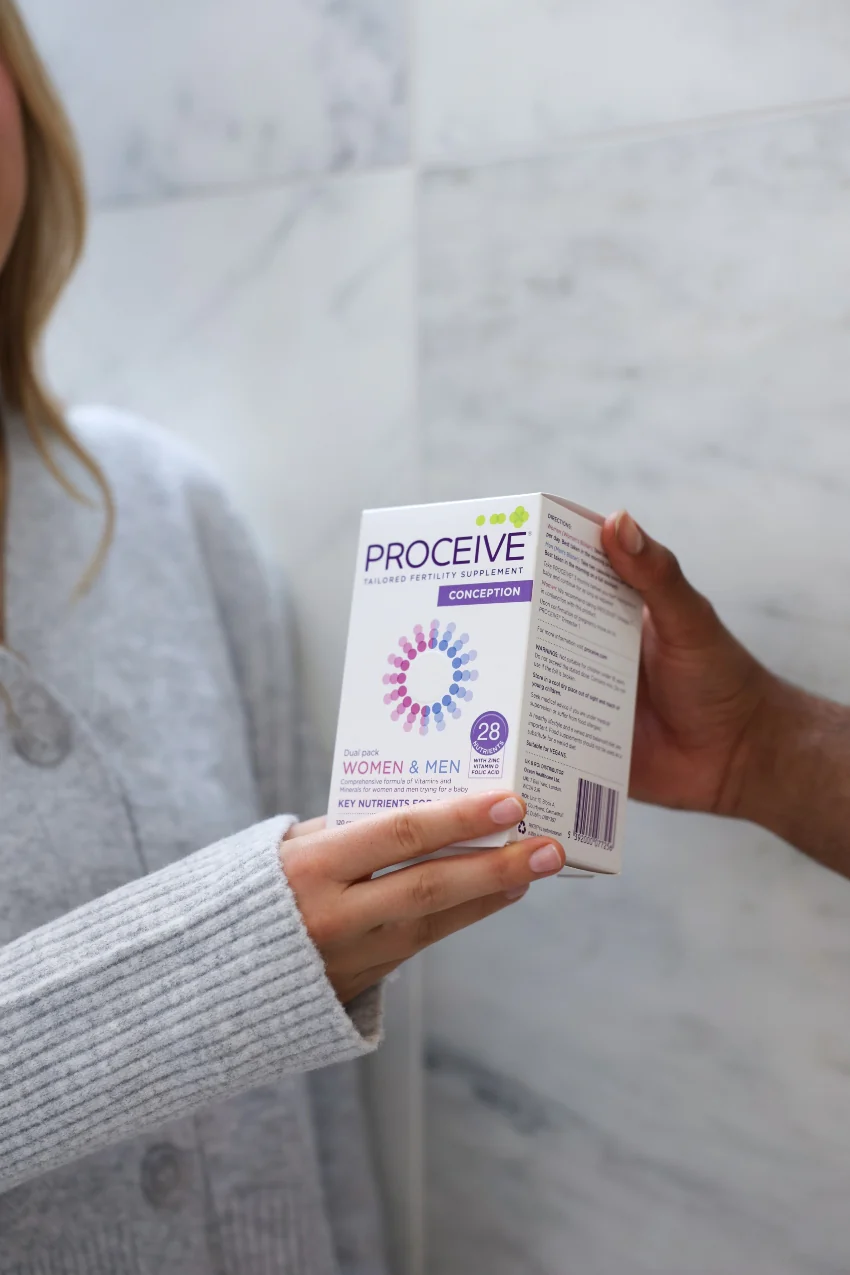
Anyone who has been through the TTC journey will know the feeling: the ovulation charts, the supplement lists, the conflicting advice, the 3am Google spirals. The irony is that one of the most consistent pieces of advice from fertility experts is to reduce stress and yet everything around you is piling it on.

Preconception care should reduce the mental load, not add to it. One supplement, once a day, does the things the NHS actually recommends.

That is the thinking behind Proceive. What many people don’t realise is that in around one in three couples experiencing unexplained infertility, improving nutrition and lifestyle can make a real difference and that applies to both partners, not just women. A female egg takes approximately 90 days to mature before ovulation, which is why the NHS recommends starting folic acid at least three months before trying to conceive. That same three-month window is when Proceive works best.

Rather than a shelf of individual supplements to research, source and remember, Proceive covers 28 essential nutrients in one daily supplement, including L-Methylfolate (the superior, better-absorbed form of folic acid), CoQ10, B vitamins, amino acids and antioxidants, all at clinically relevant levels with no fillers or binders. There are separate formulas for women and men, both designed for that critical preconception window.

Available here.

Struggling To Get Pregnant? Losing Weight Will Help

Dr Sally Norton – UK leading NHS weight loss surgeon & consultantOne of the many reasons that women, and occasionally men, come to see me for weight loss advice is because they want to start a family, but are struggling. Did you know that obesity is a major cause of difficulty getting pregnant – and can increase the risk of miscarriage or problems during pregnancy and childbirth? In fact, there is a significantly greater risk of diabetes during pregnancy if you are overweight – and this can affect the future health of your child as well as you.

Research evidence shows that being overweight can contribute to period problems, hormonal imbalances, lack of ovulation, resistance to fertility treatment and therefore fertility problems particularly in women with polycystic ovarian syndrome (PCOS).

There is a higher risk of miscarriage, higher risk of abnormalities of the baby as well as still birth in women who are overweight. The pregnant overweight mother is also at higher risk of diabetes, high blood pressure and difficult or complicated delivery of the baby by Caesarean or forceps.

Some women end up seeking help with IVF (in-vitro fertilization) or other forms of fertility treatment, but this isn’t usually funded unless women are below a BMI of 30 or under the age of 40 – which is why I get women coming to me for weight-loss surgery. They are desperate, the clock is ticking, and they can’t seem to lose weight on their own. It’s sad to see, and the stress of it all doesn’t help fertility in the slightest!

Interestingly it’s not all about the woman’s weight. In men, being obese can cause the following problems: reduced semen volume, a reduced sperm count and increased sperm DNA damage. Losing weight will improve these parameters.

So, if you are thinking of starting a family, it is a great incentive for both you and your partner to lose weight. But you have to make sure you do it in a way that is good for you. Fad dieting which will starve your body of essential nutrients which, for women, is just at the time when you and your unborn child need them most. In fact, some studies suggest that a mother’s diet, even BEFORE she actually gets pregnant, can affect the health of her child. So instead of crash dieting, treat your body with the care and respect it deserves – after all, you’ll be relying on your body to create a healthy new life within it. Fill it with the most nutritious food you can find, keep active to ensure you are as fit as you can be – and not only will you be rewarded with a slimmer healthier body but you will find it easier to get pregnant too.

By Dr Sally Norton – UK leading NHS weight loss surgeon & consultant


Jaime King Talks About Infertility & Enduring Five Miscarriages

Jaime King may be a very happy mother now but she endured years of painful infertility and five miscarriages due to PCOS & Endometriosis. The Hart of Dixie star shared her struggles to become pregnant. “For all the struggling women & moms out there that think they are alone – This is the truth about conceiving my son and struggles after, 8 yrs of pain and undiagnosed PCOS & Endometriosis. 9 doctors until Dr. Randy Harris diagnosed me & saved my life from a severe ectopic, 5 miscarriages, 5 rounds of IVF, 26 IUI’s, most with no outcome, 4½ years of trying to conceive,” she revealed on Instagram.
Jaime King Talks About Infertility & Enduring Five Miscarriages

King gave birth to her son James Knight last October. She went on to reveal: “26 hours of brutal labor, early delivery b/c of sudden preeclampsia, tearing and tearing after the stitches were in once I was home, milk supply issues, painful mastitis, uncontrollable crying while breast feeding.”

She then went on to say that she overworked afterwards instead of looking after herself and her new baby.

“[I] worked until the day before I [gave] birth and went back 6 weeks after, I was afraid of letting others down.”

King wanted to share her story to help other women who are struggling and captioned her Instagram post: “#youarenotalone,#ihavetobebravetosupportothers #realtalkthatterrifiesus.”

What do you think? Have you had problems with infertility?