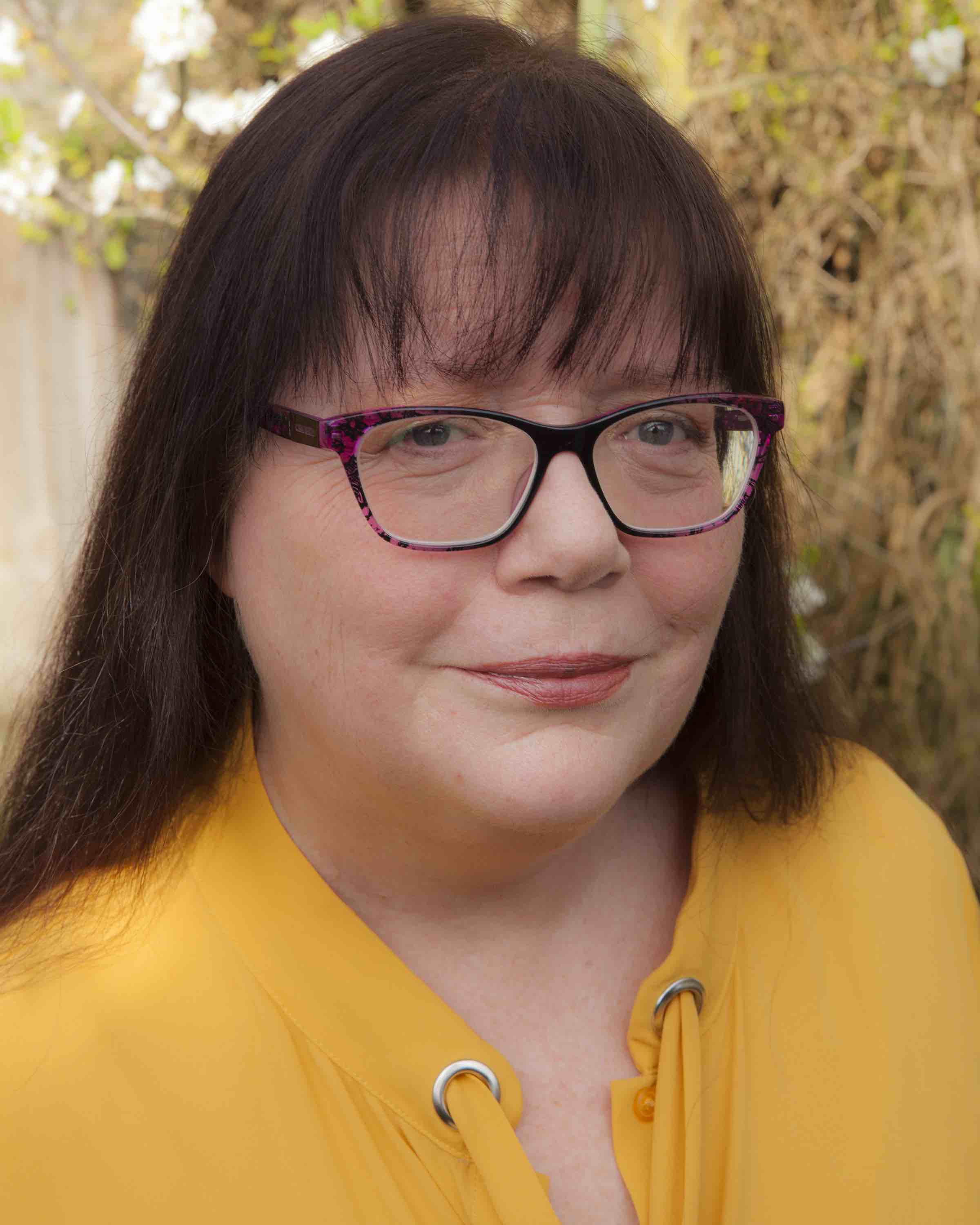
The Business of Books: Jane Cable talks to Choclit author and Romaniac Laura E James

THE BUSINESS OF BOOKS: Connect, engage – and write!

Jane Cable talks to Choclit author and Romaniac Laura E James
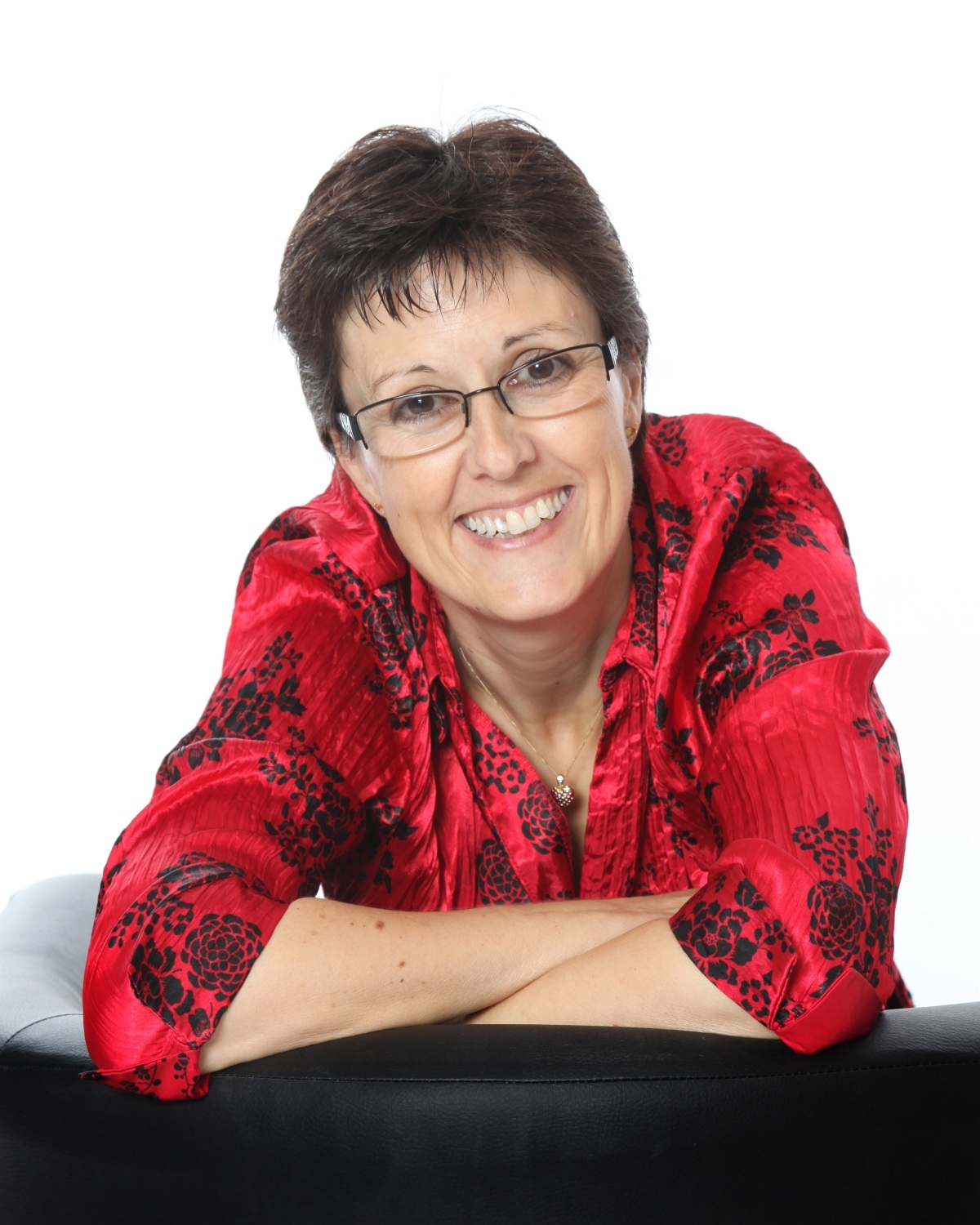
1: How much of your working life does the business of books take up?

I like to start the day by clearing my emails and writing my guest posts, updating the accounts, attending to social media – connecting with readers and writers, sharing book-related news, creating adverts – before settling into working on the manuscript, be that research, writing or editing. Quite often time will run away from me, so I’m attempting to stick to a plan of sorting out on what I loosely term admin, until 11:00, leaving the rest of the day for writing, which is anything from one to seven hours. It’s not an exact answer to the question because my working day depends on my health. I have autoimmune conditions, which can dictate my hours.

2: What’s your business model to earn a living from writing?

It’s only recently I’ve converted my way of thinking to writing as a business, so I’m learning and in the process of developing the business model. I write character and issue driven relationship novels, I engage on social media, run workshops and present talks to groups interested in writing and/or my books, take part in interviews, and network when possible. In its simplest form: keep writing, keep engaging, and keep building my readership.

3: What do you write and what do you consider to be your major successes?

I write commercial fiction, often centred on family relationships, with issues and moral dilemmas sending my characters down dark paths. There are strong elements of romance, so I will always guide my characters and my readers towards a happy or hopeful ending. I’m a Jodi Picoult fan and reading her books has had a major influence on what and possibly, how I write.

My first major success was being shortlisted for a short story competition run by Choc Lit (publisher), which resulted in my entry achieving the runner-up position. I repeated this with their second short story competition, and went on to have my debut, TRUTH OR DARE?, published with them.

FOLLOW ME FOLLOW YOU, my second book, was my first to go into paperback, large print, and audio, and the moment I received my author copies is one I cherish. In January 2017, the book was chosen by Apple to be the free iBook of the Week, and it hit the number one spot – my first number one. I was on a writing retreat with friends at the time. Celebrations were had.

My latest novel, WHAT DOESN’T KILL YOU, spearheaded a new imprint – Dark Choc Lit. I feel privileged to have had that opportunity and love that an imprint is in place for darker, harder hitting novels. This is the first of my novels to be sold through WH Smith, in the Travel shops, which is a dream come true.

The Romaniacs, an online blogging group of eight writers, formed in 2011, has to be one of my favourite successes, but it’s not my success, it’s our success. The support and friendship is phenomenal, as is the output – seven out of eight are published/to be published, and/or with agents. In 2015, we won the inaugural RNA Industry Media Stars Award for our work in promoting the romance writing industry. But the real success is how eight people, who met through the Festival of Romance and the Romantic Novelists’ Association’s New Writers’ Scheme, have formed solid friendships for life.

4: Tell me about your latest project.

I’m working on two projects – a mother-daughter relationship story, which has been planned, researched and mapped out on one of my white boards, but is hovering in the background, maturing, and a novel about rebuilding one’s life from the ground floor up, following an emotionally abusive relationship.

Laura E James writes romance without the soft edges.
For further information, go to: www.lauraejames.co.uk or www.theromaniacs.co.uk


Business of Books: So Much to Give – Part 1

Jane Cable on how authors get together to support charities

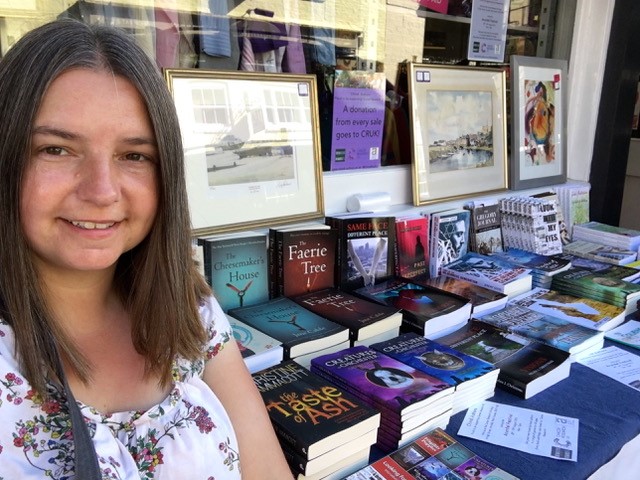
It’s that time of year again. The time when Chindi Authors stand outside the Cancer Research UK shop in Arundel for ten whole days during the town’s festival trying to sell books. Not an easy task when the second hand offerings inside are so much cheaper, but we stick at it because we can add to the coffers of this excellent cause, promote our own books and meet readers.

We know we’ll be well supported by our members and local people, but organiser romantic novelist and kidlit writer Carol Thomas was asked by author contacts up and down the country if they could donate too. While she did the charitable thing and set up a donation page – http://www.carol-thomas.co.uk/Chindi-cruk/ – her generosity simply got me thinking about how much writers achieve when they band together for good causes.

The most high profile recent example of this was the Authors for Grenfell online auction which attracted pledges of more than £150,000, over £30,000 of which was for Philip Pullman to name a character after one of the young victims of the fire. Quirky lots did well too, with conductor and writer Lev Parikian putting together a package which bridged both his worlds: “I offered signed books and (more importantly on this occasion, I think) conducting lessons. A bidding war between three people meant we raised £1,700.”


CLIC Sargent runs an annual ‘Get in Character’ eBay auction where authors such as crime writer E V Seymour and novelist and poet Claire Dyer have offered bidders a range of lots including – you guessed it – having a character in a book named after them. Critiques prove equally popular and previous Business of Books guest Karen King (https://www.frostmagazine.com/2017/04/how-to-have-more-than-100-titles-published/) offered one in the Authors for Refugees auction last year, an initiative which raised £22,000.


Another way of writers getting together to raise money is by giving their time to contribute to and to edit anthologies for causes as diverse as cancer and heart charities, earthquake appeals, women’s rescues and hospices. Some have very personal links to the cause, including saga writer Elaine Everest (also a previous Business of Books guest): “I organised and edited the anthology ‘Diamonds and Pearls’ (Accent Press) to celebrate my 30th anniversary of surviving breast cancer (7 years ago) with funds going to Against Breast Cancer.”


Crime & thriller writer Jane Risdon is a serial contributor to anthologies, supporting amongst others Women for Women, Breakthrough, Women’s Aid, The Norfolk Hospice, The Princess Alice Hospice and Save The Children. She was slightly upset when there was no thanks from certain charities, but would still do it again. Other authors say that smaller charities are more responsive than the larger ones so they prefer to work with these.


Some writers go the whole nine yards and get together to form charities of their own. A prime example of this is saga writer and Frost contributing editor, Margaret Graham, who together with Jan Speedie and Penny Deacon set up Words for the Wounded which exists to raise funds for injured service personnel through writing prizes and events. It’s a wonderful organisation and every penny goes directly to the people who need it. Authors can help in a variety of ways – Chindi raised almost a thousand pounds by organising a litfest, others give their time to speak at events or in my case I donate £1 for every Amazon review of my book Another You. Find out more about W4W here: http://www.wordsforthewounded.co.uk/.


Business Of Books: Jane Cable talks to publishing polymath, Liz Barnsley


BUSINESS OF BOOKS: LOVING BOOKS, LIVING BOOKS

Jane Cable talks to publishing polymath, Liz Barnsley

What is your book related job or business?

First of all I’m a reader and reviewer with my own website, Liz Loves Books  – all done for the love of it. On the professional side I work freelance as a submission reader for Orenda books and now as an Editor and Publicity Manager for Lisa Hall at Manatee, our new digital publishing venture. I also take on individual editing, first draft critique and proof reading amongst other things. I also have a “day job” which I’m loathe to give up as I love that too – so all in all it is a busy bookish life and a busy life life! Going into this venture with Lisa was a no brainer for me however – she is an incredible writer and a voracious reader and she knows what a good book looks like and how to get it out there. Who wouldn’t want to be part of that?


What is the most rewarding part of it?

Definitely the most rewarding part is seeing the book complete and published and finding a readership – every little that I do to help that happen gives me a huge buzz. I also like the collaborative side of editing when I’m excited about a story and the author is excited about their story – it is all hugely satisfying seeing that spark of an idea become a brilliant novel. I have to say I love reading the raw material before it goes through all the stages, seeing the talent and story emerge from underneath that first sprawl of creativity. I never tire of reading the same narrative during the tweaks because you get a whole different sense of it every time. Ultimately (hopefully!) the white noise disappears and you are left with a beautiful, readable, emotionally resonant or edge of the seat story that you can send out into the world.


What do you consider to be your major successes?

Manatee is in the very early stages at the moment so I don’t think we can claim any major successes just yet – although I’m very excited by the authors we have signed so far, all of whom are bringing something different to the table and are putting their trust in us. We focus on crime and women’s fiction – I look after the crime and Lisa looks after the women’s fiction and all our authors so far have written, in my opinion, absolutely excellent, engaging and addictive stories. Also it was somewhat of a confidence boost that bestselling crime writer Neil White had enough faith in Manatee to entrust to us his non crime novel Lost In Nashville. We have persuaded him he might want to write some more fiction for us – he is an incredible writer both within the crime genre and out of it. Watch this space. He will probably tell me off now as he’s busy with his next amazing crime novel for Bonnier Zaffre – but it had to be said that he is certainly not a one trick pony. Now he’ll tell me off some more…


Have you always loved books and what are you reading at the moment?

I have ALWAYS loved books. I’ve read many books a week every week since I was very young and I can’t see that stopping anytime soon even though I’m now rather older. Right now I’m reading a brilliant and highly atmospheric novel called “The Monsters Daughter” by Michelle Pretorius – look out for that one – but also several others as I multi read, they include The Innocent Wife by Amy Lloyd, Need to Know by Karen Cleveland, The Fate of the Tearling by Erica Johansen and Strange Practice by Vivian Shaw. Great books all.


Manatee Books focuses on quality, ethical, author focused digital publishing. Their aim is to bring a wide range of exemplary fiction to a broad readership, time and time again.

Find out more at www.manateebooks.co.uk.


The Diary of a Freelance Working Mother

working mother, mother, working, freelance, blogger, mummy blogger, blogger, parenting blogger, blogger, writing, Hello Frost readers. Many of you will know me quite well, others will be be thinking, ‘Why is the woman being so arrogant to think that we know who she is?’ And you may have a point, so let me introduce myself properly: I am the editor and founder of Frost Magazine. I am also a writer, author, editor, filmmaker and actor. But above all of this I am a mother. Which is the hardest thing of all.

When I got pregnant I felt like I was in a good position as a freelancer. I could be a full time mother AND have a career. Sure it would be hard, but I was used to hard. It is hard not to laugh thinking about this now. Being a freelancer is hard, but the flexibility has always made it worth it for me. Looking back now I can see I was naive when I thought it would be easy. I did not realise just how hard being a mother would be. The funniest thing is that I breastfeed for over a year and I look back at those times when I had a breastfeeding newborn and think of them as the easy days because now I have a two-year-old. For all of those mothers who have babies, enjoy this time. Toddlers are really hard work. Even my sweet and loving son. I know others have it harder. Very much so.

I am going to start this as a column. I am heavily pregnant as I write this and I just want to share the craziness of life as a freelance working mother. The timing is not great. I will be trying my best to take a proper maternity leave and cut back on work. There will be days, weeks even, when I let myself just be a mother and not run myself into the ground. Something that I have been known to do a lot in the past. It has taken becoming a parent to realise that I am not invincible, That self care is important. So I will continue to write my books and run this online mag while I raise my children. But while I am doing that I am going to tell you about how I spend the days taking my son to toddler groups and playing lego, and then writing and answering emails in the evening. I will give you some tips on both parenting and work. I will share with you how I wrote my first fiction book. Spoiler alert: by walking my son around in his pram until he feel sleep and then banging out 2000 words a day on my iPhone. I will talk to you about the guilt and the stress. But most of all I will let you know that I have no regrets at the path I have taken. Being a mother is the best things that ever happened to me. Motherhood is hard and sometimes I feel I am not up to the task, and choosing to work (which I am fully aware is a privilege) gives me back my identity and my freedom. Writers write. So stay tuned. I hope you enjoy the journey.


A Break From Business: Holiday Reading: Jane Cable on fiction from Cornwall, her adopted county

The question I’m asked most frequently since moving to Cornwall is ‘so are you going to write a Cornish book now?’ The answer is that I’m in no hurry to, but in that I seem to be alone and with so much fiction set in the county I thought I’d pick out a few which would make great holiday reading.

Old favourites

I would have to start with Daphne du Maurier’s Rebecca, in many ways the ultimate in romantic fiction with a seriously heavy twist of suspense. The beautiful house by the sea, the spooky aged retainer and the dear departed wife in the background, it has it all – especially as it didn’t resolve in the way I expected.

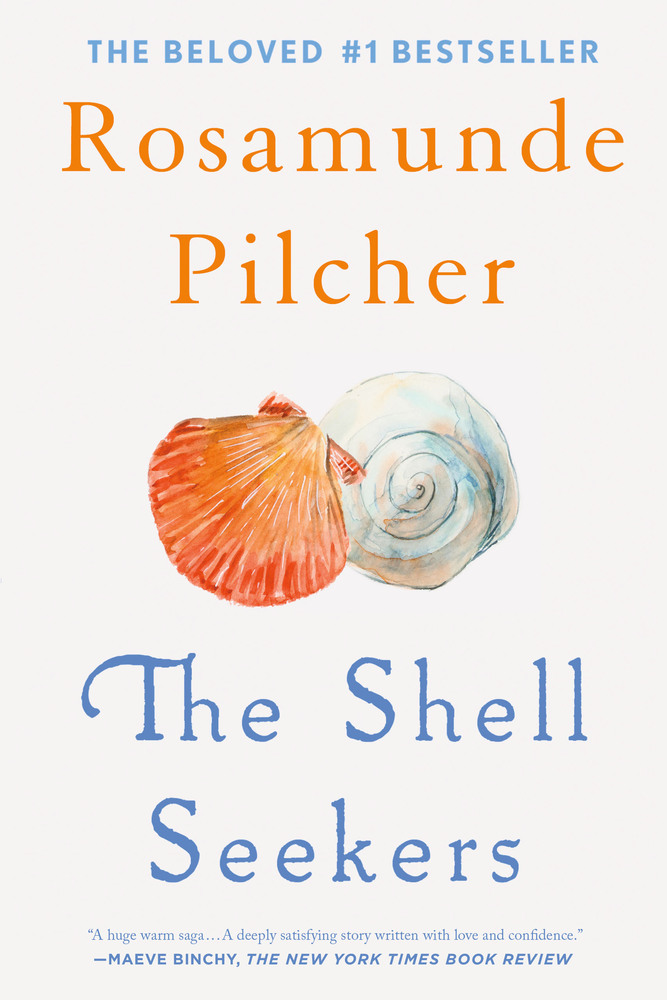
Also a classic is Rosamunde Pilcher’s The Shell Seekers which is in part set in Cornwall and known to readers of this column as my favourite book. The characters are so superbly drawn they could break – or make – your heart every time. But almost as good and often forgotten is Pilcher’s Coming Home, a saga which starts in Cornwall in the late 1930s and follows the heroine and her adopted family through the Second World War.

Another writer from my youth associated with the county is Mary Wesley. Camomile Lawn is her most famous Cornish novel and always a popular choice but I enjoyed Harnessing Peacocks far more. I like her heroine Hebe’s unconventional take on life – it seems especially suited to a backdrop in Cornwall.

In a totally different vein is Patrick Gale’s Notes From an Exhibition which perfectly captures (for me, anyway) the artist community at St Ives. The book tells the story of a family coming to terms with the dazzling genius of their late mother. At times a harrowing tale of depression, the wonderful language Gale uses lifts us and takes us to a completely different place.

New friends

Cornwall is now famous for chicklit and romcoms, a trend surely started by Judy Astley with her Just for the Summer, a sharp, witty read about Londoners who decamp to their Cornish second homes for the holidays.

Among those new out this summer, which means I haven’t actually read them but they may well appeal, are these:

Confetti at The Cornish Café by Phillipa Ashley – the third book in this hugely successful series sees the café become a celebrity wedding venue. Described as warm, funny and feel good by doyenne of romantic fiction Katie Fforde.

The Returning Tide by Liz Fenwick – the latest from a writer who has a built a career based on Cornish novels, this time with a saga of sisters and a wartime betrayal that spans the generations.

The Cornish Hotel by the Sea by Karen King – a heart-warming novel from my April Business of Books guest. Ellie returns to help her widowed mother keep the family hotel afloat, but will she succeed or will love intervene?

Dying to Take The Tour by Chrissie Loveday – a murder mystery set against the backdrop of a Poldark sightseeing tour. Cosy crime from a writer who I have to admit is a Cornish neighbour and is also published by Endeavour Press.


Business of Books: Going Up! Jane Cable on the importance of the elevator pitch

Jane Cable on the importance of the elevator pitch

It is indeed true that the word is getting shorter. Everything reduced to bitesize for folks in too much of a hurry to stop and listen, hungry to gulp down as many tweet-sized pieces of information as possible.

This is not entirely a bad thing. The book business knows that with so much competition for leisure time and money the potential consumer’s attention needs to be grabbed in a flash. A reader may spend hours savouring a good book, but their buying decision is often made in an instant.

Enter the elevator pitch – the ability to describe your latest work in two sentences at most. Catherine Miller’s excellent talk at the Romantic Novelist’s Association conference drew quite a crowd, encouraged no doubt by the lure of a competition for the winning pitch’s manuscript to be read in full by her agent, Hattie Grunewald of Blake Friedmann.

I learnt a great deal while preparing my entry. On a large piece of paper I set out the major themes and keywords for the book, turning them in my mind and distilling them into two neat sentences. I fiddled with the words, one at a time. I was happy with the first sentence: ‘When archaeologist Rachel Ward visits a remote Lincolnshire field she realises it’s where the voice in her head has been leading her for years.’ For ages I couldn’t get the second to gel, then the next morning I woke up with the perfect solution in my head: ‘But as she starts to dig an unseen danger circles ever closer and Rachel is forced to confront her own past in order to survive.’

The process of preparing what turned out to be the winning pitch had actually shown me that the ending of the book wasn’t sufficiently strong – to be fair, the edit notes I’d received said the same – but crystallising the very essence of the story into a couple of sentences made me focus on the issue – and solve it – in a way that nothing else had.

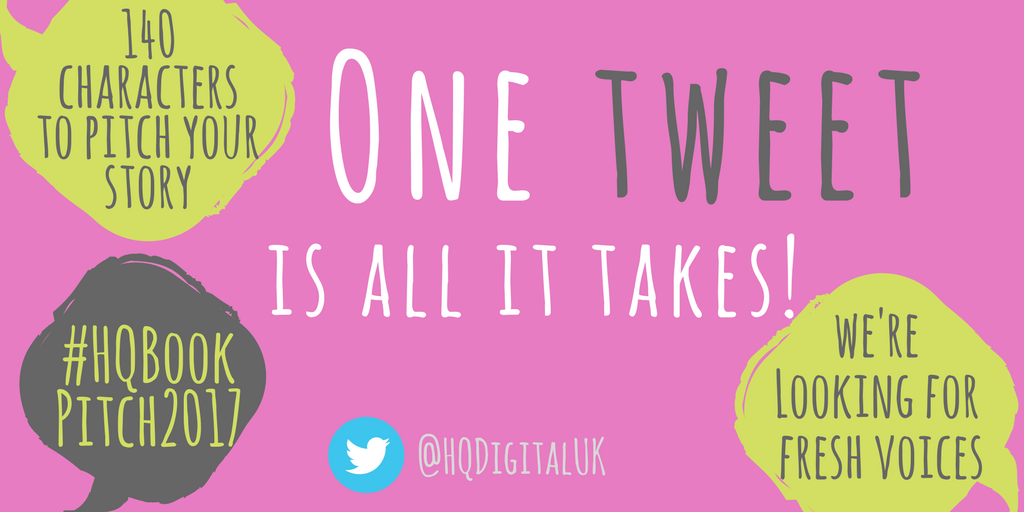
This week has shown me that two sentences is too long. Try pitching in 140 characters – actually 124 when you need to leave space for #HQBookPitch2017 – when Harper Collins’ HQ Digital division opened its virtual doors for tweeted pitches. I tried but failed to pack enough excitement into so few characters but again it was a great learning experience.

At no deadline was given so rather than research the type of books they were looking for I plunged straight in. At any one time I have a number of concepts on the block so I picked one I thought would do and tried to make it sound succinct and sexy. Not sexy enough, clearly, but I have learnt to target publishers I’m interested in better (a number of them do use this technique) and hone relevant pitches so they’re ready.

So what does a successful Twitter pitch look like? I am lucky enough to know two authors who have been asked to submit further and this is what they came up with and how they describe themselves in a tweet:

‘Lucy swaps her husband for a motorbike and has the best ride of her life’ from Sue McDonagh: “I love building my characters, then letting them loose. Should I admit that they do things I hadn’t planned for them and make me laugh?”

‘Millie should have known an archaeological dig is no place to escape the past. But can she uncover her future there too?’ from Kirsten Hesketh: “Pantser, people watcher, procrastinator extraordinaire. Twitter counts as writing, right?”

It goes without saying that everyone at Frost is rooting for them. We’ll let you know how they get on.


The Business of Books: Jane Cable meets Sunday Times bestseller, Elaine Everest

THE BUSINESS OF BOOKS: SPREADSHEETS & SAGAS

Jane Cable meets Sunday Times bestseller, Elaine Everest

How much of your working life does the business of books take up?


I can honestly say that books take up all my life. When I’m not writing I’m teaching novel writing to my talented students at The Mick Jagger Centre in Dartford, Kent. I’m also a committee member of the Romantic Novelists’ Association so you’ll find me organising social media and blogging for the Association. I would say that over 50% of my working day I’d be working on writing although I’m not creating words. Authors also need to be aware of Public Lending Rights, ALCS and other organisations where we need to keep our book details up to date as this will generate much needed funds,


What’s your business model to earn a living from writing?


I’ve been a freelance writer for the past twenty years so from the days when I was selling short stories, pitching features to magazines and organizing workshops for writers I’ve been conscious that I have to earn a certain number of pounds each month. Working in accountancy since leaving college, until moving into the writing world, I am addicted to number crunching so spreadsheets and cash flow predictions were part of my daily life. I could always tell at the push of a button if there were lean months ahead and would know to pitch more – and to write more fiction! This has changed slightly since moving onto writing novels as these days I’m aware when royalties and other payments are due and can plan accordingly. Those spreadsheets still come in handy!


What do you write and what do you consider to be your major successes?


These days I write historical fiction set in the 1930s and 1940s. It is a fascinating period to cover and when not writing I will have my nose in a non-fiction book researching social history, looking for fresh plot settings and generally fleshing out the world where my characters live.


My major successes are my novels with Pan Macmillan. Readers have taken my Woolworths Girls to their hearts making the first book a Sunday Times bestseller.


Tell me about your latest project.


The Butlins Girls was published in May so I’m still busy promoting and blogging about my girls at the end of World War Two. As I write this I’m looking at the final book edits for Christmas At Woolworths, which will be published in November, and these have to be completed by – tomorrow! I know there’s an email notifying me that first edits will be with me in two days for Carols at Christmas, a novella that will be published a few weeks before CAW. Writing wise I’m working on Wartime at Woolworths, which will take my girls through to the end of 1944. This will be published in May 2018. I’ve found the trick is to stay focused on the current work in progress while trying to fit all other aspects of my writing around it – and remembering to stop and eat occasionally. I can recommend writing retreats where I find working whilst gazing out to sea from my desk can be a welcome rest from my desk at home!


Elaine Everest has written widely for women’s magazines, with both short stories and features. When she isn’t writing, Elaine runs The Write Place creative writing school in Dartford, Kent, and runs social media for the Romantic Novelists’ Association. Follow Elaine on Twitter @ElaineEverest.


The Business of Books or Not: Jane Cable talks to Abby Endler about book blogging for love

Jane Cable talks to Abby Endler about book blogging for love


1) What is your book-related job or business?

I run Crime by the Book, a crime fiction review website and its associated social media accounts. My largest platform is on Instagram (@crimebythebook), where I take photos of the books I’m reading and provide my audience with updates as I read them. I also use Instagram to link to my website, where readers can find reviews, author interviews, and more. Crime by the Book can also be found on Twitter, Facebook, and Goodreads, and has a weekly newsletter as well. Crime by the Book is a passion project – while I would never write off the possibility of turning it into a business down the road, the goal is purely to share a love of books, and as of this moment I don’t make money from it.

2) What is the most rewarding part of it?

I would be hard-pressed to find an element of CBTB that is not rewarding, but if I had to narrow it down, the most rewarding part is the knowledge that I’ve connected readers with books they love. Whether that feedback comes from readers who have bought a book on my recommendation and loved it, or from authors who have seen the enthusiasm of my audience for their book, nothing could be more exciting to me than knowing I’m helping those books find great homes! There’s such an appetite for crime fiction out there, even on a platform like Instagram which is dominated by a younger audience, and I am thrilled and humbled every time I hear from my audience that I’ve helped spark their interest in crime fiction. Likewise, it’s extremely rewarding to hear from authors who are excited by the ways I’ve helped connect their book to those readers!


3) What do you consider to be your major successes?

The growth of my platform on Instagram has been a huge success. Crime by the Book just turned two years old, and also just passed 40,000 Instagram followers. As previously mentioned, Instagram does have the reputation of being dominated by a younger audience, so I consider it a huge success that I’ve found footing with a younger demographic! It’s very exciting to me, as a younger crime reader myself, to see my peers connecting with crime books. I also consider every single chance I have to interview an author a major success, whether that author is a big name (authors like Jo Nesbo, Sara Blaedel, and Clare Mackintosh have all appeared on Crime by the Book), or a debut author. No matter the author’s name-recognition, I’m honored to speak with and learn from every single author I interview. It’s a huge privilege!


4) Have you always loved books, and what are you reading at the moment?

I’ve loved reading for as long as I can remember. I started reading mysteries when I was very young – I started with Nancy Drew! And then as I grew up, I transitioned into Agatha Christie, James Patterson, Patricia Cornwell… and my love of reading crime books has just evolved and grown from there. At the moment, I’m reading ORDEAL by Jorn Lier Horst. This Norwegian crime book is part of his William Wisting series, and is the newest installment to be released in the US. I love this series for its detailed portrayal of police work, and its endearing characters.


Bio: Abby Endler is the creator and reviewer behind Crime by the Book, a crime fiction review website and its associated social media accounts. www.crimebythebook.com