A Day in the Life of bestselling Author Margaret Graham

margaretgraham

We have a new puppy, Polly. I’m up with the sun, because she is. So out she goes, into the garden led by me, because she is reluctant. The neighbors must think their worst nightmares have come true as this disheveled apparition stands in the dew come rain or come shine, hair askew, pleading with a four legged creature to ‘get on with it.’

In due course, I take both Polly, and the long suffering ‘older sister’ Rosie out for their walk. We head round the corner to the village pond where there are ducklings.
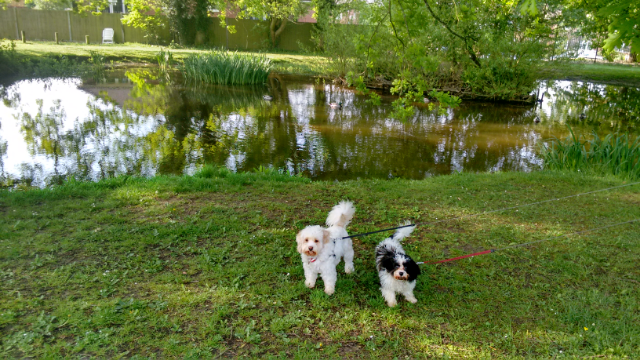
pic 1 Polly and Rosie

I say village and Downley really is one. A mere 25 minutes by train from London it has the heart of any Dorset village. There is a great community spirit, and we are fast building a reputation as a centre for the arts.

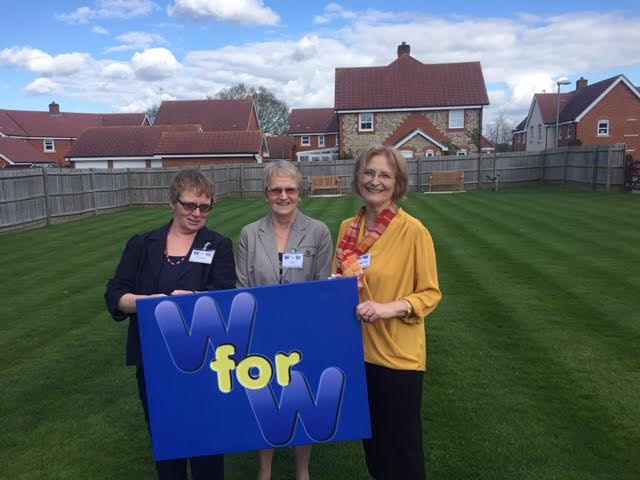
After ‘walkies’ it’s down to work – of some description. I could be sorting out next year’s LitFest for Words for the Wounded which is a charity I run with two other grannies to raise money for the wounded. The annual LitFest is our big event.
cmargaret

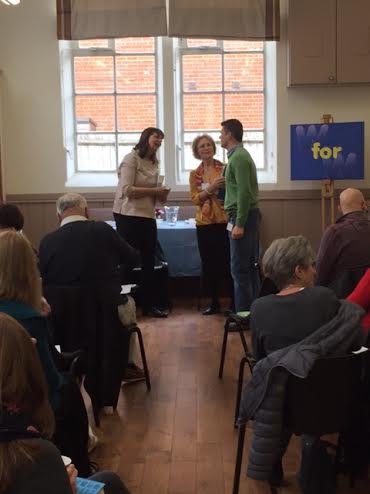
This year we had Elizabeth Buchan, Jemima Hunt, Tracy Baines and Frost’s Catherine Balavage as speakers. It was wildly successful, which is great. All the money goes to the wounded, as the grannies absorb all expenses.

My kids and grandkids are the catering team, and have a great time. Seems that not much wine survives – could there be a link?

Otherwise, as contributing editor for Frost, I could be reviewing books, or exhibitions or similar. Frost is a great springboard for aspiring writers. It gives them a cv and gets them noticed.
housedivided

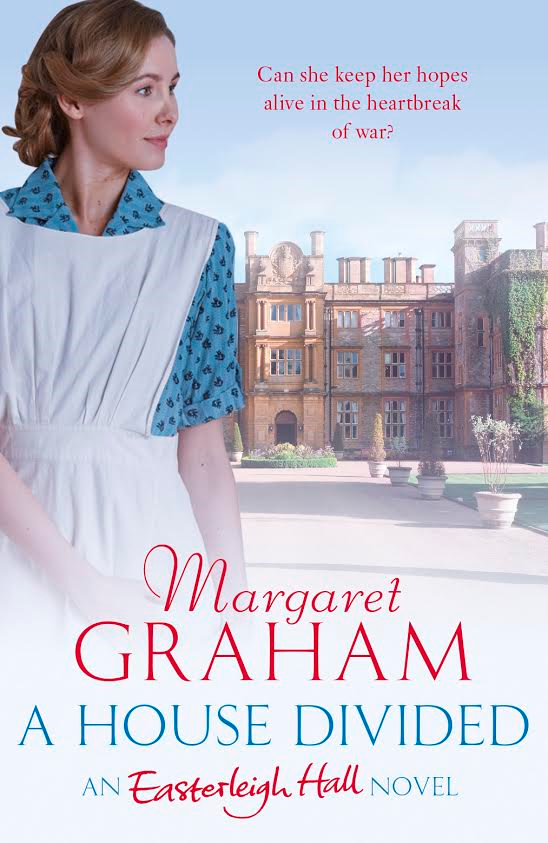
Otherwise, my main thrust is as an author. I write two books a year for Arrow, which is a bit of a stretch and requires a modicum of organisation. When I’m researching I spend a fair bit of time at Starbucks in High Wycombe, reading through material which could be useful, or having lunch at the Wellington on the Strand for no other reason than I love it there and can catch up with Inacky, Esther, Maria, Thomas, and Ruth, who make sure everyone has a great time. As a special treat, the grandkids can sometimes spare the time to come with me. So young, they are, but so busy. So that’s the extent of the ‘organization’.

wellieandstaff

All the time though, whatever I’m doing, I’m thinking of the novels, trying to sort out a plan, iron out structural blips, and getting to know the characters. Then, for two months, I get my head down and write the darned thing. I can’t bear being interrupted, because for that time I am living in a different world, being a different person, well, many different people, and I just want to get it all down before it escapes me.

To finish is a relief, but also a loss because the characters, their struggles, their triumphs have become yours. But then, for me, it is onto the next one, or the next WforW event, or onto yet another playtime, or something for Frost. Heigh ho, I’m very lucky.

www.margaret-graham.com
www.wordsforthewounded.co.uk
www.wordsforthewounded.blogspot.co.uk
A Day In The Life of CJ Carver

Being an author, people think I get up around midday, go for a long lunch and return home to bang out a few pages before pouring myself a glass of wine and finishing for the day.

Hmmm.  Nice thought.  If only it didn’t take me quite so long to bang out those pages . . .

A Day In The Life of CJ CarverToday I’m woken by the bin men at seven-thirty.  Eyes closed, I’m lying in bed listening to them crashing and banging down the road when, seemingly out of nowhere, an idea begins to form about the next book.  I let it drift.  I don’t try and pin it down.  Gradually it takes a firmer shape and I study it carefully before letting it drift again.

It is this state between waking and sleeping that I find the most valuable for creative thought.  It’s almost like meditation, but not quite, because instead of being clear of thought my mind is occupied with the story I’m trying to tell.  By the time I’m fully awake, I’ve made a handful of notes and am ready to leap into the day.

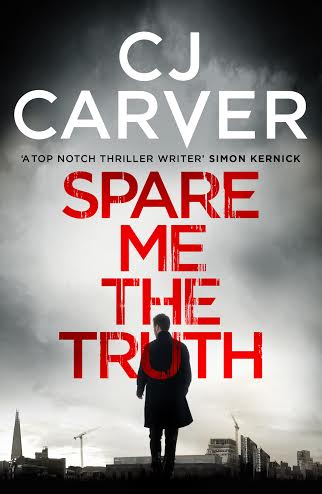
After a shower, breakfast and a brisk walk, I get stuck in to emails, wanting to clear my mental desk before I start writing.  I’m working on the sequel to Spare Me The Truth, or at least I was until my postie arrives and hands me three parcels, each containing a brand-spanking new hardcover book.  They all look fantastic and although I know I have to read them – I’m on several panels at CrimeFest in Bristol this year with the authors – I really shouldn’t start now.  Or should I?  I flick one open and am immediately captivated by the first page.  This sort of temptation is ever present being self-employed, and I have to force the books away and out of sight.

pic 2 Carver, Caroline 2 credit Steve Ayres

Credit: Steve Ayres

Soon, I’m completely absorbed in my work and don’t notice the time passing until my email pings.  It’s from a psychologist who is helping me research the psychopathology behind serial killers.  Another arrives, this one from a detective inspector in Manchester.  I know it drives the police crazy when writers get things wrong, so I do my utmost to get my facts right, but I have to be careful with research as it can be so riveting, I never get any writing done.

I work on my manuscript until early evening when I have a quick look at Twitter (another terrible distraction) before deciding whether it’s cold enough to light the wood burner.  Or shall I go to the pub?  Writing is a solitary occupation and aside from the postie, I haven’t spoken to anyone all day.  I’d better go to the pub, I decide, and talk to someone or I might go quite mad.


©CJ Carver 2016


Submissions Now Open For The 9th Luke Bitmead Writer’s Bursary

writing competitions, writing, competitions, novel, novel writingWe know a lot of writers read Frost so we wanted to bring this great competition to your attention. Submissions for the 2016 Luke Bitmead Writer’s Bursary are now open.

The award was set up shortly after Luke’s death in 2006 by his family to support and encourage the work of fledgling novel writers and the Bursary is now the UK’s biggest award for unpublished authors. The top prize is a publishing contract with Legend Press and a £2,500 cash prize.

Luke Bitmead was the first novelist to be published by Legend Press, his novel White Summer was released in 2006 shortly before his death. Two novels have been published posthumously – The Body is a Temple and Heading South (co-authored by Catherine Richards). Information about Luke can be found at www.lukebitmead.com.
This fantastic bursary for a ninth year, and hope to continue the success of our previous winners Andrew Blackman (On the Holloway Road), Ruth Dugdall (The Woman Before Me), Sophie Duffy (The Generation Game), J.R. Crook (Sleeping Patterns,) Joanne Graham (Lacey’s House), Jo Gatford (White Lies), Tara Guha (Untouchable Things) and Lyn G. Farrell (The Wacky Man) published today 2nd May 2016.

Only adult fiction is eligible for this bursary, no children’s books or non-fiction.

Tom Chalmers, Legend Press MD comments ‘We are delighted to be continuing this brilliant bursary for the ninth year. The prize is a fantastic way to find new, undiscovered writing talent, and we have found some of our most exciting authors through the prize. Luke was an amazingly talented young author, and it is an honour to be continuing the prize in his name.’

Submissions from writers will be accepted from Monday 2nd May until Friday 15th July 2016.

For information about how to enter visit: http://www.legendtimesgroup.co.uk/legend-press/365-luke-bitmead-bursary


Surreal? Probably, but it’s my life Alex Bannard – Bangkok correspondent

Being an expat affords some amazing experiences, luxuries and some frustrations. In a previous expat life I had friends who described it as ‘not real life’ – it is real, it’s our life right now, surreal though it might sometimes be. 

pic 1 bangkok

Take a typical moment in time in Bangkok.  I was invited to join a friend in her first ante-natal appointment for her fourth pregnancy. Hubby felt his role was done so it was my privilege to share a wonderful moment with her and to have some fun too. Afterwards we were waiting outside for a taxi to go to lunch. I say waiting, we actually got proactive and went straight to the area where they are dropping off to pick one up.


‘We were met with, ‘No madam you go get number, please’.


There’s a system. Wow. 


We went to the taxi desk & got number 49. There are many people milling around and obviously we don’t expect to get in the first taxi. Several minutes later a lady with number 52 clutched in her palm was clearly edging to the front of the ‘queue’…there is no queue just a mass of people. 


I don’t really like pointless rules but if there is a system, queue or not – you wait your turn lady or I will take you down. I’m British after all, and we invented the queue.

pic 2 taxibangkok

Realizing we probably needed to register with Clipboard-lady I told her our destination & she wrote it next to 49. We’re back in the game. Number 52 can wait in line. 


After many more minutes it became apparent that the system is not a system. 


Clipboard-lady approached the next available taxi and gave him a range of options on which location he wanted next, which often he declined & drove off. Oh for goodness sake -it’s 37 degrees humid as a Chinese Laundry we’ve be waiting for almost 1/2 hour, my friend is in wedges and I am watching my long awaited Dean & Delucalunch disappear up the ‘system’.


So I took things into my own hands & walked down the line and asked a taxi way back in the taxi queue if he will take us to Emporium. ‘Madam, number?’ he said. 


I replied, ‘We have a number but there is seriously no system. Taxi just choose where he wants to go. You want to go to Emporium?’ 


‘Ok but 100bht’


‘Done.’ We jumped in with our laminated 49 (stick that in your ‘system’) and drive off. 


The traffic is horrible. We pass a Dean & Deluca and get stuck in a nose to tail traffic, so I hand him his 100bht & say ‘Kap kun ka we get out here.’ 

pic 3 dean-deluca-bangkok

‘No madam. Just round corner.’ He replies.


‘Oh ok’


Finally we pull up at…Central Embassy. Not quite where we wanted to be.

pic 4 central embassybangkok

Yep, surreal it is. But we love it. 

😳


The life of a Second Wife by Margaret Graham

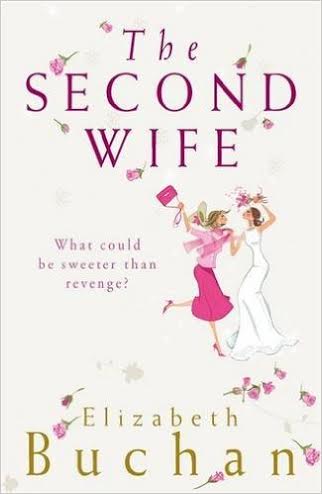
Frost is so pleased to see Elizabeth Buchan’s novel, The Second Wife picked out by Daisy Goodwin in her feature in the Daily Mail: Second Marriages – key novels to help you through the trickier times in life.

The life of a Second Wife elizabethbuchan
Daisy Goodwin discusses Rebecca by Daphne Du Maurier, Before She Met Me by John Barnes, and Sunday Times No 1 bestselling author, and patron of Words for the Wounded, Elizabeth Buchan, and her novel The Second Wife.

The life of a Second Wife lizybuchan
The Second Wife explores the world of the mistress who becomes the wife – overtones of Sir James Goldsmith who did just that, and thereby created a vacancy. Ouch.
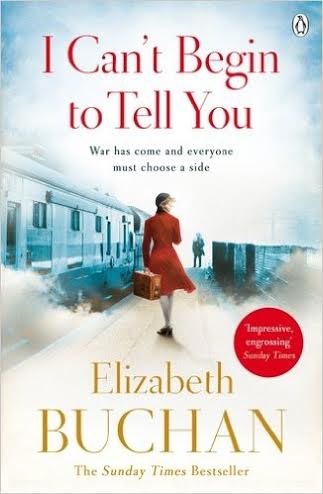
According to Buchan the second marriage is a world that can be less than appealing, full of pitfalls and  of course,  baggage. Elizabeth Buchan, who spoke recently at the Words for the Wounded LitFest at Downley, High Wycombe, (Frost’s editor, Catherine Balavage spoke later in the day) examines Minty’s experiences of a second marriage sympathetically, but with her usual incisive wit and elegance. It is a compelling and heart-warming novel, as are her others,  the most recent being the thought provoking and excellent I Can’t Begin to Tell You set in Denmark during the 2nd World War.

I can't begin to tell you
It’s great to see The Second Wife having another outing. Go on, give yourself a treat – it is very well worth reading.

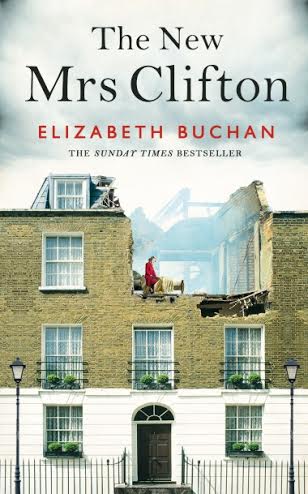
Elizabeth Buchan’s latest book The New Mrs Clifton will be out in August 1016. Frost is looking forward to reviewing it.


The-New-Mrs-Clifton-380x609


The Second Wife                   published by Penguin
I Can’t Begin to Tell you        published by Penguin
The New Mrs Clifton             published by Penguin  August 2016


Surrealism, Me And Rene Magritte By Wendy Breckon

m, Me And Rene Magritte By Wendy Breckon1

Picture the scene. Beaming toddler leaps down the path clutching a painting. Circles, squiggles, and wavy lines in bright zany colours. Mum or Dad sweep up the impressive piece of artwork, pinning it on to the fridge for all to admire. Could this be the start of a burgeoning art career, the beginnings of a future Monet or Picasso? In the same way, when a little child kicks a ball around with some nifty footwork in the park, the idea of a famous footballer such as Lionel Messi in the family remains a fascinating thought. The answer is you won’t know yet, but there’s always a possibility.

I loved art and wielding a paint brush from an early age. Once, there was a zealous moment at the age of four, when our black farm cat burst out in oversized orange spots. Well… er… with some help from me as I pursued him round the garden.

Our secondary school in Ireland was hot on literature and culture. Yippee! Sandwiched between the intricacies of science and the sheer terror of Maths, was the History of Art with a superb teacher. I soaked it all up. Lowry, Matisse and Constable, with their fascinating lives and influences.

m, Me And Rene Magritte By Wendy Breckon2


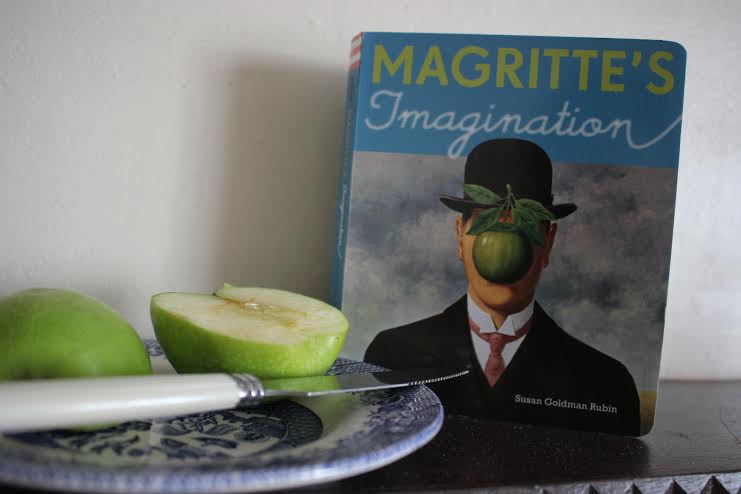
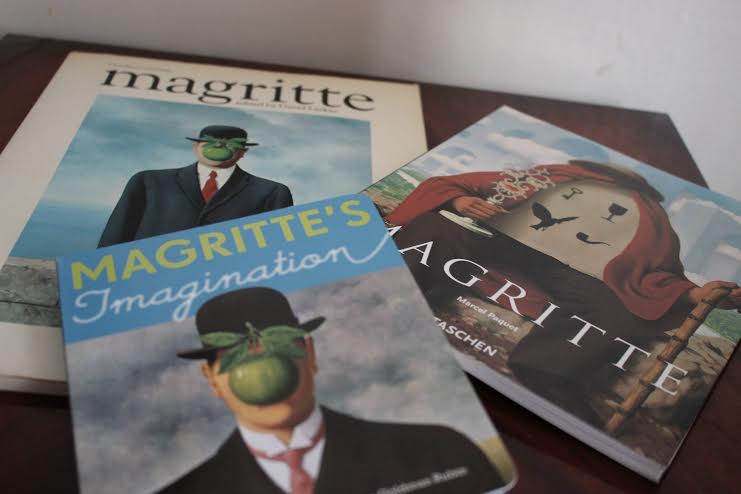
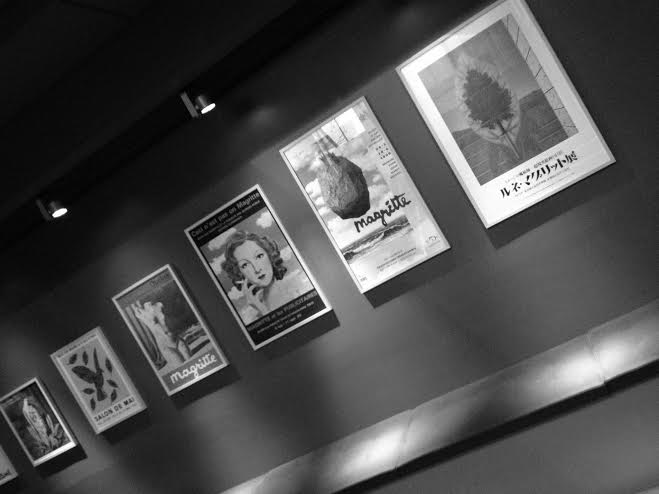
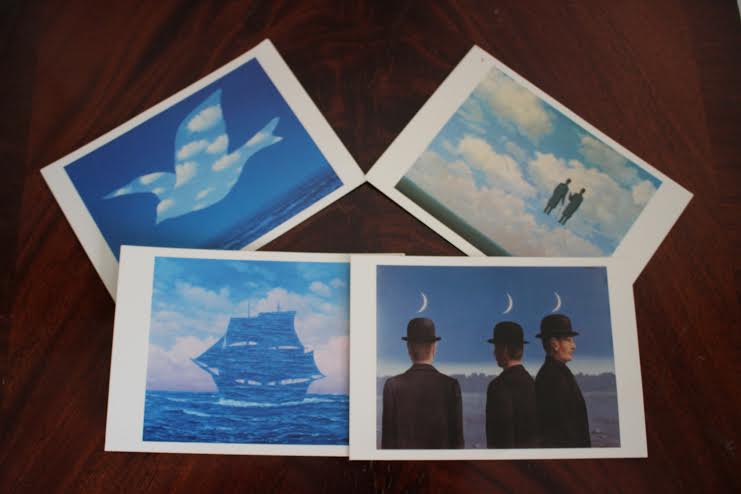
Rene Magritte has always been one of my favourite artists. Born in 1898, he lived most of his life in Belgium. He shunned the intellectual and artistic life of the capital, preferring to live with an unassuming identity. For him, the art of painting was a means of knowing life better and at the same time, liberating things from their familiar roles in everyday life. We are used to the images of birds in cages or apples on trees. Our interest is awakened more readily if the bird is replaced by a fish or a shoe. As a surrealist painter, Magritte had the knack of showing both the absurdity and contradiction in reality.

m, Me And Rene Magritte By Wendy Breckon3

He has been described as a, ‘painterly Lewis Carroll’, who created a wonderland for children in his book, Alice in Wonderland, with the tales of the Queen of Hearts, the Mad Hatter and the White Rabbit. Maybe this is why I remain fascinated by Magritte, as this story was my favourite as a child. I spent a lot of time turning the pages and imagining I was Alice.

To look at a Magritte painting is to see through the barrier of time. His vision of the world, was one in which the people and things around him, could quite easily turn into something else. Bowler hatted commuters hung in the clear skies like April showers and express trains rushed out of open fire places.

m, Me And Rene Magritte By Wendy Breckon4

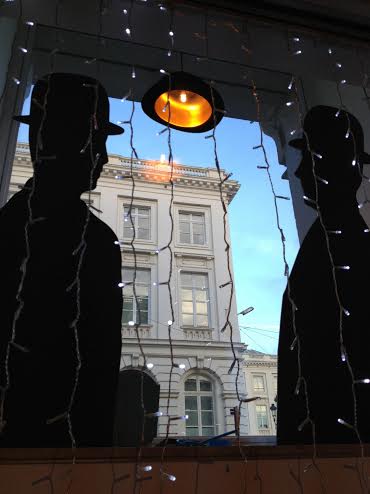
The ultimate experience for an art lover, was a visit to the Rene Magritte Museum three years ago with my son. This building on the Place Royale, in a neoclassical hotel, houses a collection of original sculptures and drawings, in addition to the two hundred paintings. As I hovered in front of the artist, who I’d admired so much as a teenager, I was able to appreciate for the first time all his wonderful work, in the moody, half lit interior… the perfect setting. I will never own one of Magritte’s paintings, but the close proximity to this master of fantastic art was an experience to remember.

m, Me And Rene Magritte By Wendy Breckon5

Greta Stoddart and White Space by Maya Pieris

Greta Stoddart makes very good chocolate biscuits. She is also an award-winning poet, been a performer, teaches creative writing and lives with her family, including Juno the “liquorice allsorts” dog, in Devon, down a steep track with a huge view across the Axe Valley.

Greta  Stoddart and White Space   by Maya Pieris2Over tea and biscuits we talked about words and silence, 2 big elements in her creative life. Words, she said, were an early love, her first “self-published” poetry anthology written aged 9 and illustrated by her sister but not she said like Jane Austen or the Brontes.


The collection, which included  “Master Crash It All” about a particularly clumsy boy,   “ was a bit tumpty, tumpty” – her description – but lines would arrive in her head as she awoke and wanted to be written down. The book happened just before a major riding accident which saw her spend 3 months in hospital and then several more on the sofa reading or looking out the window, in retrospect an excellent nursery for a fledgling poet who turned from a “an outgoing child into a more reflective one”.


Her road to physical recovery turned out, however, to be through ballet, almost on doctor’s orders, this leading to the other passion-dance and then theatre. Eventually after reading drama at Manchester Greta went to study with the Jacques Lecoq school of physical theatre in Paris specialising in clown skills. 2 years on found her and 2 female friends  touring  Europe with Brouhaha, their mime theatre company, which lasted for 5 busy years.


Greta  Stoddart and White Space   by Maya Pieris1


She says the experience “taught me to respect silence- which poetry also values in the white space around the text”, a “pressured silence, to not speak unless you really need to”. Space in both words and performance is certainly central to her writing and her teaching- her workshops are always measured, calm situations where listening is of the essence. It was while on tour in Belfast that the writing bug began to go viral in the form of “lines in my head” which insisted on being written down, as in childhood.


She took a year out of acting and never went back. Her timing was stage perfect- she booked onto an Arvon writing course led by Simon Armitage in the company of other then aspiring poets such as Kate Clanchy and moved on to be tutored by Michael Donaghy. She took to poetry like a duck to water and found an audience in sympathy with her work resulting in her first collection, At Home in the Dark, which received the 2001 Geoffrey Faber Memorial Prize. She claims  “it was a bit of luck” but was actually the result of 7 years work.

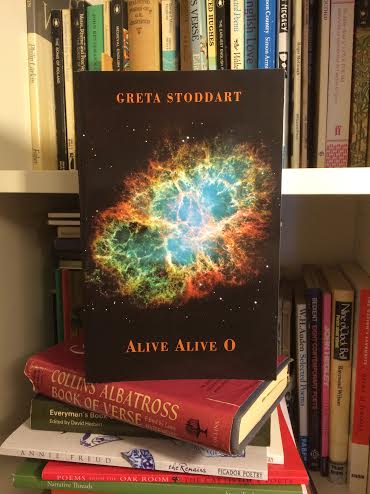
Greta  Stoddart and White Space   by Maya Pieris3She has since written 2 further collections appearing in a fairy tale way around every 7 years. Her latest, Alive, Alive O, published last year deals with death, a subject which has interested her since childhood and which came about after a series of personal bereavements. It is, however, not a depressing collection- sad, thoughtful, painful and also positive as she attempts to cover the complexities of this subject.


So with 3 books completed she is in quiet contemplation of her next writing challenge so we await with interest What Greta Did Next.


Books available at all independent and chain book stores.


Writing Short Stories for Magazines

Short Story Magazines

The Most Important Thing You Need to Know


There isn’t a secret recipe to success so it’s no use looking for the answer here.  If you want to write short stories and sell them there is one thing you need to do before you even begin to write your story. Market Research. You can’t write a story and send it off willy nilly. You may sell one or two that way, if you are extremely lucky, but for continuous success you need to know your reader.

I’d advise selecting one or two magazines that publish short stories. Those accepting them at the moment are, among others, Woman’s Weekly, Take A Break, Fiction Feast, The People’s Friend and Yours. You can find a full list of markets at www.womagwriter.blogspot.co.uk

Read through all of the stories in your chosen magazine and find something that resonates with you, those that might be similar to stories you would choose to write. Most importantly, read them with respect. Don’t sneer and pass judgement. It’s a hard market to crack and if you disrespect your reader your writing will come across as patronising. Guess what? No sale.

Get a pen and paper and make notes. What are the characters names, what ages? Where do they work?  Where are the stories set? What are they about – family, romance, comedy, thriller? Each market has its subtleties and you need to make yourself familiar with them if you are to have any hope of success.

What is the word count? Each magazine has set limits. It’s no good sending a 700 word story  to Woman’s Weekly when they only take 1,000 or 2,000 words. It will come straight back to you.

Now read the entire magazine, the articles, the readers’ letters, the adverts, the problem pages. You can learn so much about the readership by doing this and then you will be able to build a picture of your ideal reader. Do it as an exercise. Imagine a woman buying that magazine – what does she look like? What job does she have? Where does she live? Before you know it you will have a character; you may even have a story – get writing.

Editors are busy people. Make things easy for them. Present your work as per their guidelines, found on their website. If you are unsure how to set things out pop over to writer Sue Moorcroft’s website because she has the best example I’ve seen on how to present a professional manuscript. It will save you so much time and effort  www.suemoorcroft.wordpress.com/manuscript-presentation


I’ll be talking at Words for the Wounded Literary Festival on 16th April and will be happy to chat about writing short stories for the commercial market throughout the day.


Tracy Baines’ stories have appeared in Woman’s Weekly, Best, Take a Break, The People’s Friend, Candis, My Weekly, Yours in the UK – and magazines in Scandinavia, Australia and South Africa. She has completed a book on Eating Disorders and is now working on a novel.