A Day in the Life of Penny Gerrard

A typical day? No such thing – and that’s the way I like it.

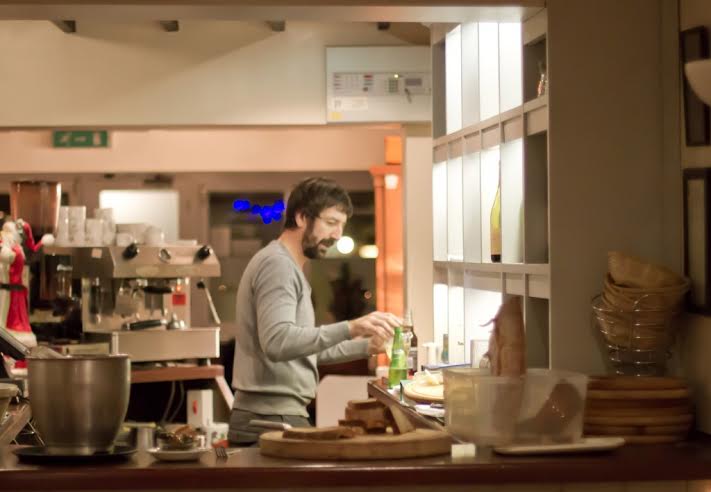
I’m certainly an early bird – whizzing about doing “lick and a promise” style housework while catching up with The Archers.

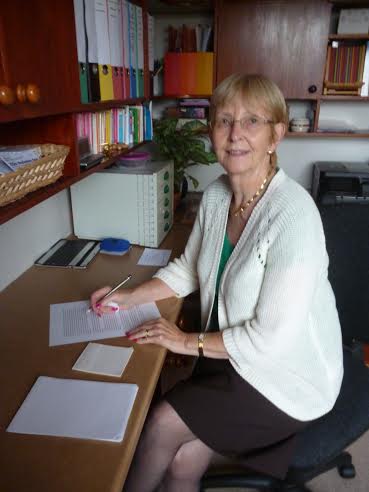
I really look forward to those days when I am sitting in my local court as a magistrate. I love being part of the justice system and I can be sure of a day full of interest and challenge doing something worthwhile with great colleagues.

Day in the Life Picturepennygerrard
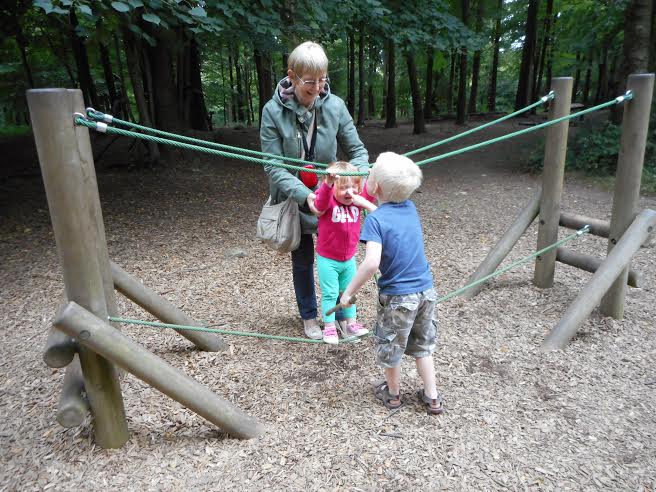
Other special days are when we look after our younger grandchildren. Five year old Harry involves me in complex Star Wars games with incomprehensible rules and two year old Francesca practises her fast developing language skills on me – telling me she prefers her trainers to her “sandcastles”. Keeping track of the lives of our 20 and 16 year old granddaughters is fun too.

Penny Gerrard's A Day in the Life.
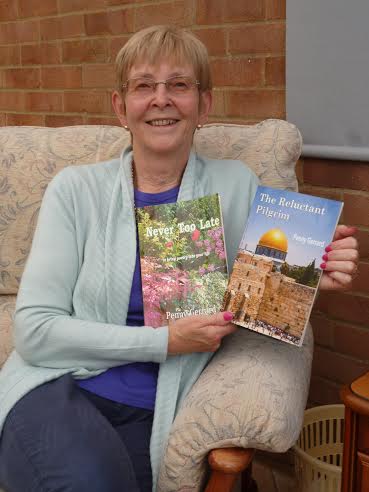
Perhaps I’ll do some admin for The Pastures Church – agendas, minutes, newssheets etc. – sounds dull? Not a bit of it to a compulsive organiser like me. My to-do list would probably be the first thing I rescued from a fire – that and my photobooks and scrapbooks which fulfil my nostalgic side. This nostalgia drove me to record memories of parents and favourite aunts who were no longer there to pass on their stories. Discovering a creative writing group run by author Margaret Graham spurred me on to write and I’ve self-published a book of poems called “Never Too Late” and an account of a trip to Israel called “The Reluctant Pilgrim”.
Penny Gerrard's A Day in the Life.3

Day in the Life Picture 04.

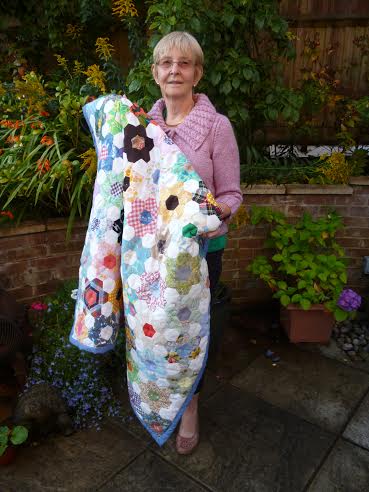
If we are travelling (we are quite the globetrotting retirees) I knit on the journey – usually for the children but have recently managed a jacket which actually fitted me. I might do some embroidery and the walls of our house reflect this. My longest project was a patchwork quilt which took me 40 years.

Day in the Life Picture 04.pennygwriter
Shakespeare often features in my day – perhaps with a trip to the cinema or theatre with the U3A Enjoying Shakespeare group I run. The U3A has given my husband and I some shared interests like croquet – lovely on a sunny summer afternoon, or quizzes which test our remaining memory.

Somewhere in my life there has always been music – from singing in choirs to amateur operatics with wonderful opportunities to dress up. At the moment it involves singing with my church band which is mainly made up of teenagers who also play guitars and drums. This has meant getting used to having no music and only an IPAD to refer to for the words. How things have changed in my lifetime.

Day in the Life Picture 04.pennygerrardwriter
After all that, by about 9pm I finally run out of steam and we perhaps treat ourselves to an episode from a box set like House of Cards with Keven Spacey or The West Wing with Martin Sheen. Lovely to enjoy brilliantly written drama. Now, could I aspire to write a script one day? Well maybe, but in the meantime, the ten o’clock news is nearly done and a good book awaits me in bed.

Penny Gerrard


An Interview With The Incomparable Salley Vickers by Margaret Graham

I read Miss Garnet’s Angel a while ago now, and absolutely loved it and thought it would be fascinating to interview Salley Vickers, the author. At last I’ve managed to find a window in her busy life, and here she is to answer questions for Frost Magazine. What’s more you can hear her talking about The Boy Who Could See Death on 29th September at the Windsor Literary Festival.
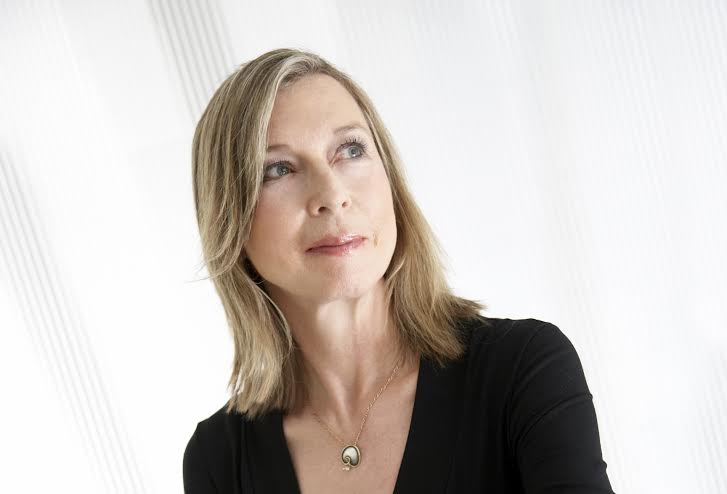
An interview with the incomparable Salley Vickers   by Margaret Graham 1

You had an interesting but complex childhood, and felt that you had a sense of some unspecified task to fulfill. Did that sense drive you? Does it still?

Yes, I think it does. My parents imbued me with a feeling that one should work for the general good. In my case, that is best done by conveying my attitude to life through my writing.  But also they endowed me with a strong sense of the basic equality of all, and what people seem to like in my novels is finding aspects of their own hidden being there, which gives a sense of being understood.  I feel sure this is part of the power of a good novel – the capacity to make us feel known and perceived in our most private recesses of being.
An interview with the incomparable Salley Vickers   by Margaret Graham 2

Most of us grow up with parents defined in some way by their past. If it is a traumatic past, it can lead us to have an enhanced ‘political’ sensitivity, in order to weave our way through the rocks. We learn what to reveal, and what to hide. 

This is a skill I notice in your books, so would you agree that we authors write out of our past?

Inevitably, we write out of our conscious but, more powerfully perhaps, unconscious experience. The novel I have just completed, (‘Cousins’ published Viking March 2016) explores the way trauma recurs through a family history, even if the past is unknown to those in whom it re emerges. Nothing fascinates me more than how memory, both conscious and unconscious, lives on beyond the limits of any individual life.

You write with grace, but with ‘political’ care, holding back information, and then revealing. It gives an implicit tension. So – perhaps authors are not just influenced by their past, but trying to make some sense of it?  What are your thoughts on this?

I am sure I write to discover what I already ‘know’. What we think we know, what we know we don’t know and what we know but ignore are very common human conditions which I often explore. A previous career as a psychoanalyst has taught me to reflect on these levels of seeming ‘knowledge’.

Or are we just story tellers, or both?

Everything is story, in my view. Even science is a series of superseding stories. We are hard wired to make sense of experience through narrative. In analysis the work is to find a more workable version of the story a person tells themselves about their life. A writer’s job is to follow a story that has its own organic truth and is not a ‘truth’ imposed by the author’s own prejudices or intent.

How did you start your writing career? With short stories, or straight into Miss Garnet’s Angel?
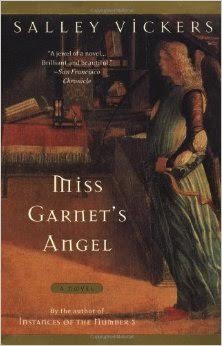
Miss Garnet's Angel

Miss Garnet began life as a short story and just grew. I had no idea of publishing it. Like much of real significance in my life it was a happy accident – as were both my wonderful children.

How do you work? Do you have the germ of an idea, spend time thinking and then planning? I ask this because your novels are multi-layered. They are  psychological, mythical, in some ways fairy tales, but grounded ankle deep in reality. I believe I would need to think, and plan, and know where I was going, and what I wanted to say to achieve this level of complexity, and present it, as you do, in such an accessible way.

I never never plan.  I hear a voice, revisit a much loved place, recover a memory and then let imagination, memory, sudden encounter, whatever accrue around it, rather like the grit of sand that through a nacrotising effect becomes a pearl. The excitement of writing for me is not knowing what is going to happen. I never know the end of a novel, or a story, until very near the end and then it is often a major surprise.
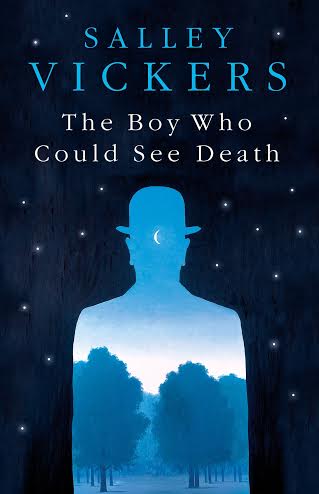
theboywhocouldseedeath3

Do you enjoy writing or do you find that starting a novel is daunting because until you have finished it, you have half a foot, or more, in their world? I ask this because once I start, I find that I need to ‘be’ the characters. Well, not even need to be, I am, the characters. Someone once said, that an author is writing their life story so absorbed do they become in the world of their characters. 

I love it once I’m in it. I tend to spend the first part of a book in a restless state of acute anxiety. Then once I get over a certain sort of hump I really let rip and can write for very long hours. But your unnamed authority is right: it does become one’s own life story and I think much of the excitement comes from living out a life that is both one’s own and yet not one’s own. I write out of myself lives I have never lived but live through writing them.

Of all the books you’ve written, which is your favourite?

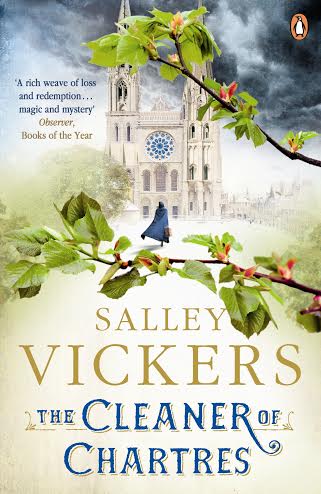
Probably the last one I have written – but if you point a gun at my head it would have to be either  ‘The Other Side of You’ or ‘The Cleaner of Chartres’.
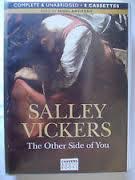
pic 4 The other side of you

Have other authors influenced you?

Oh yes. Many. I grew up in a reading household, for which I am ever grateful, and had read all the classics by the time I went to university. Henry James,   George Eliot, Trollope, Conrad have all influenced me. Also Beatrix Potter on whom I learned to read and from whom I learnt about cadence (if you listen to Beatrix Potter the prose is exquisitely cadenced).

pic 5 Beatrix Potter

But of more contemporary authors, Penelope Fitzgerald and William Maxwell are my heroes. Penelope Fitzgerald did me the great honour of endorsing Miss Garnet shortly before she died. I’ve not had a higher or more precious encomium since.
ic 6 Penelope Fitzgerald

What next? 

Cousins and after that it’s a secret, even from myself

What do you do when you are not writing?

The usual introvert’s pleasures: read, walk, talk to friends, listen to music, go to the opera/ ballet.

What brings you joy?

Children (this is boast but I am reliably informed by my grandchildren that I am very good indeed at playing), birds, poetry, dancing, and I must confess also …. shoes…

pic 7 shoes

Salley Vickers is talking at the Windsor Literary Festival on 29th September at 7.00 pm. She will be discussing The Boy Who Could See Death. The boy is question is Eli, who is an ordinary lad with an extraordinary gift, or is it a curse?

For more information:

http://tickets.windsorfestival.com/Sales/Autumn-2015/Tuesday-29th-September/The-Boy-Who-Could-See-Death/The-Boy-Who-Could-See-Death



A Day In The Life / Hester Young

Today finds me far from the New Jersey suburb that I call home, in the midst of a research trip for my second novel. My husband and I have left our kids with my mother and journeyed to Arizona. The timing isn’t perfect–my first book, THE GATES OF EVANGELINE, has a lot going on publicity-wise as we prepare for our U.S. release. But the sequel needs some love, too, so here I am!

A DAY IN THE LIFE : HESTER YOUNGsonoradessert

Today, we begin the morning at a B&B on the edge of Tucson, a city I used to live in. I take a 5 AM stroll on the trail out back and watch the sun come up. Lizards, birds, and rabbits scuttle and hop about, and I even spot an antelope jackrabbit. I make notes on the different types of cactus and desert plants I see so that I can accurately describe them in the book later.

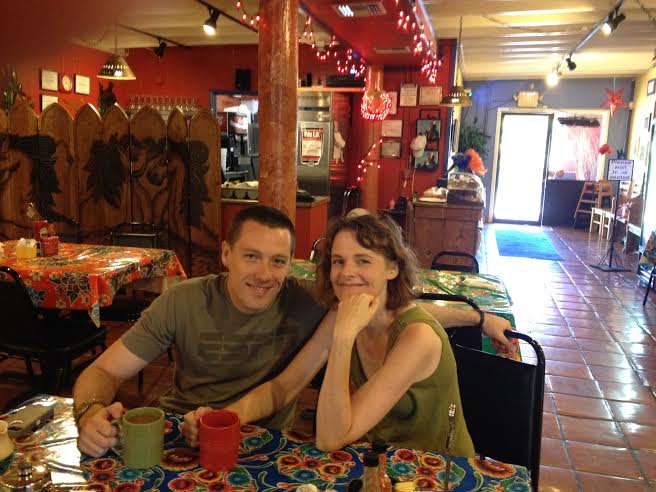
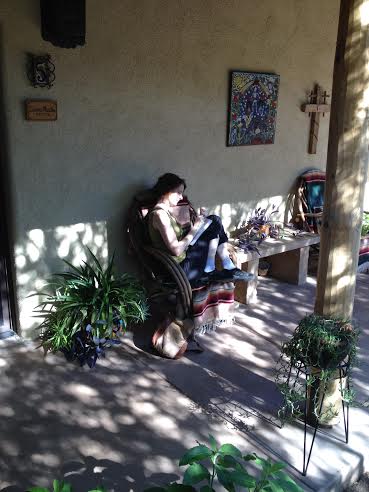
A DAY IN THE LIFE : HESTER YOUNGcoyotepauseMy husband and I enjoy a breakfast of tortilla chips, black beans, and nopalitos (a type of cactus)at a place called Coyote Pause. I scan through publicity and marketing emails regarding THE GATES OF EVANGELINE while he frets over the weather reports. Looks like we will be braving temperatures of up to 46 degrees Celsius! My first novel required research trips to Louisiana during Mardi Gras–this is not quite as cushy. We chat and review our plans for the day, and then I sneak in some writing time with a notebook in the courtyard before it gets too hot.

A DAY IN THE LIFE : HESTER YOUNGwriting

Next, we head an hour south to Nogales, an Arizona town that borders a Mexican city by the same name. I’ve arranged a tour tomorrow with an officer at U.S. Customs and Border Patrol to get info for the book. Today, we are meeting Scott Nicholson, an American charity worker who has offered to guide us through the Mexican side of Nogales and show us one of the city’s poorest communities.

Tirabichi Dump

Scott brings us to Tirabichi, a garbage dump once home to thirty families who made their living recycling found materials. The dump has recently been shut down by the government and its dwellings destroyed by a pair of suspicious fires that killed one resident. Few families remain. My work-in-progress has a scene set here, so I get a good look around and speak a bit with the caretaker in my stilted Spanish.

Tirabichi Grave.j

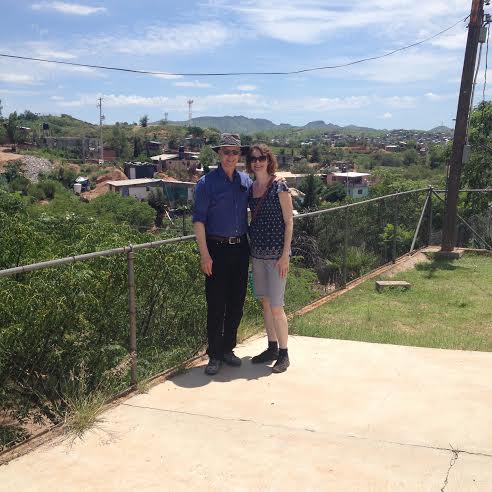
Over lunch, we chat with Scott about his life and work. Though American, he lives and works at a Mexican community center called HEPAC, which offers free lunches for local children, adult education courses, and a new affordable child care center. In his free time, Scott hikes seven miles through the desert to leave water for desperate migrants who might otherwise die as they seek to cross the border. I am amazed by his big heart. Meeting interesting individuals with powerful stories is one of my favorite parts of being a writer.

A DAY IN THE LIFE : HESTER YOUNGhesterandscott

My husband and I return to the U.S. mid-afternoon and check into a local hotel. I spend a couple hours writing while he naps. When he wakes, we do a Facetime call with our children, who breathlessly relate their day’s adventures.

Although we aren’t expecting high cuisine from this dusty border town, we find a surprisingly delicious Italian restaurant in a neighboring town. It’s strange to go from the poverty of Mexico to sipping wine and nibbling an eggplant appetizer, but I suppose this is what writers do: move in and out of worlds. Tonight I am particularly grateful for all that we have. I can’t wait to integrate the things I’ve seen into my latest novel.


CORPORATE KINDNESS: Jane Cable shares the second in a series of blogs about organising a charity litfest

matt-Woodies chindi pics July2015 - chris & jane croAuthor and Frost contributor Jane Cable shares the second in a series of blogs about organising a charity litfest in aid of Words for the Wounded. Last month the all-important dates and speakers were organised (17-18th October, Elizabeth Buchan and Margaret Graham) but what about venues… and sponsors… and publicity…

Christopher Joyce, chief Chindi and my co-conspirator in this crazy venture, has gone into overdrive with his contact book. Not a native of Chichester by any means, in the relatively short time he’s lived in the area I think he must have met – and charmed – everyone. And as a result he has three venues for three events sorted.

The one that I was supposed to organise fell flat on its face. Chichester Library, normally our best venue for anything and biggest supporter all around, was unable to host the planned bookish treasure hunt because it’s in aid of charity. West Sussex County Council policy. So we’ve quietly let that one drop.

In the meantime Chris has persuaded Woodies Brasserie in the city centre to close its restaurant to the paying public on a Saturday lunchtime, no less, and put on a special buffet at a cost which allows a generous £7 donation out of each £25 ticket sold. Luckily I have been able to contribute something as their wine merchants, Mason & Mason, are good friends of mine and they are donating a glass of something deliciously organic for every guest.

Chris has also been twisting arms at his local, The Park Tavern, and they’ve given us the run of the place on Saturday evening to shake buckets and sell raffle tickets. And the raffle prizes… so far our top catches are a £60 voucher for a tasting from Hampshire Wine School, a £150 voucher from author Claire Dyer for her Fresh Eyes manuscript review service and a hair cut from Benjamin James Hair Vision. Recovery on Sunday morning is being hosted by Carluccios who again are giving us a fixed price package for our bookswap breakfast which allows a £5 donation from each £15 ticket.

Last but not least Chris has twisted arms at Chichester Design to put together a wonderful leaflet. I’ve been able to get a decent price for the printing but we still need a sponsor so if anyone has a spare £90…? Please…?

But at the end of the day it isn’t entirely down to Chris’s charm and advanced persuasion techniques that businesses have been so generous – it’s a great deal to do with the charity. People simply want to help those who’ve suffered through putting their lives on the line in the name of duty. I had a sharp reminder of some of the issues recently when, as part of my research for the novel I’m currently writing, I met an ex-serviceman who’d served in Northern Ireland, Iraq and Afghanistan. I wanted to know what combat was really like from someone who’d been there. I wish I hadn’t had to ask. We don’t know what those brave men and women have gone through; we can’t even begin to imagine it. All we can hope to do is help.

Learn more about…
Words for the Wounded: www.wordsforthewounded.co.uk
Chindi Authors: www.chindi-authors.co.uk
Woodies Brasserie: www.woodiesbrasserie.com
The Park Tavern: www.parktavernchichester.co.uk
Carluccios Chichester: www.carluccios.com/restaurants/chichester
Chichester Design: www.chichesterdesign.co.uk
Christopher Joyce: www.creaturesofchichester.com
Jane Cable: www.janecable.com


A Day In The Life By Fiona Rule

A DAY IN THE LIFE  By Fiona Rule 1

“Woke up, got out of bed,

Dragged a comb across my head.

Found my way downstairs and drank a cup….”

That is where the similarities end between my Day In The Life and Paul McCartney’s. While he sped off in search of a bus, I fire up my computer and peruse the latest crop of emails before getting down to the work that takes up most of my time – research.

A DAY IN THE LIFE  By Fiona Rule hertfordarchive

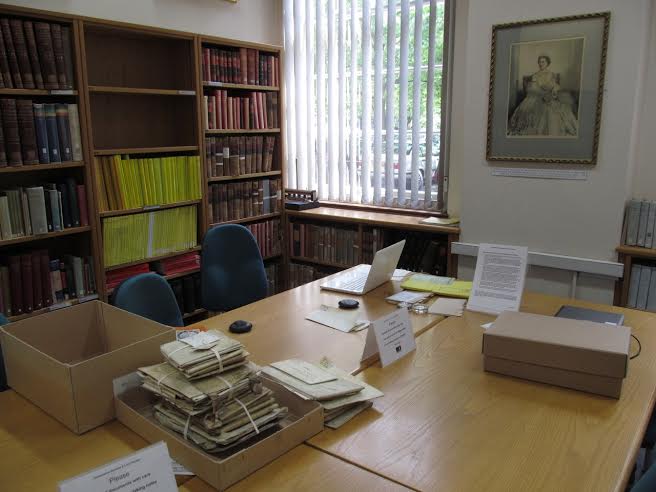
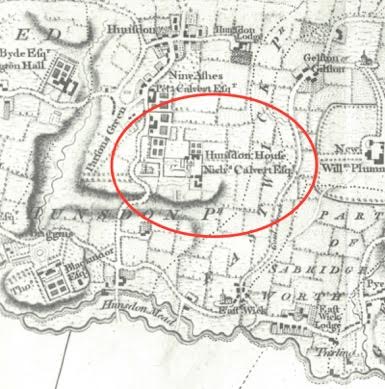
Today, I am looking into the history of Hunsdon House – a spectacularly ancient property in rural Hertfordshire for a private client. My work takes me all over the place and this morning’s destination is the archives at County Hall in Hertford. County and Borough archives are wonderful treasure troves and are open to anyone, free of charge – all you need is proof of ID. However, many are seriously underfunded and some archives I’ve visited are little more than filing rooms. Its a shame that Council finance officers seem so disinterested in their area’s heritage. Nevertheless, Hertford Archives is better equipped than most and I soon find a wealth of deeds and articles on Hunsdon House along with my favourite kind of document – maps.

A DAY IN THE LIFE  By Fiona Rule 3

Since the Babylonians carved a map of the world on a piece of stone back in the 6th century BCE, maps have told us far more than a book ever could because they put everything in visual context. For instance, Andrew Dury’s map of Hertfordshire, drawn up in the 1760’s tells me at a glance that at the time, Hunsdon House was the seat of Nicolson Calvert and it was set in elegantly landscaped grounds, with a patchwork of rural fields beyond. Now I have a name, I can find out more about the family.

By cross referencing the maps with deeds and other documents, I manage to piece together a timeline for Hunsdon House and its various occupants over the centuries. This forms the framework onto which I can build a more complete story through online research once I return to the office. I’ve found that this modus operandi works for any size of project, be it the history of one house or an entire area.

A DAY IN THE LIFE  By Fiona Rule 4

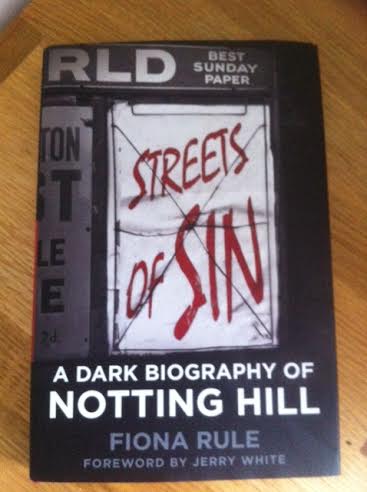
However, before I return to London, I have one final stop to make. I’ve arranged to meet a friend at a local pub to show her a copy of my new, “big” book – Streets of Sin, which is just about to be published. My books are a bit like children – I’m proud of them despite their flaws and I like to talk about them! Thus, I’m excited to show her this “hot off the press” copy. Thankfully, the reaction is positive and I wend my way home to face the biggest challenge of the day – to stop thinking about research and turn my attentions to more mundane, domestic matters. This can be terrifically hard, especially if I have uncovered something particularly tantalising. I wonder if Paul McCartney has the same problem when he’s writing songs?


Flash Fiction: A Cuckoo in the Nest by Author Jane Carling

Flash Fiction- A cuckoo in the Nest by author Jane Carling.

Sitting at the back of the Crematorium, the handcuffs that bound her to two prison guards chaffed Josie’s wrists. She watched her husband’s coffin being carried to its final resting place to ‘I did it my Way’. Only one wreath adorned the casket, red roses, like his blood.

Rachel Hunt, dressed in a black, sat alone in the front pew, where Josie should have been.

How had it happened? They tell me I killed him, but I can’t remember.

It was last May, when spring hailed the first call of the cuckoo, that Rachel had returned from the Costa del Crime in the guise of a deadly blonde, now calling herself Samantha. That’s when the friend requests on Facebook began, and it took a while for Josie to realize from the profile that Samantha was actually Rachel, or rats’ tails as she was known in school.

Out of curiosity Josie clicked the accept button, a click she would live to regret.

“Why the new name?”  Josie replied.  A few minutes later messenger popped up.  “I’m a widow and want a new way of life in the countryside, a whole new beginning.  Don’t you ever want to reinvent yourself?”

Josie pondered,  “Why would I? I must go, Roger’s favourite risotto is ready, will talk soon.  Stay in touch.”

As the service continued Josie clenched her fists. The handcuffs rattled. I should have known better, she thought, and so should Roger. He was a successful businessman, for goodness sake, so how could he have been taken in by this woman? Had he always wanted a blonde in his life, was that it?

She winced as she remembered the simpering. “Oh Roger you are so clever, oh Roger, you are so witty. Oh Roger…”

Then the texts.  Good night my love, good morning darling, and laters babe…”  Laters babe?  Oh perlease. The lights reflected off her handcuffs. She should have checked his mobile sooner. Josie bit her lip. She recalled Roger’s denials and accusations when she’d confronted him. He’d argued that it was all in Rachel’s head, totally one-sided and that he loved her, Josie. Oh Roger what a big dick you were.

There was a draught as the door opened and the detective in charge sat down behind her.  Now what?  Can’t I just have today?  He whispered to one of the guards and as the vicar signaled for the curtains to begin be closed. Her cuffs were released and Stairway to Heaven began playing. Confused, Josie rubbed her wrists. ‘You’re free,’ whispered the guard. She placed her head in her hands as the curtains began to close and wept.

Rachel was hurrying out before the curtains closed. Too late though. She was arrested and bundled into a police car.  The detective waited until Josie had composed herself, then explained that formerly undiscovered CCTV footage had captured a blonde at scene of the crime, wielding the knife. It was Rachel Pratt, hustler, renowned con-woman and now a murderer.  Josie was free to go.

Later, sitting in her garden watching kites soar into the deep red sky as the sun set over the Chiltern Hills, images of that fateful day finally returned.  Roger had stepped in front of the blade that was not meant for him. Her husband had saved her life.

The distant call of a cuckoo broke the silence.

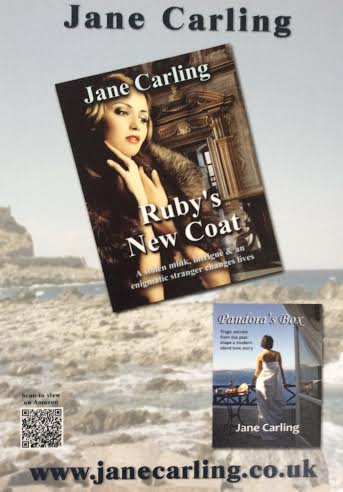
Flash Fiction- A cuckoo in the Nest by author Jane Carling.rubynewcoat

Jane Carling 2015 ©
www.janecarling.co.uk


Naming The Day: Jane Cable On Organising a Charity Litfest

Author and Frost contributor Jane Cable shares the first in a series of blogs about organising a charity litfestAuthor and Frost contributor Jane Cable shares the first in a series of blogs about organising a charity litfest

“This is fabulous” said my fellow Chindi author Christopher Joyce, reading about the Words for the Wounded grannies’ latest exploit. “Let’s do something to support them.”
I was so pleased. “Perhaps an event?” I suggested.
“Yes – we’ll have a litfest.”
Nothing if not ambitious, is Mr Joyce.

First, let me explain about Chindi; we are group of indie authors from the Chichester area who work together to share information on best practice in publishing and to promote our books. Christopher Joyce, a children’s author, is one of our founders, our chairman and all round powerhouse. And when he sees a great cause like Words for the Wounded, he can’t help himself but get stuck in.

When we put the idea of holding an event to raise funds for the charity to one of our monthly meetings most people supported it so we agreed to go ahead. But our calendar was already crowded with a series of Saturday morning workshops over the spring and summer and two events as part of the Festival of Chichester in June, so it had to be in the autumn. Plenty of time to arrange things then.

gardenAuthor and Frost contributor Jane Cable shares the first in a series of blogs about organising a charity litfest chris

The only person I know with more energy than Chris is Words for the Wounded chief grannie and Frost contributing editor, Margaret Graham. I sometimes worry about what will happen when we get them in the same room. But for the litfest, even Margaret exercised words of caution; Chris was planning a whole weekend – she thought perhaps a day would be fine.

We sketched out ideas of a structure and in the end compromised on a full day on the Saturday and a Sunday breakfast. Margaret would give a morning talk, then lunch with a keynote speaker, a family bookish treasure hunt in the afternoon and an informal fundraiser in a pub in the evening. Rounded off by a book-swap breakfast to nurse our hangovers.

For a while we suffered from chicken and egg syndrome; we had the ‘what’ and the ‘why’ – but should we now focus on the ‘who’, the ‘when’ or the ‘where’? Realistically it had to be when so we narrowed it down to a couple of dates when Margaret and her right hand woman Jan could make it.

Next was who: – we had Margaret, of course, but really wanted another writer as a keynote speaker. Once again we turned to Margaret – having read Words for the Wounded’s impressive list of literary patrons – and she suggested Elizabeth Buchan. I have to admit I was nervous emailing such a superstar of the writing world but I received an almost immediate reply – she would be honoured to help out, but she could only make one of the dates – 17th October.

So there you have it… save the day if you’re anywhere near the Chichester area – 17th & 18th October, Chindi’s Words for the Wounded Litfest.

But have we left ourselves too much to organise in too little time? Find out, dear reader, next month.

Learn more about…
Words for the Wounded: www.wordsforthewounded.co.uk
Chindi Authors: www.chindi-authors.co.uk
Margaret Graham: www.margaret-graham.com
Elizabeth Buchan: www.elizabethbuchan.com
Christopher Joyce: www.creaturesofchichester.com
Jane Cable: www.janecable.com


Parkinson’s, Poetry And Song. Bring it on by Ross Mabey

(Australian pictures  by Brent Miller)

pic a Ross MabyIMGRoss Mabey is a poet and lyricist and was living in London when he was diagnosed with Parkinson’s Disease (PD) in November 2005. He returned to Australia in June 2014 with his wife Linda. Their son Jonathon 28 years old, had returned to Australia in 2012.

pic 1.Devils Marbles. NT Australia.

Ross told Frost Magazine:

My love of poetry dates back to my school days in Australia. In the late 1940’s and early 1950’s, the names of Australian poets were familiar in nearly every Australian household. Poets such as, Mary Gilmore, Adam Lindsay Gordon, Henry Kendall, Henry Lawson. These poets helped capture and shape the unique character of Australians of that time. Never underestimate the deep love of poetry in the Australian psyche.

!Job:   111180, Layout:        1!

In particular, poets were inspired by this light filled spacious country, and the unique characters that lived here. The wonderful Dorethea Mackellar expressed such a sentiment in “My Country”: “I love a sunburnt country, a land of sweeping plains. Of ragged mountain ranges, of droughts and flooding rains.” Andrew Barton (Banjo) Paterson in his poem “The Man From Snowy River”, speaks of a fearless character and his horse who without hesitation pursued wild horses down a steep mountainside, to finally round them up.

ic 3 BARRIER REEF

My love of poetry was rekindled in 1970’s when I joined a religious teaching, with a focus on creative/imaginative techniques to help individuals to understand life. However, it wasn’t until a few months after I had been diagnosed with Parkinson’s Disease (PD) in November 2005 at the age of 63 that I had a strong desire to write poetry and lyrics for songs.

!Job:   163006, Layout:        1!

Was it the shock of diagnosis, or the medication? Whatever it was, it wasn’t the moment to sit back and feel sorry for myself. I knew that if I wanted the rest of my life to be an interesting and productive experience, I must start creating the life that I wanted. I knew that part of the answer for me was to write lyrics for country songs, but how would I do that? And why country songs ? They were my favourite song genre, but I felt they needed a fresh approach.

Not being a musician and having little idea of how to write or structure these lyrics, I started to search the Internet looking for the answers. Eventually I emailed Jeffrey Ullsperger from Wisconsin in the US. He had experience in editing and co-writing country song lyrics. He also had a couple of songs published. Jeffrey agreed to mentor me in how to “craft” the lyrics for these songs.

pic 5. ARNHEMLAND

So 2006 brought a co-writing partnership. To date we have over 40 song “demos” produced and co-written the lyrics to other songs as well. The genre’s we write in now include Contemporary Country, Folk, Pop and the Blues. Several of our songs were entered in the UK Songwriting Contest over several years, and were rated  in the “Semi-finalist” category.

So how did this experience benefit me with regards to life in general and the PD symptoms that I have?

Without a creative interest of some kind, words like isolation, frustration and loneliness come to mind. Words like interaction, satisfaction, confidence and fulfilment were outcomes that were more appealing to me.

I am very grateful to Australia, for its beauty, co-writer Jeffrey Ullsperger for his patience, tolerance, kindness and help in this endeavour while suffering from his own health problems. Also, my gratitude goes to my wife, son, other family members, friends and many others for their love, understanding and support.

We will be featuring two poems by Ross Mabey soon.