Stop! Do not buy any books, nor put any in your suitcase until you have read our essential guide of the best books to read this summer. This is our second instalment of great reads. We hope you enjoy some of the books below and feel free to add you own in the comments section or by emailing frostmagazine@gmail.com
Hard Choices by Hillary Clinton

Former United States Secretary of State, U.S. Senator, First Lady of the United States and possible future President. What a life, what a woman. We loved her previous book, Living History, and this one is equally good. Brilliant stuff that will also give your brain a workout.
Maeve’s Afternoon Delight by Margaret Graham
Margaret Graham is one of Frost’s favourite authors and this book is yet another winner. Less historical than the previous books of hers we have reviewed, this has a modern setting. It is a brilliant First Wives style book with a rather loveable heroine in Maeve. A character it is impossible not to love and get excited about. After her husband leaves her for her best friend Maeve starts to make changes in her life. She finds solace in her allotment and the friends she gains. Perfect summer reading. This book would make a great film.
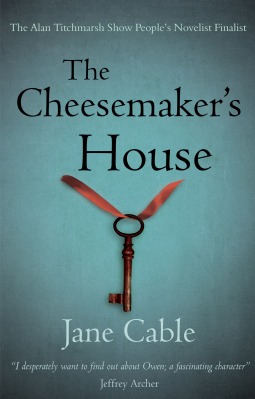
The Cheesemakers House by Jane Cable
We have already reviewed this book before but wanted to include it on this list due to its great story and pace. Very readable and perfect for the beach.
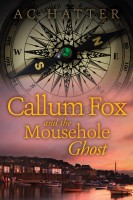
Callum Fox and the Mousehole Ghost by AC Hatter
Well-written with great characters. Perfect for adults too. Great summer reading
Callum Fox’s summer holiday in Cornwall isn’t working out quite as he’d expected. His Grandad’s turned out to be a miserable old git and Sophie, the girl he met on the train to Penzance, seems to view him as more of a liability than anything else. However, his time in Mousehole starts to get a whole lot more interesting when he meets Jim, the ghost of a World War II evacuee. Seventy years separate Callum and Jim, but as their stories unfold Callum realises they have more in common than anyone could have imagined, and that some secrets last a lifetime… Callum is a fabulous, funny and feisty character who takes us on a roller-coaster of a ride around Cornwall.
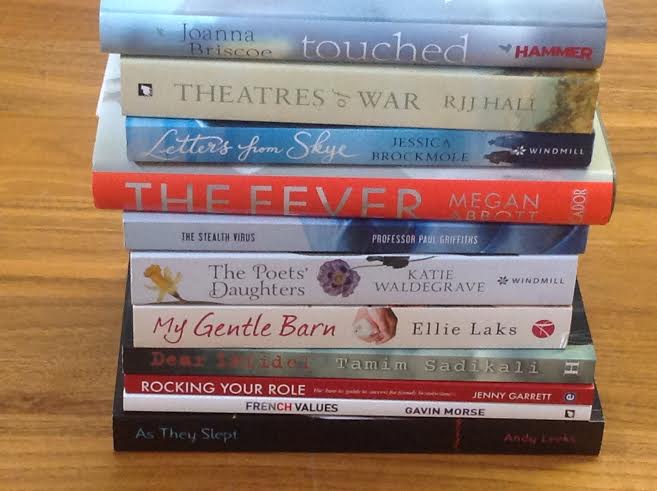
Touched by Joanna Briscoe
This is a gripping, creepy, novel that never lets you go until the end. Highly enjoyable stuff. You won’t even notice the world going by. Perfect to read in a single sitting
Rowena Crale and her family have moved from London. They now live in a small English village in a cottage which seems to be resisting all attempts at renovation. Walls ooze damp, stains come through layers of wallpaper, celings sag. And strange noises – voices – emanate from empty rooms. As Rowena struggles with the upheaval of builders while trying to be a dutiful wife and a good mother to her young children, her life starts to disintegrate. And then, one by one, her daughters go missing …
Theatres of War by RJJ Hall
Perfect for those who love history and war novels. A very good book.
Winner of The People’s Book Prize (Fiction) 2013/14
On the landing beaches at Salerno in September 1943, two soldiers face the German bombardment together but they come from different worlds: Frank grew up in the backstreets of London but he’s clever and is now an officer; Edmund is a cricketer from a landed family.
Vermillion had fallen for Edmund in Cairo where she monitored German communications. Desperate to see him again, she gets transferred to war-torn Naples. But when Frank discovers an abandoned theatre and stages a revue, she can’t stay away. It proves such a success that Frank is ordered to stay in Naples and put on more shows. Vermillion joins him and her life becomes enmeshed with both men.
While Edmund fights in the bitter winter battles near Monte Cassino, Frank dreams of staging an opera. Vermillion still loves Edmund, but she doesn’t want him running her life. And working with Frank, she experiences the independence she’s longed for.
Vermillion feels fulfilled, but a time is soon coming when she’ll have to choose…
Theatres of War is a love story about sacrifice and duty, and a war story about self-discovery and love. Seen through the eyes of combatants and civilians, it evokes the convulsions of the ‘forgotten’ Italian campaign of World War II.
Letters From Skye by Jessica Brockmole
This is a stunningly wonderful love story, told in a series of letters. Endlessly romantic and the letter format makes the characters feel very real. Wonderful stuff.
Elspeth is fond of saying to her daughter that ‘the first volume of my life is out of print’. But when a bomb hits an Edinburgh street and Margaret finds her mother crouched in the ruins of her bedroom pulling armfuls of yellowed letters onto her lap, the past Elspeth has kept so carefully locked away is out in the open. The next day, Elspeth disappears.
Left alone with the letters, Margaret discovers a mother she never knew existed: a poet living on the Isle of Skye who in 1912 answered a fan letter from an impetuous young man in Illinois.
Without having to worry about appearances or expectations, Elspeth and Davey confess their dreams and their worries, things they’ve never told another soul. Even without meeting, they know one another.
Played out across oceans, in peacetime and wartime but most of all through paper and ink, Letters from Skye is about the transformative power of a letter – the letter that shouldn’t have been sent, the letter that is never sent and the letter the reader will keep for ever.
The Fever by Megan Abbott
This is Megan Abbott’s seventh novel and is her best yet. That is saying something! A brilliant, gripping crime novel. Even the author of Gone Girl, Gillian Flynn likes it. High praise indeed.
The Nash family is close-knit. Tom is a popular teacher, father of two teens: Eli, a hockey star and girl magnet, and his sister Deenie, a diligent student. Their seeming stability, however, is thrown into chaos when Deenie’s best friend is struck by a terrifying, unexplained seizure in class. Rumors of a hazardous outbreak spread through the family, school and community.
As hysteria and contagion swell, a series of tightly held secrets emerges, threatening to unravel friendships, families and the town’s fragile idea of security.
A chilling story about guilt, family secrets and the lethal power of desire.
The Stealth Virus by Professor Paul Griffiths
Brilliant, fascinating and food for the brain.
Paul Griffiths, Professor of Virology at the Royal Free Hospital and University College London studied medicine at St Bartholomew’s Hospital in London and has spent his professional life in medical virology. He has an international reputation, unrivalled expertise and insight into the effect that viruses can have on patients and their families. Professor Griffiths uses this experience and stories of real patients to demonstrate how cytomegalovirus has avoided detection and treatment for so long. He introduces you to CMV, an intelligent virus which evolved millions of years ago intending to infect everyone on the planet during childhood, spreading silently throughout the world whilst remaining unrecognised. Professor Griffiths explains how modern living has jolted this stealth virus out of its complacency, rapidly altering the conditions it needs to survive.
Over a period of 100 years (a blink of the eye in evolutionary time) humans have changed their world to become cleaner, longer living life forms which avoid childhood infections, have babies later in life, swap organs during transplantation and even suppress their immune systems with drugs or HIV. Professor Griffiths describes how and why this virus has come out of obscurity to become a top target for elimination. Although you may never have heard its name, there is a good chance that you, your family and your friends have encountered it. After you have heard The Stealth Virus tell its own story, its victims are given a voice too. This book describes how CMV is being confronted and introduces the researchers who will defend us against its insidious and sometimes devastating consequences. This book brings medical virology to life. It is dedicated to those who have encountered The Stealth Virus and to those who have declared war upon it.
The Poet’s Daughters: Dora Wordsworth and Sara Coleridge by Katie Waldegrave
Well researched and fascinating. Waldegrave brings the lives of these two women to life vividly, telling a story that has never truly been heard before. Brilliant stuff.
‘You are the best poetry he ever produced: a bright spark out of two flints.’
Dora Wordsworth and Sara Coleridge, were life-long friends. They were also the daughters of best friends: William Wordsworth and Samuel Taylor Coleridge, the two poetic geniuses who shaped the Romantic Age.
Living in the shadow of their fathers’ extraordinary fame brought Sara and Dora great privilege, but at a terrible cost. In different ways, each father almost destroyed his daughter. Growing up in the shadow of genius, each girl made it her life’s ambition to dedicate herself to her father’s writing and reputation. Anorexia, drug addiction and depression were part of the legacy of fame, but so too were great friendship and love.
Drawing on a host of new sources, Katie Waldegrave tells the never-before-told story of how two young women, born into greatness, shaped their own legacies.
My Gentle Barn: The incredible true story of a place where animals heal and children learn to hope by Ellie Laks
This is an amazing story about healing, hope, love and forgiveness. It is also a powerful story about how well animals can heal things. Highly recommended.
Founder Ellie Laks started The Gentle Barn after adopting a sick goat from a run-down petting zoo in 1999. Some two hundred animals later (including chickens, horses, pigs, cows, rabbits, emus, and more), The Gentle Barn has become an extraordinary nonprofit that brings together a volunteer staff of community members and at-risk teens to rehabilitate abandoned and/or abused animals. As Ellie teaches the volunteers to care for the animals, they learn a new language of healing that works wonders on the humans as well.
My Gentle Barn weaves together the story of how the Barn came to be what it is today with Ellie’s own journey. Filled with heartwarming animal stories and inspiring recoveries, My Gentle Barn is a feel-good account that will delight animal lovers and memoir readers alike.
Many celebrities including Pamela Anderson, Justin Bieber and Ellen De Generes support The Gentle Barn.
Dear Infidel by Tamim Sadikali
An interesting book on identity. This first book from Tamim Sadkali shows promise.
Two families reunite for a feast on Eid ul-Fitr, the day Muslims celebrate the end of the month of fasting. And boys who grew up together will meet again, as men. As the big day approaches two of the men go to the mosque, one leaves his girlfriend and another watches porn. Nevertheless, they arrive intent on embracing the day. Old enmities are put aside, as they take tentative steps towards each other.
This is a story about love, hate, longing and sexual dysfunction, all sifted through the war on terror. And how we drift from one another, leaving every man stranded across a wasteland of atrophied connections. And so we witness the realities of a post-9/11 world filter down, touch individual lives, combine with some internal tension, and finally spill over.
Rocking Your Role – The ‘How To’ guide to success for Female Breadwinners by Jenny Garrett
A brilliant and informative book for female breadwinners.
This book goes beneath the surface of what it means to be the Female Breadwinner and drags women kicking and screaming out of the closet. Why? Because, being the Female Breadwinner can fundamentally challenge women’s identity. It is the trigger, catalyst and cause for many complex issues that women have to manage. For a successful family life and career, women must address and examine these internal challenges for their physical, mental and spiritual well-being. Find out: where your guilt button is and who is pressing it, what you love about being breadwinner that you were afraid to admit, how you tackle the thorny subject of money, how to cure yourself of Superwoman Syndrome.
French Values by Gavin Morse
An interesting book on culture, identity and the differences between Britain and France.
Gavin Morse is a British national, living and working in Strasbourg, France. French Values is an account of things that may or may not have happened to him while living in the European capital. This is his first novel. It originally started as observations of the pleasures of living and working in a Gallic society. Enjoying writing, Gavin decided to create a novel. In his first piece, he illustrates his cultural views and compares the Ros’ Beefs to the Frogs. Through this fiction, he shares the best and the worst from both sides of the channel.
As They Slept (The comical tales of a London commuter) by Andy Leeks
A brilliant idea that is well executed. A very enjoyable read.
The autobiographical tale of a stubborn, thirty something commuter, who wasn’t prepared to lose a petty argument on Facebook.
Infuriated by the snoozing passengers surrounding him, Andy posted a status declaring that sleeping on trains is a complete waste of time. His friends disagreed. In a bid to prove them wrong, Andy set out to write a book from start to finish on the daily commute. “As They Slept” is a collection of comical tales of travel and trepidation, guaranteed to make you laugh. In his well received first book, Andy sets out to explain how to eradicate lost property, why women can’t use their pockets, and exactly when it’s ok to lie.
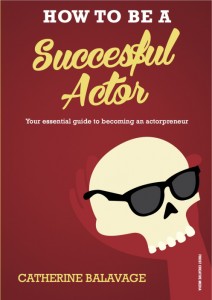
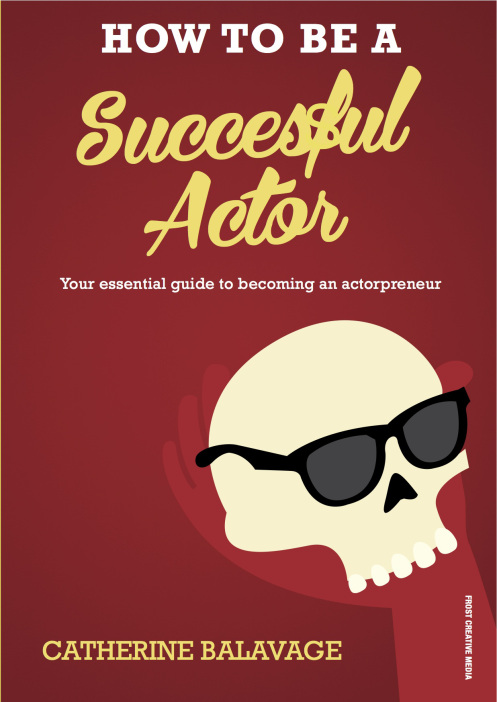
And if you are an actor, or want to be, then check out our editor, Catherine Balavage’s, new book How To Be a Successful Actor: Becoming an Actorpreneur. Here is a a five-star review it got on Amazon
“This really is an excellent guide book into the terribly difficult, but potentially rewarding life of an actor. Balavage tackles the often ignored questions that surround the inexperienced and/or young person who wonders what the best road to take is? She starts with the basics that encompass questions about whether to train at drama school (and thereby find the money to do so), or go another route by getting involved with fringe theatre and/or film school films. Throughout she weighs up the pros and cons in a highly informative and intelligent manner that are also highly credible as she is writing from first-hand experience. Her own entrepreneurship into film-making is included and offers fantastic tips and empowerment, to what is often a dis-empowering profession. She also demystifies the perceived ‘glamour’ of working as an actor and says it how it is. A good wake-up call for those out there that crave instant fame!
Her approach is wholly professional and fundamentally knowledgeable: she interviews working actors, alongside well-known casting directors who give an insider-view into what is required to get ‘ a foot in the door’. I would highly recommend this book to anyone interested in becoming an actor.”
What would you add?

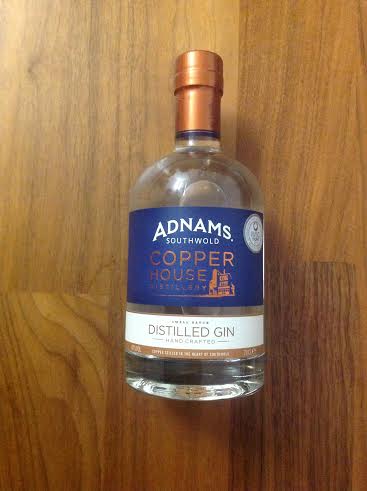


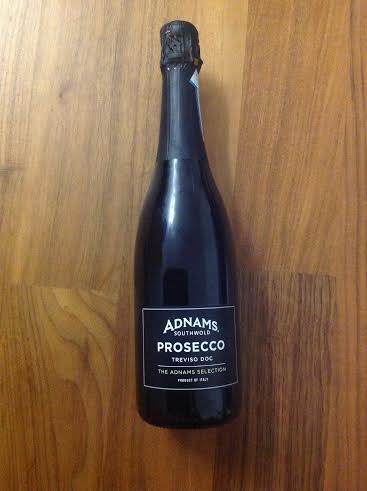


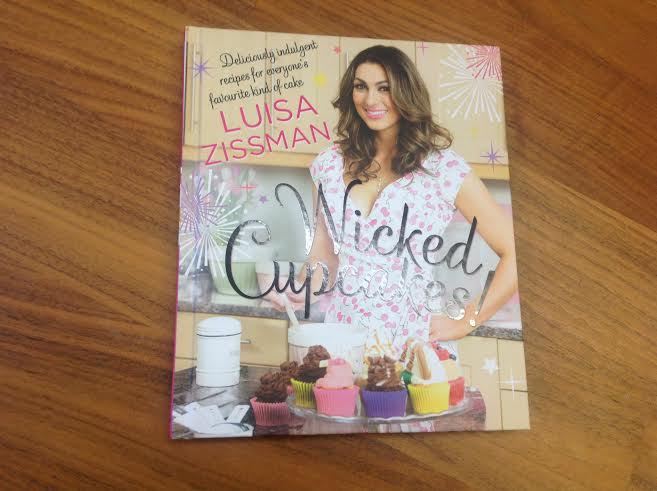
 and even a selection of low-fat cupcakes recipes, tips and tricks on how to make and decorate your creations. The book covers everything about making cupcakes, starting from the mix, flavourings, buttercream, hand made decorations, lining tins and how to deal with disaster.