My Writing Process – Milli Hill

What you have written, past and present.

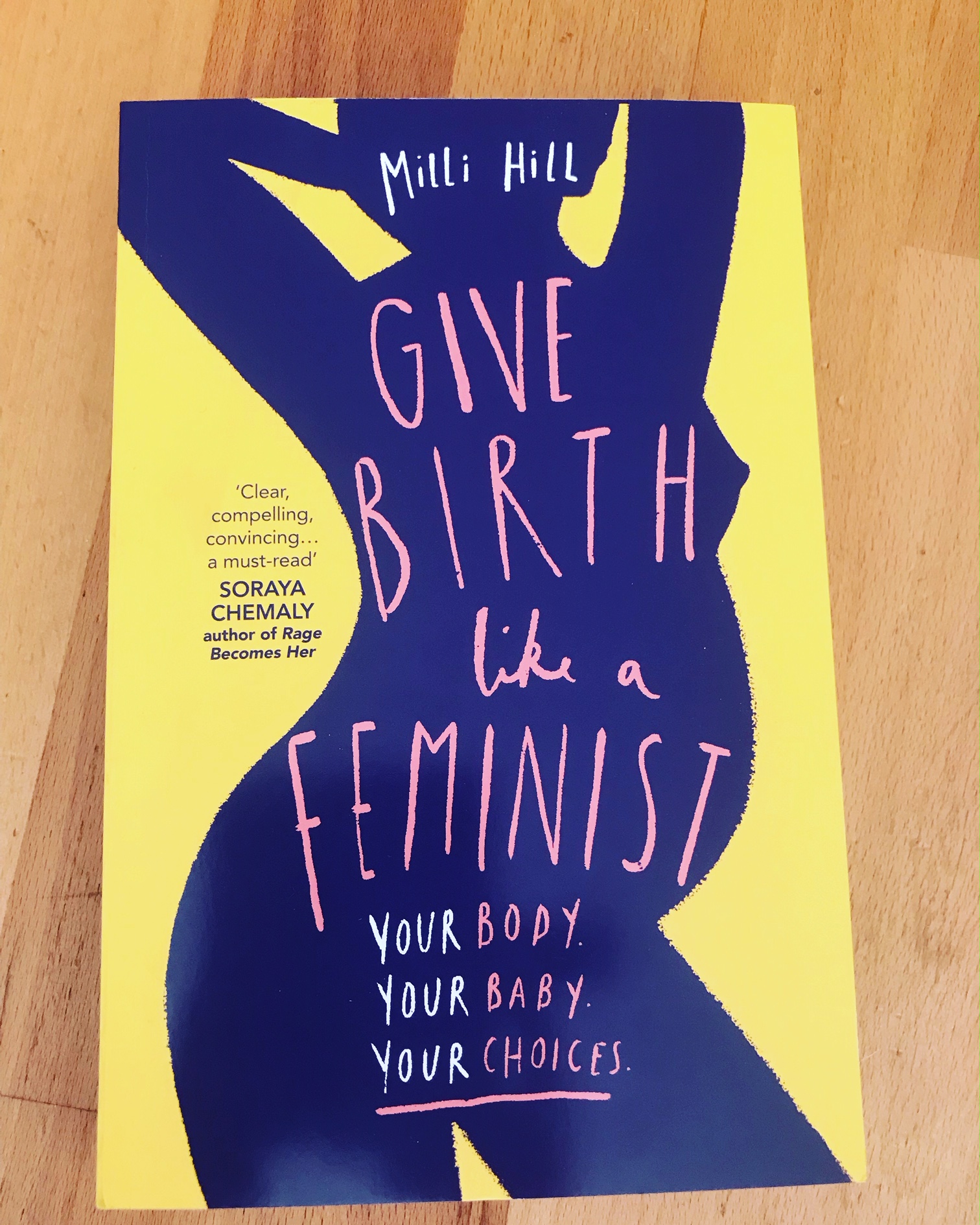
I have written two books, both about childbirth. The first, a ‘how to’ manual called The Positive Birth Book, is a guide for pregnant women on how to approach birth differently, reframe it as a positive experience, and have a positive birth in any circumstance. The most recent, Give Birth Like a Feminist, is a call to arms, exposing the misogyny and power imbalance at play in the modern birth room, and giving women information about their choices and rights so that they can take a more active role in their birth. I also write opinion articles and features for the Telegraph, Guardian, ipaper, Independent, Mother&Baby and more! I started out as a blogger when I was taking a break from my work as a therapist due to having two young children. My blog became really successful and through that I got work as a journalist, and now an author.

What you are promoting now. 

Give Birth Like a Feminist, which came out on August 22nd.
A bit about your process of writing. 

I do a lot of thinking before I start. Maybe over days, or months, or during a dog walk, or in the shower! Then I usually make a spider diagram with the key point at the centre and all the other points coming off it. This sounds terribly organised but it’s normally done on the back of an envelope with a child hanging off my leg with the key aim of preserving the thoughts before they are lost! Then when I get the time to write, the ideas are all there, laid out for me. Getting to my desk is hard with a large family, and I also struggle with my inner critic / imposter syndrome etc, so the whole things becomes like a sort of inner dialogue between the part of me that believes in myself and my ideas and the part of me that says I’ve got nothing of interest to say. Those two parts of me argue for quite a while and then the confident part sort of grabs the reluctant part by the scruff of the metaphorical neck and frogmarches her to the desk. At which point I usually get on with it. I take a long time over what I have to say and am a perfectionist. Someone once described my writing as sounding ‘effortless’ which I took as a great compliment but it really could not be further from the truth!
Do you plan or just write?

I do both. I usually plan the skeleton but then putting on the flesh is the ‘just writing’ part.

What about word count?

I’m used to writing articles with a word count of around 800 to 1000 words and I think that’s a really nice bite size amount to get something across in. Even in a 10000 word book, breaking it down in your mind into chunks of 1000 words is a great way to keep it manageable both for you as a writer, and for your reader. I’m very conscious of how busy the world is now and how you need to get your ideas across quickly and in a way that feels accessible. And if you can just write 100 really great, thousand word pieces, then, bingo, you have a book. Effortless!

How do you do your structure?

I’m a big fan of circular structures by which I mean making a point / telling a story, or a joke etc in paragraph 1 of an article, then taking the reader on a journey through the next 8 paragraphs, and then coming back to the reference you made in paragraph one but somehow showing a development, growth, transformation has been make during the piece. On a larger scale you can do this in a book chapter, and then make an even bigger loop around the book itself. So you can have some nice loops within loops.

What do you find hard about writing?

I find it hard full stop, but also strangely compulsive! It’s like any creative process really, there is always that ‘void’ where it feels impossible, I totally hate that feeling of the blank page, the flashing cursor of doom etc! And as I’ve said, the mental battle of finding my voice is also deeply irritating! I also really miss the time when I was first writing my blog and could be more creative. Now I often feel I’m writing to order with article commissions etc and that kind of sucks the life out of it a bit. One day I really want to write fiction and I’m really looking forward to that!

What do you love about writing? 

I love the moment where creativity springs into life and the ideas start to flow and you know your fingers are knocking out killer sentences! I love reading something back and being surprised that I wrote it – this often happens to me! I think, oh, that’s actually really quite good! Did I write that?! That’s a really nice feeling. And I also like reaching other people through writing. Having my latest book published recently has been really fun in terms of being able to have conversations with people about what I’ve written and hear their feedback. The actual process of writing is quite isolating which I quite enjoy but then it’s nice to come and dance in the sunshine a bit afterwards!

Advice for other writers. 

If you are starting out a blog can be great – I was disciplined with mine and made myself do one post a week for quite a long time. I got better by doing that and I also learned a bit about what people enjoyed and wanted to read because of the instant feedback you get on a blog. Reading other writers you admire can be very inspiring too. But wherever you are up to as a writer, the main thing (and every writer knows this but it’s easier said than done!) is just write. Frogmarch yourself to the desk and just flipping well get on with it!
 

Give Birth Like a Feminist is available now.

Check out the The Positive Birth Movement.

The Big Five-0 By Jane Wenham-Jones | Book Review

the big five O , book, book review, Jane Wenham-Jones

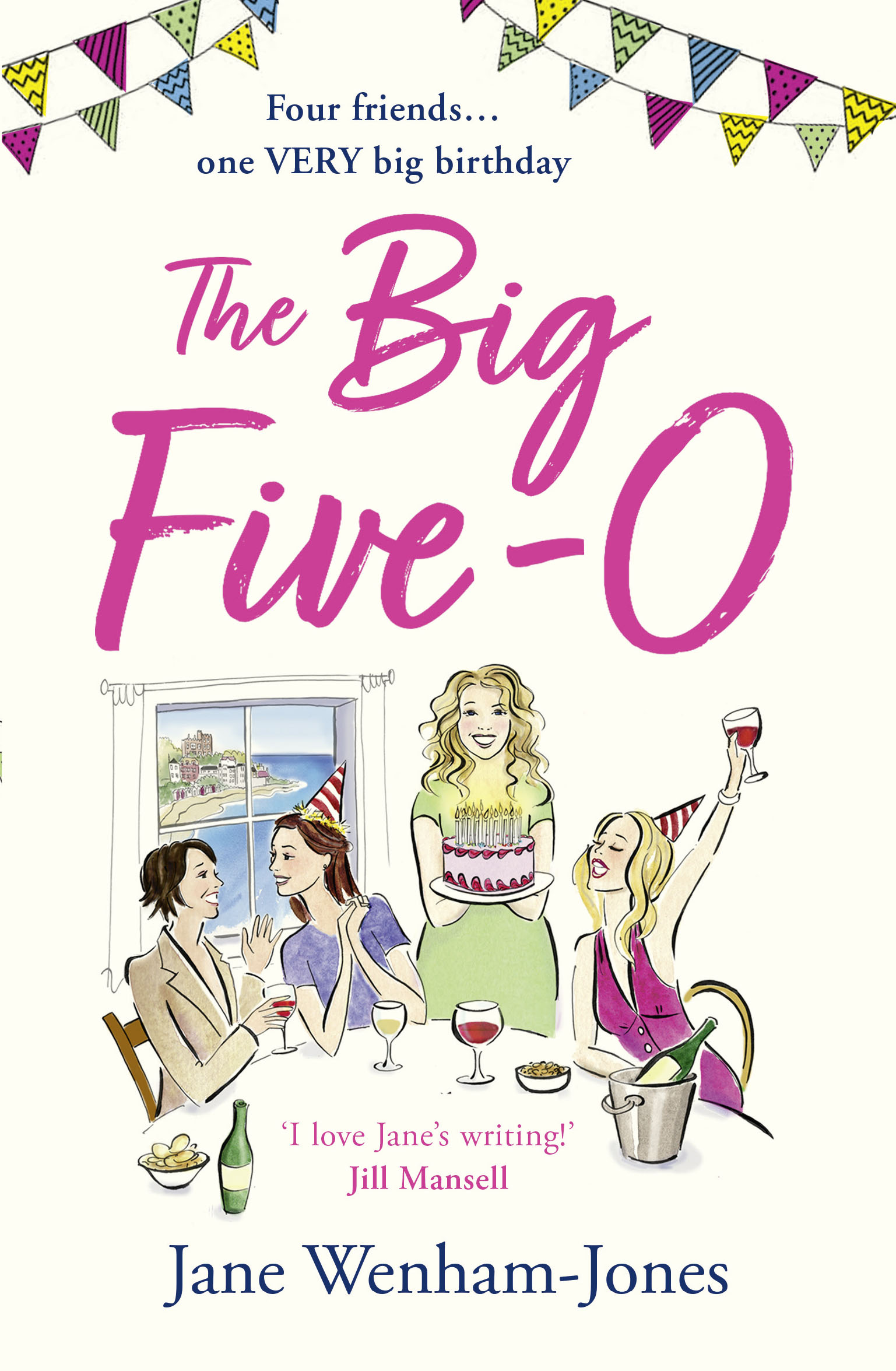
I was very excited to receive this book. It has a great cover and looks like fun. The fact it is about women turning fifty also made me happy. Older women are underrepresented in books in my opinion.

The book itself is fantastic. Every character is well-written and interesting. The story keeps you entertained and guessing. This is an enjoyable read that totally engrosses you into the story. Jane Wenham-Jones is clearly a master of her craft. This book is just perfect. I hope it gets made into a film. 

Four friends are planning a joint 50th party the seaside town of Broadstairs will never forget, but these 49 year olds have far more on their minds than canapés and balloons for their half-century.

Empty-nester Charlotte wants to know what her husband’s up to.

Single mother Roz fears her teenage daughter will discover how she pays the bills.

Tough businesswoman Fay crows about her no-strings toy boy but hides the real story behind her divorce.

Singleton Sherie’s cat is the only male in her life who ever stays around. Or is he?

They’re all keeping secrets but as the big birthday looms, the beans are about to spill. As the shocks come out, one of them is going to need her friends more than ever.

Is fifty the new thirty? Today’s fifty-somethings lead very different lives from fifty-something women even one generation ago. Jane Wenham-Jones writes with insight and humour about the challenges today’s mid-lifers are grappling with – relationship wobbles or break ups, making ends meet, juggling the demands of offspring and elderly parents, health scares and the minefield of finding love.

All of Jane’s books feature issues she has faced – and life has a way of reflecting fiction, too. Several times she has found herself dealing with serious issues soon after she’s started writing about them.

Jane’s characters meet their own problems head-on in this very funny and relatable book.

The Big Five-0 by Jane Wenham-Jones, published 19 September 2019 by HarperImpulse, paperback, £8.99.

Jane Wenham-Jones is a well-known author and journalist who regularly appears on radio and TV. She has written for a wide variety of magazines and newspapers, is a regular columnist for Woman’s Weekly and the agony aunt for Writing Magazine.

She has published six novels: Raising The Roof, Perfect Alibis, One Glass Is Never Enough, Prime Time, Mum in the Middle and The Big Five-0, as well as three non-fiction books – Wannabe a Writer? and Wannabe a Writer We’ve Heard Of? plus a humorous diet book, 100 Ways to Fight the Flab and Still Have Wine and Chocolate.

Jane also works the after-dinner circuit, talks to writers groups and conferences, and has worked as a celebrity speaker for P&O. She has hosted the Romantic Novelists’ Association’s Romantic Novel Awards – the annual awards for the best in Romantic Fiction – for the last nine years, and presented hundreds of events at literary and book festivals in the UK and abroad. Jane lives with her family in Broadstairs, Kent, where three of her novels are set.

The Big Five-0 By Jane Wenham-Jones is available here

HarperImpulse, 19 September 2019,  paperback, £8.99

Make travelling with children easier

Travelling with children can be a trying experience. Tears and tantrums are a regular fixture and little ones tend to get easily bored. To help you make your next journey go more smoothly, follow our handy tips to ease your frazzled nerves.

The first – and arguably most important – step is to decide where to go. When the children are older, you can be more adventurous with your choices, but while they are young, hotels with childcare are invaluable. For older children, it is a good idea to book a hotel which has a variety of activities available that will keep them entertained – tennis courts, swimming pools and games rooms are all great options.

Think about what you can do when you get there. What does your destination have? If your children are toddlers or pre-schoolers, you might want to make sure there is a playground nearby. Select hotels even have toys available for kids to use. If there is a beach at your destination, then make sure you pack a bucket and spade. 

For the journey, as well as the holiday itself, essentials include books, crayons, paper and favourite toys. By downloading TV shows and cartoons from iPlayer or a similar streaming site before you leave, you can access them while you’re away, even if you don’t have an internet connection.

Packing for children can create its own list of complications. With only two adults, it can be a lot to carry. My husband and I usually take backpacks as that leaves our hands free. If you have a pram utilise it as much as you can but know that it will have to be folded down to be put in a car or plane. You can give children little backpacks if they want. It can carry a snack and a favourite toy. Suitcases with wheels are also handy. If you have a baby, I find baby slings invaluable. You can then have a rucksack too: I find it balances out the weight nicely. 

When my husband and I go on holiday we try to pack as little as possible. Sure, it would be nice to have a lot of outfit choices but space is limited so I find a pair of jeans with lots of t-shirts work. I usually bring one dress. A pair of sandals and a pair of trainers work well too. Minimalism is your friend when you have children.

Book your transport to the airport. Check out these airport transfers from Liverpool to Manchester and book in advance. The easiest way to make travelling with children easier is to be as organised as possible. It is also helpful to have any liquids in clear plastic bags before you get to the airport. A freezer bag works well. Another tip I have might be a little controversial but bribery is your friend when it comes to your kids! Have biscuits or chocolate on hand to help with any meltdowns. You might not let them have those kinds of treats usually, but, hey, on holiday different rules apply.

Make sure you have packed enough nappies and bottles. I find taking a training seat is a very good idea. This helps children go to the loo when they are somewhere new. This is especially important if you have just started potty training as little things can set children back.

Good luck on your travels. I hope you have a wonderful holiday.


Collaboration with Cyllenius.

My Writing Process – Juliette Quenin

I was born in France but I travelled and lived in many countries as a child and as a teenager. I always had two certainties in life. One was that I wanted to be a creative, artistic person and the other one was that I wanted to live in London. I have now fulfilled both those dreams so I am a happy person. I have tried my hand at different creative mediums. I studied acting in Paris, I sang Opera for a few years and I have done a cinema school. As such I directed a couple of short films and worked on other fellow students’ short films. But writing has always been a constant passion of mine and since in London (nearly 12 years now), I have dedicated myself to playwriting.

What you have written past and present?

Over a period of 10 years I have written 8 full length plays. The Beauty of the Cactus Flower talks about the difficulties of being a woman in this age and time. Dear Wallis is about a teenager revolting against an abusive alcoholic mother. My play Sugar talks about the strong bond in between a grandmother and a granddaughter and the healing power of baking. 430 King’s Road, An Urban Odyssey tells the story of the punk movement’s birth, narrated as a Greek Tragedy. Little Wing exposes the difficult relationship between two brothers carrying the burden of a past accident. Womb’s talks about the demolition of buildings and key historic buildings in the Soho Conservation area and the impact this has on the local residents. Catsville tackles the problem of animal hoarding and loss. And my last play is still a work in progress, so I won’t be talking about it today.

What are you promoting now?

I have decided to self-produce and direct one of my plays. Little Wing, the story of the two brothers, is going to be on stage at the Jack Studio Theatre in London from the 7th of April till the 18th of April 2020. I have produced and directed short films and readings before, but this is a very different adventure and I am very excited about it. Hopefully this will be the beginning of a new modus operandi: Part time playwright/part time director.

Do you plan or just write?

Years ago, I used to just write. Not anymore. I miss this very spontaneous way of working because it can produce beautiful and poetic writing but I have noticed that in terms of storyline I would get stuck, sometimes finding myself in a cul-de-sac. I wanted to take my writing to the next level, so I started planning. Now, as far as I am concerned, the work is less spontaneous but much more structured and of course playwriting is about structure, structure and more structure.

What about word count?

For me as a playwright, it is more about number of pages. I know that when I hit the 70 pages mark (knowing that a page of dialogue is more or less 1 minute and half on stage) I have a play that is about 1 hour and 30 minutes long, so then I can relax, before starting a new draft.

How do you do your structure?

The play and the subject matter command it really. My plays are rarely about big dramatic situations and twists, so I am not worrying too much about the climax for instance. Of course there is always a climax, but mine tend to be quite subtle. I tend to favor two act plays. They work well for me. I’ve learned through the years that a scene did not need to be of a certain caliber and length, that it’s all about balance and rhythm. I have studied music for many years and I love the idea that my plays are like scores. 

What do you find hard about writing?

Endings! It’s always hard to finish a piece. It’s like a little death and I don’t like that. Also, the time in between two plays is a difficult one for me. I get crippled with doubts, I become a bit crazy. Will I ever be able to put pen on paper again? I have a few coping mechanisms now but it’s still difficult. One thing I don’t have, fingers crossed, is the famous writer’s block.

What do you love about writing?

The craft. It puts me in a zone like nothing else does. Nothing makes me happier than a well-produced page of dialogue. I love this wordsmith business. I fancy myself as a lacemaker, only it’s with words and sentences. Beautifully written pieces can move me to tears (more that the content of the play itself actually). For that reason, I am a big fan of Jean Cocteau, J. M. Barrie,  Edmond Rostand and William Shakespeare for instance. I recently reread Hamlet. Everything, absolutely everything you need to know about plays and playwriting is in there. And if I dare say, everything you need to know about life!

Advice for other writers?

Do the 1%, which is present yourself to the page consistently and preferably at the same time of the day, and the universe will do the 99% left, which is inspiration, willingness and the courage to push forward. Drink lots of water, exercise (I’m not very good at that myself) because sitting hours in front of the computer can be hard on the body. If it’s a first draft, don’t indulge in endless rewriting (that’s a tough one). And don’t give up! My production company is called Five Minutes Before the Miracle (short for Don’t give up five minutes before the miracle!) which is a constant reminder that one needs to be perseverant in life. That’s the key.


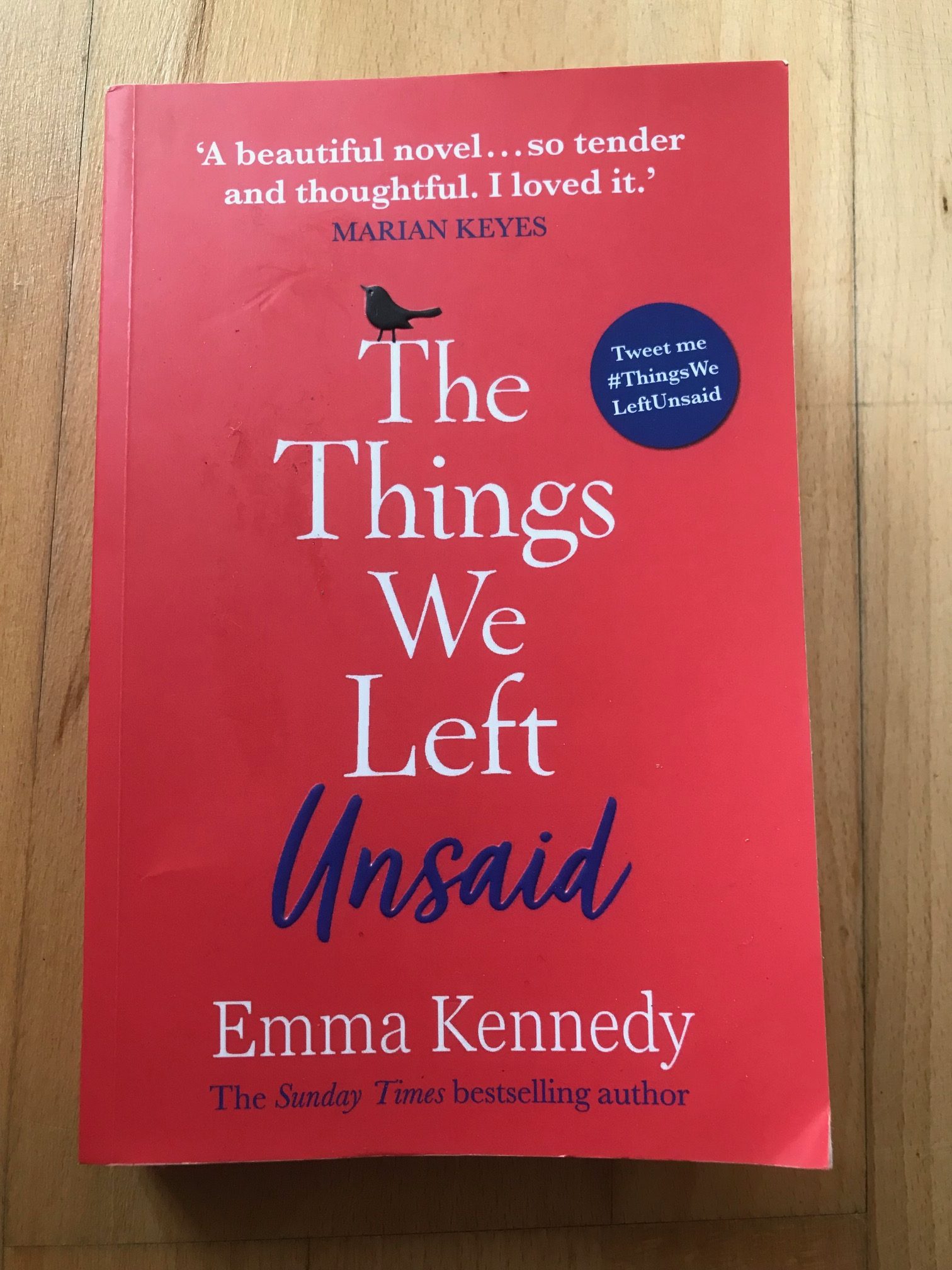
The Things We Left Unsaid: An unforgettable story of love and family by Emma Kennedy

the things we left unsaid, emma kennedy, book, review

The Things We Left Unsaid reads like an off-beat romantic comedy. It certainly has all of the ingredients: drama, complicated characters, conflict and resolution.

It has real, and sometimes unlikeable characters. The setting of the family country home is gorgeous and works well. The Things We Left Unsaid also talks a a lot about the human condition and how we are always searching for who we are and trying to find out the truth of the past. A good read. 


Rachel’s relationship with her mother, Eleanor, has always been far from perfect. Eleanor is a renowned artist born from the swinging sixties, and Rachel has forever lived in the shadow of her success.
When Rachel is left by her fiancé on the morning of their wedding she has no choice but to move back into her family home and spend an unbearably hot summer with a mother she feels distant from – in the presence of many painful memories.

It will take another turn of events before Rachel realises that sometimes the past holds exactly the comfort we need. And that behind the words left unsaid are untold stories that have the power to define us.

Imbued with warmth and full of characters who will steal your heart, THE THINGS WE LEFT UNSAID is a radiant novel in which past and present collide with life-affirming consequences.

Available here.

My Writing Process – Caryl Hart

I’m a children’s author and, over the past ten years, have published over 45 picture books and young fiction titles with seven major publishers. Several have been shortlisted for awards and I’ve won a few too. I run creative literacy workshops for schools, libraries and festivals and run teacher training and mentoring services.

Find out more here: www.carylhart.com

What have you written?

I have 45 published titles to date and around 15 books in production.

Next year celebrates the tenth anniversary of my Albie series, illustrated by Ed Eaves (Simon & Schuster), which includes the best-selling How to Grow a Dinosaur and Supermarket Zoo. We are currently working on book 11!

I also have a series of five feisty princess books, the most recent is The Princess and the Shoe – a book about following your dreams and believing in yourself, illustrated by Sarah Warburton and published by Nosy Crow.

Then there’s the Knock Knock series of crazy counting book capers, illustrated by Nick East and published by Hodder. The fourth book, Knock Knock Superhero is out in August. 

And Let’s Go.. a preschool series of first experiences, illustrated by Laruen Tobia and published by Walker books.  

My book Big Box Little Box, illustrated by Edward Underwood was shortlisted for the Klaus Flugge design award and is the first in a new series with Bloomsbury.

These are just a few of my titles. You can see them all here: www.carylhart.com/books

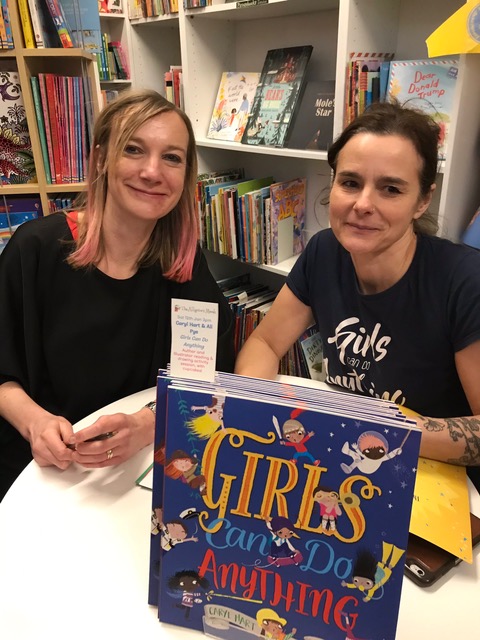
I’m very excited about the publication of Together We Can, a book about friendship, illustrated by Ali Pye and published by Scholastic. It’s a rhyming picture book that talks about what a friend is, how to make friends and, most importantly, how to be a friend. It is also a book about diversity as it features over 150 characters including children with different skin tones, hair styles, clothing, interests, mobility and other aids, prosthetics and cognitive and other physical difference.

It follows on from the success of Girls Can Do Anything and has already received a lot of interest on social media.

A bit about your process of writing. 

Do you plan or just write?

Every book is different. Sometimes I create a proposal in which I outline my idea and write sample spreads, which I then submit to publishers.

Other times, I just start to write.  Sometimes I sketch out ideas too, it just depends on how my brain is working on a particular day!

What about word count?

This also depends on the book. The shortest book I have written is 50 words and the longest around 60,000. On the whole, picture books are around 600 -1000 words and titles aimed at preschoolers or babies are shorter.  I guess, as I’ve gained experience, I have developed a feel for how many words work on a double page spread.  

There’s always a lot of editing, both for the first draft and at various other stages during production.  For example, once the illustrator has created rough drawings, my editor and myself will work together to cut out unnecessary words, or re-write lines, so a text will often get sparer with each iteration until the final book is produced.

What about structure?

Once I’m ready to being writing, I lay my text out in spreads. A typical picture book has 12 -14 spreads so I just put the spread number as a subheading on my page and write the text to fit.  I find this helps me to evaluate word count and also to make sure that every page turn gives the reader something new and exciting to experience. 

What do you find hard about writing?

Getting the time to actually sit down and put words on a page can be hard. Working from home and being a mother and wife have their own distractions, but I also do a lot of school visits and workshops, so spend quite a lot of time planning timetables and creating activities to go with my books.  You can see some of these here: www.carylhart.com/about/book-activities

As a freelancer, I’m happiest when I’m busy and have several new projects on the horizon. There are times when I do worry that the next contract might never come, but have learned to push those worries to the back of my mind and trust that either I’ll come up with something, or a publisher will commission a new project. In reality I’ve never had a period when I’ve been without work, perhaps because I’m quite well disciplined and very self-motivated.

What do you love about writing? 

I love losing myself in a story and the discipline of writing, especially writing in rhyme. It’s very challenging creating a multi-layered story with appealing characters, a satisfying arc and clear meaning and also making the rhythm consistent and the rhyme solid.  It can take a day or more to write a four line verse so it can be very slow-going, but I get great satisfaction when I finally crack it. 

I also love getting the rough illustrations through as this is the point at which my stories really start coming to life. I’m so lucky to be working with lots of super-talented super-lovely illustrators who really do an amazing job, so it’s great seeing the books going from lines of text in a word document to bright, colourful, engaging  books that are just gorgeous to look at and handle.   You can meet all the illustrators I work with here: www.carylhart.com/about/illustrators

Advice for other writers. 

Writing for pleasure is a wonderful thing to do. It helps you, and others, work out how you feel and what your views and opinions, hopes and dreams are.  Writing can help you manage stress and take you to places you never thought you could go. Sharing your writing with friends, family or people online is a great way to feel validated, loved and appreciated.  There are now so many platforms out there where writers can share their work – social media, performance, blogs to name but a few. So if you love to write, WRITE!

If you’re hoping to get your work formally published as a printed book, set your bar high.  Remember that your work is competing for contracts with authors who already have a track record and relationship with their publisher, so your work really does need to shine.  

Publishers have to make money to survive and the industry is very competitive so your work needs to be commercial. That means that you have to take on board what editors and designers ask in terms of developing your texts. Publishing books is a team effort and if you are unable to stomach criticism then consider other platforms where you have total control over what gets published.

If you are writing in rhyme, make sure your rhythm is tight and your rhymes feel natural. Half rhymes work okay in song lyrics but aren’t ideal for children’s books.

If you are hoping to publish a picture book, go it alone. If you illustrate too, then by all means send some sample illustrations but don’t do the whole book unless you’re very experienced. Publishers will have their own ideas on how they want your text to be illustrated by, and rarely sign books that are submitted by a ready-made duo.

The more you write, the better you will become, especially if you are able to take on feedback from professionals in the industry.  Just because your mum or your children like your book idea, it doesn’t mean its commercially viable.  So if you get the chance to speak to someone with experience in publishing, do try to act on their advice – it’ll save you a lot of time and effort in the long run.

Above all else, write. Just write. And then write some more. You never know where it might take you!

My Writing Process – Damaris Young

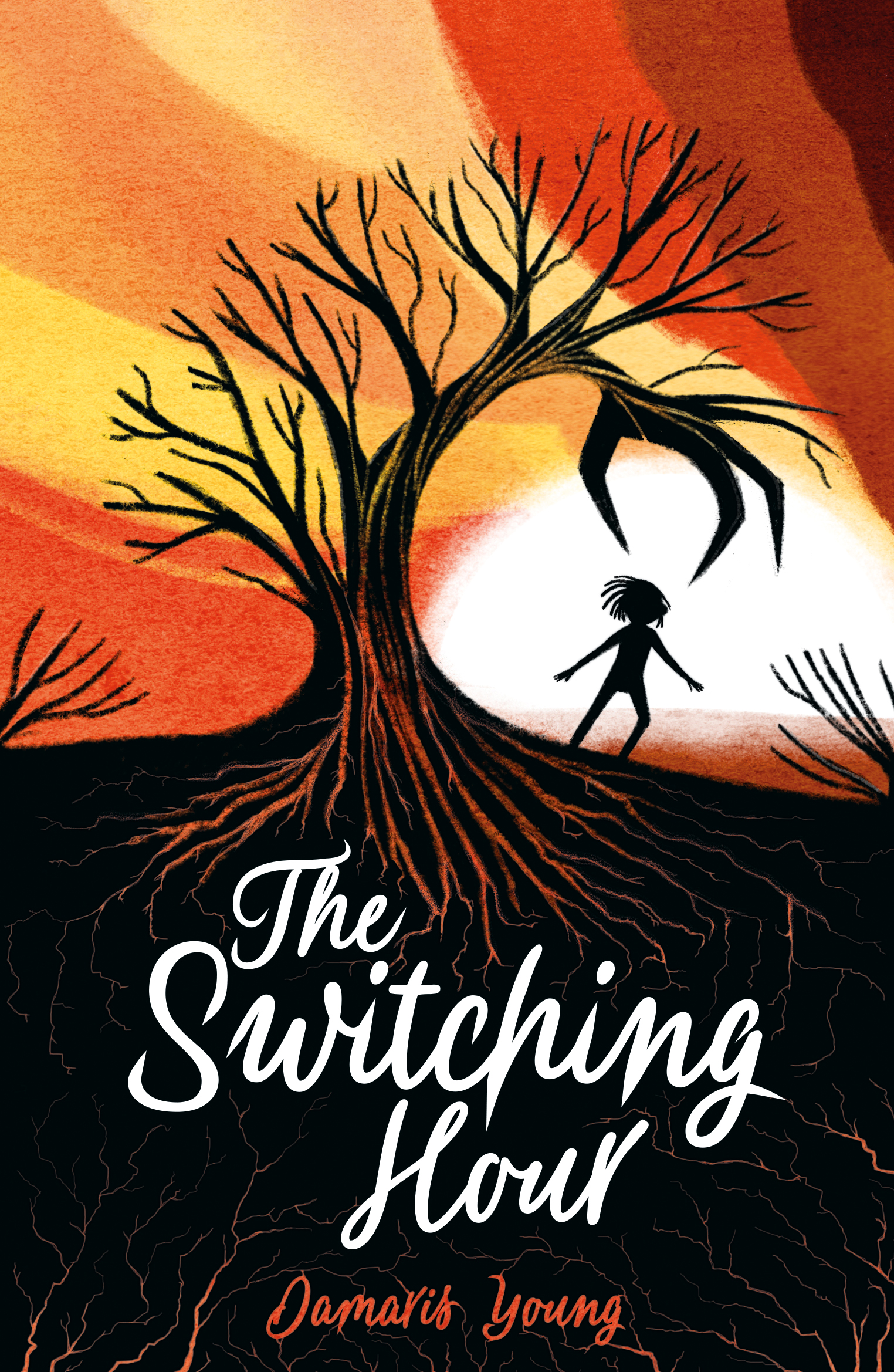
damaris young, author, the switching hourI was an avid reader growing up. I would try and copy my favourite stories, filling notebooks with fantastical worlds much like Alice’s wonderland. As my confidence grew, I started writing stories of my own, often to entertain my four younger brothers and sisters. When I moved to Bristol as an adult, I continued writing stories, eventually studying on the Bath Spa Writing for Young People MA, where I wrote my debut children’s novel, The Switching Hour. 

The Switching Hour is my first published book, but I have been writing stories ever since I can remember. I have so many half-written novels hidden away in my desk draw and on long-lost USB sticks!

What you are promoting now?

My debut The Switching Hour, a fantasy story aimed at young readers, is being published by Scholastic on the 1st August. It is about a girl called Amaya who lives with her grandmother, her small brother Kaleb and her pet goat in a land suffering a terrible drought. Every night, the doors must be locked after twilight, the Switching Hour, because the drought has awoken Badeko, a creature that snatches people away to eat their dreams. Three days later, the memory that they existed is gone from those that knew them, and those that are left are afflicted with The Sorrow Sickness – a grief which consumes a person without them knowing why. When Kaleb is taken by Badeko, Amaya must journey into the terrifying forest to find her brother before she forgets him.

The Bookseller has reviewed it as being ‘Highly atmospheric and genuinely spine-tingling, the power of family and female friendships shine in this assured debut’ which was wonderfully encouraging as The Switching Hour makes it’s way into the world for the first time.

A bit about your process of writing. 

I allow the seed of the story to grow by indulging in all the different ways the plot could go, no matter how ridiculous! I spend time thinking about the characters, how they talk and think and what they want most in the world. Once I have an outline for the story, I do lots of research. For The Switching Hour, I looked into what life would be like living through an extreme weather phenomenon, as well as being inspired by my experience growing up in central and southern Africa. I also had to do a lot of research into goat behaviour as my main character has a pet goat who is very much a part of the story!
Do you plan or just write?

I get the first draft down by furiously writing, without looking back on what’s been written. Once I have the first draft written down, I put it to one side and start from scratch all over again. This may sound quite discouraging, but for me the first draft is for getting a sense of the characters, testing out the plot and immersing myself into the story. The subsequent drafts are where the planning really starts and the manuscript begins to take shape. 

What about word count?

The Switching Hour is aimed at 8-12-year-old readers, so the general word count is expected to be around 50,000 words. I’m a ferocious editor of my own work so I do find it a struggle to keep my word count up!

What about structure?

I structure my story around the key narrative points, the exposition, the inciting incident, the peak and the resolution. When you’re writing for children it is especially important that you get to the inciting incident as soon as possible, to really capture the readers attention. In The Switching Hour, the inciting incident is when Amaya’s younger brother is taken by the Badeko and she must journey into the forest to find him. If you can create intrigue from the very first page all the better! I will always rewrite my opening chapters last, which may seem strange, but it helps to understand how the story ends in order to know where the best place is for it to begin. 
What do you find hard about writing?

Self-discipline. I write from home, sitting on my sofa with my two dogs snoring next to me and I’m easily distracted by social media, emails and even the washing up when I’m in the middle of a tricky chapter! It’s important to take time away from your laptop and just allow your mind to mull over the story, letting the character take up space in your head (and heart) but there’s no getting out of the fact that you have to just sit down and WRITE! 
What do you love about writing? 

I love getting swept away by writing, when I’m immersed in the story and I’m creating something that I really care about. I also love the way that my characters can surprise me by acting in ways that I hadn’t anticipated. Amaya in The Switching Hour was initially boisterous and outgoing (something I thought I wanted her to be) but I soon found out Amaya was actually a younger version of me, someone who felt unsure of herself and sometimes alone, yet fiercely protective of those she loved.

Advice for other writers. 

Believe in yourself and your writing. It’s all very well taking courses, reading books about writing and going on writing retreats (all things that will help you improve!) but if you don’t believe in your ability it will show on the page, so be your own biggest supporter! Another piece of advice would be; don’t follow trends. The publishing process can be slow and so by the time you have written the story about the latest trend, the publishing world will have most likely moved on. Write what you enjoy and aim to write it as best you can. And most importantly, just keep writing!

The Switching Hour is available here. 

@ScholasticUK  | youtube.com/ScholasticFilmsUK  | facebook.com/ScholasticUK  | instagram.com/scholastic_UK

The Olay Whip SPF30 Collection

Olay whip SPF30

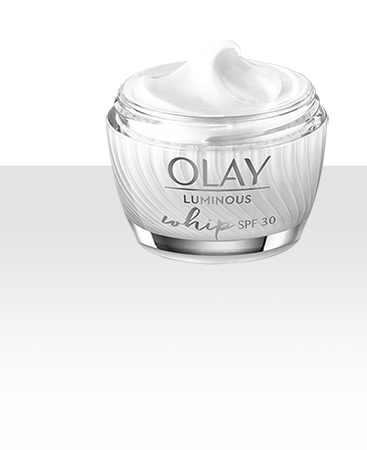
I never leave the house without an SPF. Even in winter. I think it has made a difference to my skin. So much of ageing comes from sun damage. I like Olay and tend to use it a lot. Finding a moisturiser with SPF30 can be hard, and a good one harder. I was sent the Olay Luminous Whip to review. I like the packaging but it is what is in the inside that counts. What I find is a product that moisturisers like a heavy moisturiser but has the light and airy feeling of a lighter counterpart. It feels soothing and calming as it goes on. My skin feels like it has had a good, long drink. My skin looks well moisturised too. I will definitely keep using the Olay Whips SPF30 range. It gives an excellent light finish with high SPF protection. It also absorbs instantly. My skin does not feel like it is suffocating. Brilliant stuff. 


More than half of women (61%) claim they don’t use an SPF when UV levels aren’t strong

The UVA/UVB rays from the sun are a leading cause of premature ageing

The Olay Whips SPF30 range has a ‘light as air’ finish and instant absorption with high SPF protection

Whether she’s up and out of the door for the daily commute or taking herself on an early morning jog – one thing her skin needs day in, day out is SPF protection.

However, it seems that although women know the importance of incorporating a moisturiser with SPF into their daily routines, they don’t seem to be acting on it.

Olay consumer research reveals that despite women knowing the sun is damaging their facial skin and making it age faster, they still aren’t protecting it with a daily SPF. More than half (61%) claim they don’t use SPF when they think UV levels aren’t strong, even though UV rays damage the skins all-important moisture barrier and act as a trigger for other skin aging effects year-round. Could it be the thick, sticky nature of SPF moisturisers that’s holding them back?

The good news is, the days of heavy, hard-to-handle facial moisturisers are no more. Olay’s game-changing Whips moisturiser has launched an SPF30 collection – so you can enjoy the light as air texture and potent anti-aging skincare ingredients of Olay Whips, with the powerful protection of SPF30.

OIay Whip SPF collection offers a broad-spectrum UVA/UVB SPF30.

Olay Whips SPF30 promises its exclusive ‘light as air’ formula that is perfectly whipped for instant absorption to the skin, leaving a flawless finish either on its own or under makeup. The product range includes Active Rush Technology™ which can hold and quickly release 1000x its weight in hydration and active ingredients. Olay Whips transforms from cream to liquid on contact, flash absorbing into skin to deliver potent anti-aging skincare with a light as air touch. So, women on the go can reap the benefits from a lightweight moisturiser and their much-needed SPF30 in one step!

Olay Whips SPF30, available in the Regenerist, Luminous and Total Effects ranges, offers powerful skincare with a light as air feeling, and year-round protection from the sun’s harmful rays.

For more information on Olay products, visit www.Olay.co.uk

Stockists: Boots.com, Superdrug.co.uk, amazon.co.uk and all leading retailers
RRP: £34.99