A PUBLISHER’S YEAR: OCTOBER – AWARDS, ASSOCIATIONS AND AUDIOBOOKS

Hello and welcome to the next Sapere Books instalment! Lots of exciting things have happened over the past few months. In August I worked with Simon and Schuster’s Sara-Jade Virtue to judge the RNA’s annual Joan Hessayon Award for New Writers. The books we read were all very different and very worthy nominees, but luckily we were unanimous with our winner: The Lost Village by Lorna Cook.

September also saw the whole Sapere Books team attend the Independent Publishers Guild Autumn Conference. The IPG has a wealth of resources for publishers and arranged fantastic talks for the conference. One area it has led us to mull over is audiobook publishing. We have come to the conclusion that it is too expensive for us to experiment with at the moment, but we will certainly be pitching all of our books to audio publishers both in the UK and the US to try and secure publishing deals. We did actually get approached by Tantor Media last month, and we have sold the audio rights to them for the first three books in J C Briggs Charles Dickens Investigations series, which is exciting!
At the beginning of this month we hosted one of our semi-annual author meet-ups. It is lovely to spend some time with our authors face to face, and to encourage all our authors to get to know one another. Everyone is spread out all over the country, and not all of them belong to genre-specific groups like the RNA and CWA, so it feels good to have informal catch ups to discuss industry news, writing projects – and life in general!

Last week the team attended the Crime Writers’ Association Gala Dinner, which happens every year to reveal the winners of their prestigious Dagger Awards. We are the current sponsor of their Historical Dagger, which had already been whittled down to six fantastic books, but I have to say S G MacLean was a very worthy winner for her third Seeker novel, Destroying Angel.

We also have some exciting company news to share. If you have been following these blog posts, you will know that we had been actively looking to sign up some historical nautical fiction. Well, I can know officially announce that we have signed Justin Fox, represented by the Aoife Lennon-Ritchie to our list. Justin is working on a series of novels set in the second world war around the South African Cape, and we hope to publish the first one next year.

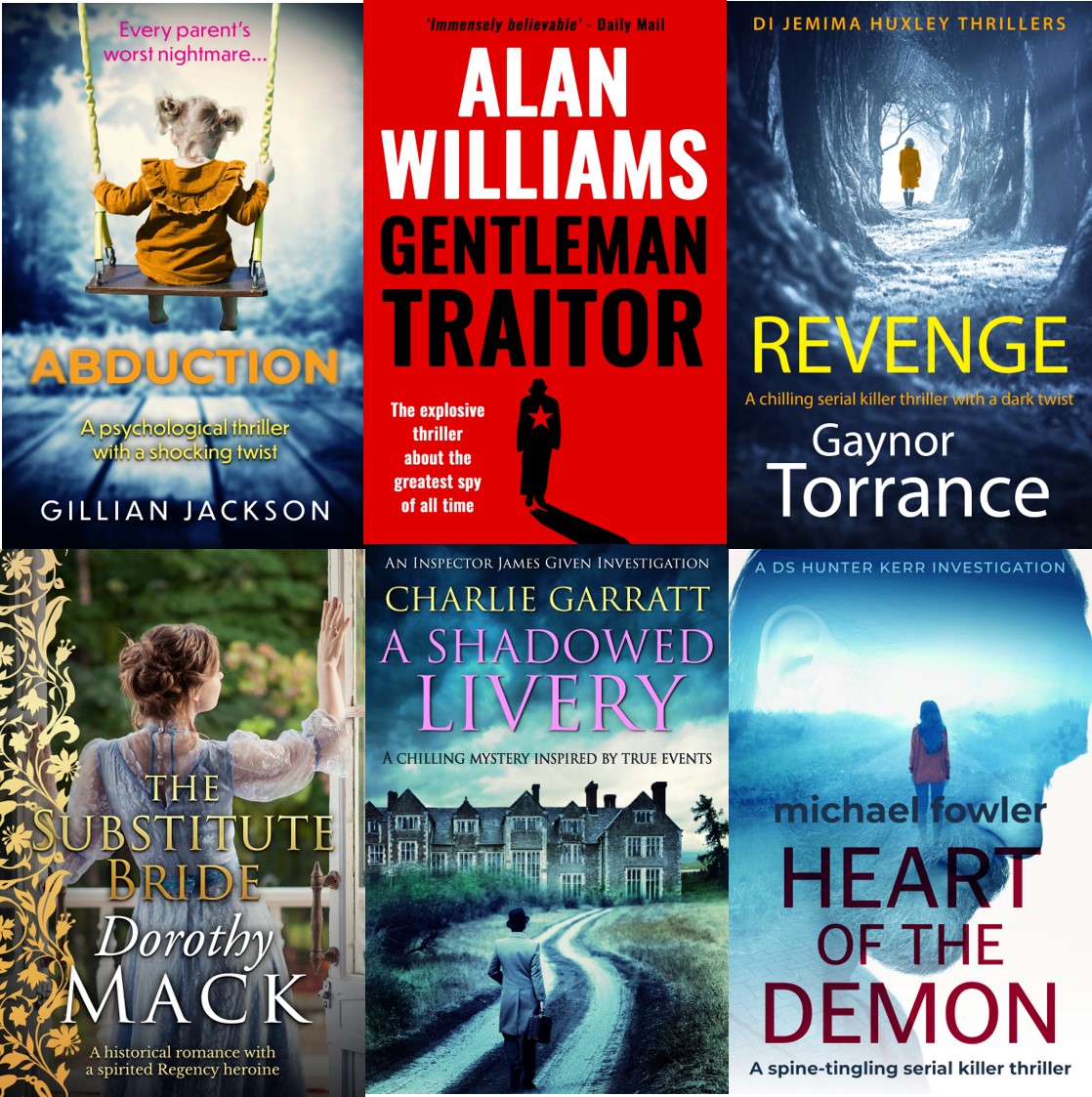
As always, we’ve been busy publishing lots of fantastic books. New series we have launched include the Inspector James Given series by Charlie Garratt – traditional English murder mysteries set in the lead up to the Second World War; the DI Jemima Huxley series by Gaynor Torrance – a troubled female detective struggling to stay sane while solving complex murder cases; and the DS Hunter Kerr Investigations by Michael Fowler – a crime team solving serial killer cases in Yorkshire. We’ve also launched two psychological thrillers by Gillian Jackson – ABDUCTION and SNATCHED – which are receiving fantastic reviews on Amazon and Goodreads.

We also focussed on publishing more ‘backlist’ titles. We recently signed up Dorothy Mack’s Regency romance backlist, which were first published in the 1980s/90s. The first one, THE SUBSTITUTE BRIDE is selling particularly well at the moment. And we have just starting reissuing Alan Williams’ historical thrillers, with his Cold War espionage novel, GENTLEMAN TRAITOR, out this month.

Amy
 

SISTER SCRIBES GUEST: TRACY REES ON WISE WOMEN

When I first met Tracy Rees on Twitter I had a real fan girl moment – The Hourglass was one of my favourite books. I plucked up courage to ask her to write a piece for Frost, little imagining that during the subsequent exchanges of emails, she’d turn out to be everything she writes about below and more.


I always imagined that if I were ever published, it would be with something niche, perhaps something literary or quirky. Instead I find myself writing commercial women’s fiction (historical so far, but watch this space…) and I feel incredibly lucky. It’s a wonderful genre: accessible, comforting, profound and escapist all at once. And it’s a wonderful community; there’s something very special about the bond between women writers, at any stage of their journey.

As women, we have particular challenges, I think, in addition to those of our craft. Even today – and I certainly consider myself a modern woman – there is something in women (Nature or nurture? Probably both) that constrains us to care for the needs of others before ourselves. I certainly don’t mean that men aren’t caring because I only have to look at my own father and partner to know how amazingly kind men can be. But in women there is something that makes us feel guilty and unbearably stressed if we:

  • switch off from thinking about other people
  • pursue a pastime that often seems to have no measurable purpose
  • turn the phone off and spend hours alone, staring into space

Photo credit: Phil Lewis

And what is writing if not a taskmaster that demands all of the above?

Yet if we don’t try, how will we ever know what we’re capable of? What our strange fragments of story ideas might become? How far along our writing journey we might go if we give it our best shot? Exploring our dreams as far as possible makes us happier, fuller people, which in turn allows us to help and support others.

My mother, a true-blue bookworm, was the earliest cheerleader of my writing dreams. But support from fellow women-writers comes in many forms, from comforting cuppas to celebratory glasses of bubbly, from long, in-depth conversations to a hastily dashed-off email in an hour of need. When I was first published I didn’t know any other authors and I felt desperate for people who understood. That’s all changed now and I value it more than I can say, so much so that I’ve launched an appraisal and mentoring service. I love helping people and it’s hugely satisfying to be part of that chain of experience and knowledge, one to another.

There are long-established writers who encouraged me early in my career when I was struggling with unfamiliar challenges. There are writers a few years behind me, coming to terms with the demands of being a professional author. And there are aspiring writers, still discovering all the joys of writing, as well as the more gruelling aspects (Chocolate biscuit, anyone?). We are all a community and the friendship of those who understand what we are trying to achieve is a magic that keeps us going.

There are wise women in all my books, from the alarming Mrs Riverthorpe in Amy Snow, to mystical Old Rilla in Florence Grace to Gwennan (aka Gran) in The Hourglass. In my latest book, Darling Blue, the three protagonists, Blue, Delphine and Midge, are each struggling to find their way. By pooling their wisdom and uniting in friendship, they are able to guide each other and achieve more than they ever could alone. Which is exactly what I’m talking about here.

www.tracyrees.com

Twitter @AuthorTracyRees

Instagram @tracyreesauthor

Tracy Rees always wanted to be a writer. She first worked in medical publishing, then as a counsellor for people with cancer and their families, but like many writers has had many other jobs along the way. A Cambridge graduate, Tracy lives on the Gower Peninsula but divides her time between Wales and London, where her partner lives.


SISTER SCRIBES: CASS GRAFTON ON THE ENDURING APPEAL OF DARCY

As the 18th century drew to a close, a young Jane Austen was busy writing the first draft of a novel called First Impressions.

A parson’s daughter, she was growing up in the country idyll of rural Steventon, Hampshire, surrounded by a lively and intelligent family. As the new century dawned, however, Austen’s life underwent significant change, and it was 1812 before she put the finishing touches to First Impressions, now renamed Pride & Prejudice (publishing it in January 1813).

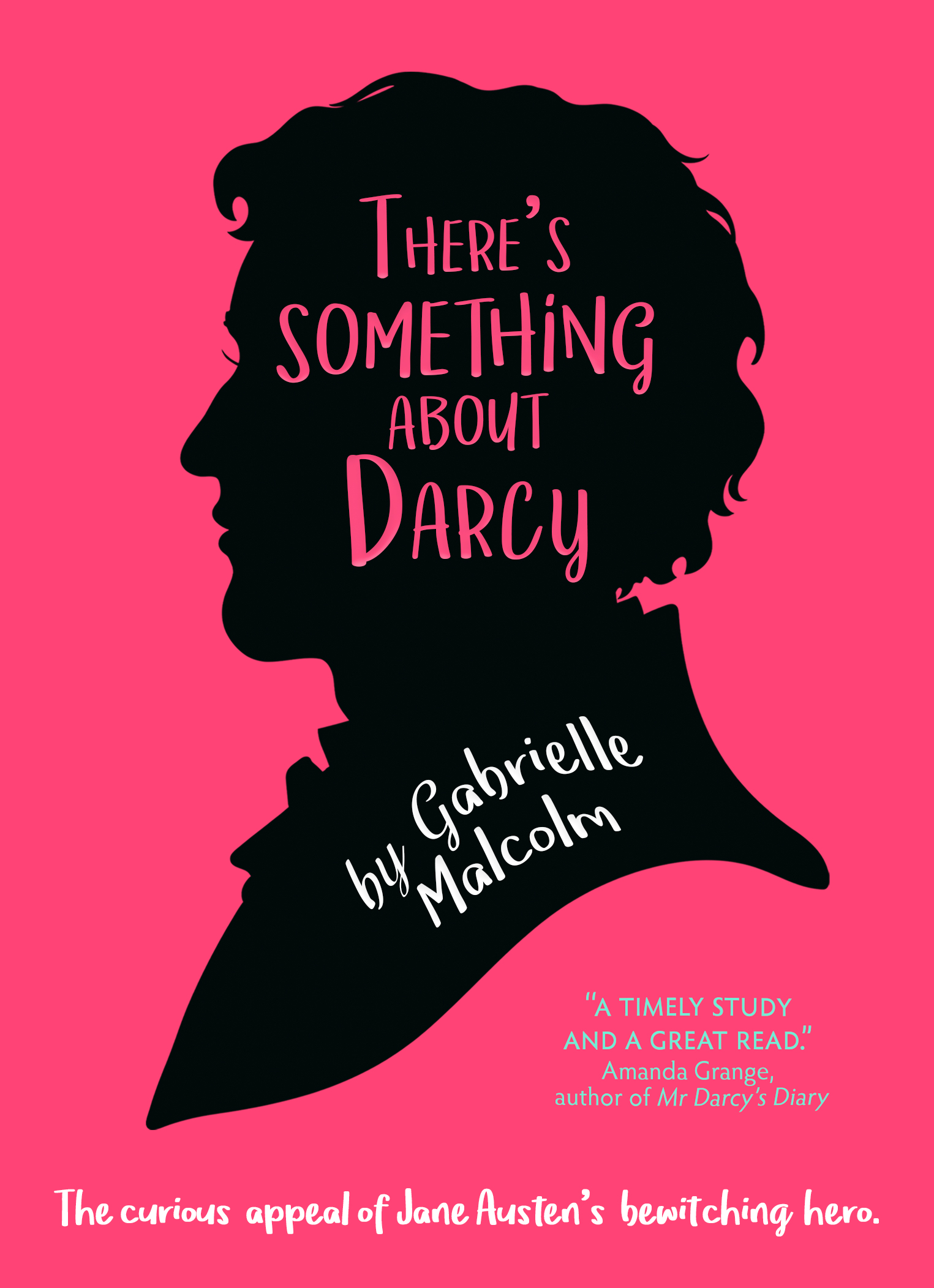
In There’s Something About Darcy, Dr Gabrielle Malcolm delves with a steady hand into how Pride & Prejudice’s hero, Fitzwilliam Darcy, has endured across the centuries, inspired other writers and why he continues to hold such appeal (and not just for those who adore Colin Firth’s visual interpretation and that infamous wet shirt scene).

The opening chapters begin with a fascinating and insightful look at the progression of Darcy’s interest in Elizabeth Bennet. Malcolm’s exploration of the confusion and contradiction of Darcy’s feelings is both fun to read and enlightening. This is a thorough analysis of the man and what he is experiencing, and those who love getting inside Darcy’s head will relish these chapters.

Subsequent chapters go on to examine in great depth how Jane Austen’s depiction of Darcy has influenced other writers – even those who were not known for admiring Austen’s works. Well-researched and informative chapters explore and analyse Darcy’s descendants across the nineteenth century, through to the Regency romances, on into the twentieth century and onwards to the present day.

There’s a fabulous chapter about Darcy on screen, exploring the various adaptations and Malcolm’s in-depth study will delight fans of any or all of these productions, from Laurence Oliver, David Rintoul, Colin Firth and Matthew Macfadyen’s more ‘traditional’ – I use the word loosely – interpretations to the more diverse eg Elliot Cowan’s in Lost in Austen and Sam Riley in Pride, Prejudice & Zombies.

A further chapter probes the interest in and fascination for ‘more’ Darcy, with an endless stream of Pride & Prejudice-inspired prequels, sequels and what ifs out there, and more coming every day, from the many authors (and for the many readers) who just can’t get enough of Darcy. This includes well-established authors not normally known for writing Austen-inspired works, from re-writes of Austen’s classics by eg Joanna Trollope and Curtis Sittenfeld, re-imaginations such as Longbourn by Jo Baker, to Death Comes to Pemberley, a ‘what-if sequel’ from the pen of P D James.

The final chapter is fittingly called ‘Unwavering, Enduring: Darcy – a hero for all time’, touching upon the more recent incarnations, from Helen Fielding’s Bridget Jones’ Diary series, the time-travel escapism of Lost in Austen and onwards to Bernie Su’s award-winning YouTube adaptation, The Lizzie Bennet Diaries.

As Malcolm says in her book, ‘Darcy as the influence for other prominent writers cements his significance further in a commercial and cultural context.’

It seems extremely fitting that a character from a book with the working title of First Impressions has left such a lasting impression upon generation after generation of writers and readers.

A must-have for any dedicated Jane Austen fan, Dr Gabrielle Malcolm’s There’s Something About Darcy is an informative, fascinating read, and I highly recommend it.


There’s Something About Darcy is available for pre-order through this link: https://www.amazon.co.uk/Theres-Something-About-Darcy-bewitching/dp/1911445561/

Dr Gabrielle Malcolm is a freelance writer and artist. She edited ‘Fan Phenomena: Jane Austen’ (Intellect Books), wrote three plays for Moon On A Stick children’s theatre company, and writes scripts for web series and short films for international clients. Her forthcoming non-fiction book, ‘There’s Something About Darcy’, is released on 11th November 2019 with Endeavour Quill.


SISTER SCRIBES GUEST: MADDIE PLEASE ON LIVING AND WRITING IN DEVON

I’m delighted to introduce my good friend Maddie Please. Maddie writes the most hilarious romcoms set in Devon and we met at one of the retreats she runs with Jane Ayres at The Place To Write. I visited her lovely house near Exeter and asked her what it’s like to live and write in Devon.

In May 2015 we moved into our lovely house on top of a hill midway between Exeter and Crediton. We were convinced we were downsizing. (It wasn’t until we actually moved in that we realised we hadn’t.) The house had remained empty for a year before we bought it, and the main decorating influence we inherited was wood chip wallpaper, painted magnolia and apparently stuck on with superglue.

The garden was overgrown and very neglected but we have never regretted the move, and the starry skies at night are wonderful.

The first thing we did when we moved here was build a garden office, which I share with my husband. This means my daily commute is now twenty-five steps; I just counted them.

Occasionally we hear pheasants or pigeons trampling about on the roof. At this time of year the neighbouring fields are busy with the harvest and tractors and farm machinery trundle past our gate, something which is very exciting for our grandchildren when they come to visit.

In our garden office I have my own desk where I work just about every day.

I have s lovely hand painted cushion from my Bestie Jane to make life more comfortable. I am in charge of filling the stationery cupboard too! Any writer will know how much fun that is. I mean going into an office supplies superstore or Paperchase or Smiths and calling it work related is a dream!

Our makeshift shelving got a bit out of control last year so we replaced it with some industrial units from Big Dug. An excellent purchase. I try to keep the boxes of stationery under control but boxes of pencils, Sharpies and Post-it notes are like cat-nip to me!

I’m usually at work between 8 and 9 o’clock and unlike some writers who prefer to work without distraction, I have a wonderful view of the garden and beyond that the Creedy valley. I don’t like working in silence either, so I listen to BBC Radio Devon, which is my daily companion; I love it. Gordon Sparks and the Gordon Hour, David Fitzgerald and his Fighting Fitz competition or Janet Kipling and her Devon Debates – there are enough plot ideas there every day to keep any writer thinking.

I’m often to be found with a vacant expression as I do some important thinking and when I’m using earphones have been known to sing along. Much to my husband’s utter delight. Maybe that’s not the right word?

I occasionally go back into the house to make us coffee and usually by 3.30 in the afternoon, I’m done for the day.

Does the Internet distract me? Well of course. I am an avid Twitter and Facebook user and I have been known to check my Amazon reviews once or twice…

But I do regard writing as a job not a hobby.  My debut The Summer of Second Chances was based on this area with its winding lanes and fabulous views. So was my fourth book; The Mini-Break which takes successful writer Lulu out of her London comfort zone and into the muddy and glorious Devon landscape.

Living here is simply lovely, our local pub is the award-winning Beer Engine, and despite the headline story in the local paper, our neighbours are friendly and welcoming.

My husband has always been interested in researching his family history and found details of his ancestors who had lived nearby in 1674. Perhaps something called us back here?

To us this is the very best place to live and work.


SISTER SCRIBES: SUSANNA BAVIN ON A CHANGE OF NAME

In common with many women, I have gone through the process of a name change. I have twice gone through the hassle of changing my surname. Incidentally, if ever you have to send away your marriage certificate, do include in your covering letter a specific instruction that the certificate should be returned to you after the admin people have finished with it. Some years ago, I blithely sent off my marriage certificate… and it wasn’t returned. Not only that, but no one in the office could track it down. In the end, it transpired that someone had stashed it away in the safe – and all because I hadn’t given a specific instruction to return it!

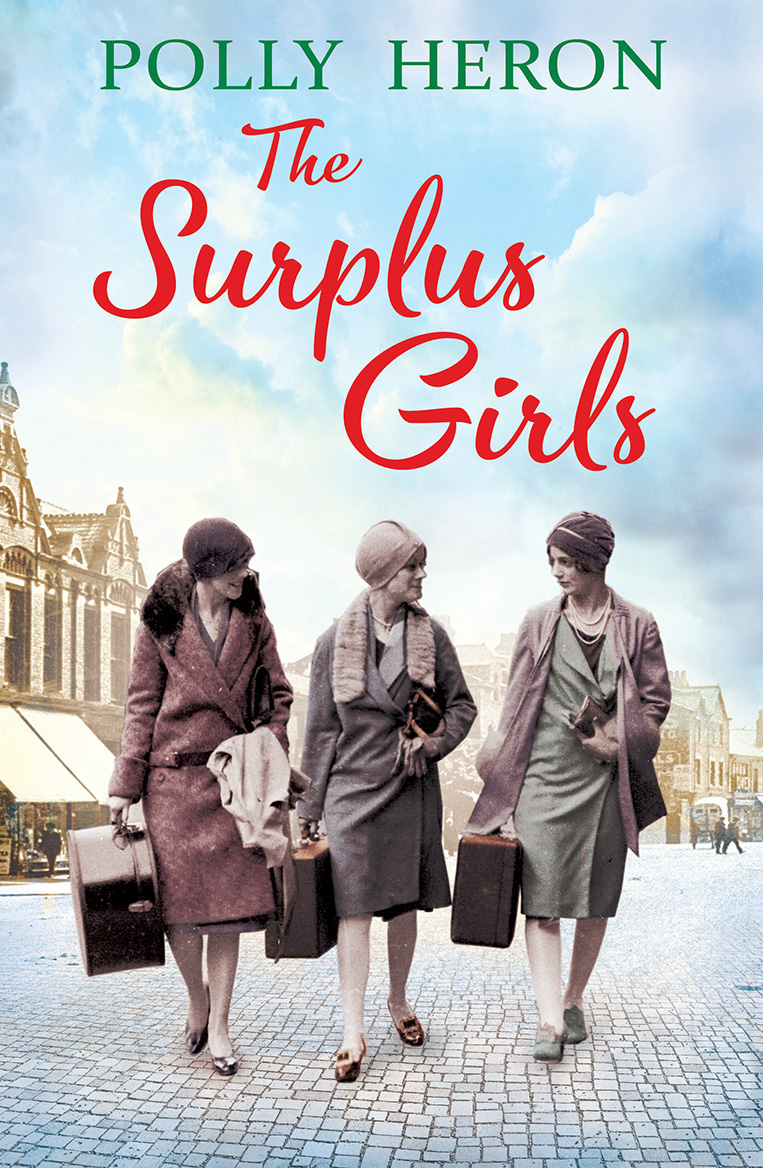
Anyway, I am in the process of having another change of name, but this time it is to introduce a new pen name – Polly Heron – and it’s because I have a new publisher – Corvus, which is the commercial fiction imprint of Atlantic Books. The Corvus list includes women’s fiction, romance, historical fiction, sci-fi, crime and thrillers. As a saga writer, I’m not sure whether I come under ‘historical’ or ‘romance.’ Possibly a bit of both.

My first book for Corvus is the start of a series. Both the series and the first book are called The Surplus Girls. So who were the surplus girls, exactly?

They were the generation of young women, who, after the Great War, were left without the possibility of marriage, because of the appalling death toll exacted on the battlefields. This was at a time when marriage to a man who could support you and the children you would have, was pretty well universally regarded as the correct and desirable aim for any girl. So these young women, whose possible husbands had perished, found themselves – unexpectedly and without preparation – in the position of facing a future of providing for themselves. Not only that, but no woman could hope to earn as much as a man, even a man doing the same job (sounds familiar?).

Writing about the 1920s is something I have done before, in two of my books written as Susanna Bavin – The Deserter’s Daughter and A Respectable Woman. Although the decade was all but a century ago, to me it feels very close. My parents weren’t exactly spring chickens when they had their children and they were themselves born in the 1920s, so it is an era I grew up hearing about when family tales were told and, of course, I have family photographs as well.

It is in some ways perhaps a bit odd to write about surplus girls in the context of a saga in which, by definition, the heroine will end up with the hero and therefore no longer be a surplus girl, but I hope I have also conveyed both the universal shock and sorrow that pervaded society at the loss of such a large number of men and also the way that these losses brought the lives of individual girls and women into a new, sharper focus as they faced life on their own.

SISTER SCRIBES’ READING ROUND UP: SEPTEMBER

Jane:

Sometimes I catch sight of a new book I just have to read as soon as possible. It doesn’t happen often and it’s always a leap of faith; will a favourite author dash my expectation of brilliance – or will they, once again, triumph.

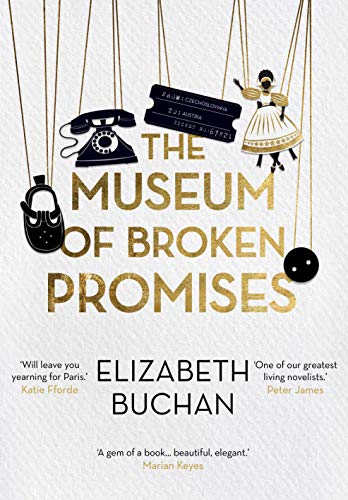
Elizabeth Buchan’s The Museum of Broken Promises is, like her other books, a slow starter. I have learnt to be patient while she creates a tapestry of detail so rich and wonderful, holding my breath until to story tips into second, third and fourth gears and becomes unputdownable.

The book is set in Paris in the present day and in Prague in the 1980s. The end of the Cold War was in touching distance, yet nobody knew it, and this adds an additional poignancy to the narrative. Laure, a young woman coming to terms with the death of her father is an au pair to a businessman and party insider, and while trying to make some sense of life behind the Iron Curtain, meets a dissident musician who steals her heart and soul. Years later in France, she sets up the Museum of Broken Promises, full of artefacts people donate in attempt to avenge or assuage the pain of betrayal – and some of them belong to her own past.

Slowly the book teases out truths from a long ago Czechoslovakian summer. One moment achingly beautiful, the other shocking in its violence, the whole fits together like a handmade glove. It stayed with me, too – and it’s only now I’m writing this review I finally understand the most important promise. And who broke it. A must read. Honestly.


Kitty:

This month I have been racing through the romcoms. I have just finished Lindsey’s Kelk’s One in a Million and absolutely loved it. She writes with such quick-fire wit that every page had me giggling and a little bit in awe. I enjoyed myself so much, I read it over two days, that I have gone and bought lots more of her books and am looking forward to laughing my way through autumn.

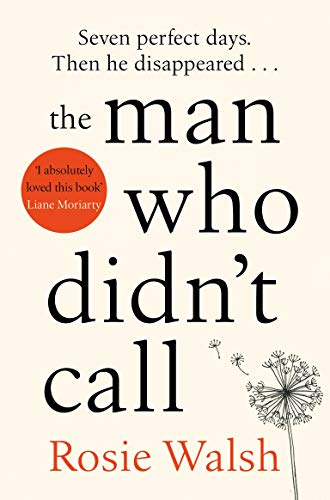
I also devoured The Man Who Didn’t Call by Rosie Walsh. I was immediately drawn into this novel. It tells the story of Sarah and Eddie and how they fall deeply and desperately in love over the course of a week, the reader is in no doubt that these two are bound to be together, that anything else would be ridiculous. Then Eddie goes on holiday and Sarah never hears from him again. This provides a thriller-like element to the story, where is he? Why has he not called? What on earth has happened? This is combined with their romance, the angst of the waiting for a phone-call, a connection that you know was special, that simply can’t peter out. I won’t give anything away and reviews show this is a little bit of a marmite book, but I absolutely adored it and suffered that sad book hangover feeling you have when a story you have loved has come to an end. Highly recommended.

I’ve just started Evie Dunmore’s Bringing Down the Duke and as a life-long fan of Julia Quinn I am over the moon to find another writer who can deliver such well-written historical comedy gold, this time set in Victorian Oxford rather than the Regency period. With whip smart dialogue and a fabulous premise, a bluestocking gathering support for The Women’s Suffrage movement, how can I not fall in love?

My Writing Process – Ian Wilfred

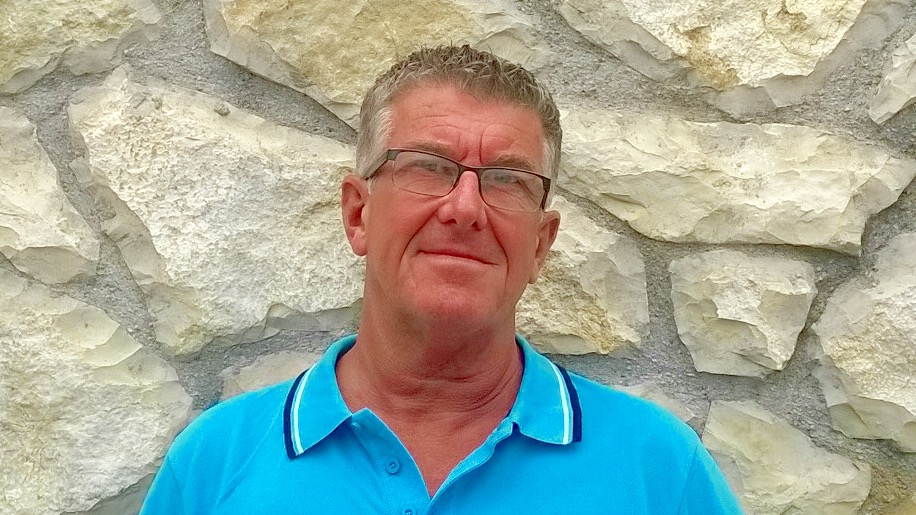
Do men write romance? They certainly do, as Romantic Novelists’ Association member Ian Wilfred proves. Ian’s characters are instantly relatable and he has a knack of choosing gorgeous settings, from Tenerife to Greece to his native Norfolk.

On top of all that, Ian is one of the most supportive authors you could wish to meet. Which was just one of the reasons Jane Cable invited him to share his writing process.

Tell us a bit about you?

I’m 50+ but in my head I will always be 39. I live on the Norfolk coast with my husband and west highland terrier and I’m a member of the Romantic Novelist Association. My first book was published in 2013.

What you have written, past and present?

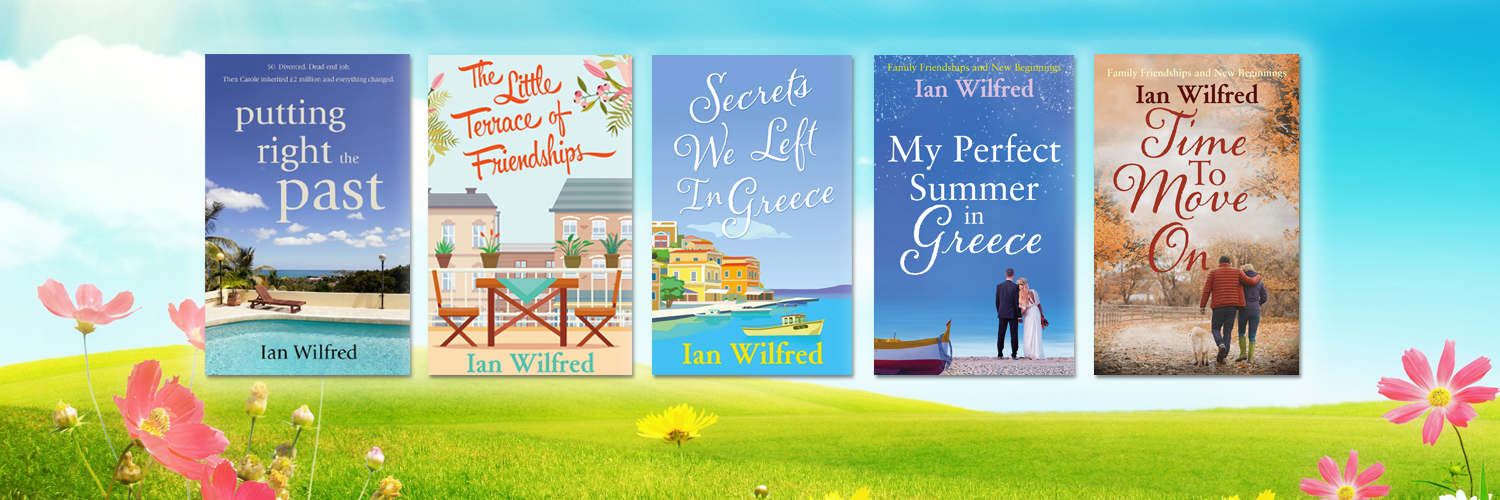
I’ve written and published five books. In the first four all my leading characters were women over 50 who are starting again and leaving the past behind, but in this year’s summer book, My Perfect Summer in Greece, Cheryl is a much younger heroine and this was lovely change

What you are promoting now?

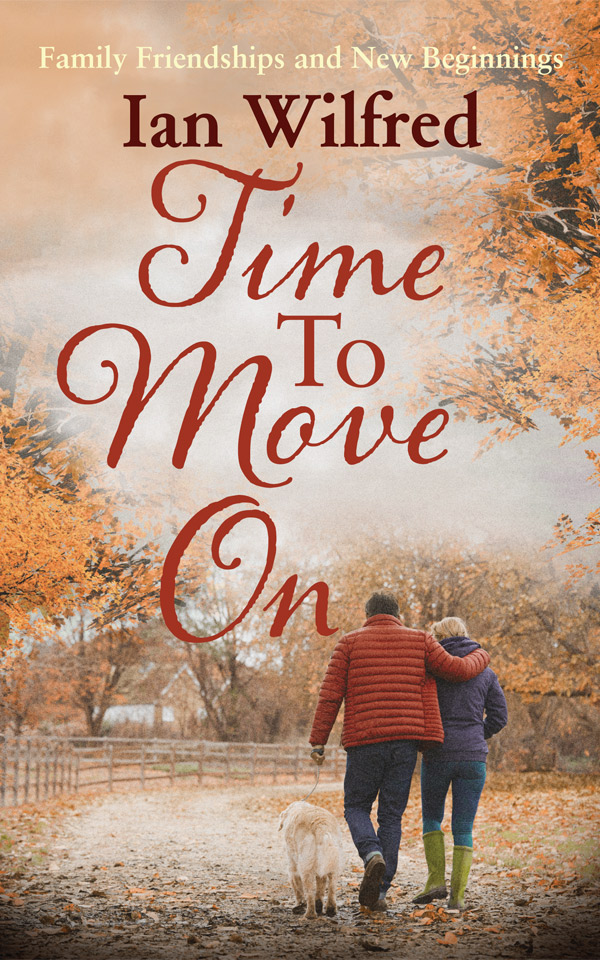
My new book Time To Move On, which is out on 24th September. It’s the story of Billie coming to terms with her divorce and being made redundant, and moving to Norfolk from London.

What’s the most important thing about your process of writing?

I love to write every day even if it’s just a few hundred words. I have to keep the story fresh in my head.

Do you plan or just write?

I plan a lot more with each book I write and for me this seems to work better each time.

What about word count?

I don’t give myself a daily or weekly word count but I do like to do 40,000 words a month for the first draft. Then I take two months to rewrite and rewrite before I send it off to my editor.

How do you do your structure?

I don’t plan that – it just sort of happens. I have a beginning, a middle and an end in my head and off I go.

What do you find hard about writing?

Everything! Each book is a learning process with many mistakes made over the years, but you just have to move on and know you’re improving.

What do you love about writing? 

The characters. I love the first draft when they are in your head and you can’t wait to get them on the page and bring them to life.

Any advice for other writers?

I get asked this a lot and I always give the same two answers; write every day, and read and watch every article Milly Johnson has ever done on writing tips. She is the best for advice.

You can follow Ian on Twitter @IanWilfred39. He’s great at sharing news from a wide range of romantic novelists. 


SISTER SCRIBES GUEST: CATHIE HARTIGAN BEHIND THE SCENES AT CREATIVE WRITING MATTERS

I am so happy to introduce you all to Cathie on this month’s Frost. She is responsible for taking me under her wing at my very first RNA conference and was one of the very first people to ever read my work and encourage me to keep going. She is part of the Creative Writing Matters team who support writers in so many ways; mentorship, teaching, handbooks and the running of renowned competitions such as The Exeter Novel Prize.


Does creative writing matter? Yes, a great deal to us.  Margaret James and Sophie Duffy and I have been working together for nearly a decade now. As teachers of creative writing, and because a student’s success is as thrilling as one’s own – well, nearly – we encourage our students in any way we can.

What did they want in a textbook? What would really be useful for them? Would our experience as competition judges as well as teachers be of help? Margaret and I spent a year consulting them before we published The Creative Writing Student’s Handbook.

A dream for most novice writers, is that they should do well in a short story competition. I was thrilled when the first story I sent out bounded into a shortlist. What joy! More successes followed, but then, so did no listing at all. I soon discovered that just because it may not have done well in one competition, doesn’t mean to say it won’t succeed elsewhere. How many entries, who is judging, and whether there’s a strong entry or particular subject that resonates with the judge(s), all are factors.

During my years as a music teacher I was often charged with putting pupils through exams, and my sympathetic cup ran over on many occasions when I saw the terror with which many faced such trauma. But my goodness though, didn’t they all try harder when the exam loomed. Most got exponentially better!

On the back of my experience, I had the notion to hold a tiny competition in a creative writing class. The result was the same. Suddenly, all those last minutes unedited stories were tidied up. They took notice of the word count, the spelling and grammar, and familiar topics were rethought. I was surprised and delighted. Unlike music exams or driving tests though, entering a writing competition it isn’t a do or die situation. Okay, a particular judge may prefer another story, but it is possible to give of your best by crafting your story days or weeks previously.

Sophie won both the Yeovil Novel Prize and the Luke Bitmead Award, the latter leading to the publication of The Generation Game. Margaret was shortlisted for the RNA Romantic Comedy Award with The Wedding Diary, and for many years, had been the administrator for the Harry Bowling Prize. My short stories were being regularly listed and my debut novel, Secret of the Song was shortlisted for the Hall and Woodhouse Dorchester Literary Festival prize. Competitions were something we knew about. It wasn’t long before we realised that our fair city of Exeter was missing something – a novel prize. Seven years on, we can celebrate the publishing success of many fantastic writers who either won or were listed.

One of the lovely things about being a competition judge is being continually amazed by the extent of the human imagination. The sheer variety of subject matter that people choose to write about is extraordinary, but weird doesn’t necessarily triumph over the ordinary. The ability to move, surprise, make us laugh and/or cry will raise a story above the rest, but how or why isn’t easy to quantify.  Difficult choices have to be made. Sometimes there is a stand-out winner, but not often. Obviously, it’s nice to do well, but any listing is significant. A good record of success, at whatever level, shows commitment as well as quality.

Cathie Hartigan is a musician, novelist, and the founder of www.creativewritingmatters.co.uk and the creative director of www.exelitfest.com. Her second novel, Notes from the Lost will be published in October.